American-Style, Part 2

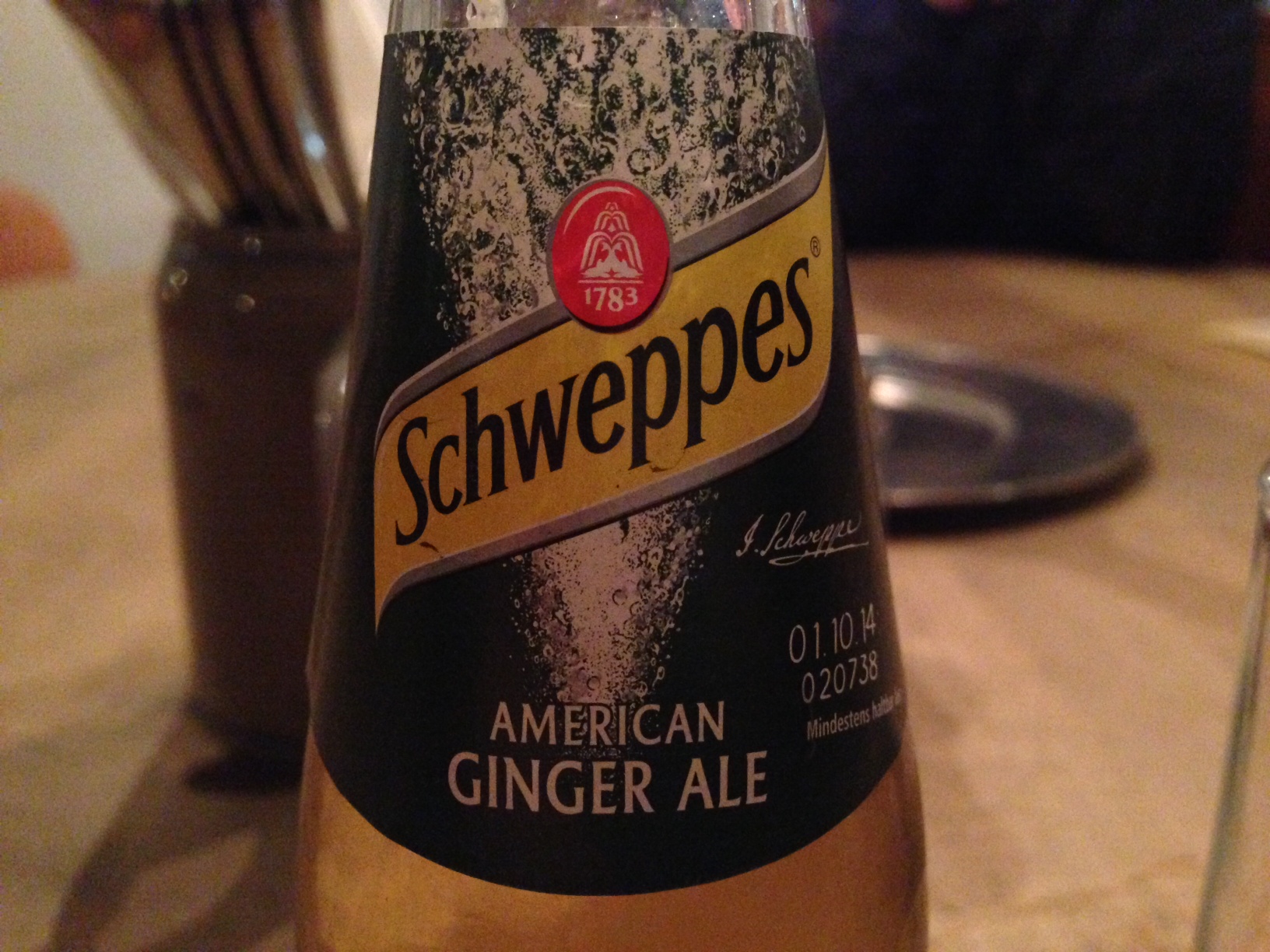
I wrote before about the funny examples I’ve seen of  “American-Style” food here in Germany, but I keep finding amusing examples of other “American” food.  I once saw a bag of marshmallows labelled “American-style” that was both a color and a flavor that I have never before seen in marshmallows back in the states.

Here’s three more that make me giggle a little bit.

ameristyle1 ameristyle2 ameristyle3

Have you seen any funny “American-style” foods that caught your eye?

Movie Ratings In Germany

Last week, I went to see the remake of RoboCop.   The movie itself wasn’t bad, as remakes go, and I think it was a pretty fun flick.  That’s not what this post is about.

After the movie, I had a discussion with a bunch of people about the movie, and one of them asked about the rating-  apparently some of my friends hold the viewpoint that RoboCop with a PG-13 rating instead of 1987’s R rating just isn’t acceptable.  Never mind that the things you can do with a PG-13 in 2014 would make an R from 1987 toss its cookies.  That’s not what this post is about either.

The exact question posed was, “Was the rating over there the same as here?”  This, I immediately realized, would be an excellent topic for a blog post.

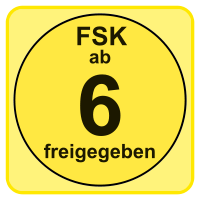
In the US, the Motion Picture Association of America (MPAA) has been giving films those familiar ratings since 1968: G, PG, PG-13, R, and NC-17.   In Germany, there’s a similar organization, the Freiwillige Selbstkontrolle der Filmwirtschaft, or FSK.  The FSK classifies films under the following categories for both movie theaters and television broadcast:

FSK_ab_0FSK_ab_6FSK_ab_12FSK_ab_16FSK_ab_18

  • Ohne Altersbeschränkung (FSK 0): This means no age restriction.  This is pretty much the same as a G rating in the US.
  • Freigegeben ab 6 Jahren (FSK 6): No children younger than 6 years admitted.   This is similar to the PG rating in the US.
  • Freigegeben ab 12 Jahren (FSK 12): Children 12 or older admitted, and children between 6 and 11 only when accompanied by parent or a legal guardian.   Films in this category can generally be broadcast on TV all day. This is similar to our PG-13 rating.
  • Freigegeben ab 16 Jahren (FSK 16): Children 16 or older admitted, and nobody under this age is admitted.  This rating can be broadcast on TV only after 10 PM unless approved by special permit or re-edited to secure an FSK12 rating.  This is similar to our R rating.
  • Keine Jugendfreigabe (FSK 18): “No youth admitted”, only adults.  This is the local equivalent of the NC-17 rating in the US.   Movies with this rating can be broadcast on TV after 11 PM. However, nudity isn’t all that unusual on broadcast television here, especially later at night.

All the above ratings also contain the phrase “gemäß §14 JuSchG” (in accordance with §14 of the Youth Protection Law), which means that they are legally binding.  This differs wildly from the MPAA’s ratings, which are merely recommendations and are not actually legally binding.

Oh, and RoboCop has an FSK12 rating here, in case you were curious.

If you were a movie, what would your rating be?

Valentine’s Day In Germany

Like Halloween, Valentine’s Day is a late addition to Germany.  Children here don’t typically exchange valentines in school like I did growing up, and the holiday is mostly for romantic couples here.

The stores here don’t usually sell children’s Valentine’s cards like you would find in the US, but the rest of the trappings of the holiday are pretty easy to find-  red hearts full of chocolate, balloons, flowers-  Hallmark and FTD would never let a market slip through their iron fist that easily.

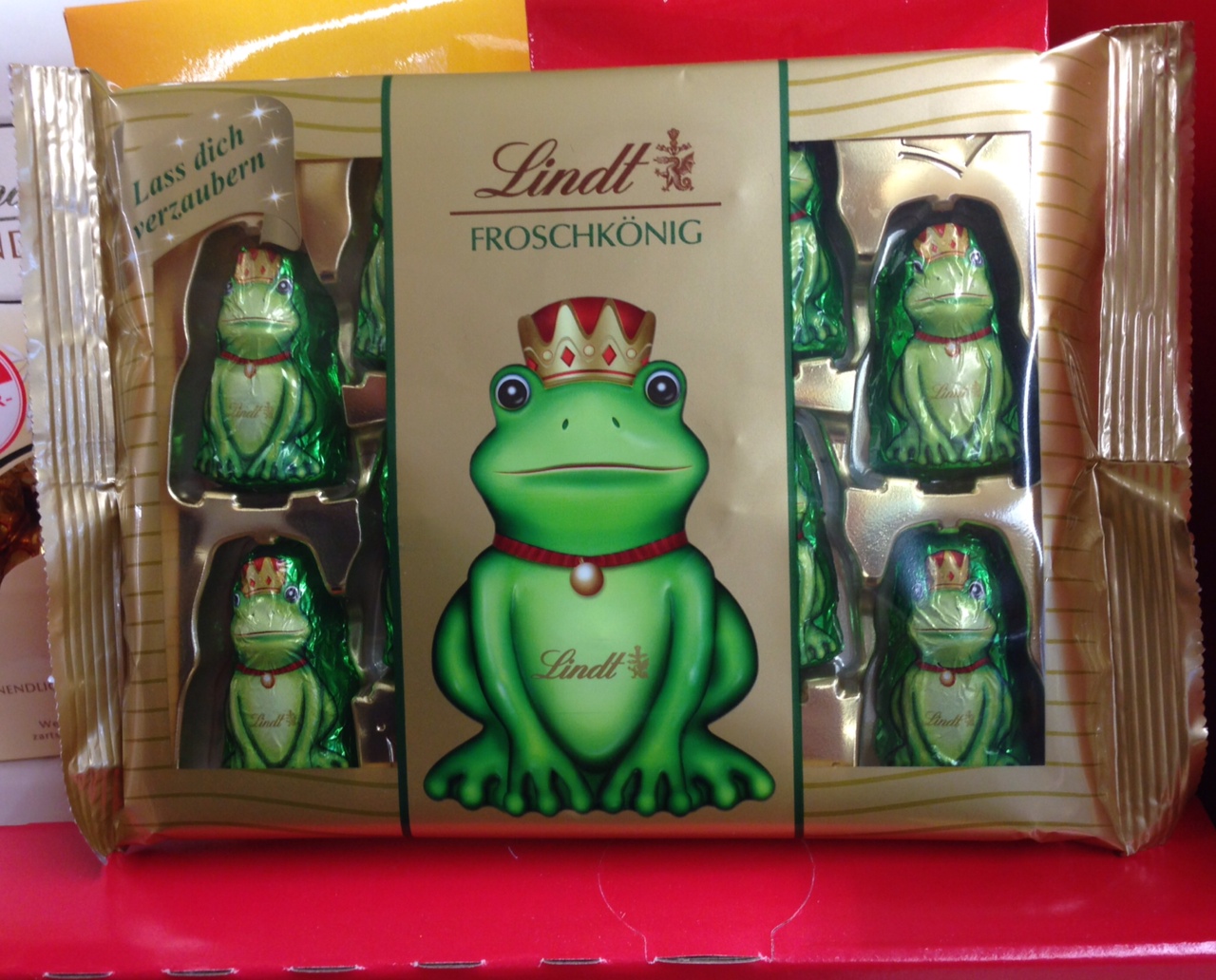
That being said, Germany does have its share of interesting traditions that aren’t generally found in the US.  Among the red hearts full of chocolate and candy are the green foil wrappings of Lindt’s Der Froschkönig, the Frog King.  The connection of the Frog King to Valentine’s Day seems to be based loosely on the Brothers Grimm faery tale of the Frog Prince.  Eating a chocolate frog is better than kissing frogs, I guess.  In the original Brothers Grimm version, the frog’s spell was broken when the princess threw it against a wall though.  Maybe you’re supposed to throw your chocolate frog at the wall also.

Either way, he sure is cute.   Here are some of this year’s Froschkönig offerings.  Happy Valentine’s Day, everyone!

frogking4 frogking2 frogking3

Do you have any interesting Valentine’s Day traditions to share?

Going Postal

To anyone who grew up in the United States, the United States Postal Service uniform and vehicle livery is such a common sight that it’s immediately recognizable.  In the US, there’s only one postal carrier, and it’s a government agency.  Not so, in Germany.  Here, mail is privatized.   There are many different carriers in Germany, and the available carriers vary from city to city.  Here, the two big postal carriers are Deutsche Post and CityMail.

The Deutsche Post began life as Deutsche Bundespost, originally a government agency like the USPS.  It was privatized in the 1990s, although there is still governmental oversight.  The Deutsche Post went on to acquire DHL in 1998, and now it stands as the world’s largest courier company.   The distinctive logo for the Deutsche Post is visible on signs and bright yellow mailboxes all over Germany.
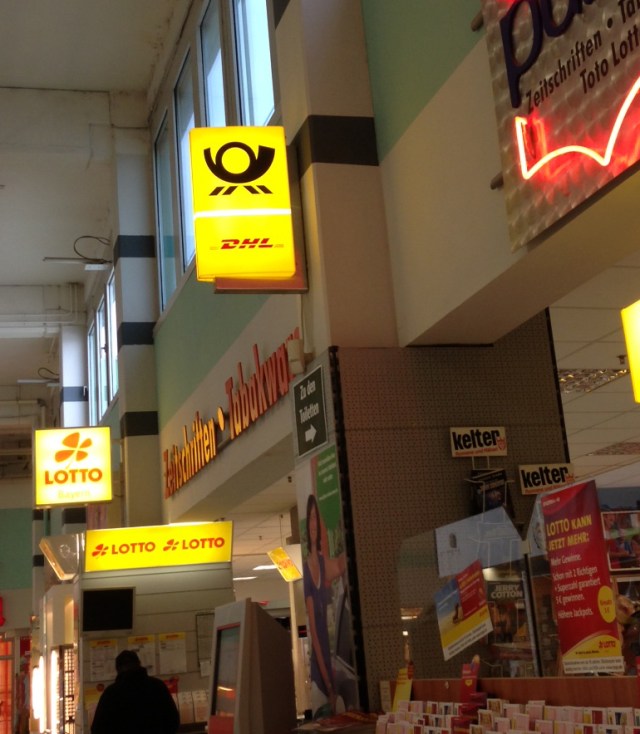
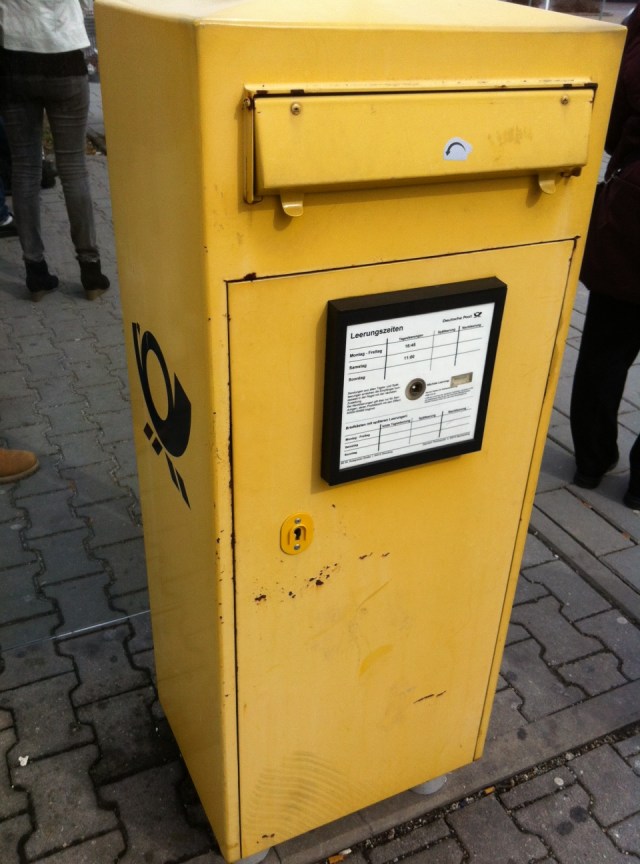
postalsignpostal01

Most places you can mail or ship things are just counters inside other stores, but there are a few main branches. The inside of the main post office near the Hauptbahnhof in Regensburg contains the same sorts of things that you would find in a US post office-  counters with lines of people, and displays of shipping and mailing gear you can purchase.
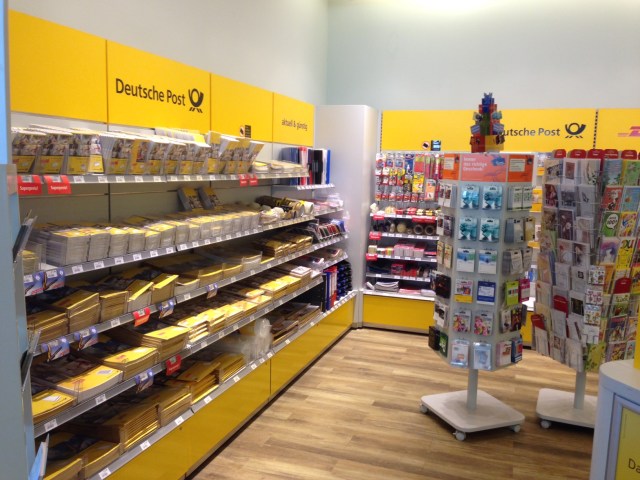
postoffice

As in the United States, postal vehicles are a pretty common sight.

postal02

A much more common sight in Germany, however, is the postal delivery bicycle.  I see these on the street year-round- small packs of yellow-and-black-clad postal bikers traveling together in the morning.

postal03

The postal delivery bike isn’t just limited to the Deutsche Post, however.  CityMail, Regensburg’s other often-seen postal carrier has the same delivery modes.  Here’s a CityMail delivery bike.

postal04

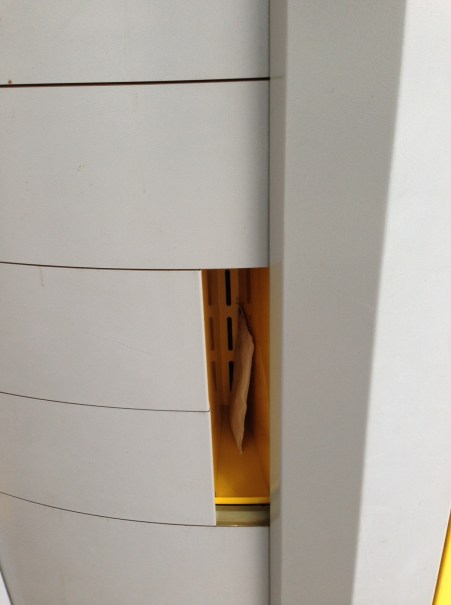
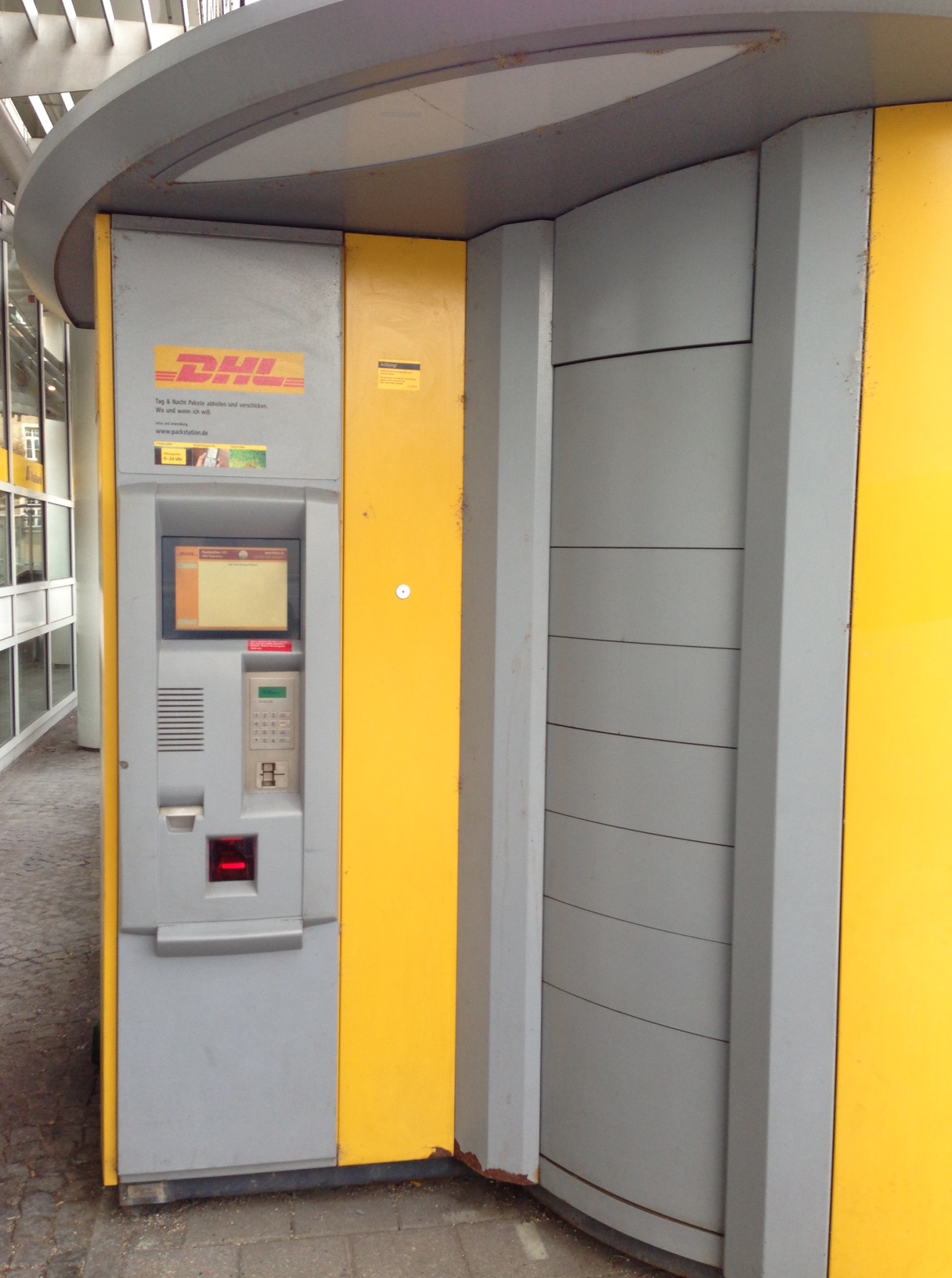
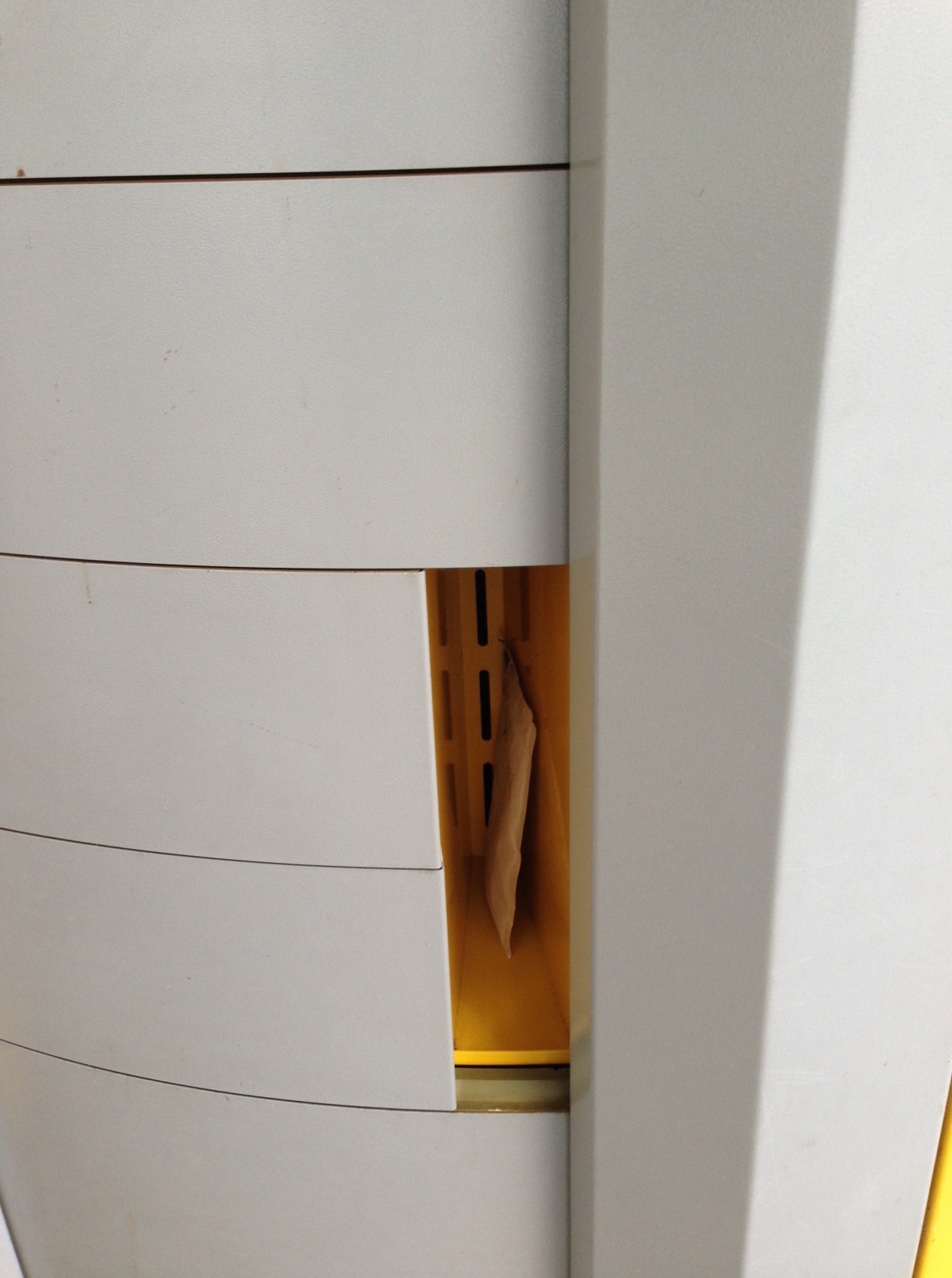
As for packages, there are many carriers that have a presence here, but the Deutche Post owned DHL is by far the most often-seen one.  They have a rather nifty innovation in place all over Germany called a Packstation.  The Packstation is a sort of as-needed post office box.  When you sign up for the service, you’re issued a plastic card with a magnetic stripe, and you specify which Packstation location is closest to your home.    When you order a package, you can use the Packstation address and your unique Packstation account number as a shipping address.  On delivery, the Packstation service will send you a single-use PIN code to retrieve your package.  With your plastic card and PIN code, the Packstation machine will open a door so that you can retrieve your package.  It’s really, really nifty.
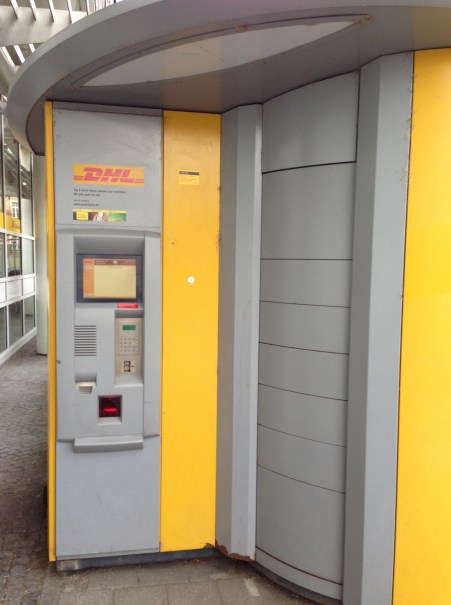
packstation001packstation002

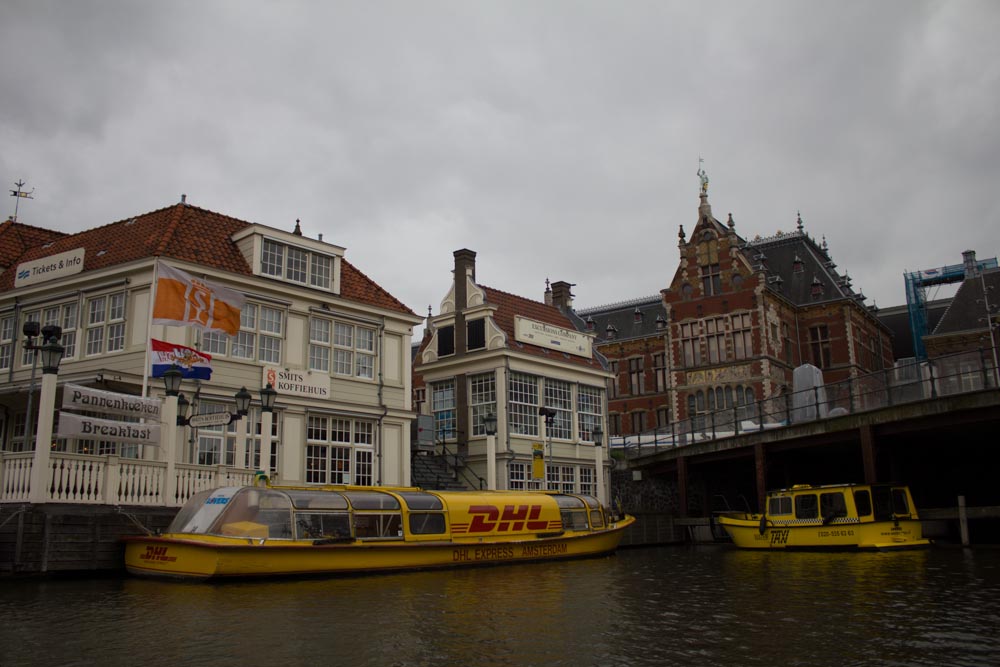
Here’s one last picture before I wrap up this post.  While I was in Amsterdam, I noticed that DHL has adapted to the tremendous number of canals in the city by switching to a delivery boat.  I thought this was kind of interesting.

postal05

Is the postal service where you live government-run or privatized?  Do you have more than one option for sending stuff?