Repatriation Day

Bayern

Today is the day that I leave Germany. I’m not leaving forever, because I have friends here. After today, though, I won’t be a resident of Deutschland. I’m heading back to Florida.  My plane out of Frankfurt is actually scheduled to depart at the exact minute this post is scheduled to go up.

While this is a travel day for me, I thought it might be fun to give my friends an idea of what my Floridian  life will be like, geographically speaking, courtesty of http://overlapmaps.com/.  I’ve noticed that Europeans who have never been to the United States seldom have any real idea of just how expansive the US really is.  Americans who haven’t traveled here are similarly bereft of clue when it comes to scale, which is part of what makes these maps so much fun.

Here’s an example to illustrate that point.  This conversation actually happened between me and a colleague back in the US:

Colleague:  Hey, can you go to the data center to look at this server?
Me: The data center is in Frankfurt.  That’s three hours away.  I might be able to get there by tomorrow, if I leave now, go home, pack a bag, and manage to catch the next train out.
Colleague:  …so that’s a no, then?

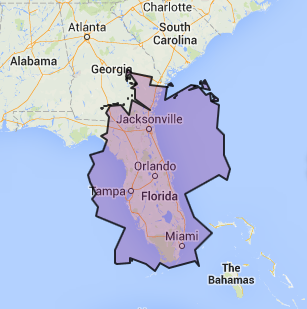
First up in our map fun:  South Florida, overlayed onto the region of Bavaria I currently live in.   While these distances are not exact, I can say that Munich roughly overlays where Miami is, and Regensburg roughly overlays where I will be living.

overlay01

These next two are just fun:  Germany overlaid onto Florida, and Florida overlaid onto Germany.

overlay02 overlay03

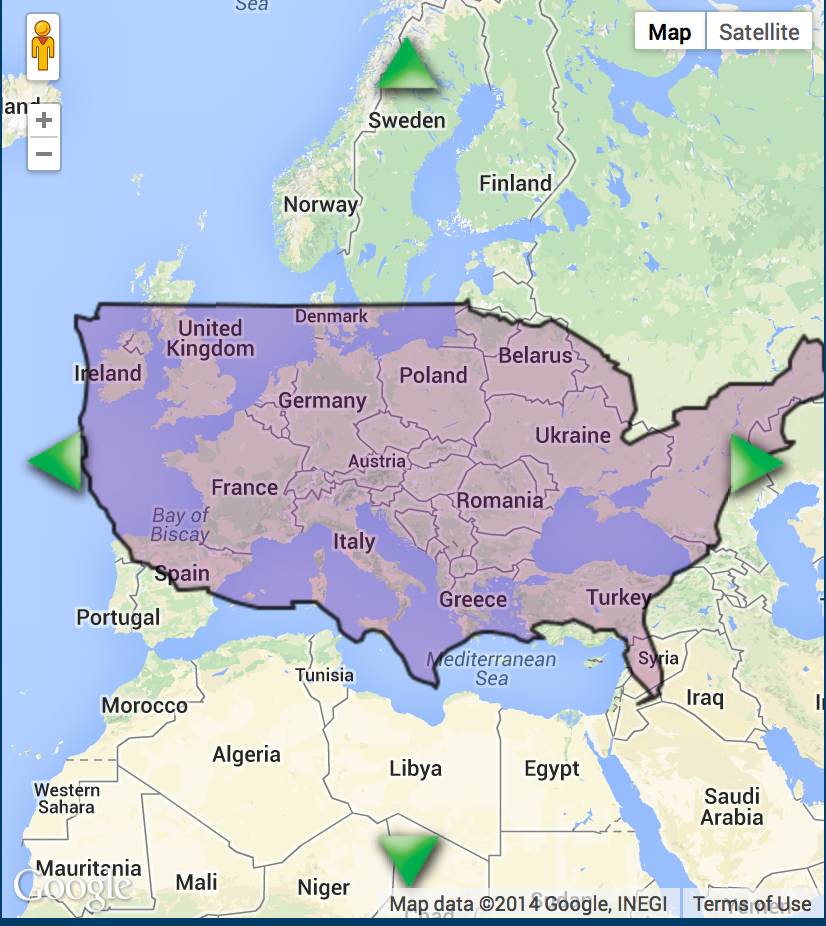
…and just for giggles, the United States overlayed across all of Europe.  The US is a big place.  I lived in the US for my entire life before 2011, and I still haven’t seen nearly as much of it as I have seen of Europe.   I’ve gotta get on that.

overlay04

Which is bigger?  Your home town, or the place you live now?

Bratislava

Caveat:  Many of the pictures in this post might look a little familiar if you read Confuzzledom, because Bev and Jan went to Bratislava the day after I did, and they took the same free walking tour that I did.  We saw a lot of the same things, and even had (delicious traditional) lunch in the same tourist-trap restaurant.  She was much faster about getting her Bratislava post up than I was, however.

The last time I was in Vienna, I took a day trip to Bratislava, the capital of Slovakia.  Bratislava is only about an hour away from Vienna by regular commuter train, and you can even take a boat along the Danube river to get there.

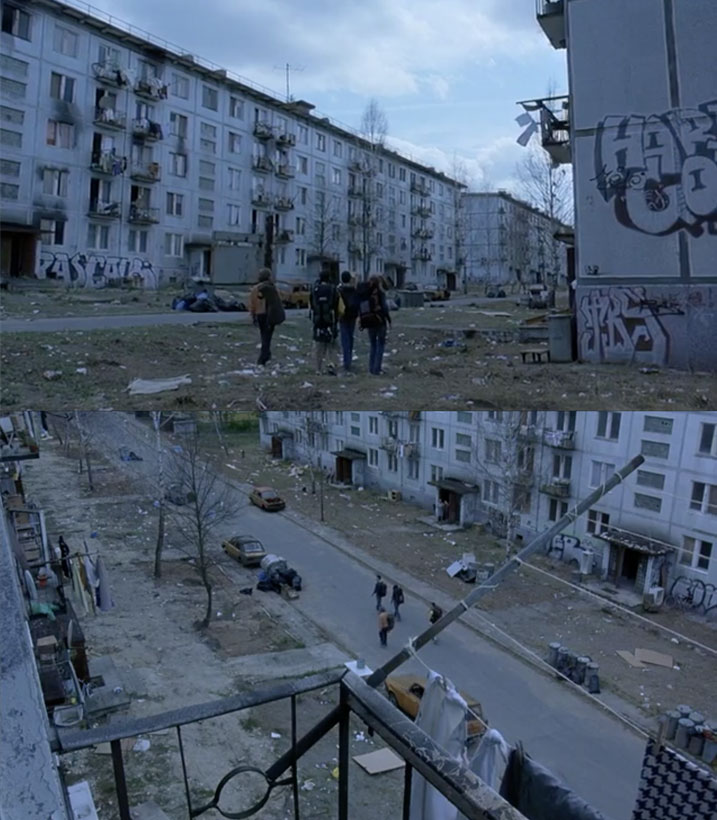
If your only exposure to Bratislava before now is based on the movie Eurotrip, then this is what you’ll expect the city to look like.  These are actual screen captures from the Bratislava section of a very funny movie that gets traveling through Europe dead wrong.

eurotrip

Bratislava is far from the post-Communism wasteland depicted in the movie- it’s actually a really pleasant little town. Outside of the center it’s nothing too pretty, but the old part of the city is compact and lovely.

I felt like the center of the city bears marked similarities to Prague, which makes sense if you consider that prior to the Velvet Divorce in 1993, the Czech Republic and Slovakia were one country.

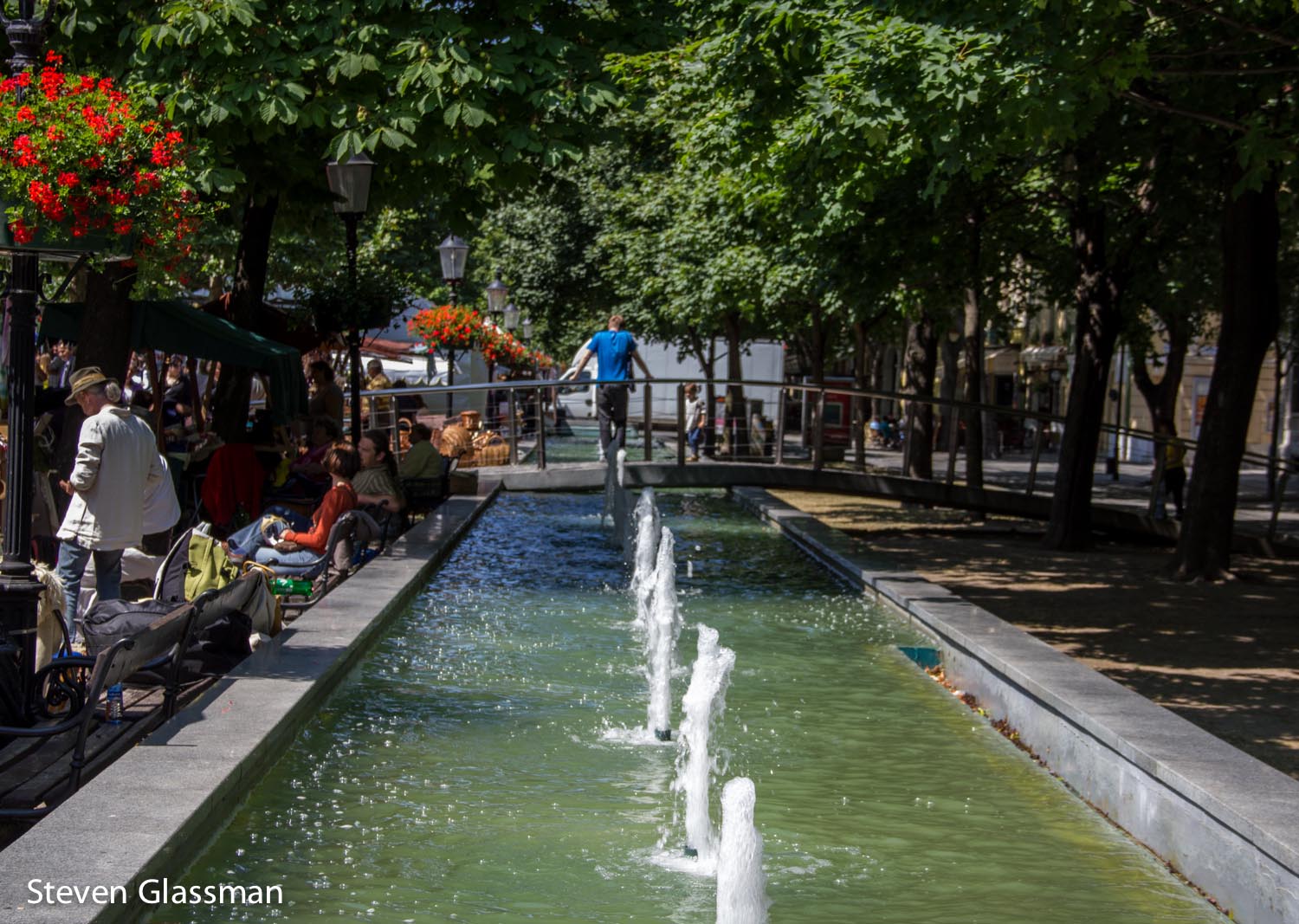
Here’s a fountain in Hviezdoslav Square, a pretty little central area in the city.

bratislava-1

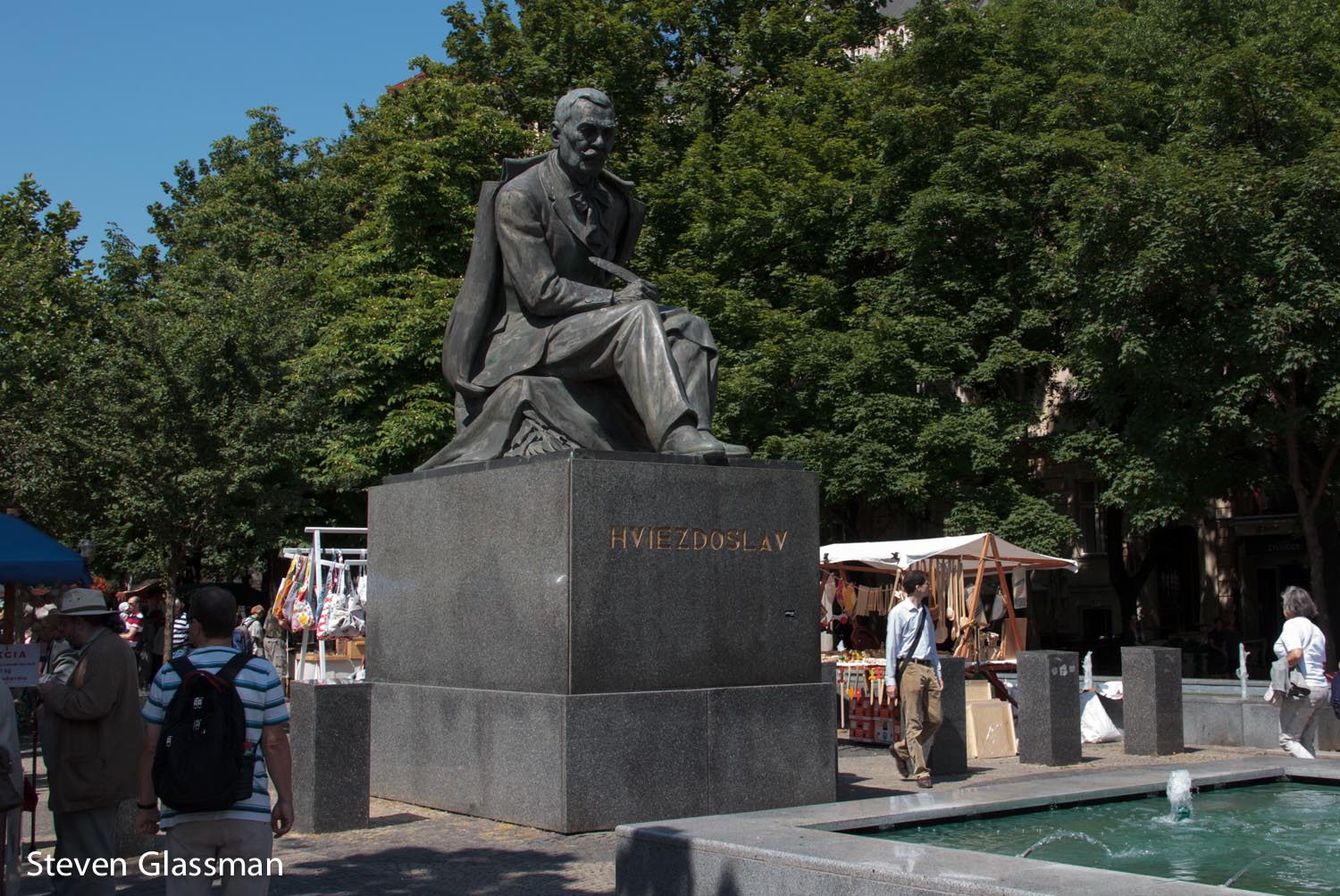
Hviezdoslav Square is named after Pavol Hviezdoslav, a Slovak poet.

bratislava-2

Slovak National Theatre.  Check.

bratislava-3

I meant to check out this place, but didn’t have the chance.  Not a wardrobe in sight!

bratislava-4

Bratislava is filled with amazing statues in random places.  This Man At Work, named Čumil, is very popular.  He is sometimes referred to as The Peeper, because he’s checkin’ out the ladies.

bratislava-5

Of course Man At Work is so low to the ground that he’s been run over a few times.  The sign helps his visibility a little bit.

bratislava-6

Several of the statues are actually owned by restaurants, like this one.  This is a statue of  Schöner Náci, a carpet cleaner who reportedly dressed in a black suit and top hat during the communist days of the city, offering gifts to pretty women.

There was also a well known statue called the Paparazzi statue in Bratislava- it peeked around a corner with a camera.  I asked my tour guide about it, but the Paparazzi statue was owned by a restaurant of the same name, and both restaurant and statue are now gone.

bratislava-7

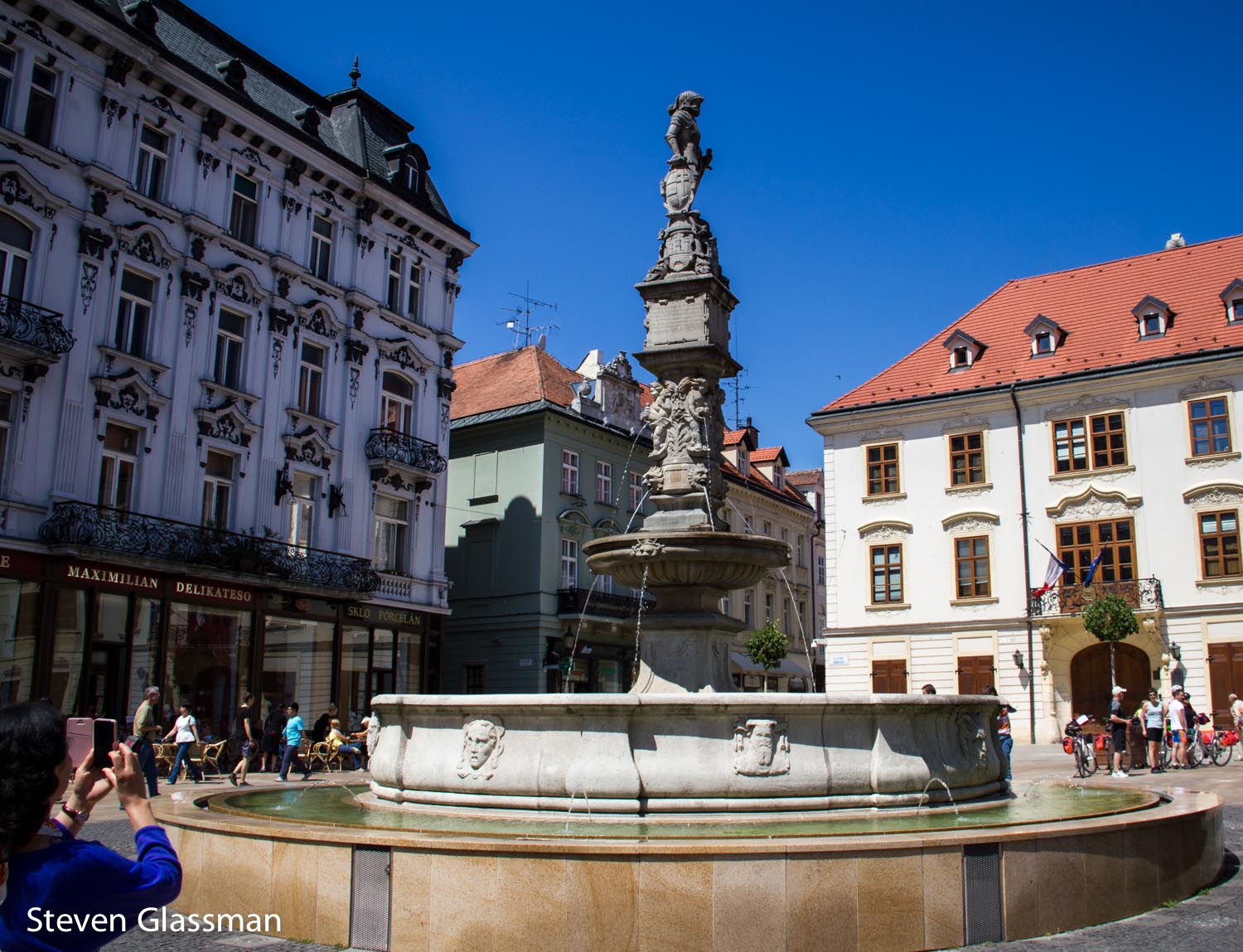
The Roland Fountain (Rolandova fontána)  was commissioned by Hungarian King Maximilian in 1527, and was the first fountain in Bratislava.

bratislava-8

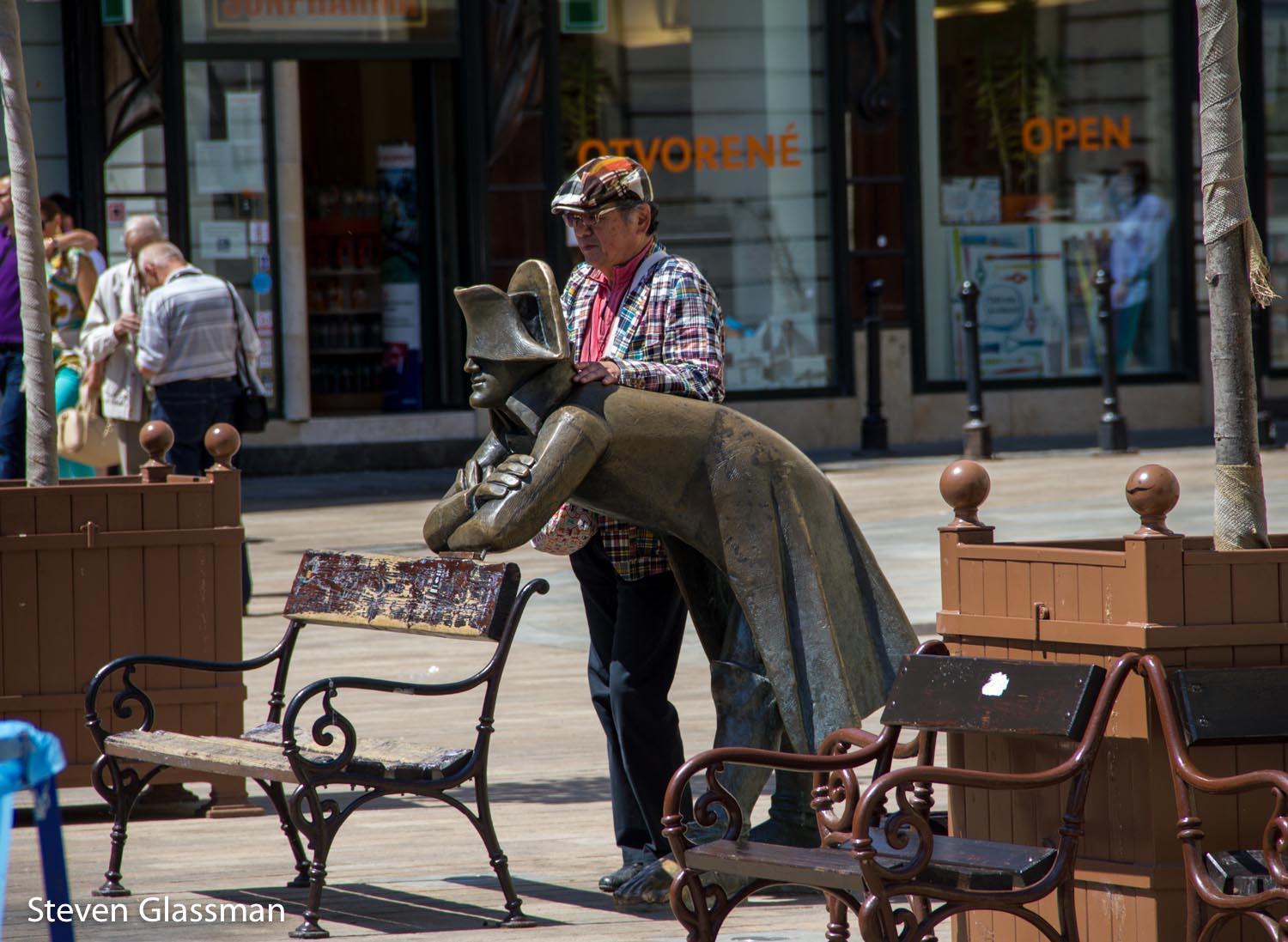
Here’s another one of Bratislava’s great statues.  It’s a deliberately unflattering image of a Napoleonic soldier, because Bratislavans have a long memory when it comes to Napoleon’s siege.

bratislava-9

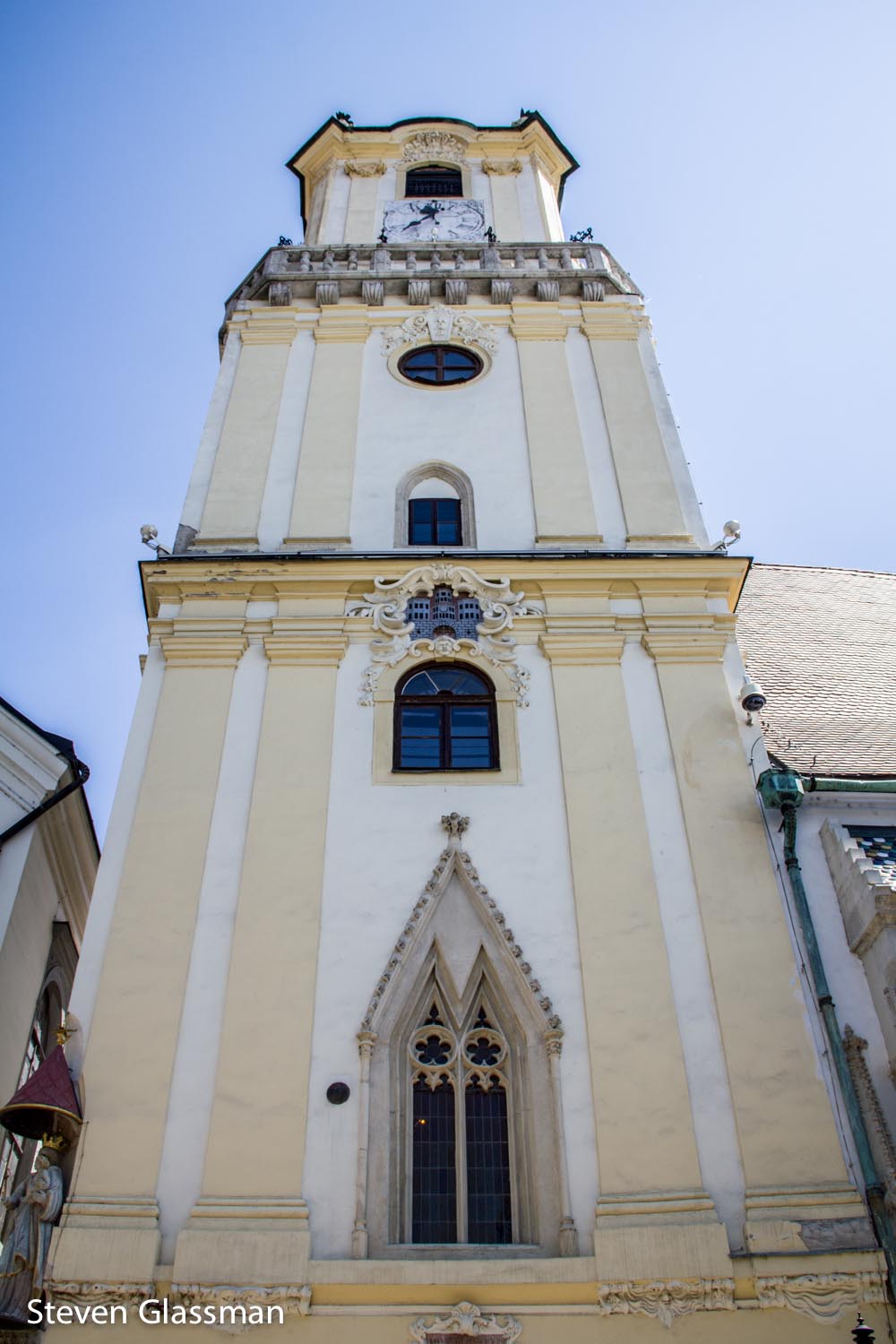
See the black metal ball to the left of the window in this tower?  That’s a cannonball.  This is the old Town Hall tower, and the cannonball is meant to be a reminder of Napoleon’s impact, no pun intended, on the city of Bratislava.

bratislava-10

These Berlin Bears are all over Europe.  I’ve seen more in Berlin than anywhere else, of course, but they’ve made it to other cities.  This one has the coat of arms of Bratislava on the paw on the right (the one that looks like a little castle), and the coat of arms of Slovakia containing the double-barred cross on the left paw.

bratislava-11

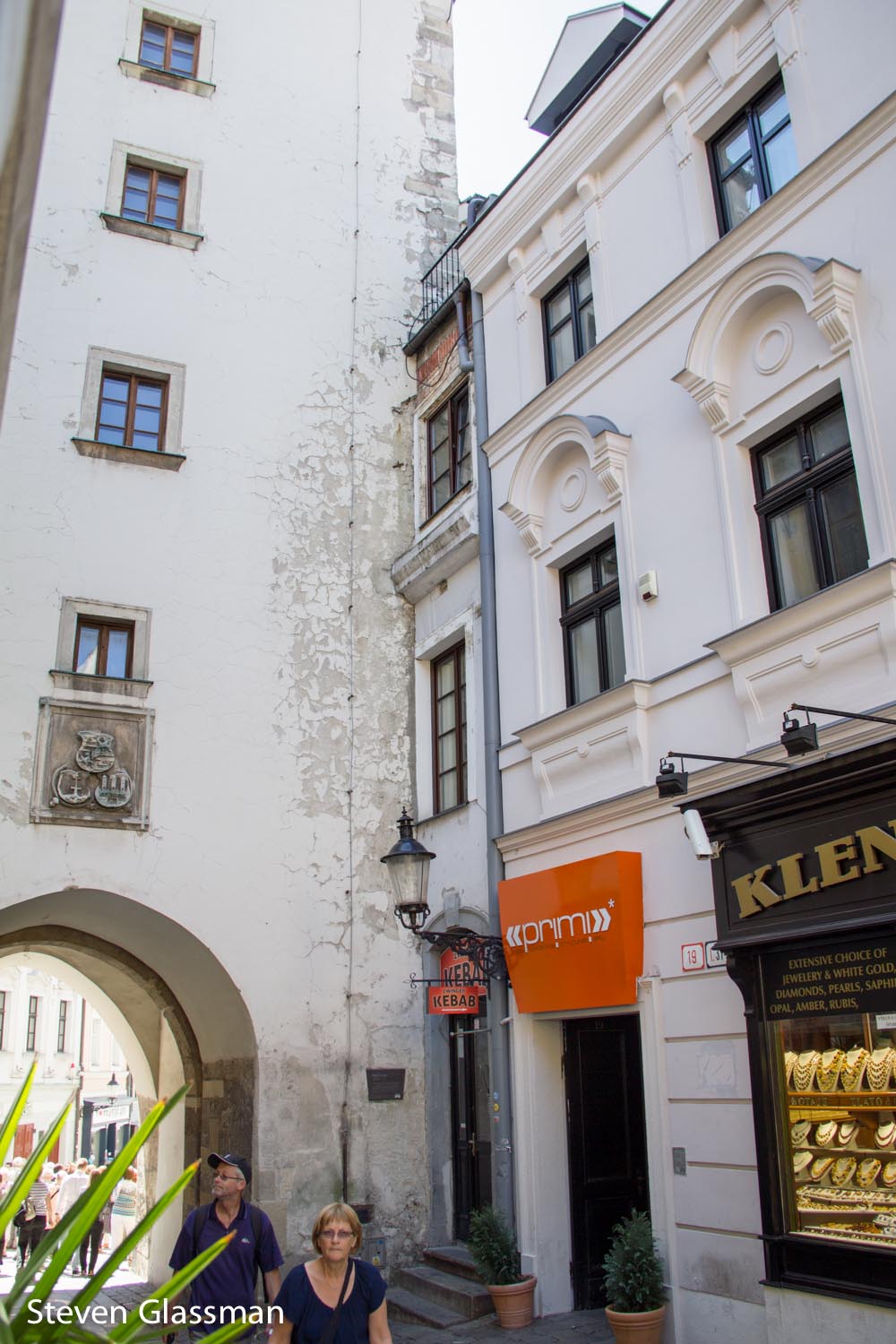
This is the tower of Michael’s Gate, one of the four original main gates to the city.  The distinctive roof is made of copper.  I thought I had taken a picture where you can see both the tower and the gateway beneath it in one shot, but I guess I only got it in separate photos.

bratislava-12

This is the old city gate at the base of the tower from the previous photo.  Michael’s Gate was constructed in the 14th century.

bratislava-13

Next to the tower is the thinnest store in the city of Bratislava.  It’s been many things over the years, but right now, it’s a Döner Kebab stand.    I imagine you can fit almost two people in there at once, but they weren’t open when I walked by so I couldn’t tell you for sure.

bratislava-14

That long flat buiding on the hill in the left half of this photo is Bratislava Castle.  I didn’t get any closer than this.  The building on the right is just a picturesque church.

bratislava-15

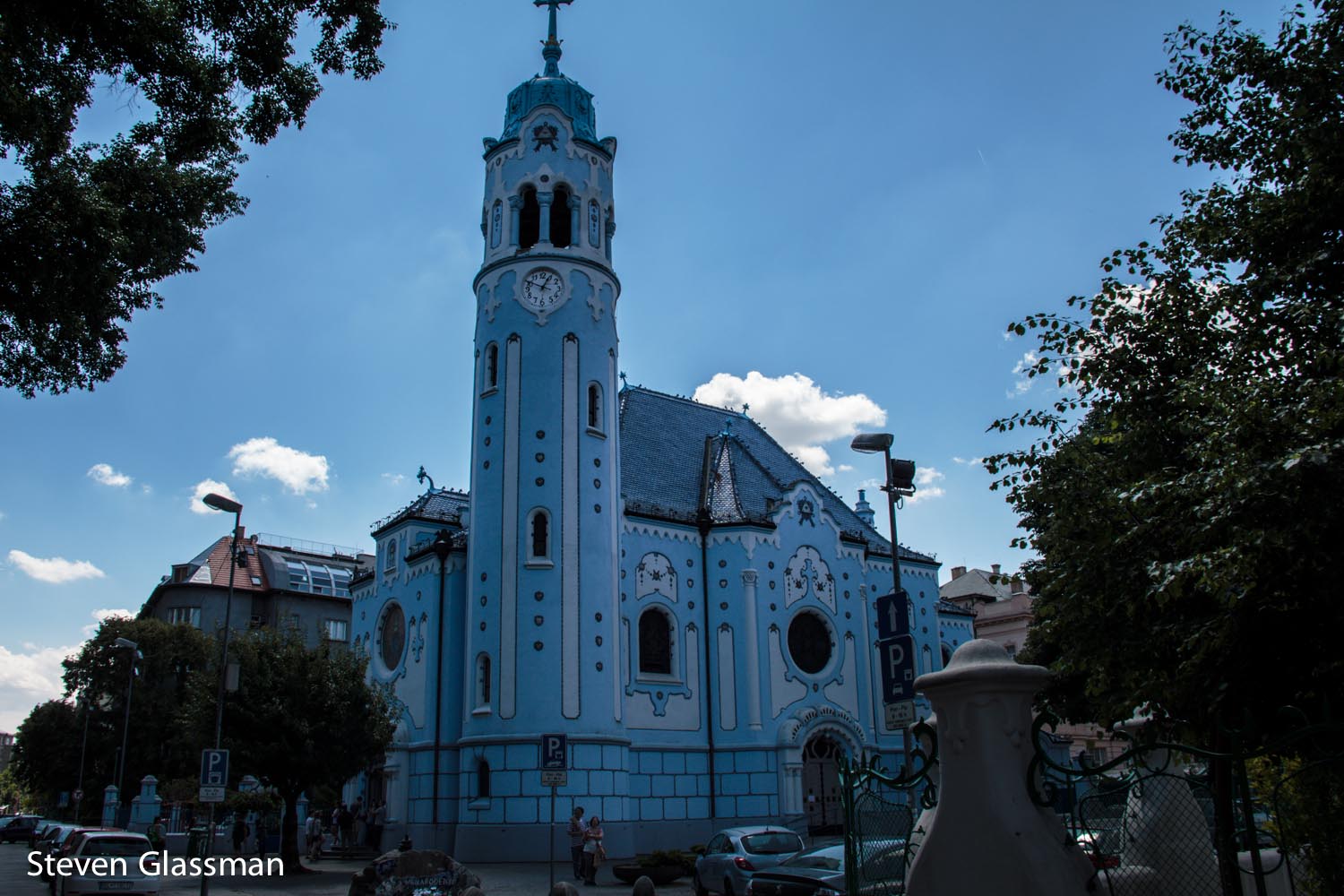
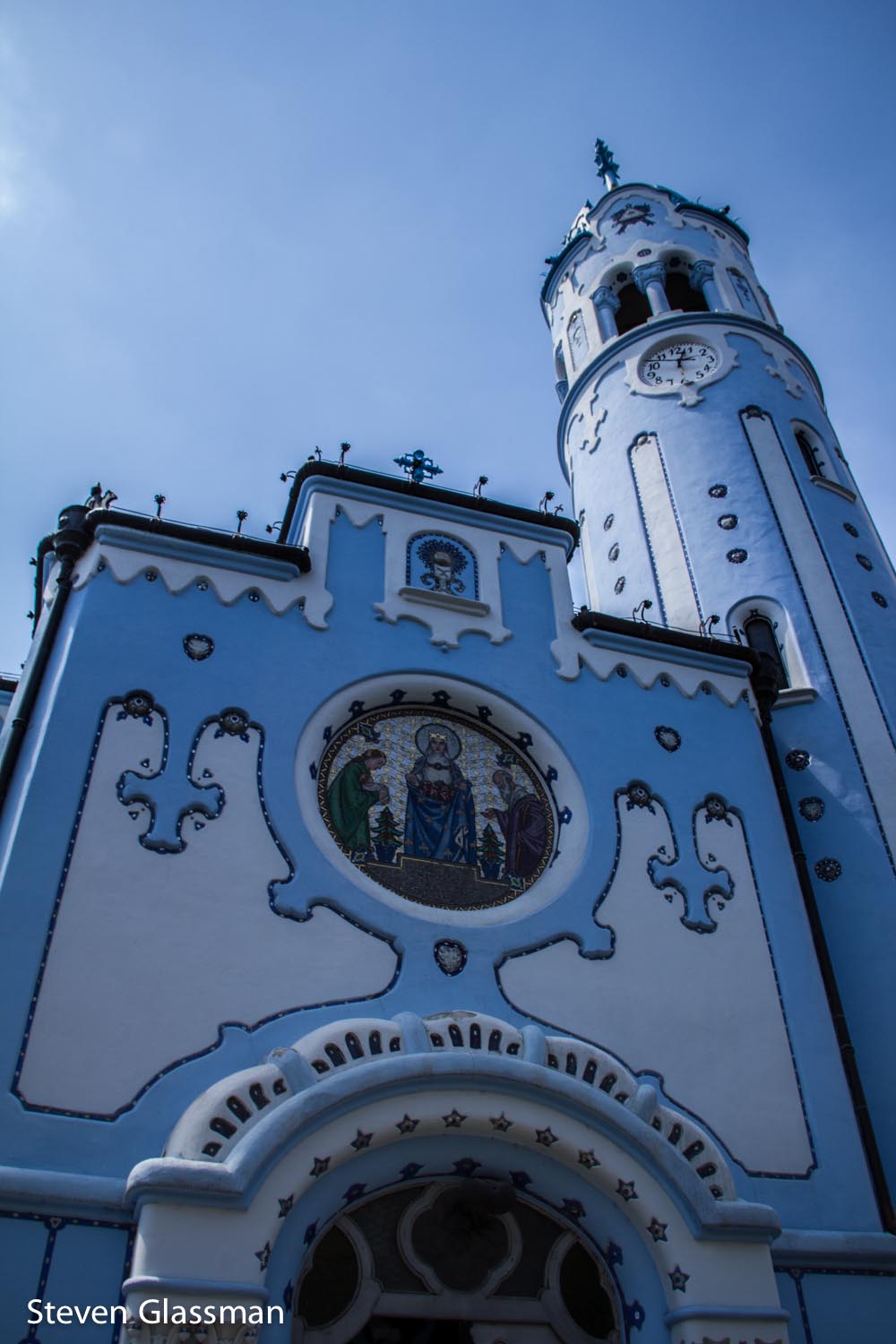
This is the Church Of St. Elisabeth, also known as the Blue Church.  I can’t imagine why they call it that.

bratislava-18

This church is built in the Hungarian Art Nouveau style by Ödön Lechner, a Hungarian architect who was nicknamed the “Hungarian Gaudí“.

bratislava-19

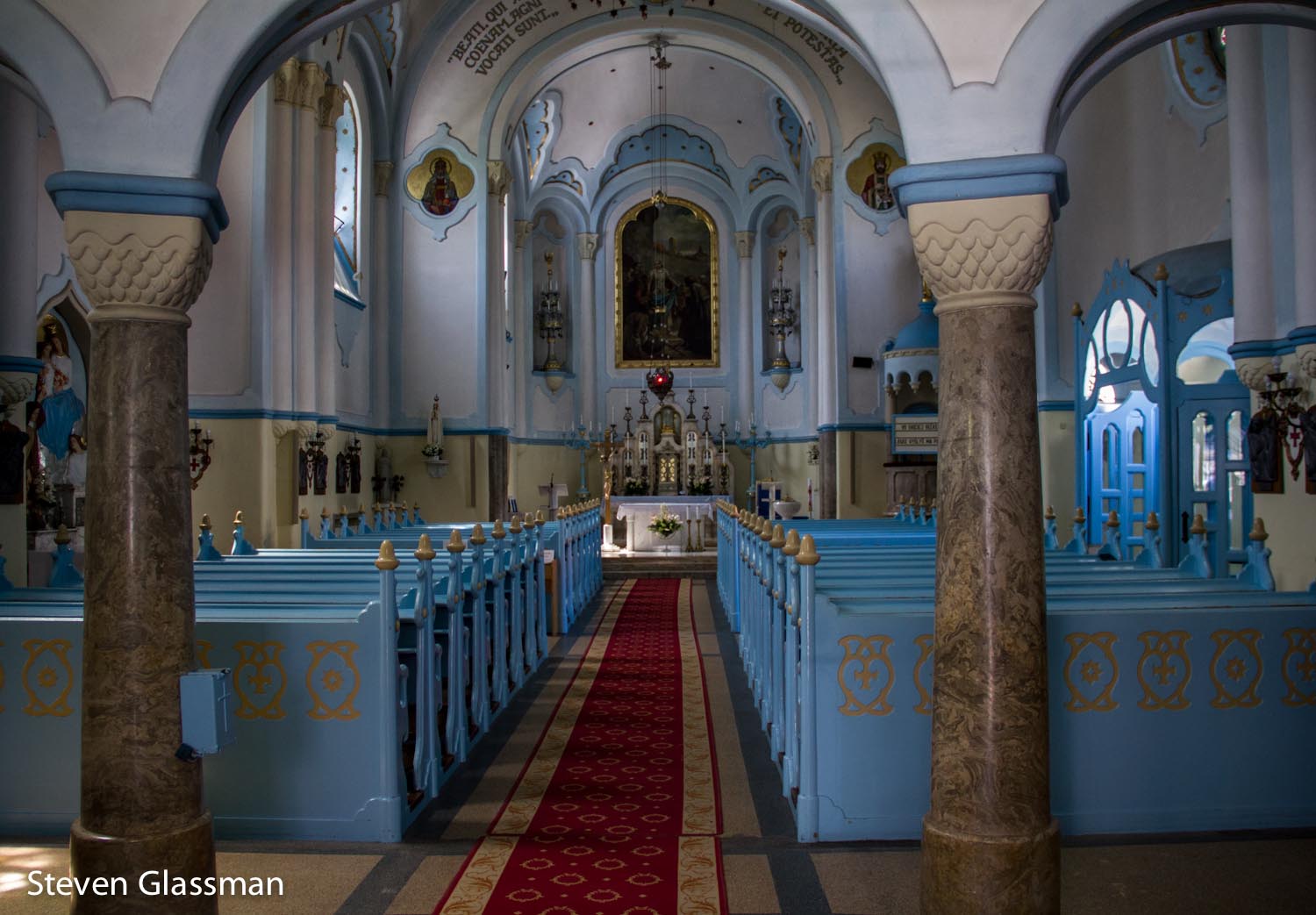
Even the inside is mostly blue!

bratislava-20

It kind of looks like a wedding cake, don’t you think?

bratislava-21

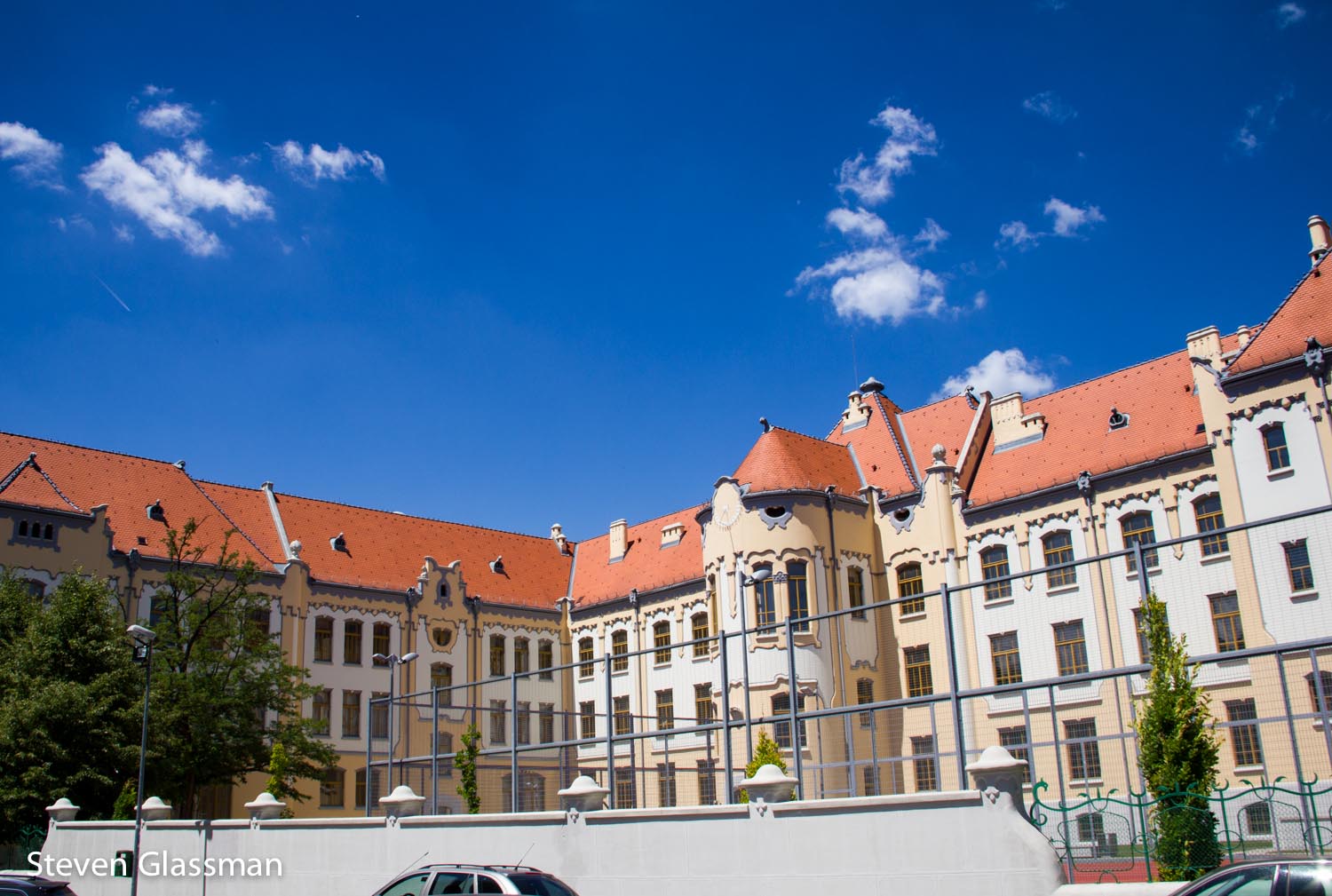
Ödön Lechner also designed this building next to the Blue Church, in the same style.  This is the Gymnázium Grösslingová, and if I remember correctly, it’s being used as a school now.

bratislava-16

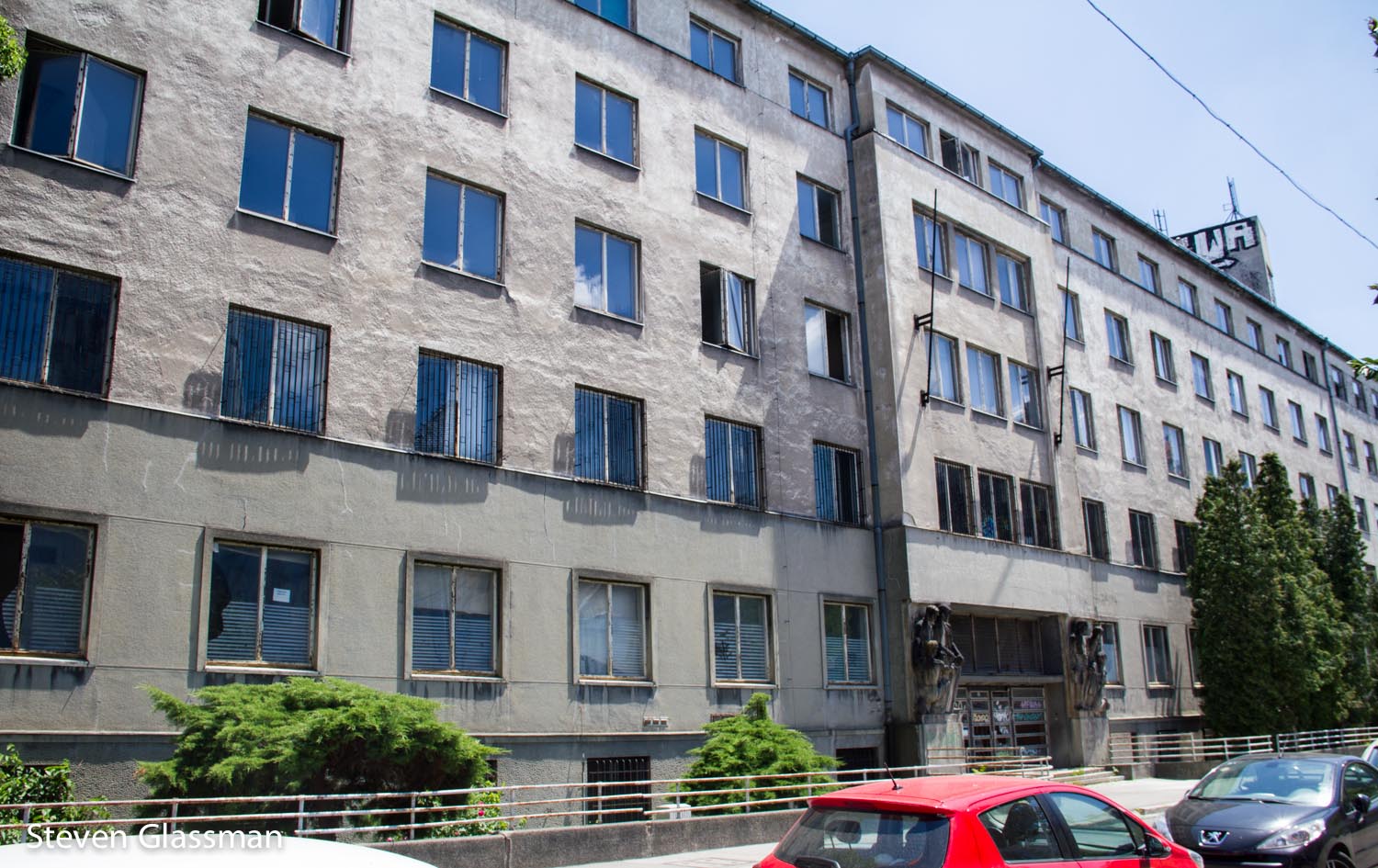
Also across the street from the Blue Church, on the other side, is this creepy abandoned Communist-era hospital.

bratislava-17

I can’t actually remember the deal with this statue, but I thought it was neat looking.

bratislava-22

After the tour, I stopped at a recommended local restaurant for a lunch of traditional Slovakian food. I can’t for the life of me remember what this dish is called, but it basically tasted like macaroni and cheese with bacon.  It was utterly delicious.

bratislava-23

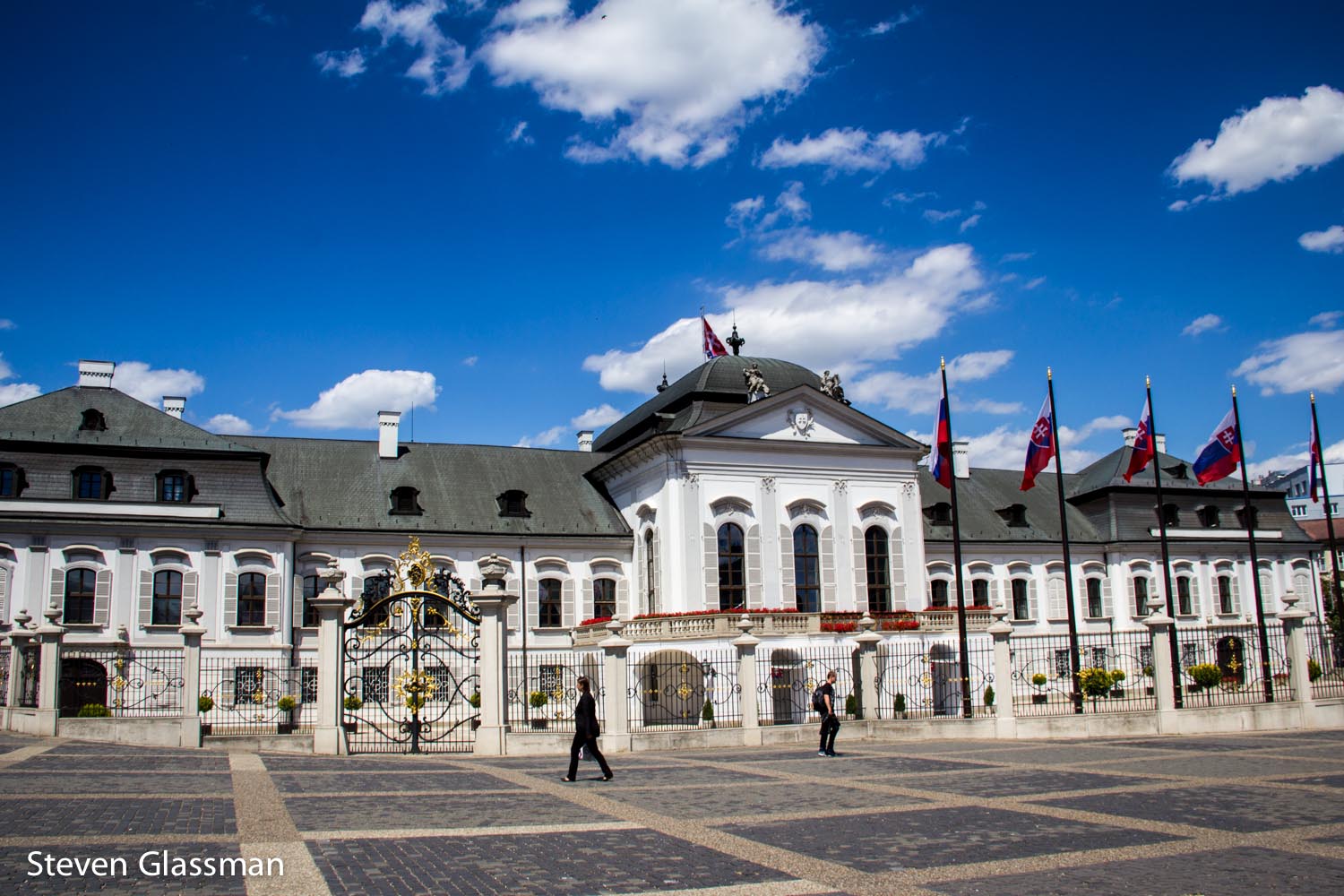
I walked past this stately building on my way back to the train station to leave the city.  This is Grassalkovich Palace, the residence of the President of Slovakia.

bratislava-24

Have you ever been to Slovakia?

Budapest, Part 2

I mentioned earlier that Budapest was much, much larger than I expected.  This is reflected in the amount of photographs I took over the span of a few days in the city.   On one of our mornings in the city, we went to the Central Market Hall, the largest and oldest covered market of the city.

greatmarkethall-1

There’s something very much like this in Frankfurt, Germany-  lots of places to buy fresh meat, cheese, vegetables.  In short, a regular market hall.

greatmarkethall-2

Fresh produce was everywhere.

greatmarkethall-3

There were some fascinating vendors of Tokaji, or Hungarian wine. The blown-glass dragon decanter was particularly amazing.

greatmarkethall-4

I also thought the trident-toting devil decanter was quite fetching.

greatmarkethall-5

I get why you might want a Russian doll painted with Barack Obama, Gene Simmons, Freddie Mercury, or even Angela Merkel, but who on Earth would want a Bin Laden doll?  Unless you were fresh out of paper targets for the gun range, I mean.

greatmarkethall-6

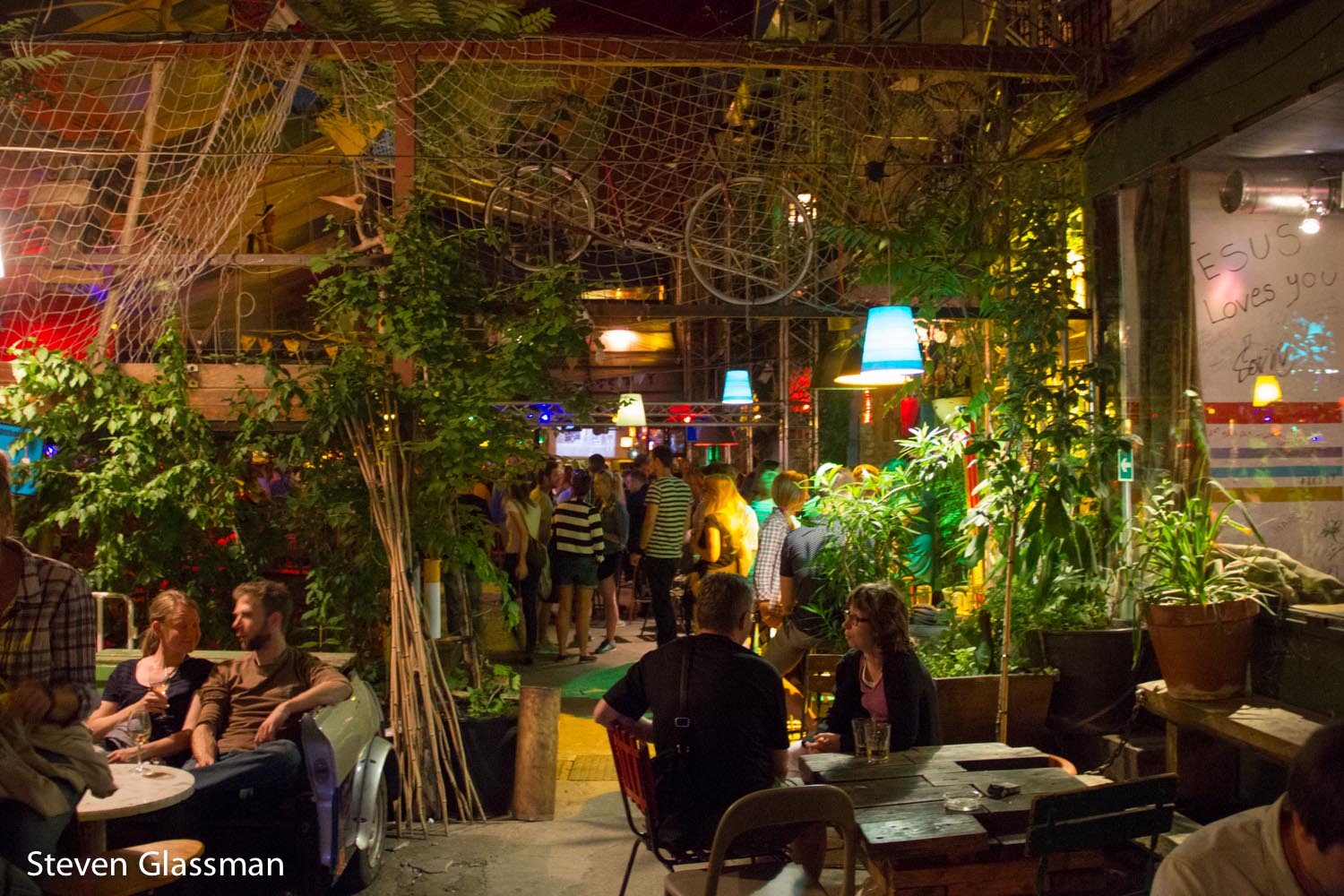
The Market Hall is a daytime visit.  In the evening, we tried to check out one of Budapest’s famous Ruin Pubs.  These are formerly abandoned buildings that have been converted into giant bar complexes.  We went to Szimpla, one of the most well known.

ruinbar-7

The decor was interesting, part junkyard and part Maker Faire.

ruinbar-1

There were multiple bars inside the building, set on two levels.  There were lots of places to sit and enjoy your drink.

ruinbar-2

Movies were projected on some of the walls, and music was played in other areas.

ruinbar-3

Some of the chairs were made from former cars.  The place has an incredibly interesting atmosphere.

ruinbar-4

I know a bunch of people who would have loved Szimpla if only for the random bikes hanging everywhere.

ruinbar-5

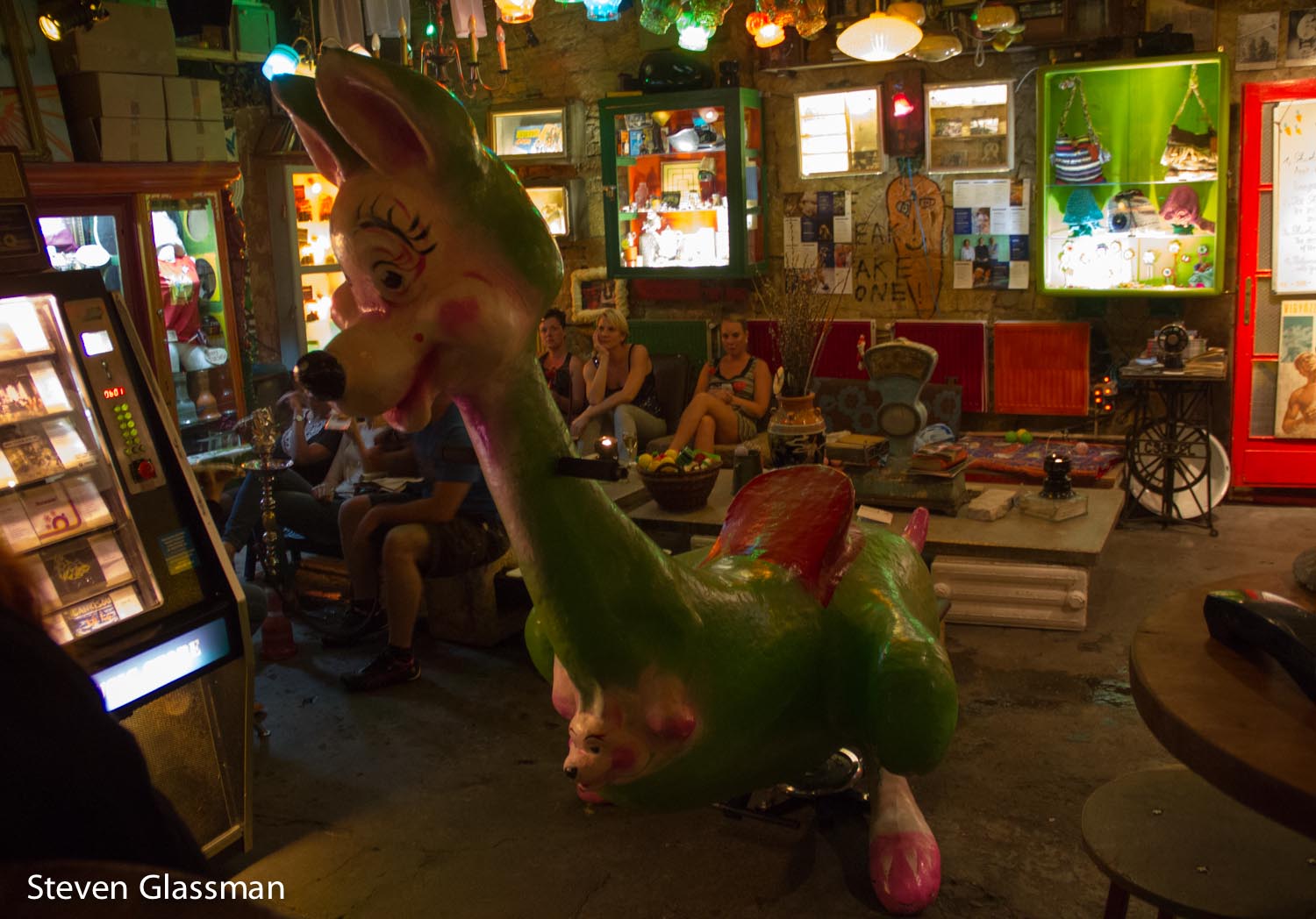
This giant plastic kangaroo near the front entrance was a big hit.  Lots of people stopped to take a quick ride.

ruinbar-6

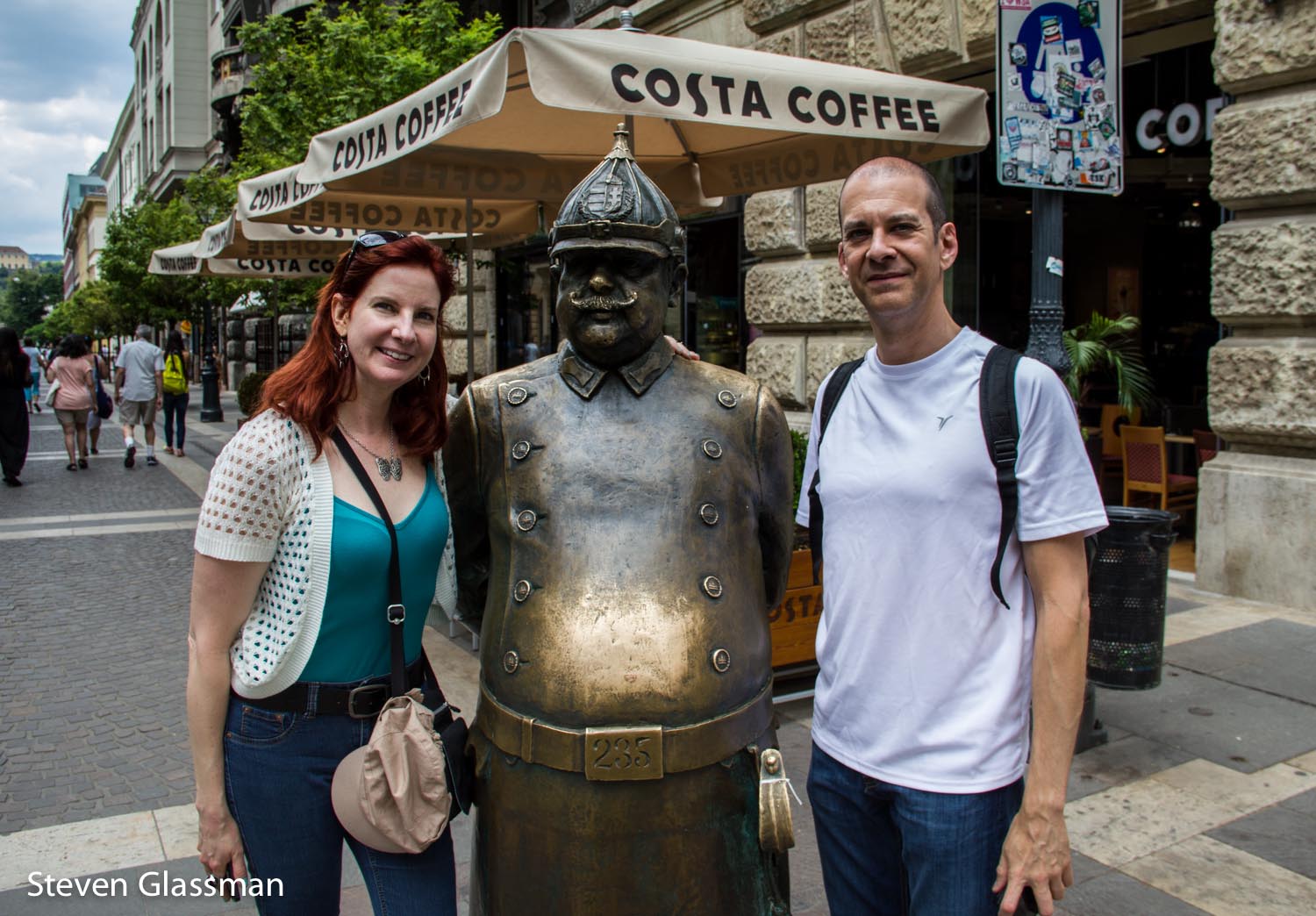
I mentioned in the previous post that Budapest has many fun statues.  Here’s Janene and Chris with the Fat Policeman.  Locals say that if you rub his belly, you’ll eat well.  We didn’t need the help though, because the food in Budapest was amazing.

statuesofbudapest-1

The Kiskiralylany Szobor (Little Princess Statue) is apparently very popular.  I think it’s her crown that draws people in.

statuesofbudapest-2

This girl with her playful dog are a recent addition, placed on the promenade by artist David Raffai in 2007.

statuesofbudapest-3

I’ve saved my favorite for last:  Peter Falk and a beagle.   This Columbo statue was placed to honor Falk because of his Hungarian ancestry.  There is conjecture that his great grandfather was Miksa Falk, a Hungarian writer and politician.

statuesofbudapest-4

This led to some great puns as we walked the length of the city to find this Falking statue.  It was right by Cafe Picard, where we stopped for a Falking delicious lunch.  Make it so!

statuesofbudapest-5

Have you ever been to a Ruin Pub?  How did you like it?

Budapest, Part I

Chris and Janene, good friends from back in Florida, told me that they were going to be in Budapest, so I timed one of my own trips to spend a few days hanging with them.  They flew in from Florida, and I took the train into Keleti station on the same day.

budapest-1

One of the first things I learned as I arrived in Budapest was that the city is much, much, much larger than I thought it would be.  The next thing I learned is that Budapest is actually made up of two cities- Buda and Pest.  The cities are separated by the Danube river, and were united into one larger city in 1873.

I spent much more time in Pest than I did in Buda.  Keleti Station, seen below, is on the Pest side.  So was my hotel, and many of the other things seen in this post.

budapest-35

There are a large number of photographs in this post, in no particular order,  Starting with the Budapest Opera.

budapest-2

This is one of the stations in the Millennium Underground Railway, or M1.  Built between 1894 and 1896, this is the oldest line in the Budapest Metro, and the second oldest underground metro in the world.  The oldest metro is in the London Underground.

budapest-3

This is Heroes Square.  If you take a good tour, you’ll get a lot of very interesting explanations for each of the statues.

budapest-4

We kept seeing Budapest information staffers-  they were always around to help tourists find their way.  Stylish wheels, too!

budapest-5

This sign was very amusing.  We expect signs to point us to attractions and restrooms, but free Wi-Fi?  Amazing.

budapest-6

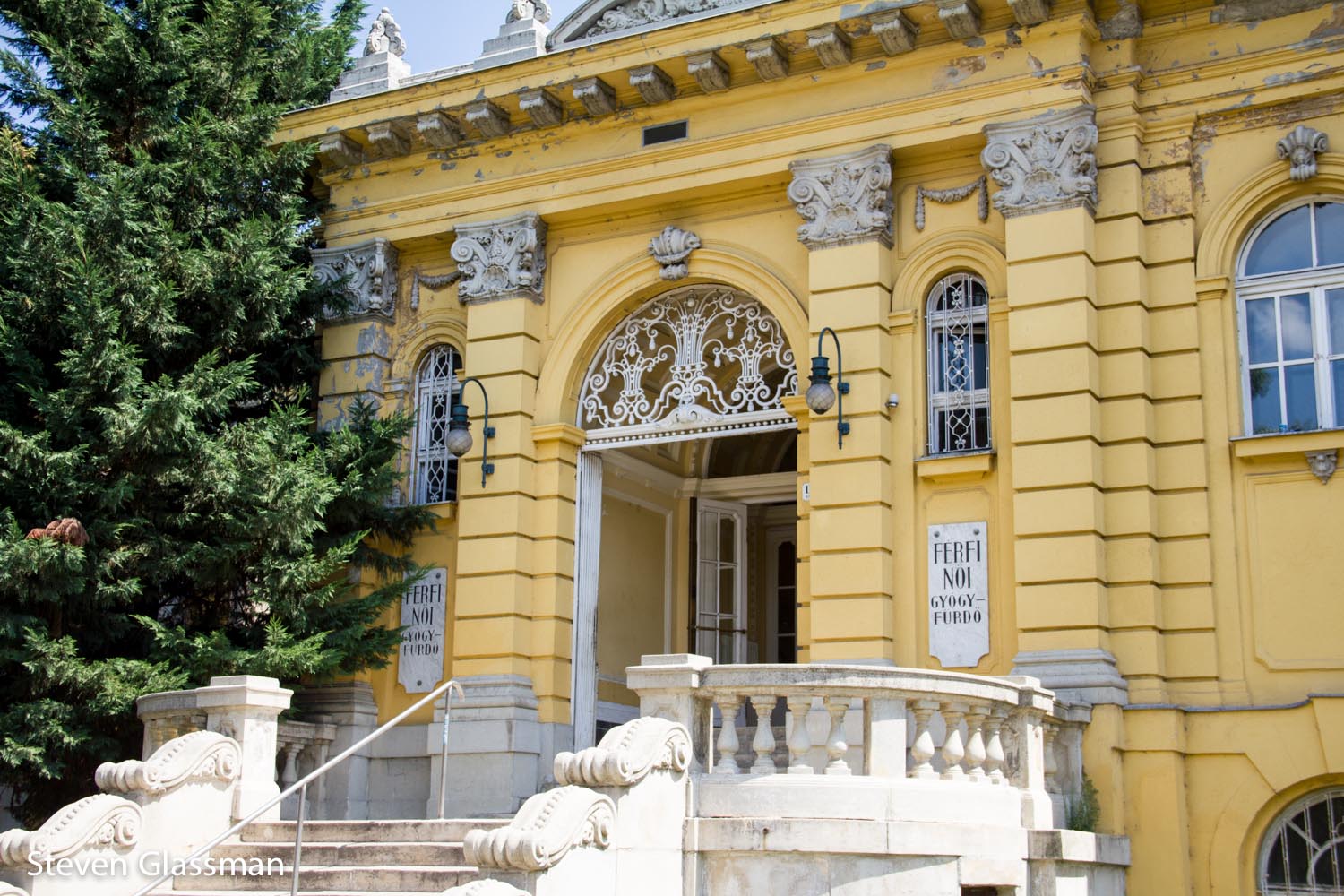
Thermal baths are located in various places around the city.  This is the front entrance to Széchenyi Baths.

budapest-7

This is the view inside Széchenyi BathsSzéchenyi is reportedly the largest spa in Europe, with multiple pools and saunas.

budapest-8

This… was some delicious freshly made strudel from the First Strudel House of Pest, just down the street from St. Stephen’s Basilica.  One of them is apple, the other rhubarb.  So, so delicious.

budapest-9

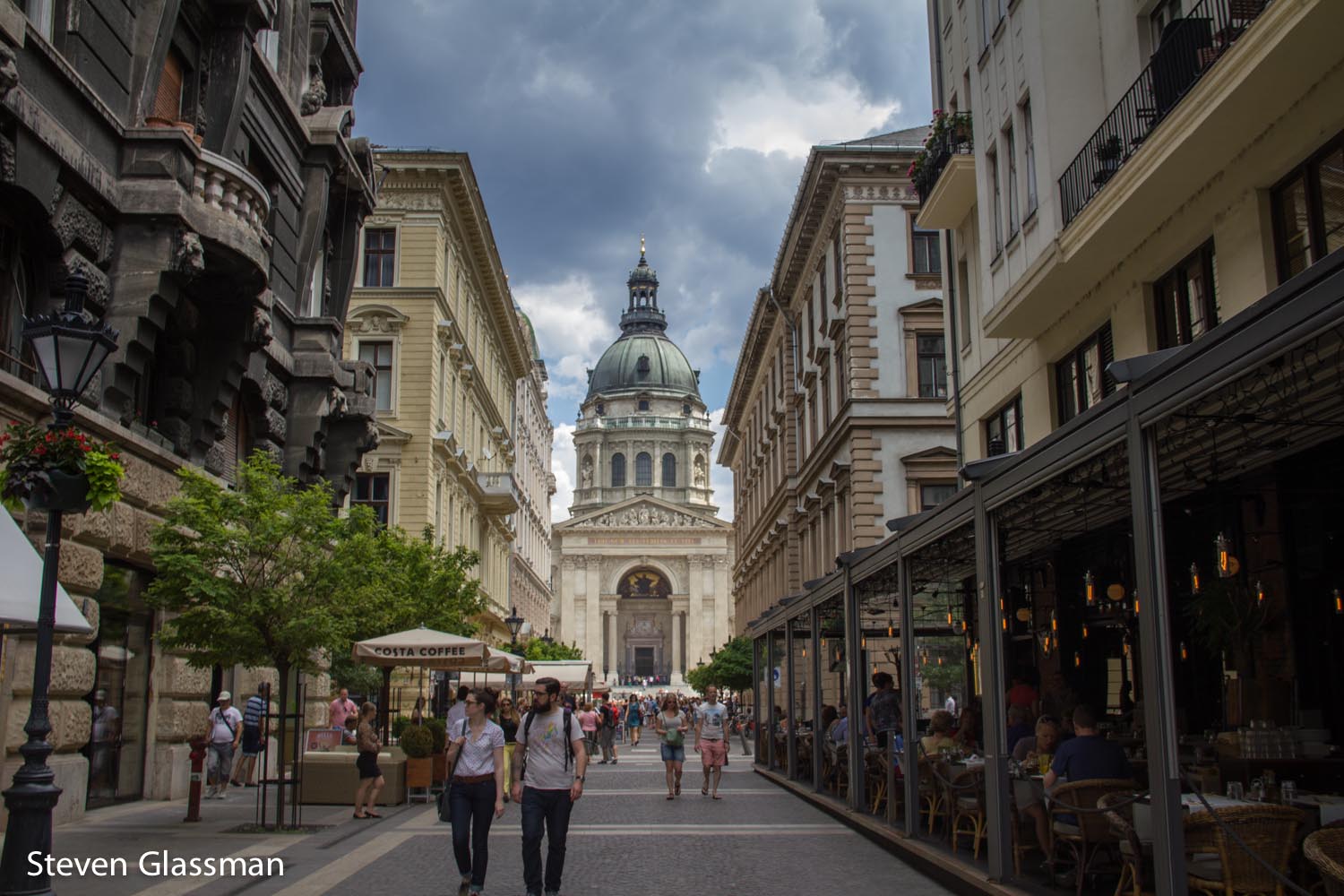
The streets around the Basilica are lined with places to eat.

budapest-10

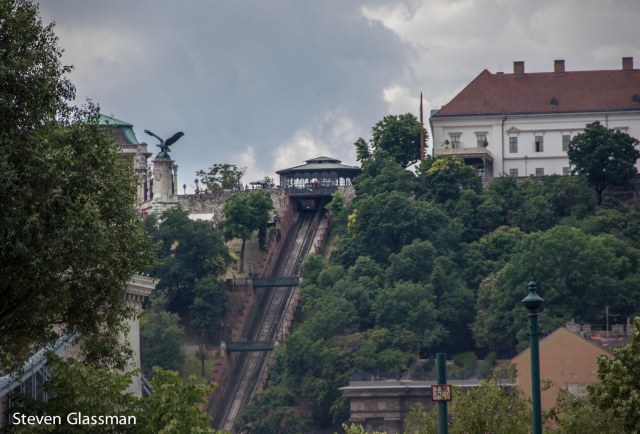
Here’s a far view of the Buda Castle Funicular, taken from the Chain Bridge.
budapest-11

This is the Chain Bridge, locally named Széchenyi lánchíd.  The large building to the left is the Buda Castle, which has been converted to a museum.

budapest-12

Here’s a close-up of the Funicular I showed earlier.

budapest-26

This is the view from the top of the Funicular, looking back over the Chain Bridge into Pest.

budapest-27

This is another area on the Buda side of the river, Fisherman’s Bastion and lookout terrace.

budapest-13

The Fisherman’s Bastion provides amazing views of the Pest side of the river, including the Hungarian Parliament.

budapest-14

This church at Fisherman’s Bastion is called the Matthias Church.  Several coronations occurred here.  It’s under reconstruction at the moment.

budapest-15

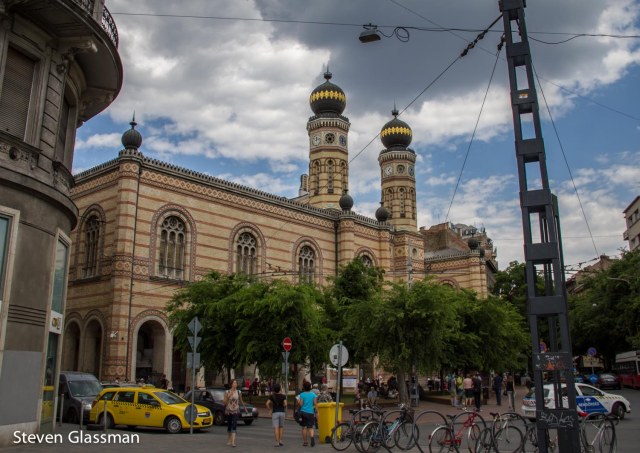
Many religions are represented in Budapest.  On the Pest side of the river is the Dohány Street Synagogue, a Jewish synagogue built in the 1850s with 2,964 seats (1,492 for men and 1,472 for women.)
budapest-16

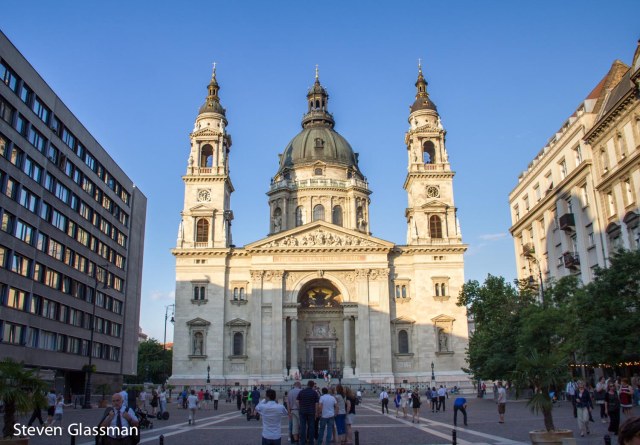
The most well known of the churches in Budapest is St. Stephen’s Basilica, known locally as Szent István-bazilika.
budapest-20

Yes, you can climb it.

budapest-19

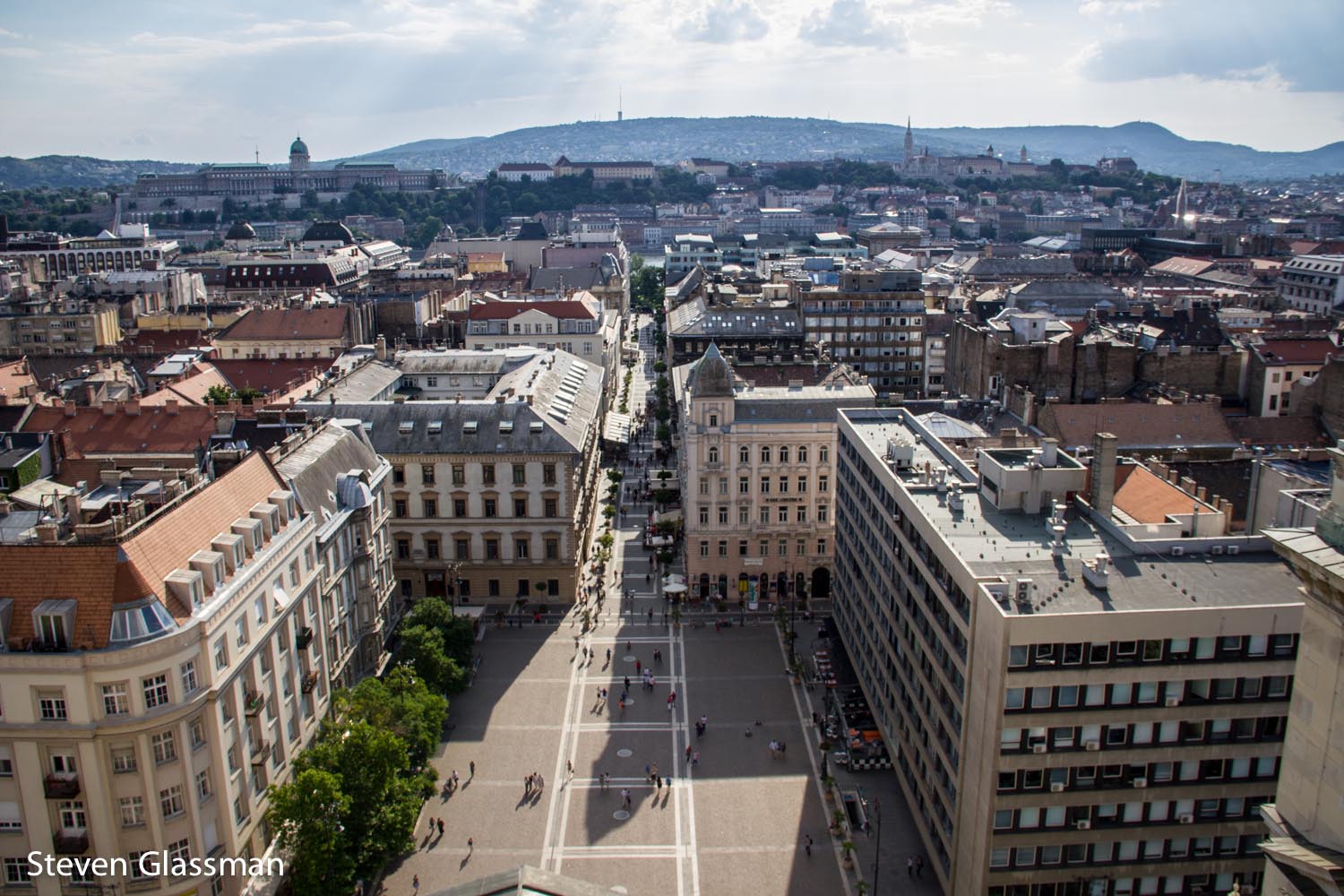
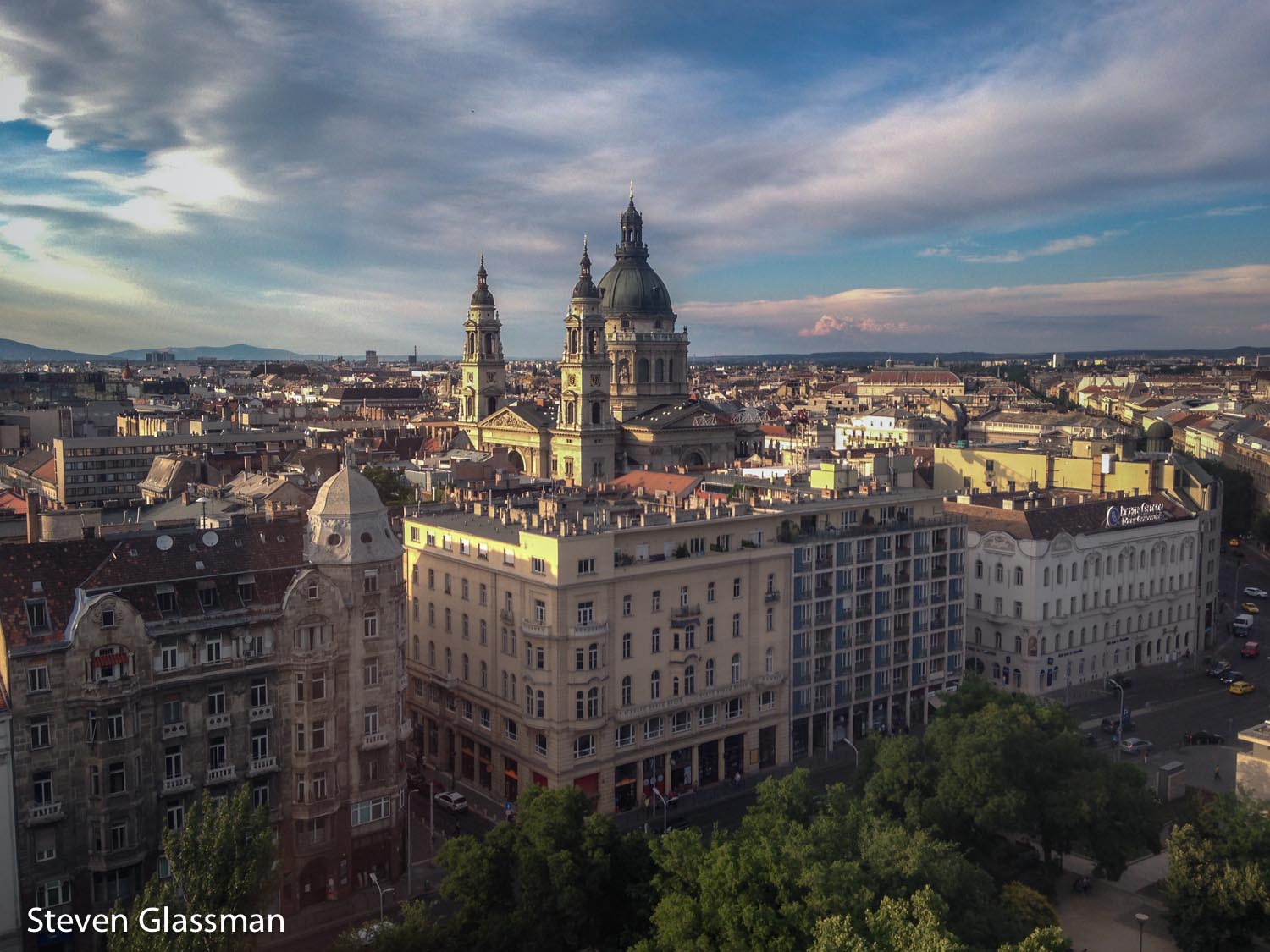
From the top, there’s a pretty fantastic view back toward Buda.

budapest-17

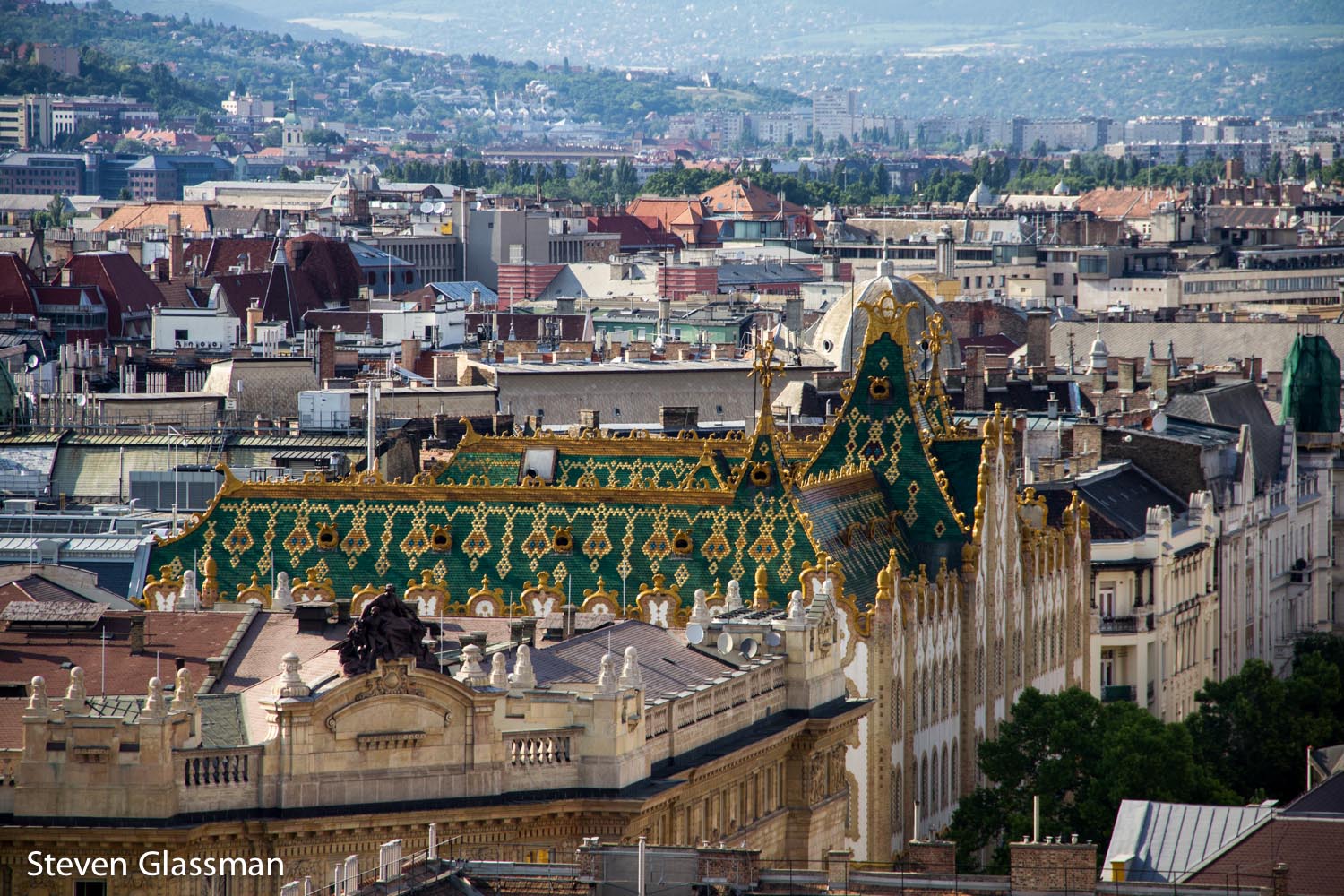
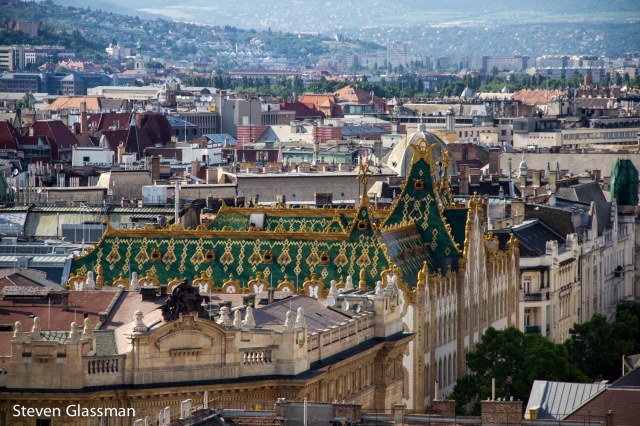
I never did figure out which building this is, but it’s nifty looking.  I thought perhaps it was the Museum of Applied Arts, but they’re not quite the same patterns.
budapest-18

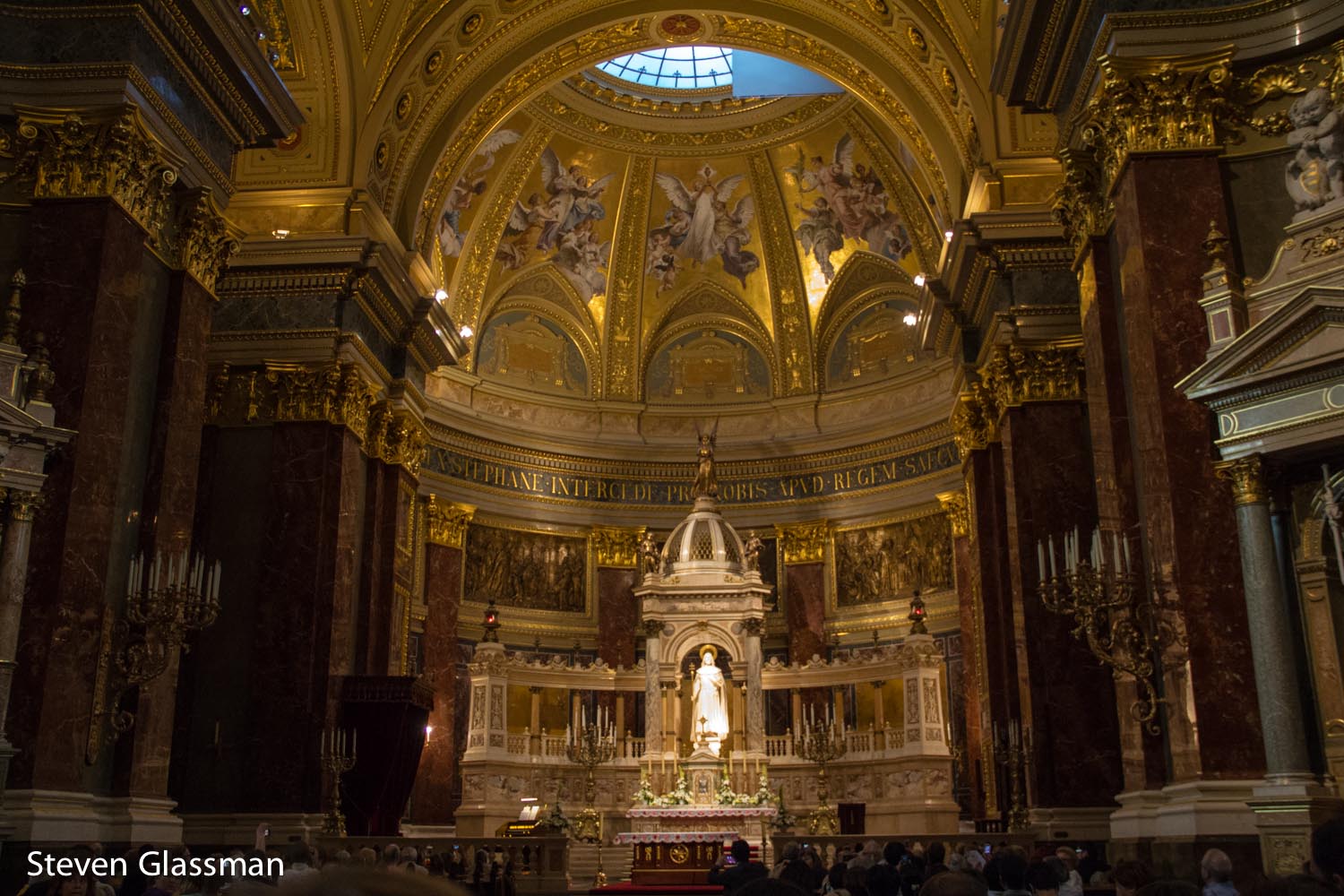
This is the inside of St. Stephen’s Basilica.  We went there for an organ concert.

budapest-21

Here’s the organist, Miklós Teleki.  He was pretty good.

budapest-22

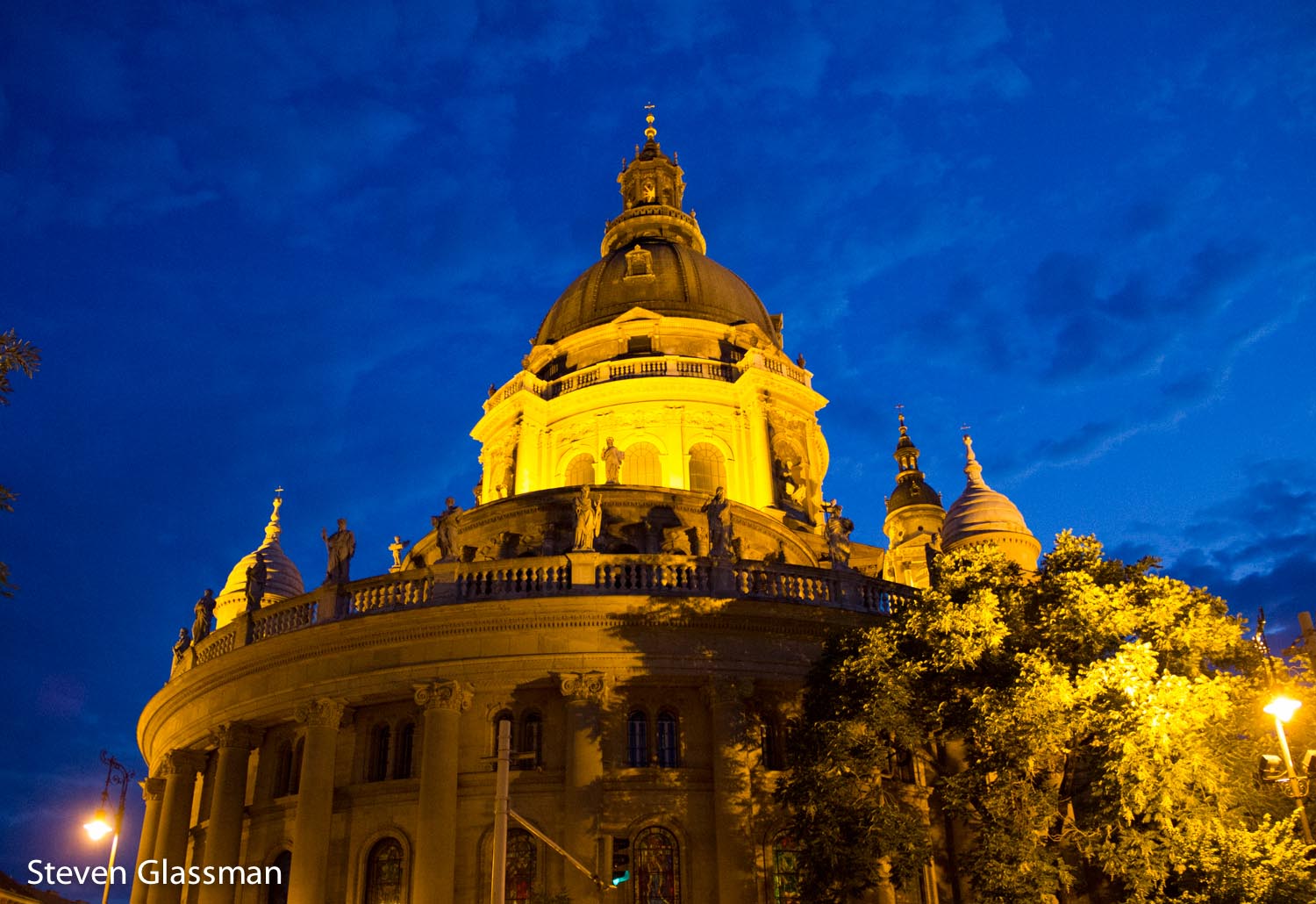
When we left the concert, this is how the Basilica was lit up.  I did absolutely no color processing to this photo- I simply cropped and resized it.  This is how it looked without the camera.

budapest-23

There were lots of interesting statues around Budapest.  The man standing on the bridge is Imre Nagy. Nagy was chosen by the people to become the new Prime Minister during an uprising in 1956. When the Soviet troops invaded he was arrested and executed along with thousands of others.

budapest-24

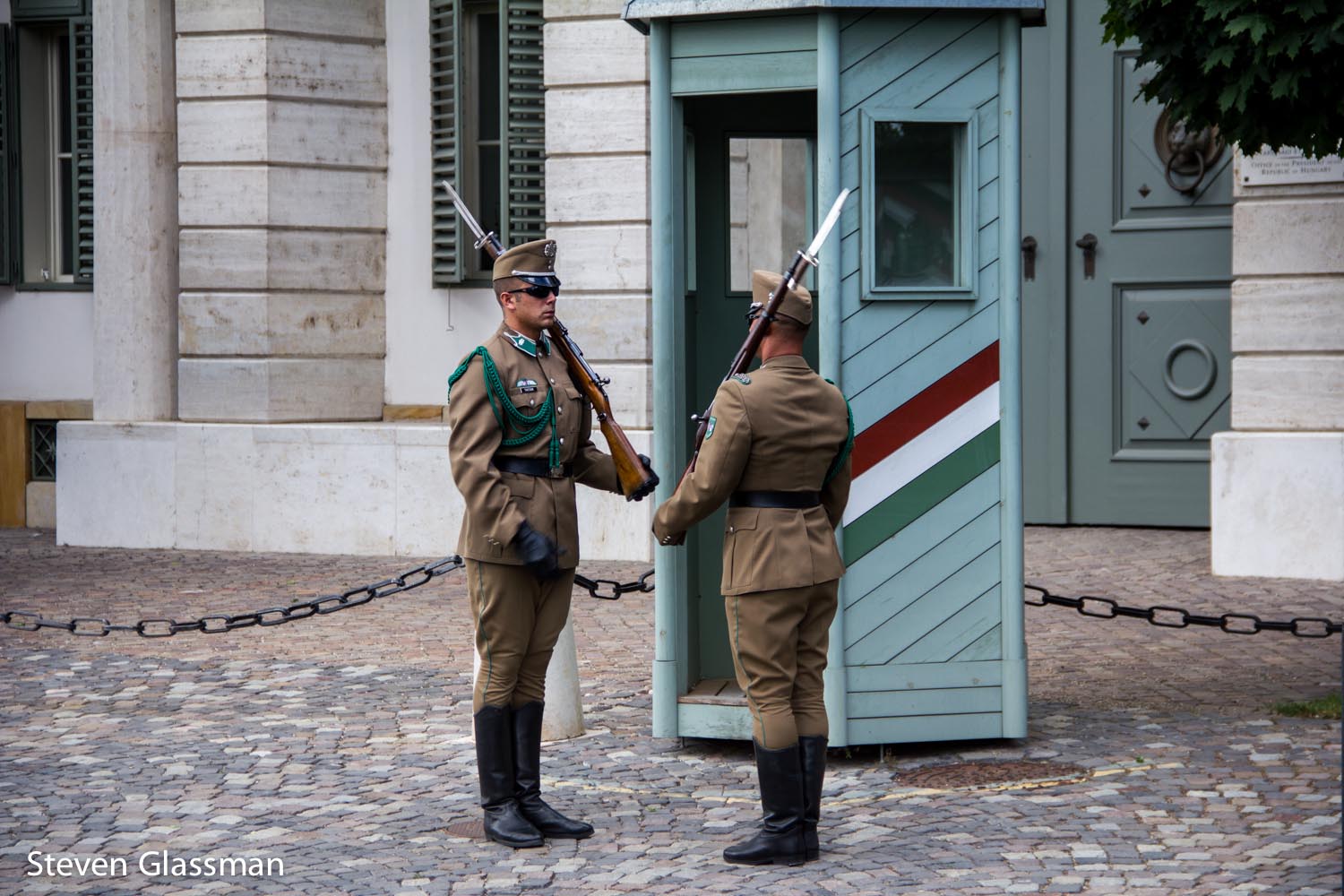
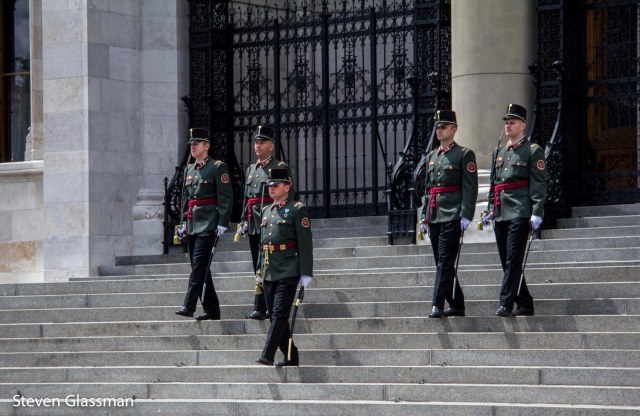
When we walked past the Hungarian Parliament, we caught a changing of the guard ceremony.  It was very ceremonial, with lots of spinning rifles and whatnot.
budapest-25

When we were at the top of the Funicular, we caught a similar changing of the guard ceremony, but this was a different set of guards.    The dark uniforms above are at the Parliament, while the light brown uniforms seen here are at Buda Castle.

budapest-28

This giant bird is a Turul.  The Turul is considered a divine messenger, and it’s heavily woven into the origin mythology of the Magyar people.  I was looking for this Turul statue because on the train into Budapest, I saw an enormous Turul statue on a mountain near Tatabánya.  It was so large that it was easy to find information about it- it was the last of three giant Turul statues.  It’s the largest bird statue in the world, and the largest bronze statue in Central Europe.

This Turul, sitting in front of Buda Castle, is not nearly so large as the one on the mountain.  It was still pretty big though.

budapest-29

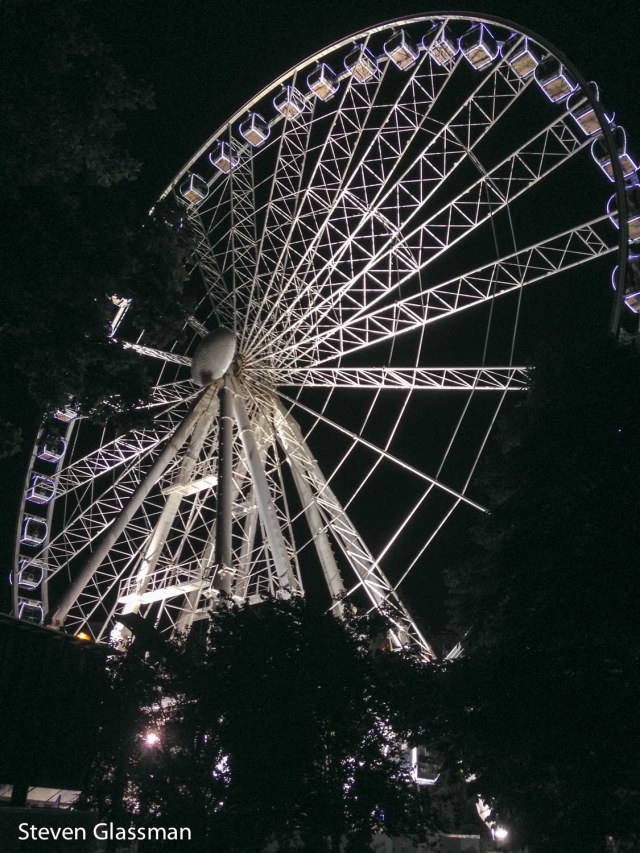
In one of the earlier photos showing the city, you might have noticed a ferris wheel.   This is how it looks at night.
budapest-33

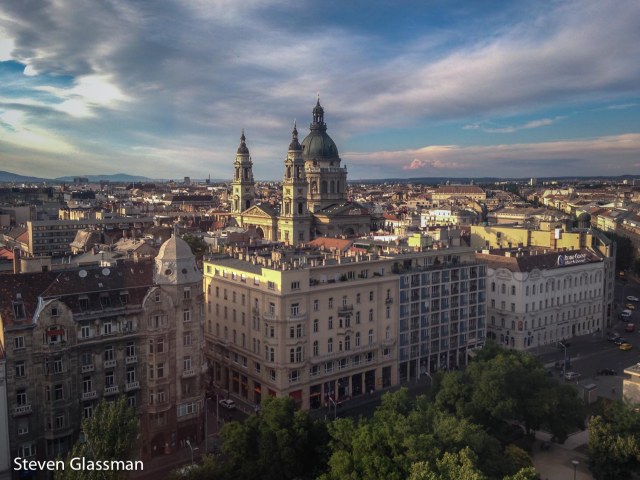
This is how St. Stephen’s Basilica looks from that same ferris wheel during the daytime.
budapest-30

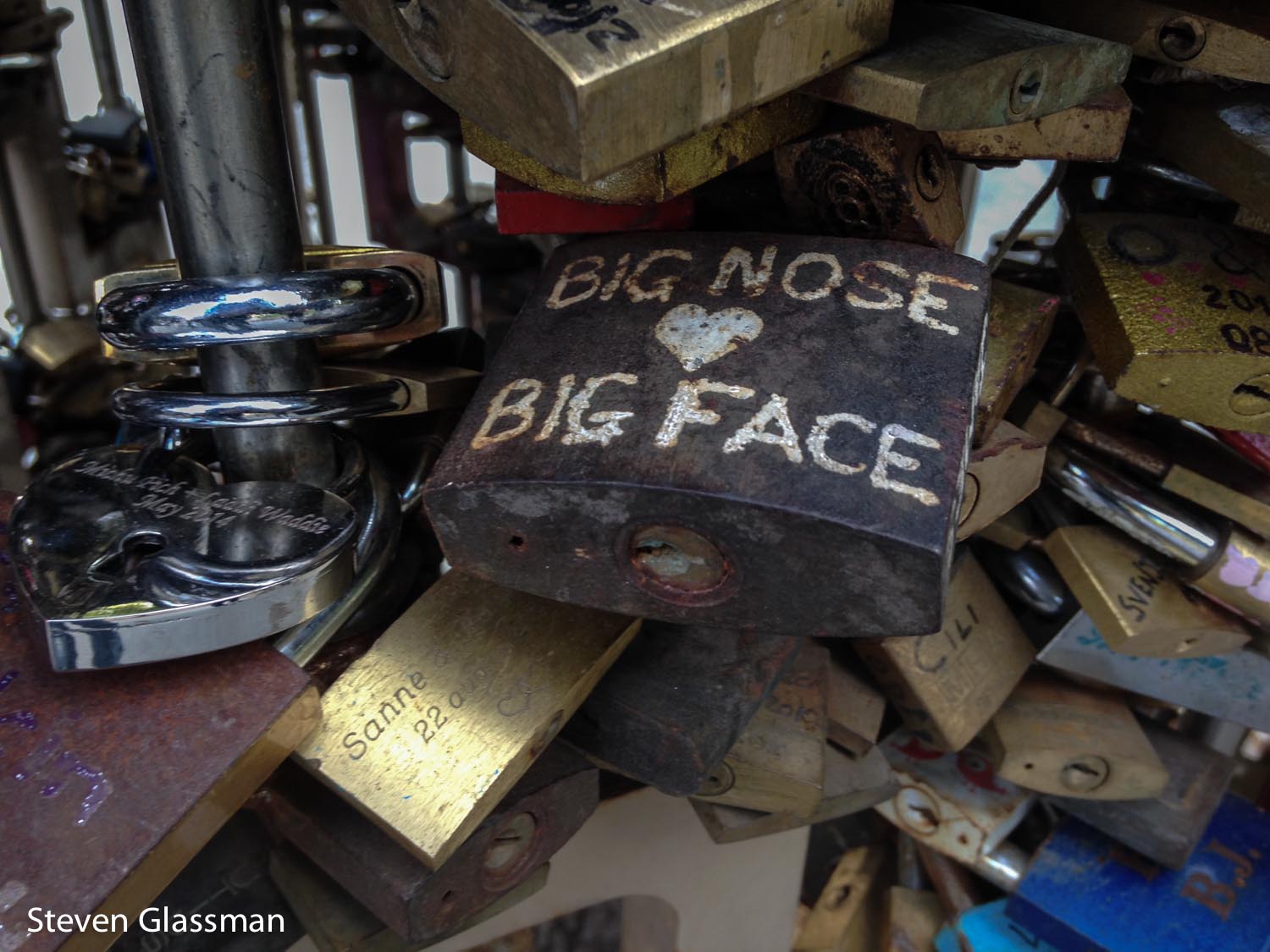
The love locks phenomenon is everywhere.  The “Big Nose Hearts Big Face” one made me laugh.  And the big silver one next to it says “Michu Pich & Laddi Waddie,”  which is kind of great.

budapest-31

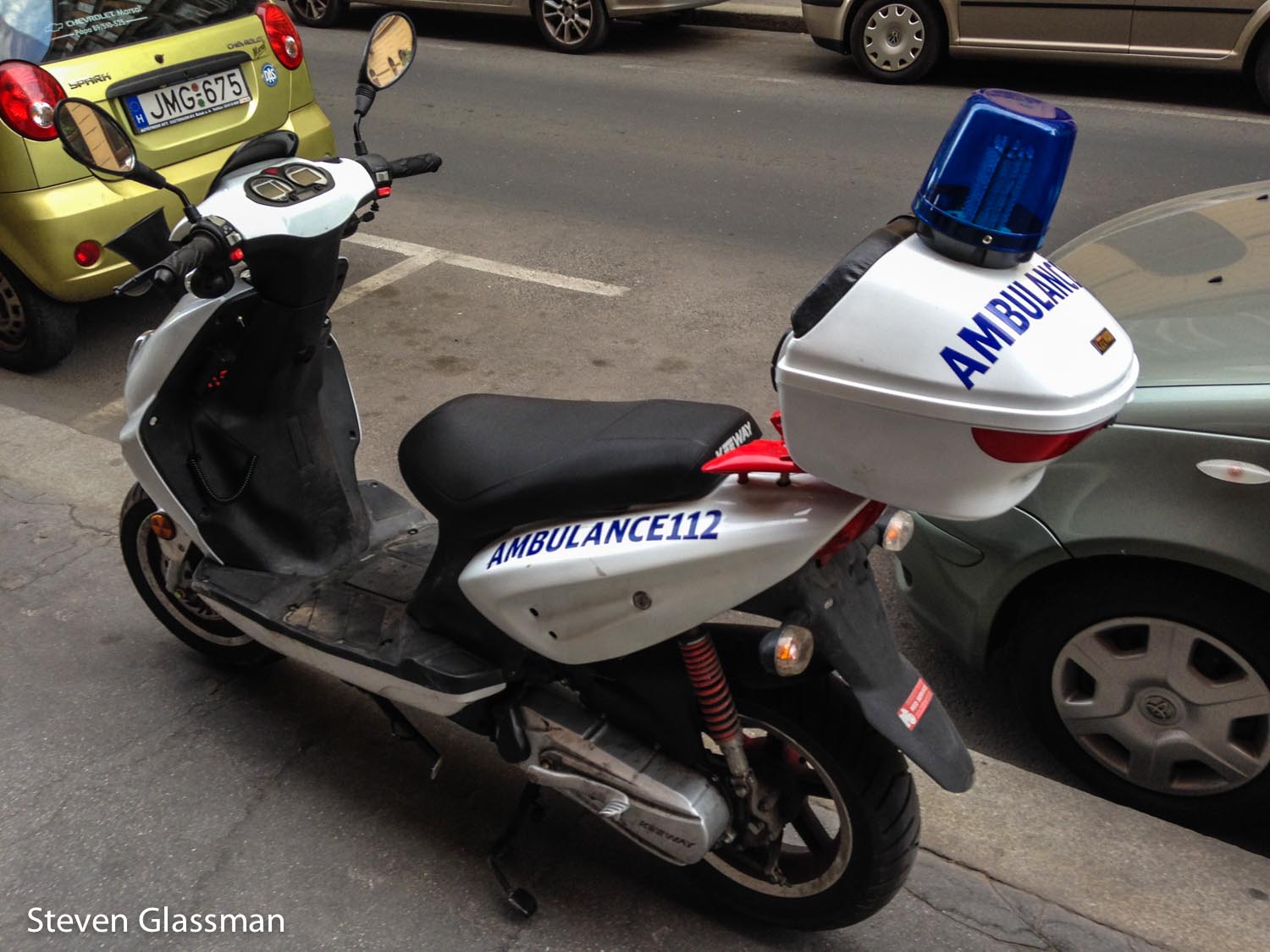
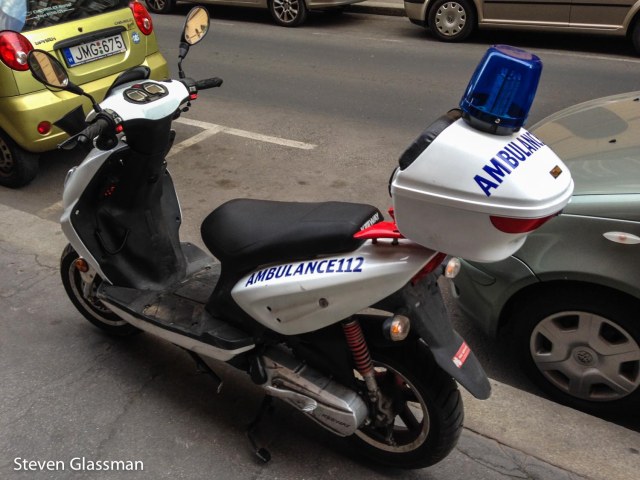
I have a difficult time believing they can really transport a patient with this ambulance.
budapest-32

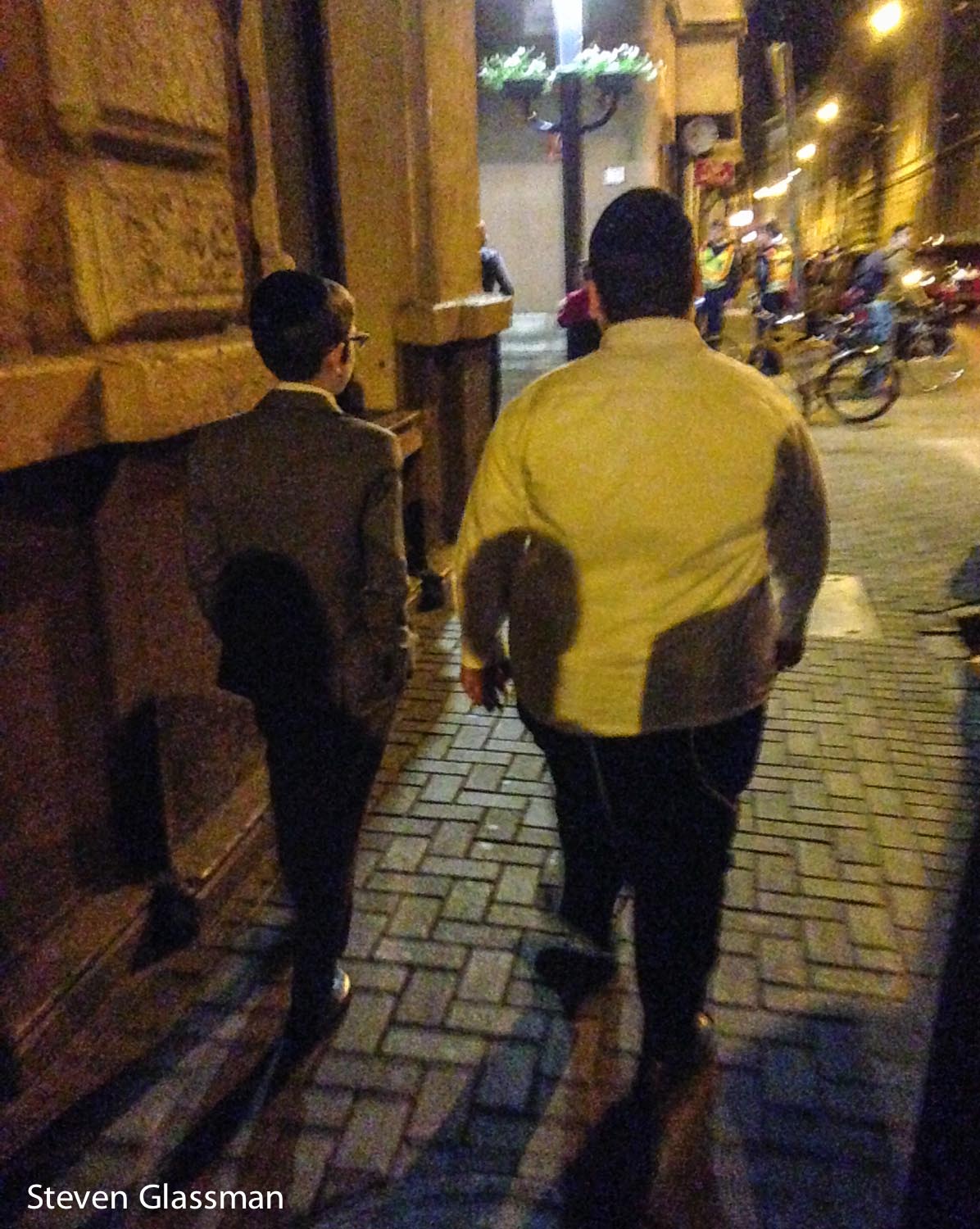
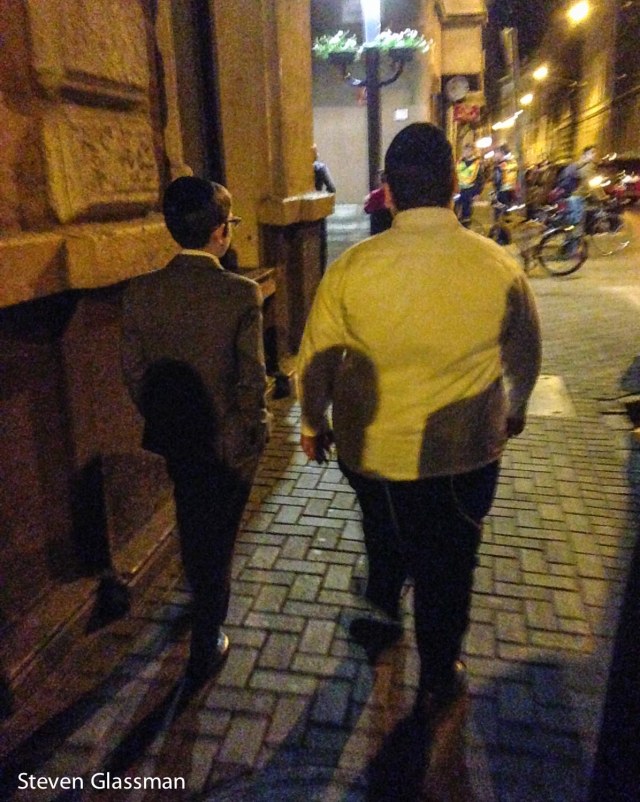
While we were walking toward our evening entertainment, we briefly followed this pair of children.  I couldn’t resist snapping a photograph on the sly, because these two look like the flashback sequence of every buddy comedy movie I’ve ever seen.  In a movie, this night would surely be followed immediately by a “fifteen years later” caption.
budapest-34

Have you ever been to Budapest?  Which side did you prefer, Buda or Pest?

Auschwitz and Birkenau

Note: The pictures in this post were taken at a Nazi concentration camp.  If you are easily upset by this sort of thing, you might want to go look at something cute instead.  I won’t judge you for ducking out on this post.

One more reason that I chose Krakow for my trip to Poland is the proximity of Krakow to Auschwitz and Birkenau.  Memorials to the victims of the Holocaust are everywhere in Europe.  I’ve seen many of them, and I’ve even been to one of the smaller concentration camps, Dachau near Munich.

Auschwitz is on a different scale altogether than anything I’d previously seen.  For one thing, it’s not one camp- it’s three.  Some of these photos are from Auschwitz I, and some are from Auschwitz II-Birkenau.  There is also an Auschwitz III, but I only visited I and II.

The Auschwitz camps killed an estimated 1.1 million people between 1940 and 1945.  The current population of New York City is estimated at around 8.4 million people, so imagine New York City with an eighth of the people missing.  That’s a lot of people.

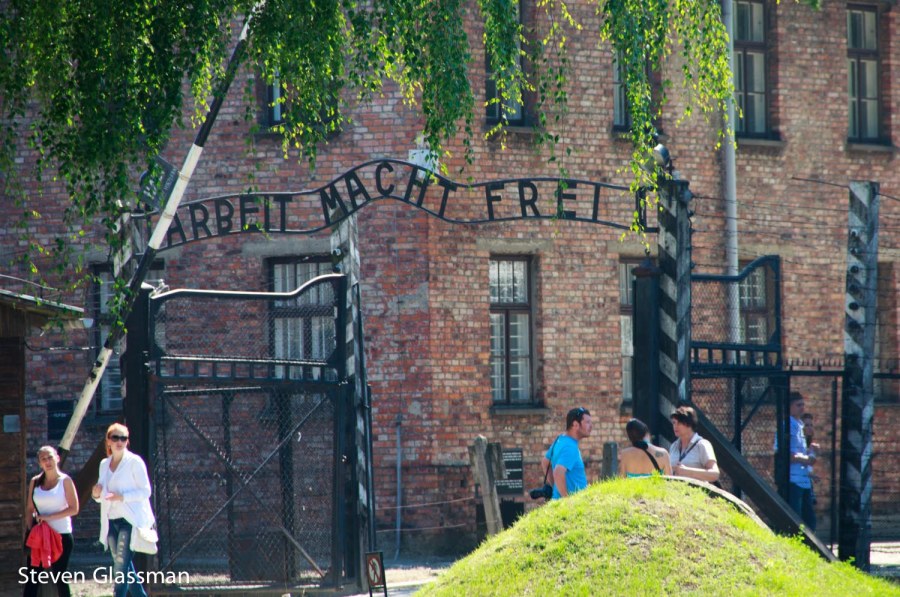
As with most of the camps you can visit, the wrought iron “Arbeit Macht Frei” sign appears at the main gate of Auschwitz I – “Work makes you free.”

auschwitz-1

The entire camp is fenced in by a double ring of electrified barbed wire fence.

auschwitz-2

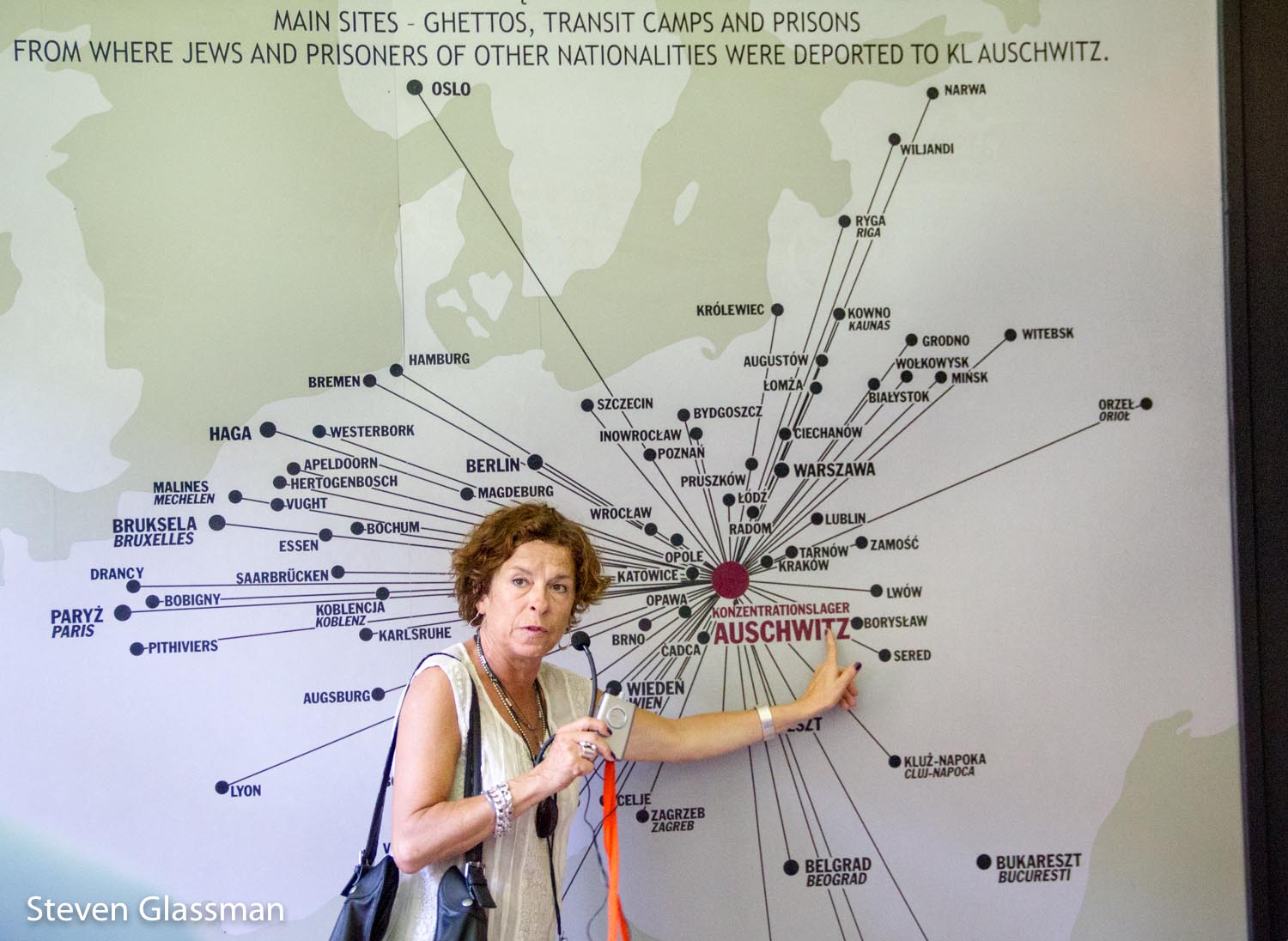
People were deported to Auschwitz from as far away as Oslo, Paris, and more.  And by people, I mean Jews, Gypsies, homosexuals, and political prisoners.

auschwitz-3

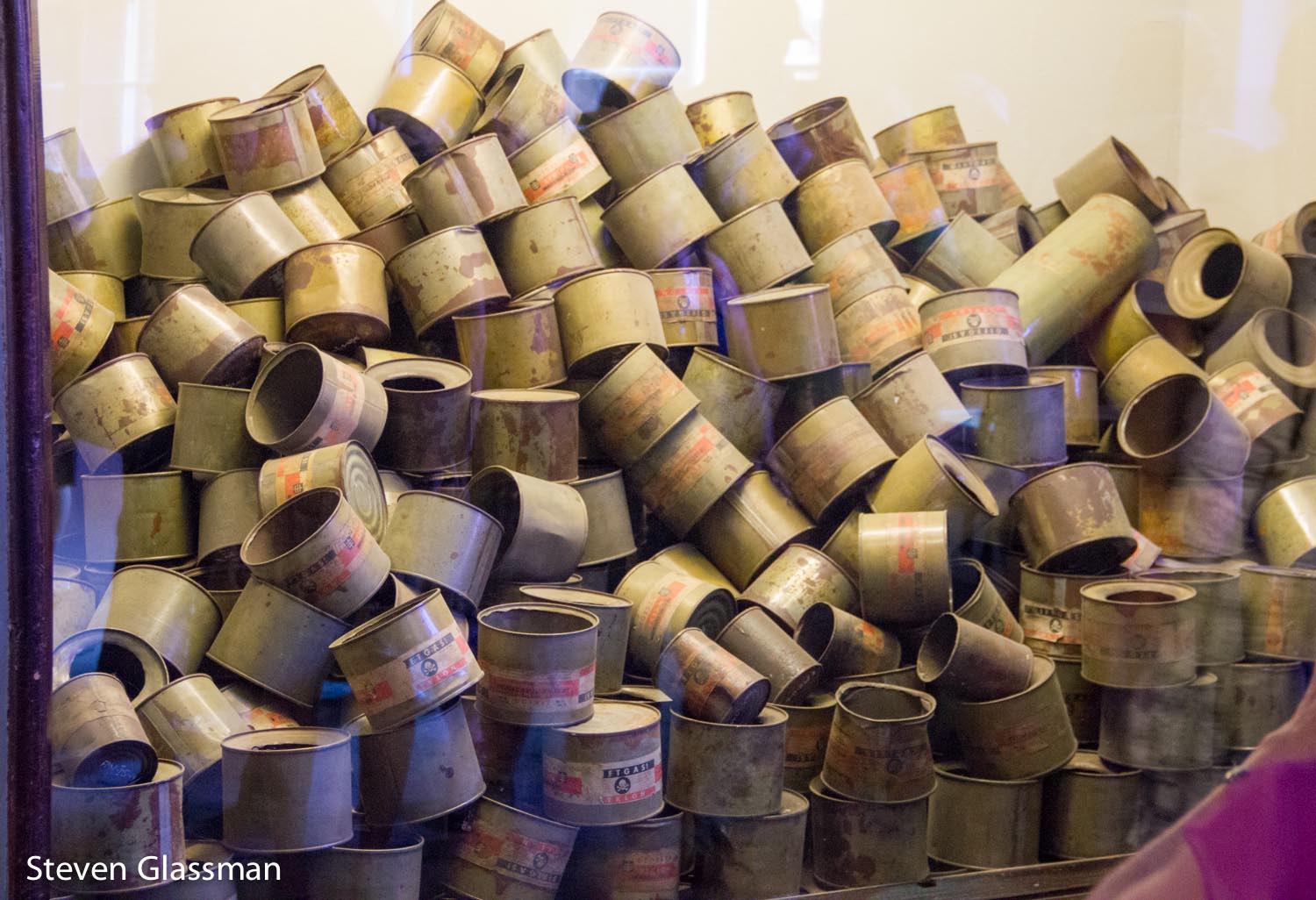
The prisoners of Auschwitz were killed with Zyklon B gas.  Empty canisters of Zyklon B found by the Allies at the end of the war are part of the exhibit now.

auschwitz-4

A closer look at a Zyklon B canister, with absorbent granules.

auschwitz-5

The trains carrying prisoners to Auschwitz II went straight through a central gate, to a platform in the center of the camp.

auschwitz-20

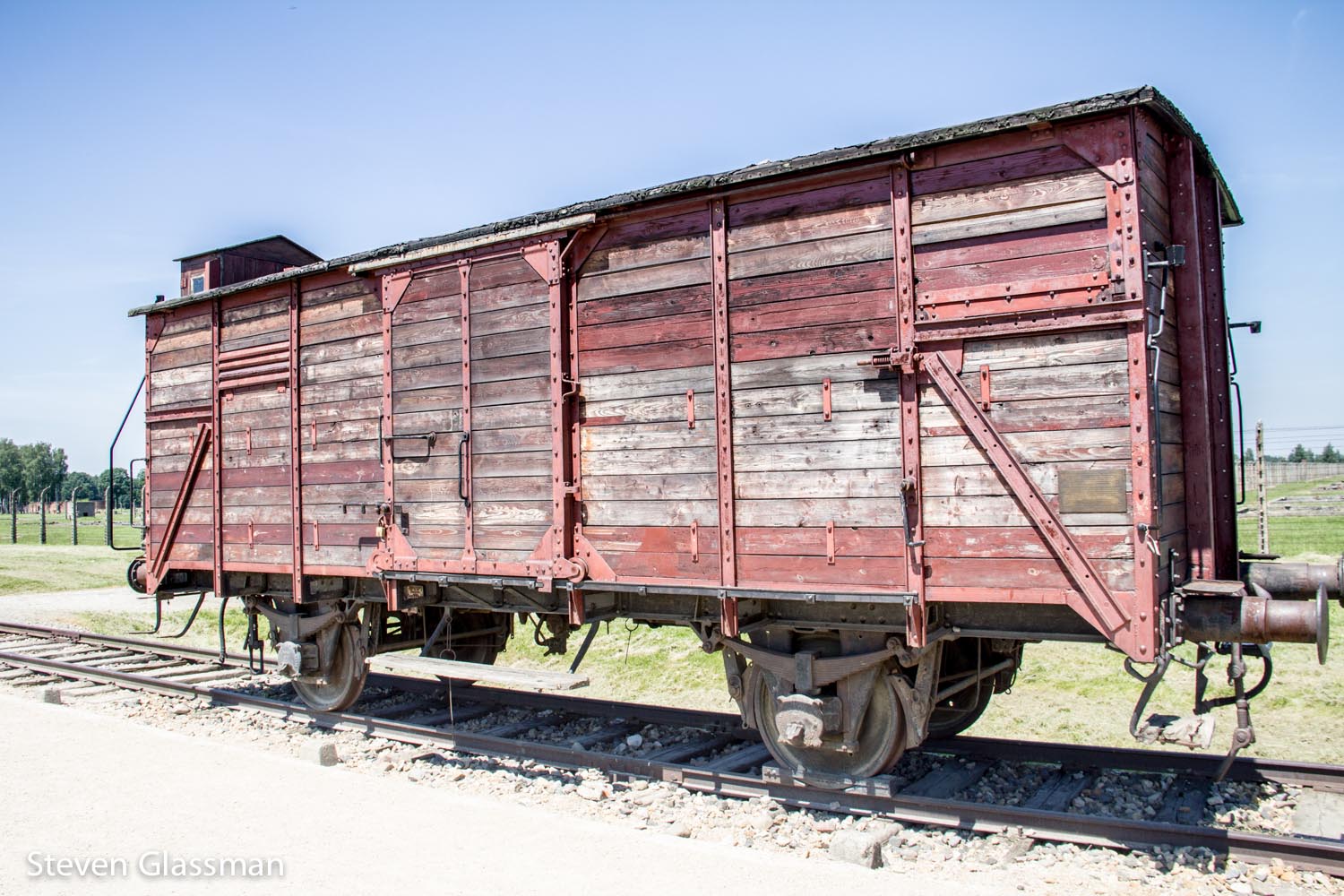
The prisoners were packed into cars like this one.

auschwitz-21

When the prisoners arrived, they were met at the train platform by an SS doctor who would determine immediately whether they were to be taken to a labor camp or taken to the gas chamber.

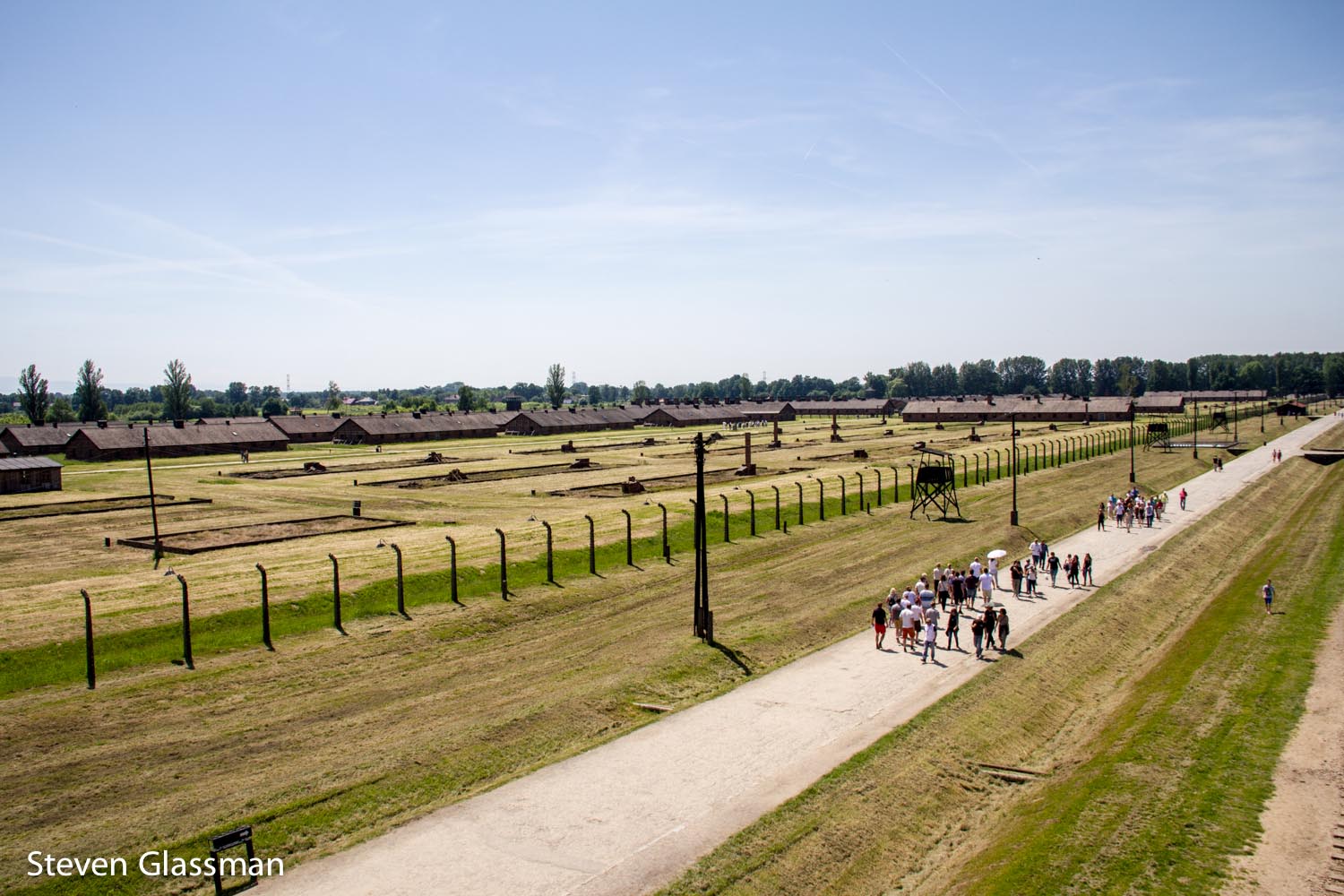
This is the view from the tower over the main gate.  The left side is all barracks for the workers, and the right side leads toward crematoriums 4 and 5.  The platform in the center is where prisoners were sorted as they came off the trains.

auschwitz-29

Another high view of the barracks.  This camp also had a special children’s barrack, where they were kept for medical experiments.

auschwitz-30

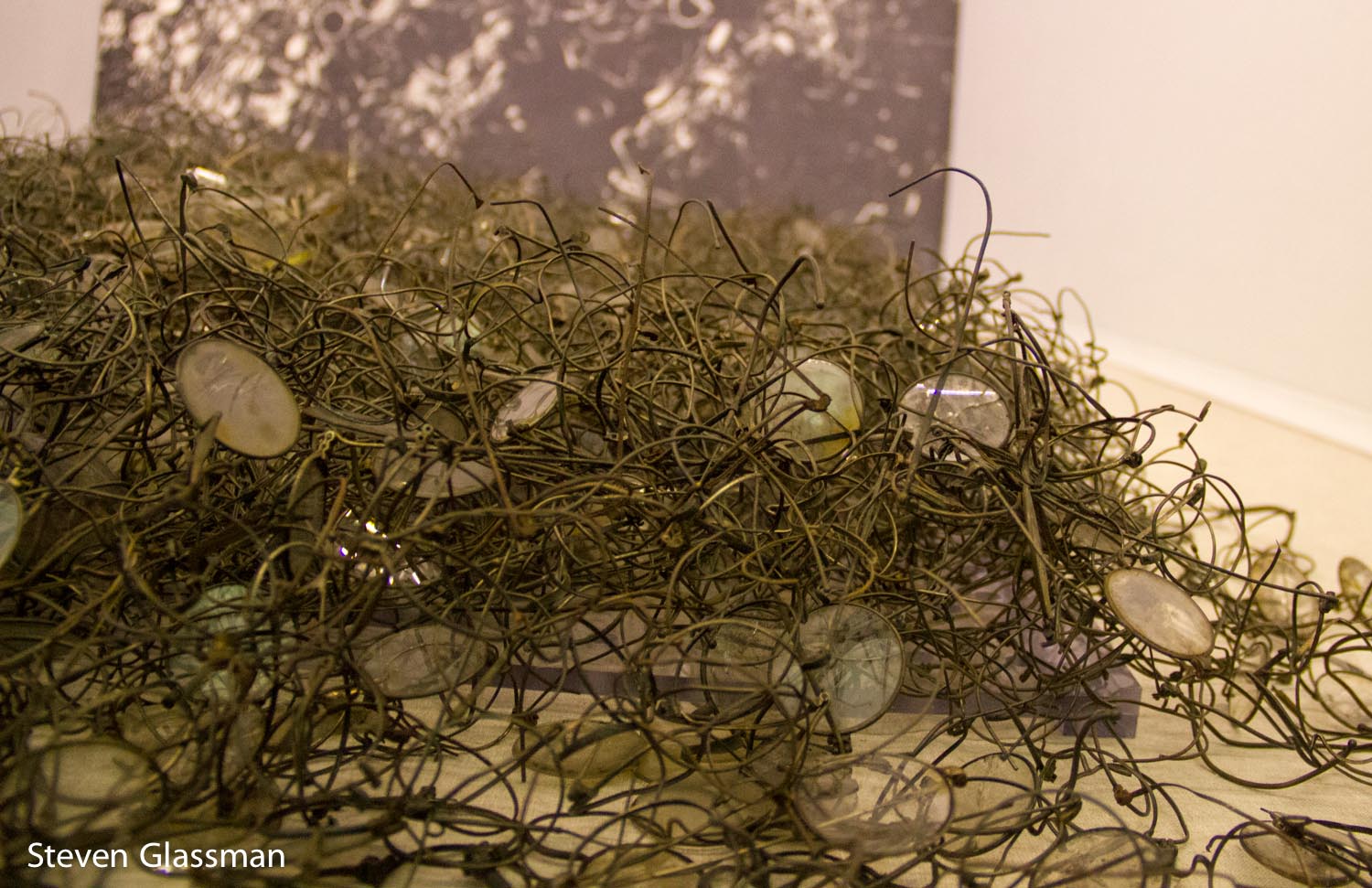
Those who were too young, too weak, or otherwise incapable of labor were put to death immediately.   They were told that they would have a shower, so they were all stripped naked before moving into the gas chambers.   This is some of the eyeglasses that were left behind.

auschwitz-6

The people who arrived in Auschwitz had been told that they were being taken to a place where they could find work.  They weren’t all aware of their fate.   Because of this, they brought their most cherished possessions, thinking that they would be starting a new life.

When they arrived in Auschwitz, their belongings remained on the train platforms while the prisoners either went to work or went to die.  Nazi officers would then sort through the belongings for anything of value.  Piles of empty suitcases were left behind.

auschwitz-7

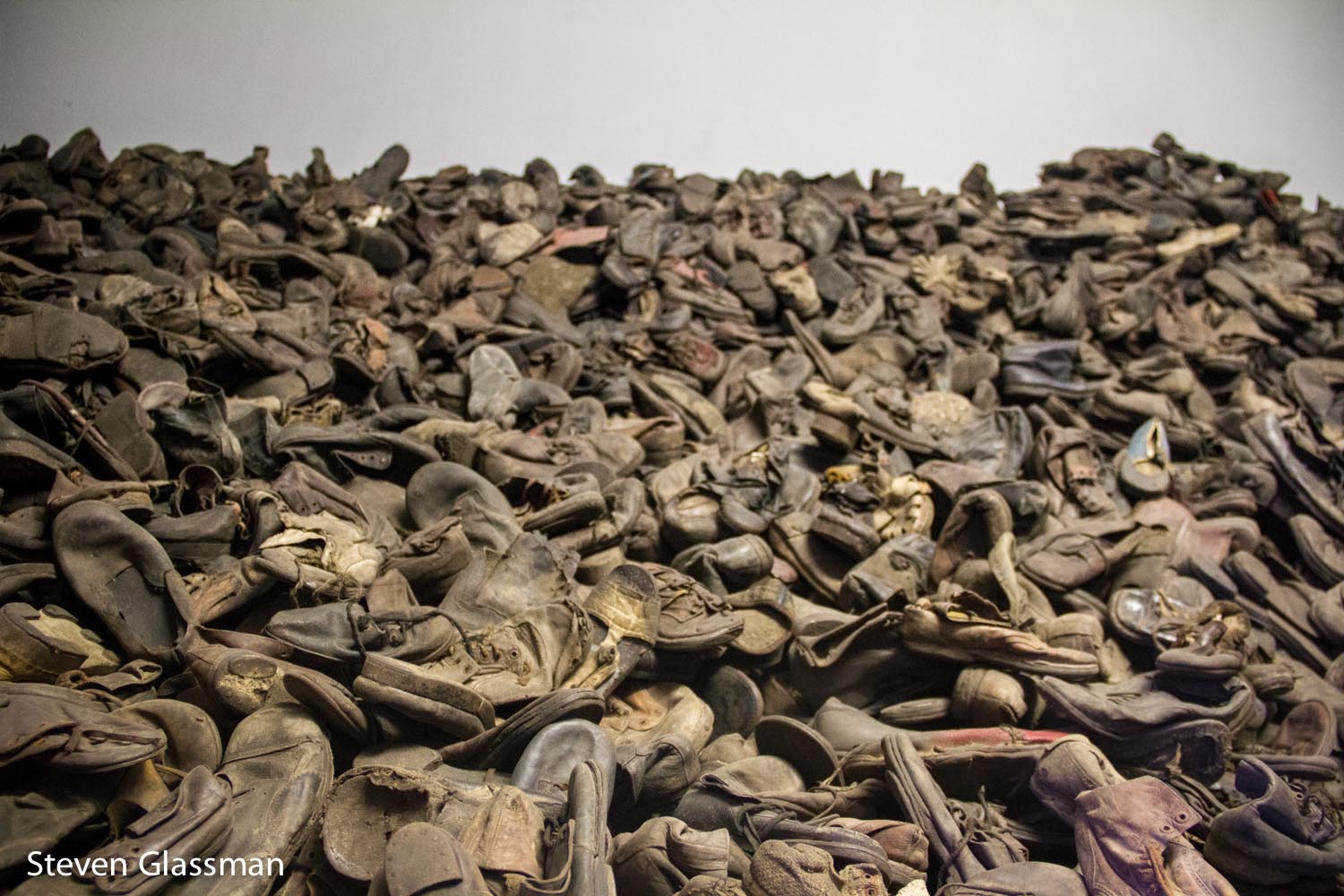
…and shoes.  So many shoes.

auschwitz-8

In the early days at Auschwitz, the prisoners were cataloged with sets of photographs like you see here.  This procedure was not maintained for long, however-  there were simply too many people in the camp.

auschwitz-9

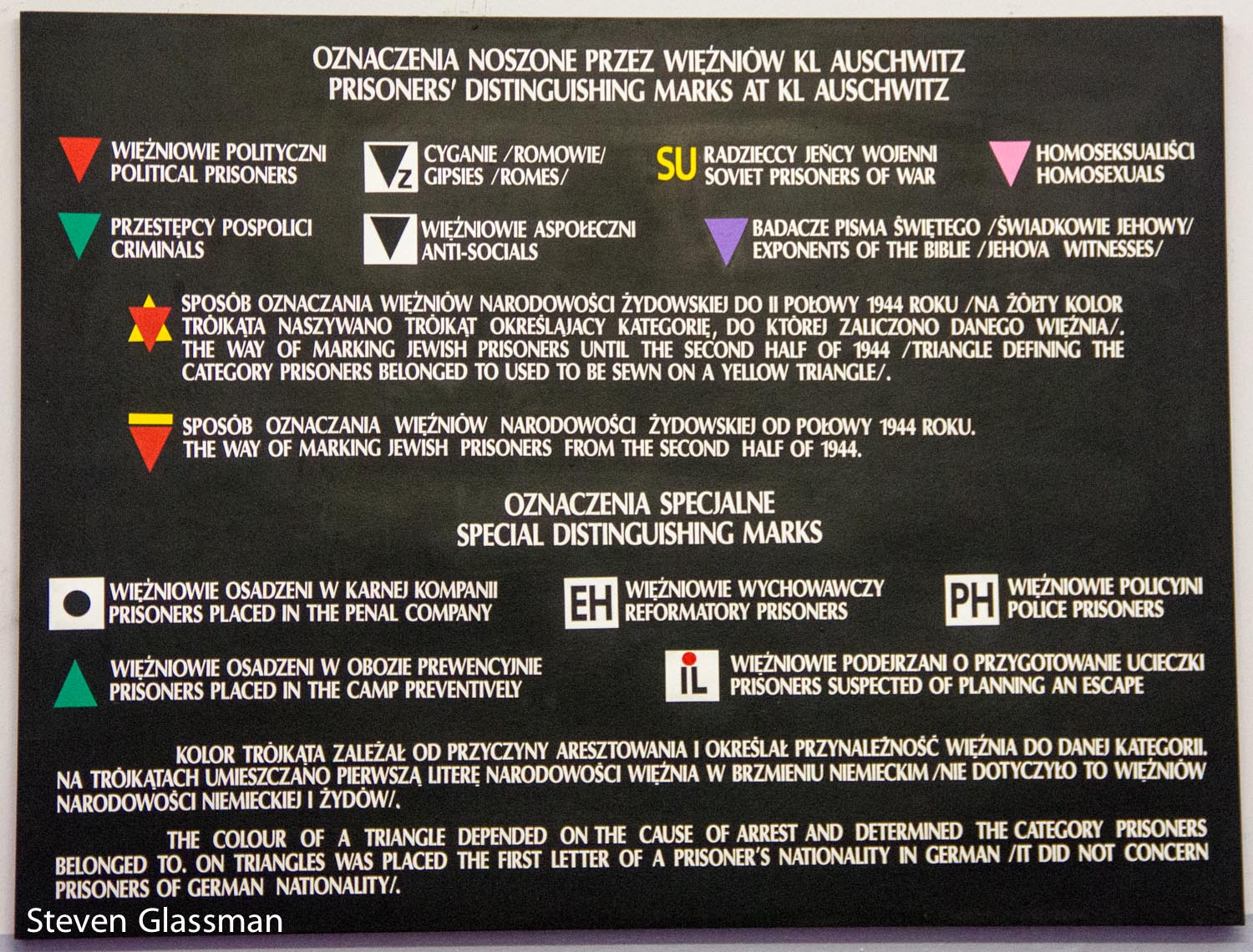
The Jewish star and the pink triangle are well known, but there were actually quite a few markers to designate why someone was in Auschwitz.

auschwitz-10

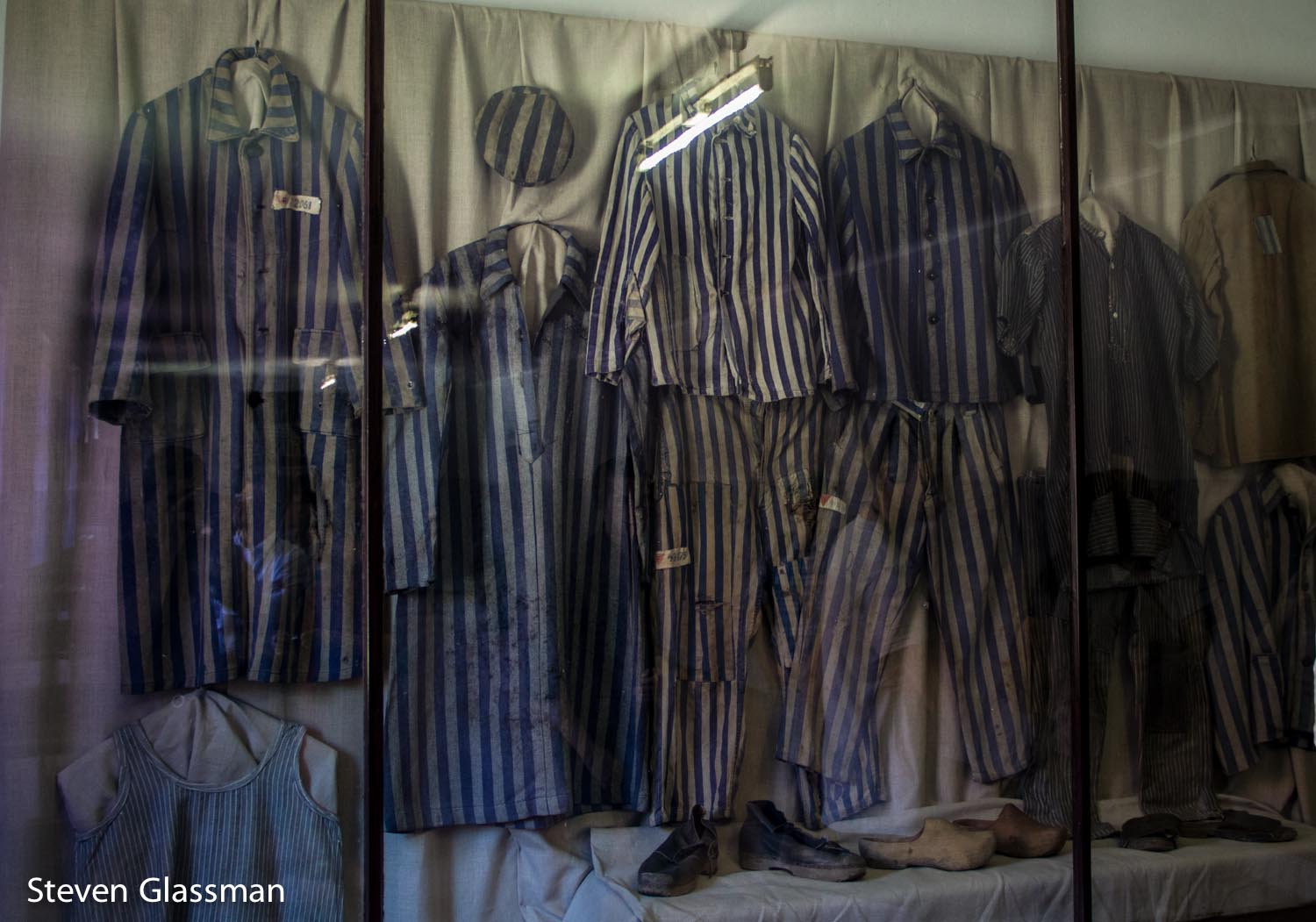
The infamous striped outfits worn by prisoners.

auschwitz-11

Auschwitz I was actually converted from soldier’s barracks.   Auschwitz II was built by prisoners out of materials taken from nearby homes.  The prisoners walked the seven kilometers from Auschwitz I to Birkenau each day before they began to construct the buildings.

auschwitz-12

The razor wire was electrified, and even if you could get past that, the armed guards were in watchtowers at regular intervals along the fence.

auschwitz-13

A wall where prisoners were routinely shot shows the stones placed by visiting Jewish mourners.

auschwitz-14

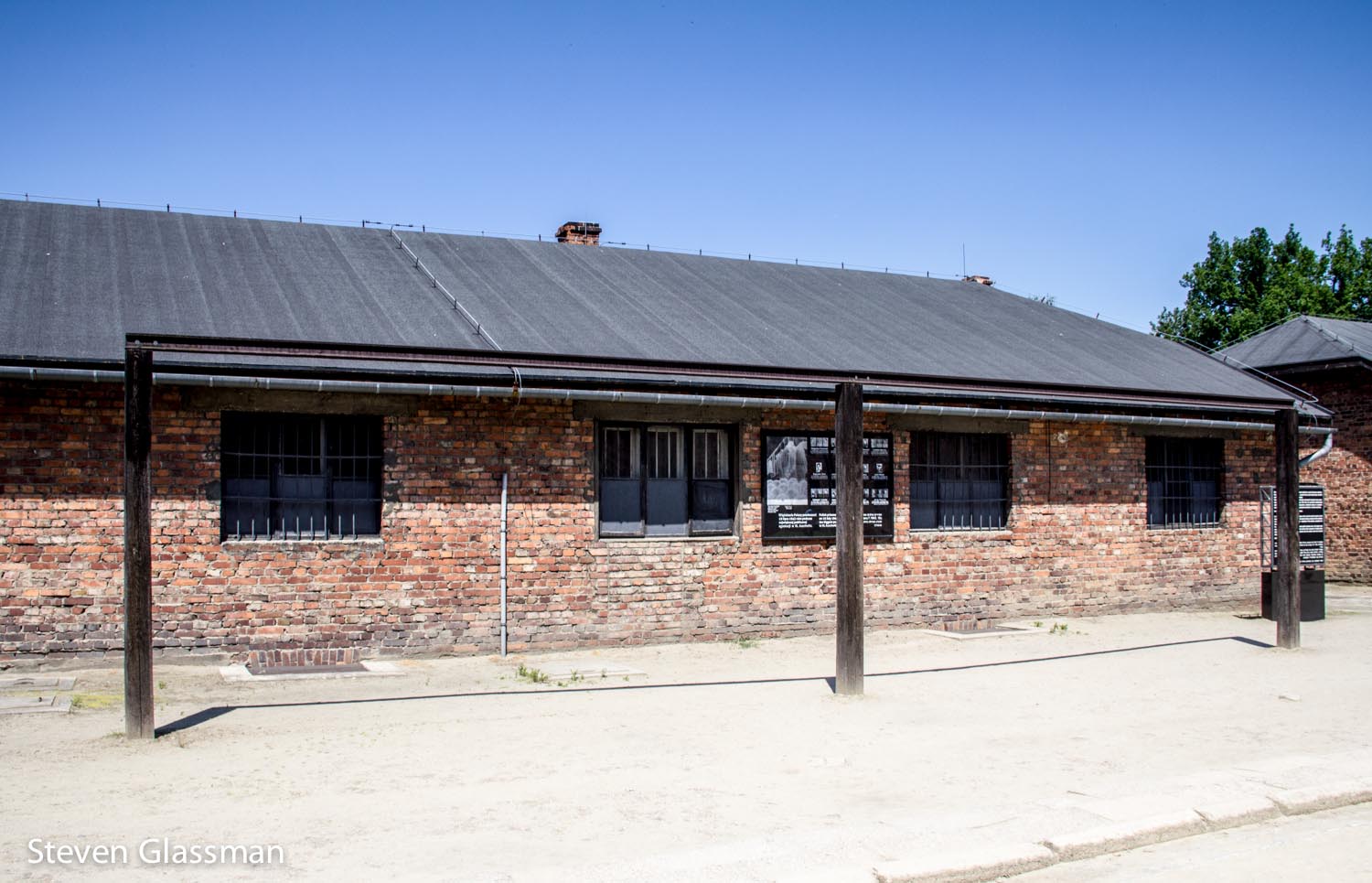
Whenever an escape was attempted, the soldiers would gather ten prisoners for a mass hanging here.

auschwitz-15

The mess hall for German officers to dine had a happy little officer riding a beer barrel over the door.

auschwitz-16

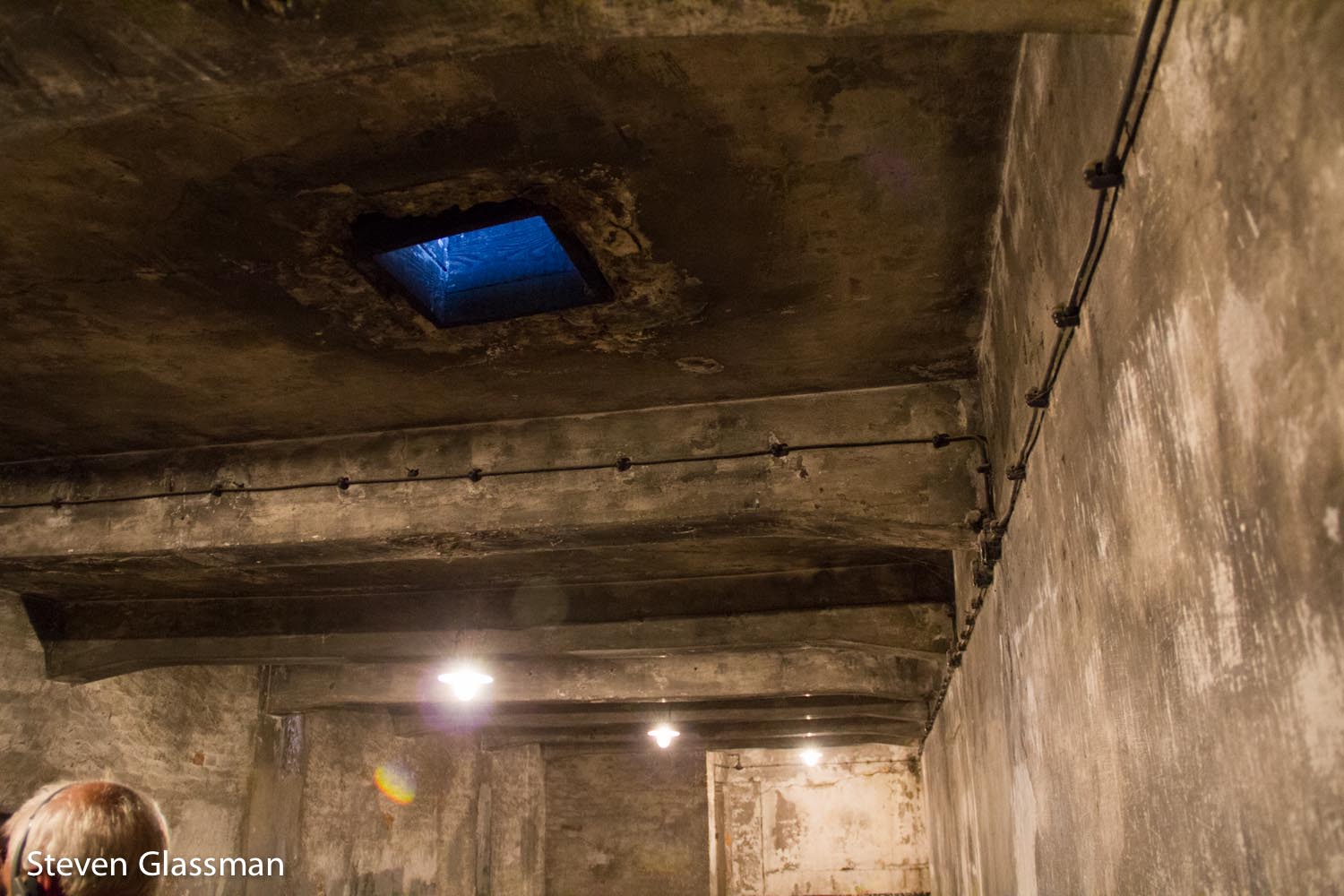
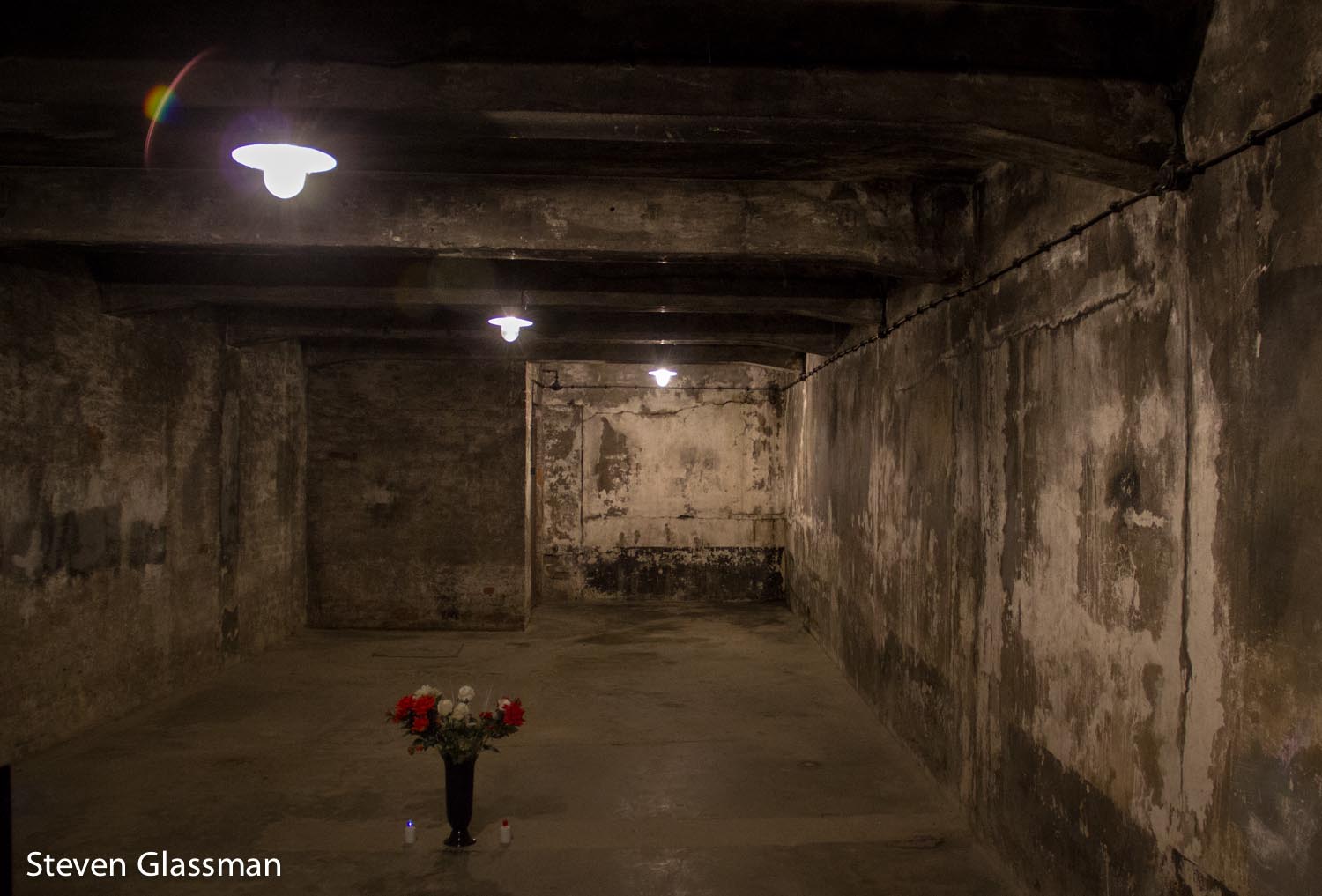
This is the ceiling of a gas chamber.  False shower heads were installed to assist the lie that the prisoners were merely getting a shower before going to work.  The slot in the top is where the Nazi soldiers, wearing gas masks, would drop in the Zyklon B canisters.  Everyone in the room would be dead within ten or fifteen minutes.

auschwitz-17

A longer view of one of the gas chambers.

auschwitz-18

Auschwitz II had multiple gas chambers and crematoriums, although this particular crematorium was in Auschwitz I.  The metal tracks leading up to the mouth of each oven were installed to assist in the disposal of bodies.

auschwitz-19

This pathway leads toward crematoriums 4 and 5.

auschwitz-22

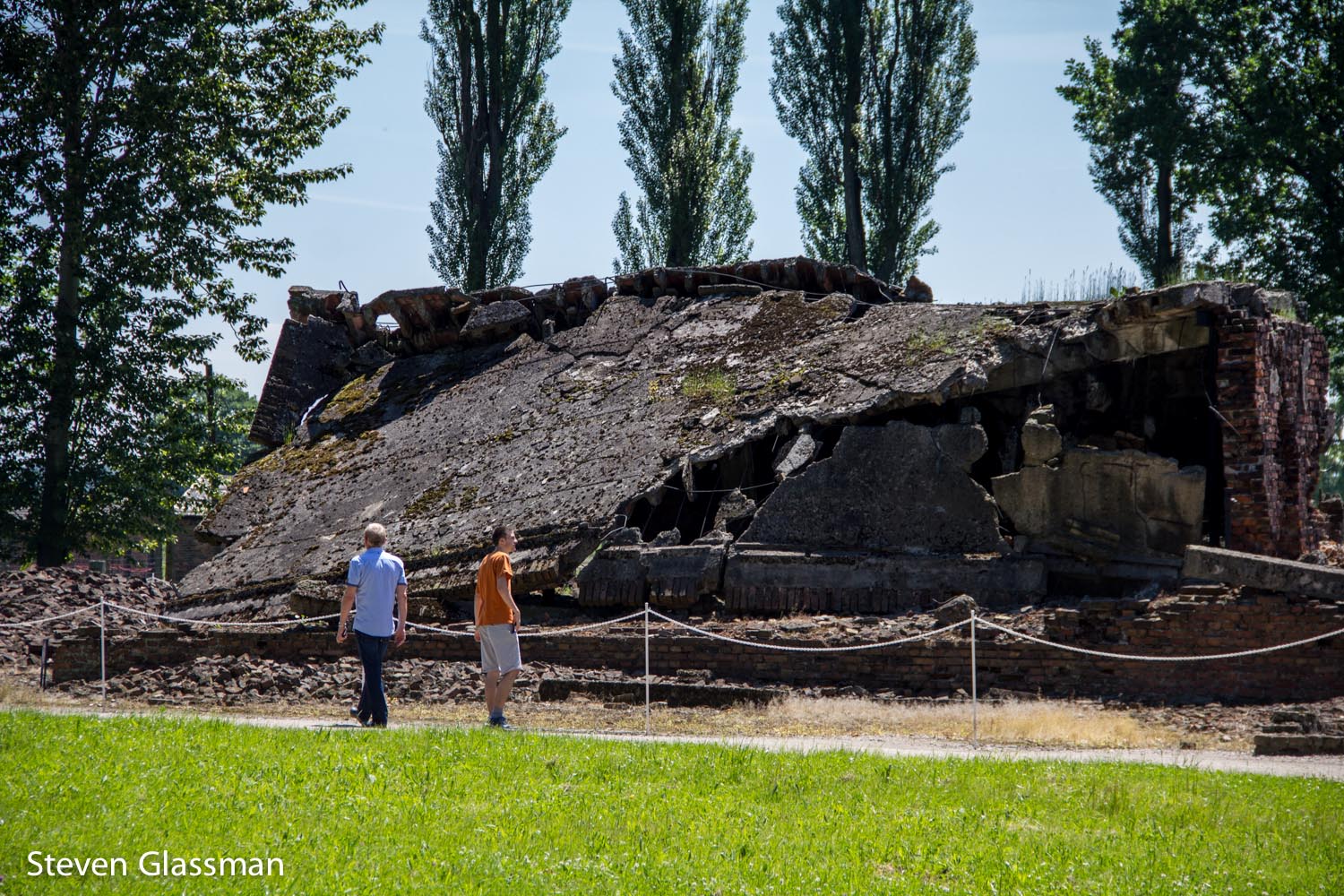
This is what remains of crematorium 2.  When Soviet forces marching through Poland were almost to the camp, the Nazi soldiers set about bombing their gas chambers and crematoriums in an attempt to hide what was being done.

auschwitz-23

A tiny wire memorial stands at the very end of the Auschwitz II tracks.

auschwitz-24

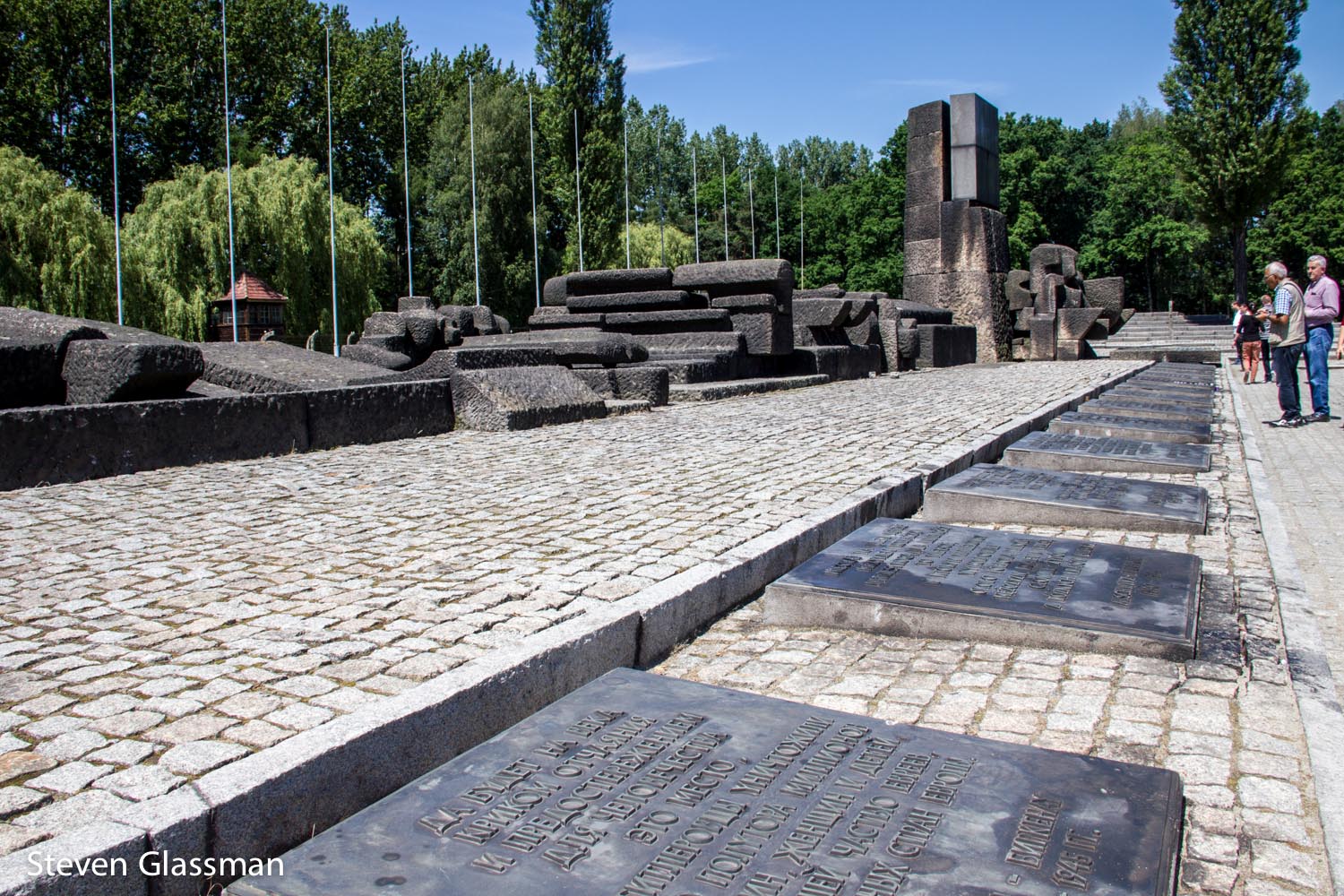
A larger sculptured memorial has also been erected in the camp, with signs in various languages.

auschwitz-25

One plaque for each language.

auschwitz-26

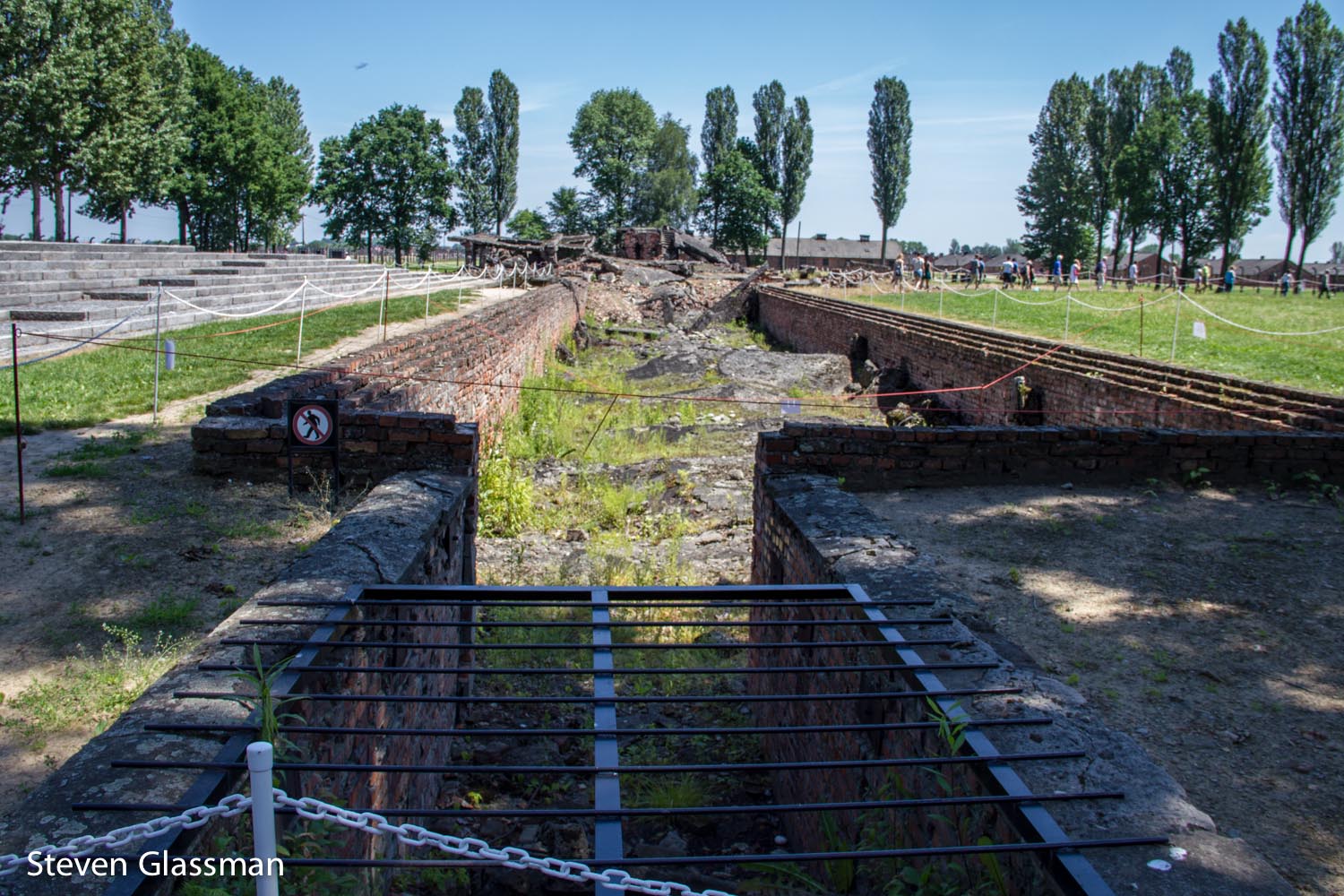
This is the bombed out ruin of a gas chamber and crematorium.  The stairs directly in front of the photo lead into the underground gas chamber, which is now overgrown.  The rubble at the end of the shot is where the crematorium stood.

auschwitz-27

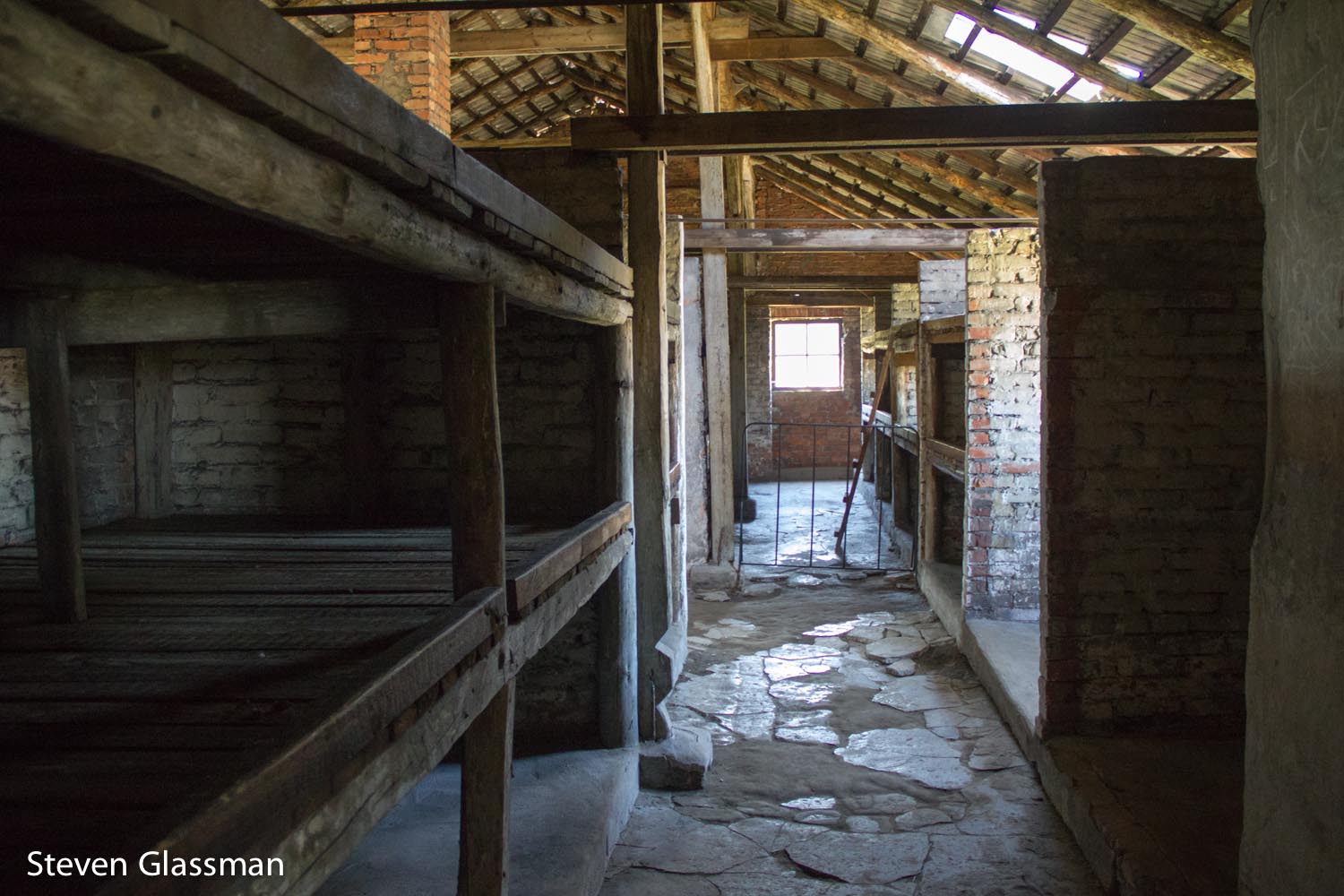
Those who survived Auschwitz only did so because they were able to work.  One half of the camp was dedicated to barracks where prisoners were housed.  Depending on the barrack, there were between 550 and 750 prisoners in each structure.

auschwitz-28

This post doesn’t even remotely capture the full horror of this experience.   There were some things on display that I simply refused to photograph-  I’m glad that I went to see Auschwitz, but I never want to see it again.

If you got through all of this, why not go look at something cute to balance out the mood?  After I took this tour, I certainly needed some cuteness.

Have you ever been to Auschwitz?