Dining Out In Germany

When I was planning my trip to Berlin last month, I had a conversation on Ye Olde Facebook with my friend Heather about restaurants in Germany. I offered a lot of advice regarding how the experience is different from dining in the US, and I realized (not for the first time) that I really ought to post about this. I’ve been meaning to write this one for a long while. Here’s what I’ve learned so far:

When you arrive:

Most restaurants in Germany do not have a ‘please wait to be seated’ sign. When you arrive, you are expected to simply sit down at a table of your choosing, although you should avoid any tables that have a ‘Reserviert’ (Reserved) sign. When in doubt, you should ask the staff.

Placing Your Order:

In places accustomed to tourists, it’s not uncommon for a restaurant to have an English menu.  Sometimes you’ll be handed the English menu as soon as they hear you speak.

Typically, your drink order is taken first, and then they come back a little while later to take your food order.

During the meal:

In the US, a glass of water is standard in most restaurants. Here, you shouldn’t expect a glass of water with your meal unless you ask for it. When you do ask for water, the waitress might ask you if you want it with or without gas. This is because carbonated water is very common and popular here. If, like me, you prefer not to have carbonation in your water, you can ask for ‘still’ water and it will be given to you “ohne Kohlensaure,” without carbonate.

Don’t expect ice in your drink in most restaurants, either. There are exceptions, but not many- even cola is typically served at room temperature here.

Some restaurants have longer tables where you might find yourself sitting with strangers- I’ve found myself in this situation a few times, and the preferred behavior is to politely ignore the other person. Sometimes you might find a talkative seatmate, but I haven’t found that to be the case.

When you’re finished:

The waiter will not bring you the check until you ask for it. It’s not uncommon for German folk to sit for quite some time after eating, have an espresso, and talk. More than one German traveler I’ve spoken to has expressed that the American habit of putting the check down while they’re still eating feels extremely rushed and rude. In Germany, nobody rushes you out the door.

Cash is king, especially when dining out. Credit cards are usually accepted in major places like hotels, but many restaurants won’t accept credit cards at all. American credit cards are especially problematic in Germany, because the banking systems are different here. If you don’t see credit card logos on the door of the restaurant, assume that you’ll need cash.

When the check is brought to the table, you will often be asked who is paying, if one person is paying, or if the check should be split. It is a common practice to split the check right there and then, and the waiter will give each person a subtotal based on what they ate.
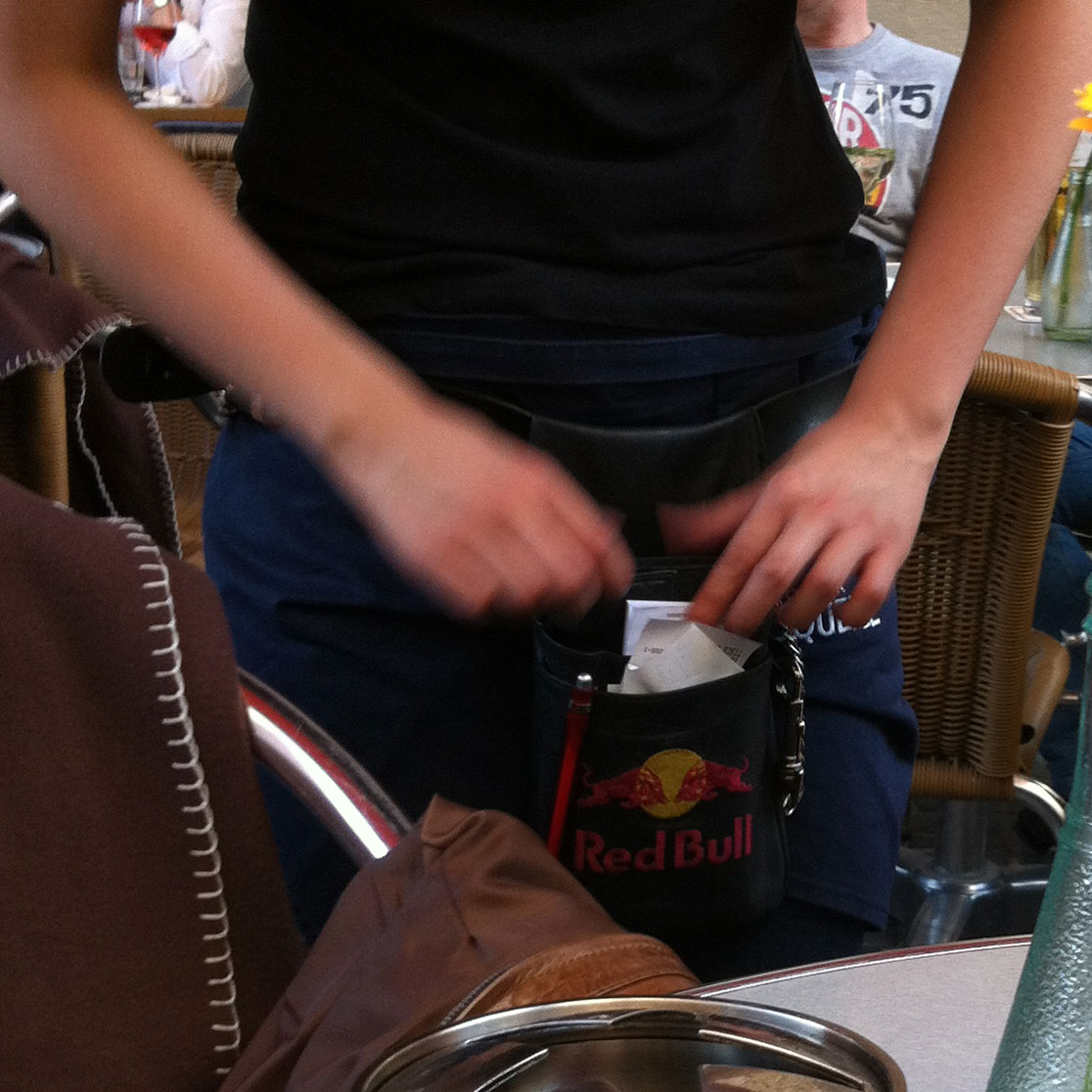
You pay your check at the table, and the wait staff always carries a money pouch to handle the transaction. When the waitress brings you the check, she’ll give you a total. You say how much you’re paying- including the tip- when you hand over your money. For example, if I have a check of 23 euros and want to tip ten percent, I would hand them thirty and say “26 euros” (I usually round up), and they’d give me four back. Don’t leave your tip (Trinkgeld) on the table- that’s typically considered rude. If you want them to keep the entire amount you’ve handed over, you can say ‘stimmt so,’ or, in Bavaria, ‘passt so,’ and this is generally understood to mean keep the change.

Tipping is usually done at 10-15%. Any more and they’ll think you’re nuts. Absurdly generous, but nuts. In the US, people who wait tables have a tiny tiny wage and live or die by their tips, but here, they have a decent living regardless, so if you tip 10%, you’ll seem normal, not stingy.

That’s all the restaurant tips I have for the moment. I may revisit this post in the future.

Observations At Six Months

As of today, I have been in Germany for six months- I arrived on Saturday, November 12th. During that time, I’ve been keeping a list of things that I wanted to mention on the blog, but that aren’t long enough to carry their own blog post. Here’s what I’ve got so far:

  • In German, Kerze means candle. Katze means cat. Mishearing one or the other can lead to a very silly conversation.
  • They sell the perfect size Coke here. .2 Liters is enough to accompany most meals without being as small as a shot glass.
  • Movie theatre popcorn here is not salty by default, it’s sweet. Not all theatres even sell the salty version that I’m used to. I was very surprised the first time I took a bite of movie theatre popcorn here.
  • Many Germans are very, very tall. I’m still convinced that someone boinked a Frost Giant at some point in the past.
  • There is one German word, Entschuldigen, which can be used for both excuse and apology. This is yet another way that conversations between native English speakers and those for whom German is a second language can be very complicated.
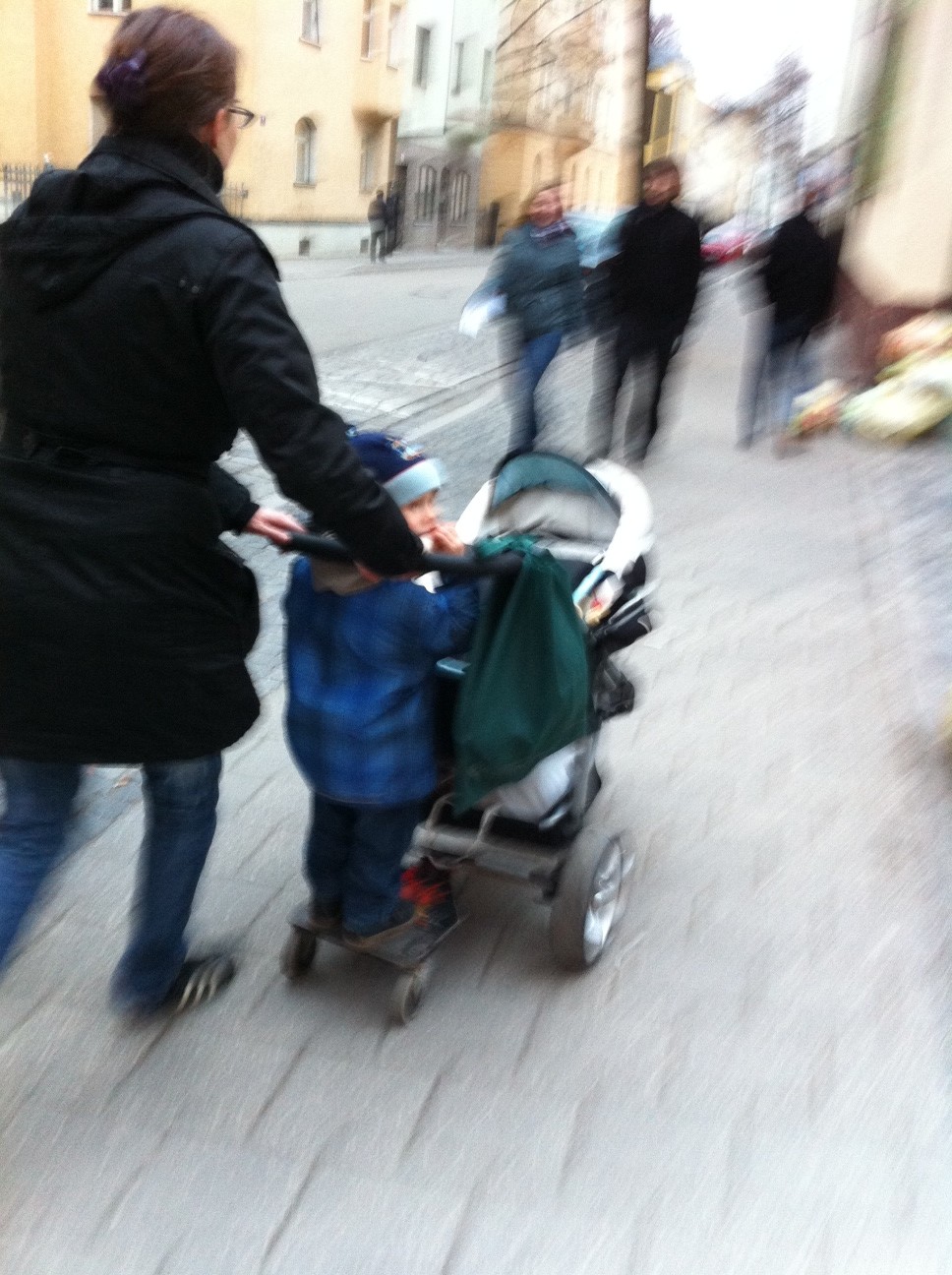
  • The German approach to child-rearing is a little bit different. The American “stranger-danger” paranoia doesn’t exist here, so it’s not uncommon to see a list of children’s names on the back of a proud parent’s vehicle. They also rig up these ingenious skateboardy things that are attached to the back of their strollers with a little hinge like the one pictured at right- this woman is pushing the stroller with the infant, and the smaller kid stands on the little board with the wheels, so he gets a ride as well. I think it kind of looks like fun.
  • Where an American would say “I’m crossing my fingers for you,” a German would say “I’m pressing my thumbs.” It means basically the same thing- wishing luck or good fortune. It is done with the thumb of one hand only, bending it inside the index finger and pressing on the outer joint of the thumb with the fingers curled around it.
  • It’s a small difference, but I’ve noticed that public restrooms here are not constructed the same way that they are in the US. The area where toilets and urinals stand is usually separated by the area with the sink and hand dryers by a door, so each restroom is actually two smaller connected rooms. This is not the case in private bathrooms or very small restaurants, but most of the restrooms that I’ve been in here outside of my own apartment are built this way.
  • Germany uses the letter ß. The letter is pronounced as ‘ss’ and that is an acceptable alternate spelling. This is especially common on street signs. For example, one of the main streets downtown is Maximilianstraße. This can also be typed as Maximilianstrasse, or abbreviated as Maximilianstr. The reason I bring up the letter ß is that it comes up several times in the next bullet point.
  • Elevator buttons are different here. The ground floor is usually labelled EG, which means Erdgeschoß, the German word for the ground floor. I first thought it had something to do with ‘Entrance.’ A parking level below the first level is often labelled with UG. I thought at first that it meant ‘Underground,’ but it really means Untergeschoß. An upper level would be OG for Obergeschoß. A parking garage is usually called a tiefgarage, but don’t expect to see that listed on the elevator buttons. Sometimes, the ground floor is labelled with 0 and a level below that is marked as -1. The first level above the ground floor is labelled 1 because Germans consider the first level up to be the first floor. In other words, I climb a flight of stairs every day to go to my first floor apartment, but in the US I’d call it a second story apartment.
  • Speaking of things being different underground, the duplex parking here can be a little nerve-wracking. This may exist in the US, but I’d never seen it until I got here- underground parking where a space can have multiple stacked vehicles. Each person who uses a parking space has a key to raise and lower the parking ramp. I would be constantly worried that I would drop my keys down into the Pit Of Souls beneath the lowest cars. Still, it’s an impressive use of space. And hydraulics.

German Customs 101: Mahlzeit!

One of the more amusing customs I’ve seen since I moved to Germany is the usage of the word Mahlzeit.  Loosely translated, the word means “meal time,” but it’s used in a few different ways. Some people use it as a greeting even away from food, but I haven’t seen that as much.

The most common usage, and the one that I see every day, is that when someone goes to eat lunch, most people who see them say ‘malhzeit.’   This seems to happen any time in the afternoon, and I’ve seen references that say that any meal after about 11am but before late afternoon qualifies. Once you get to early evening, it shifts to guten abend.

The first time I ran across this, I was mildly incredulous.  When you leave the office to get some food, it’s not uncommon for everyone in the room to say mahlzeit to me.  The person leaving is supposed to say mahlzeit as well. When someone else is leaving, everyone says mahlzeit to them.  When you’re already sitting and eating, people who wander into the kitchen to get coffee also reflexively say mahlzeit.  I’ve had days where four or five people have walked by and said mahlzeit in a row-  the desire for privacy is actually a pretty good incentive to leave the office for lunch.

Some, just to be contrary, say ‘guten appetit.’  I always want to say “marsite,’ which sounds similar enough that most people wouldn’t notice, but references pool decking instead.

It’s The Little Things

I was talking with my sister yesterday via the miracle of inexpensive international calling that is Skype, and I was telling her about some of the smaller differences between Europe and the US, things that are just interesting to me because they’re different.  To someone who’s been in Germany for more than a year or two, these are the kind of differences that probably don’t get much notice, but to me, they’re huge and fascinating.  Here’s a few of them.Plumbing:

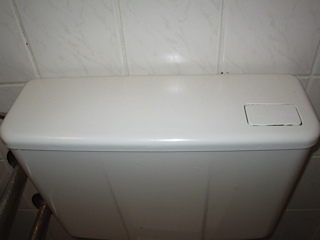
toilet flush
That little button on the right side of the top is the flush control.

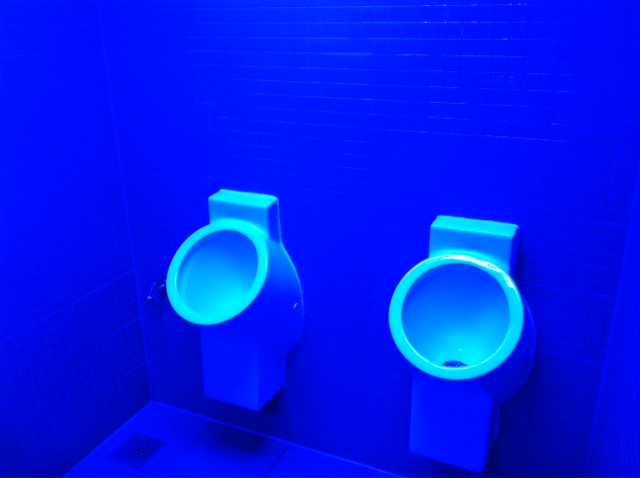
Urinals and toilets here are different.  Not so different that it’s difficult to use them, but even just the flush mechanism.  In the US, there’s typically a handle that pulls up a flapper inside a tank.  The mechanics of it may be the same inside the tank, but here the flush button is usually on top for tank styled toilets, and it if you press the button the other way, it will stop the flush.  There are also toilets where the tank is set into the wall, and the flush button is a big panel-  I haven’t the foggiest idea how that works, but I’ve seen it in several places.  Heck, even the stall doors in public restrooms are different here.  They’re more private than in the US, and there’s a little occupied/vacant indicator built into the door handle.  I think that’s kind of nifty.

Phone jacks:

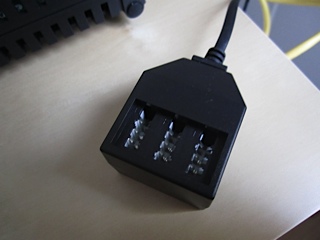
Phone jacks in the US are a tiny little modular affair, less than half an inch wide.   Here’s what they look like here in Germany:

phone jack 1phone jack 2

Door knobs:

doorknobWhile interior doors aren’t much different, front doors here have a tendency to have a knob that does not turn.  The entire purpose of this knob is just to have something to grip in order to open the door.  The actual latch part of the assembly is built right into the keyhole.  The lock is different also-  the normal setting is locked from outside but not from inside.  There’s a keyhole on the inside of the door too, and from either side of the door you can extend the deadbolt halfway with one turn of the key or all the way with a second turn of the key.  I had to go through the settings with the door open so that I could see the deadbolt positions before I fully understood the door lock.

Windows:

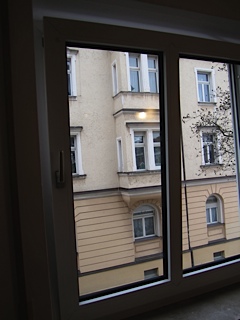
This is my favorite difference so far, when it comes to normal house stuff.    The windows here are just cooler, no pun intended.    In the US, windows usually open via an upward or sideways sliding motion, or they can be tilted up with a hand crank.  Not so, here.  The window handle has three positions.  In the downward position, the window is closed.  In the horizontal position, you can open the window inward.  The third position is the one that made me go “Neat!” – when you flip the handle upward, you can tilt the window in so that it pivots on the bottom two hinges.  This gives you ventilation without having the entire house exposed to the rain or wind or snow, not unlike a car sunroof, but done vertically.  From left to right, these pictures are closed, open, slanted open:

window - closedwindow - open

window - slanted

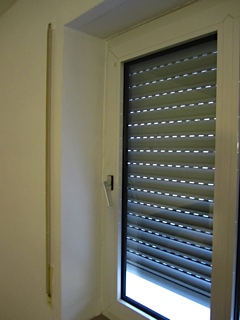
The best part of the windows here though is that it’s very common for there to be external rolldown shutters on very window.  In other words, the windows have built in shutters on the outside of the building that you control from inside.  Here’s the shutter on my bedroom window, and the strap mechanism that’s used to roll it up and down:

Window - shuttershutter strap

It was the butter that did me in.

It will take me a while to get used to grocery shopping here.  For one thing, you bring your own cloth grocery bag, or you pay for the bags you need.  You bag your own groceries-  there’s nobody to bag groceries for you, and the cashier doesn’t help- she’s just there to ring up your purchase.  (Mine was very helpful when I accidentally dropped my bank card and the conveyer belt took it away though.  That could have been very, very bad.)

The shopping carts are terribly amusing to me.    They here have four independently oriented wheels so it’s much easier to roll a cart completely sideways at a perpendicular to your previous motion than with carts in the US.  The first time I saw that action, I had a solid “what the heck?!” moment.  I’ll probably never use one of the shopping carts though because I have to be able to carry anything I buy home, and it’s a good ten minute walk.

Kaufland is a two level store.  The upper level is where you enter and exit, and it’s a circle that takes you past some electronics, some housewares, and some liquor and candy.  The first time I walked through, I was unimpressed because I didn’t even notice the flat escalators that went down to the lower level.

The escalators are flat to accommodate the shopping carts, as it turns out, because the lower level is amazing-  it’s where all the food is.  The lower level is layer out as a huge circle with cold storage, a big fresh produce section, and a very, very wide selection.

The selection is where I’m running into problems though, because I don’t know any of the brands.  Sure, every once in a while, I’ll see a familiar name.  So far, Palmolive, Kleenex, Calgon, and Swiffer are the names for home products that I’ve seen.  And there’s Heinz, Uncle Ben’s, and Kellogg’s on the food side of things.  (I was terribly amused at the McDonald’s brand ketchup, too.)  Beyond that, the names are all entirely different.  I can tell if I’m getting Kaufland’s house brand (Klassik, I think) easily enough, but anything else is sort of an unknown for me.

Adding to the frustration is that the language barrier is thicker in the grocery store than in a lot of other places.  I was getting dish soap this afternoon and I had to ask Robert if it said anything about cutting oil or grease because I don’t know the words for that yet.  A lot of things are easy to spot because they just are-  cheese is obviously cheese, in any language.  Ketchup is ketchup, even though you have some very interesting varieties that you just don’t see in the US.

Hot and Curry

So this was what I was doing a while ago.  I found the cheese, then I found the cream cheese.  Thinking that the butter couldn’t be far away, but still not seeing it, I fired up the translation app on my phone, flipped it around so that it would translate English to German for a change, and tapped in the word butter.  It came back with ‘butter.’

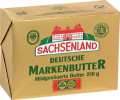
Butter slabI was incredulous.  The German word for butter is… butter?!  Naturally.   I looked around some more, and went another aisle or so down, and found… butter.  A variety of types.  (What the heck is truffle butter?!)   The shapes and sizes were unfamiliar.  Little tubs.  Slabs that just felt oddly measured.  No sticks- that’s not how it’s sold here, I guess.  There were some odd little tubes, too.

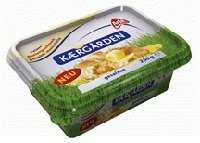
Butter tubI stood in front of that butter case, muttering to myself as I picked up various types of butter, turned them around, and put them back, for the better part of five minutes.  I’m quite sure that I was starting to worry some of the other shoppers.  I eventually chose one slab and one tub, not even thinking to check for salting-  apparently salted butter isn’t as common here, so I’m not sure how much I’ll enjoy the ones I chose. Oh well, it’s a taste adventure.

My best score of the evening may well have been the lactose free, soy based chocolate puddings that I found.  Well, at least I think that’s what they are.  The word ‘dessert’ is very clear, and schokolade and laktosefrei are obvious enough.  And the designs on the package look sort of puddingish.

I’ve already gotten attuned to looking for the word “soja” on dairy types of products, because that’s German for Soy.  Soja usually means laktosefrei, which means I’m a much happier person.  I haven’t been hungry enough to try them yet- I had dinner right before I shopped because I know better than to grocery shop while hungry, even here.

I can’t wait to try my schokolade dessert.  It might even make me feel better about the butter.