An Afternoon In Heidelberg

This weekend, a one-day meetup of bloggers descended on Heidelberg for some tourism and a light lunch.   The bloggers who came along for the fun are (in no particular order,)  Nina of Indie Rock Kid, Charlotte of Sherbert and Sparkles, Frau Dietz of Eating Wiesbaden, Kathleen of Lehrer Werkstatt, Jordan of Beer Time with Wagner, and Bev of Confuzzledom.  I had lots of fun with this group.  This is really a great bunch of people, and I highly recommend their blogs for your perusal.

Charlotte, Kathleen, and I started in Frankfurt, and we picked up Nina in Mannheim.  From there, we took the S-Bahn into Heidelberg where we were met by Bev and Frau Dietz (with an attached Mini-Dietz accessory.)  Heidelberg local Jordan also met us there.  She’s a student in Heidelberg, so she served as our tour guide.  Once everyone was present, we set out for the castle.

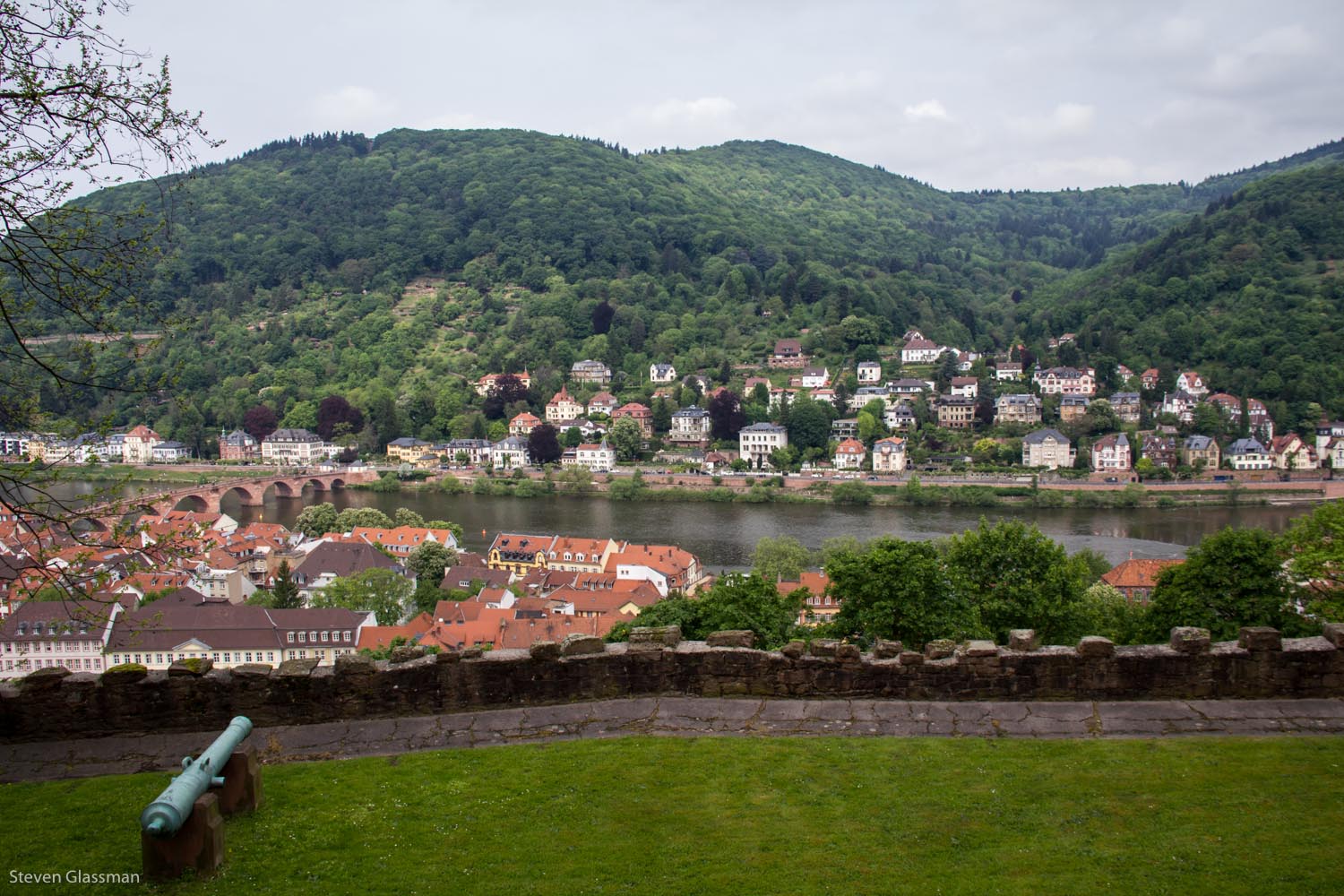
Heidelberg’s castle is on a hillside overlooking the Neckar river.  There’s a funicular to get up to the top, but the climb is doable on foot.  Steep, but doable.  The view from the top is fairly spectacular.
heidelberg-1

Visible from the top is the Karl-Theodore-Brücke over the Neckar river.

heidelberg-2

Inside the castle, one of the first things we saw was a giant wine barrel.

heidelberg-3

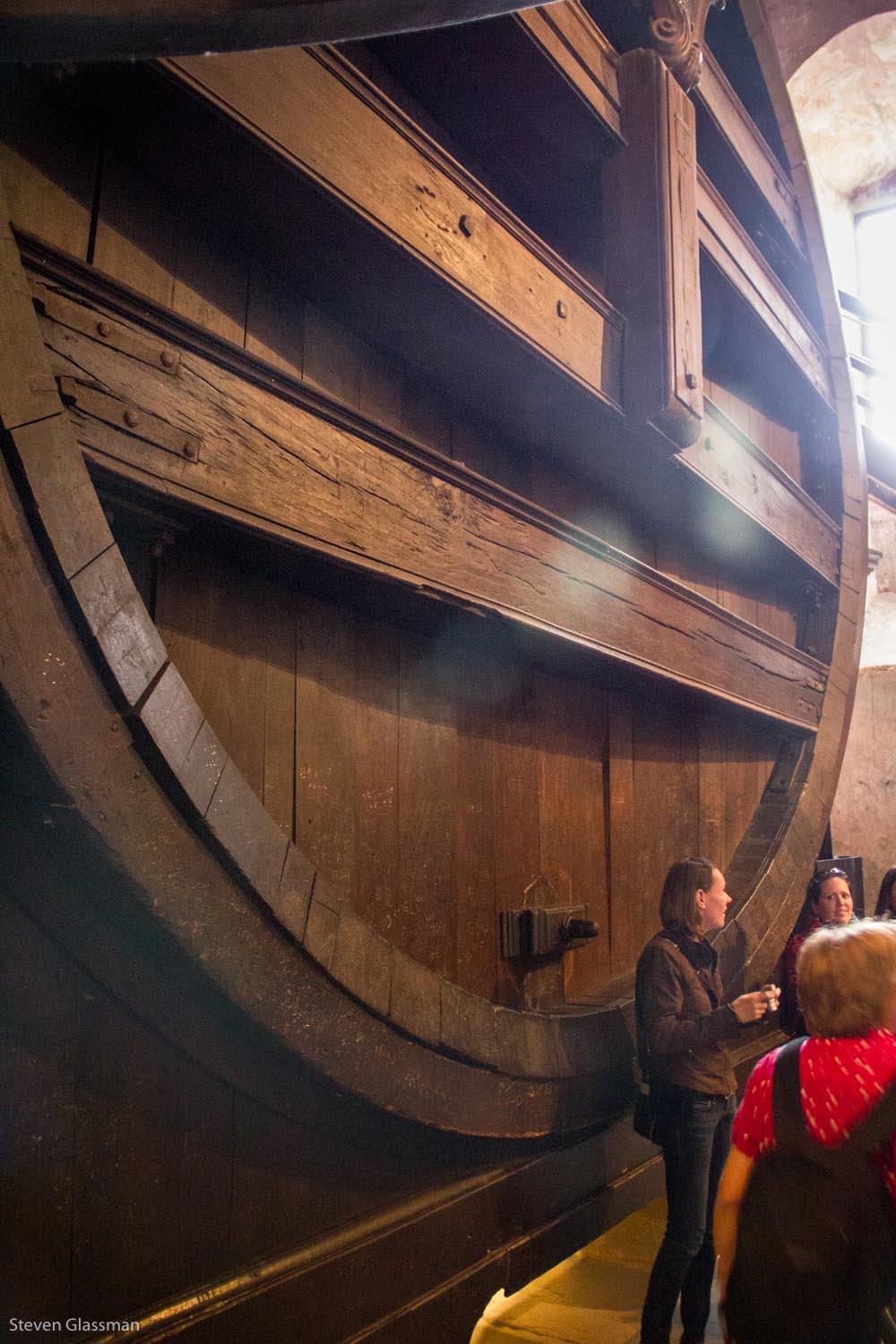
This was nothing compared to the other wine barrel around a corner. Behold the Heidelberg Tun (Großes Fass),  the world’s largest wine barrel.  My good and dear friend Wikipedia says that this was built in 1751 from one hundred and thirty oak trees.  Wikipedia goes on to say that at the time of its construction, it “had a capacity of 221,726 litres (58,573.8125 U.S. gallons). Due to the drying of the wood its current capacity is 219,000 litres (57,853.6795 U.S. gallons).”    Here’s the Heidelberg Tun:
heidelberg-4

After leaving the giant wine barrel, we saw some of the exterior of the castle, even passing by a wedding that was going on there.
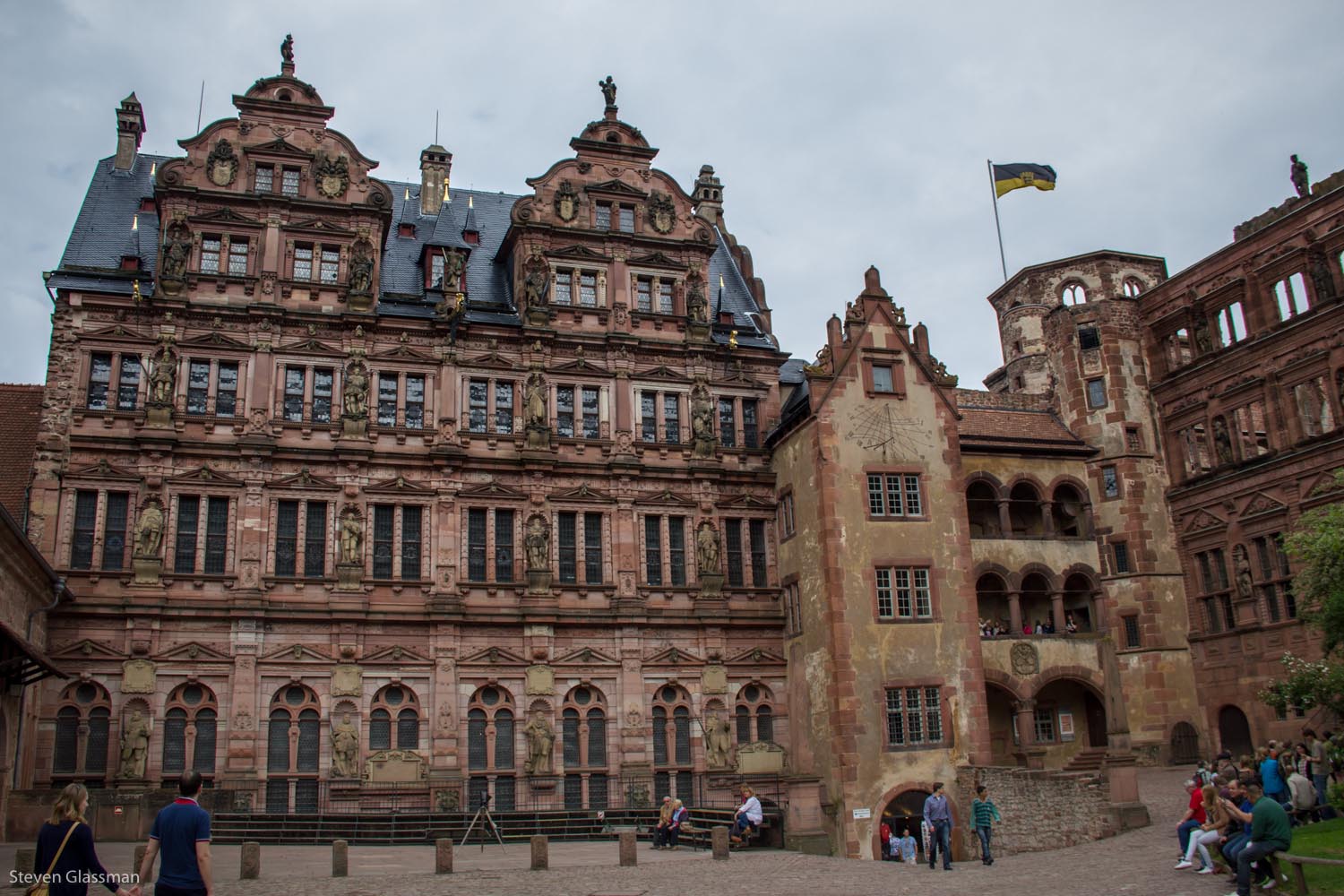
heidelberg-5

Through the Elisabethentor, there were more nice views to be had.
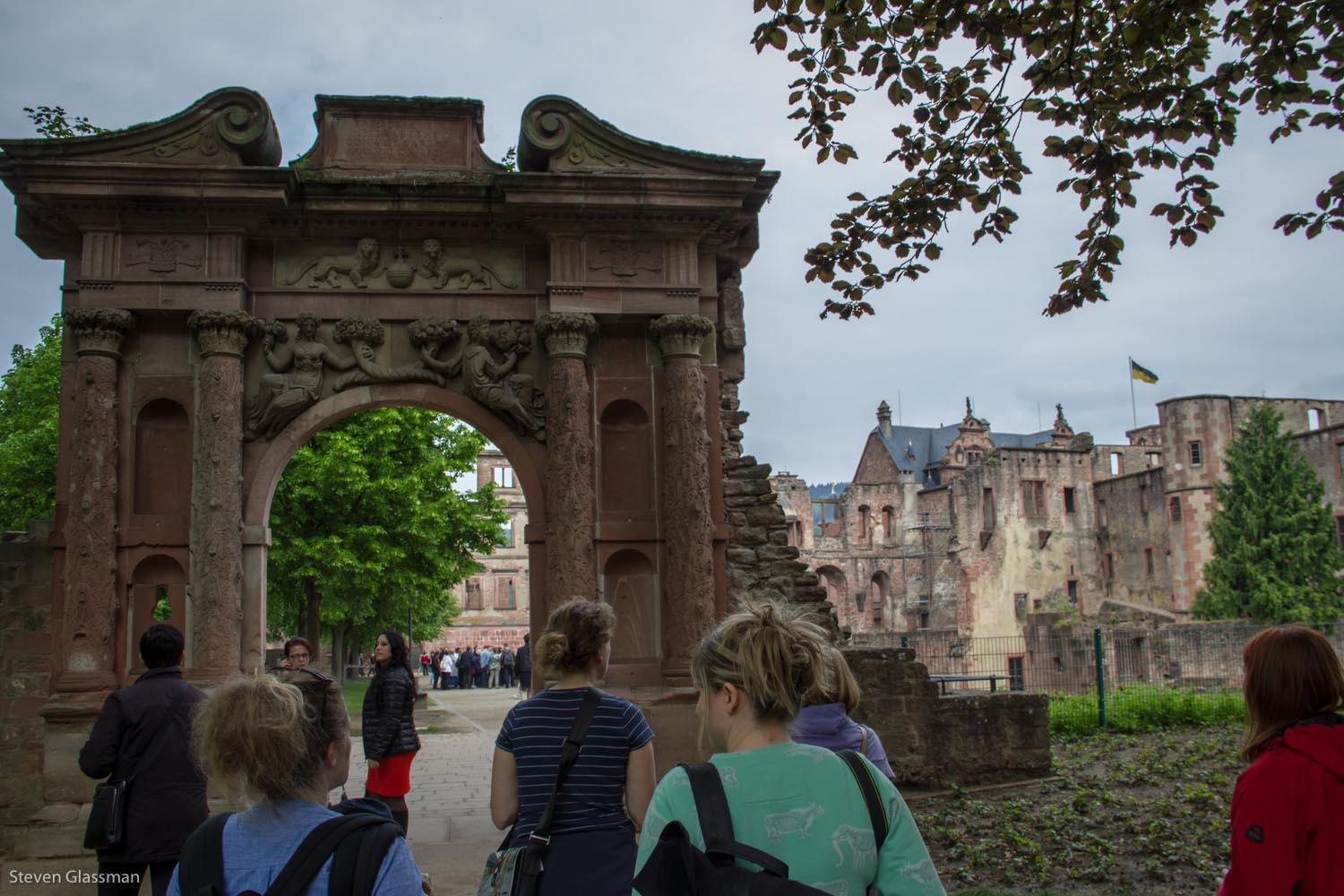
heidelberg-6

From here, we picked out our path to the city center, to have lunch.  First, we had to get down there.  Luckily, there were stairs nearby.
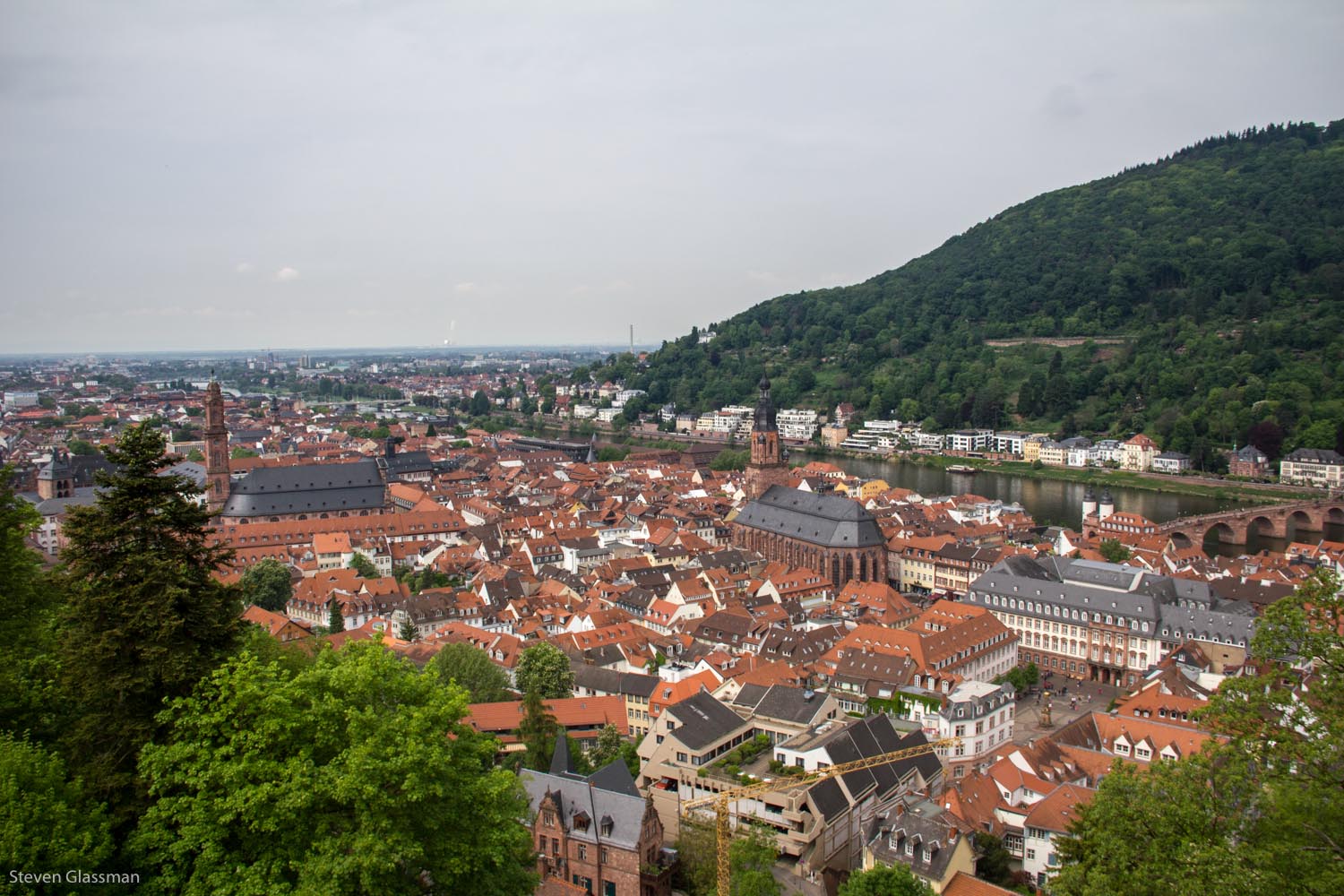
heidelberg-7

Walking into the Marktplatz…

heidelberg-8

We ate lunch at Café Knösel, because it was close, the menu looked pretty decent, and Tripadvisor rated it well.  I didn’t know at the time that it’s the oldest cafe in Heidelberg, open since 1863.  I had a pricey but delicious plate of salmon, spinach, and potatoes.

After lunch, we hopped over to the Karl-Theodore-Brücke.  There’s a rather nifty statue of a monkey at the end of the bridge which has space enough to put your head inside, cheerfully demonstrated here by Bev.
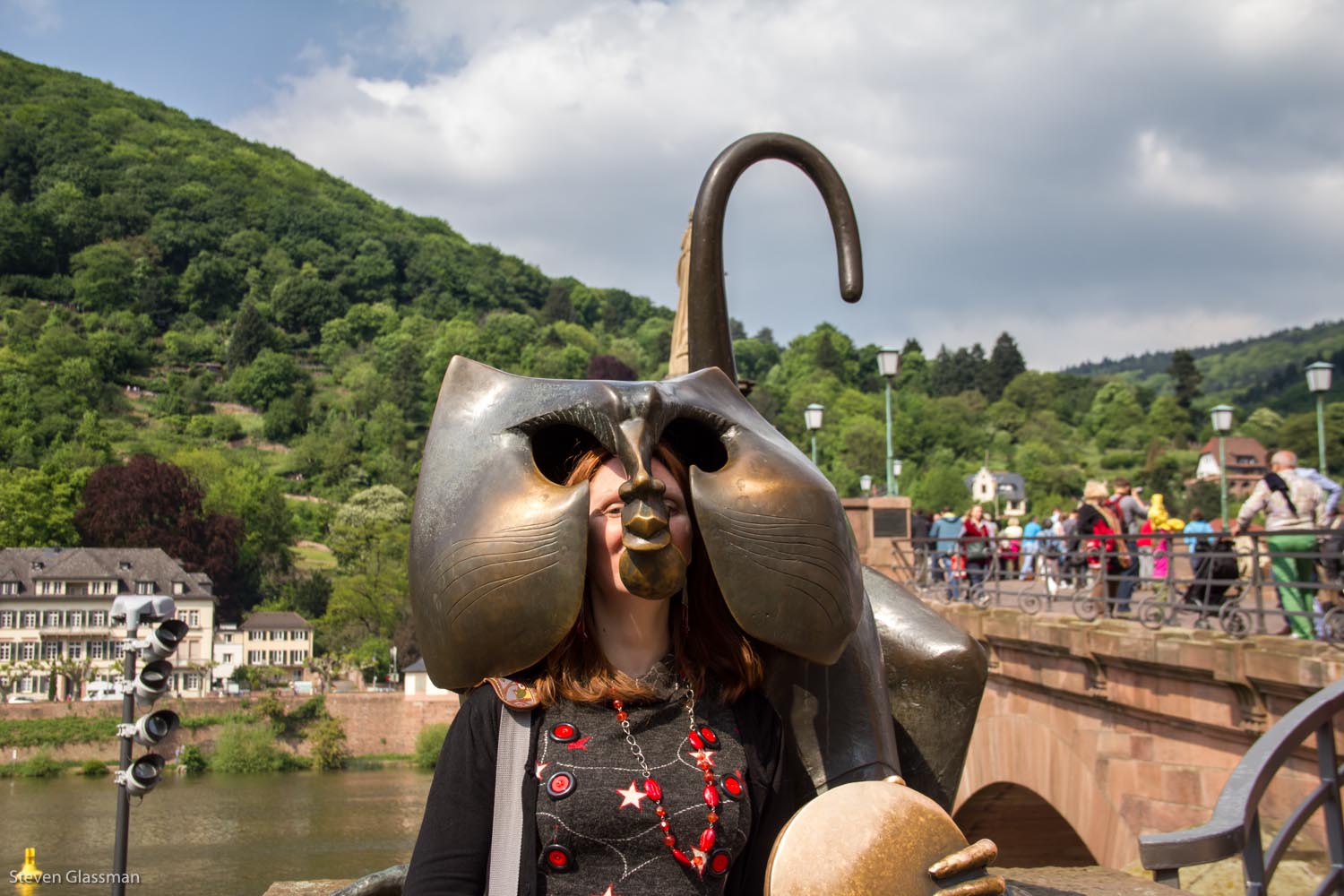
heidelberg-9

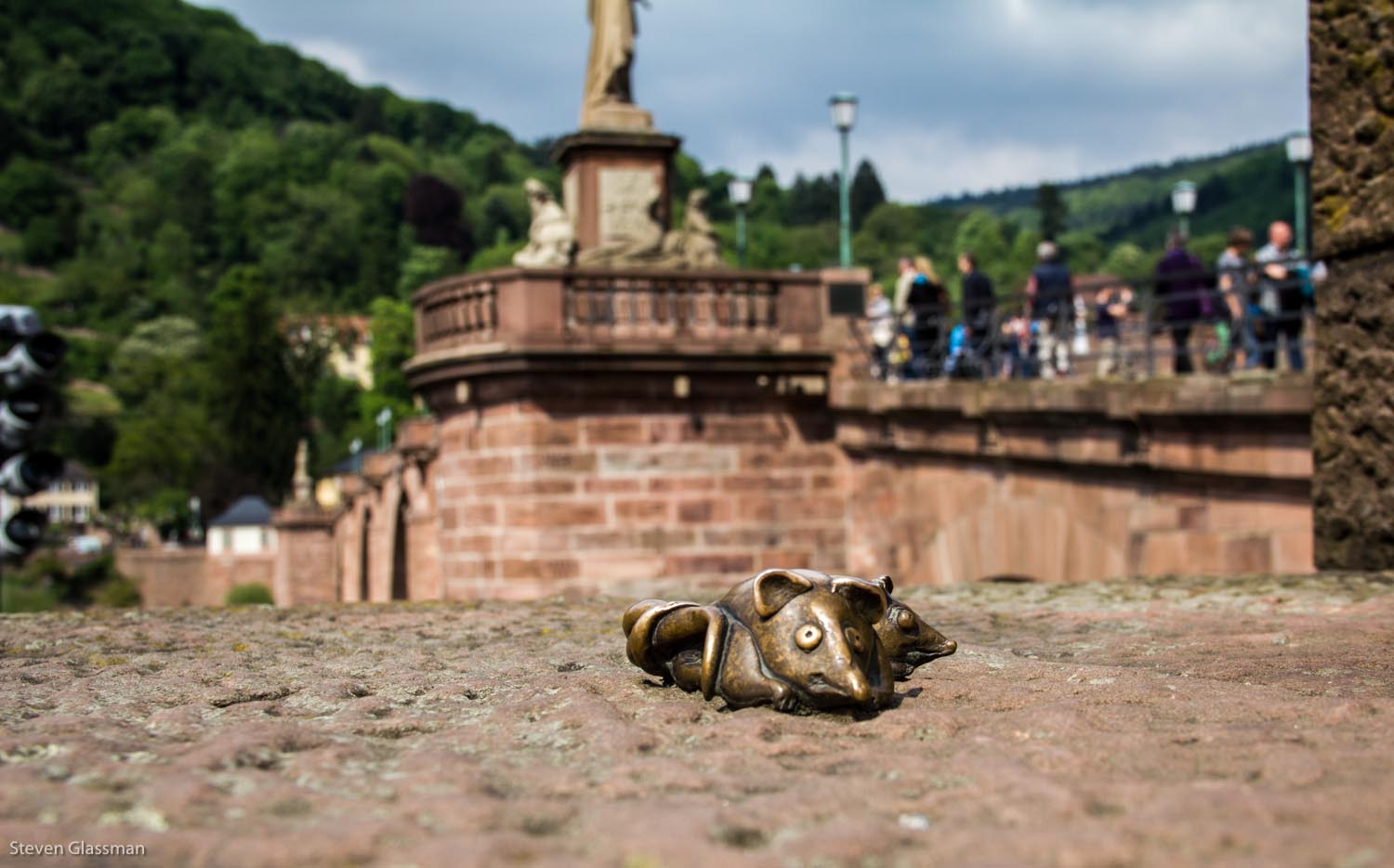
On the low wall next to the monkey sculupture are these little metal mice.  I quite liked these little guys.
heidelberg-10

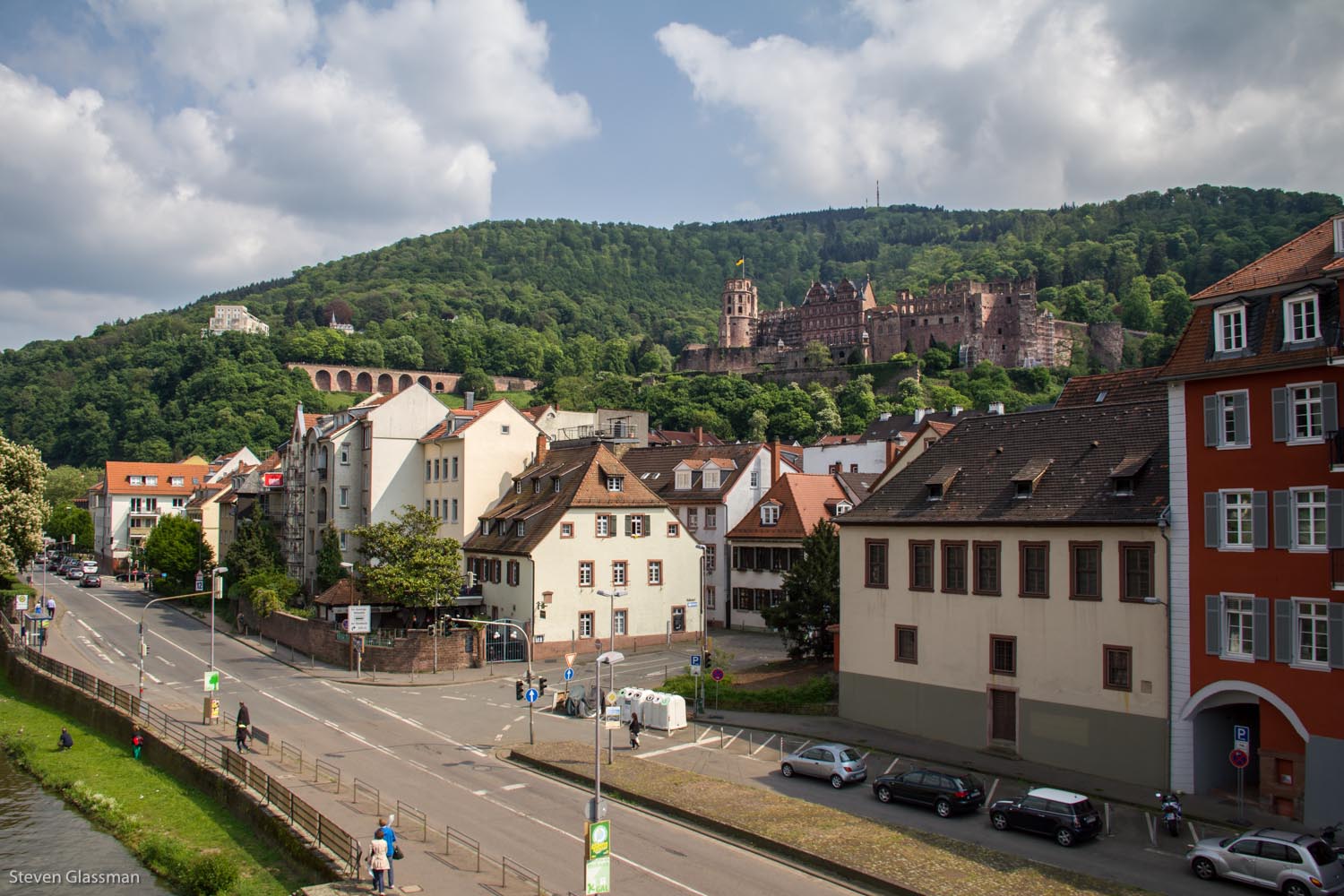
This is the view of the castle, Schloss Heidelberg, looking back from the Karl-Theodore-Brücke.
heidelberg-11

…and back at the archway leading onto the bridge.

heidelberg-12

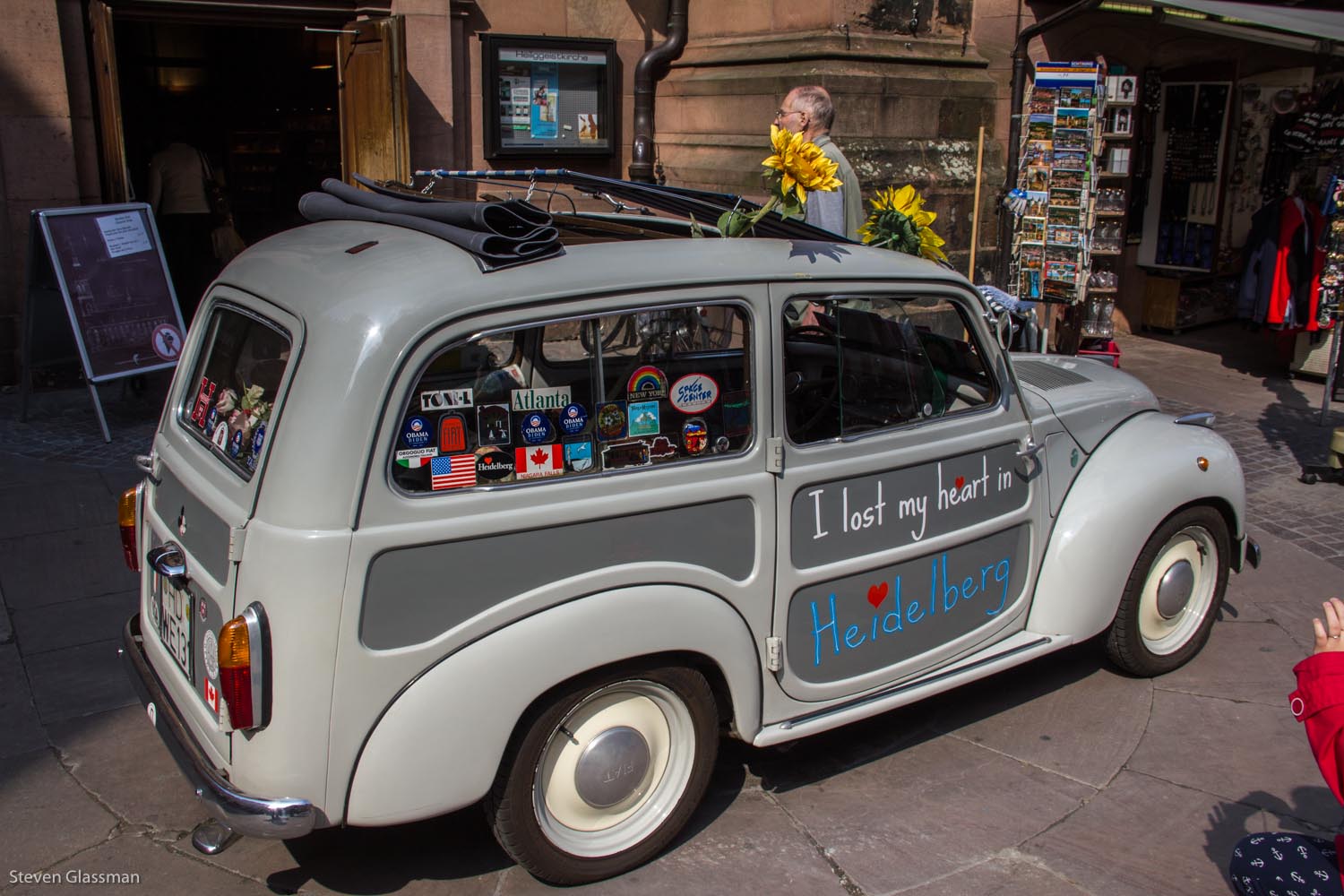
After we visited the bridge, we wandered toward the Studentenkarzer.   On the way there, we found another tourist…
heidelberg-13

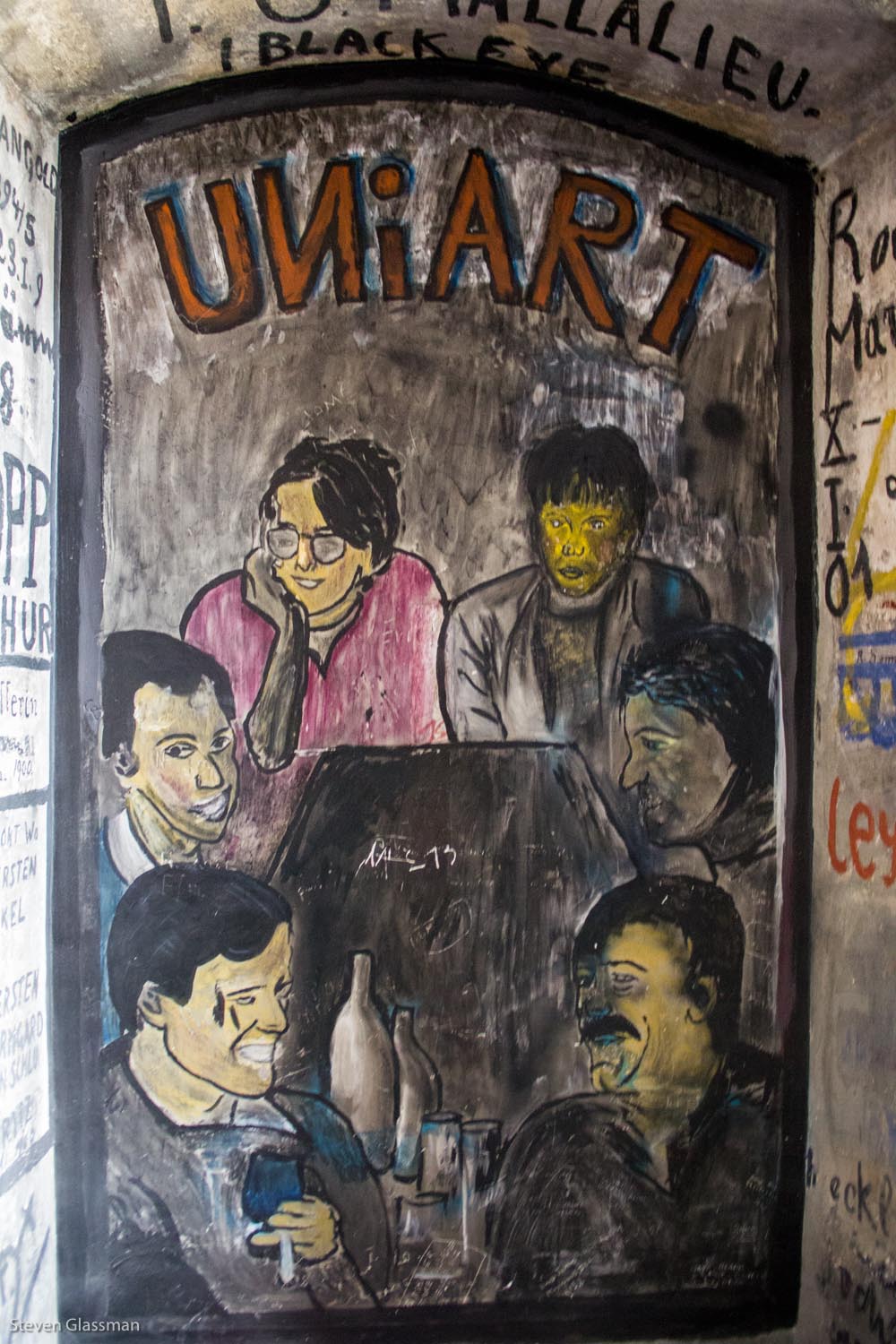
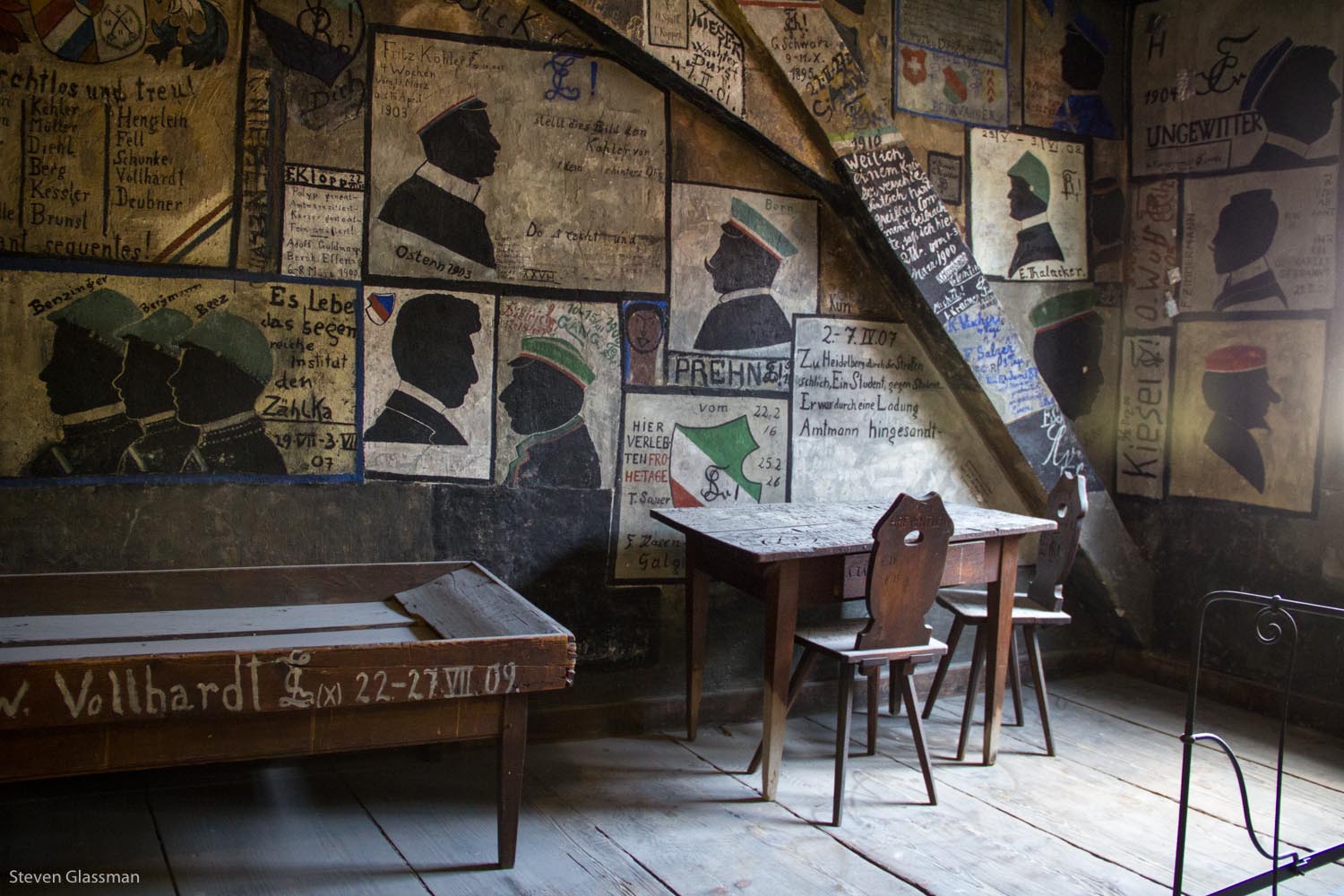
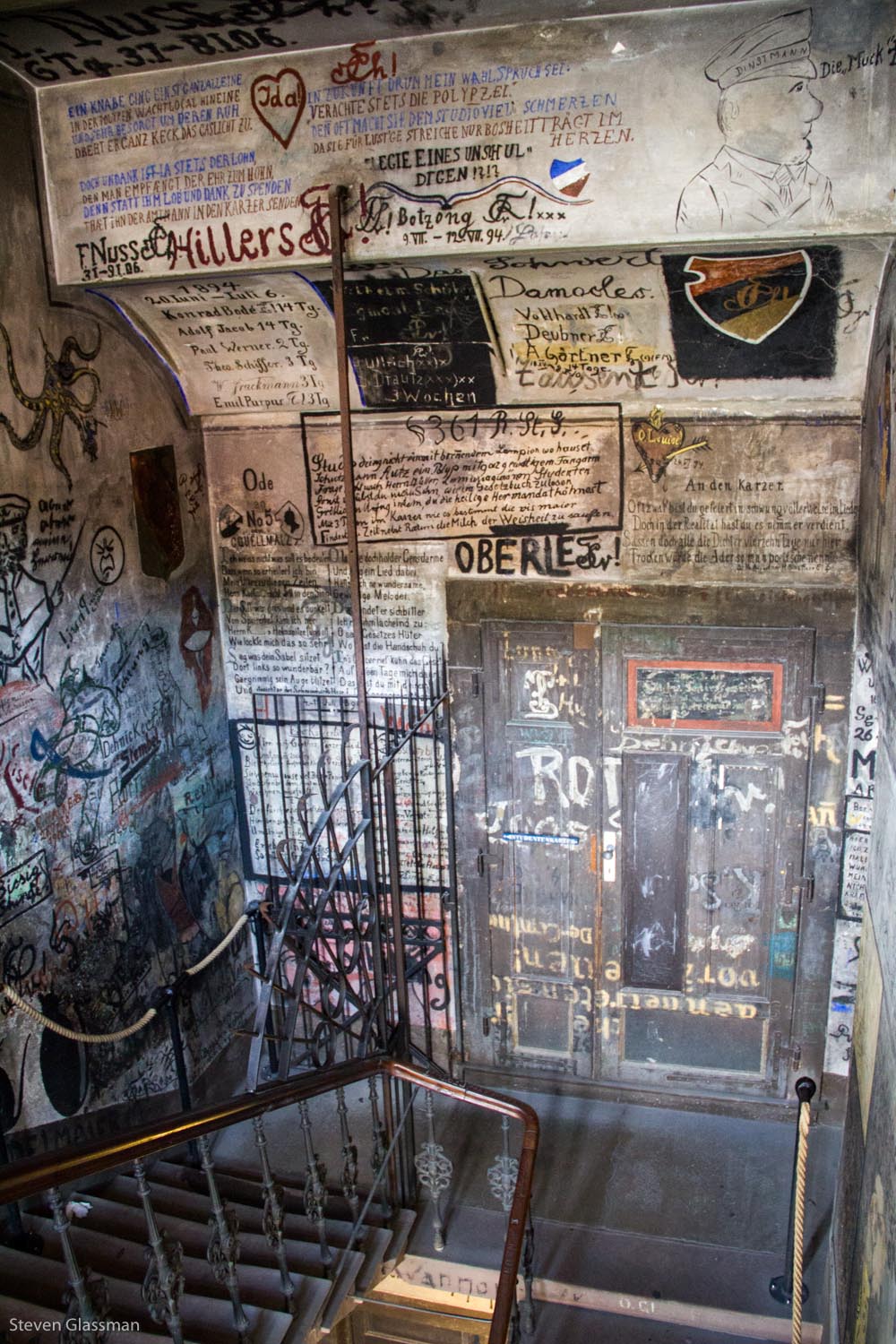
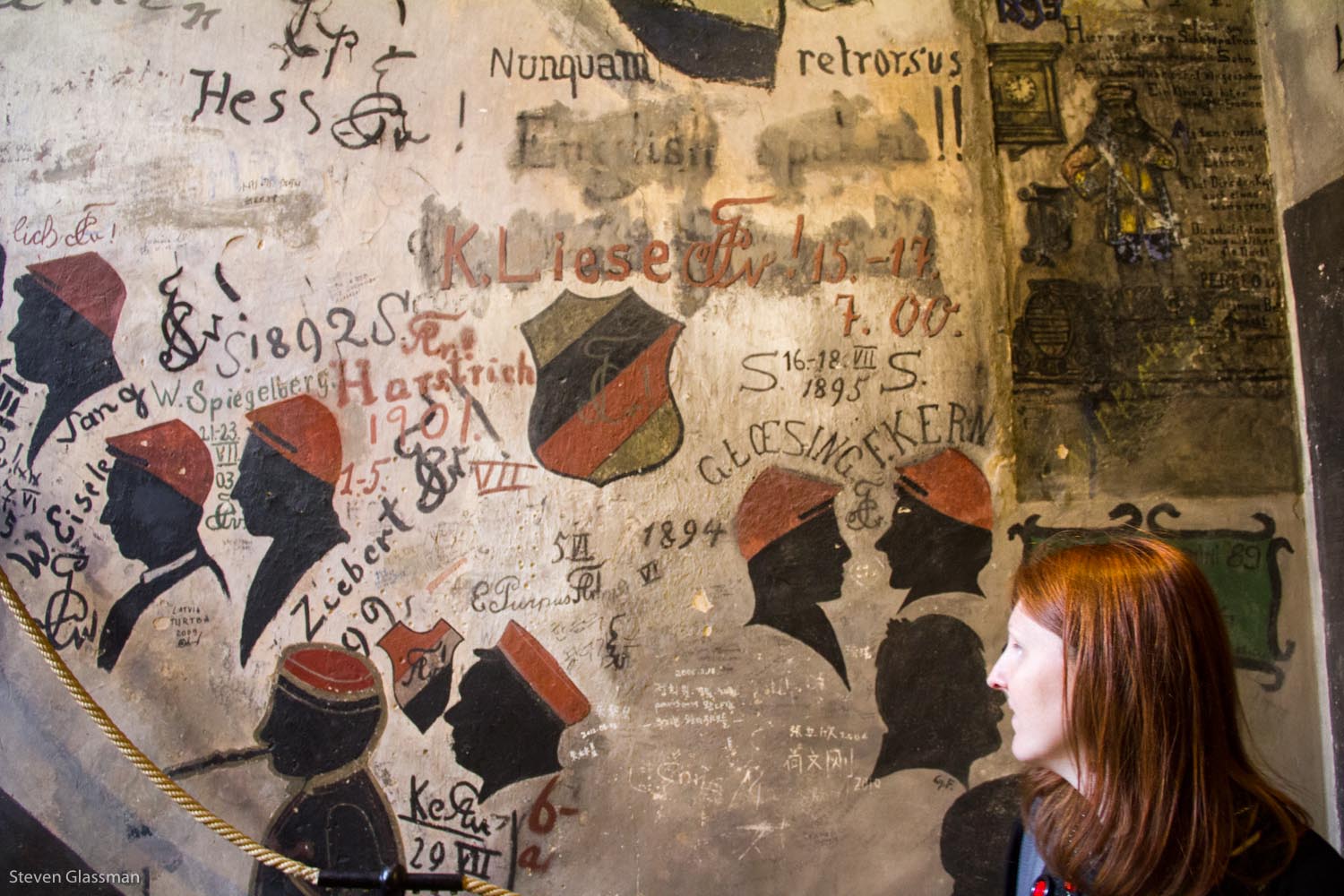
Heidelberg is a University town.  Founded in 1386, the Heidelberg University is the oldest university in Germany and the third to be established in the Holy Roman Empire.  The Studentenkarzer, or student jail, was in service from 1823 to 1914.  Students would be sent there for drunken misconduct, messing about with the police, throwing rocks at churches, or dueling.  The perpetrators would be sent to the jail for anywhere from a few days to a few weeks, depending on the offense.

Students were still allowed to attend classes, and over the years a tradition formed of marking the walls with graffiti to note the person, their offense, and logos from their fraternity houses.  The Heidelberg Studentenkarzer has been preserved in its original state, with the original furniture left in place, as well as the marks of the incarcerated from years gone by.    120 year old graffiti is rather interesting.

The next eight photographs are all from inside the Studentenkarzer.
heidelberg-14 heidelberg-15 heidelberg-16 heidelberg-17 heidelberg-18 heidelberg-19 heidelberg-20 heidelberg-21

Next to the Studentenkarzer is a small University Museum documenting the history of Heidelberg University.  There was a great deal of fascinating old technology, but it’s really best summed up by this Pneumothorax treatment device from 1950.  Heidelberg is a research university, and it’s really fantastic to think about the innovations made here over the years.

heidelberg-22

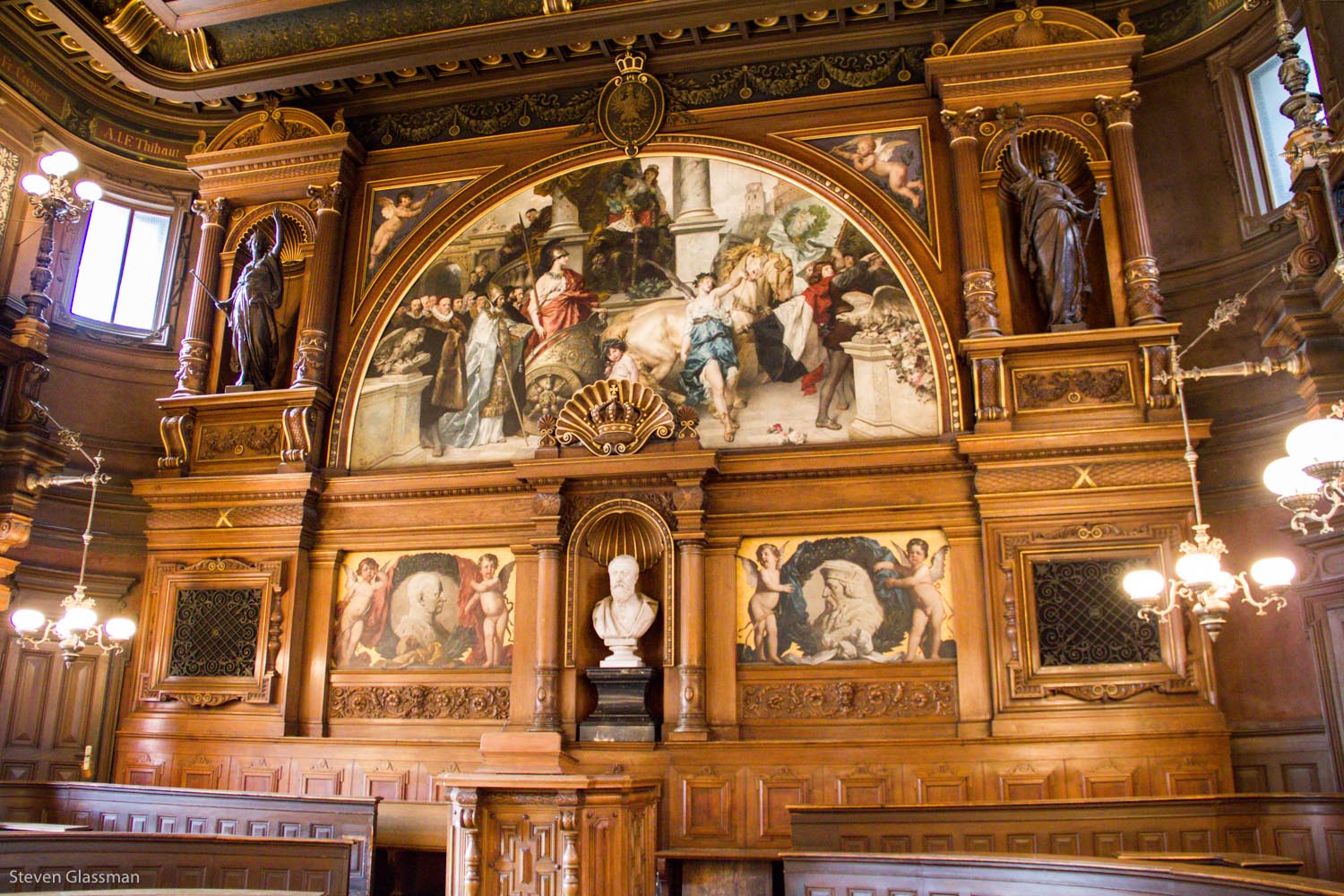
Upstairs from the museum is the Great Hall, which is, well, a great hall.
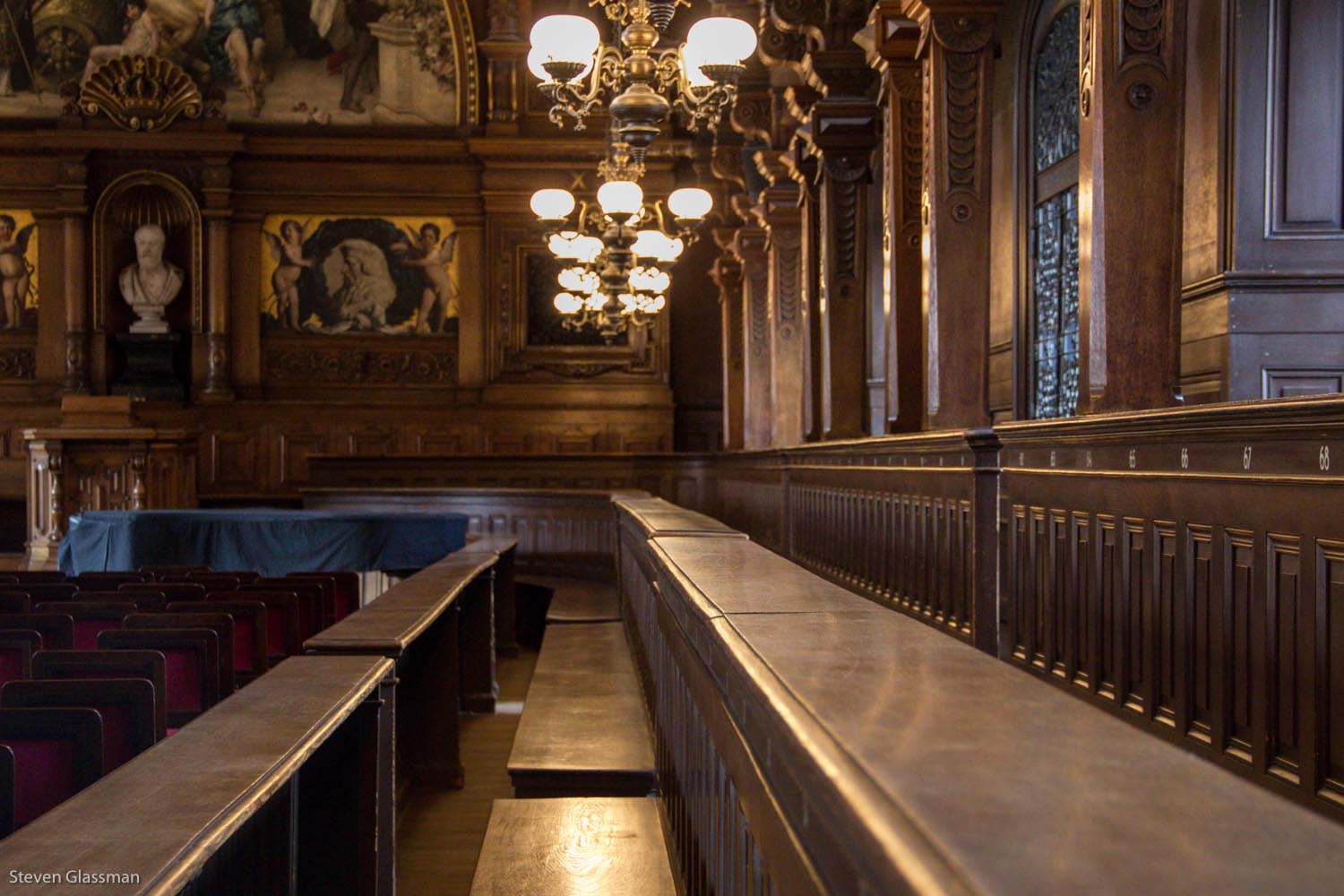
heidelberg-23 heidelberg-24

After the great hall, the group stopped for frozen yogurt, before heading down the main shopping street to pick up the bus back to the Bahnhof.
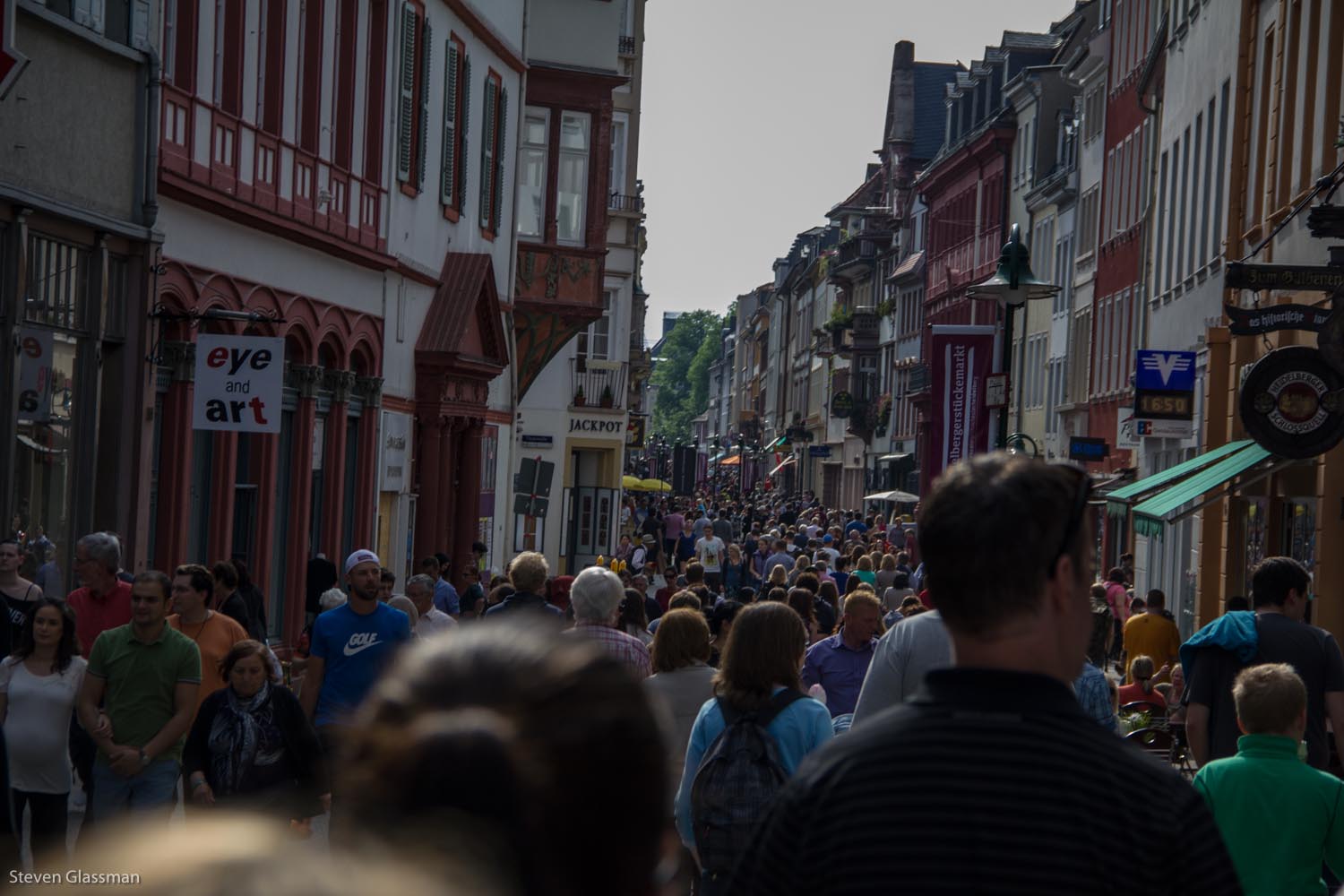
heidelberg-25

Have you ever been to Heidelberg?

Rothenburg ob der Tauber

Early in the morning on Saturday the 12th of April, I took a day trip to scenic Rothenburg ob der Tauber with Cliff and Sarah of Regensblog.   Cliff already posted his write-up of the trip, and he included a ton of great pictures.

Rothenburg is incredibly popular with tourists, and it’s often featured in package tours.  The town is compact, but we walked past an astonishing number of hotels on the outer edges of town.  We had good weather and a very light level of tourist crowding, but I shudder to think what this town would be like in June or July.

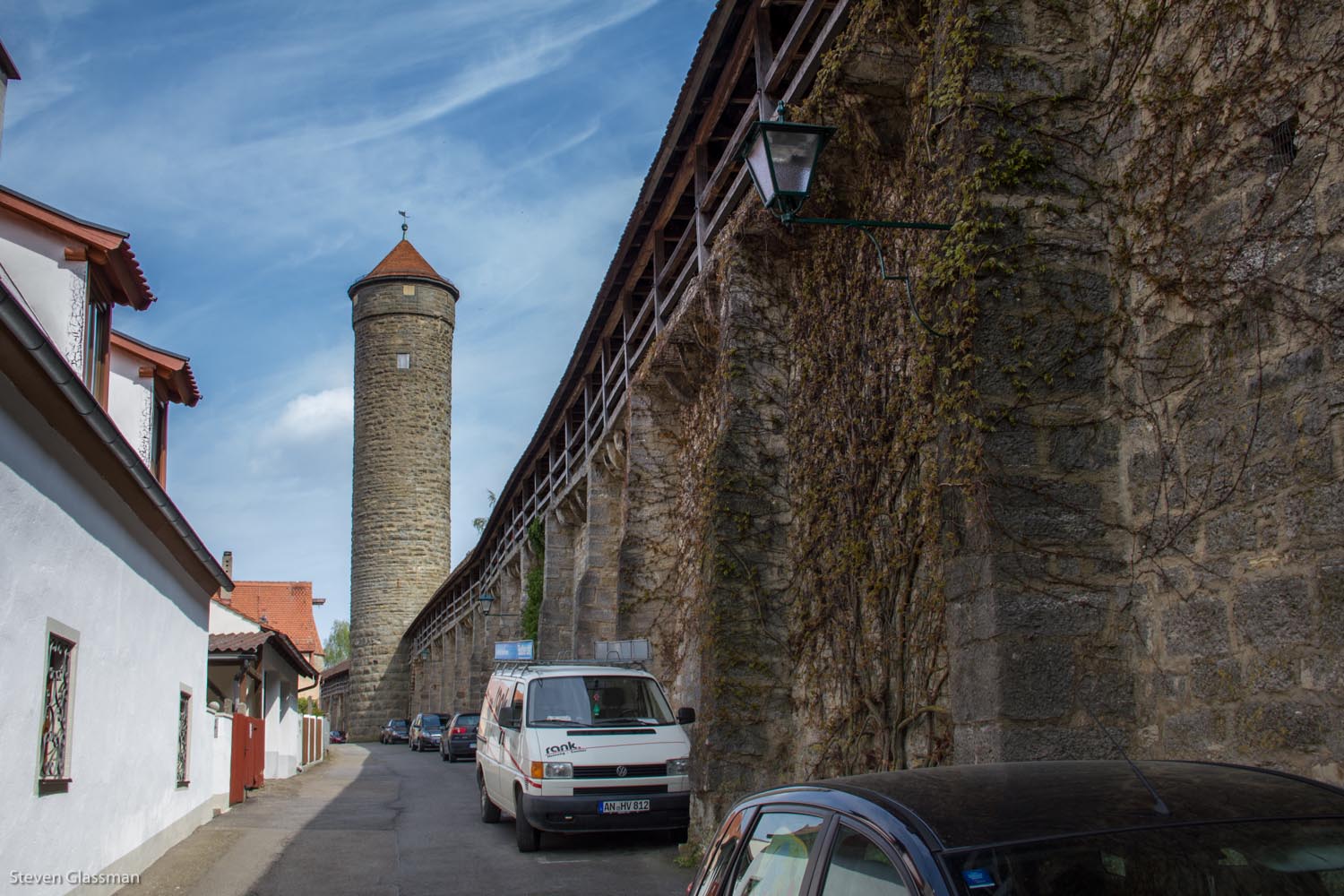
One of my favorite things about Rothenburg is the wall.  Many towns in Germany still have intact sections of their original outer walls, but this is the first time I’ve seen one with the entire wall up.  It’s been rebuilt over the years, so it’s not all original, but it’s still quite amazing.

rothenburg-1

I mentioned it was scenic, right?  It gets used in film quite often.  In fact, sections of Harry Potter & The Deathly Hallows were filmed here.  Not on this specific street, but here in town.

rothenburg-2

There were a couple of great fountains around town, but none of them were actually moving water around.   There was a lot of construction, so perhaps they were turned down during the other work.

rothenburg-3

This is the town hall.  The tallest point is the Rathausturm, a tower that you can climb for the low, low cost of €2.

rothenburg-4

This elderly tourist couple was just really adorable.

rothenburg-5

Naturally, we climbed the tower.  You can actually see the outer walls, and the towers at intervals along the wall.

rothenburg-6

The wall is especially clear in this picture.

rothenburg-7

While we were walking around, we were all kind of amazed at this tree-  it had clearly been encouraged to grow almost as part of the building.  It was fascinating.

rothenburg-8

While walking around, we found a small cloister garden containing a very pretty green space.

rothenburg-9

I’ve lost track of which tower was which.  This one was on the western side of the city.

rothenburg-10

…but this one is the actual western town gate.

rothenburg-11

This face is set into the tower on the western gate.  It’s kind of interesting.

rothenburg-12

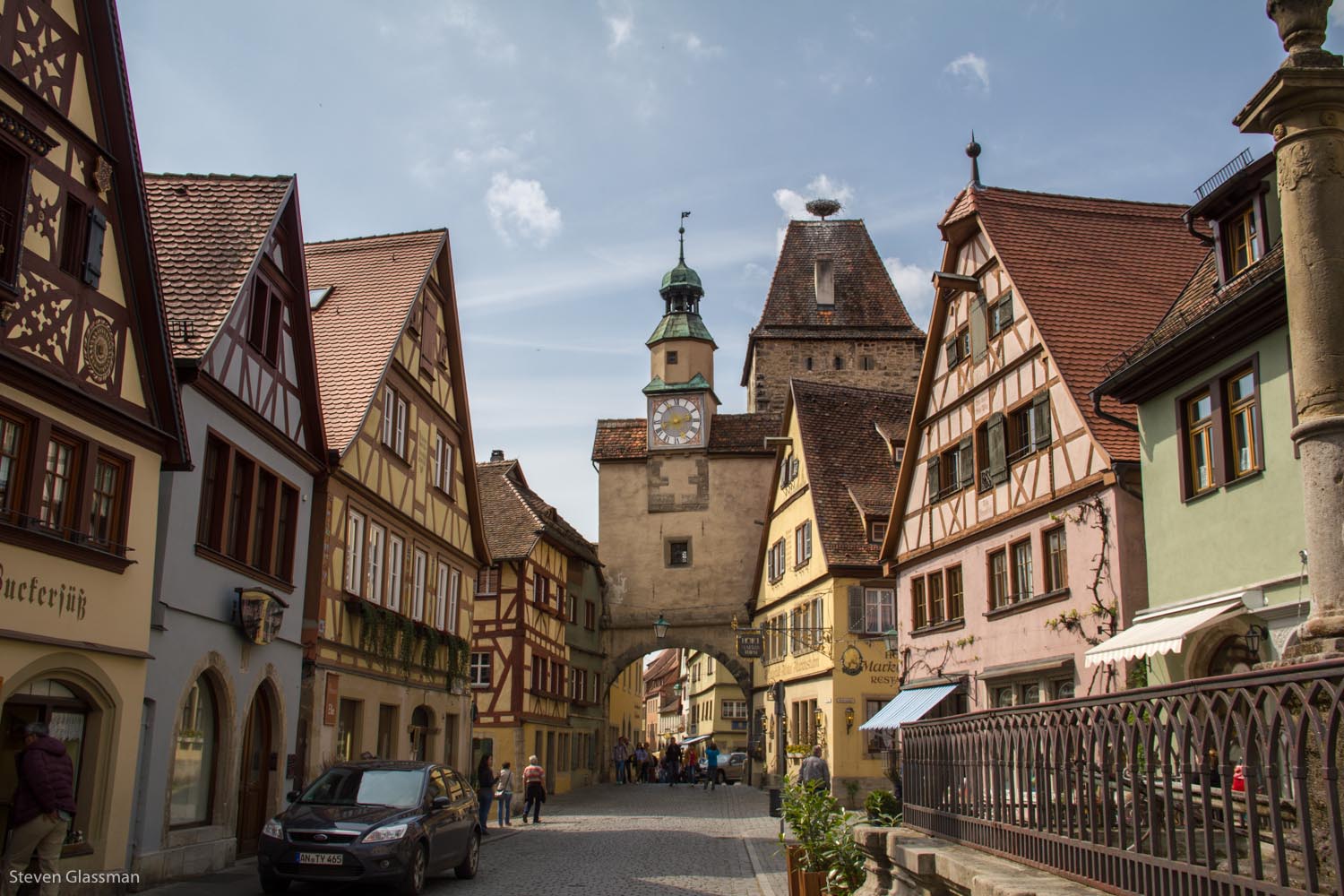
Did I mention how picturesque the city is?

rothenburg-13

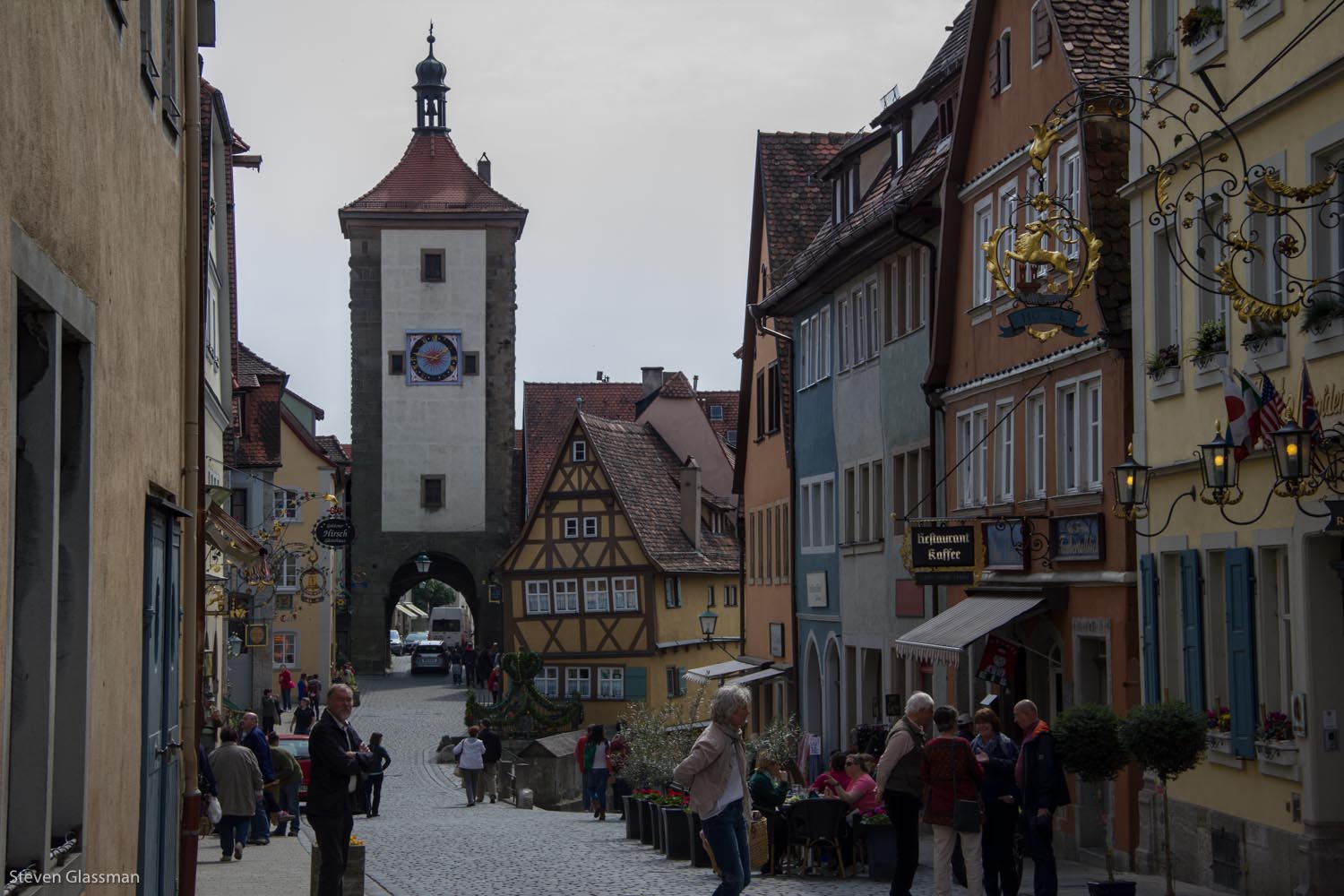
This street is the Plönlein.  The tower to the left is the Siebersturm, built in 1385.  This is one of those views that people take pictures of quite a lot.   Seriously, just put “plonlein” into a Google image search and you’ll immediately see what I’m talking about.

rothenburg-14

It was just before Easter, so these wreathy crown things are starting to show up all over Bavaria.   I’m not sure what they’re called, but they’re always draped with colored eggs.

rothenburg-15

The design on the eggs is quite intricate.

rothenburg-16

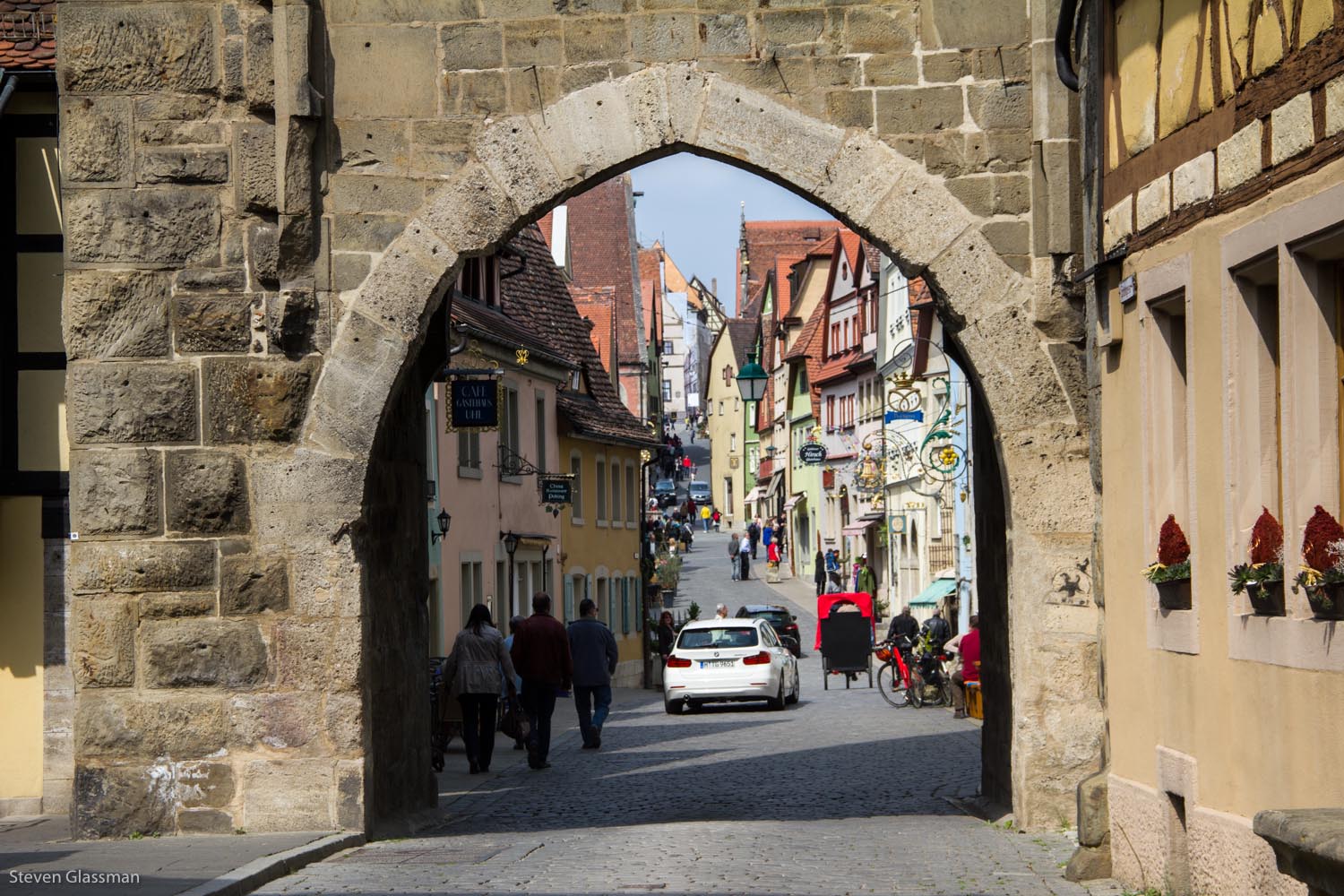
This kind of archway appears all over town.

rothenburg-17

It is possible to walk along the wall.  There are stairs at regular intervals to go up to the walkway.

rothenburg-18

Wooden railings keep you from walking off the edge.

rothenburg-19

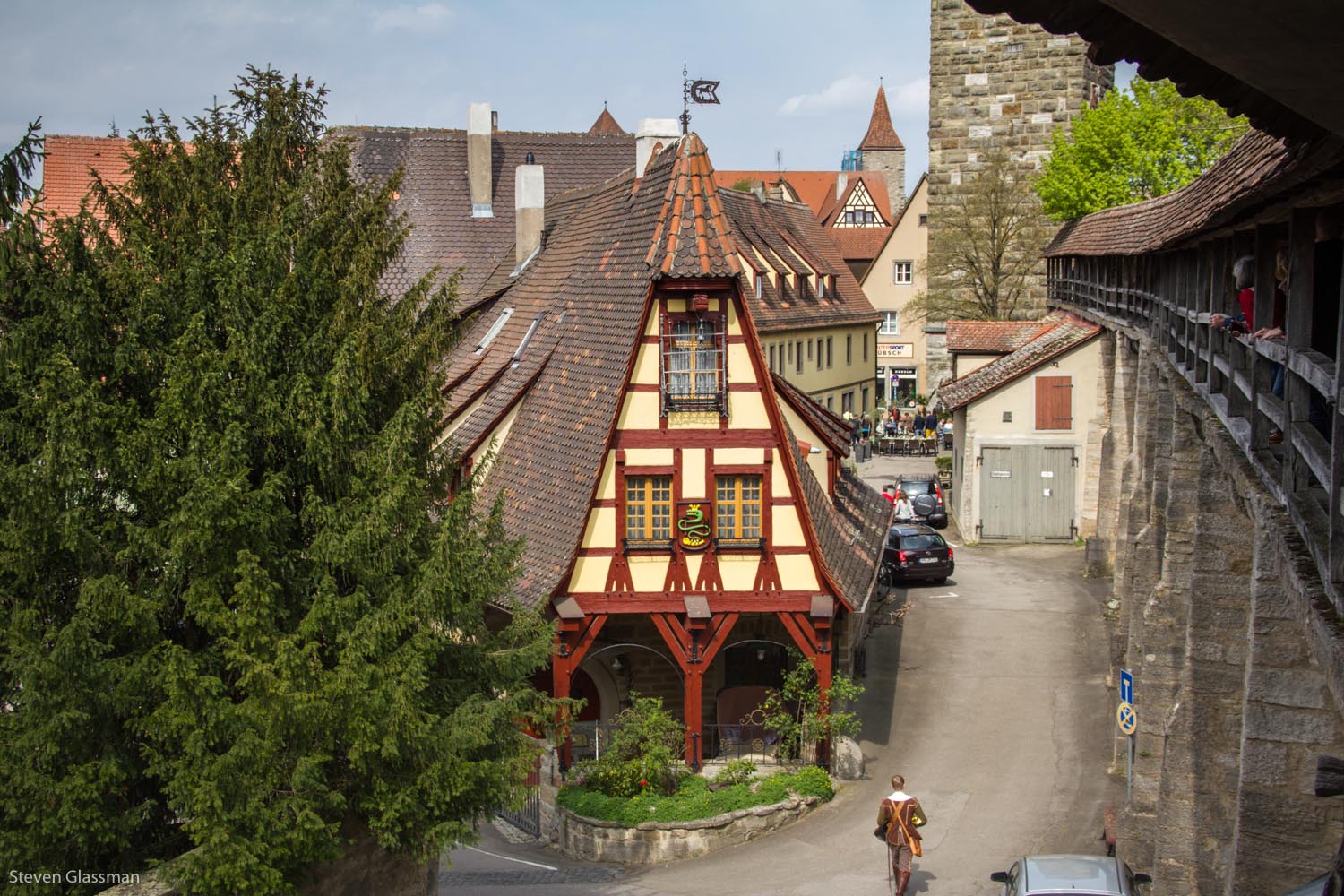
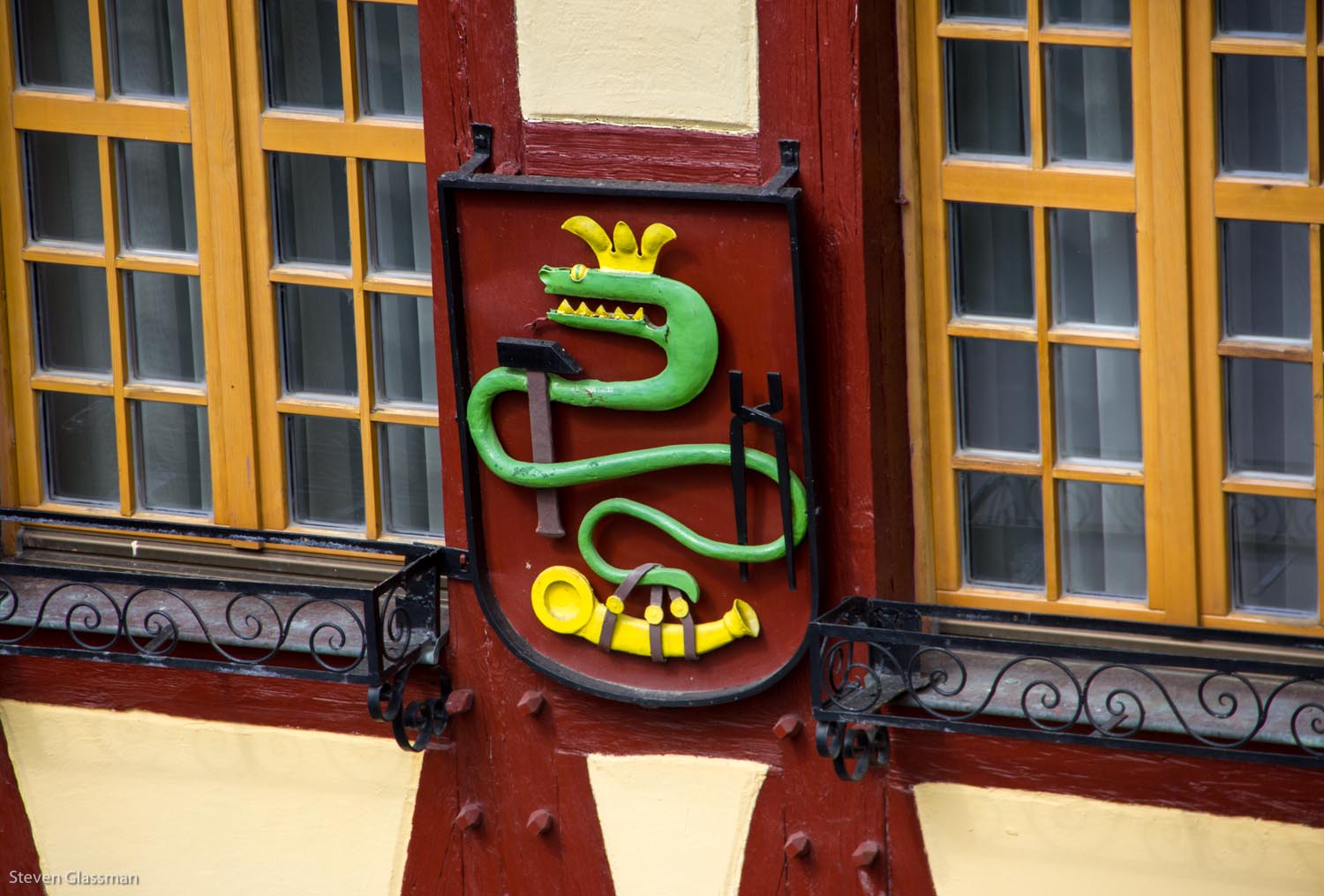
This house caught our eye because the seal over the door looks a great deal like Trogdor.

rothenburg-20

Seriously, it’s an ancestor of Trodgor.  Ready to burninate the countryside.

rothenburg-21

I think the wall may have been my favorite part of the city.  Right behind Trogdor, that is.

rothenburg-22

We had fairly spectacular weather for the day, also.  Blue skies, whispy clouds.   I secretly believe that the town of Rothenburg ob der Tauber employs weather wizards to keep it pretty like this.

rothenburg-23

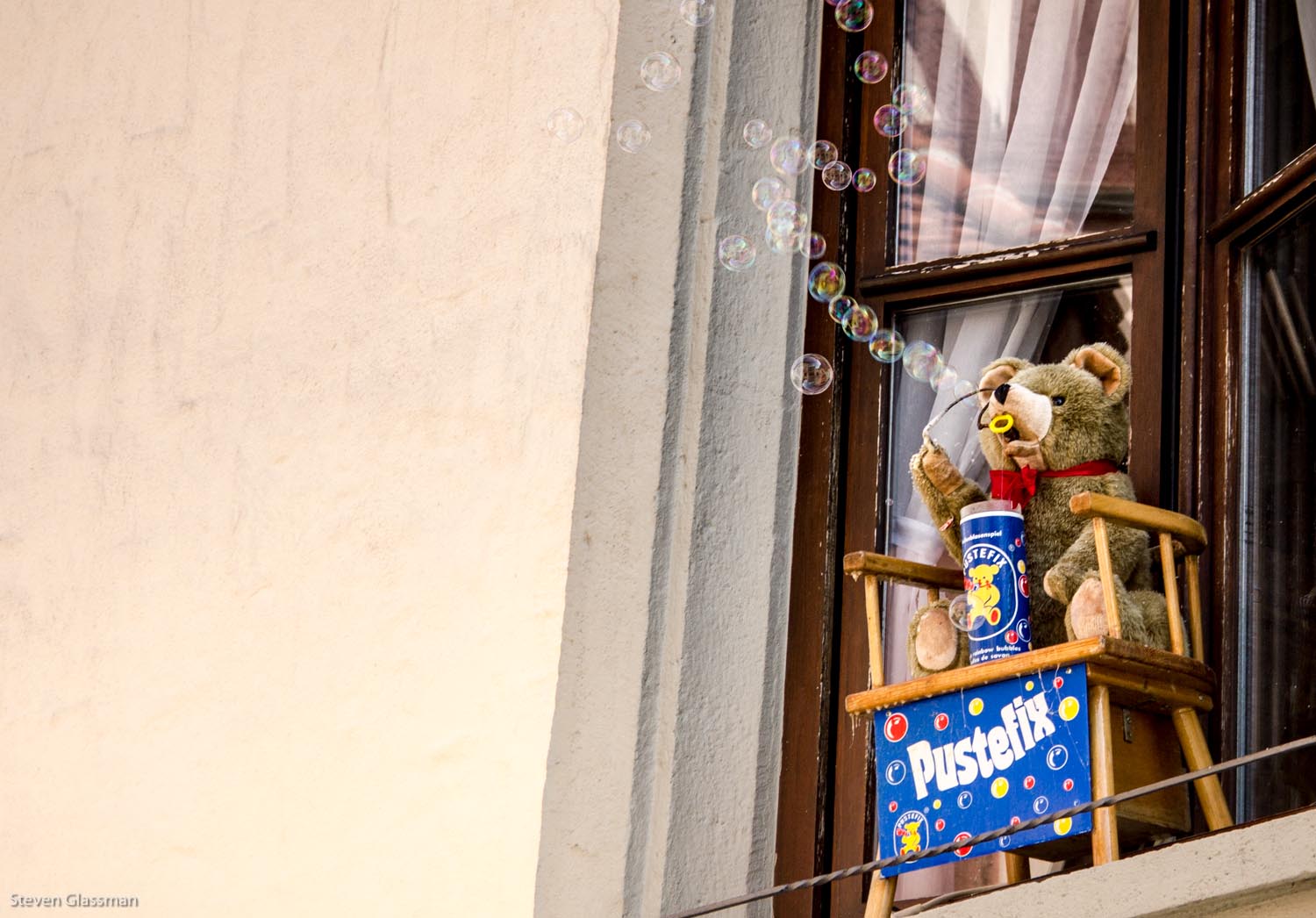
To break up these pictures of scenic Rothenburg, here’s a teddy bear blowing bubbles.  This is at a shop in town-  it took me a minute to figure out where the bubbles were coming from because it’s in an upstairs window and it’s not constant.

rothenburg-24

One last shot of the wall on our way out-  this was close to where we parked for the day.

rothenburg-25

Have you ever been to Rothenburg ob der Tauber?

Document Neupfarrplatz in Regensburg

In Neupfarrplatz, one of the largest main squares of Regensburg, there is a big church called the Neupfarrkirche.   Tucked behind that church is a triangular metal structure containing a door.  The door contains a stairwell that goes down into Document Neupfarrplatz, an exhibit made of an archaeological excavation beneath the square which occurred between 1995 and 1997 .  The exhibit isn’t open all the time.  There are tours at set times, and you have to go to the Tabak shop across the way to buy your tickets before the tour.  It’s only €5, for a one hour tour in German.

neupfarrplatz-1

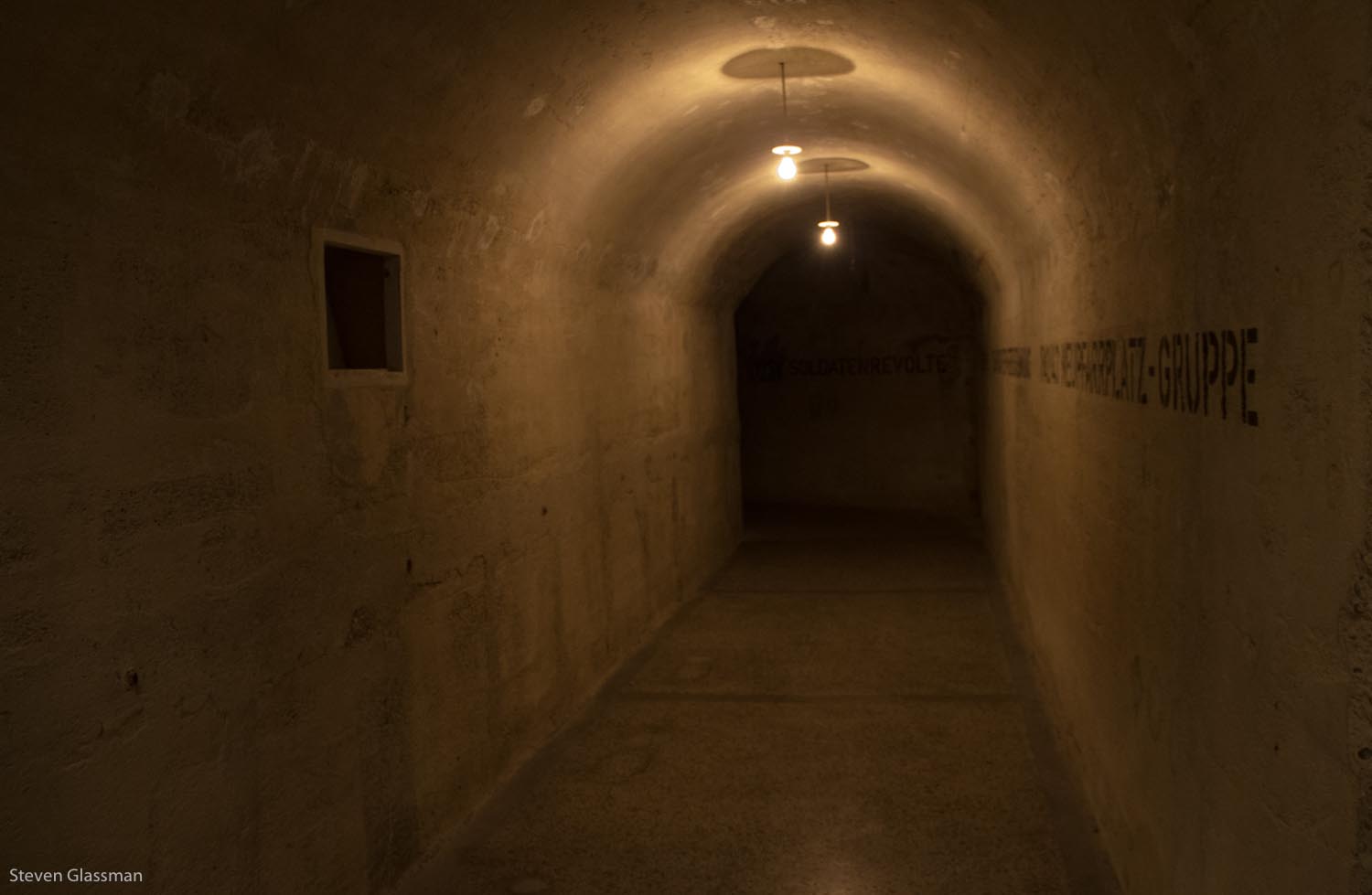
Once you get to the bottom of the stairs, you’re in a large chamber with pathways leading off in other directions.  There is a set of tunnels which comprise part of a ring shaped underground air-raid shelter built around 1940.  These first two pictures show part of that structure.

neupfarrplatz-3

Looking down the hall from the air raid shelter hallway, you can see part of the main chamber at the foot of the stairs.

neupfarrplatz-5

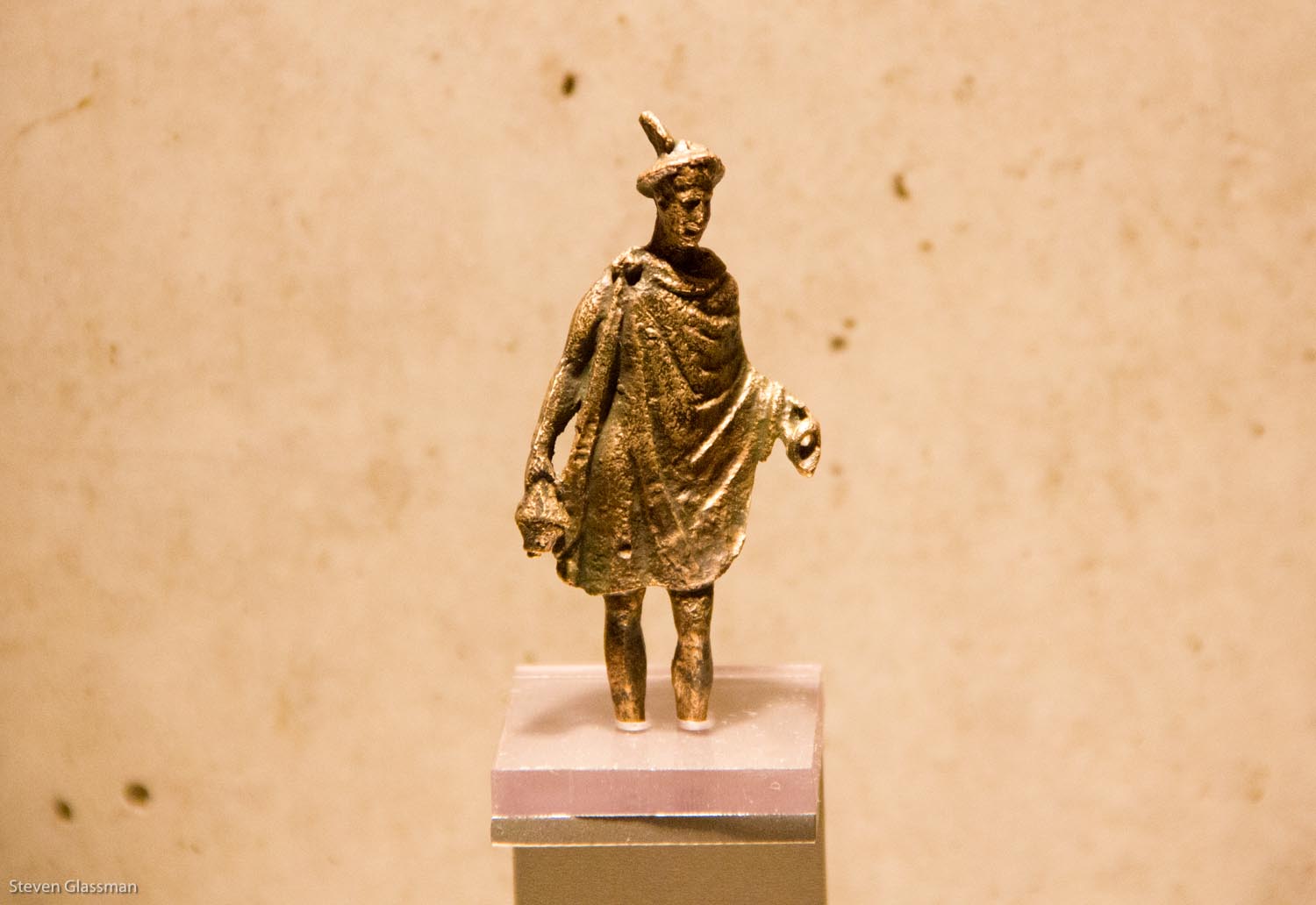
Inside that first chamber are three glass cases containing small items from three different time periods of the excavation.    The first is a bronze figurine of the Roman god Mercury, from the second or third century A.D.

This statue is believed to have stood on the house altar of a high ranking Roman official.  This location was the Roman camp Castra Regina around 179 A.D.  Castra Regina was a fortified military base, and I’ve posted photos of the old fortress walls before.  The remains of Castra Regina lie here, six meters below Neupfarrplatz.

neupfarrplatz-4

This pointy fellow is a bronze figurine of the high priest Aharon from the 15th century A.D.  This is from the medieval Jewish quarter, which also stood in Neupfarrplatz after the Roman Empire.  Southern Germany’s biggest Jewish community prospered here from the 8th century until February 21st, 1519, when the Jews were driven out of the city.    At the time of the expulsion, around 80 Talmudic scholars lived here.

neupfarrplatz-7

After the explulsion of the Jews in 1519, the synagogue was demolished.  A wooden chapel was dedicated to the Virgin Mary (Zur Schönen Maria) at this location soon after.   The chapel became a center for mass pilgrimages.  The next  item pictured is a silver sign of pilgrimage from around 1520.

So much money was generated by the pilgrims that the foundations of a new larger Neupfarrkirche were set in 1540.  This is where the names Neupfarrplatz and Neupfarrkirche come from-  Regensburg became Protestant in 1542 and the pilgrimage church was reconsecrated as “Neue Pfarre,” the new parish church.

neupfarrplatz-6

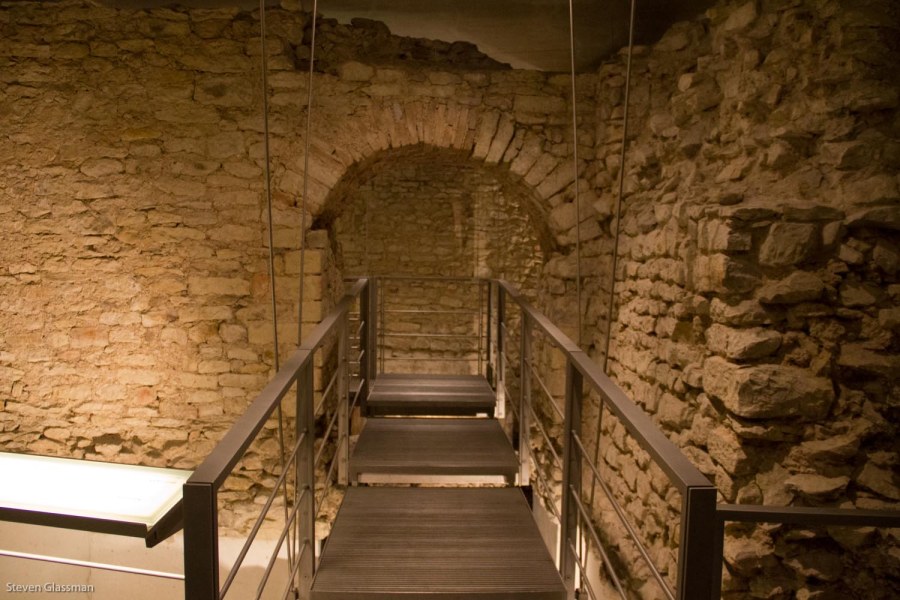
Opposite the bronze and silver items encased in glass is a walkway supported over part of the excavated structure.  These were cellar rooms – the archway goes to another room which had been converted several times.

neupfarrplatz-8 neupfarrplatz-9

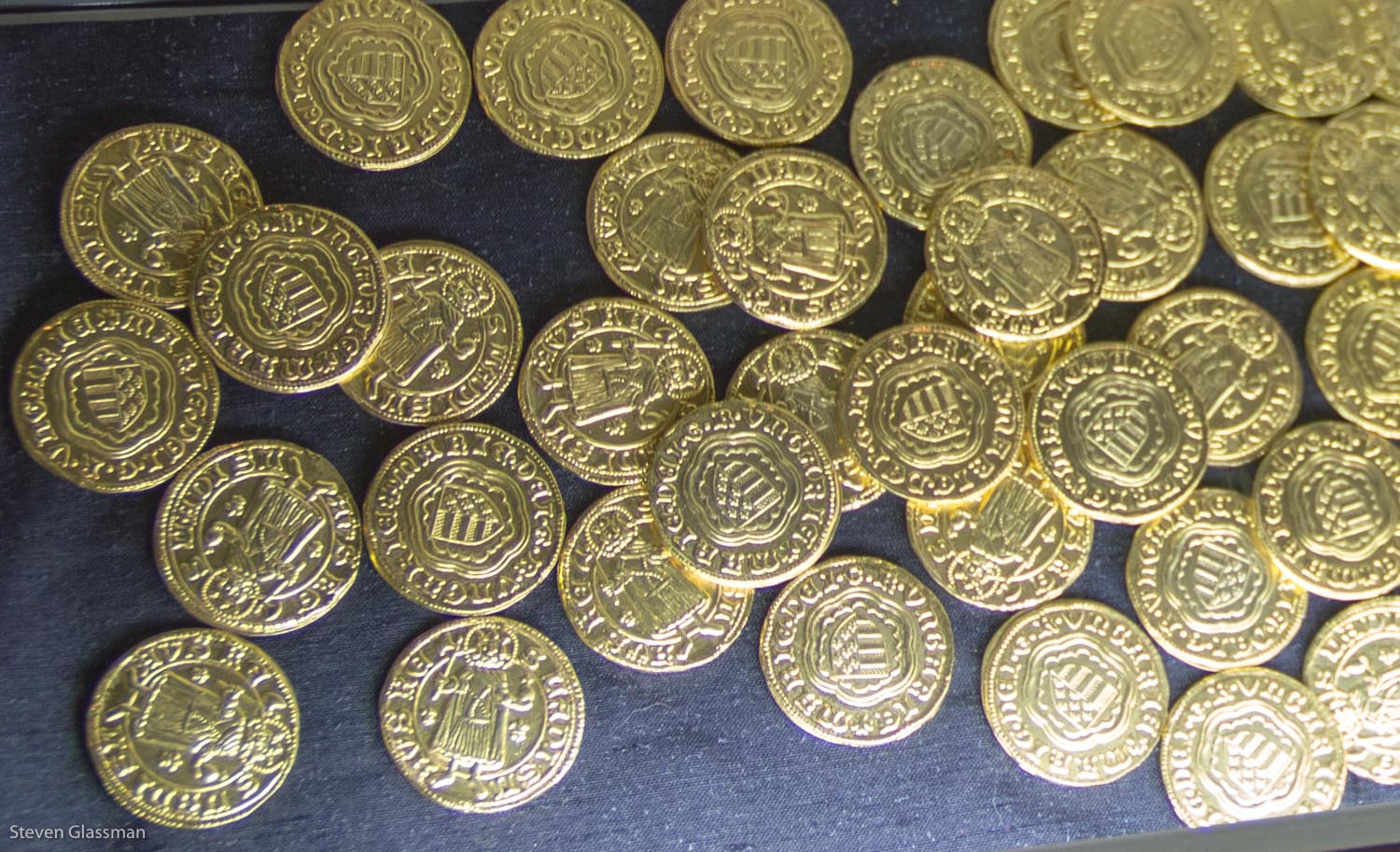
One of the more spectacular things found during the excavations were these 624 gold coins, buried around 1388.

neupfarrplatz-10

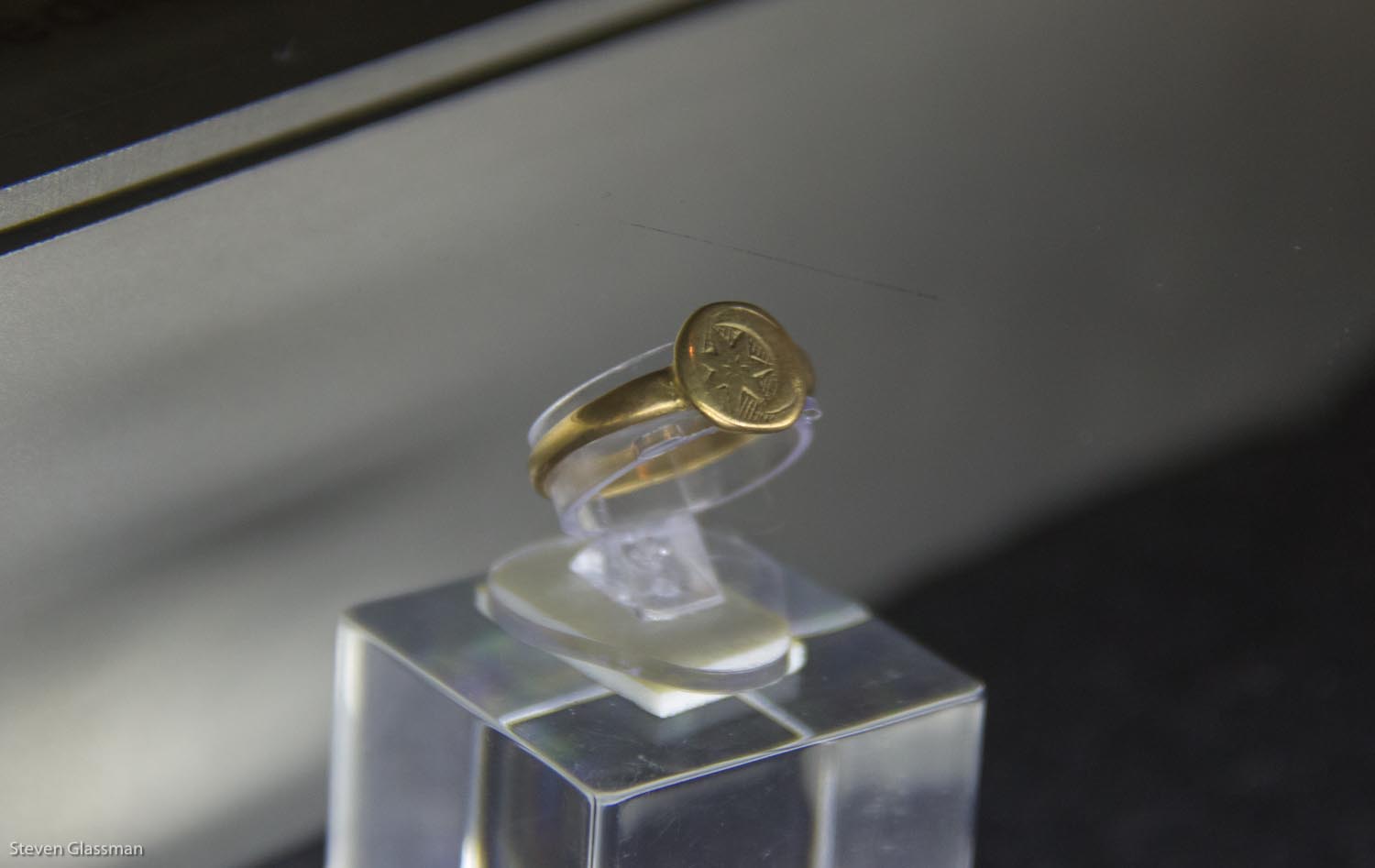
Next to the gold coins is a golden ring with the star-and-moon seal of the medieval Jewish community of Regensburg.

neupfarrplatz-11

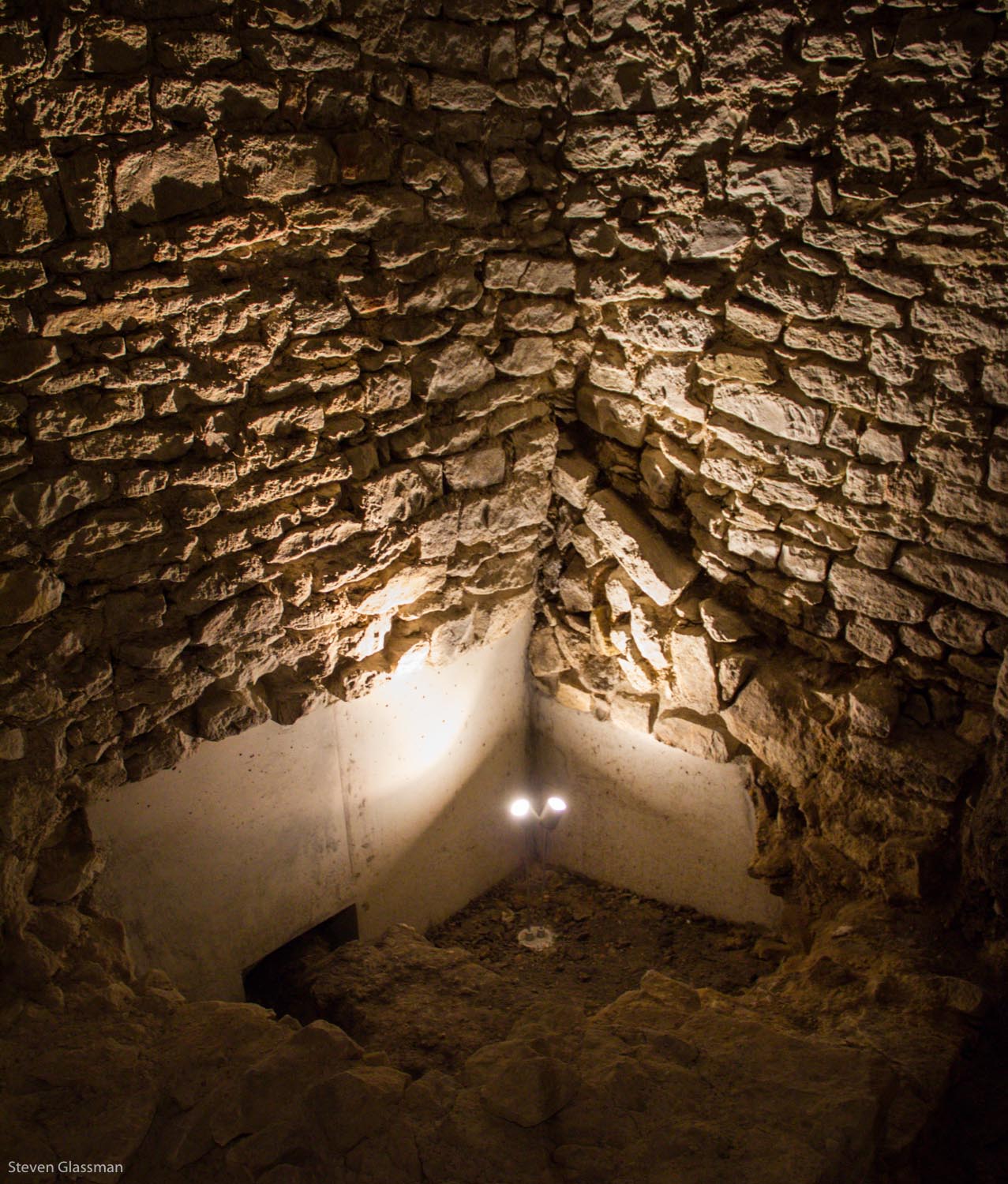
This archway contains stairs which used to lead to the surface.

neupfarrplatz-12

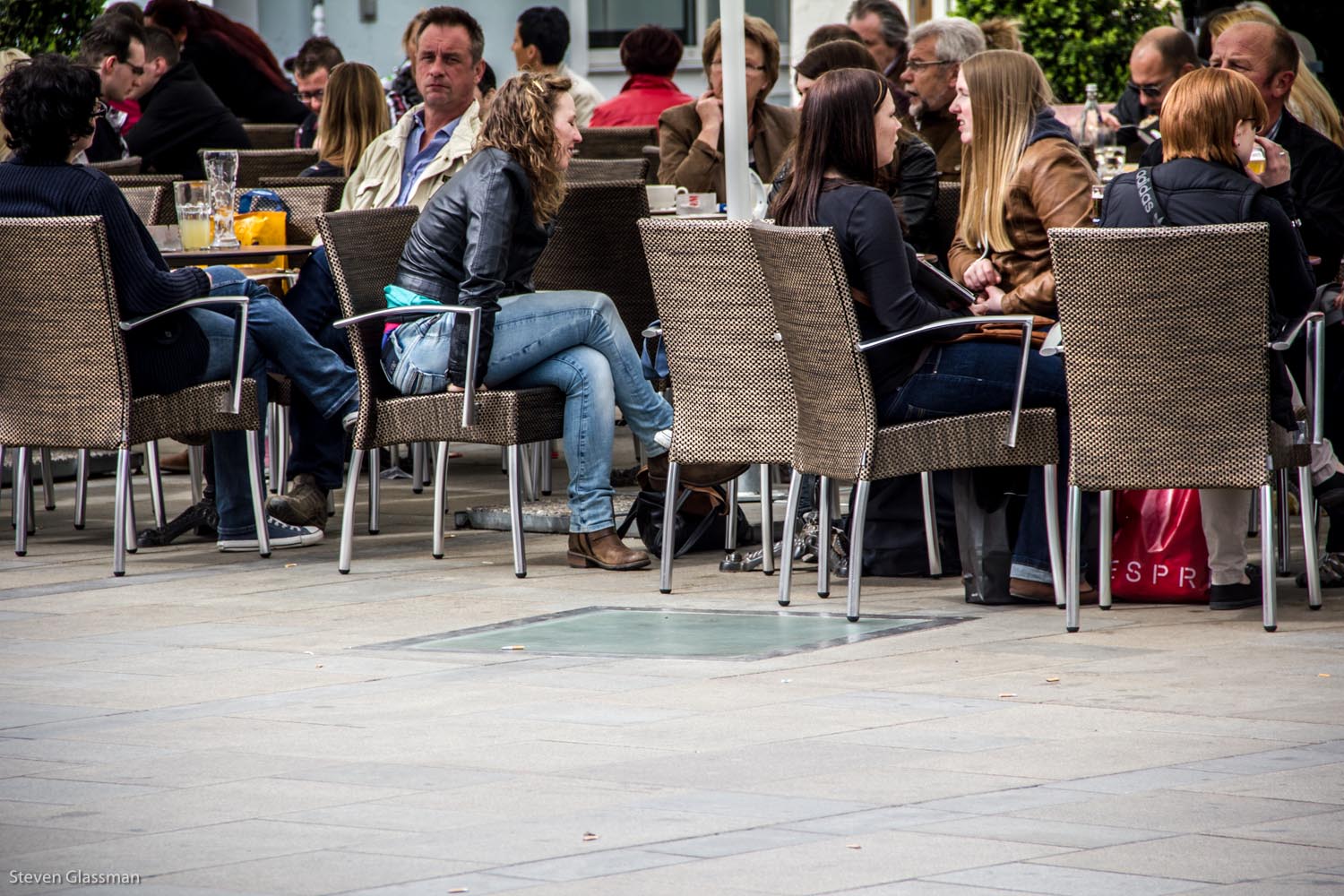
Above the stairs is a “window” embedded in the surface of Neupfarrplatz.  The window cost around €25,000 to install.

neupfarrplatz-13

Here’s the window from above ground-  the people at this cafe probably don’t realize they’re sitting almost directly above hundreds of years of history.

neupfarrplatz-2

Opposite the Neupfarrkirche is a white marble structure which shows the layout and position of the original medieval Jewish synagogue prior to it being destroyed in 1519.    This artistic representation of the old synagogue was created in 2005 by the Israeli sculptor Dani Karavan.  It was designed to be a “Place of Encounter, ” a symbol of Christians and Jews living together.  Hebrew lettering engraved in the space where the Torah was kept spell out the word “Misrach” to point to the east, toward Jerusalem.

The white marble is directly in front of an ice cream cafe, so it’s a popular place for people to sit and snack with friends on a sunny day.

neupfarrplatz-14

So a Roman, a Rabbi, and a Protestant walk into a bar…   I’m just kidding.

Have you ever been to an archaeological excavation?

Dresden

During the last weekend in March, I went to Dresden and Leipzig. I partly went because I wanted to knock off two more Category One stations from my list, but I would have gone even without the stations- I’d heard nothing but good things about Dresden, and I was really looking forward to seeing it.

My walk through Dresden was a big counter-clockwise circle.  I started by taking the tram over the Elbe river and walking toward the Augustusbrücke and the Golden Rider.  On the way, I found a puppetry museum.

dresden-1

I thought I would have a difficult time finding the Goldener Reiter, but it turns out he wasn’t subtle at all.

dresden-2

There were lots of interesting statues all over town.  I particularly liked this one, near the Augustusbrücke.

dresden-3

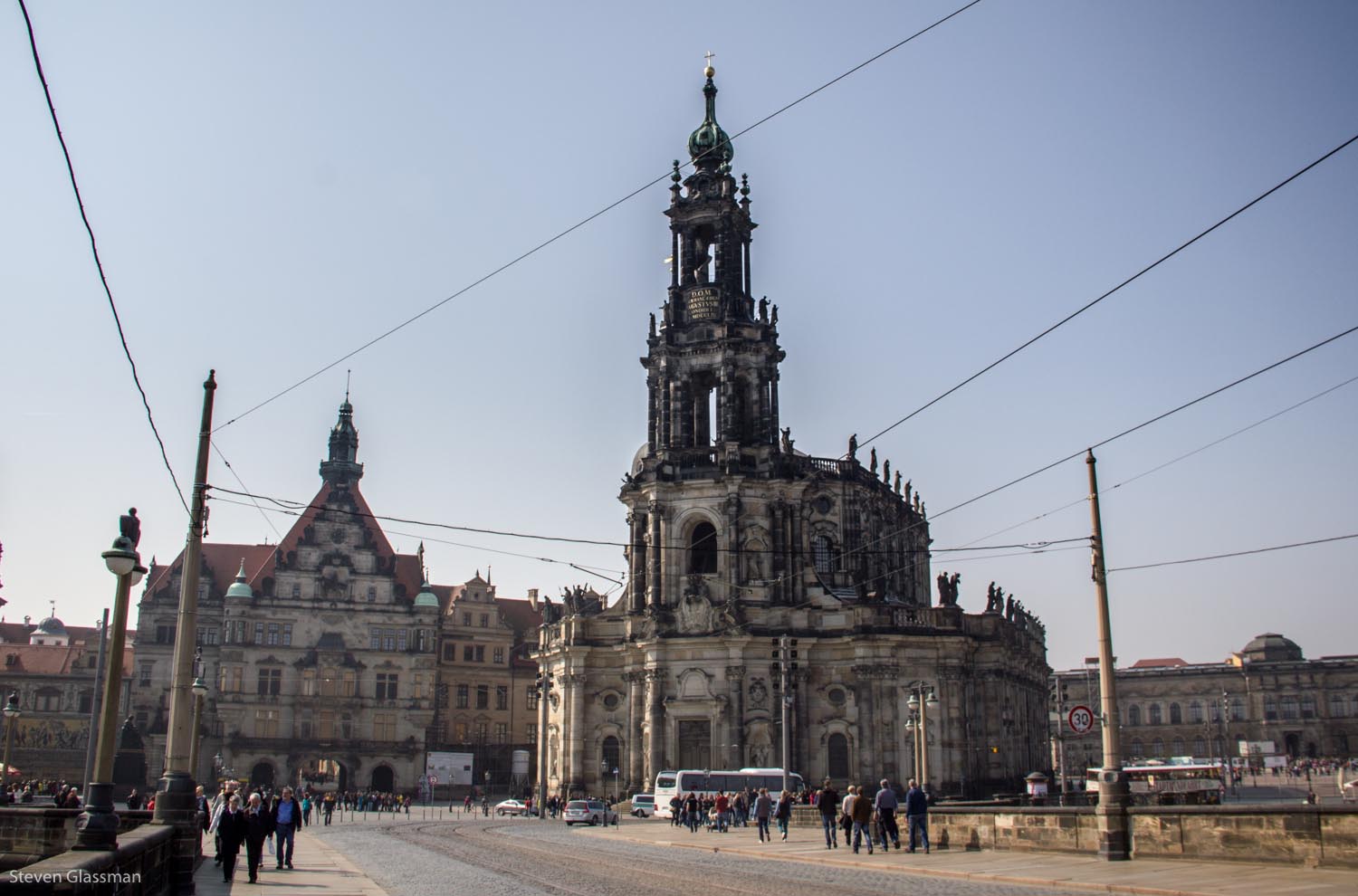
Walking across the Elbe on the Augustusbrücke from the north, this is the view into the city.   The structure on the right is the Catholic Church of the Royal Court of Saxony.

dresden-4

This statue is in the courtyard to the left of that church.

dresden-6

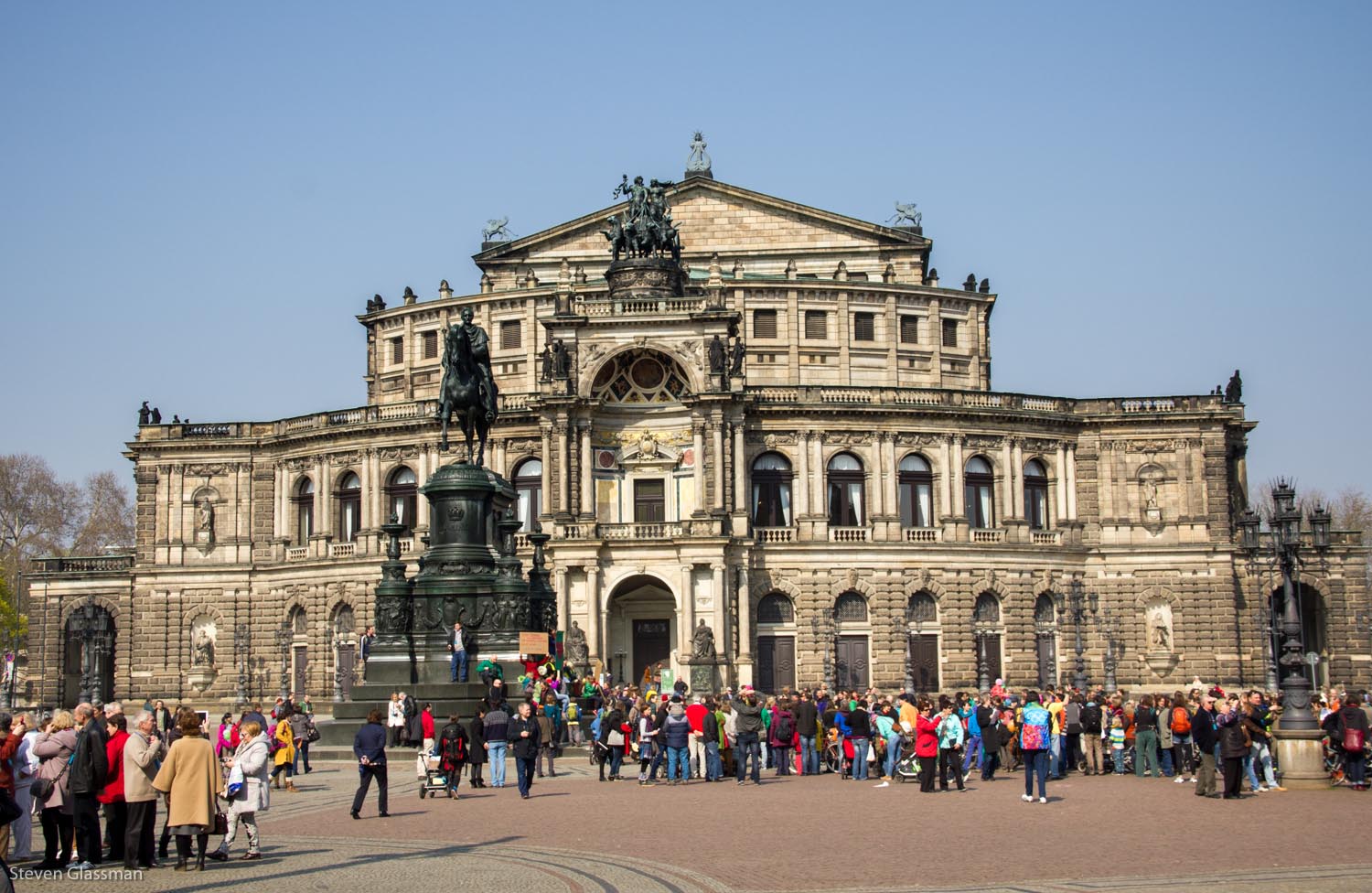
When I reached the end of the bridge, I stumbled across a protest.   The little girl behind this sign was honking a noisemaker and there were cymbals and that sort of thing.   One of the people protesting came to talk to me about it- apparently there’s an upcoming rule that will prevent midwives from working due to insurance regulations.   For the curious, here’s a site detailing the protest, a FaceBook group about it, and a Bundestag petition fighting it.

dresden-5

Continuing my walk around the city, I snapped this picture because I thought it would look awesome.

dresden-7

This structure was directly across from the Church.  I’m still not entirely sure what this was.

dresden-8

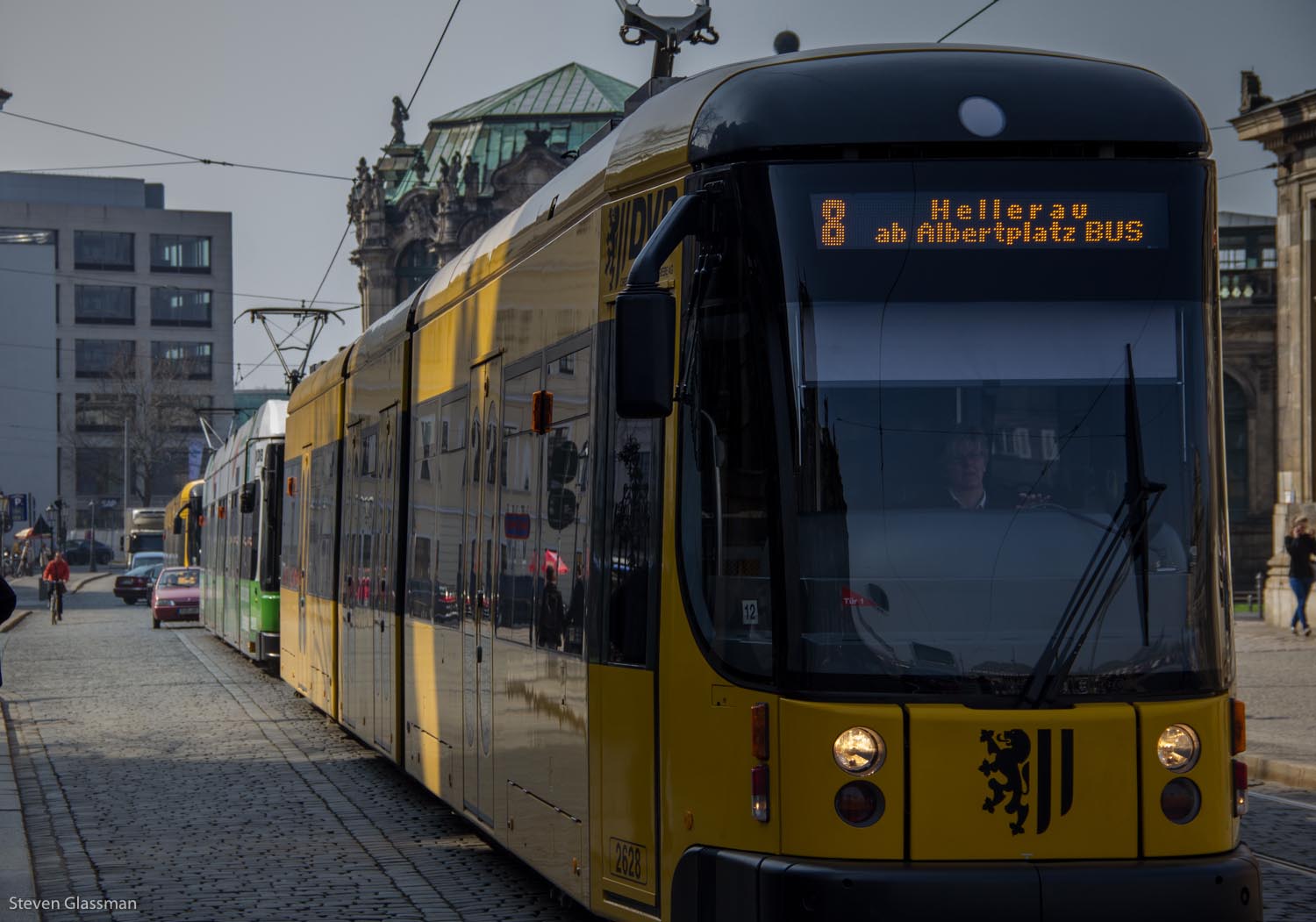
The protest and parade backed up traffic a bit.  I’m glad I wasn’t on one of these trams.

dresden-9

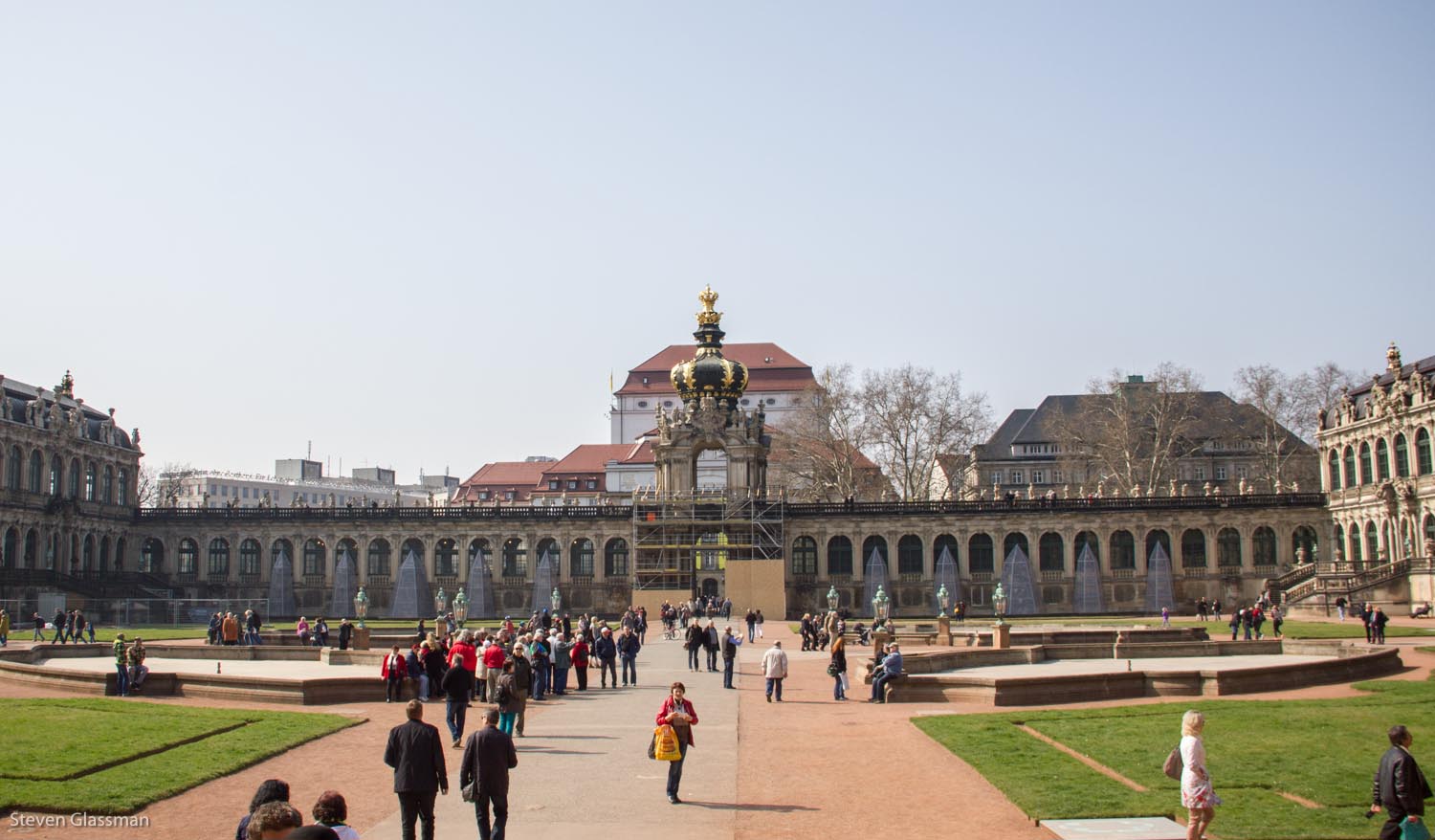
My next stop was the Zwinger, an old palace which is now the home of several museums including my destination, the Gemäldegalerie Alte Meister (Old Master’s Picture Gallery.)

dresden-10

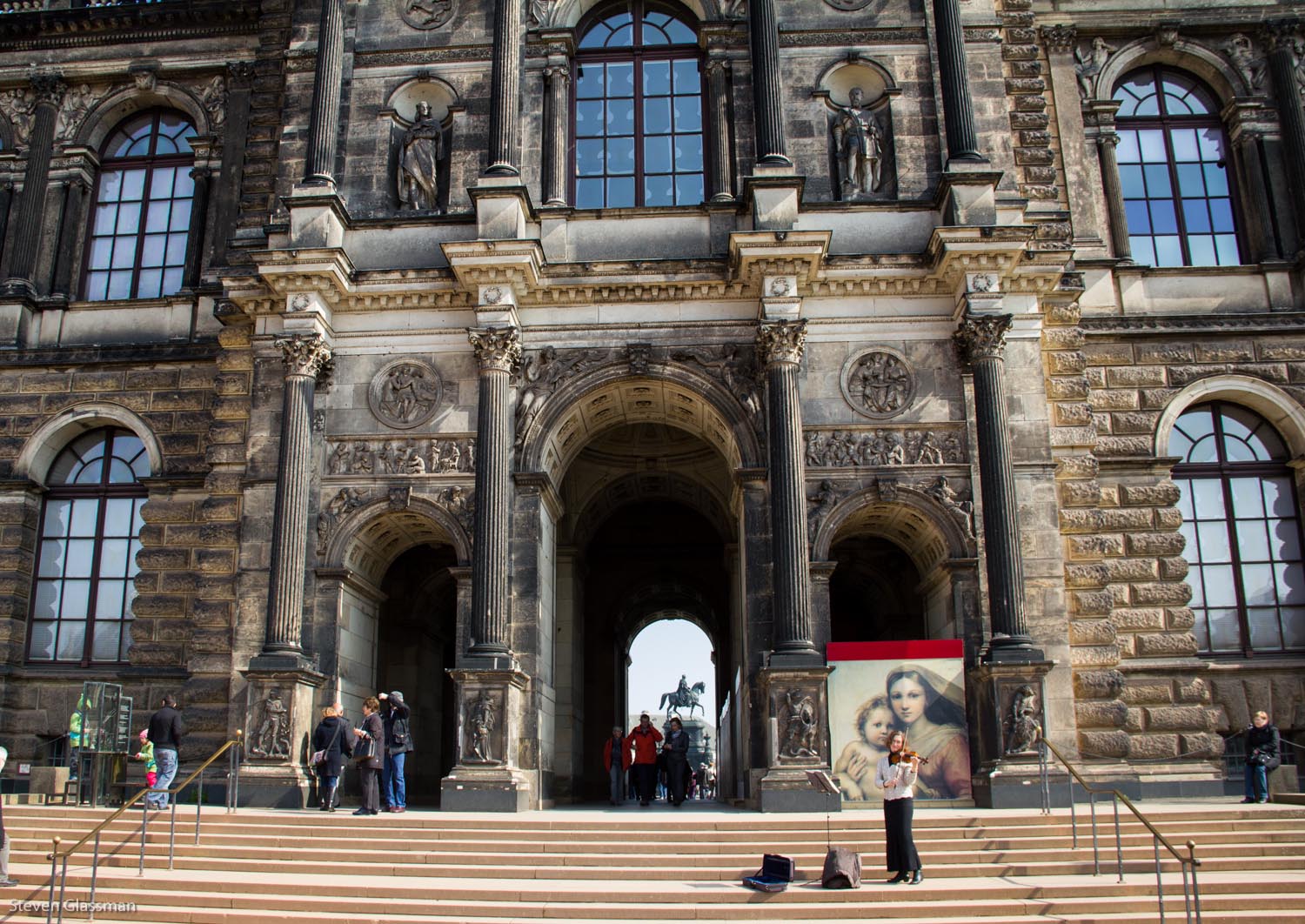
While inside, I walked past Boticellis, Vermeers, Rembrandts, Rubens, and more.  A particular highlight was Raphael’s Sistine Madonna, a very large painting which most people know from the two Cherubim in the bottom.  There’s a picture of the full painting over on Wikipedia if you’d like to see it.  The main entrance to the gallery is in this archway.  I walked right past it into the courtyard at first.

dresden-11

From the Zwinger, I went on to one of the most well known landmarks in Dresden, the Frauenkirche, or Church of Our Lady.  The church was completely destroyed during the bombing of Dresden in World War II, but was rebuilt after German reunification in 1990.

dresden-12

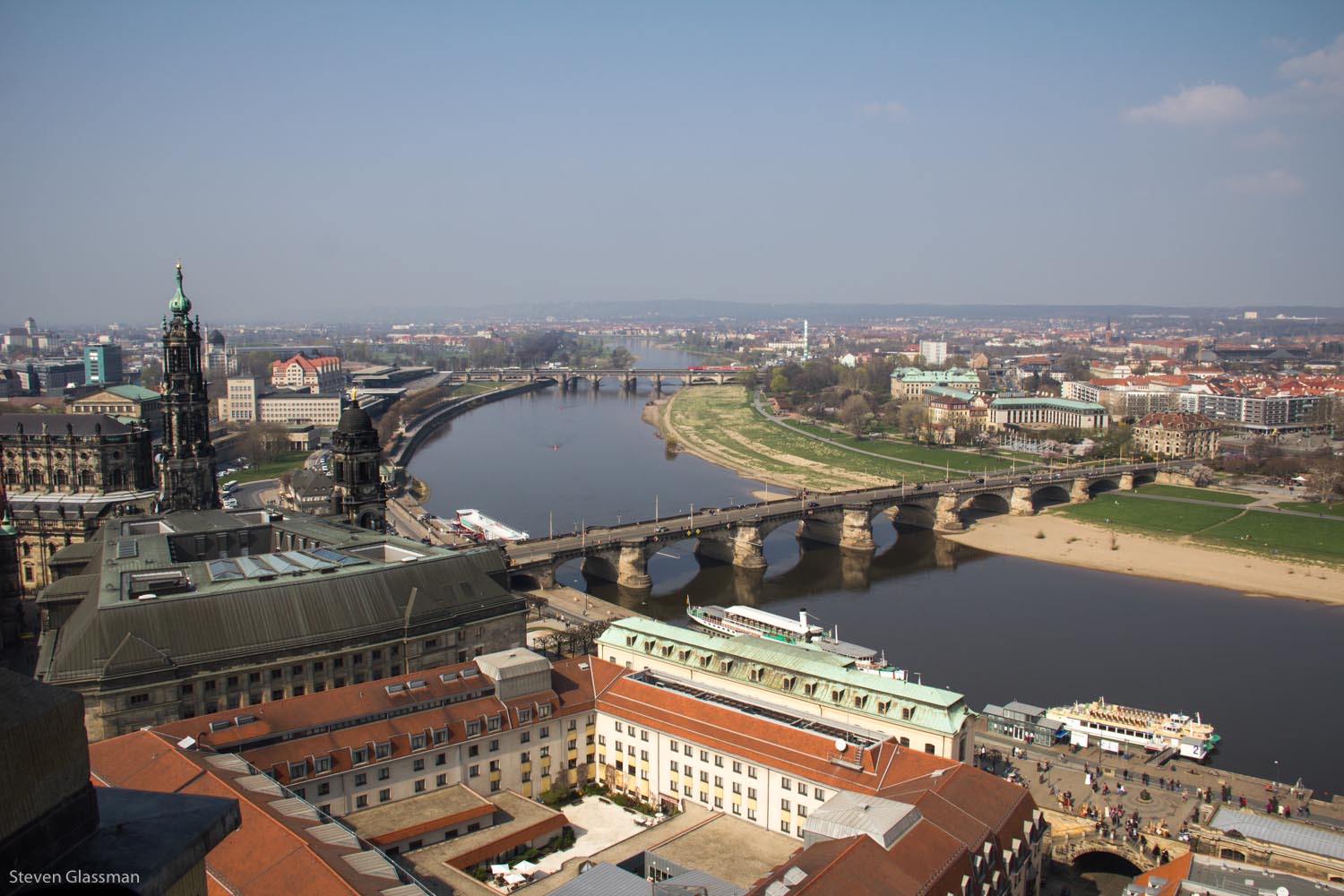
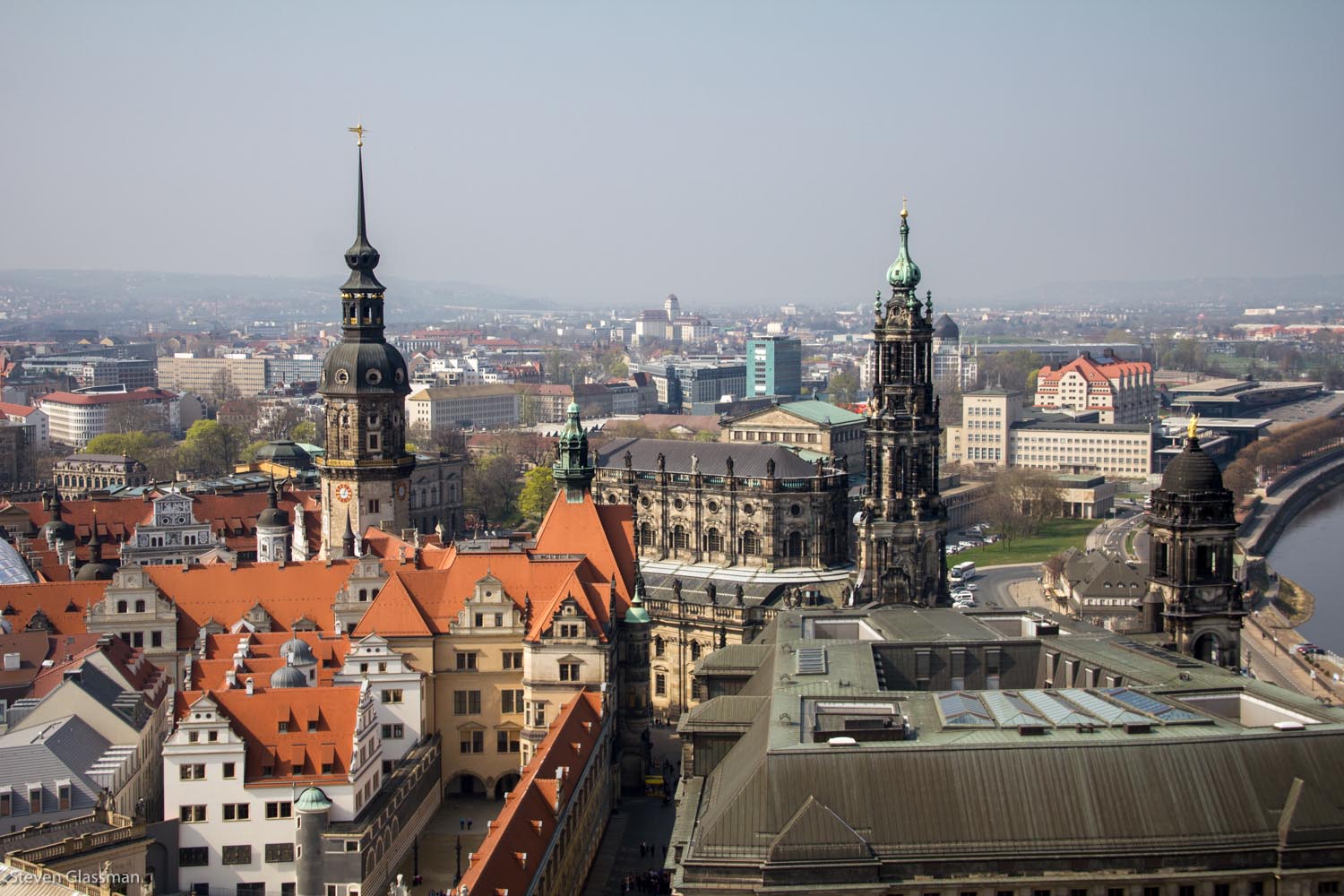
For a small fee, you can ascend to the top of the Frauenkirche.  There’s an elevator for the first chunk, then a smooth ramped walkway circling the dome, then stairs at the very top.  Great views from the top, though.  This one contains the Augustusbrücke and the church I mentioned earlier.

dresden-14 dresden-15

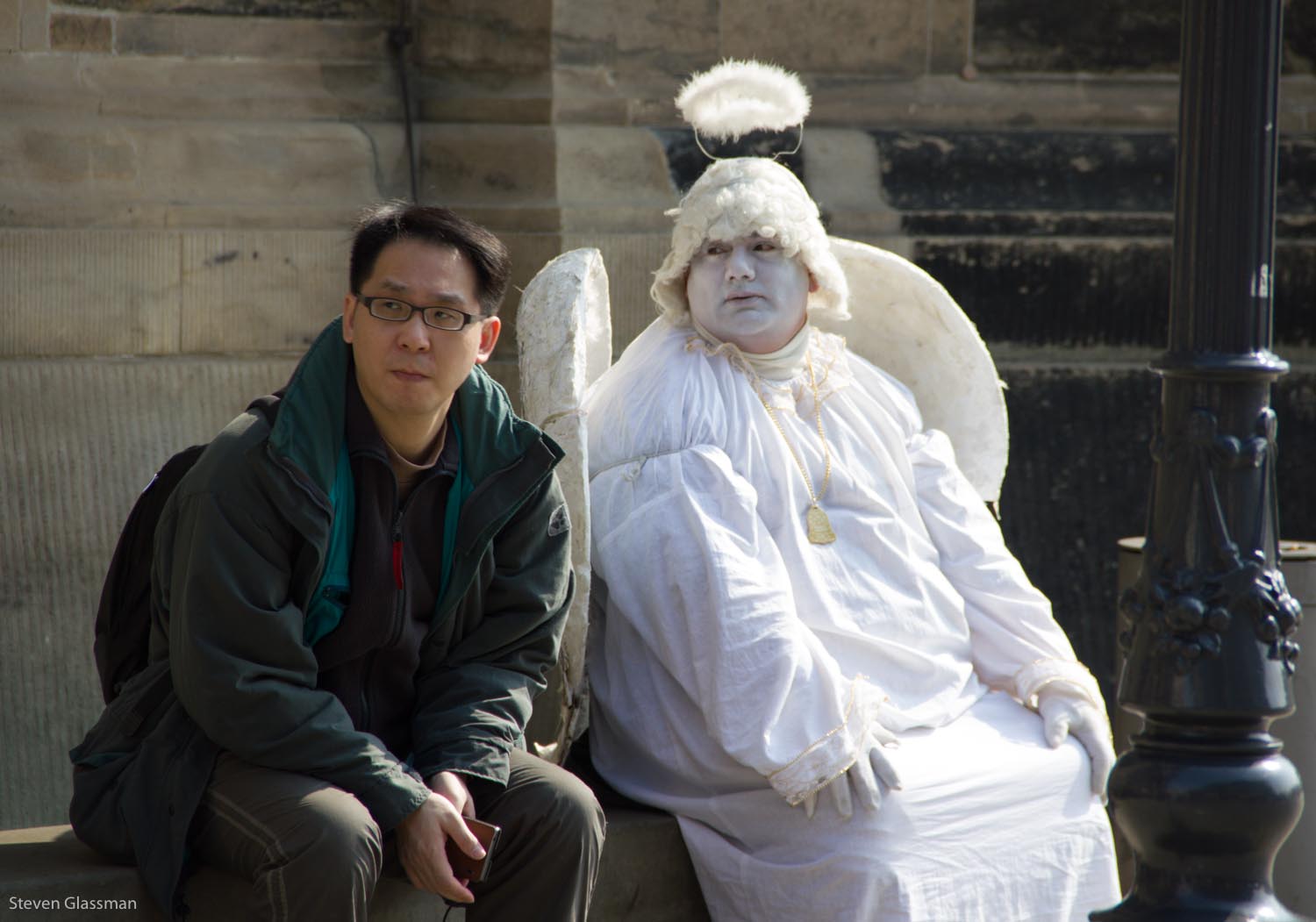
After I got back down from the dome, I wanted to see the inside of the church.  This image amused me terribly.  I guess angels really are everywhere!

dresden-16

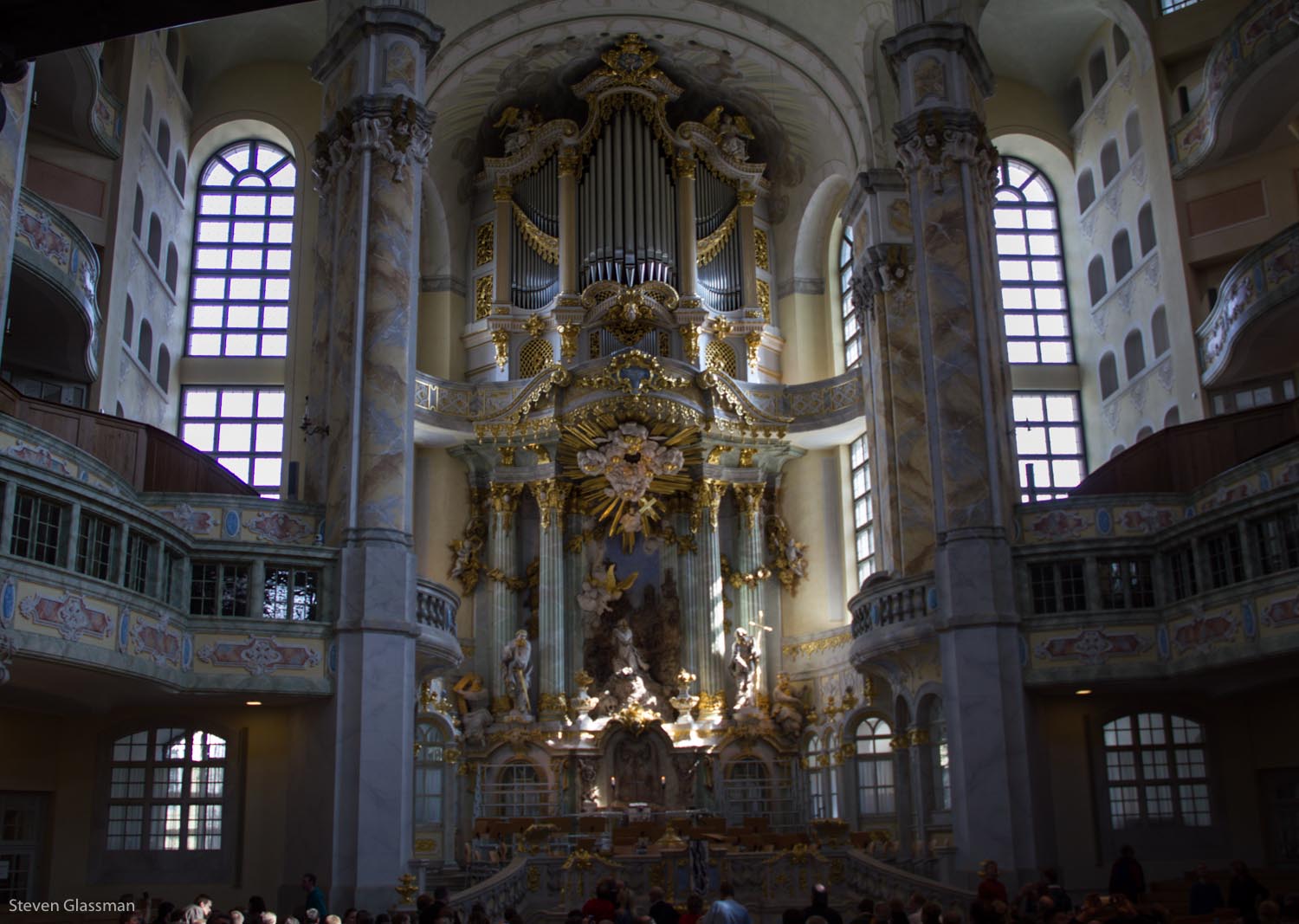
Inside the rebuilt Frauenkirche.

dresden-17

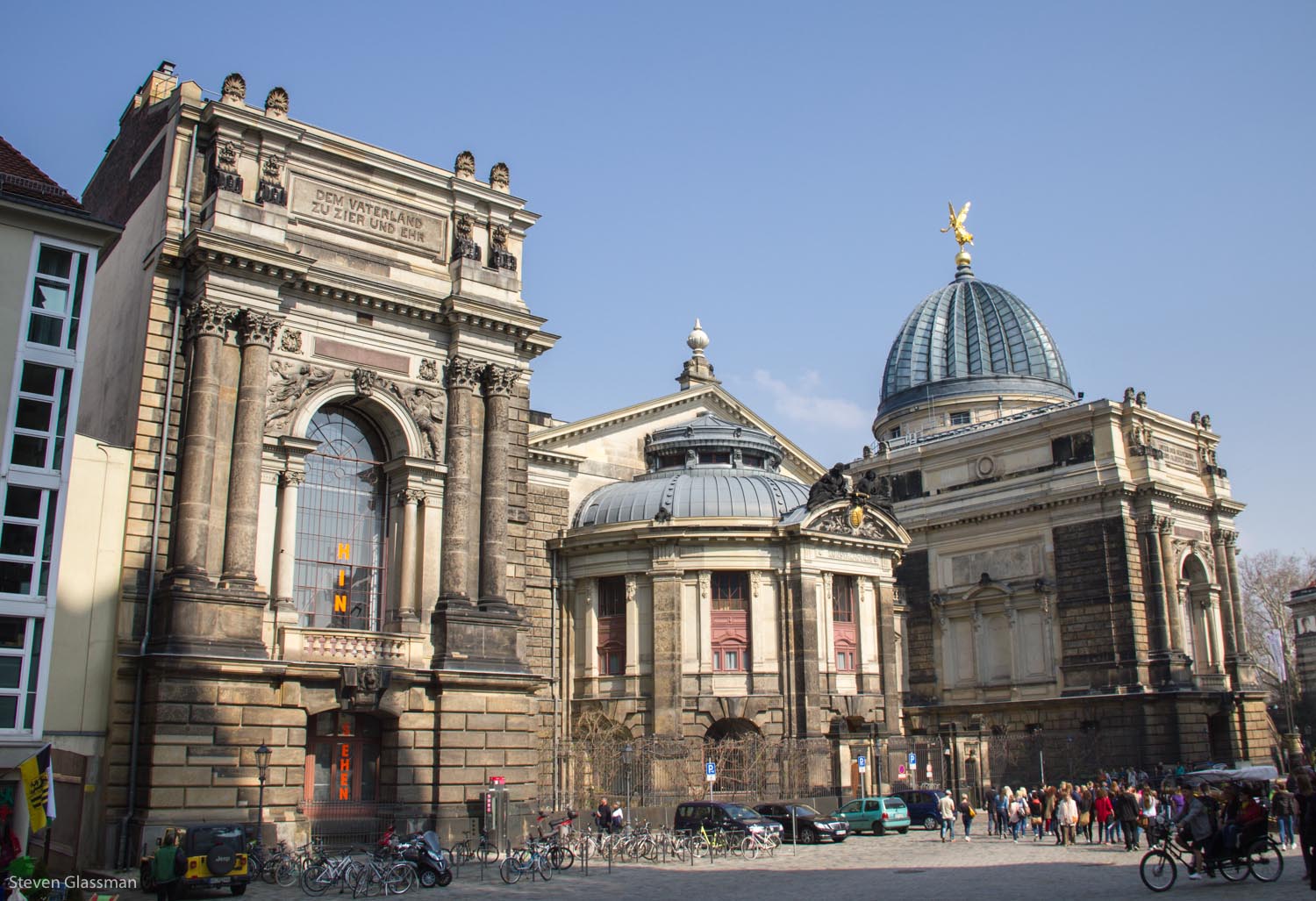
Across the square from the Frauenkirche are plenty of other picturesque buildings.  I saw this one just before I went for lunch at the Canadian steakhouse.  I had a tasty bison steak.

dresden-13

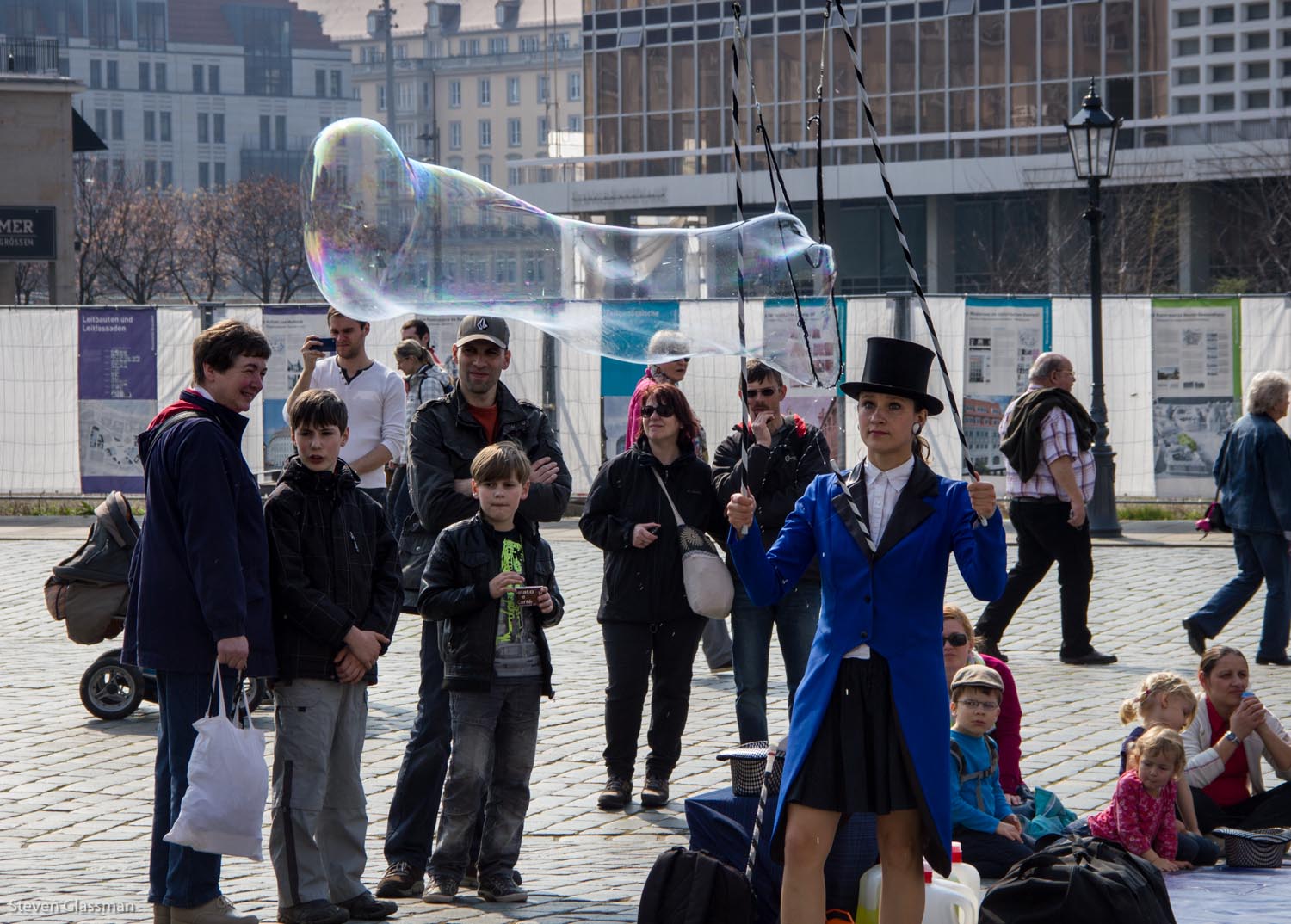
There are always people in major cities doing things for money.  Like these two.

dresden-18 dresden-19

A short distance from the Frauenkirche, back toward the Elbe river, there’s a rather nifty sculpture with a bunch of representations of the planets in the ground.  It’s not a full representation of the solar system though, and I’m not quite sure why.

dresden-23

This is the view of the Augustusbrücke from the planets sculpture.

dresden-20

On my walk back toward the hotel, I noticed that Spring has well and truly come to Germany.  You can tell because any time it gets sunny and warm, lounging Germans appear all over green spaces in Germany.  This isn’t very crowded, but give it a few more degrees and you won’t see very much green through the sunbathing people.

dresden-21 dresden-22

Have you ever been to Dresden?

Bamberg

It’s difficult to travel in January, unless you’re going to somewhere much warmer out of the country.  The days are short and grey and frequently a little bit on the chilled side, so sleeping in is usually much more desirable.

I’ve learned over the last two years that if I spend too long in Regensburg without taking any trips out of town, I start to get a little cranky.  To combat this, I’ve compiled a small list of day-trips-  places I can go in a single day on a Bayern Ticket (€23 for one person covers all RE,RB and local trains as well as bus rides, U-Bahn, and S-Bahn anywhere in Bavaria for the entire day.)  With that short list in mind, I just try to go on a Saturday morning.

For the first three Saturday mornings of January, I reached the all important moment of getting out of bed and going to the train station, and I chose to keep sleeping instead.  This weekend, however, I finally beat the evil snooze alarm, and I hopped the first train after 9am to scenic Bamberg!

bamberg-3

Bamberg is about sixty kilometers north of Nuremberg, and is easily reachable by trains.  Local trains (RE and S-Bahn) go between Nuremberg and Bamberg on an almost hourly basis.  I arrived in town about fifteen or twenty minutes before noon, and started to wander.  I had a list of about five things I wanted to see in the city, and I took the time honored tradition of “winging it” for the rest.

Item the first on my Bamberg list:  Altenburg Castle

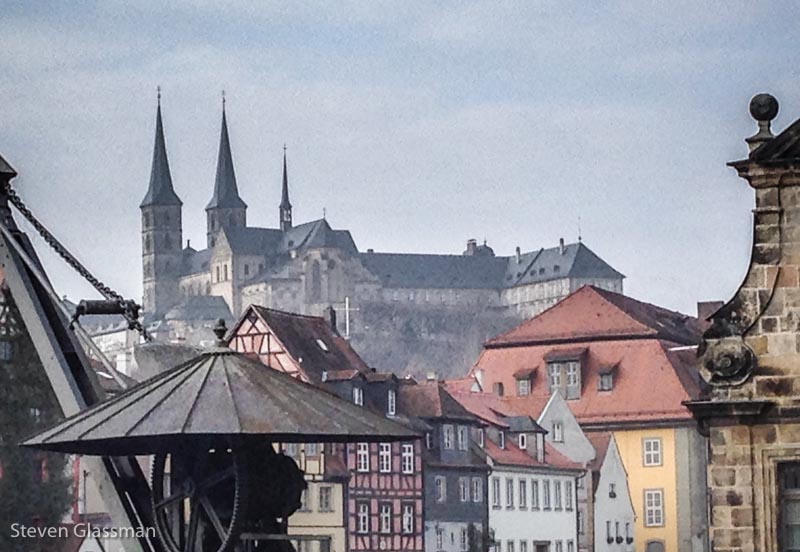
Altenburg Castle sits on a hill overlooking the old city of Bamberg.  I wasn’t interested in going inside the castle, and I could see it clearly from where I was, so I didn’t bother going much closer than you can see from this picture.

bamberg-14

Item the second on my Bamberg list:  Bamberger Dom (the Bamberg Cathedral)

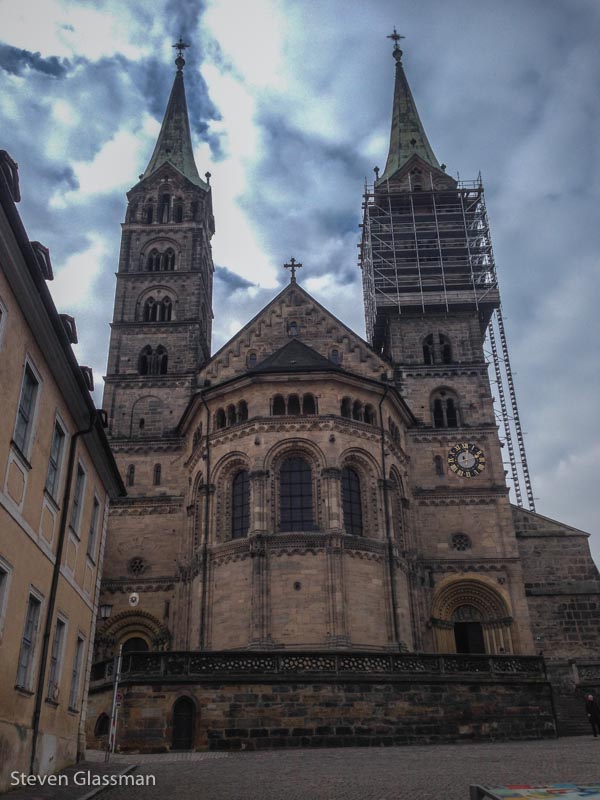
The main cathedral in Bamberg was built originally in 1012, but it was partially destroyed and rebuilt a few times.  Its present form is kind of like this:

bamberg-5

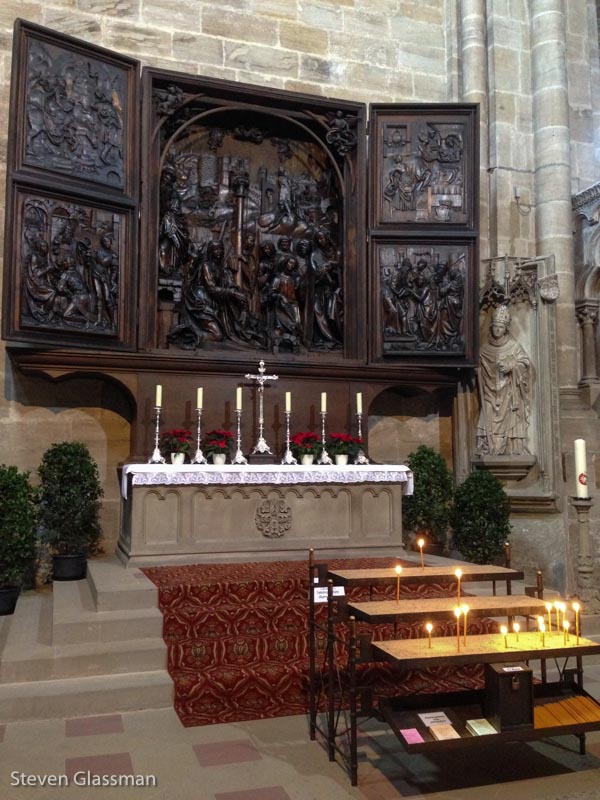
Inside the cathedral are a lot of interesting statues, including the famous Bamberg Horseman (Der Bamberger Reiter.)    Nobody knows who this statue represents, but it’s probably been there since about the year 1237.  The crown suggests royalty, but there’s no other items to suggest identity.  Saint Henry II is buried in this cathedral, and some believe that it represents him, but there’s no Imperial Regalia to confirm that.  Pope Clement II is also buried in this cathedral.

bamberg-10

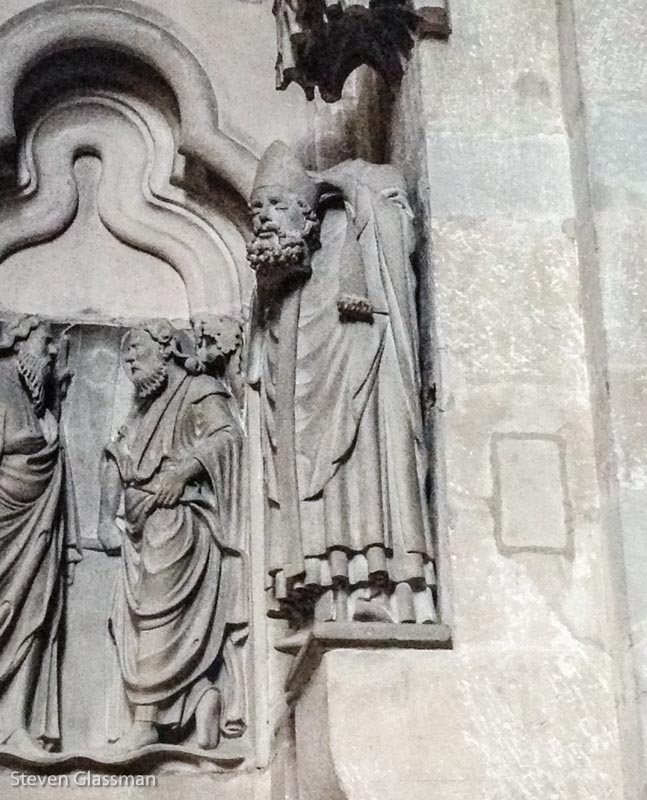
There’s a lot of fascinating sculpture in the Bamberger Dom, so it’s worth having a look around.  I thought the headless clergyman here was interesting:

bamberg-7

Just three more pictures from the cathedral, and then we’ll move on.

bamberg-8

bamberg-6

bamberg-9

Item the third on my Bamberg list:  The Franconian Brewery Museum

Alas, the  Fränkisches Brauereimuseum is closed until April.  I do have some bad luck with things being closed when I visit.  I had the same problem with the film museum in Paris and the suspended trains in Wuppertal.

Item the fourth on my Bamberg list:  The Bamberg Historical Museum

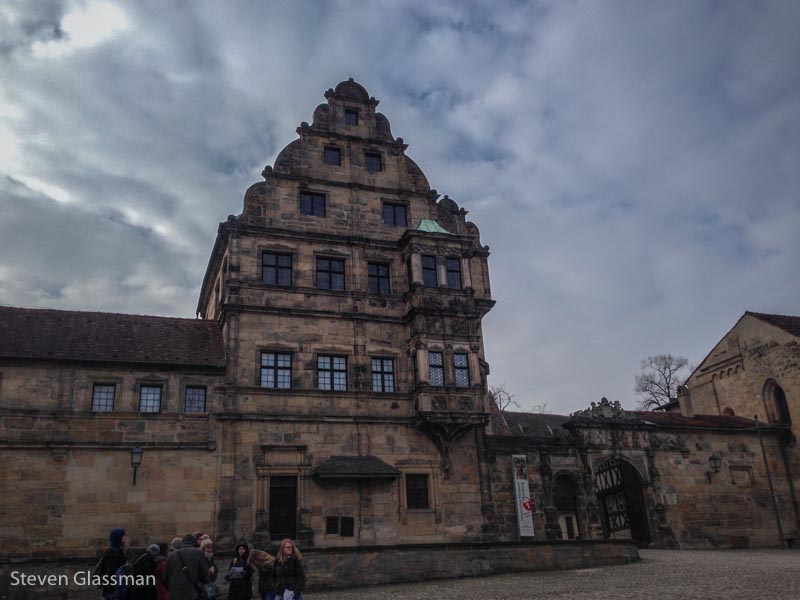
Right next to the Dom, this was also closed, for “Winter Pause.”  That’s ok, though.  In this case, I didn’t want to go inside so much as I wanted to see the building.

bamberg-11

bamberg-12

Item the fifth on my Bamberg list:  Try Rauchbier

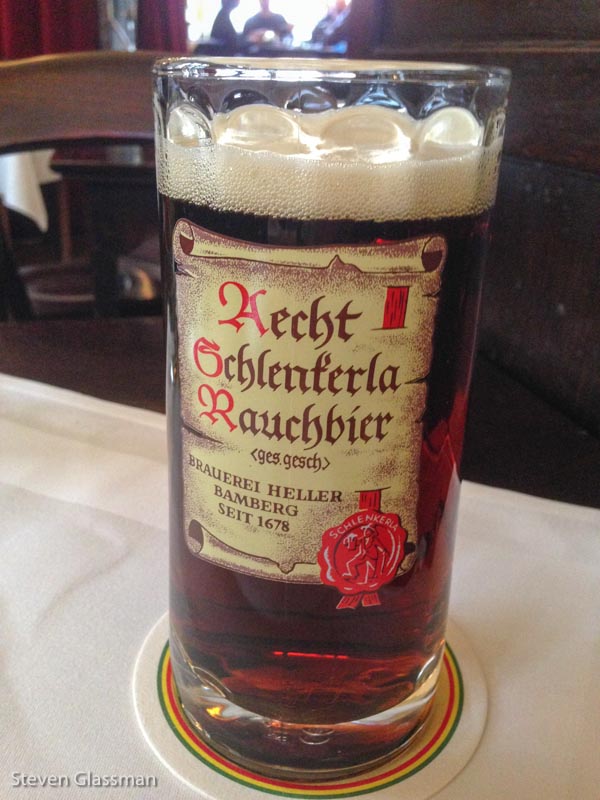
Bamberg is famous for Rauchbier, or smoked beer.  The distinctive smokey smell and flavor is achieved by drying barley over an open flame.  Schlenkerla and Spezial have been brewing smoked beer in Bamberg for nearly two hundred years, and Schlenkerla is one of the best known brands of smoked beer in the world.  This is what I tried.

I thought it would be disgusting, but it wasn’t.  It’s difficult to describe the flavor- my friend Alice likens it to “drinking a campfire,” and that’s probably the most accurate description I’ve yet heard.   I didn’t really care for Rauchbier, but I can see the appeal.  Additionally, I only tried one variety from one brewer- there’s also a smoked Weizen (wheat beer) available, and I’d like to try that some time.

bamberg-17

Item the sixth on my Bamberg list:  The Bamberg Altes Rathaus

This building was my favorite thing about Bamberg.  It’s situated on the Regnitz river.   More accurately, it’s perched somewhat precariously over the Regnitz river.  Reachable from either side only by a pedestrian bridge, this is a very impressive and fascinatingly beautiful structure.  It helps that this is the one point all day where the sun came out and pretended to not be part of January.

bamberg-13

This is one of the sides visible from the pedestrian bridge, a street fittingly named Obere Brücke, or Upper Bridge.

bamberg-2

There are bridges on either side of the Altes Rathaus.  The first photograph of the Rathaus in this post was taken from this bridge, a much more modern affair, but with a fantastic view of the building.

bamberg-4

Item the seventh on my Bamberg list:  Winging It

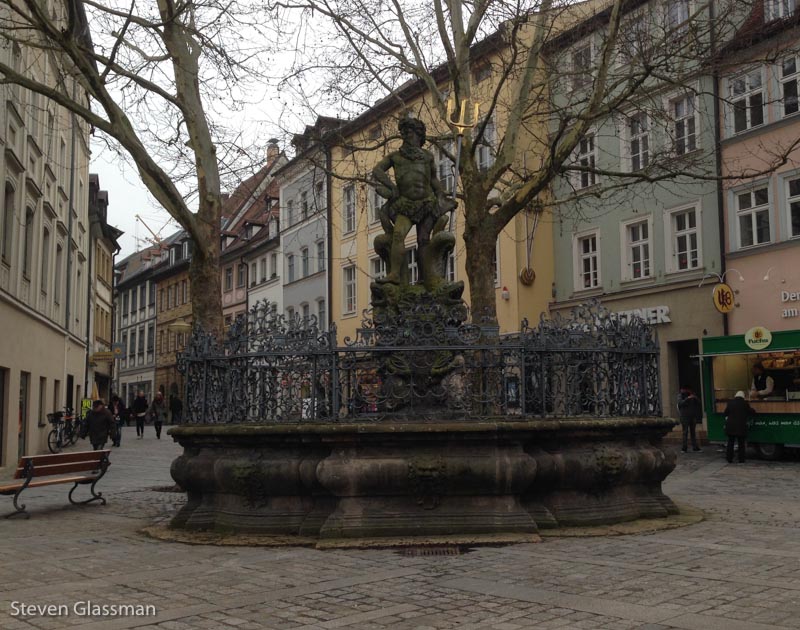
The rest of these are just things that I found wandering around the city that I thought were interesting.  For example, in the Grüner Markt, there’s a fountain containing a sculpture called “Gabelmann.”  Gabelmann translates to “Fork Man,” which is apropos since the statue represents Neptune, god of the seas, holding up his traditional trident.  In hind-sight, I wish I’d taken a better photograph than this one.

bamberg-19

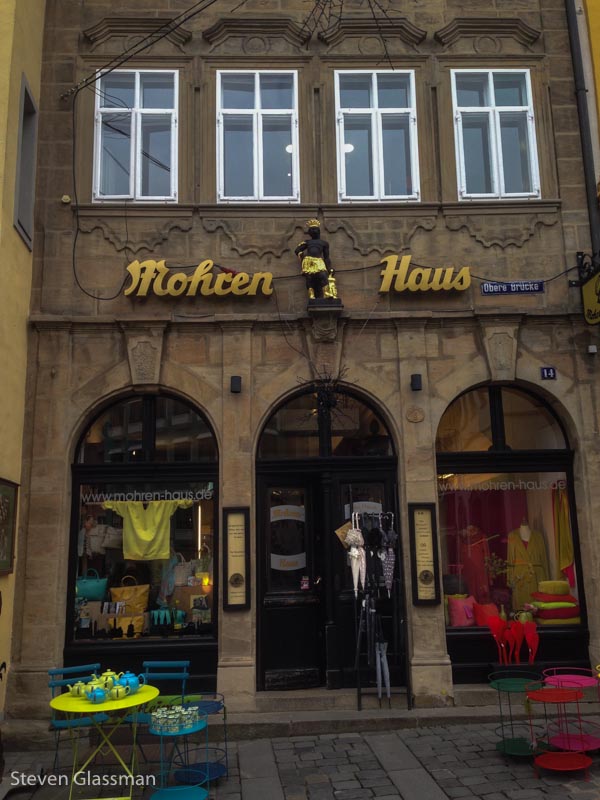
Mohren Haus means Moor’s house.  Every time I encounter something named after the Moors in Germany, I’m utterly fascinated.  The tiny statue of little Moor dude on the building totally makes it, don’t you think?

bamberg-1

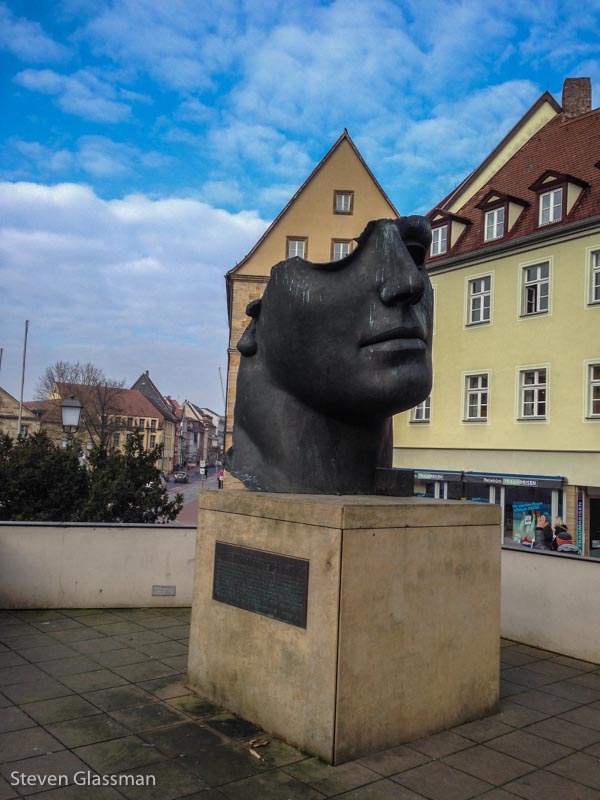
Interesting sculpture!

bamberg-15

More interesting scultpture!  This one represents Kaiserin Kunigund, but I don’t have any real idea who that is.

bamberg-16

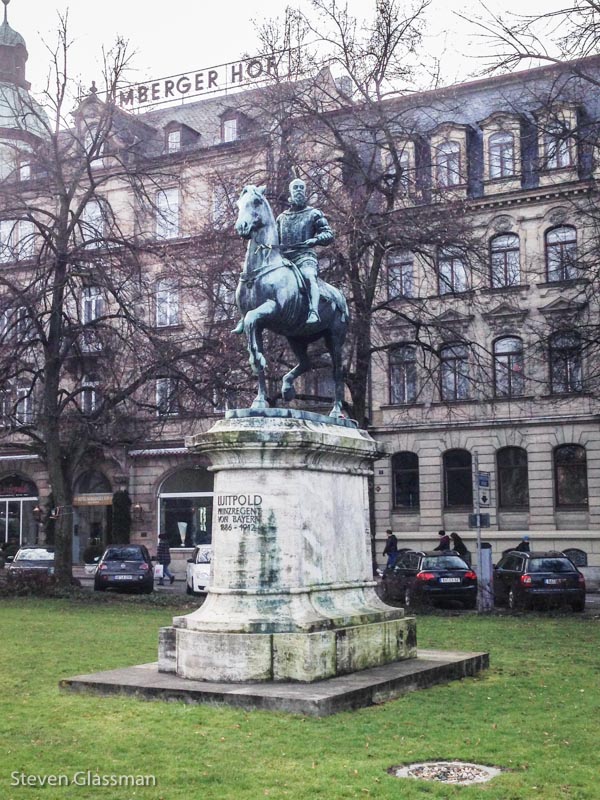
Next up is a statue of Luitpold, Prince Regent of Bavaria.  Spend any amount of time in the south of Germany and you’ll encounter at least one Luitpoldstraße in every city.  There’s one in Regensburg, a block away from my apartment.

Luitpold became the Regent of Bavaria after the (frankly rather suspicious) death of his nephew, King Ludwig II.  He remained the Prince Regent until his death in 1912, at the age of 91.

bamberg-18

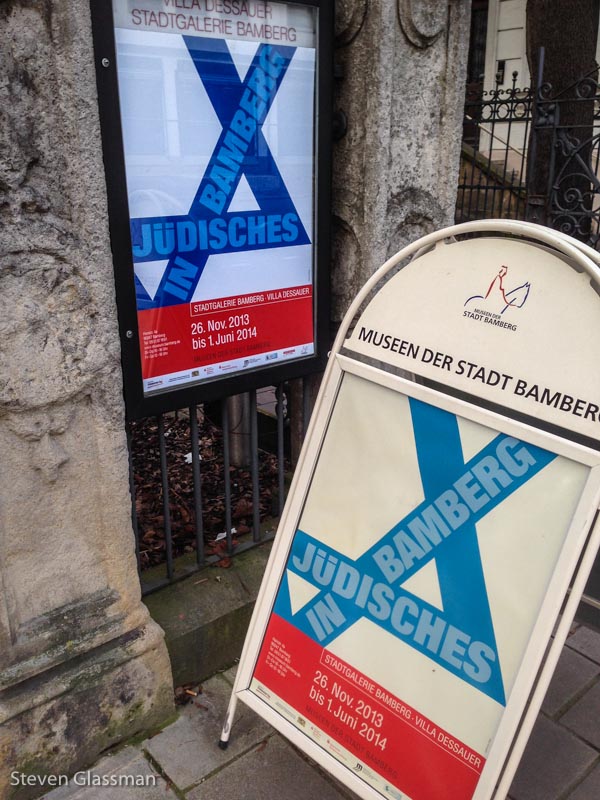
Last, but not least, I stopped in at the Stadtgalerie (City Gallery) Bamberg, because there was a poster for an ongoing exhibit (there until the first of June) called Jüdisches in Bamberg.  I wanted to see what Jewish stuff was in the exhibit, so I took a look.  For a €5 entry fee, this was well worth a stop.

judisches01

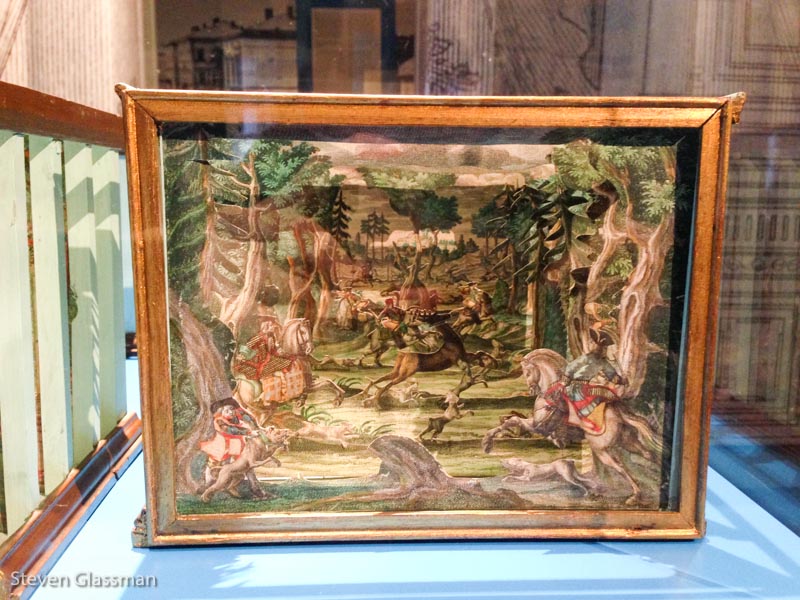
One of the displays had three or four of these rather amazing three dimensional images.  From above, it looks a little bit like a honey-comb.  It’s a cube rather than a rectangle, but when viewed from the front, the depth is rather ingenious. This picture doesn’t quite capture how amazing it is.

judisches02

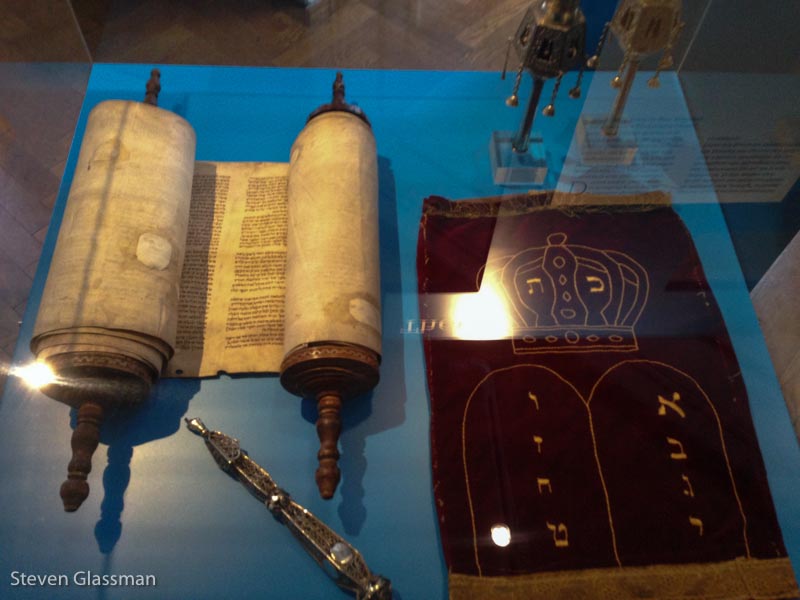
Among the artifacts on display in the Jewish exhibit was a Torah scroll, along with the Mantel (the velvet cloak that goes over it), the Kesser (the two silver doo-dads that go atop the wooden shafts), and the Yad (the silver pointer used to read from the Torah.)

This particular one is apparently on loan from the Bamberg Historical Museum, and I was not able to find any details about its origin prior to that.  Every Torah is hand-written by a special scribe, though, so they’re not terribly easy to come by.

judisches03

Have you ever been to Bamberg?  Did you try the Rauchbier?  What did you think of it?