Nordic Adventure, Part 6: Copenhagen

The fourth city in my five-city romp through the Nordics was the capital of Denmark:  Copenhagen!

Copenhagen is full of fascinating things to see and do.   For example, directly opposite the main train station is Tivoli Gardens, the second oldest amusement park in the world.  Opened in 1843, Tivoli is the second most popular seasonal theme park in the world, the most visited theme park in Scandinavia and the fourth most visited in Europe.
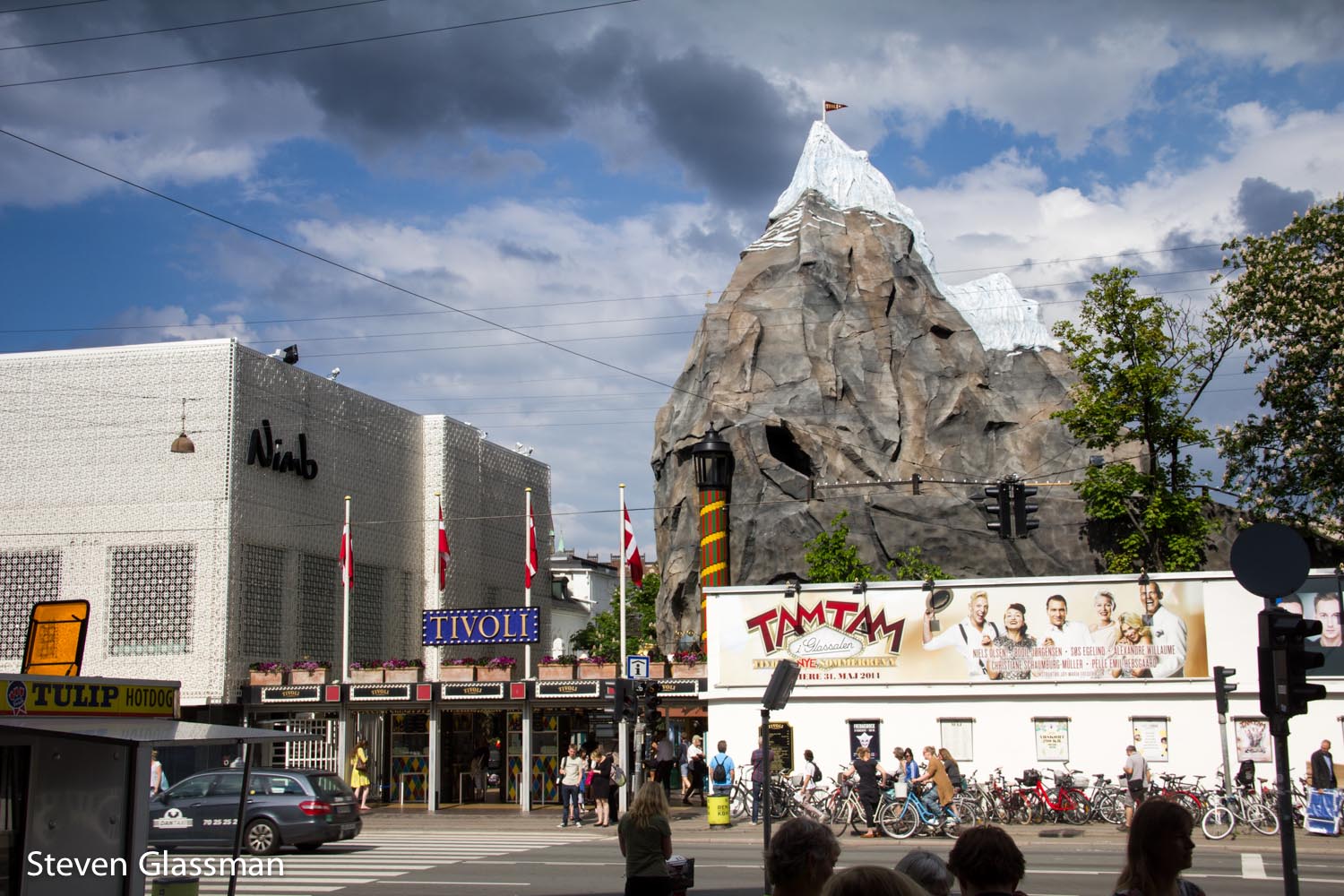
copenhagen-35

Most of the rides are considerably more recent than the park’s opening in the 1800s.  For example, the red track here is The Demon, which only dates back ten years to 2004.  Some roller coaster enthusiasts posted a video of their ride if you’re curious.

copenhagen-34

In the center of the city is the Rundetårn, or Round Tower, completed in 1642.
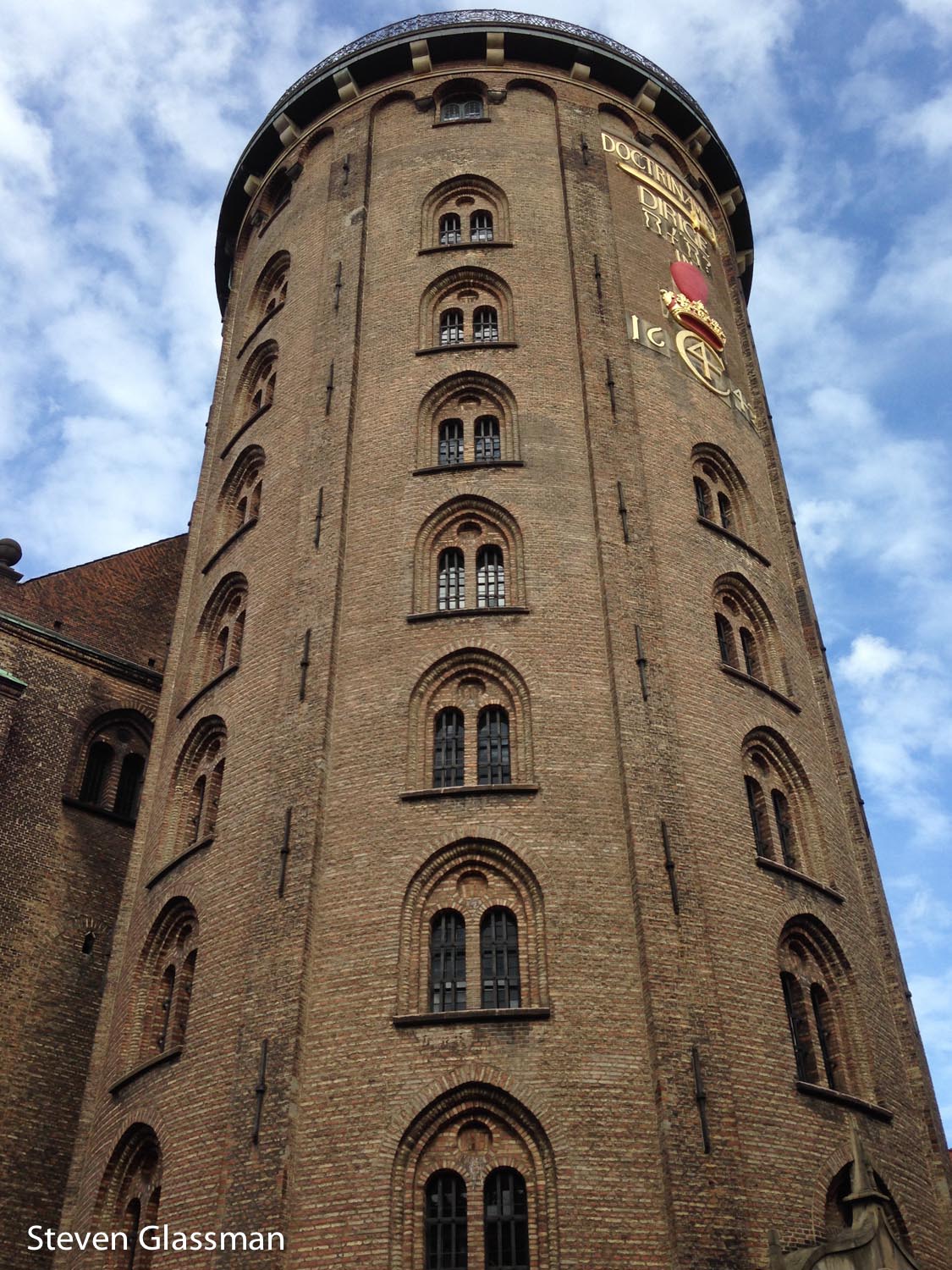
copenhagen-1

The tower was built as an astronomical observatory at the top and a library partway up.  The path to the top is a helix, a sloped walk.  This was chosen over stairs because so that a horse and carriage could go to the top.  This allowed them to move books and sensitive scientific equipment up the tower easily.
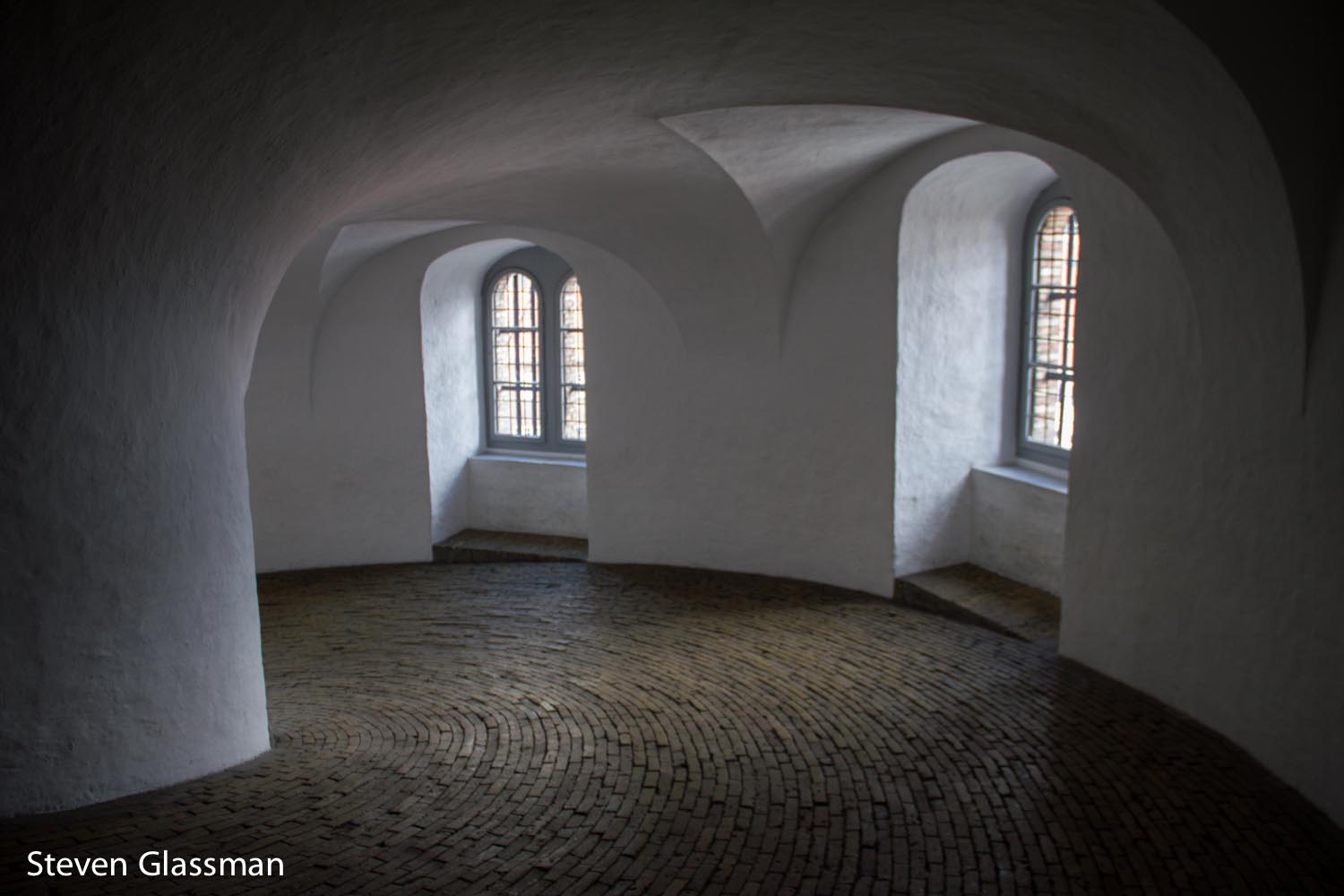
copenhagen-19

The center of the tower is completely hollow, and you can see all the way to the bottom.   A daring tourist can step right onto this thick observation glass.

copenhagen-20

This is the Ny Carlsberg Glyptotek. It was founded in 1897 by Carl Jacobsen, the man who founded the Carlsberg beer brewery.  It’s an art museum which originally contained Jacobsen’s private collection.
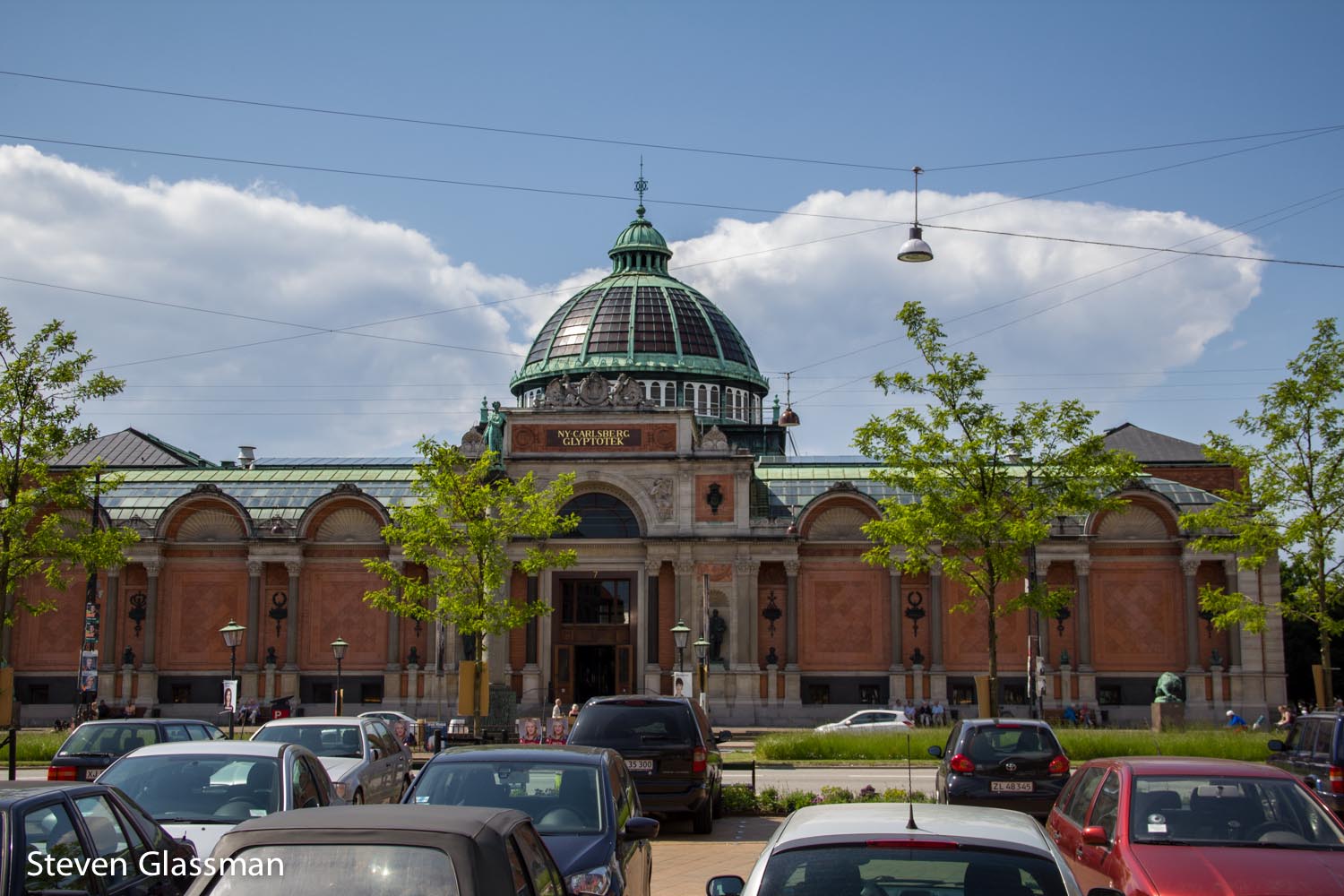
copenhagen-17

The museum was originally a sculpture museum, and sculpture remains the primary focus of the atrium and grounds.  This is Kai Nielsen’s sculpture, “Water Mother,” front and center in the Winter Garden.
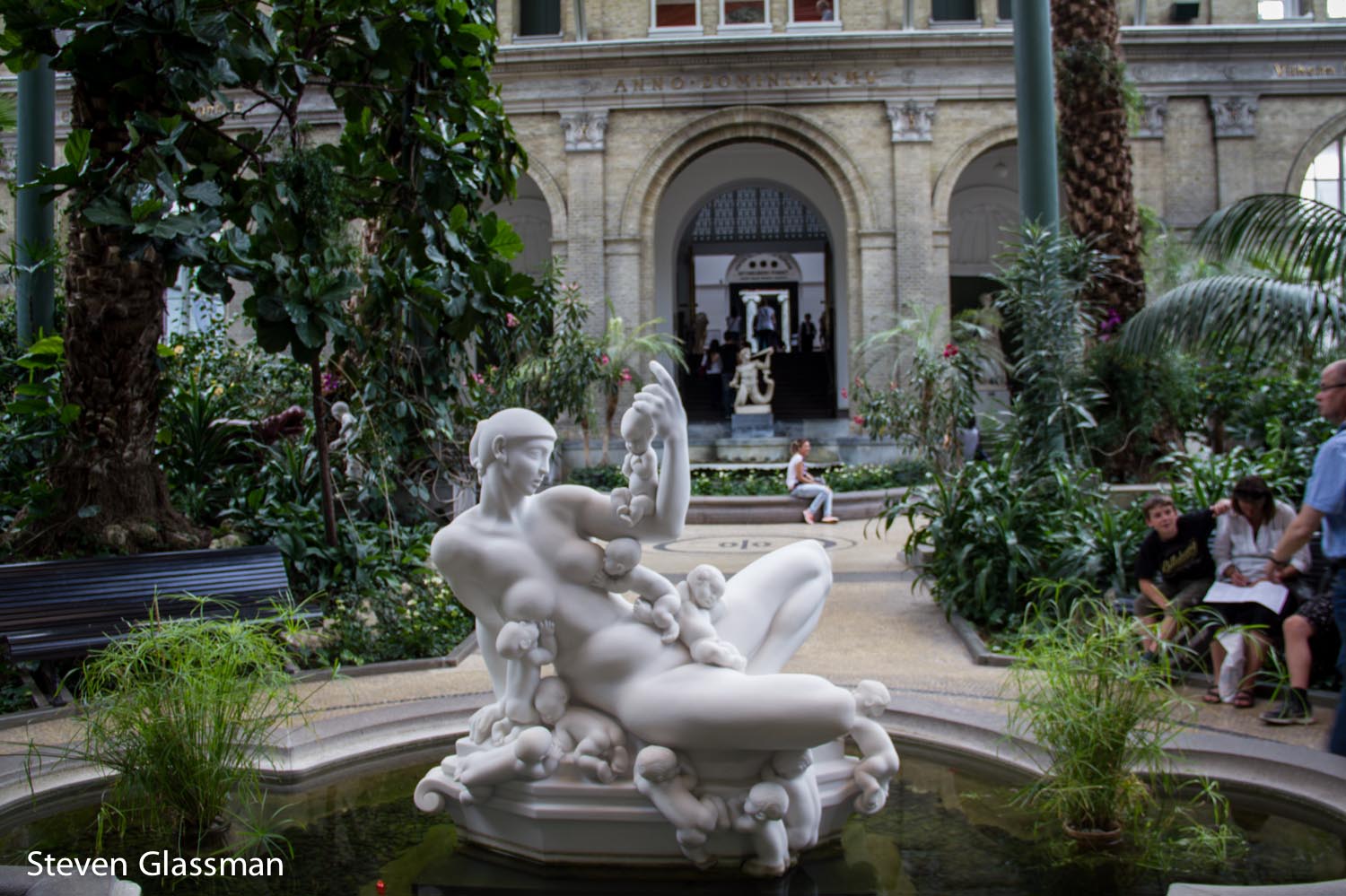
copenhagen-31

In front of the main stairway is a rather nifty statue of Neptune.

copenhagen-32

…and this attractive fellow is in the gardens out back.

copenhagen-33

Let’s get this out of the way right now- You’re going to see Segway riders in a bunch of these pictures, because I took another Segway tour when I was in Copenhagen.   The city of Copenhagen contains hundreds of miles worth of bicycle lanes, 14 miles of which are on the streets in the city.  Segways are allowed to use bicycle lanes in the city, so it’s an amazingly great way to cover a lot of ground.  Plus they’re really fun.

copenhagen-18

I can’t really remember why I took a picture of this wall, but it sure is a happy wall, wouldn’t you say?

copenhagen-6

This square is called Gammeltorv.  That round thing is a fountain but I guess it was still covered from the winter.  I had a very enjoyable traditional Danish meal at a restaurant in this plaza.
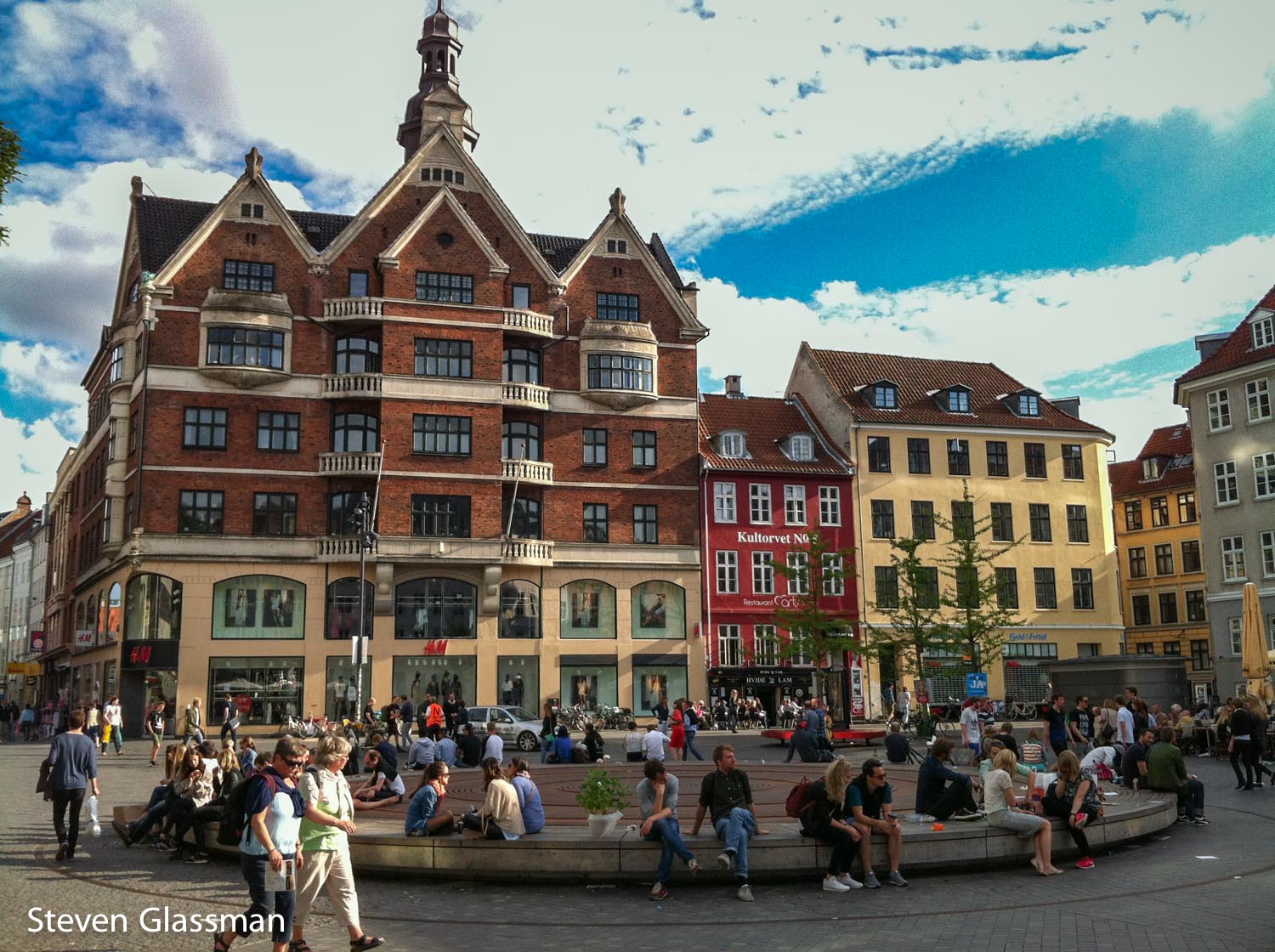
copenhagen-2

Copenhagen was nine days into my travels, and I needed to do some laundry.  I found a marvelous place called The Laundromat Cafe, which has locations in Denmark and Reykjavik Iceland.  The Laundromat Cafe is exactly what it sounds like-  a nice place to get a snack or a beer while your laundry is running in the handy coin-operated wash machines.  I did a load of laundry, and had a delicious pastry.  The girl behind the counter said this was a traditional Danish pastry, but I never caught the name of it.  I can say that it looks and tastes like a strawberry  Pop-Tart, only more delicious.
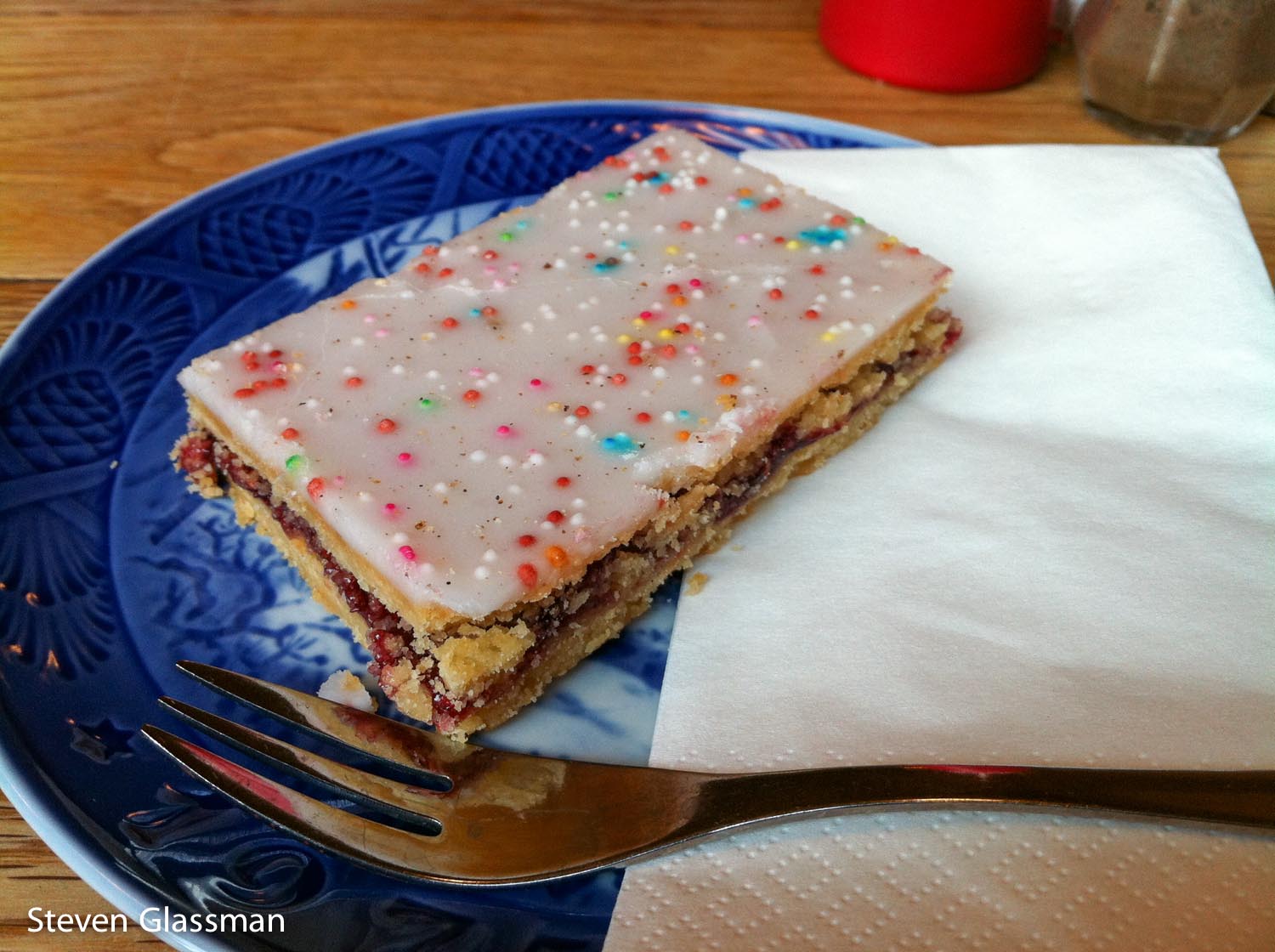
copenhagen-3

Non-sequitur time!  The Metro in Copenhagen has large clear windows on the front and back of each car, and if you take video from inside, it looks a little bit like the opening credits to Doctor Who.  Behold!

Amagertorv is a popular meeting place in Copenhagen because the Stork Fountain is a pretty well known and easy to find landmark.
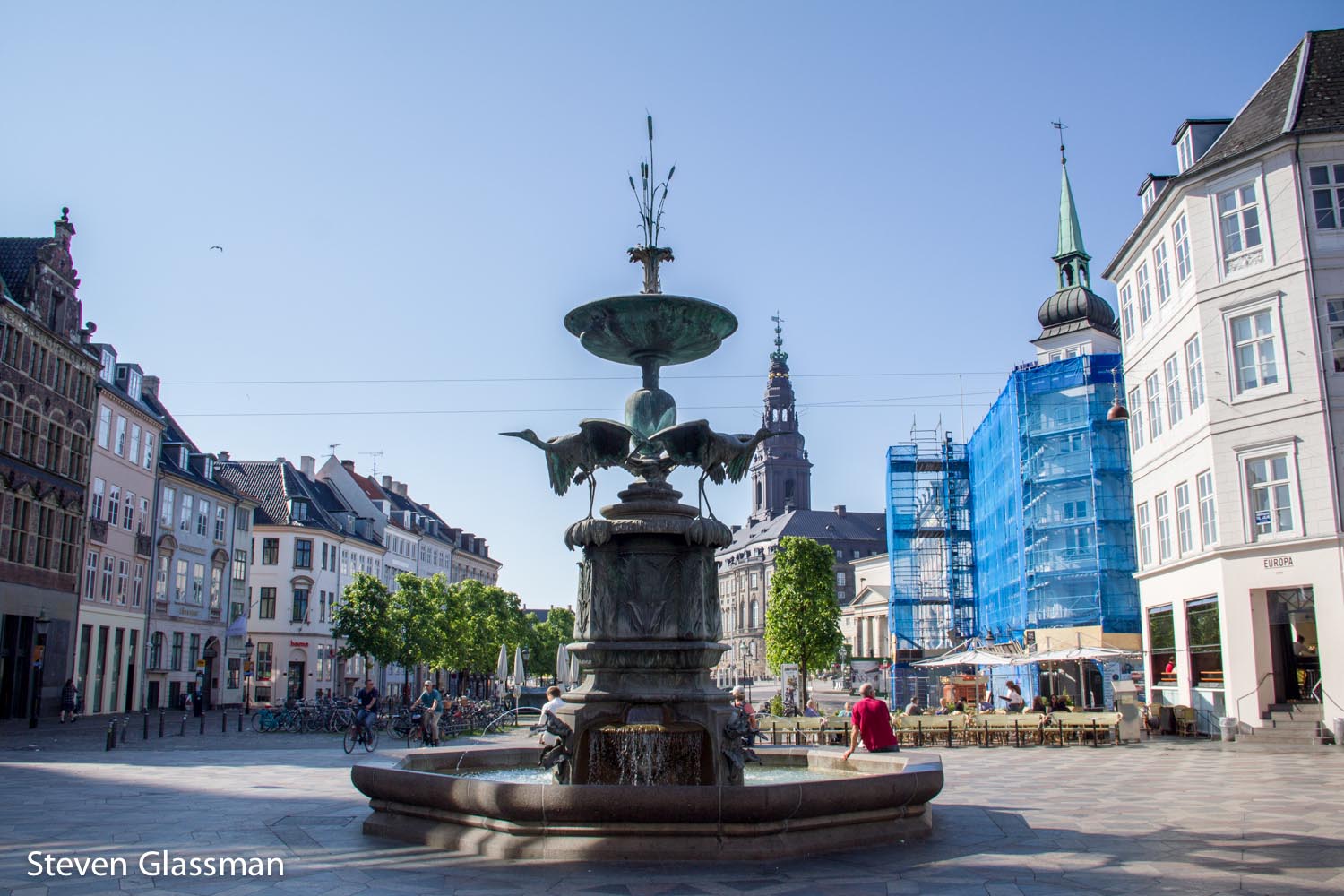
copenhagen-4

This building used to be Nikolaj Church, but now Nikolaj Kunsthal is a contemporary art center.  They do their best to keep the confusion down, by way of this handy hanging banner on the front of the building.

copenhagen-5

Frederik’s Church is often referred to as the Marble Church.  It’s due west of Amalienborg Palace.  This is the largest church dome in Scandinavia, and it was probably modeled after the Basilica in Vatican City.

copenhagen-7

This is the courtyard at Amalienborg Palace.  Amalienborg consists of four identical palace buildings in an octagonal courtyard.
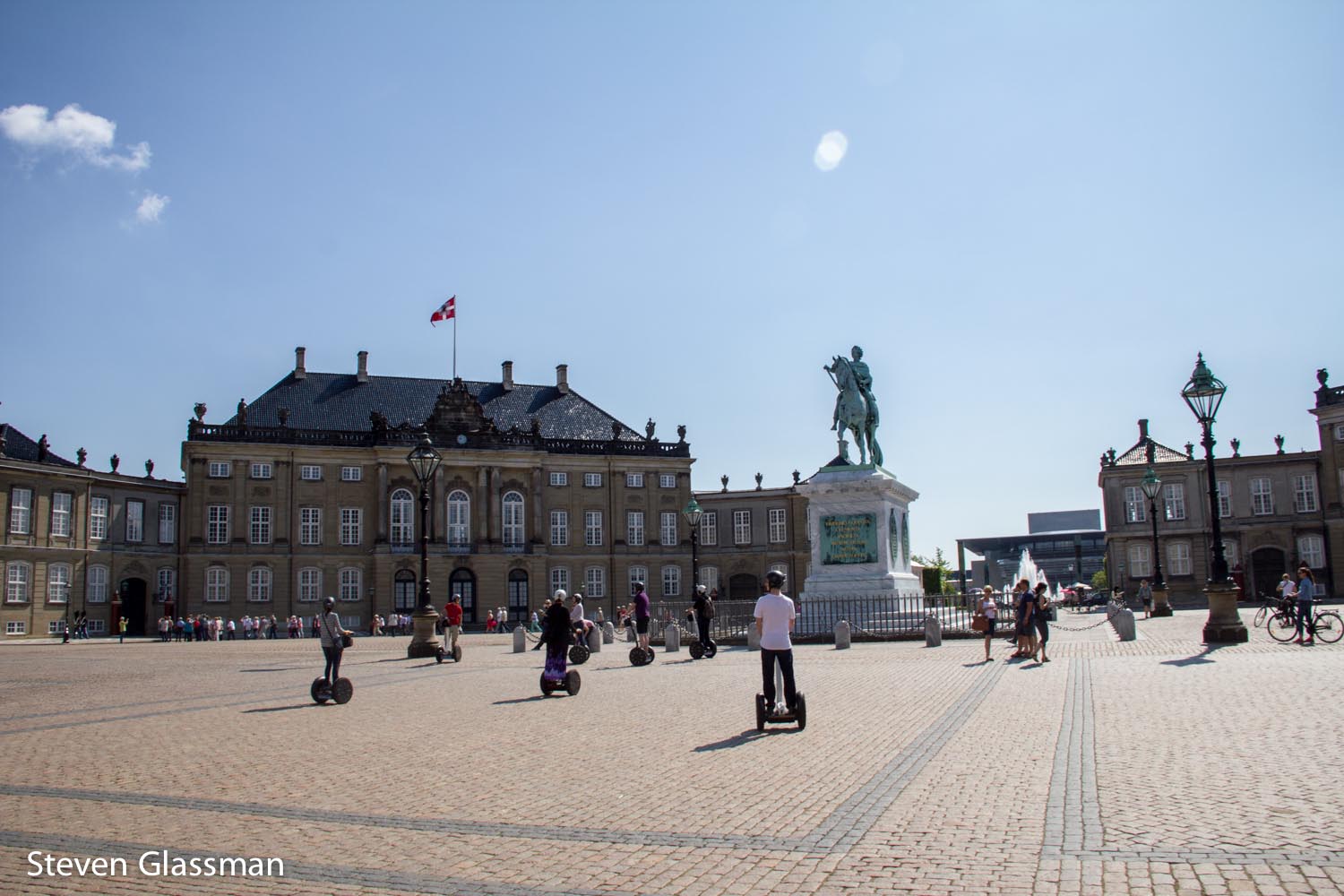
copenhagen-8

You can tell it’s a Palace because there are guards with fuzzy hats.  It’s a royal thing.
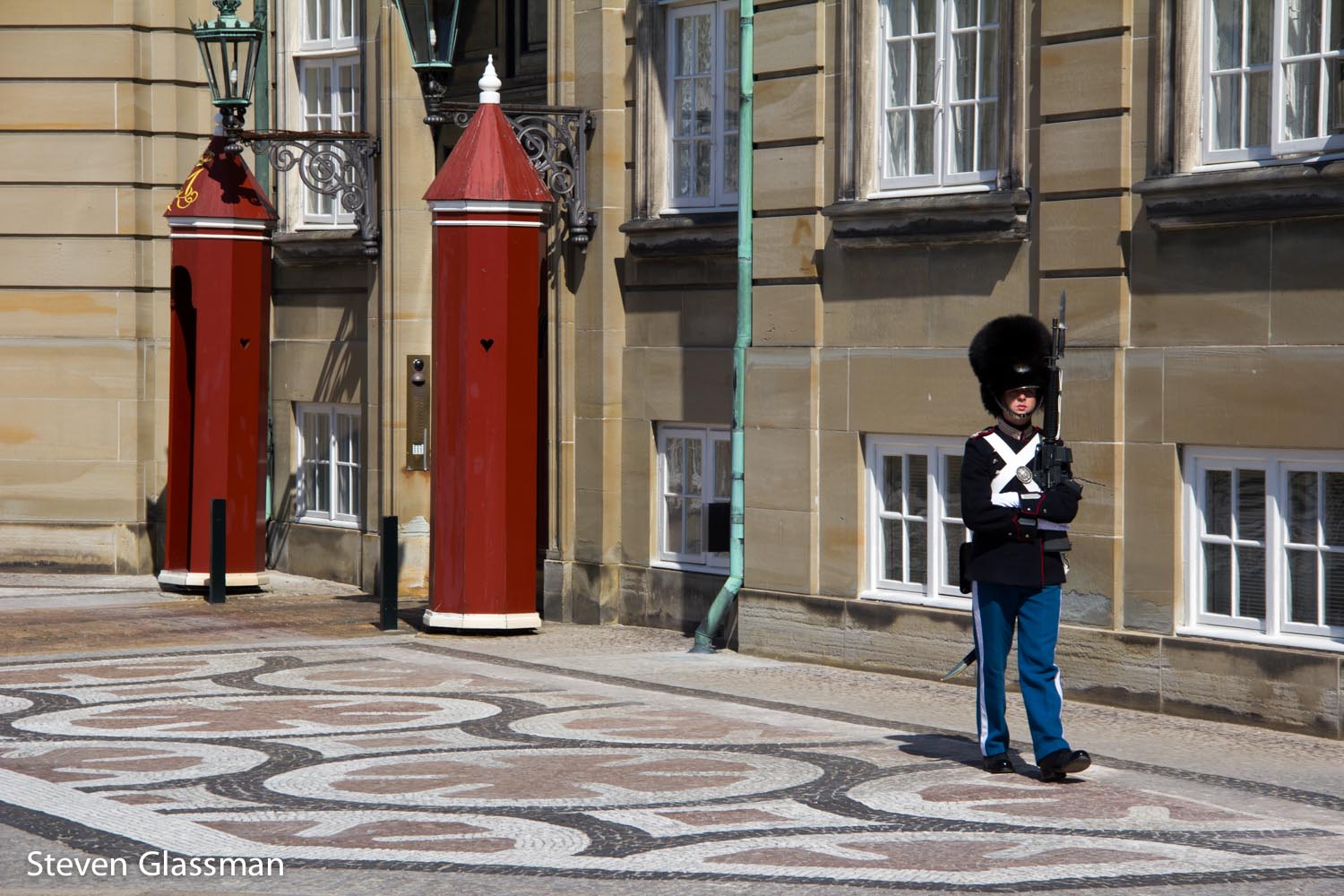
copenhagen-9

Den lille havfrue, or The Little Mermaid, is a fairly famous bronze sculpture by Edvard Eriksen which sits on a rock by the waterside.  The head of the statue is modeled after ballerina Ellen Price, but Price didn’t agree to model in the nude, so the body is modeled after the sculptor’s wife, Eline.  The statue is a frequent target for vandalism, and tourists climb onto the rock with her quite often for photographs.  In fact, the solitude displayed in this picture is very much an illusion, as you’ll see in the next photo.
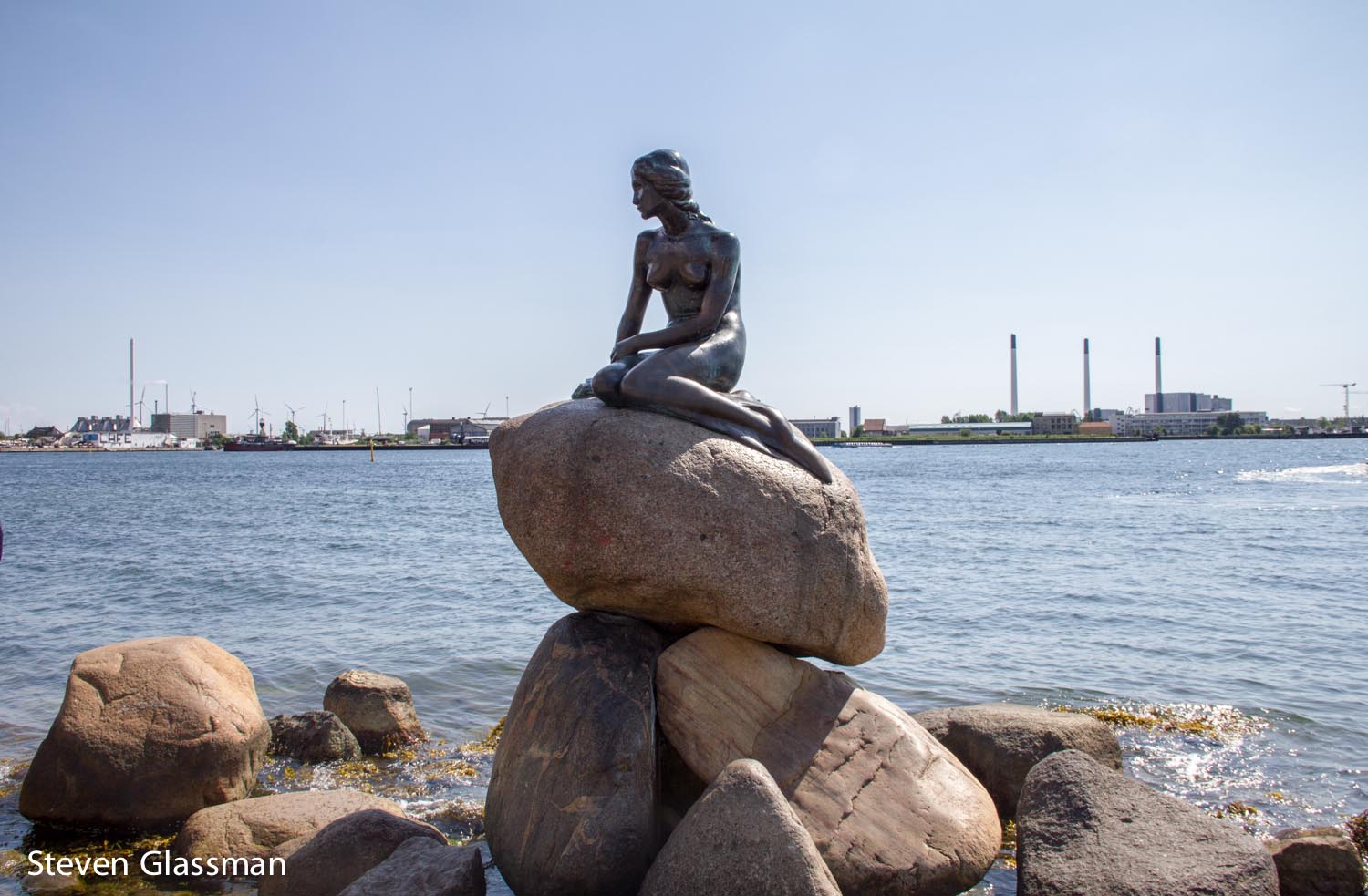
copenhagen-11

Later in the day, I took a boat tour which passed the Little Mermaid from the water.  This view gives you a much more accurate idea of what it’s like by the Mermaid’s rock.

copenhagen-23

The Gefion Fountain, near the Little Mermaid, is the biggest monument in Copenhagen.  It was created for Carlsberg Brewery’s 50th birthday.  The legend of Gefion was told to me three different times while I was in Copenhagen, and it goes roughly as follows:

The Swedish king Gylfe offered Gefion as much of Sweden as she could plough in one day and one night.To get the most out of it, Gefion turned her four sons into big strong oxen and harnessed them to a plough.   And then they ploughed. And they ploughed. All day and all night. So deep in the ground, that when the time expired, Gefion could lift up the land and drop it into the sea between Sweden and Funen Island in Denmark.  And that’s how the beautiful and historic Zealand Island – the biggest island in Denmark – came to be.

copenhagen-10

Near the Little Mermaid is an old well preserved star-shaped fortress called Kastellet.  This is one tiny corner of it.
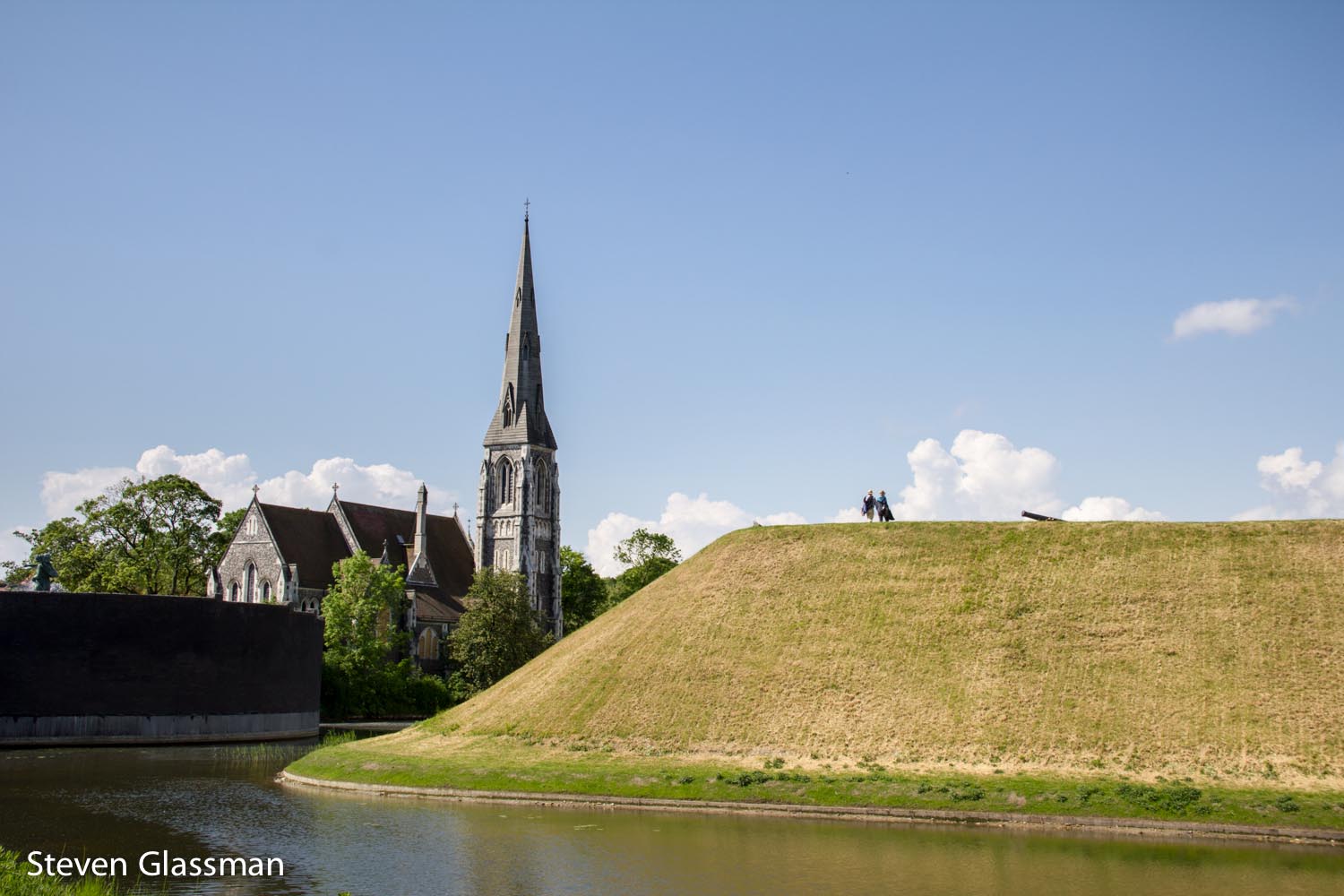
copenhagen-12

Apparently, this bridge is the source of considerable embarassment for the Danes-   the construction was begun from both sides, and when they got near the middle, they realized that the two sides did not actually line up.  The construction company has since gone out of business and they’re left with an incomplete non-connecting bridge.

copenhagen-13

The spire on the left here, with the four entwined dragons, is actually the Stock Exchange. This is very misleading, Copenhagen!

copenhagen-14

This is the Royal Library in Copenhagen.  The structure in the front is referred to as the Black Diamond, and the part in the back is the original Library building.

copenhagen-28

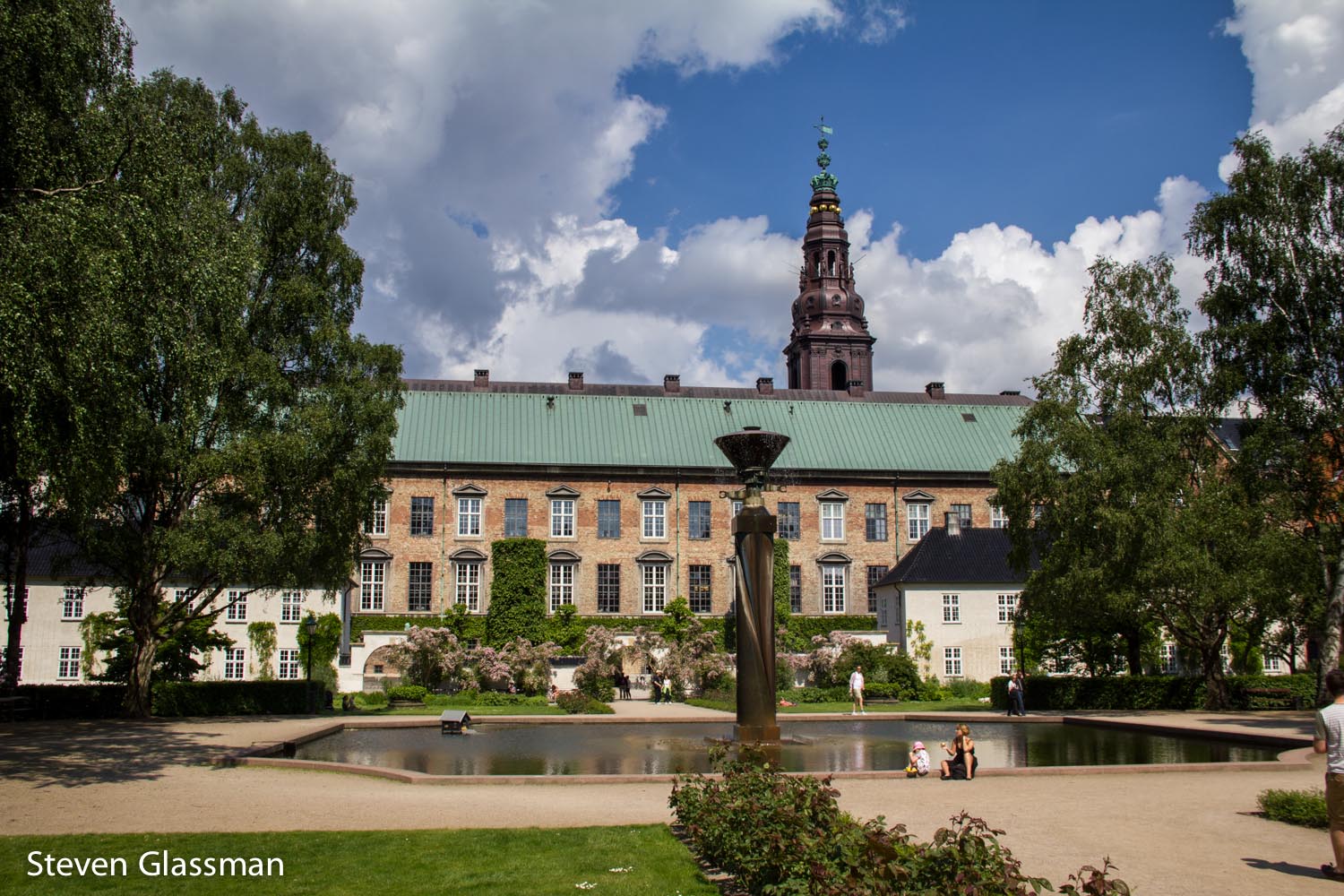
The Royal Library Garden exists behind the structures in the previous photo-  it’s a really quiet and pleasant place in the middle of the city.
copenhagen-15

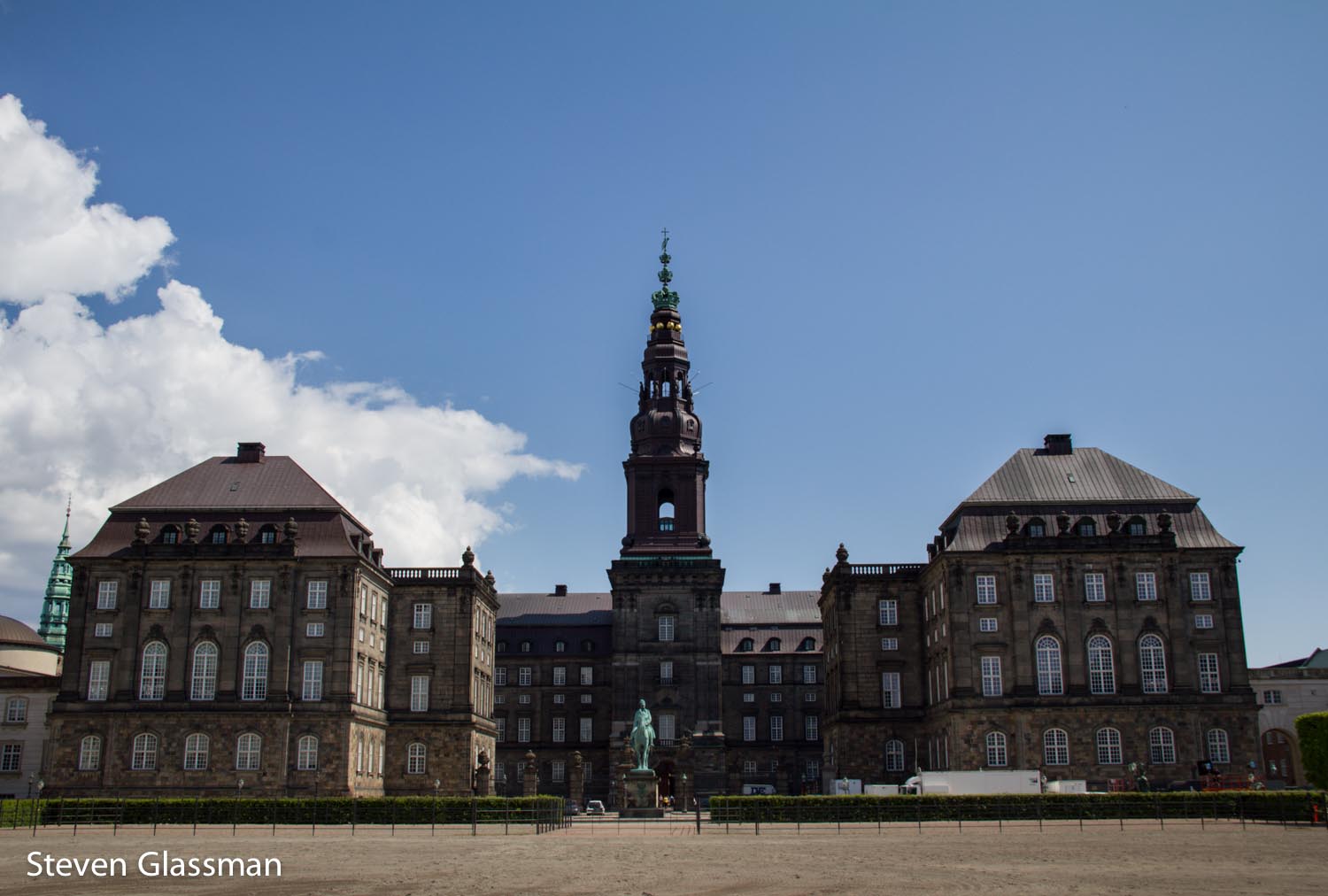
This is Christiansborg Palace, the seat of Danish Parliament.
copenhagen-16

Anchored in the harbor is the Royal Yacht Dannebrog.  Dannebrog serves as the official and private residence for the Royal Couple and other members of the Royal Family when they are on official visits overseas or on summer cruises in home waters.

copenhagen-21

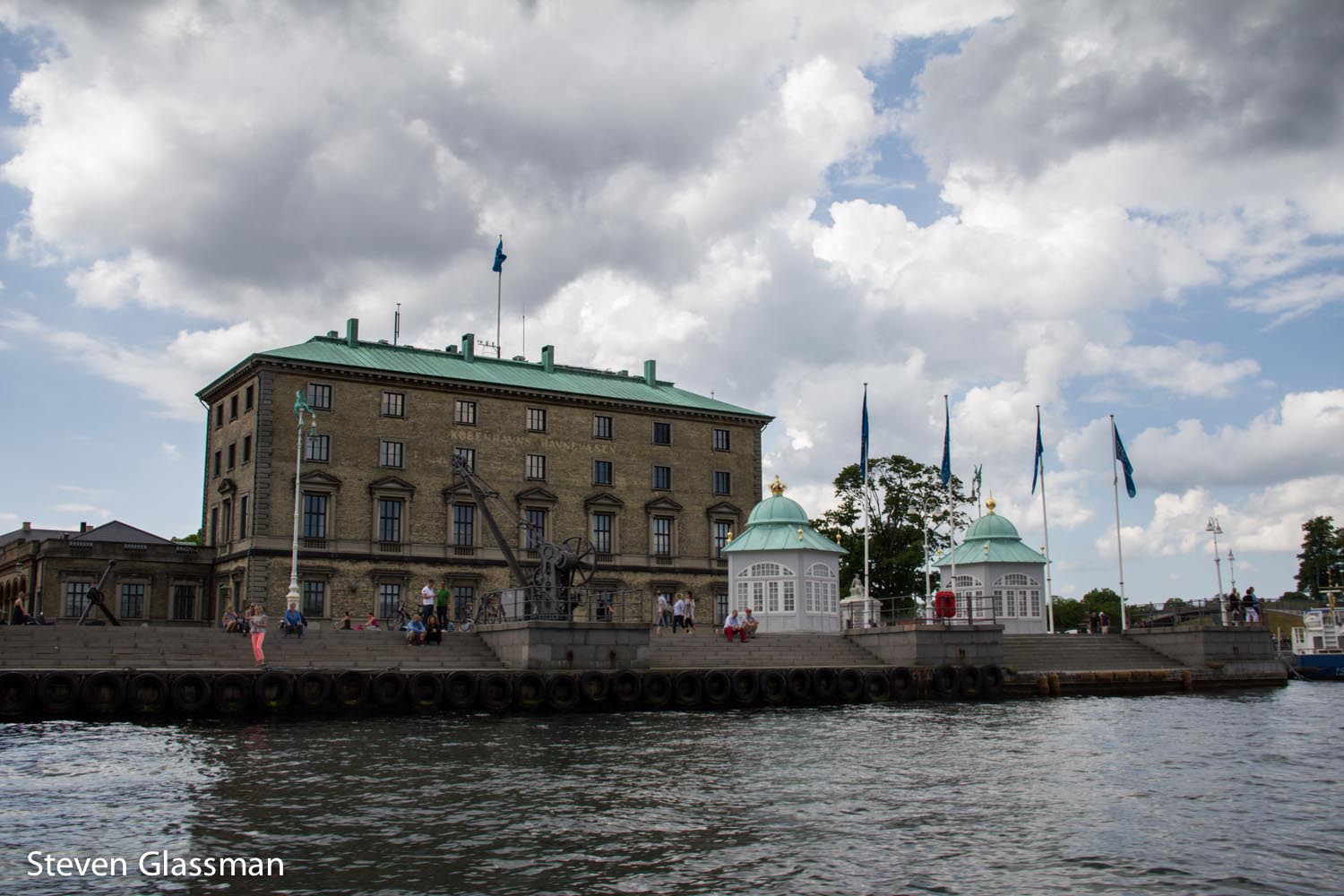
When the royals are waiting to be picked up by the boat, or when they’re waiting for state visitors, they wait in Toldboden.  They use the gazebo-like building on the left, with the crown on its roof.  Non-royals are allowed to wait in the other structure.
copenhagen-24

My visit was just after the Eurovision Song Contest was hosted in Copenhagen.  It was so recent to my visit that they hadn’t even taken down the banner on the giant music hall yet.

copenhagen-22

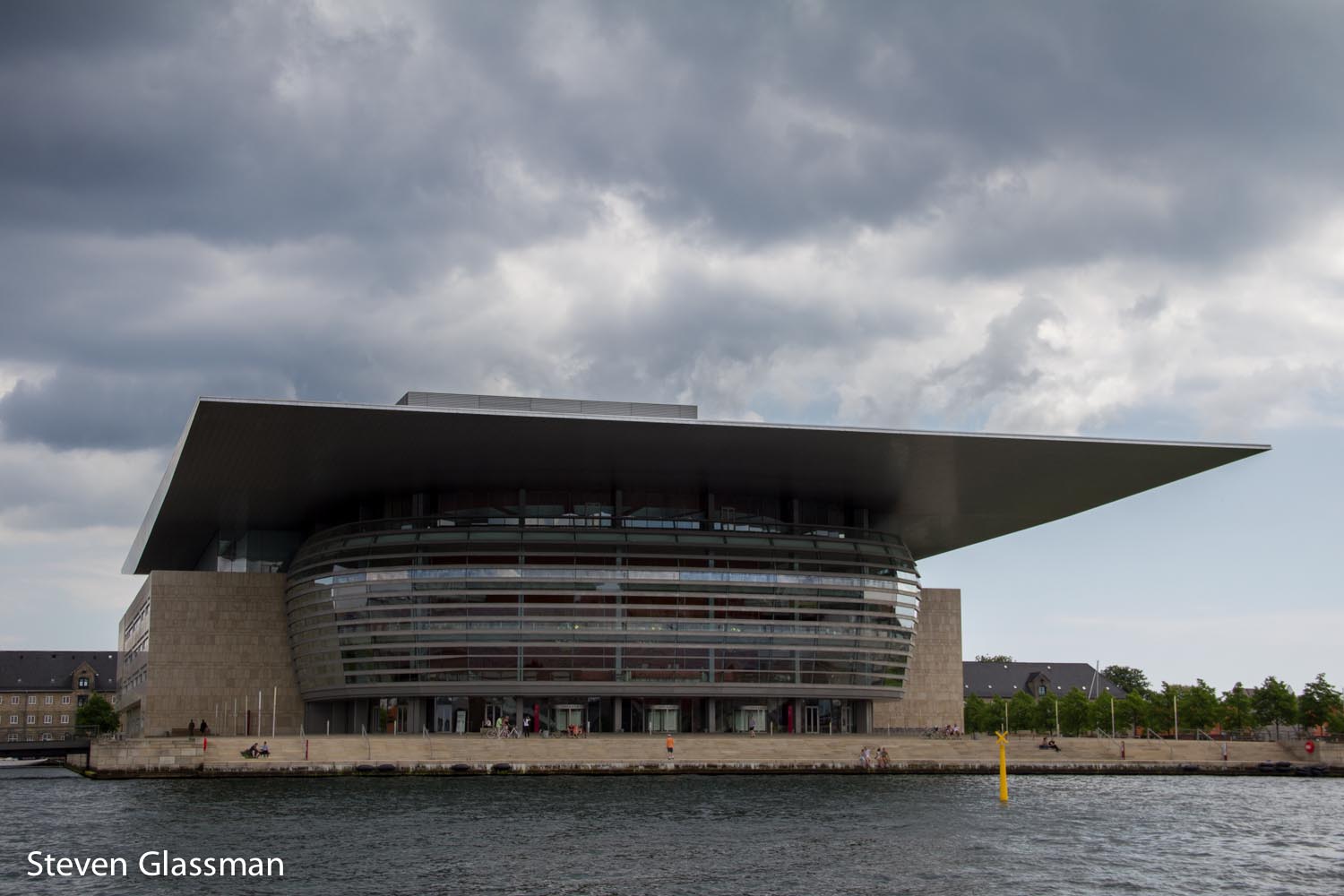
I don’t have much to say about the Opera House.
copenhagen-25

Frederik’s Church again, this time from the water.

copenhagen-26

The neat looking spiral spire is Christianshavn, the Church of Our Savior.  The circular stairs to climb the tower are on the outside of the building.  I didn’t climb this one, regrettably, but it looks really neat!

copenhagen-27

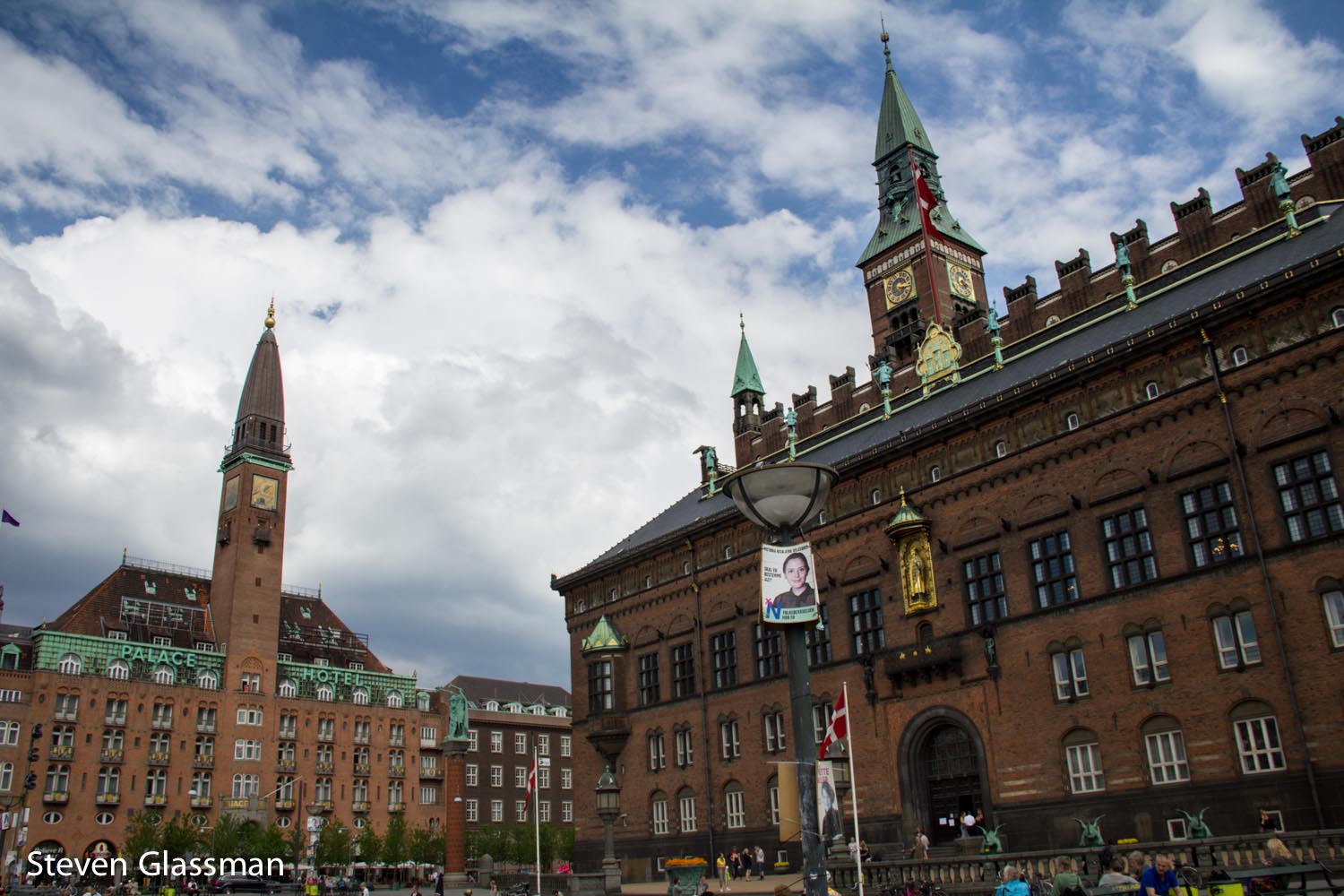
Copenhagen’s City Hall Square.

copenhagen-29

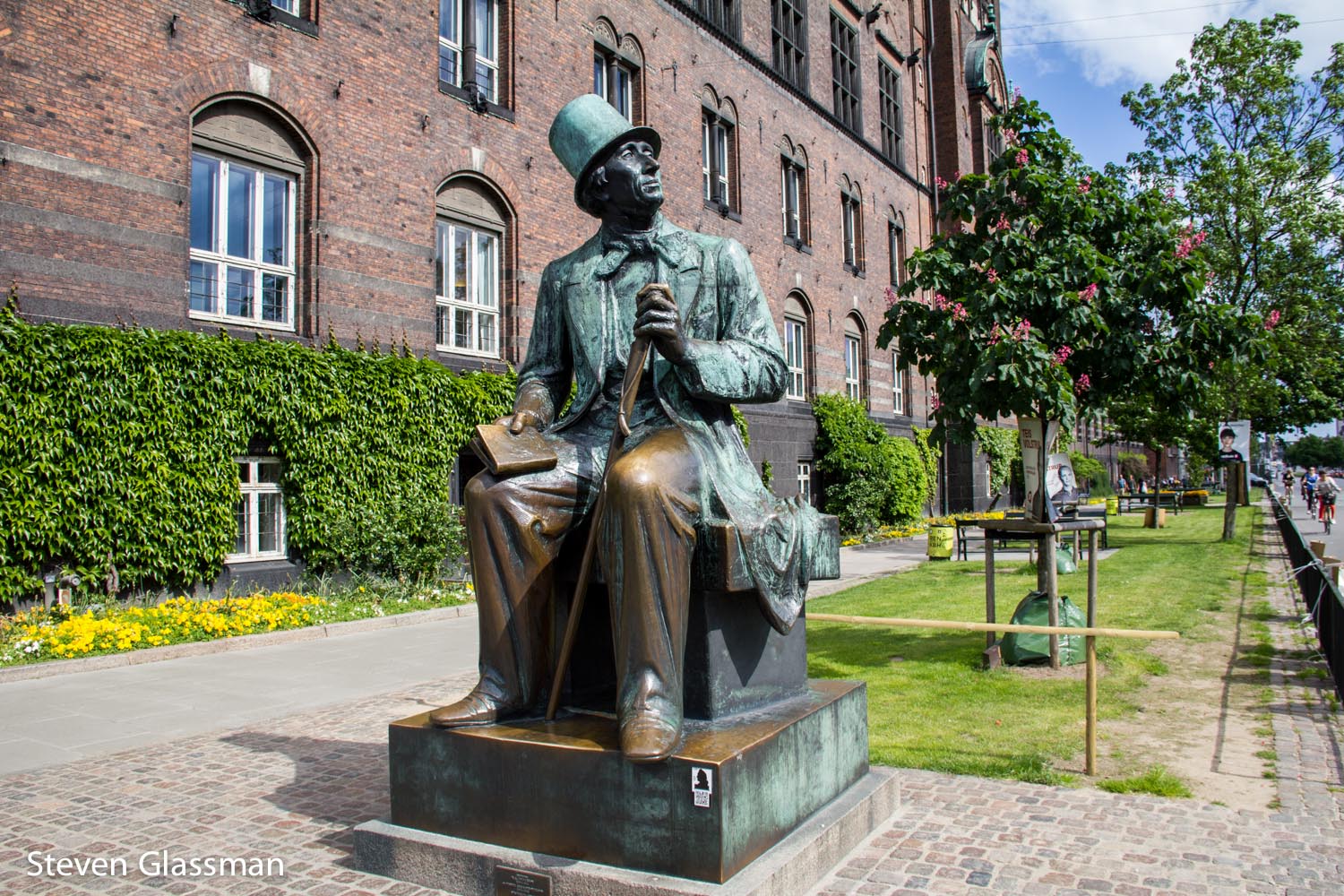
Alongside of the Copenhagen City Hall is a statue of Hans Christian Andersen, author of faery-tales such as The Little Mermaid and Frozen…er, I mean The Snow Queen.
copenhagen-30

Have you ever been to Copenhagen?

Schlaaaaaaaaand!

While I’m not typically one for sports, televised or otherwise, I can’t help but get into the World Cup here.

I first saw the magnificent spectacle that is International football (soccer for you Americans) championships two years ago, during the UEFA European Football Championship.  When I wrote about that series, I had just seen a Holland match while in Holland, and the Orange was everywhere.

I also noticed then, as now, that the Championships are the one time that you really see German patriotism.  Championships are the time that German flags go onto people’s cars and get displayed on houses.  From what my German friends tell me, this only started around the 2006 championships- before that it was almost unheard of to have this level of patriotism in Germany, ever since that whole World War II incident back in the 1940s.

I’ve been really enjoying the games this year; especially this week’s massive 7-1 victory over Brazil’s team.

schlaaaand
If you didn’t see the Brazil-Germany match, this animation pretty much sums up the game.

With that victory, Germany is going to the final match of the World Cup.  On Sunday night, they’ll be playing Argentina for the whole enchilada.  I was really hoping it would be the Netherlands…

I’m pretty stoked about the whole thing, and so are my countrymen-  after Germany’s last victory, the Empire State Building in New York City  looked like this:

empirestate

Have you been watching the World Cup?  Who do you root for?

Nordic Adventure, Part 5: The Vigeland Installation

Frogner Park, in Oslo Norway, is often referred to inaccurately as Vigeland Park.  The 450,000 square meter park is home to the world famous Vigelandsanlegget, or Vigeland installation.  Referring to the park as Vigeland Park is a very common mistake but the name has no official status and is considered wrong.  I didn’t know this while I was in Oslo, by the way- I only learned that the park was called Frogner Park when I sat down to write this post.

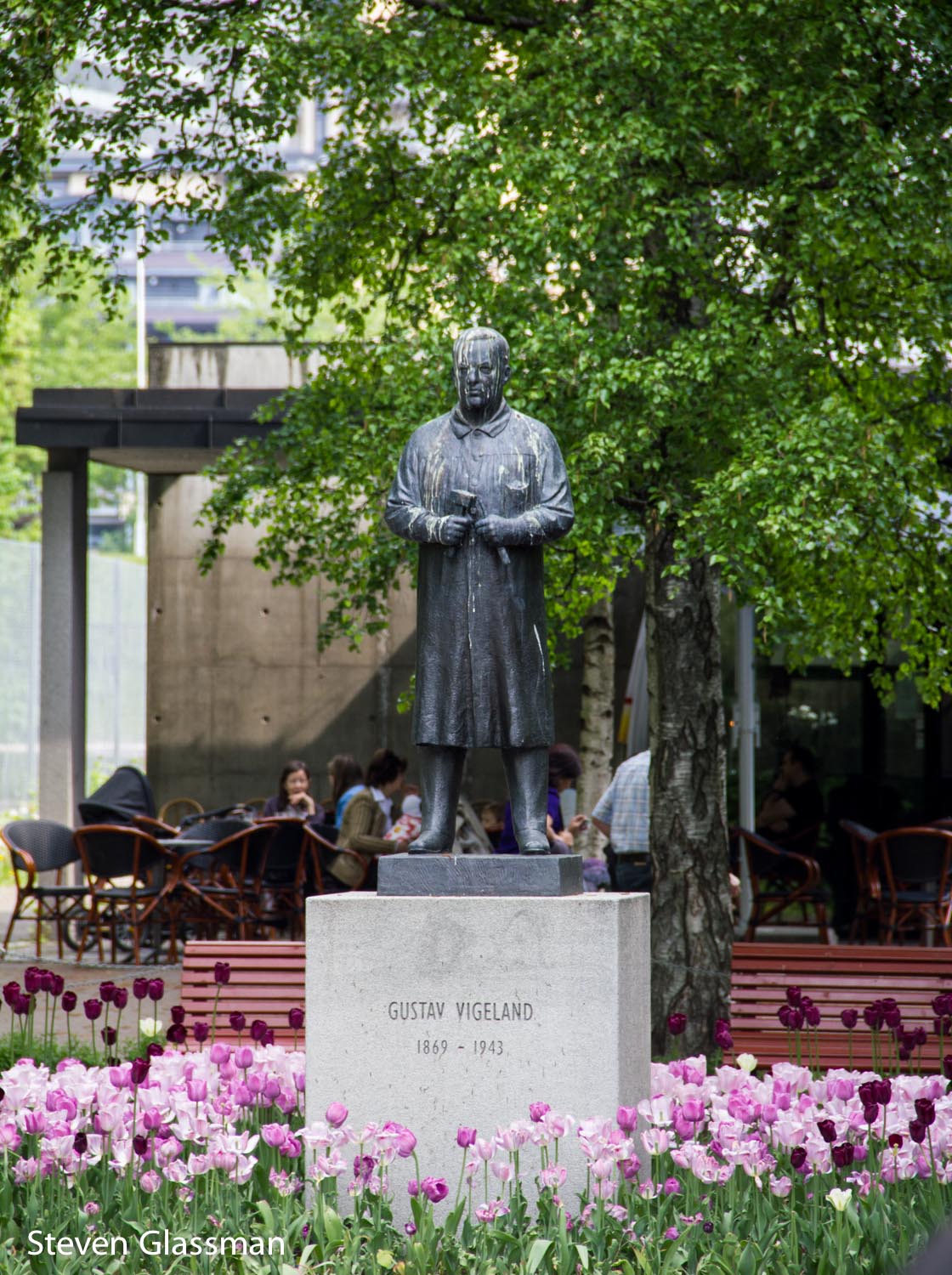
The Vigeland sculptures were created by Gustav Vigeland (born Adolf Gustav Thorsen in 1869).  This is the man.

vigeland-1

The sculpture area in Frogner Park covers 80 acres and includes 212 bronze and granite sculptures designed by Vigeland.  The Bridge was the first part of the installation to open, in 1940.  You can see the Fountain and the Monolith in this picture.  We’ll get to those.

vigeland-2

The sculptures in the Vigeland intallation are all naked, because the sculptor didn’t want clothing to date them.  Most of them reflect the human condition.  Many of them represent children at play.  The titles are often not very creative, but they’re precise.  This one is called “Man lifting girl with one arm.”

vigeland-3

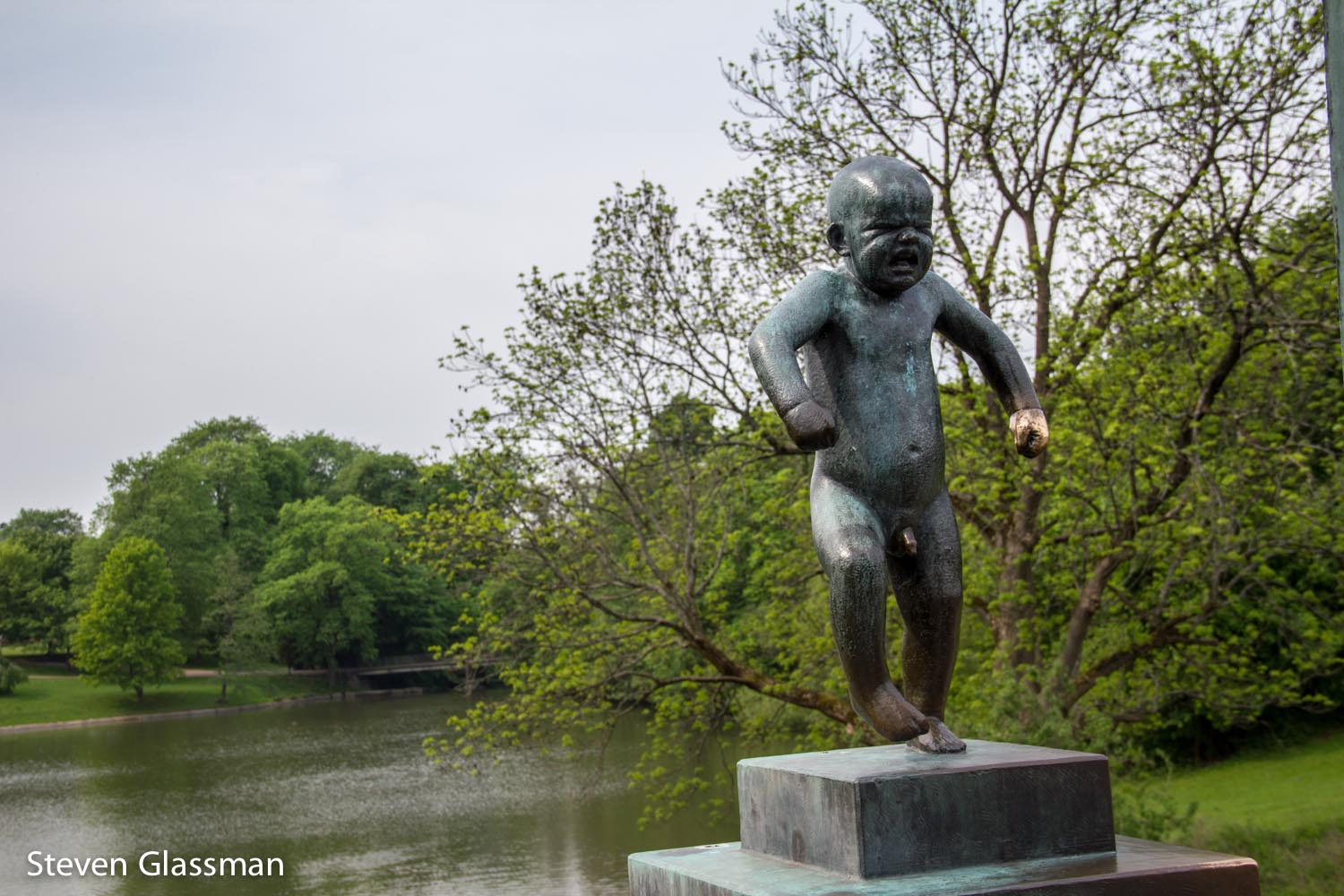
This fellow is one of the most popular sculptures in the park.  He is Sinnataggen, or Angry Boy.

vigeland-4

Say hello to “Man inside a ring.”

vigeland-5

I wasn’t able to find a name for these little ones.  It was possible to purchase a guide to the installation for a small fee, but I didn’t buy one.

vigeland-6

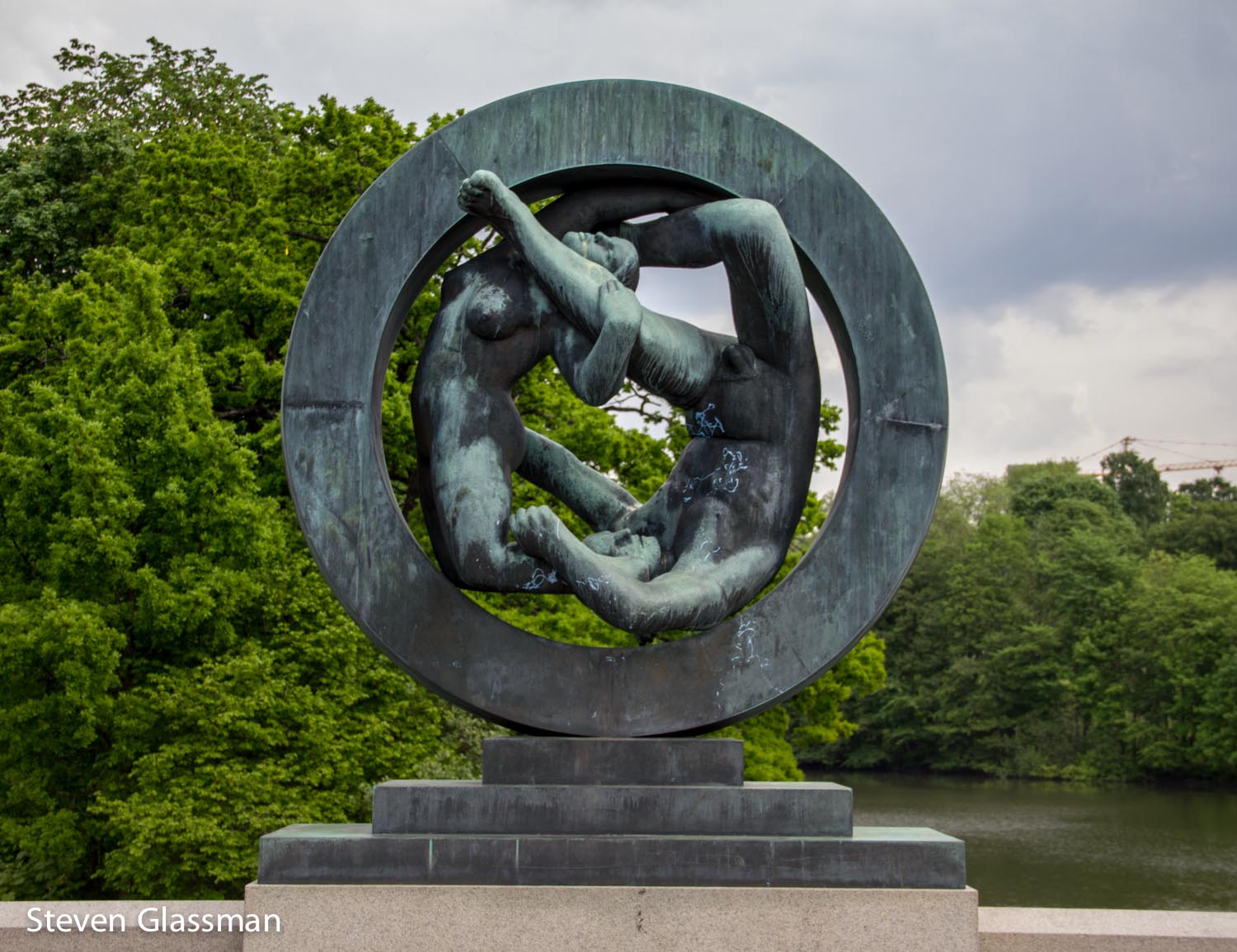
Man and woman inside ring.  I vote that we rename this one “Tumble dry low.”

vigeland-7

This is called “Man running,” but I think it’s a stretch to call this running.

vigeland-8

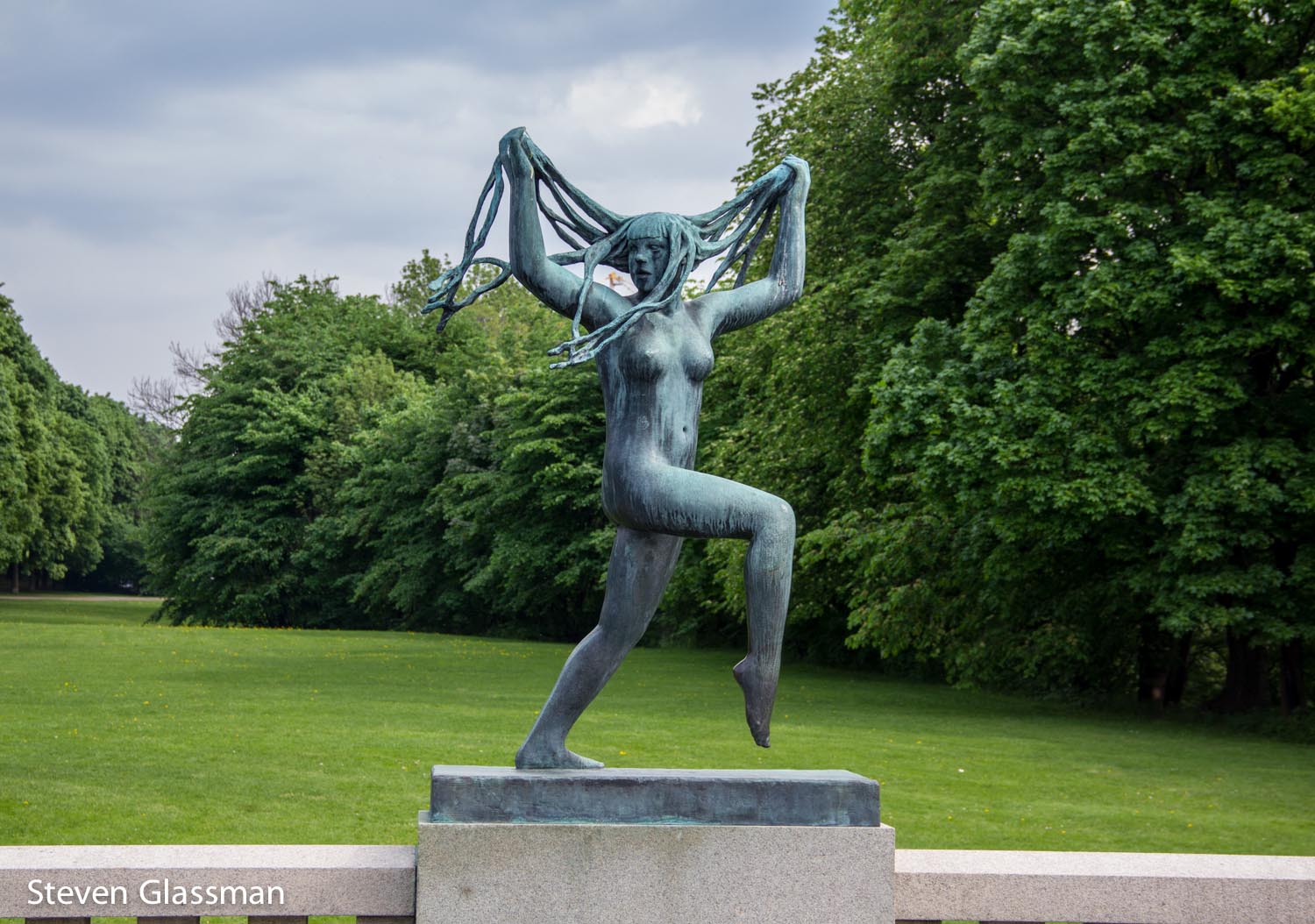
This one is “Dancing young woman.”

vigeland-9

This one is actually called “Man chasing four geniuses,” but I like to think of it as the ultimate “No, I don’t want children!” statue.

vigeland-10

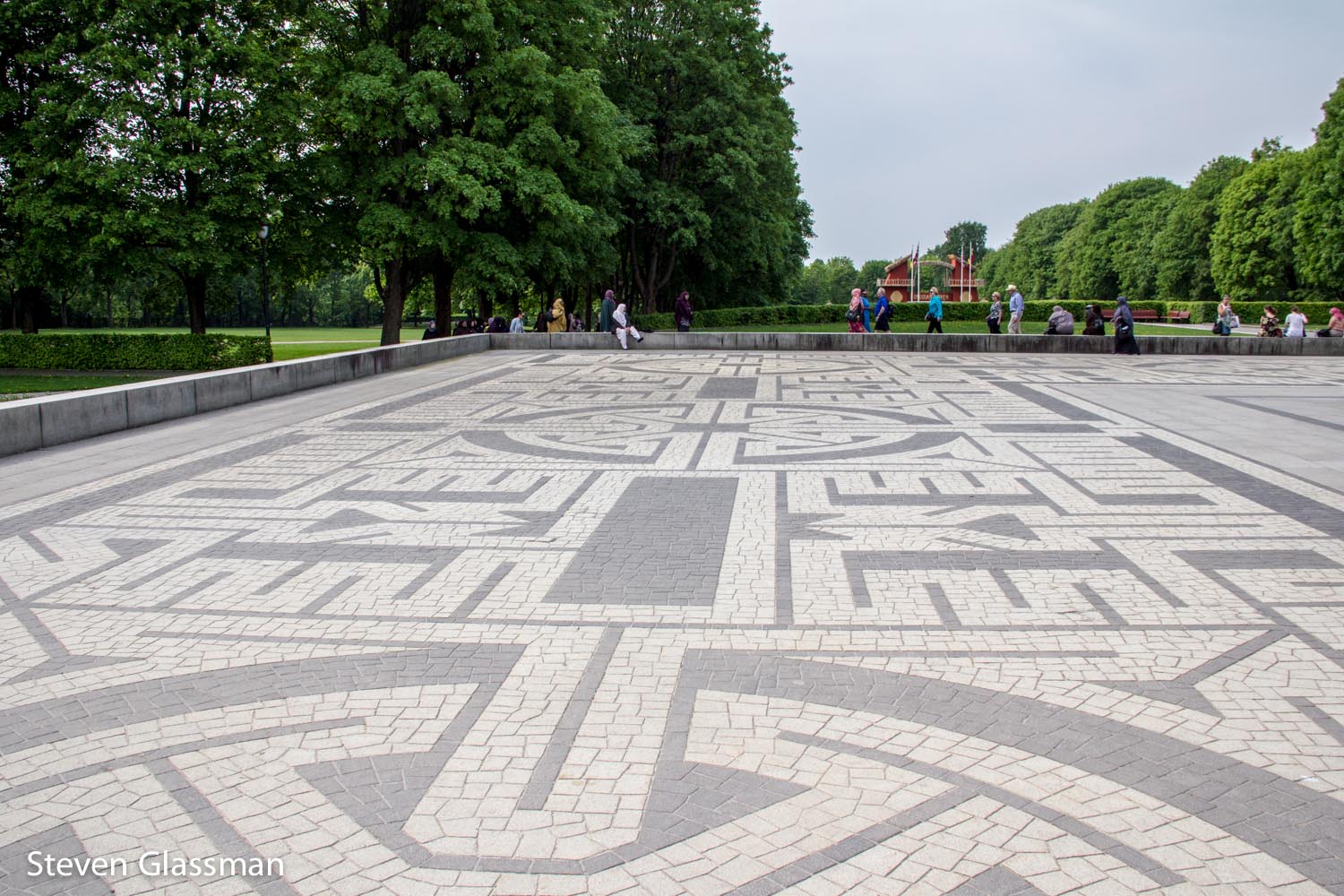
Once you walk past the bridge, you reach the Fountain.  While the center fountain itself was done somewhere around 1909 the full installation of the Fountain here was completed in 1947.  The ground around the fountain is an 1,800 square meter mosaic in black and white granite which forms an almost 3,000 meter long labyrinth.  If you have an hour or two, you can walk through it.

vigeland-11

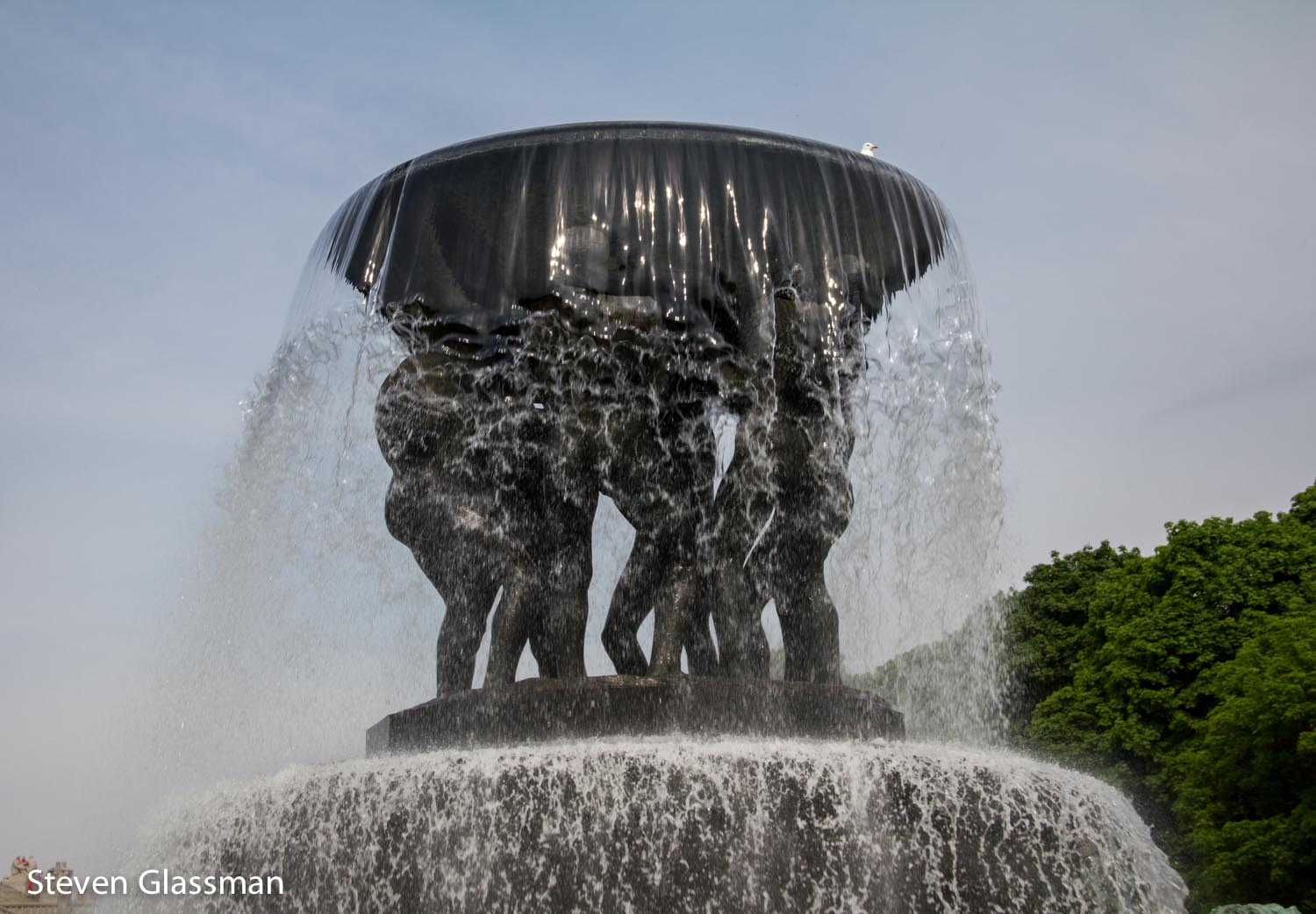
This is the Fountain itself.

vigeland-12

The Fountain is surrounded by tree sculptures.

vigeland-13

Here’s a view from above, looking back toward the Bridge.

vigeland-14

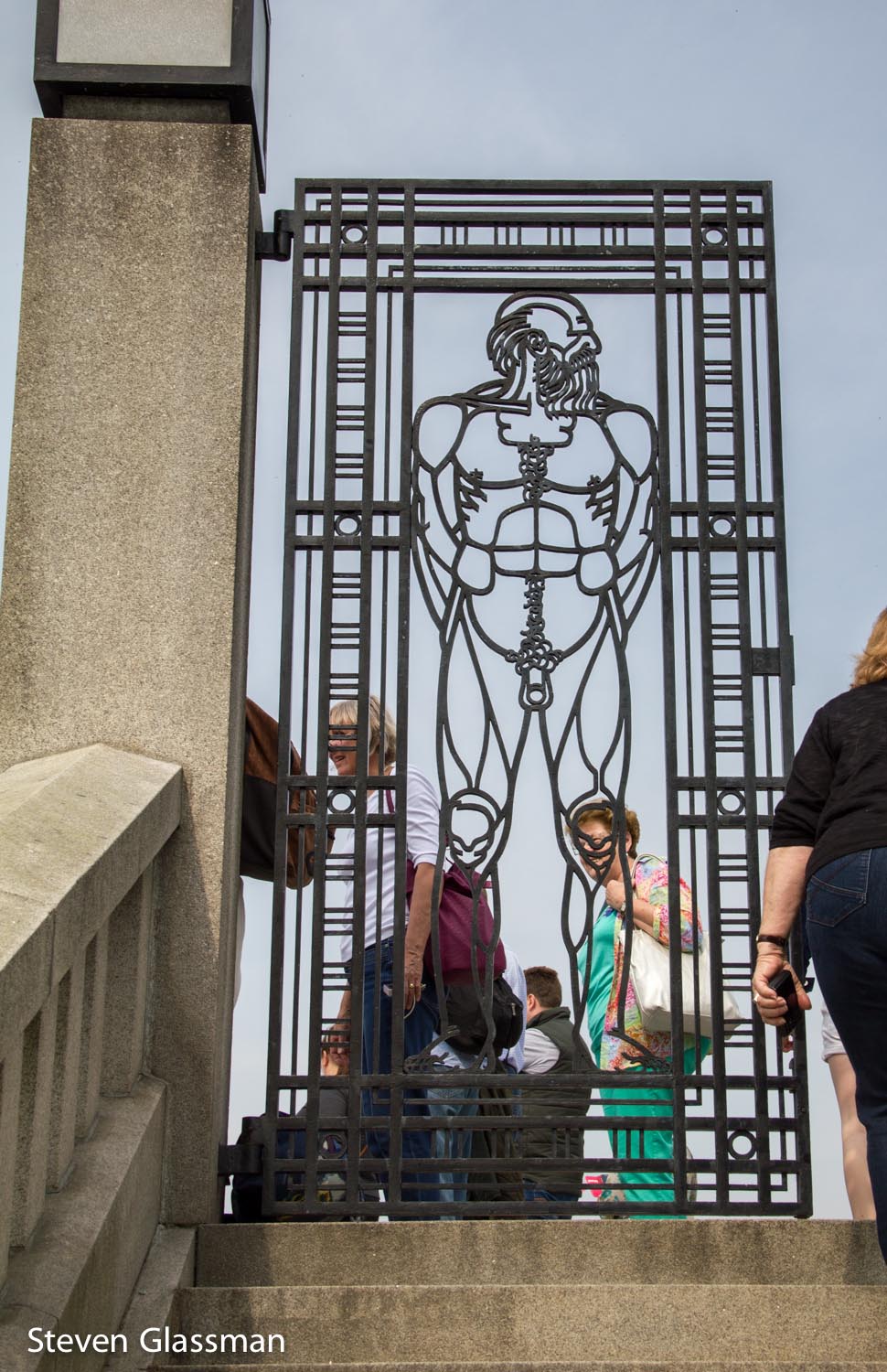
Moving past the Fountain, you reach the wrought iron gates to the Monolith.   There are eight of these gates, depicting man at different ages.

vigeland-15

Next, we reach the Monolith.  This plateau is the highest point in Frogner Park.  The Monolith is carved out of a single piece of granite, and is just over seventeen meters high.  It is not clear what the column is supposed to represent, and there are many theories.

vigeland-16

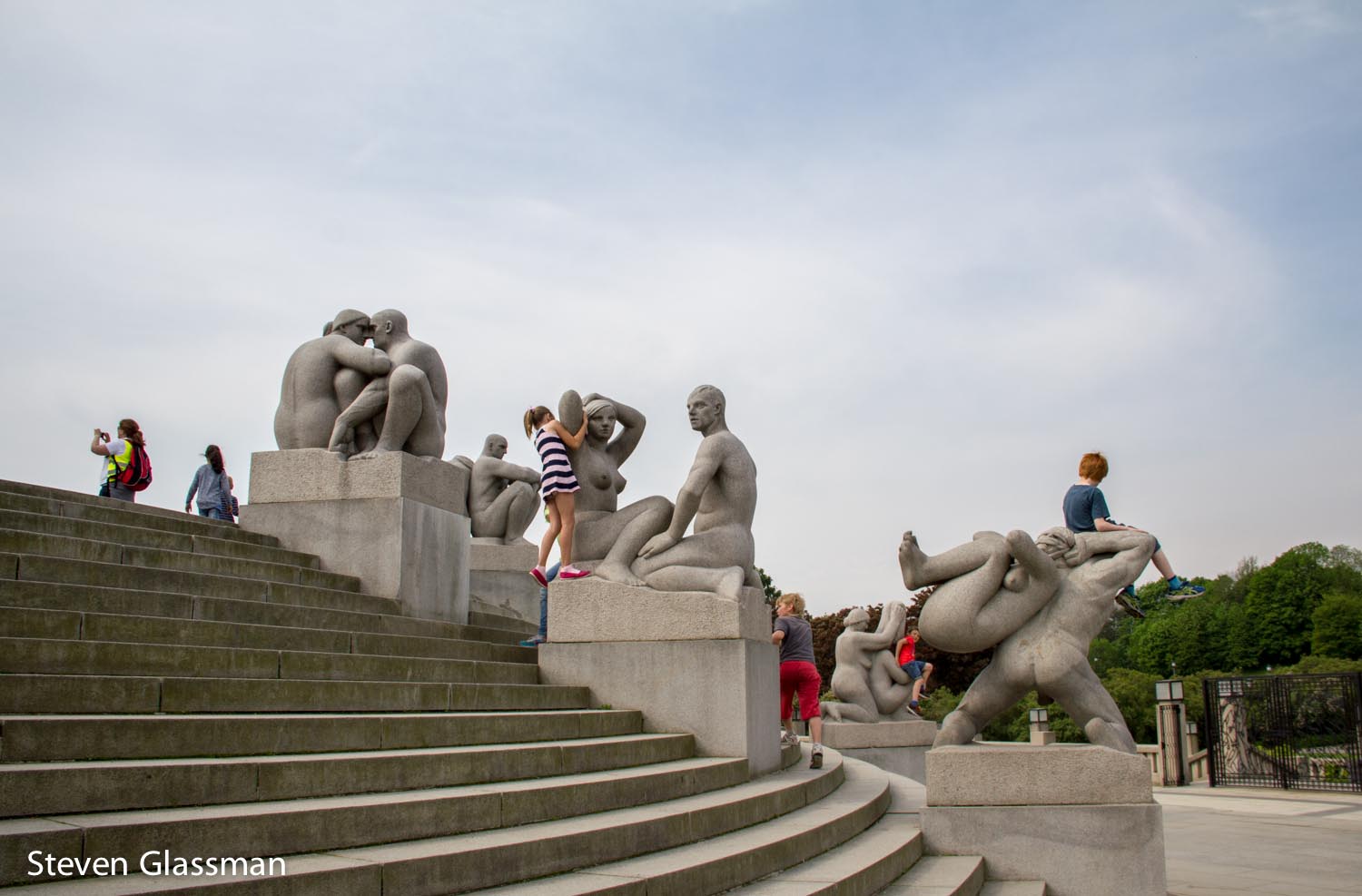
Surrounding the Monolith are 36 figure groupings, depicting the cycle of life.

vigeland-17

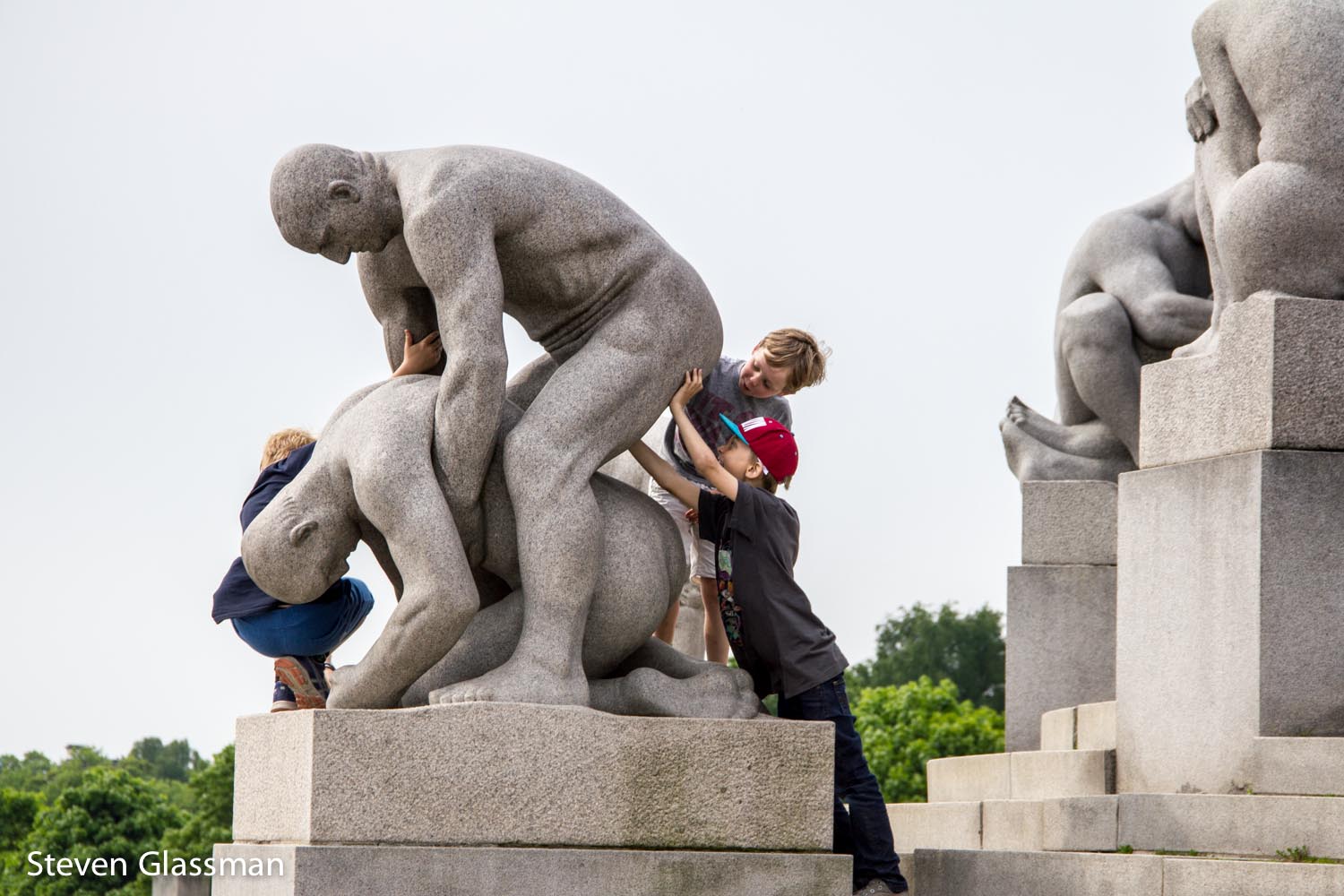
This one is called “Standing man lifting dead man.”

vigeland-19

As you can imagine, these are popular with tour groups and children.

vigeland-20

This kid is perched atop “Man throwing woman.”

vigeland-21

This one is called “Young boy and girl.”  Again, Vigeland wasn’t much with the creative names.

vigeland-22

Continuing in the same direction, we reach the final sculpture, The Wheel of Life.  The wheel supposedly represents eternity, and is a ring of men, women, and children holding onto each other.

vigeland-18

Have you ever been to Vigeland… sorry, to Frogner Park?

Die Hochzeitsglocken läuten!

This weekend, I’m going to my first German Hochzeit, or wedding.  My partner-in-crime Jenny is getting married in a wedding which is actually spread over two days.

A multi-day wedding is not uncommon in Germany, because you have to do a legal portion of the marriage in an official place and those are often not open on weekends.  In this case, there’s a small ceremony in the morning on Friday at the Altes Rathaus and a nice formal lunch at the city’s Ratskeller.  Then on Saturday, there’s a much longer, slightly more casual, definitely bigger party at Jenny and Robert’s home.

This is the first time I’ll experience a German wedding, and Jenny’s shindig doesn’t hit all the “traditional” marks because Jenny and Robert are fairly untraditional people, in the best possible way.

There are dozens of different wedding traditions in Germany, and no two weddings are exactly alike.  Here’s some of what I’ve learned about German weddings so far:

Bachelor and Hen Parties Are A Big Deal.  Whenever I’m in a city- any city, anywhere in Europe- I’ve been able to spot the pre-Wedding parties.  Bachelorette parties are often referred to here as Hen parties, which amuses me greatly.    For Bachelor parties, the groom-to-be often has to wear a ridiculous outfit.   For Hen parties, the bride-to-be often has little trinkets or baked goods or small items that she has to sell to passers-by, ostensibly for money for beer.    Group costumes and themes are common.  I’ve seen parties where every member is dressed in a nurse outfit or in a hot-cop outfit.  I’ve seen pirates and bunny ears, ballerina dresses and traditional tracht (Dirndls and lederhosen.)

Matching shirts are a popular choice.  And you can always spot them.  The look like this.  Or this.  Or this.

henparty

In some cities, the party moves around on a BierBike.  This isn’t traditional, but it’s often hilarious.

bananas are good

Engagement rings aren’t a big deal. Germans don’t do diamond engagement rings.   The concept of an engagement ring is fairly new to Germany, and some couples do it but it’s not expected here like it is in the US.   The bride and groom have matching wedding bands which are worn on their right hands.  Single guys take note:  Married women in Germany wear their wedding rings on the right hand, not the left hand!

Lots of couples do a traditional Polterabend.   A Polterabend is a party where everyone brings old dishes to break in order to wish the couple well, drive away bad spirits, and so forth.

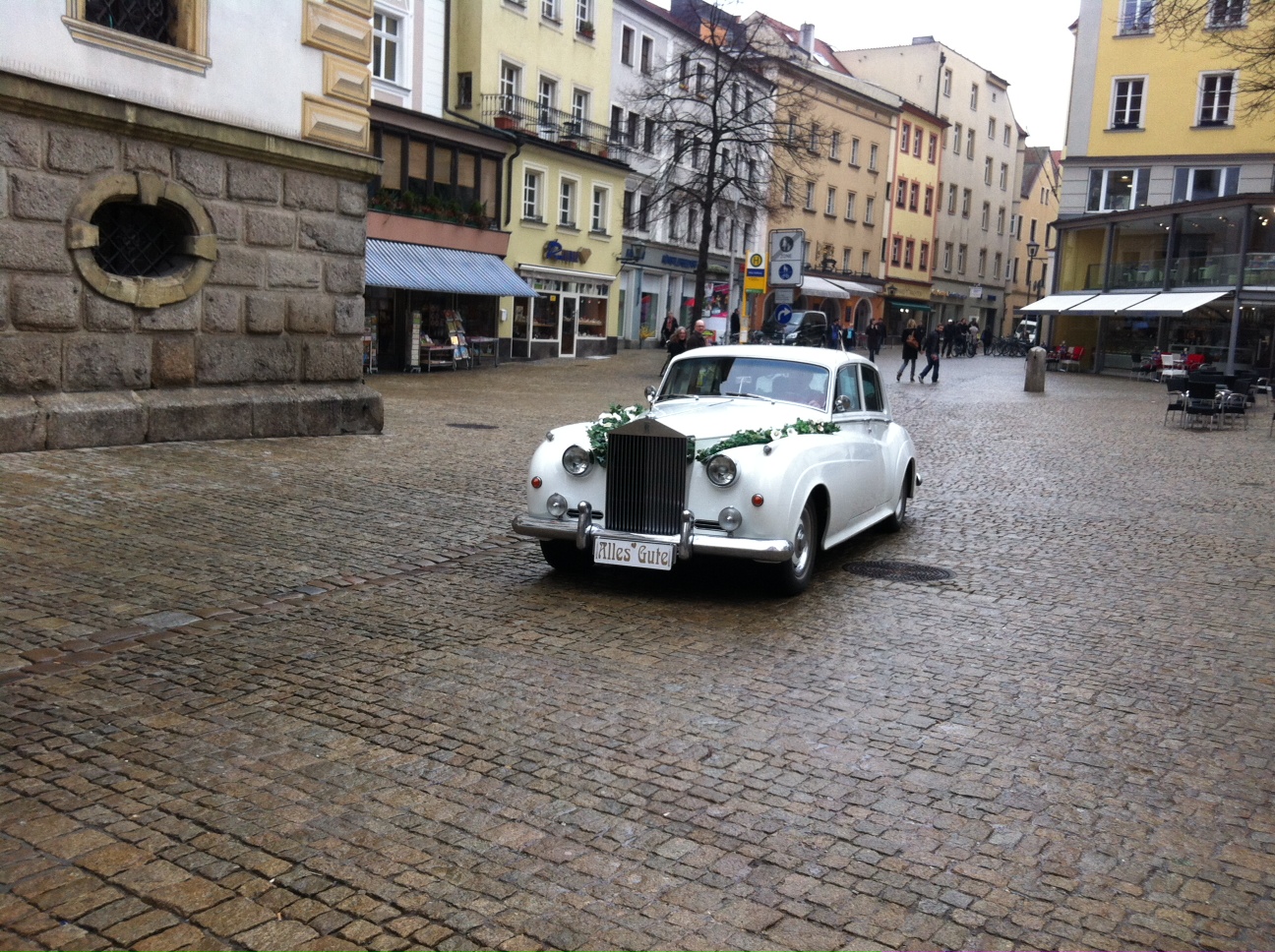
A car procession after the ceremony is traditional.  You can always spot the days that there’s a wedding in town because there are cars with bows or bridal bouquets fixed to the hood sitting in front of the Rathaus.  After the wedding, a car procession drives through town honking their horns, and others honk back to wish the couple good luck.

hochzeit-cars2
hochzeit-cars1

After tomorrow, I can’t really call Jenny my partner-in-crime anymore.  She has a new partner-in-crime for the rest of her life.   I can’t wait to hear about Jenny’s continuing adventures with Robert!

partners
Image by Stephan Wiesner- https://www.facebook.com/sportportraits

Have you ever been to a German wedding?

Nordic Adventure, Part 4: Oslo

The third stop in my traipse through the Nordics after Helsinki and Stockholm was Oslo.  I traveled from Stockholm to Oslo by train, a decision I actually kind of regret.  It took three or four times as long, and thanks to poor train management, it was damn near 10:30 at night by the time I checked into my hotel.  I made the best of it though.

oslo-1

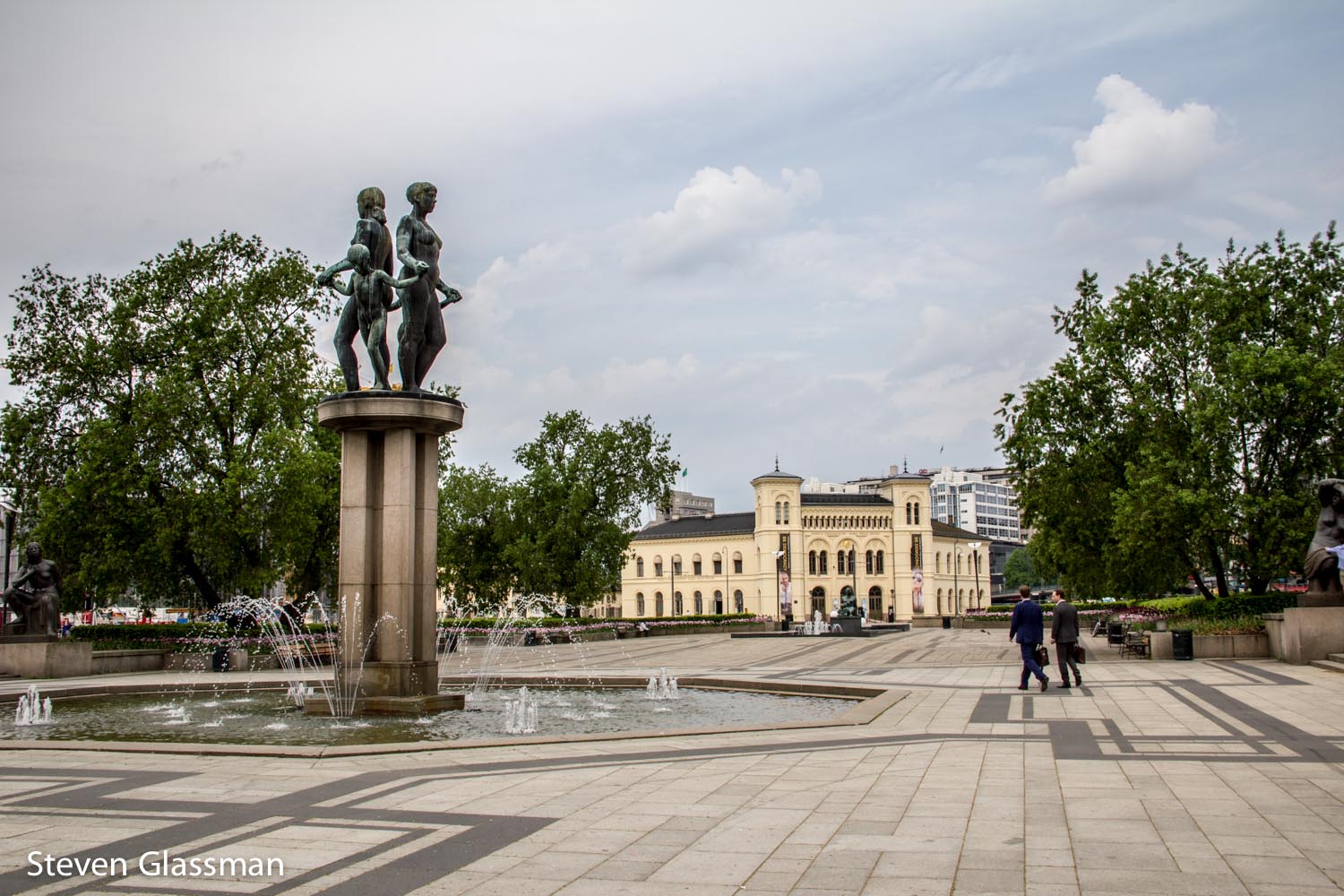
This is a seafront plaza behind the city hall.  That building in the distance is the Nobel Peace Center.  I’ll come back to that.

oslo-2

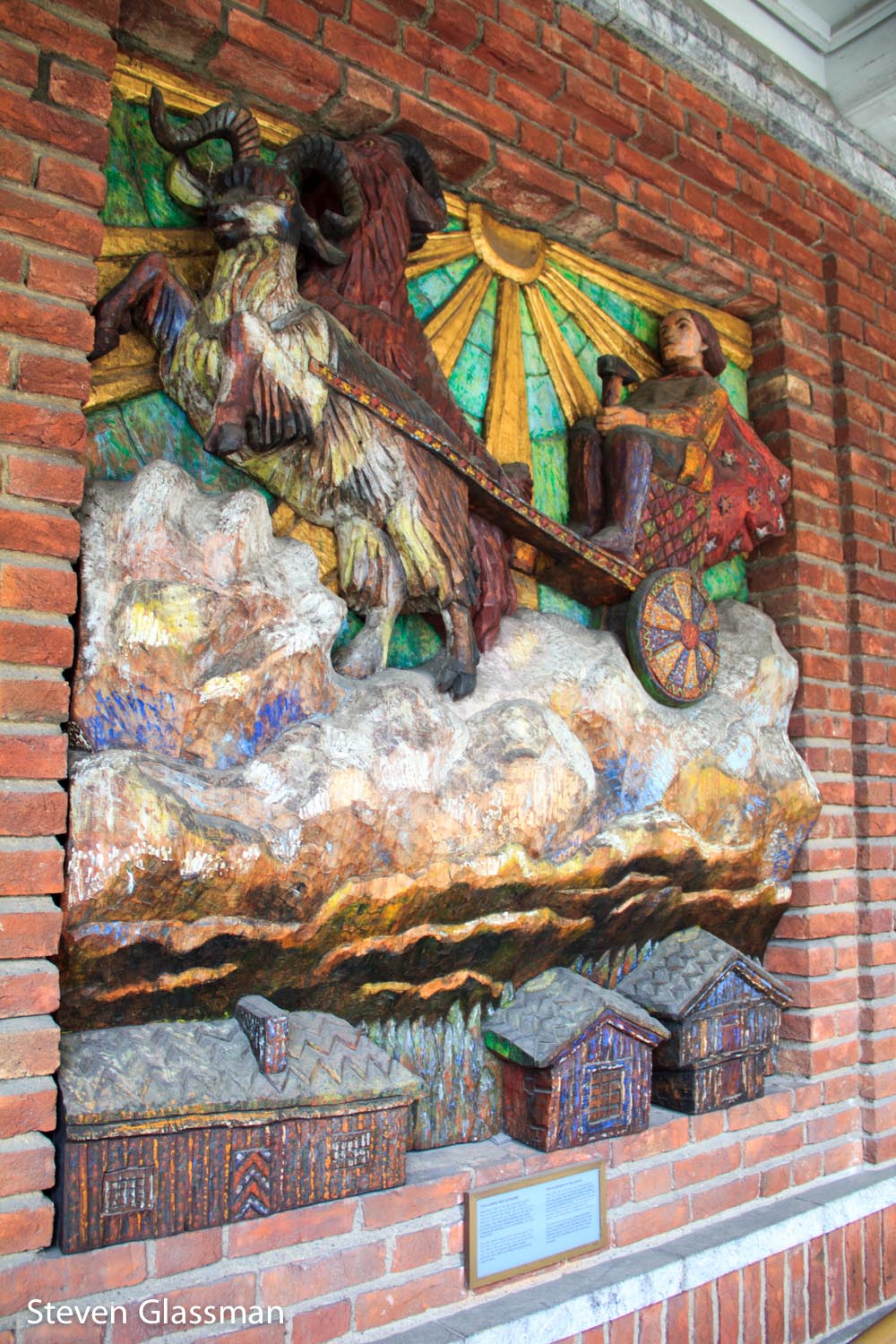
The Oslo Radhus (City Hall) has some fascinating carvings on the walkways up to the main entrance doors.  I only photographed a few of them.

oslo-3 oslo-4

The structure in the tower on the left is a set of carillon bells which rings every hour.  The clock face visible in the center is an astronomical clock- a more traditional clock face is visible on the opposite side of the building from the seafront.

oslo-5

Here’s a closer view of the  Nobel Peace Center.  While most of the Nobel Prizes are  awarded in Stockholm, the Peace Prize is given out in Oslo.

oslo-6

The exhibits in the Peace Center weren’t quite as interesting to me as the exhibitions in the Nobel Museum back in Stockholm.  This one looked pretty nifty, though.

oslo-7

These screens contained changing images of Nobel winners.  Kind of a nifty visual presentation, in my opinion.

oslo-8

In one of the stairwells, I found this anti-Nazi cartoon that I quite liked.

oslo-9

This sculpture by Monica Bonvicini, called She Lies, is made of stainless steel and glass panels, and it floats next to the Oslo Opera House.  The art installation floats on the water on a concrete platform twelve meters above the water surface.  The sculpture turns with the tide and wind, which changes the look of the reflections.

oslo-10

…and now for something completely different.  Say hello to the Holmenkollbakken, a ski jump and stadium with a hill size of HS134, whatever that means.

oslo-11

The ski jump will hold up to 30,000 spectators.

oslo-12

One of Oslo’s attractions is Bygdøy, a museum island.  The Kon-Tiki Museum, the Fram Museum, the Viking Ship Museum, and several others are on Bygdøy.

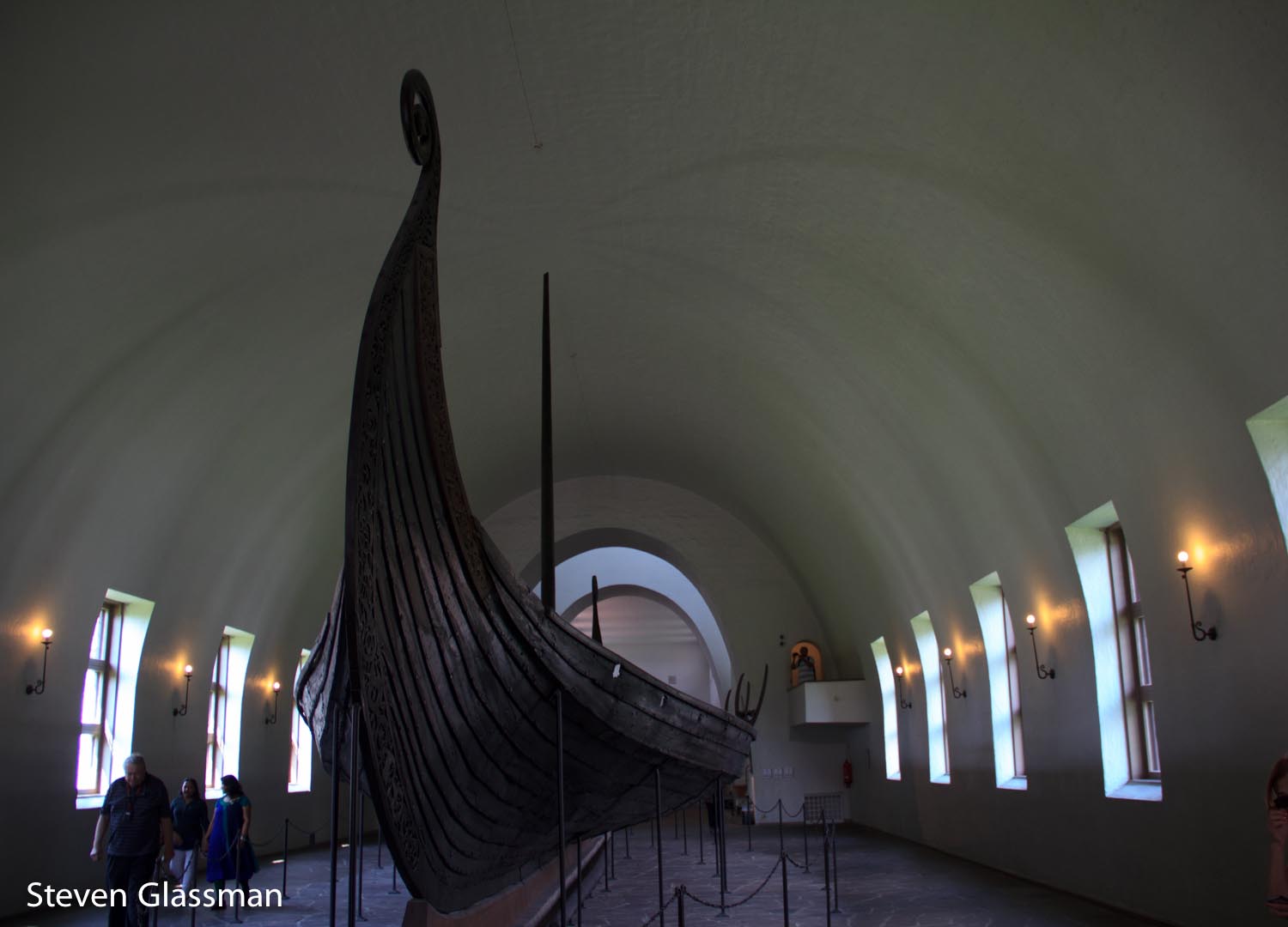
The Viking Ship museum has several Viking sailing vessels.  Por ejemplo:

oslo-13

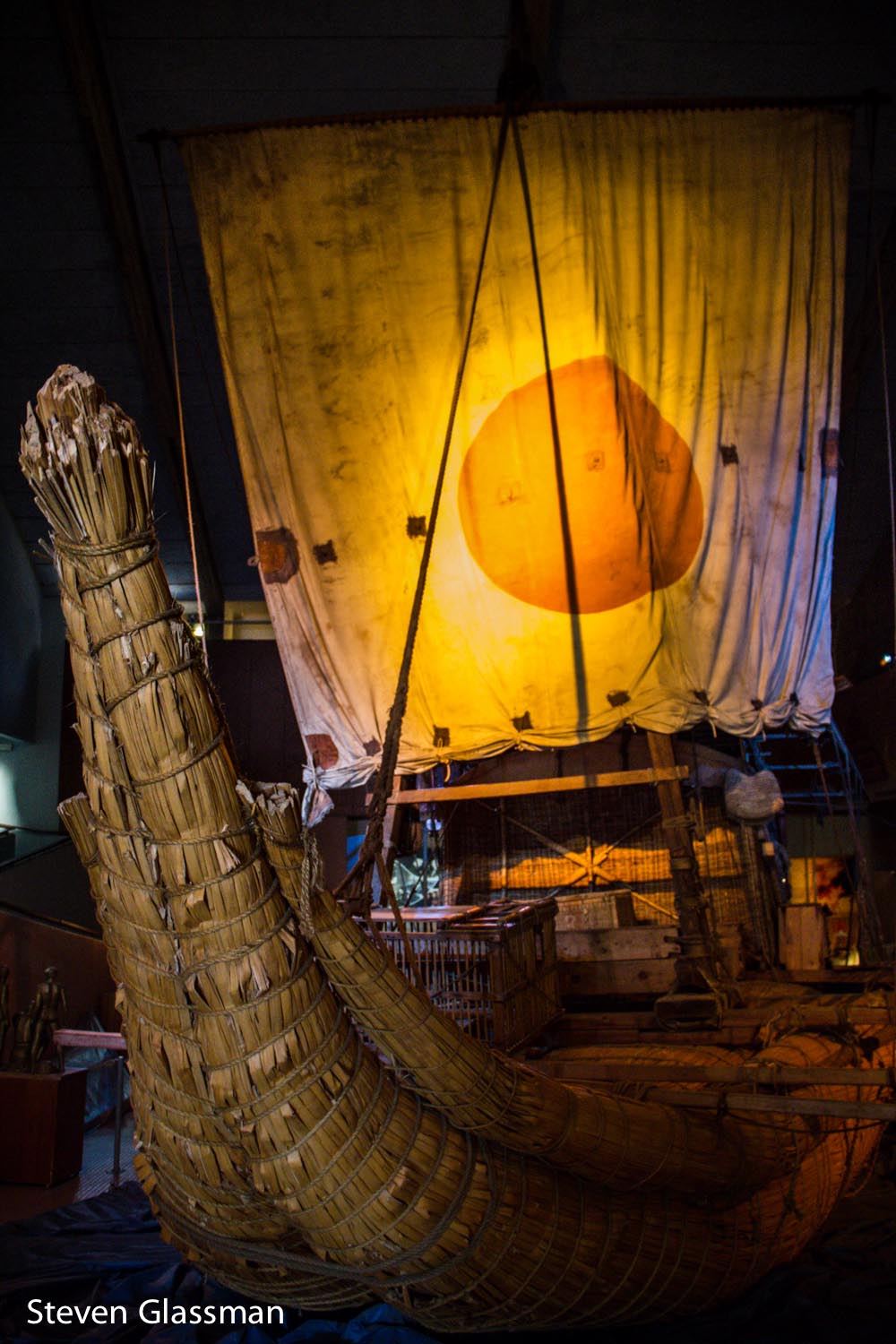
The Kon-Tiki Museum was of particular interest to me because I vaguely remember seeing a film about the Kon-Tiki at the Society of the Four Arts when I was in middle school.  For those who are unfamiliar with the Kon-Tiki, it was the raft used by Thor Heyerdahl in his 1947 expedition across the Pacific Ocean from South America to the Polynesian islands.  The Kon-Tiki expedition is pretty fascinating stuff.

oslo-14

The Fram Museum is another museum about a boat.  In this case, it’s about a ship which was used in both Arctic and Antarctic expeditions.  The Fram, which is entirely preserved in the museum, sailed farther north and farther south than any other wooden ship.

oslo-15

This poster was in the Fram Museum, and it made me giggle.

oslo-16

After I crossed back from Bygdøy by ferry, I walked past a building that housed a movie theater.  Inside, there was a life-sized Toothless and I couldn’t resist snagging a picture.  Moving on…

oslo-17

This is a view down Karl Johan’s Gate, one of the main streets in the city.

oslo-18

The opposite end of Karl Johan’s Gate ends at the Royal Palace.  This is actually as close to the Palace as I went, because it was starting to rain and I wanted to go to the National Gallery.

oslo-19 oslo-20

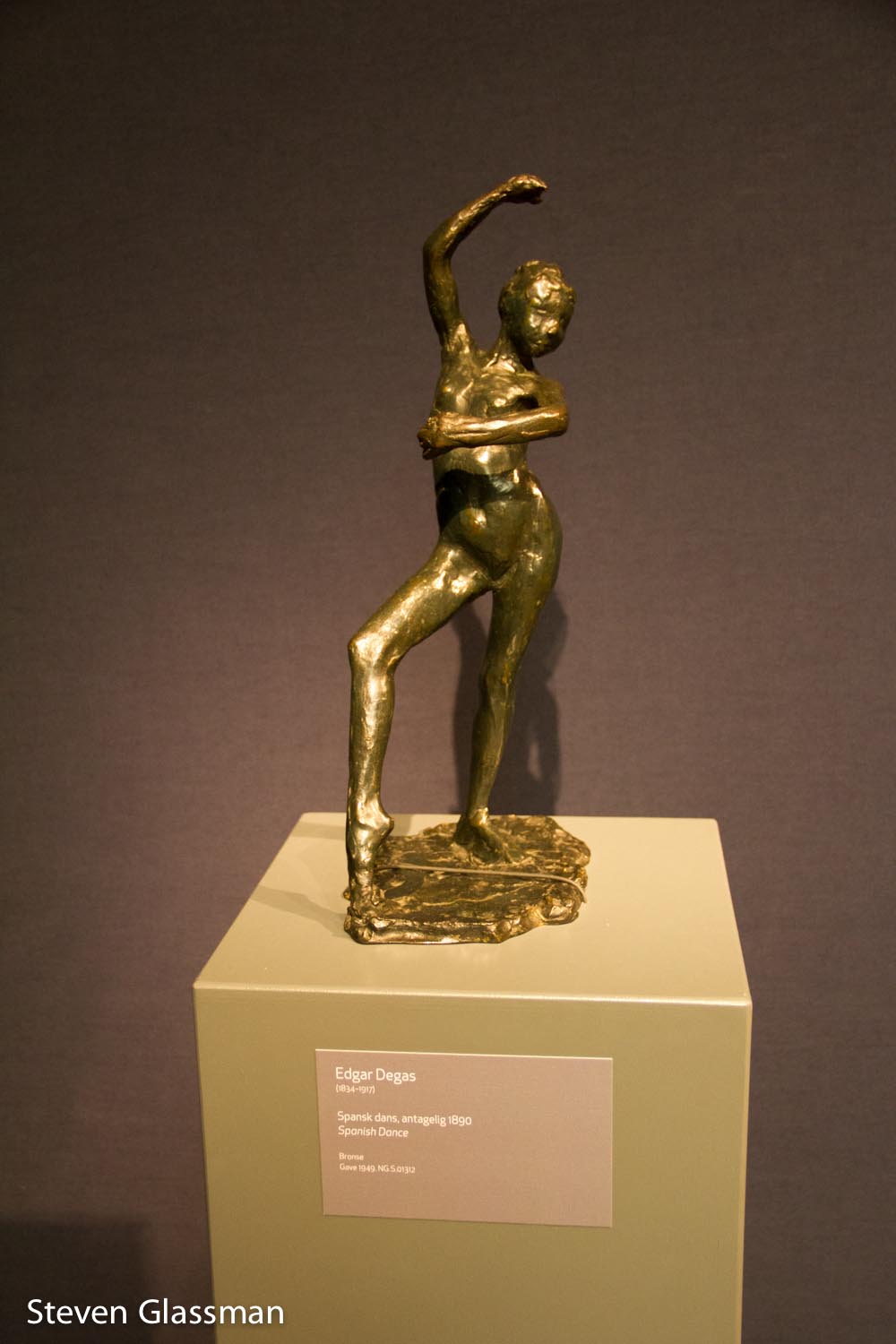
The National Gallery has some truly amazing pieces.  A lovely little Degas, anyone?

oslo-21

I’ve seen a few Thinkers in my lifetime- the first one I saw was actually in 1997 in a touring exhibition of Rodin’s work.  I’ve also seen the one in the Gates of Hell in the Bay Area of California.   There are 28 full-sized castings out there, and a slew of smaller copies as well.  I never pass up an opportunity to snag a picture of a Thinker when it crosses my path.

oslo-22

This is the real reason I wanted to go to the National Gallery:  Edvard Munch’s “The Scream.”  This is one of four versions Munch did of this piece, actually, but this is easily his most well-known work.    Oslo also has a Munch Museum, but this painting isn’t there, it’s here in the National Gallery.  Always do your research before you travel, children- it helps you to see amazing things.

oslo-23

While I was in Oslo, I took advantage of a well-timed concert schedule to see the Oslo Philharmonic play.

oslo-24

I’m not so crass as to take a picture during  the show.  This was a program of Don Juan from Strauss, a little Mozart, and the entirety of Ludwig van Beethoven’s Symphony No. 3 ‘Eroica.’

oslo-25

Have you ever been to Oslo?  What kinds of art and music do you like to see when you travel?