First thoughts on readjusting to life in Florida

I’ve been back in the US for roughly a week and a half now, and the re-entry has been pretty smooth for the most part.  There have been a few tricky things, however.

The currency – After three years with the Euro (and that wonderful €2 coin,) I’ve been having a difficult time readjusting back to the Dollar.  Especially the coins.   The paper money is confusing though-  with the Euro, every denomination is a different size and color.  All of the paper money here is the same size and color, whether it’s a $1 or a $100.  I’ve already flubbed at least one cash transaction.  Speaking of which….

The credit card usage – I went out to lunch with three of my co-workers, and when it was time to pay, I looked around the table-  each of my colleagues had a credit card out for their check, and I had cash out for mine.  I simply forgot how prevalent credit card usage is here, and how little Americans use cash for many things.  That will take a while to remember.

The deodorant – I forgot that some of my regular use products simply aren’t sold in the United States.  My deodorant is a perfect example of this.  During my time in Germany, I’ve become fond of a Nivea solid stick which is simply not sold in the US.    I’m going to have to choose a new deo when my current stick runs out.

The dishwasher – After three years of hand washing all my dishes, it’s utter bliss to be able to just put them in a machine again.   This one isn’t a problem readjusting, it’s just something I wanted to take note of.

The paycheck – In Germany, I got paid once per month.  Here, it’s twice a month.  Having a significantly shorter time between paychecks makes me feel a little bit like time is passing more quickly.

The elevators – Whenever I get into a lift in Germany, the ground floor is either EG or the numeral zero.  The first floor is up one flight of stairs.  Floor two is what an American would call the third floor.  Fast forward to this weekend, in an elevator-  on two or three separate occasions, we reached the floor marked 1 and I stayed in the elevator thinking I still had one more floor to go.

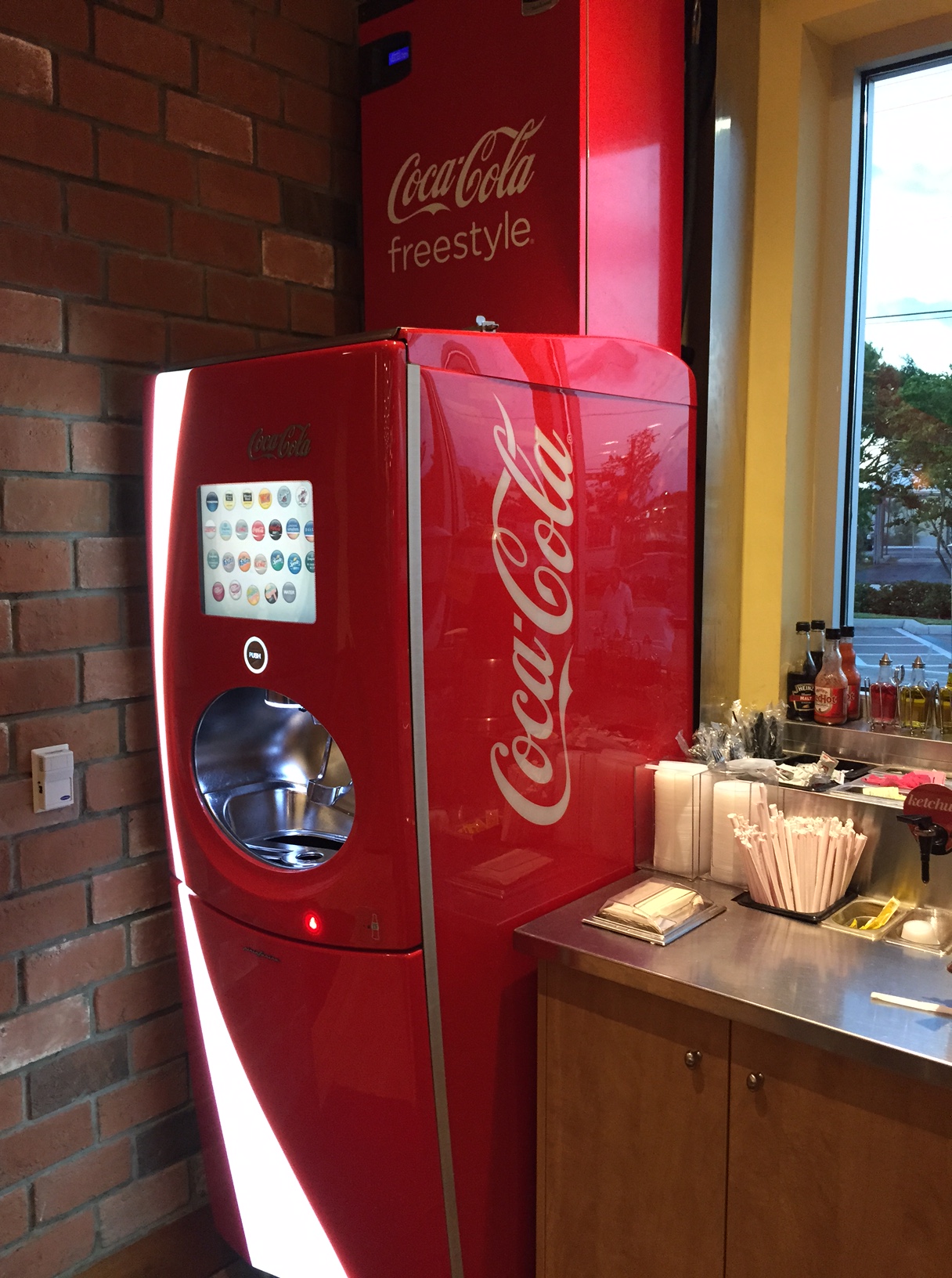
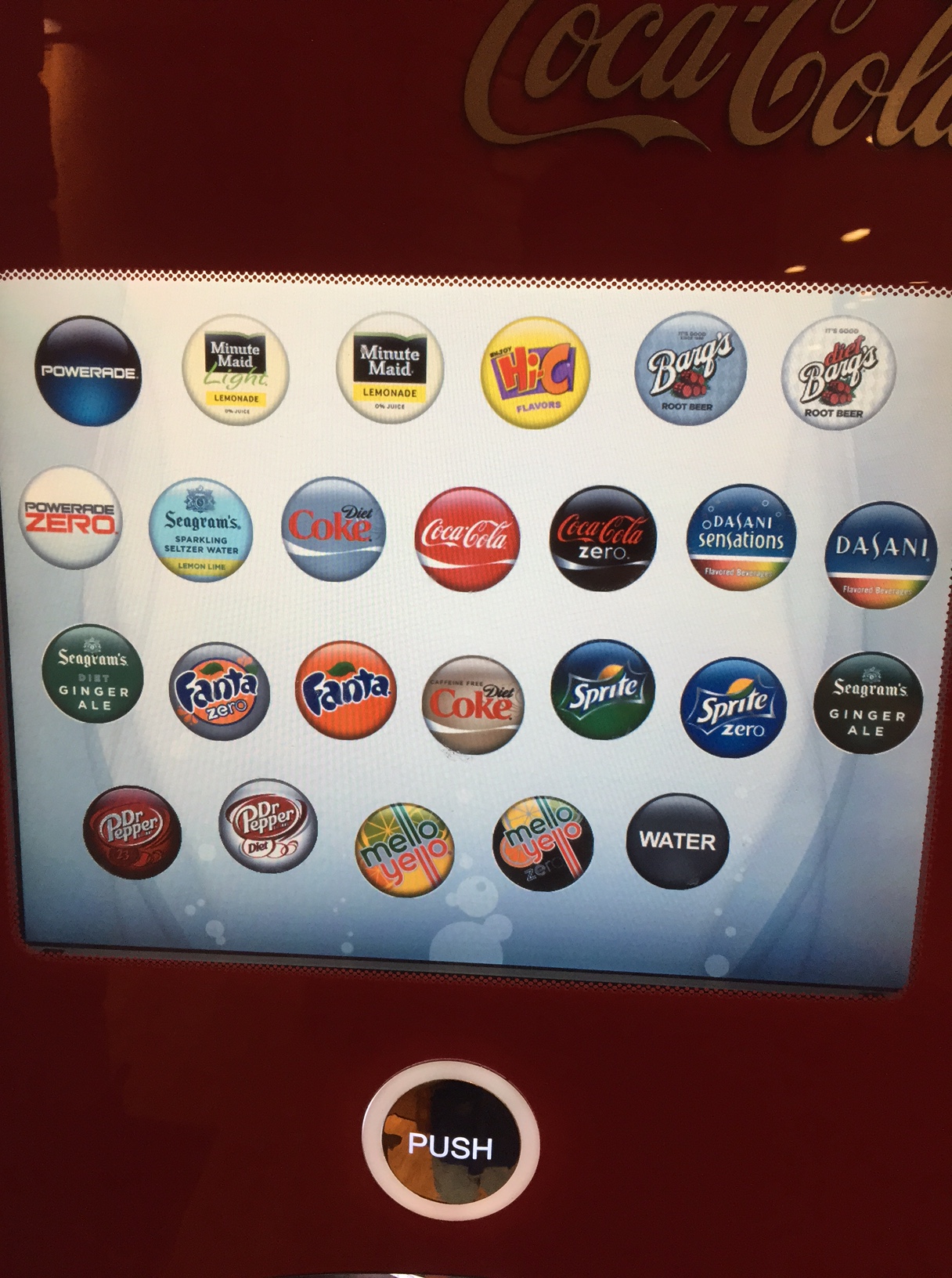
The sugars – I need to find a new caffeine delivery system, I think.  Three years in Germany where the Cola is made with real sugar has spoiled me.  I seem to have lost my tolerance to high fructose corn syrup – any time I drink a normal US Coke product here, I have terrible heartburn.  This is especially frustrating because these amazing Coke machines are all over the place here, and the flavor mixing is fantastic. (Rasberry Coke, anyone?)  Mexican Coke (made with cane sugar instead of high fructose corn syrup) is available here, but it’s comparatively expensive.
cola1 cola2

The drink ice – Ice isn’t common in drinks in Germany, so I forgot about the behavior of a cup filled more than halfway with ice-  when I tilted the cup forward to drink, the ice shifted position and caused a splash.  This in turn caused a mini tidal wave in the glass, which then proceeded to wet my pants.   Amelie was terribly amused.

The measurements – It’s going to take me a little while to stop thinking in terms of kilometers and Celsius.    All I know for sure is it’s freaking hot outside and sub-arctic in my office.

The air conditioning – In Germany, I had no air conditioning in my home or my office.  I thought I would enjoy returning to the land of AC, especially since the temperatures have been in the 90s much of the time since my return, but I was wrong.  Americans don’t use AC sparingly, they crank it.  In Germany, it’s been around 50F and I consider that almost t-shirt weather.  In my office, I have to wear a hoodie.  Every restaurant I’ve been to is freezing, almost literally.  It’s astonishing that I feel far colder in Florida than I ever did in Germany.

The shopping – I thought the weirdest thing here would be the Sunday grocery shopping, but the thing that is hitting me more strangely is the ability to walk into the grocery store to get pain killers and basic medical needs.    After three years with that only being in an Apotheke, having aspirin at the gas station is just weird.

Expats, what differences have you noticed between your homeland and your current home?

Repatriation Day

Bayern

Today is the day that I leave Germany. I’m not leaving forever, because I have friends here. After today, though, I won’t be a resident of Deutschland. I’m heading back to Florida.  My plane out of Frankfurt is actually scheduled to depart at the exact minute this post is scheduled to go up.

While this is a travel day for me, I thought it might be fun to give my friends an idea of what my Floridian  life will be like, geographically speaking, courtesty of http://overlapmaps.com/.  I’ve noticed that Europeans who have never been to the United States seldom have any real idea of just how expansive the US really is.  Americans who haven’t traveled here are similarly bereft of clue when it comes to scale, which is part of what makes these maps so much fun.

Here’s an example to illustrate that point.  This conversation actually happened between me and a colleague back in the US:

Colleague:  Hey, can you go to the data center to look at this server?
Me: The data center is in Frankfurt.  That’s three hours away.  I might be able to get there by tomorrow, if I leave now, go home, pack a bag, and manage to catch the next train out.
Colleague:  …so that’s a no, then?

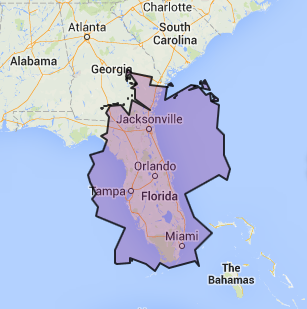
First up in our map fun:  South Florida, overlayed onto the region of Bavaria I currently live in.   While these distances are not exact, I can say that Munich roughly overlays where Miami is, and Regensburg roughly overlays where I will be living.

overlay01

These next two are just fun:  Germany overlaid onto Florida, and Florida overlaid onto Germany.

overlay02 overlay03

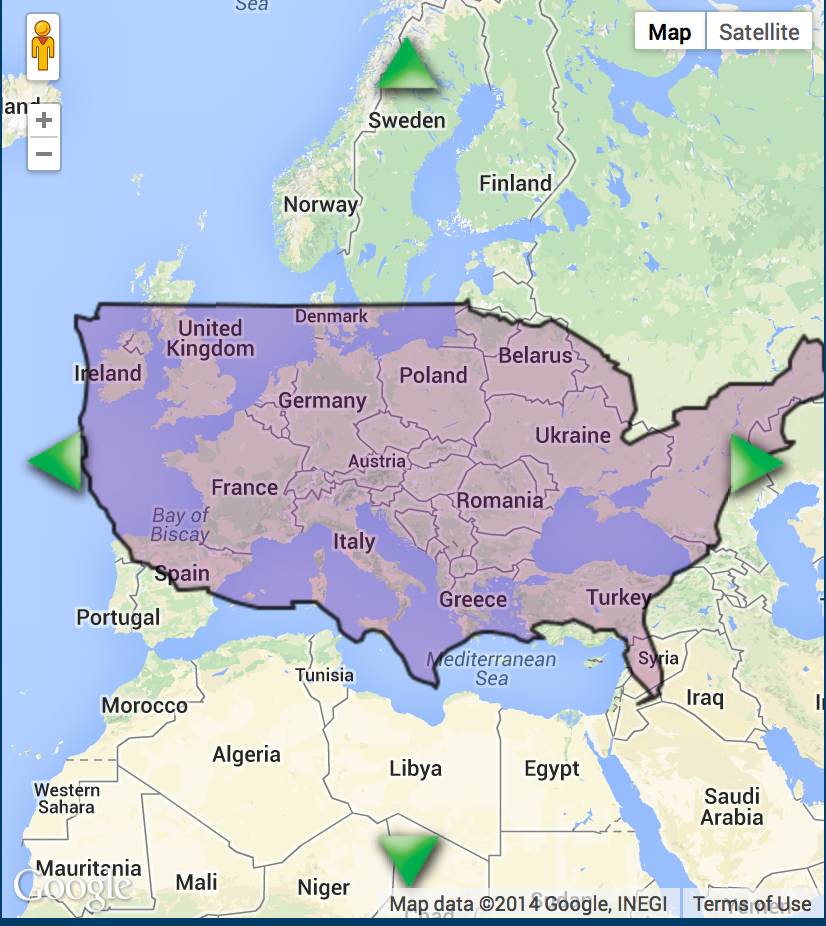
…and just for giggles, the United States overlayed across all of Europe.  The US is a big place.  I lived in the US for my entire life before 2011, and I still haven’t seen nearly as much of it as I have seen of Europe.   I’ve gotta get on that.

overlay04

Which is bigger?  Your home town, or the place you live now?

Further Drachenstich

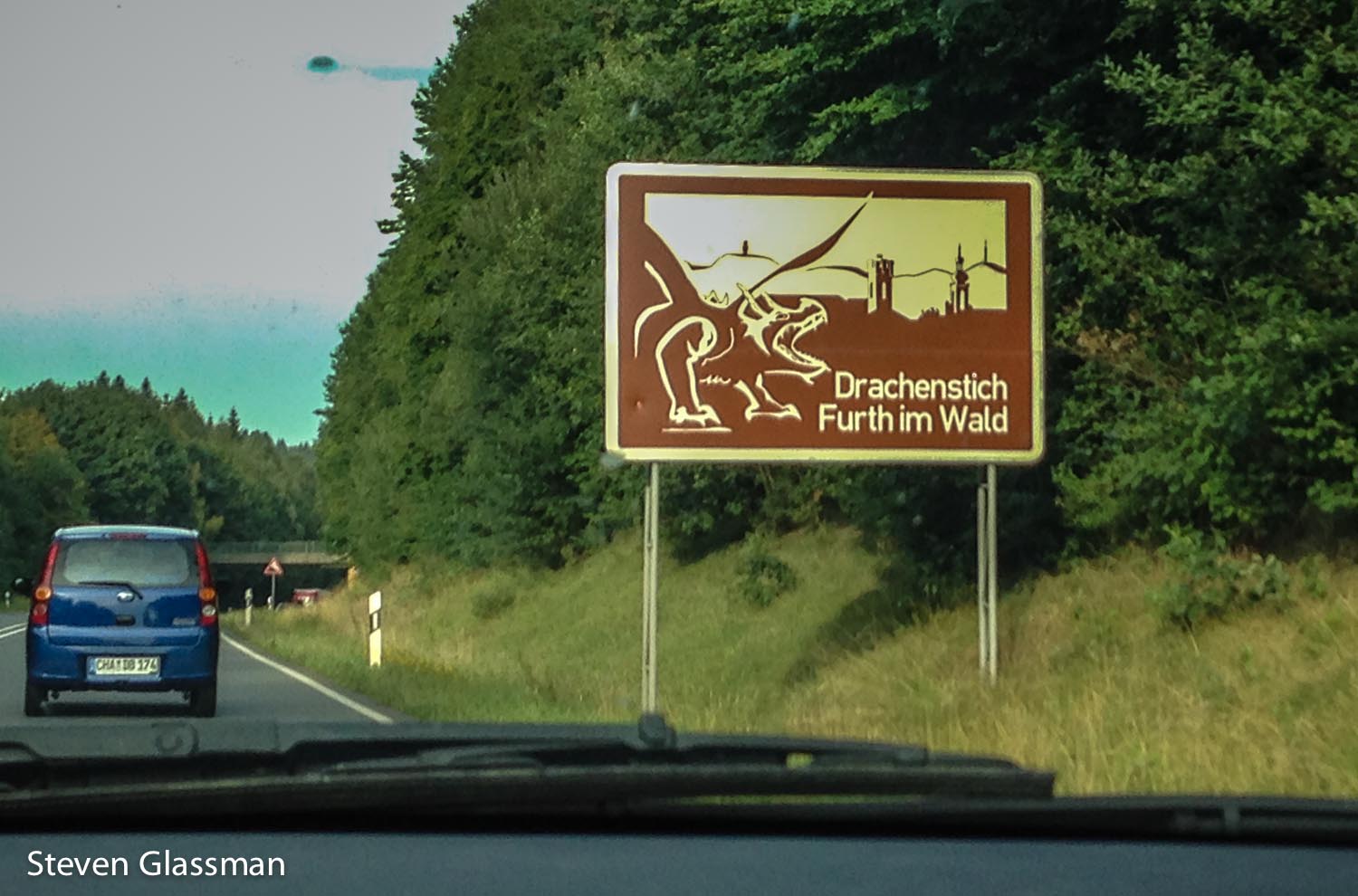
Each year, the town of Furth im Wald holds a festival called Drachenstich, or Spearing the Dragon.    Part of the main street is fenced off to become an arena, and the town performs one of the oldest folk plays in Germany.  The original version goes back to 1590, but the play has been revised along the way- once in 1951, and again around 2007.  The festival is so ingrained into the city’s identity that the signs leading into town focus on the Drachenstich.

drachenstich-1

The story in the play focuses on the evils of war-  the dragon is good and kind in the beginning of the story, but gets a taste for blood after the humans start to kill one another, until eventually there’s a traditional hero type (Udo, in this story) saving his love from becoming a Dragon-snack.  It’s a pretty big spectacle.

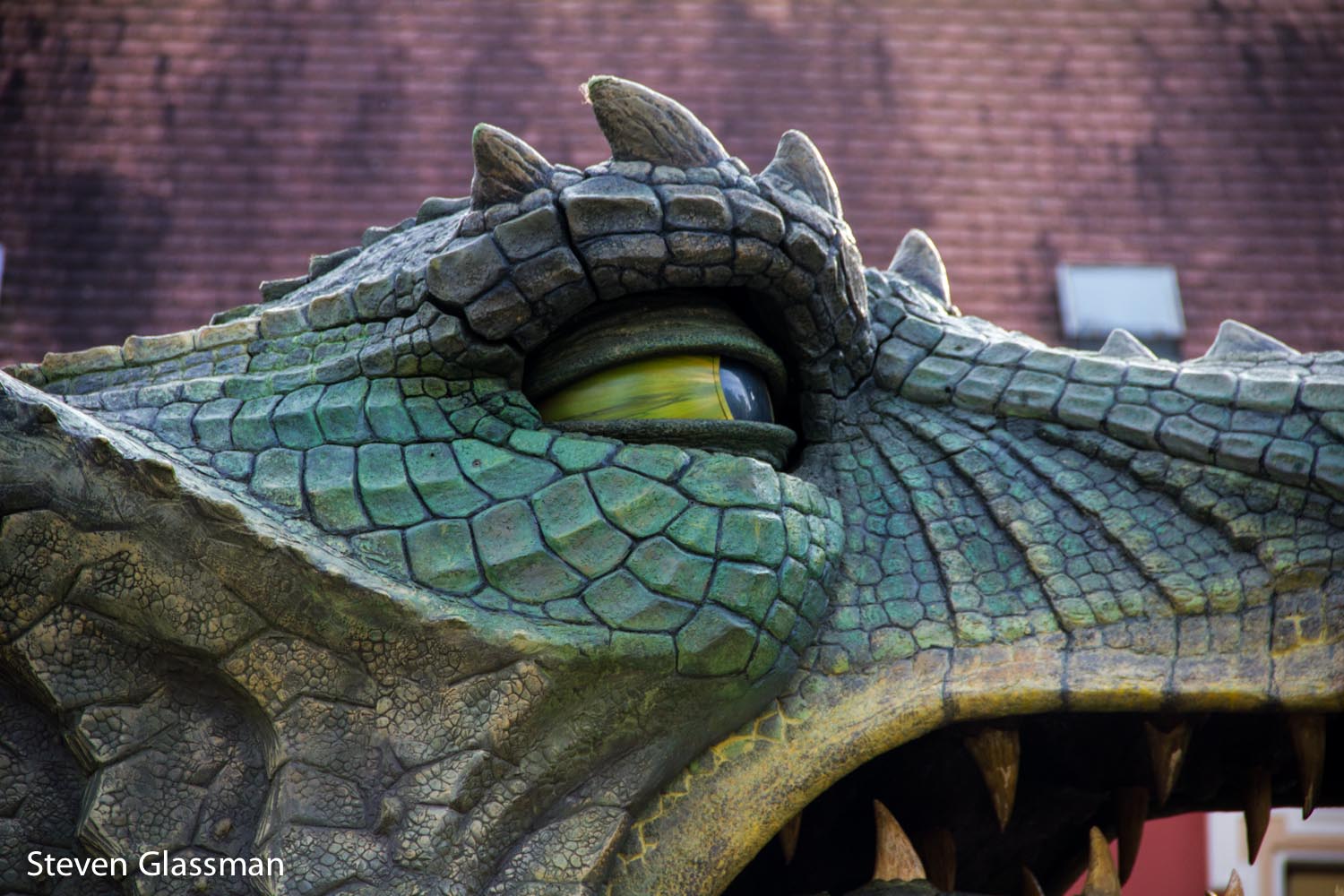
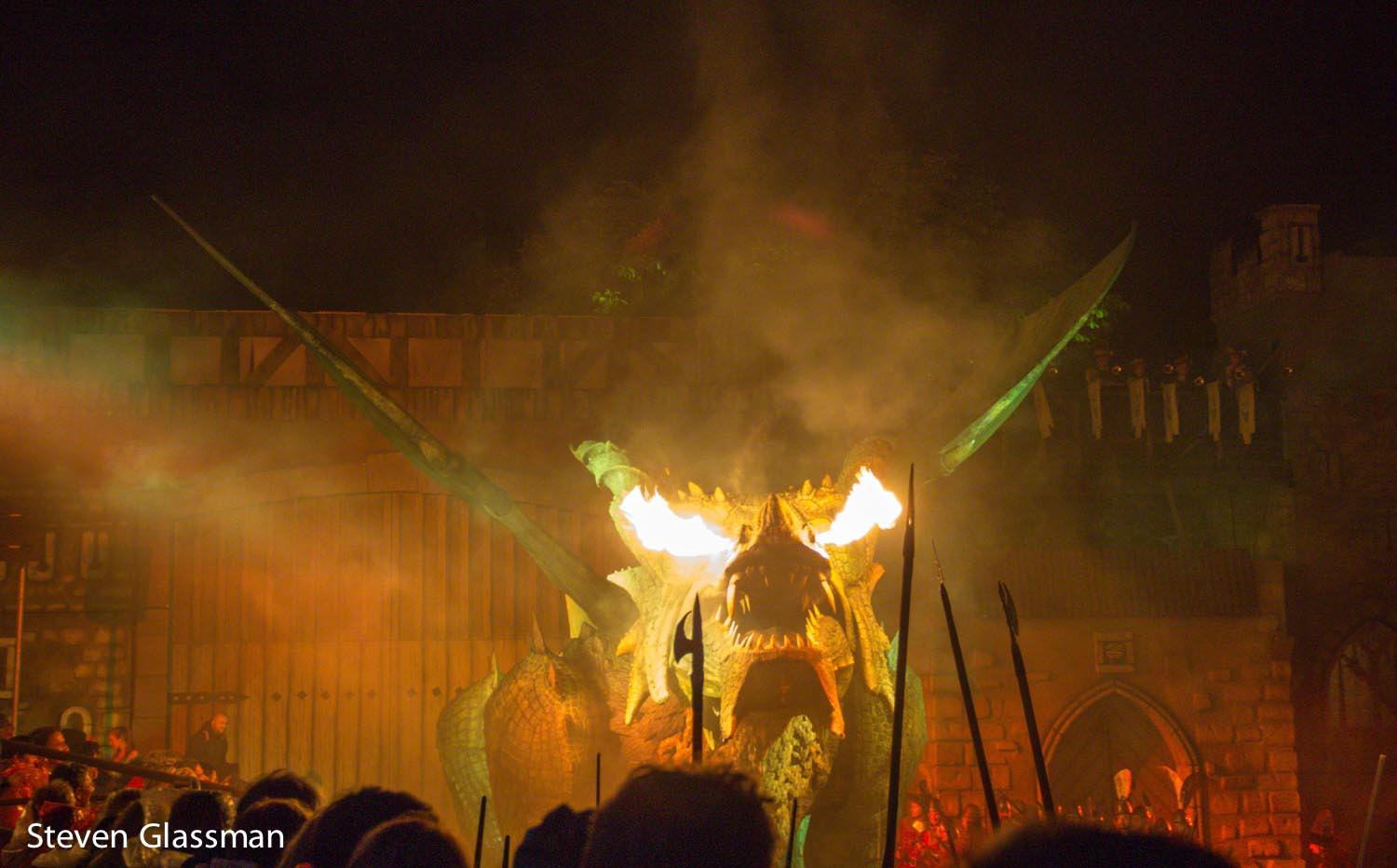
Before I get further into the pictures, let’s talk about the dragon-  after all, this is the real reason that I wanted to see Drachenstich in the first place.  The dragon is quite new, and holds the world’s record for largest four-legged walking robot.  It’s 15.5 meters long, 4.5 meters tall, and it has a 12 meter wingspan.  It walks, blinks, breathes fire, roars, spreads its wings, waves its tail, and even bleeds at the appropriate point in the story.  It was manufactured by Zollner, which also makes some of the buses that I ride to work every day.

We arrived to Furth and parked the car just in time to catch the Dragon-wranglers bringing the dragon up the street toward the Drachenstich arena.  For up-the-street transport, the dragon was on a custom wheeled base-  the walking speed is less than two kilometers per hour, which would have been interminably slow up that hill.

drachenstich-2

The two guys in the brown shirts in this picture are the controllers-  I counted three different controllers with very large control boxes strapped to their chests.

drachenstich-3

At the top of the hill, they ran some pre-show tests, including a little bit of flame.

drachenstich-4

You can see the dude in the bottom right of this picture controlling the dragon’s head.

drachenstich-5

The dragon’s face is really expressive.

drachenstich-6

This is from the earlier part of the play, when the dragon is good and kind.

drachenstich-7

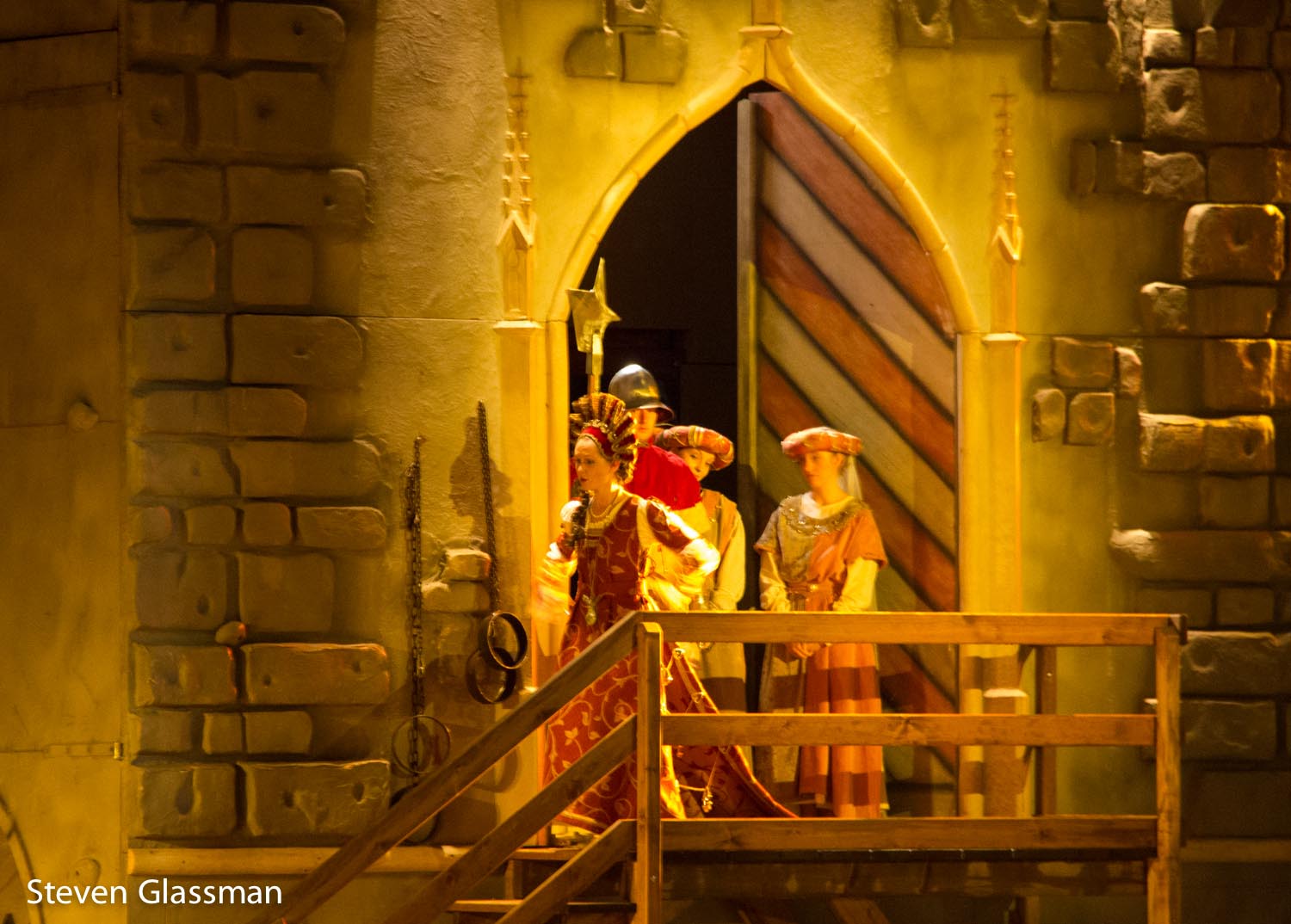
The lady in the red head-dress would be the woman that Udo is rescuing by killing the dragon.  To be honest, I didn’t get a lot of the non-dragon parts of the story.  There was a lot of yelling and a repeating creepy feral girl from the first scene.  There were lots of horses, too.

drachenstich-8

During the climactic final scene in the play, the dragon walks all the way into the arena, spreads its wings, and does battle with Udo.

drachenstich-9

Flame on!

drachenstich-10

The Drachenstich festival runs until 17 August, so there’s still time to see it this year.

Who’s your favorite dragon?

Die Hochzeitsglocken läuten!

This weekend, I’m going to my first German Hochzeit, or wedding.  My partner-in-crime Jenny is getting married in a wedding which is actually spread over two days.

A multi-day wedding is not uncommon in Germany, because you have to do a legal portion of the marriage in an official place and those are often not open on weekends.  In this case, there’s a small ceremony in the morning on Friday at the Altes Rathaus and a nice formal lunch at the city’s Ratskeller.  Then on Saturday, there’s a much longer, slightly more casual, definitely bigger party at Jenny and Robert’s home.

This is the first time I’ll experience a German wedding, and Jenny’s shindig doesn’t hit all the “traditional” marks because Jenny and Robert are fairly untraditional people, in the best possible way.

There are dozens of different wedding traditions in Germany, and no two weddings are exactly alike.  Here’s some of what I’ve learned about German weddings so far:

Bachelor and Hen Parties Are A Big Deal.  Whenever I’m in a city- any city, anywhere in Europe- I’ve been able to spot the pre-Wedding parties.  Bachelorette parties are often referred to here as Hen parties, which amuses me greatly.    For Bachelor parties, the groom-to-be often has to wear a ridiculous outfit.   For Hen parties, the bride-to-be often has little trinkets or baked goods or small items that she has to sell to passers-by, ostensibly for money for beer.    Group costumes and themes are common.  I’ve seen parties where every member is dressed in a nurse outfit or in a hot-cop outfit.  I’ve seen pirates and bunny ears, ballerina dresses and traditional tracht (Dirndls and lederhosen.)

Matching shirts are a popular choice.  And you can always spot them.  The look like this.  Or this.  Or this.

henparty

In some cities, the party moves around on a BierBike.  This isn’t traditional, but it’s often hilarious.

bananas are good

Engagement rings aren’t a big deal. Germans don’t do diamond engagement rings.   The concept of an engagement ring is fairly new to Germany, and some couples do it but it’s not expected here like it is in the US.   The bride and groom have matching wedding bands which are worn on their right hands.  Single guys take note:  Married women in Germany wear their wedding rings on the right hand, not the left hand!

Lots of couples do a traditional Polterabend.   A Polterabend is a party where everyone brings old dishes to break in order to wish the couple well, drive away bad spirits, and so forth.

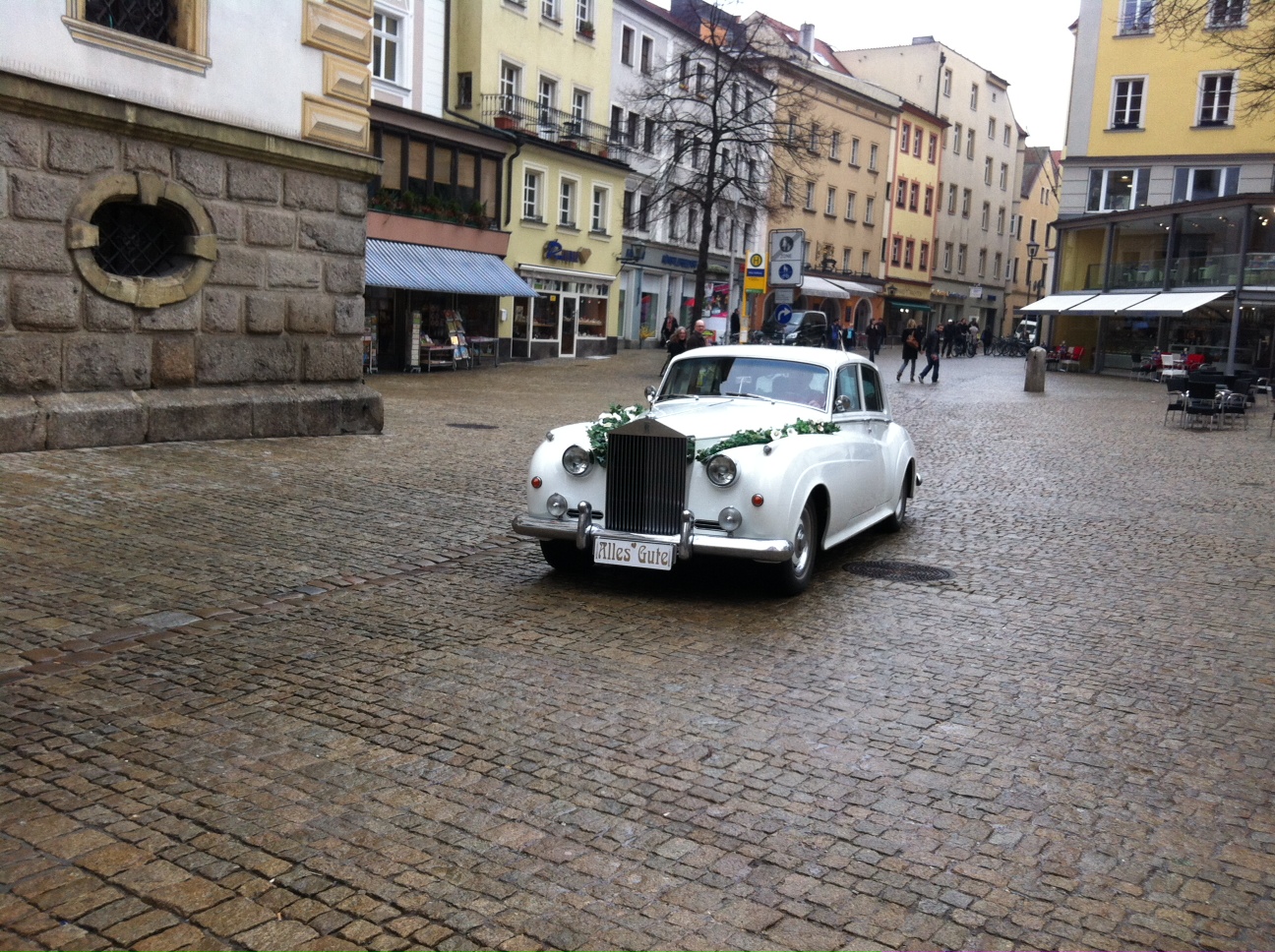
A car procession after the ceremony is traditional.  You can always spot the days that there’s a wedding in town because there are cars with bows or bridal bouquets fixed to the hood sitting in front of the Rathaus.  After the wedding, a car procession drives through town honking their horns, and others honk back to wish the couple good luck.

hochzeit-cars2
hochzeit-cars1

After tomorrow, I can’t really call Jenny my partner-in-crime anymore.  She has a new partner-in-crime for the rest of her life.   I can’t wait to hear about Jenny’s continuing adventures with Robert!

partners
Image by Stephan Wiesner- https://www.facebook.com/sportportraits

Have you ever been to a German wedding?