Munich X-Games: Ford RallyCross

Last weekend, I went into Munich with Jenny and her boyfriend Robert, to see a portion of the X-Games.  Specifically, we went to see the Ford RallyCross races.

rallycross01

The race itself was really interesting.  The cars were small and fast: Ford Fiestas, some sort of Subaru, some Volkswagens, and one Mini Cooper.  The cars were kept under tents for the mechanics to work on them between races.  Each tent had the driver’s picture on a banner next to it.
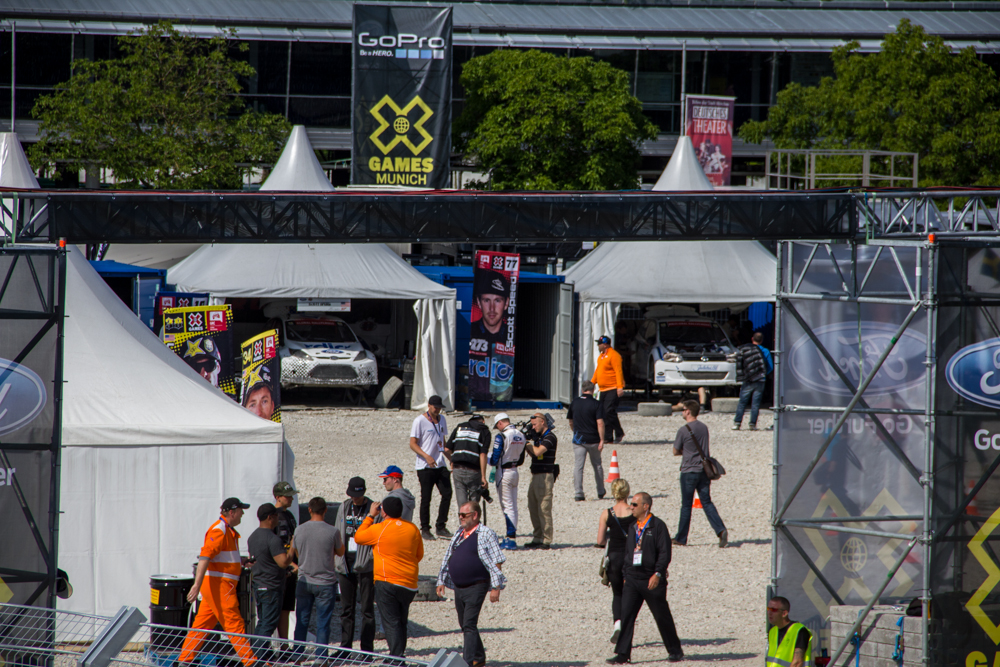
rallycross02

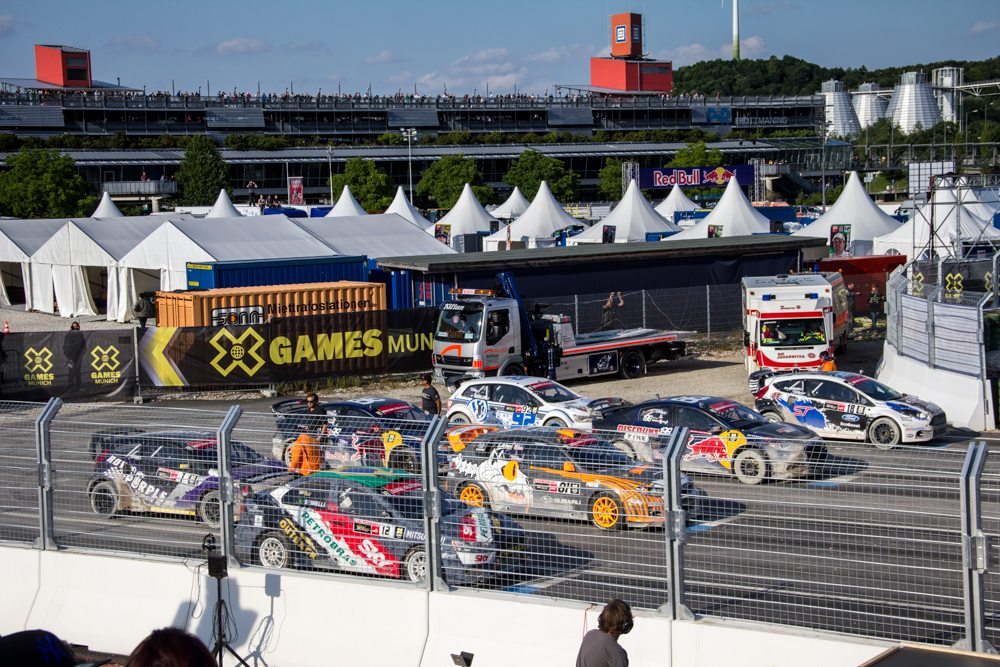
Most of the races we saw were qualifying heats, like this one with seven cars starting out.
rallycross03

I mentioned the Mini Cooper.  Here it is, number 33 with the Monster logo on the side.  The Mini actually won this heat; it was a really fast car.

rallycross04

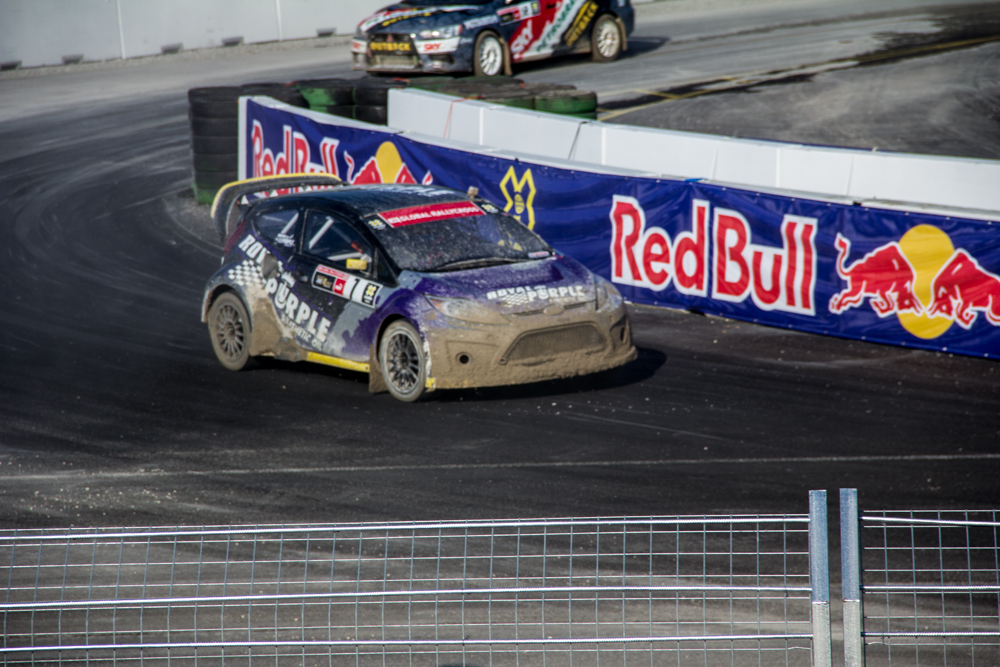
Here’s some other cars from various races. Part of the track was dirt and gravel, and it really kicked up a lot.  On several of the races, the cars had their windshield wipers on despite it being a perfectly clear day.
rallycross06

I kept thinking this driver was Italian for some reason, but he was actually from Brazil.

rallycross05

A lot of these cars were fast enough to do a little jump on one of the gravel sections.  I took a lot of pictures of cars in mid-air, but none of them were sharp enough to be worth posting here.  Here, pretend this car is flying through the air.

rallycross07

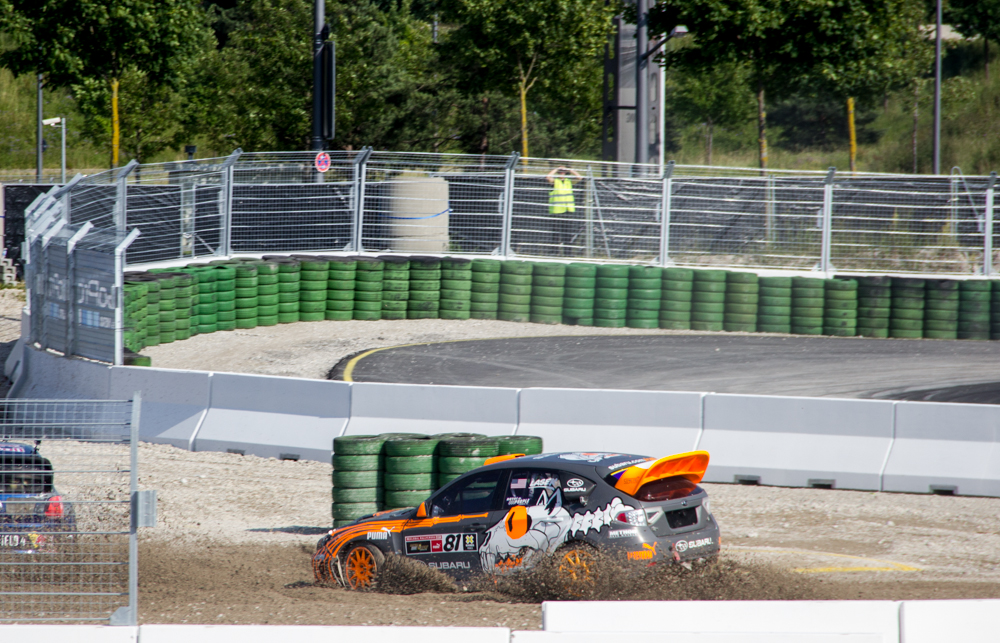
The gravel section had some sharp turns, and the cars kicked up a LOT of stuff. This car is in the middle of a turn.  Also, this car kept stalling later in the day, so I suspect that he’s getting a lot of stuff in his air intake.  Not that I’m a mechanic or anything.
rallycross08

One of the best parts of watching this event was actually the wrecks.   Some of them were pretty subtle, like this one.  I didn’t see him go into the wall, I was looking at a different part of the track.  Note all the spectators on the hill.

rallycross09

Here’s what that car looked like when they pulled it out.  I suspect the hole in the side behind the door is from whatever impact shoved him into the wall in the first place.

rallycross10

After every wreck like that, they had to stop to pull the disabled car out, and then crew members would clean up the track from debris.  Here they are, cleaning the track.  We were hoping they would do a dance number with their brooms, but it never happened.

rallycross11

One of the qualifying heats started with nine cars.  Once they cleared the wrecks, they restarted it with seven cars.  They cleared the wrecks again and restarted it with four cars.  Two cars actually finished that qualifying heat.  Very entertaining.

They did a lot of car-on-car violence, like this bumper kiss.

rallycross12

In the final race, there were ten cars at the start.  They did the entire thing without having to stop, reset, and restart the race.    There was plenty of damage and mayhem, though.

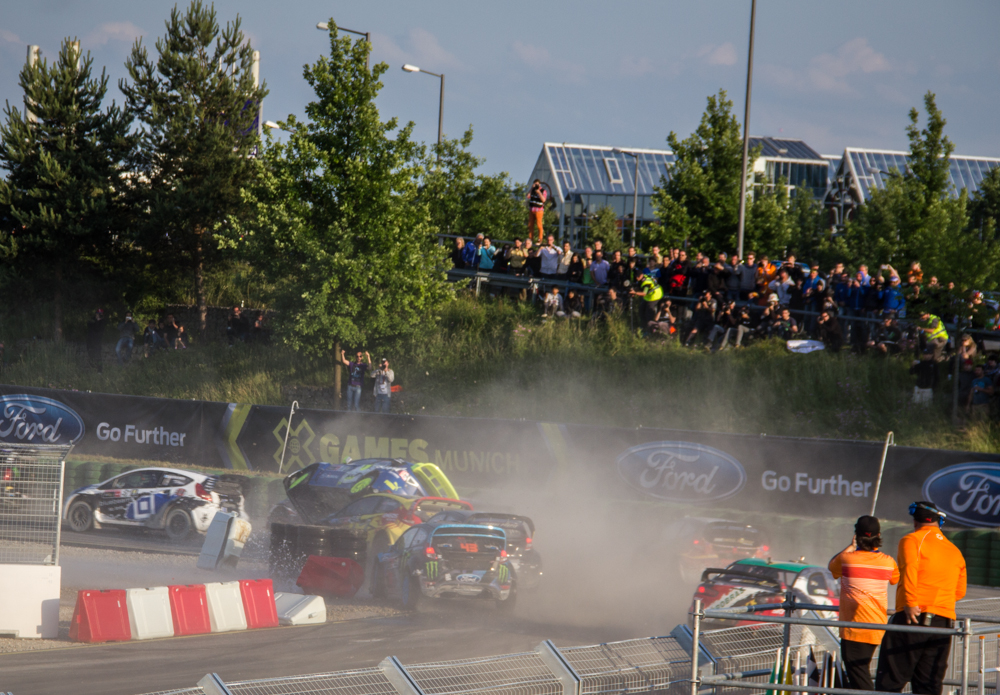
Early in the final race, this happened.  That blue and green car was run into the water barrels. It went up on two wheels, as you can see here, and the crowd did a “whooooo” sound.

Amazingly, the car came back down onto all four wheels and kept going.
rallycross14

He did suffer some damage from the two-wheeler moment.  He went a good long distance dragging his bumper behind him.  There were plenty of other bumpers on the track, and yellow flags were used to warn the drivers of debris.

rallycross13

At the end of each run, a white flag would indicate the last lap, and a checkered flag would indicate the race is over.

rallycross15

This is the third place winner.  He left his rear bumper back in the gravel.  The second place winner was the guy in the Mini Cooper.
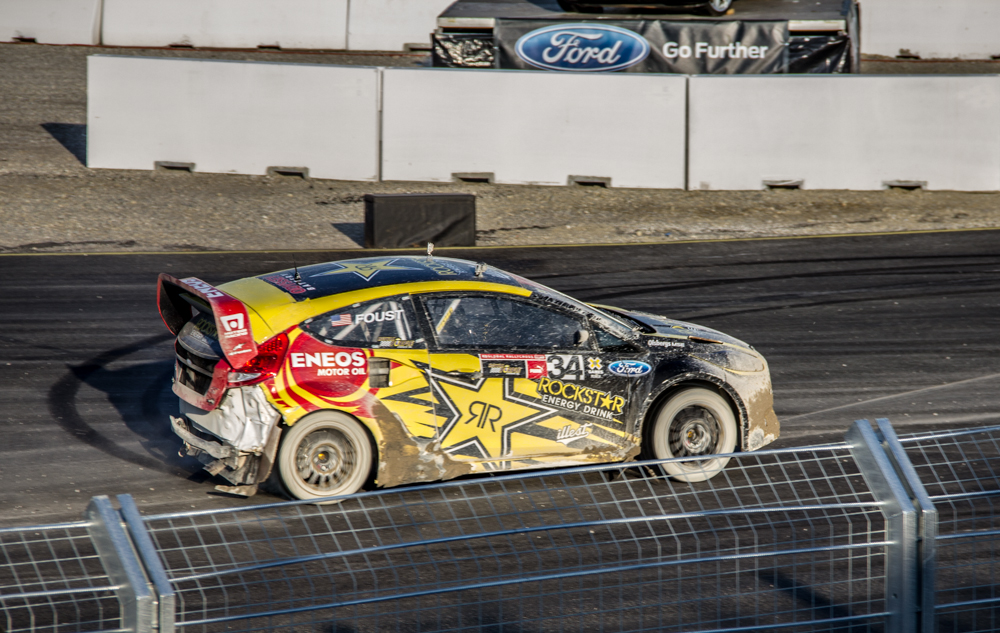
rallycross16

The winner of all of this was Toomas Heikkinen, a 22-year-old from Finland.  Follow that link to see video from ESPN during the race.  This was his car.    It flew over this track.

rallycross17

Have you ever seen a RallyCross event?  Did it make you want to drive faster?
Hannover (and Minden)

On the weekend of April 27-28, I went to Minden for a Peter Cincotti concert.  It is not an exaggeration to say that I’ve been looking forward to that show more than the Depeche Mode concert in June.  Seriously, if you  don’t know Peter Cincotti’s music, you should really check him out.  For those of you on Spotify, here’s a very brief selection of his stuff.  If you don’t use Spotify- these play buttons won’t work without the software.   You’ll have to check Youtube to hear some of his stuff instead.  Just check him out.  Go ahead.  I’ll wait.

Ok, now that we’ve got the Peter Cincotti plug out of the way, I’ll talk about Hannover.  I traveled to Minden for the concert by way of Hannover, and I did some sightseeing in Hannover on Saturday before the concert and again on Sunday before my train back home.  I took a pantload of pictures, and I decided to show them to you a little bit out of sequence.  This isn’t exactly the order that I visited stuff, but it’s close enough.

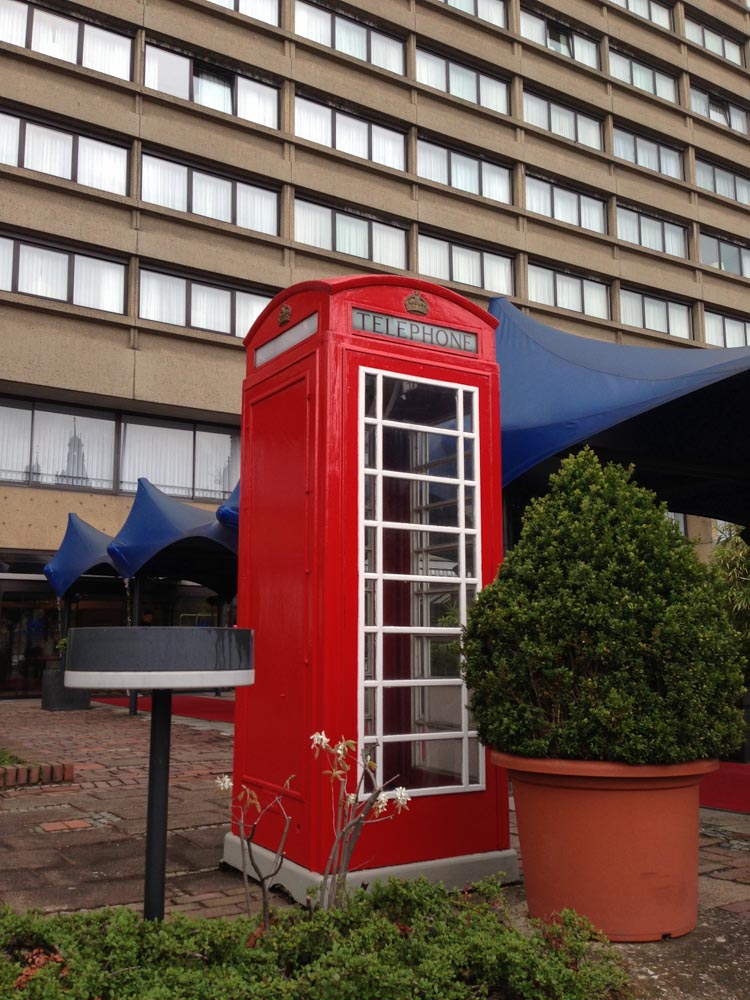
While walking around on that Saturday, I was more than a little bit surprised to see one of these:

hannover-1

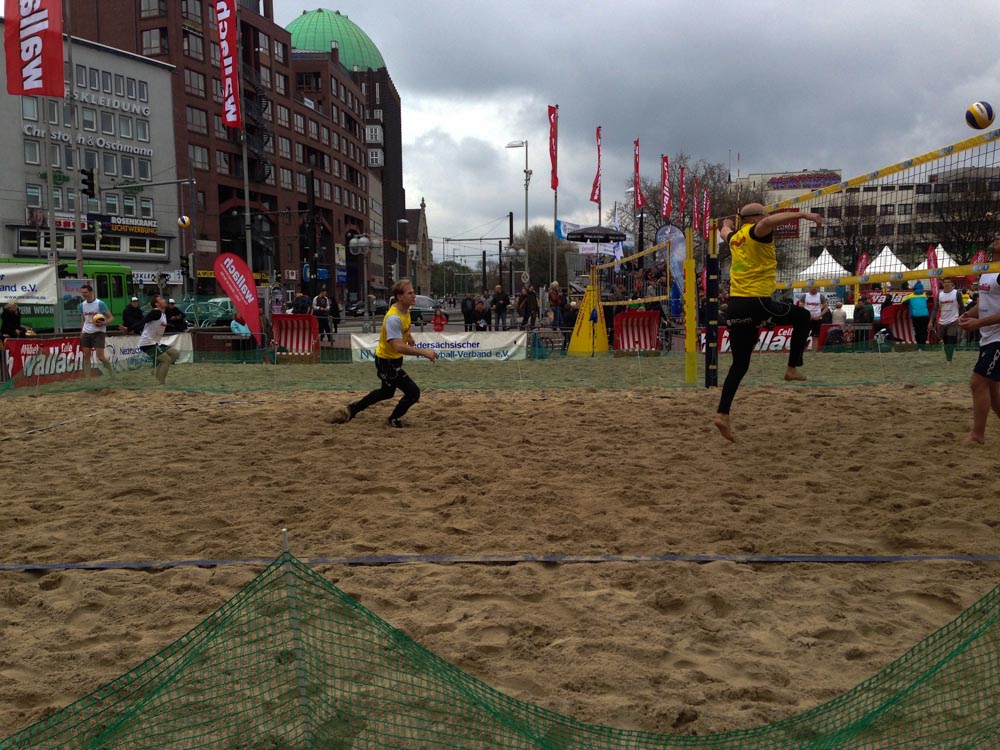
While walking near the Kröpcke, a large pedestrian area near the Bahnhof,  I also stumbled across a random volleyball tournament.  This happened last year in Amsterdam too-  it was rather unexpected.

hannover-2

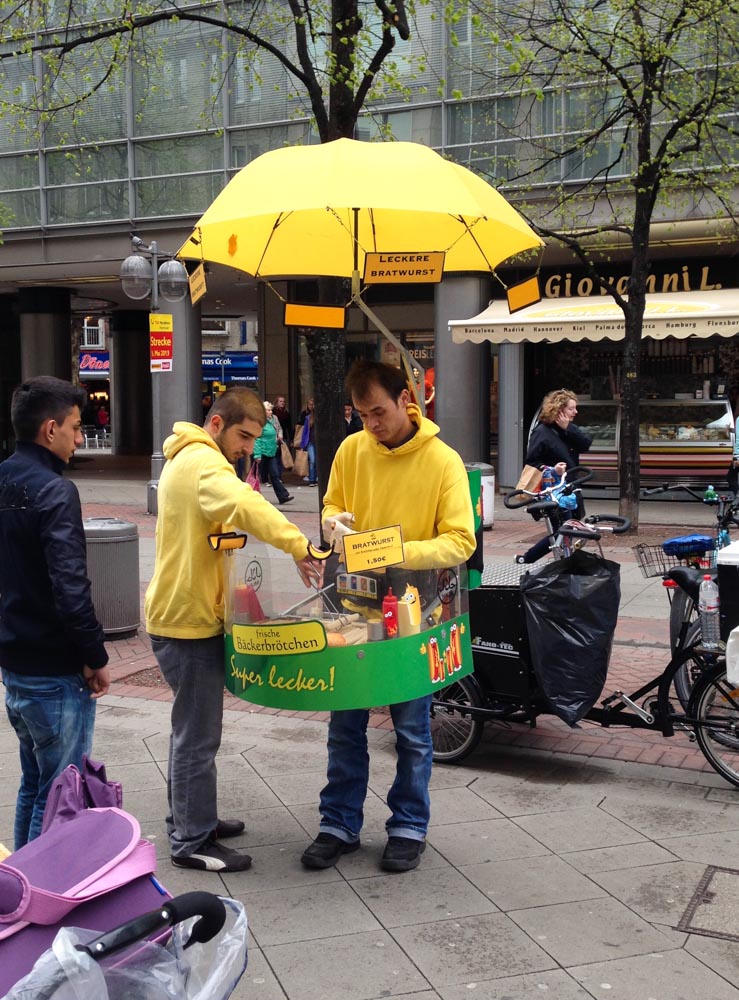
I also wanted to point out this ingenious way to sell food.  I saw one of these in Berlin a while back selling currywurst.  I am consistently amazed at people’s ingenuity.  Also, I kind of want one of those hands-free go-go-Gadget umbrellas.  That’s really nifty!

I didn’t eat lunch from this guy though, I went to Jack The Ripper’s London Tavern instead.  I mostly went because I liked the name of the restaurant, but the fish and chips were pretty good..

hannover-3

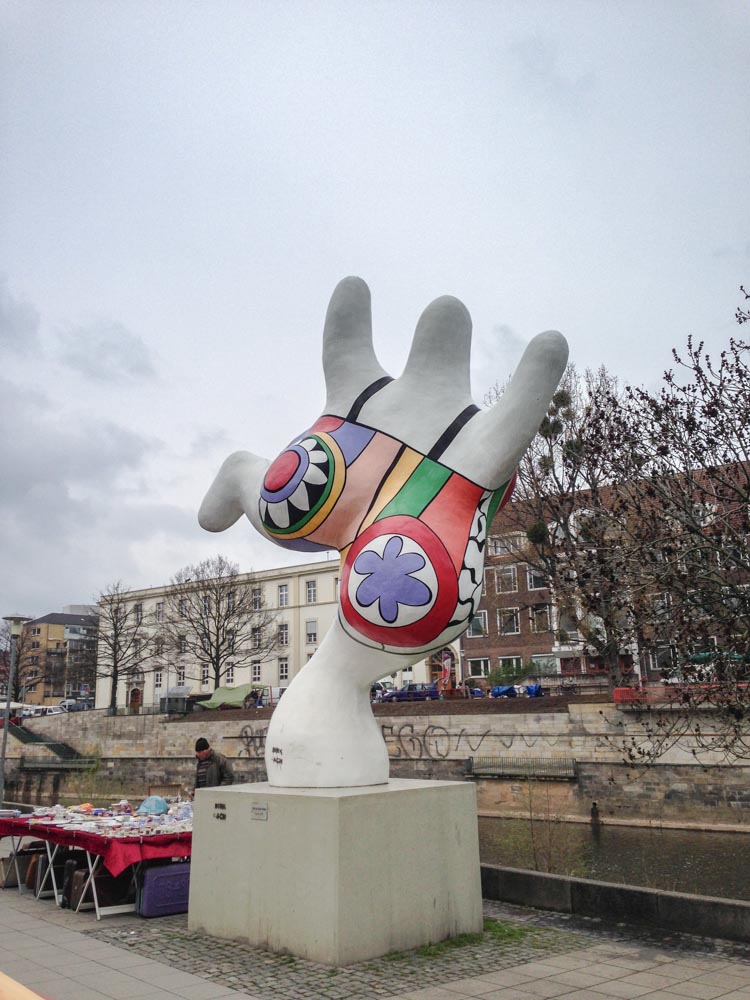
I took a walk down to the Leibnizufer to see the Nanas, large colorful sculptures by Niki de Saint Phalle.  I had seen one other Nana recently, the flying protecting angel sculpture in Zurich.  It’s the first picture in my Zurich post.  When I learned that Niki de Saint Phalle was an honorary citizen of Hannover and had donated a lot of her artwork to the city, I had to go see some.  They weren’t hard to find, either.

hannover-4 hannover-5 hannover-6 hannover-7

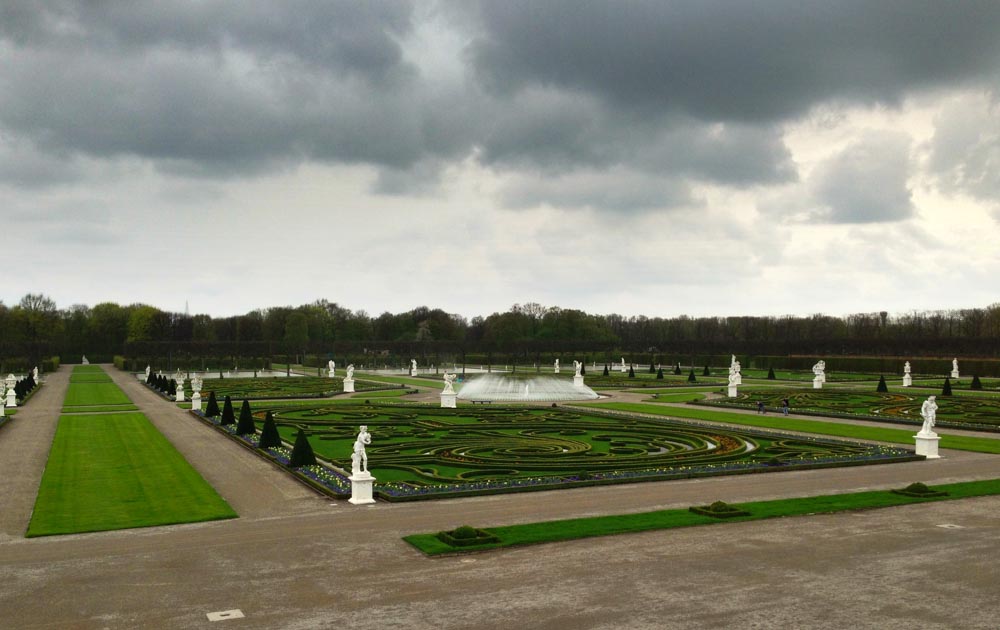
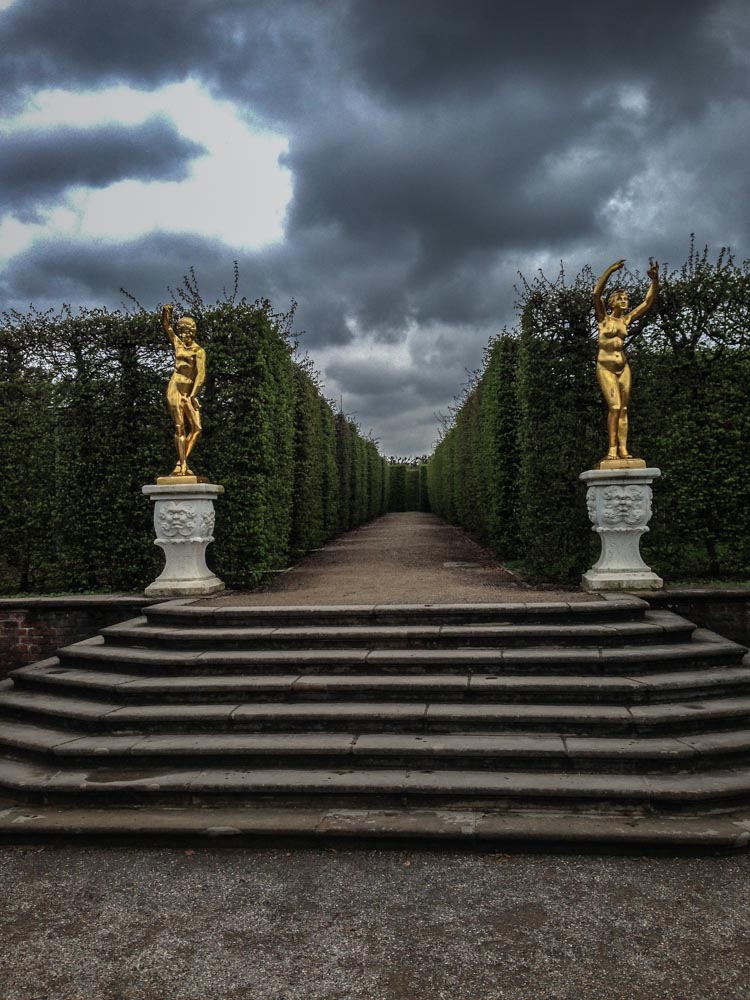
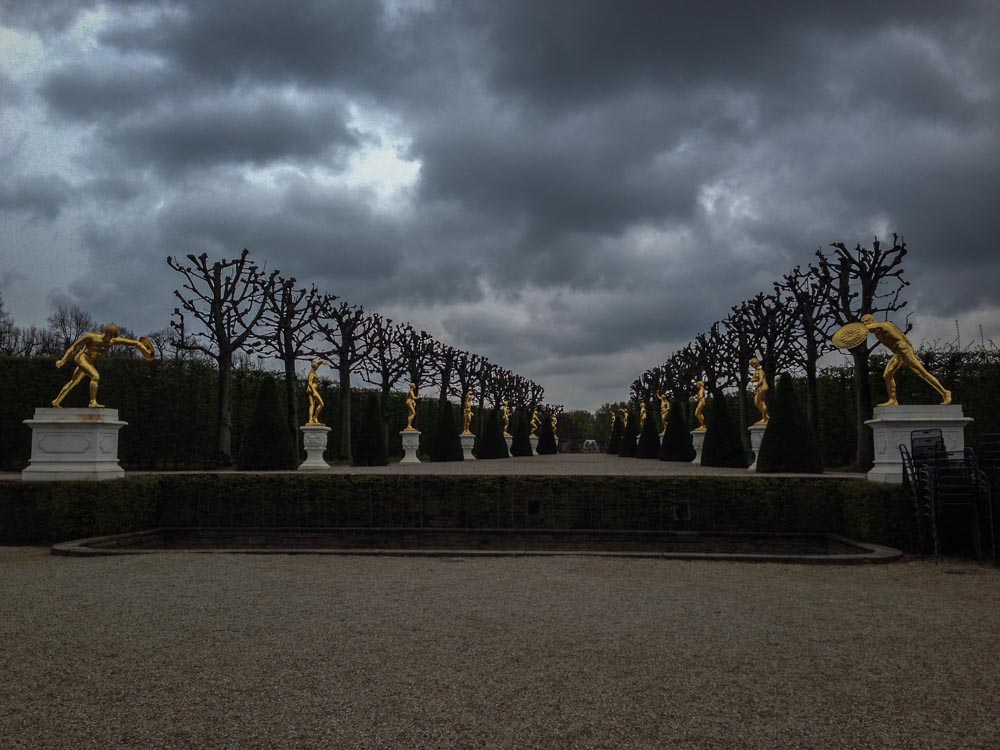
With my quest to see the Nanas a success, I decided to take the tram over to the Herrenhäuser Gärten, the Great Garden of Herrenhausen.  It was absolutely enormous, and I could easily dedicate several hours to walking around on a warmer, sunnier, more flowerific day.  That Saturday was cold and overcast, but it was still an amazing place.  I wandered around for nearly two hours.  Here are eight of the many, many photographs I took at Herrenhausen.

hannover-8 hannover-9 hannover-10 hannover-11 hannover-12 hannover-13 hannover-14 hannover-15

We interrupt this post about Hannover to show you a picture from an art gallery window in Minden.  I really, really like the duck detectives, but I have no idea why.  Also, the supplicant ant in the background cracks me up.  If I ever go back to Minden when this place is open, I am totally buying one of the ducks though.

hannover-16

Meanwhile, back in Hannover, the weather cleared up a great deal.  Sunday wasn’t any warmer than Saturday, but at least the sun came out.  This means that the sky got bluer and the pictures got prettier.

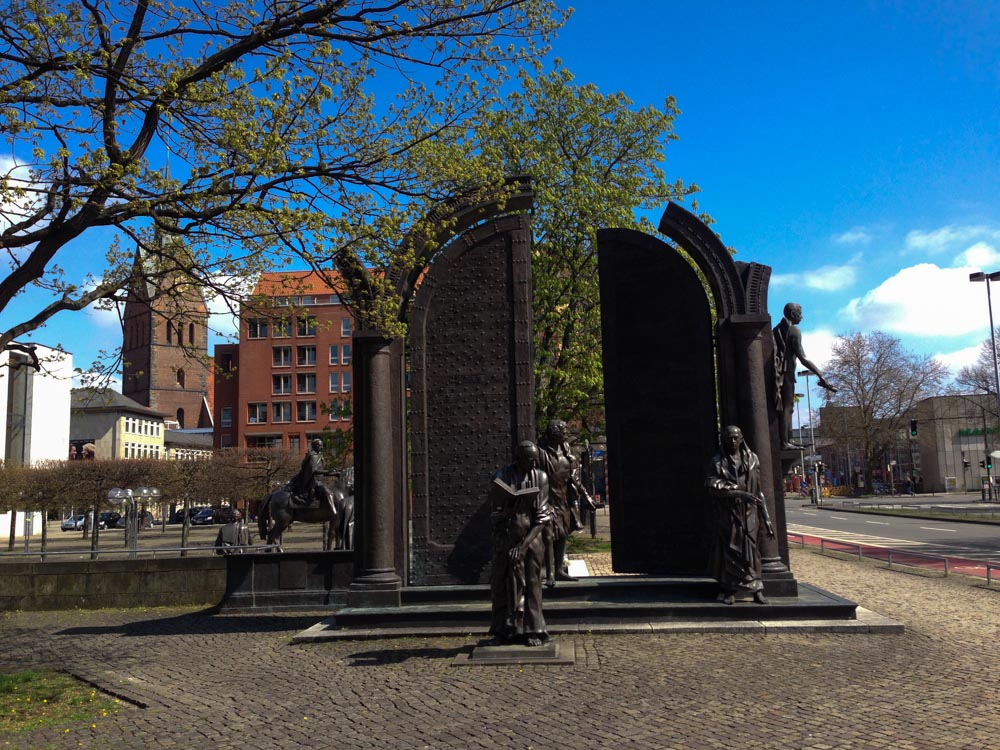
Hannover has a lot of interesting sculptures.  I find sculptures and statues that I like in every city I visit, but Hannover has a larger than average share of really neat ones.  This giant gate and the caesar-looking dude on the horse are both standing at an intersection not terribly far from the Neues Rathaus, which I’ll get to a little further down in this post.

hannover-17 hannover-18

This glum fellow with the umbrella is standing not far away from a glum looking woman holding an umbrella.  I really want to know the story behind this one.

hannover-19

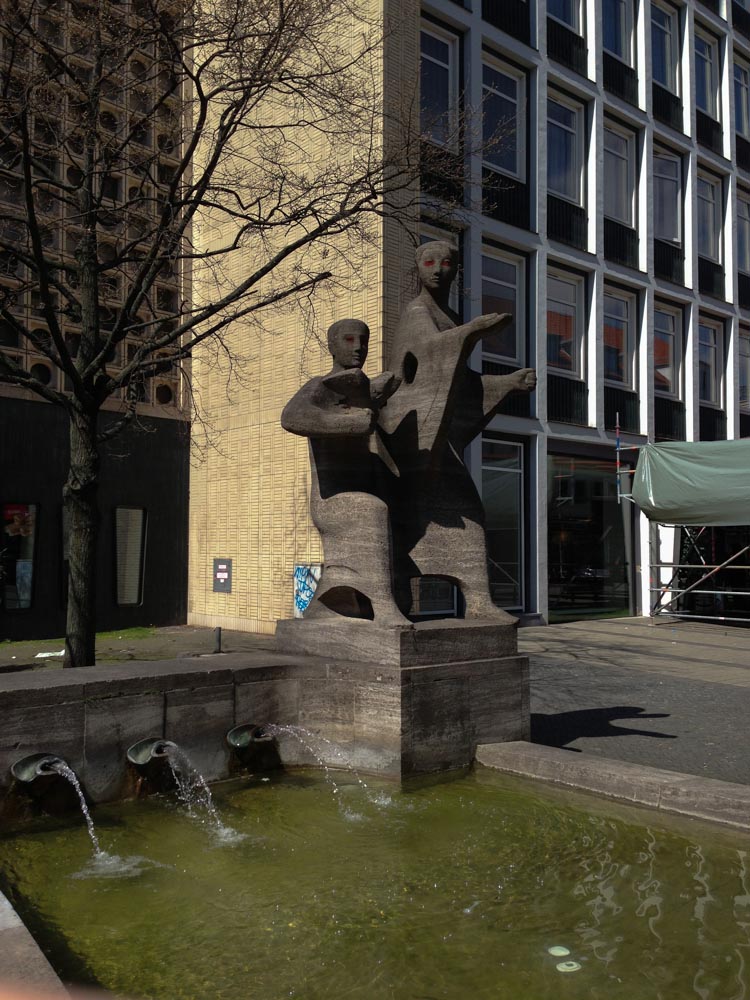
Someone gave these two very red eyes.  It makes them look really creepy.  I’m just sayin’.

hannover-20

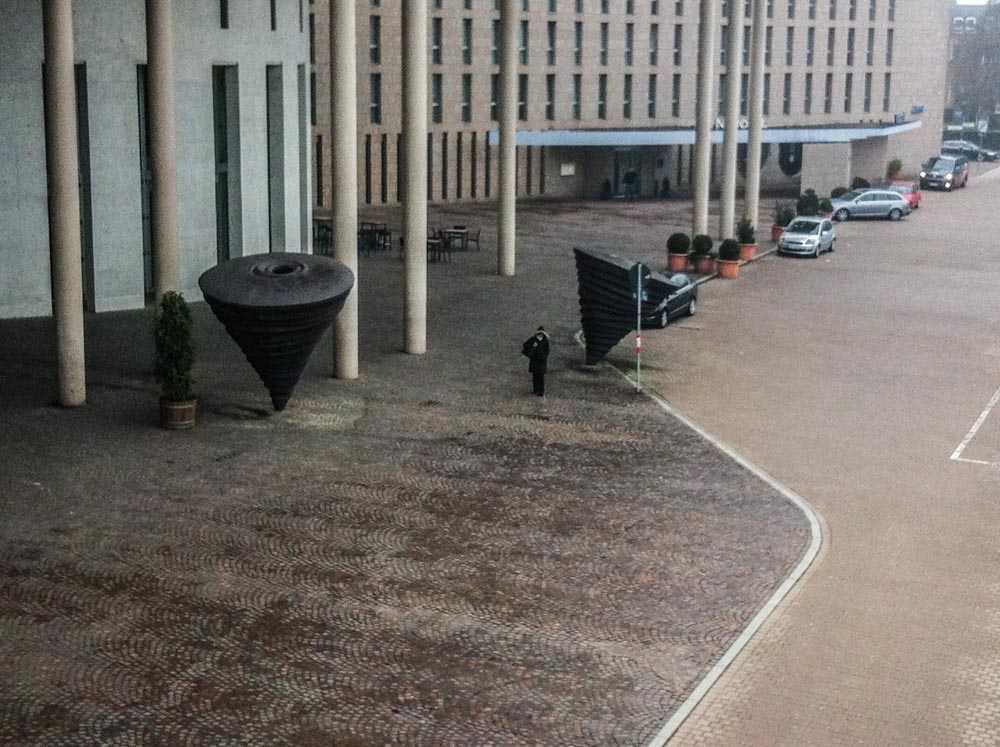
Hannover has a nice looking opera house.  I know nothing further about this building.  It sure is cool looking though.

hannover-21

One of the highlights of my trip to Hannover was the Neues Rathaus, the old “New Town Hall.”  The building is no longer used for the main city administration, but it’s still got some offices in it.  More importantly, you can walk around inside and go up inside the dome for a small fee.  You know me and tall places, how could I not climb up?

hannover-22

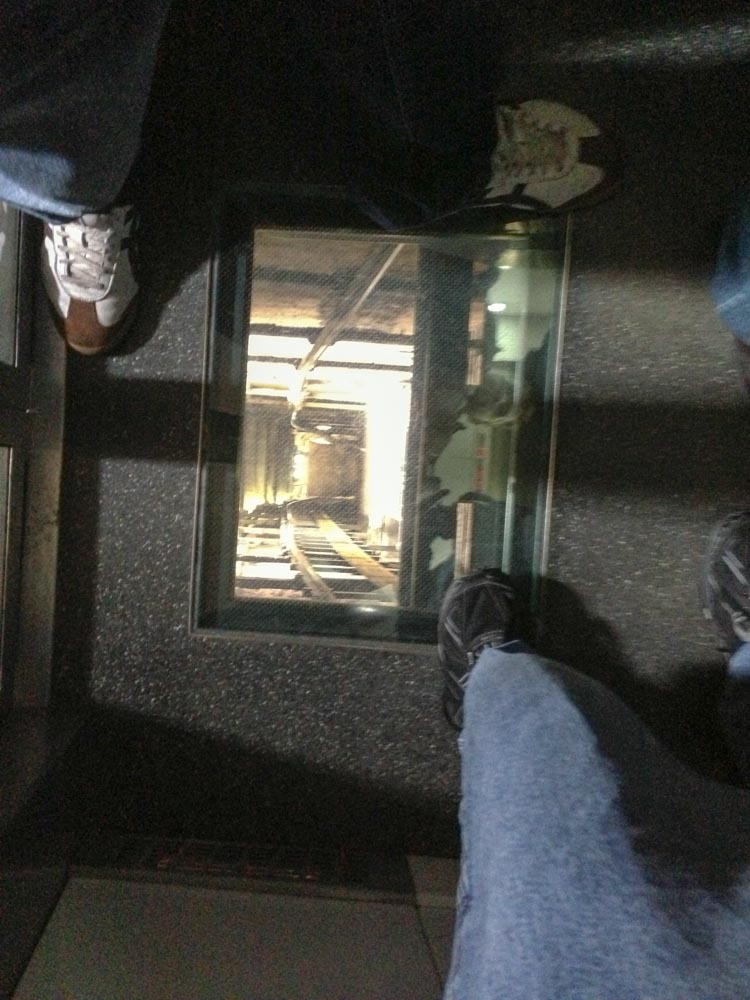
The first part of the “climb” is actually an elevator to a small stairway to… another elevator.  This elevator does most of the vertical ascent, but there are glass panels in the floor and ceiling to show you the shaft as you travel.  The next picture is looking up and the following picture is looking down the elevator shaft.  This is not for the claustrophobic, agoraphobic, or acrophobic.

hannover-23 hannover-24

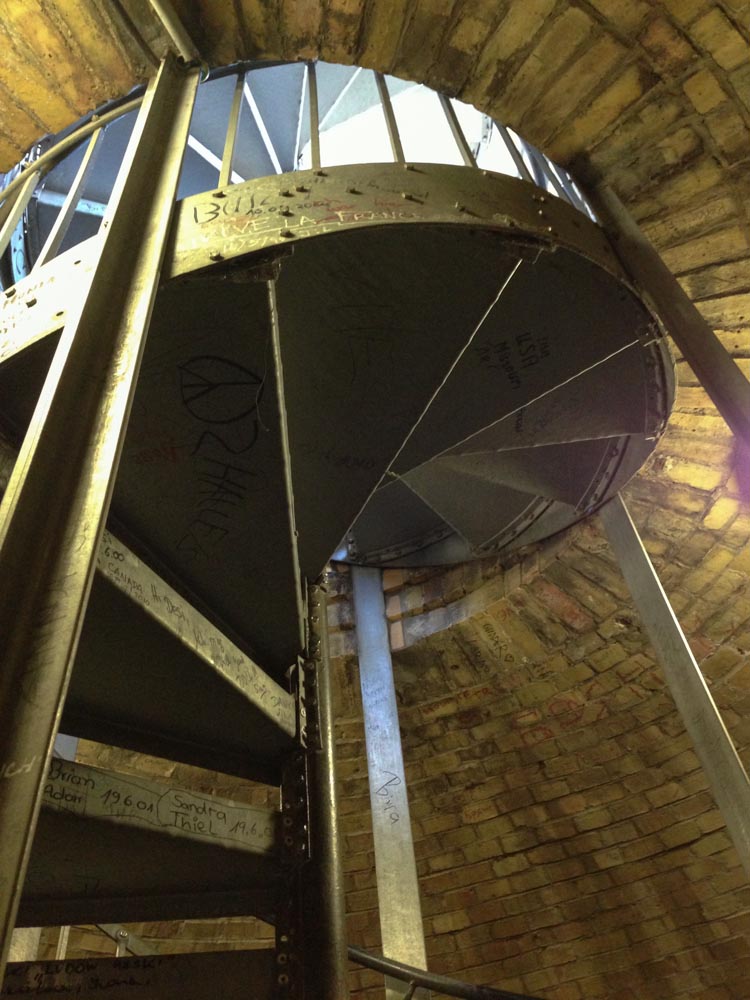
At the top of the elevator, there is a chamber filled with decades of “Francisco was here, 1988!” styled graffiti, as well as a metal spiral staircase to get you to the upper levels of the observation dome.

hannover-25 hannover-26

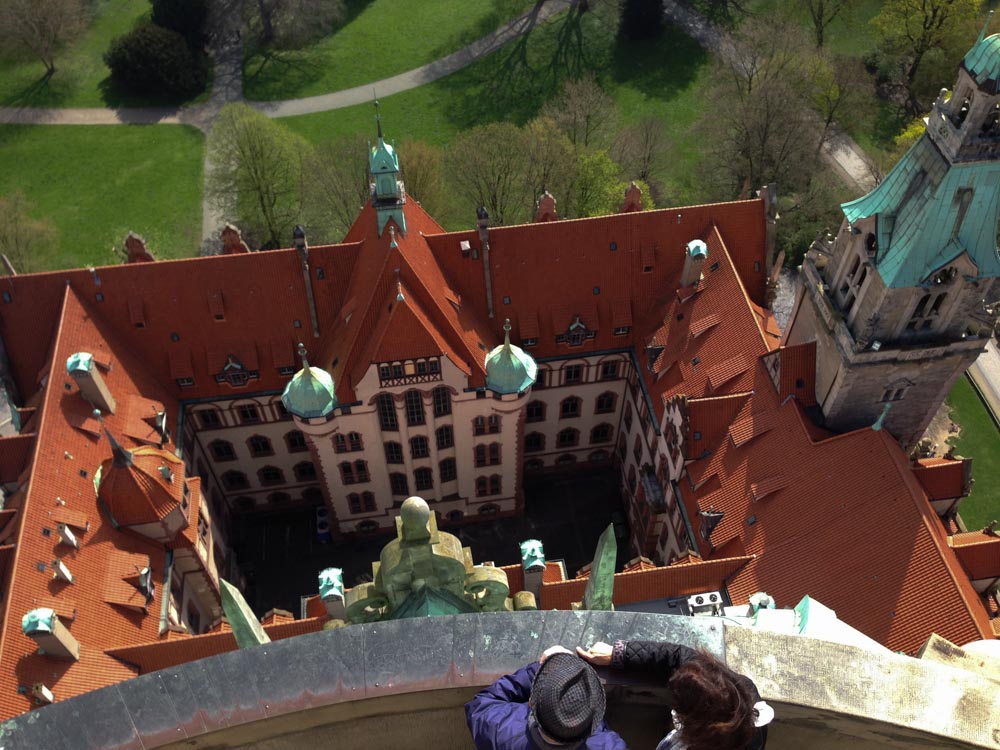
The view from the observation level at the top of the stairs is  amazing if you’re there on a clear day.

hannover-27 hannover-28

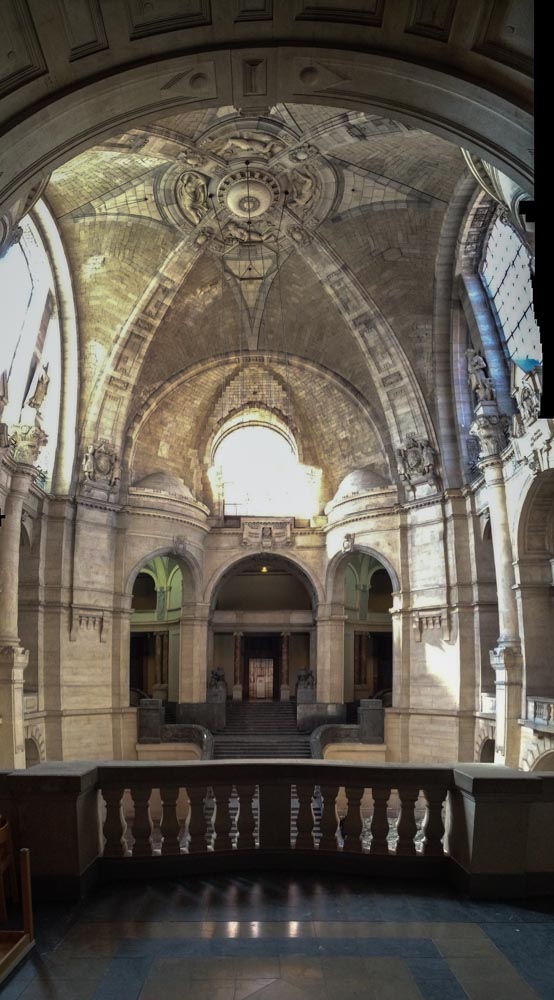
After visiting the dome, I walked around the inside of the building for a while.  The grand staircase and the ceiling in the center chamber are amazing.

hannover-29

There are also a variety of models of the city of Hannover in various times.   This one shows how bombed out the city was in 1945, which is really fascinating to see.

hannover-30

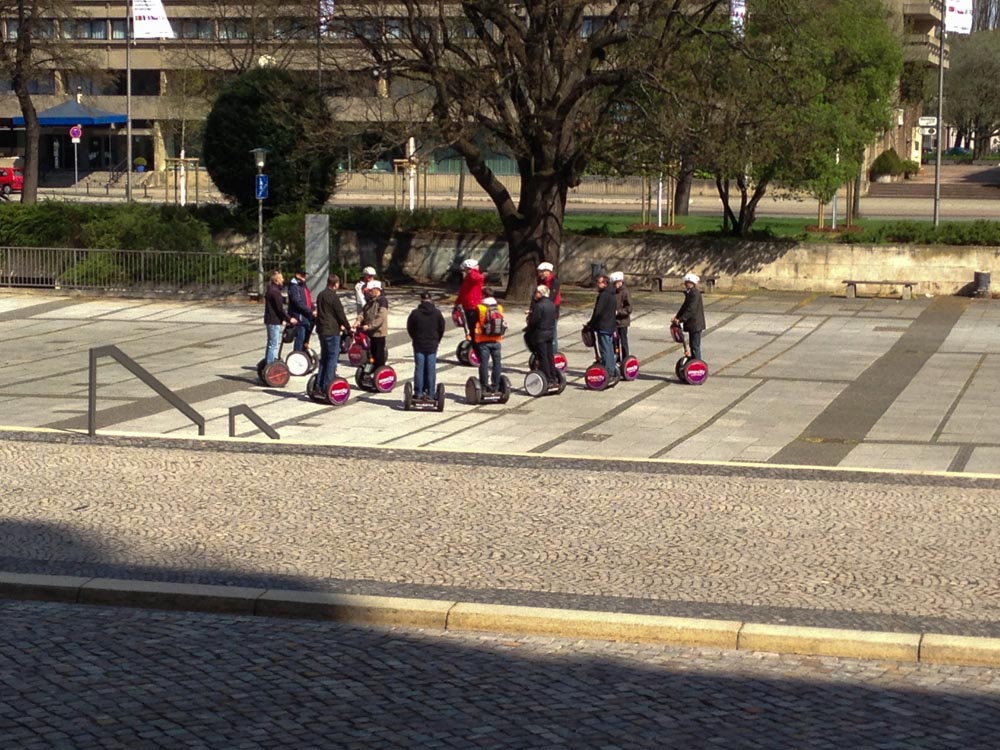
Segway tour!  I saw these guys as I was walking around the Rathaus.  I’ve always wanted to go on a Segway tour.

hannover-31

This is the view from the water’s edge behind the Rathaus.  There’s a cafe right there-  if I’d been hungry when I was at the Rathaus, I can’t think of a nicer place to sit and eat.

hannover-32

Lastly, this building… I’m not actually sure what it was. I assume it’s a church of some sort.  It was just neat looking, so I snapped some pictures of it.

hannover-33 hannover-34

Have you ever been to Hannover? 

Easter Weekend 2013, Part Two: Freiburg, Germany

The Friday and Monday surrounding Easter weekend this year were public holidays in Bavaria.  Since I had a long weekend, I decided to do a whirlwind tour through Strasbourg France, Freiburg Germany, Zurich Switzerland, and the Rhine Falls near the Swiss-German border.  I’m going to write about them one at a time, though.  Next up, Freiburg!

After spending Friday in Strasbourg, I got up early the next morning to grab a quick train into Freiburg.  The weather had turned, so much of this day was moist and cold and overcast.  I had been looking forward to some of the nicer views from hiking up the Schlossberg or taking the Schauinsland cable car, but since the weather didn’t cooperate, those will have to wait until the next time.

I did get to meet Andrew from Grounded Traveler– we had lunch together and he showed me around town a little bit. While walking to the town center to meet him, I passed by these fun little tornado statues:

freiburg-1

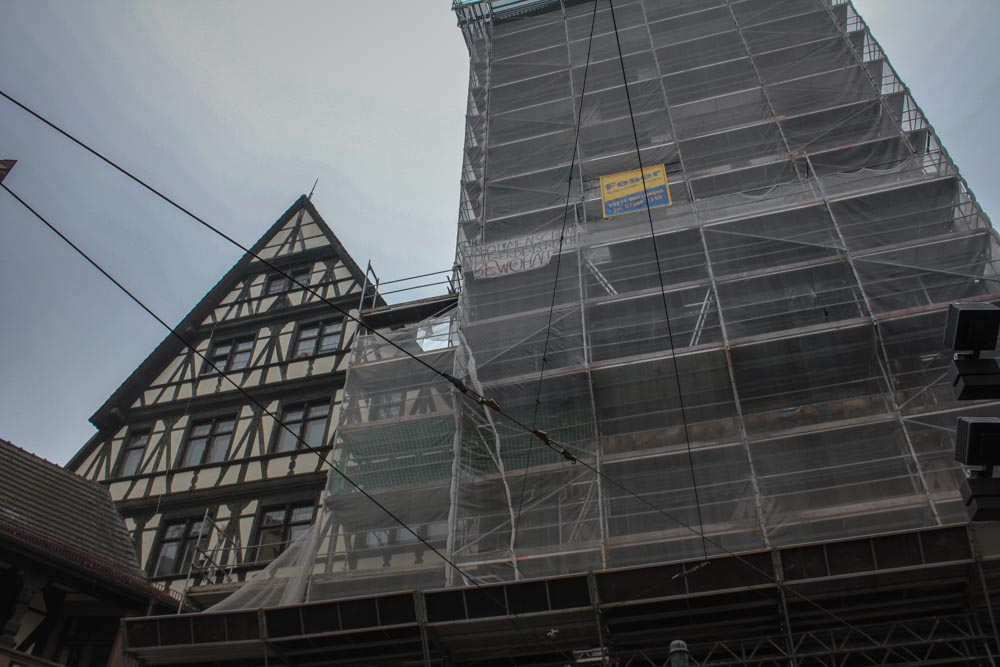
During my minitour, we walked by one of the town gates, the Schwabentor.  It was all scaffolded for construction.  This happens a lot.

freiburg-2

This is just a regular street in the town center.  Freiburg is quite charming, and I’d love to see it again some time in the sunlight.

freiburg-3

This is the other city gate, the Martinstor.  While not in scaffolding, the McDonald’s logo on the gate has drawn criticism.  (McFreiburg?)

freiburg-4

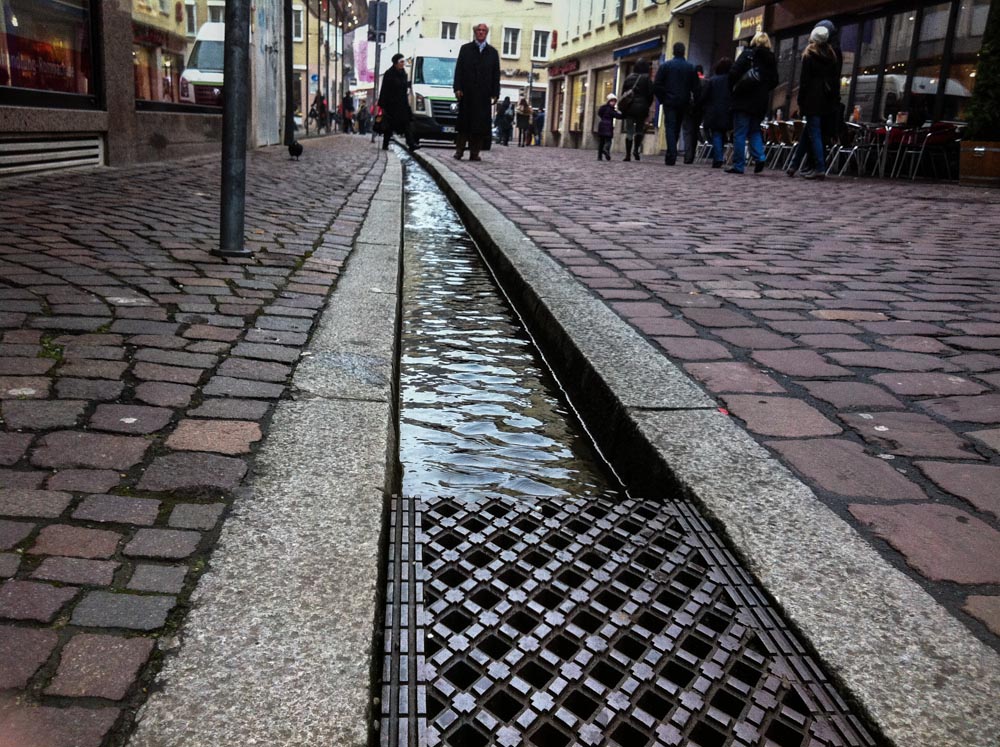
My favorite part of Freiburg, to be honest, is the Bächle.  These are small canals all over the city.  The locals say that if you accidentally step into one, you will marry a Freiburg resident.  Andrew says he’s stepped in them many times and he wound up with an American anyway.

freiburg-5 freiburg-6

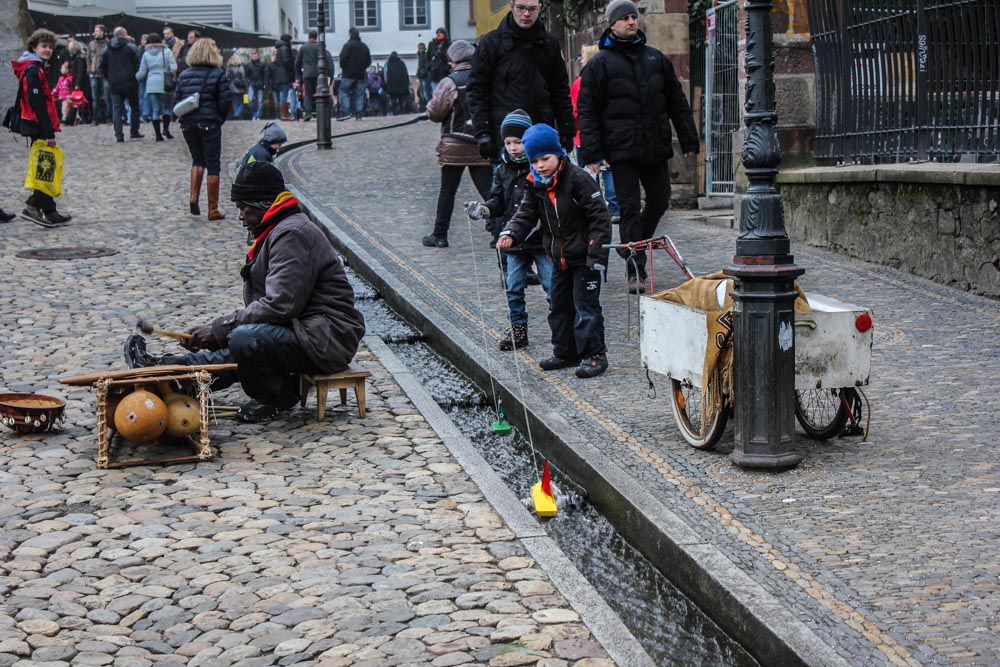
One of the cool things about the Bächle, in my opinion, is that the locals have integrated them into their entertainment.  I saw lots of kids with little toy boats on strings like these two.  Incidentally, this is my favorite picture from the entire day in Freiburg.

freiburg-7

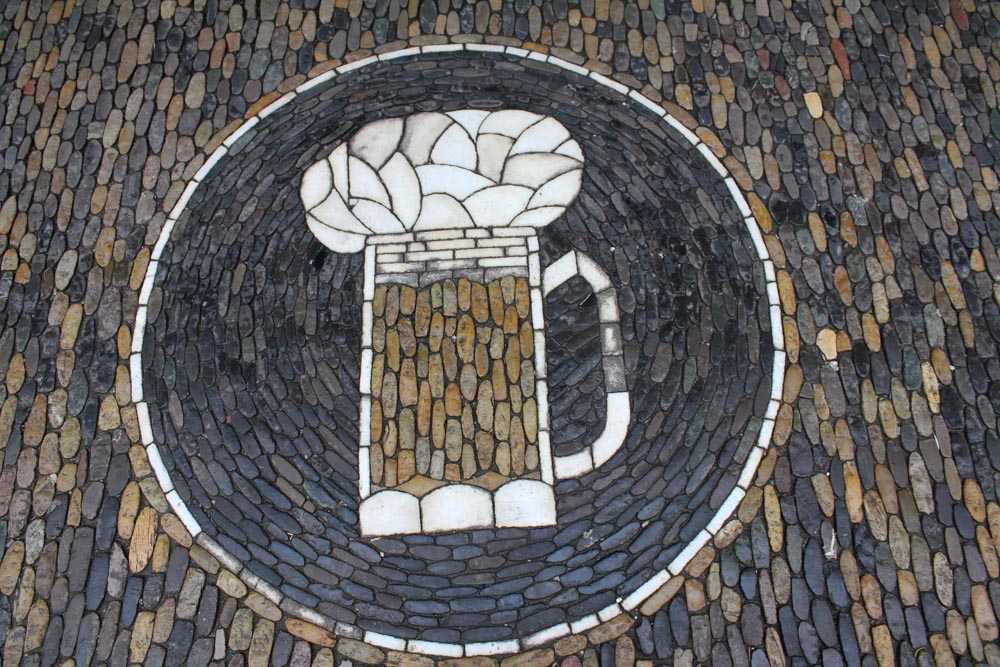
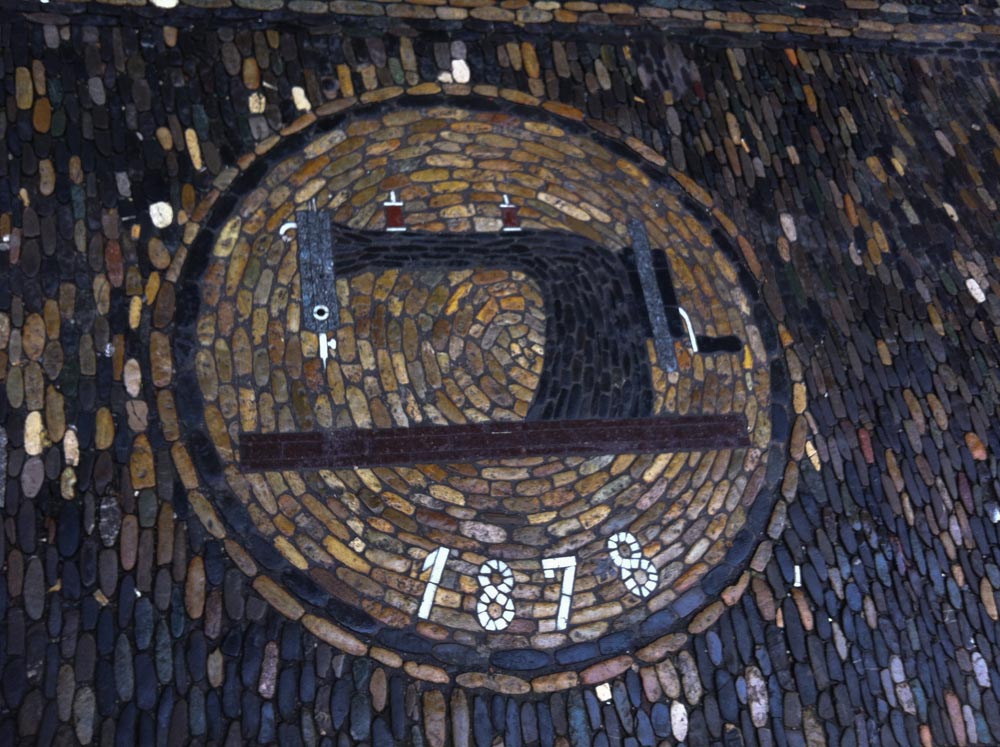
My second favorite thing about Freiburg is the stonework in front of various shops around the old city.  For the most part, the stonework is indicative of the business it sits in front of, although there were a few places where the business was relocated and the stonework remained.  Even so, it’s pretty easy by the stonework to figure out what kind of business you’re looking at.  Here’s three examples:

freiburg-9 freiburg-8 freiburg-10

Another general shot of the city, with one of the church towers in the background for perspective of what the weather was like.

freiburg-11

The Roter Bären is one of the oldest buildings in Freiburg, and is a well known hotel.

freiburg-12

The front of the Rathäuser, the history city halls.

freiburg-13

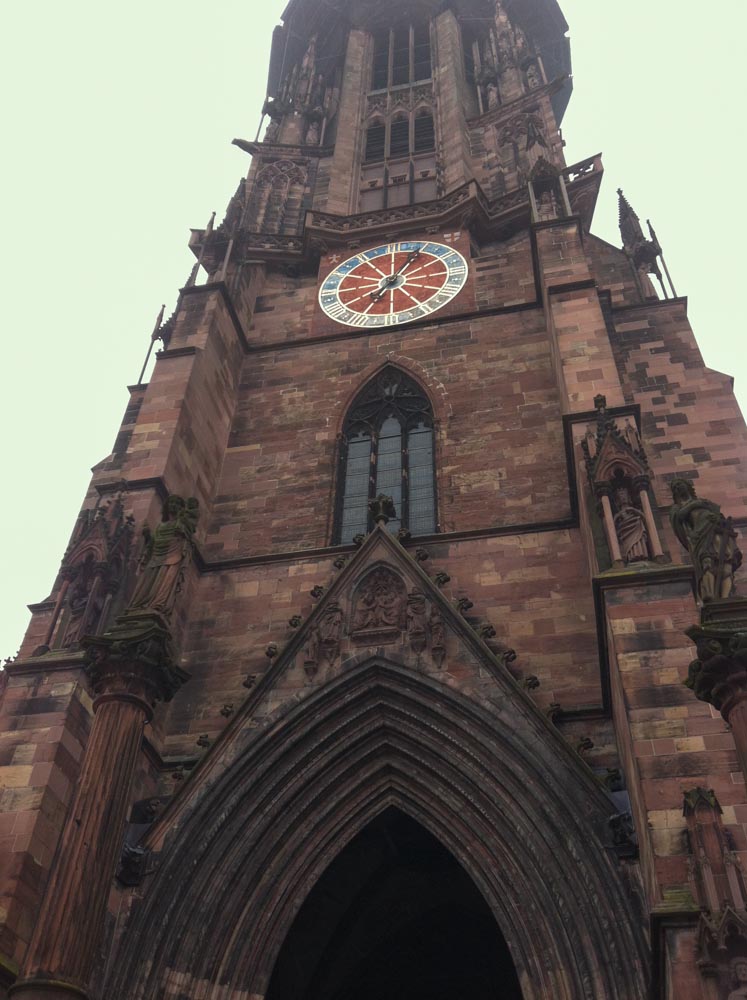
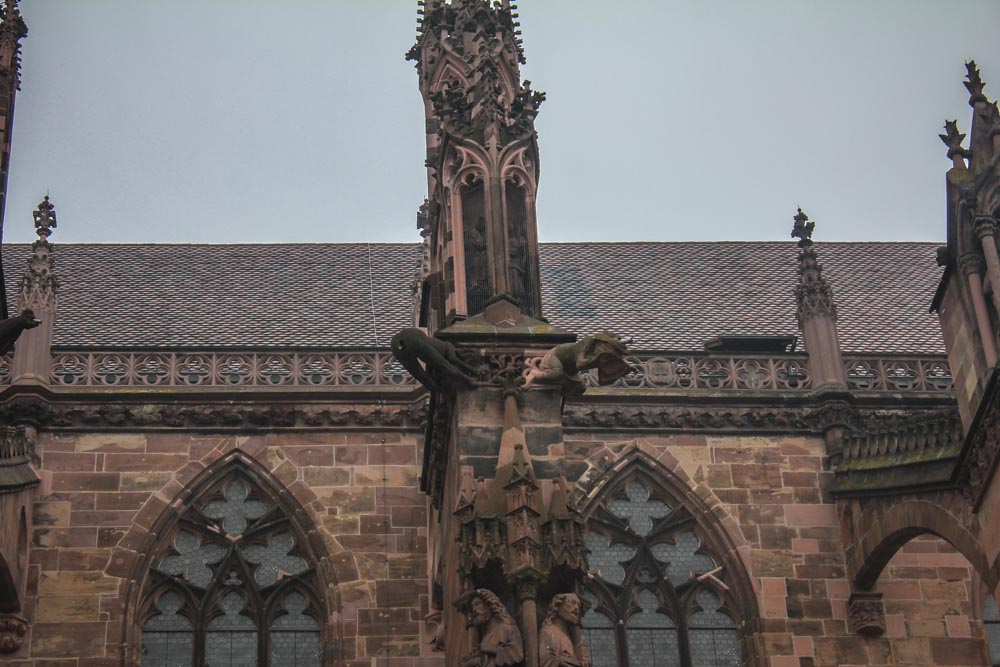
The Münster cathedral, with amazing gargoyles all over the structure.  You can climb the tower, but I didn’t want to do that unless it was a clear day- the view just isn’t the same when you can only see a few buildings away.

freiburg-16freiburg-14

Note the gargoyles in the center-  the one on the left is just sticking his butt out.  Hilarious!

freiburg-15

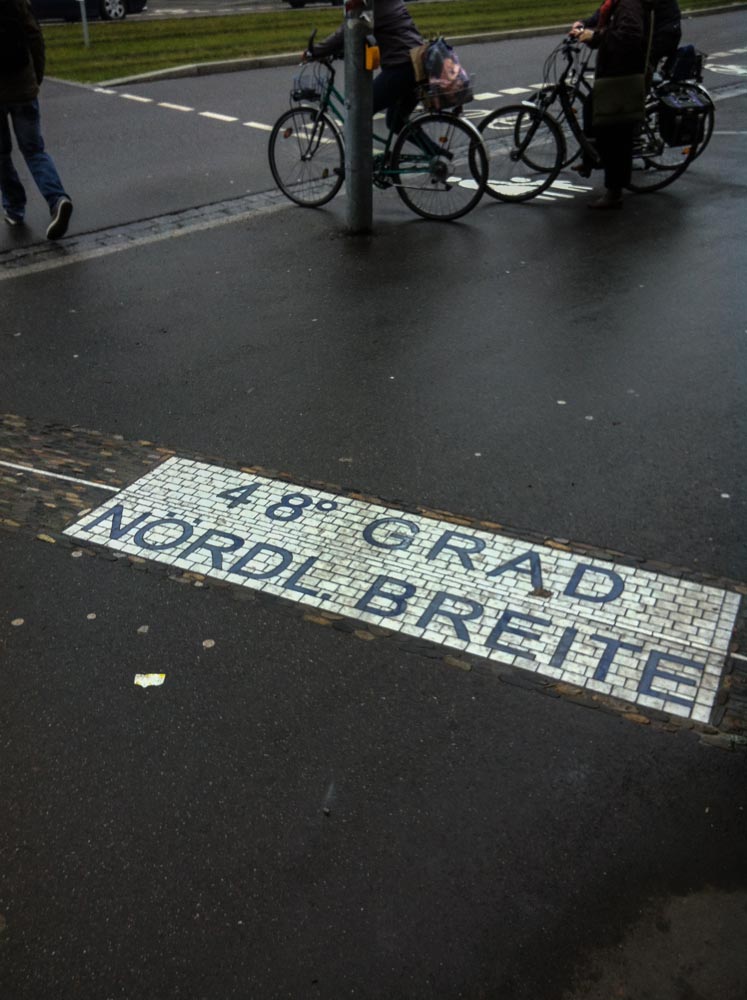
Lastly, a short walk away from the cathedral is the 48th Parallel.  I live close to the 49th parallel, and I know you can see the 49th in Karlsruhe, but I haven’t been there.  I was also unable to see the Prime Meridian when I was in London because the observatory was closed due to the Olympics.  But here, there’s a bar on the corner called 48 Degrees.  And right in front of that bar, is the 48th Parallel.  This is fascinating to me:

freiburg-17

How many parallels or meridians have you seen?
Dachau Concentration Camp

Dachau was the first of the Nazi concentration camps.  It was opened in March of 1933 and it was used as a model for the other camps to follow.  The camp served as a training center for SS guards, as well as a forced-labor camp for what Heinrich Himmler called “political prisoners.”   Dachau was built to hold about 5,000 prisoners, but by the time the camp was liberated by American soldiers in 1945, the number of prisoners held there was more than double that number.  In its twelve years as a concentration camp, over 200,000 prisoners were taken to Dachau, and nearly 32,000 deaths were recorded there.  When US troops liberated the camp in 1945, soldiers reported seeing a row of cement structures that contained rooms full of hundreds of dead bodies piled floor to ceiling.

Tdachau01oday, the camp is a memorial site.  Most of the barracks have been razed to the ground, but two of them have been maintained so that visitors can see the living conditions of the prisoners.   I visited the camp last Sunday, and the weather was suitably bleak and oppressive for the visit.  I think I would have felt a little strange if it had been a sunny, warm, cheerful day.

To visit the Dachau Concentration Camp Memorial site from Munich, you must take the S2 line of the S-Bahn to the Dachau Bahnhof.  From there, a regular bus runs directly to and from the “KZ-Gedenkstätte” stop.   KZ is short for Konzentrationslager (concentration camp) and Gedenkstätte means ‘memorial.’  From the Munich main train station, the entire travel to the memorial site took us about 45 minutes.

At the memorial site, admission to the memorial is free, but there is a visitor’s center where you can pay a small fee for an audio tour guide.  You also get a map of the site which guides you through the path an incoming prisoner would have taken.  It starts with the main gate, pictured at right.   The German phrase written in the metalwork of the gate, Arbeit Macht Frei, means “Work makes you free.”  This phrase was used at the gates to many of the concentration camps, famously including Auschwitz.

After you pass through the main gate, you find yourself in an enormous open area, with one set of buildings to the right (currently a museum) and baracks off to the  left.  The giant field is the roll-call square.  Prisoners would stand here for roll call each morning, sometimes standing in place for up to an hour.  The dead would often be dragged into the roll call square to be counted as well.  This picture is looking across the roll call square towards the still standing barracks.

dachau02

Inside the barracks, you can see what the living conditions were like for the prisoners.  Privacy was nonexistent.

dachau06

These sleeping racks were overfull by the time of the camp’s liberation in 1945.   The single structure below contains sleeping space for 54 prisoners.  This is one structure at the end of one portion of one of the 32 separate barracks buildings.  In 1945, the camp was up to more than 12,000 prisoners.

dachau05

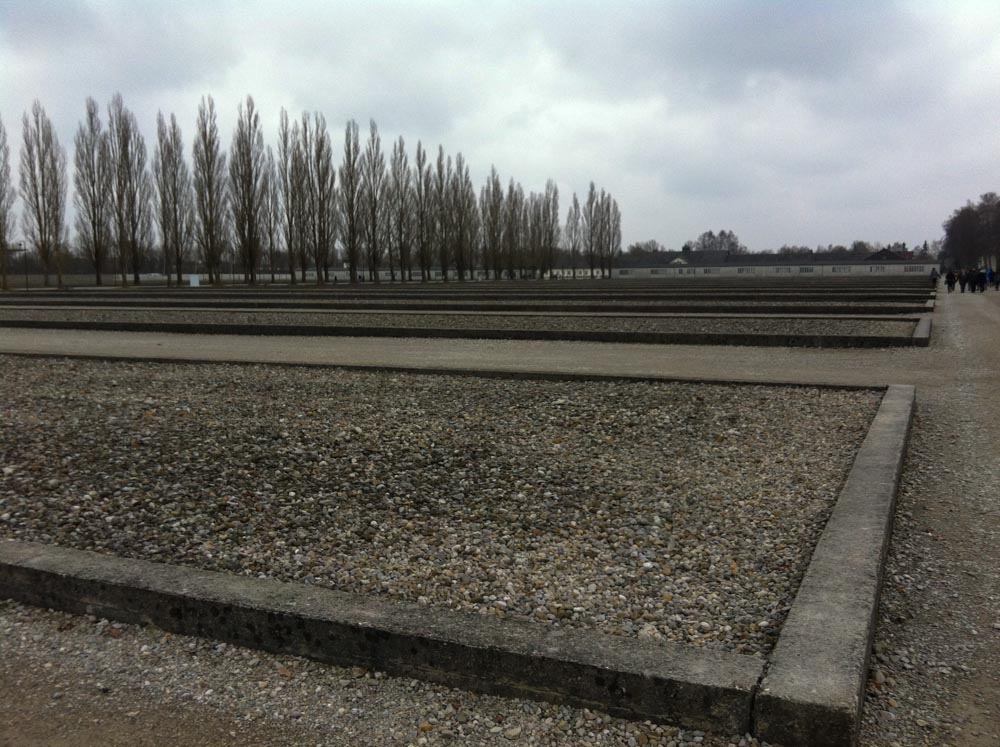
Today, most of the barracks are gone, but there are gravel outlines where they stood:

dachau03

Walking up the road alongside the barracks, you can see one of the remaining guard towers.   Prisoners who ventured too close to the fence were shot on sight, and it is said that some prisoners ran to the fence as a means of committing suicide.

dachau04

At the end of the walkway, there is a small gate leading to the old and new crematoriums. From the outside, it looks fairly inoffensive.

dachau07

When you walk inside, though, it’s a very sobering reminder of the atrocities of the Holocaust.  The room below is a gas chamber.  Up to 150 prisoners at a time could be forced to disrobe in the room next to this. False shower heads were installed into the ceiling so that the prisoners would believe that it was merely a large group shower room.  Once they were sealed inside, Zyklon B (prussic acid poison gas) would be used to suffocate the prisoners to death in fifteen to twenty minutes.

I was not surprised to note that nobody lingered in this room at the memorial.

Despite the presence of a gas chamber in Dachau, there is no evidence to support the idea that the gas chamber was used for mass murder there – most of the known deaths in Dachau were by gunshot or by hanging.  This model of gas chamber was used heavily in many extermination camps, however-   Auschwitz, Belzec, Chełmno, Jasenovac, Majdanek, Maly Trostenets, Sobibor, and Treblinka.

dachau08

The room adjacent to the gas chamber is a crematorium.  Each of these furnaces was capable of incinerating two or three corpses at a time.

dachau09

I usually try to end my posts with a question to spark discussion, but I honestly don’t know what to say on this one.  The entire experience of visiting Dachau is horrifying.  It’s important to be aware of the Holocaust and to know what happened in Nazi concentration camps, but I don’t think I really want to talk about it any more.

Senckenberg Frankfurt – More Dinosaurs!

I’m really not much of a museum-goer.  I like some of them, to be sure, but not all of them.  I’ve talked before about the Deutches Museum before, and I probably mentioned the local historical museum here in Regensburg, but that’s likely it.

That being said, one surefire way for a museum to entice me to come inside is to put giant dinosaurs out front.  For example, the Senckenberg in Frankfurt.  Across the street from the front door, helping you find the way, is this fellow:

senckenberg01

…and in front of the main building is this friendly critter:

senckenberg02

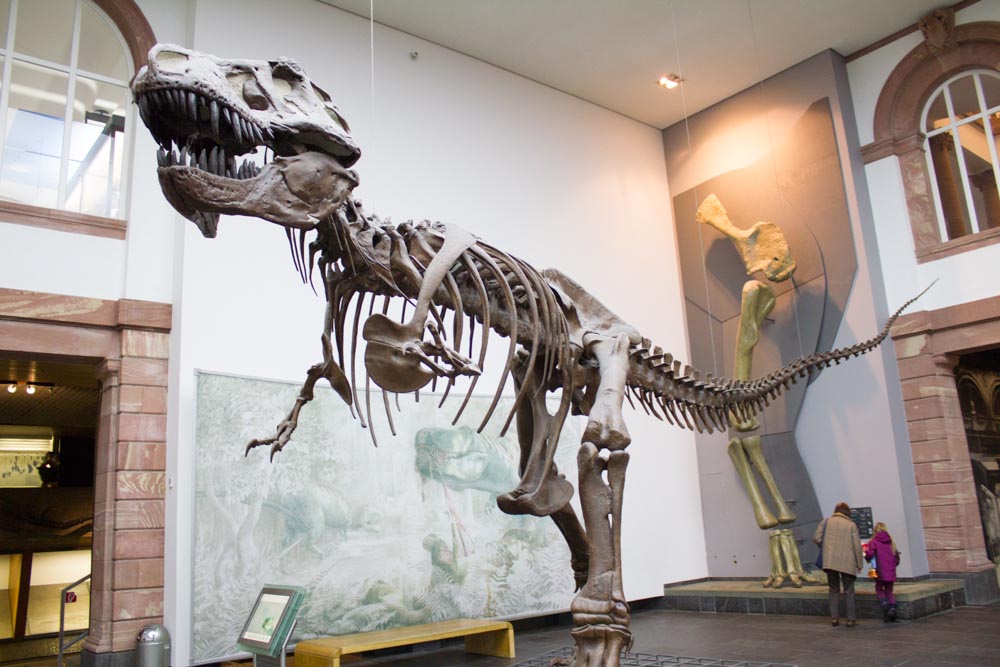
Once inside, the style settles down a bit, but this is the sort of museum that has skeletons of things and has various animals represented.  There’s a giant hall with a T-Rex, a Triceratops, and some other well known dinos.

senckenberg03

The amount of animal life represented in the museum is staggering, and I could easily have posted a gallery of dozens of pictures, but I decided to represent the museum with three dinosaurs and an ancestor of man.  There’s a very nice area about the evolution of hominids with various hominidae skulls, and at the center, a rather nice display of Lucy the Australopithecus.

senckenberg04

You might consider this a small amendment to the ‘killing time in Frankfurt‘ post.  The museum is easily reachable by public transportation, and it’s a great way to kill a few hours in the city.

What type of museum do you like the most?  What’s your favorite museum?