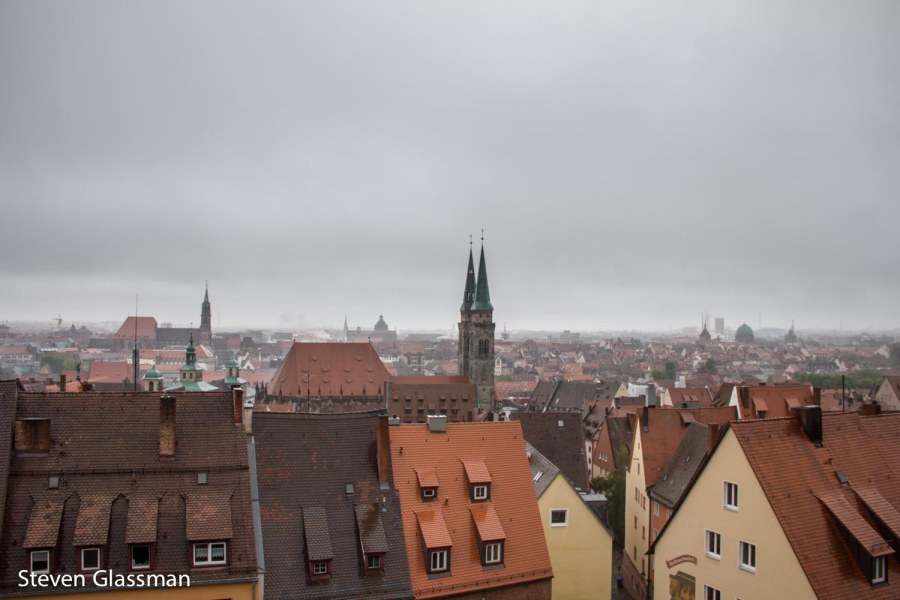
WEBMU 2014: Nürnberg

Every year, a group of ex-pat bloggers living in Germany gather for a weekend of fun, tourism, food, and drink.  This gathering is called WEBMU – the Whiny Expatriate Bloggers Meet-Up.  The location is different each year-  in 2012 the gathering was in Berlin.  In 2013, the group gathered in Prague, but I didn’t make it to that one.  This year, we met in Nuremberg roughly halfway through the month of September.

The attendees were:

A WEBMU weekend typically runs Friday through Sunday, with the early arrivals taking a day trip to an alternate location in the daytime in Friday.  This WEBMU was no exception, and we met up at 10am to visit scenic and moist Bamberg.  Most of the pictures I took in Bamberg are similar to the pictures I took the first time I visited Bamberg, so I’m not going to include too many of those here.  If you’re curious, you can look at the previous Bamberg post.  (Also, it was raining all day, so many of my new photos have rain drops on the lens.  I really need to get a lens hood.)

One of the first things we saw in Bamberg was this randomly placed elephant.  We’re all pretty sure it’s an advertisement, but it was still random enough to warrant a photograph.

webmu2014-1

We went to the Altes Rathaus, and to the local cathedral to look again at the Bamberg Rider.

webmu2014-2

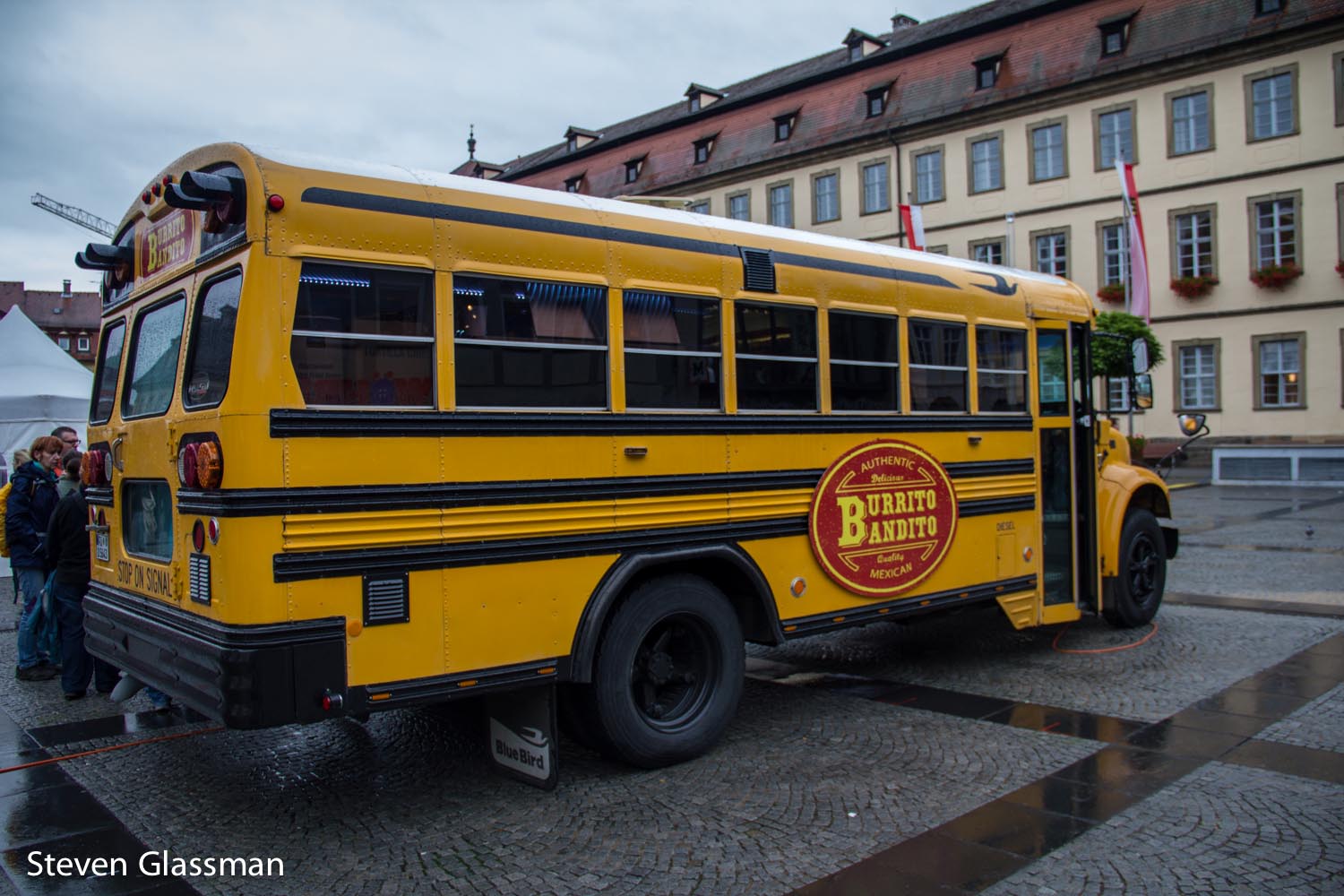
We were in Bamberg on the same day that there was a party for the closing of U.S. Army Garrison Bamberg, so we stumbled across the Burrito Bandito.  It was a little strange seeing US Army guys in fatigues while out and about in Germany.
webmu2014-3

While waiting for the train back to Nuremberg, we were witness to the Hochzeit of two smaller trains.  The coupling is almost entirely automatic for this type of train, so it was kind of fascinating to watch.  We were all mesmerized, to the great amusement of the conductor from the train on the left.

webmu2014-4

Fast forward to Saturday, and we started the day with a small city tour… in the rain.

webmu2014-5

Here’s the tour route, just for fun:

tour-route

This is one of the two brass rings embedded into the wrought iron-work in Schöner Brunnen, a rather nifty fountain in the city’s main market square near the town hall.  It is said that spinning the brass ring will bring you luck.  The fountain itself is a reproduction; the original lives in the city’s historical museum.

webmu2014-6

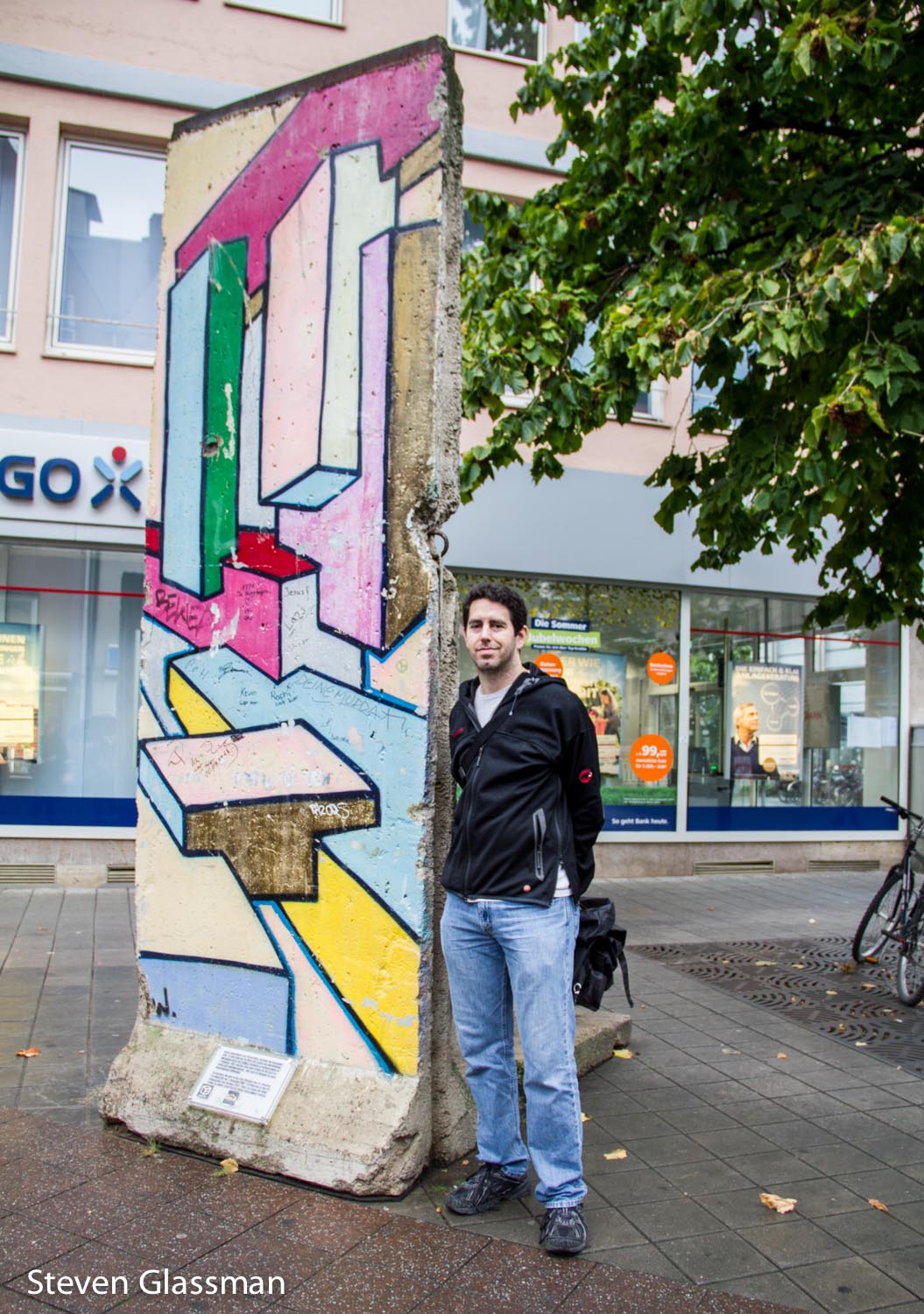
It’s rather amazing to me that I’ve been in Germany for this long and I didn’t manage to get a picture with a section of the original Berlin Wall until this trip.  Here it is.
webmu2014-7

Albrecht Dürer is kind of a big deal in Nuremberg.  His house is near this statue.

webmu2014-8

One of Dürer’s most celebrated creations is this creepy-ass rabbit.  The dude with the pink umbrella just makes it so much more surreal, don’t you think?

webmu2014-12

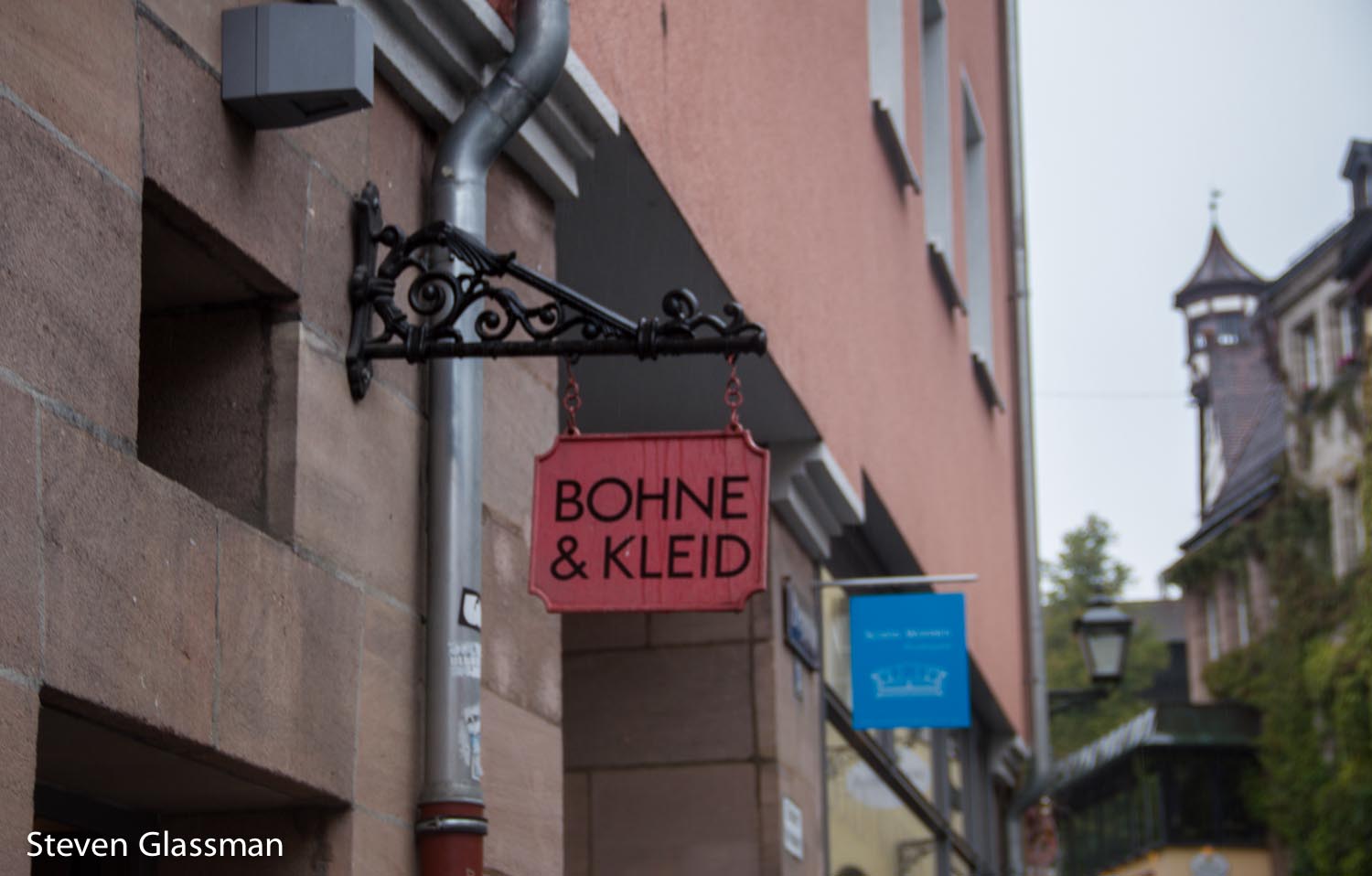
This store’s sign caught my eye because it’s a rather nifty play on words.  Bohne & Kleid in German is “Bean and Dress,” but it sounds quite a bit like “Bonnie and Clyde.”  It made me giggle.
webmu2014-9

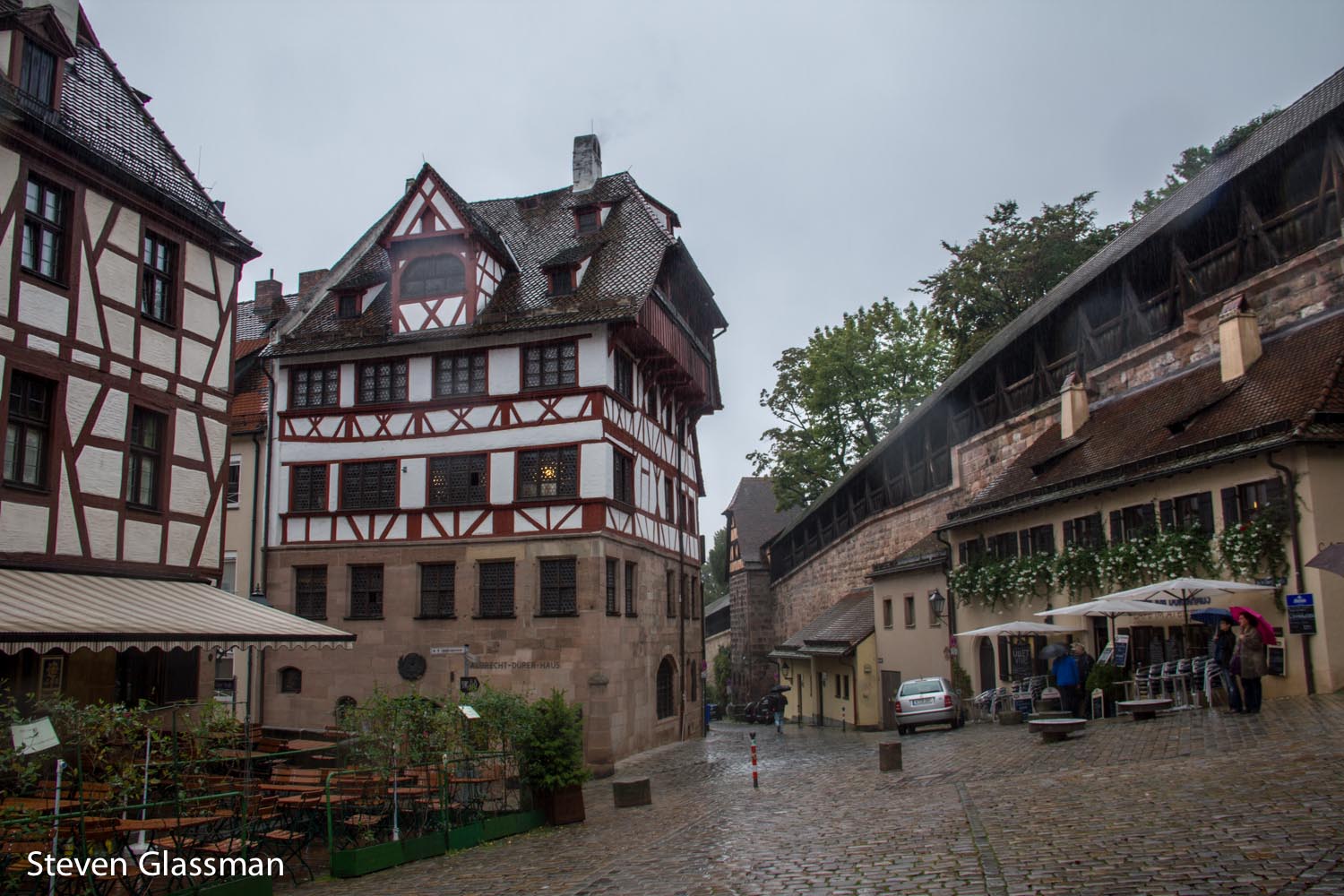
One of the nifty things about Nuremberg is that a large portion of the old city wall is still intact like this section on the right.
webmu2014-10

A bunch of these old cities have St. George and the Dragon themed stuff floating around.  It’s all very Trogdor-oriented.

webmu2014-11

Nuremberg also has a reasonably well preserved castle, part of which is pictured here.

webmu2014-13

Big castles have big doors.

webmu2014-14

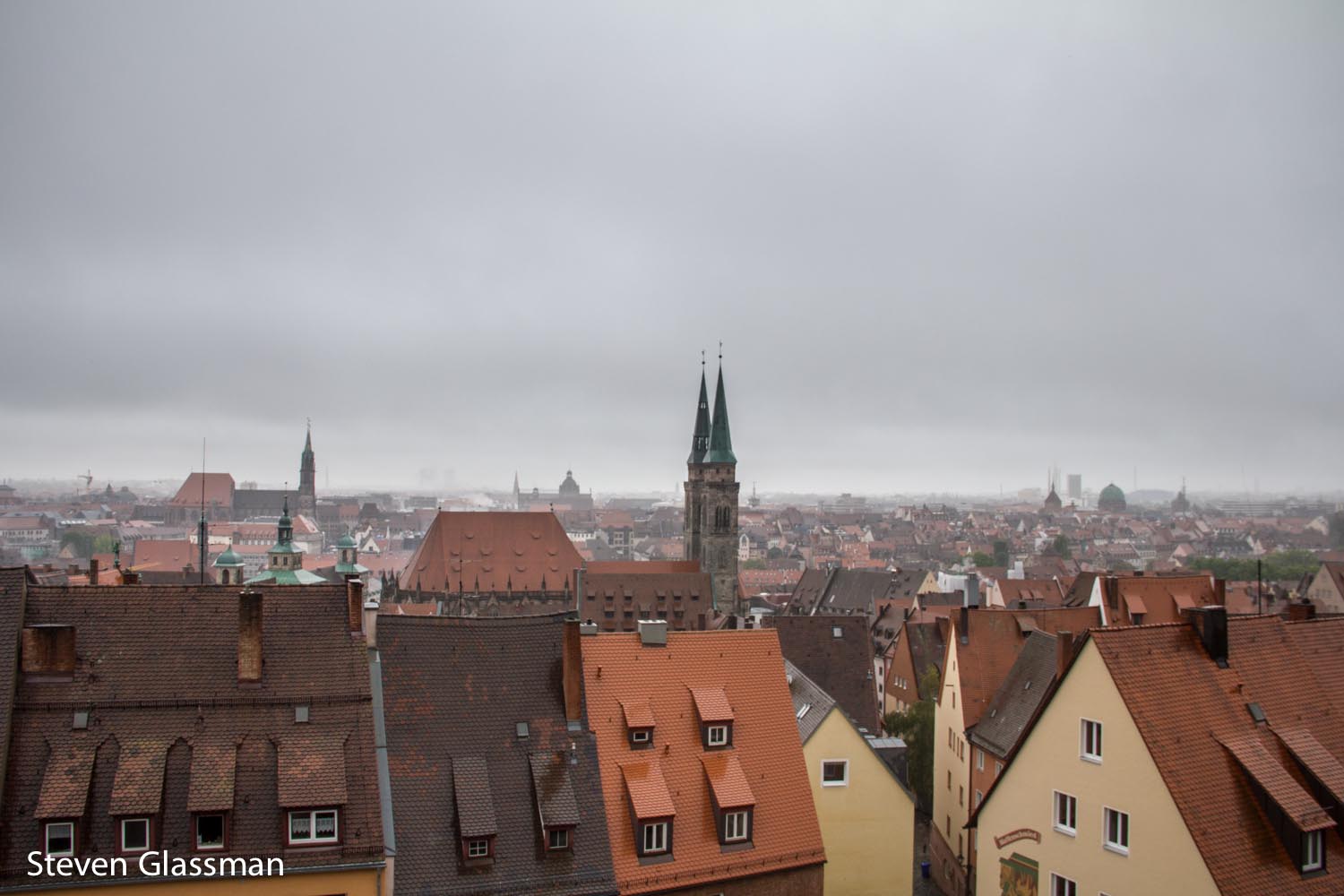
Here’s the requisite view of the city from the castle’s ramparts.
webmu2014-15

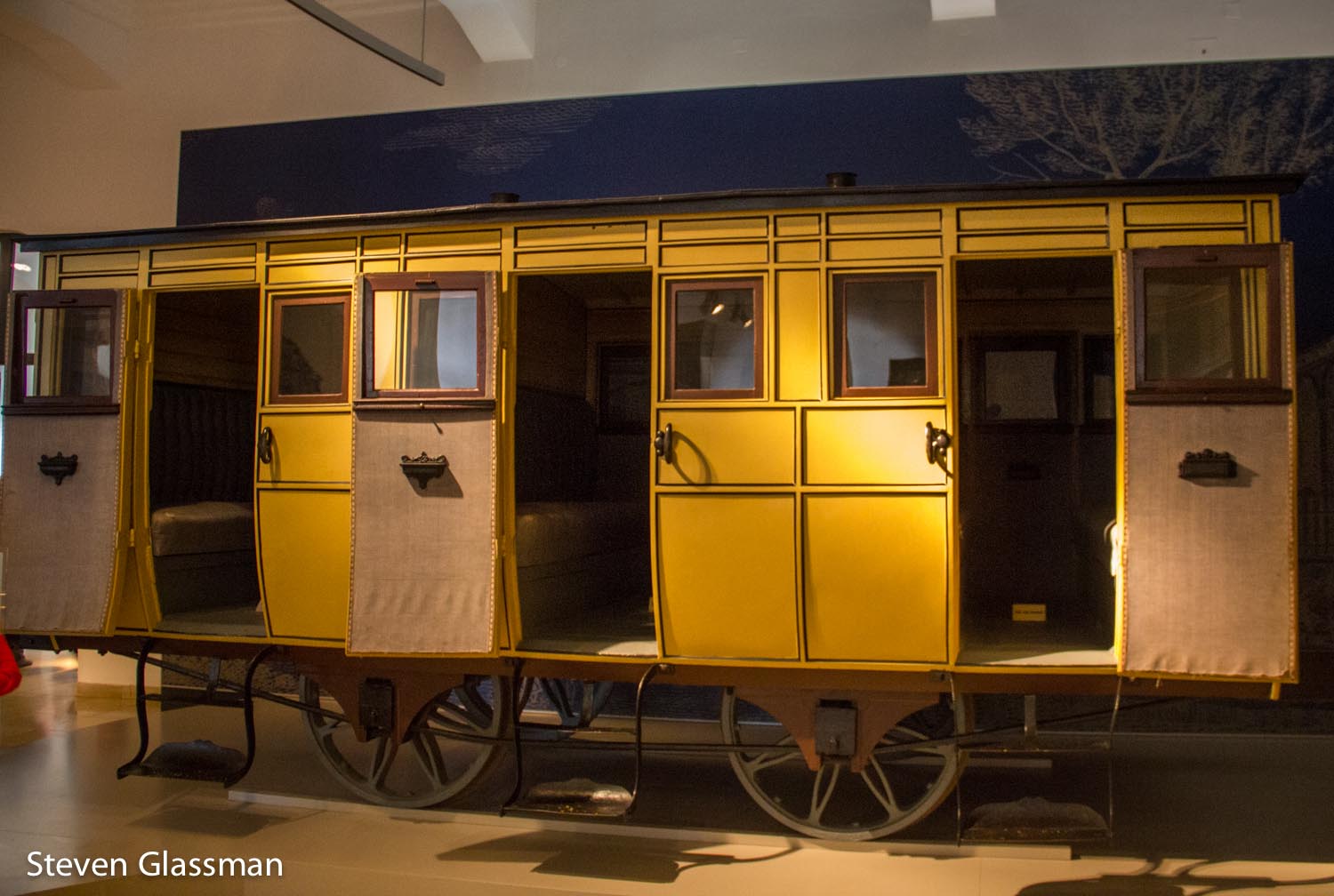
Later in the day, Cliff and I ventured in to the Deutsche Bahn Museum, a place I had wanted to visit for quite a while.  It had some fantastic vintage carriages.
webmu2014-16

An old rail-running bicycle looking thing was on display.  This reminds me a little bit of the scene from Blazing Saddles with the quick-sand.

webmu2014-17

What would a train museum be without incredibly detailed models?

webmu2014-22

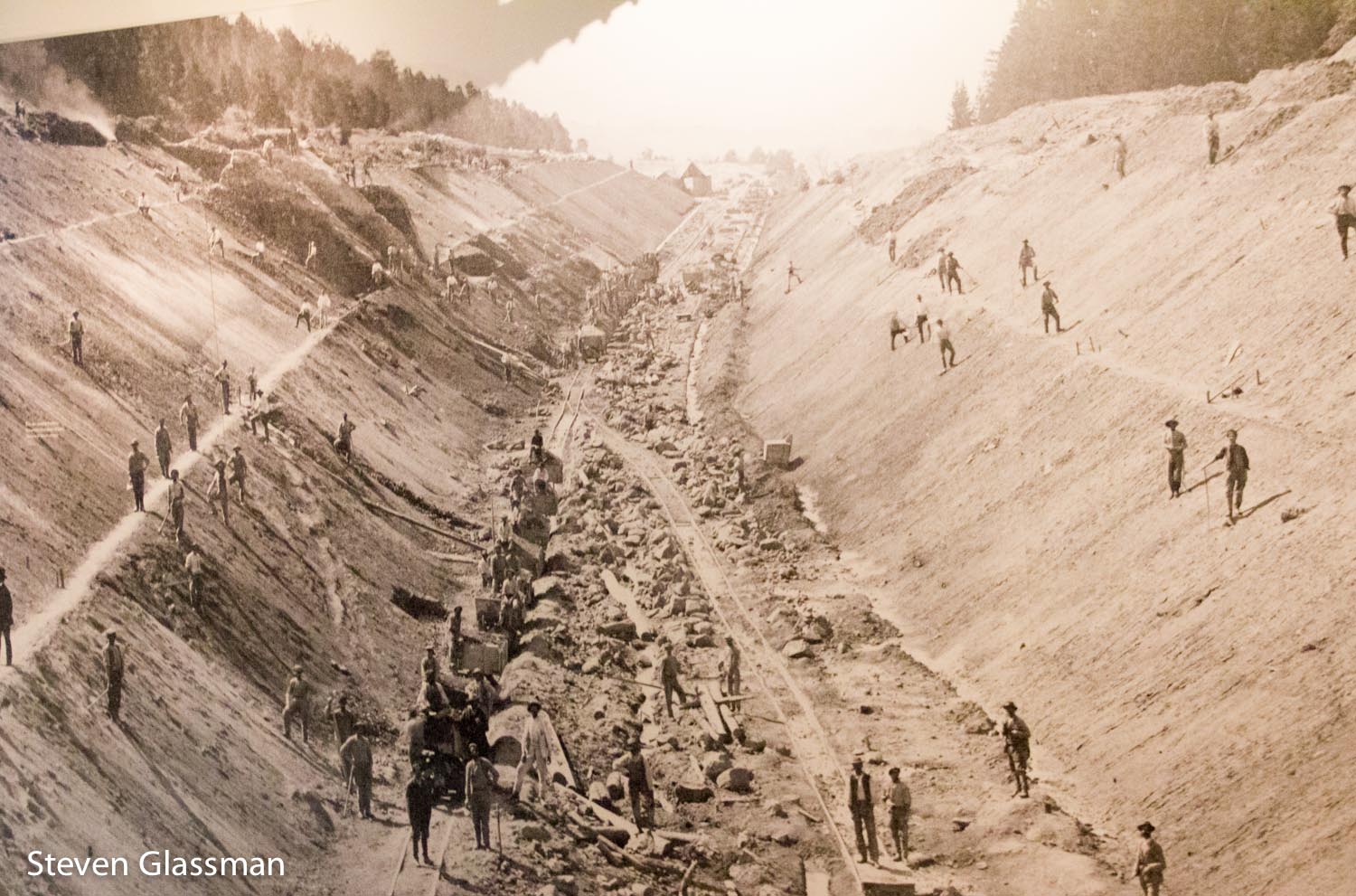
The DB Museum had a ton of great photographs up showing the construction of the railways and bridges.  Most of those pictures didn’t come out well enough to post, but this will give you an idea of how amazing and fascinating the historical photographs were.
webmu2014-19

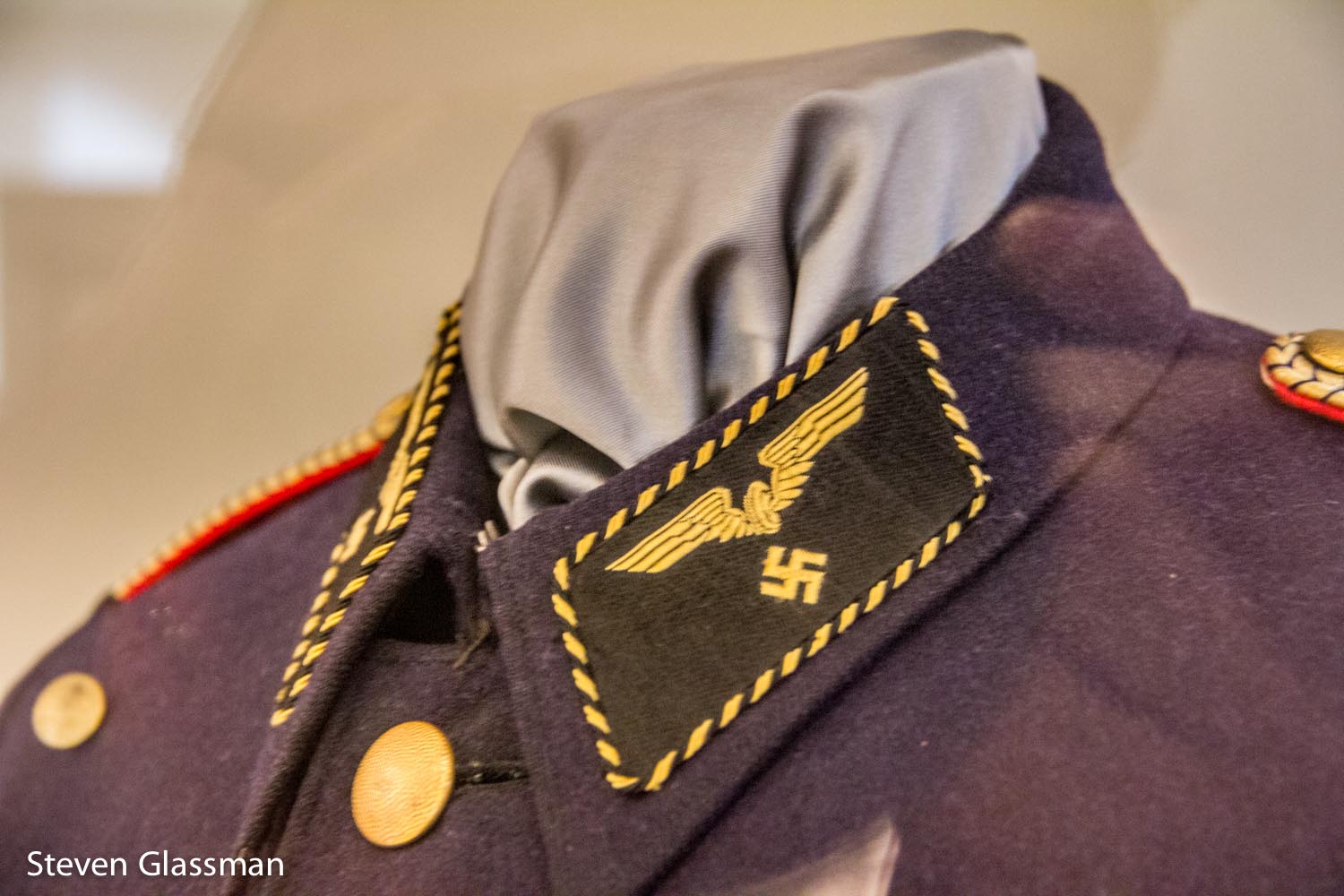
Any good train museum would also cover that uncomfortable part of Germany’s history where the railways were part of the World War II experience.  Here’s a train conductor’s uniform from that era.
webmu2014-29

The best part of the exhibit was the various trains  set up along the outer edges of the museum.  Here’s a mostly-plastic model of an ICE train.  You couldn’t even sit down inside.  The real thing is much nicer.

webmu2014-18

Apparently, 6th class train rides involved standing up in a giant rectangular train carriage with no roof.  Still beats walking, I guess.

webmu2014-20

Compare that last one to first class, which has velvet seats and a nice terrace from which you can have champagne toasts.

webmu2014-21

Speaking of first class, the Prince’s carriages were present in the museum.  They’re very fancy.

webmu2014-23

The Prince’s carriage had a green room that Cliff thought was amazing.

webmu2014-27

I was more partial to the blue room in the Prince’s carriage.   What can I say? I like blue!

webmu2014-28

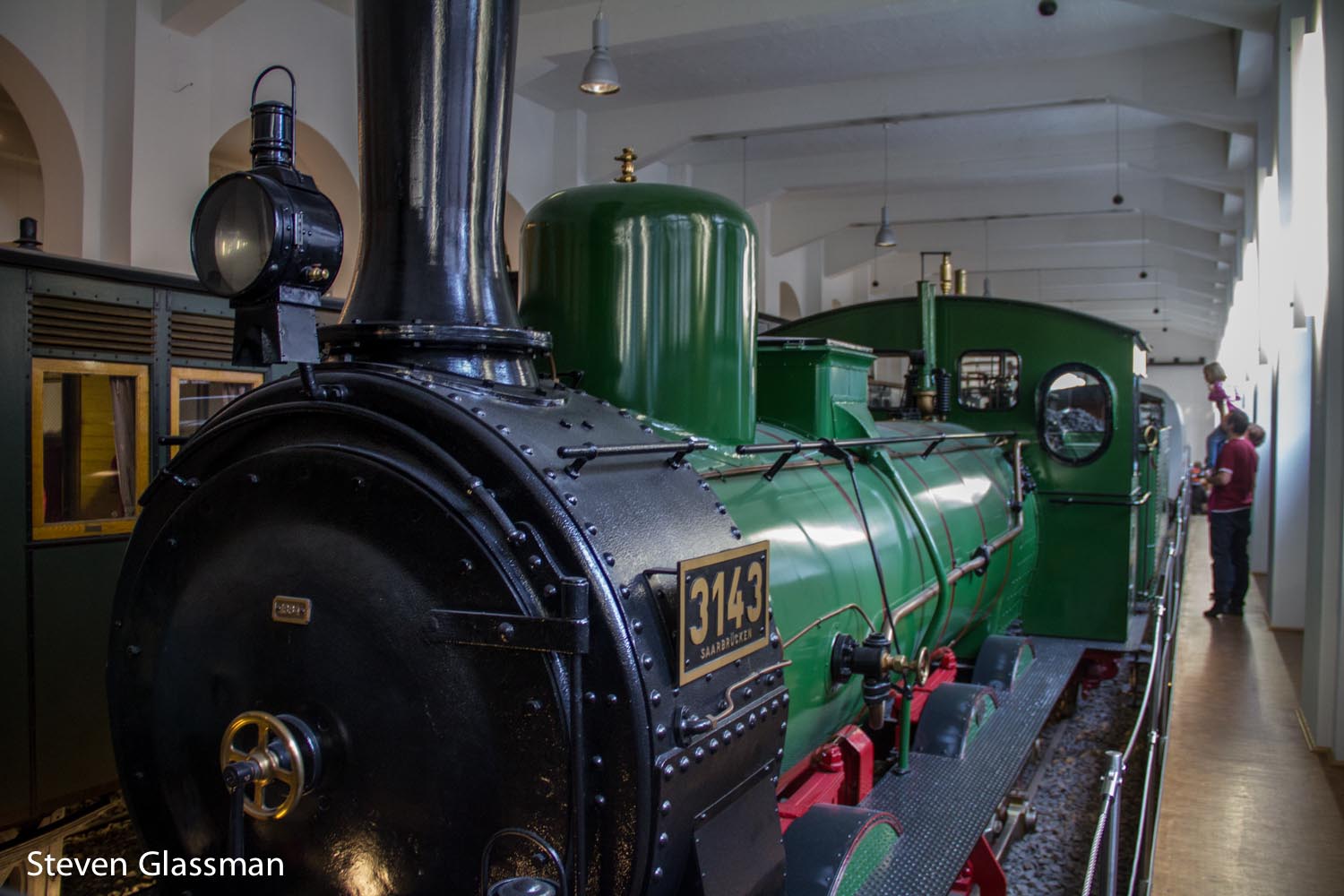
There were also some massive old steamers in the museum.
webmu2014-26

When I say massive, I mean massive.  These wheels were nearly as tall as I am.

webmu2014-24

…and you can step up into some of them for hammy moments.  Here’s Cliff, waving hello from the conductor’s window.

webmu2014-25

Have you ever been to the DB Museum?  Have you visited Bamberg or Nuremberg?

Cairo

For my last trip outside of Germany before I move back to the US, I chose Cairo.  I have a very long list of places that I still want to go and see, but the pyramids have long been near the top of my “gotta see that!” list.  Egypt has had a rough time with their tourism industry since the revolution a few years ago, so I took advantage of the amazing prices and set up the trip to my 26th country.

Between the hits to Egypt’s tourism, the fact that July and August are the low season there and the exchange rate in my favor, everything was very affordable.    I booked four nights at a luxury hotel with a balcony overlooking the Nile river for about $750 US dollars, and booked tours of the pyramids and whatnot before I set out.

Arriving to the Cairo airport is somewhat chaotic.  If you’re a US citizen visiting just to be a tourist, you have to pay $25 in US dollars for the entry visa that they stick in your passport.

cairo-2

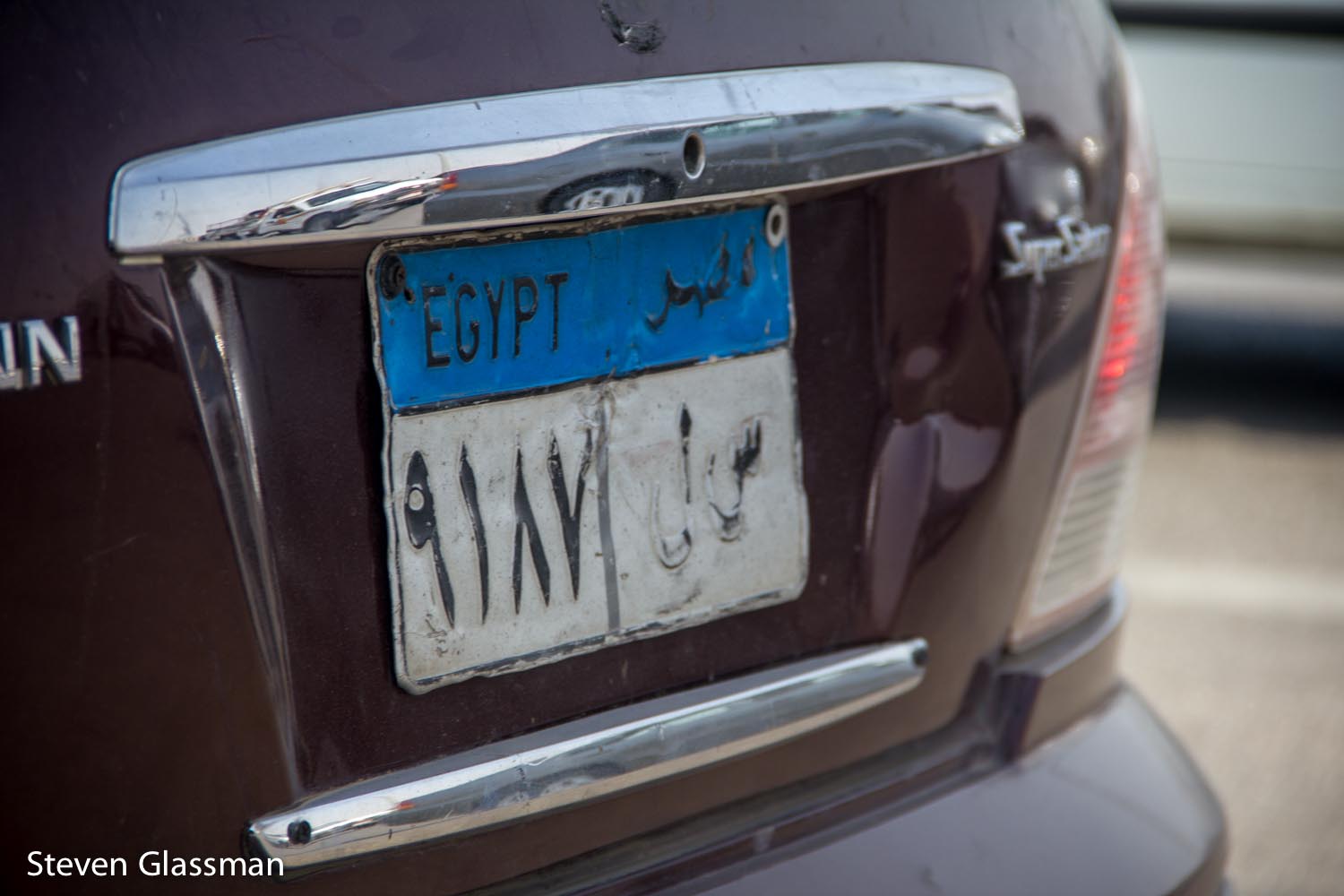
I’m glad that I chose to book the tours with hotel pick-up, because it turns out that navigating Cairo woud have been extraordinarily difficult for me.  For one thing, the Metro stations at Tahrir Square and Giza are both closed and have been for quite some time due to the revolution.   For another thing, I don’t speak Arabic.  I also can’t read the Arabic numerals that are displayed on signs there.  The first time I saw an Egyptian license plate, I thought it was hand-written.  Then I saw a dozen more and I realized this is just how they look.

cairo-1

Traffic in Cairo is absolutely insane.   The white lines on the highway are seen as a casual suggestion, and drivers weave in and out of each other’s lanes with abandon.  The drivers use their car horns constantly, almost like a form of echolocation, like bats in flight.  The car signals told other drivers where they were at all times.

People on foot cross the road- even the highways- without a care for the cars that are moving past.  People stop in the right-most lanes and get out of their cars.  There’s rubble on the outer edges of the highways, and random smoldering piles of rock that might have been fires a while before I got there.

I’ve never seen anything like it.  Here’s a YouTube video that showcases it pretty well, I think.  For more, just search YouTube for “Cairo traffic.”  It’s absolutely amazing.

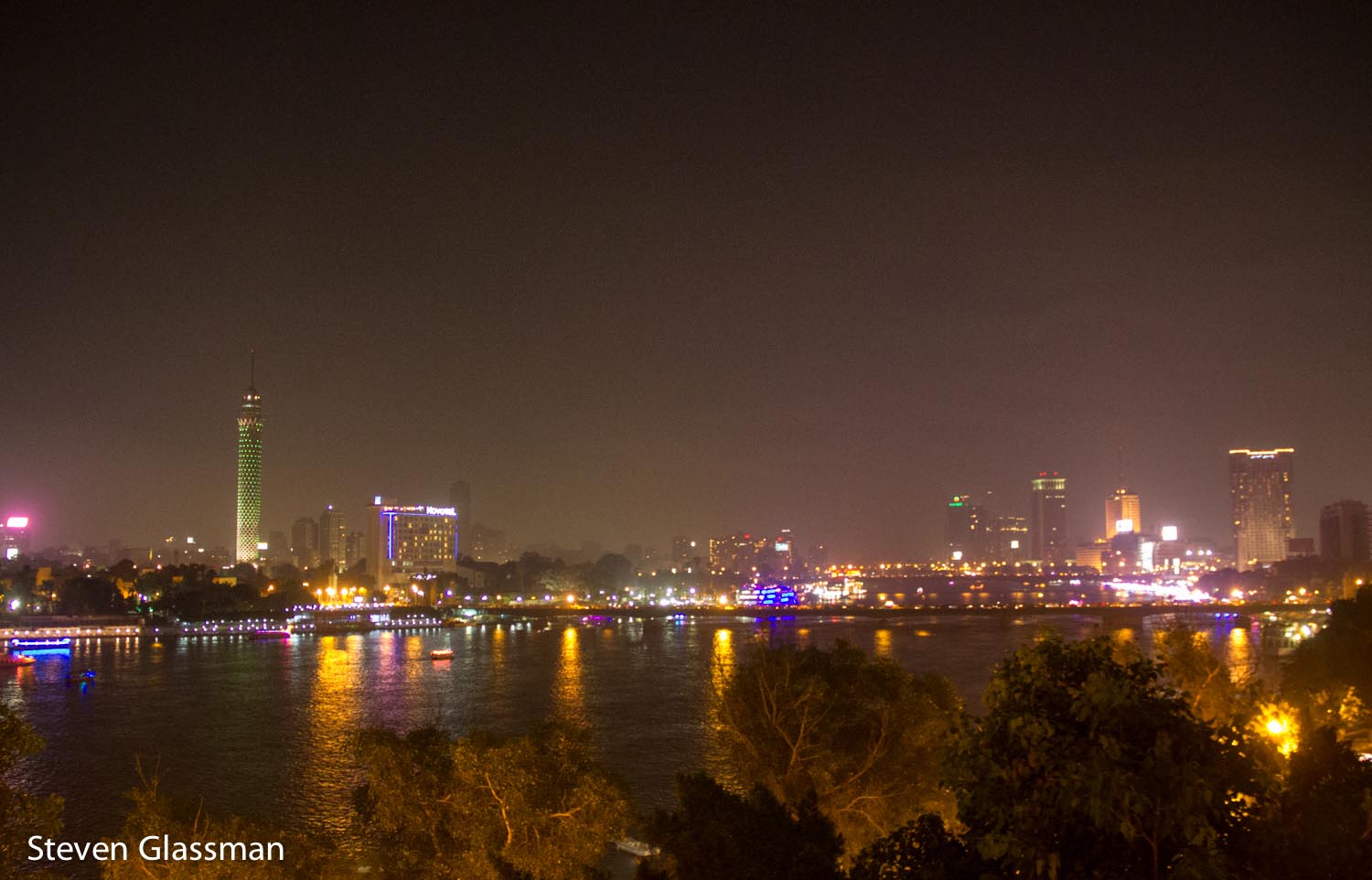
Once I was checked into the hotel, I had about two hours to try to shake off my usual travel headache before I was picked up again for my first event.  I took some time to thoroughly enjoy the view from my balcony overlooking the Nile.  After dark, the Nile river comes alive with activity-  neon trimmed party boats, loud music, and street vendors are everywhere.

cairo-30

My first touristy event was a Nile river dinner cruise, with entertainment.  The food was very good.  I liked the sea bass quite a lot.

cairo-4

The entertainment was a band, then a Tannoura dance show, then a bellydancer.  The Tannoura is vaguely related to the Sufi Whirling Dervishes, and the man never stopped spinning.  Here’s a short clip of the show.

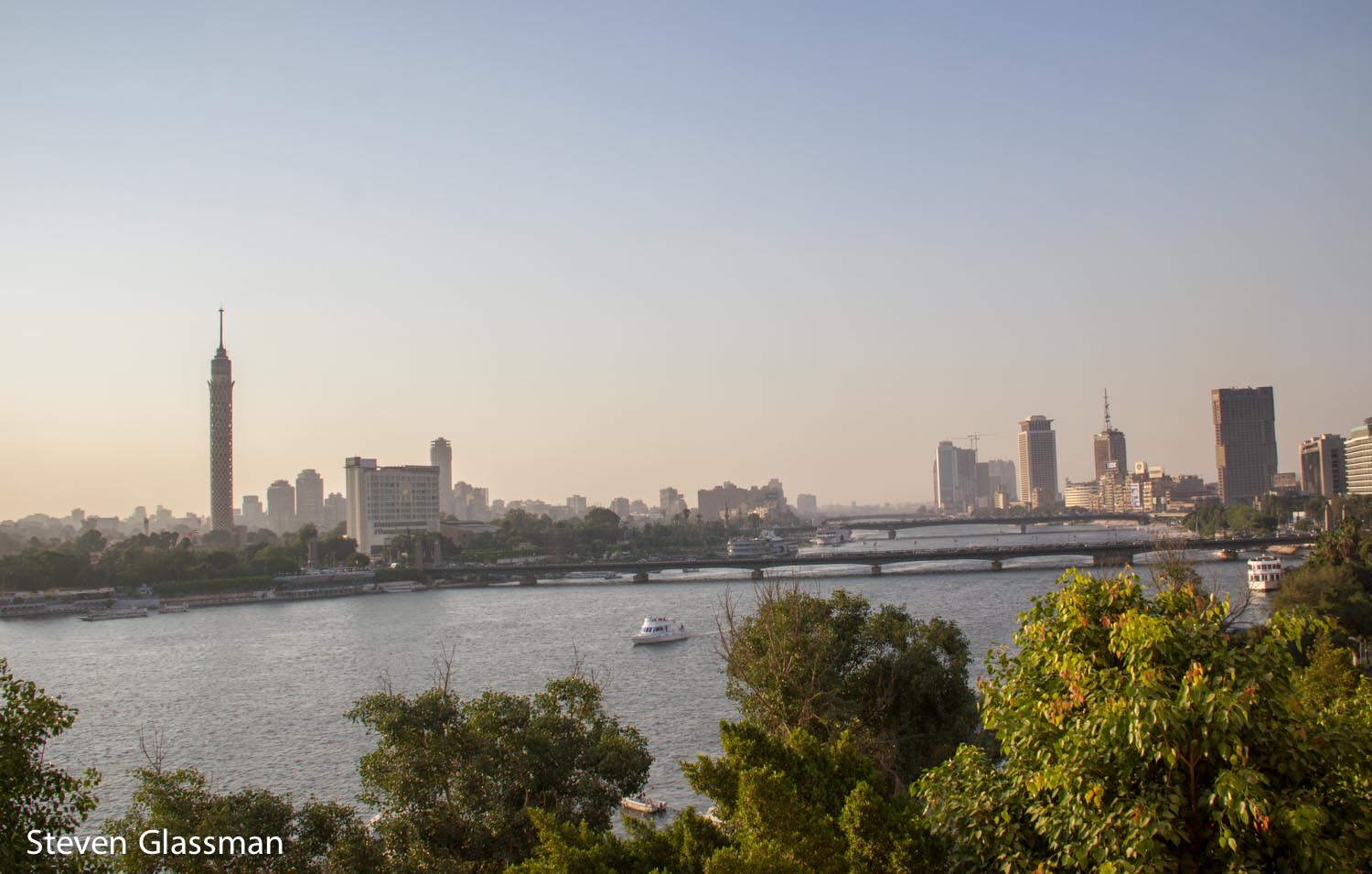
The next morning, I woke up early for my tour of the Giza Necropolis, including the pyramids and the Sphinx.    I also took a quick daytime picture from my balcony.    That tower in the left third of the picture is Cairo Tower, which has an observation deck at the top and a revolving restaurant just below that.  I’ll come back to that later in the post.

cairo-3

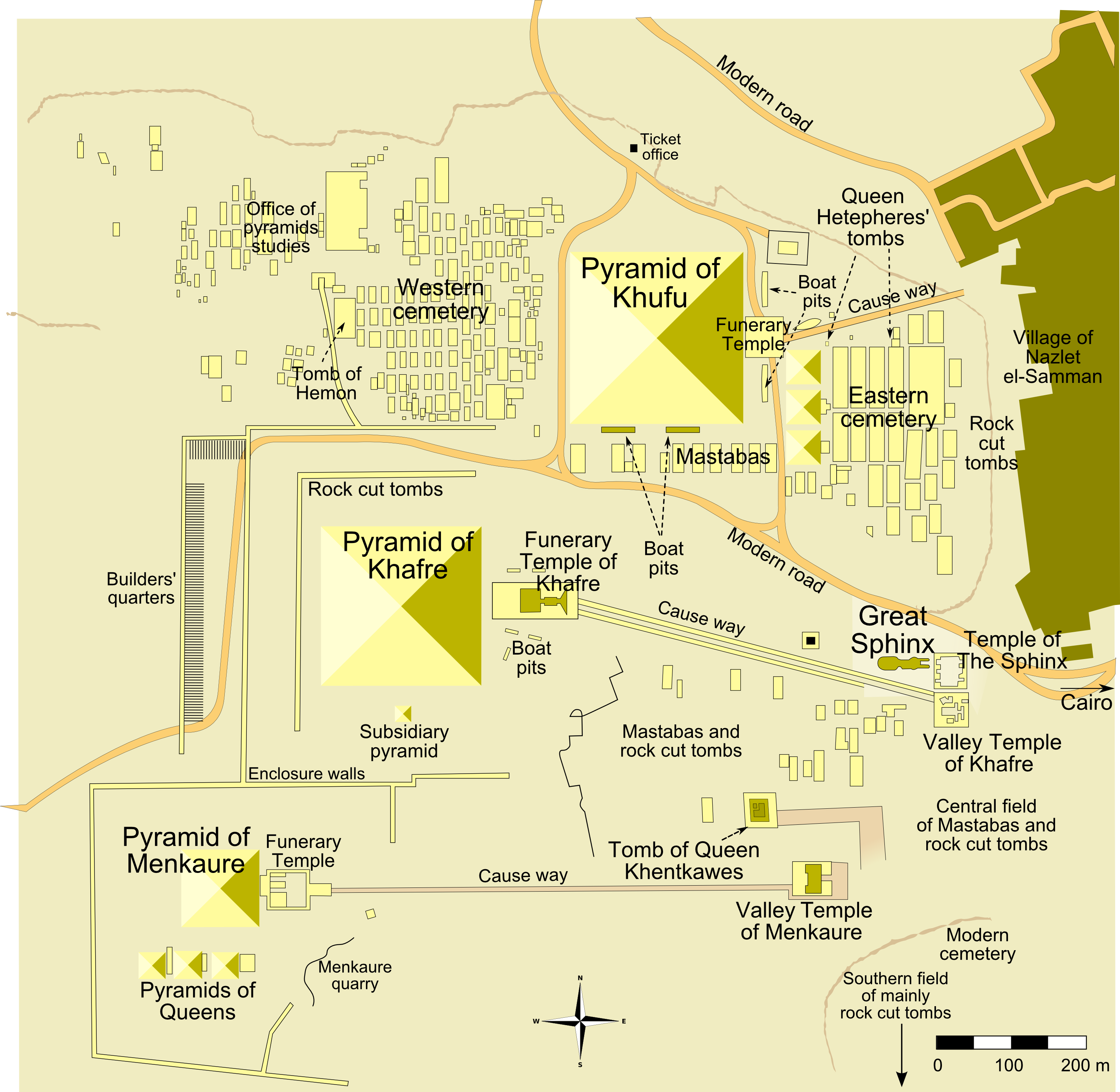
I ganked this map of the Giza Necropolis from Wikipedia, because it shows a lot of important detail.  The first thing that I didn’t realize before this trip is that there are more pyramids in Giza than the three big ones that everyone notices.  If you look carefully, there’s three smaller ones next to the Pyramid of Khufu, which is referred to as the Great Pyramid.  There’s also another three smaller pyramids next to the Pyramid of Menkaure, and several other smaller pyramids in the Necropolis.  There are 138 known pyramids throughout Egypt, and a whole bunch of them are right there in Giza.

Also, each of the three largest pyramids is connected to a temple by a causeway.  One of these is still intact today and is visible to the naked eye.  The others are a little harder to spot.

Giza_pyramid_complex_(map)

Here’s the Great Pyramid, also known as the Pyramid of Khufu.  This is the largest of the three on the Giza plateau.  The Pyramid of Khufu was the tallest man-made structure in the world until the Eiffel Tower opened in 1889.

cairo-10

On arrival, I sat with my guide Khaled for a few minutes at the base of the Great Pyramid while he discussed the construction and history of the pyramids with me.  This picture is looking straight up the North face of the Great Pyramid.

cairo-5

This photograph is looking back at the city of Giza from the base of the Great Pyramid.    Giza comes very, very close to the pyramids on one side.  The other side is the start of thousands of miles of Sahara Desert.

cairo-6

The Pyramid of Khafre is the only one of the pyramids in Giza to still retain a portion of its limestone casing.  Supposedly, all three of the big pyramids were at one time fully covered in this polished limestone, with gold capstones.    That must have been quite a sight.

Khafre also looks larger than Khufu to the naked eye, but that’s because it’s on a higher elevation.  It is actually smaller in both height and width.

cairo-12

I had the chance to descend into the burial chamber of one of the smaller pyramids next to Khufu.  The attendants were happy to take my picture as I climbed back up.  They’ve mounted handrails into the tunnel because the pathway down is not steps; it’s a ridged wooden plank to give you traction as you climb or descend.    This photograph is only moments before I whanged my head coming out of the entrance:  The Curse of the Pharaohs takes many forms.

You can choose to go into the Great Pyramid, but it’s another 200 Egyptian Pounds (about $30) and I decided that one musty burial chamber was enough for me.

cairo-7

Khaled took me into one of the smaller structures near the pyramids- this was a small structure supposedly built for one of the architects of the pyramids.  Here, Khaled is pointing out the cartouches-  the symbols inside the oval with a crossbar on the left side.

cairo-8

Each cartouche is the name of someone royal.  In most cases, it refers to those who are buried inside the pyramids.  I do not recall which was which here.

cairo-9

Khaled made me do traditional silly tourist pictures with the pyramids, but I steadfastly refused to do a jumping picture.  I’m not a fan of pictures of people jumping in front of landmarks.

cairo-11

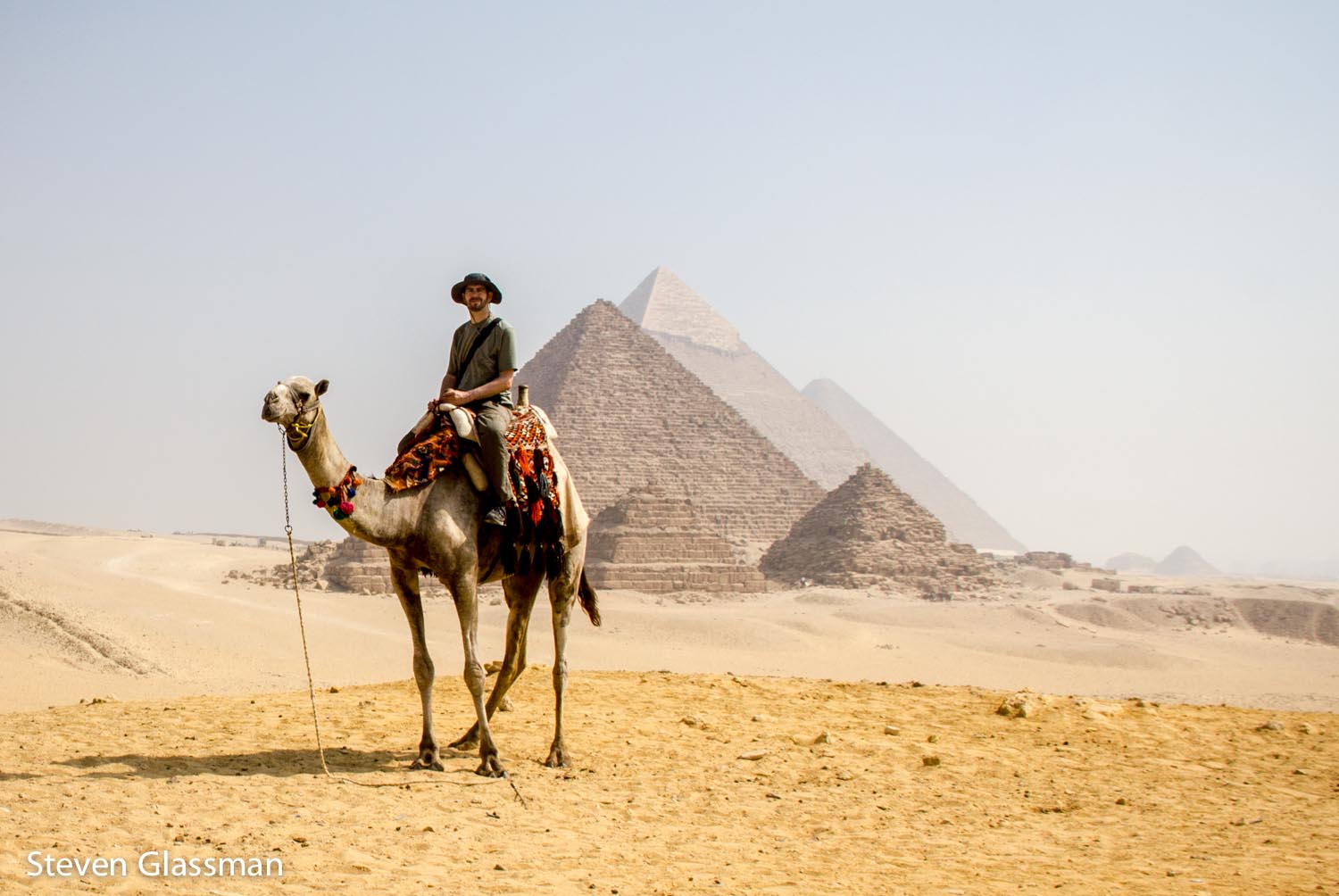
One of my options was a camel ride from behind the Pyramid of Menkaure around the outer edge of the Necropolis to the Sphinx.    I’d never been on a camel before, so I was game.  My thoughts are as follows:  1) It’s a damn good thing I brought sunscreen, because this was actually a camel ride in the desert.  2) Camels are not a smooth ride.  It takes a little while to get used to the rhythm.

cairo-13

I think this is how camels say hello.

cairo-14

One of the advantages of taking the camel ride was that I got a really phenomenal view of all the pyramids lined up.   This photograph contains nine pyramids.

From this perspective, the Pyramids of Queens are the three small ones in front, with Menkaure right behind them.  The Pyramid of Khafre is next to the right, and the Pyramid of Khufu is just to the right of that one.  You can also make out three of the smaller pyramids to the right of Khufu.

cairo-15

After about 45 minutes on camel-back, we arrived to the Sphinx.  This is the interior of the Temple of the Sphinx, with very old alabaster flooring.  Supposedly, this temple had a roof at some point.

cairo-16

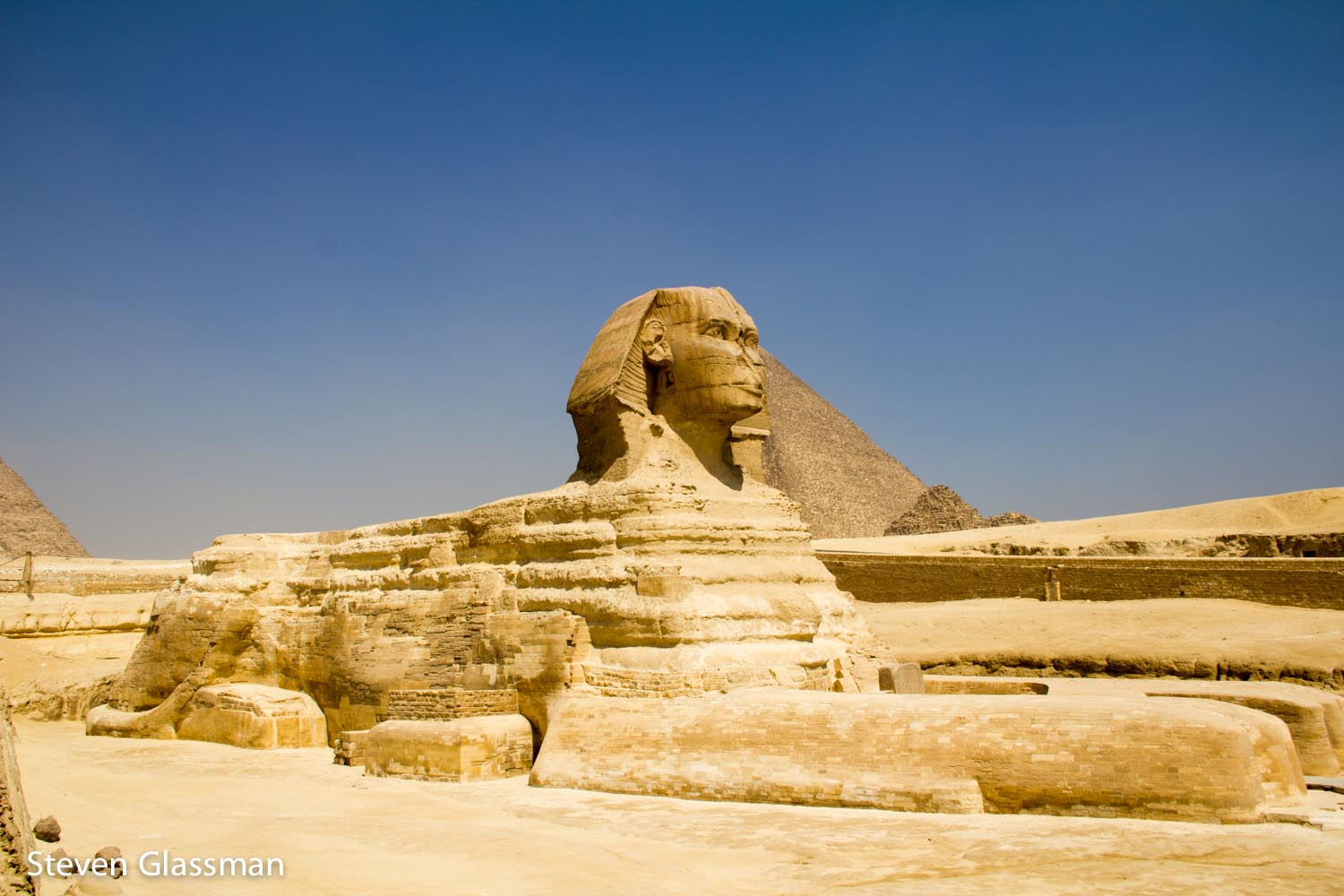
The Sphinx is missing forehead ornamentation, a beard, and its nose.  I’ve seen the beard in the British Museum in London.  It’s not clear what happened to the forehead ornamentation.  As for the nose, one popular theory says that it was accidentally shot off by French soldiers.  Damn you, Napoleon!

cairo-17

The pyramid over the left shoulder of the Sphinx is the Great Pyramid.    The Great Pyramid is so large that I didn’t see the Sphinx at all until late in the day, despite walking around the other sides of the pyramid.

cairo-18

The Giza Necropolis was the highlight of my Cairo trip, but that didn’t stop me from seeing other things.  I mentioned the Cairo Tower earlier-  this is the front entrance.

cairo-19

Here’s a closer view of the entire tower.

cairo-20

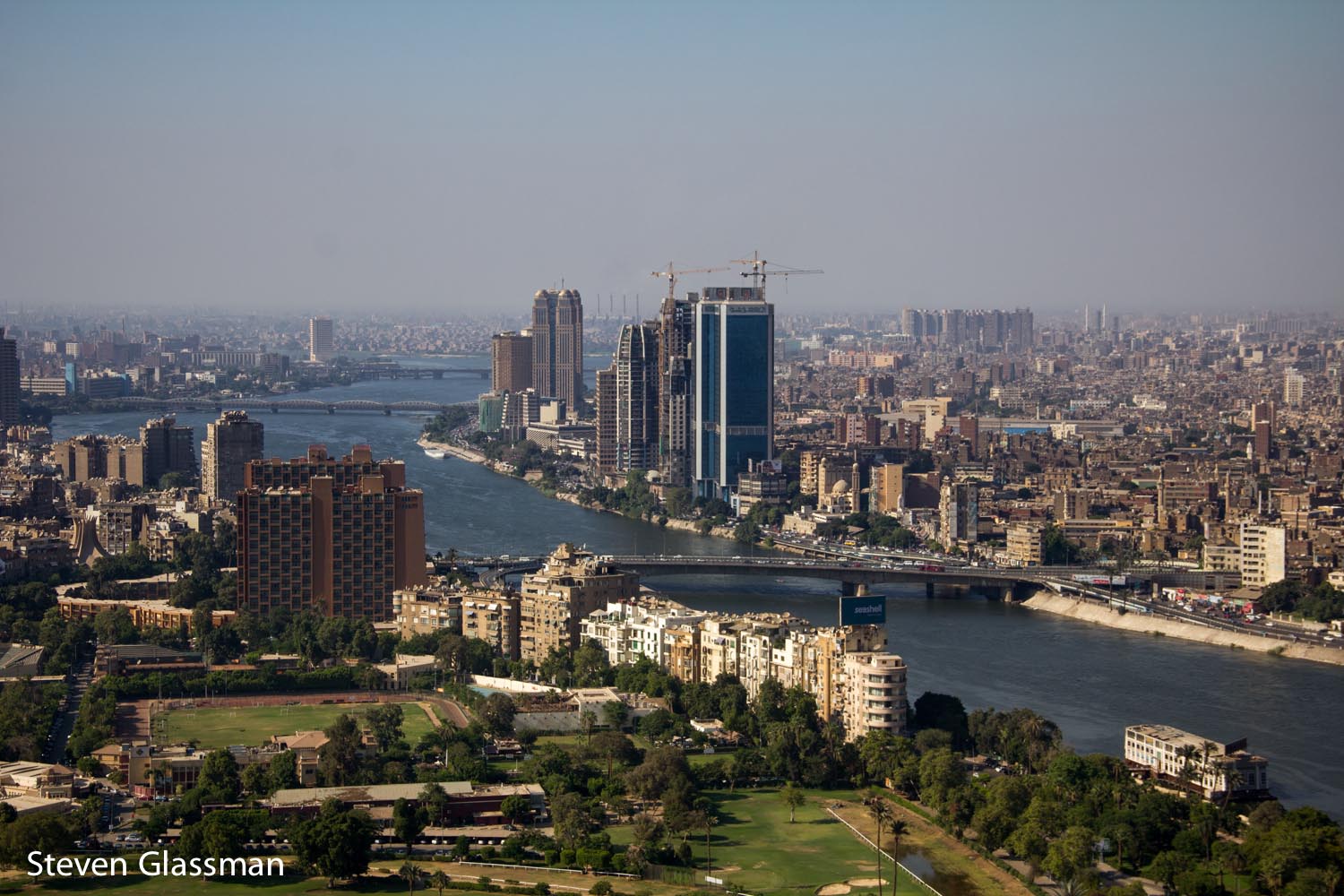
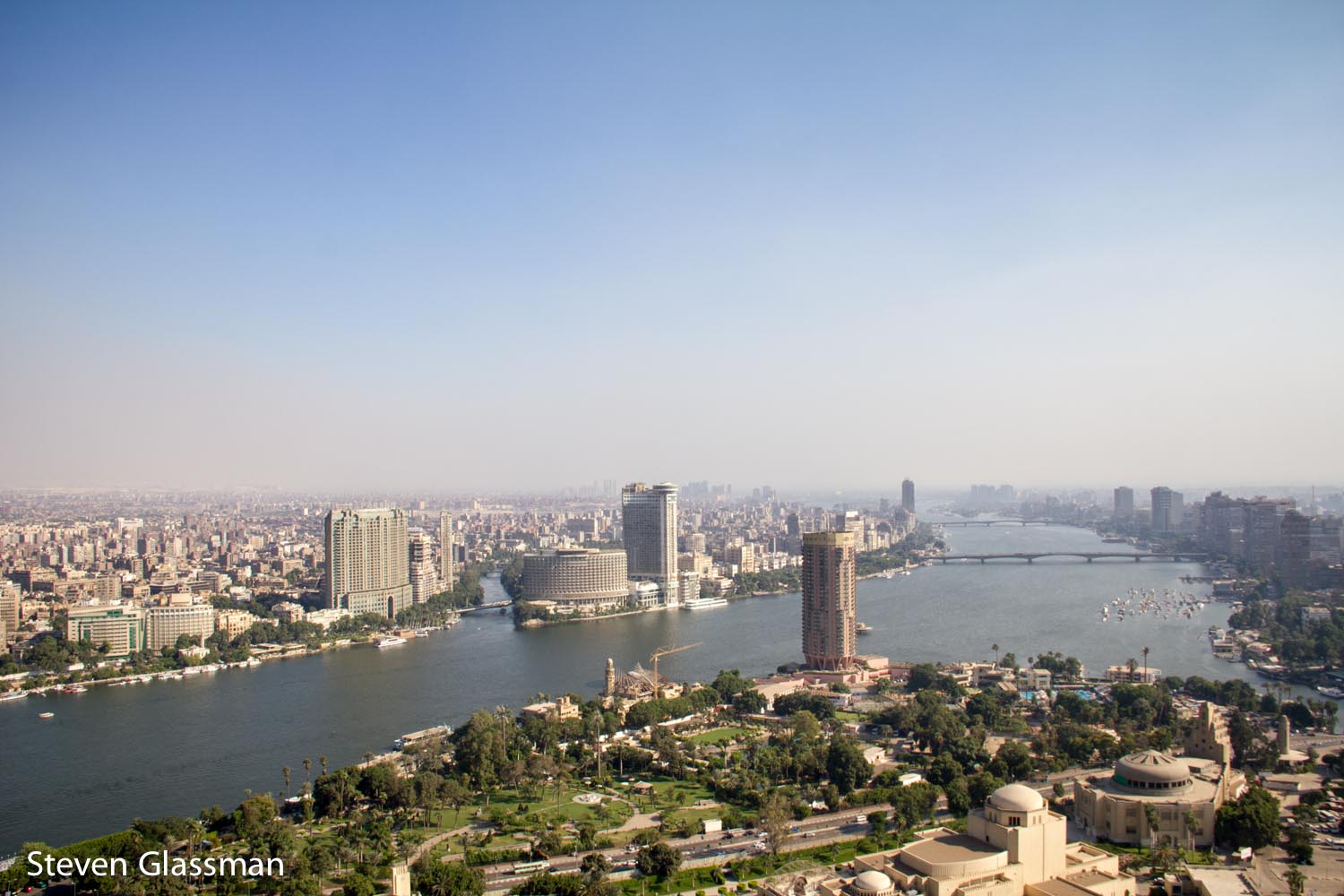
From the viewing platform on the top of Cairo Tower, the views are fairly spectacular.  Here’s one view along the Nile.

cairo-21

Cairo is a very dense city.  It  has an estimated population of 12 million people, and when you include Giza and the remaining surrounding metropolitan area, it has a population of nearly 22 million people.  That’s roughly a fourth of the residents of the entire country.

cairo-22

On a clear day, you can even see the pyramids from Cairo Tower.  On a hazy day, you can still see them- just not clearly.

cairo-23

This is Tahrir Square.  It’s not really square, as far as I can tell. This is where  the most well known protests of the Egyptian revolution took place.

cairo-24

This is an area of the city adjacent to Tahrir Square.  The reddish building is the Egyptian Museum.  I’m not sure what the burnt out building next to it is.

cairo-25

Here’s a closer picture of that burnt out building, taken on my walk to the Egyptian Museum.   There were quite a few burnt out buildings in Cairo, signs of the struggle there over the last few years.

cairo-26

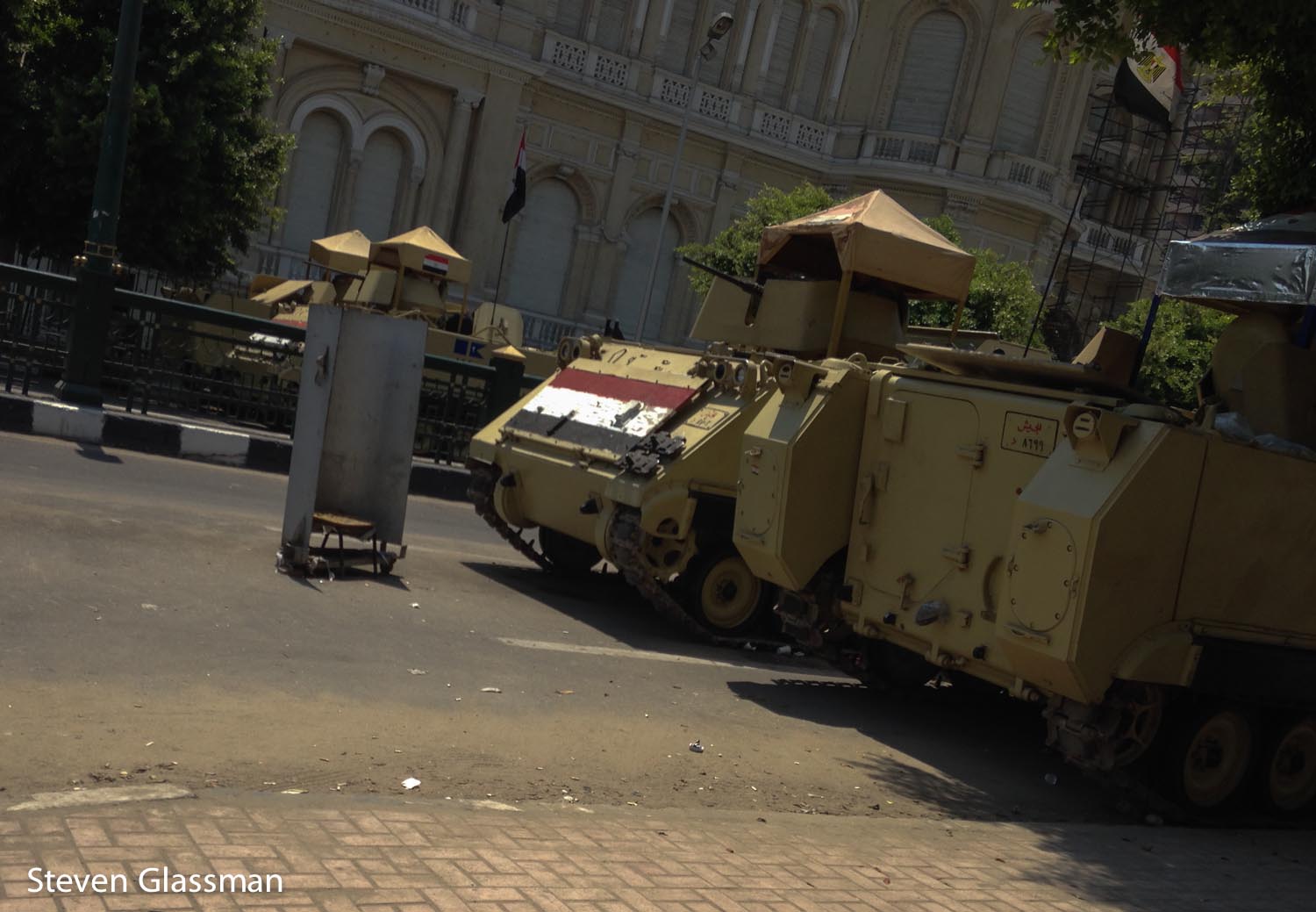
When I was walking to the Egyptian Museum, I walked past four tanks and some barbed wire.  This isn’t a very good picture because I was trying not to be super obvious that I was taking a picture.  My goal here was to attract as little attention from the armed soldiers as possible.  There were a lot of armed soldiers around Cairo, and it was disconcerting.    To get into the museum, or the Cairo Tower, there were security checkpoints with metal detectors.  To get into my hotel, I had to get past the bomb sniffing dog and a metal detector.

I never really felt comfortable or safe while walking around Cairo.  I only felt safe in the touristy areas, behind  the metal detectors.

cairo-27

On my third night in Cairo, I went to the Pyramid Sound & Light Show.  It was somewhat cheesy, but they used lasers on the Great Pyramid, so I liked it.   The whole thing is done from a very comfortable deck overlooking all three pyramids and the Sphinx.

cairo-29

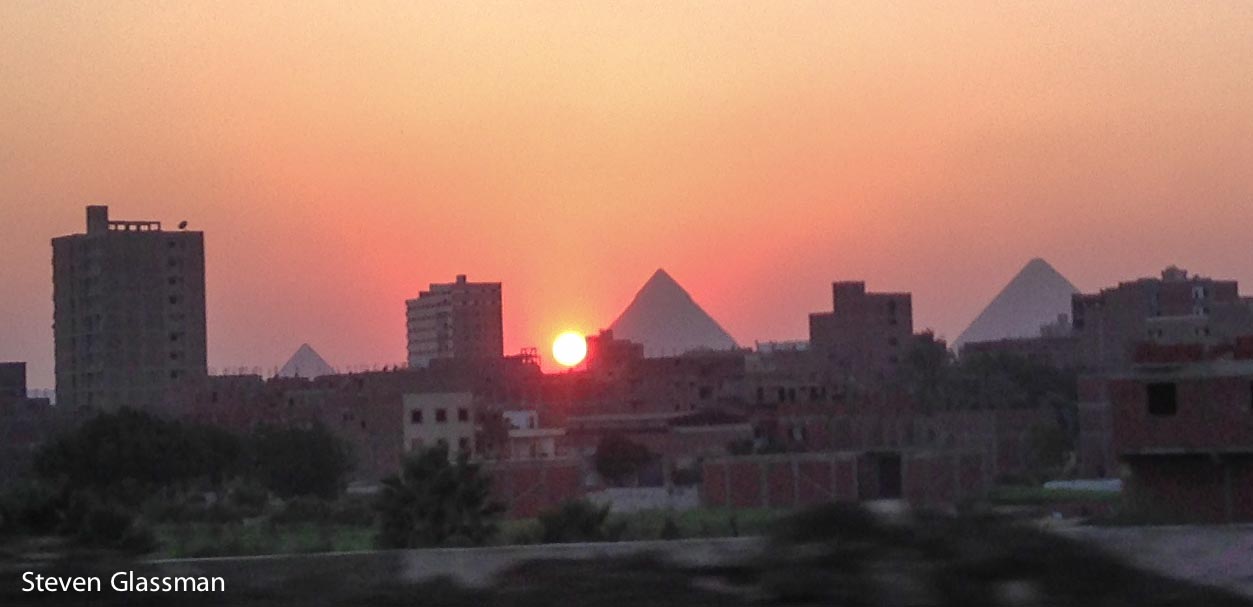
I will close this post with a picture taken from a moving car on my way out to the Pyramid Sound & Light Show-  this was taken just before sunset with an iPhone.  I rather wish I had taken the dSLR out for this part of the evening.

cairo-28

Have you ever been to the Pyramids in Giza?

Munich Flughafen Besucherpark

Almost every time I’ve gone to or from the Munich airport in the last few years, I’ve used a route that includes a train between Regensburg and Freising, and bus 635 that goes from the Freising Hauptbahnhof to the Munich airport a few times each hour.  One of the stops on bus 635 is the München Flughafen Besucherpark, or Munich Airport Visitor’s Park.  I could see from passing by that it had a bunch of old aircraft to look at, and an observation hill that looked over the airport, and I made a promise to myself to actually stop when I had time, instead of just noticing it on the way to or from the airport.

That opportunity finally struck in July, when I had a ticket to go into Munich to see Sarah from Regensblog in the ESME summer concert.   The show was in the evening, so I set out a little bit earlier in the day.  Instead of taking the train all the way into Munich right away, I stopped in Freising, got on the old 635, and hopped off at the stop for the Besucherpark.

The bus stops are next to the S-Bahn stops, and there’s a little bit of a walk between public transport and the visitor park.  If you drive there, you get to park closer, but you miss out on some of the groovy trail decorations.  I especially like the nod to the Statue of Liberty in this one.

besucherpark-munchen-1

Getting a little bit closer, there’s a helicopter on a stick!  I wonder if this exhibit is sponsored by a roadside assistance company of some sort… maybe ADAC?  This air rescue helicopter was stationed at the Munich hospital 36 years ago, and was retired here in the visitor’s park.

besucherpark-munchen-2

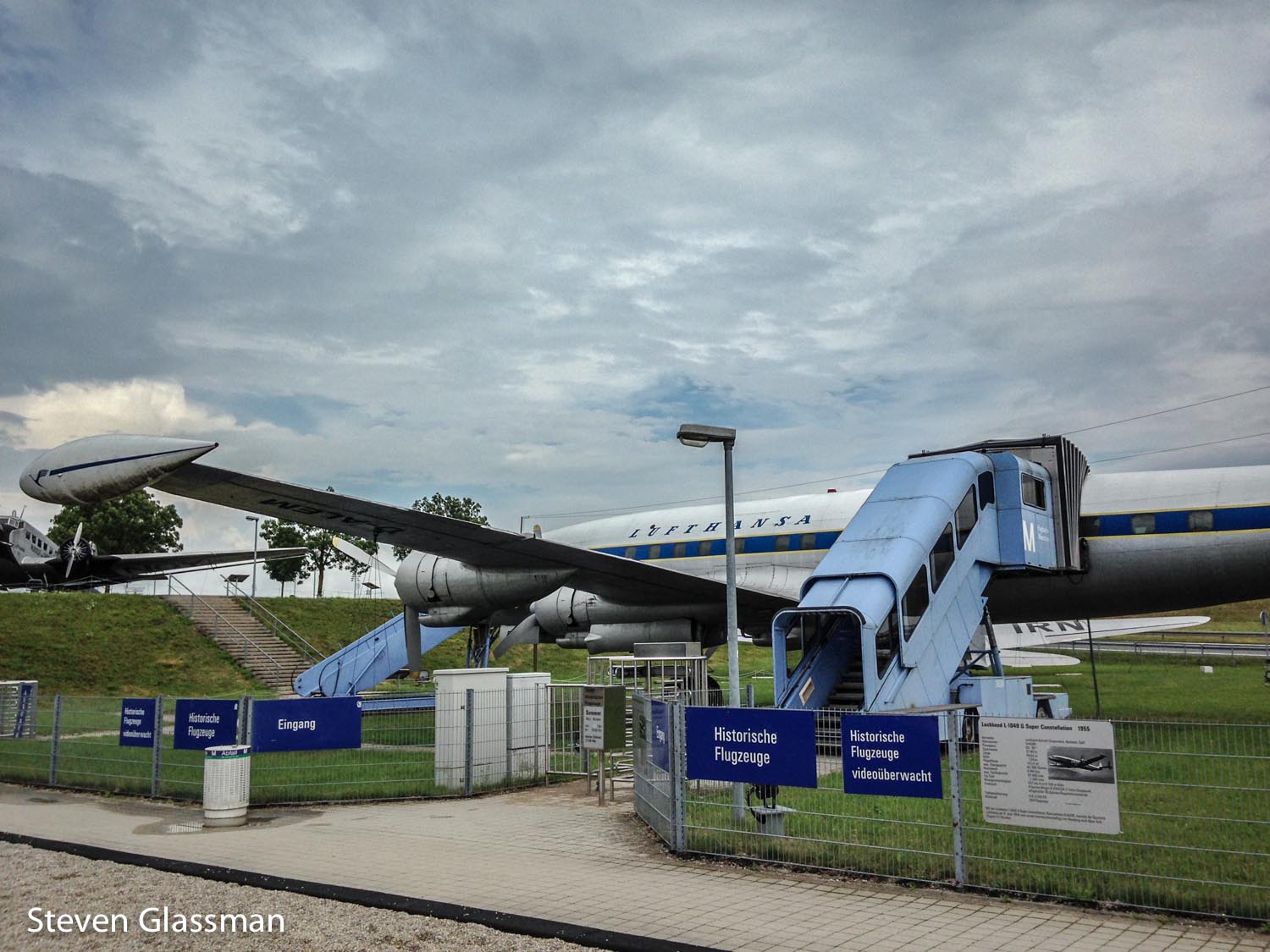
This is the bit that got my attention from the bus as it passed by-  the Lockheed L-1049 G Super Constellation.  This is an original Super Constellation from 1955, with Lufthansa’s classic livery colors.  This was the first aircraft to have a pressurized cabin, and it was the first aircraft that Lufthansa used for transatlantic flights.

For a euro, you can go up into the aircraft.

besucherpark-munchen-3

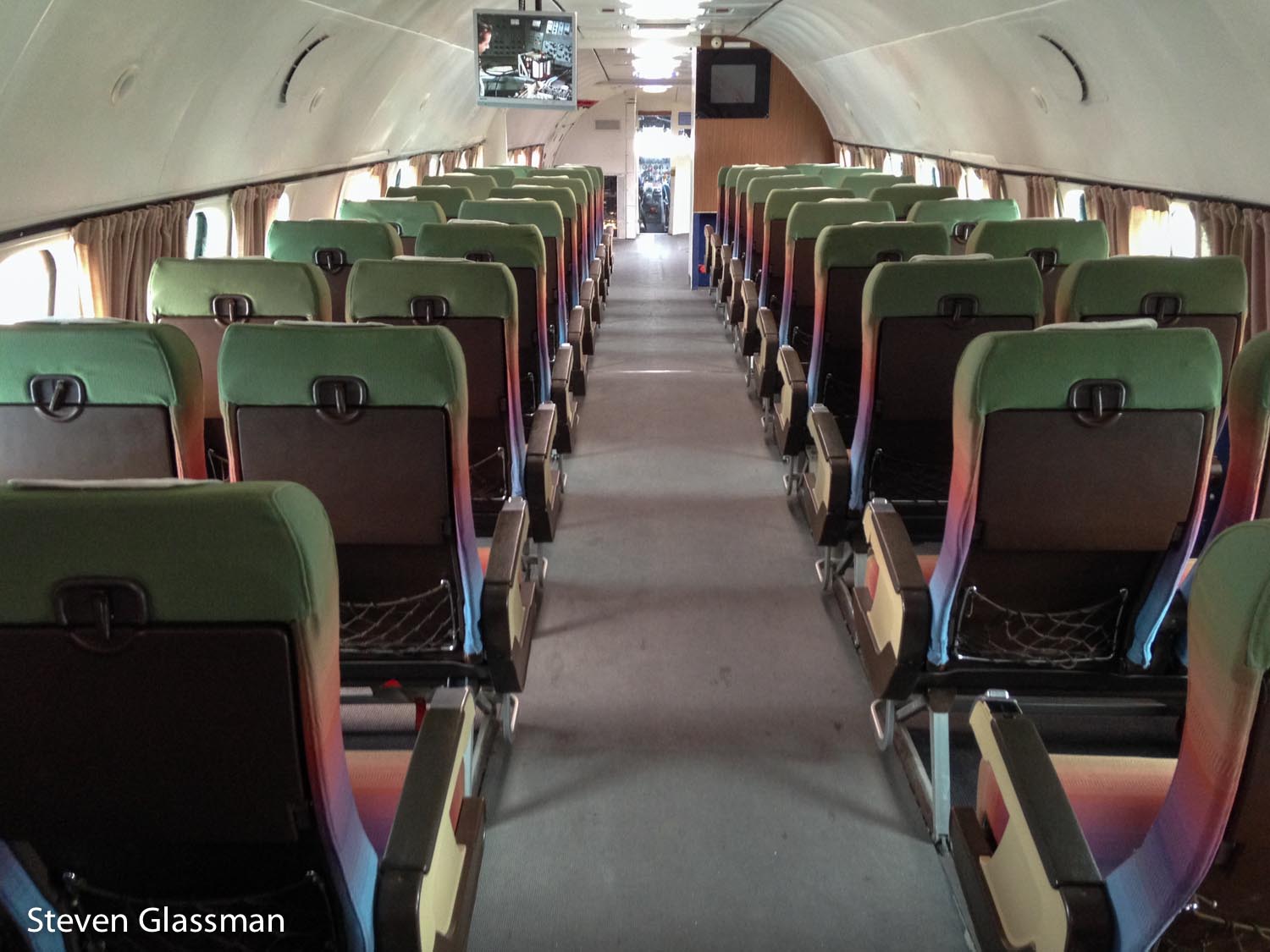
Passengers had quite a bit more room in the 1950s!

besucherpark-munchen-4

There are fewer seats than in a modern aircraft, but the space per seat is much greater.

besucherpark-munchen-5

They left the auto pilot on!

besucherpark-munchen-6

Next up, there’s a Swissair Douglas DC-3.   This one was closed up when I visited, but the DC-3 has a reputation for being a great cargo plane.

besucherpark-munchen-7

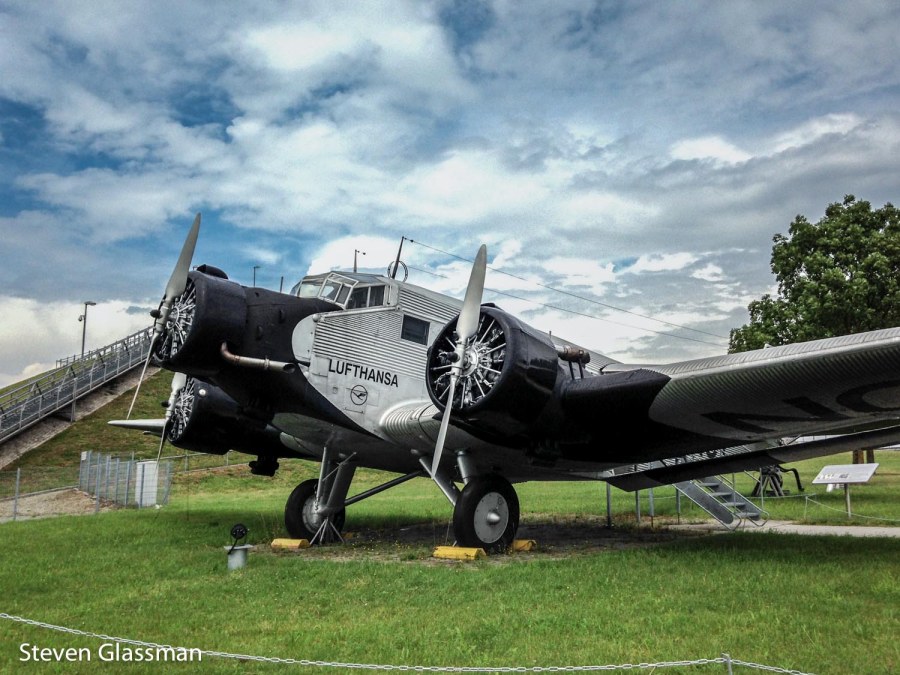
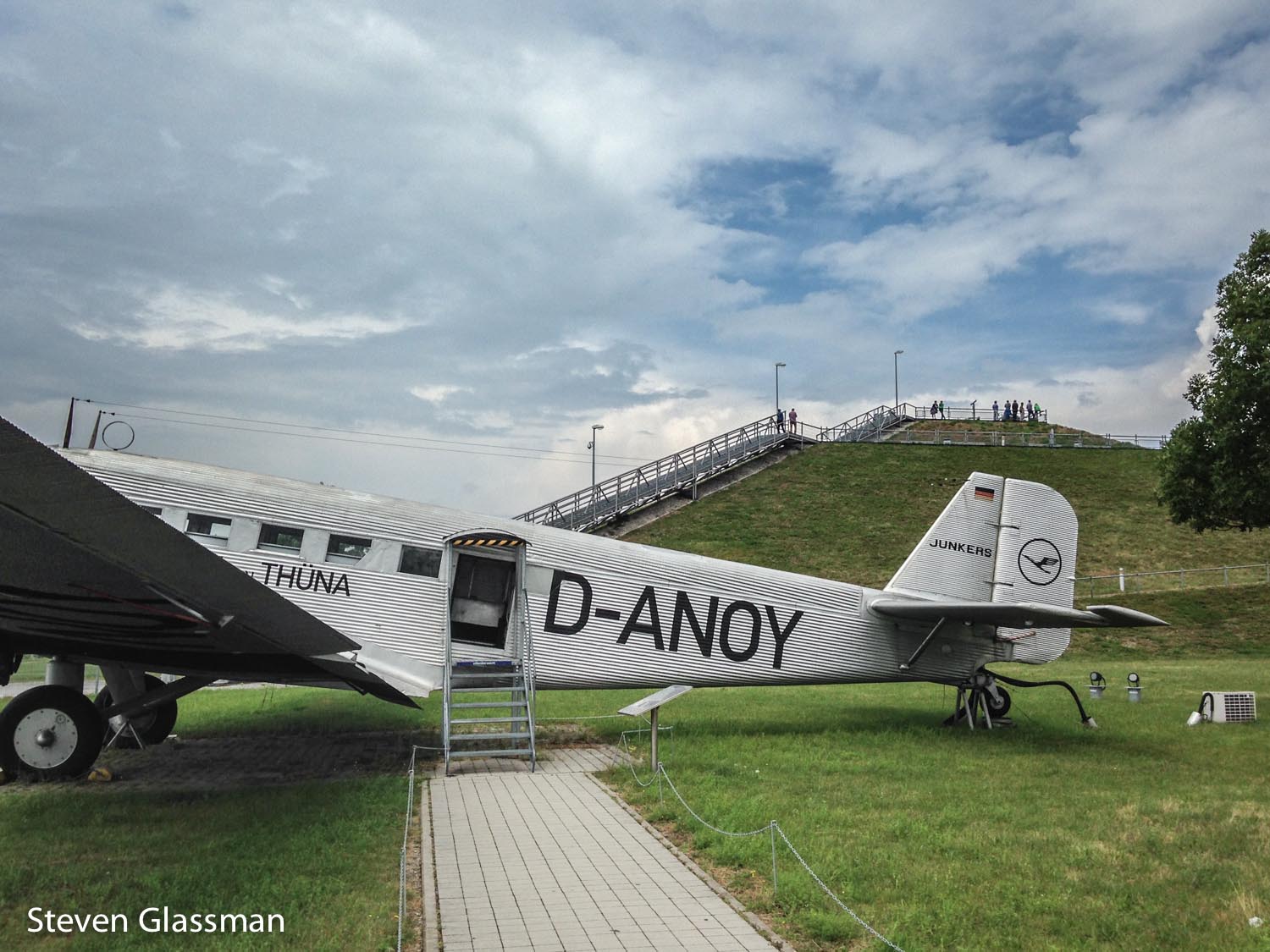
The Junkers Ju 52 was used for airmail service to South America and for exploration flights in the 1930s.

besucherpark-munchen-8

This is the back of the Junkers Ju 52, also referred to sometimes as Auntie Ju.  The obseration hill and stairway are visible in the background.

besucherpark-munchen-9

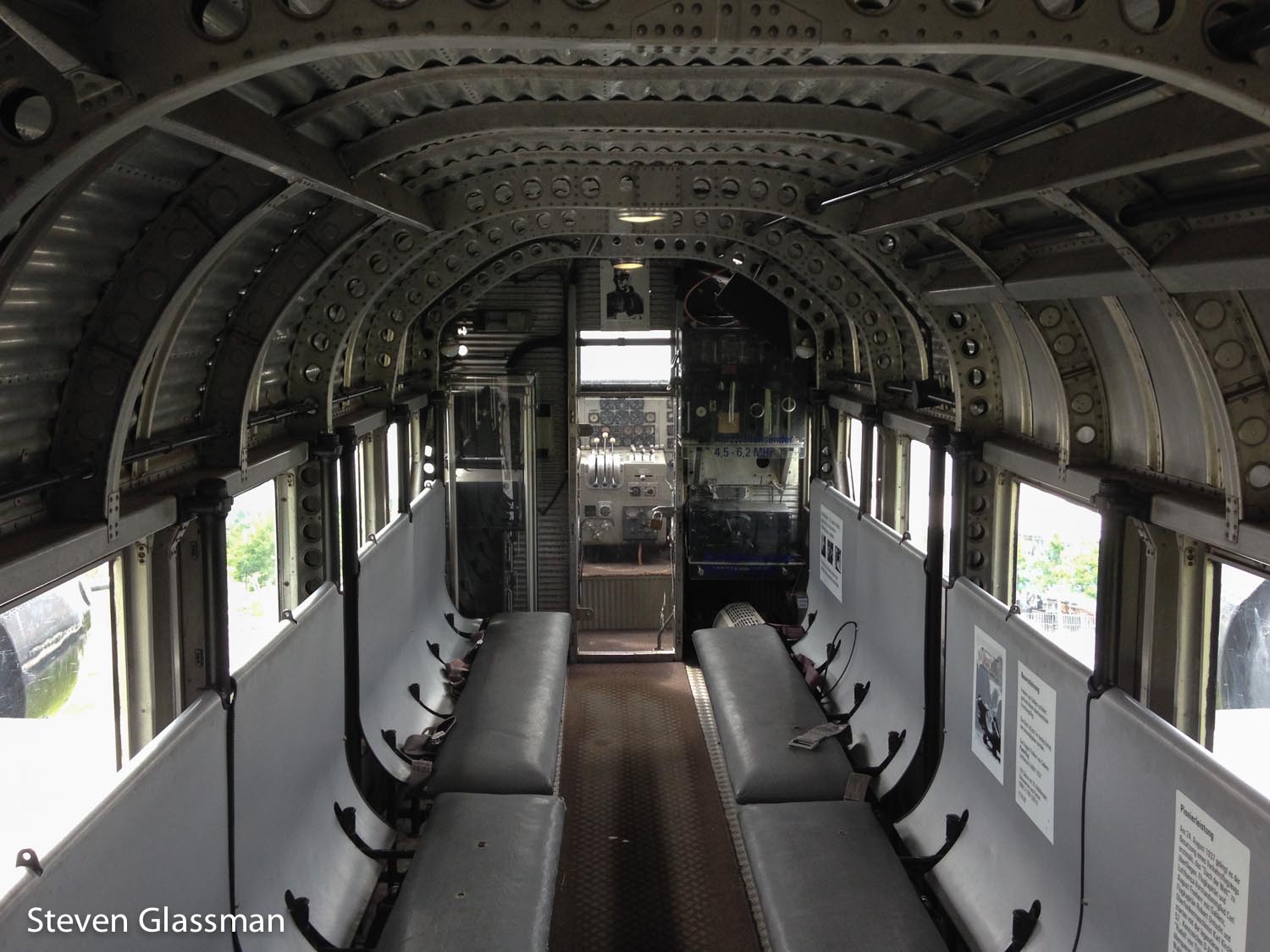
There were historical broadcasts playing inside the Ju 52, but I didn’t stick around to hear them.

besucherpark-munchen-10

This is the cockpit of the Junkers Ju 52.  Vintage 1930s technology!

besucherpark-munchen-11

At the top of the observation hill, you can see all the aircraft from above.  You’ll need another euro to get through the turnstiles at the bottom of the hill.

besucherpark-munchen-12

From the observation hill, you can also see the entire airport spread out in front of you.  Lots of people brought their kids up here, and there are coin operated telescopes to get a closer view.  I saw one guy with enormous binoculars and a notepad writing down every aircraft type he spotted.  Interesting hobby, I  think.

I watched several aircraft taking off and landing before I climbed back down.

besucherpark-munchen-13

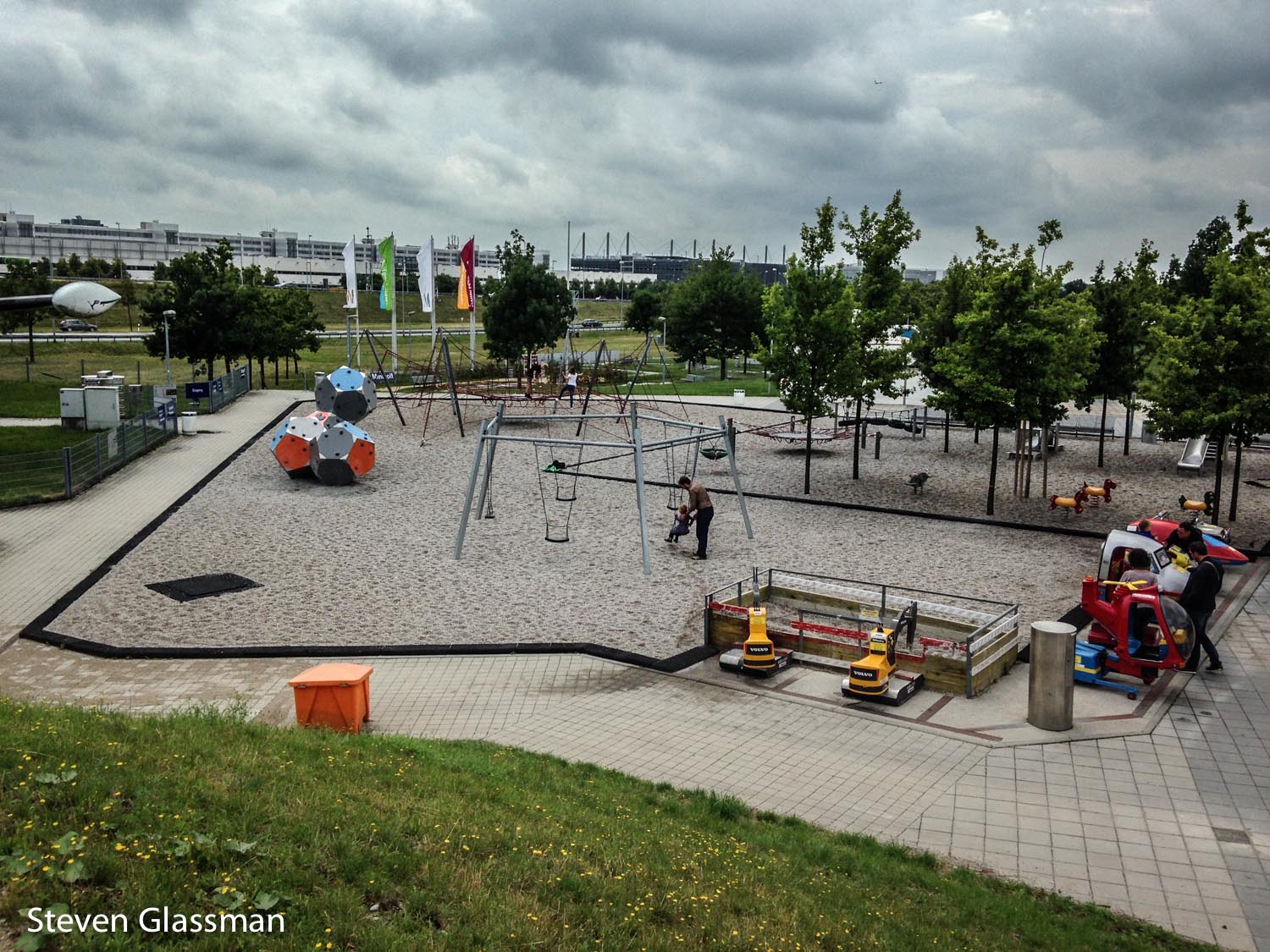
The Besucherpark is designed to be family friendly.  It even has a pretty good sized play area for the smaller children.

besucherpark-munchen-14

Naturally, there’s a restaurant and a souvenir shop on the premises.

besucherpark-munchen-15

The restaurant is named Tante Ju’s, which is the German for Auntie Ju’s, named after the Junkers Ju 52 aircraft pictured above.

besucherpark-munchen-16

Once I was done at the visitor’s park, I walked back to where I started and took the S-Bahn the rest of the way into the city for a nice burger and a concert.  That’s another story, though.

The Visitor’s Park can be reached by Bus 635 from the airport or Freising, or it can be reached by the Munich S-Bahn (S1 or S8 to Besucherpark, about 40 minutes from the main station.)

The Visitor’s Park and viewing hill are accessible around the clock, year round, and the information center, shop, and historical aircraft have the following hours: March to October, 9:30am-6pm.   November to February, 10am-5pm.   Tante Ju’s Restaurant is open daily 9:30am to 6pm.

And according to the website, there’s minigolf there too, but I never saw it.

Have you ever been to the München Flughafen Besucherpark?

Bratislava

Caveat:  Many of the pictures in this post might look a little familiar if you read Confuzzledom, because Bev and Jan went to Bratislava the day after I did, and they took the same free walking tour that I did.  We saw a lot of the same things, and even had (delicious traditional) lunch in the same tourist-trap restaurant.  She was much faster about getting her Bratislava post up than I was, however.

The last time I was in Vienna, I took a day trip to Bratislava, the capital of Slovakia.  Bratislava is only about an hour away from Vienna by regular commuter train, and you can even take a boat along the Danube river to get there.

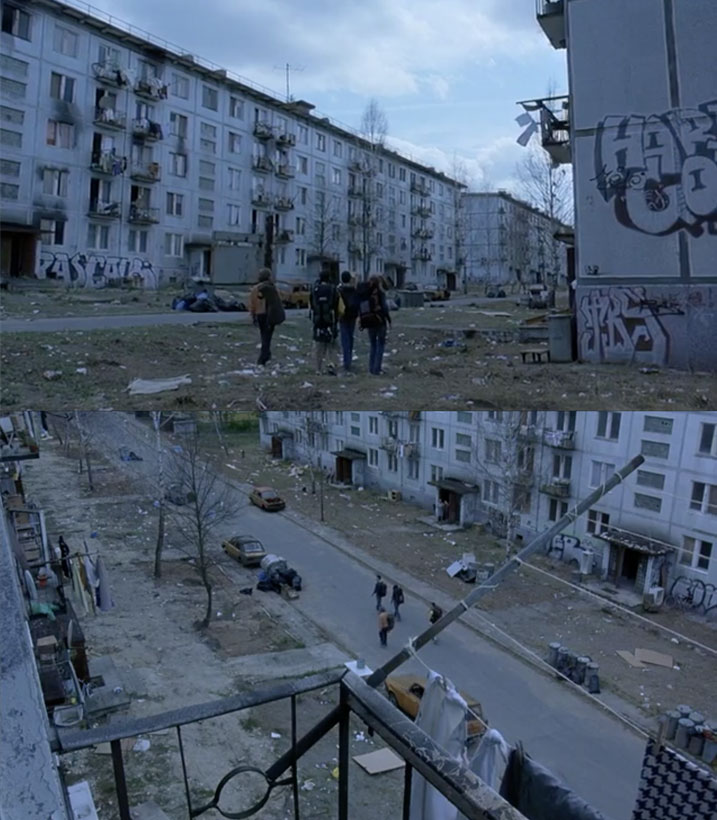
If your only exposure to Bratislava before now is based on the movie Eurotrip, then this is what you’ll expect the city to look like.  These are actual screen captures from the Bratislava section of a very funny movie that gets traveling through Europe dead wrong.

eurotrip

Bratislava is far from the post-Communism wasteland depicted in the movie- it’s actually a really pleasant little town. Outside of the center it’s nothing too pretty, but the old part of the city is compact and lovely.

I felt like the center of the city bears marked similarities to Prague, which makes sense if you consider that prior to the Velvet Divorce in 1993, the Czech Republic and Slovakia were one country.

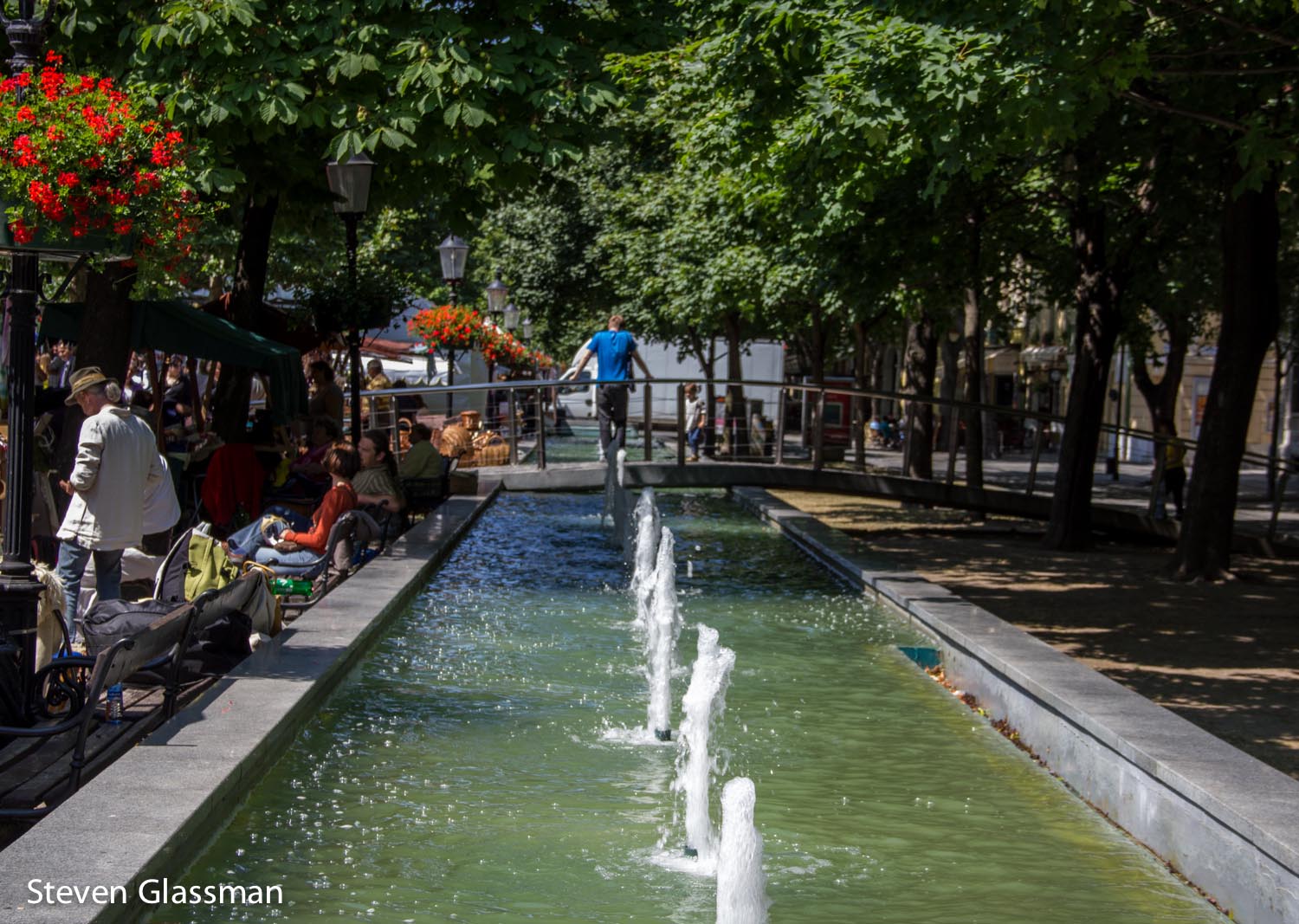
Here’s a fountain in Hviezdoslav Square, a pretty little central area in the city.

bratislava-1

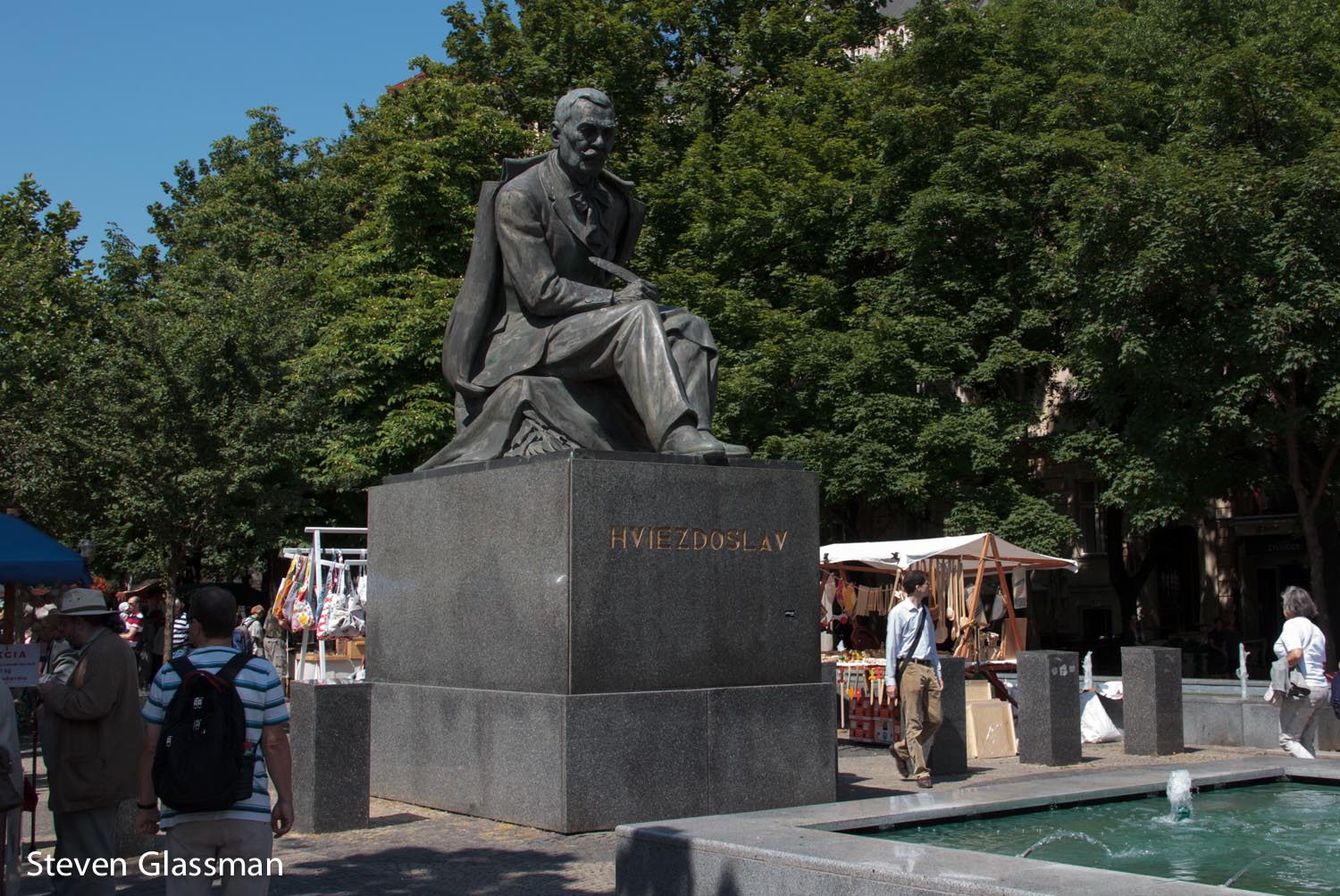
Hviezdoslav Square is named after Pavol Hviezdoslav, a Slovak poet.

bratislava-2

Slovak National Theatre.  Check.

bratislava-3

I meant to check out this place, but didn’t have the chance.  Not a wardrobe in sight!

bratislava-4

Bratislava is filled with amazing statues in random places.  This Man At Work, named Čumil, is very popular.  He is sometimes referred to as The Peeper, because he’s checkin’ out the ladies.

bratislava-5

Of course Man At Work is so low to the ground that he’s been run over a few times.  The sign helps his visibility a little bit.

bratislava-6

Several of the statues are actually owned by restaurants, like this one.  This is a statue of  Schöner Náci, a carpet cleaner who reportedly dressed in a black suit and top hat during the communist days of the city, offering gifts to pretty women.

There was also a well known statue called the Paparazzi statue in Bratislava- it peeked around a corner with a camera.  I asked my tour guide about it, but the Paparazzi statue was owned by a restaurant of the same name, and both restaurant and statue are now gone.

bratislava-7

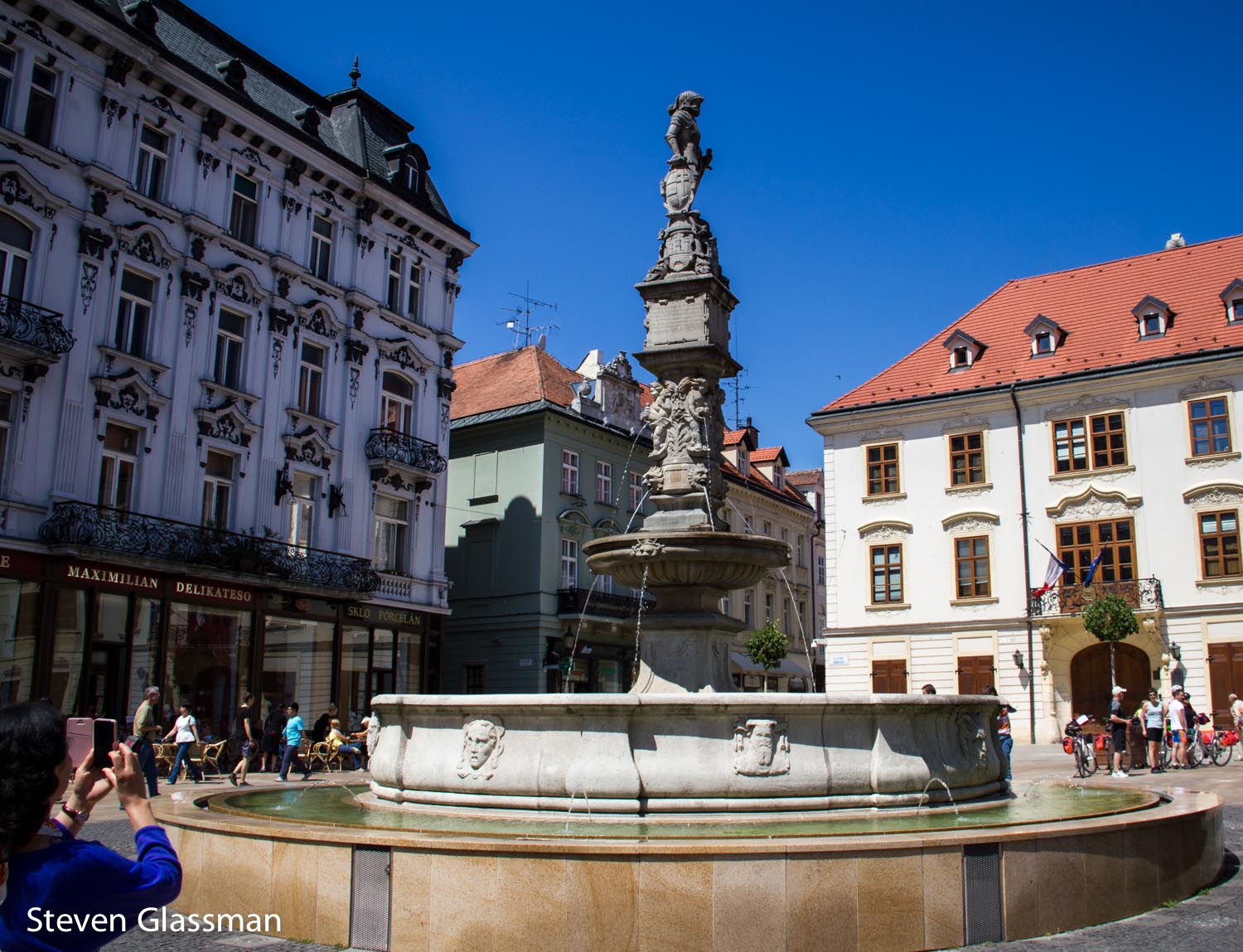
The Roland Fountain (Rolandova fontána)  was commissioned by Hungarian King Maximilian in 1527, and was the first fountain in Bratislava.

bratislava-8

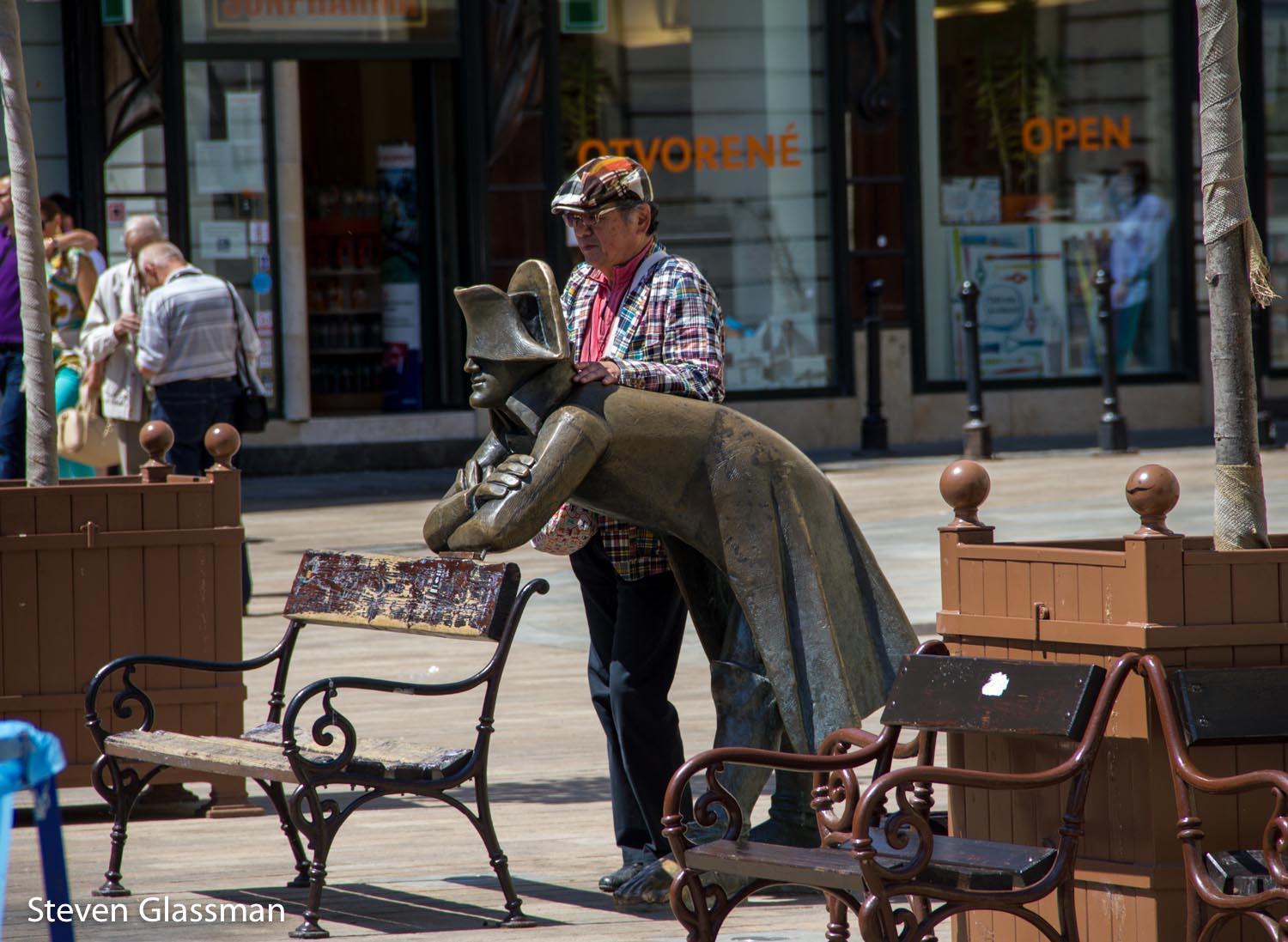
Here’s another one of Bratislava’s great statues.  It’s a deliberately unflattering image of a Napoleonic soldier, because Bratislavans have a long memory when it comes to Napoleon’s siege.

bratislava-9

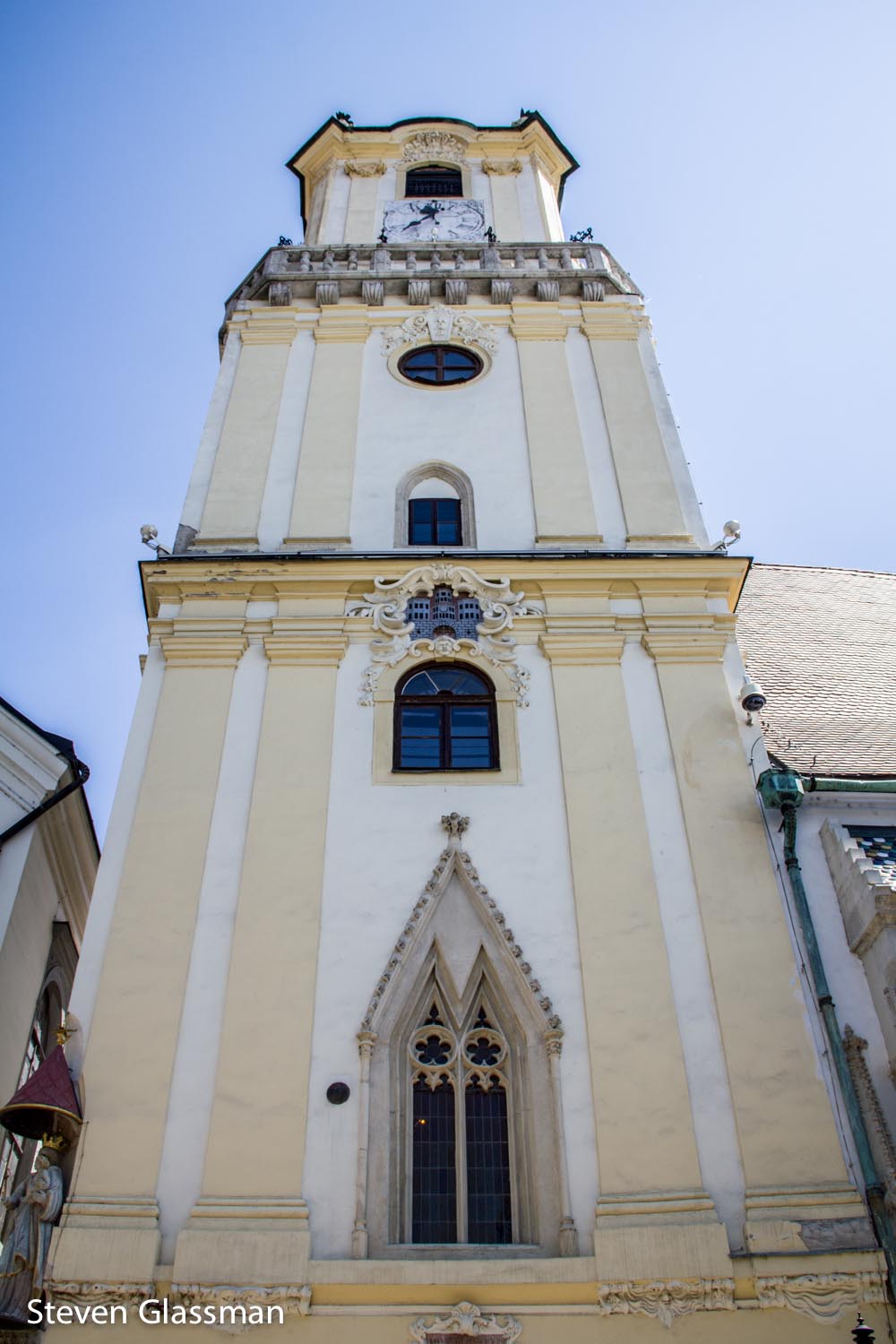
See the black metal ball to the left of the window in this tower?  That’s a cannonball.  This is the old Town Hall tower, and the cannonball is meant to be a reminder of Napoleon’s impact, no pun intended, on the city of Bratislava.

bratislava-10

These Berlin Bears are all over Europe.  I’ve seen more in Berlin than anywhere else, of course, but they’ve made it to other cities.  This one has the coat of arms of Bratislava on the paw on the right (the one that looks like a little castle), and the coat of arms of Slovakia containing the double-barred cross on the left paw.

bratislava-11

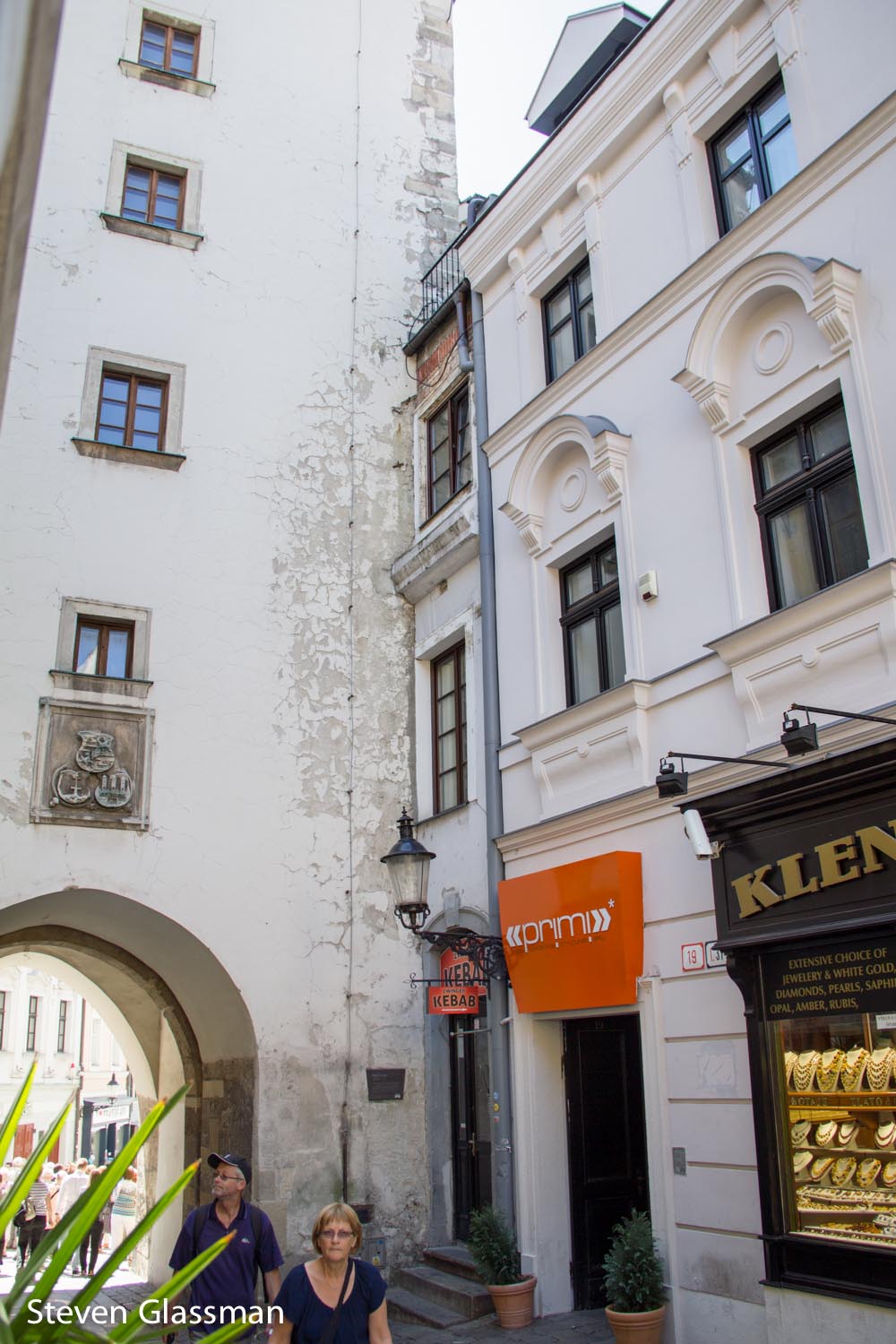
This is the tower of Michael’s Gate, one of the four original main gates to the city.  The distinctive roof is made of copper.  I thought I had taken a picture where you can see both the tower and the gateway beneath it in one shot, but I guess I only got it in separate photos.

bratislava-12

This is the old city gate at the base of the tower from the previous photo.  Michael’s Gate was constructed in the 14th century.

bratislava-13

Next to the tower is the thinnest store in the city of Bratislava.  It’s been many things over the years, but right now, it’s a Döner Kebab stand.    I imagine you can fit almost two people in there at once, but they weren’t open when I walked by so I couldn’t tell you for sure.

bratislava-14

That long flat buiding on the hill in the left half of this photo is Bratislava Castle.  I didn’t get any closer than this.  The building on the right is just a picturesque church.

bratislava-15

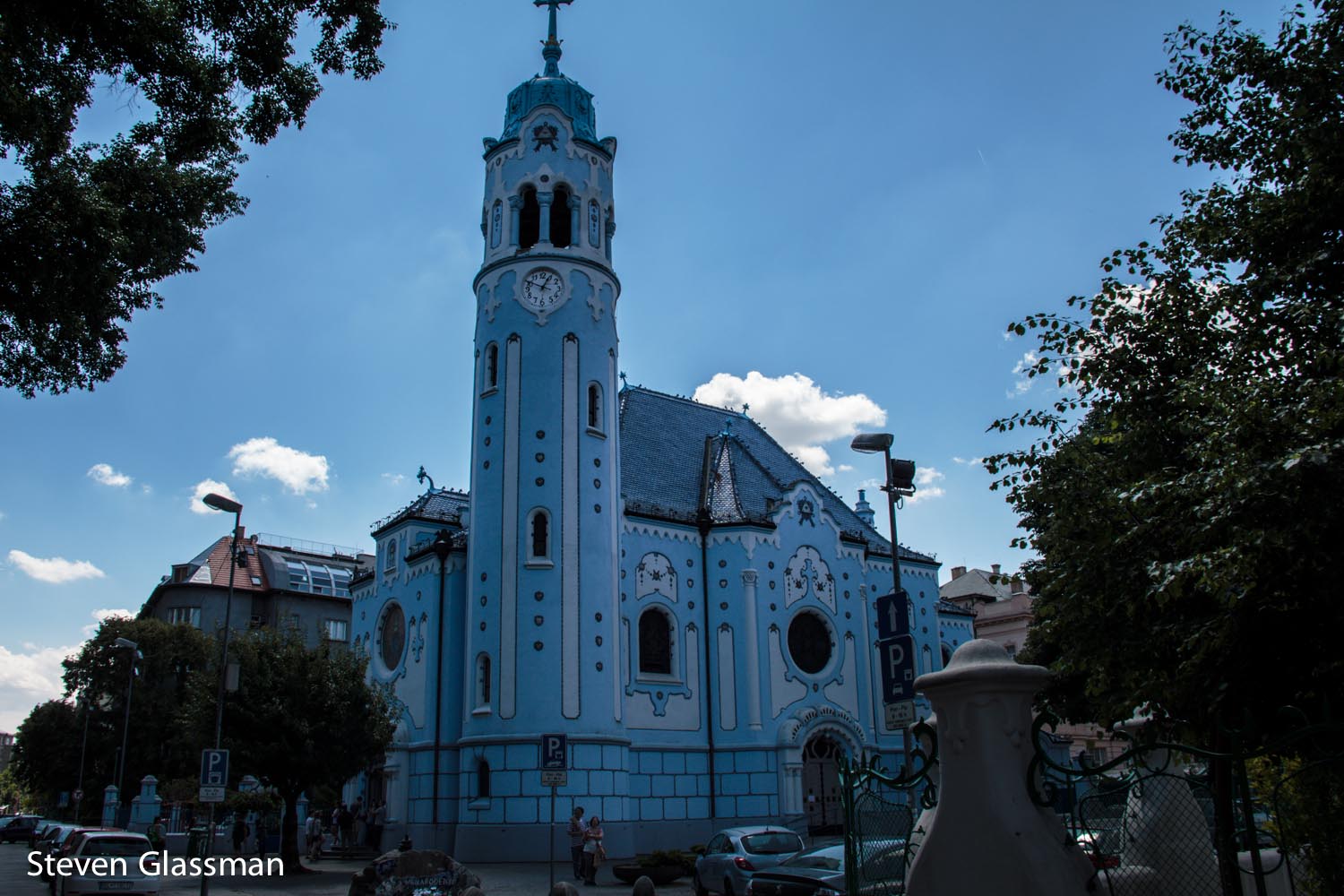
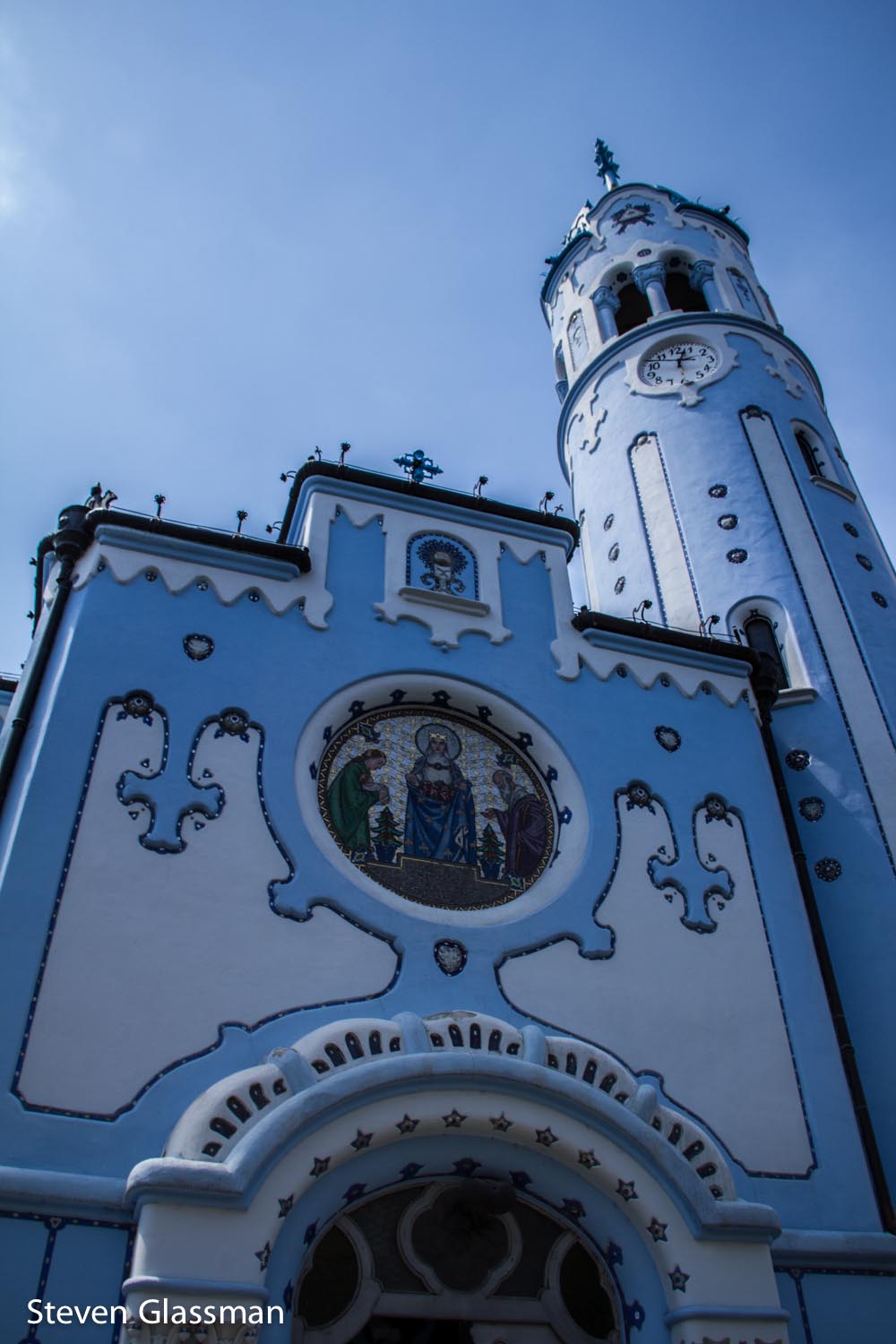
This is the Church Of St. Elisabeth, also known as the Blue Church.  I can’t imagine why they call it that.

bratislava-18

This church is built in the Hungarian Art Nouveau style by Ödön Lechner, a Hungarian architect who was nicknamed the “Hungarian Gaudí“.

bratislava-19

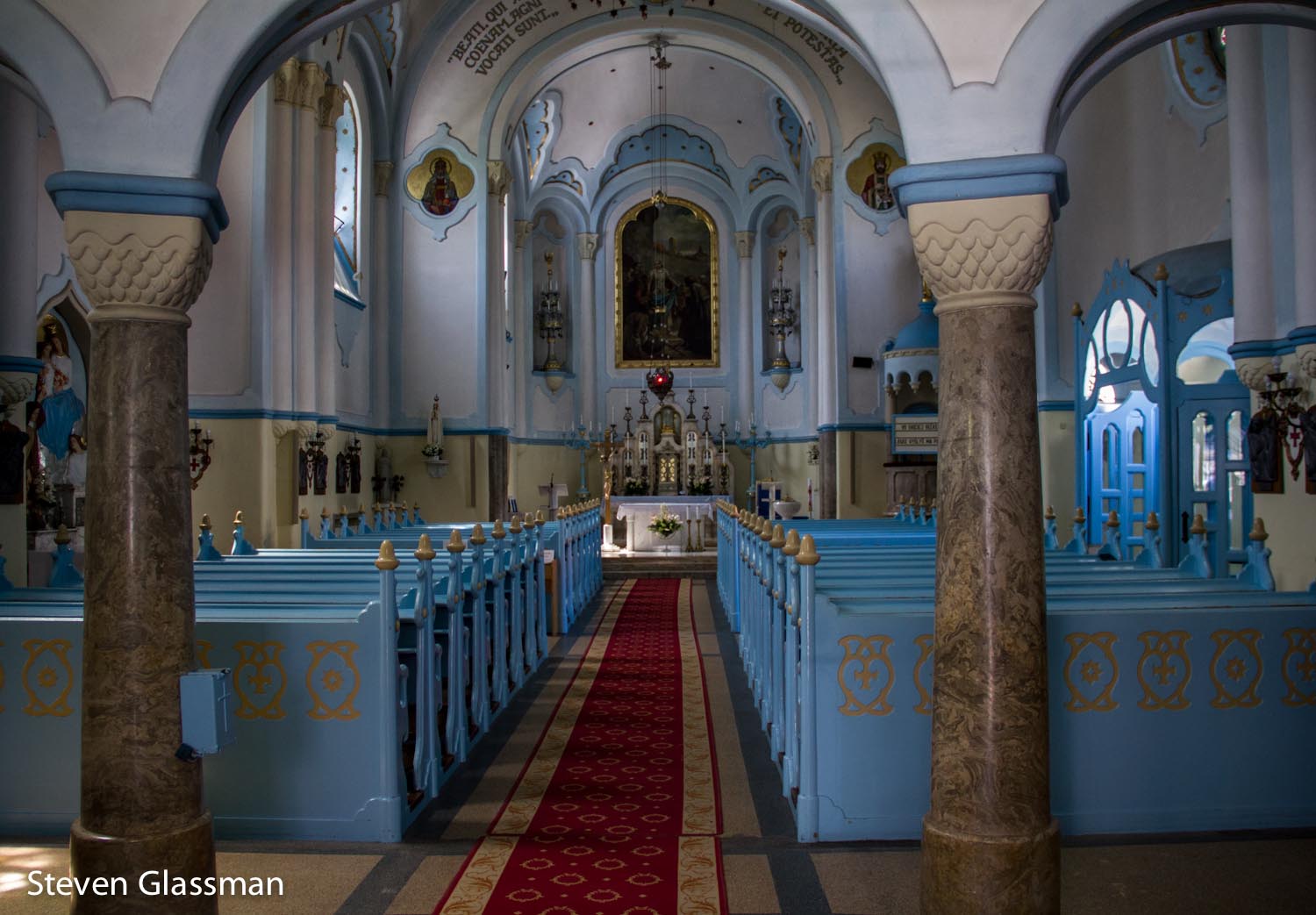
Even the inside is mostly blue!

bratislava-20

It kind of looks like a wedding cake, don’t you think?

bratislava-21

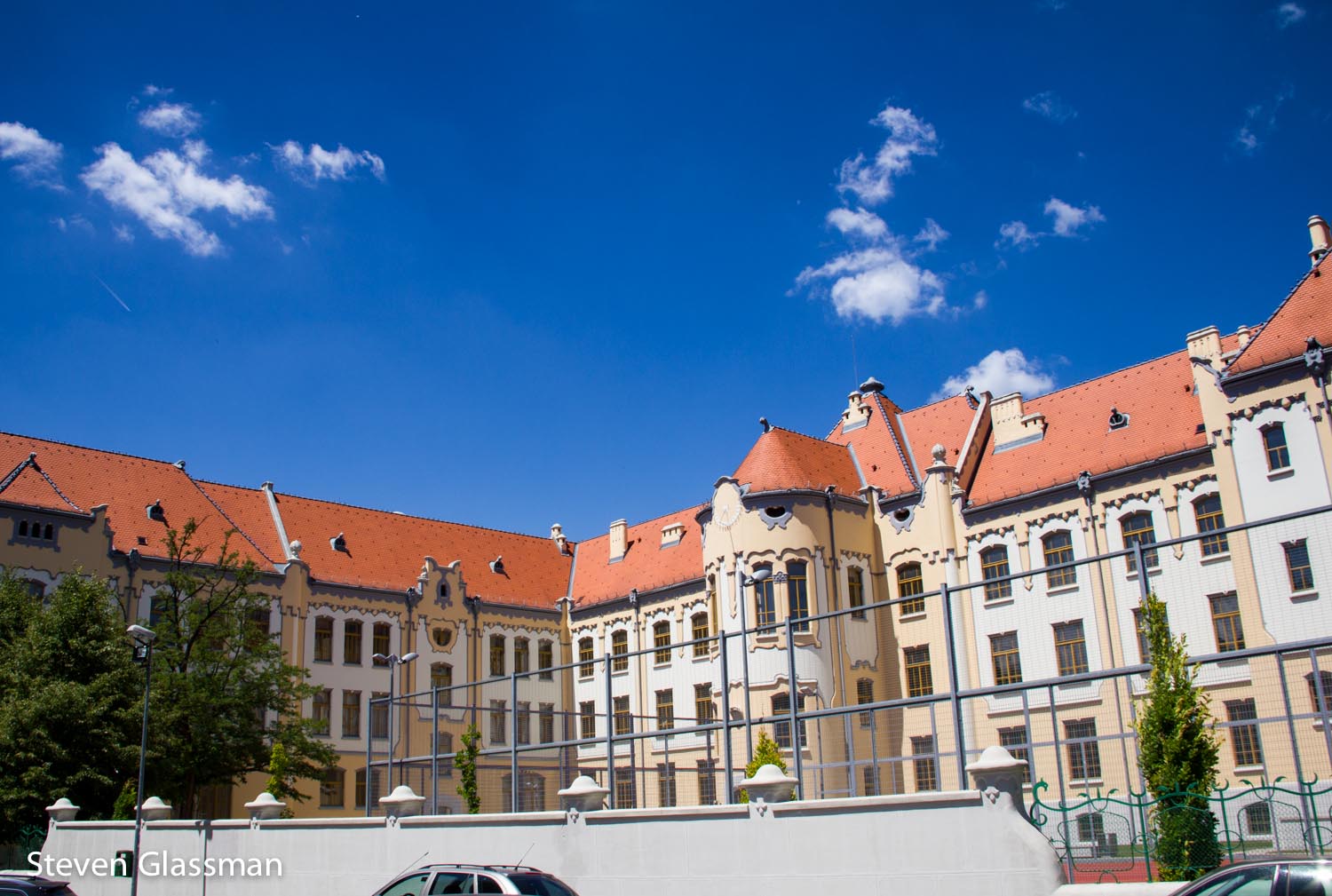
Ödön Lechner also designed this building next to the Blue Church, in the same style.  This is the Gymnázium Grösslingová, and if I remember correctly, it’s being used as a school now.

bratislava-16

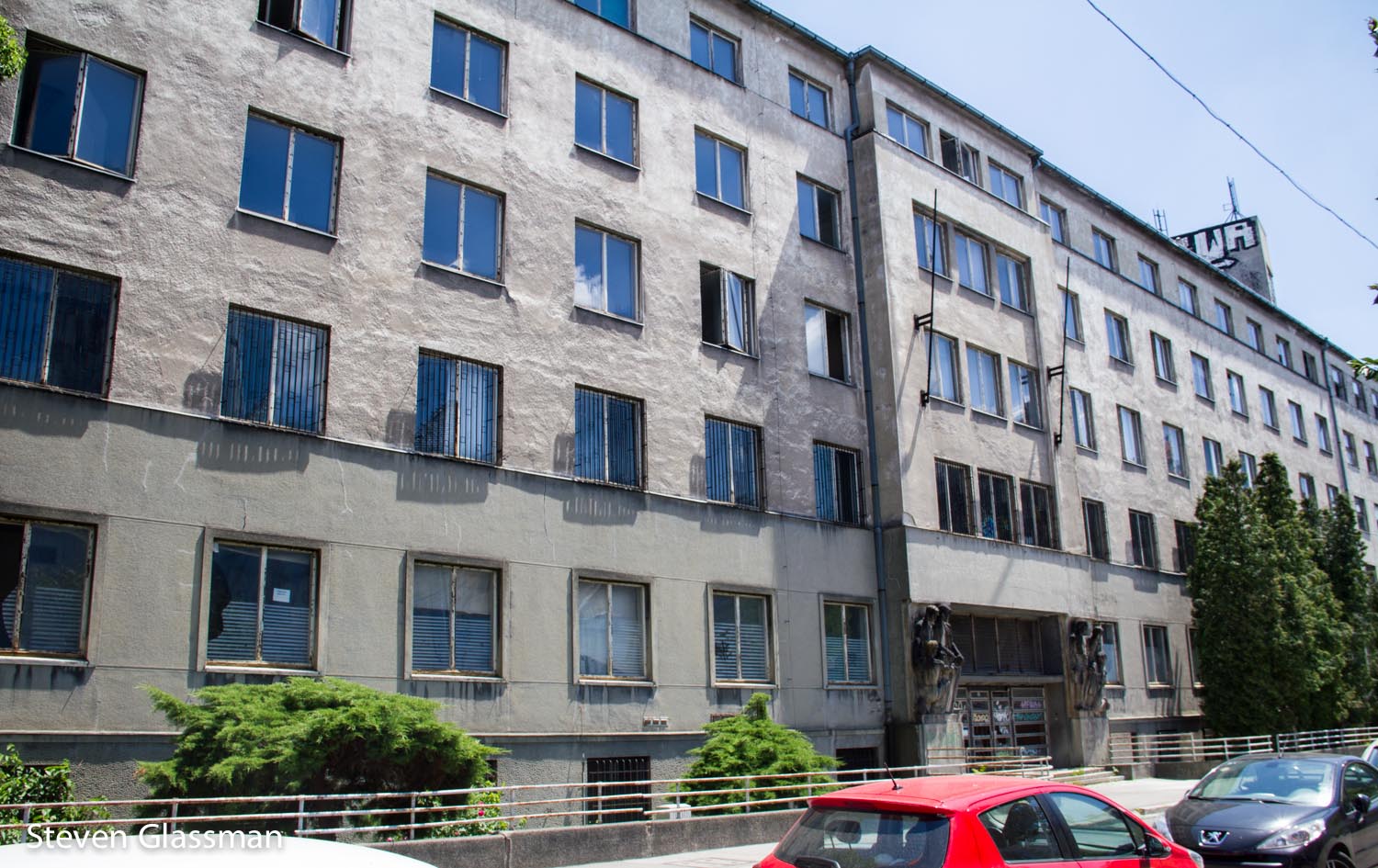
Also across the street from the Blue Church, on the other side, is this creepy abandoned Communist-era hospital.

bratislava-17

I can’t actually remember the deal with this statue, but I thought it was neat looking.

bratislava-22

After the tour, I stopped at a recommended local restaurant for a lunch of traditional Slovakian food. I can’t for the life of me remember what this dish is called, but it basically tasted like macaroni and cheese with bacon.  It was utterly delicious.

bratislava-23

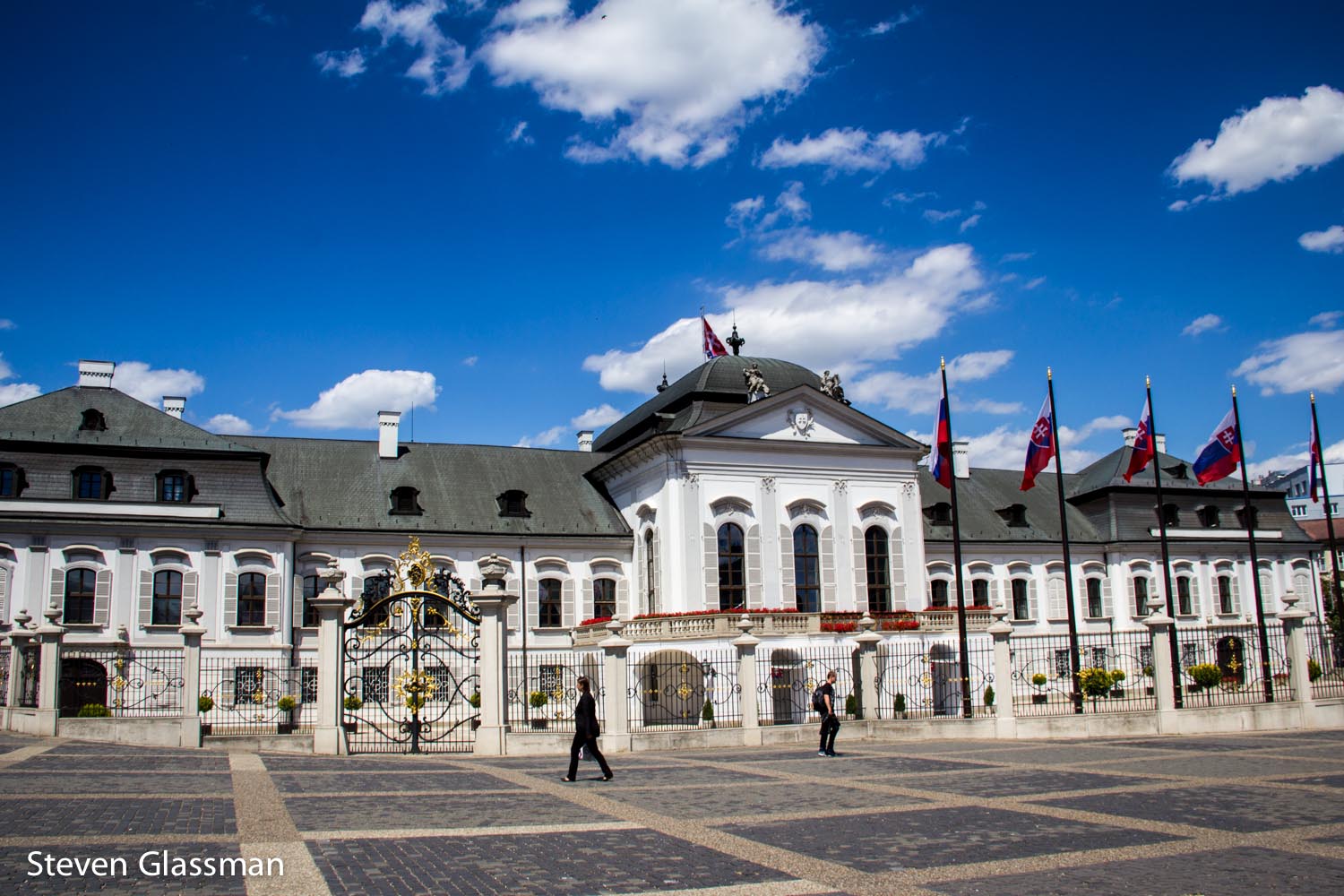
I walked past this stately building on my way back to the train station to leave the city.  This is Grassalkovich Palace, the residence of the President of Slovakia.

bratislava-24

Have you ever been to Slovakia?

Budapest, Part 2

I mentioned earlier that Budapest was much, much larger than I expected.  This is reflected in the amount of photographs I took over the span of a few days in the city.   On one of our mornings in the city, we went to the Central Market Hall, the largest and oldest covered market of the city.

greatmarkethall-1

There’s something very much like this in Frankfurt, Germany-  lots of places to buy fresh meat, cheese, vegetables.  In short, a regular market hall.

greatmarkethall-2

Fresh produce was everywhere.

greatmarkethall-3

There were some fascinating vendors of Tokaji, or Hungarian wine. The blown-glass dragon decanter was particularly amazing.

greatmarkethall-4

I also thought the trident-toting devil decanter was quite fetching.

greatmarkethall-5

I get why you might want a Russian doll painted with Barack Obama, Gene Simmons, Freddie Mercury, or even Angela Merkel, but who on Earth would want a Bin Laden doll?  Unless you were fresh out of paper targets for the gun range, I mean.

greatmarkethall-6

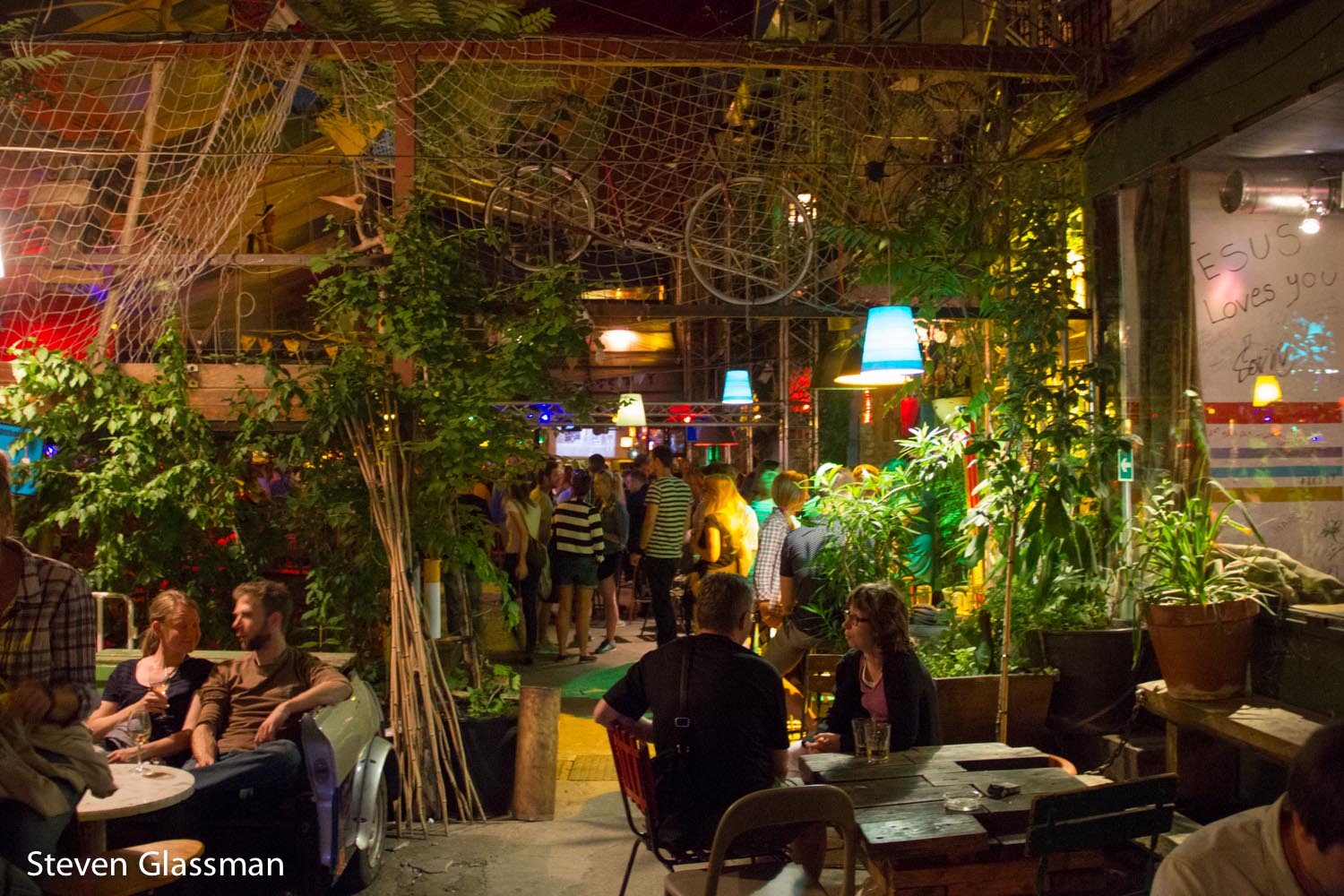
The Market Hall is a daytime visit.  In the evening, we tried to check out one of Budapest’s famous Ruin Pubs.  These are formerly abandoned buildings that have been converted into giant bar complexes.  We went to Szimpla, one of the most well known.

ruinbar-7

The decor was interesting, part junkyard and part Maker Faire.

ruinbar-1

There were multiple bars inside the building, set on two levels.  There were lots of places to sit and enjoy your drink.

ruinbar-2

Movies were projected on some of the walls, and music was played in other areas.

ruinbar-3

Some of the chairs were made from former cars.  The place has an incredibly interesting atmosphere.

ruinbar-4

I know a bunch of people who would have loved Szimpla if only for the random bikes hanging everywhere.

ruinbar-5

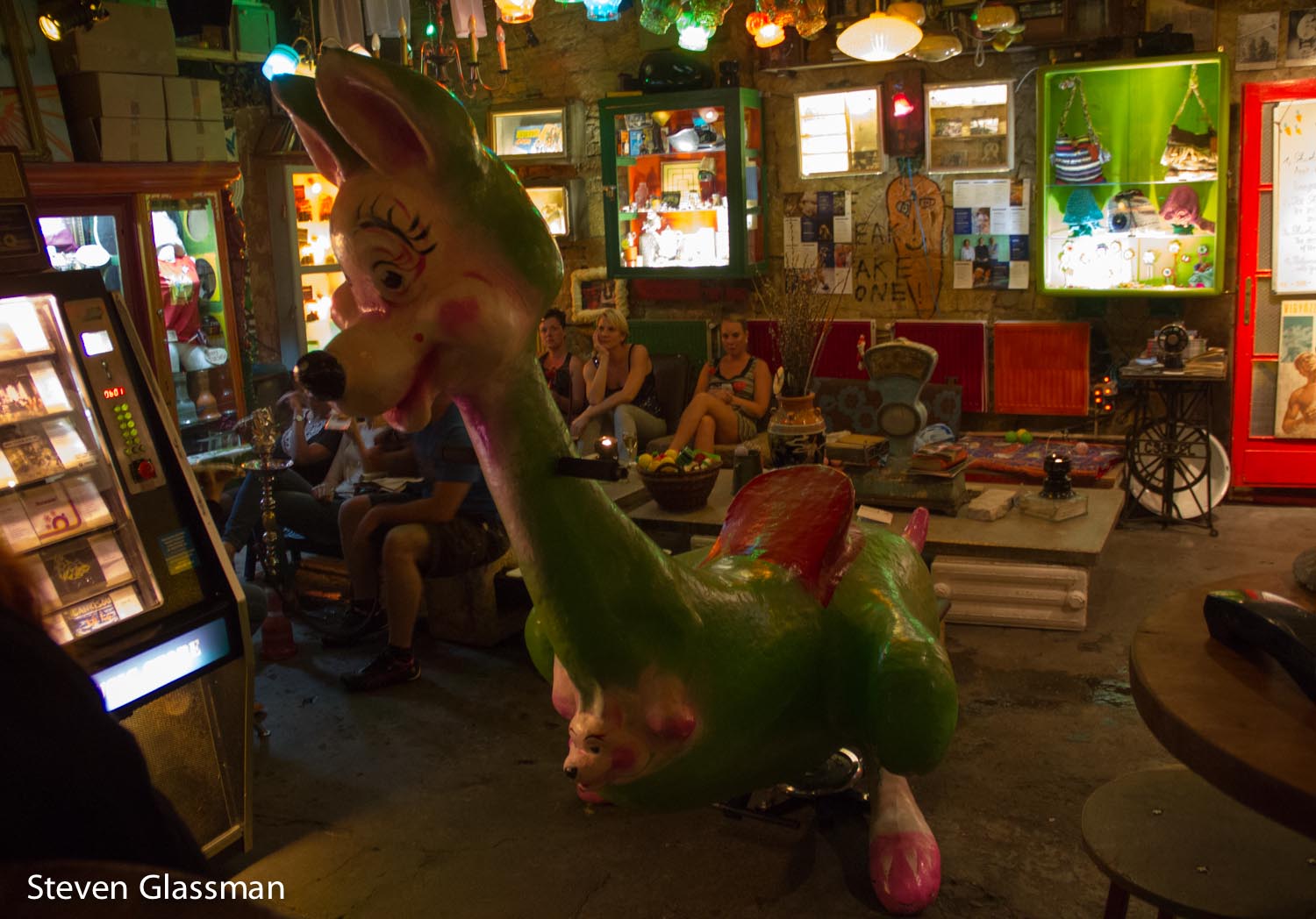
This giant plastic kangaroo near the front entrance was a big hit.  Lots of people stopped to take a quick ride.

ruinbar-6

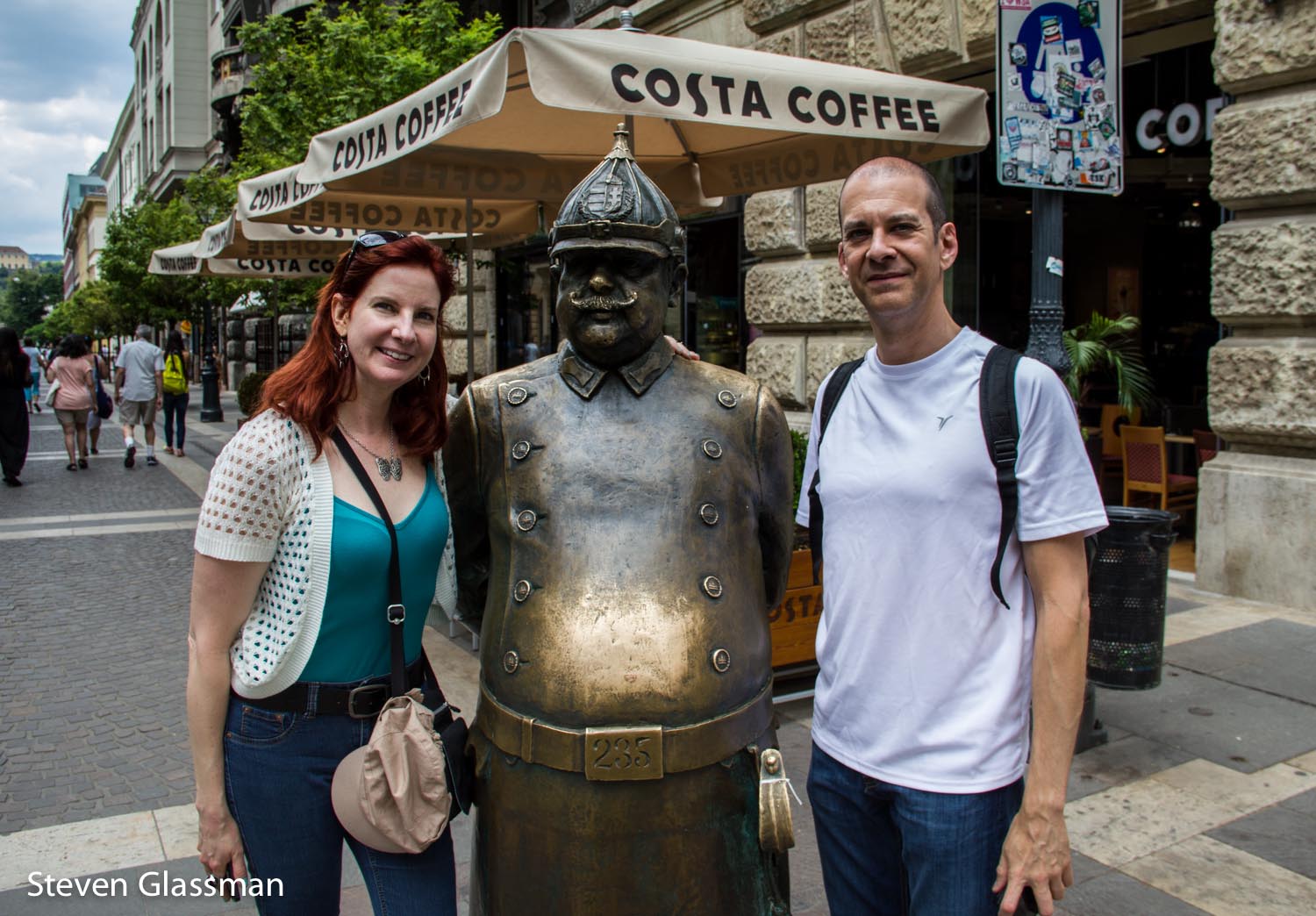
I mentioned in the previous post that Budapest has many fun statues.  Here’s Janene and Chris with the Fat Policeman.  Locals say that if you rub his belly, you’ll eat well.  We didn’t need the help though, because the food in Budapest was amazing.

statuesofbudapest-1

The Kiskiralylany Szobor (Little Princess Statue) is apparently very popular.  I think it’s her crown that draws people in.

statuesofbudapest-2

This girl with her playful dog are a recent addition, placed on the promenade by artist David Raffai in 2007.

statuesofbudapest-3

I’ve saved my favorite for last:  Peter Falk and a beagle.   This Columbo statue was placed to honor Falk because of his Hungarian ancestry.  There is conjecture that his great grandfather was Miksa Falk, a Hungarian writer and politician.

statuesofbudapest-4

This led to some great puns as we walked the length of the city to find this Falking statue.  It was right by Cafe Picard, where we stopped for a Falking delicious lunch.  Make it so!

statuesofbudapest-5

Have you ever been to a Ruin Pub?  How did you like it?