Public Holiday: May Day

One of the many things I had to learn when I got to Germany was the different holidays. Many of the holidays that I’m used to from the US just aren’t a holiday here.

Thanksgiving is a great example of this. Most of the Germans I’ve met don’t know anything at all about Thanksgiving. I got here in the middle of November, and I was fortunate enough to meet a lot of folks in the local ex-patriate crowd right away.  This allowed me to attend a Thanksgiving dinner in the local Irish pub. As one of the actual Americans in attendance, I spent a fair amount of time explaining what the foods represented, and what little I could remember from grade school about the background and story of the holiday. I also fielded questions like “how on earth do you eat this cranberry sauce goop?” It was a highly entertaining time. Plus, there were twinkies.

But I digress. The first of May is a public holiday here in Bavaria. It’s a holiday in much of Europe, actually, but the Bavarian holiday schedule doesn’t always match up to the rest of Europe. It does today, though, which means that most business are closed, and everyone goes out and enjoys the newly minted sunshine for a change.

May Day, first observed as a public holiday here in 1933, is also referred to as Labour Day here, and I’ve been told that sometimes there are activities related to work and employment, but I haven’t seen any.
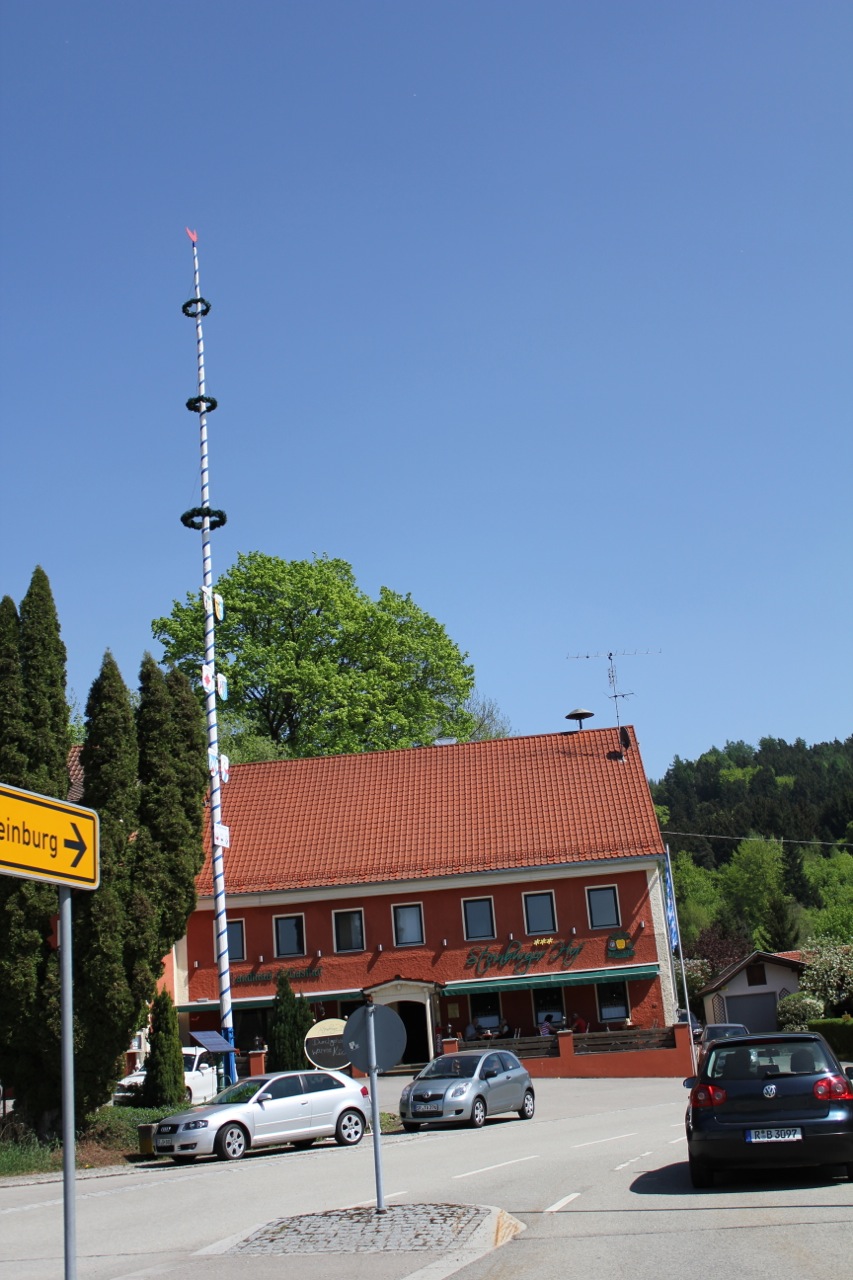
What I have seen is a lot of Maibäume, or maypoles.  These started to turn up at the beginning of April, and they usually show up near churches or main village squares from what I’ve seen.  I’ve done a bit of research, and the date that it goes up varies- in some instances, it’s put up on May 1st, and might be left up for the duration of the month.  In some cases, the pole itself is left up year round, but without the decorations.  The placing of the maypole is often followed by a dance,  or Tanz in den Mai (Dance into May).

There is a wealth of information online about maypole customs and decorations in other countries, but I’m focusing on what I’ve seen here in Germany.  The poles I’ve seen have been blue and white, which is the colors of the Bavarian flag.  They’re also covered in wreaths and some other decorations which, according to The Google, usually depict local crafts and industry.

There’s another element to this tradition though, which I quite like.  On the night of the last day of April, many men erect small decorated maypoles in front of the houses of their sweethearts, with a decoration attached in the shape of a red heart with the name of the girl.  The genders reverse on leap years and women leave the maypoles in front of their sweetie’s house.   This is often done in secret, and it’s up to the person leaving the maypole to decide whether to remain anonymous or give a hint to their identity.

Happy May Day, everyone!

Berlin, briefly.

Last weekend I took a short trip up to Berlin.  I had the chance to visit a new city and an old friend at the same time, and I couldn’t pass that up.  I’ve known Heather since high school, and she and her husband Mike were in town for a few days, so off to Berlin I went!

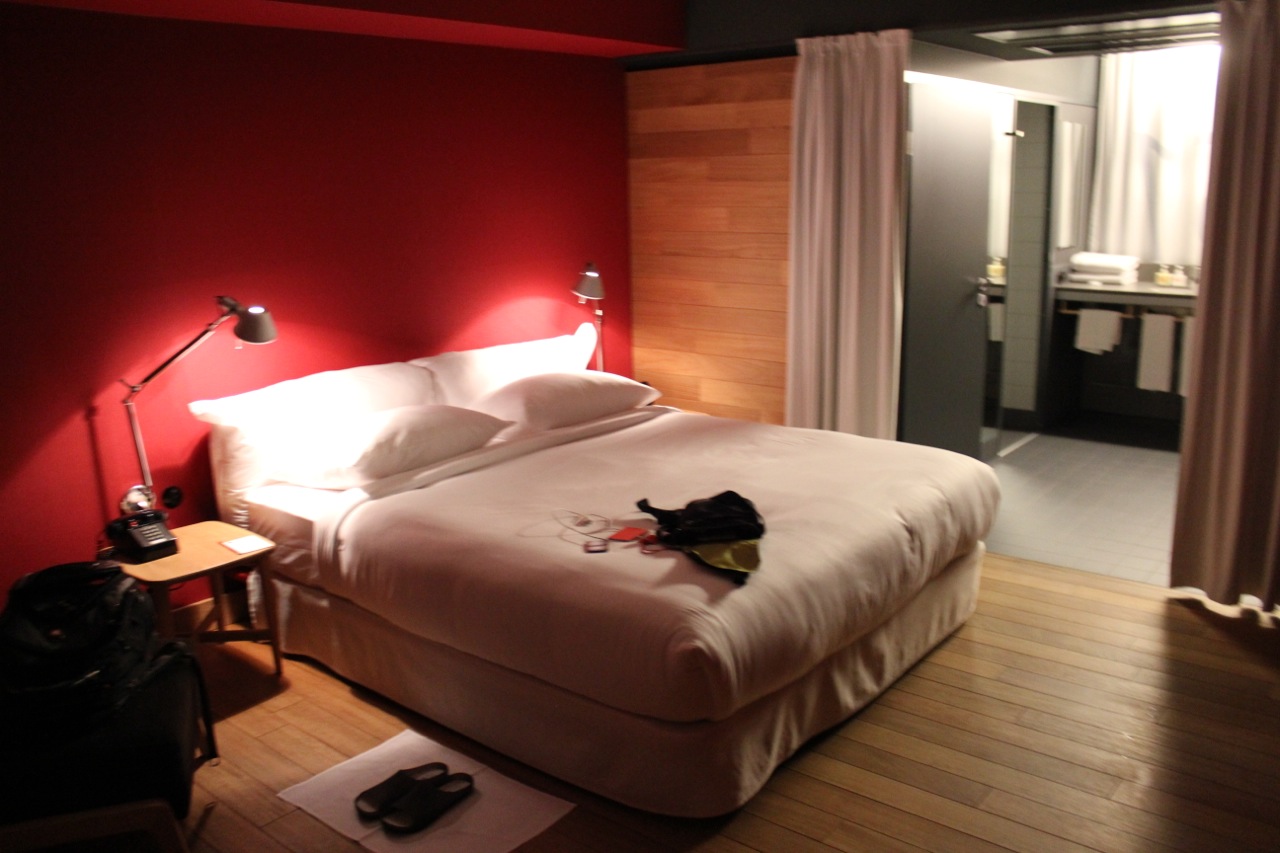
I left after work on Friday, and got in late that night.  I took a room at the same hotel that Heather and Mike were using, the Casa Camper.  It was a smidge pricier than I would have chosen if left to my own devices, but the hotel was awesome.  It has very large rooms, which is unusual for any hotel I’ve been to in Europe thus far.  It also has pretty spectacular amenities, including all-included food in a 24 hour snack bar sort of place, and a good sauna at the bottom level of the hotel.  I actually did try the sauna for fifteen or twenty minutes, but that’s an entirely different post.

The bed seemed like an American queen sized bed to me, not a typical German bed size.  I wouldn’t swear to the measurements though, I just know it seemed like a pretty big bed.   The room also had air conditioning, which is something else I haven’t seen much of since I got to Europe.  I haven’t slept in air conditioning in more than five months, and I had to turn the AC off to really get comfortable.  It’s amazing how quickly no AC has become my new normal.

Needless to say, I slept very well in that big fluffy bed, and Saturday morning after breakfast, we ventured out into the city to do touristy things.  First stop: The Brandenburg Gate!  Except we ran across a small children’s festival on the way to the Gate, and there were oddities aplenty.  For example, there was a parkour demonstration:

We also saw four guys carrying a piano down the street and the world’s shortest rollercoaster.  It’s that kind of town.   We also saw a Segway tour, and I can never resist taking pictures of a Segway tour.

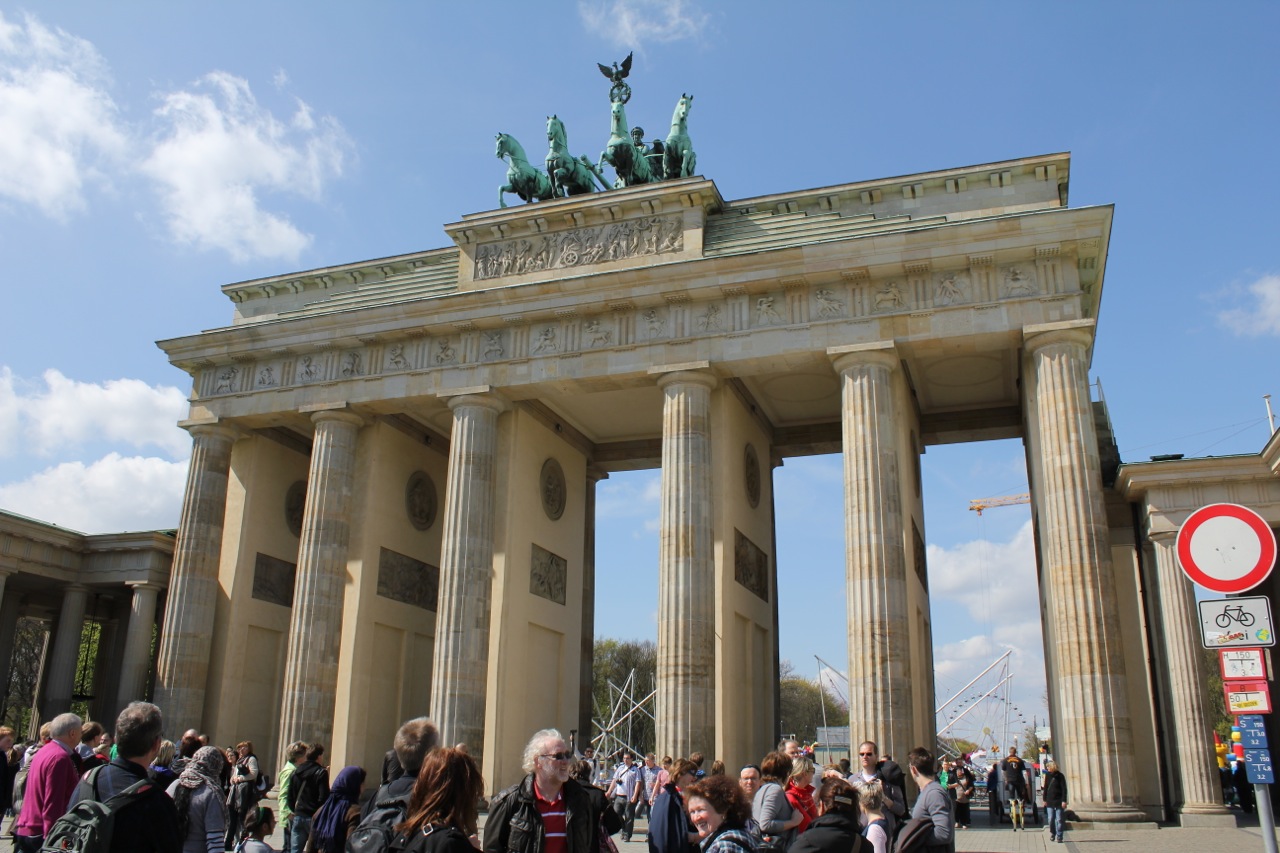
After some walking past the Reichstag and some other stuff, we found ourselves at the Brandenburger Tor!

Once again, I’m amazed to discover that a major piece of German architecture is based on Greece.  In this case, the design is that of the  Propylaea, the gateway to the Acropolis in Athens, Greece.  If this keeps up, I won’t need to ever visit Greece because I’ll have seen all the things based on the architecture there in other cities.

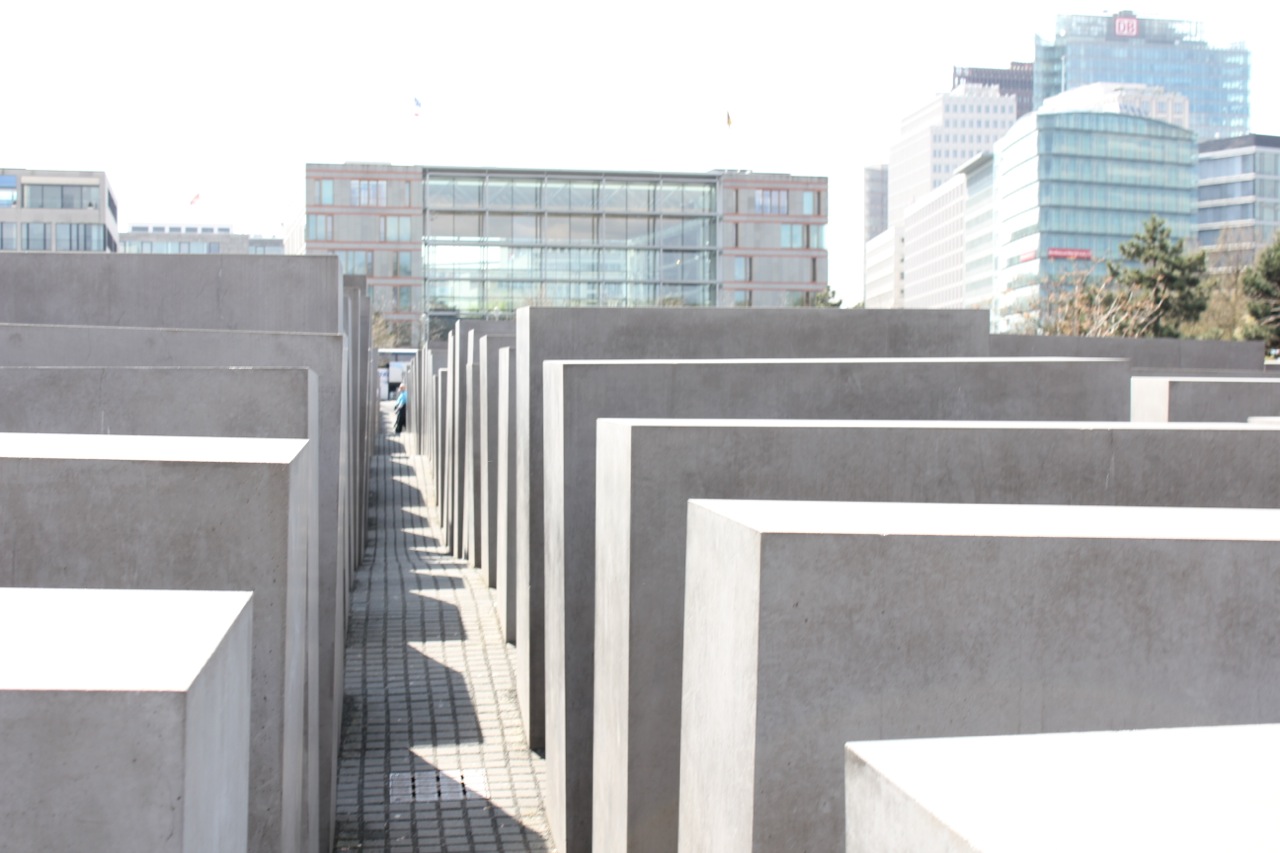
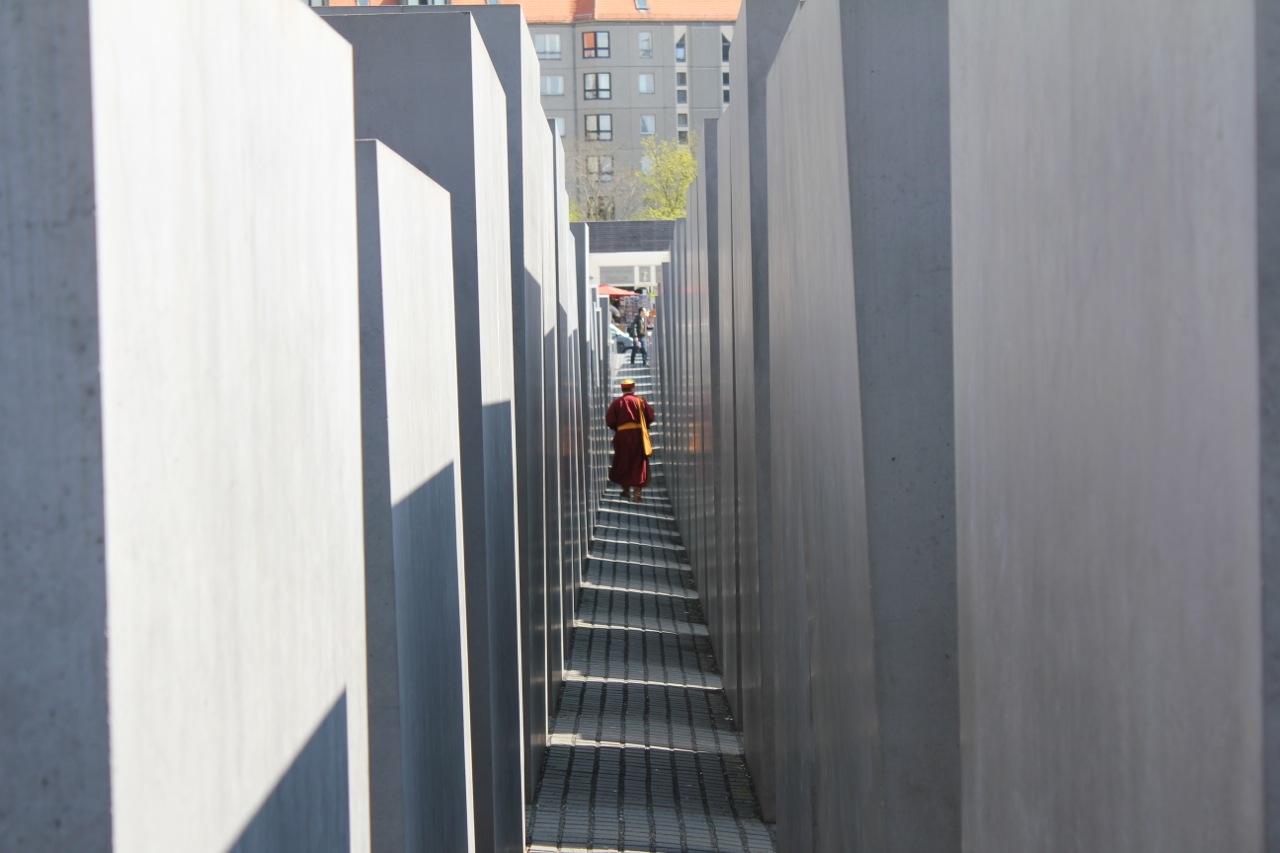
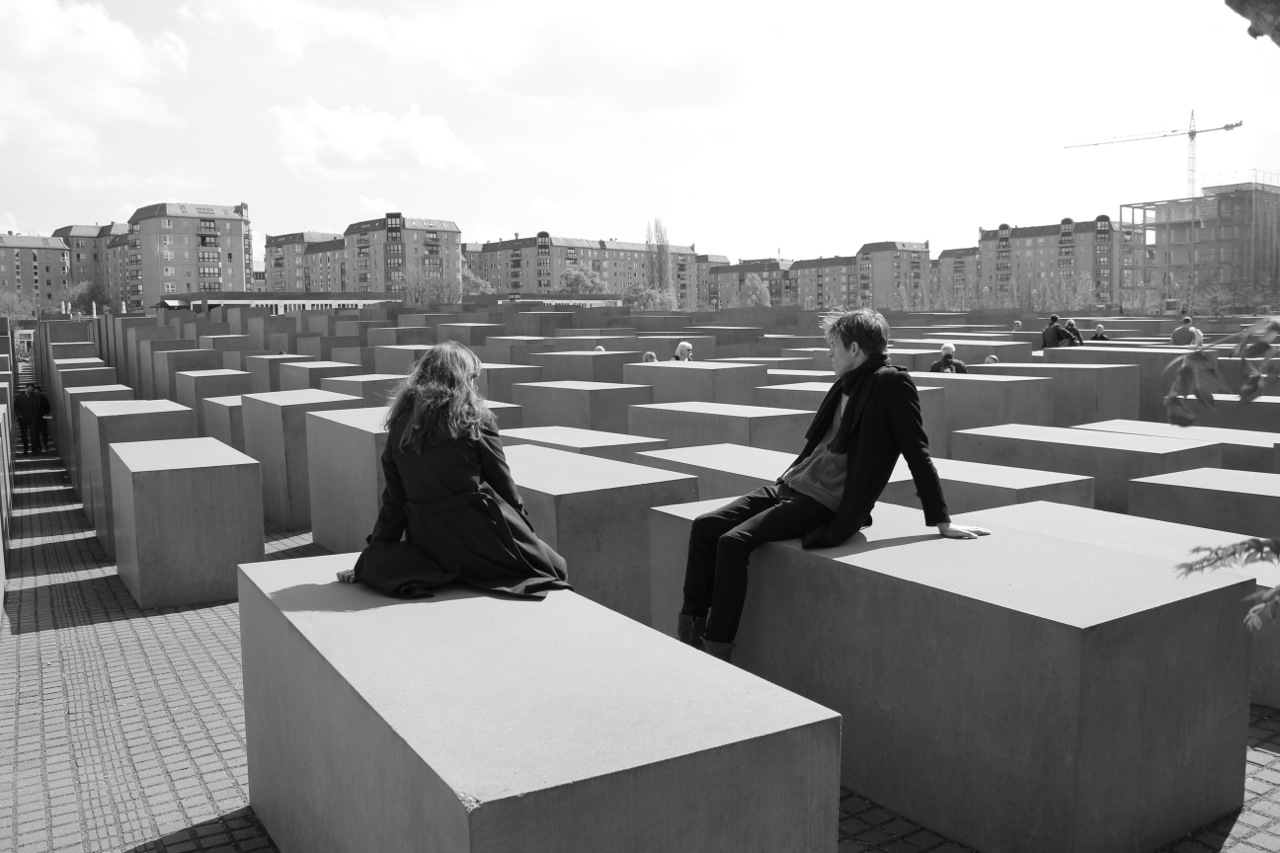
After we were done at the Gate, we wandered over to the Memorial to the Murdered Jews of Europe, a Holocaust memorial consisting of 2,711 “stelae,” slabs of concrete of various heights arranged in a grid over sloping ground covering 19,000 square metres (4.7 acres).  There was also an information center beneath the structure, which holds the names of all known Jewish Holocaust victims, obtained from the Israeli museum Yad Vashem.

I didn’t know much about this place until we got there, but according to the designing architect,  “the stelae are designed to produce an uneasy, confusing atmosphere, and the whole sculpture aims to represent a supposedly ordered system that has lost touch with human reason.”  I can agree that the place is confusing, but it was also peaceful in a way.  Here’s four pictures from there, including one I quite like of a Tibetan monk walking between the stelae.

The city of Berlin knows that when you’ve spent some time in a solemn place, the best thing is to cleanse the palate with something patently ridiculous…. like fourteen guys dressed in banana costumes riding a mobile bar that is powered by the pedals at their feet while a fifteenth guy in the center servers them beer.

No, really.

Bier Bike

It turns out the “Bier-Bike” is a pretty common thing for stag parties, and I’ve seen it several times since, including one here in Regensburg where all the participants were wearing standard Lederhosen.  This was my first sighting though, and it was kind of magnificent.

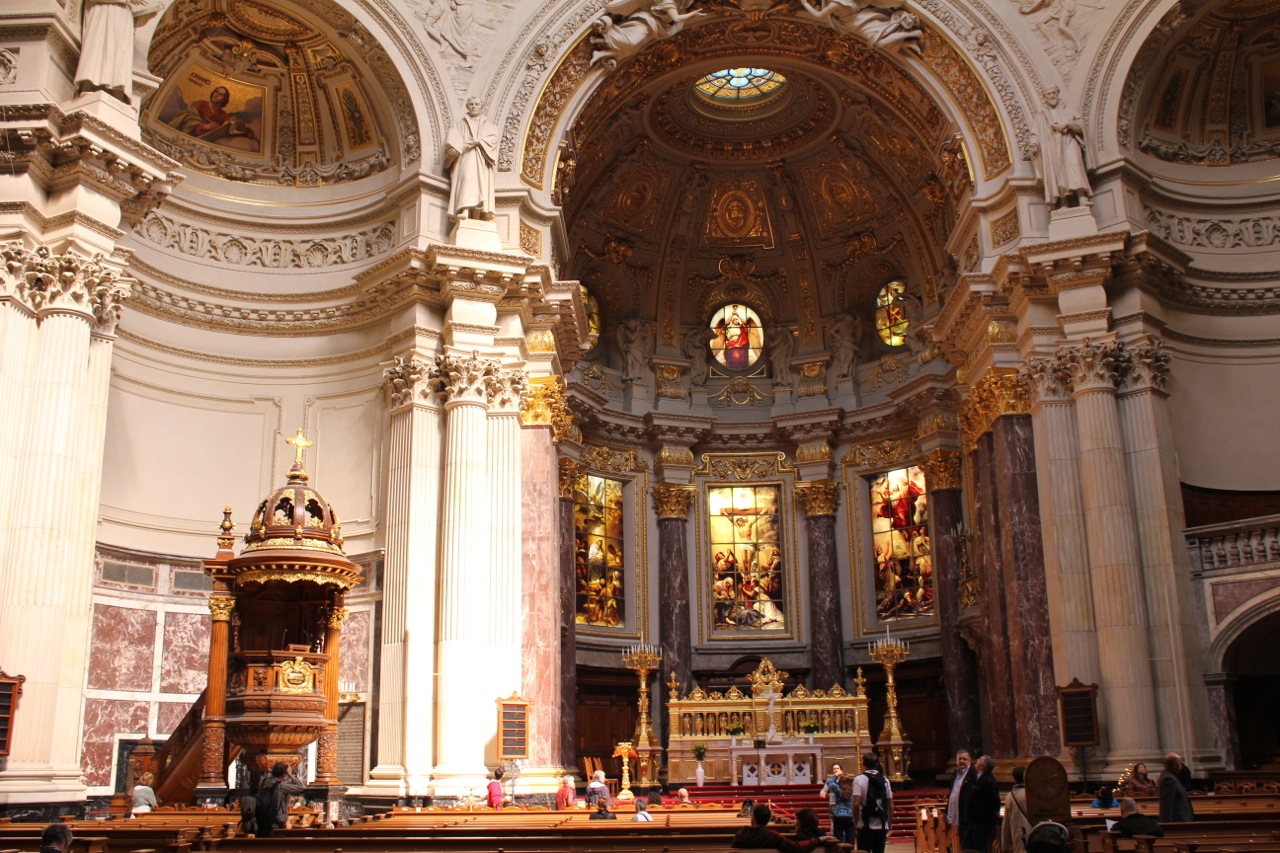
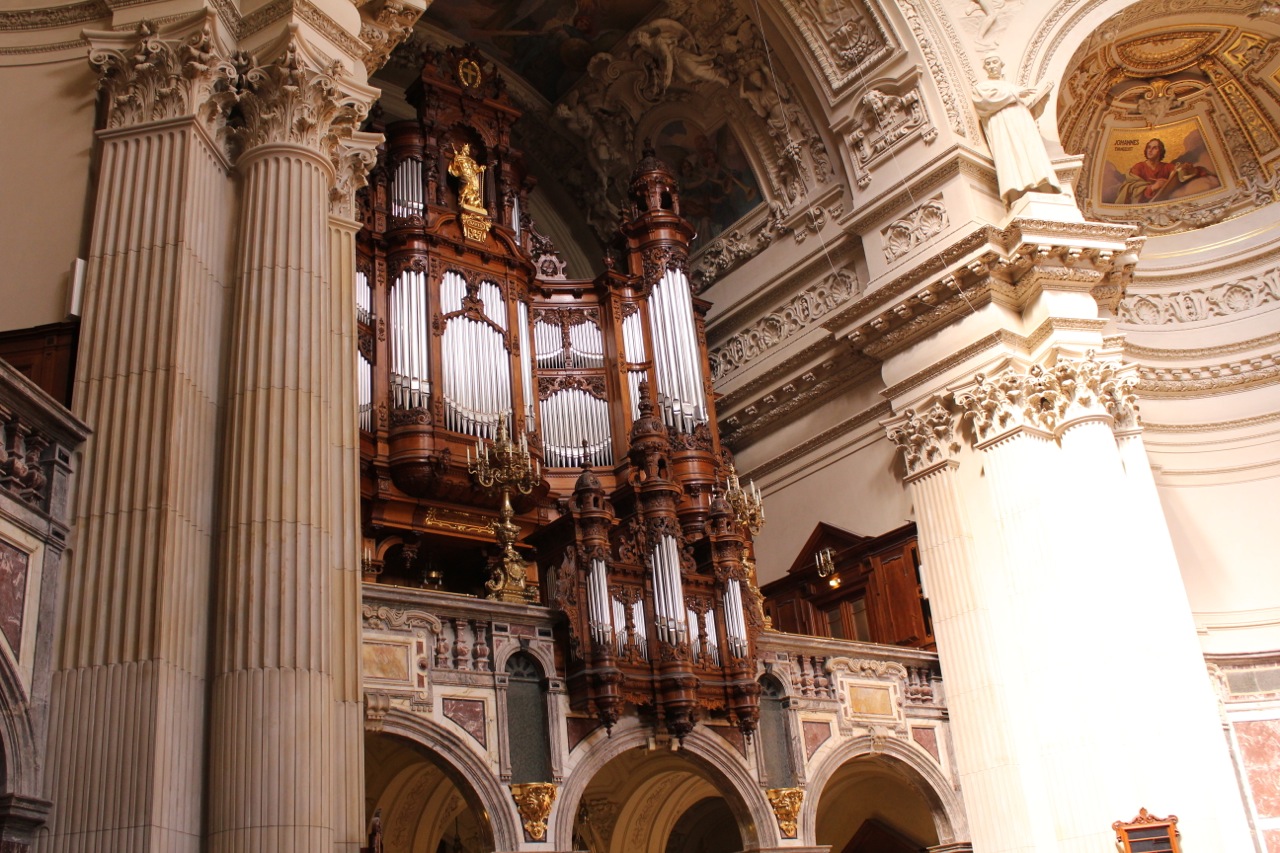
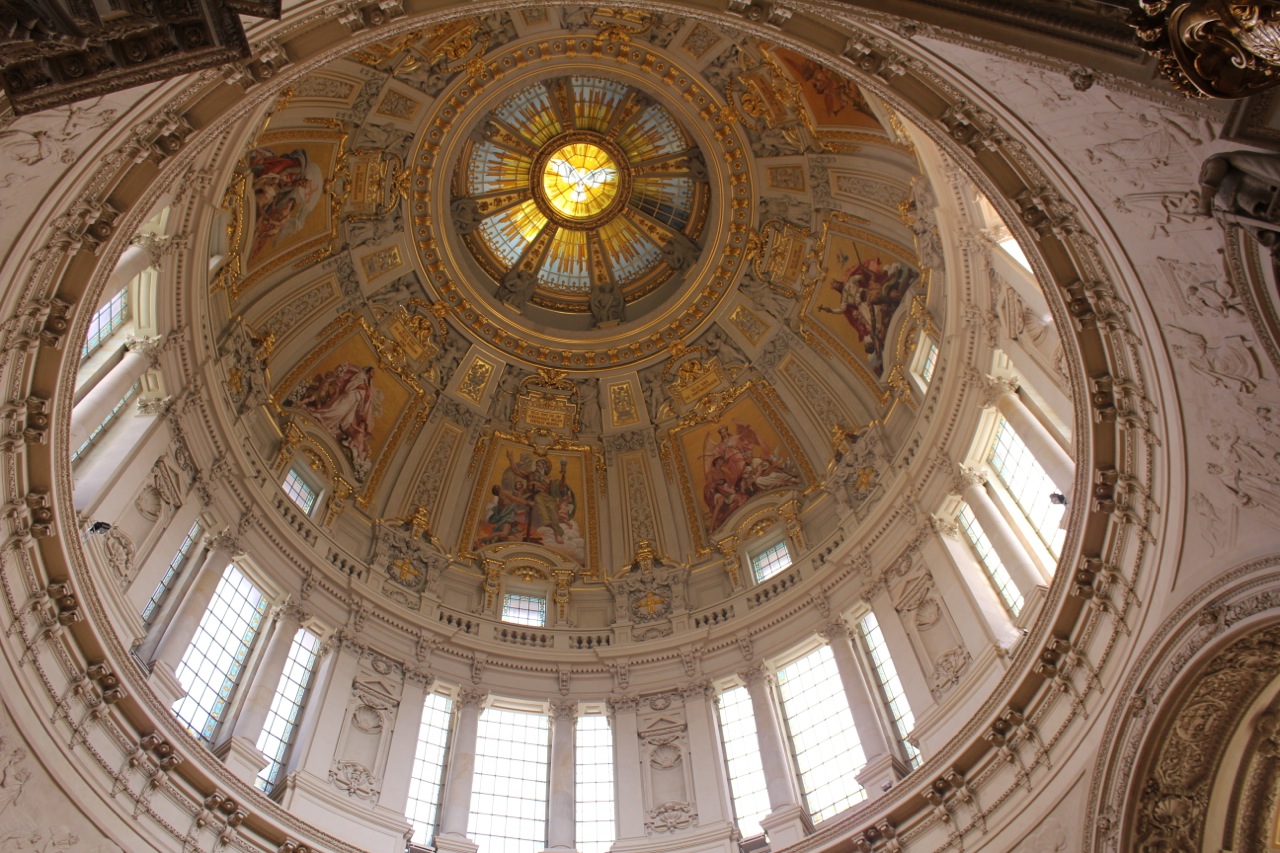
Next stop:  The Berliner Dom, a big ol’ church.  Big pipe organ, big catacombs, and so forth.  Plus a rather distinct dome in this Dom.   Here’s a few pics from the Dom.

No first trip to Berlin would be complete without a look at some of the historical stuff surrounding the Berlin Wall.  In one area, there is a representation of where the wall actually stood, along with representations of tunnels, and a stunning amount of information about how people snuck past the border at times.  Here’s the representation of the actual physical location of the wall:

Here’s a physical representation of one of the guard towers.

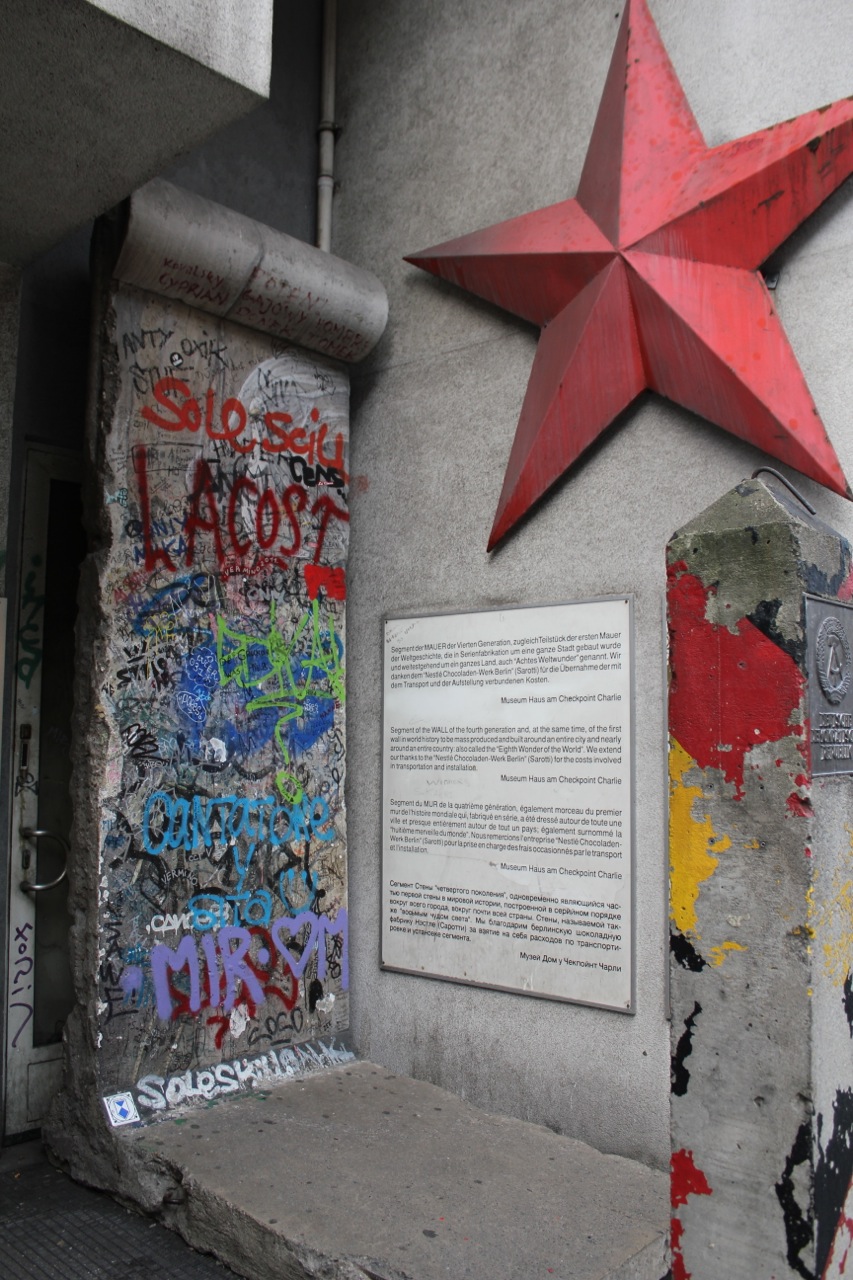
…and, for good measure, an actual section of the original Berlin Wall, moved to another location by the Nestle corporation for posterity:

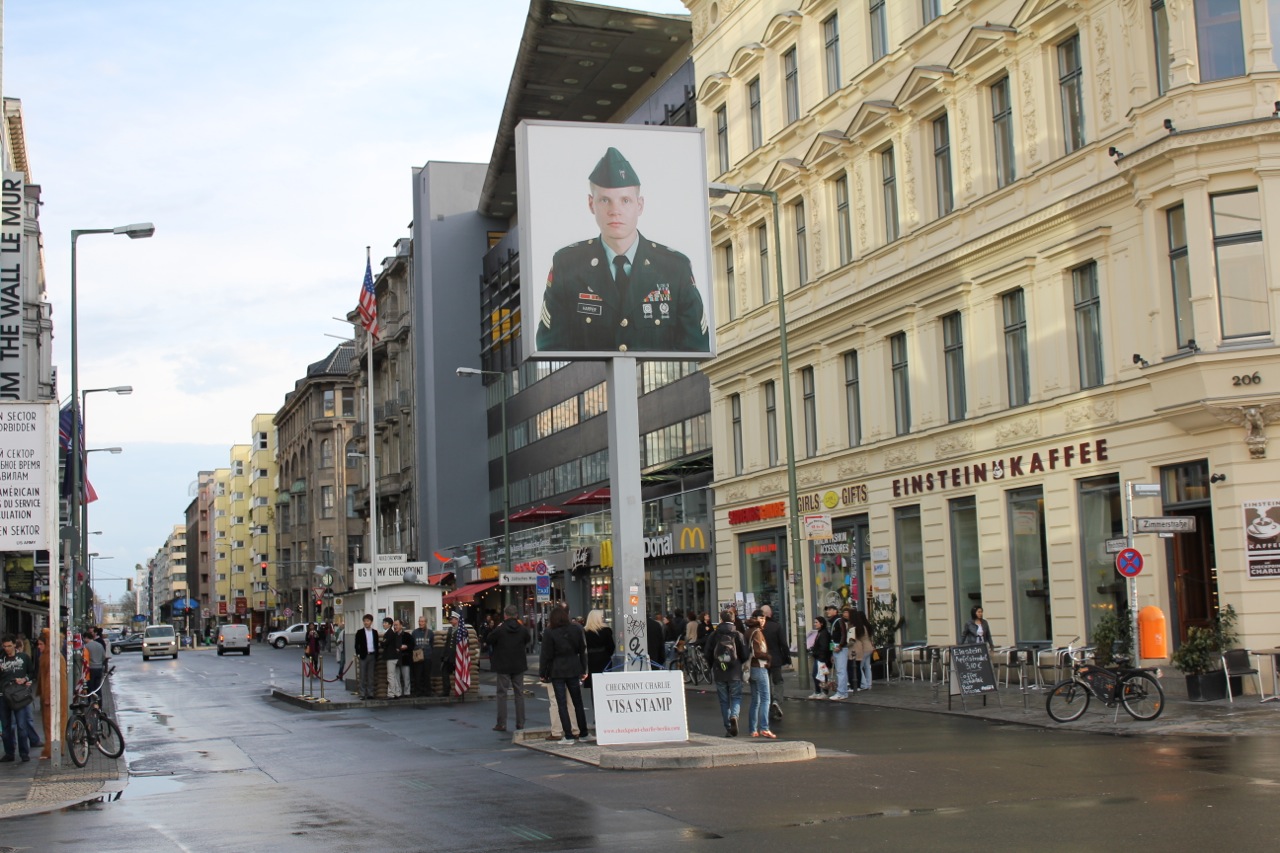
We also visited the “House am Checkpoint Charlie,” a museum that has a lot of information about how people crossed the border.  There were ultralights, hot air balloons, a personal submarine-  people crossed inside of gas tanks and welding machines and in one case, inside the passenger seat of a car.  The ingenuity was incredibly impressive.  Plus, you know, the actual checkpoint was represented here:

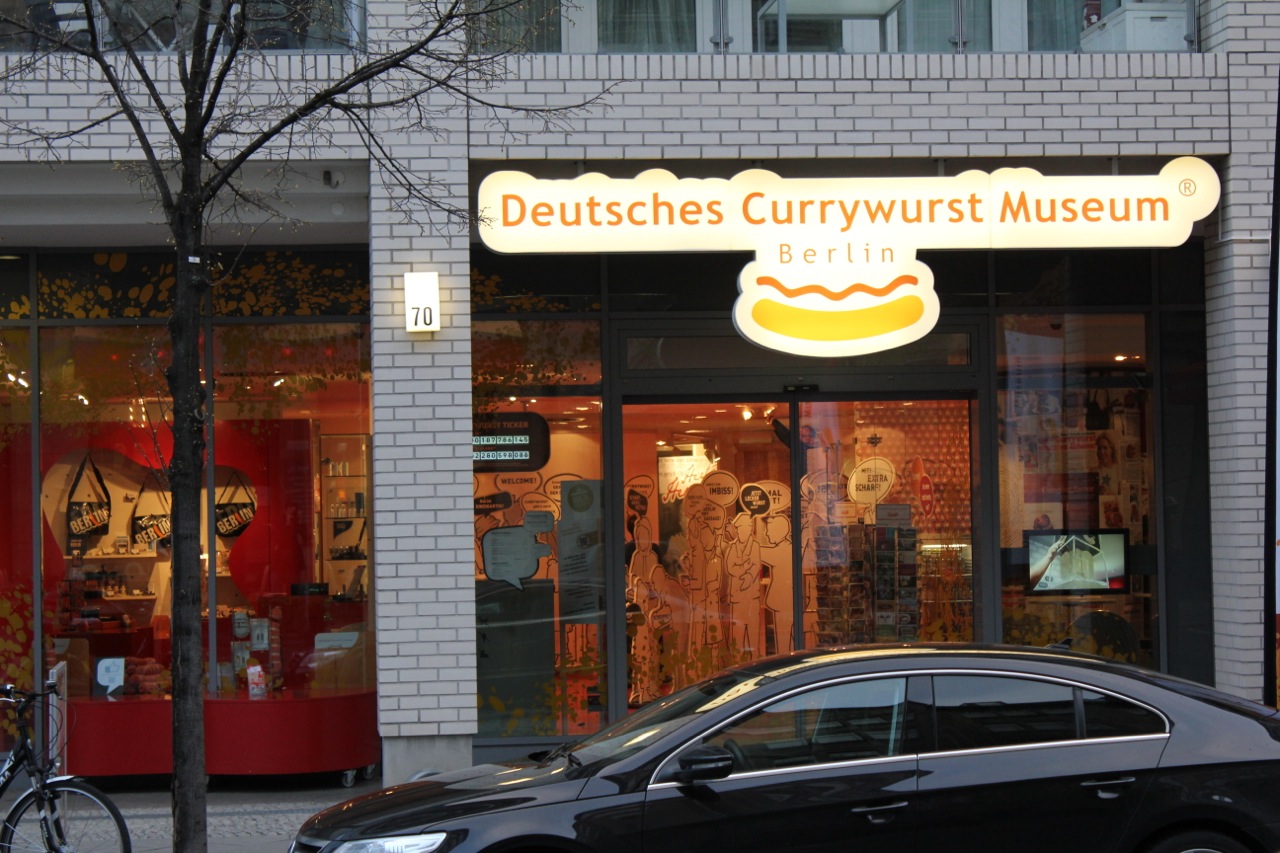
Last but not least, is a very important cultural museum that we spotted on the way to our dinner.  The Currywurst Museum.

No, really.

As you can imagine, these eighteen pictures are not a good representation of the entire day- there are 111 photos from Berlin all visible in my Berlin flickr gallery:

http://www.flickr.com/photos/stevenglassman/sets/72157629534724430/

Short Post: Living by sun and wind.

I’m sifting through my Berlin photos and getting a post ready about that weekend, but it won’t be tonight, so instead, here’s a short post about some of the interesting energy sources I’ve seen since I got here.

When I first got here, I noticed right away the diversity of power sources.  Even on my initial drive into town from the airport back in November, I couldn’t help but notice how many little houses and other buildings had solar panels up:

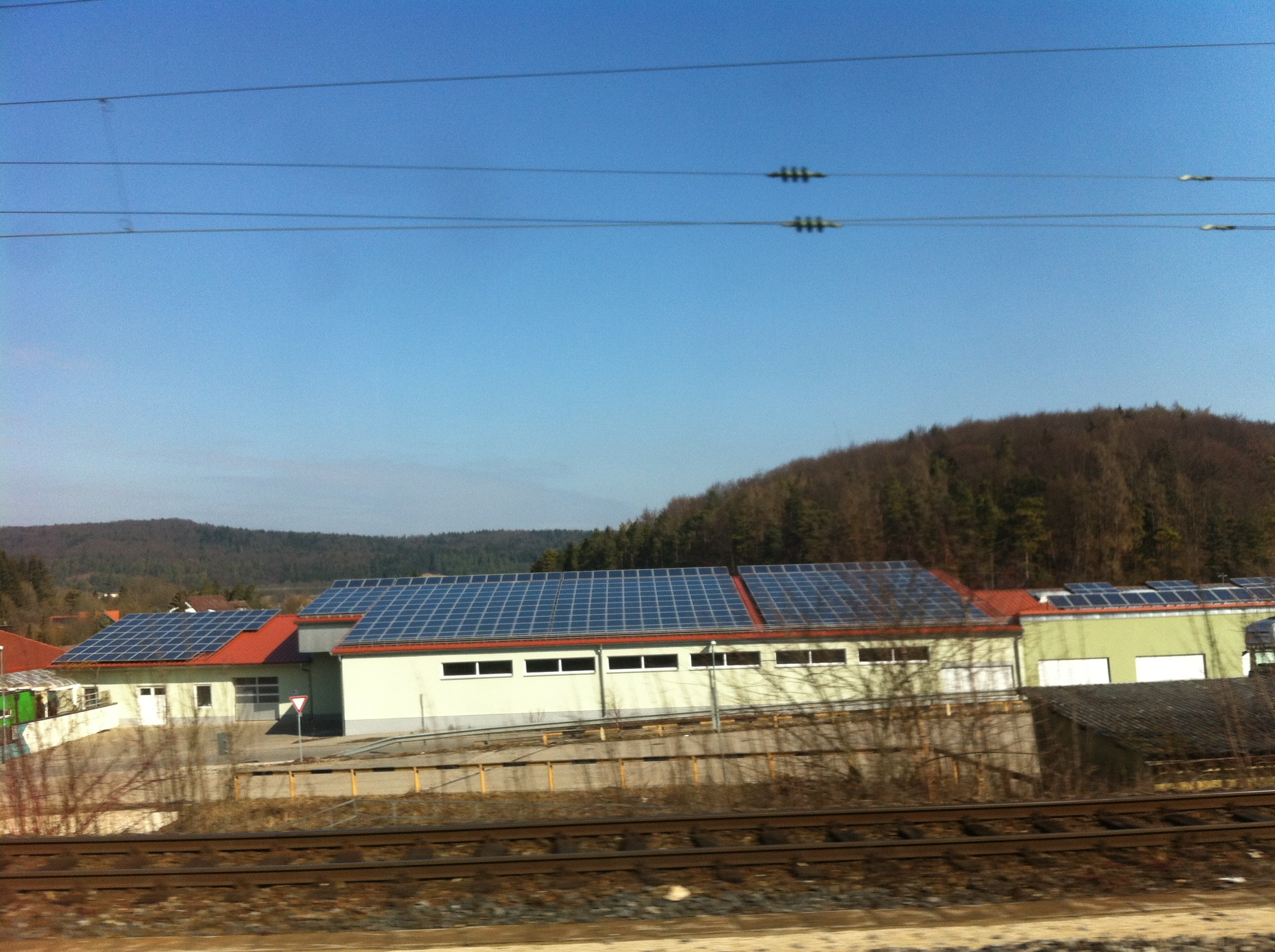
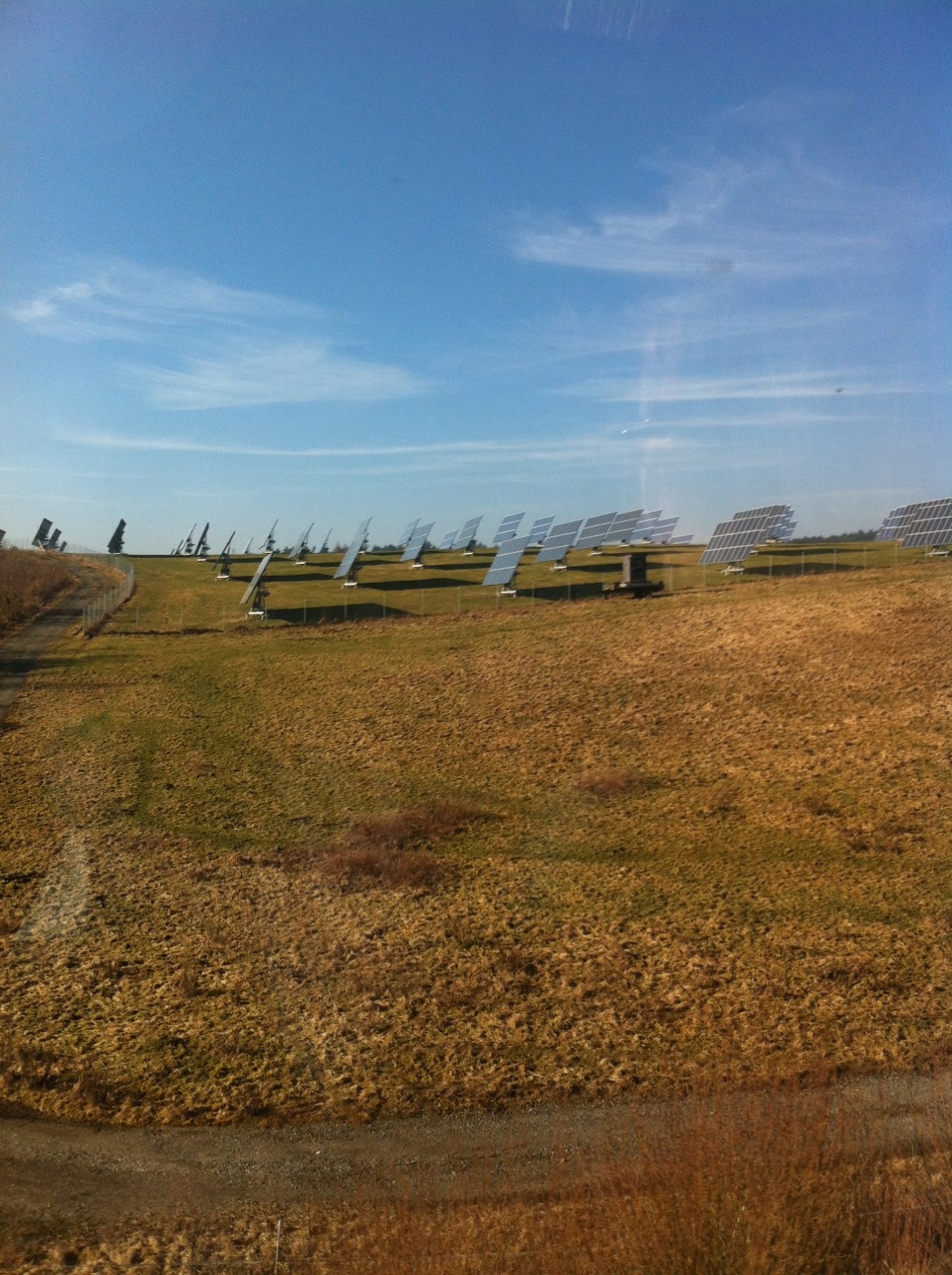
I’ve also seen some gigantic solar farms, which I didn’t know existed here.  For example:

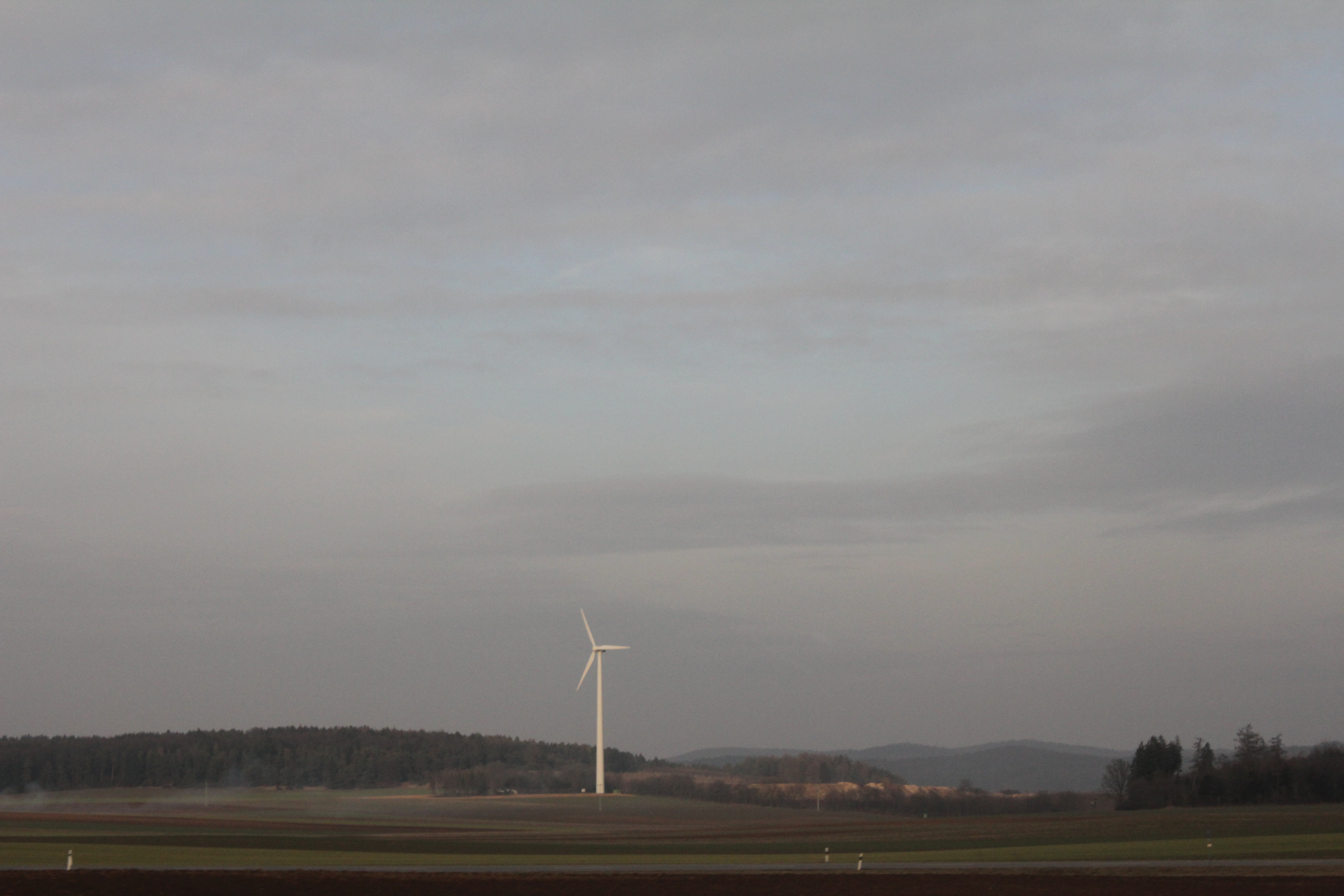
On my trips by train since then, I’ve also noticed something that I’ve only ever seen in Canada until now:  gigantic, enormous windmills.  I’m told that people don’t like these as much because of the noise from them, but they’re fun to watch, and they’re kind of fascinating to me in a Don Quixote sort of way.

Cars Go Zoom!

When I got to Germany back in November, I had a ride from the Munich airport to my hotel here in Regensburg. Along the way, though, I got to see the Autobahn for the first time, and I got to see the German countryside for the first time.

Neither was even remotely what I expected.

The countryside was decidedly more rural than I thought it would be. I didn’t realize before coming here just how much agricultural business goes on in Germany. Outside of the main city areas, it’s pretty much all farmland or forest, with the occasional village in between. In retrospect, this makes perfect sense: How else could a country brew this much beer if they weren’t also farming a metric buttload of hops for the brewing process?

This post isn’t about agriculture though, it’s about cars. While I was on the road between Munich and Regensburg, my eyes were practically glued to the window looking at cars and road signs.

Editor’s Note: One of my favorite jokes about German roadways is one that is only really funny to people who don’t speak German natively: “Where the heck is this town called Ausfahrt?” The reason this is funny is because Ausfahrt means “Exit.” I figured that out by the fourth time I saw it, but I’ve since learned that you can get this gag on a t-shirt over at the Army base. Even the Urban Dictionary riffs on this one:

Biggest city in Germany. Almost every Autobahn exit directs to it.
– Damn, I missed the exit.
– Don’t worry. The next one will be to “Ausfahrt” as well.

It’s comforting to know that I’m not the only one who thinks like that. Then again, I spent more than two months trying to figure out what the “Einbahnstrasse” signs were all pointing to before my friend Jenny explained, without laughing at me too much, that it means “one way street.”

I think I may have seen too many James Bond chase sequences to have a realistic idea of what the Autobahn would look like, though. I expected it to be wide and flat and fast. I didn’t see stretches of the Autobahn that really matched that description until much later, as it turns out. As I hurtled down the Autobahn in the airport liner van on that first day, I watched the cars that were going past us, and the cars we passed. Some things were completely as expected: Lots of BMW and Volkswagen, Mercedes and Audi. Also present, in smaller numbers, were expected vehicles like Fords and Minis, Suzukis and Hondas, Mitsubishis and Toyotas. And one Lamborghini, just to be contrary. I’ve since seen a Tesla Roadster, but that’s not at all common.

There were also some breeds of car that I’d seen in the past in the US, but not recently, like Renault, Fiat, and Peugeot. But there were also a lot of cars that I’ve never seen in the United States. I’ve learned their names now, of course. Citroen. Skoda. Opel. These three are very, very common here. (And some of the new Citroens are just adorable!)

After observing for a while, I noticed something interesting- nobody here has a huge car. Space is at a premium in all things. Parking lots are small. I haven’t seen anything like a Hummer or a Ford Explorer. I’m sure that larger vehicles might be in use on farms, but not in the cities. With gas prices currently running at the equivalent of eight and a half US Dollars per gallon even for the cheap stuff, this isn’t really a surprise. It’s priced per liter here, but after you convert liters to gallons, and Euros to dollars, it’s not cheap. I saw a Pontiac Trans Am purring down the street last week, and I thought I was hallucinating.

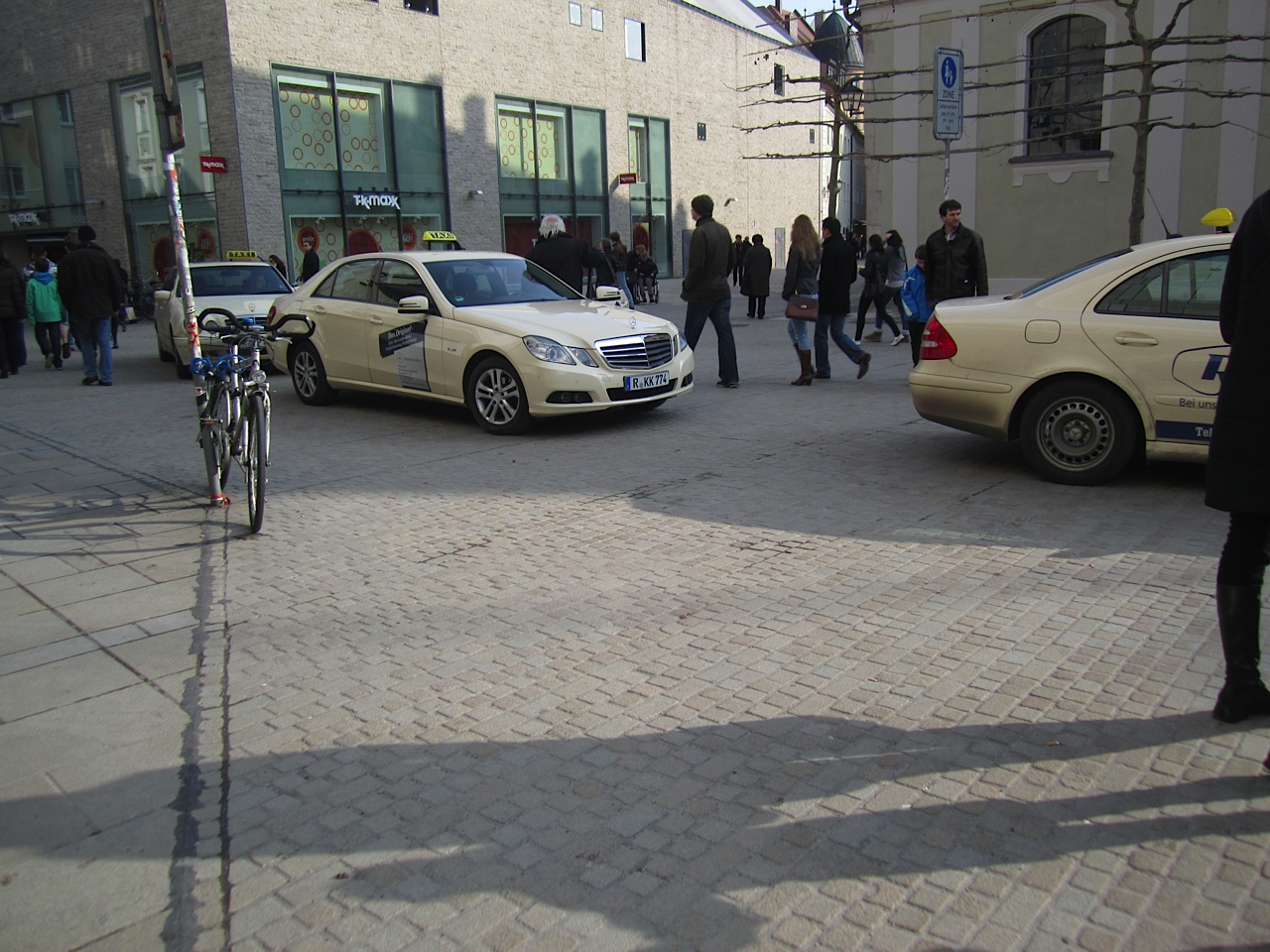
Over the last few weeks, I’ve been building up a little collection of pictures of official vehicles, because they fascinate me. In the US, most of the official vehicles are common American brands, and that’s to be expected. Here, though, there is an entry level Mercedes that looks like it’s roughly the right class to compete with the Honda Fit. In the US, Mercedes is a luxury car. Here, all of the taxis are Mercedes.

The same thing applies to emergency vehicles. Ambulances and fire trucks are pretty much what you’d expect- a van is a van is a van- the smaller emergency vehicles, however, are pretty snazzy looking. the fire department’s smaller vehicle? BMW.

Emergency medical service? This one is an Audi. The 112 inscribed on the side door is because the emergency call number here is 112, not 911 as it is back in the US. This is also a good example of the German language trying to confuse me. Arzt is “doctor.” The vehicle says notarzt. Which means “emergency doctor,” even though my EnglishBrain keeps screaming “but it says it’s NOT a doctor!”

Last, but certaintly not least, are the Polizei. (And bonus, it’s next to a Skoda in traffic, so you can see one of those as well.) Our frendly neighborhood cops drive BMWs accented with green. I’ve been told by several people that the police are shifting gradually over to blue instead of green to match large portions of the rest of the world, but I haven’t seen any blue on the cars or uniforms yet around town. I happen to think these little hatchback polizei cars are pretty good looking, though.

I wanted an Audi before I moved to Germany. I wonder if I’ll still want one as badly when I get back to the US.