The Edo-Tokyo Museum

The Edo-Tokyo Museum in the Ryogoku district of Tokyo is a museum that details the history and culture of Tokyo during the Edo period.  The museum is in a multi-level building with a very interesting structure.  The main entrance is up that red escalator on the left.

edo-tokyo-museum-1

One of the first things you see after entering the museum is a life-sized replica of the Nihonbashi, the bridge which has crossed the Nihonbashi river since the 17th century.  The first wooden bridge was constructed in 1603.  The Nihonbashi was rebuilt with stone and a steel frame in 1911.

edo-tokyo-museum-2

Looking over the rail of the bridge, you can see a life-sized replica of an old Newspaper office.  You can get on the seat of the penny farthing, the bike with a giant front wheel.  It doesn’t go anywhere, however, which was very disappointing.

edo-tokyo-museum-3

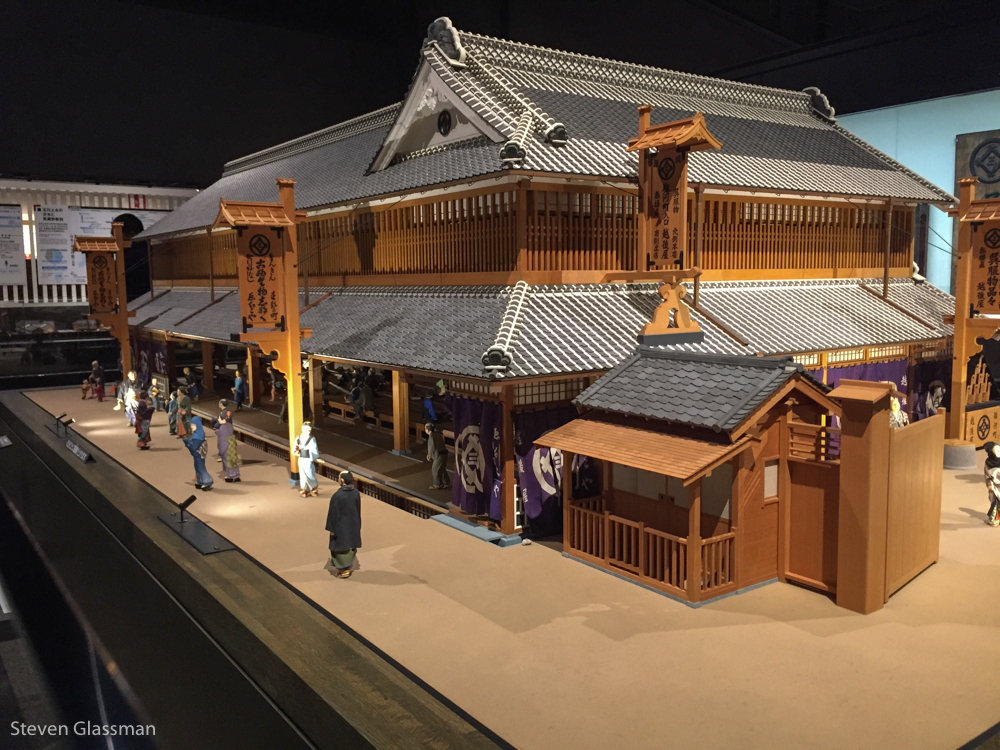
On the far side of the bridge is an area with models of castles and other buidings from the Edo period.

edo-tokyo-museum-4

I didn’t take very good notes as to what the models represented, but they’re incredibly detailed.  They reminded me a lot of Miniatur Wunderland in Hamburg.

edo-tokyo-museum-5

Look, a tiny palace!

edo-tokyo-museum-6

The detail on these buildings and courtyards is extraordinary.

edo-tokyo-museum-7

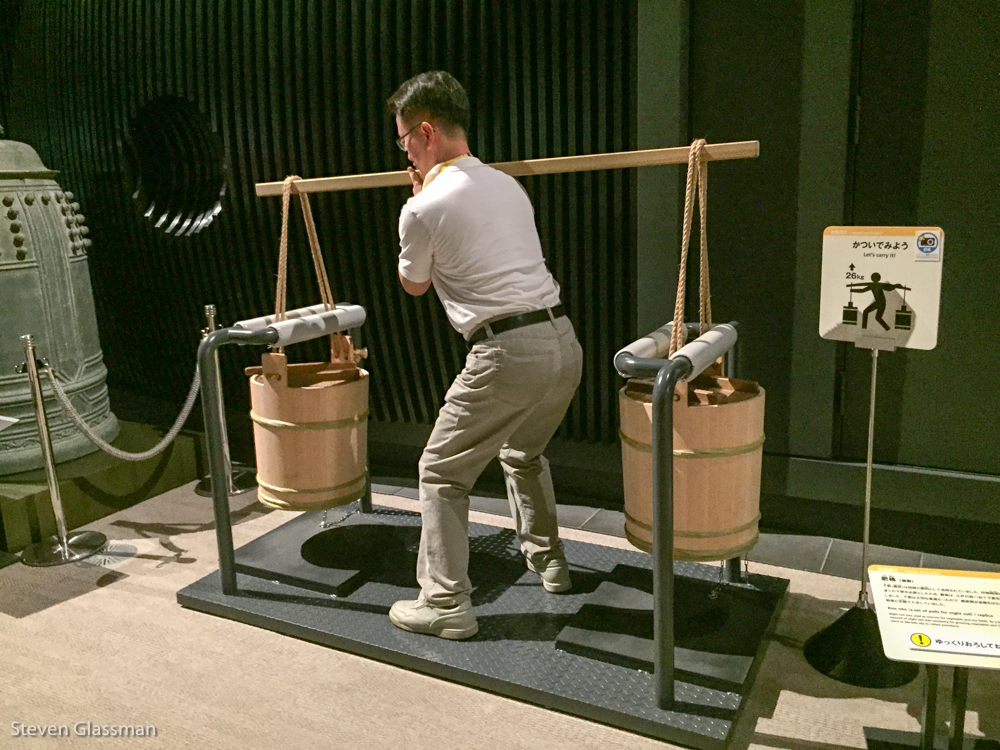
This demonstration involves lifting heavy buckets on a pole.  However, the metal guides prevent you from lifting them too far, which makes it even more awkward.  I tried this, and it made a terrible noise when I extended the ropes too far.

edo-tokyo-museum-8

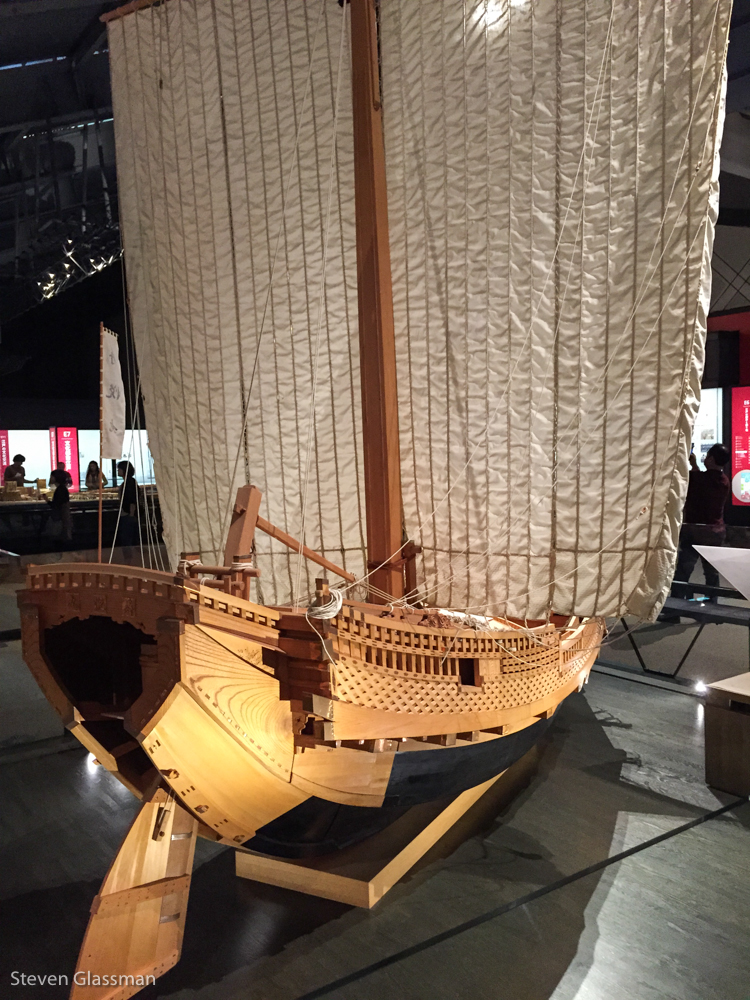
Boats! Boats! Boats!

edo-tokyo-museum-9

I deeply regret not taking the time to photograph the placards that explain what these items are.  It’s been four months already since I left Japan, and the best I can come up with now is, “ooh, tiny Japanese people!”

edo-tokyo-museum-10

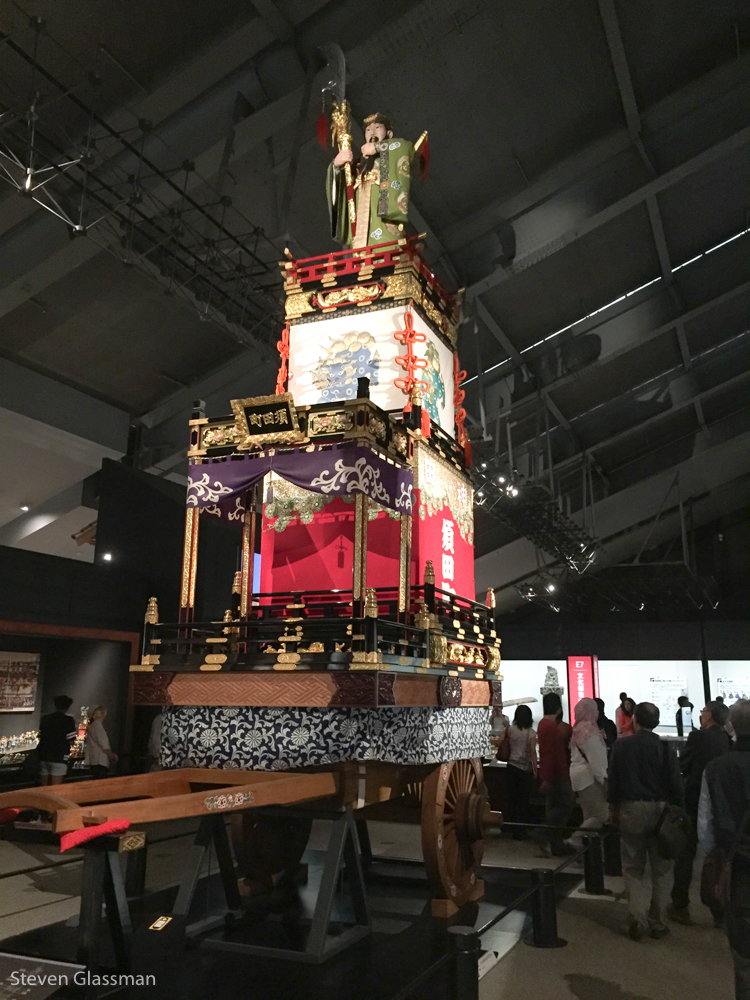
Royalty may get a comfortable seat, but I can’t help but think the whole contraption would be faster if it were a little bit less ornate.

edo-tokyo-museum-11

Some sections of the museum covered more recent times.  I thought the Subaru 360 was kind of neat.

edo-tokyo-museum-12

The 2-door rear-engine 360 was Subaru’s first production automobile.  It was manufactured from 1958 to 1971.

edo-tokyo-museum-13

The next two pictures are a scale model of a type of hot air balloon bomb that was sent out by Japan during World War II.  The Fire Balloon (fūsen bakudan) was a hydrogen balloon with a variety of bombs and incendiary devices attached.  Used in conjunction with the Pacific jet stream, the Fire Balloon was the first device to have intercontinental range.

edo-tokyo-museum-15

Between 1944 and 1945, the Japanese Navy launched over 9,000 fire balloons toward North America.  About three hundred were confirmed to have reached the United States and Canada, but most of them caused little or no damage.  Six people (five children and a woman) became the only deaths due to enemy action to occur on mainland America during World War II.  One of the Fire Balloons landed near Bly, Oregon, and one of the children triggered the bomb.   The site where this happened is marked by a stone munment in the Mitchell Recreation Area in the Fremont-Winema National Forest.  The Canadian War Museum, in Ottawa, Ontario, has a full, intact balloon on display.

edo-tokyo-museum-14

This is a Model T used as a taxi in old Tokyo.

edo-tokyo-museum-16

This is a replica of  the Ryōunkaku, Japan’s first western-style skyscraper. It stood in the Asakusa district of Tokyo from 1890 until the Great Kanto earthquake of 1923.  The earthquake destroyed the upper floors, and the tower was so severely damaged that it had to be demolished.

edo-tokyo-museum-17

This sign shows how the tower looked after the earthquake, and details the subsequent demolition of the tower.

edo-tokyo-museum-18

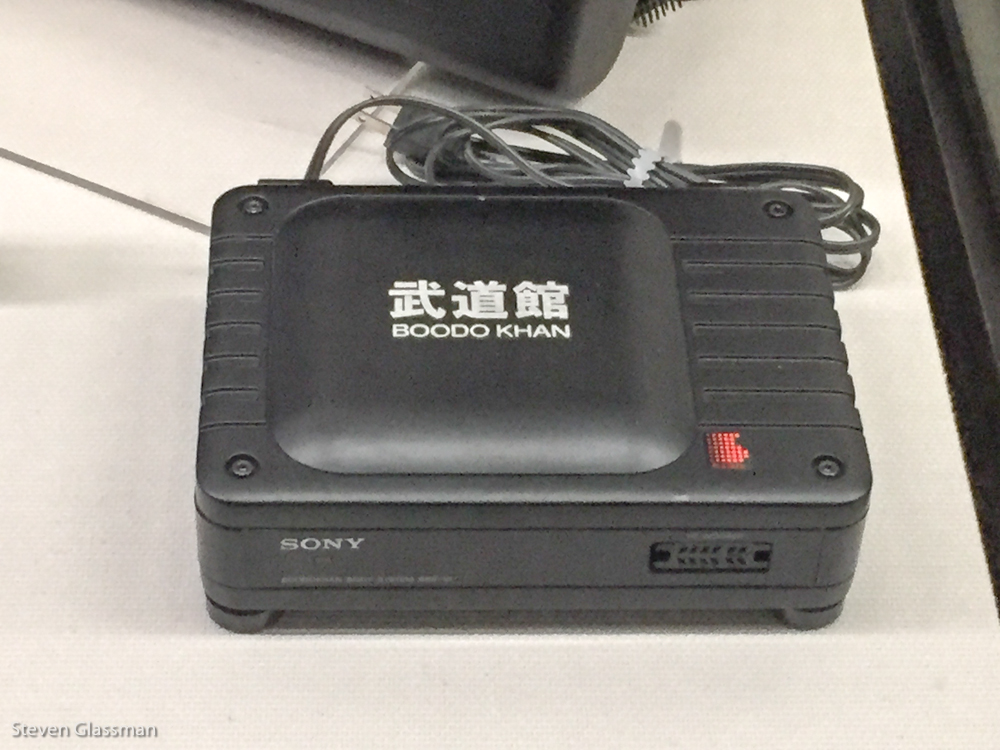
The Boodo Khan is one of Sony’s earliest audio systems.  The Boodo Khan name was also applied to early Walkman models, but this is a component system for home audio.  Collectors and audiophiles still rave about the audio quality on these boxes.

edo-tokyo-museum-19

This is a very pretty phone booth.  I think it looks a little bit like a lighthouse.

edo-tokyo-museum-20

Have you ever been to the Edo-Tokyo Museum?

A Few Hours In Kyoto: Kinkaku-ji and Ryoan-ji

On Sunday morning, after I was done at the Osaka Aquarium, I took the JR West Special Rapid train, which takes just under half an hour to go from Osaka to Kyoto.   From there, a short ride on the Kyoto City Bus took me to Kinkaku-ji, also known as the Golden Pavilion.  Kinkaku-ji is a Buddhist temple, formally named Rokuon-ji Temple.  It has been named a World Cultural Heritage Site since 1994.

kyoto-1

Visitors can see the Golden Pavilion from a small distance, but cannot actually walk inside.  The view in the first picture is really as close as you get.   The golden hue of Kinkaku-ji is gold foil on lacquer, covering the upper two levels of the shrine.  According to the tourist brochure given to visitors, each level is a different style of architecture: The first level is in the shinden style of the 11th century aristocracy, the second level is in buke style of the warrior aristocracy, and the top level is in the Chinese zenshu-butsuden style.  A golden phoenix stands atop the roof.

kyoto-2

After I was done walking around Kinkaku-ji’s small pond and garden, I decided to walk to another nearby shrine, Ryoanji Temple.  The distance was a little bit more than one mile, and it was a pleasant walk.  Thank goodness for navigational robots on smartphones, though- without them, I never would have believed I was going the right way.

At the end of that mile, I found the main drive to Ryoan-ji, and it was filled with buses for students on a field trip of some sort.  I walked to Kuri, the main building of the temple, stepped inside, and took off my shoes.

kyoto-7

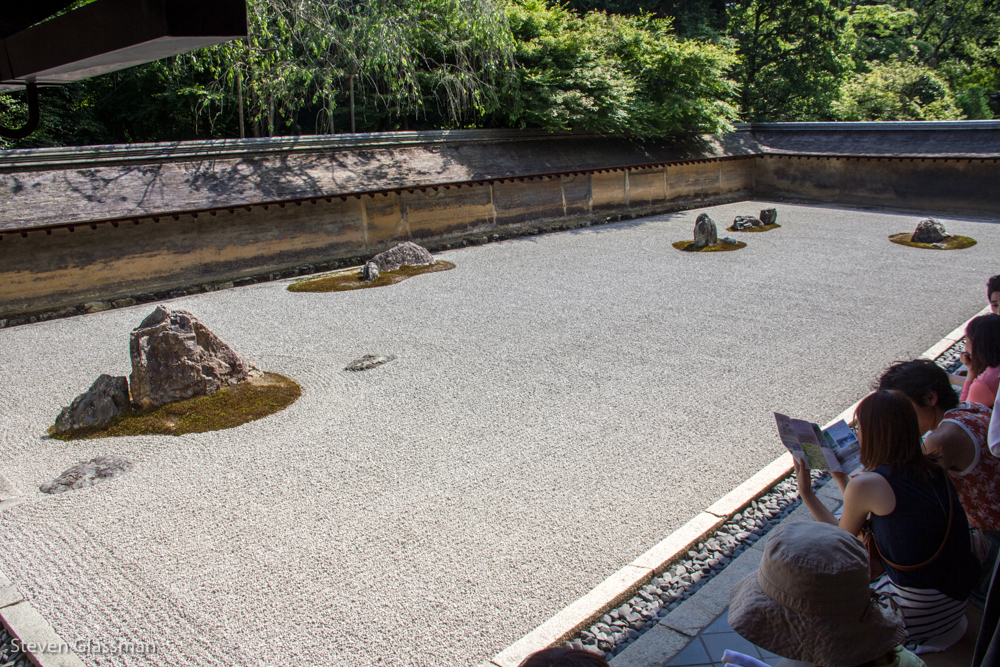
Most of the students from the buses outside were sitting in front of the rock garden, said to be created around 1500.  This rectangular Zen garden is twenty-five meters from east to west, and ten meters from south to north.  It contains no trees; only fifteen rocks and white gravel are inside the boiled clay walls.

kyoto-3

Ryoan-ji was destroyed by fire during the Onin War, and was rebuilt in 1499.

kyoto-4

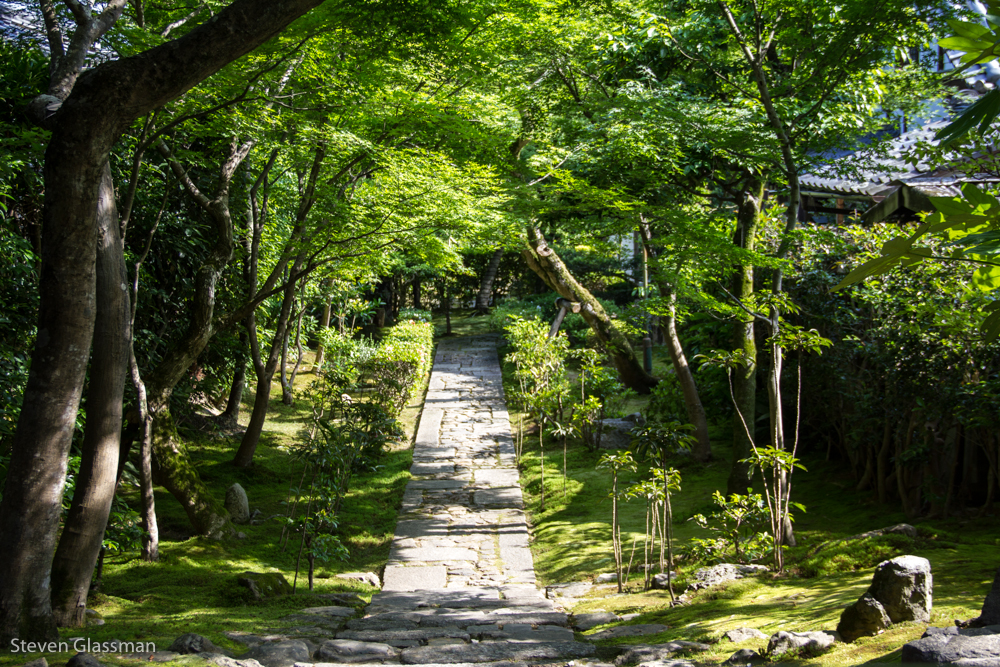
The gardens around the main building of the temple are very quiet and green.

kyoto-5

Like Kinkaku-ji, Ryoan-ji was registered as a World Heritage Site in 1994.

kyoto-6

While Kyoto is very large, I only had enough time to visit these two beautiful sites in the northern part of the city.  After a pleasant mile long walk back to the original bus route, I returned to the Kyoto train station to get my final Shinkansen train back to Tokyo.

Naturally, there was live music happening in the train station.  This sort of thing seems to happen wherever I go.  They might even have been the same group I’d seen the previous morning in Hiroshima.

kyoto-8

Have you ever been to Kyoto?  Do you have a favorite shrine?

2015 Morikami Lantern Festival: In The Spirit of Obon

Allow me to step away from my neverending flurry of Japan posts to talk about… Japanese culture in South Florida!  This weekend was the 2015 Morikami Lantern Festival: In  The Spirit Of Obon.

First, a little bit of history:  In 1903, a Japanese man named Jo Sakai who had recently graduated from New York University purchased 1000 acres of land from Henry Flagler’s Model Land Company, in order to build a farming community.  Jo Sakai recruited young men from his home town of Miyazu, Japan to help farm the land.  The Yamato Colony was located in what is now Boca Raton, Florida.  One of their main crops was pineapples, and the pineapple is a symbol of nearby Delray Beach to this day. A major East-West roadway in Boca Raton is still called Yamato Road, and I drive that road every time I go to work.

Over time, the Yamato Colony could no longer compete with cheaper pineapples from nearby Cuba.  Most of the farmers returned to Japan, and those who remained lost much of their land when the United States government took it during World War II to build an Army Air Corps training base.  That land is currently part of Florida Atlantic University and the local Boca Raton Airport.  Shoppers leaving the Whole Foods off Glades Road in Boca Raton can still see giant Army turrets left over from the military base bordering the field of the local high school.

The lone member of the Yamato Colony to remain in the area was George Morikami.  George migrated to the area from Miyazu in 1906, and he stayed in the area after the Yamato Colony disbanded.  He purchased land in Delray Beach after World War II, and farmed it for almost thirty years.  George Morikami died at age 89 in 1976, and his ashes were returned to Miyazu.  Nearby Delray Beach is a sister city to Miyazu, in his honor.

Before George died, he donated his land to Palm Beach County, and that land became the Morikami Park and Japanese Gardens.    Ground breaking for Morikami Park was in 1976, and the museum building on site began construction in 1993.

The Museum and Gardens have been celebrating the Bon festival for many years.  Obon has traditionally been celebrated in July or August, but the Morikami changed their celebration a few years ago to be slightly later in the year in order to better avoid summer weather conditions.  The newer festival was combined with another fall Lantern celebration, and thus is called “The Morikami Lantern Festival: In The Spirit of Obon.”

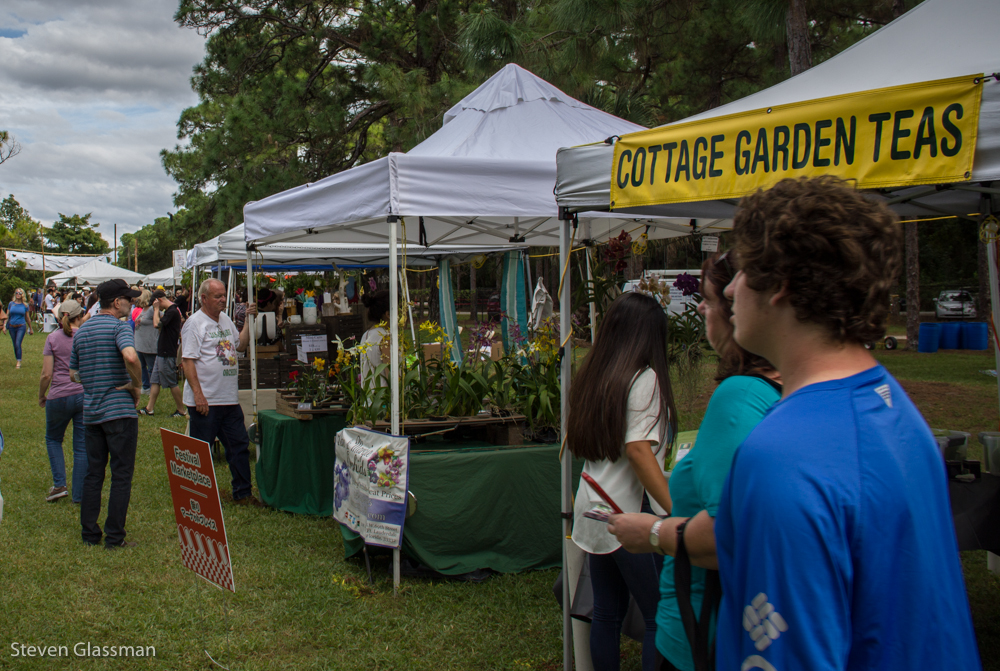
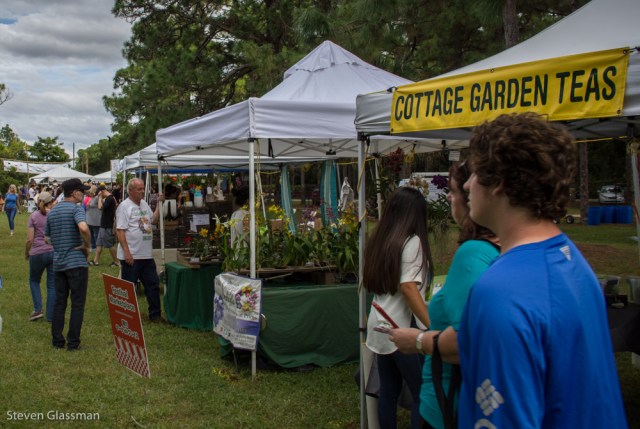
Now that we’ve got that background out of the way, let’s talk about the festival!  As with any festival in Florida, there are tents for small wares- tea, jewelry, and the like.
obon-lantern-festival-2015--1

There were entertainment tents for the children, including facepainting, ring toss games, and a Doraemon’s Pocket game where children can toss a small bean bag into Doraemon’s pocket to win prizes.  Not familiar with Doraemon? He’s a robot cat from the future, and he’s very popular in Japan.
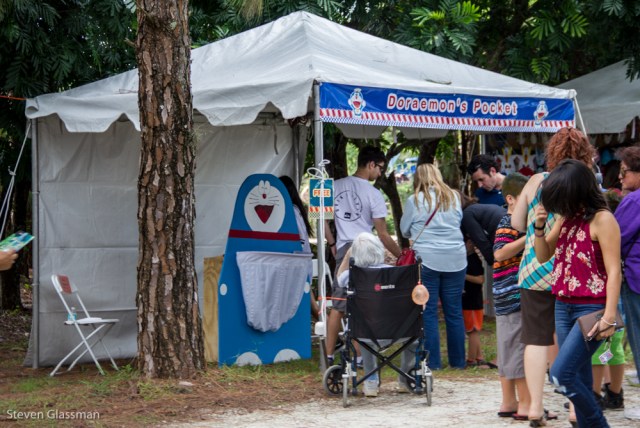
obon-lantern-festival-2015--2

A local screen printing company was working on the official shirts for the festival.  If you’ve never watched screen printing being done, it’s worth a look.  The entire process is just fascinating.

obon-lantern-festival-2015--19

The design for the event logo is beautiful.  The Fine Print Shoppe does nice work.

obon-lantern-festival-2015--20

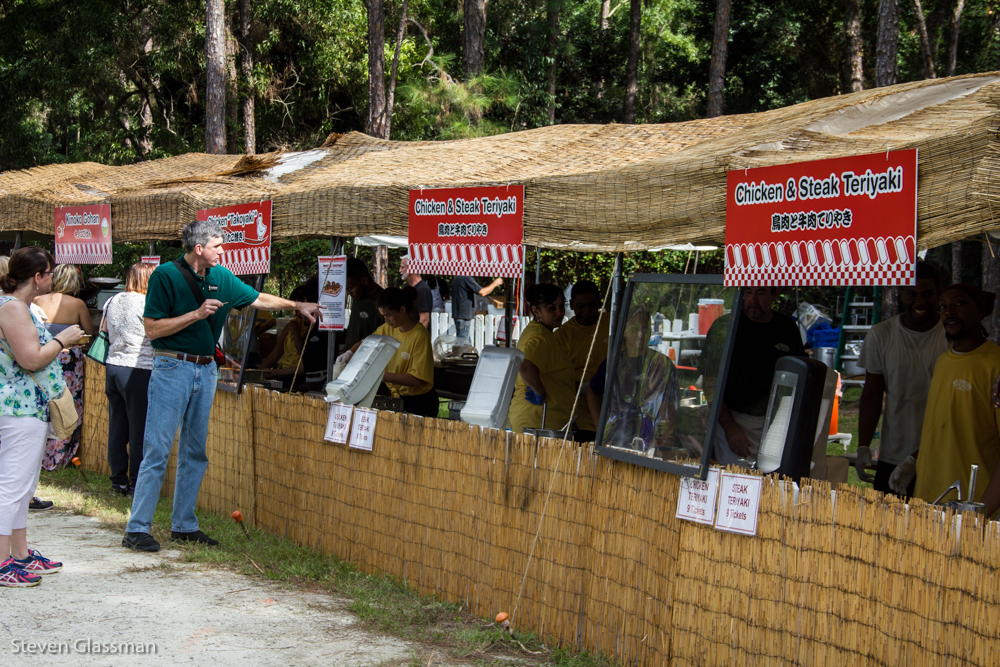
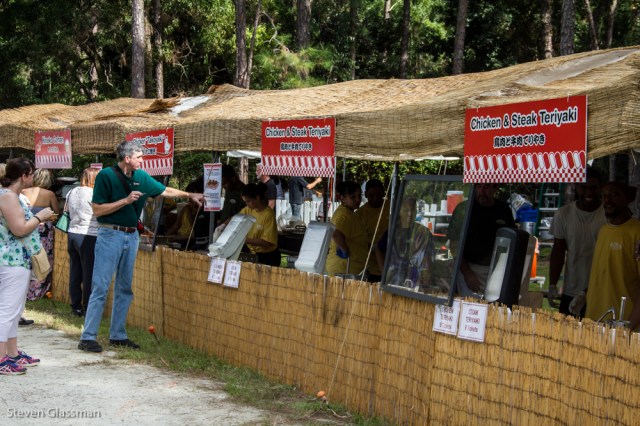
There were food options at the festival as well.  Some of the food choices were typical American festival fare, but most of the food booths were either Japanese or Japanese-inspired foods.  Amelie and I ate Takoyaki, a round and battered snack which is traditionally filled with octopus, tempura, ginger, and onion, but was made at the Morikami with chicken instead of octopus.  We also tried Kinoko Gohan, a type of brown rice with mushroom in it.  Both dishes were delicious.
obon-lantern-festival-2015--3

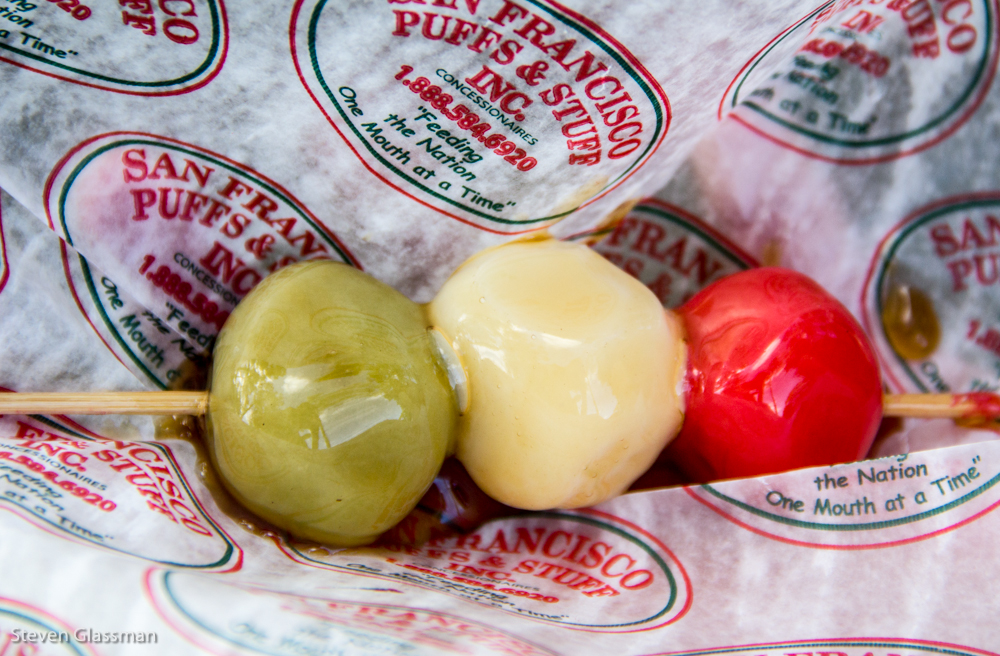
Emboldened by the delicious flavors of the other two, we tried a dessert called Dango.  Dango is a semi-sweet dumpling made of mochiko (rice flour), and covered in a syrup made of soy sauce, sugar, and starch.  Neither of us enjoyed this as much as the other dishes we had tried-  the texture was very dense, and the syrup brought very little sweetness to the whole concoction.  As a dessert, this kind of failed for me.

obon-lantern-festival-2015--21

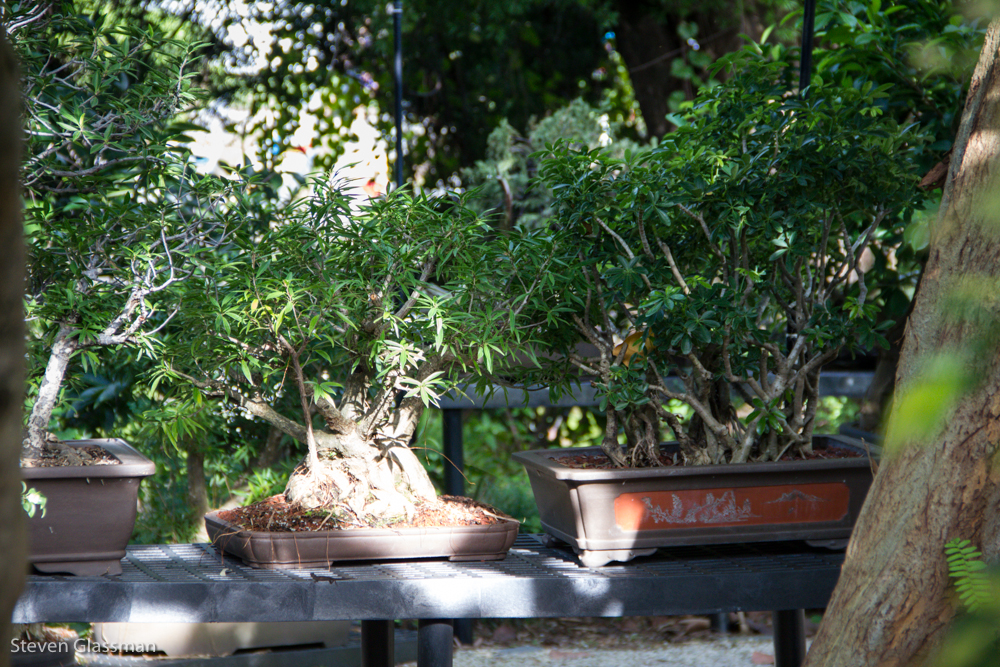
In order to cleanse your mental palate from the foodstuffs, let me show you around the park a little bit.  They have a Bonsai work area where they grow and trim many varieties of the sprightly little trees.

obon-lantern-festival-2015--9

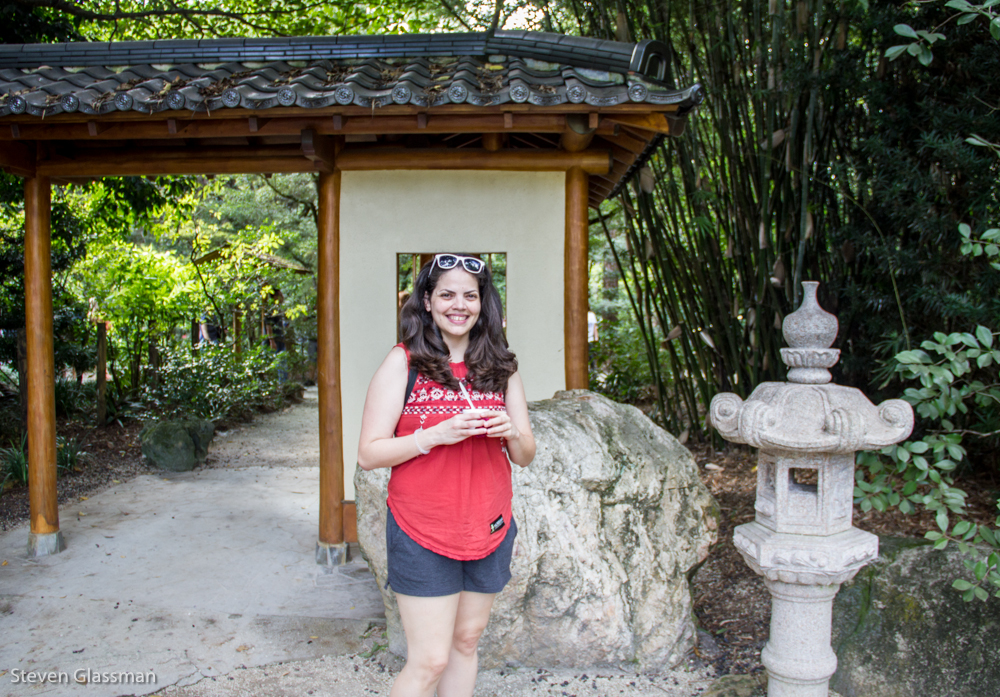
The garden has long winding pathways on which you might stroll with pretty girlfriends.  Here’s mine.

obon-lantern-festival-2015--10

There are waterfalls and stone paths over water, as well as wooden boardwalks over some pools.
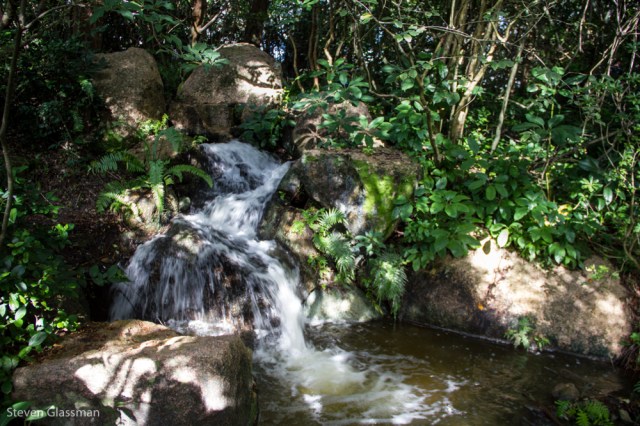
obon-lantern-festival-2015--11

There is a proper zen garden.  While we were in this area, we overheard a young frat boy asking the attendant if the design was ever changed.  When he was told that it was not, he suggested (with a blinding surge of stupidity) that they should cover it in a coat of clear acrylic.

obon-lantern-festival-2015--12

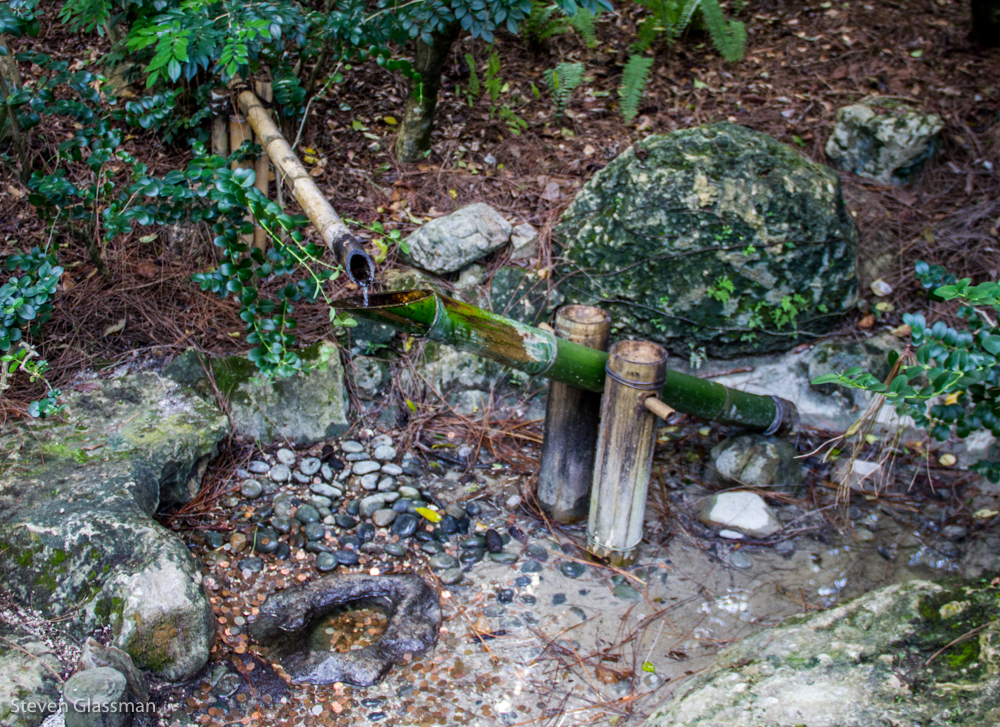
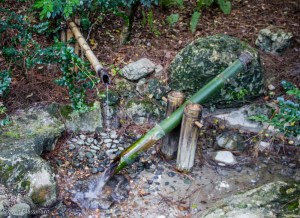
There are nooks and crannies on the pathways around the garden.  On one particular nook, there’s a bamboo water pipe which fills and then dips each time it is too full:
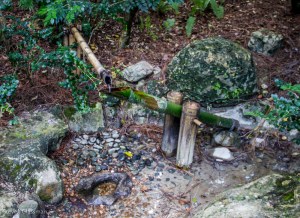
obon-lantern-festival-2015--13 obon-lantern-festival-2015--14

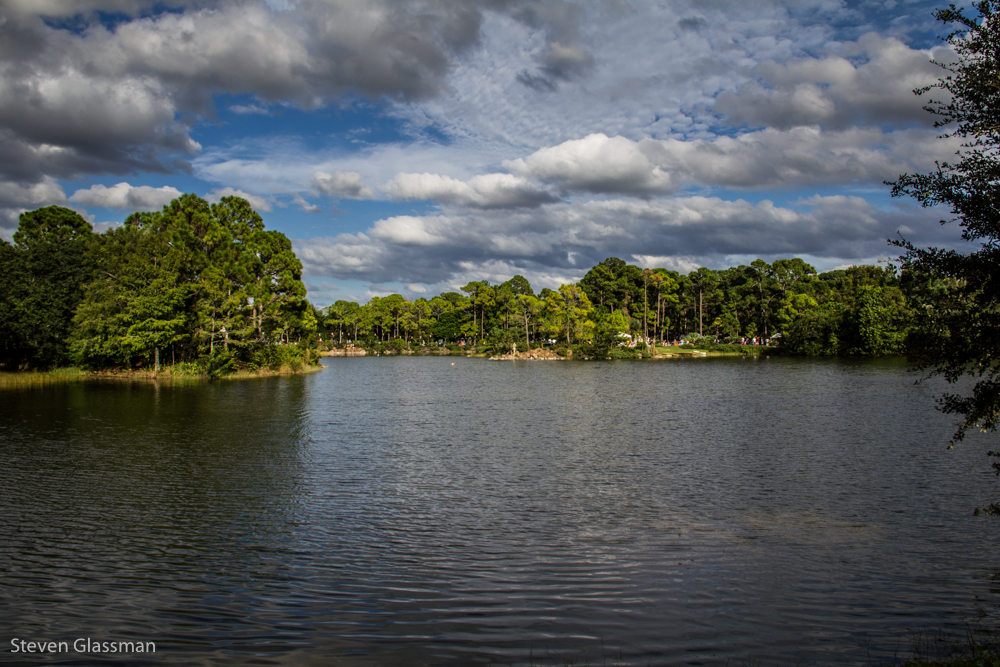
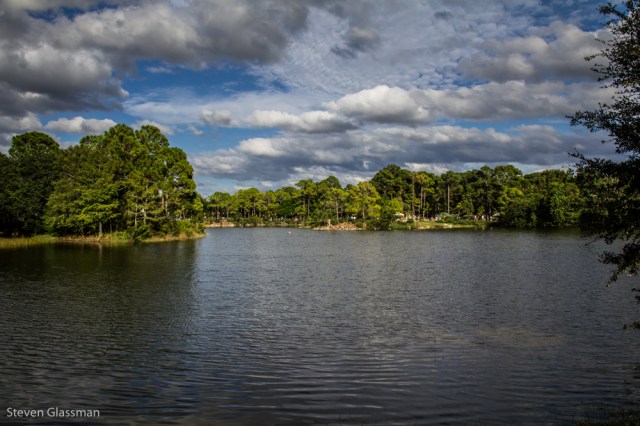
The entire garden wraps around a very large lake.
obon-lantern-festival-2015--15

One part of the garden is a small bamboo forest.  The sound of bamboo rubbing against other bamboo is unlike any other sound on Earth.  Not that I haven’t tried to imitate it.  Quite a lot, in fact.

obon-lantern-festival-2015--16

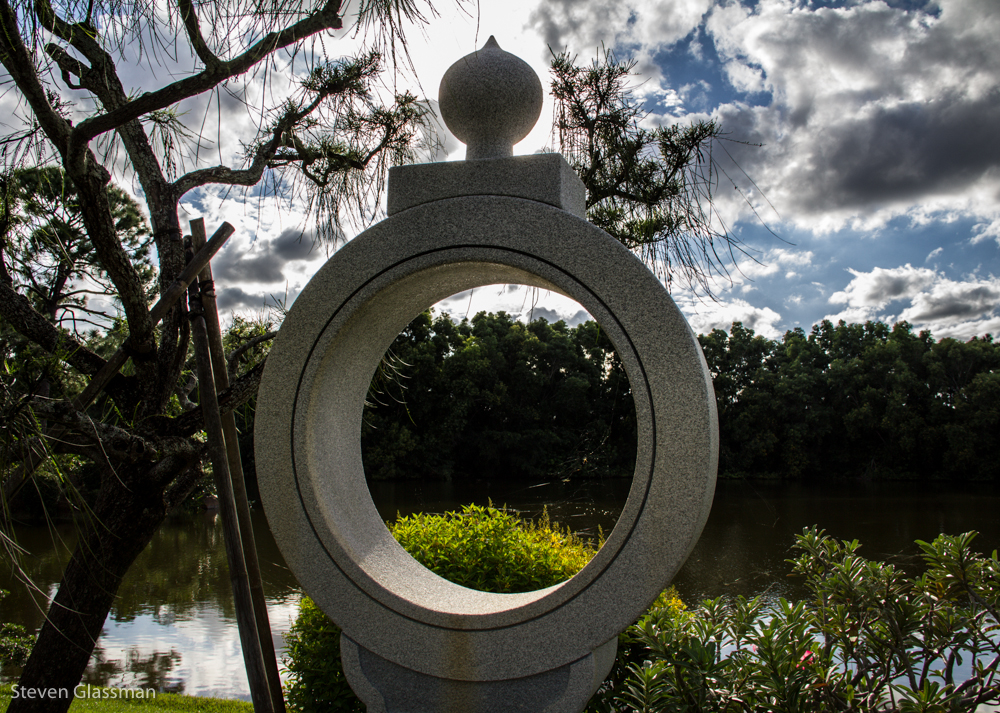
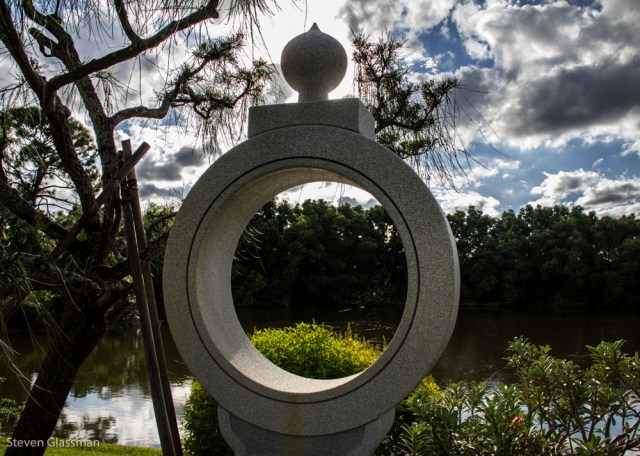
Near the main museum is a stone ring on a stand.  I don’t truly understand the significance of the stone, but it’s pretty and photogenic.  And a banana spider has made a web in the center of the ring which catches the light very nicely.
obon-lantern-festival-2015--17

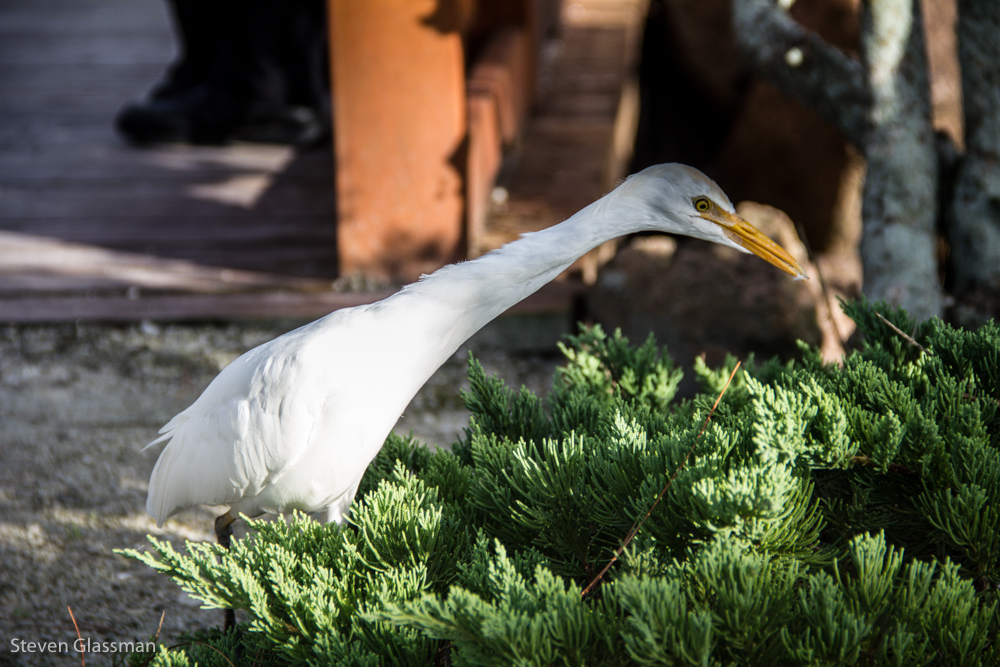
This little fellow didn’t seem overly concerned with the hordes of humans present in the park on Saturday.  He was hunting for food and wandered right past me, no more than an arm’s length away.

obon-lantern-festival-2015--18

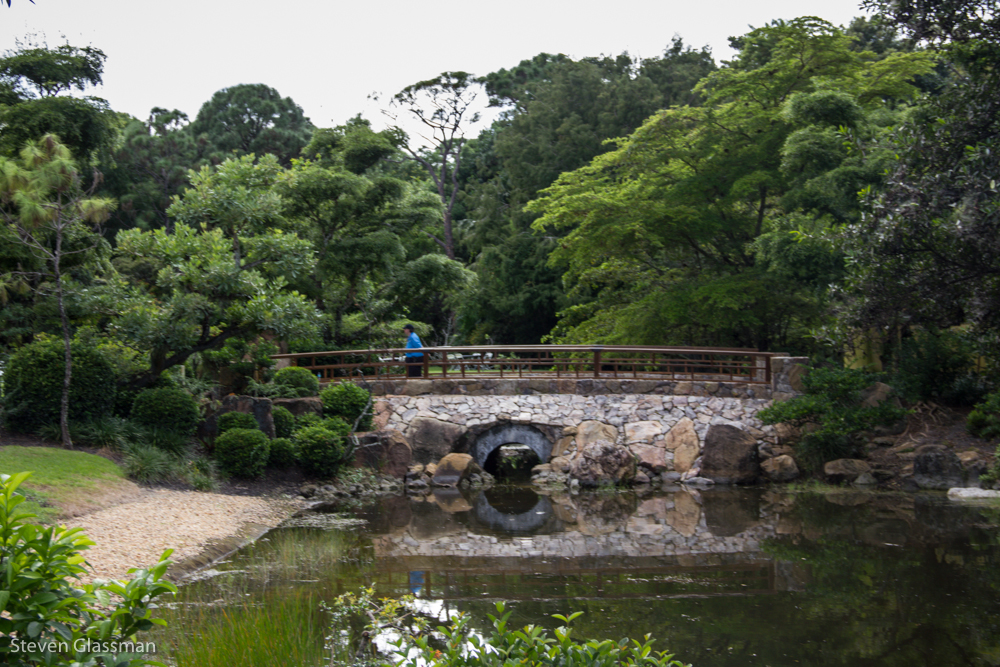
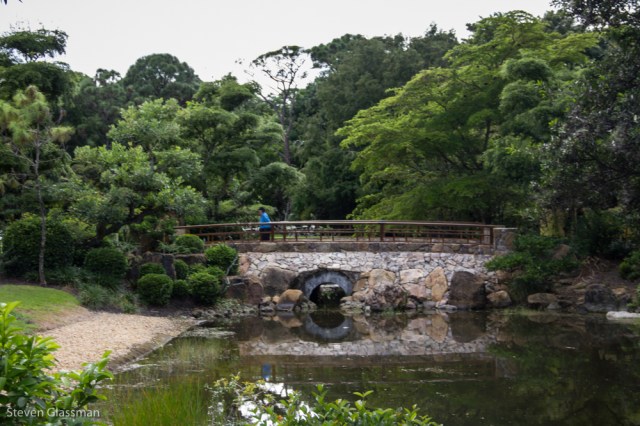
There are several bridges in the park demonstrating various types of Japanese architecture.  I couldn’t begin to tell you much about this one, but it’s nice looking, don’t you think?
obon-lantern-festival-2015--4

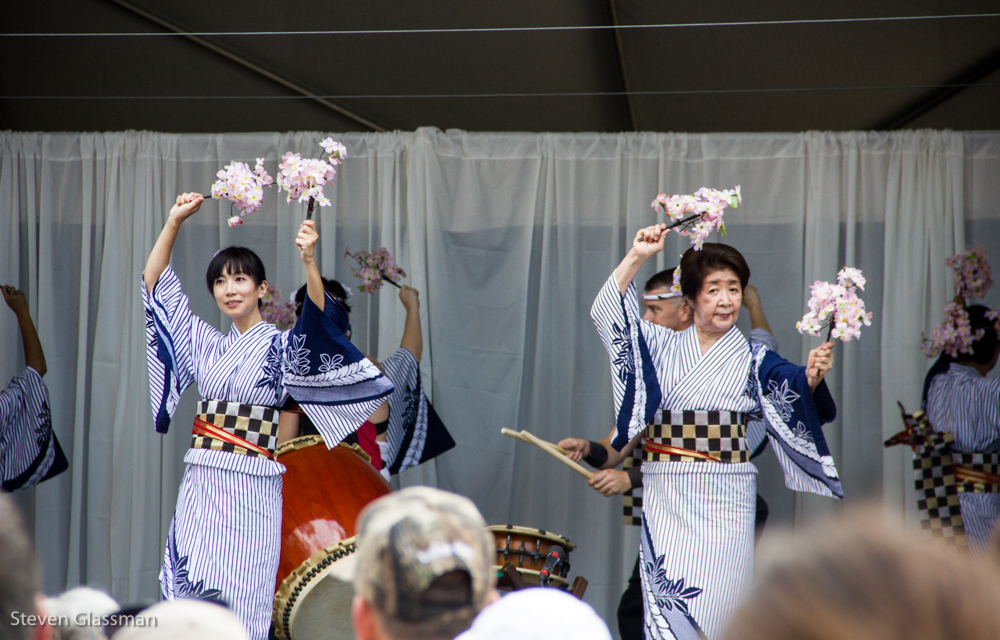
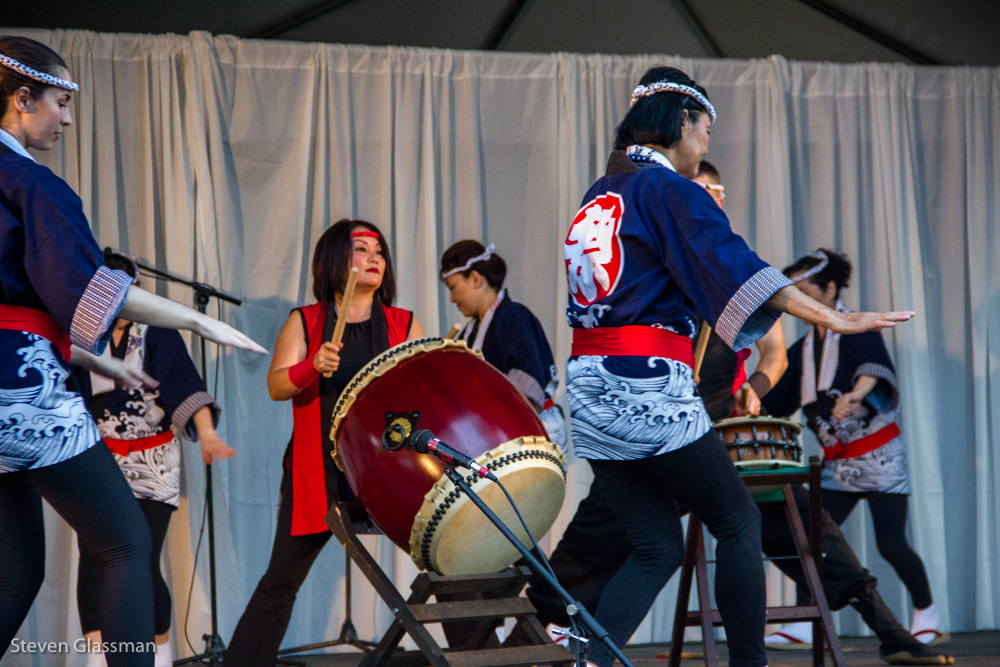
Now that you have a better idea of the setting, let me show you some of the entertainment.   There were rotating shows, three times each, of two Japanese arts.  The first was Japanese folk dancing by Chitose Kai.
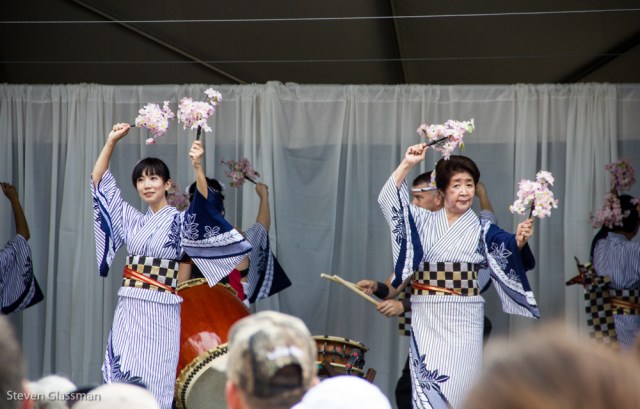
obon-lantern-festival-2015--5

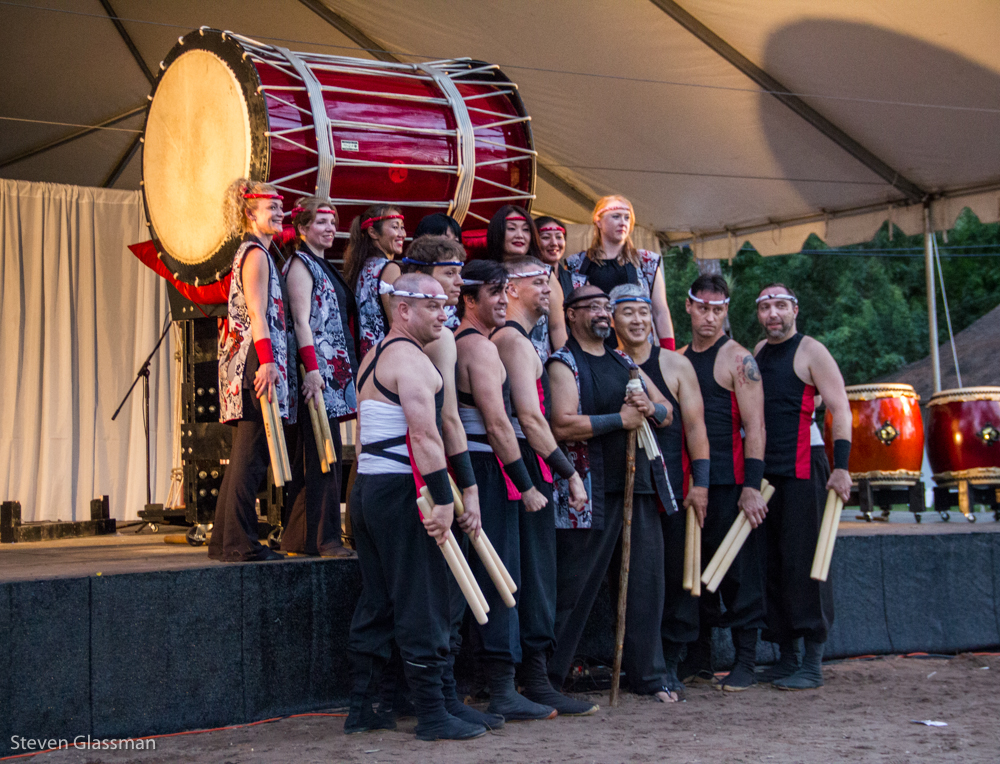
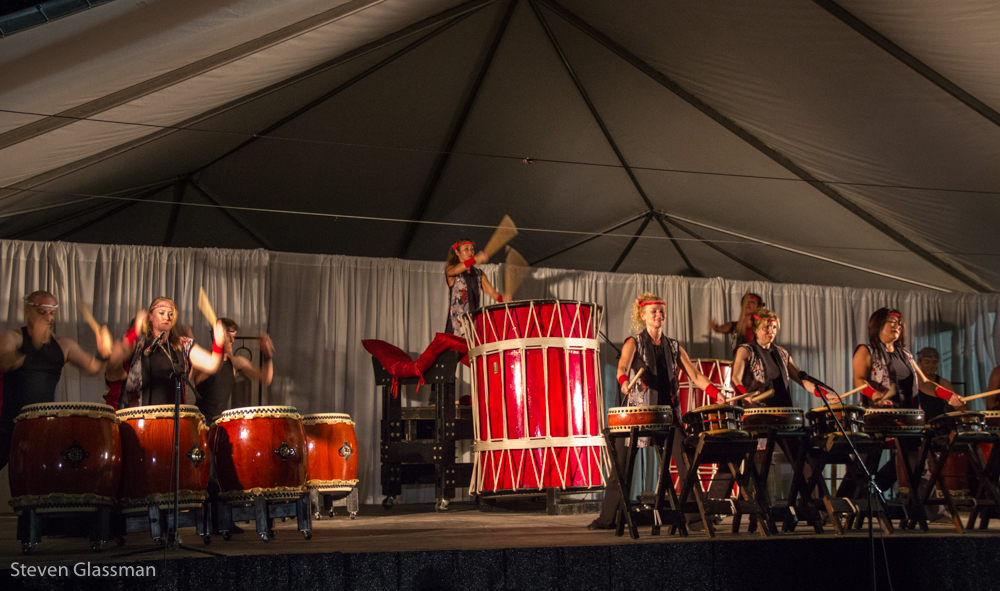
Some of the folk dancing was assisted by members of the second group, the Fushu Daiko Taiko drumming troupe.
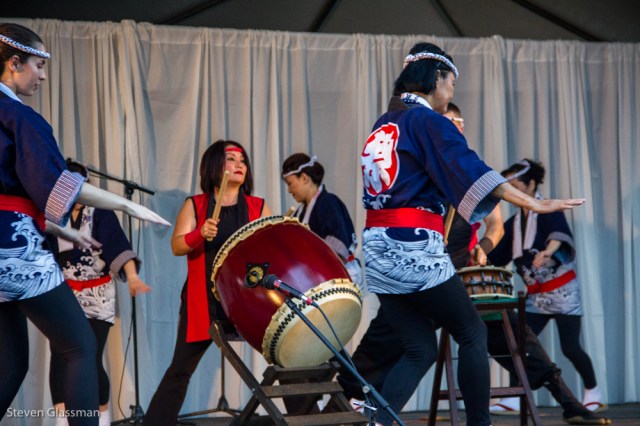
obon-lantern-festival-2015--22

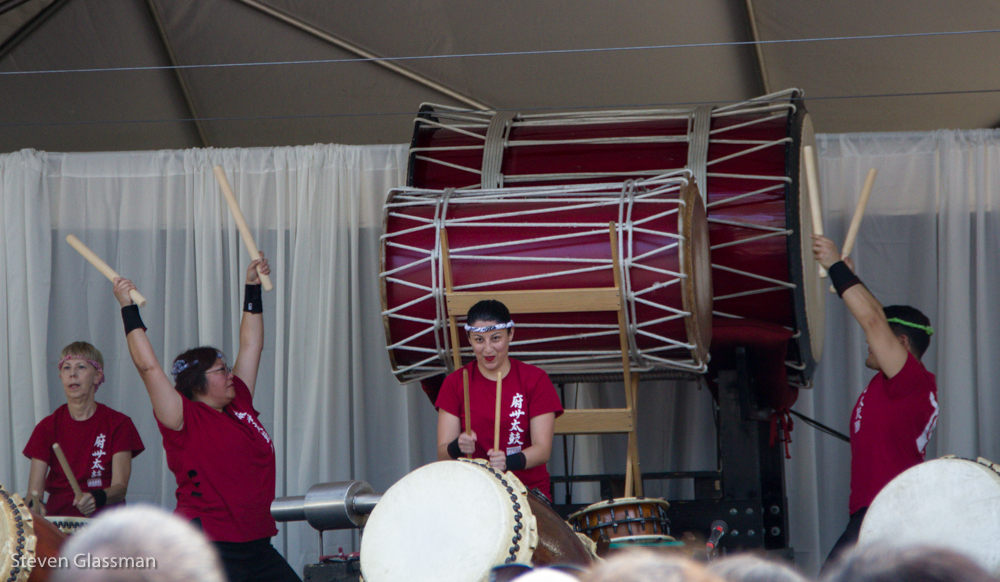
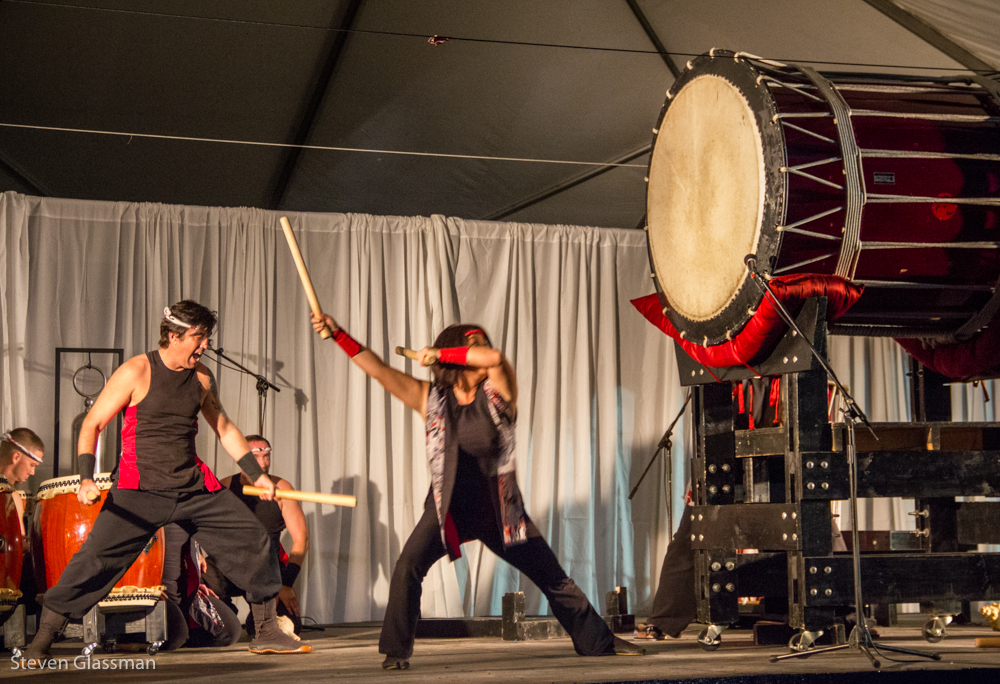
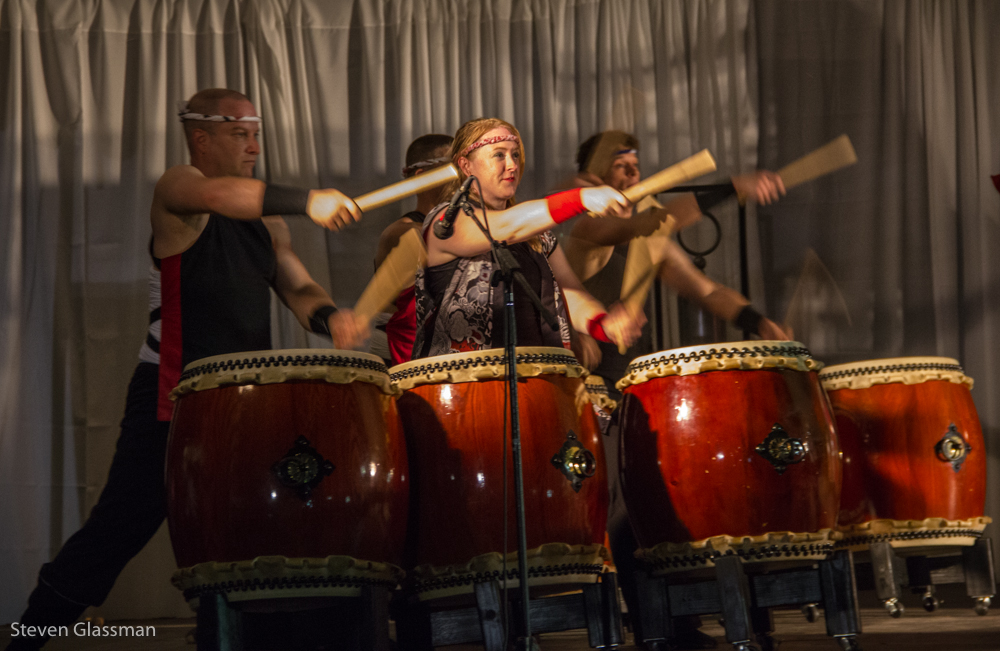
Founded in 1990, Fushu Daiko is celebrating its 25th anniversary this year.  That big drum behind the group?  They call it Godzilla.

obon-lantern-festival-2015--23

It’s difficult to get clear shots of the drummers- they’re very fast.

obon-lantern-festival-2015--6

Fushu Daiko teaches classes in their dojo, so the students also perform at some shows.

I’m not gonna lie to you-  Taiko drumming is super cool to watch.  I’m not going to talk about the next nine photos.  Just look through them slowly, and then figure out when you can go see a Taiko show.  For those of you in Orlando, just go to Epcot- they do it there every day.  I’ll see you after the Fushu Daiko pictures.
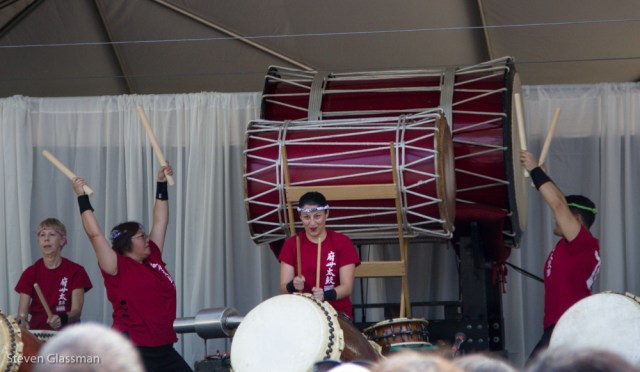
obon-lantern-festival-2015--7 obon-lantern-festival-2015--8

obon-lantern-festival-2015--24 obon-lantern-festival-2015--25 obon-lantern-festival-2015--26 obon-lantern-festival-2015--27 obon-lantern-festival-2015--28 obon-lantern-festival-2015--29 obon-lantern-festival-2015--30

Welcome back!  How did you like the Taiko drums?

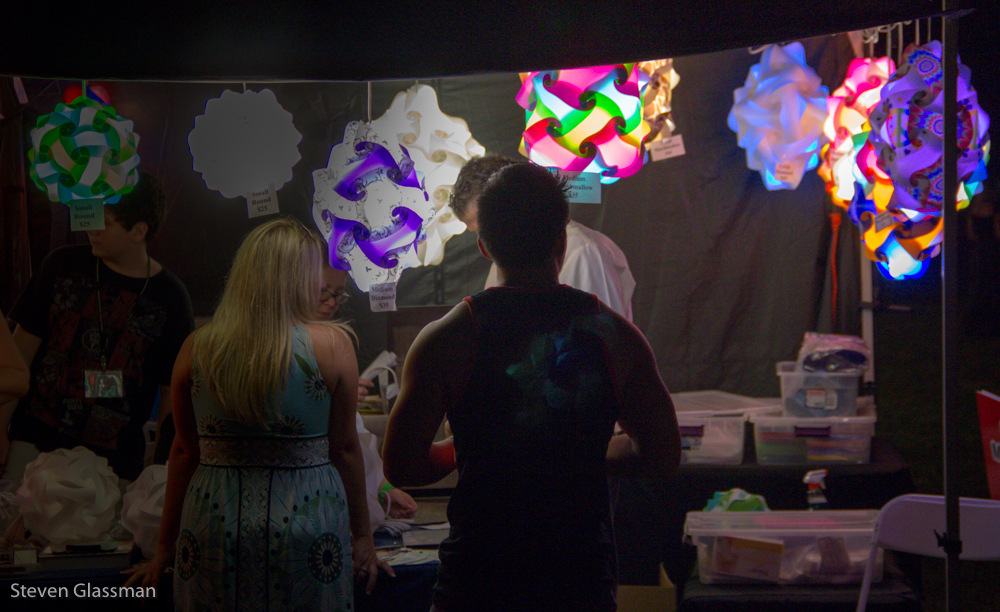
By the time the final drumming finished up, there were only a few things left to do at the festival.  There was a little more shopping available-  these lights were much prettier after dark than they were in the daytime.

obon-lantern-festival-2015--33

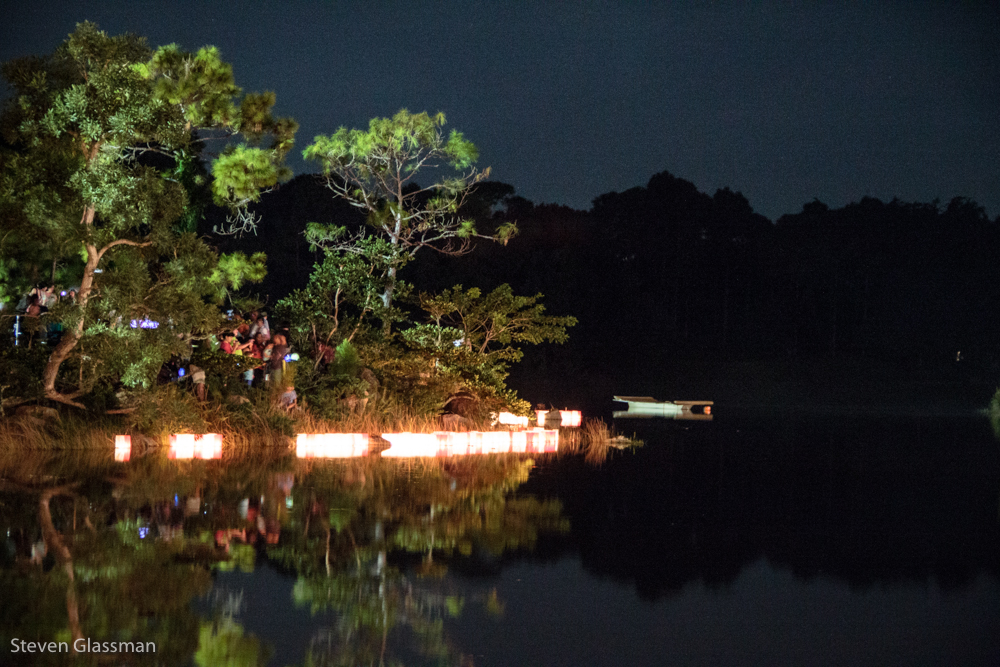
The lantern part of the lantern festival was close to the end of the evening.  Visitors were encouraged to purchase and build a floating lantern or a tanzaku slip in memory of a loved one.  These lanterns would then float across Morikami Lake at the end of the evening.  There wasn’t much of a breeze, so the lanterns didn’t move very much.  They still looked pretty nifty, though.

obon-lantern-festival-2015--32

Finally, just before the close of the festival, there were fireworks.   Lots of them, right over the corner of Morikami Lake.

obon-lantern-festival-2015--31

Have you ever been to the Morikami Museum and Gardens?  Have you ever been to a Bon Festival?

Osaka Aquarium Kaiyukan

Before I left Osaka, I took a quick detour to the Osaka Aquarium Kaiyukan.

osaka-aquarium-1

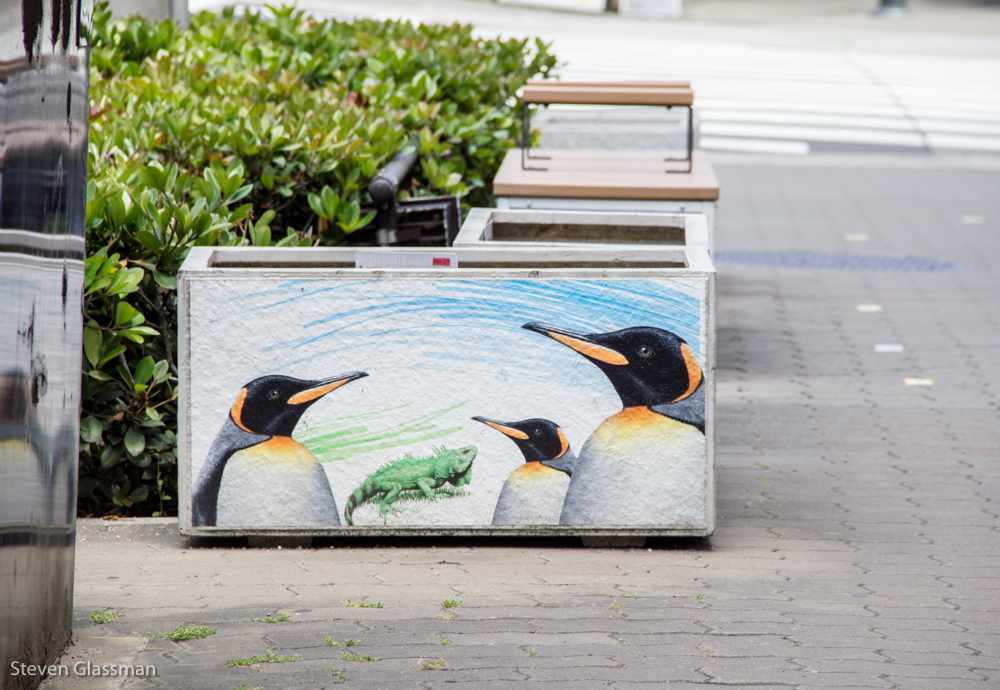
Between the rail stop and the aquarium entrance, there were themed paintings on flower boxes and the like.

osaka-aquarium-2

The aquarium building itself looks a bit like a whale tail.  This is probably not an accident.

osaka-aquarium-3

The entry area contained this adorable toothy anglerfish sculpture.

osaka-aquarium-4

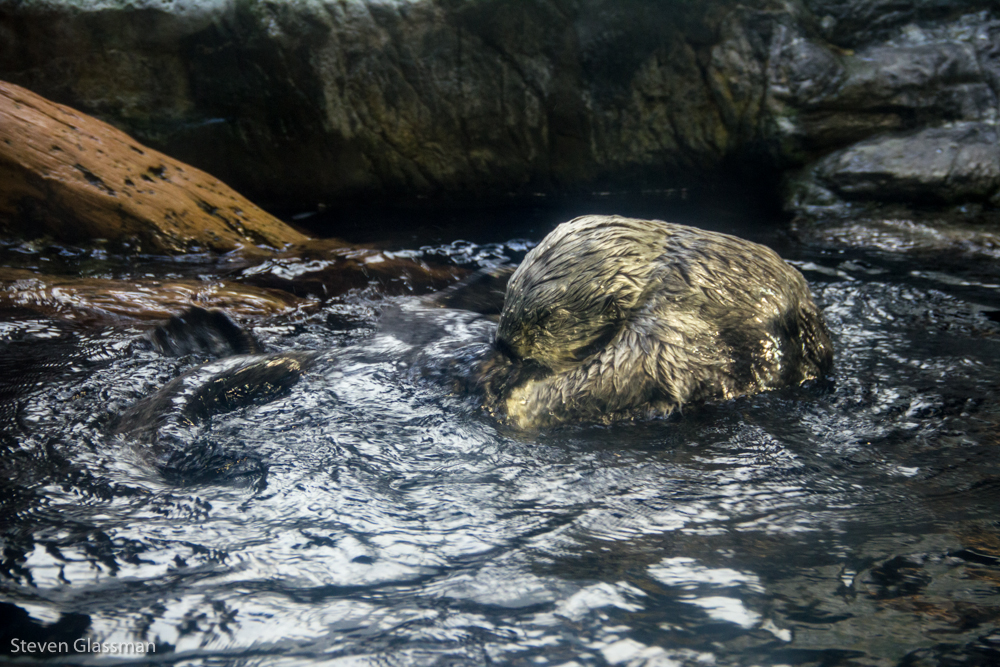
Most of my favorite things in the Osaka Aquarium were not fish at all.  For example, this little guy is an otter.  He was doing barrel rolls in the water.

osaka-aquarium-5

Nearby is a seal doing seal things.

osaka-aquarium-6

The aquarium is home to an entire tiny colony of Gentoo penguins.

osaka-aquarium-7

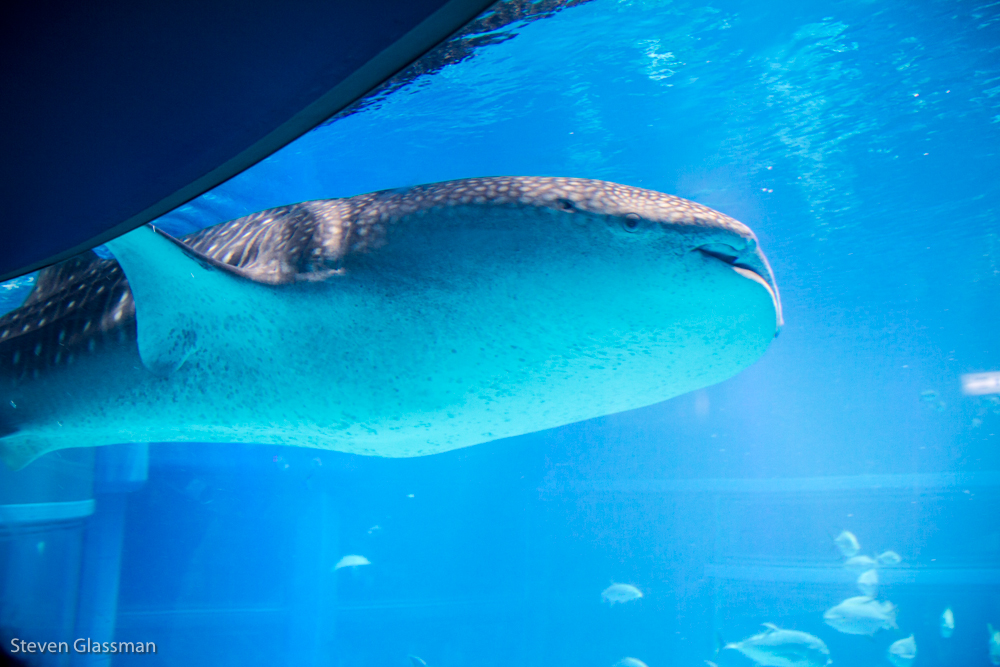
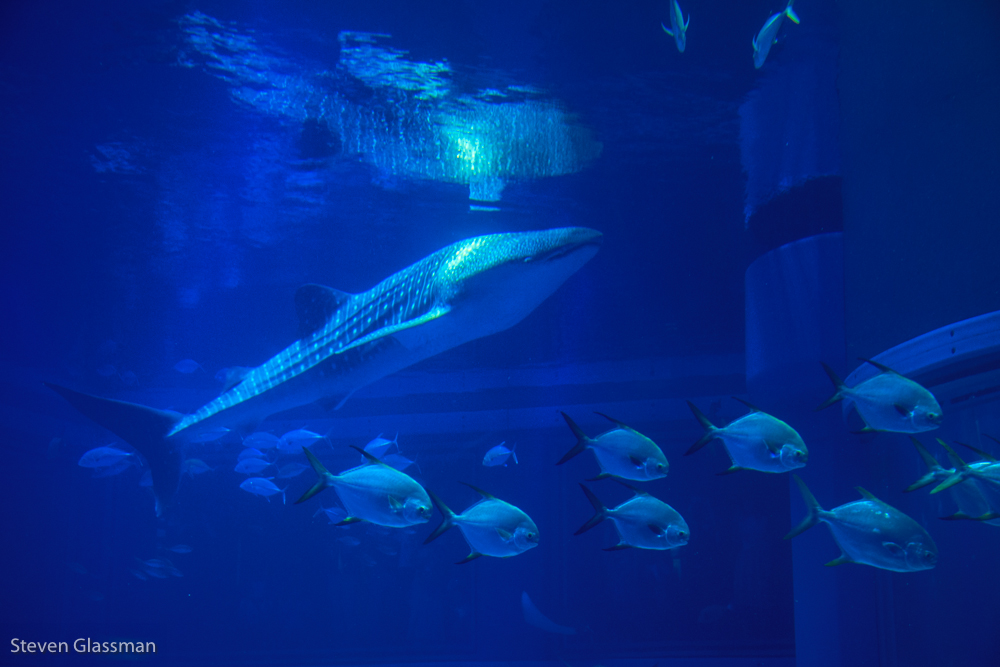
…and one juvenile whale shark.

osaka-aquarium-8

This spotted fish was the main reason I wanted to come to the aquarium.  I hadn’t ever seen a whale shark up close before.

osaka-aquarium-9

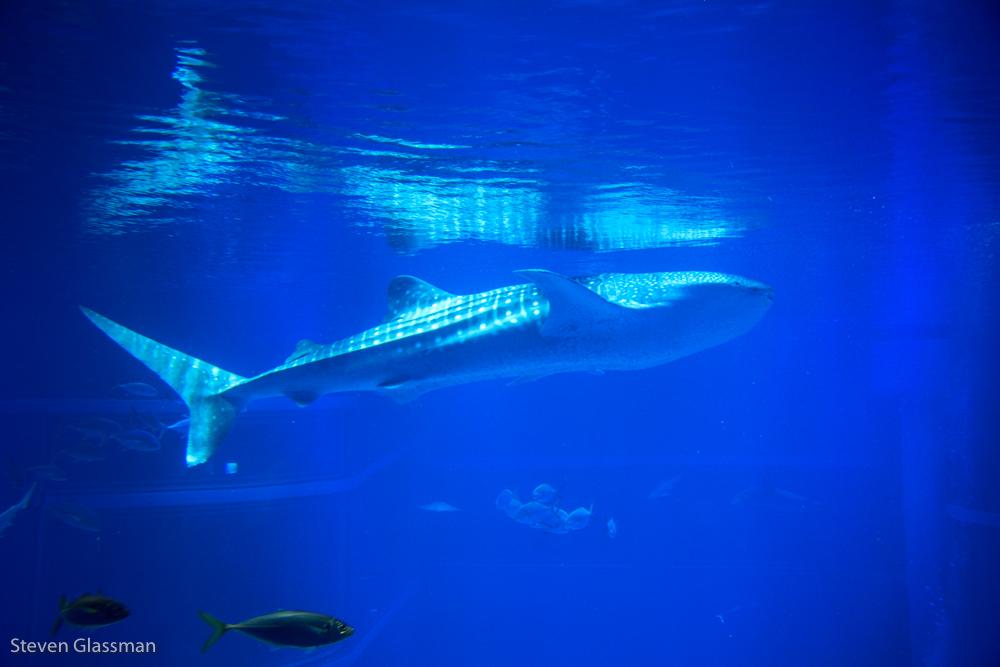
The whale shark swims in the aquarium’s Pacific Ocean tank, which is also home to bluefin tuna and many other very large fishies.

osaka-aquarium-10

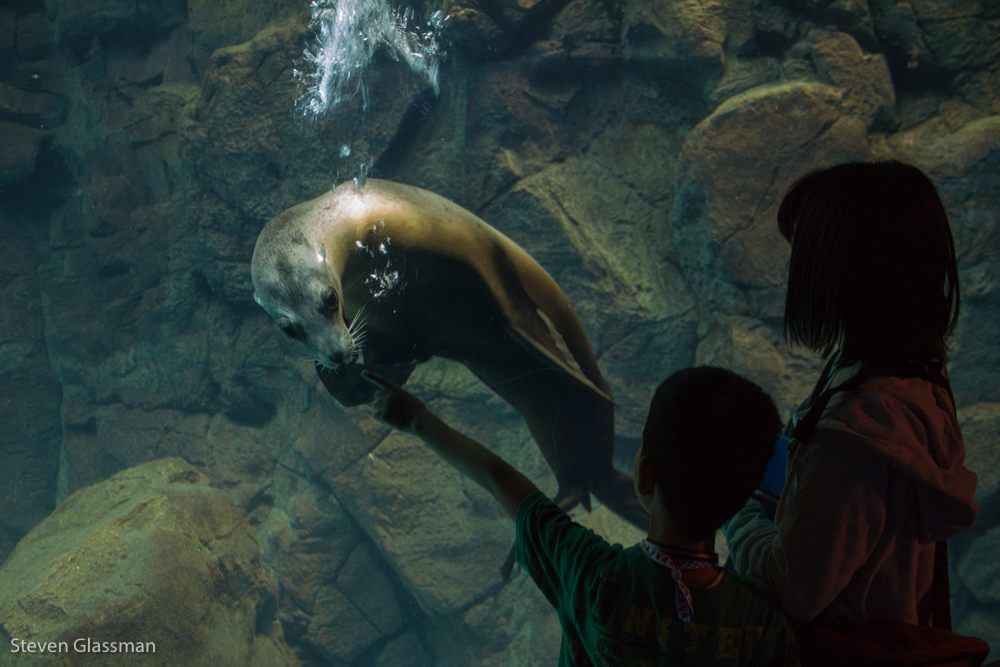
This seal was very interested in what was happening on our side of the glass.

osaka-aquarium-11

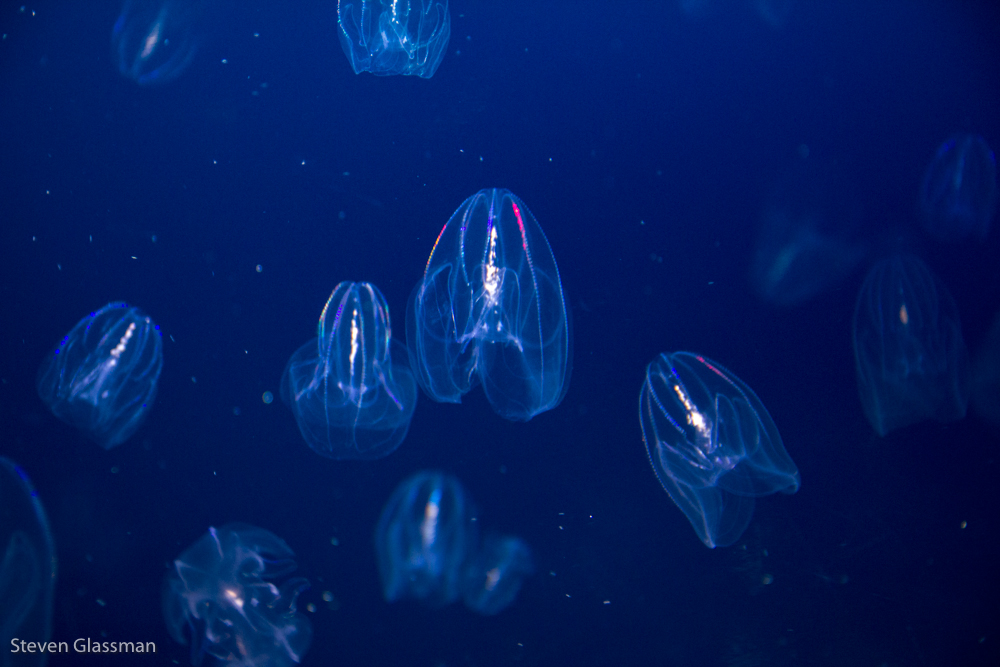
Bio-luminescent jellyfish, as seen through very thick glass.

osaka-aquarium-12

My brain keeps wanting to label these cuttlefish as “scuttlefish.”  Do you suppose there’s a cuttlefish in charge, telling them which direction to point?
osaka-aquarium-13

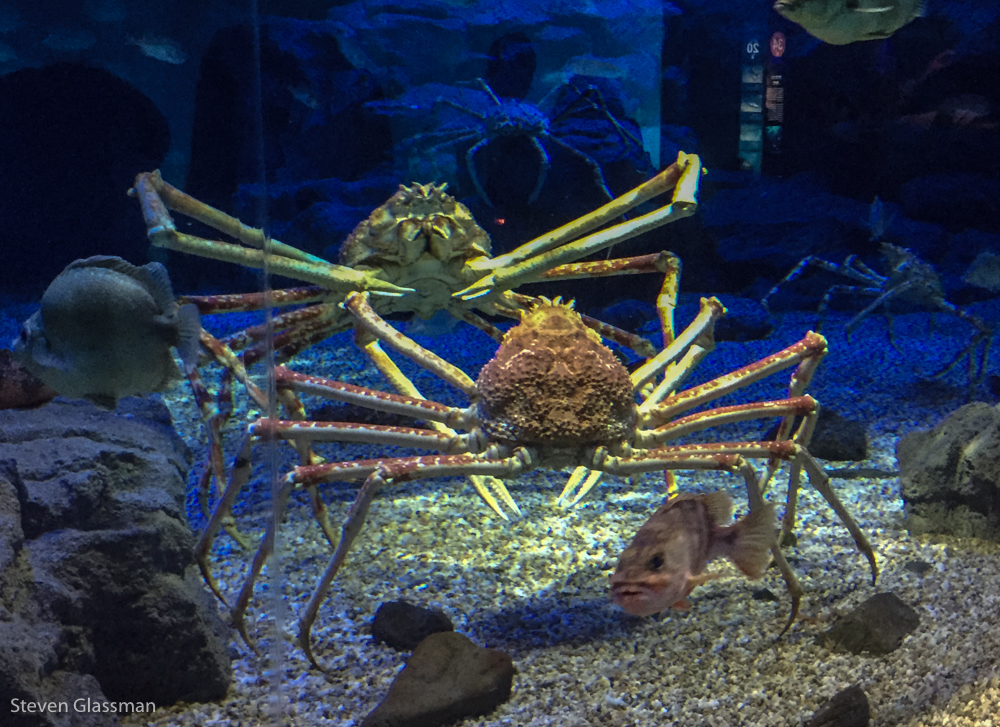
This crab is facing a tank wall which appears mirrored because of the light inside the tank.  In my head, I hear his little crabby voice doing his best Pacino impression. “You talking to ME?!”

osaka-aquarium-14

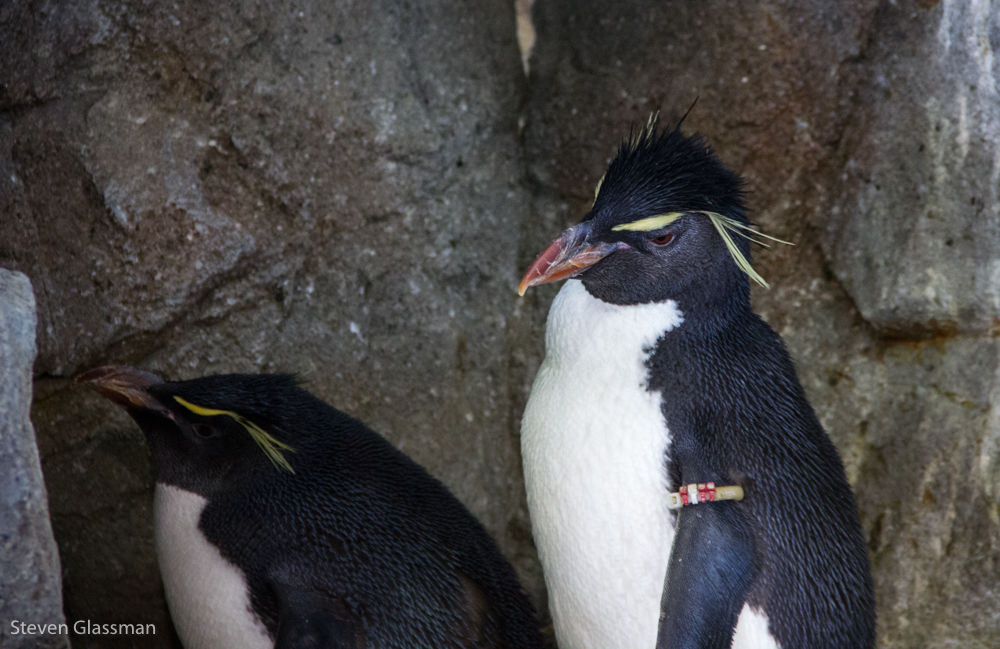
Approaching the exit, there was a small group of very smelly Rockhopper penguins.

osaka-aquarium-15

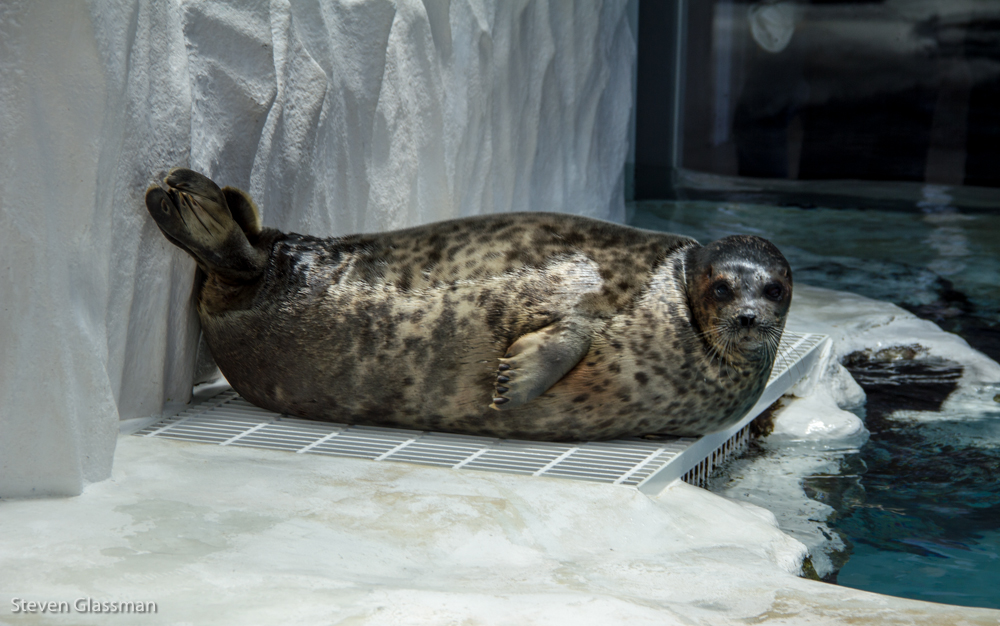
…and one very chubby seal.

osaka-aquarium-16

I also took a bunch of other fish pictures, but the photos in this post are the ones which I thought were the most visually interesting.

Have you ever been to the Osaka Aquarium Kaiyukan?  Have you ever seen a whale shark up close?
Osaka

In the second weekend of my time in Japan, I did some very intensive travel.  I started in Hiroshima, and on Saturday afternoon, I hopped over to Osaka.   I took the rail directly into the center of town, dropped off my bag at the hotel, and immediately set out to see stuff.

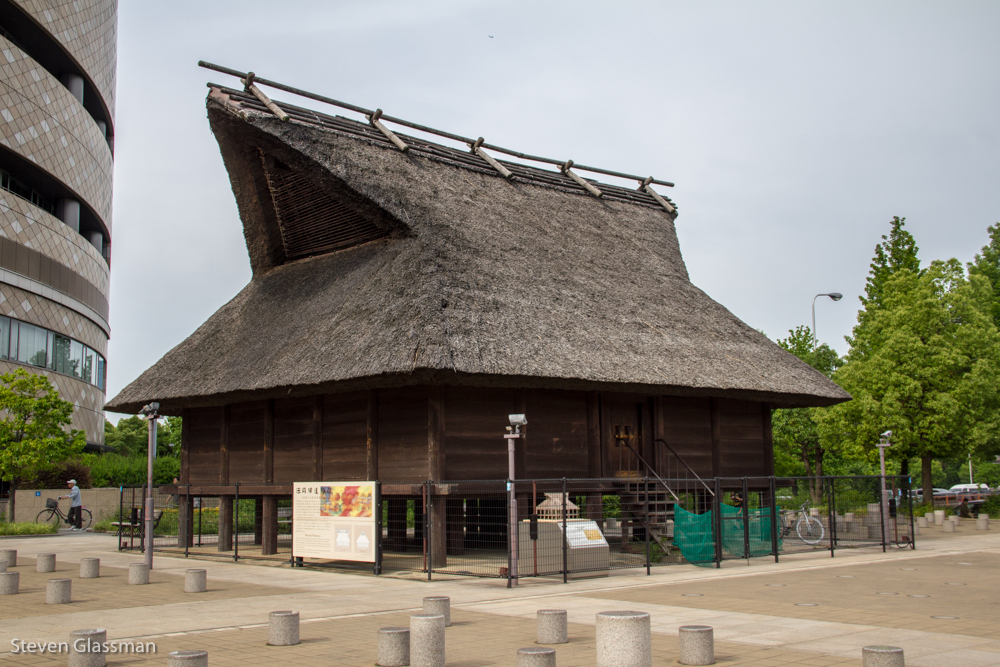
One of the first things I checked out in Osaka was the Castle.  On my way there, I walked past this building and I really wish I had paid more attention to what it is.   All I know for sure is that it’s attached to the Osaka Historical Museum, the curved building to the left.

osaka-2

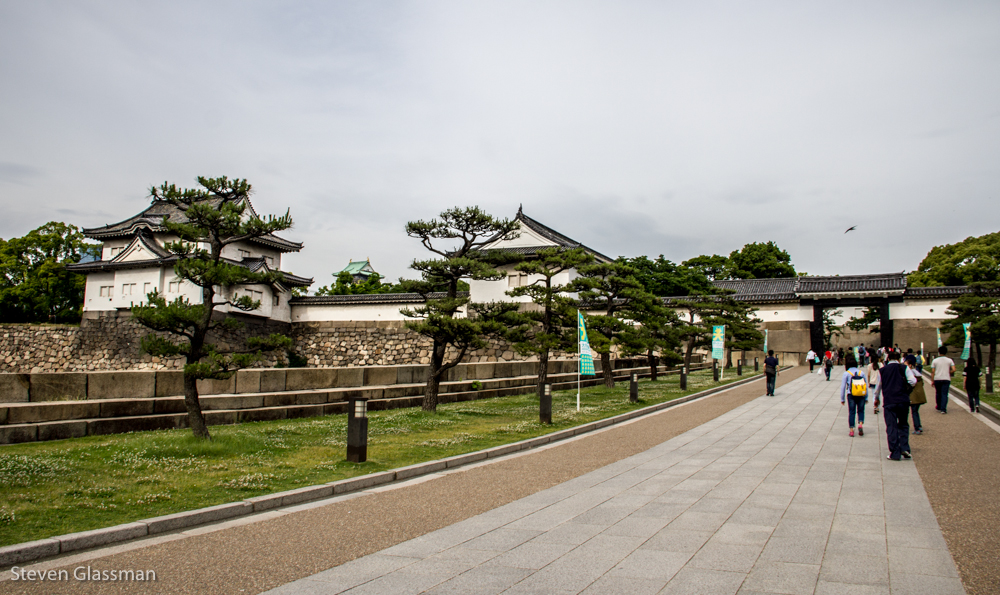
Osaka Castle is in a very large green space with ascending walkways spread out over fifteen acres.  I wasn’t expecting the way to the castle to be quite so twisty.  You walk through several large gateways to get there, and this was the first one.   This is Otemon gate.

osaka-3

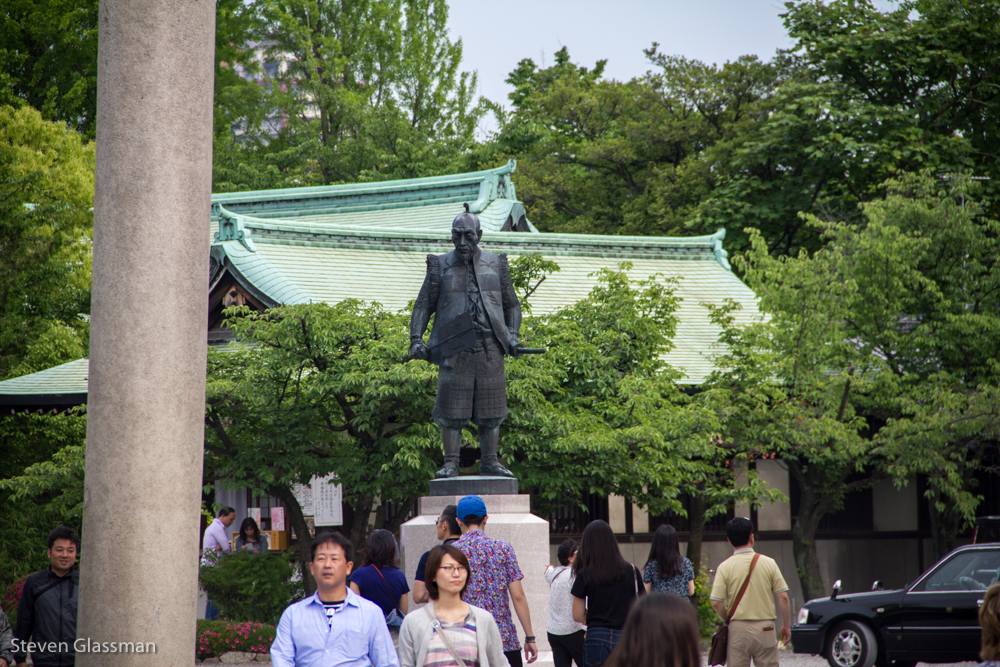
This charming fellow with the Samurai’s top-knot is Hideyoshi Toyotomi, the founder of the Edo period.  He’s the ruler who built Osaka Castle.  The original version of this statue was destroyed during World War II, and this one was remade in 1943.

osaka-5

I quite like these little Samurai guys.

osaka-6

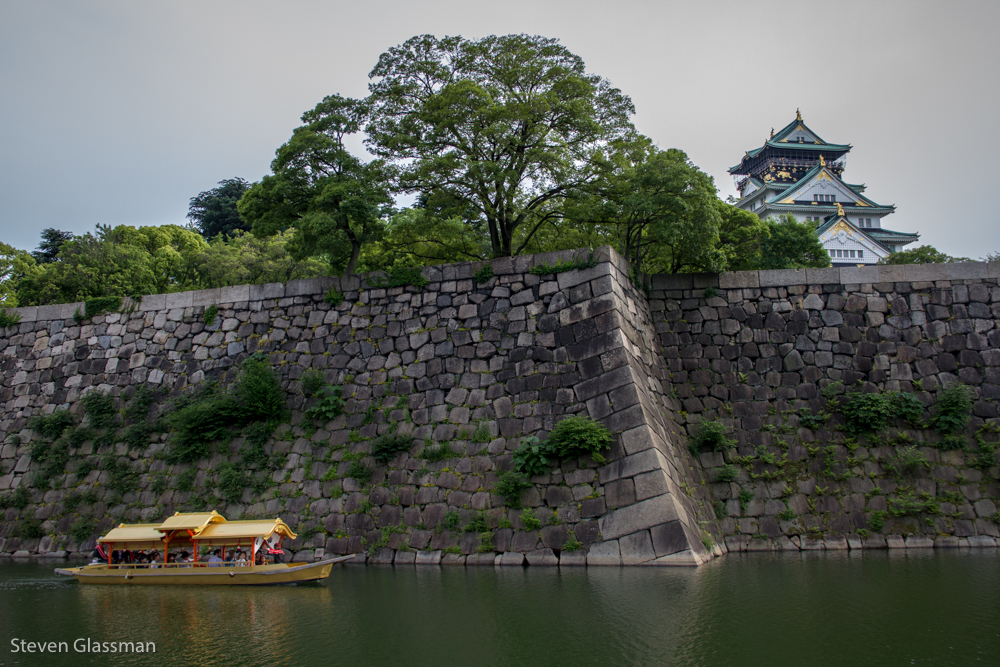
This is the castle itself.  According to local legend, Godzilla destroyed it in 1955 by pinning another giant monster against it.  It has since been rebuilt.

osaka-7

Every once in a while, I have to stick myself in here so you can see that I was really there.  Truly!

osaka-8

I kept walking through the grounds, past the keep, only to discover that the walkway to the castle from the other side was significantly less shorter.  Much less scenic, however, until you get to this side, just past the moat.

osaka-9

With my mission to see Osaka Castle completed, my next task was to find Amemura, or Little America.  “Amerikamura” was founded in the 1970s in Shinsaibashi, where it was a central place for the import of fashion from the United States.  It has since become a place with a trendy nightlife, and a rather interesting blend of American culture into the area.    I knew I was getting close when I saw this giant kitchsy bowling pin.

osaka-10

The most well-known landmark of Amemura is arguably a scale model of the Statue of Liberty atop one of the buildings.

osaka-11

This is how I knew for certain that I was in the right place, because there’s not really much else to indicate that you’re in Little America.

osaka-12

Before returning to the hotel for the evening, I had one more thing on my to-do list.  I wanted to go to the Umeda Sky Building, sometimes referred to as the Floating Garden even though it isn’t really a garden.  That tall building with twin towers in the center is the building in question.

osaka-13

When you get closer, you can almost see why it’s called the Floating Garden.  Two tubes contain the escalator up to the very tall observation level.

osaka-14

At the top side of those escalator tubes is a round open-air observation deck with amazing views of Osaka’s skyline.  While this isn’t taller than some of the other places I’ve been on this trip, it’s still pretty nifty.

osaka-15

“Over Macho Grande?”  “I don’t think I’ll ever get over Macho Grande.”

osaka-16

I’ve pointed out Love Locks in Regensburg, Cologne, and Paris, and here they are again in Osaka.

osaka-17

I digress.  Here’s the amazing view to the other side of the observation deck.  If you look carefully, you can see my reflection near the center bottom, as I took this photograph.

osaka-18

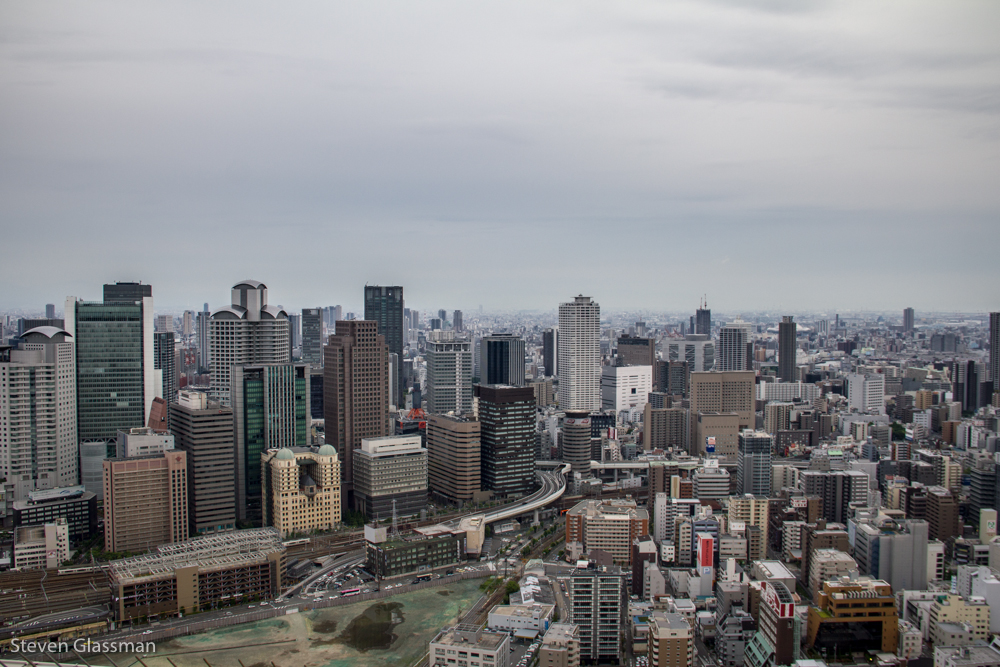
Osaka contains over 19 million inhabitants, which makes it one of the largest metropolitan areas in the world.

osaka-19

It’s still not as crowded as Tokyo, though, or at least that’s how it feels.

osaka-20

I want to say that this is the Dojima-gawa river, but I have no clue if I’m reading the maps correctly.    Pretty view, though, don’t you think?

osaka-21

By the time I was done at the Umeda Sky Building, I went back to my hotel room near the train station.  I had a very nice room, and the view from my hotel room window was pretty nifty.

osaka-1

In the morning, I took a little side trip before getting on the train to the next destination.  On that side trip, I happened upon a giraffe made of Lego.    The building over the giraffe’s shoulder is the Osaka Aquarium, but that will be the next post.

osaka-22

Have you ever been to Osaka?