 Up until this week, I didn’t know that the World Sleddog Association (WSA) was a thing. It is, though, and this weekend I went to the WSA’s 2013 European Sled Dog Championships. The three-day event was being held this weekend, in a town near the Bavarian forest, and within spitting distance of the Czech Republic and Austrian borders of Germany. All credit goes to my partner-in-crime, Jenny, for spotting this one in the upcoming events calendar. She asked earlier in the week if I wanted to tag along, and it took me all of about two seconds to realize that Dogs! Racing! While pulling sleds! would be a fantastic thing to see. Of course I was interested!
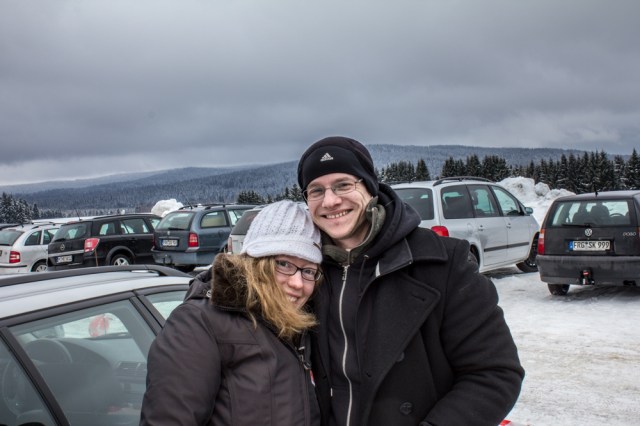
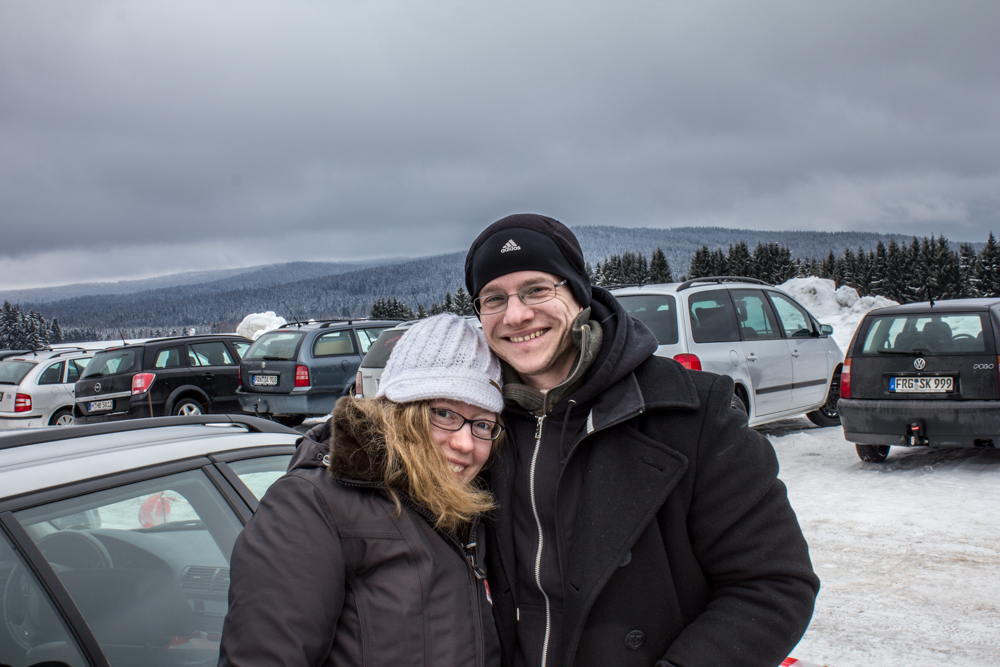
Fast forward to eight o’clock Sunday morning and Jenny, her boyfriend Robert, and I got in a car and drove slightly more than an hour and a half to vaguely nearby Haidmühle. This is them:
Before I get on with the pictures of cute doggies, let me share some of the things that I learned about sled dog racing today. I never knew any of this until today.
- All of the approximately 2,000 dogs competing in this type of race are purebreds. The main breeds used are Siberian Husky, Alaskan Malamute, Samoyed, Alaskan Huskies, or a breed called Der Grönländer, which I think translates to Greenland Dog, i.e. another type of Husky.
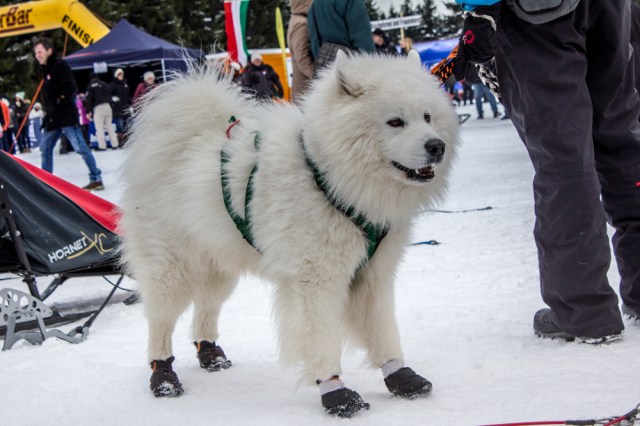
- The Samoyeds look like enormous fluffy racing pillows.
- The sleds used to be made of wood, but nowadays they use updated materials like titanium and so forth.
- The dog teams can be anywhere from a single dog pulling a skier to eight and twelve dog teams.
- The sport is commonly referred to as Mushing. The human part of the team is called a Musher. The term Mush comes from “Marche,” which is the french command to get the dogs running. Non-French competitors hardly ever say Mush, though. Some people say hike or hup. We heard a lot of interesting things in the native languages of the various Mushers.
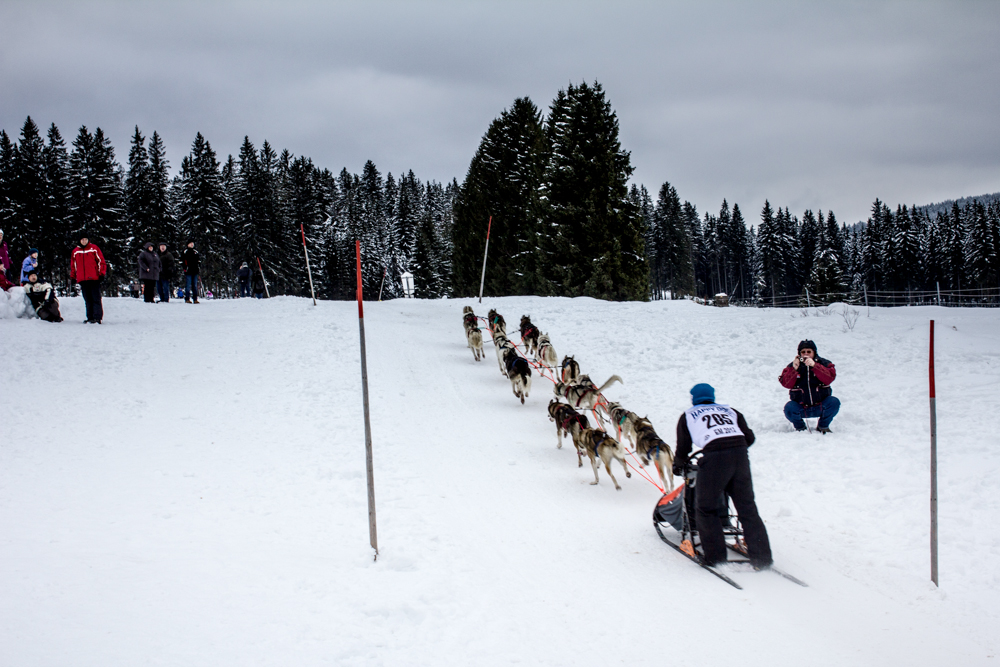
- In a standard eight dog team, the first two dogs at the front of the line are called Lead Dogs. They respond to the commands of the Musher, find the trail, and set the pace. The next two dogs on an eight dog team are called Swing Dogs. They just follow the lead dogs, help the team corner, and help the Leads set the pace. The third pair on an eight dog team are called Team Dogs, and they’re primarily just horsepower. Er, dogpower. The fourth and final pair of dogs on an eight dog team are called Wheel Dogs. They’re positioned directly in front of the sled are usually the strongest dogs on the team.
- There are two types of races- short races that are only a few kilometers, and longer distance races. The long distance races can be upwards of forty or fifty kilometers. One Musher mentioned that 42 kilometers is a standard number.
- Because dogs tend to react to other dogs, sled dog races don’t have a single start for all the competitors. The dog sled teams are given a start time, and they have to be at the starting line on time, to the minute. A new team starts from the gate roughly once a minute for each category, with short breaks between groups. The teams compete with their times, like a marathon runner would.
That’s the basics of the sport as I understand them. Let’s move on to the pictures!
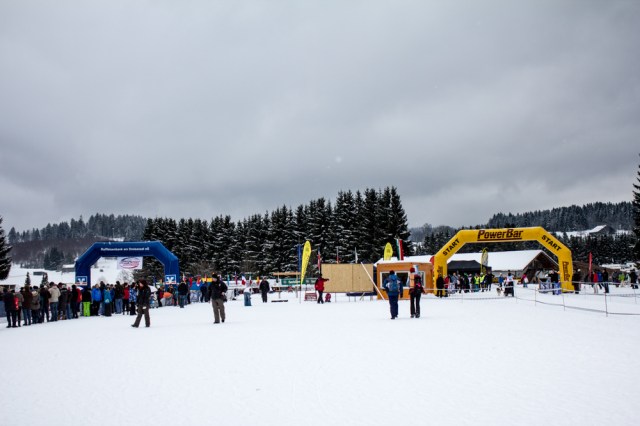
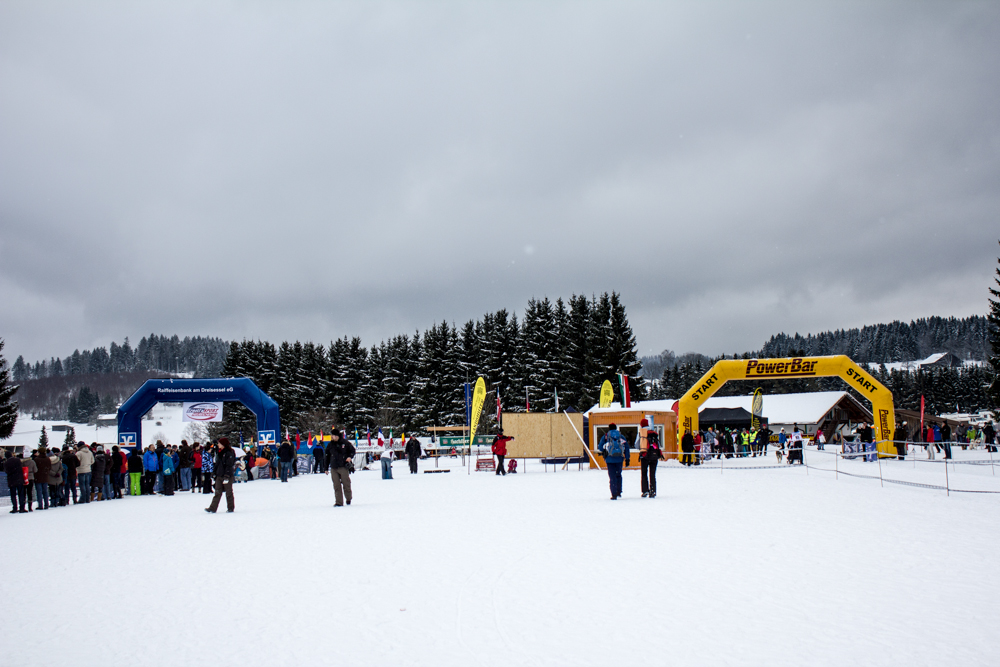
This is both the start line and the finish line. There were very clear paths for both outbound and inbound dog teams.
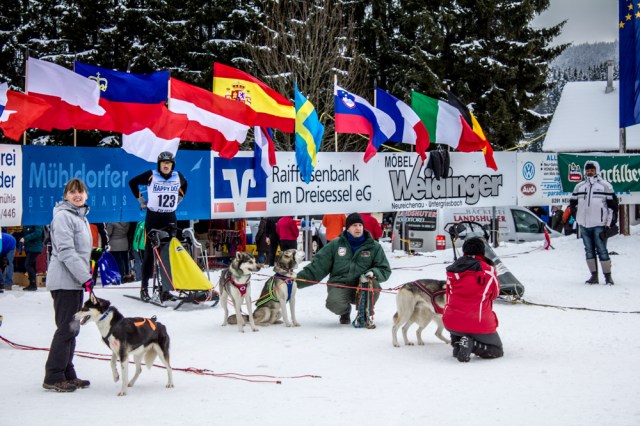
This was a truly international (but European) event. We saw dog sled teams from Poland, Russia, Austria, Germany, the Czech Republic, and a few others. Plus there were flags to remind you of who might be competing.
I mentioned before that there were teams of various sizes. This next picture is a one dog and skier combo. This picture was taken approximately three-fourths of a second before the skier wiped out. Oops!

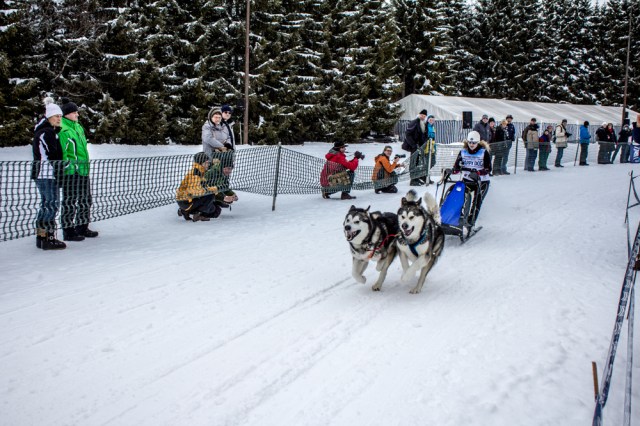
There were a large number of competitors who were on sleds with a two dog team. They looked a lot like these next two pictures. You’ll notice a little bit of leg action from the human in the second picture. That’s because there are times that the humans run behind or alongside the sled, or kick to help give the team some forward momentum.

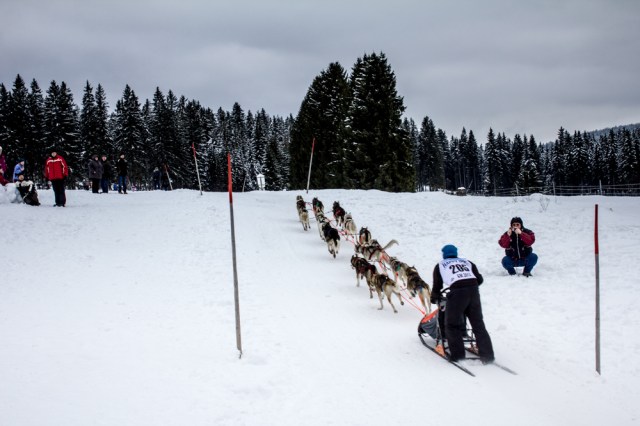
This next picture is my favorite one from the entire day. It appears to be an eight dog sled team, but if you look carefully, there’s one more dog- riding inside the sled itself. I’m not sure if this was an injured dog, or if this is how they get new dogs used to the trail. I have absolutely no idea why that last dog is inside the sled instead of in front of it, but as this team passed us, the dog stuck his head out alongside the sled, looking for all the world like any other dog sticking his head out of a car window. Oh, and there’s one other detail- the green number on the Musher’s chest signifies that they were on a long distance race. Maybe the last dog is the sled dog equivalent of a spare tire?

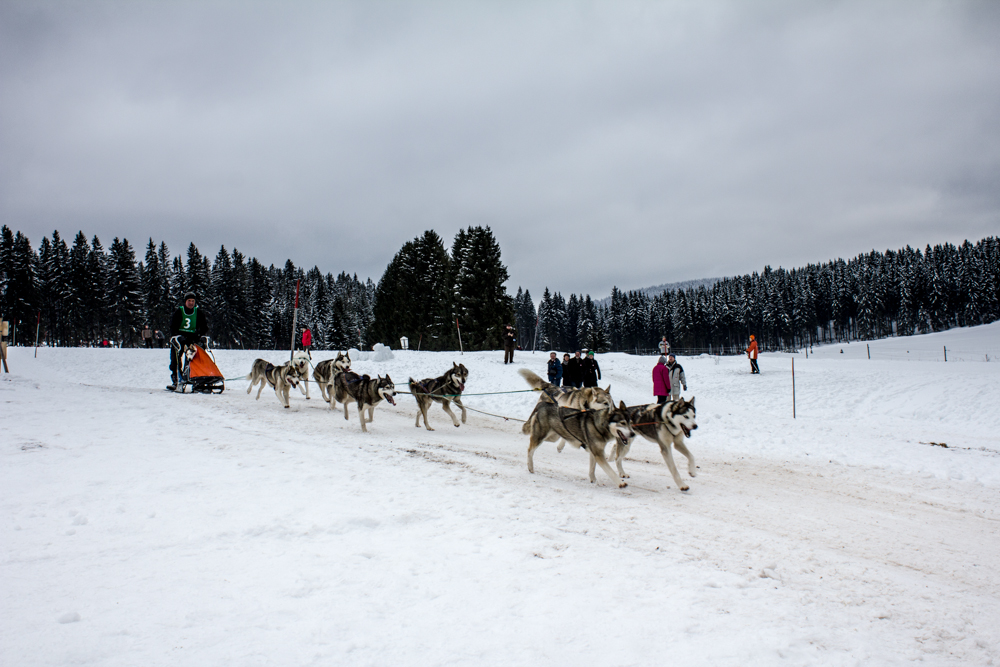
Here’s a six dog team, moving at a pretty good clip.

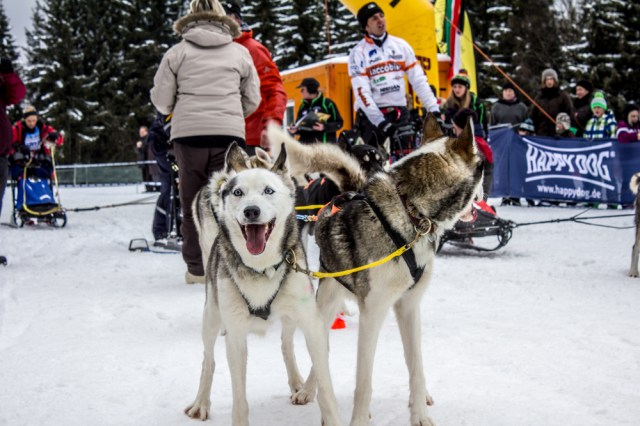
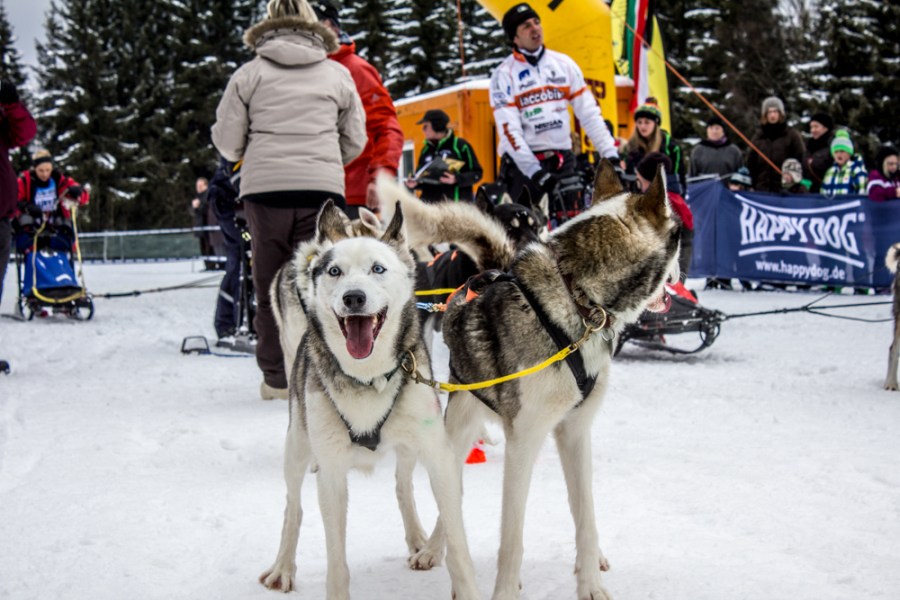
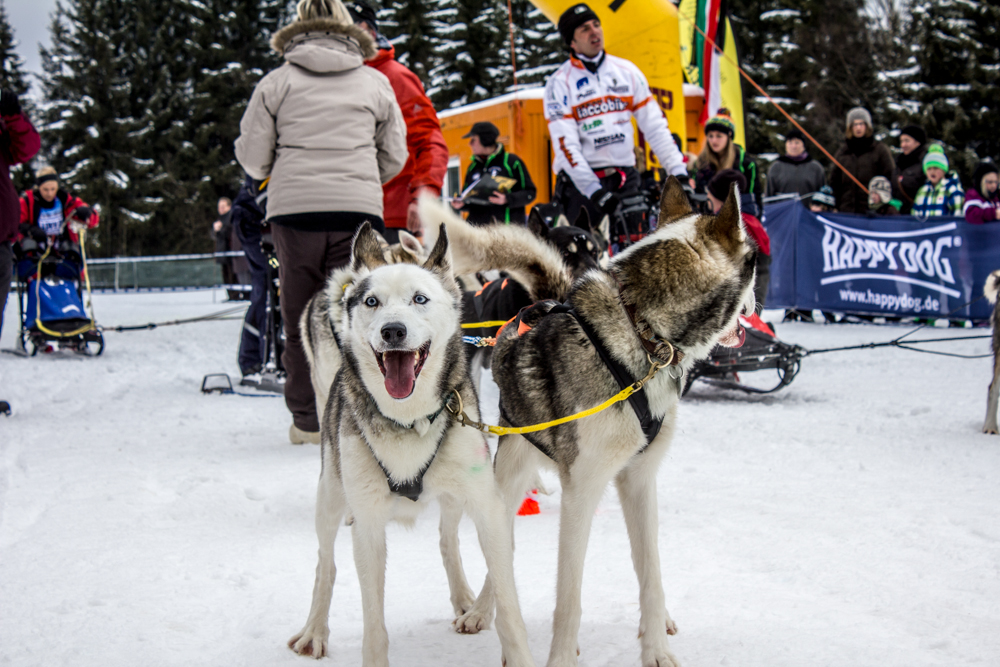
As I said earlier, the dogs were all purebreds. They had a great deal of character, though. This frisky little guy had just finished a run. He’s still tethered up to his team, who seem to be a lot more relaxed than he is.
This next dog is a Samoyed. Like I said before, they look like enormous fluffy racing pillows. Also, most of the Samoyeds had funky little racing socks on their feet. I guess the snow and ice hurts their paws. I never got a clear explanation of why they were wearing the little dog booties.
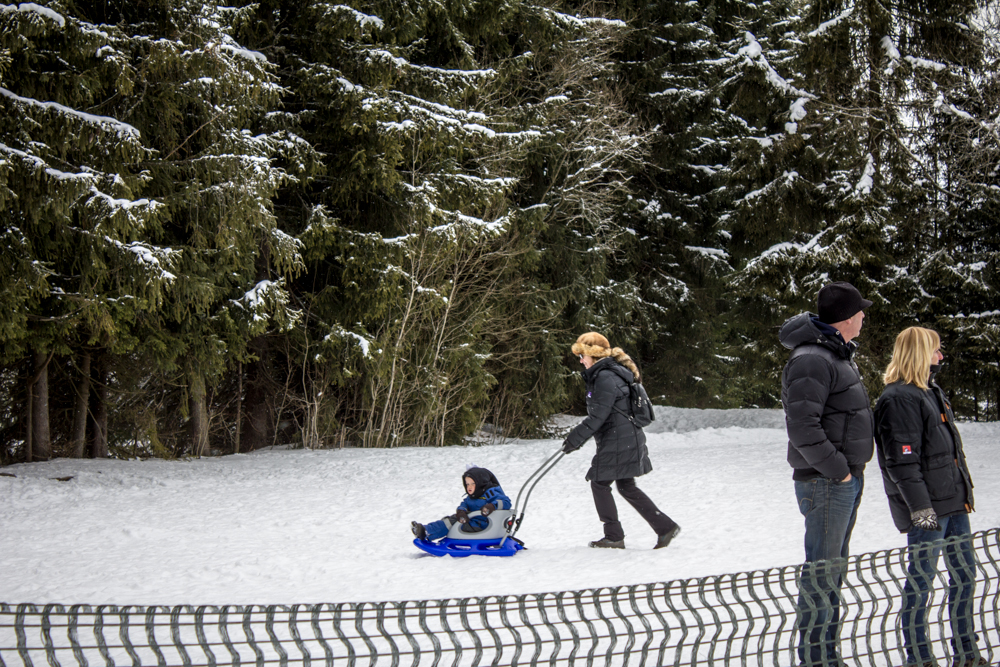
A quick aside about the audience for an event like this- there are a lot of families that attend this type of event. And for the record, whoever the first person was to figure out how to make a stroller-sled combination is a freaking genius:

…and this kid was cracking me up. His caption basically reads, “I’m on a sled. I have a sandwich. Pull me or fear my wrath.”

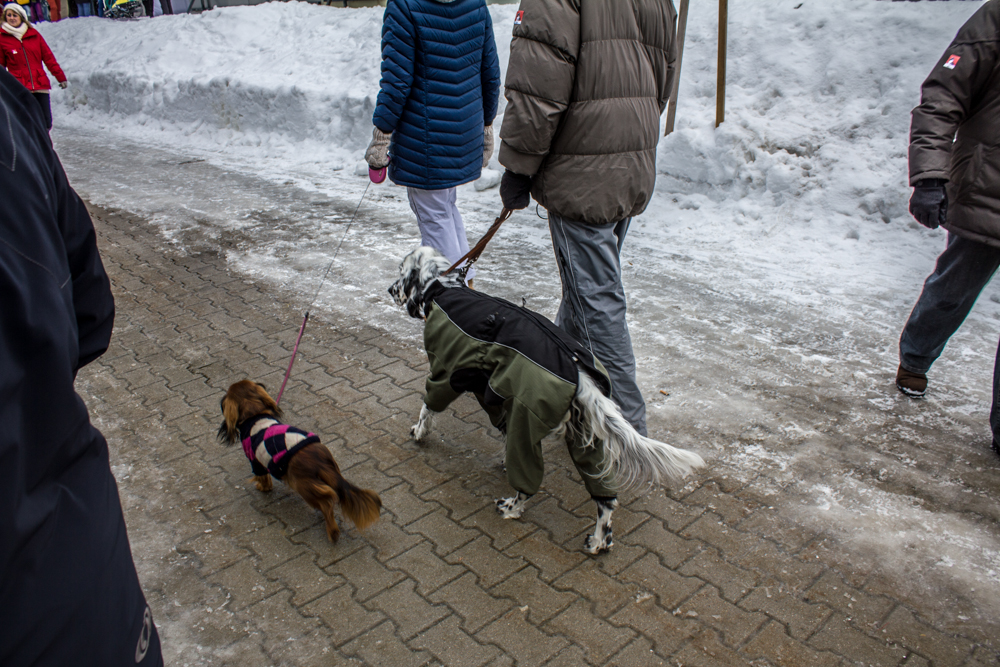
Lots of people also brought their non-purebred, non-racing dogs. Those who brought dogs to not-race were reminded repeatedly by the race announcer that the non-racing dogs needed to stay twenty meters away from the start line at all times, because the racing dogs are pack animals and will see your precious little teacup poodle as prey. Many of the non-racing dogs wore amusing sweaters or other cold-weather gear. Many of them were very cute.

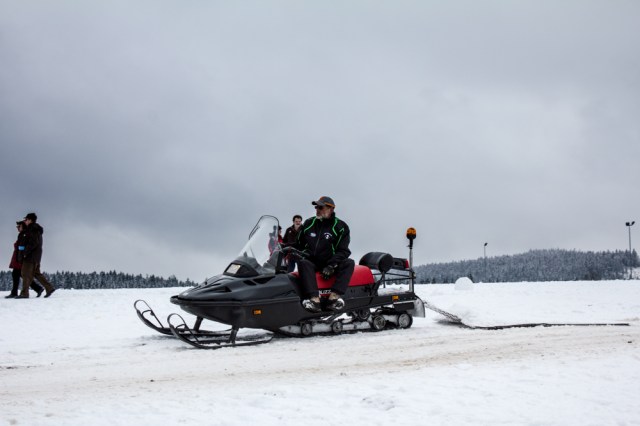
This guy was driving along on a snowmobile, pulling a big flat thing along the track. I guess it’s the sled dog track equivalent of a Zamboni. Bonus points for riding it side-saddle, I guess.
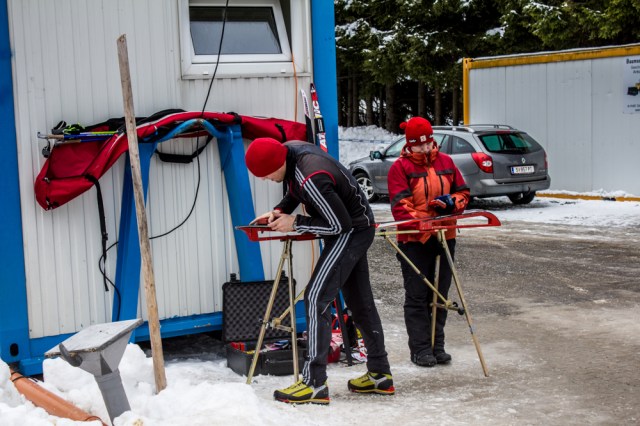
This particular race gave us a lot of chances to walk through the camp areas where the racers and their dogs were staying when they weren’t racing. Lots of dogs sleeping, playing, or peeing. Seriously, the entire place was a yellow snow minefield. There were also Mushers maintaining their sled equipment, like this guy.
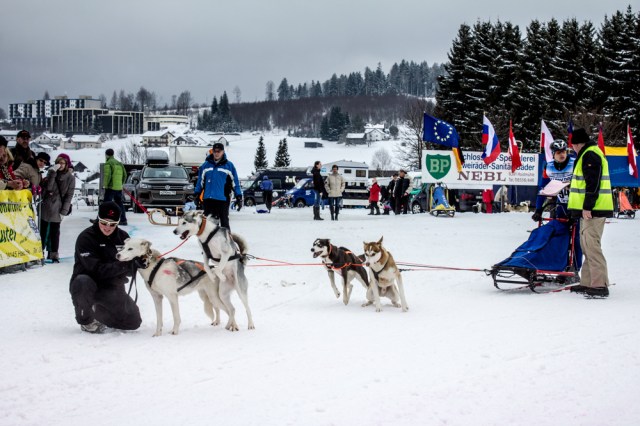
I have digressed a bit. Let’s go back to the race areas. The dogs have to be very carefully handled before the race begins. They’re excited dogs! They want to run and play! Most of them try to lunge forward well before being told to go. They’re very energetic.
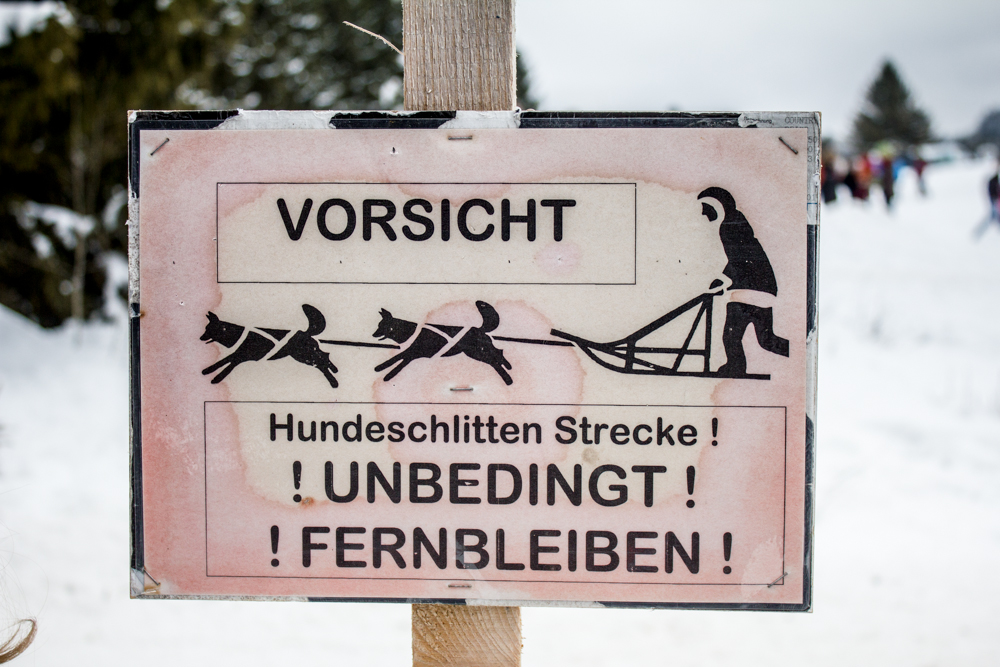
At places where the track is not fully roped off, there are warning signs. This sign basically says the very obvious, ‘CAUTION- Dog Sledding Track. Don’t Stand here!’

It’s good advice, too! I’d hate to accidentally get run down by these critters!

Let us also remember that despite being purebred, well-trained racing animals, these are still dogs. Sometimes dogs don’t want to do what they’re told. This Samoyed was the star of the day, because he didn’t agree with the direction of the race. At all. I have several photographs of the dog and Musher trying to go in different directions. This was pretty hilarious, actually.

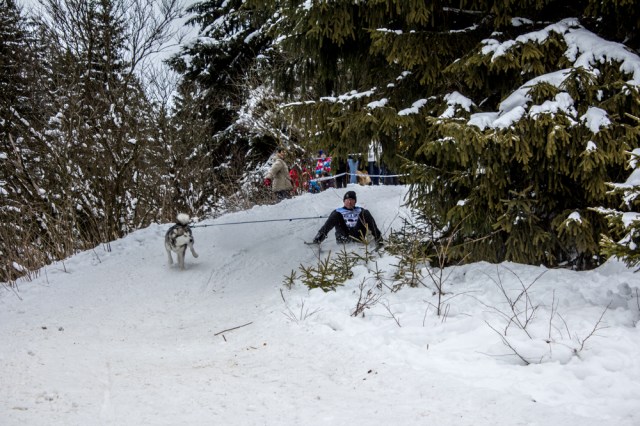
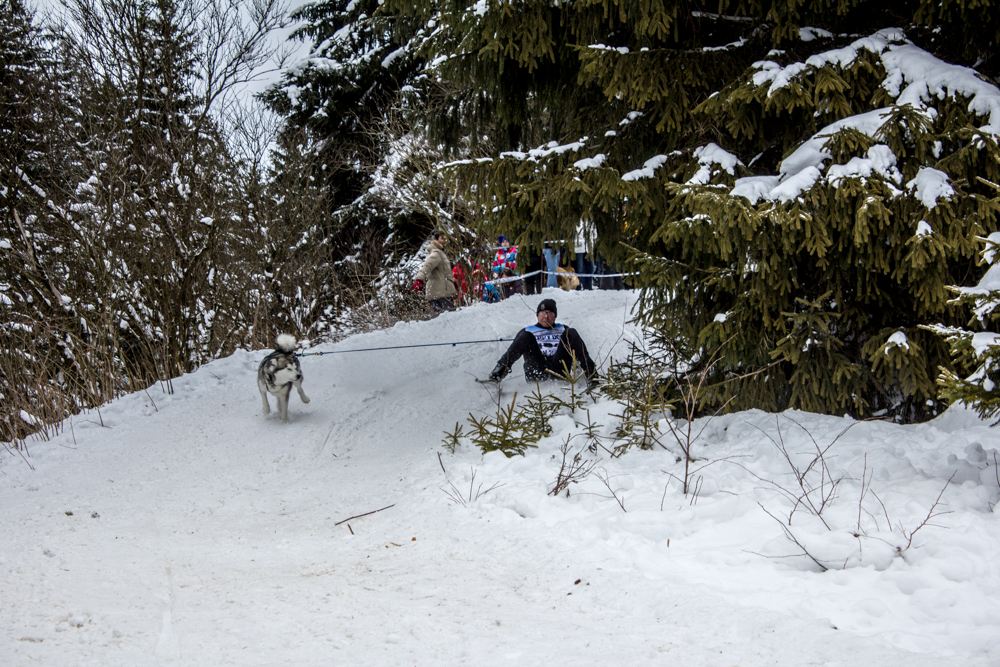
…and sometimes, it’s the human that screws up. This guy went a good five or six meters on his ass, with the dog looking at him as if to say, “Get up! We have a race to run!”
After five or six hours of this, the last of the dog sled teams started their race, and we packed it in and headed back to Regensburg. This was a lot of fun, but I may never be warm again. Also, the prevailing joke of the day was, “Don’t eat the yellow snow!”
Seriously, I’ve never seen so much yellow snow in all my life.
Have any of you ever been to a dog sled racing competition?
49.016864
12.097408

















 Whimsy. Tacos. The DMV.