America vs. Deutschland: A partial list.

During my time here in Germany, I’ve been spending roughly two weeks in the United States out of each year.  Last year, it was the week immediately after Thanksgiving and the first week of December.  This year, it was the first two weeks of November.

Spending two weeks back in the States puts a strong focus on the differences between the two countries.  It reminds me of what I miss about living in the US, and it suggests the things that I might miss when I return home at the end of my contract here.

Whenever someone asks me what I miss most about being away from the US, I skip over the obvious- friends and family- and go right to food.  I miss tater tots.

There are dozens of potato preparations in Germany, but none of them are precisely the same as the tot, nature’s perfect fried potato cylinder.  I’ve tried to explain tater tots to native Germans, and there’s always a bit of a blank expression.  I’m digressing a bit, though.  Let’s start the comparison.

America wins: Tater tots.  And steak.  My German colleagues all go to steakhouses any time they have a trip to the United States, because the steaks here just aren’t quite as good.  I don’t know if it’s the meat preparation or if it’s just the different types of cows.  Steaks are just better in the United Steaks of America.  There’s a variety of other food areas where the US takes the lead.  It’s rare to find good Tex-Mex here, which is why every time I’m in the US I try to hit Tijuana Flats with my brother.

Germany wins:  Inexpensive beer.  I read somewhere that they actually had to pass legislation to ensure that there would always be at least one beverage on a bar menu less expensive than beer.  I don’t know if this is true, but it has the flavor of truth, because beer is dirt cheap here.  It’s also damn tasty.

America  wins: Shopping at 2am.  Or on a Sunday afternoon. Sometimes I like to do my grocery shopping in the middle of the night, and nobody does 24 hour availability like the Americans.  In most places in Germany, the sidewalks roll up at around 8pm.  Everything for shopping is closed on Sundays, with certain exceptions.  Restaurants are usually open.  Movie theaters are usually open.  There are typically one or two pharmacies that are designated as 24 hour locations for emergency situations.  Shopping locations inside of Bahnhofs often have special Sunday hours as well.  If you want to do your clothing shopping or most grocery shopping, Sundays are right out.

Germany wins:  Relaxing Sunday afternoons.  Having one day that you can’t run errands outside of the house is actually kind of peaceful.  After living here for a while, I’ve found that it’s nice to just chill out on Sunday afternoons.

America wins:  Comfortable and large bedding.  The bedding sizes are smaller in Germany.  The largest size bed you can purchase in an Ikea is actually not much different than an American “Full” bed.  I moved here with my Queen-sized sheets, and they’re actually too large for my large Ikea bed.  I can still use them, but I have to tuck a tremendous amount of fabric under the mattress.    German beds don’t have box springs either, and the mattresses tend to be thinner.  Whenever I go to a hotel that has American-style bedding, I get a very, very good night’s sleep.

Germany wins: Smart and efficient bedding sizes.  I hated the German bedding sizes at first, but I’ve grown to appreciate the genius of it all.  Most German couples have two smaller comforters instead of one large one-  that way, each person gets their own and there’s nobody hogging the covers.  I’m still of mixed mind about the giant square pillows that are typical here, but they’re not all bad.

America wins:  Apartment shopping.  When you look for an apartment in the US, you go to an apartment complex, review floor plans, see a model, and pick one that’s becoming available in the near future.  Apartment complexes try to woo your business.  When you move in, they have closets, kitchen appliances, cabinets, and clothing washers.  These amenities are all selling points.  The refrigerators are all full sized, too.

In Germany, apartments are a real-estate transaction. You have to use a sort of real estate agent called an Immobilien, sometimes called a Makler.  They’ll show you apartments and you’ll pay an outrageous fee to the Immobilien for whichever one you select.  An apartment in Germany will not typically have any closets, so you have to buy something like an Ikea Pax wardrobe to store your clothing.  You have to specifically look for built-in kitchens because the normal German apartment does not come with any appliances.  If you are lucky to find built-in kitchen appliances, the waist-height refrigerator is far more common than a full sized fridge.  German kitchens don’t usually have in-sink disposal units either.   I still don’t know how to get rid of certain types of food items without just throwing them away.  One helpful colleague suggested using the toilet, but that won’t work for everything.

Germany wins:  Mayonnaise in a tube.  I cannot understate how amazing it is to not have to spend time trying to get the last of the mayo out of those small-necked jars they sell in the US.  I always wind up getting mayo on my knuckles and having to wash my hands immediately afterwards.  Mayo and mustard in toothpaste-styled tubes is brilliant because you can roll up the tube to get hte last bits.
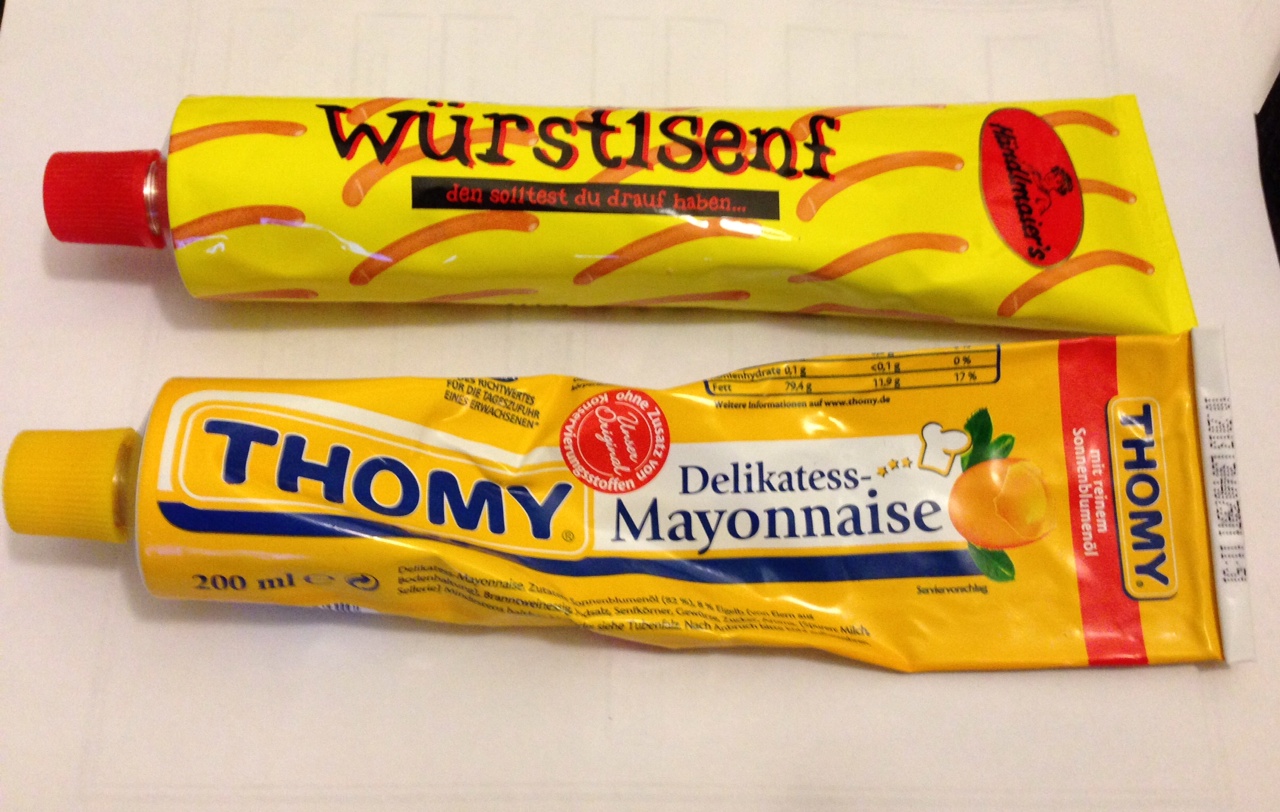
tubes

America wins:  Cookies.  Germans don’t quite understand the art of the cookie.  It’s not a common item in German bakeries, and when you do find them, they don’t taste quite right.  The Ebner bakery near my office has a chocolate chip cookie which plainly shows a lack of understanding of the art.  The thing is three-fourths of an inch thick, with a larger diameter than any cookie has any right to have.  The best cookies I’ve had in Germany have been at the Subway restaurant chain, or at the San Francisco Coffee Company, another chain I was surprised to find here.    The cookies at Starbucks and McDonald’s don’t quite cut it here-  the American Starbucks cookies are better than those of the German Starbucks.

Clearly, I would write a great deal more about cookies.  I love cookies.  I’ll spare you the tedium, though, and move on.

Germany wins:  Everything else in the bakery.  The fresh breads, pretzels, pastries, and regular cakes are all amazing.    For a while, my breakfast every day was from the bakery.  I’m the heaviest I’ve ever been because I can’t stay away from the beer and pretzels.

There’s something here called a Butterbreze – a buttered pretzel.  Basically, they take a fresh baked pretzel, cut it in half, slather butter on the exposed breading, and slap it back together as a pretzel-and-butter sandwich.  They’re amazing and deadly and altogether addictive.

America wins:  The sheer volume of choice available in grocery stores.    This picture of the peanut butter and jelly aisle in an American  grocery store is my only defense for this point.  Yes, I said peanut butter and jelly aisle.

erdnusscreme

Germany wins:  The wide variety of non-dairy and meat-free options in the grocery store.  America is great for a wide variety of brands for most things, but the vegetarian and lactose-free set has more support in grocery stores here than I’ve ever seen in the US.  I do miss the Silk brand of soy milk, but there are plenty of options here that make up for its absence.

America wins:  Birthdays and Anniversaries.  In Germany, the custom is that on your birthday or anniversary, you bring the food to the office.  You pay for people you invite to your own birthday dinner.  The American custom is to make the person having the birthday the guest of honor.

Perhaps this custom arose from a desire to have people keep celebrations to themselves.  I don’t know, but I hate it.  I do not want to bring pizza to the office on my anniversary.  I do not want to bring cake to the office for my own birthday.  I would much rather just not tell anyone when my birthday is in the first place.

Germany wins:  Public transportation.  Unless you live in a major city in the United States, the public transportation pretty much sucks.  In South Florida, you need a car to get by- taking the bus takes five times as long, even for short distances.  In Germany, you can get anywhere in Germany using public transportation.  Inside most cities, you can get almost anywhere you need to go with the bus system.  In bigger cities, you have S-bahn (streetcars) and U-bahn (subway) systems as well.   I’ve been able to travel from my apartment to Amsterdam, to Prague, to Vienna, to Salzburg, to Berlin, and even just to my job without ever requiring a car.

That’s not to say that there aren’t down sides.  There are still some more remote or rural locations which have little bus coverage.  Bus lines tend to stop running around midnight in most places, so you have to plan ahead.  When waiting at bus stops, you’re at the mercy of nearby smokers (and there’s a lot more smokers in Europe then there are in the US).  In the summertime, you also have to contend with the reality that most bus lines don’t run air conditioners, and the guy next to you might not have showered since Christmas.

All in all though, it’s still better than driving in Miami.

poop-shelfAmerica wins:  Toilets.  I’m not even talking about the dreaded European washout toilet or shelf toilet- those things are disgusting and I don’t like the idea of seeing my business before I flush.  I’d rather it just disappear into the water, never to be seen again.  Luckily, I don’t have one of those poop catchers, so I’m spared that weirdness.

No, my issue with toilets is that it’s just really difficult to keep them clean here.  In the US, you can just pop a bleach tablet in the tank and that’ll keep things from growing inside your bowl.  They don’t sell the super strong chemicals here that they sell in the US, though, and so you have to brush your toilet at least twice a week, just to keep things from looking sketchy.  Additionally, the weaker strength of toilet cleaning products here means that I go through significantly more of those little things that dangle inside the bowl to treat the water than I would in the US.
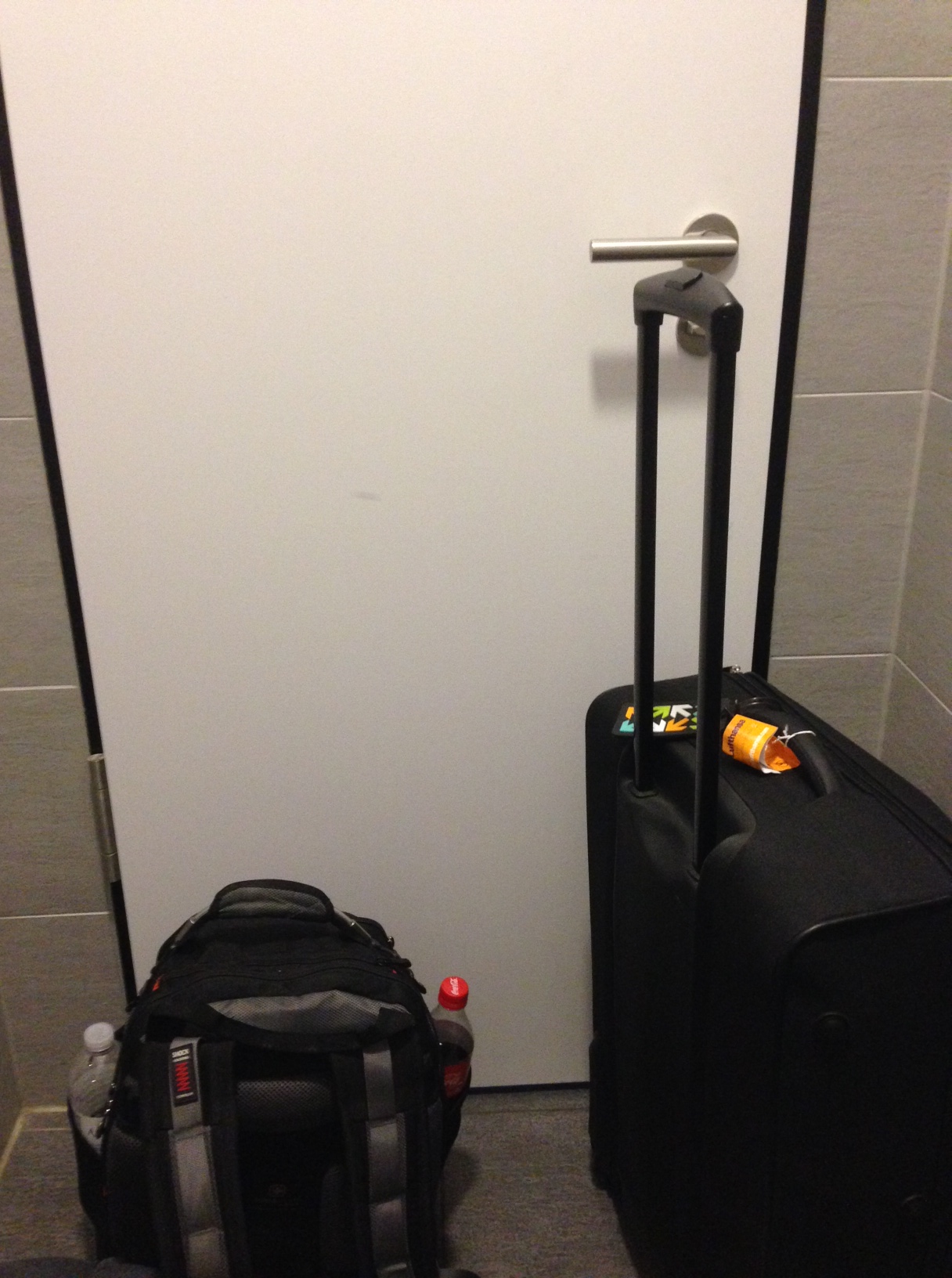
stallGermany wins:  Fully enclosed bathroom stalls.  The majority of the toilet stalls in public restrooms here have fully enclosed floor-to-ceiling doors.  I was used to the American version where there are gaps from floor to shin and where the top is open.  I thought it was strange when I first arrived, but I totally get it now.  After two years with proper stalls, using the more open version that you find in the US left me feeling kind of exposed.

This is a good stopping point for this list.  I could probably keep listing like this for a good long while, but I need to save something for the mandatory comparison post that every ex-pat blogger writes when they have to go back home and repatriate.   As you can see, Germany and the US both have their strong points.  There are definitely things I’ll miss about Germany when I leave in a year, but the most important thing for me is that it’s never felt like home.

Fellow ex-pats: Do you find any of the differences between your homeland and your current home to be interesting or unsettling?
Will this post stirrup your emotions? Neigh!

March was, for me, an insane travel marathon. Four countries, eleven trains, five flights (two of them trans-atlantic), two long car rides, and numerous hotels-  all in a period between March 19 and April 5.   During that time, I realized something that I had never really given voice to before now-  travel for me is all about the food.

This realization came to me when we got back from the second trip to Zurich. Yes, I went twice.  In less than five days.  I didn’t mention that previously because the second trip was for work.   One of our colleagues from the Florida office came to Zurich, and she traveled back to Regensburg with us afterward so that she could see a little bit more of Europe while she was on this side of the Atlantic.  That Friday, while a small group of us were walking around the Altstadt, my personal tour-guiding spiel sounded a bit like this:  “This is one of the two Irish pubs in town.  Over here, right past $IMPORTANT LANDMARK, is a great Italian restaurant.    Here’s another giant church, and near it, one of my favorite places to have breakfast.”

I didn’t realize it until that moment, but my mental map of Regensburg is almost entirely comprised of food.

That wasn’t even the first food-related observation I had that weekend, either.  During the second trip to Zurich, we went out to a lunch with our customers at a super-fancy restaurant in what used to be a ship-building yard.  How fancy was the restaurant?  When we walked in, someone took our coats and put them on a hanger.  The hand towels in the bathroom were rolled fabric hand towels, not paper.    The menus were actually made of iron.  (Insert heavy metal joke here.)

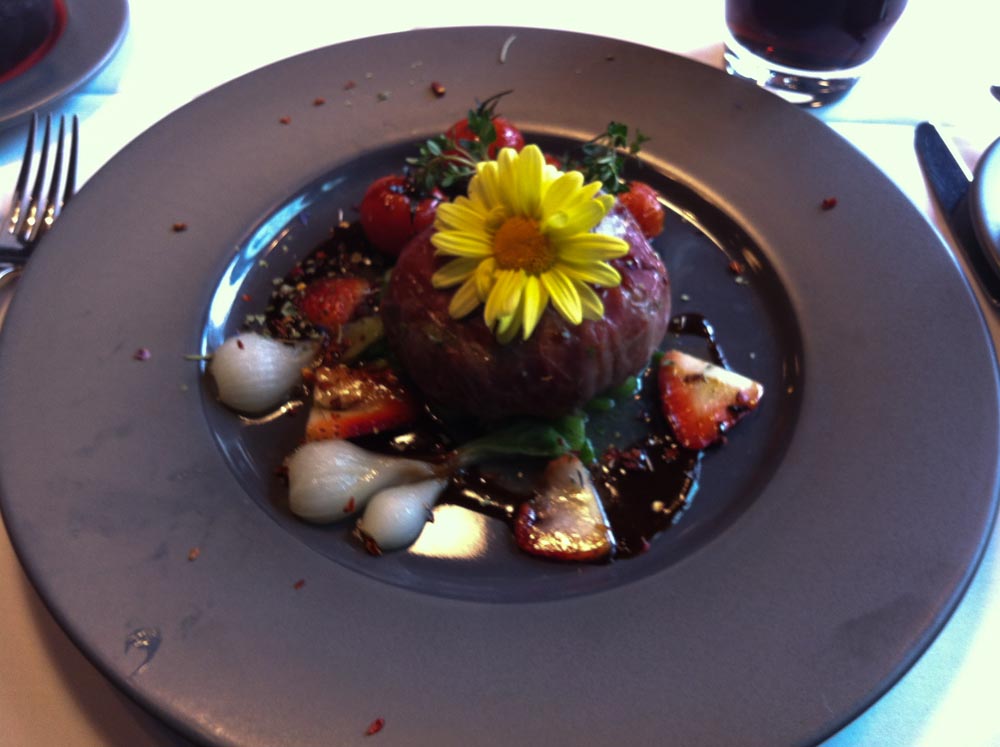
During that meal, I ordered this:

horsey

The steak in the center of this plate is wrapped in Serrano ham.  The stuff surrounding it is delicious baby onions and strawberries in a strawberry-pepper sauce.

The steak in the middle?  It’s Pferdefilet. A horse meat steak.  And it was delicious.

This isn’t the first time I’ve (knowingly) eaten horse meat.  The first time was at an Italian restaurant in Berlin last September, as a pizza topping.  But then, I’ve never been squeamish about unusual food, unless I can see it’s original form.  When I was in Hong Kong, I ate kangaroo meat, jellyfish, Thousand Year Egg, and fugu.  I didn’t get squicked out until the restaurant staff brought out a duck with the head and neck still attached.

The only thing I didn’t eat from the plate pictured above was the ham and the flower.  I don’t really like ham all that much, and I wasn’t interested in the flower even though it was edible.

It’s important to remember that while all of these foods might seem unusual to an American, they’re not all that strange to a local.  People have eaten horse-meat all over Europe for centuries.  There are even special butchers just for horse meat in some countries.   The other things I listed above from my Hong Kong trip?  None of them is unusual to the restaurants that serve them.  (The kangaroo meat was in an Australian restaurant, by the way- you don’t see too many kangaroos in China.)

What’s the most unusual food you’ve eaten?

Q&A Time, Part 3!

A short while back, I posted an ‘Ask Me Anything’ post.  Some folks used that as a chance to ask for advice in advance of their upcoming travels to the area, and I tried to answer what I could of those in regular e-mail.  Some of the remaining questions are really interesting, so I’ve decided to do a series of “You asked, I answer” posts.  Let’s get started!

Here’s a question from Rarasaur:  Is there any object (not food related, that’s too easy) that can make you homesick?

I thought about this one for a while, and my answer is no, not really.  I put very little personal investment into things.    Everything I own right now is either in a 5×10 storage unit in Florida, or in my 45 square meter apartment here, and neither one of those locations is anywhere near full.  People can make me homesick.  Flavors can make me homesick.  Sometimes even smells or songs or the  memory of what something feels like can make me homesick.

But an object?  No.  Just no.

Here’s another question from Rarasaur: Is there a habit or custom that you’ve picked up in Germany that you’d take home with you forever when you come back to the States?

There are a few, I think.

I suspect that my consumption of consumer goods and my handling of trash and waste will be forever altered by my time here.

I take my shoes off at the door of my apartment now.  That’s not specifically a German custom, but I didn’t do it before I moved here and I’ll probably keep doing that.

I carry canvas bags to the grocery store with me now because you pay for the plastic bags you need at the grocery here.  I’ll probably keep doing the canvas bag thing when I’m back in the states.  I also buy a lot less food here because I have to carry it all home with me on foot.

I’m sure there’s more, but that’s all I can think of off the top of my head.

Here’s yet another question from Rarasaur:  Have you learned about any particularly interesting German artist/cook/painter/writer/politician/whoever that Americans never really speak about, but all Germans know?  If so, pass on the knowledge, por favor. 🙂

Before living in Germany,I didn’t know about Karl May, the author of the Winnetou novels.  I didn’t know about “Dinner For One.”  I didn’t know about German media folks who are household names here like Michael “Bully” Herbig or Stefan Raab.

Beyond that, I’ve mostly just learned a great deal more about names that are not completely unknown to me as I travel to the places that were part of their lives, because I research the hell out of everything I see and everything I write about.  Living in Europe puts me in a fantastic position to learn about these names, because the signs and history are all around me.   Johannes Kepler lived here in Regensburg.  Napoleon was here for a time, after he was wounded in the Battle of Regensburg.  Albrecht Dürer lived in nearby Nürnberg.   I learned more about Falco when I went to Vienna, and somehow missed seeing his gravesite when I was walking around Vienna Zentralfriedhof.  (And I learned more about that Mozart guy, too.)

Do you have anything you’d like to ask?  The Ask Me Anything post is still open!

More observations on Germany.

It’s time for another list of random stuff that I find fascinating!  Ready?  Go!

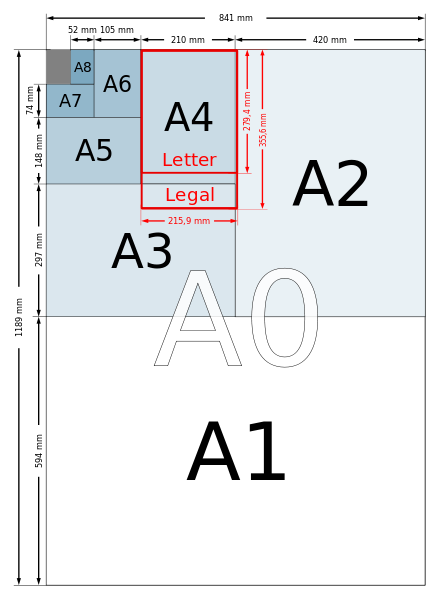
Paper sizes:  In the US, the most well known paper sizes are letter (8.5 x 11 inches) and legal (8.5 x 14 inches), and then there’s a bunch of smaller sizes for envelopes and such.  The sizes here in Germany are metric, and the closest match to what I’m used to would be the A4.  You can see from the chart below that the A4 size is a little larger than Letter, and a little shorter than Legal.  After looking at the chart, I have decided that I will only write notes to people now using A0 sized paper.

papersizes

Mayonnaise and Mustard tubes:  A common mayo and mustard delivery system here is the toothpaste tube style.  While you can get the jar form that Americans are used to, there are lots of brands that show up in this form factor.  I was weirded out by this at first, but I’ve grown to kind of love this-  no more hunting around for a smaller spoon just to get the last bit of mayo out of the jar-  you just roll this down like toothpaste.  And the nozzle is star-cut so it even makes the mayo pretty. A further note about mayo here-  they separate the mayo into two types, deli mayo and salad mayo.  I still haven’t really figured out the difference other than a slight change in consistency.  I prefer deli mustard based entirely on the logic that deli sandwiches are delicious.

thomymayo

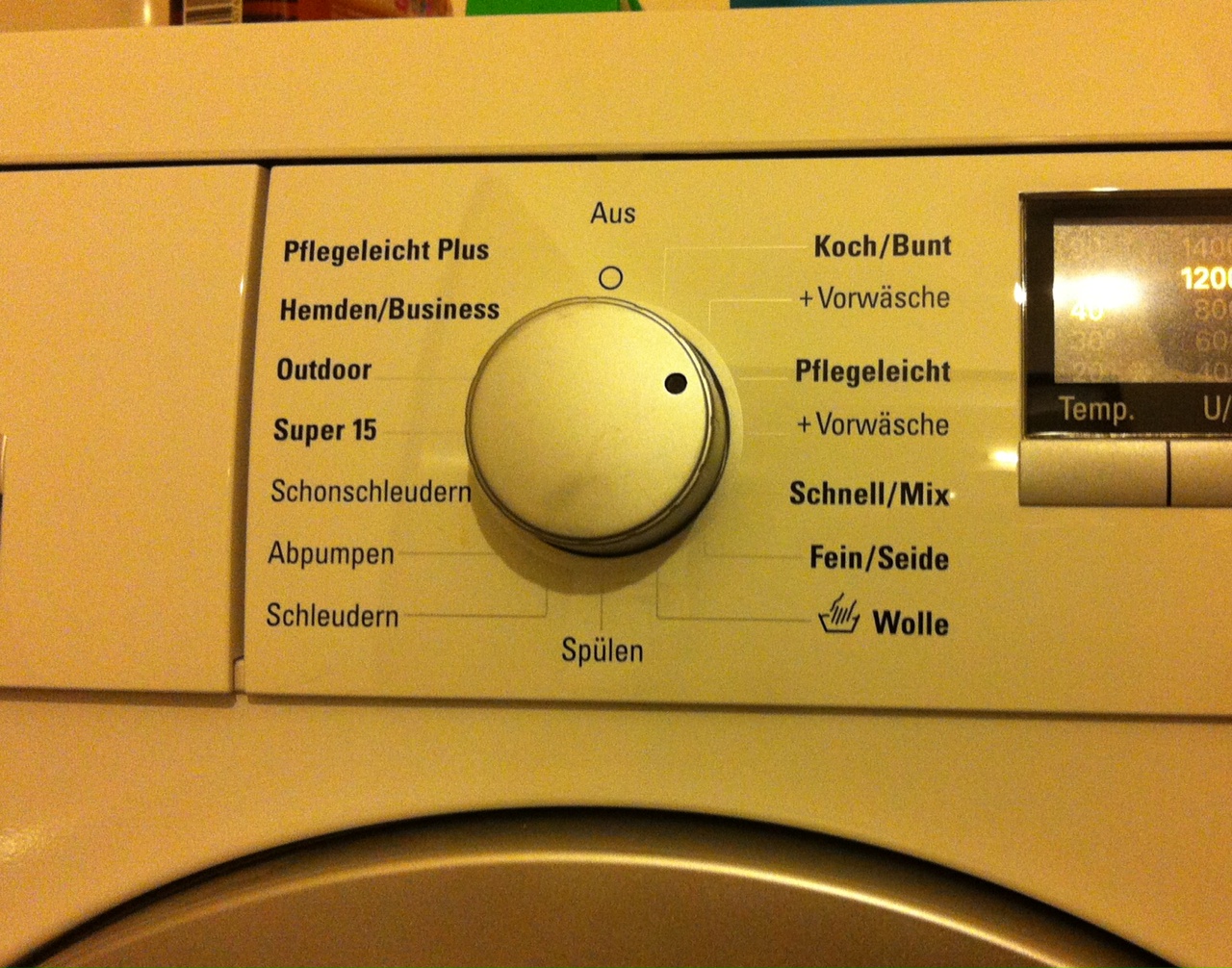
Laundry: I bought a washing machine for my apartment a few months after I arrived, and my friend Jenny promptly named it Gretel.  That’s fine, it seems like a Gretel to me also.  It’s not common to also have a dryer here, and so my laundry  mostly drip dries.  When I do want to use a dryer, I go to a nearby laundromat.  It’s the same basic idea as laundromats in the US- a row of coin-operated washers and dryers in a shop not far from the Altstadt.

The picture below is the main controls for Gretel the washer.  After an entire year with this washer, I still have no idea what most of these functions do.  Although to be fair, I didn’t understand most of the functions on my washer back in the US either.

gretel

Dry cleaning: I don’t know if this is just where I go or if it’s everywhere, but in the US, when I drop off my dry cleaning, they give me a ticket, and then I pay when I pick it up.  Here, I pay when I drop it off.  Aside from that, dry cleaning is pretty much identical here, though.  Hey, it can’t all be strange and unusual, right?

tschiboTchibo:  When I first arrived in Germany, I was thoroughly confused by Tchibo.  I couldn’t tell what their deal was-  they seemed to have coffee, dishes, and lingerie.  I’ve since learned that being a coffee cafe is their main focus, but that they rotate other products through just to be contrary and confusing.  My iPhone is also confused by Tchibo.  I was making a note about it to myself, and the iPhone auto-corrected Tchibo to ‘Tax Hobo.’

Also, their logo is supposed to represent a steaming coffee bean as far as I can tell, but I can’t look at it now without seeing it as a swimming sperm.  (Damn it, Heather, this is your fault!)

plungersPlungers: Ok, there’s nothing really different about plungers here, I just like this picture of a giant bin of plungers for sale in the Globus.  When I first got my apartment, I needed a plunger, and I bought it in the Globus.  I didn’t know how to ask for a plunger in German, and the woman I asked didn’t really speak very much English.  I used the word for plunger that came up in my handy dandy translation app, and it was spectacularly unhelpful.  Undeterred, I mimicked the motion of plunging a toilet, and the recognition on her face was immediate and clear.  She guided me right to where they were in the store.

I still have that plunger, by the way-  it’s in the shower, which is what I bought it for.  My shower drain is occasionally stubborn, and requires a good shower-plunging.

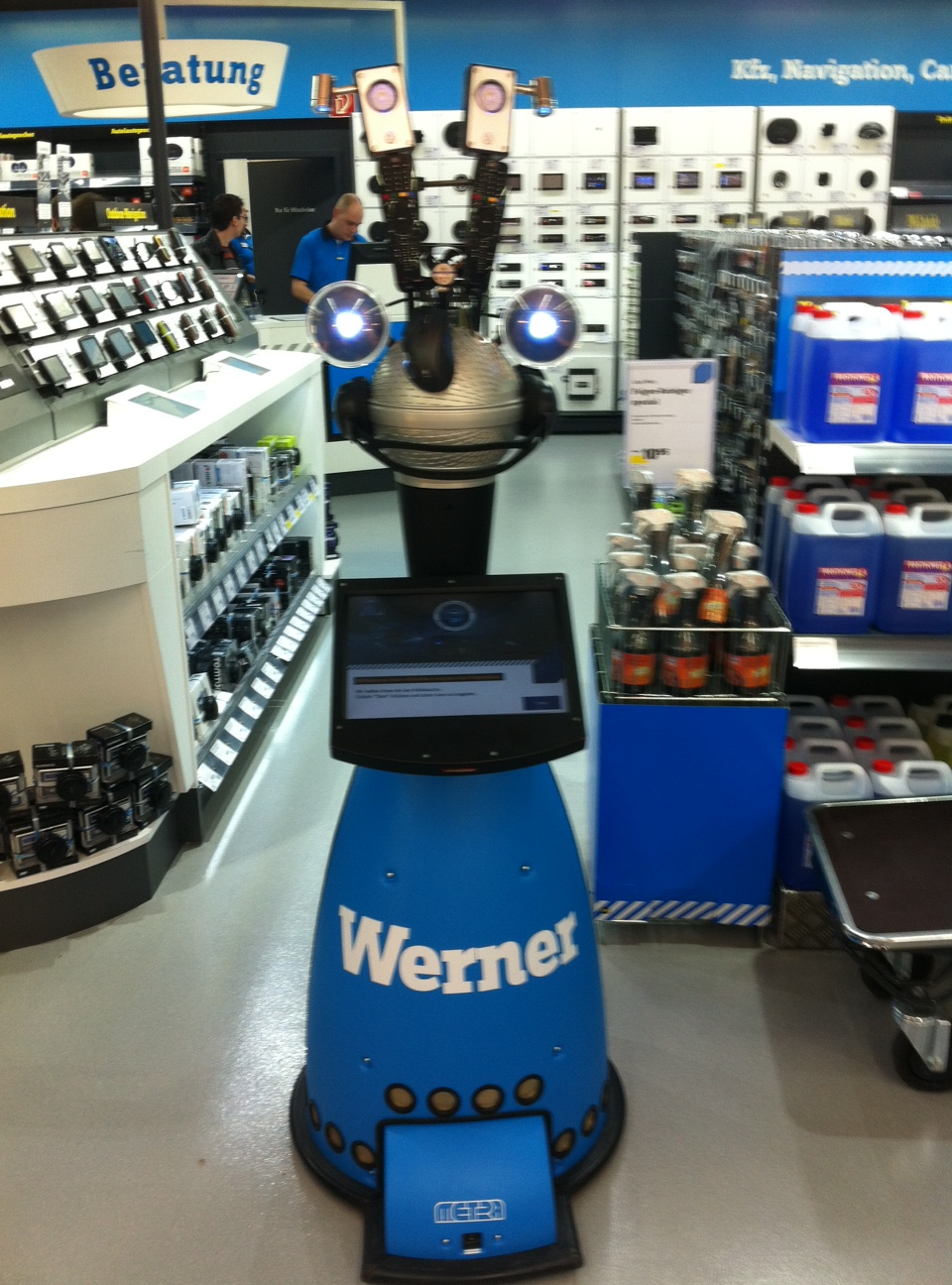
werner Werner: This is Werner.  He’s a robot in a local store called Conrad.   Conrad is sort of like if Radio Shack, Best Buy, a hardware store, and a hobby store all had a freaky four-way and had a child as a result.  I bought my television at Conrad.  I also bought a Mac Mini there.  They sell electronics, power tools, hobby items, remote controlled vehicles, and more.  Their catalog is this enormous thick affair that rivals the Sears catalogs they used to send out once a year.  The reason I wanted to show you guys Werner is that he can help you find stuff in the store.  When he’s not already helping someone, he hangs out near the front doors.  If you use his screen to select a specific type of product, he will guide you there.  The first time I saw a small group of people being led through the store by this friendly fellow, I was kind of enthralled because hey, I’m still basically a ten year old boy.

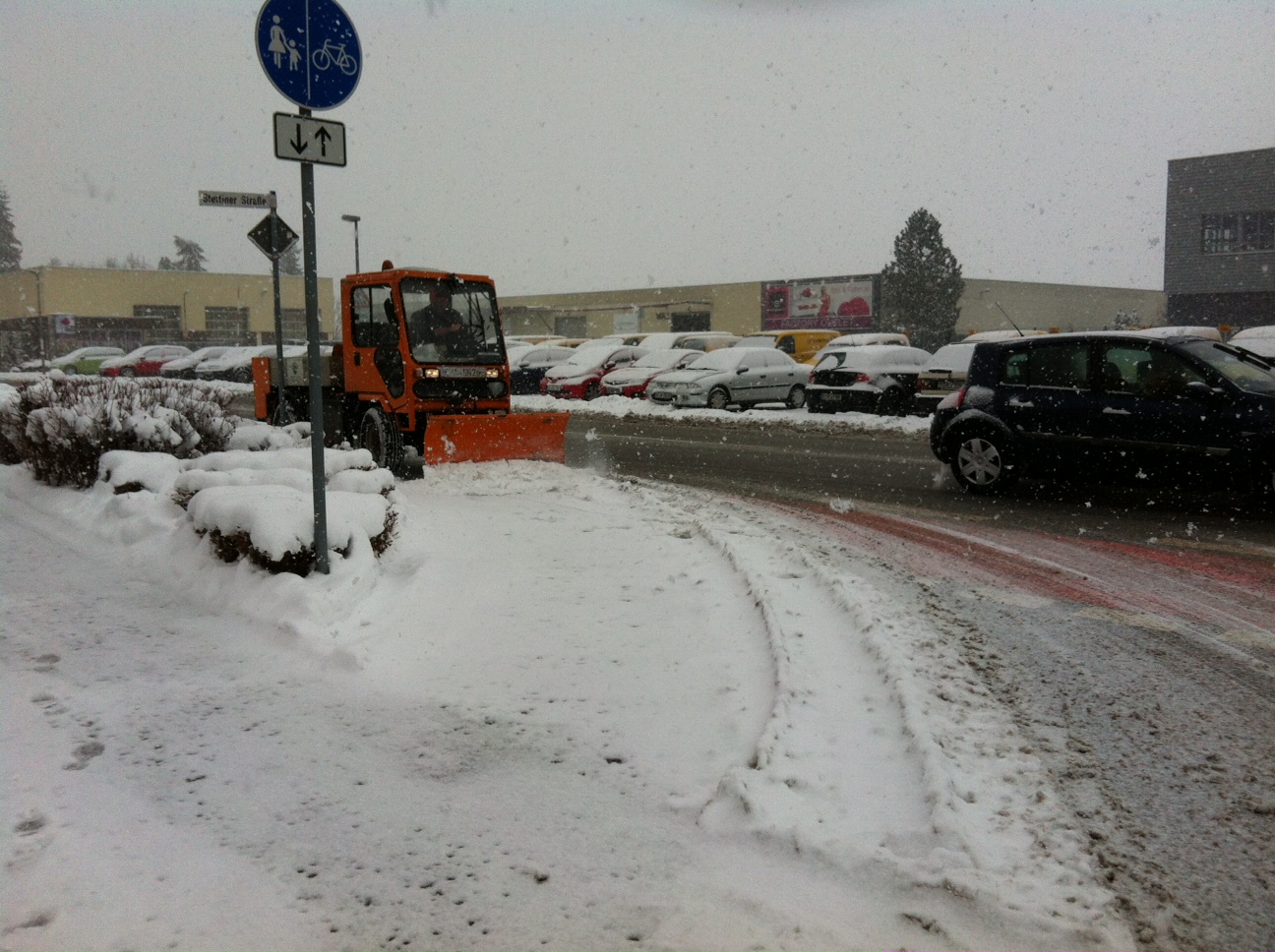
Snow Plows: They have snow plows in the US too, but I’d never seen one outside of a television screen because I lived in Florida.  As a life-long Florida resident, any technology that is used expressly for dealing with cold stuff is just fascinating to me.  They come in all sizes!  Here’s one that’s sidewalk sized and one that’s street sized.

plow1 plow2

Ich spreche ein bisschen Deutsch.

Before I got to Germany, I had never heard of CEFR, the Common European Framework of Reference for Languages. This is partly because it’s a European framework, and North America has a different set of standards. Mostly, though, I hadn’t really spent much time thinking about how people learn languages before I got here. Once I arrived in Germany, however, I had to make a decision about how much time and energy to commit to picking up German.

It may surprise many people to learn that I could live here for the entire run of my contract without speaking a word of the local language. Some people do. Regensburg has a large university as well as a tremendous amount of industry, with international companies like BMW, Continental, GE, and Siemens present. In addition, German children start to learn English in school. When I first arrived here, I started a lot of conversations with, “Do you speak English?” The answer was always the same: “A little.” This, followed by a fluency in English that far surpasses my skill in any other language.

My job interaction is primarily with other members of my department back in the United States, or to people in my local office who are all basically fluent in English. My contract is only for three years, and my residence and work permits do not require any proficiency with the language. And yet…

I know someone who has been here for seven years and is only just now starting to learn German. I don’t want to be that guy. I don’t want to be the stereotypical monolingual American who refuses to adapt and acculturate, so I’ve tried almost from day one to integrate myself as much as possible. This means trying in earnest to learn the language.

When I moved over in 2011, I purchased the Rosetta Stone software. Rosetta Stone is good, to be sure, but it didn’t quite work for me because it doesn’t explain the grammar. German grammar is a horrendously complicated, nightmare inducing crapfest. This is a huge part of why it’s so complicated:

germanarticles

I would absolutely kill on the vocabulary exercises in Rosetta Stone, but every time a grammar exercise came up, I would bomb it utterly. There are interactive parts of the Rosetta Stone program that put you one on one with other people learning the language, and even a small classroom environment where you learn in a small group- the software comes with a basic headset so you can interact in real time with video and audio. I never used those portions of the software though, and my learning curve became a sort of stagnant crazed line.

Last September, I finally gave in and joined a local language course at the Volkshochschule, the German equivalent of a community college. It runs two nights a week for two hours and fifteen minutes each night. The classes are split up into CEFR levels, and so I started with the A1/1 class.

The CEFR levels are set from A to C, with the highest C being a level of mastery that comes close to a native speaker’s proficiency:

A1 Breakthrough or beginner

  • Can understand and use familiar everyday expressions and very basic phrases aimed at the satisfaction of needs of a concrete type.
  • Can introduce him/herself and others and can ask and answer questions about personal details such as where he/she lives, people he/she knows and things he/she has.
  • Can interact in a simple way provided the other person talks slowly and clearly and is prepared to help.

A2 Waystage or elementary

  • Can understand sentences and frequently used expressions related to areas of most immediate relevance (e.g. very basic personal and family information, shopping, local geography, employment).
  • Can communicate in simple and routine tasks requiring a simple and direct exchange of information on familiar and routine matters.
  • Can describe in simple terms aspects of his/her background, immediate environment and matters in areas of immediate need.

B1 Threshold or intermediate

  • Can understand the main points of clear standard input on familiar matters regularly encountered in work, school, leisure, etc.
  • Can deal with most situations likely to arise whilst traveling in an area where the language is spoken.
  • Can produce simple connected text on topics that are familiar or of personal interest.
  • Can describe experiences and events, dreams, hopes & ambitions and briefly give reasons and explanations for opinions and plans.

B2 Vantage or upper intermediate

  • Can understand the main ideas of complex text on both concrete and abstract topics, including technical discussions in his/her field of specialization.
  • Can interact with a degree of fluency and spontaneity that makes regular interaction with native speakers quite possible without strain for either party.
  • Can produce clear, detailed text on a wide range of subjects and explain a viewpoint on a topical issue giving the advantages and disadvantages of various options.

C1 Effective Operational Proficiency or advanced

  • Can understand a wide range of demanding, longer texts, and recognize implicit meaning.
  • Can express him/herself fluently and spontaneously without much obvious searching for expressions.
  • Can use language flexibly and effectively for social, academic and professional purposes.
  • Can produce clear, well-structured, detailed text on complex subjects, showing controlled use of organizational patterns, connectors and cohesive devices.

C2 Mastery or proficiency

  • Can understand with ease virtually everything heard or read.
  • Can summarize information from different spoken and written sources, reconstructing arguments and accounts in a coherent presentation.
  • Can express him/herself spontaneously, very fluently and precisely, differentiating finer shades of meaning even in the most complex situations.

The first thing I noticed about the class was that there is no way I could have succeeded if I’d started it when I first arrived. There is no English spoken in these classes, and I found that I needed a base layer of German language skill to even follow the class. However, I’m glad I started going- the class does a few very important things for me that Rosetta Stone never did:

  1. It explains the grammar and verb conjugations – This alone is well worth the price of admission. My German has improved significantly since I started the classes just because I finally understand the verb conjugations.
  2. It gives me the huge satisfaction of real time feedback – One of the best things about being in the class is that if I’m wrong about something, the teacher will correct me immediately. Rosetta Stone will tell me that I’m wrong, but it will never tell me why I’m wrong. I can’t understate how frustrating that is.
  3. It makes me stay on task – With Rosetta Stone, it’s far too easy to do an exercise or two and then go slack off for a while. It requires a special kind of discipline to keep going back to it when it’s self guided learning, and I don’t have it. (Editor’s note: This is why I don’t work out consistently, too.) With a class that I paid for, I keep going. Being part of a group learning experience is a tremendous motivator to keep it up.
  4. It forces me to interact in spoken German in real timeMy professor has a little yellow and blue ball that she uses during class. She’ll ask a question, and throw the ball to someone in the classroom. The person with the ball has to answer the question, then throw the ball to someone else in the class. They ask the question to the person now in posession of the ball, and the new ball-bearer answers. This process repeats until everyone in the class has interacted on this question, with the teacher correcting us on grammar, sentence structure, conjugation, pronunciation, and so forth. If someone uses a new vocabulary word during their answer, it goes up on the white board. One of the most commonly repeated things in the classroom is “Verstehen Sie das?” Do you understand this?

Since September, I’ve done two more classes, all part of the A1 level. My current class goes until late February, and then there’s one more class to cover all of A1. I still speak like a two year old, but I’m getting better. I’m picking up more words when I listen to other conversations or television or radio, and the meaning of things is starting to filter through in tiny pieces.

I’ve decided that I’m going to stop after the last A1 class, at least for now. I’ll have been going to German classes nearly non-stop for seven months, and I’m kind of burnt out on the time expenditure involved- between the classes, the homework, and the travel to and from the class location, this has been burning a lot of time, and I’m really feeling it. I’m confident that I won’t stop learning the language just because I’m stopping the classes, though- the classes have given me a great starting point to keep learning in the real world.

Tell me about your experiences learning a new language. Have you had success with language classes since you arrived?