Stumbling Blocks

On the corner of Maximilianstraße and Königsstraße in the Altstadt, I stumbled across nine gold colored blocks on the ground with names and dates.  They’re obviously a memorial of some sort, and I’ve taken pictures of them on several occasions with the intent to find out the story behind them.

Today, I found five more at the place where Pfarrergasse intersects Neupfarrplatz, and in a fit of amazingly coincidental timing, I’ve also found an explanation and a history of these blocks.

The blocks are called Stolpersteine.  The German word Stolperstein literally means “stumbling block” or “obstacle” and Stolpersteine is the plural.    They were created by artist Gunter Demnig in 1993 and the first installation was in Cologne, Germany, in 1994.

Today, there are more than thirty thousand Stolpersteine in at least ten countries.  I first learned what they are because of a blog entry about them on andBerlin.com.  That post led led me to the official site about them as well as http://stolpersteine-regensburg.de/.

(Edited to add:  Fiona was able to witness the installation of some Stolpersteine and posted about it on her own blog recently.)

The Stolpersteine blocks are designed as memorials to commemorate individuals who were sent by the Nazis to prisons and concentration camps, as well as those who emigrated or committed suicide to escape the Nazis.  Some of the blocks represent those killed by the Nazis and some represent survivors.    The Stolpersteine are not limited to Jews, either.  The vast majority were Jews, but there have also been blocks placed for various other types of people, including Romani people, homosexuals, blacks, and even Christians who opposed the Nazis.

The actual block is a ten centimeter concrete cube covered with a sheet of brass.  Demnig then stamps the details of the individual, the name, year of birth, and the fate as well as the dates of deportation and death, if known.  Each block begins with “Hier wohnte,” which is German for “Here lived.”  Most are set at the last residence of the victim, but some are set near workplaces.

These tiny little memorials are an amazing idea.  Since I started researching this, I’ve seen countless instances of people commenting, “so that’s what those are.  I was wondering.”  That’s how the Stolpersteine got me curious, and I’m sure I won’t be the last person to hunt down this information.

More importantly, though, people are still visiting the memorials and remembering.  One evening, while I was walking through the Altstadt, I noticed that someone had left flowers and a Yartzeit (bereavement) candle at the first set of Stolpersteine I had stumbled across.

When I walked home a few hours later, the candle was still burning.   I think that’s kind of fitting.

Berlin, briefly.

Last weekend I took a short trip up to Berlin.  I had the chance to visit a new city and an old friend at the same time, and I couldn’t pass that up.  I’ve known Heather since high school, and she and her husband Mike were in town for a few days, so off to Berlin I went!

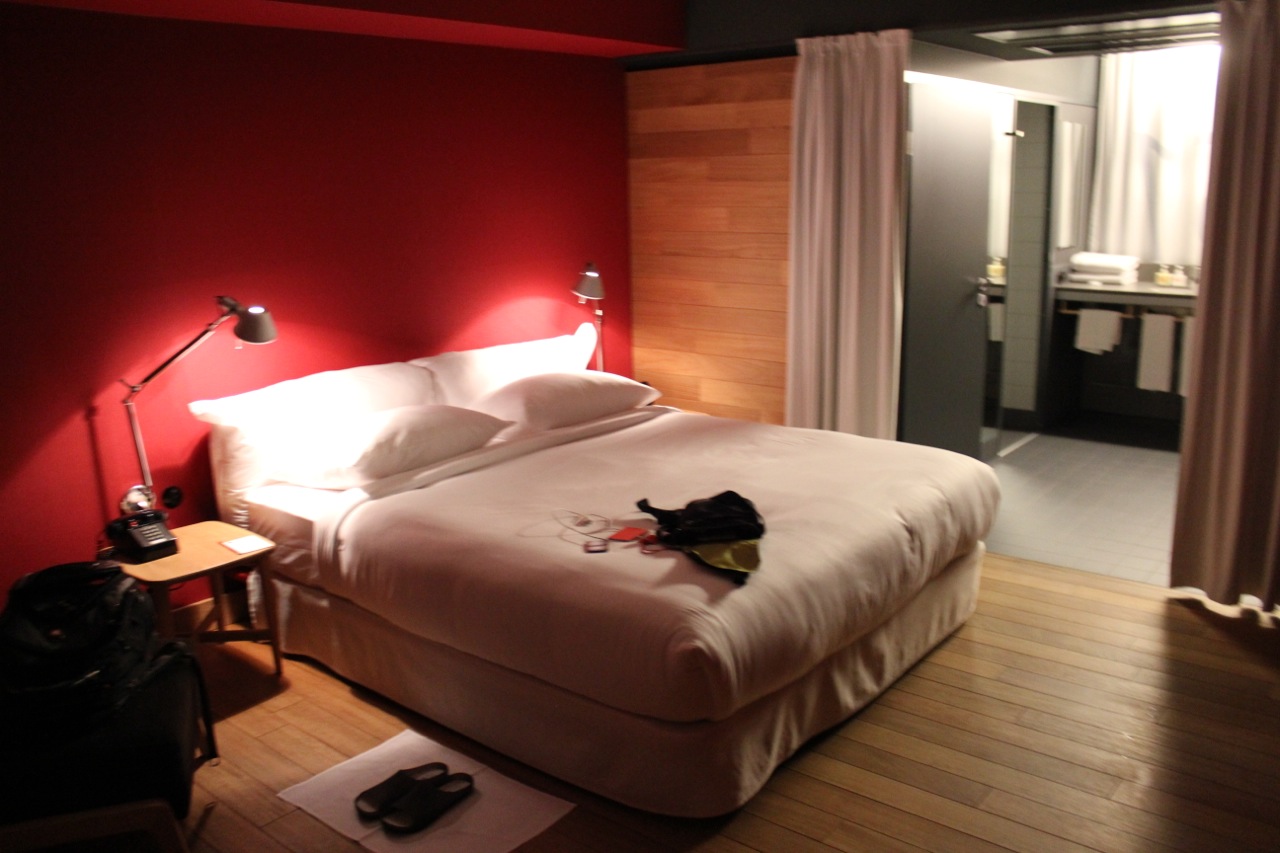
I left after work on Friday, and got in late that night.  I took a room at the same hotel that Heather and Mike were using, the Casa Camper.  It was a smidge pricier than I would have chosen if left to my own devices, but the hotel was awesome.  It has very large rooms, which is unusual for any hotel I’ve been to in Europe thus far.  It also has pretty spectacular amenities, including all-included food in a 24 hour snack bar sort of place, and a good sauna at the bottom level of the hotel.  I actually did try the sauna for fifteen or twenty minutes, but that’s an entirely different post.

The bed seemed like an American queen sized bed to me, not a typical German bed size.  I wouldn’t swear to the measurements though, I just know it seemed like a pretty big bed.   The room also had air conditioning, which is something else I haven’t seen much of since I got to Europe.  I haven’t slept in air conditioning in more than five months, and I had to turn the AC off to really get comfortable.  It’s amazing how quickly no AC has become my new normal.

Needless to say, I slept very well in that big fluffy bed, and Saturday morning after breakfast, we ventured out into the city to do touristy things.  First stop: The Brandenburg Gate!  Except we ran across a small children’s festival on the way to the Gate, and there were oddities aplenty.  For example, there was a parkour demonstration:

We also saw four guys carrying a piano down the street and the world’s shortest rollercoaster.  It’s that kind of town.   We also saw a Segway tour, and I can never resist taking pictures of a Segway tour.

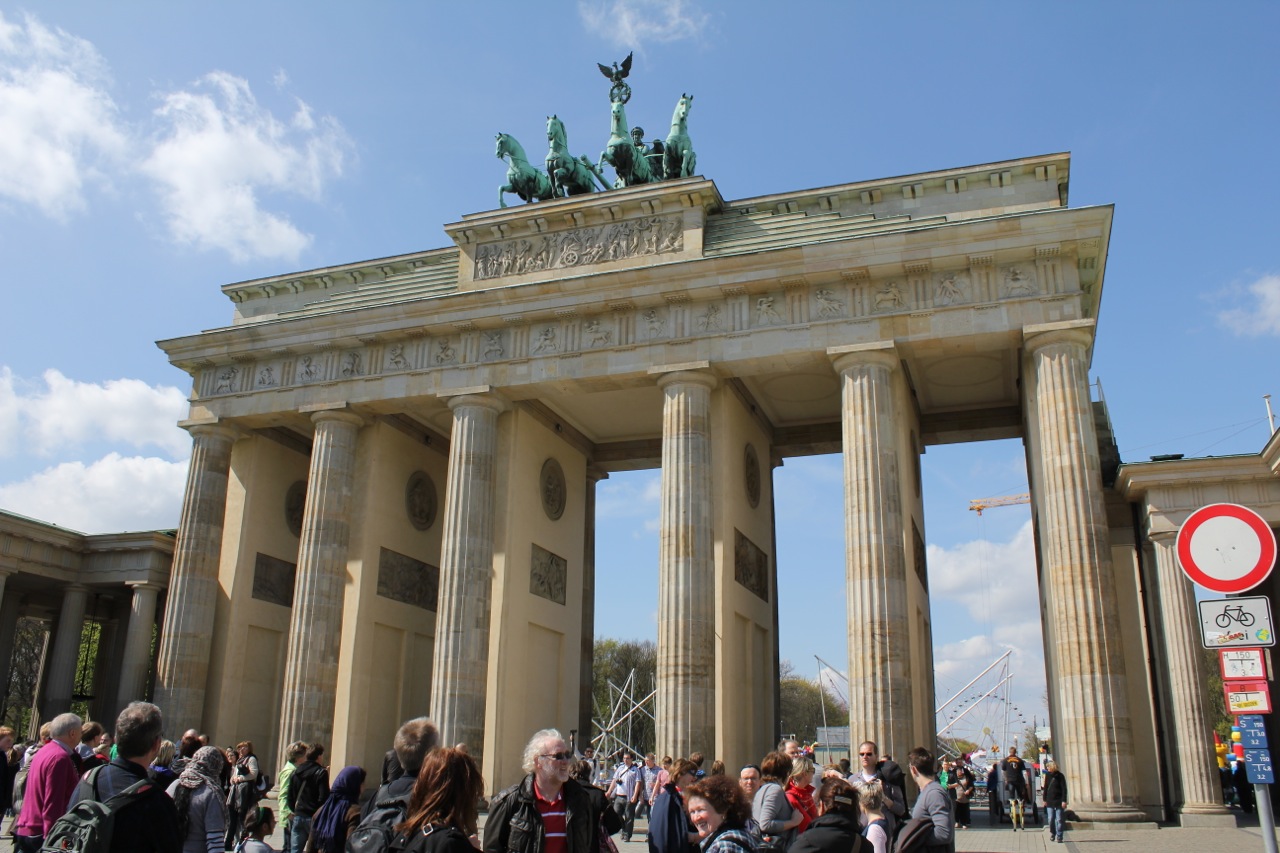
After some walking past the Reichstag and some other stuff, we found ourselves at the Brandenburger Tor!

Once again, I’m amazed to discover that a major piece of German architecture is based on Greece.  In this case, the design is that of the  Propylaea, the gateway to the Acropolis in Athens, Greece.  If this keeps up, I won’t need to ever visit Greece because I’ll have seen all the things based on the architecture there in other cities.

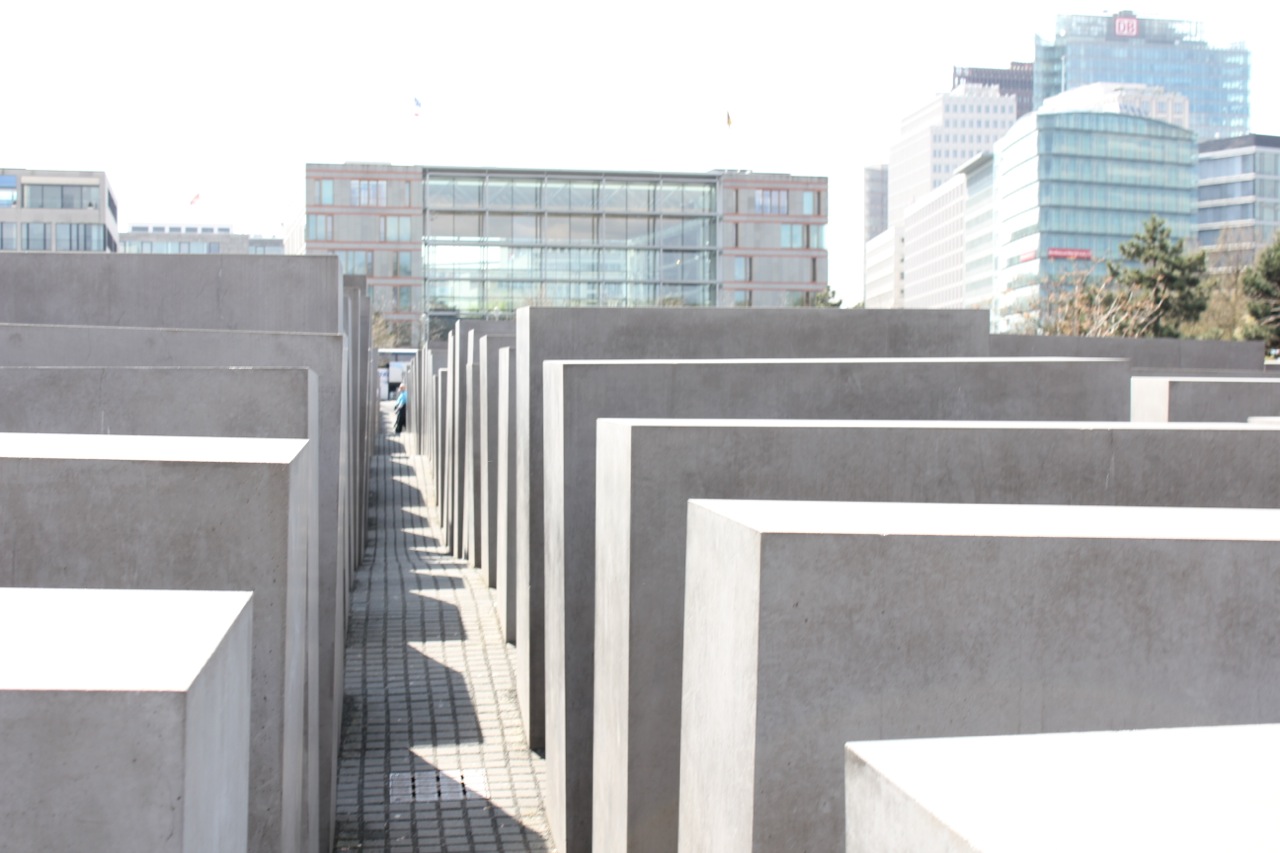
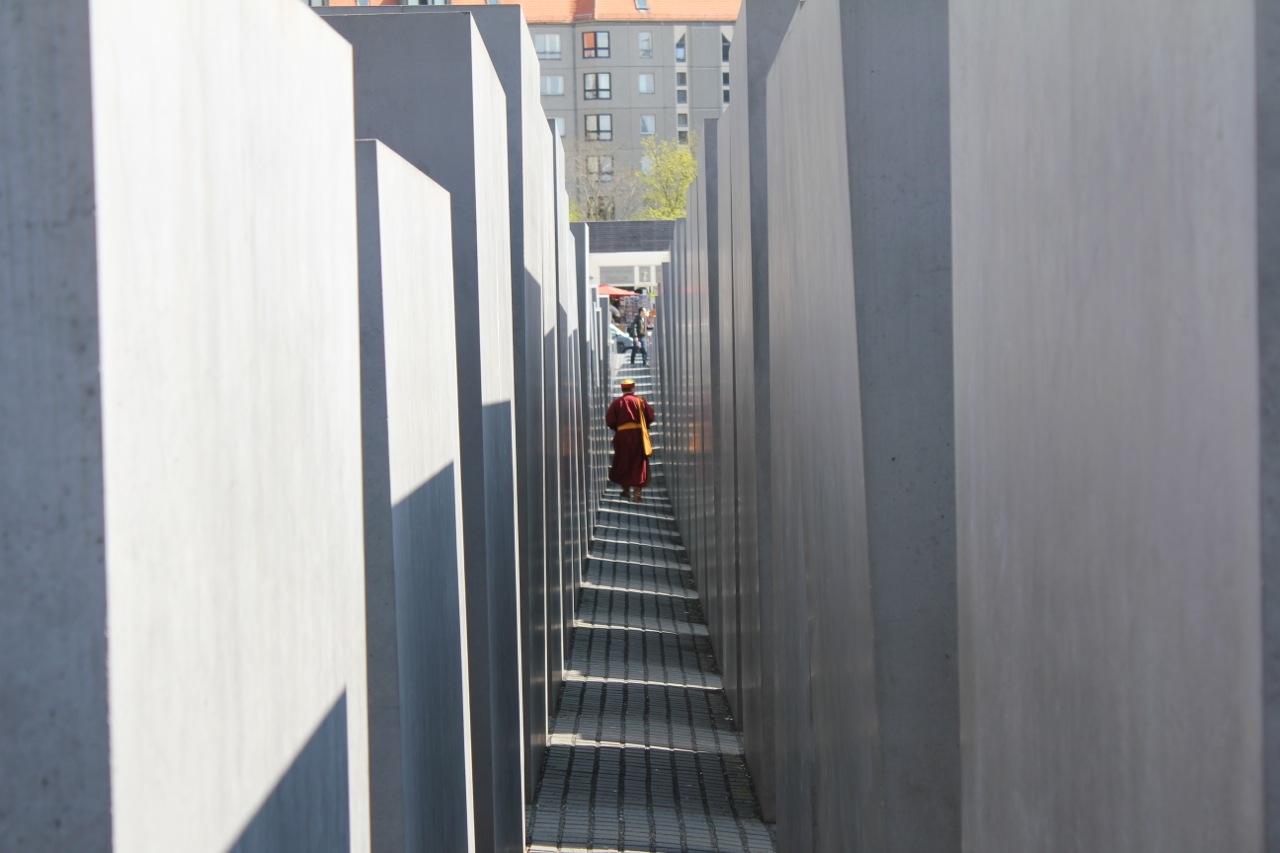
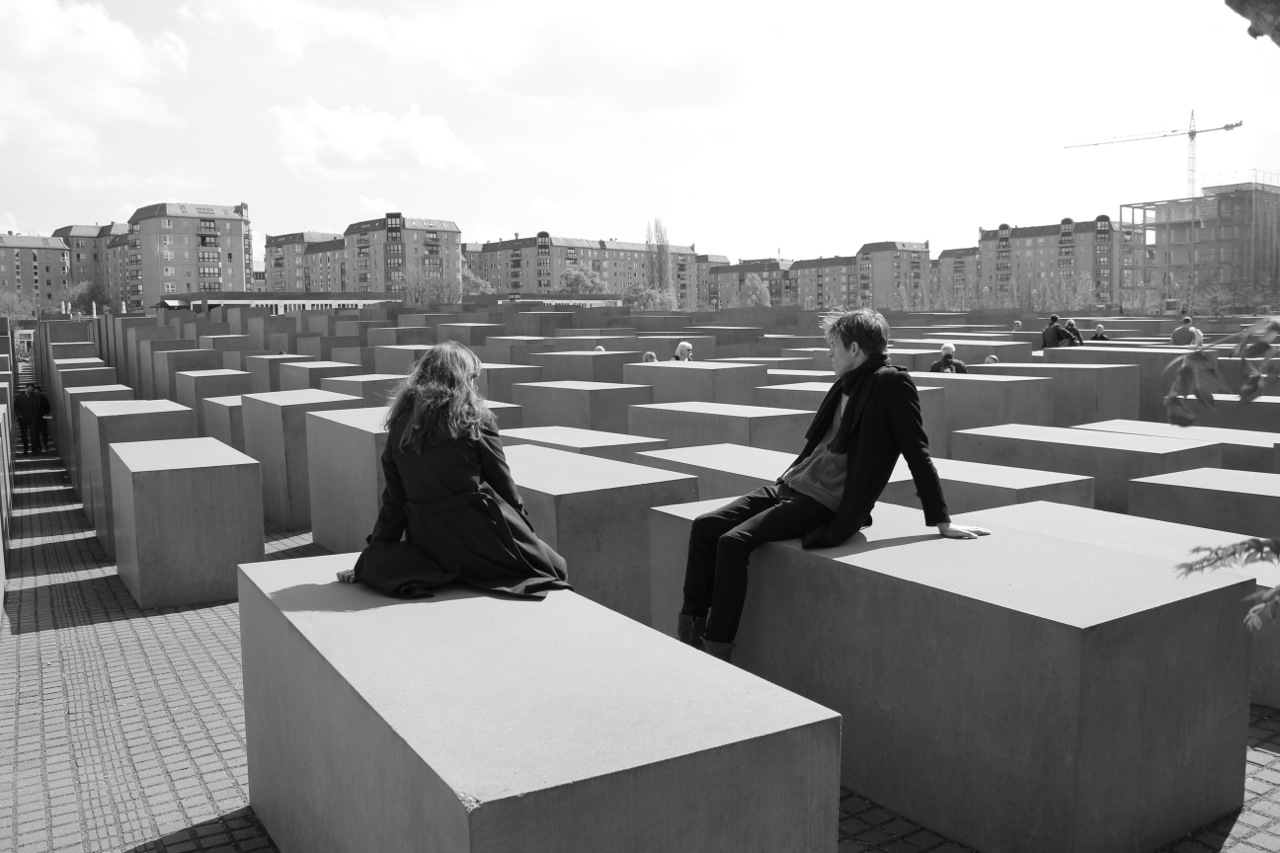
After we were done at the Gate, we wandered over to the Memorial to the Murdered Jews of Europe, a Holocaust memorial consisting of 2,711 “stelae,” slabs of concrete of various heights arranged in a grid over sloping ground covering 19,000 square metres (4.7 acres).  There was also an information center beneath the structure, which holds the names of all known Jewish Holocaust victims, obtained from the Israeli museum Yad Vashem.

I didn’t know much about this place until we got there, but according to the designing architect,  “the stelae are designed to produce an uneasy, confusing atmosphere, and the whole sculpture aims to represent a supposedly ordered system that has lost touch with human reason.”  I can agree that the place is confusing, but it was also peaceful in a way.  Here’s four pictures from there, including one I quite like of a Tibetan monk walking between the stelae.

The city of Berlin knows that when you’ve spent some time in a solemn place, the best thing is to cleanse the palate with something patently ridiculous…. like fourteen guys dressed in banana costumes riding a mobile bar that is powered by the pedals at their feet while a fifteenth guy in the center servers them beer.

No, really.

Bier Bike

It turns out the “Bier-Bike” is a pretty common thing for stag parties, and I’ve seen it several times since, including one here in Regensburg where all the participants were wearing standard Lederhosen.  This was my first sighting though, and it was kind of magnificent.

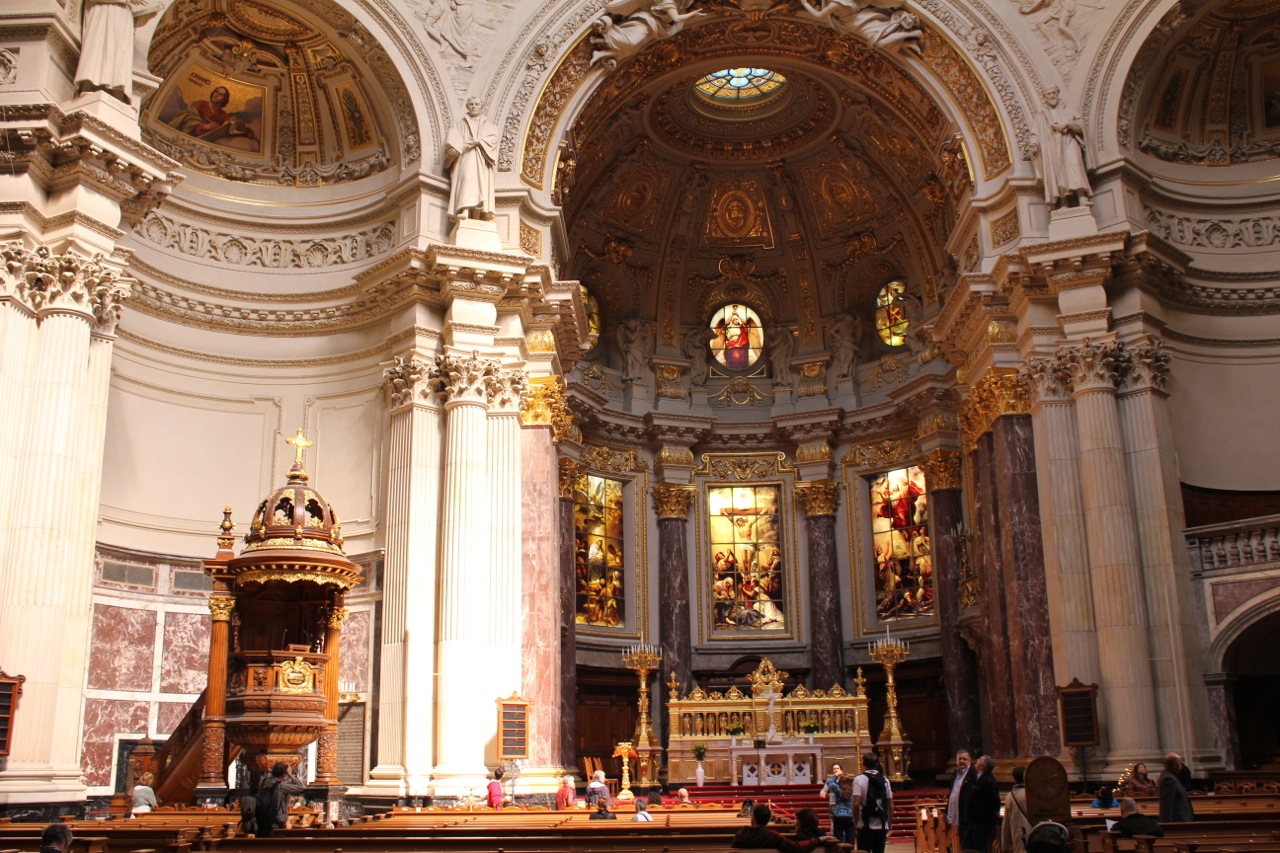
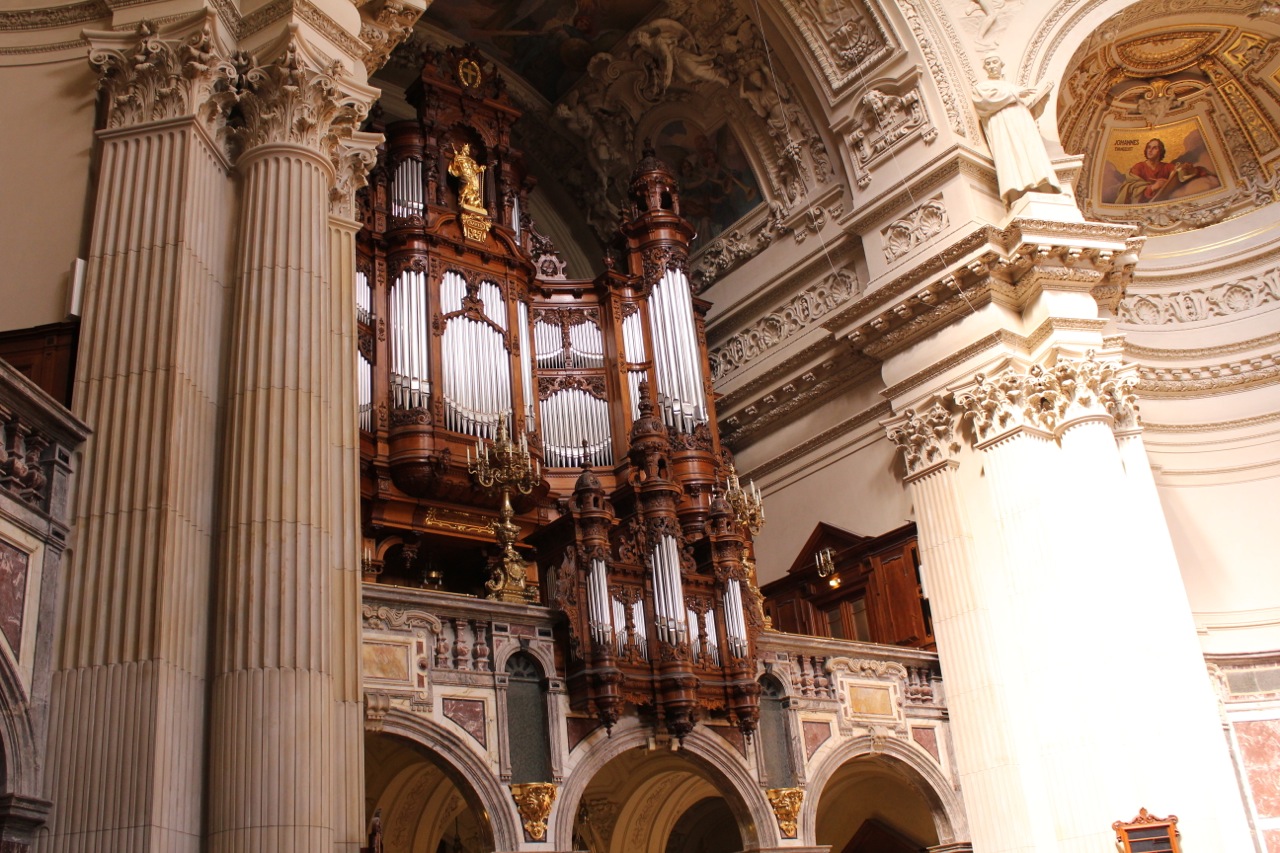
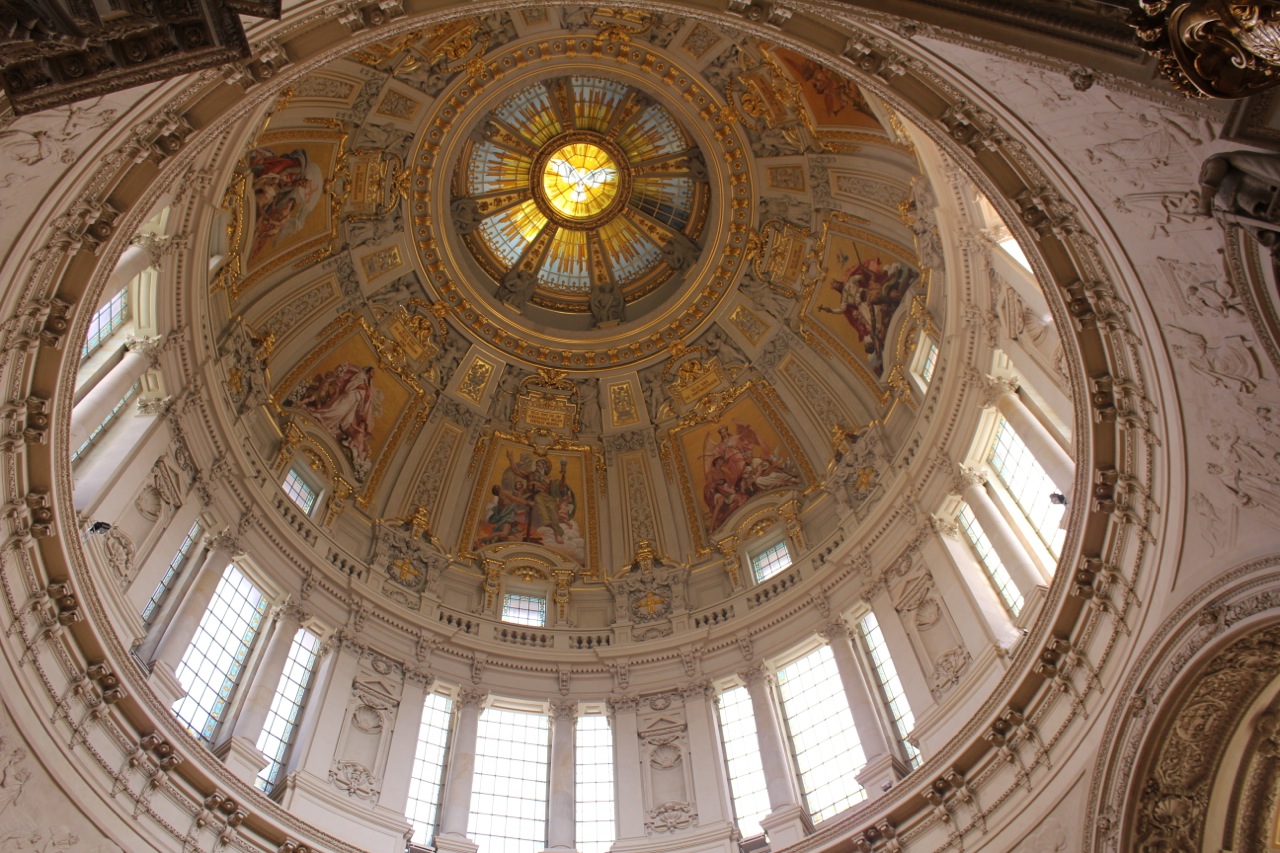
Next stop:  The Berliner Dom, a big ol’ church.  Big pipe organ, big catacombs, and so forth.  Plus a rather distinct dome in this Dom.   Here’s a few pics from the Dom.

No first trip to Berlin would be complete without a look at some of the historical stuff surrounding the Berlin Wall.  In one area, there is a representation of where the wall actually stood, along with representations of tunnels, and a stunning amount of information about how people snuck past the border at times.  Here’s the representation of the actual physical location of the wall:

Here’s a physical representation of one of the guard towers.

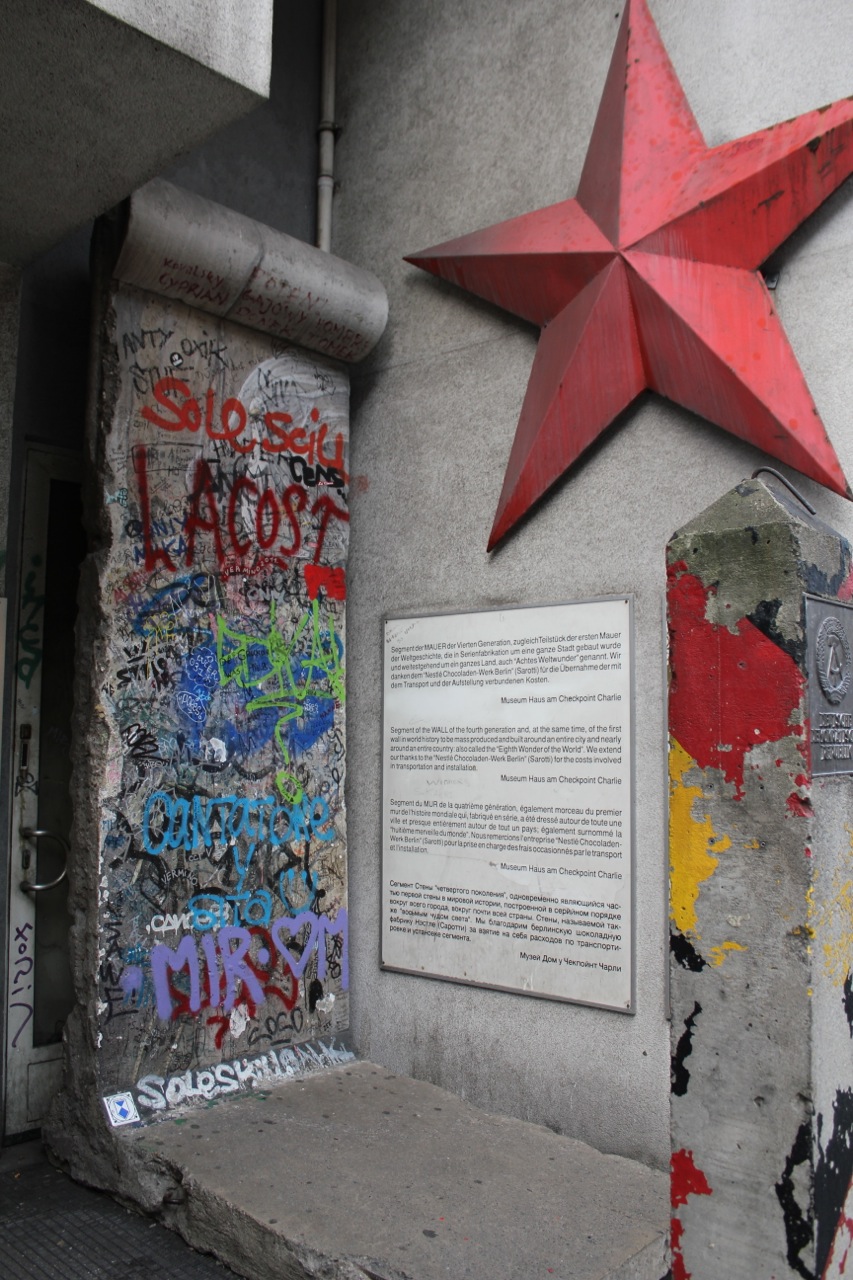
…and, for good measure, an actual section of the original Berlin Wall, moved to another location by the Nestle corporation for posterity:

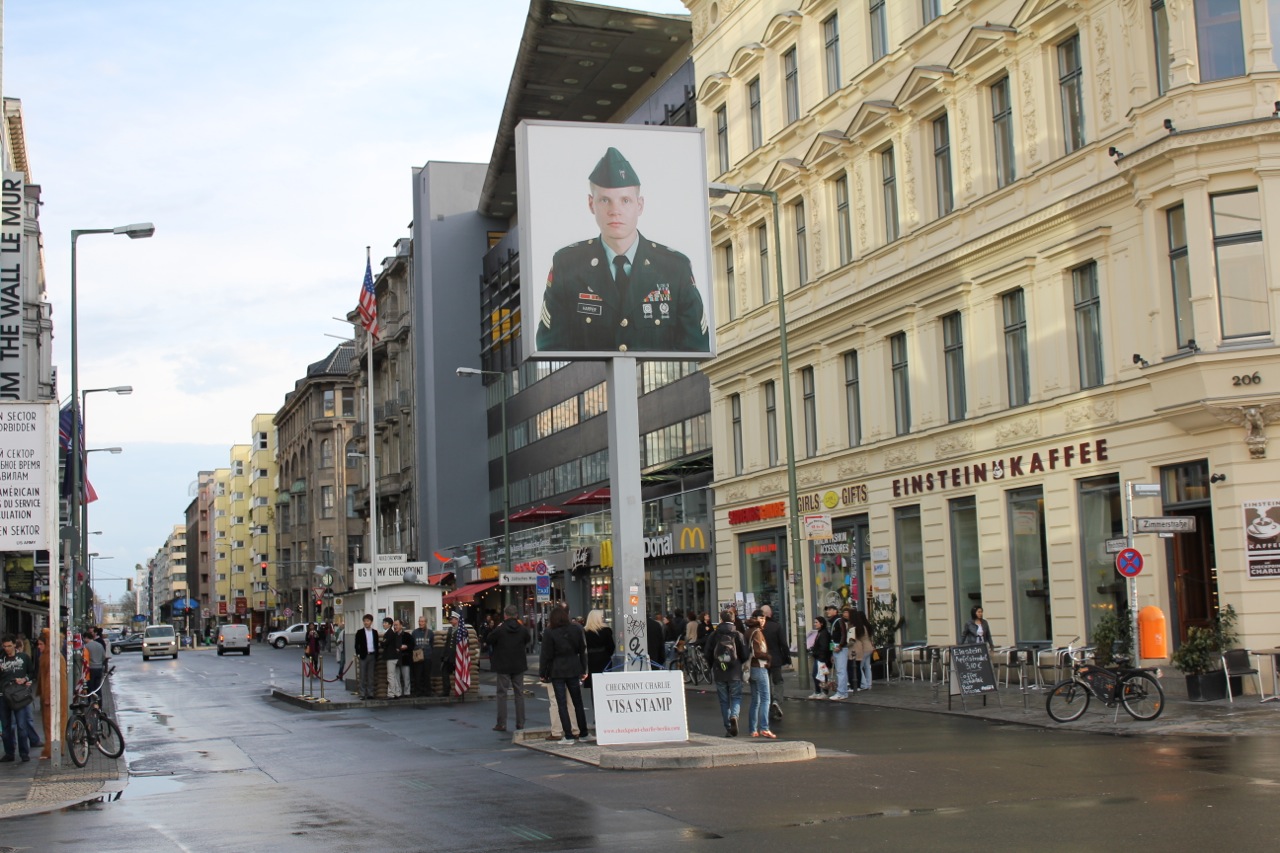
We also visited the “House am Checkpoint Charlie,” a museum that has a lot of information about how people crossed the border.  There were ultralights, hot air balloons, a personal submarine-  people crossed inside of gas tanks and welding machines and in one case, inside the passenger seat of a car.  The ingenuity was incredibly impressive.  Plus, you know, the actual checkpoint was represented here:

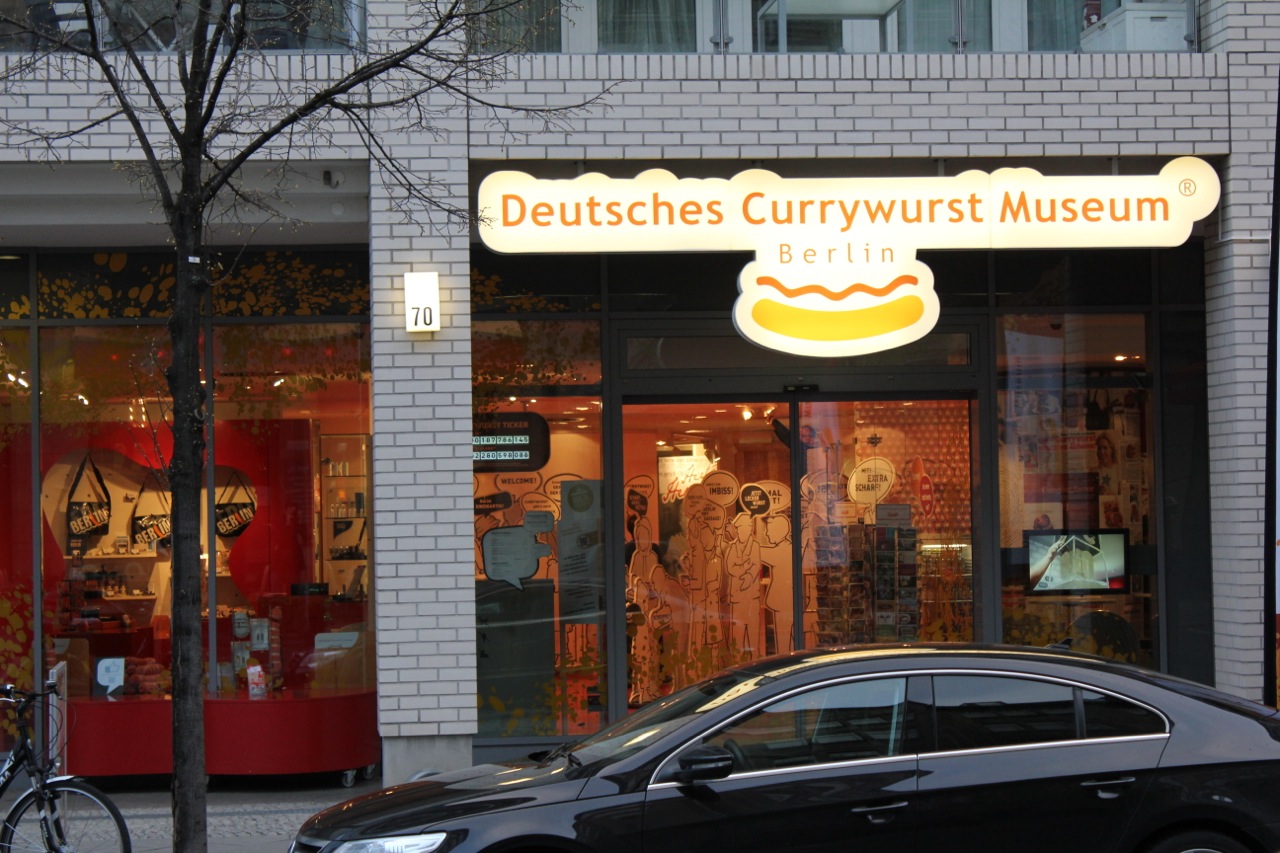
Last but not least, is a very important cultural museum that we spotted on the way to our dinner.  The Currywurst Museum.

No, really.

As you can imagine, these eighteen pictures are not a good representation of the entire day- there are 111 photos from Berlin all visible in my Berlin flickr gallery:

http://www.flickr.com/photos/stevenglassman/sets/72157629534724430/

Kona and Kepler

This morning started out with breakfast at a little cafe called Kona, which has delicious bagels.  On the walk there and back, I delighted in the snowfall from the last few days.  As a life-long Florida resident, I’ve never really experienced snow on this magnitude.

Since I was looking around even more than I normally do, I noticed a structure across the street that I hadn’t noticed before, with some gold leaf around the outer edges and a golden shape on the top.

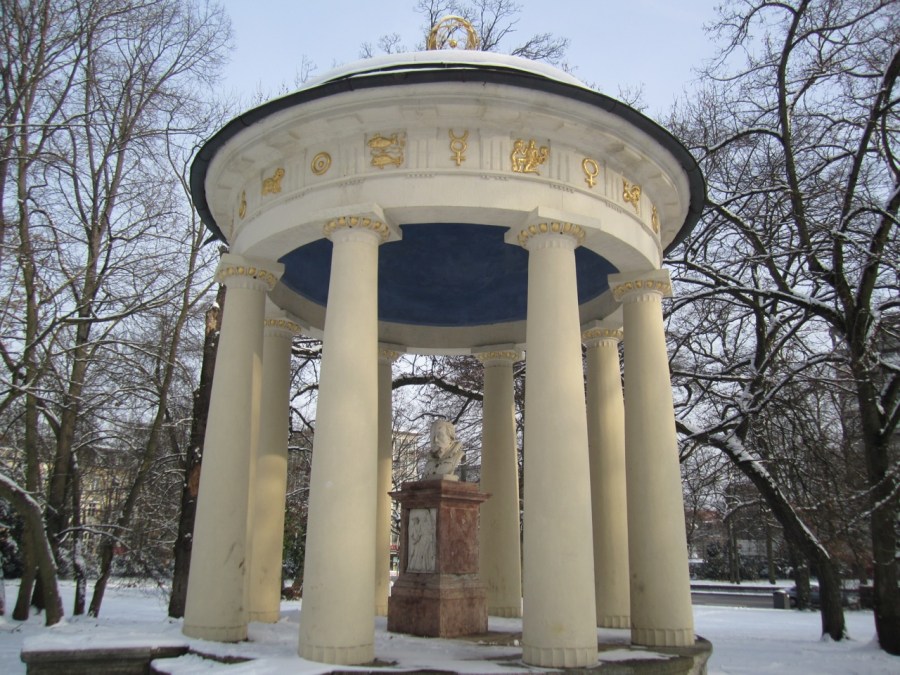
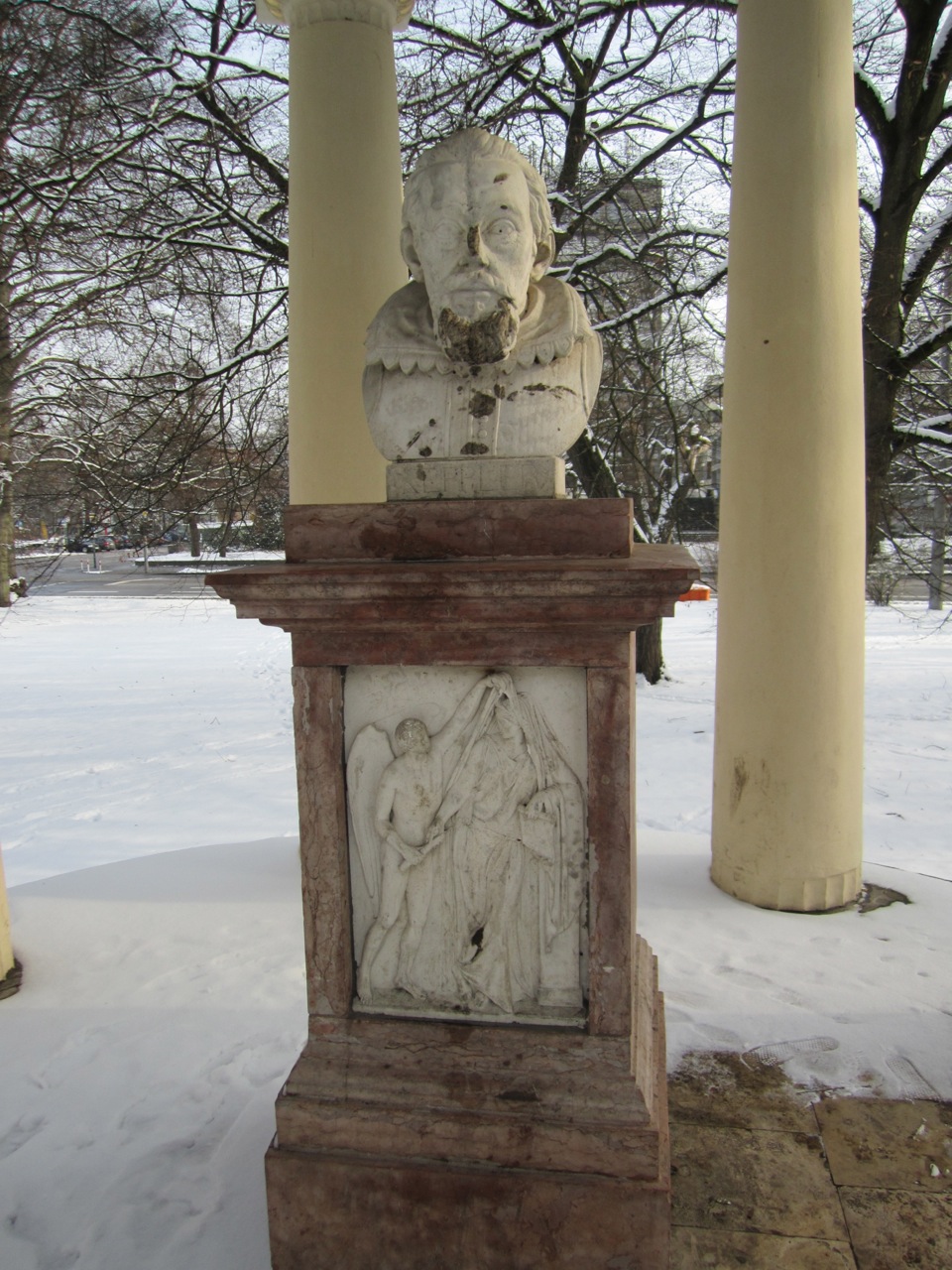
The structure turned out to be a memorial to someone who lived here in Regensburg-  Johannes Kepler, famed scientist, mathematician, philosopher, and astronomer.  People involved in the sciences might be familiar with Kepler’s Laws Of Planetary Motion.  I had already  noticed that there’s a lot of streets named for scientists here.  There are places named for Kepler, and Copernicus, and Max Planck.

Kepler moved to Regensburg late in his life, and he fell ill and died here.  Kepler’s original burial site was lost during the bombings of World War II, but the structure I noticed today is a newer Kepler memorial.

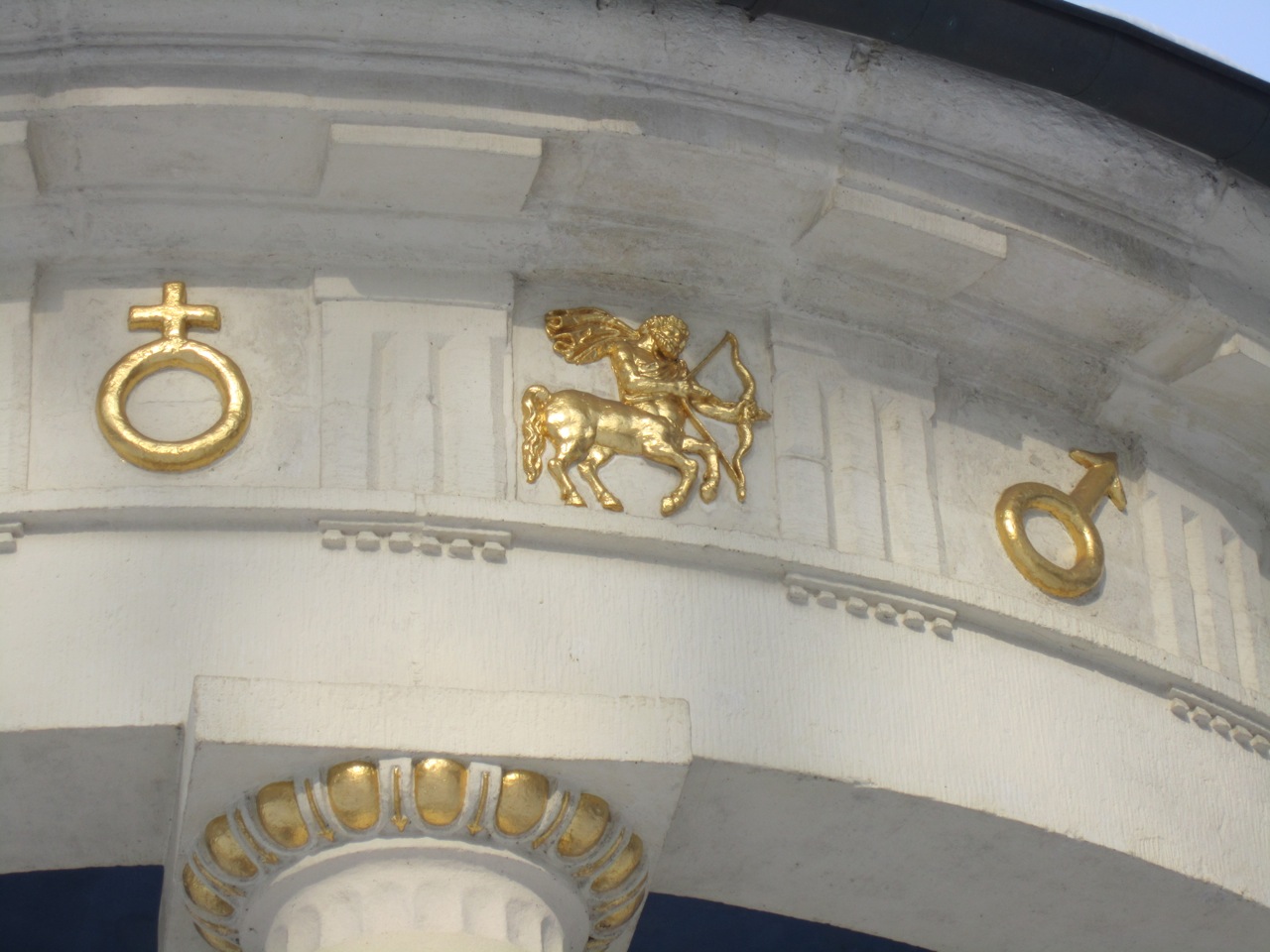
The memorial has a bust of Kepler, with his name misspelled- I’m not at all sure why the bust has two Ps instead of just the one.  There is a piece on the top which I think is supposed to represent the laws of planetary motion, and the outer edge of the canopy is ringed with astrological symbols.

Homeboy needs a new coat of paint.

…and a closer shot of the details on the Sagittarius glyph.

I’m going to have to do some checking to see if there is a definitive guide to all of the different statues and memorials and other interesting antiquities here-  most of the literature I’ve seen has focused on the old churches, but there’s also an ancient Jewish temple which has been razed to the ground some centuries ago, but there’s a memorial which stands on that site.  I walked past that memorial more than a dozen times before somebody told me what it was, and then I found the signs that explain it- one in German, one in English, and one in Hebrew.

Rough translation: "This is where Napoleon the 1st was wounded on 23 April 1809 during the bombardment of the city."

There are lots of that sort of thing here.  As I learn more about my new home, I am constantly astonished at the little bits of history that have happened here.  For example, Napoleon himself spent some time in Regensburg, after receiving a minor wound to his ankle during the Battle Of Regensburg before he moved on to Vienna.  One of my coworkers told me that there is a sculpted throne not far from here that was made for Napoleon to use during his recuperation.

This town is utterly fascinating.