Tokyo Disneyland

In my third weekend in Japan, I went to Tokyo Disneyland.   This was my first visit to a Disney park outside of the United States, despite having been a stones throw from Hong Kong Disney and Disneyland Paris at other times in my travels.

Tokyo Disneyland had more than 17 million visitors in 2013, making it the world’s second-most visited theme park behind the Magic Kingdom in Florida.  It’s also worth noting that the Tokyo Disney parks are the only ones in the world that are not operated solely by Disney.  They’re owned and operated by the Oriental Land Company, who licenses the Disney theme and branding from the Walt Disney Company.  You can’t tell the difference in person, though-  the Disney experience is still the same.

tokyo-disneysea-1

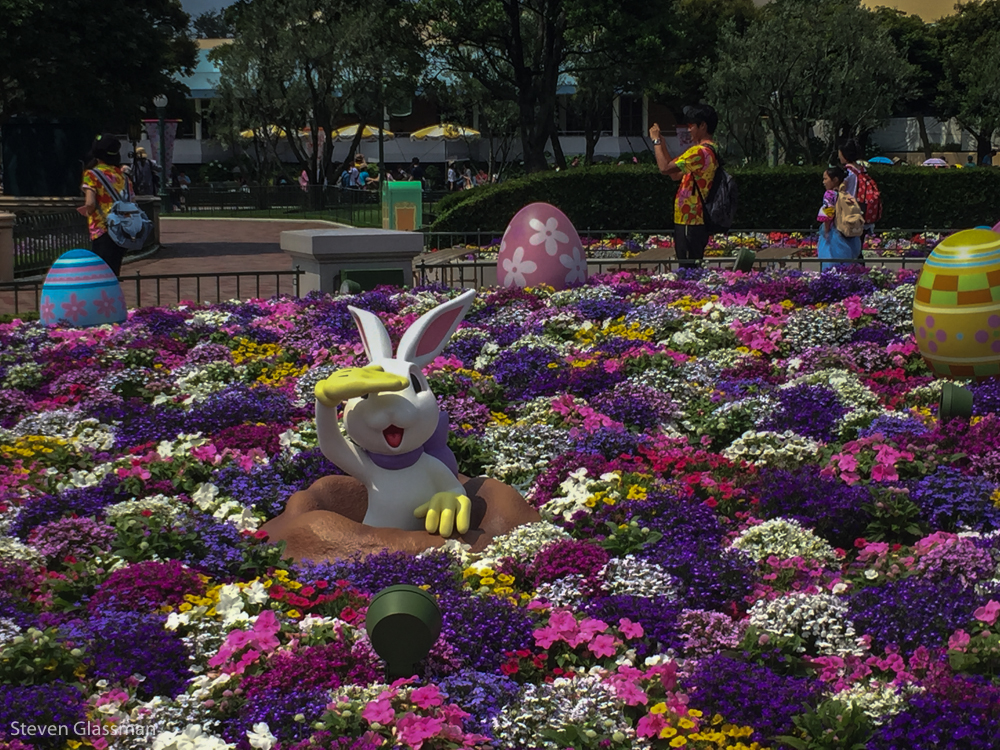
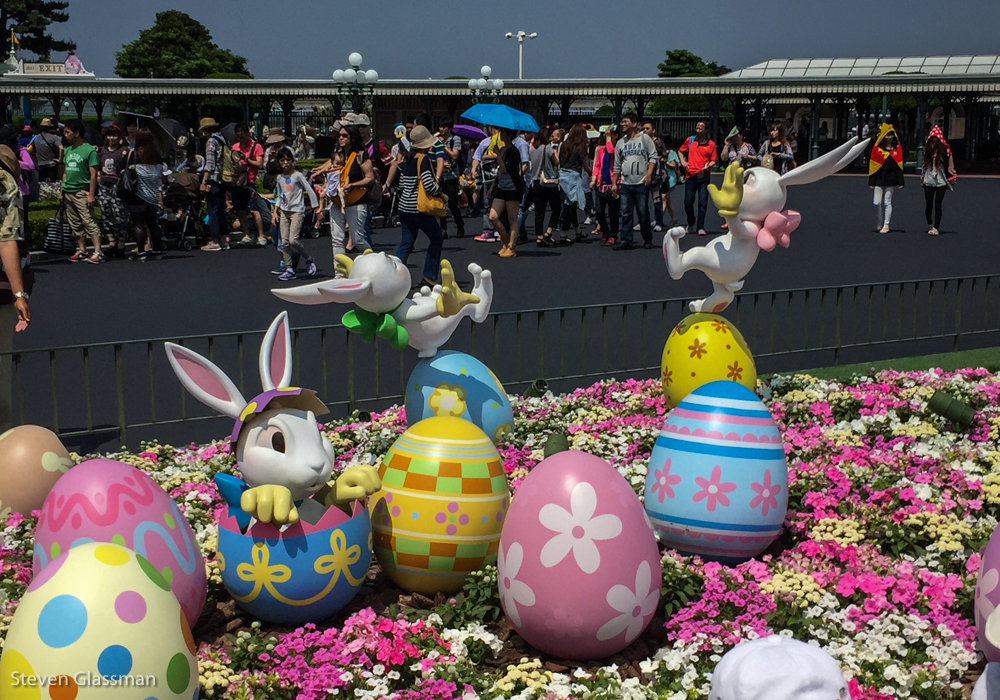
Despite it being June, they were celebrating Easter.  I’m still not sure why, but it did mean there were lots of adorable rabbit figures in the parks.
tokyo-disneyland-2

Tokyo Disneyland’s Main Street USA is quite a bit wider than the Orlando version, and it’s covered from the very frequent Tokyo rain.

tokyo-disneyland-3

This part isn’t all that different than it is in Orlando, except there’s a lot more space in front of and around the castle.

tokyo-disneyland-4

Ahoy there, little fellow!

tokyo-disneyland-5

This castle is a familiar sight to so many people.

tokyo-disneyland-6

One of the sections of Tokyo Disneyland is Toontown.  There’s a Roger Rabbit ride that I wanted to see, but I ran out of time.

tokyo-disneyland-7

One side effect of the Easter celebration is that various Disney characters were set throughout the park in egg form.  Egg-shaped R2-D2 is sitting in front of Star Tours.

tokyo-disneyland-8

The Star Tours ride line area here has no Imperial Walker, no trees, no cover at all from the sun until you get into the lobby.  Luckily, the wait times for this one never get too long because there’s an enormous capacity inside.

tokyo-disneyland-9

The ride isn’t much different, except that all the C3P0 and all the other characters are speaking Japanese.   I have some recordings from my phone, but they’re not clear enough to be blog-worthy.

tokyo-disneyland-10

In Tokyo Disneyland, Star Tours is right next to Space Mountain.  There’s a certain logic to that, when you don’t have an equivalent of Hollywood Studios.

tokyo-disneyland-21

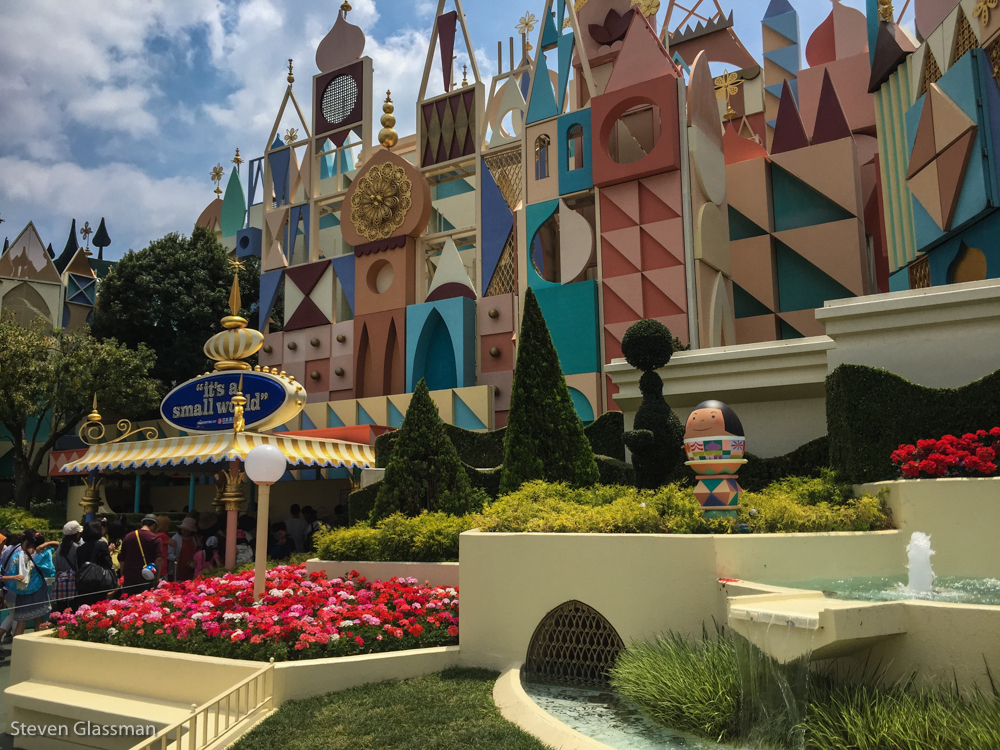
It’s A Small World really wasn’t any different than the Florida version.  The egg version of a Small World character in front was part of the Easter celebrations.
tokyo-disneyland-11

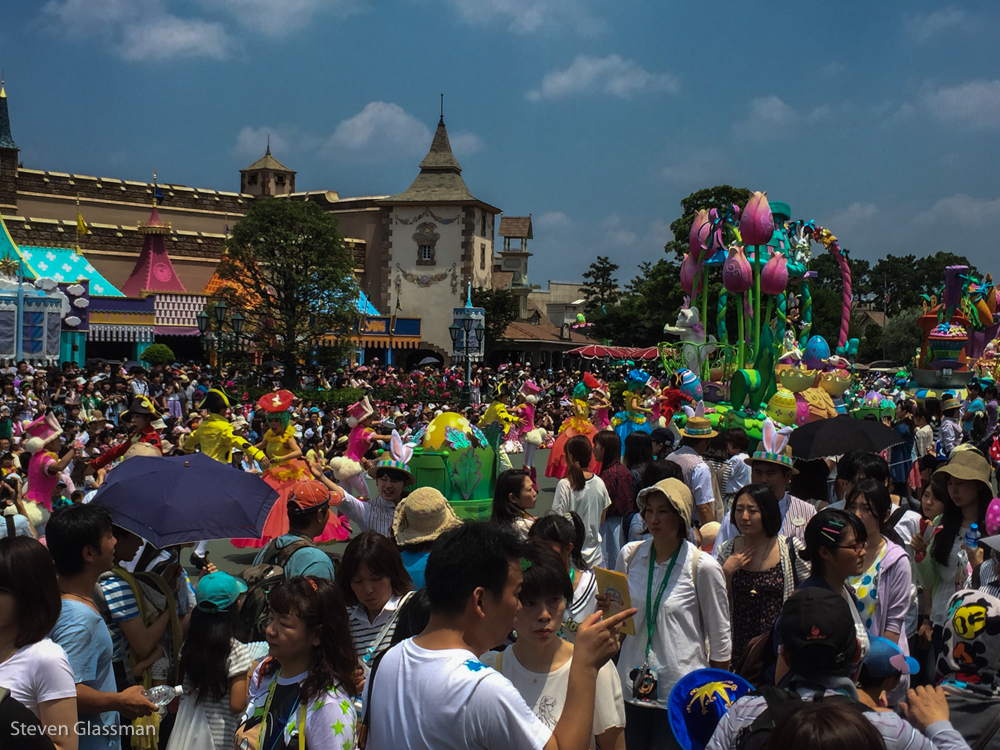
I found the Easter parade.  Seriously.  It was kind of hard to miss.
tokyo-disneyland-12

The springtime themed Minnie and Clarice Chipmunk outfits are super nice, though.

tokyo-disneyland-13

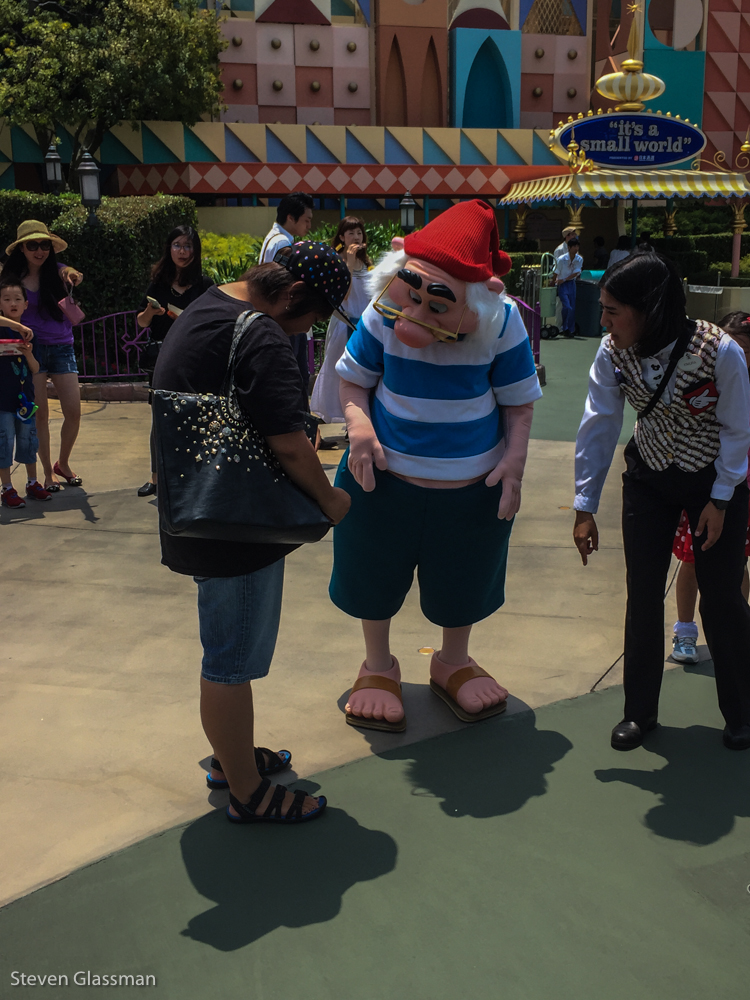
In Japan, the costumed characters tend to wander out among the crowds more, instead of staying in one place and spontaneously generating lines of children.
tokyo-disneyland-14

More egged characters, around the corner from the Country Bear Jamboree.

tokyo-disneyland-15

The Jamboree was also translated (mostly) to Japanese.  This was a fascinating experience.

tokyo-disneyland-19

The signs within the park weren’t very helpful for navigation, but the breaks between sections were quite clear.  The ground was also painted a different color in each section, which helped me find my way quite a bit.

tokyo-disneyland-16

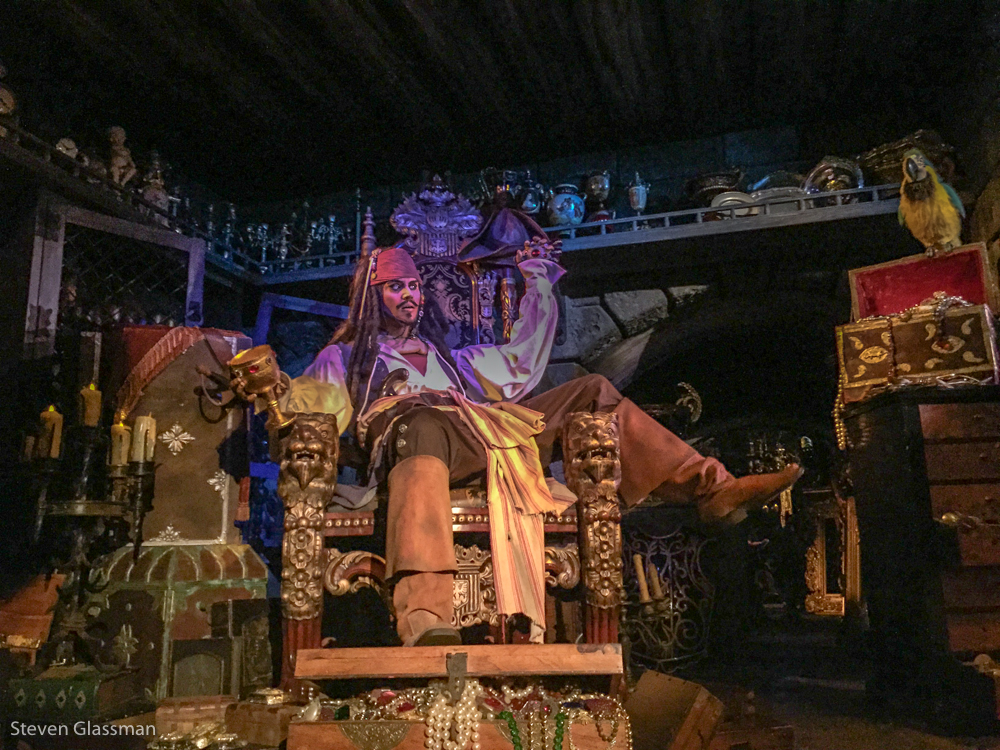
Haunted Mansion wasn’t any different in Japan than it is in Florida, and Pirates of the Caribbean was still Pirates of the Caribbean.  Lots of Jack has been added since the last time I went on the Florida version, but I’m told that the Orlando version has the same Jack stuff added in now.
tokyo-disneyland-17

For lunch, I shall have a waffle and some lemonade!  I wasn’t in the mood to wait for anything else.

tokyo-disneyland-18

Pooh’s Hunny Hunt is different than anything that exists in the Florida parks as far as I know.  It’s definitely different than the Florida Pooh ride, which is basically just a retooling of Mr. Toad’s Wild Ride.

The Pooh ride uses a trackless ride technology that I haven’t seen in any of the Florida Disney parks.  Trackless rides are able to cross over existing paths, reverse, and rotate on the spot.  This makes for a really fun ride experience.

In this ride, you sit in a giant Hunny Pot, and zip around.  When Tigger dances, the entire room bounces.  It’s pretty fantastic.    YouTube has some videos that people have filmed going through this ride, if you’re curious.

tokyo-disneyland-20

On the walkway bridge that separates the parks from transportation are a variety of small sculptures.  Here’s Tinkerbell.

tokyo-disneyland-22

Chip and Dale dance in front of a bicycle parking lot.

tokyo-disneyland-23

What’s your favorite Disney ride?
Because Japan: Everything’s Kawaii

This post is full of stuff that doesn’t really fit into my entries about specific places or events.   I was in Japan for a total of five weeks.  In that time, I took nearly 2,500 photographs.   This is partly because I was fascinated by almost everything, and partly because I’m the sort of person who likes to take pictures of everything.    Plus, almost everything was kawaii, or super cute!

For example, this poster was in the tunnels leading to and from subway trains.   As near as I can tell, it’s a public service campaign suggesting that you don’t play music loudly in the train because it’s just rude.  I think it’s somewhat telling that the musical people here are brightly colored and the person who doesn’t want to hear the music is pale and lifeless.  I’m just saying.

because-japan-3

Here’s one from the office.  Basically, this is saying that when you’re sick, you should stay home through the worst of it, and wear a face mask until you are once again a happy and healthy bean.  Plus wash your little bean hands, because unwashed bean hands are how disease is spread!

because-japan-123

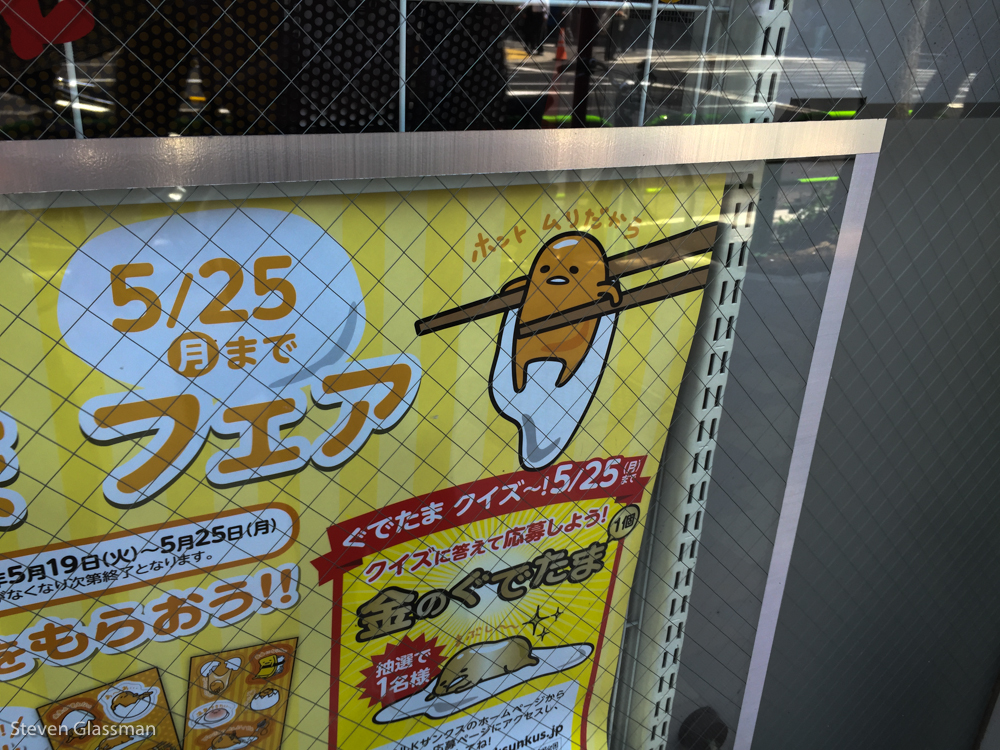
Continuing the trend to have all signs include really adorable things, this one is a little egg.  I saw this little fellow all over the city, including a stuffed animal version in one of the department stores.

because-japan-13

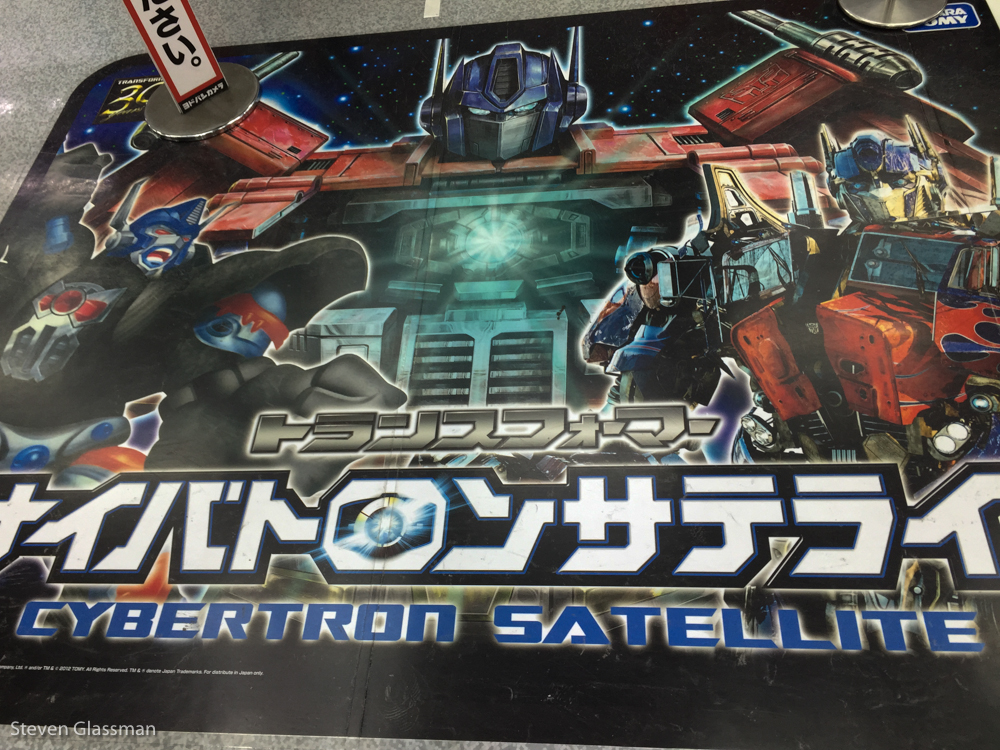
Lest we forget that we’re in Japan, here’s some bad-ass Transformers.  This was a giant decal on the floor of the aforementioned department store.

because-japan-14

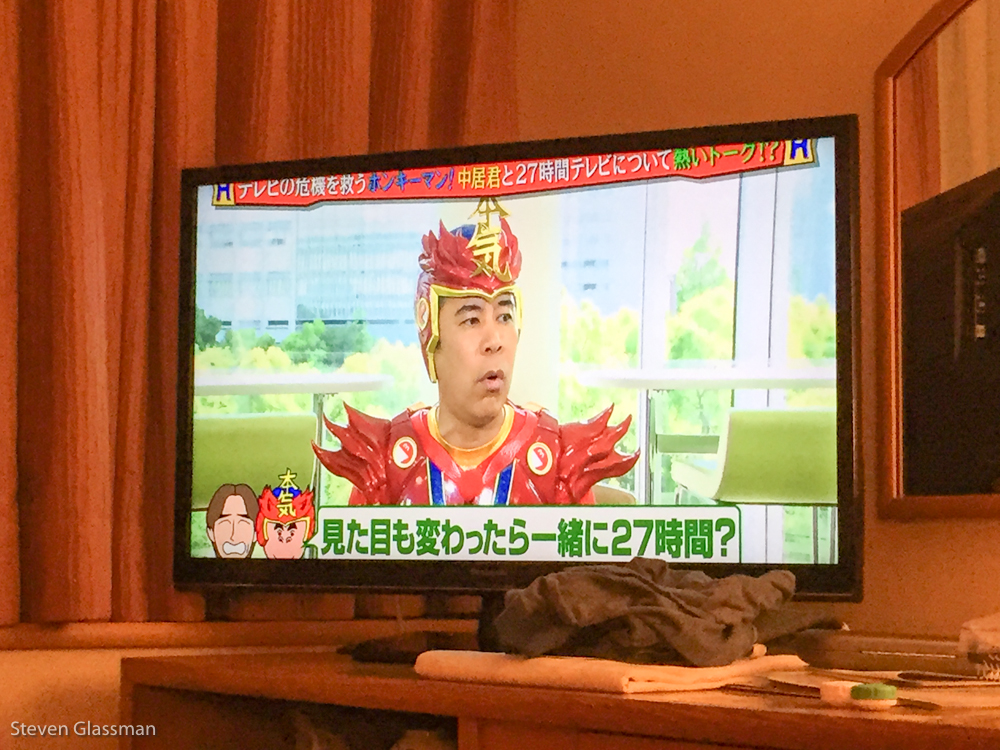
I’m not even going to get into what was happening on television.   I don’t know if this is a children’s show, but it was like nothing I’ve ever seen before outside of Starlight Express.

because-japan-89

I don’t know if one of these guys was the bad guy, and I’m not sure whether they’re supposed to be superheroes or train engines.

because-japan-90

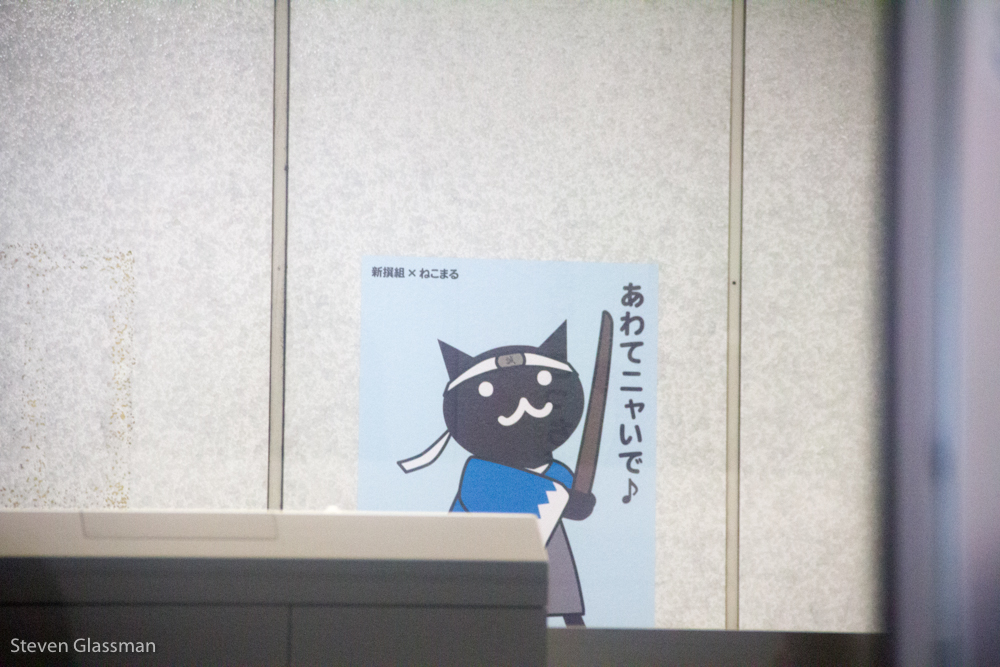
Meanwhile, back in the realm of cute signs, this was on the back wall of a train platform.  I haven’t the foggiest idea what it’s about, but cute samurai cats are always a welcome sight.

because-japan-91

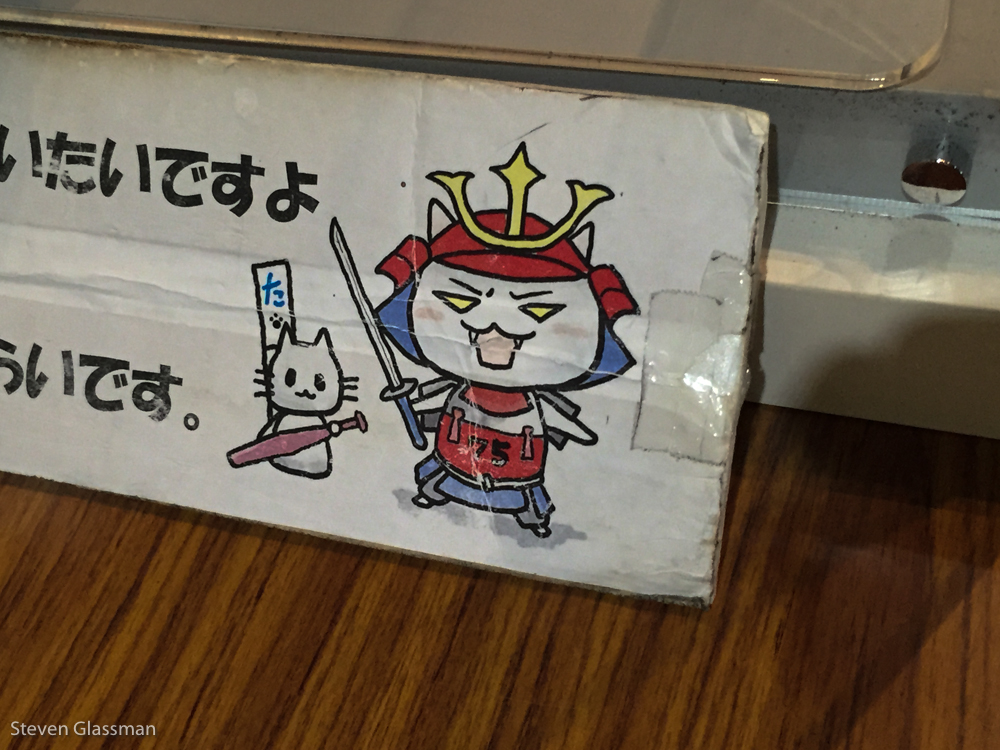
Sometimes the cute samurai cats look mildly evil, like this one on a display case in the Hiroshima castle.  The smaller cat with what looks like a baseball bat is especially adorable here.

because-japan-148

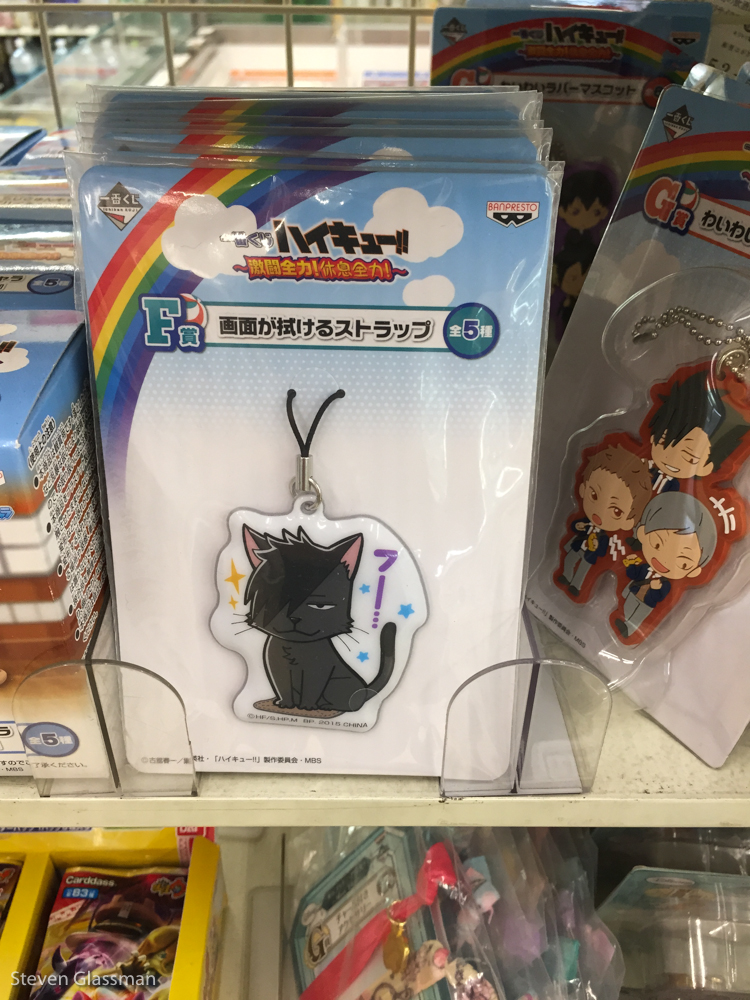
Cute cats were a common theme during my visit.  This hipster kitty is supposed to clip onto cell phones, I think.

because-japan-139

Before we move away from the cat theme, I wanted to point out this logo for a Japanese package delivery service.  The design is of a mother cat carrying a kitten around.  Isn’t that the best logo for a delivery company ever?  “We treat your package like our adorable fuzzy offspring.”

because-japan-138

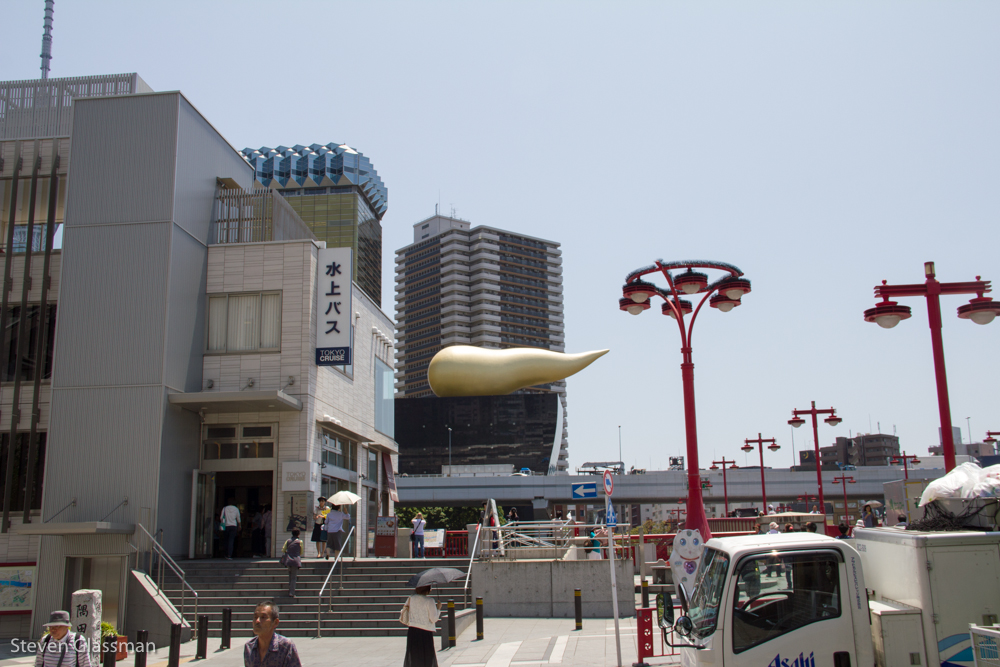
Meanwhile, near the river in Tokyo, this building exists.  I never found out what the golden squiggly sperm-like structure is supposed to be.    It’s enormous, though.

because-japan-106

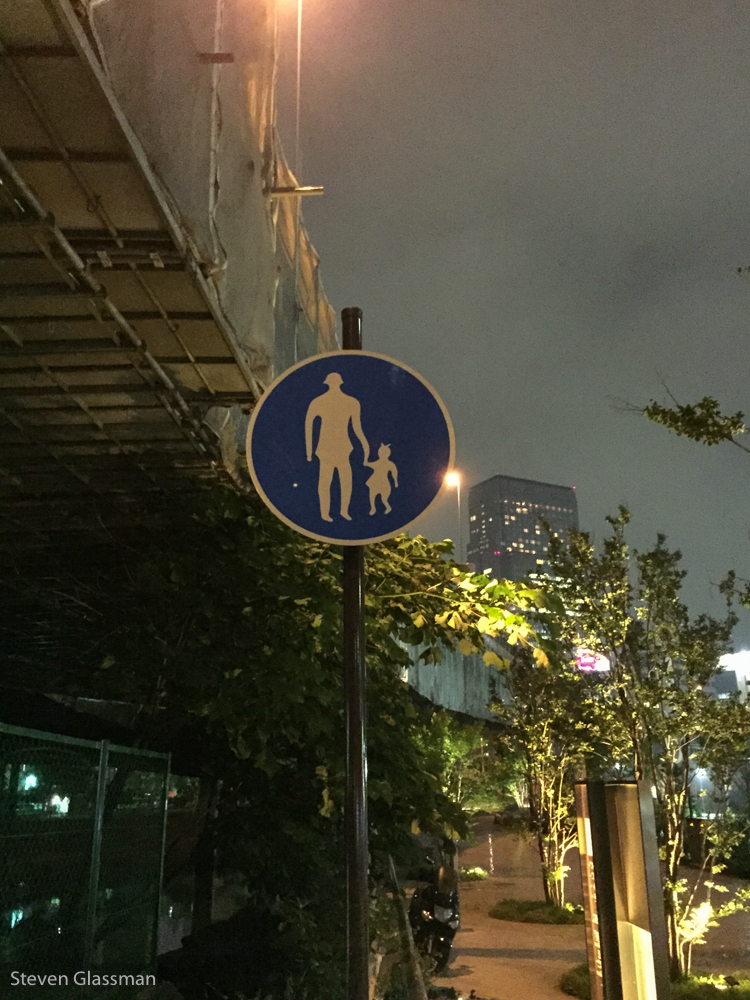
I passed this sign every day on my walk to and from the office, and the nearest I can figure out is that it’s to help passing alien beings figure out where to safely cross.  Seriously, neither one of the creatures on this sign looks like a human person.

because-japan-120

This one here?  This looks like a human person.  This hard-hatted worker is a human person who explicitly does NOT want you to go through this door.
because-japan-147

Meanwhile, this other human person is singing karaoke in the middle of the afternoon.  Welcome to Japan.

because-japan-150

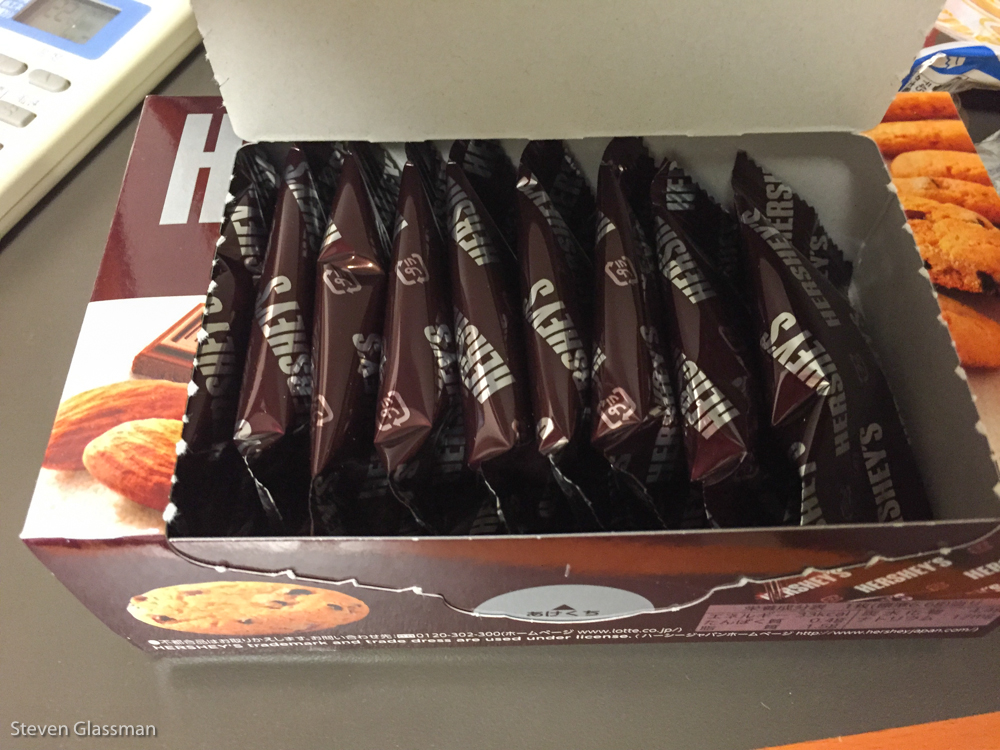
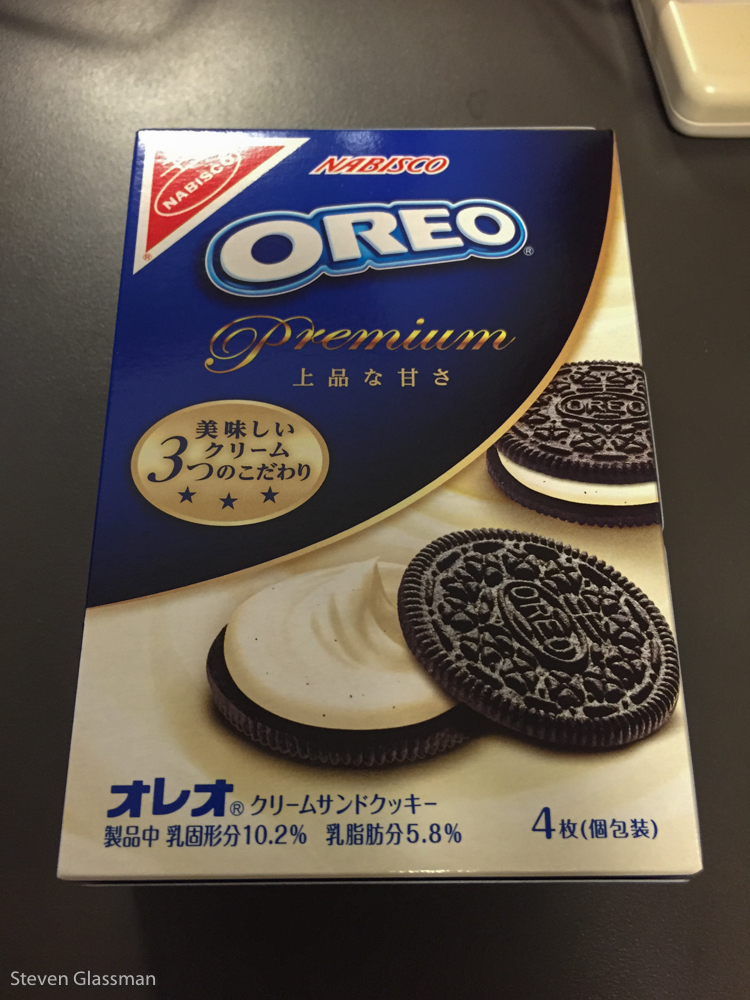
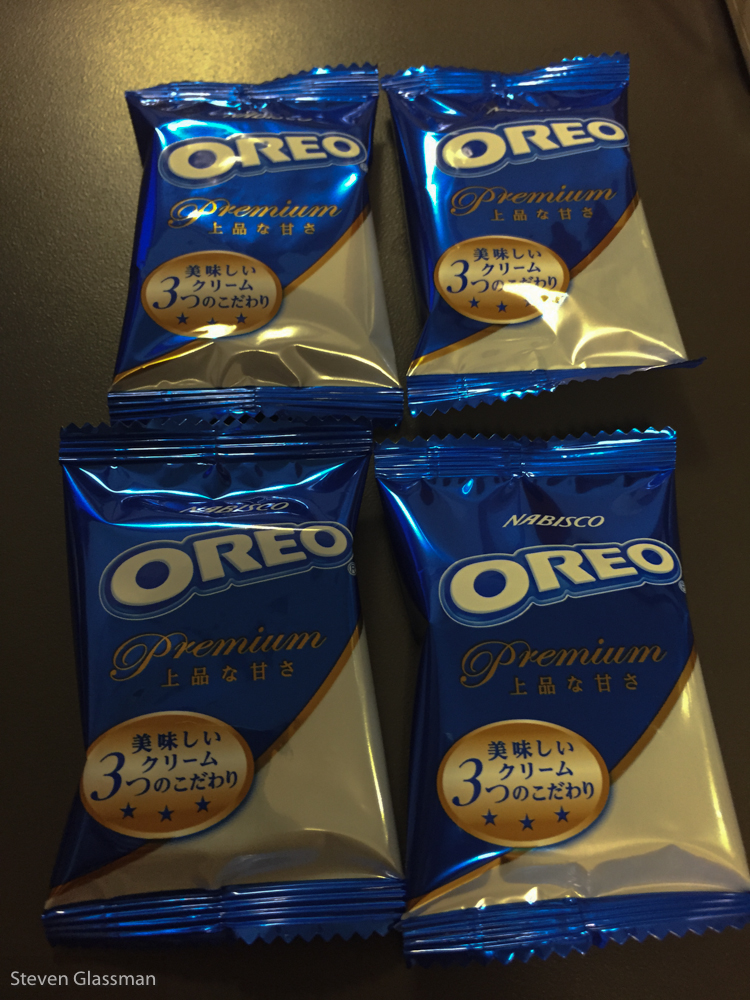
Something that I noticed while I was in Japan was that it’s unusual to find  cookies or snacks that are not individually wrapped.   I have theories about how avoiding disease in such a crowded city are a factor in this package design, but I’m only guessing.   Here’s some examples of the individually wrapped delights.

individual-32individual-29 individual-33 individual-68 individual-69

Here’s something I never did while I was in Japan:  A pachinko parlor.    Pachinko is a sort of automated gambling machine.  They’re very popular, and pachinko places are incredibly loud and smoky.  I walked past one every day on my way to the office, and whenever the doors opened, it was a blast of sound like nothing I’ve heard anywhere outside of Las Vegas.

pachinko

Last but certainly not least in this batch of random photos from Japan is the umbrella locker.  This ingenious luggage locking system is all over the place, and it makes sense to have a way to securely store your umbrella in a city that gets as much rain as this one does.    This particular example is at the entry level of the Edo-Tokyo Museum.  Basically, each tiny umbrella slot has a bracket with a key.  You take the key, and use it to retrieve your umbrella when you leave.  The whole thing is kind of genius, actually.

umbrella-lockers-3 umbrella-lockers-4 umbrella-lockers-5 umbrella-lockers-6 umbrella-lockers-7

Have you ever used one of these umbrella lockers?  What’s your favorite individually wrapped snack treat?

Shibuya

Most people know Shibuya mostly from images of Shibuya Crossing in movies and tv shows.  I’ll get to that in a minute.  First, I wanted to talk about Genki Sushi.  It’s a chain with several locations in the city, including this location in Shibuya.

genki-sushi-2

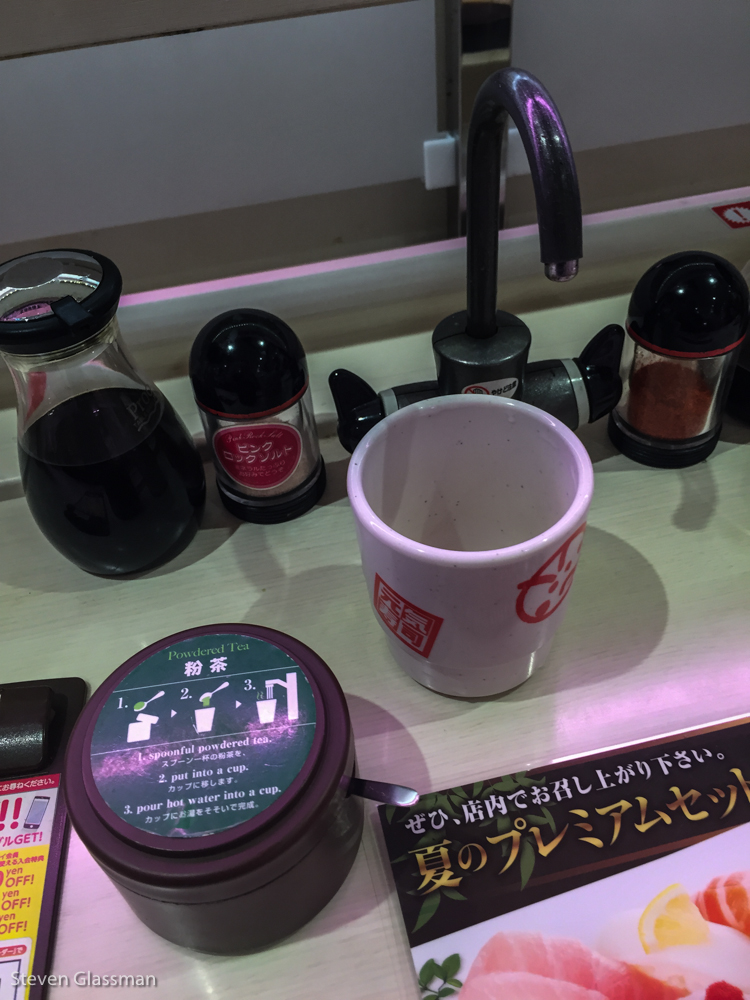
Genki is essentially a self-serve sushi restaurant.  For example, each seat contains a bin of green tea powder and a hot water tap for mix-it-yourself tea.

genki-sushi-1

The ordering is done on a touch-screen.    When you place the order, it is prepared and sent out to you within a few minutes.

genki-sushi-3

The sushi arrives automatically on these little trays.  The whole mechanism is reminiscent of the rollercoaster restaurant I went to in Nürnberg.

genki-sushi-4

Once you have retrieved your food, you must press the lit up button to send the little automatic tray back to the kitchen.

genki-sushi-5

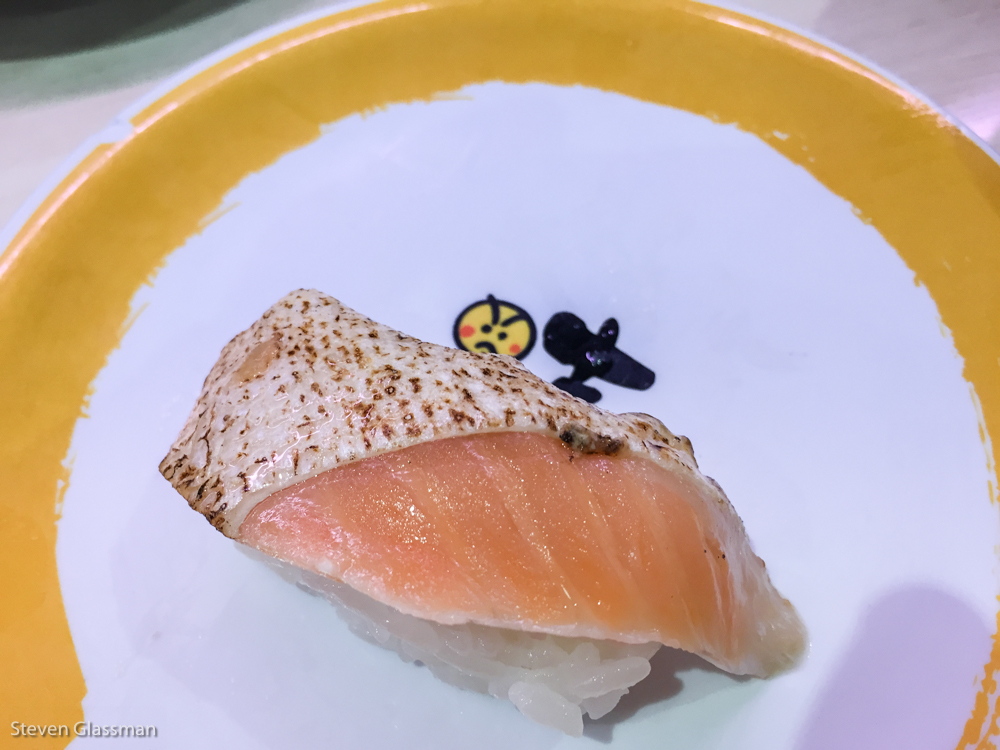
The food was delicious.

genki-sushi-6

There were moments where the food caused me confusion or amusement.  For example, their idea of a hamburger or cheeseburger is not at all in line with what I think of.

genki-sushi-7

Seriously, this is a “hamburger.”  It was a tiny patty of ground meat resting on a bed of rice, with a sauce on top which I believe was mayonnaise.

genki-sushi-8

I didn’t figure out what they meant by “Semi Fred” for days after this meal, but it looked like blueberry cheesecake, so I gave it a try.

genki-sushi-9

I had never heard of “Semifreddo” before this trip.  The Blueberry Semi Fred was delicious, as it happens.

genki-sushi-10

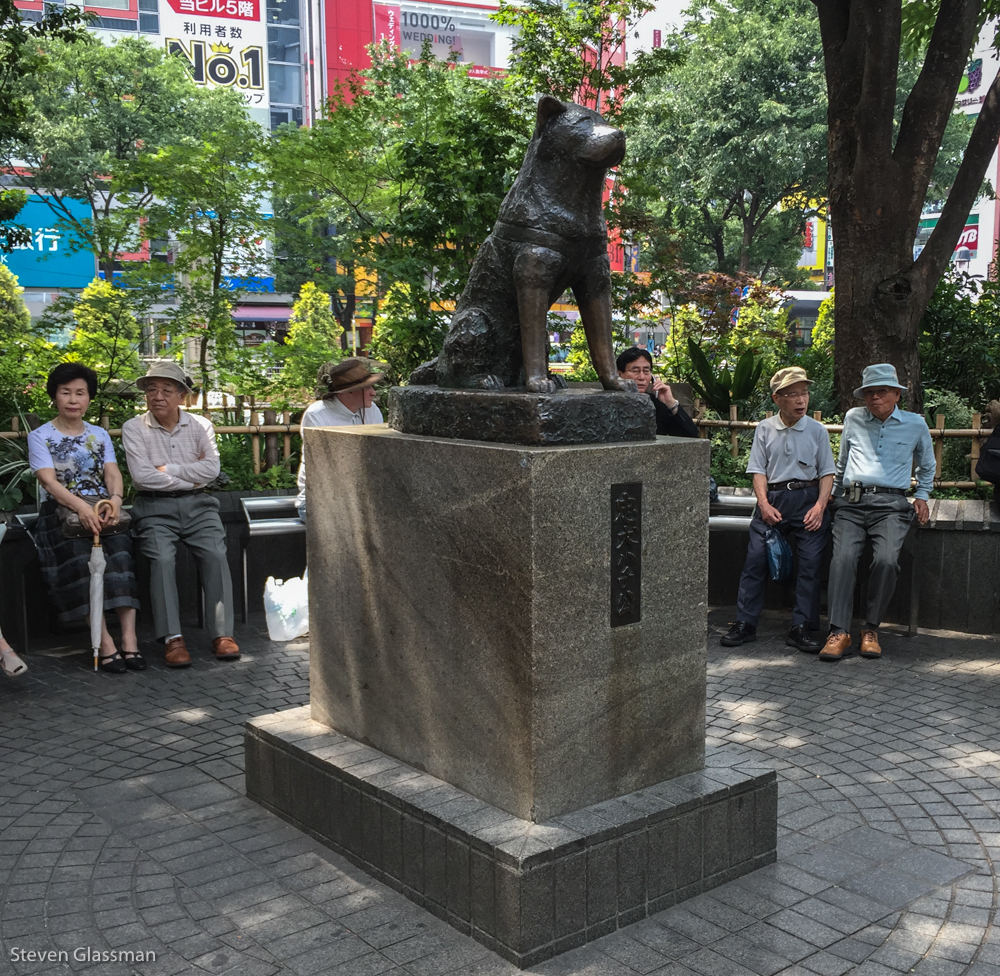
I think that’s enough talk about food.  Let’s turn our attention to one of Shibuya’s most famous residents, Hachiko.  Hachiko was an Akita dog who was adopted by a professor, Hidesaburō Ueno, in 1924.  The professor walked with Hachiko to the train station every day before going to his job at the University of Tokyo.  The dog waited at the station for his return at the end of each day.  Professor Ueno died of a cerebral hemorrhage in 1925 while giving a lecture, and Hachiko continued to walk to the station each morning.  He stayed at the station waiting for his Professor every day, until his death nine years later in 1935.  Hachiko was immortalized in bronze, and the first of several statues was unveiled in 1934, with Hachiko himself present.

hachiko-01

The original statue was recycled during World War II for the war effort, and a new statue was placed in August of 1948.  That statue is the one which still stands at Shibuya station today.  Hachiko’s story has been featured in several movies, including an English version called “Hachi: A Dog’s Talewith Richard Gere as the professor.

hachiko-02

The Hachiko statue at Shibuya Station is also in front of Shibuya Crossing, one of the busiest pedestrian intersections in the world.    This is what’s known as a “scramble crossing.”  When the light changes here, it’s red lights in every direction for vehicles.  Once the light is red, pedestrians cross from every direction, including diagonals.

shibuya-001

None of my pictures capture the crowd properly, because I was there on a pretty quiet weeknight.  You can see this intersection in countless television shows and movies, including Lost In Translation.

shibuya-crossing-116

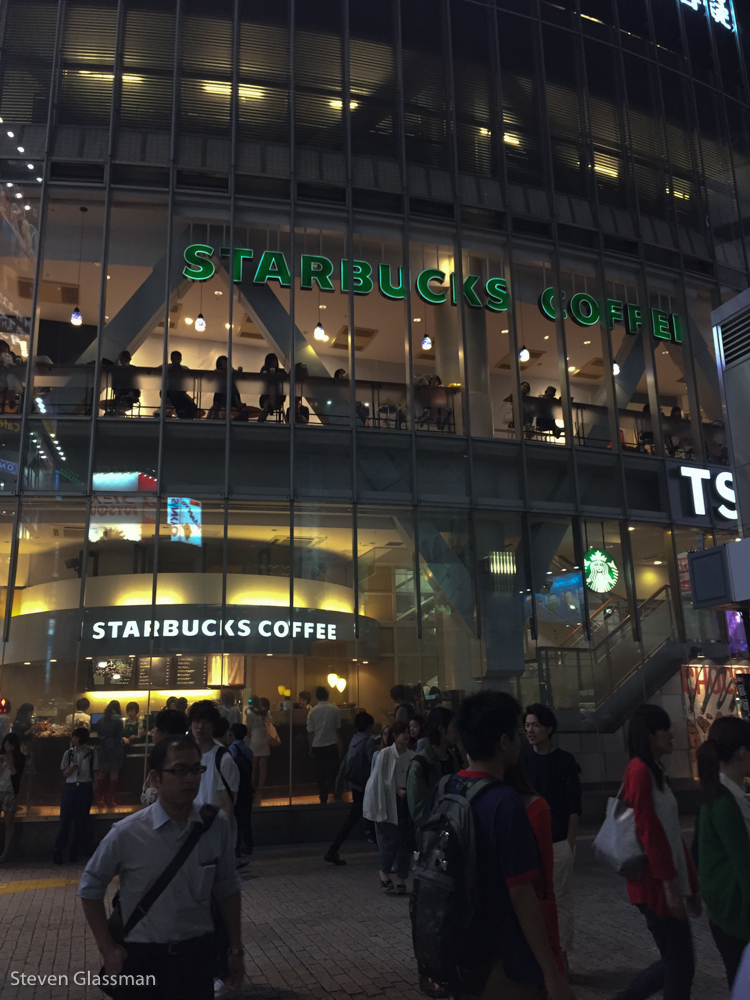
This Starbucks overlooks the Crossing.  It is reportedly one of the busiest Starbucks in the world.  It’s supposed to have an amazing view of the Crossing, but I never had a chance to go up there.

shibuya-crossing

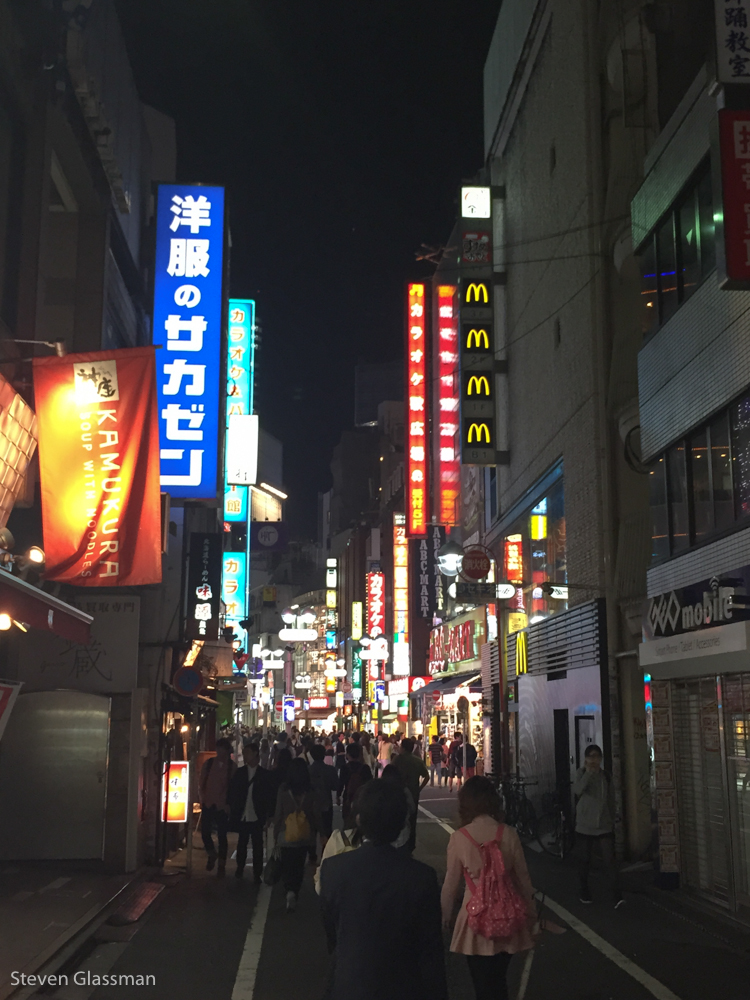
Once you’ve crossed the street from the station, this part of the city is filled with shops and restaurants.  This is where Genki Sushi is located.

shibuya

This part of Shibuya is also home to Tokyo’s only Taco Bell, as far as I know.  I tried to go here once out of sheer curiosity, but I didn’t succeed- there was a thirty minute wait for food and I had to go to work.

shibuya-002

Have you ever seen a movie about Hachiko or a film with Shibuya Crossing featured?

More Tom Otterness in Minneapolis!

There’s only about ten more posts remaining from my time in Japan.  However, I think it’s a good idea to take a break from talking about Japan every so often to look at something else.  Besides, I haven’t finished talking about Minneapolis!

During my trip to Minneapolis back in April, I rented a Nice Ride bike to get around the city a little more quickly.  On my way between the Walker Art Center and the riverfront, I saw some sculptures that looked really familiar.  I was so excited to see them that I dropped the bike on my foot, which caused some bruising and left me limping for the rest of the day.

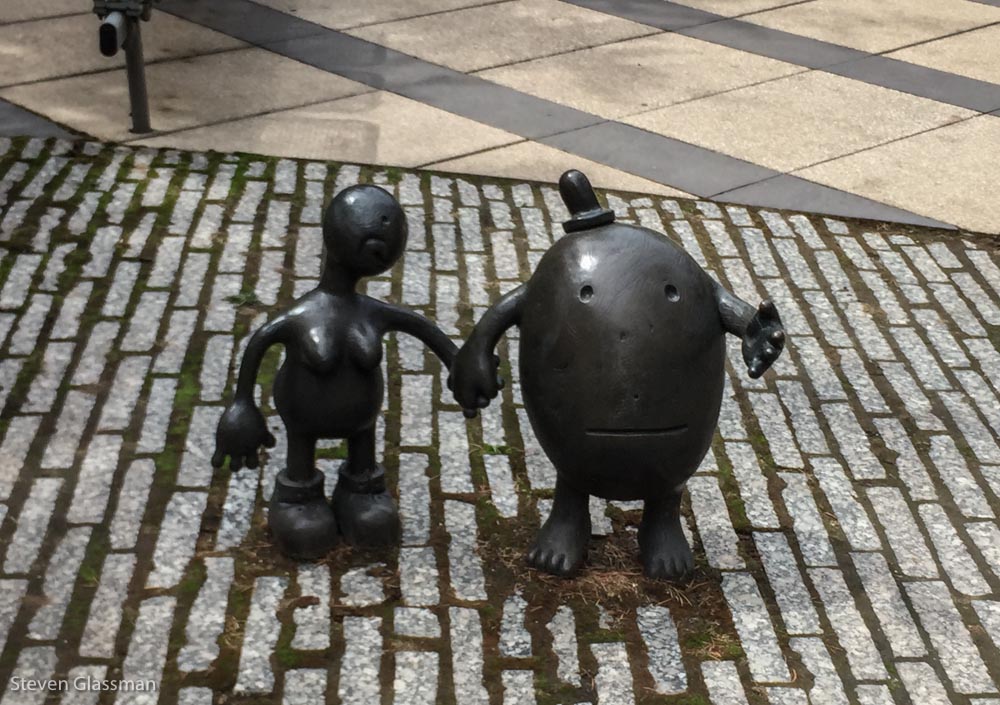
What I was so excited to see was a courtyard full of these little round bodied statues.

tomotterness-1

The last time I had seen these little fellows was at an outdoor sculpture garden in The Hague, in the Netherlands.  I looked into it, and sure enough, it was Tom Otterness again.

tomotterness-2

The location, I found out later, is the Minneapolis U.S. Courthouse Plaza, constructed in 1997.

tomotterness-3

The oddly shaped mounds of earth and grass are called Drumlins.  According to the downtown Minneapolis Skyway-Myway blog, the mounds “suggest the glacial drumlins (an elongated whale-shaped hill formed by glacial ice; the word is derived from the Gaelic word druim “rounded hill,” or “mound”).”

tomotterness-4

I also learned from the aforementioned blog that the little round bodied sculptures are called “Rockman.”

tomotterness-5

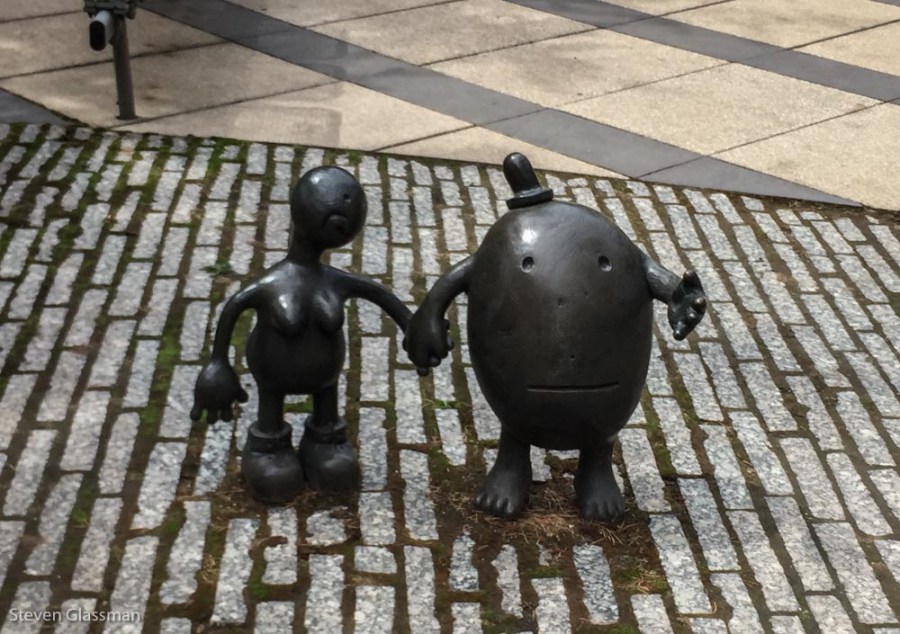
These two Rockman are my favorite.  (I’m declaring right here and right now that the plural of Rockman is also Rockman.)

tomotterness-6

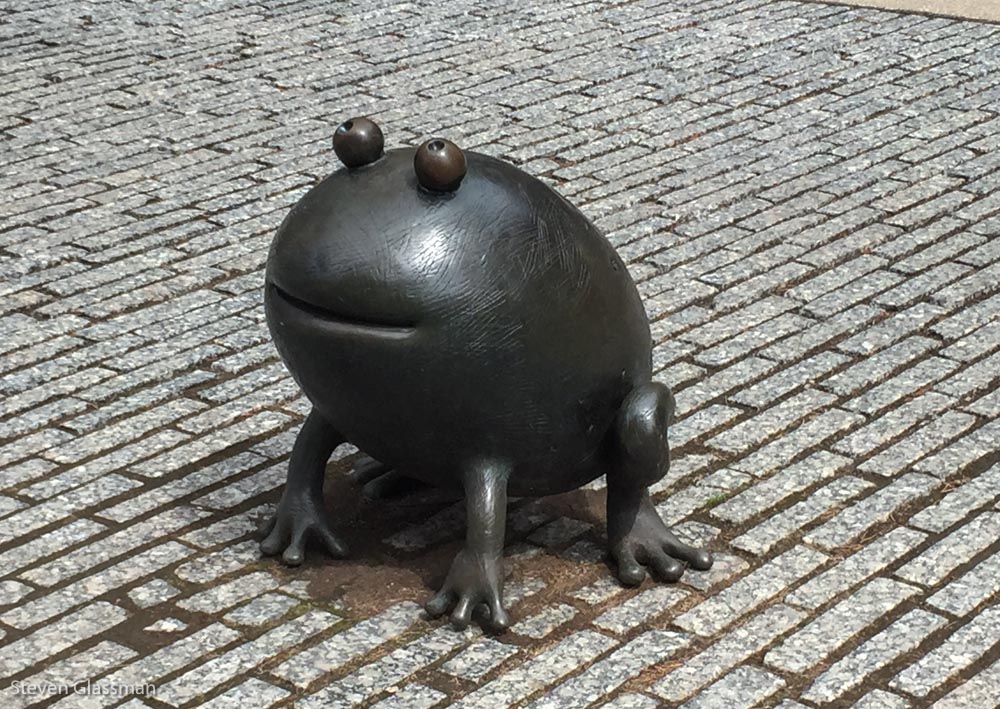
I suppose this little fellow would be a Rockturtle?

tomotterness-7

I also really like this one, and I kinda feel like he’s just doing what I was doing that day.

tomotterness-8

I’m glad that I stumbled across this little sculpture garden.  I found out from my research that there are other places in the US with little collections of Rockman by Tom Otterness.  I feel like I need to go see them all!

tomotterness-9

What’s your favorite sculpture?

The Edo-Tokyo Museum

The Edo-Tokyo Museum in the Ryogoku district of Tokyo is a museum that details the history and culture of Tokyo during the Edo period.  The museum is in a multi-level building with a very interesting structure.  The main entrance is up that red escalator on the left.

edo-tokyo-museum-1

One of the first things you see after entering the museum is a life-sized replica of the Nihonbashi, the bridge which has crossed the Nihonbashi river since the 17th century.  The first wooden bridge was constructed in 1603.  The Nihonbashi was rebuilt with stone and a steel frame in 1911.

edo-tokyo-museum-2

Looking over the rail of the bridge, you can see a life-sized replica of an old Newspaper office.  You can get on the seat of the penny farthing, the bike with a giant front wheel.  It doesn’t go anywhere, however, which was very disappointing.

edo-tokyo-museum-3

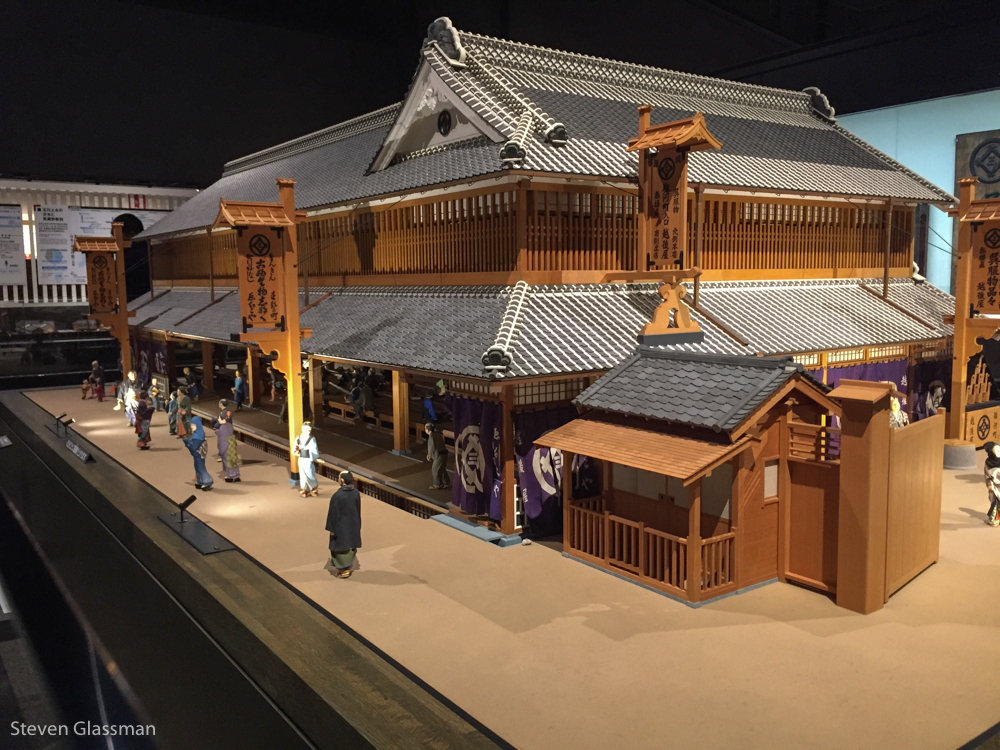
On the far side of the bridge is an area with models of castles and other buidings from the Edo period.

edo-tokyo-museum-4

I didn’t take very good notes as to what the models represented, but they’re incredibly detailed.  They reminded me a lot of Miniatur Wunderland in Hamburg.

edo-tokyo-museum-5

Look, a tiny palace!

edo-tokyo-museum-6

The detail on these buildings and courtyards is extraordinary.

edo-tokyo-museum-7

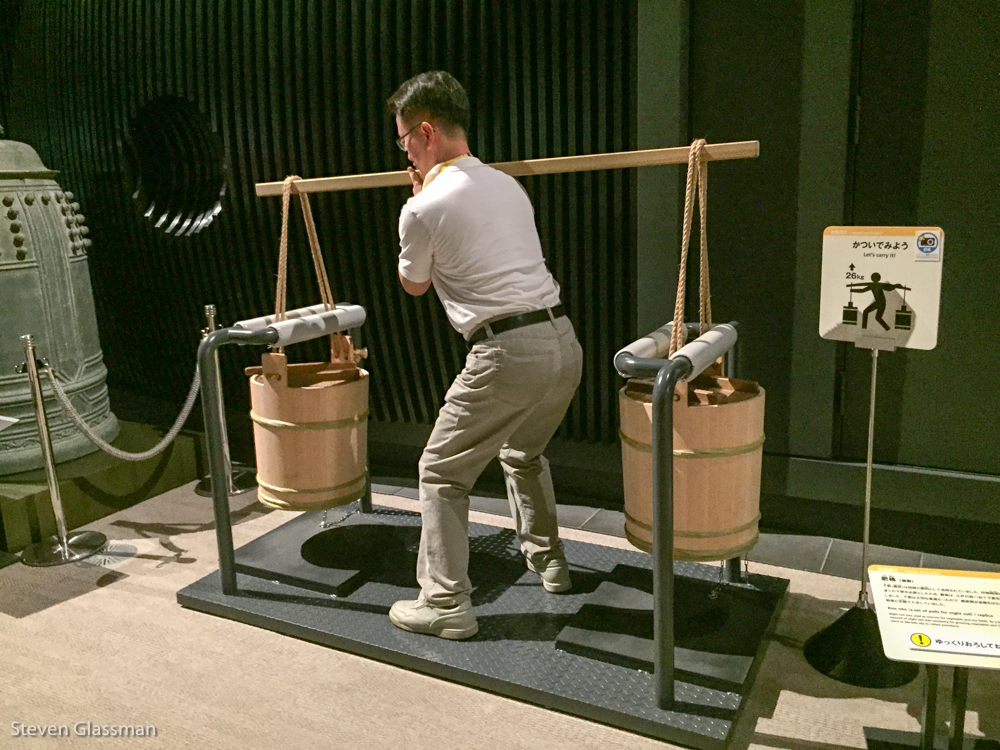
This demonstration involves lifting heavy buckets on a pole.  However, the metal guides prevent you from lifting them too far, which makes it even more awkward.  I tried this, and it made a terrible noise when I extended the ropes too far.

edo-tokyo-museum-8

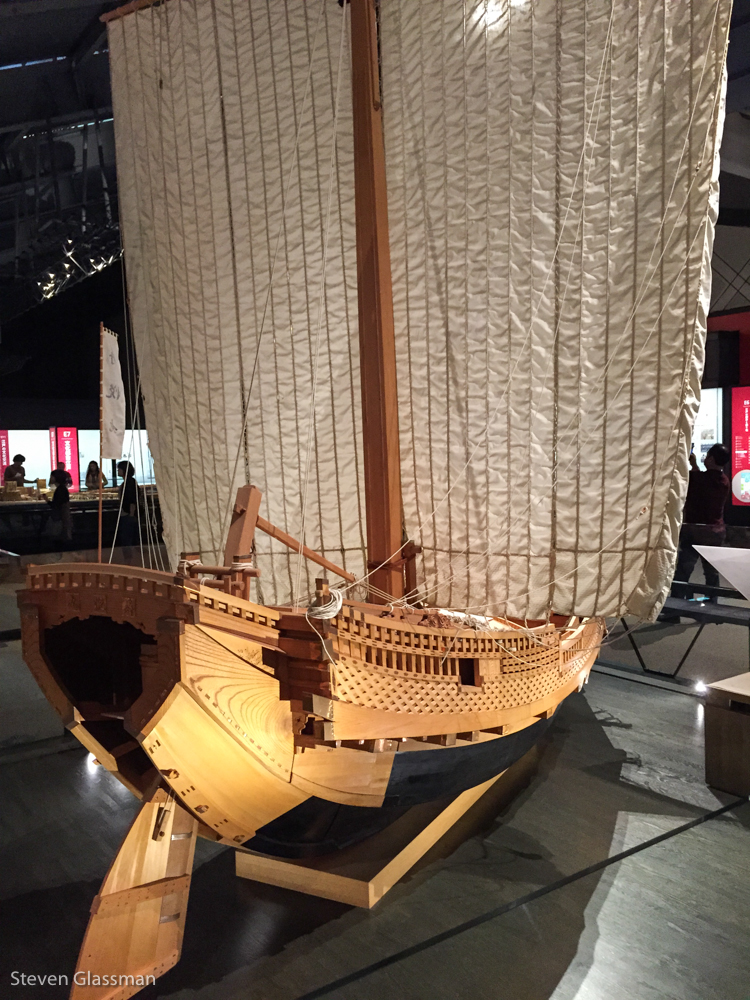
Boats! Boats! Boats!

edo-tokyo-museum-9

I deeply regret not taking the time to photograph the placards that explain what these items are.  It’s been four months already since I left Japan, and the best I can come up with now is, “ooh, tiny Japanese people!”

edo-tokyo-museum-10

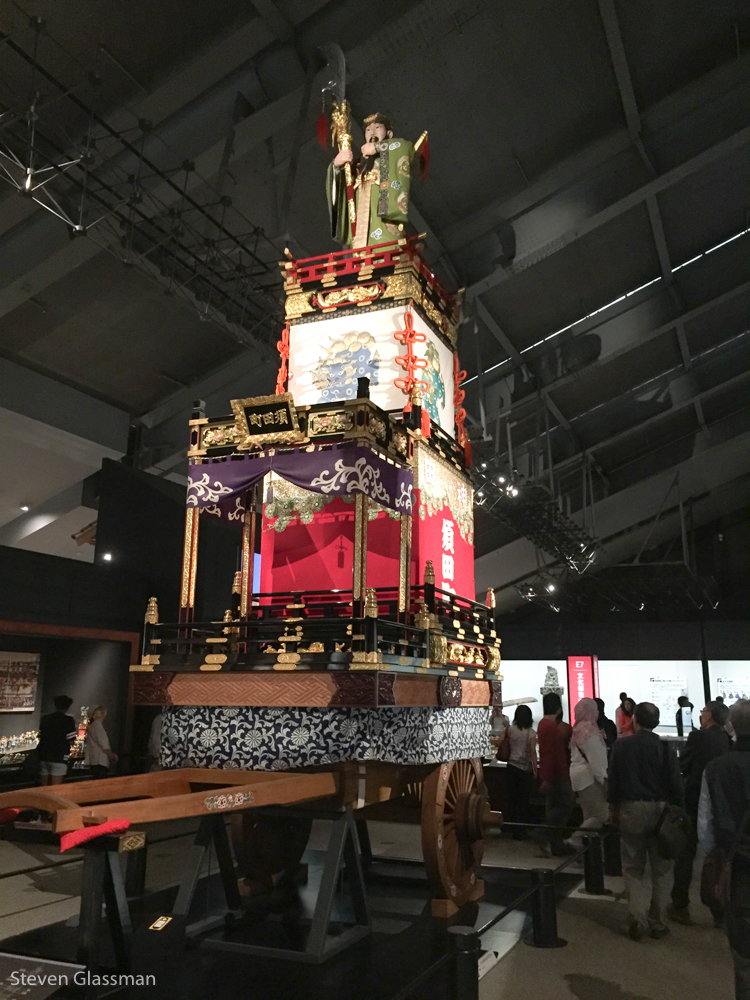
Royalty may get a comfortable seat, but I can’t help but think the whole contraption would be faster if it were a little bit less ornate.

edo-tokyo-museum-11

Some sections of the museum covered more recent times.  I thought the Subaru 360 was kind of neat.

edo-tokyo-museum-12

The 2-door rear-engine 360 was Subaru’s first production automobile.  It was manufactured from 1958 to 1971.

edo-tokyo-museum-13

The next two pictures are a scale model of a type of hot air balloon bomb that was sent out by Japan during World War II.  The Fire Balloon (fūsen bakudan) was a hydrogen balloon with a variety of bombs and incendiary devices attached.  Used in conjunction with the Pacific jet stream, the Fire Balloon was the first device to have intercontinental range.

edo-tokyo-museum-15

Between 1944 and 1945, the Japanese Navy launched over 9,000 fire balloons toward North America.  About three hundred were confirmed to have reached the United States and Canada, but most of them caused little or no damage.  Six people (five children and a woman) became the only deaths due to enemy action to occur on mainland America during World War II.  One of the Fire Balloons landed near Bly, Oregon, and one of the children triggered the bomb.   The site where this happened is marked by a stone munment in the Mitchell Recreation Area in the Fremont-Winema National Forest.  The Canadian War Museum, in Ottawa, Ontario, has a full, intact balloon on display.

edo-tokyo-museum-14

This is a Model T used as a taxi in old Tokyo.

edo-tokyo-museum-16

This is a replica of  the Ryōunkaku, Japan’s first western-style skyscraper. It stood in the Asakusa district of Tokyo from 1890 until the Great Kanto earthquake of 1923.  The earthquake destroyed the upper floors, and the tower was so severely damaged that it had to be demolished.

edo-tokyo-museum-17

This sign shows how the tower looked after the earthquake, and details the subsequent demolition of the tower.

edo-tokyo-museum-18

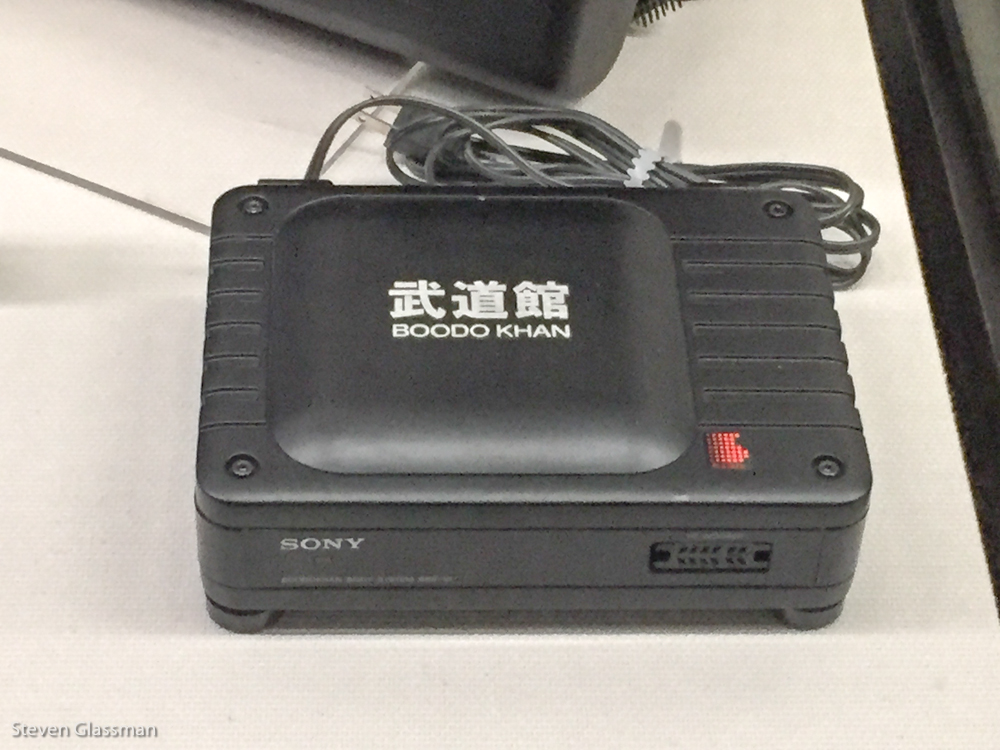
The Boodo Khan is one of Sony’s earliest audio systems.  The Boodo Khan name was also applied to early Walkman models, but this is a component system for home audio.  Collectors and audiophiles still rave about the audio quality on these boxes.

edo-tokyo-museum-19

This is a very pretty phone booth.  I think it looks a little bit like a lighthouse.

edo-tokyo-museum-20

Have you ever been to the Edo-Tokyo Museum?