Regensburg Tourism

Earlier this month, I spent an afternoon checking out a bunch of the touristy things I can do without leaving Regensburg.  There’s a lot to see and do right here, and I didn’t want to leave it all unseen before I moved back to the US.  I started with a river cruise.

There are many great river cruises on the Donau (Danube) river, but I specifically wanted a short touristy river ride.   I found one that runs every hour or so during tourism season and runs about 45 minutes for the cost of eight and a half Euros.  At a touch after 11 in the morning, I set sail on the good ship Johannes Kepler.

tourismus-1

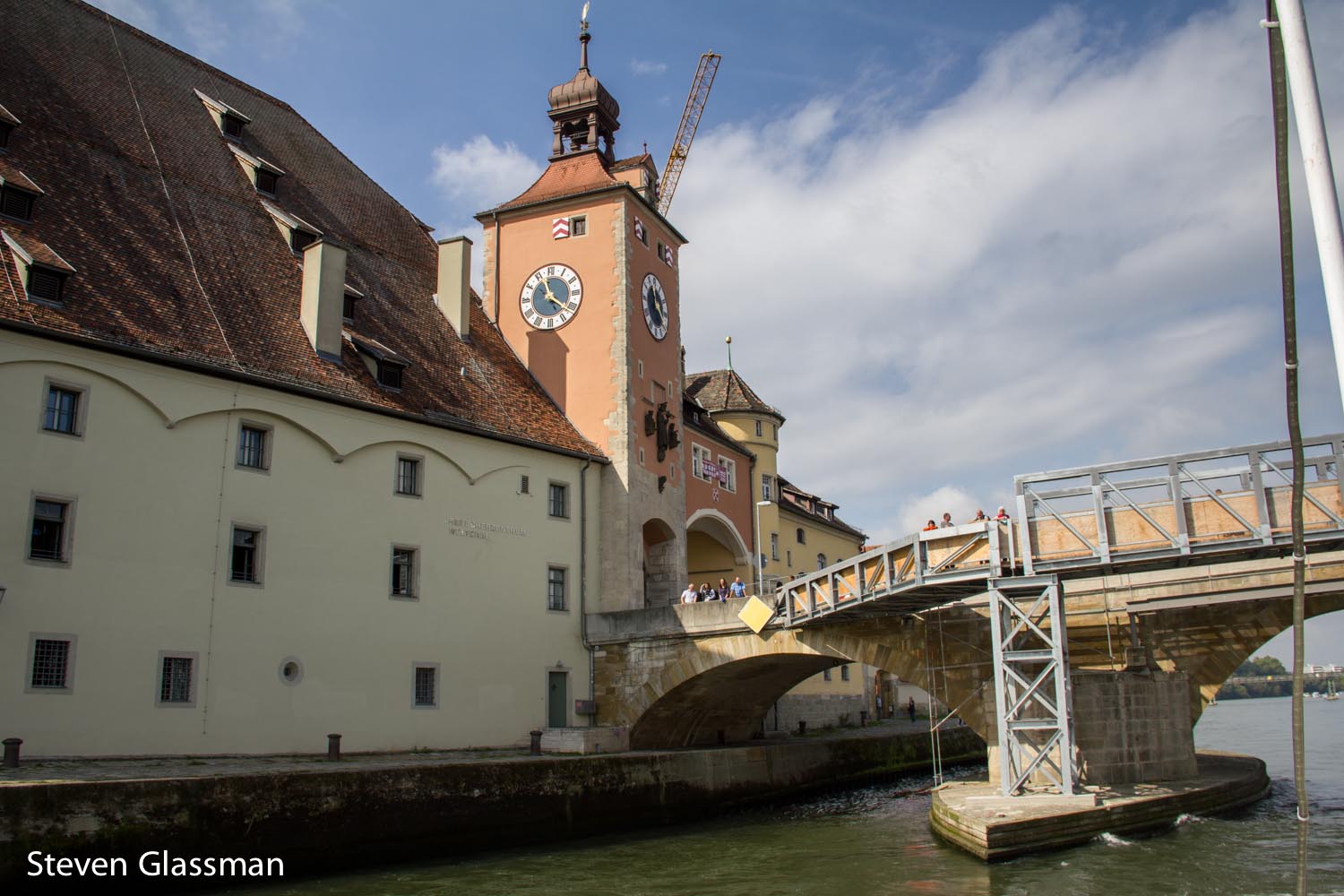
It’s rather interesting to see the Stone Bridge from this perspective.  I’ve been all over the surface and around the temporary construction walkways, but this is the first time I was ever underneath the bridge.  By the way, pay attention to that tower with the clock faces on it.  We’ll climb that later!
tourismus-2

Being on the tiny river cruise showed me things about Regensburg that I had never seen before.  For example, I didn’t realize that the villa of King Maximilian II was just walking distance down the river.

tourismus-3

I don’t know who Klara is, but I really hope she had a nice birthday.

tourismus-4

After we docked, I walked a short distance down the riverfront to the Schiffahrtsmuseum, or shipping museum.  Entrance was just three Euros.  The museum itself is contained inside two very old and beautifully restored ships.   The one pictured here is a paddle steamer.

tourismus-5

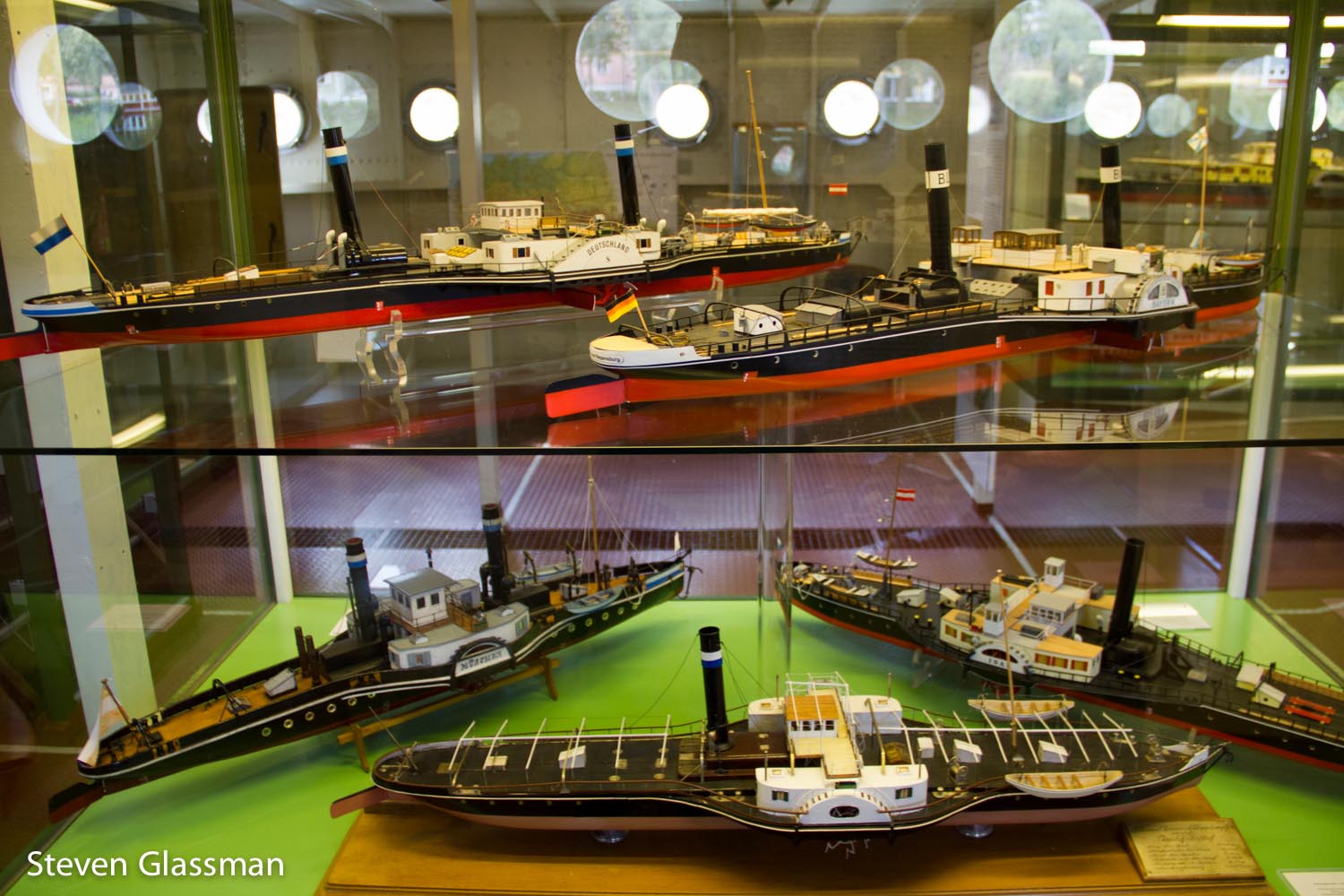
What would a museum be without tiny models?
tourismus-6

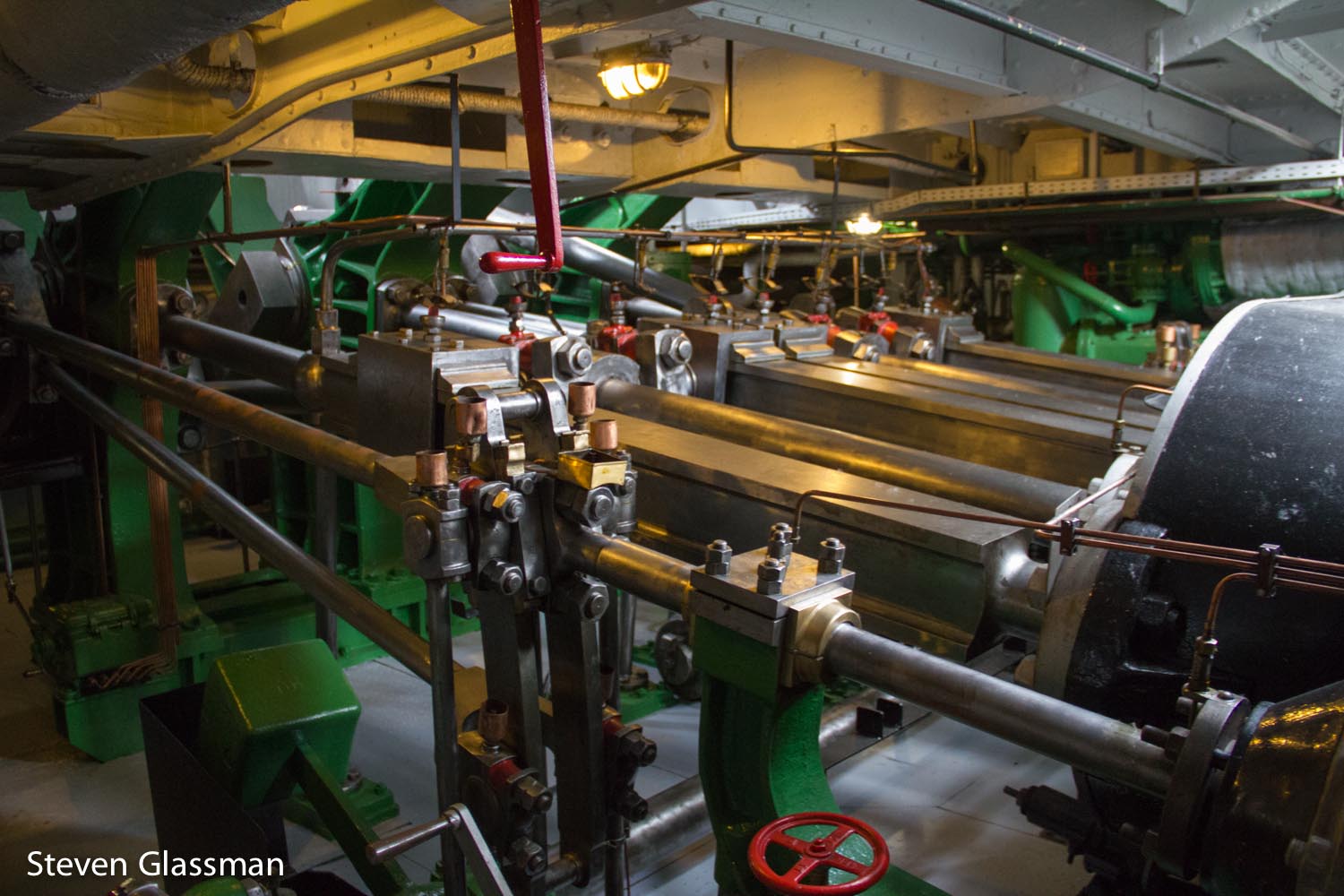
This is part of the engine room of the Ruthof, the paddle steamer which houses this part of the museum.  This stuff is absolutely huge.
tourismus-7

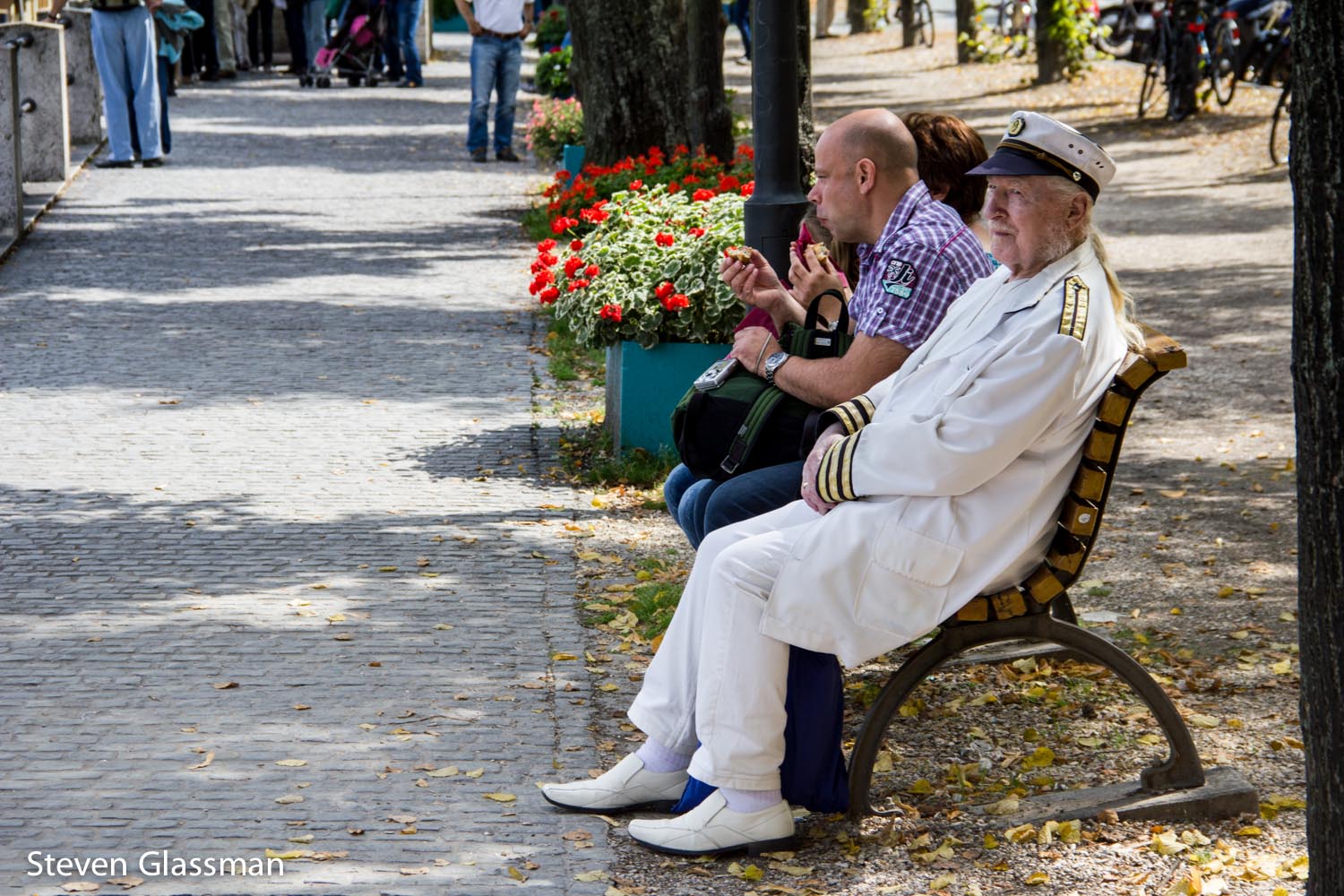
Once back on land, I finally managed to get a photograph of the Boat Captain.  I don’t know this gentleman’s story, but I see him walking around town from time to time.  He’s usually wearing all white, and he’s always  got epaulets on his jacket.  I’ve always wanted a photograph of him, but he was always walking in the other direction.
tourismus-8

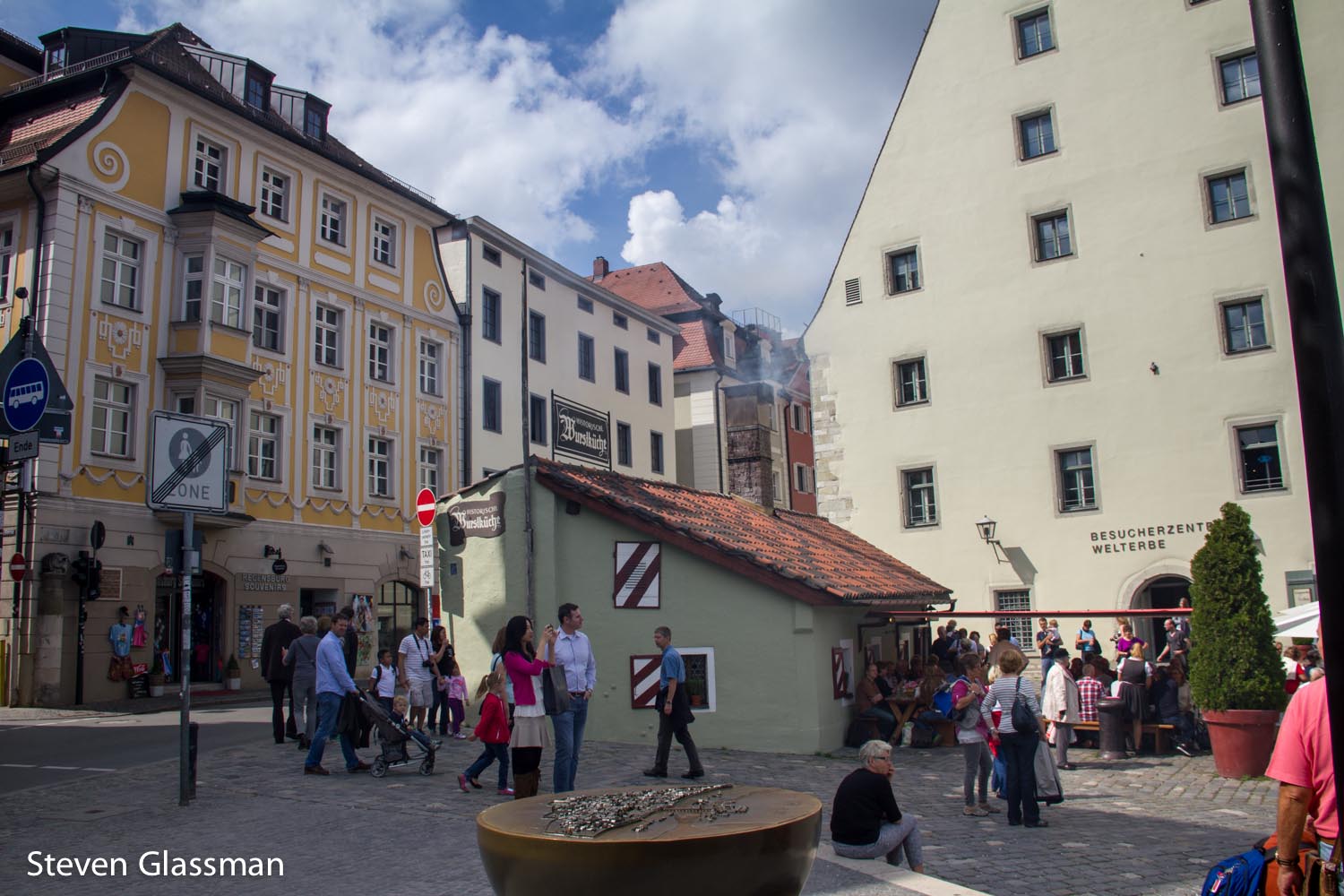
I took a very brief detour at the Historic Wurstkuchl to grab some sustenance before I continued on my tourism day. So tasty!
tourismus-9

Next, I went to the museum next to Regensburg’s famous Stone Bridge.  Most of this museum is free, but there’s a tower here which can be climbed for another two Euros.

“Historic stairs” means they’re really old and rickety and made of wood, I guess.

tourismus-10

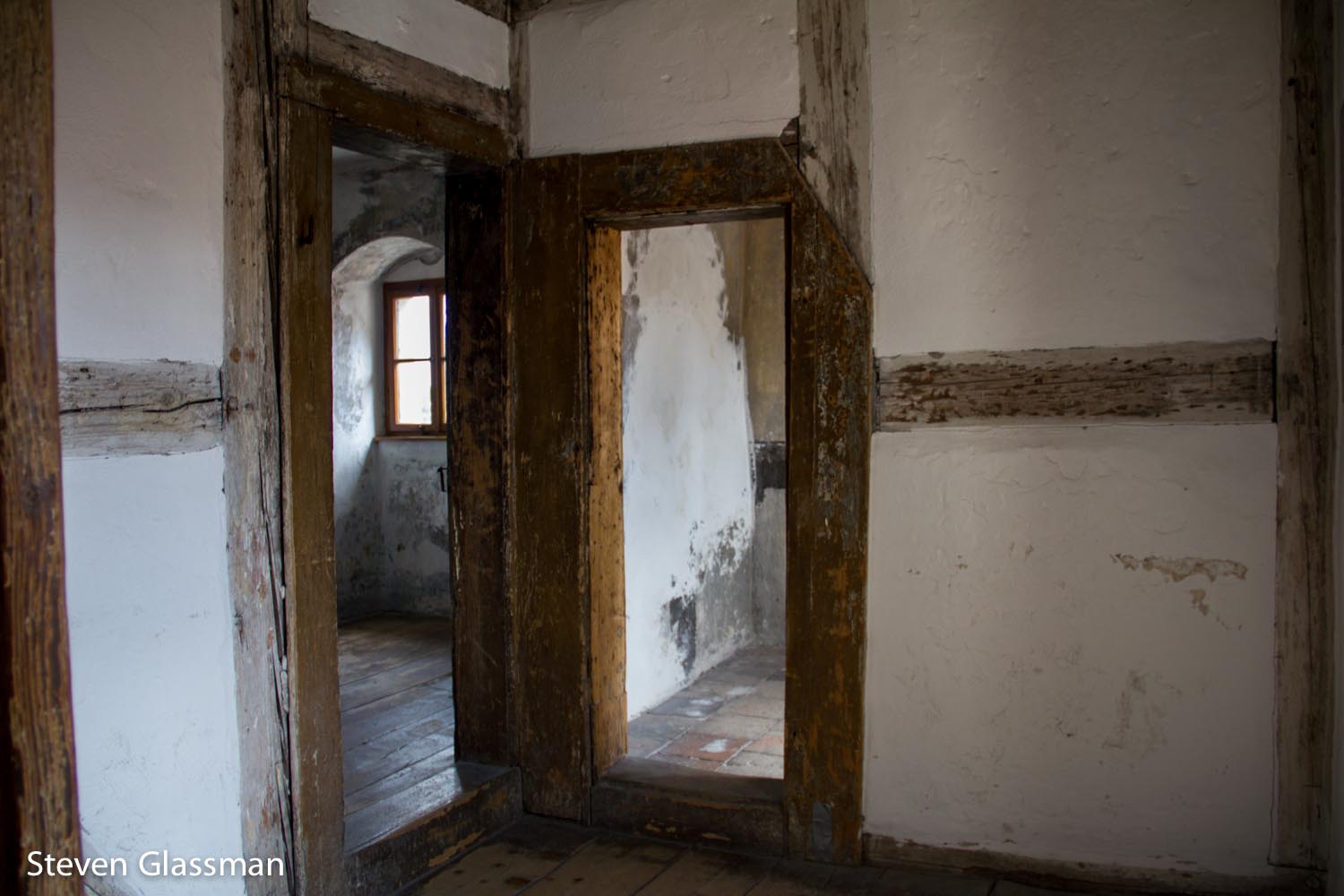
The top part of this tower used to be someone’s living quarters.  These are the rooms inside.
tourismus-11

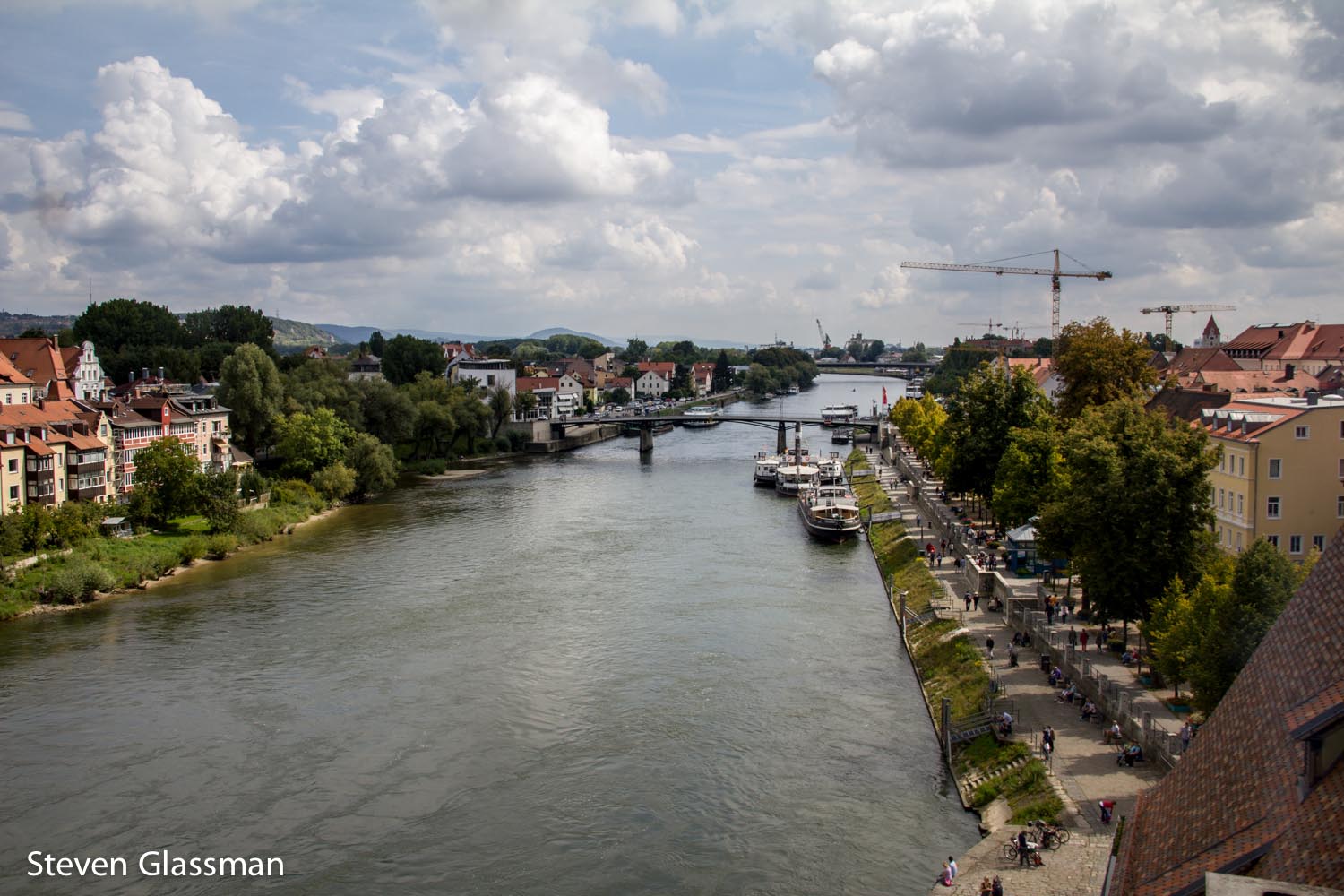
The benefit to living at the top of the historic stairs is the view-  this is looking East from the tower.
tourismus-12

This is the view North from the tower.  When the bridge is not being renovated, this must be a fantastic people-watching view.

tourismus-13

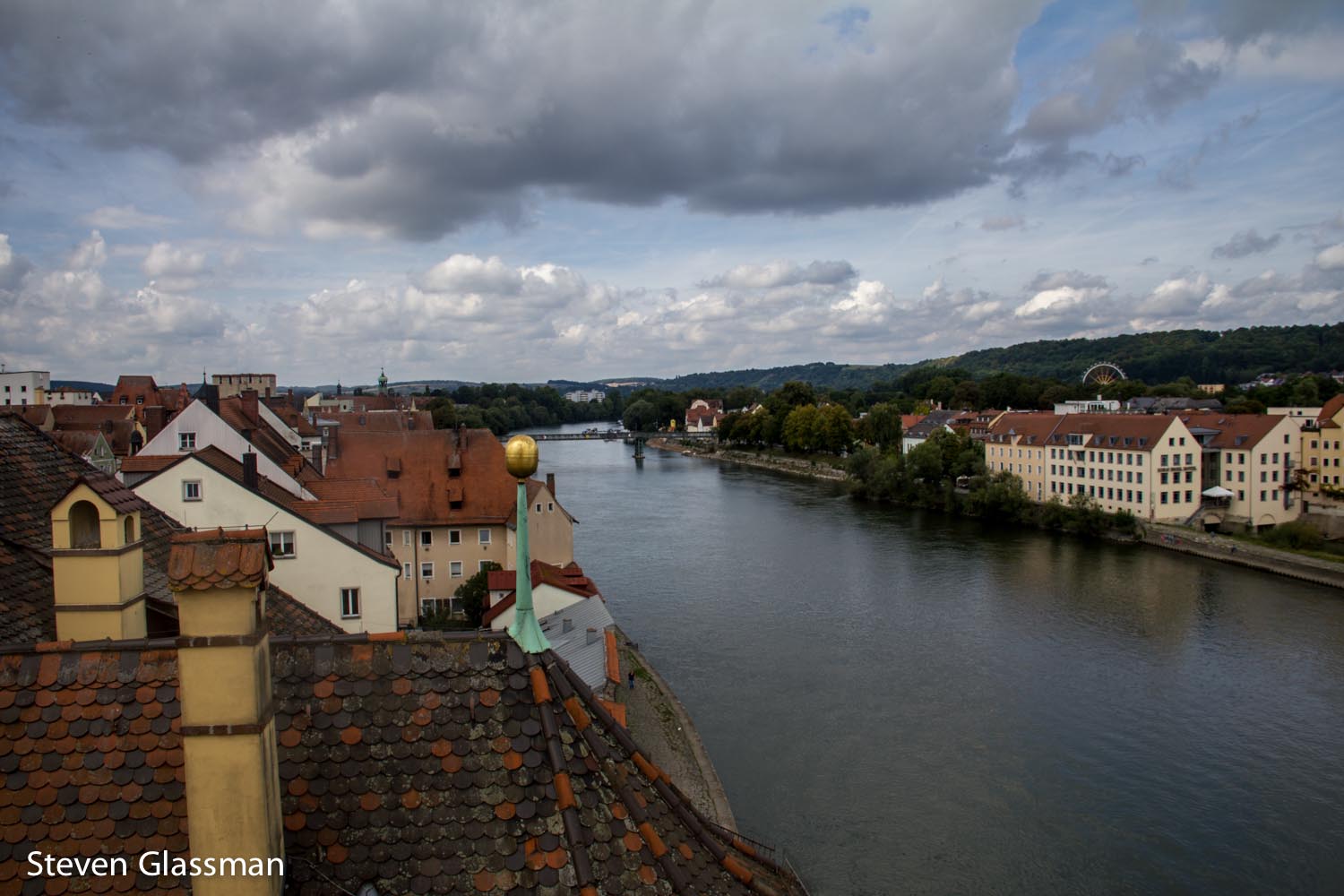
Here’s the Western view.  This picture was taken during HerbstDult, hence the ferris wheel visible in the distance.
tourismus-14

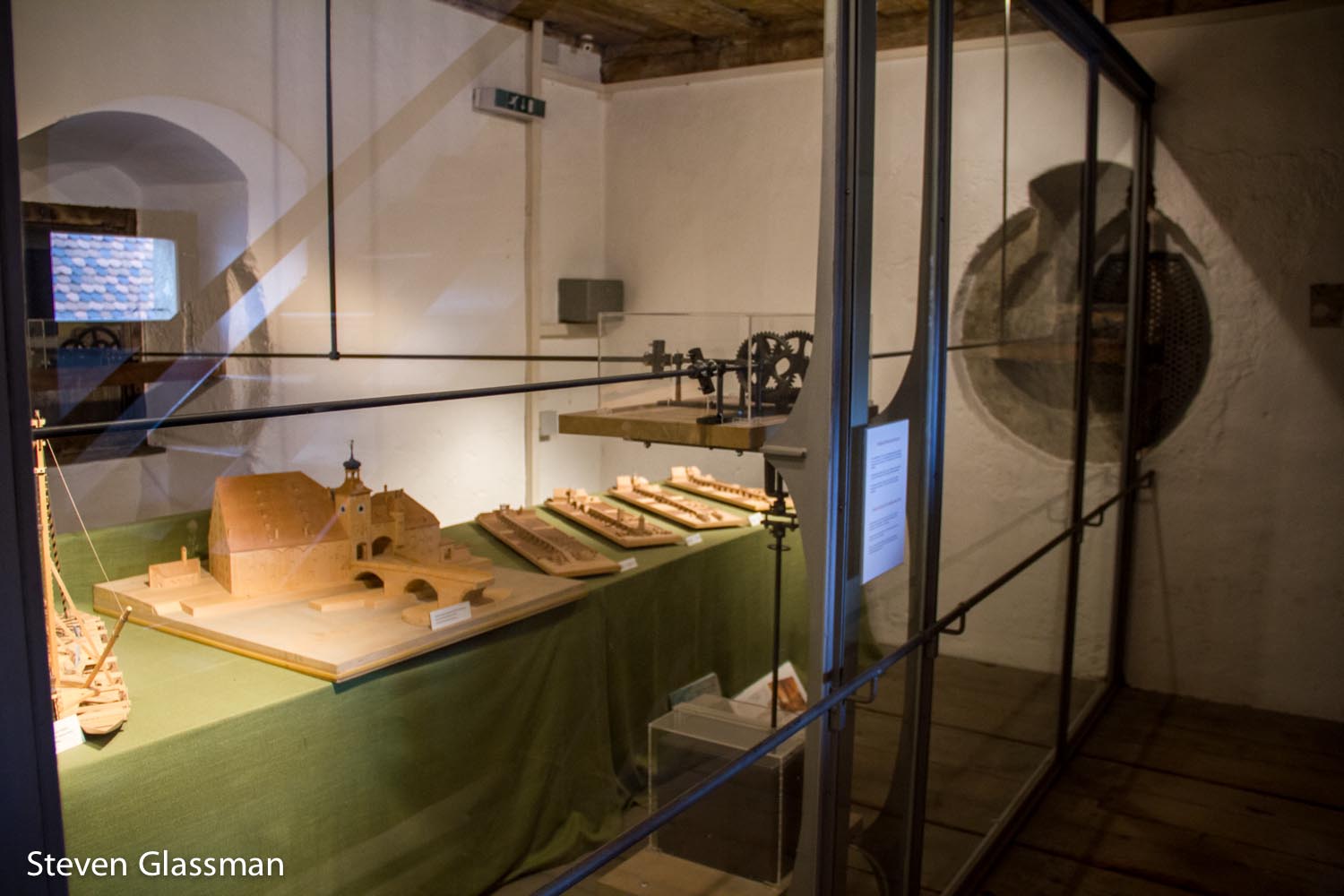
One of the more interesting things about climbing the tower is seeing the mechanism that drives the clocks.  This tower has clock faces on three sides, and they’re all driven by a single mechanism.  This amazing little gearbox has long rods which connect to each clock face, and the electric motor beneath.    One motor for all three clocks.
tourismus-15

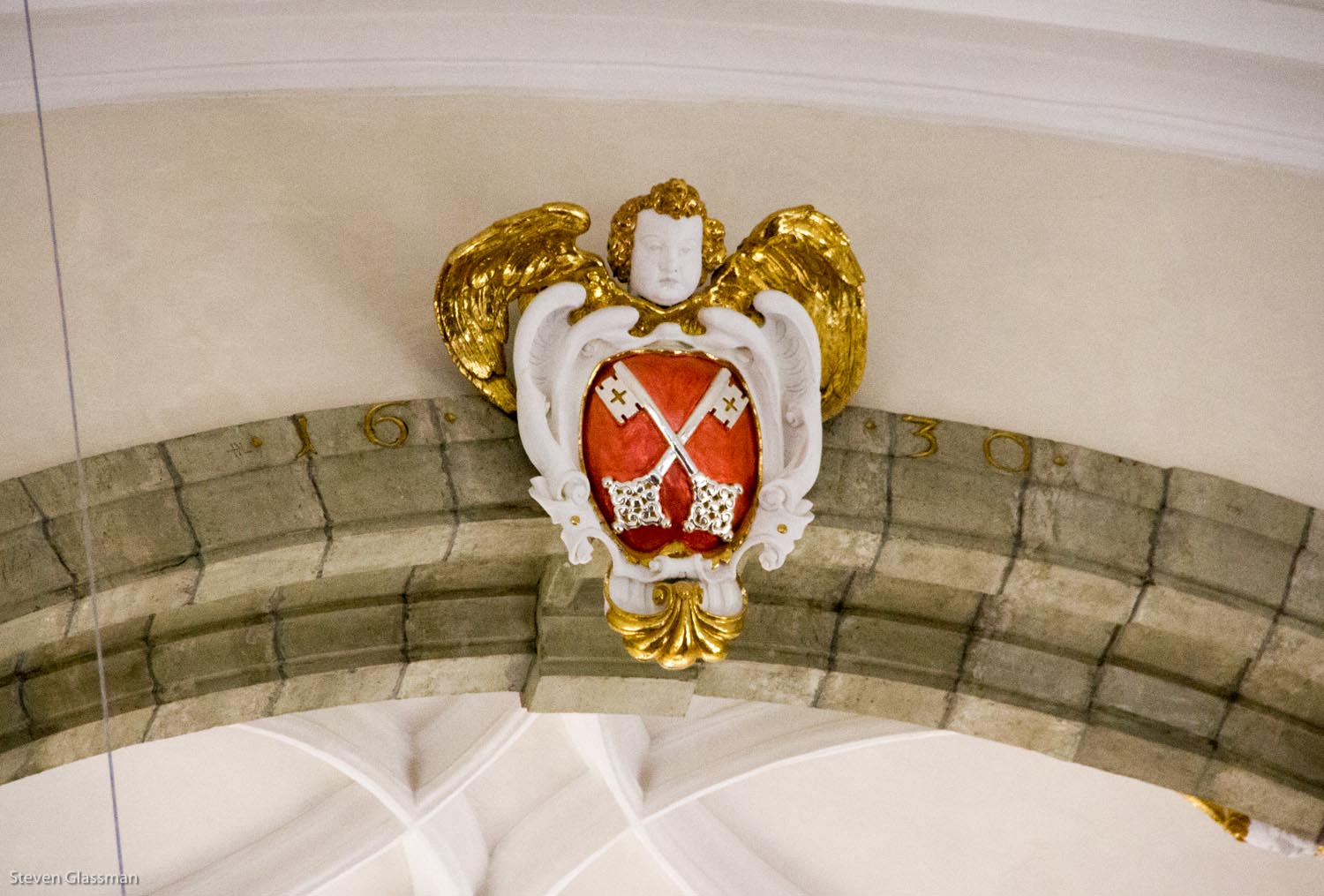
After climbing down from the tower, I walked around the free part of this museum for a few more minutes.  I’ve always liked that the Wappen, or coat of arms, for Regensburg is a shield with two crossed keys in it.

tourismus-16

Next on my tourism day was  walk up the street to the Kepler Memorial House.  Johannes Kepler lived in Regensburg at the end of his life, and he fell ill and died in this city.  His old house is a museum now, with an entrance price of two Euros and twenty cents.

J-Kep says science is cool!

tourismus-17

They could probably stand to give his bust a good cleaning.

tourismus-18

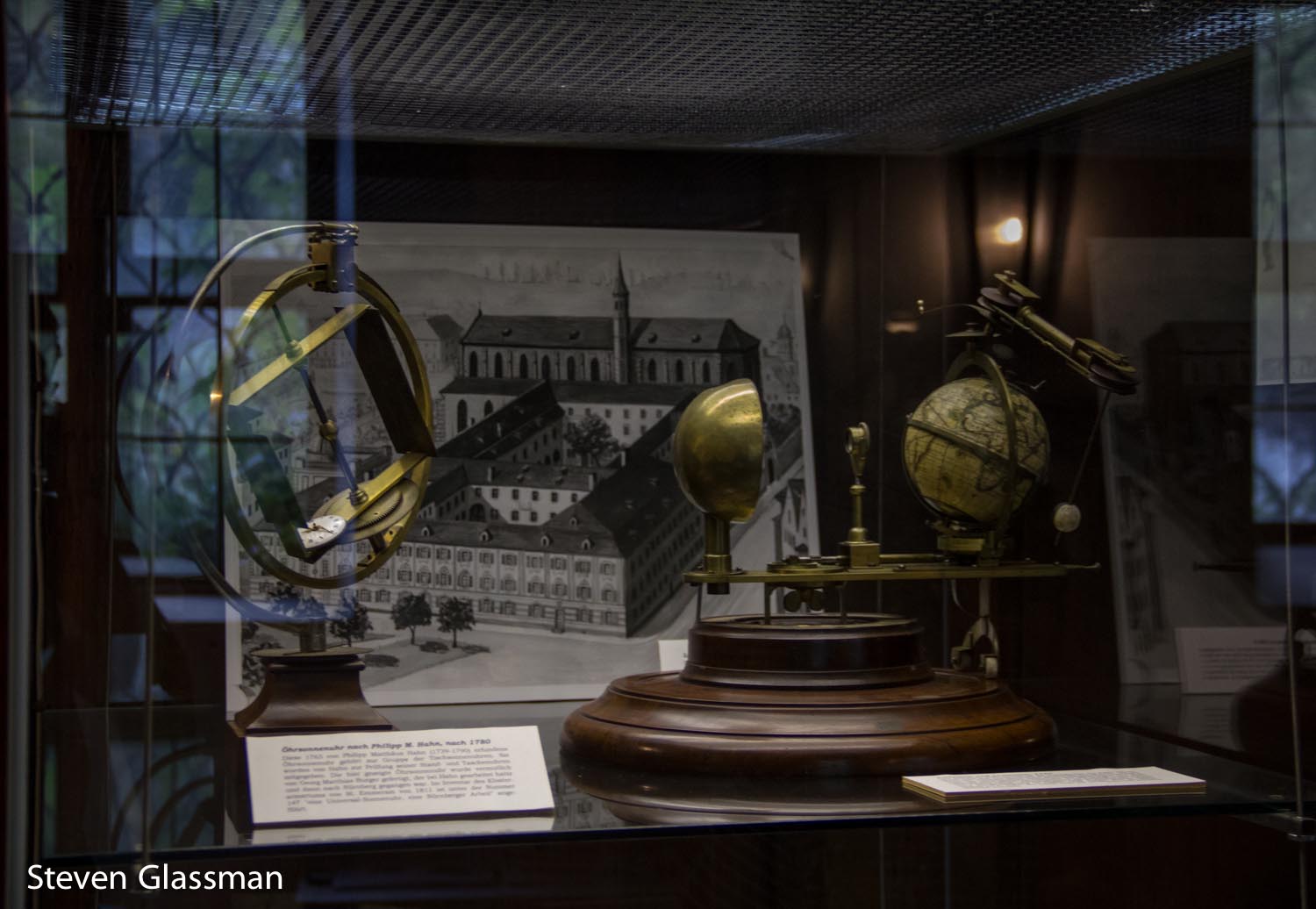
The entire museum was in German, so I didn’t get much out of the description cards, but I still liked seeing the old equipment in glass cases.
tourismus-19

This globe is utterly fantastic.  Back in those days, they really took the whole “here be sea monsters” thing very seriously, I think.

tourismus-20

After I was done at the Kepler House, I walked over to the Dreieinigkeitskirche, one of Regensburg’s many, many churches.

dreieinigkeitskirche-1

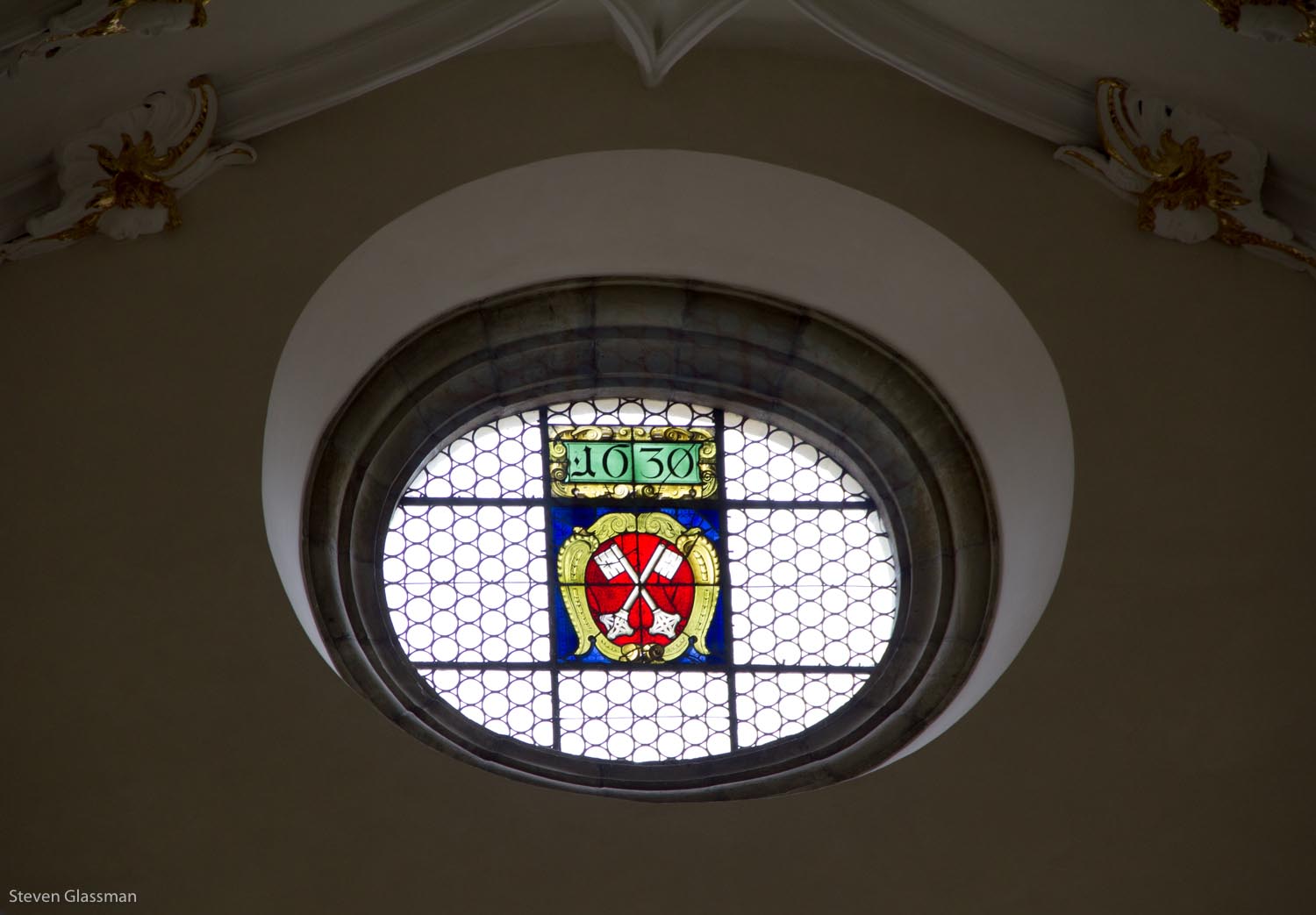
Here’s that key logo again.

dreieinigkeitskirche-3

…and again with the keys!

dreieinigkeitskirche-4

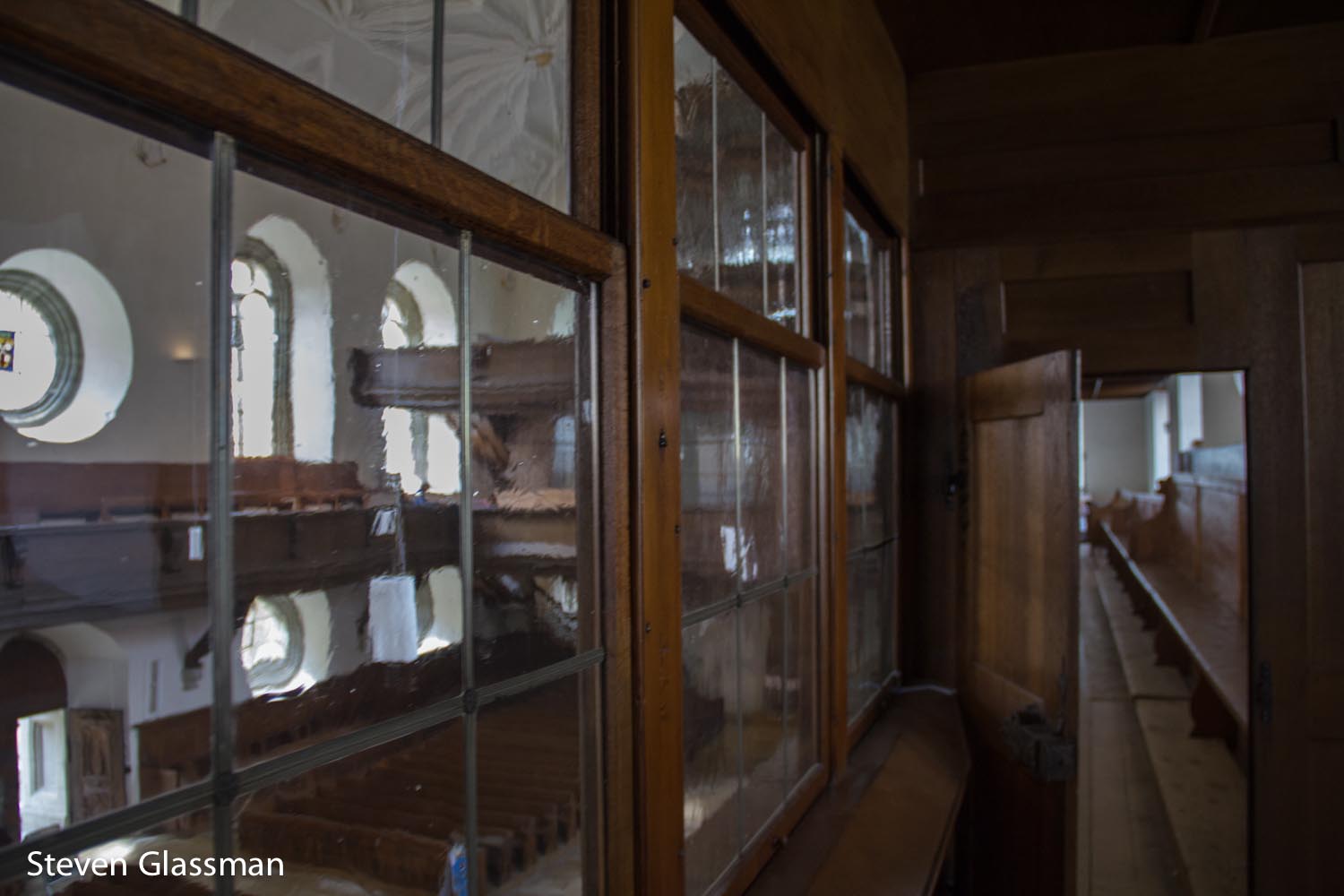
I’m always a little bit fascinated by the incredibly old glass you find in places like this.  These windows are not as crystal clear as modern glass, but the effect is kind of charming.
tourismus-27

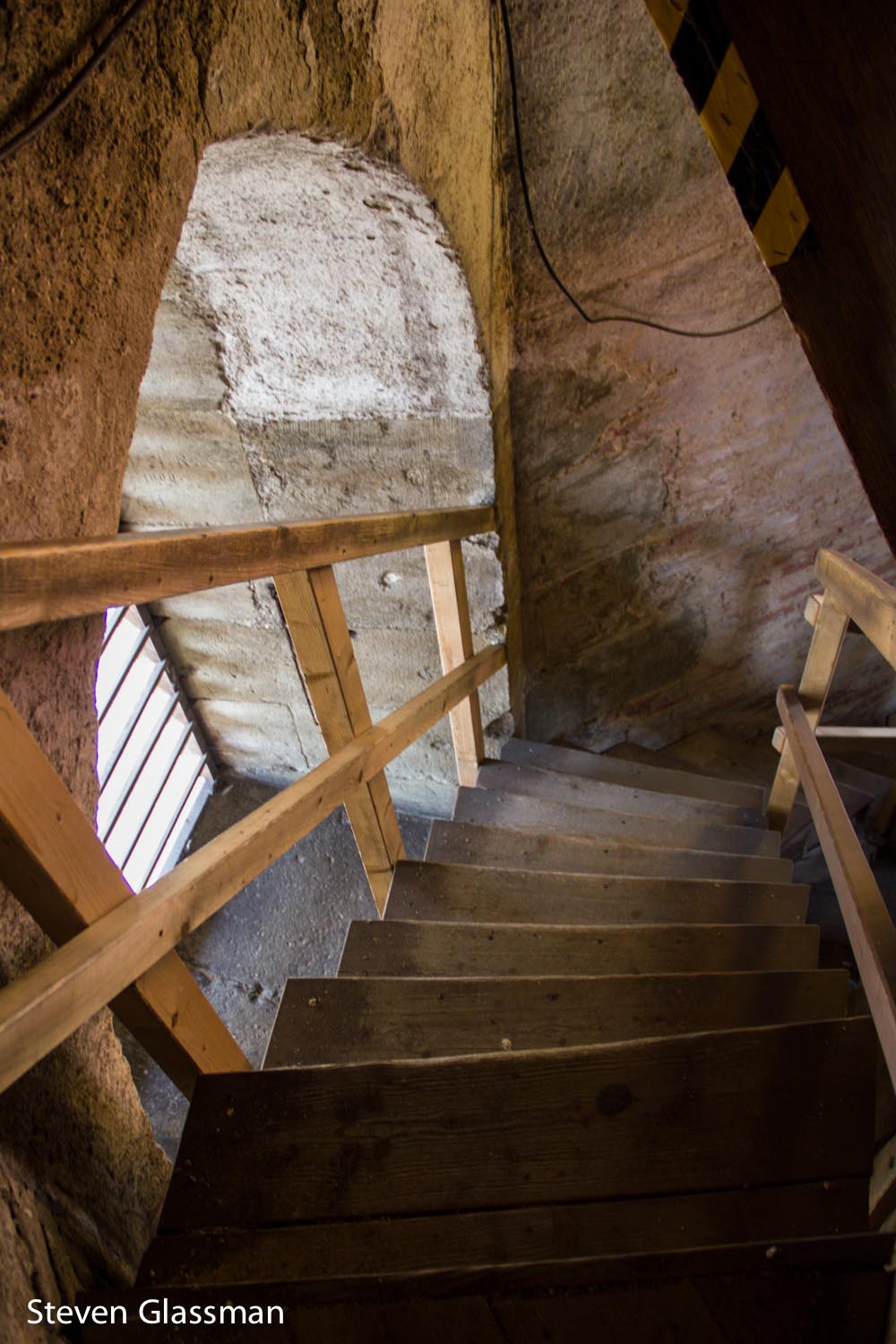
While the inside of this church is nice, that’s not why I was here.  I came to the church because for another two Euros, you can climb the tower.  I’ve been meaning to do this one for three years.  This is another place that wasn’t built for tourism-  they actually taped Styrofoam to one of the beams to prevent tourists from knocking their heads.

tourismus-21

This is another historical stairway, I think.
tourismus-23

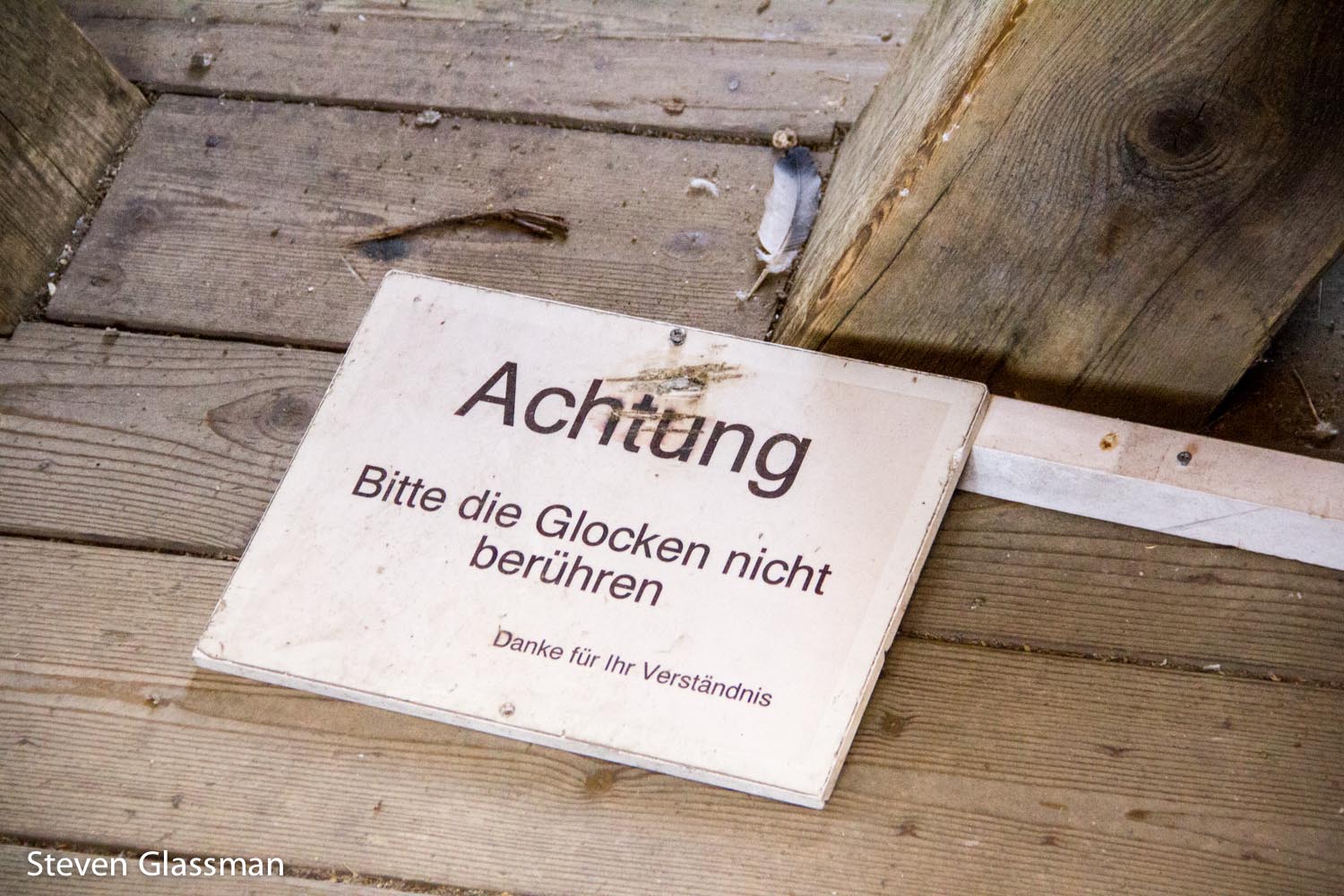
Near the top, there’s a sign asking that you don’t touch the bell.
tourismus-22

It’s quite tempting, though.  This is an amazing old church bell.

tourismus-26

Why do I climb all these towers?  For the views, of course.    This is what the city’s main cathedral and the other clock tower look like from this church tower.

tourismus-24

Panning a little bit to the left, you can see another very, very old tower.   This city’s full of ’em.

tourismus-25

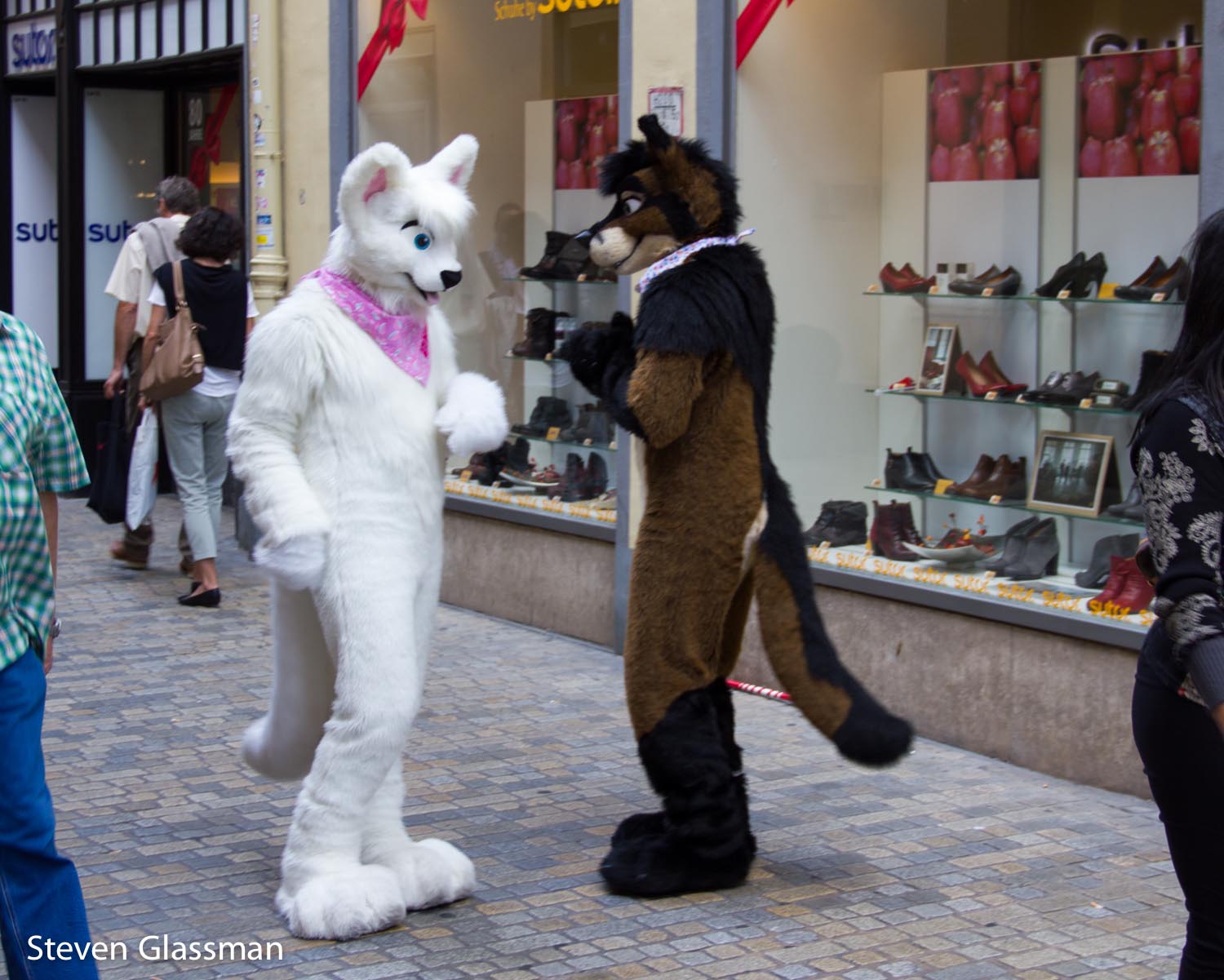
On my walk to the next touristy location in my day, I stumbled across some furries having a date.  At least I think that’s what was going on here.
tourismus-28

For my last stop of the day, I went to the Regensburg Historisches Museum, for an admission price of five Euros.  The last time I was there was the first full day I was in this city, back on November 13, 2011.  At the time, I knew absolutely no German at all, so I was completely lost.  It turns out that even with some knowledge of the language under my belt, the museum didn’t seem all that different to me.

I didn’t remember seeing these stained glass windows last time, though.

tourismus-29

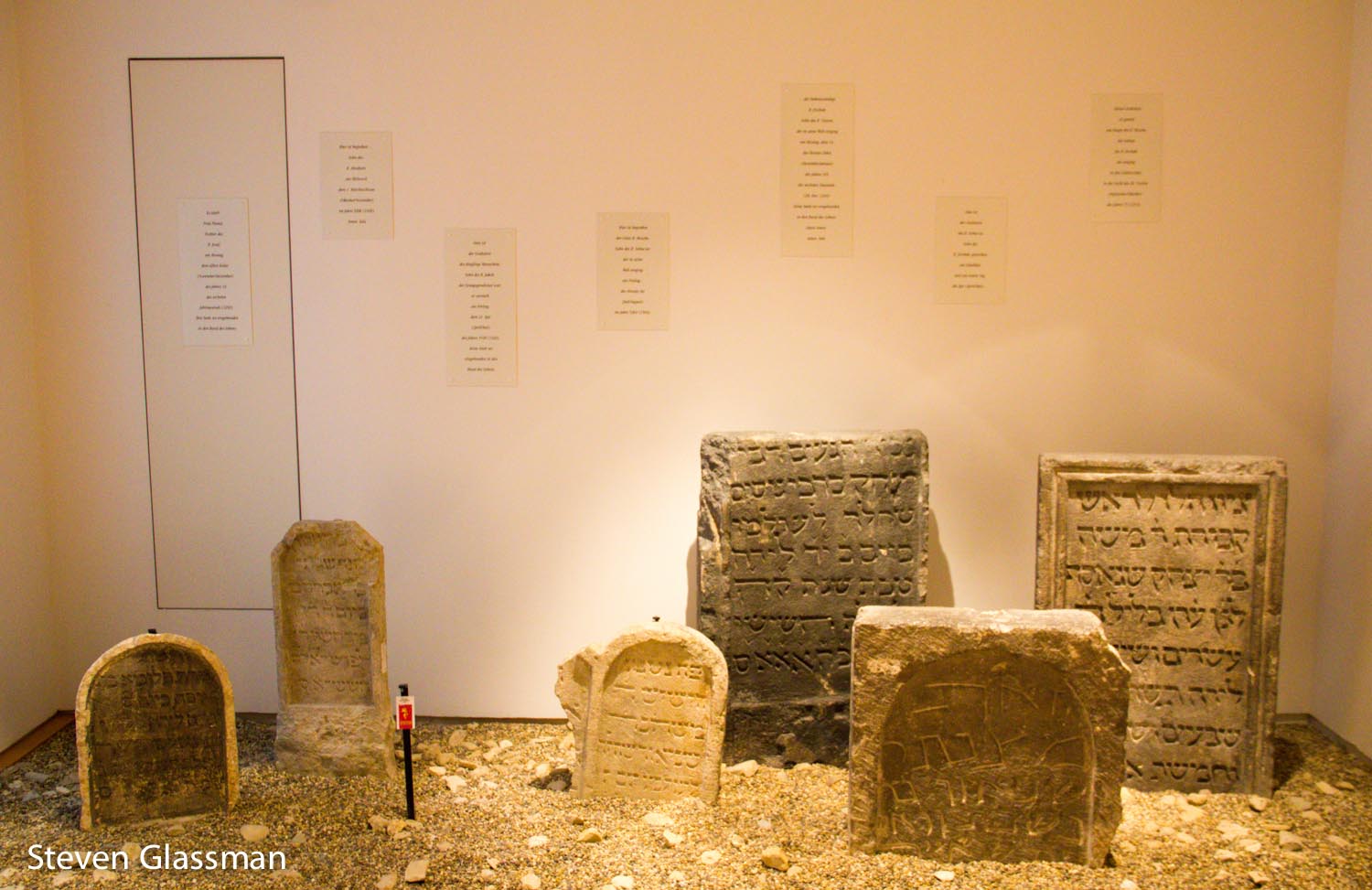
I did remember seeing the Jewish headstones before.  There have been several Jewish settlements over the centuries in this city, and most of them have been forced out or simply eradicated.  Some of the old headstones survived and were brought to the museum.
tourismus-30

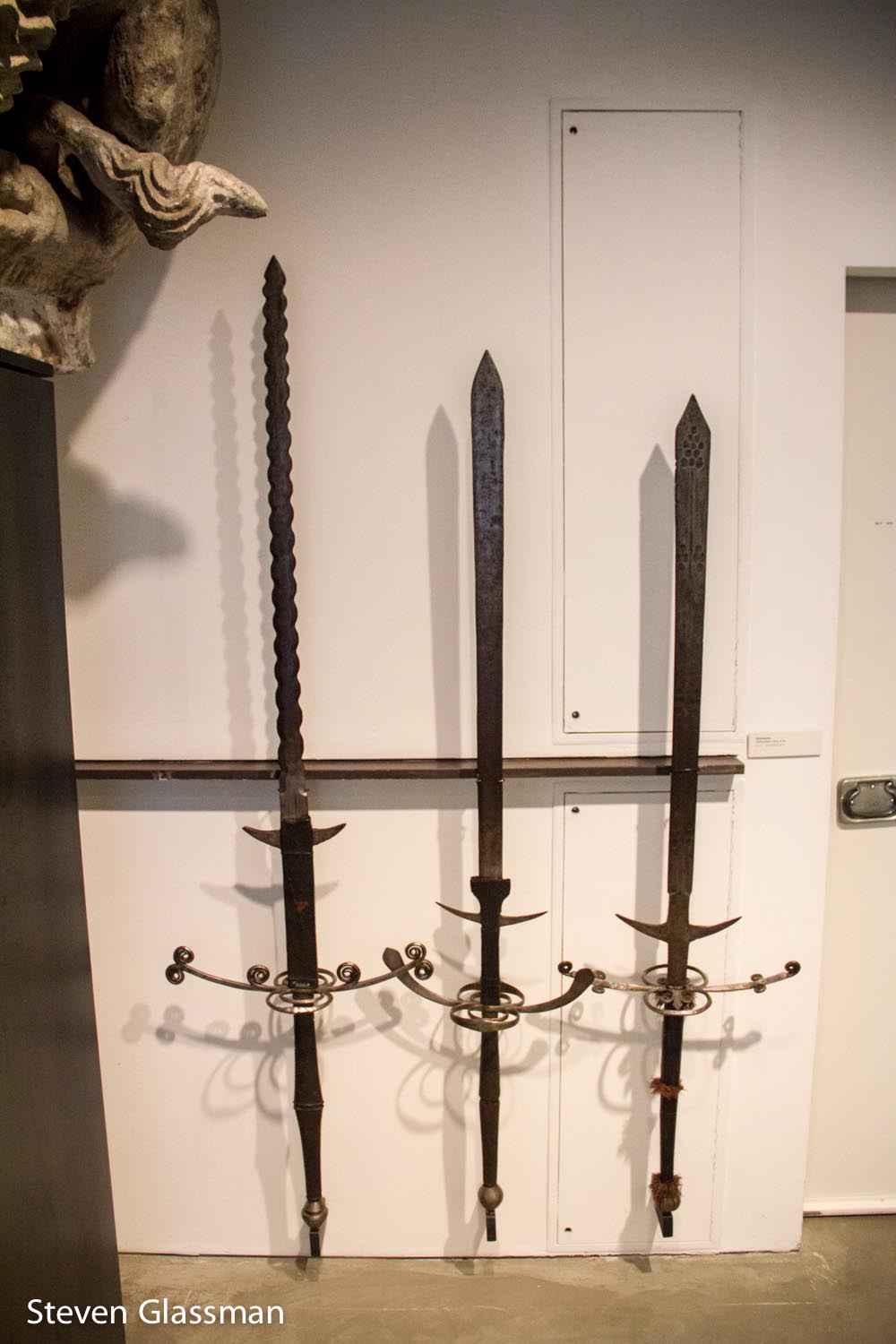
A big medieval city demands big medieval swords.
tourismus-31

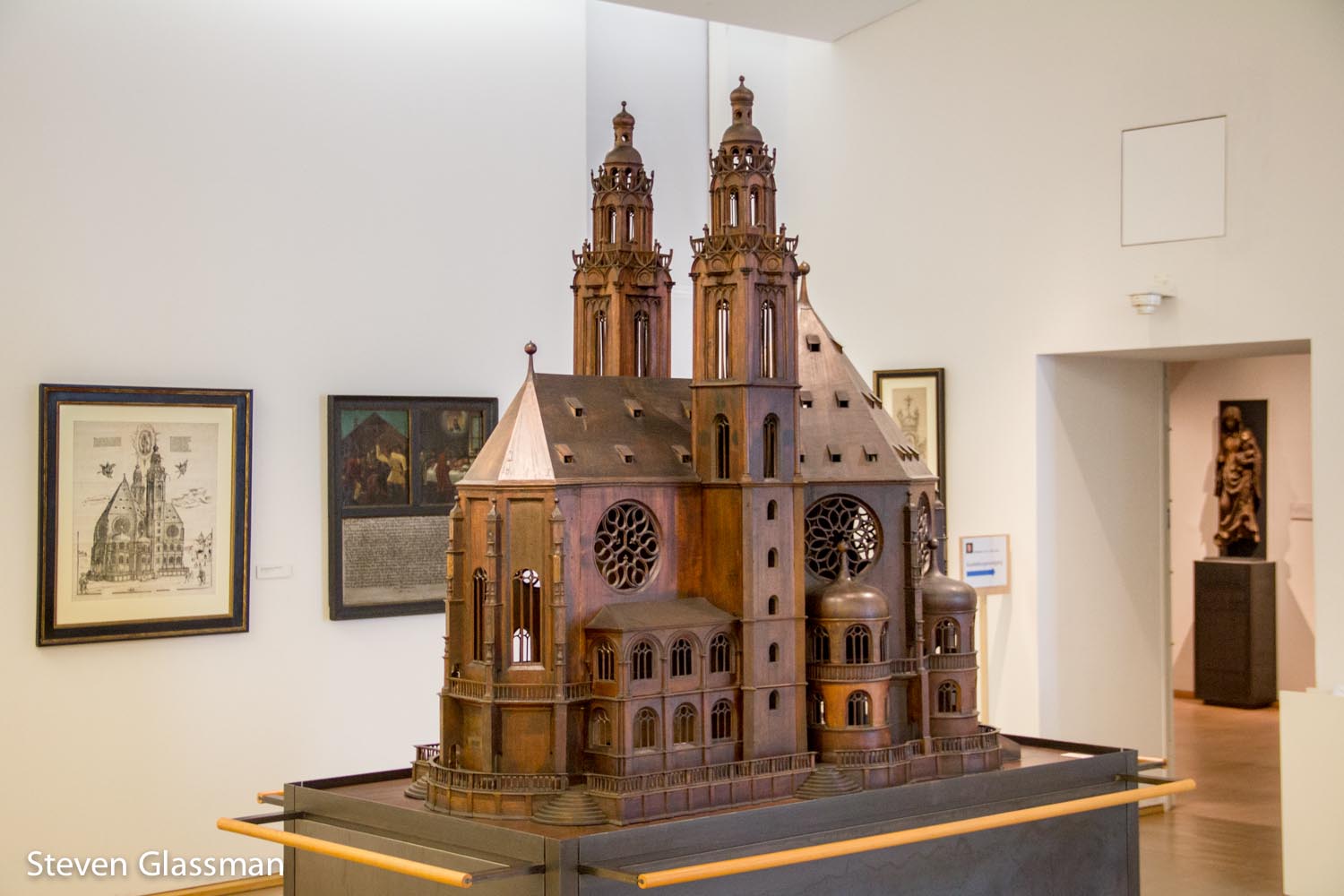
I said before that museums love their models, and this is another fine example of that.
tourismus-32

Here’s what I spent on my tourism day, not including food:

€8,50 – River Cruise
€3,00 – Schiffahrtsmuseum
€2,00 – Museum and tower next to the Stone Bridge.
€2,20 – Kepler Memorial House
€2,00 – Dreieinigkeitskirche Tower
€5,00 – Historisches Museum

Grand total:  €22,70.   Not bad for an entire day out, with sun, boats, stairway climbing, history, and culture.

Have you ever been a tourist in your own town?  What did you see?
 

WEBMU 2014: Nürnberg

Every year, a group of ex-pat bloggers living in Germany gather for a weekend of fun, tourism, food, and drink.  This gathering is called WEBMU – the Whiny Expatriate Bloggers Meet-Up.  The location is different each year-  in 2012 the gathering was in Berlin.  In 2013, the group gathered in Prague, but I didn’t make it to that one.  This year, we met in Nuremberg roughly halfway through the month of September.

The attendees were:

A WEBMU weekend typically runs Friday through Sunday, with the early arrivals taking a day trip to an alternate location in the daytime in Friday.  This WEBMU was no exception, and we met up at 10am to visit scenic and moist Bamberg.  Most of the pictures I took in Bamberg are similar to the pictures I took the first time I visited Bamberg, so I’m not going to include too many of those here.  If you’re curious, you can look at the previous Bamberg post.  (Also, it was raining all day, so many of my new photos have rain drops on the lens.  I really need to get a lens hood.)

One of the first things we saw in Bamberg was this randomly placed elephant.  We’re all pretty sure it’s an advertisement, but it was still random enough to warrant a photograph.

webmu2014-1

We went to the Altes Rathaus, and to the local cathedral to look again at the Bamberg Rider.

webmu2014-2

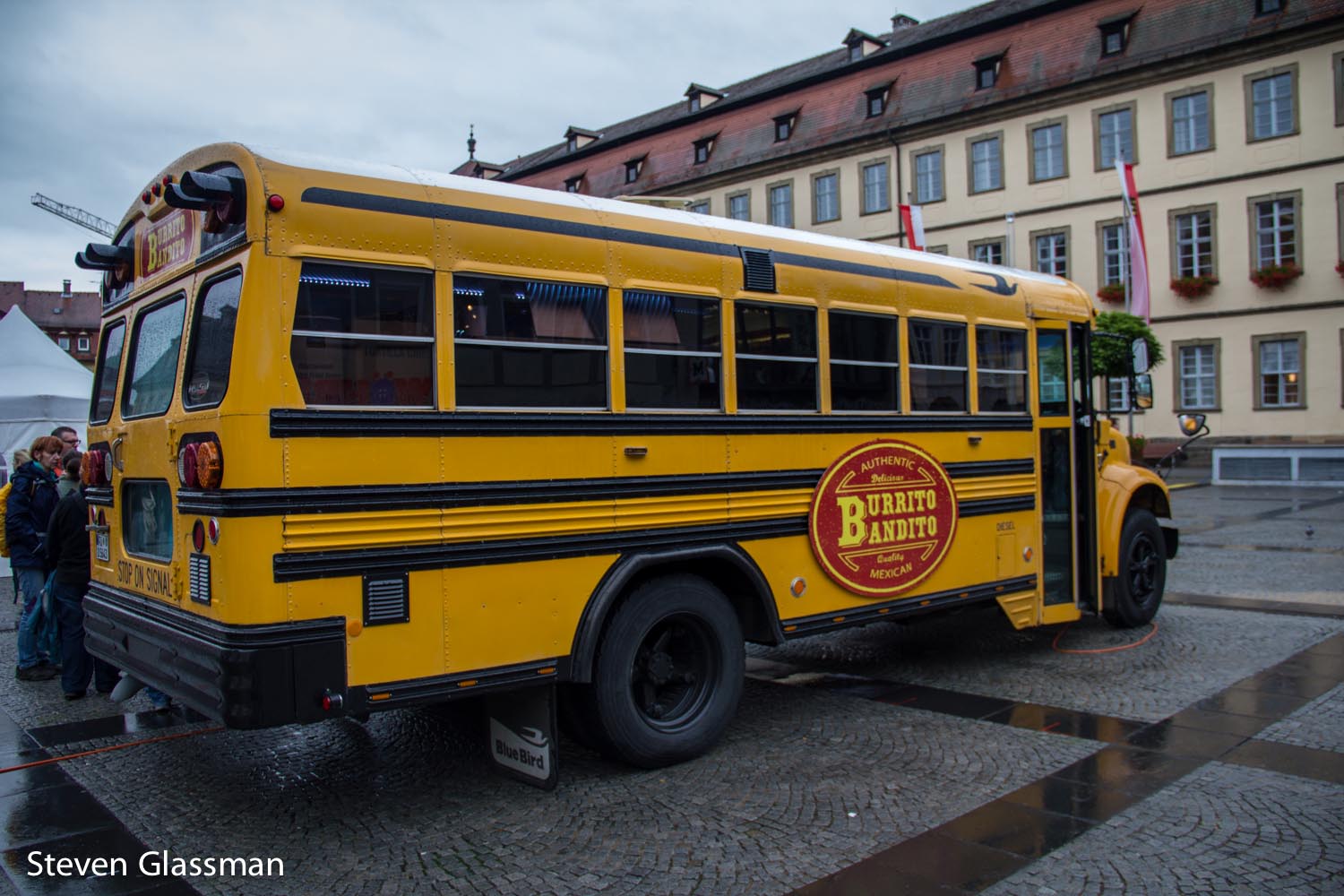
We were in Bamberg on the same day that there was a party for the closing of U.S. Army Garrison Bamberg, so we stumbled across the Burrito Bandito.  It was a little strange seeing US Army guys in fatigues while out and about in Germany.

webmu2014-3

While waiting for the train back to Nuremberg, we were witness to the Hochzeit of two smaller trains.  The coupling is almost entirely automatic for this type of train, so it was kind of fascinating to watch.  We were all mesmerized, to the great amusement of the conductor from the train on the left.

webmu2014-4

Fast forward to Saturday, and we started the day with a small city tour… in the rain.

webmu2014-5

Here’s the tour route, just for fun:

tour-route

This is one of the two brass rings embedded into the wrought iron-work in Schöner Brunnen, a rather nifty fountain in the city’s main market square near the town hall.  It is said that spinning the brass ring will bring you luck.  The fountain itself is a reproduction; the original lives in the city’s historical museum.

webmu2014-6

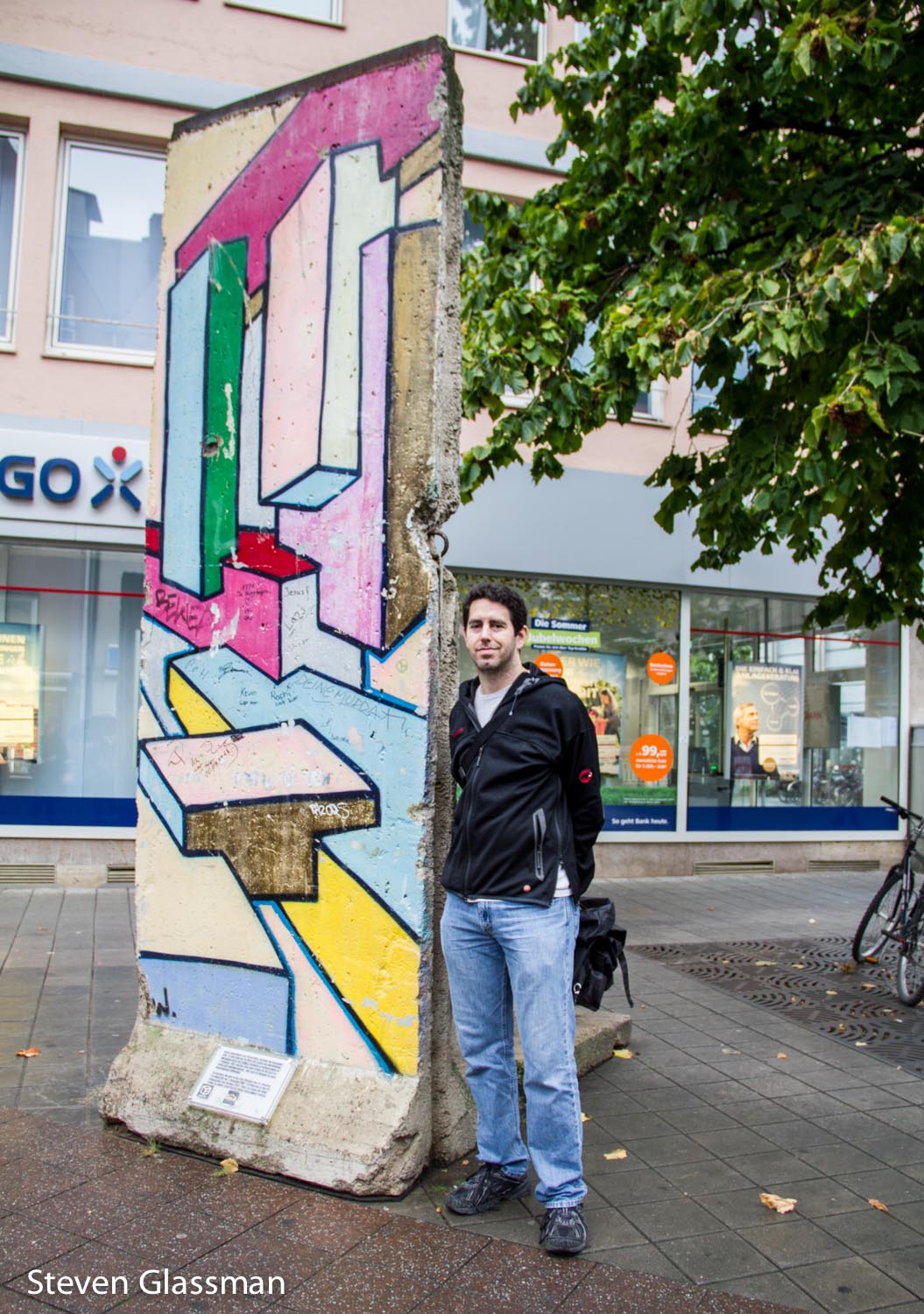
It’s rather amazing to me that I’ve been in Germany for this long and I didn’t manage to get a picture with a section of the original Berlin Wall until this trip.  Here it is.

webmu2014-7

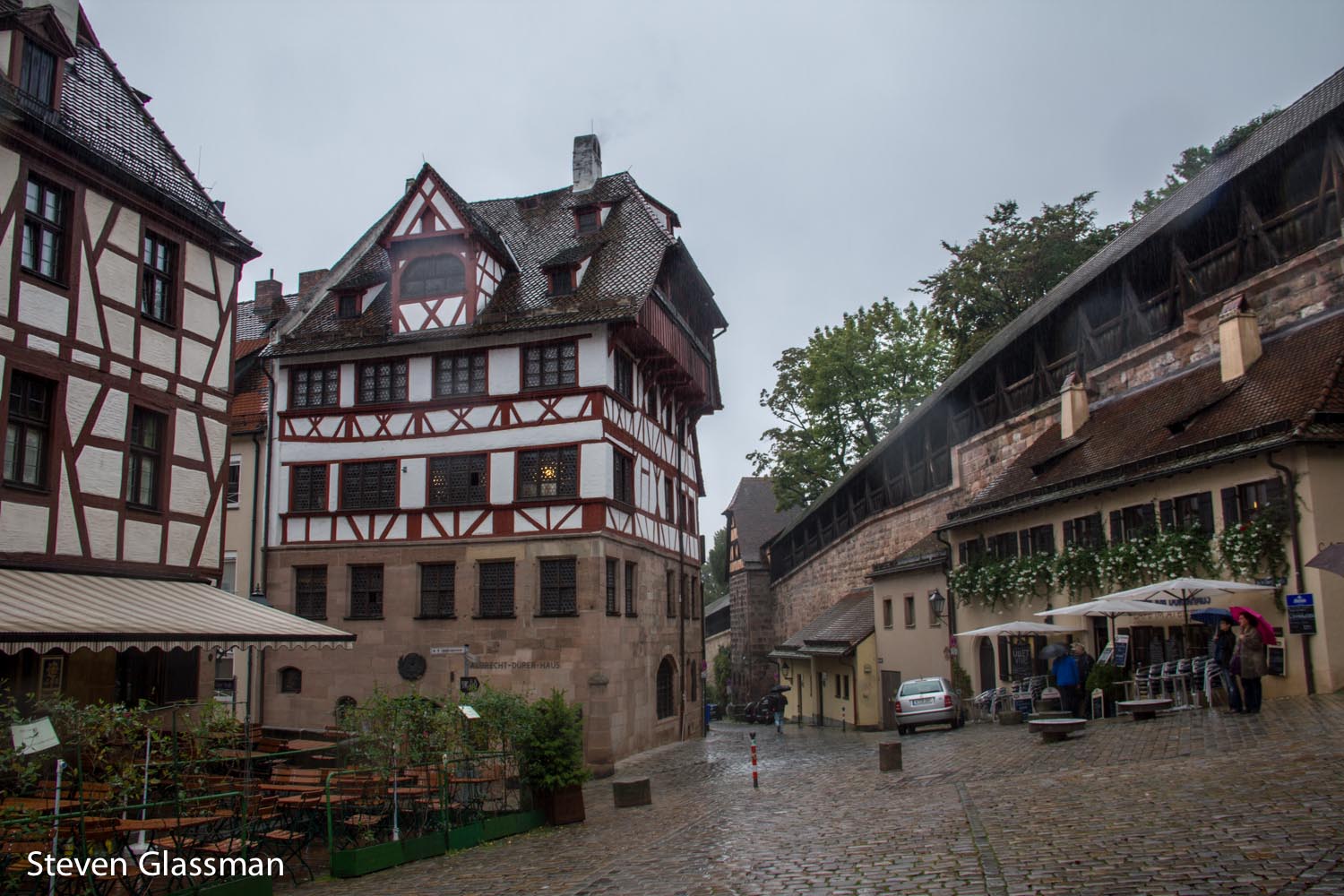
Albrecht Dürer is kind of a big deal in Nuremberg.  His house is near this statue.

webmu2014-8

One of Dürer’s most celebrated creations is this creepy-ass rabbit.  The dude with the pink umbrella just makes it so much more surreal, don’t you think?

webmu2014-12

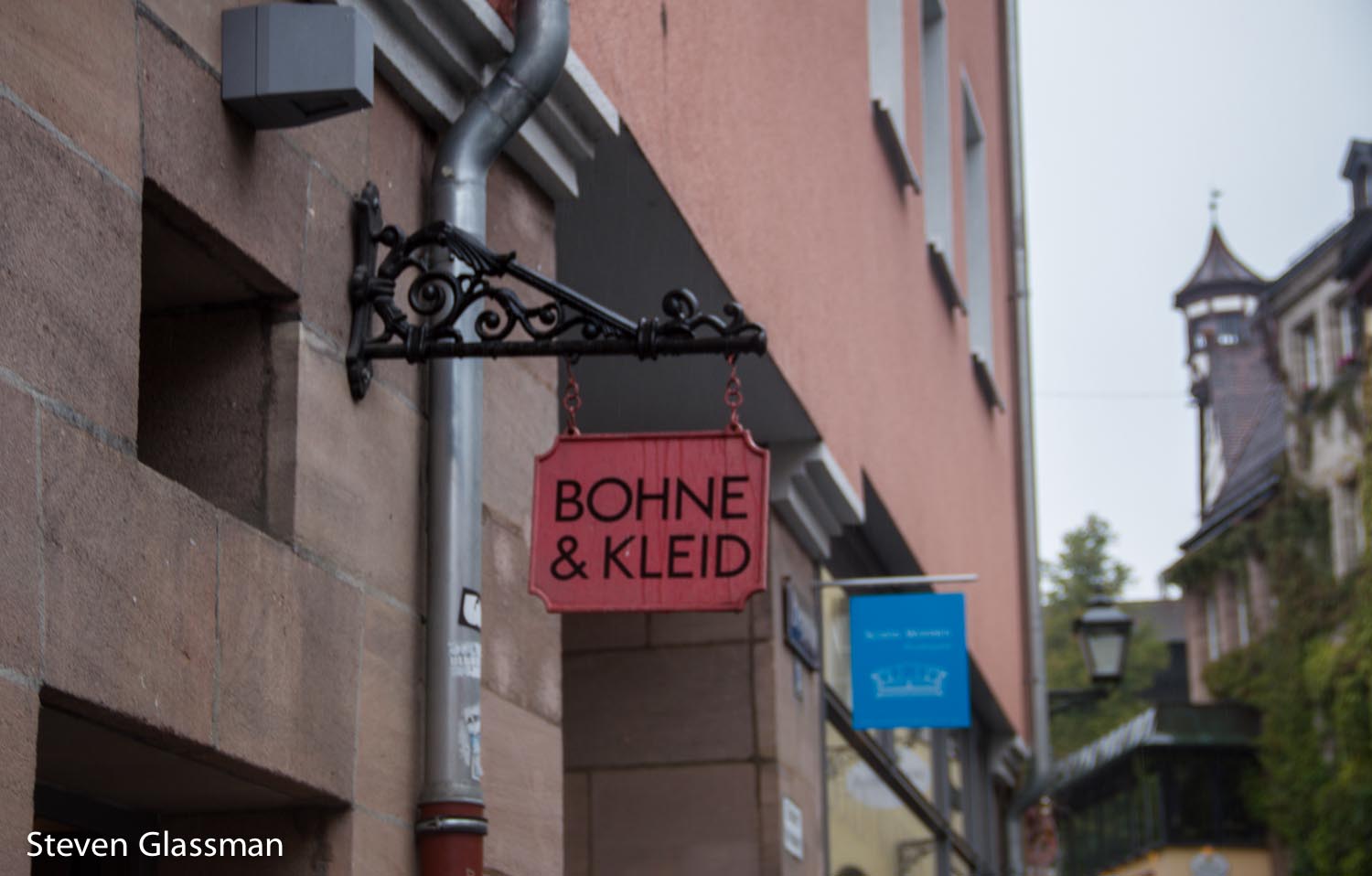
This store’s sign caught my eye because it’s a rather nifty play on words.  Bohne & Kleid in German is “Bean and Dress,” but it sounds quite a bit like “Bonnie and Clyde.”  It made me giggle.

webmu2014-9

One of the nifty things about Nuremberg is that a large portion of the old city wall is still intact like this section on the right.

webmu2014-10

A bunch of these old cities have St. George and the Dragon themed stuff floating around.  It’s all very Trogdor-oriented.

webmu2014-11

Nuremberg also has a reasonably well preserved castle, part of which is pictured here.

webmu2014-13

Big castles have big doors.

webmu2014-14

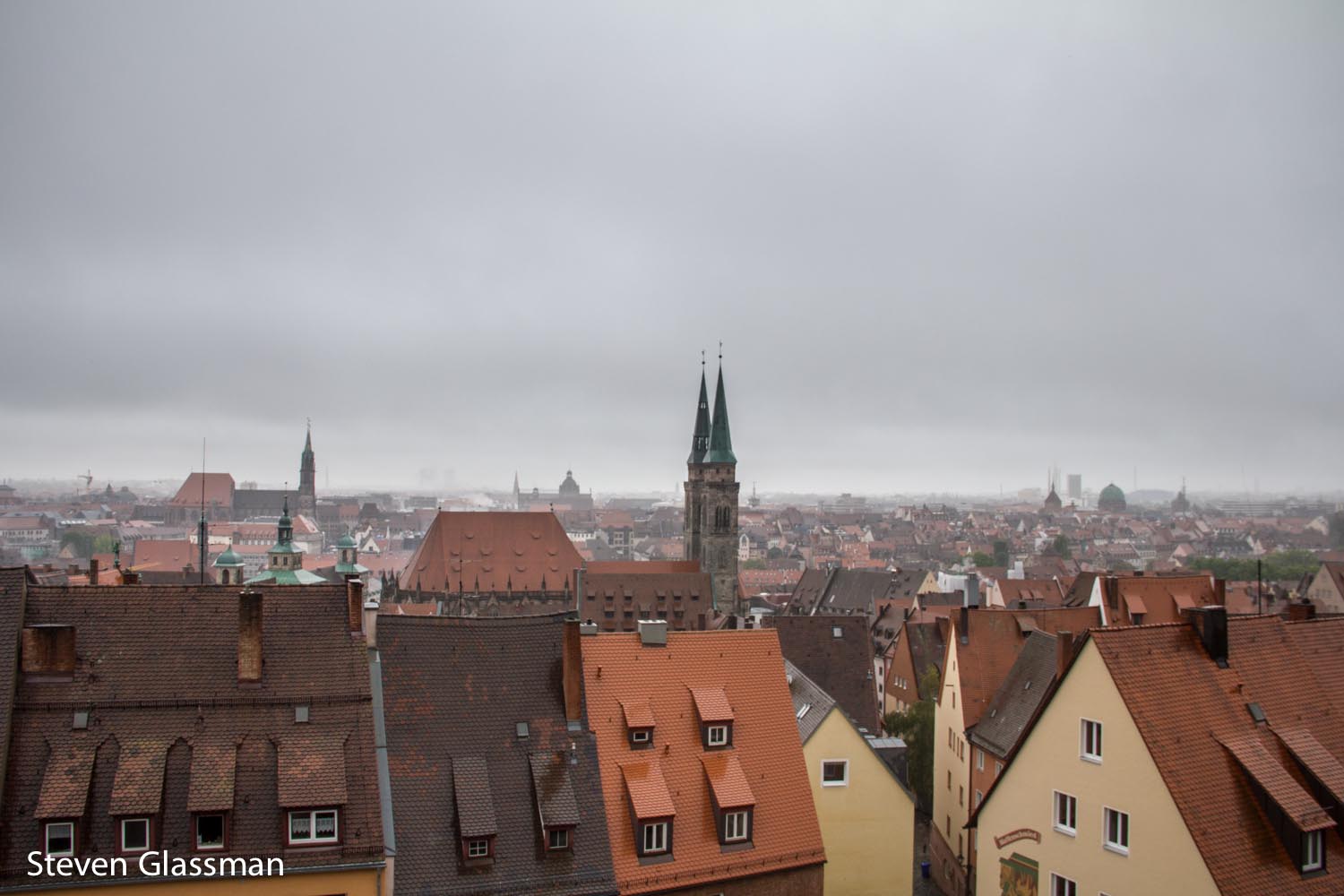
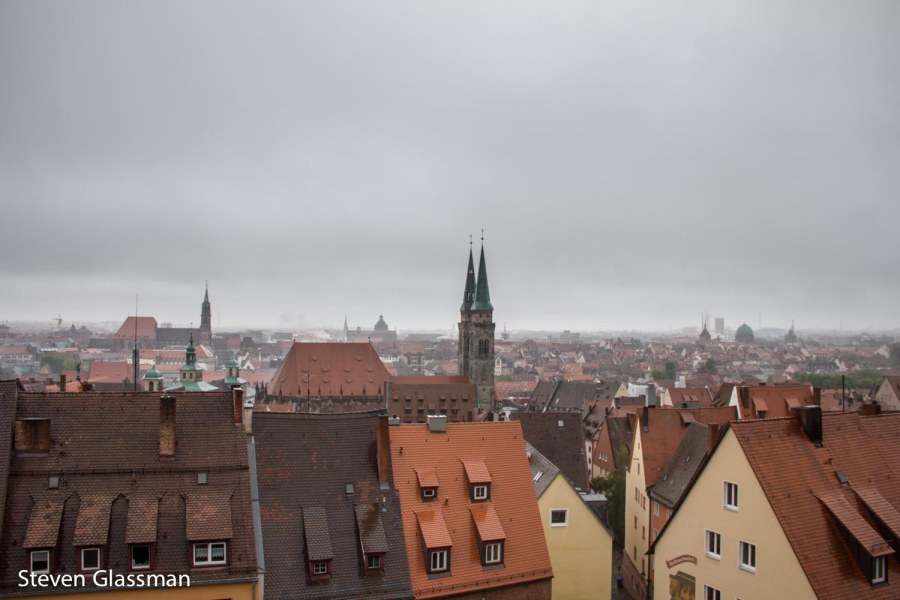
Here’s the requisite view of the city from the castle’s ramparts.

webmu2014-15

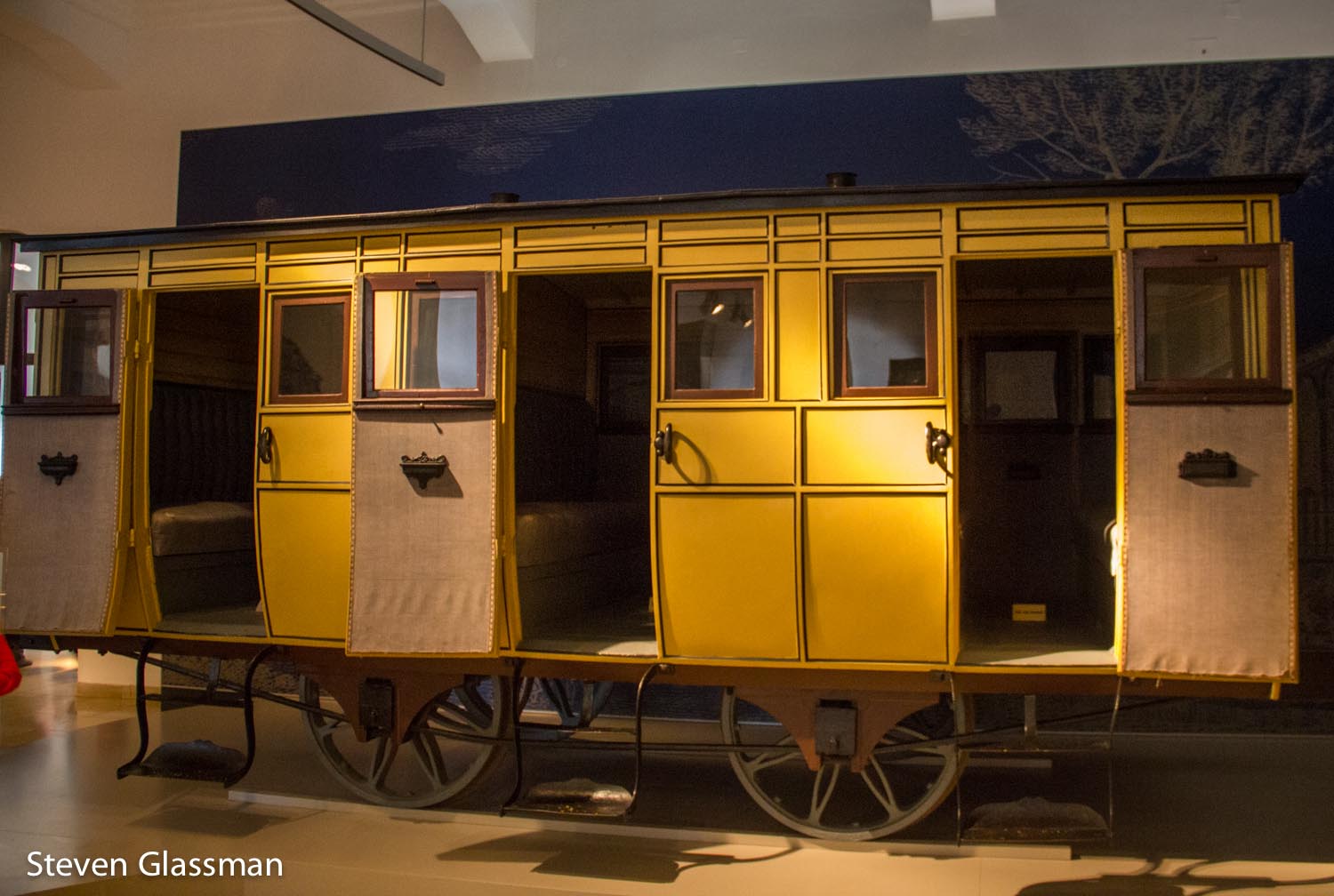
Later in the day, Cliff and I ventured in to the Deutsche Bahn Museum, a place I had wanted to visit for quite a while.  It had some fantastic vintage carriages.

webmu2014-16

An old rail-running bicycle looking thing was on display.  This reminds me a little bit of the scene from Blazing Saddles with the quick-sand.

webmu2014-17

What would a train museum be without incredibly detailed models?

webmu2014-22

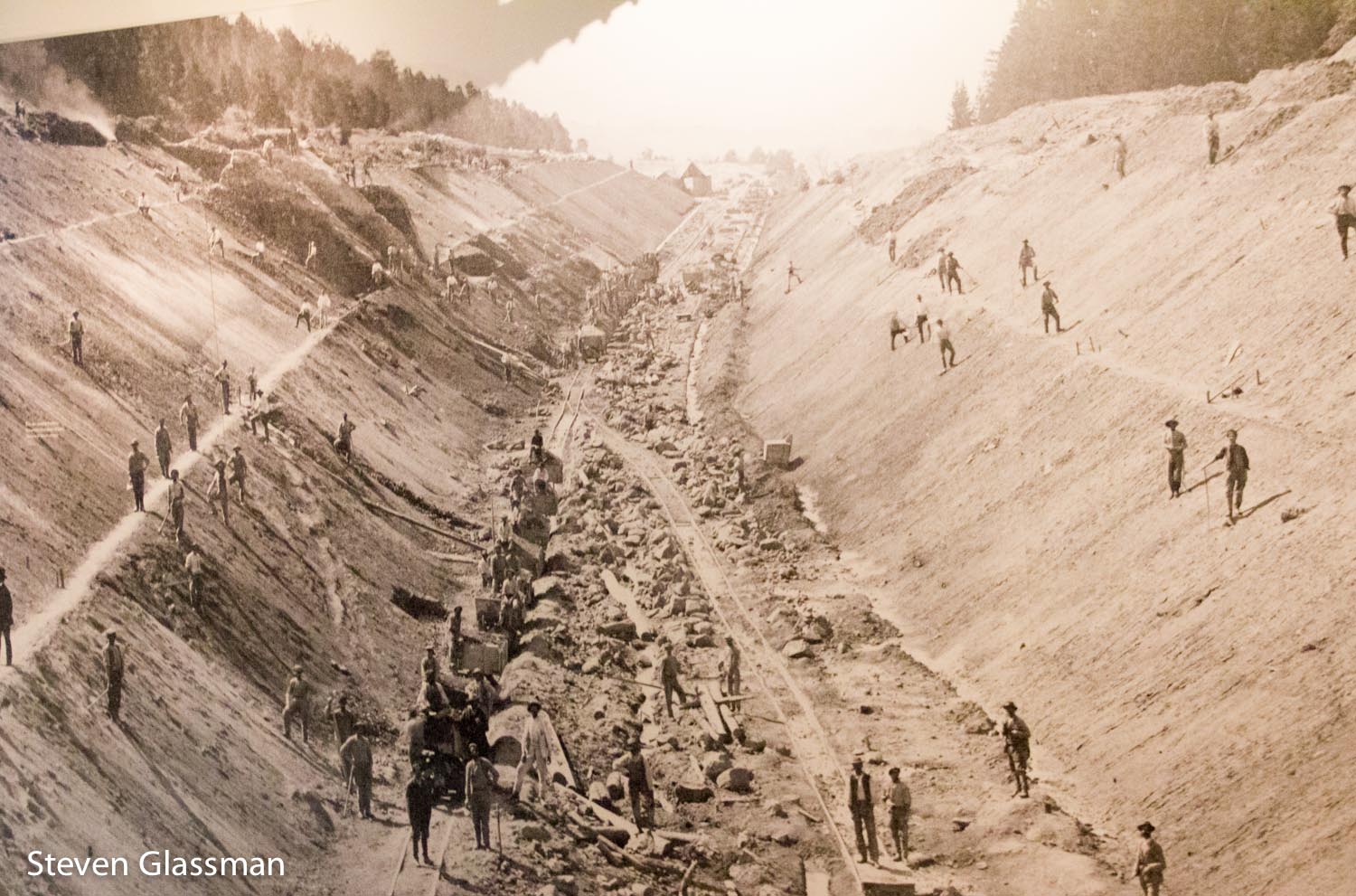
The DB Museum had a ton of great photographs up showing the construction of the railways and bridges.  Most of those pictures didn’t come out well enough to post, but this will give you an idea of how amazing and fascinating the historical photographs were.

webmu2014-19

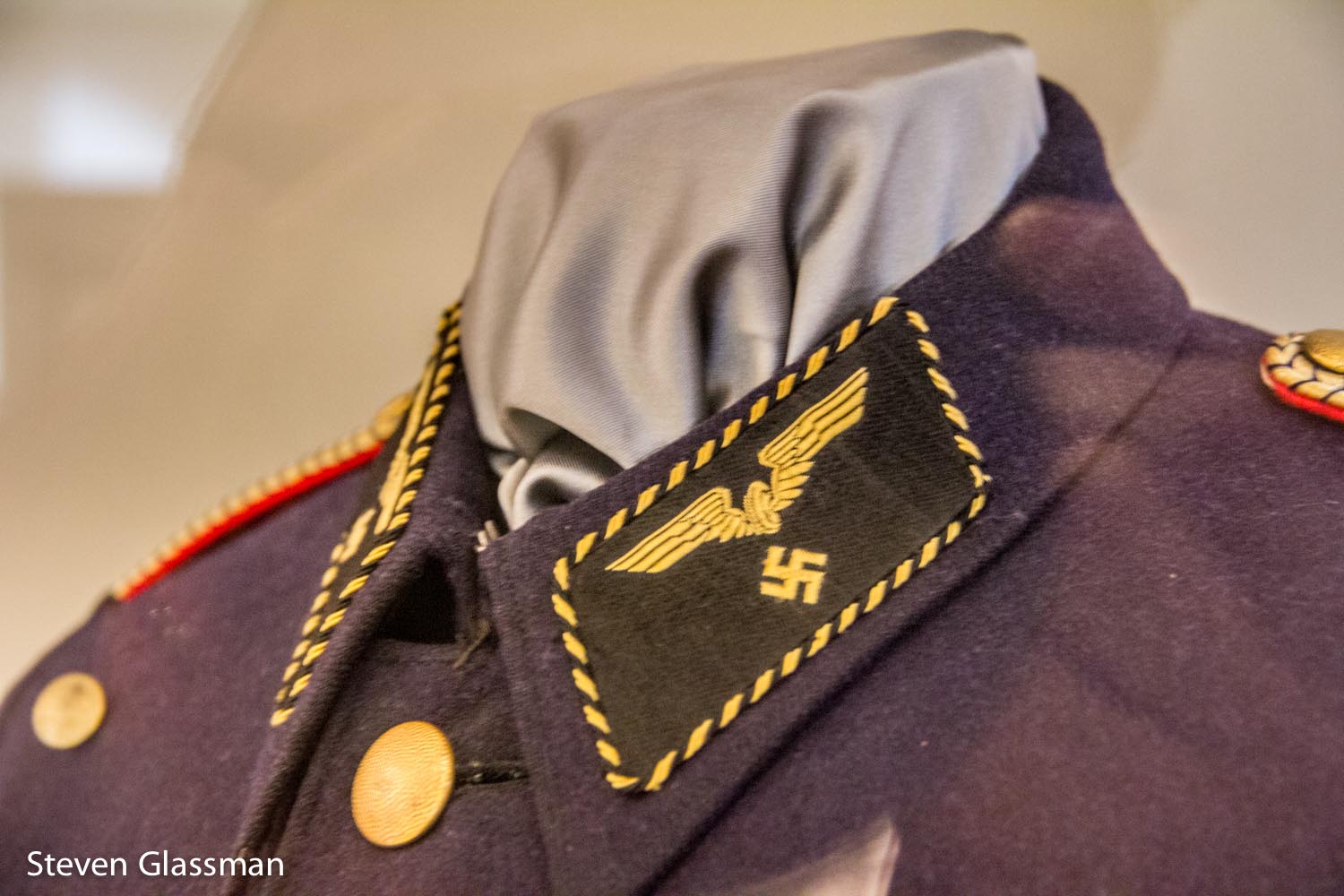
Any good train museum would also cover that uncomfortable part of Germany’s history where the railways were part of the World War II experience.  Here’s a train conductor’s uniform from that era.

webmu2014-29

The best part of the exhibit was the various trains  set up along the outer edges of the museum.  Here’s a mostly-plastic model of an ICE train.  You couldn’t even sit down inside.  The real thing is much nicer.

webmu2014-18

Apparently, 6th class train rides involved standing up in a giant rectangular train carriage with no roof.  Still beats walking, I guess.

webmu2014-20

Compare that last one to first class, which has velvet seats and a nice terrace from which you can have champagne toasts.

webmu2014-21

Speaking of first class, the Prince’s carriages were present in the museum.  They’re very fancy.

webmu2014-23

The Prince’s carriage had a green room that Cliff thought was amazing.

webmu2014-27

I was more partial to the blue room in the Prince’s carriage.   What can I say? I like blue!

webmu2014-28

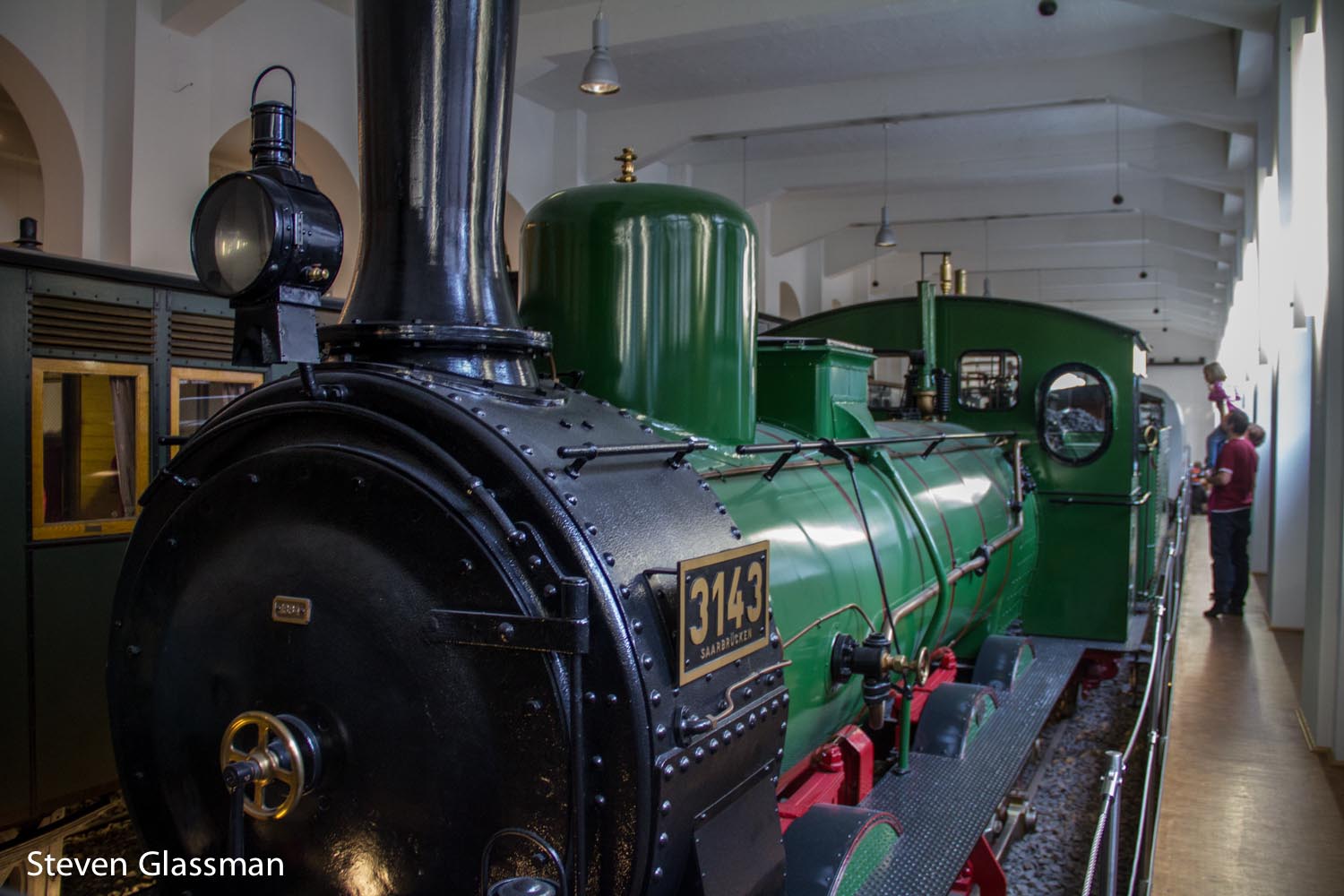
There were also some massive old steamers in the museum.

webmu2014-26

When I say massive, I mean massive.  These wheels were nearly as tall as I am.

webmu2014-24

…and you can step up into some of them for hammy moments.  Here’s Cliff, waving hello from the conductor’s window.

webmu2014-25

Have you ever been to the DB Museum?  Have you visited Bamberg or Nuremberg?

I didn’t know that was German!

There are a number of companies that I’ve known my entire life, without realizing that it started here and not in the US.   I knew that BMW, Mercedes, and Audi were all German companies.   I was clear that Bayer (the pharmaceutical company) was from Germany.  But there are a bunch of European names that surprised me.

Red Bull is an Austrian company.  The tiny Smart car was a joint venture between Swatch and Mercedes.  There are two that really surprised me, though.

Adidas and Puma:    Adolph “Adi” Dassler and his brother, Rudolf “Rudi” Dassler founded Gebrüder Dassler Schuhfabrik (the Dassler Brothers Shoe Factory) in the 1920s.   They split in 1947, and Rudolf created a competing shoe company, called Ruda at first, and later renamed to Puma.  In 1949, Adi renamed his company to Adidas.

I spent my high school years thinking that the name Adidas was an acronym for “All day I dream about sports,” but it’s really named for the founder.  Adi Dassler.  As a result, I’ve always mispronounced the name.  I was pronouncing this ah-deed-ahs, but that’s wrong.  The emphasis  is on the first and third syllables, not the middle syllable:  Ah-dee-das. 

Haribo, the company that made the first Gummibärchen, or Gummy Bears, is from Bonn, Germany.  I thought Haribo was a Japanese company, but it was founded in 1920 by Hans Riegel, Sr.   The name of the company is a portmanteau:   Hans Riegel, Bonn.

Are there any companies with origins that have surprised you?

Cairo

For my last trip outside of Germany before I move back to the US, I chose Cairo.  I have a very long list of places that I still want to go and see, but the pyramids have long been near the top of my “gotta see that!” list.  Egypt has had a rough time with their tourism industry since the revolution a few years ago, so I took advantage of the amazing prices and set up the trip to my 26th country.

Between the hits to Egypt’s tourism, the fact that July and August are the low season there and the exchange rate in my favor, everything was very affordable.    I booked four nights at a luxury hotel with a balcony overlooking the Nile river for about $750 US dollars, and booked tours of the pyramids and whatnot before I set out.

Arriving to the Cairo airport is somewhat chaotic.  If you’re a US citizen visiting just to be a tourist, you have to pay $25 in US dollars for the entry visa that they stick in your passport.

cairo-2

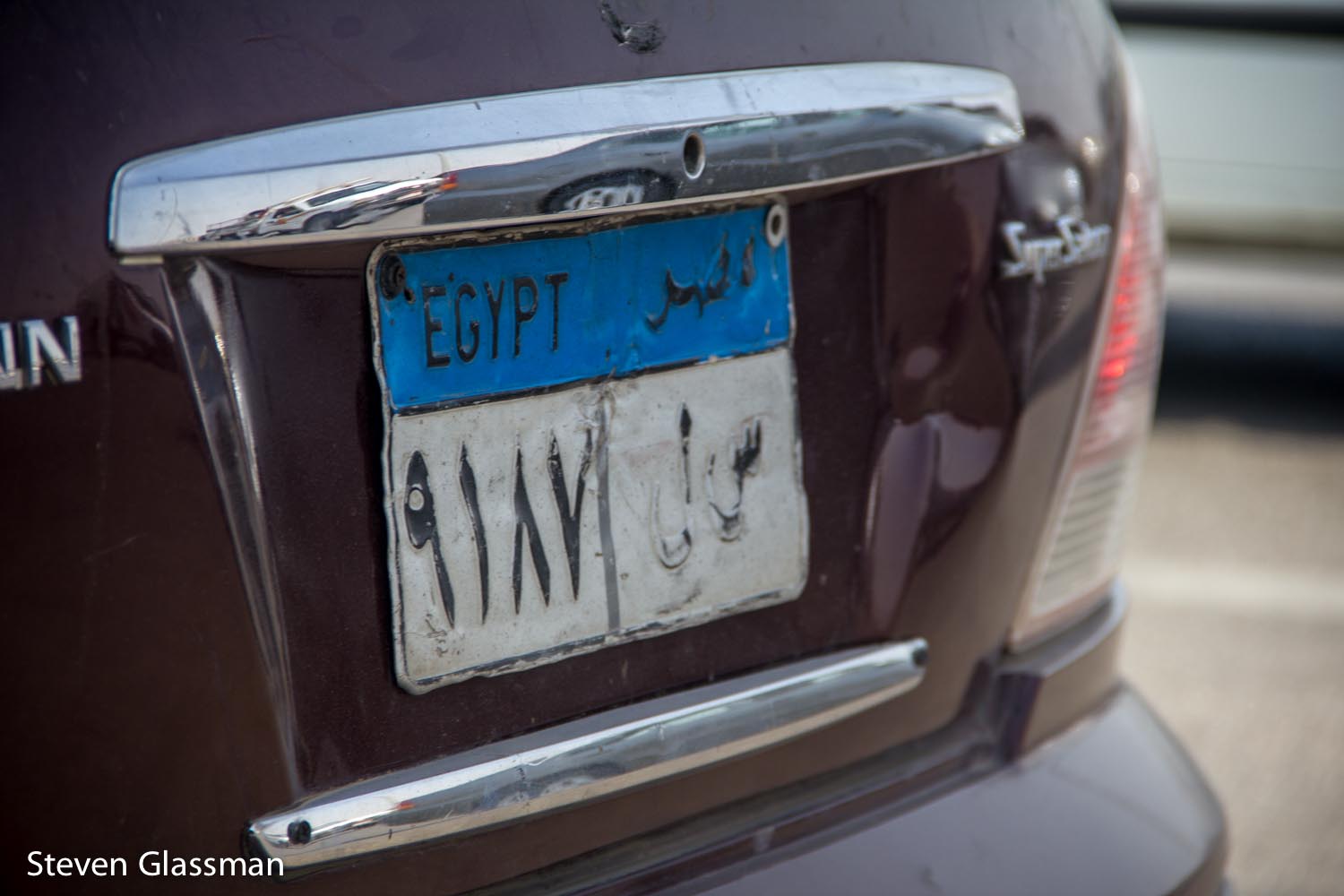
I’m glad that I chose to book the tours with hotel pick-up, because it turns out that navigating Cairo woud have been extraordinarily difficult for me.  For one thing, the Metro stations at Tahrir Square and Giza are both closed and have been for quite some time due to the revolution.   For another thing, I don’t speak Arabic.  I also can’t read the Arabic numerals that are displayed on signs there.  The first time I saw an Egyptian license plate, I thought it was hand-written.  Then I saw a dozen more and I realized this is just how they look.

cairo-1

Traffic in Cairo is absolutely insane.   The white lines on the highway are seen as a casual suggestion, and drivers weave in and out of each other’s lanes with abandon.  The drivers use their car horns constantly, almost like a form of echolocation, like bats in flight.  The car signals told other drivers where they were at all times.

People on foot cross the road- even the highways- without a care for the cars that are moving past.  People stop in the right-most lanes and get out of their cars.  There’s rubble on the outer edges of the highways, and random smoldering piles of rock that might have been fires a while before I got there.

I’ve never seen anything like it.  Here’s a YouTube video that showcases it pretty well, I think.  For more, just search YouTube for “Cairo traffic.”  It’s absolutely amazing.

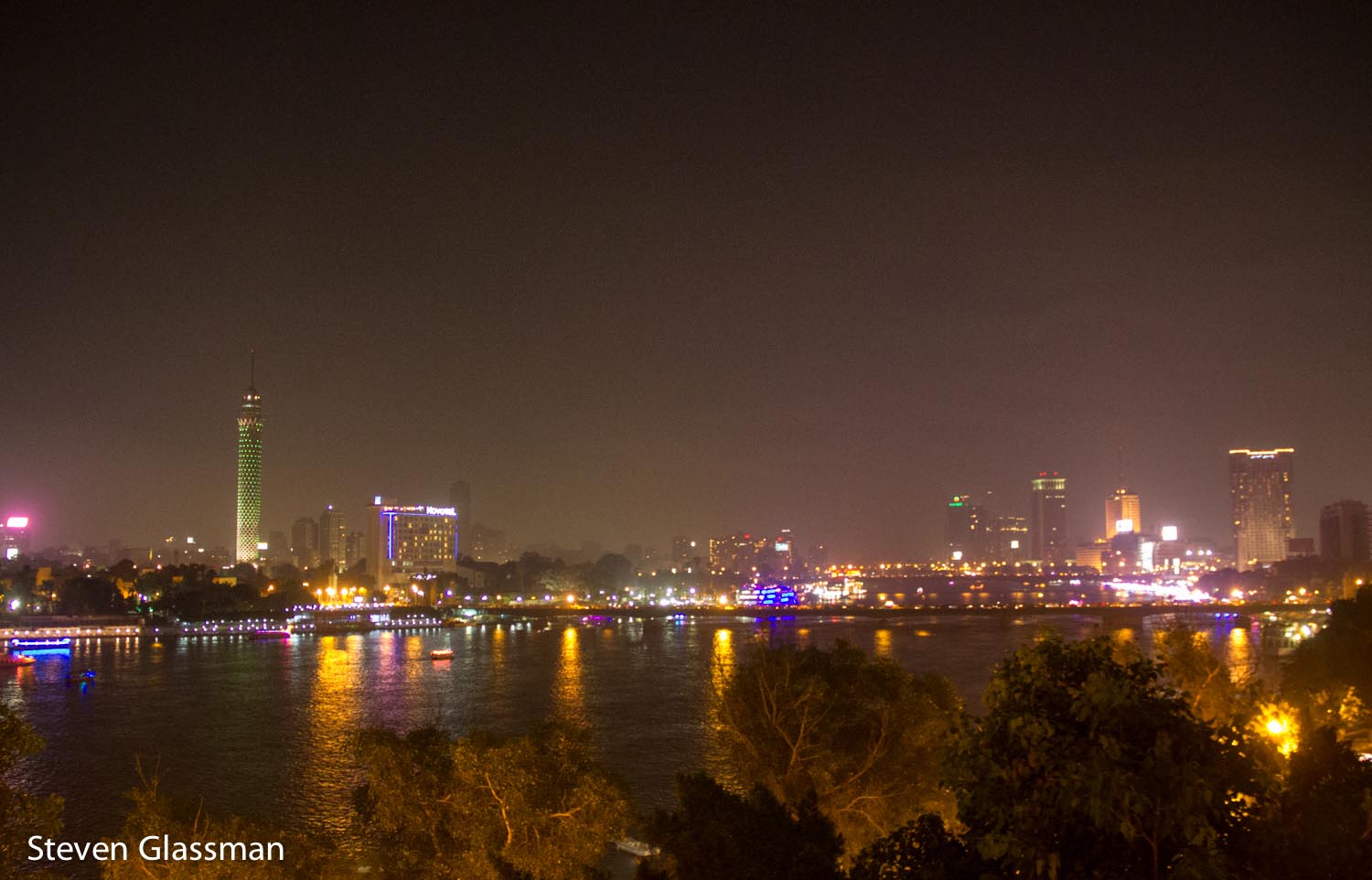
Once I was checked into the hotel, I had about two hours to try to shake off my usual travel headache before I was picked up again for my first event.  I took some time to thoroughly enjoy the view from my balcony overlooking the Nile.  After dark, the Nile river comes alive with activity-  neon trimmed party boats, loud music, and street vendors are everywhere.

cairo-30

My first touristy event was a Nile river dinner cruise, with entertainment.  The food was very good.  I liked the sea bass quite a lot.

cairo-4

The entertainment was a band, then a Tannoura dance show, then a bellydancer.  The Tannoura is vaguely related to the Sufi Whirling Dervishes, and the man never stopped spinning.  Here’s a short clip of the show.

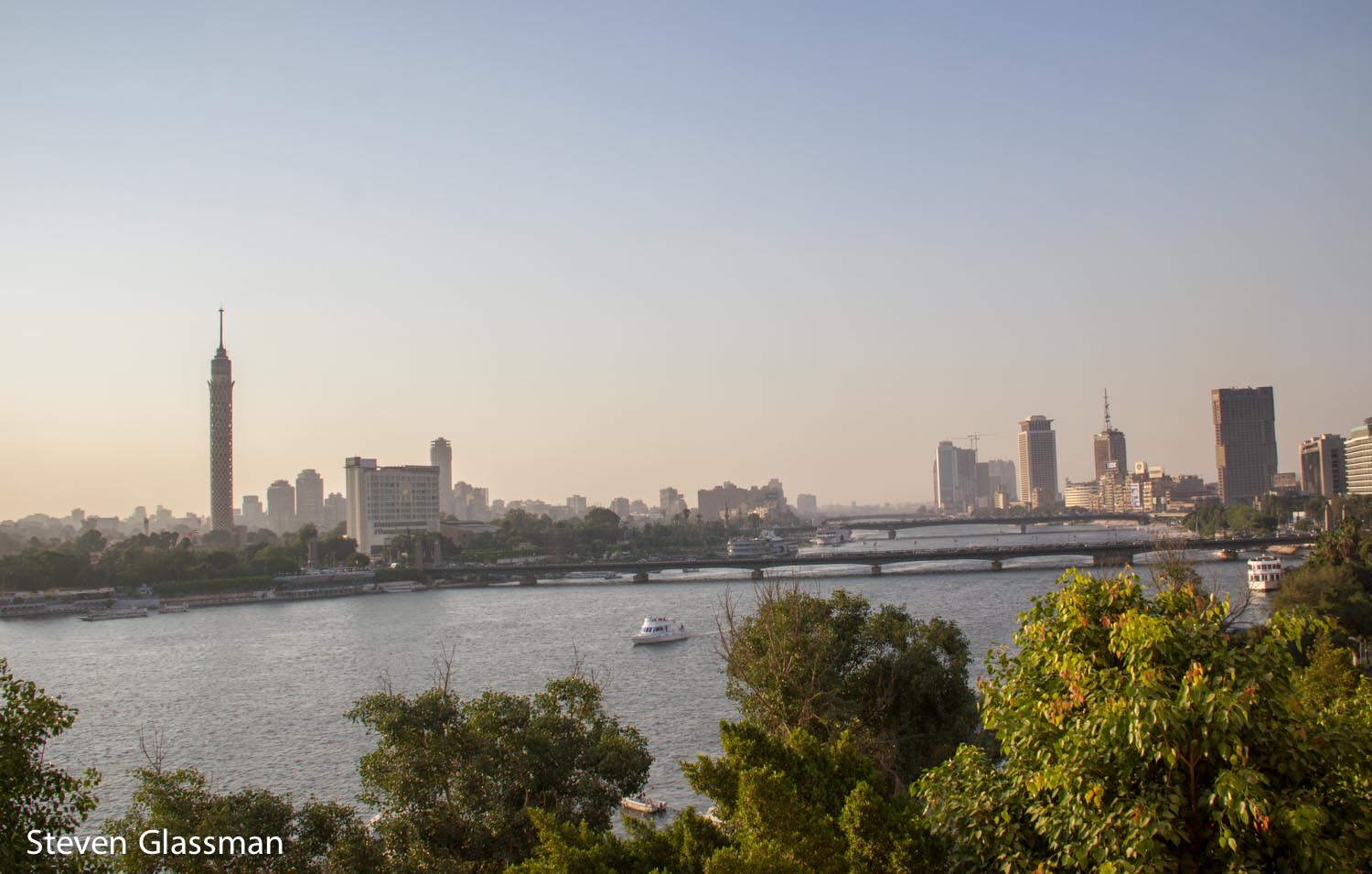
The next morning, I woke up early for my tour of the Giza Necropolis, including the pyramids and the Sphinx.    I also took a quick daytime picture from my balcony.    That tower in the left third of the picture is Cairo Tower, which has an observation deck at the top and a revolving restaurant just below that.  I’ll come back to that later in the post.

cairo-3

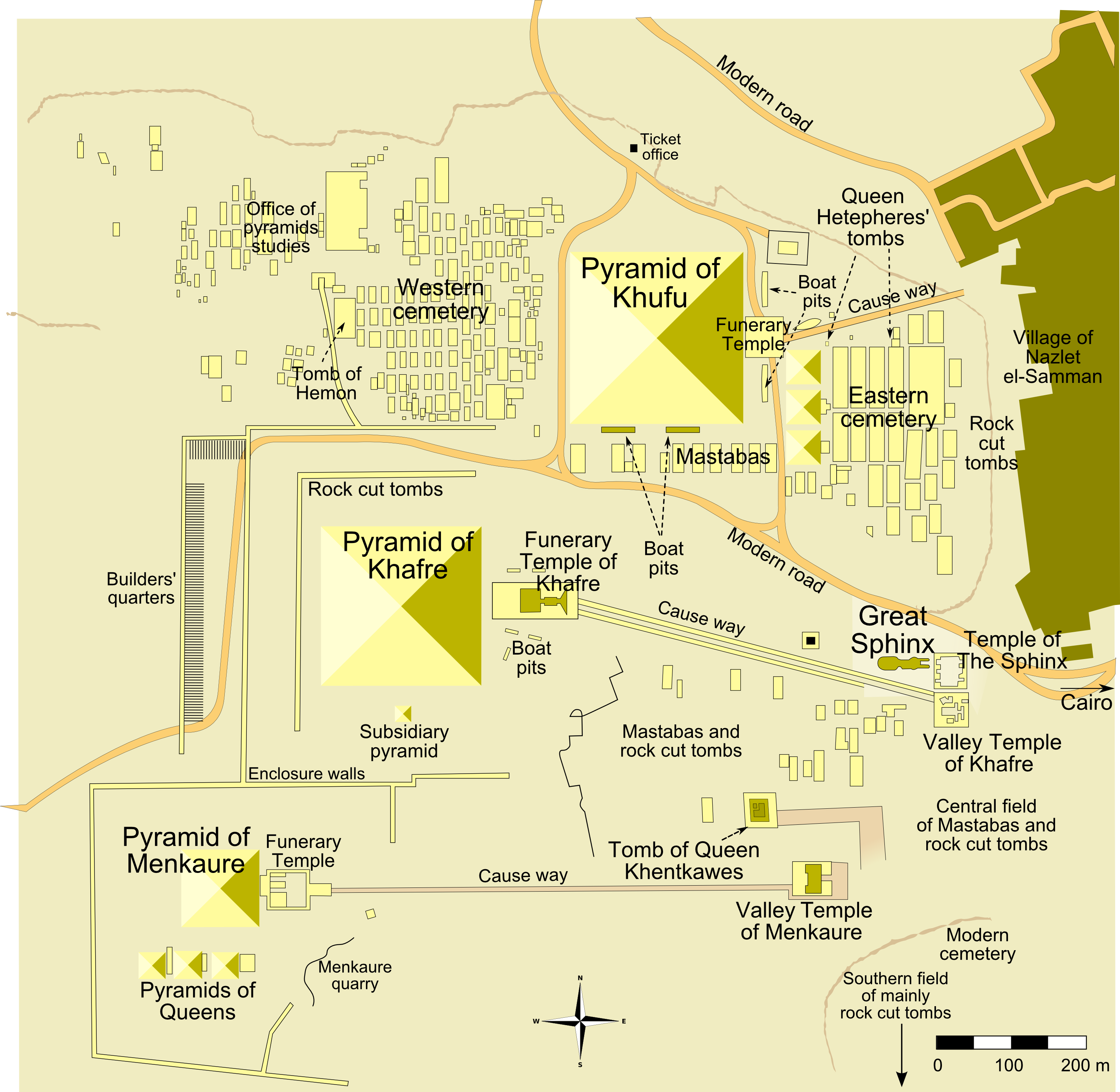
I ganked this map of the Giza Necropolis from Wikipedia, because it shows a lot of important detail.  The first thing that I didn’t realize before this trip is that there are more pyramids in Giza than the three big ones that everyone notices.  If you look carefully, there’s three smaller ones next to the Pyramid of Khufu, which is referred to as the Great Pyramid.  There’s also another three smaller pyramids next to the Pyramid of Menkaure, and several other smaller pyramids in the Necropolis.  There are 138 known pyramids throughout Egypt, and a whole bunch of them are right there in Giza.

Also, each of the three largest pyramids is connected to a temple by a causeway.  One of these is still intact today and is visible to the naked eye.  The others are a little harder to spot.

Giza_pyramid_complex_(map)

Here’s the Great Pyramid, also known as the Pyramid of Khufu.  This is the largest of the three on the Giza plateau.  The Pyramid of Khufu was the tallest man-made structure in the world until the Eiffel Tower opened in 1889.

cairo-10

On arrival, I sat with my guide Khaled for a few minutes at the base of the Great Pyramid while he discussed the construction and history of the pyramids with me.  This picture is looking straight up the North face of the Great Pyramid.

cairo-5

This photograph is looking back at the city of Giza from the base of the Great Pyramid.    Giza comes very, very close to the pyramids on one side.  The other side is the start of thousands of miles of Sahara Desert.

cairo-6

The Pyramid of Khafre is the only one of the pyramids in Giza to still retain a portion of its limestone casing.  Supposedly, all three of the big pyramids were at one time fully covered in this polished limestone, with gold capstones.    That must have been quite a sight.

Khafre also looks larger than Khufu to the naked eye, but that’s because it’s on a higher elevation.  It is actually smaller in both height and width.

cairo-12

I had the chance to descend into the burial chamber of one of the smaller pyramids next to Khufu.  The attendants were happy to take my picture as I climbed back up.  They’ve mounted handrails into the tunnel because the pathway down is not steps; it’s a ridged wooden plank to give you traction as you climb or descend.    This photograph is only moments before I whanged my head coming out of the entrance:  The Curse of the Pharaohs takes many forms.

You can choose to go into the Great Pyramid, but it’s another 200 Egyptian Pounds (about $30) and I decided that one musty burial chamber was enough for me.

cairo-7

Khaled took me into one of the smaller structures near the pyramids- this was a small structure supposedly built for one of the architects of the pyramids.  Here, Khaled is pointing out the cartouches-  the symbols inside the oval with a crossbar on the left side.

cairo-8

Each cartouche is the name of someone royal.  In most cases, it refers to those who are buried inside the pyramids.  I do not recall which was which here.

cairo-9

Khaled made me do traditional silly tourist pictures with the pyramids, but I steadfastly refused to do a jumping picture.  I’m not a fan of pictures of people jumping in front of landmarks.

cairo-11

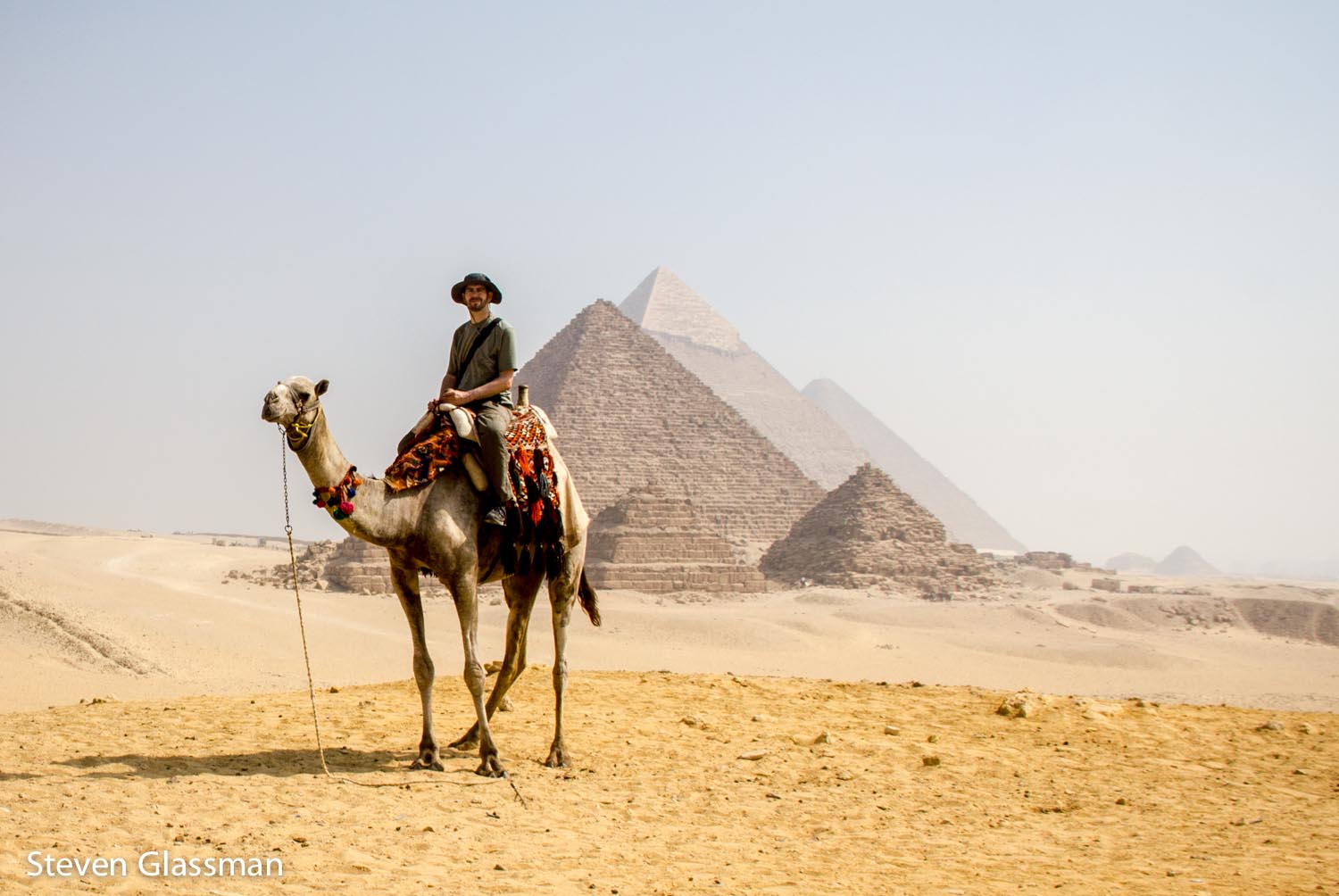
One of my options was a camel ride from behind the Pyramid of Menkaure around the outer edge of the Necropolis to the Sphinx.    I’d never been on a camel before, so I was game.  My thoughts are as follows:  1) It’s a damn good thing I brought sunscreen, because this was actually a camel ride in the desert.  2) Camels are not a smooth ride.  It takes a little while to get used to the rhythm.

cairo-13

I think this is how camels say hello.

cairo-14

One of the advantages of taking the camel ride was that I got a really phenomenal view of all the pyramids lined up.   This photograph contains nine pyramids.

From this perspective, the Pyramids of Queens are the three small ones in front, with Menkaure right behind them.  The Pyramid of Khafre is next to the right, and the Pyramid of Khufu is just to the right of that one.  You can also make out three of the smaller pyramids to the right of Khufu.

cairo-15

After about 45 minutes on camel-back, we arrived to the Sphinx.  This is the interior of the Temple of the Sphinx, with very old alabaster flooring.  Supposedly, this temple had a roof at some point.

cairo-16

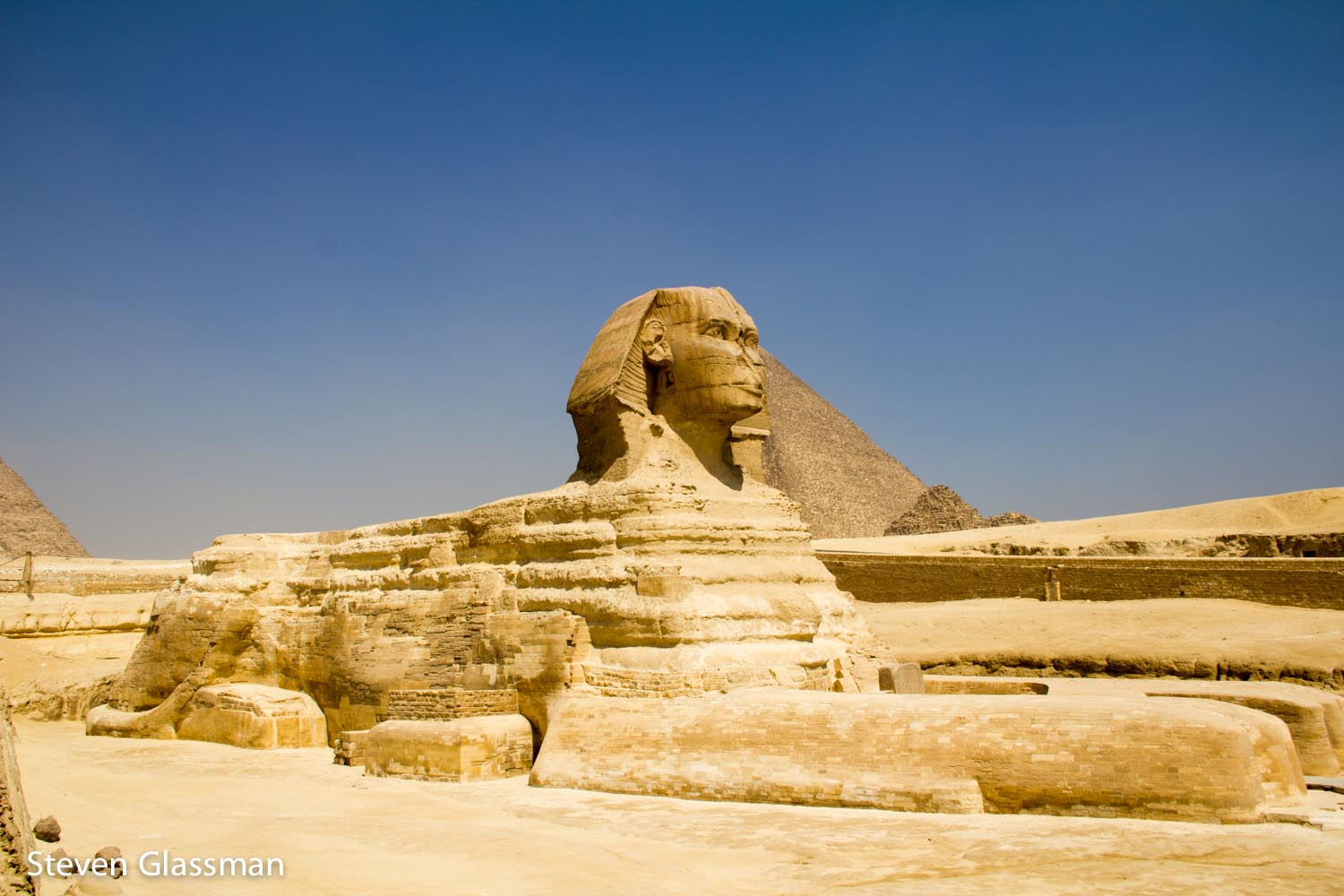
The Sphinx is missing forehead ornamentation, a beard, and its nose.  I’ve seen the beard in the British Museum in London.  It’s not clear what happened to the forehead ornamentation.  As for the nose, one popular theory says that it was accidentally shot off by French soldiers.  Damn you, Napoleon!

cairo-17

The pyramid over the left shoulder of the Sphinx is the Great Pyramid.    The Great Pyramid is so large that I didn’t see the Sphinx at all until late in the day, despite walking around the other sides of the pyramid.

cairo-18

The Giza Necropolis was the highlight of my Cairo trip, but that didn’t stop me from seeing other things.  I mentioned the Cairo Tower earlier-  this is the front entrance.

cairo-19

Here’s a closer view of the entire tower.

cairo-20

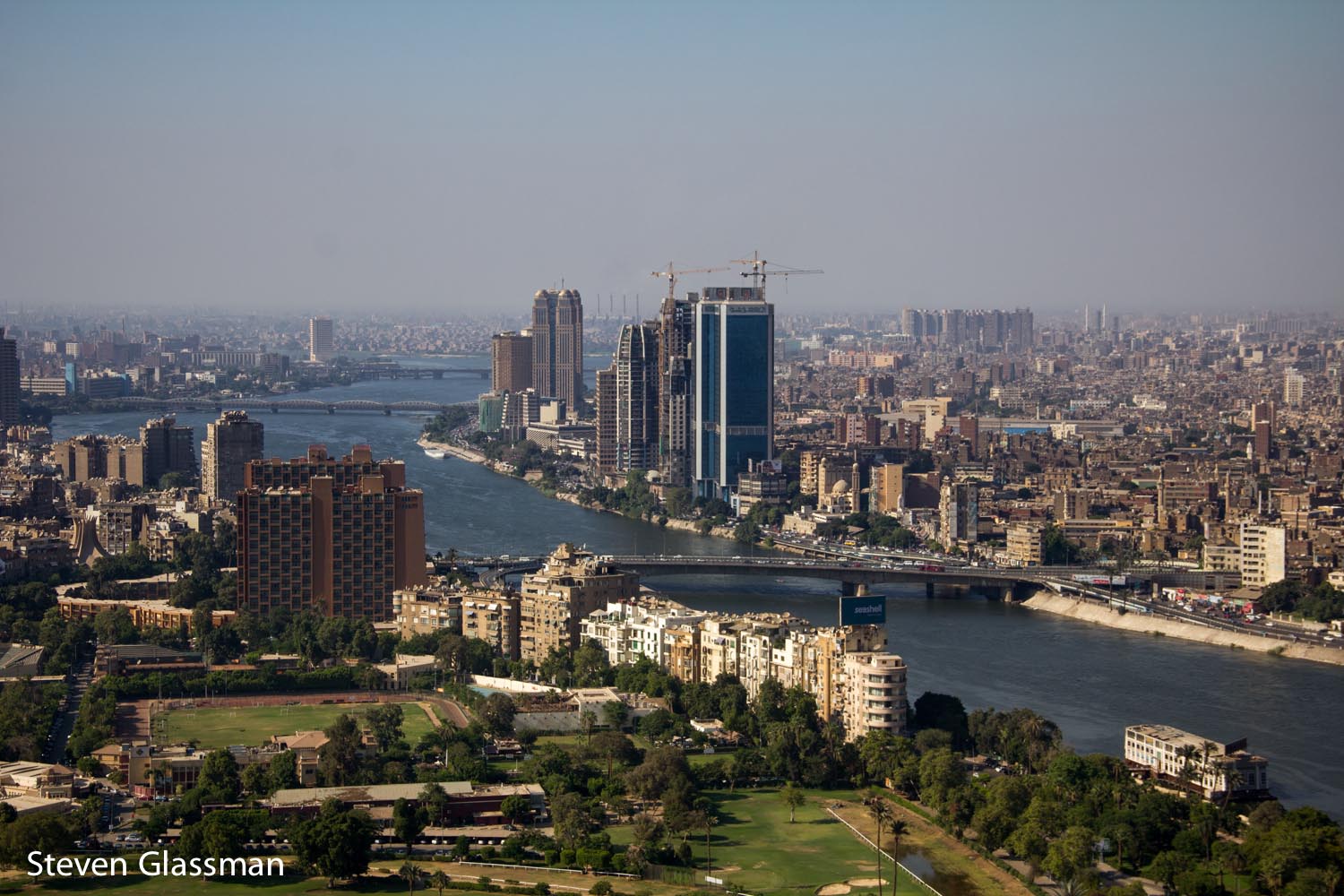
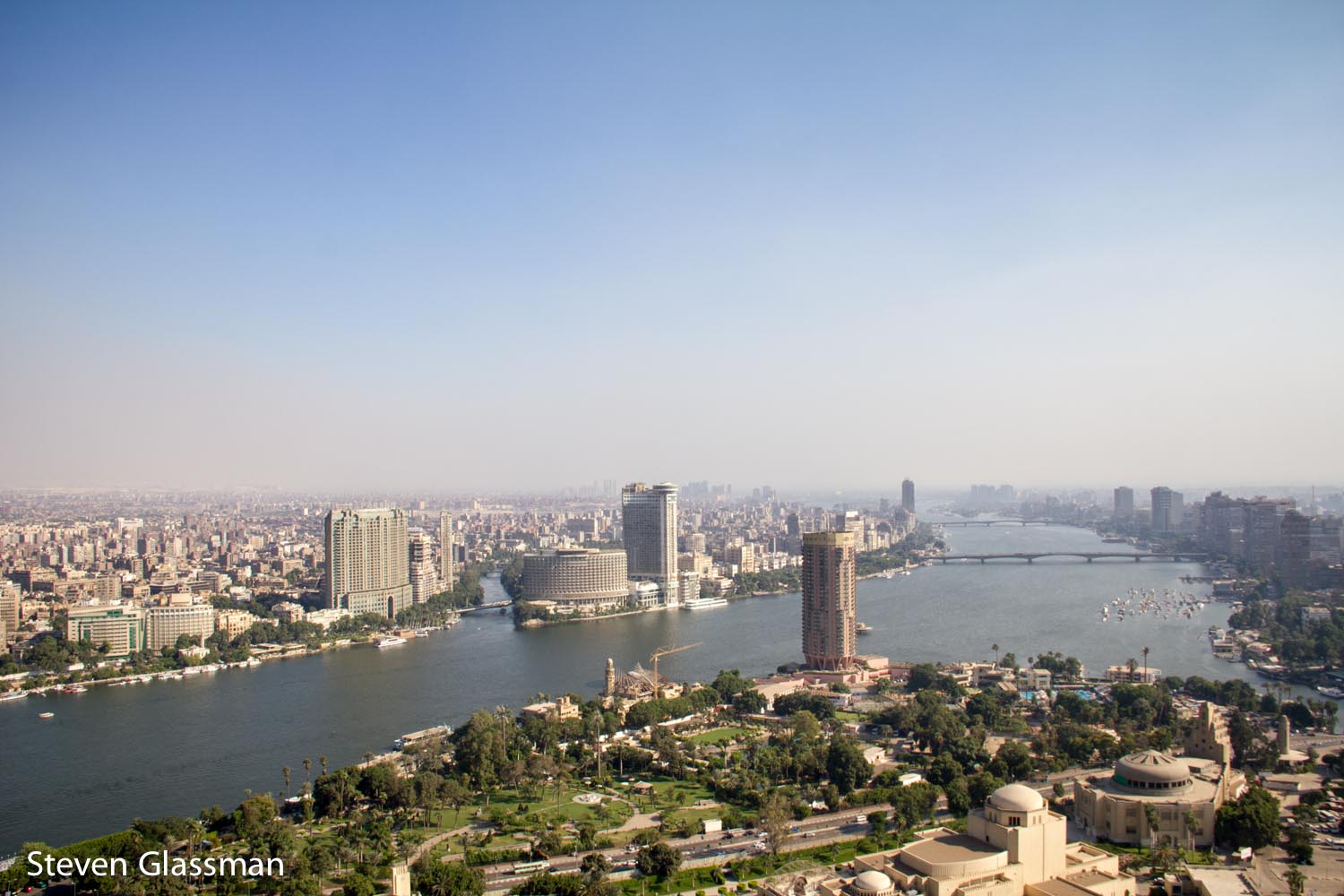
From the viewing platform on the top of Cairo Tower, the views are fairly spectacular.  Here’s one view along the Nile.

cairo-21

Cairo is a very dense city.  It  has an estimated population of 12 million people, and when you include Giza and the remaining surrounding metropolitan area, it has a population of nearly 22 million people.  That’s roughly a fourth of the residents of the entire country.

cairo-22

On a clear day, you can even see the pyramids from Cairo Tower.  On a hazy day, you can still see them- just not clearly.

cairo-23

This is Tahrir Square.  It’s not really square, as far as I can tell. This is where  the most well known protests of the Egyptian revolution took place.

cairo-24

This is an area of the city adjacent to Tahrir Square.  The reddish building is the Egyptian Museum.  I’m not sure what the burnt out building next to it is.

cairo-25

Here’s a closer picture of that burnt out building, taken on my walk to the Egyptian Museum.   There were quite a few burnt out buildings in Cairo, signs of the struggle there over the last few years.

cairo-26

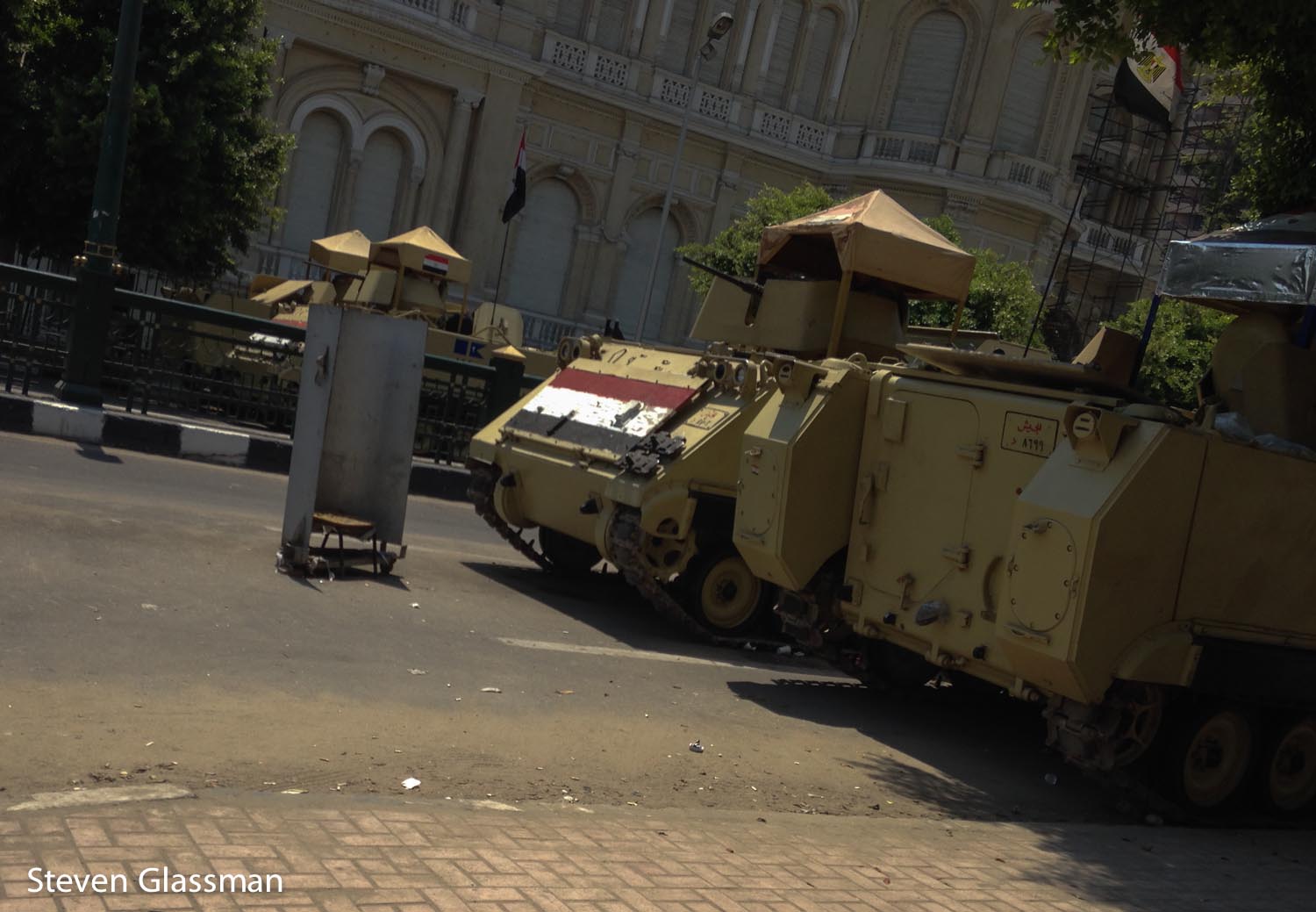
When I was walking to the Egyptian Museum, I walked past four tanks and some barbed wire.  This isn’t a very good picture because I was trying not to be super obvious that I was taking a picture.  My goal here was to attract as little attention from the armed soldiers as possible.  There were a lot of armed soldiers around Cairo, and it was disconcerting.    To get into the museum, or the Cairo Tower, there were security checkpoints with metal detectors.  To get into my hotel, I had to get past the bomb sniffing dog and a metal detector.

I never really felt comfortable or safe while walking around Cairo.  I only felt safe in the touristy areas, behind  the metal detectors.

cairo-27

On my third night in Cairo, I went to the Pyramid Sound & Light Show.  It was somewhat cheesy, but they used lasers on the Great Pyramid, so I liked it.   The whole thing is done from a very comfortable deck overlooking all three pyramids and the Sphinx.

cairo-29

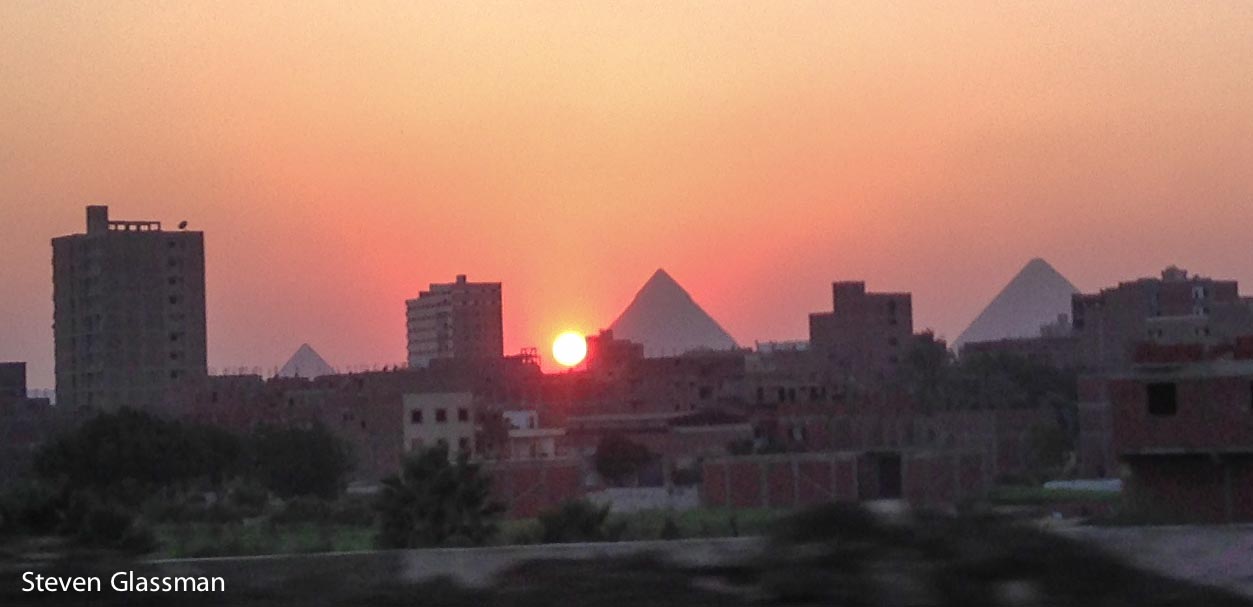
I will close this post with a picture taken from a moving car on my way out to the Pyramid Sound & Light Show-  this was taken just before sunset with an iPhone.  I rather wish I had taken the dSLR out for this part of the evening.

cairo-28

Have you ever been to the Pyramids in Giza?