Rothenburg ob der Tauber

Early in the morning on Saturday the 12th of April, I took a day trip to scenic Rothenburg ob der Tauber with Cliff and Sarah of Regensblog.   Cliff already posted his write-up of the trip, and he included a ton of great pictures.

Rothenburg is incredibly popular with tourists, and it’s often featured in package tours.  The town is compact, but we walked past an astonishing number of hotels on the outer edges of town.  We had good weather and a very light level of tourist crowding, but I shudder to think what this town would be like in June or July.

One of my favorite things about Rothenburg is the wall.  Many towns in Germany still have intact sections of their original outer walls, but this is the first time I’ve seen one with the entire wall up.  It’s been rebuilt over the years, so it’s not all original, but it’s still quite amazing.

rothenburg-1

I mentioned it was scenic, right?  It gets used in film quite often.  In fact, sections of Harry Potter & The Deathly Hallows were filmed here.  Not on this specific street, but here in town.

rothenburg-2

There were a couple of great fountains around town, but none of them were actually moving water around.   There was a lot of construction, so perhaps they were turned down during the other work.

rothenburg-3

This is the town hall.  The tallest point is the Rathausturm, a tower that you can climb for the low, low cost of €2.

rothenburg-4

This elderly tourist couple was just really adorable.

rothenburg-5

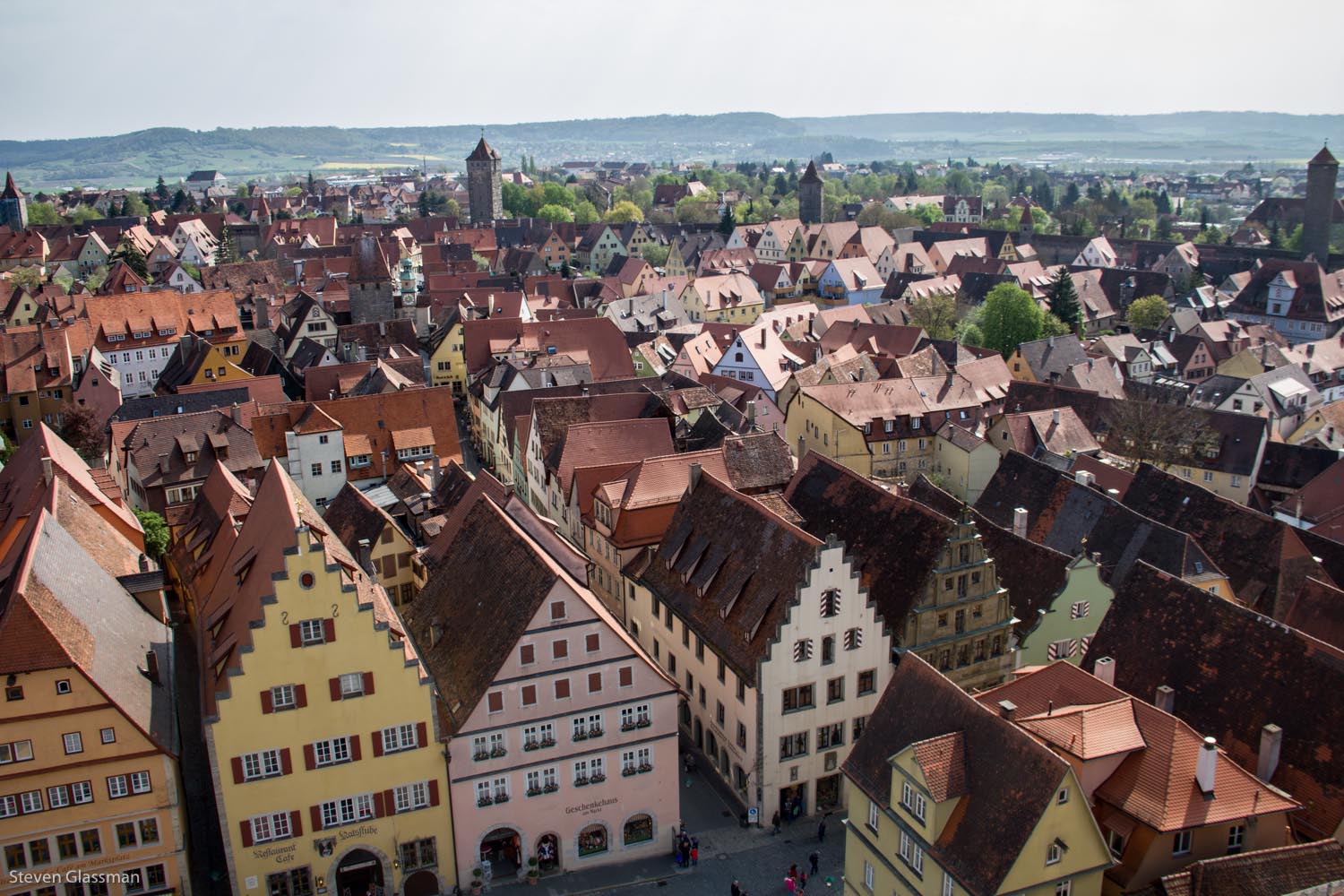
Naturally, we climbed the tower.  You can actually see the outer walls, and the towers at intervals along the wall.
rothenburg-6

The wall is especially clear in this picture.

rothenburg-7

While we were walking around, we were all kind of amazed at this tree-  it had clearly been encouraged to grow almost as part of the building.  It was fascinating.

rothenburg-8

While walking around, we found a small cloister garden containing a very pretty green space.

rothenburg-9

I’ve lost track of which tower was which.  This one was on the western side of the city.

rothenburg-10

…but this one is the actual western town gate.

rothenburg-11

This face is set into the tower on the western gate.  It’s kind of interesting.

rothenburg-12

Did I mention how picturesque the city is?

rothenburg-13

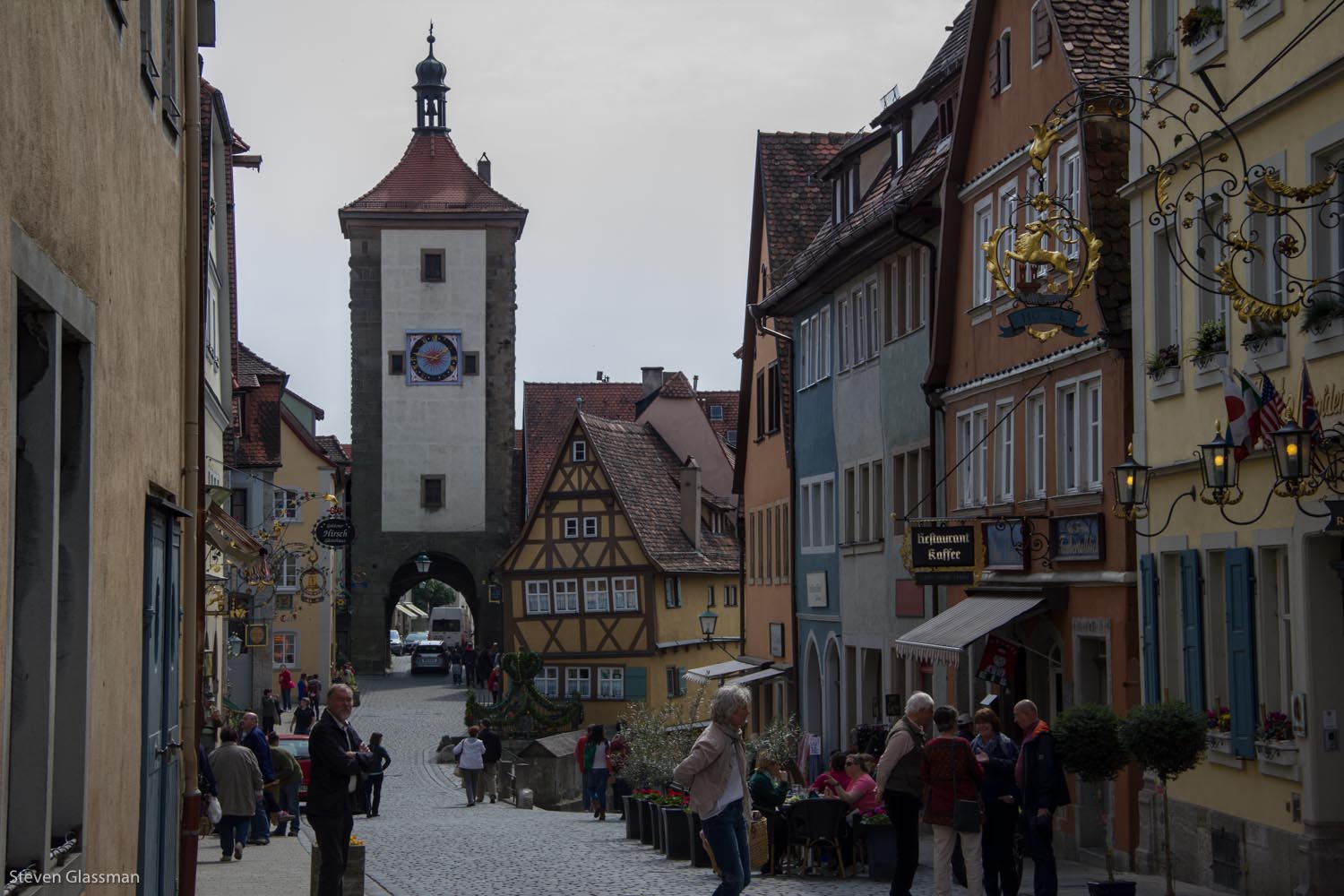
This street is the Plönlein.  The tower to the left is the Siebersturm, built in 1385.  This is one of those views that people take pictures of quite a lot.   Seriously, just put “plonlein” into a Google image search and you’ll immediately see what I’m talking about.
rothenburg-14

It was just before Easter, so these wreathy crown things are starting to show up all over Bavaria.   I’m not sure what they’re called, but they’re always draped with colored eggs.

rothenburg-15

The design on the eggs is quite intricate.

rothenburg-16

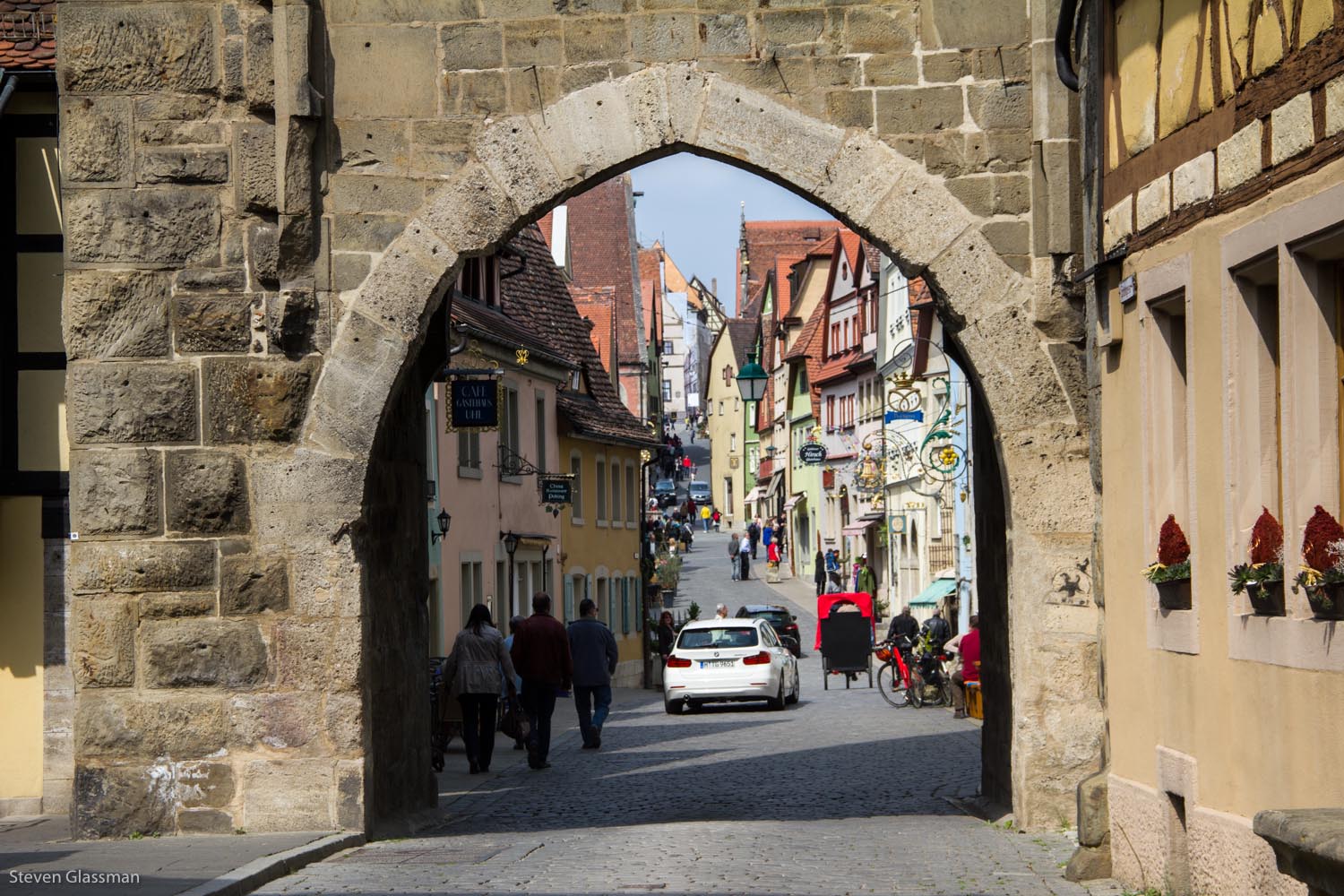
This kind of archway appears all over town.
rothenburg-17

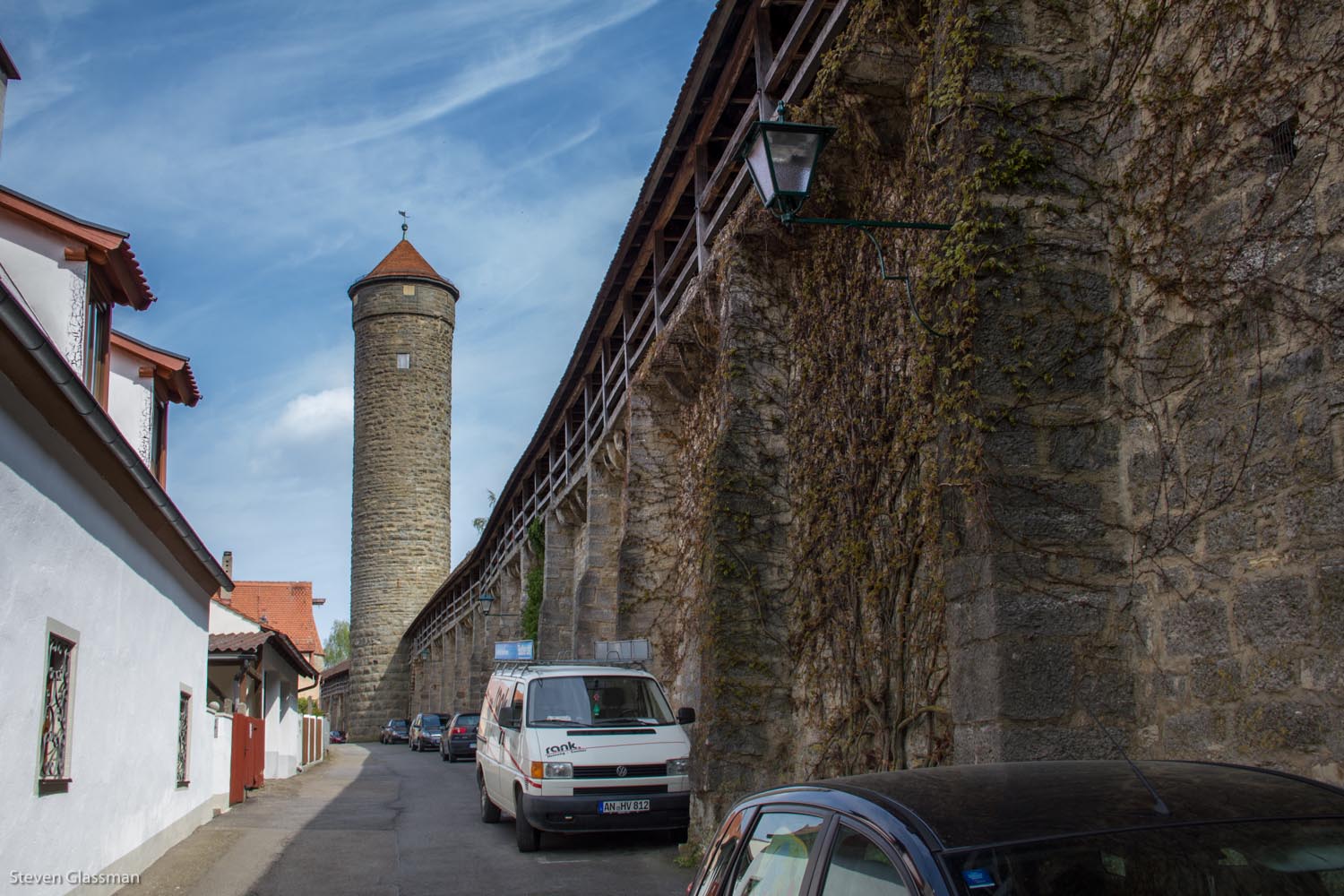
It is possible to walk along the wall.  There are stairs at regular intervals to go up to the walkway.
rothenburg-18

Wooden railings keep you from walking off the edge.

rothenburg-19

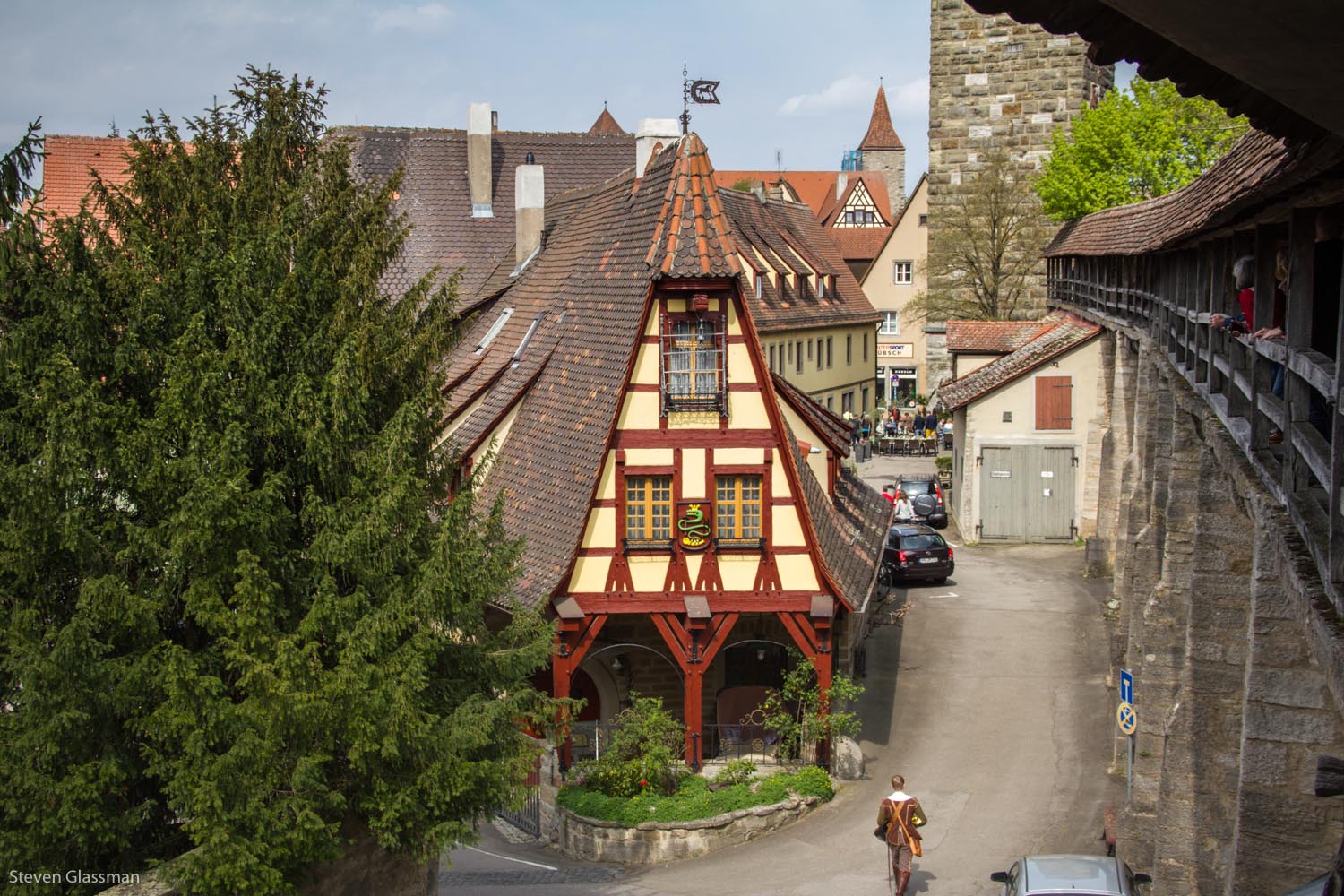
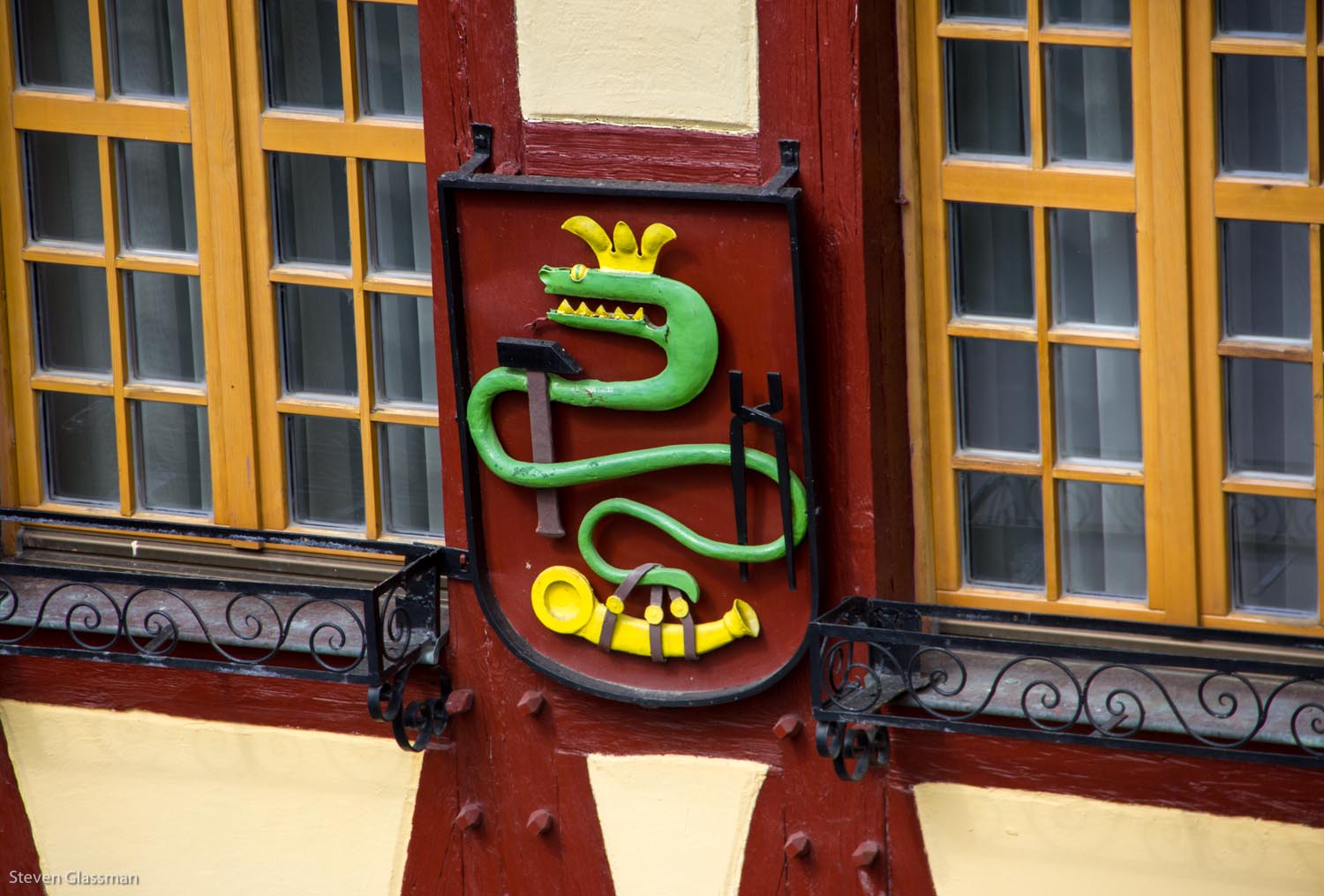
This house caught our eye because the seal over the door looks a great deal like Trogdor.
rothenburg-20

Seriously, it’s an ancestor of Trodgor.  Ready to burninate the countryside.
rothenburg-21

I think the wall may have been my favorite part of the city.  Right behind Trogdor, that is.

rothenburg-22

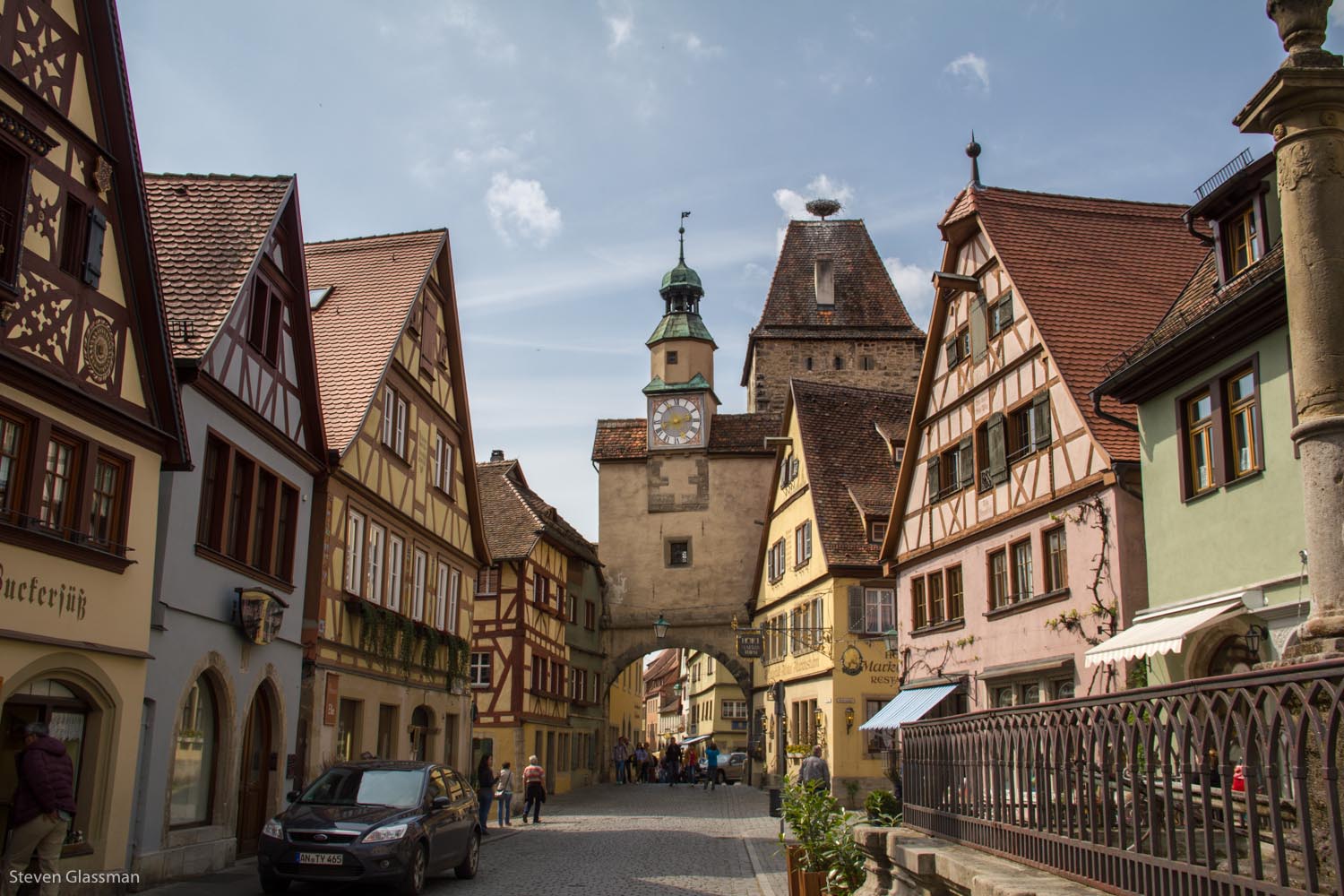
We had fairly spectacular weather for the day, also.  Blue skies, whispy clouds.   I secretly believe that the town of Rothenburg ob der Tauber employs weather wizards to keep it pretty like this.
rothenburg-23

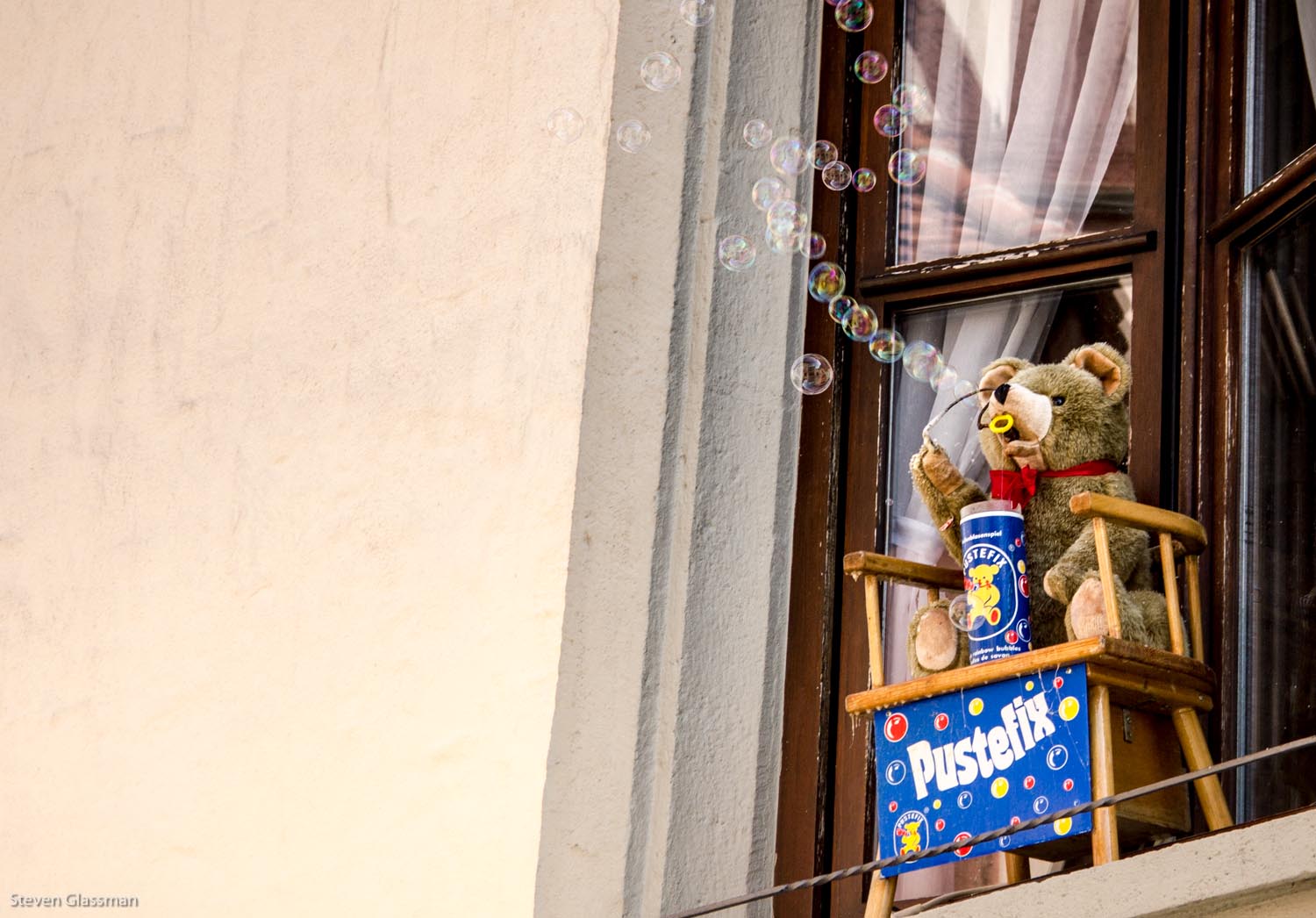
To break up these pictures of scenic Rothenburg, here’s a teddy bear blowing bubbles.  This is at a shop in town-  it took me a minute to figure out where the bubbles were coming from because it’s in an upstairs window and it’s not constant.
rothenburg-24

One last shot of the wall on our way out-  this was close to where we parked for the day.

rothenburg-25

Have you ever been to Rothenburg ob der Tauber?
Document Neupfarrplatz in Regensburg

In Neupfarrplatz, one of the largest main squares of Regensburg, there is a big church called the Neupfarrkirche.   Tucked behind that church is a triangular metal structure containing a door.  The door contains a stairwell that goes down into Document Neupfarrplatz, an exhibit made of an archaeological excavation beneath the square which occurred between 1995 and 1997 .  The exhibit isn’t open all the time.  There are tours at set times, and you have to go to the Tabak shop across the way to buy your tickets before the tour.  It’s only €5, for a one hour tour in German.

neupfarrplatz-1

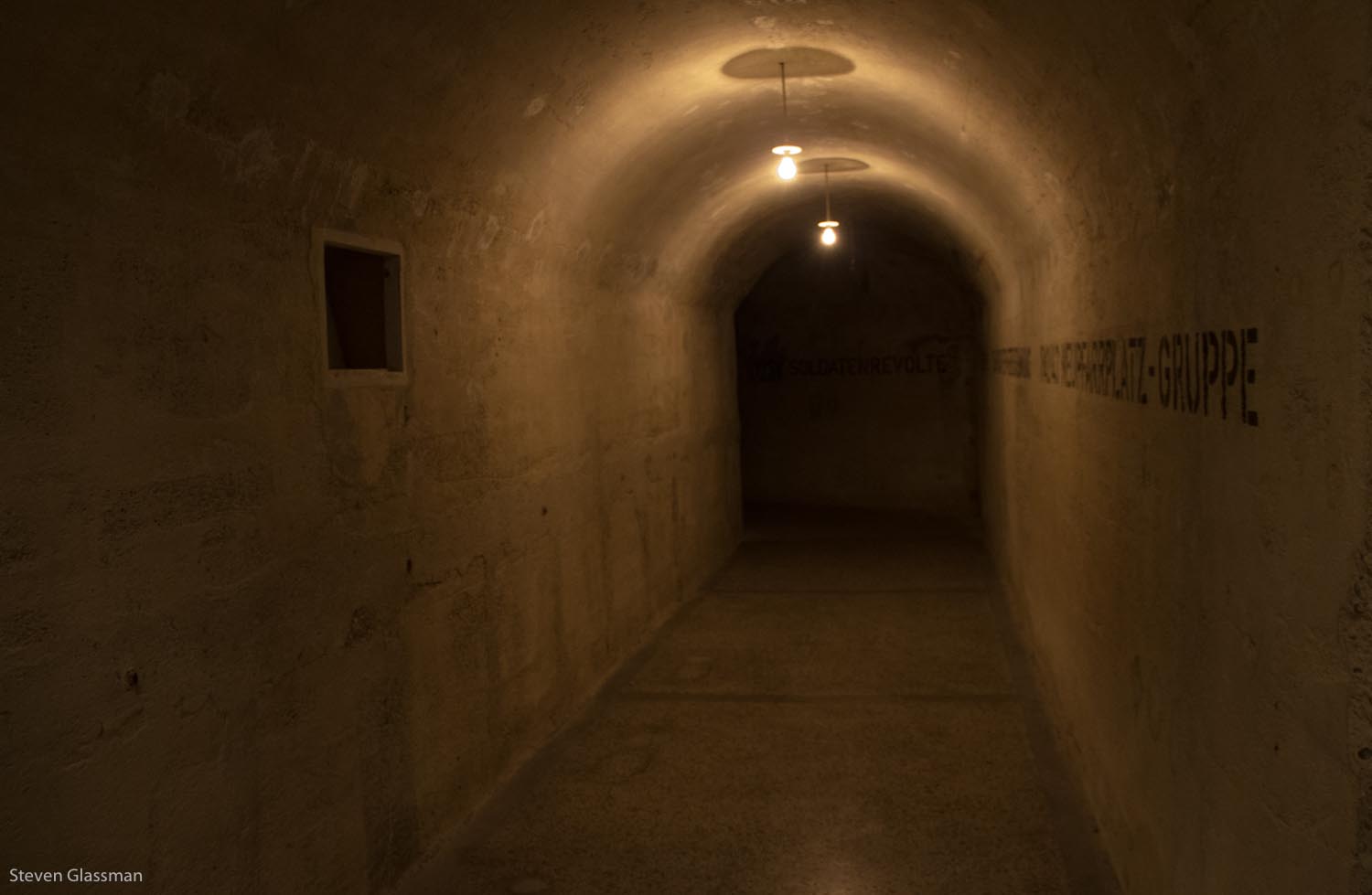
Once you get to the bottom of the stairs, you’re in a large chamber with pathways leading off in other directions.  There is a set of tunnels which comprise part of a ring shaped underground air-raid shelter built around 1940.  These first two pictures show part of that structure.

neupfarrplatz-3

Looking down the hall from the air raid shelter hallway, you can see part of the main chamber at the foot of the stairs.

neupfarrplatz-5

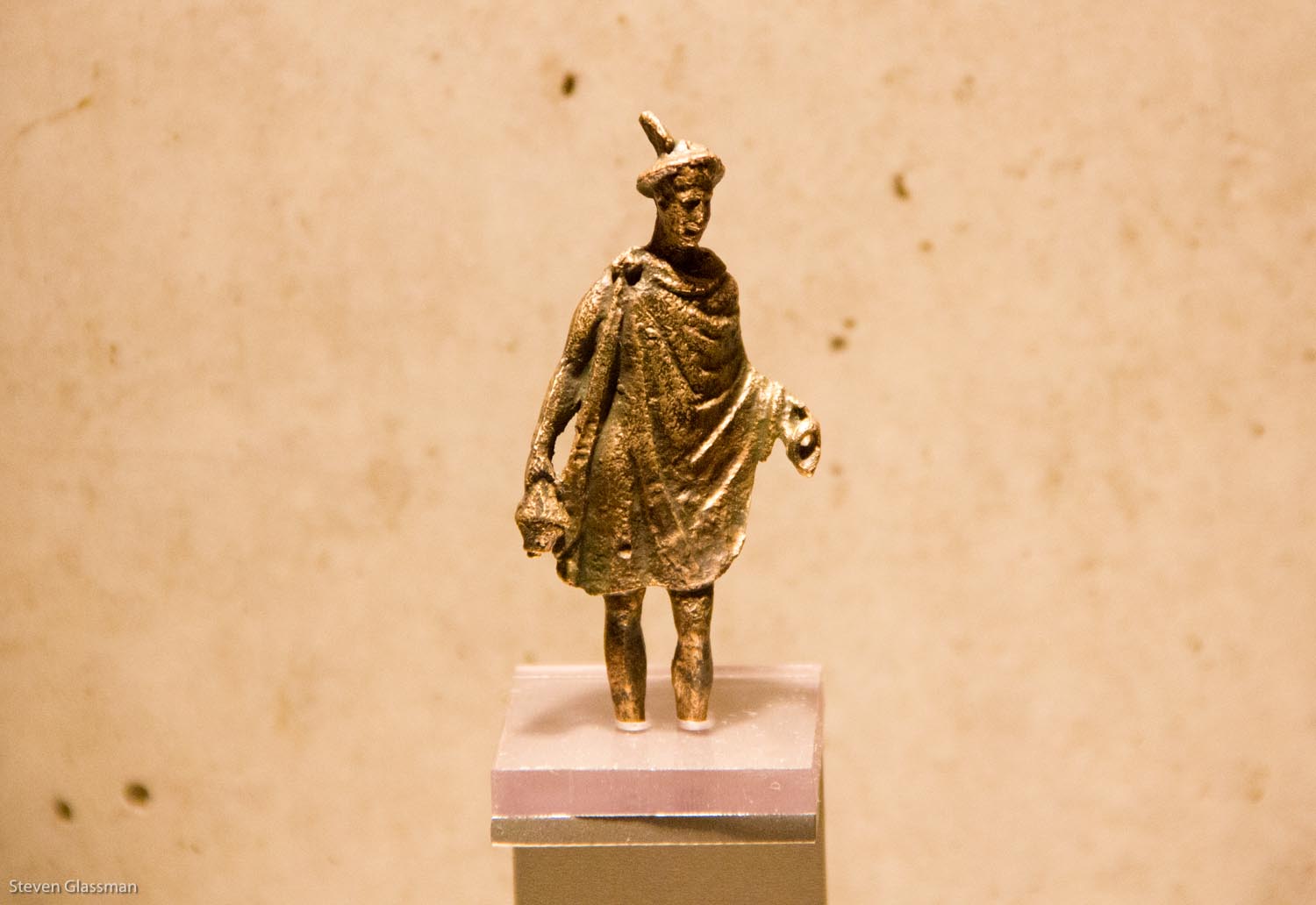
Inside that first chamber are three glass cases containing small items from three different time periods of the excavation.    The first is a bronze figurine of the Roman god Mercury, from the second or third century A.D.

This statue is believed to have stood on the house altar of a high ranking Roman official.  This location was the Roman camp Castra Regina around 179 A.D.  Castra Regina was a fortified military base, and I’ve posted photos of the old fortress walls before.  The remains of Castra Regina lie here, six meters below Neupfarrplatz.

neupfarrplatz-4

This pointy fellow is a bronze figurine of the high priest Aharon from the 15th century A.D.  This is from the medieval Jewish quarter, which also stood in Neupfarrplatz after the Roman Empire.  Southern Germany’s biggest Jewish community prospered here from the 8th century until February 21st, 1519, when the Jews were driven out of the city.    At the time of the expulsion, around 80 Talmudic scholars lived here.

neupfarrplatz-7

After the explulsion of the Jews in 1519, the synagogue was demolished.  A wooden chapel was dedicated to the Virgin Mary (Zur Schönen Maria) at this location soon after.   The chapel became a center for mass pilgrimages.  The next  item pictured is a silver sign of pilgrimage from around 1520.

So much money was generated by the pilgrims that the foundations of a new larger Neupfarrkirche were set in 1540.  This is where the names Neupfarrplatz and Neupfarrkirche come from-  Regensburg became Protestant in 1542 and the pilgrimage church was reconsecrated as “Neue Pfarre,” the new parish church.

neupfarrplatz-6

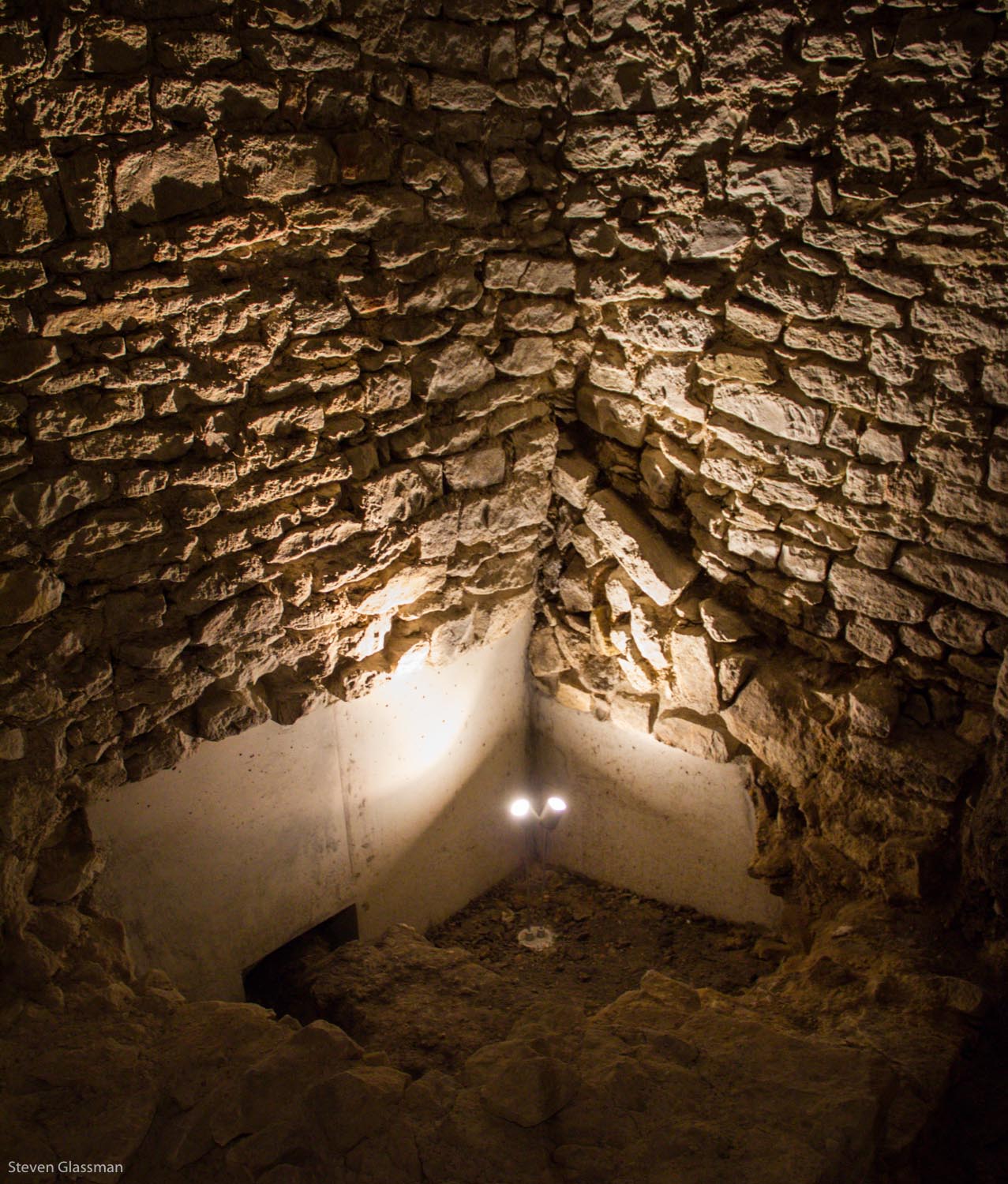
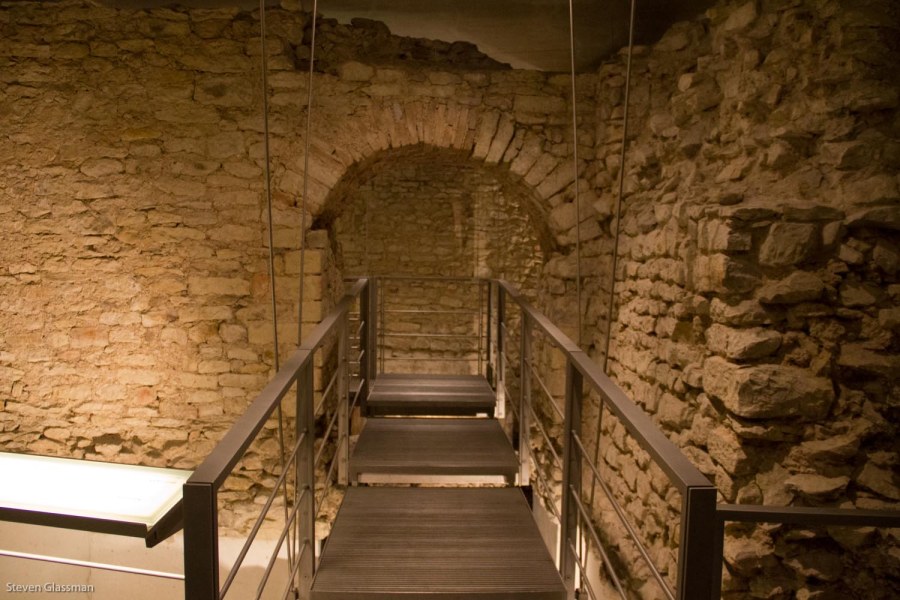
Opposite the bronze and silver items encased in glass is a walkway supported over part of the excavated structure.  These were cellar rooms – the archway goes to another room which had been converted several times.

neupfarrplatz-8 neupfarrplatz-9

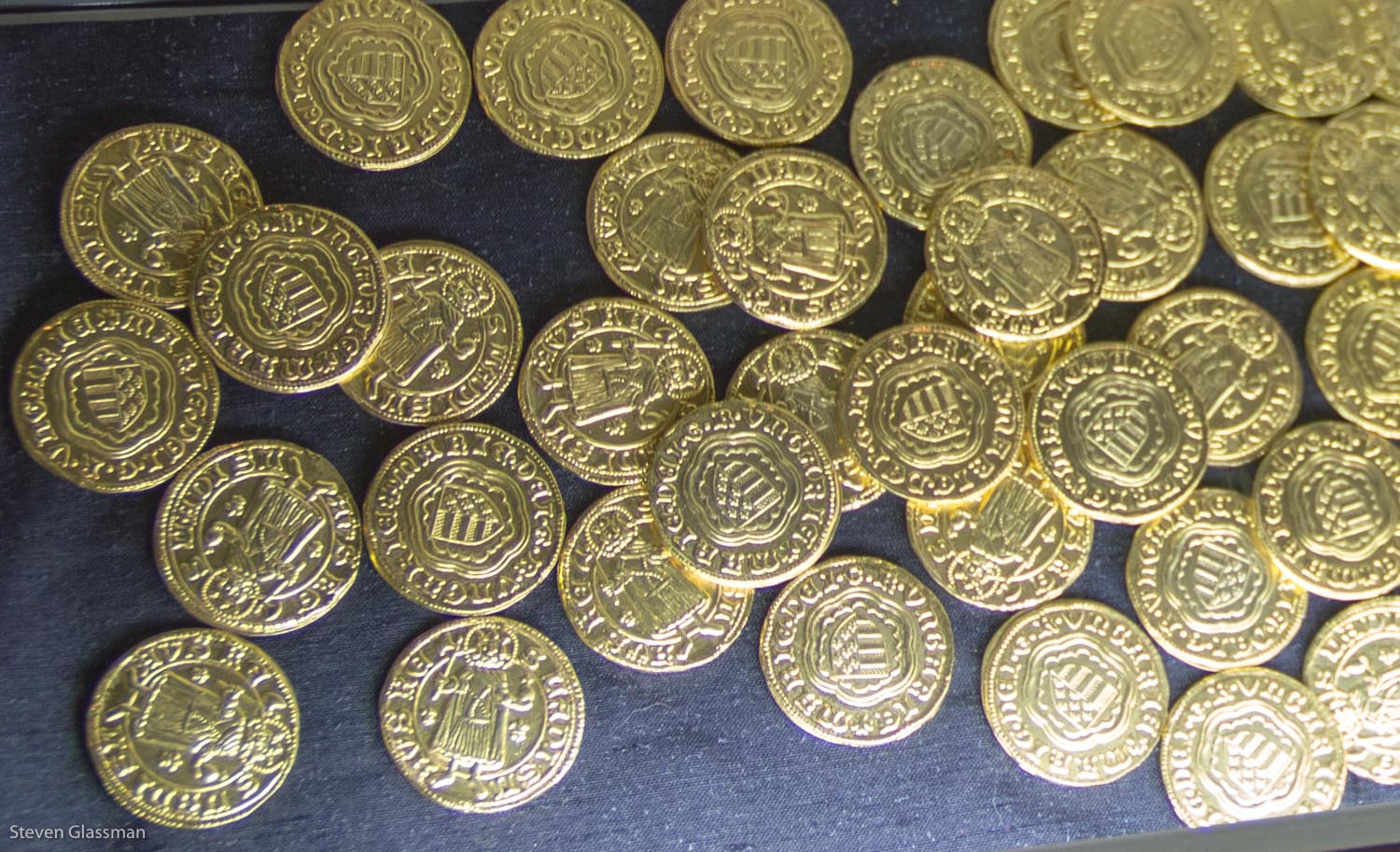
One of the more spectacular things found during the excavations were these 624 gold coins, buried around 1388.

neupfarrplatz-10

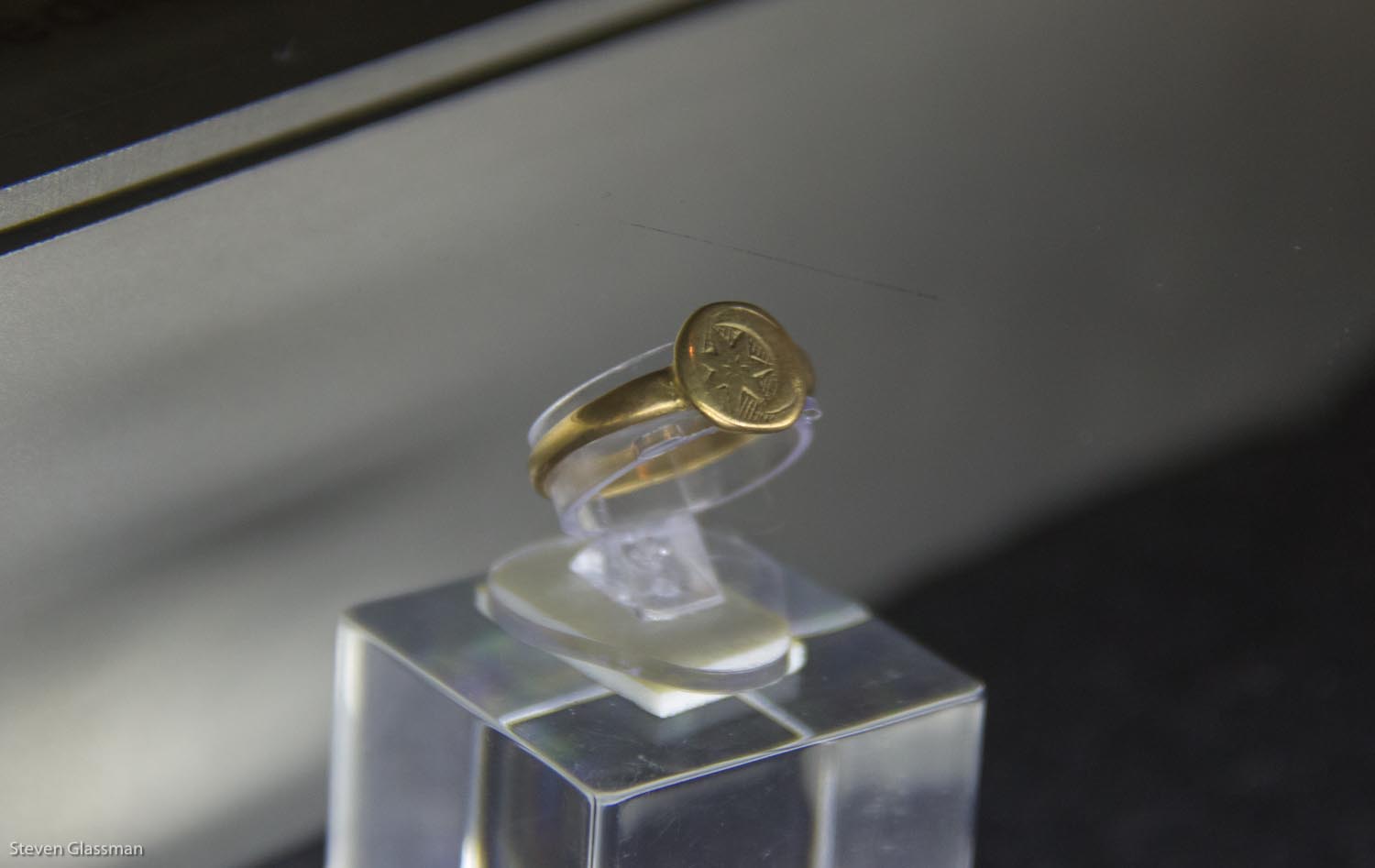
Next to the gold coins is a golden ring with the star-and-moon seal of the medieval Jewish community of Regensburg.

neupfarrplatz-11

This archway contains stairs which used to lead to the surface.

neupfarrplatz-12

Above the stairs is a “window” embedded in the surface of Neupfarrplatz.  The window cost around €25,000 to install.

neupfarrplatz-13

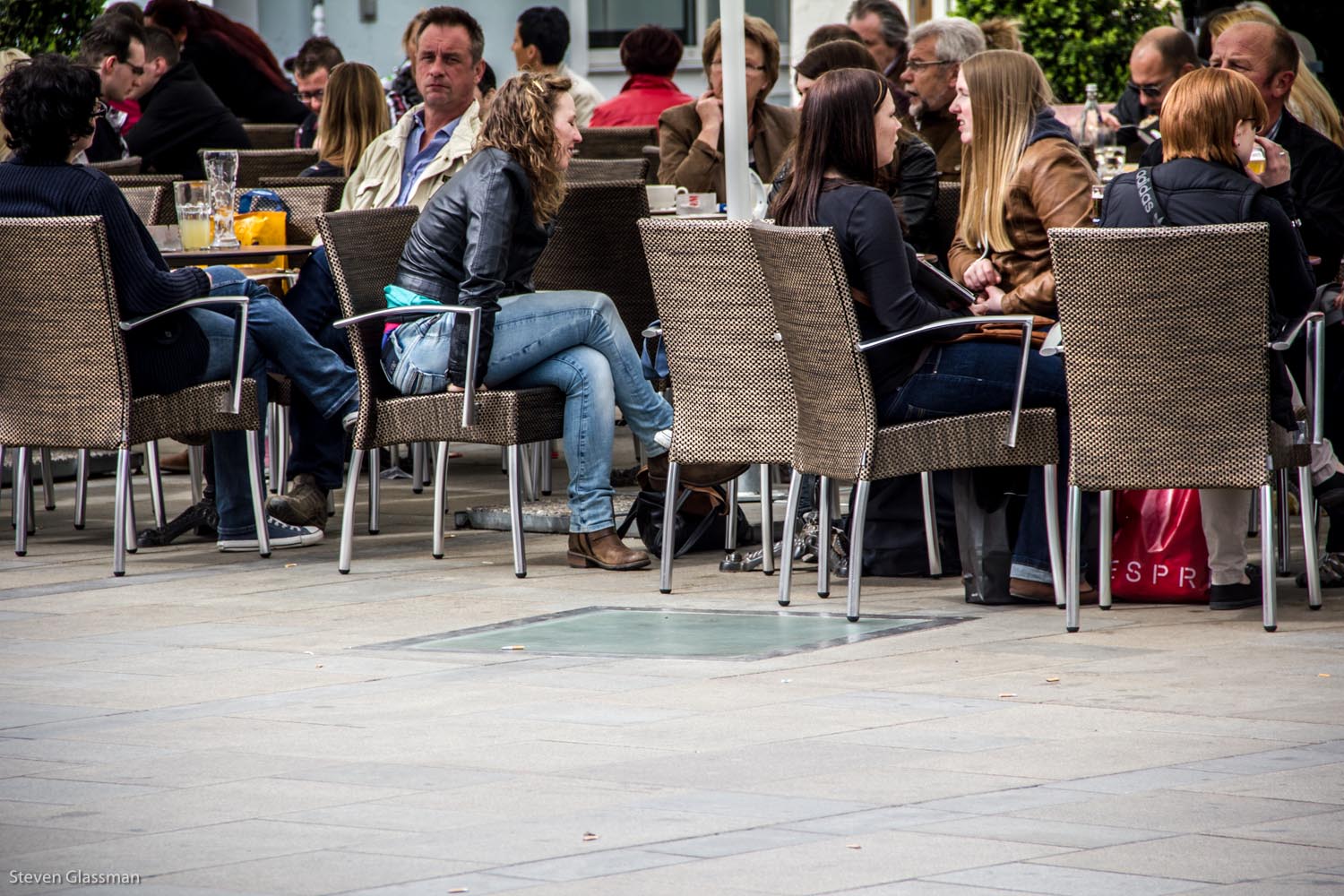
Here’s the window from above ground-  the people at this cafe probably don’t realize they’re sitting almost directly above hundreds of years of history.

neupfarrplatz-2

Opposite the Neupfarrkirche is a white marble structure which shows the layout and position of the original medieval Jewish synagogue prior to it being destroyed in 1519.    This artistic representation of the old synagogue was created in 2005 by the Israeli sculptor Dani Karavan.  It was designed to be a “Place of Encounter, ” a symbol of Christians and Jews living together.  Hebrew lettering engraved in the space where the Torah was kept spell out the word “Misrach” to point to the east, toward Jerusalem.

The white marble is directly in front of an ice cream cafe, so it’s a popular place for people to sit and snack with friends on a sunny day.

neupfarrplatz-14

So a Roman, a Rabbi, and a Protestant walk into a bar…   I’m just kidding.

Have you ever been to an archaeological excavation?

What on earth is a pizza-burger?

While I was traveling the weekend before last, I saw a commercial for a food called a Dr. Oetker PizzaBurger. It was part pizza and part burger and it was entirely fascinating.

My friends, my happy friends, I have tried the PizzaBurger so you don’t have to.  I have thoughts.

Is it a pizza or is it a burger?  Which phylum of junk food does this fall into?   The box says “2 burgers,” but I think it has more pizza-like qualities than burger-like qualities.  Here, let me show you.  This is the box:

pizzaburger1

Inside the box, there are two sleeves, each containing one “burger.”  The burger is both the top and bottom half, which you put in the oven, like so.

pizzaburger2

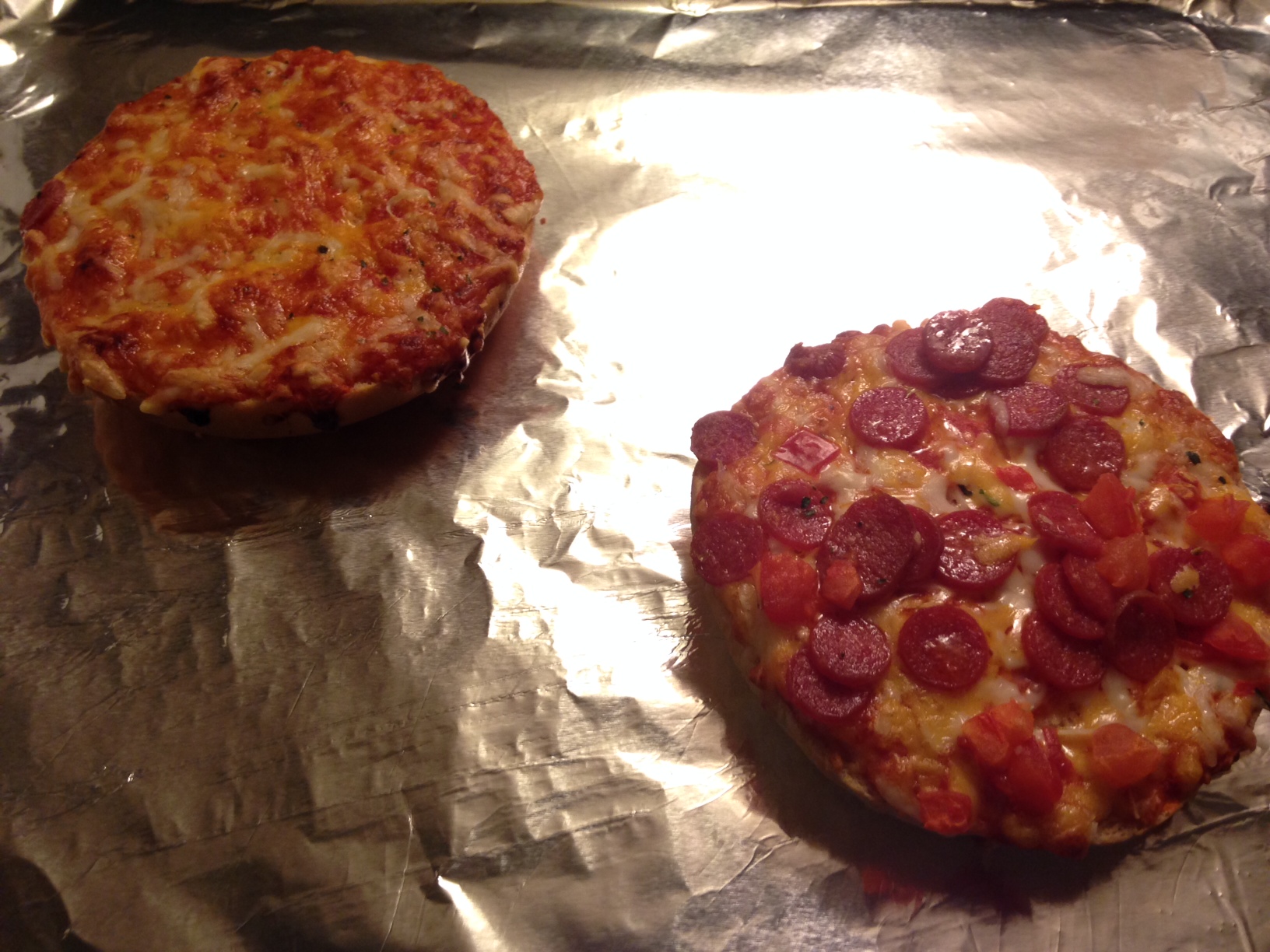
After about twelve minutes at 220 Celcius, this is how it looked.  To me, this looks like two small pizzas.    There’s nothing burgerlike about them except the shape-  no meat patty, no wilted lettuce, no burgeriffic condiments.

pizzaburger3

However, the next step is to put the two parts together with their gooey cheese bits touching.  It was roughly burger-shaped, but it was pizza-flavored.  It turns out that the bun is the one thing that’s burgerlike-  even after being baked in the oven, it’s soft and fluffy like a good hamburger bun should be.  Alas, a burger is not made by fluffy buns alone.

My opinion:  I think it’s just an interesting new form factor for pizza, and not a burger at all!

Sure was tasty, though.

pizzaburger4

Have you ever tried a PizzaBurger?  What do you think- is it a pizza or is it a burger? 

Misplaced

A friend of mine wrote a short post this week on a certain blue-backgrounded social network about the fifteen year anniversary of the passing of a mutual friend. I realized immediately afterward that another funereal anniversary had just passed us by without my realizing it.  Someone very special to me passed away eighteen years ago.  Eighteen years and six days, actually-  the anniversary slipped by without me realizing it this year.

This surprised me.  In the beginning, it was never far from my mind, and for the first five or ten years I always tried to do special things on the anniversary of her death.  More recently though, the dates slide past without notice, and without as much pain.  I guess that’s a good thing, in the grand scheme of things, but it still makes me feel a bit like I’ve misplaced something.   My mind is built on tangents, though, and thinking about this led me to think about Johannes Kepler.

Bear with me here, I promise there’s a point.

J-Kep (shut up, I can call him J-Kep if I want to) came to Regensburg in 1628, and became ill soon after.  He died on November 15, 1630,  at the age of 58, and was buried here. Regensburg is swarming with things named after Kepler.  There’s a memorial house and museum, on a street named Keplerstraße.  There’s also a pretty nifty memorial for him near the Bahnhof which I wrote about two years ago.  There’s a pharmacy named after him, and some other places around town as well.    The one thing that you won’t find in Regensburg, however, is Kepler’s grave site.

Although he was buried here, the grave site was lost when the Swedish army destroyed the churchyard in 1633, during the Thirty Years War.  Kepler’s self-authored epitaph survived:

Mensus eram coelos, nunc terrae metior umbras
Mens coelestis erat, corporis umbra iacet.
I measured the skies, now the shadows I measure
Skybound was the mind, earthbound the body rests.

More than anything else, this makes me really want to find his grave site.   I know it’s not something I could ever really do- I’m not a mapmaker or a scholar or a historian-  but I hate to think of Kepler as simply having been misplaced, like we’ll find him next to some spare change between the couch cushions.

What’s the last thing you misplaced?  Did you check between the couch cushions?

The Bishop’s Gone Walkabout

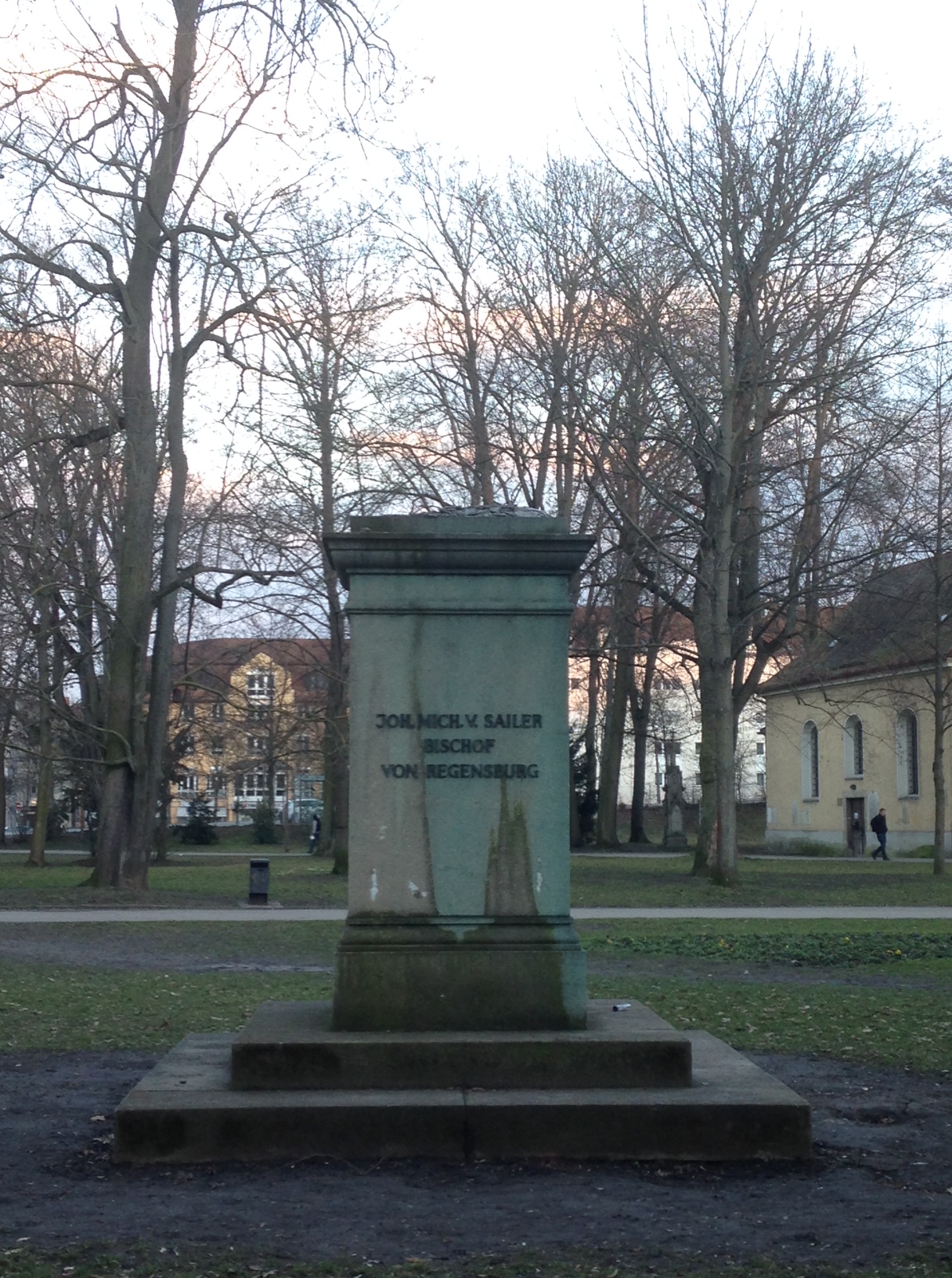
I was walking past Albertstraße this weekend when I noticed something peculiar.  This pedestal was empty:

invisibishop

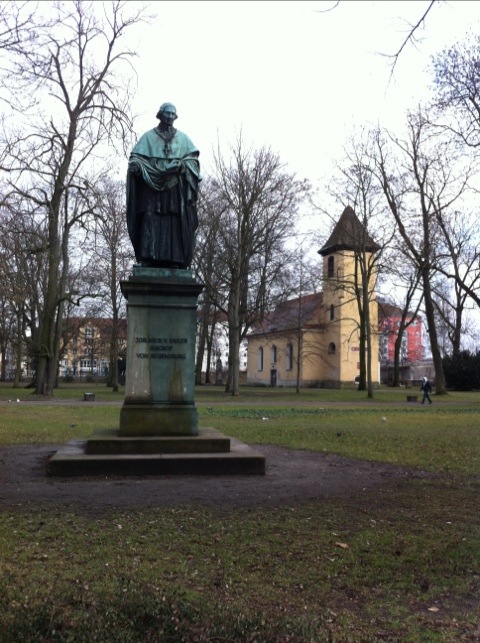
The last time I looked, which wasn’t all that long ago, the Bishop was still there, just as in this picture from a different blog post back in January of 2012.  I don’t know if he was stolen, or if he was taken to be cleaned.  He could be in the process of moving to another location, or perhaps he’s still there behind a complicated mirror-based illusion.

My neighbor tells me that he’s being restored and the moved to his original location.  During the war, the statue was removed to be melted down for ammunition.  Years later, the statue was found in a warehouse and installed in the current location.

That explanation is boring, though.   I prefer, much like Grig, to think of him as battling evil in another dimension.

20120125-151648.jpg

Where do YOU think the Bishop has gone?