Osaka Aquarium Kaiyukan

Before I left Osaka, I took a quick detour to the Osaka Aquarium Kaiyukan.

osaka-aquarium-1

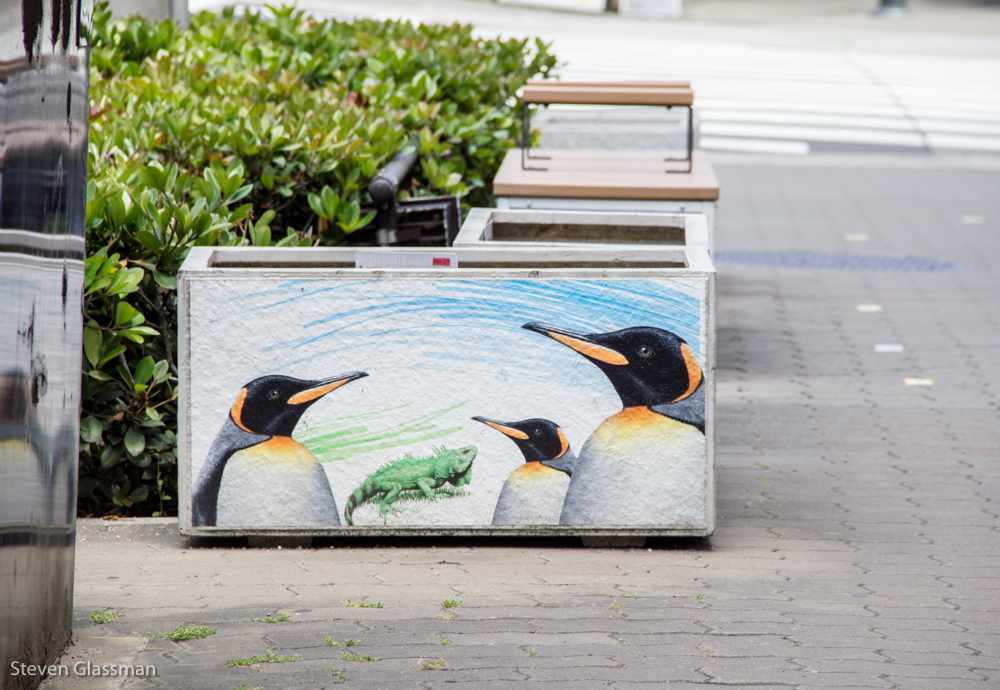
Between the rail stop and the aquarium entrance, there were themed paintings on flower boxes and the like.

osaka-aquarium-2

The aquarium building itself looks a bit like a whale tail.  This is probably not an accident.

osaka-aquarium-3

The entry area contained this adorable toothy anglerfish sculpture.

osaka-aquarium-4

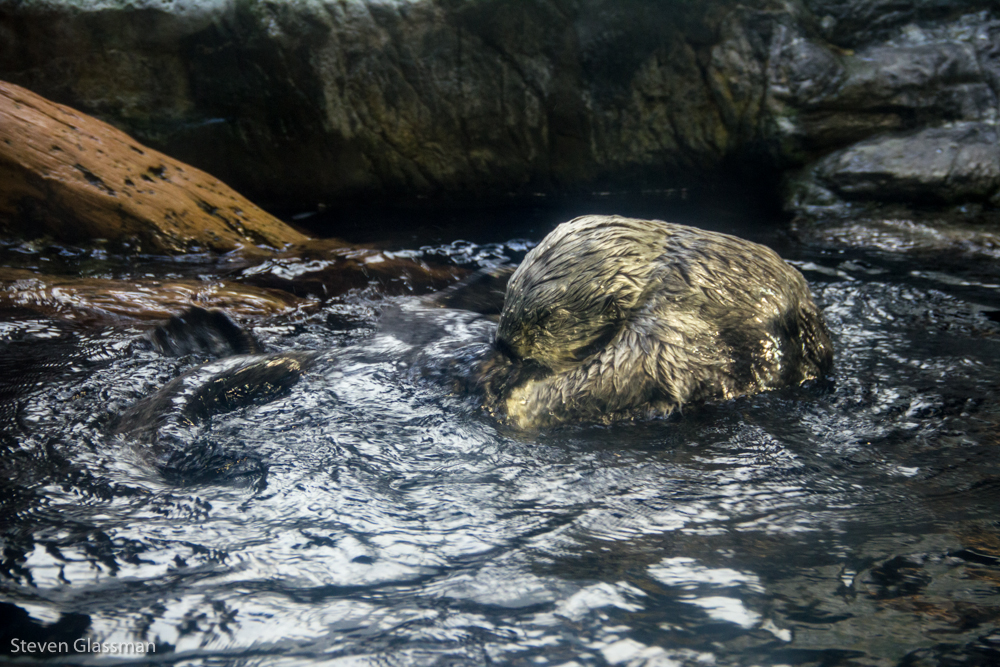
Most of my favorite things in the Osaka Aquarium were not fish at all.  For example, this little guy is an otter.  He was doing barrel rolls in the water.

osaka-aquarium-5

Nearby is a seal doing seal things.

osaka-aquarium-6

The aquarium is home to an entire tiny colony of Gentoo penguins.

osaka-aquarium-7

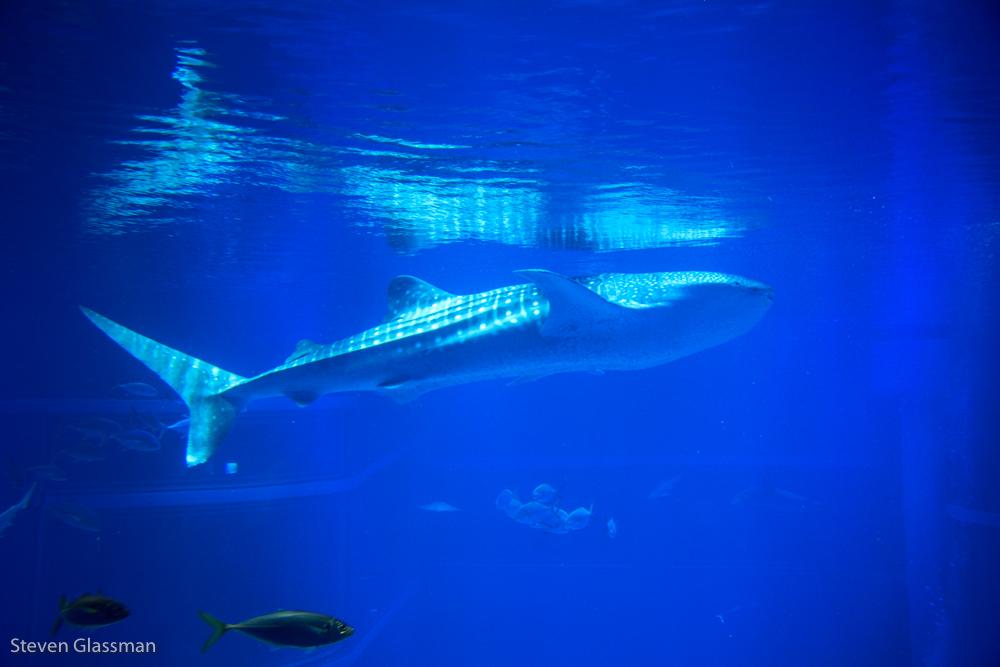
…and one juvenile whale shark.

osaka-aquarium-8

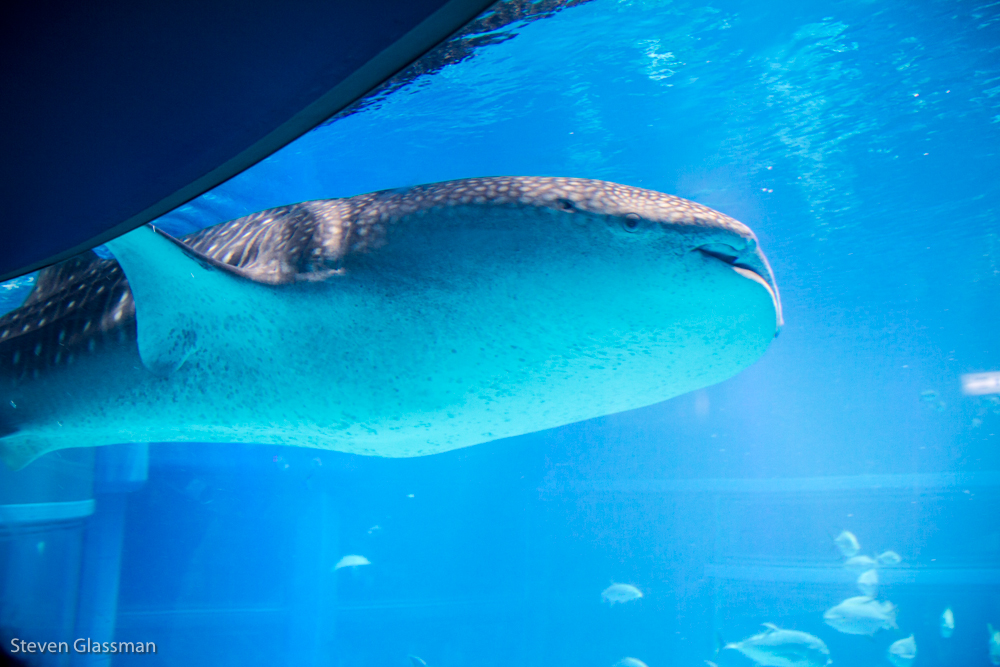
This spotted fish was the main reason I wanted to come to the aquarium.  I hadn’t ever seen a whale shark up close before.

osaka-aquarium-9

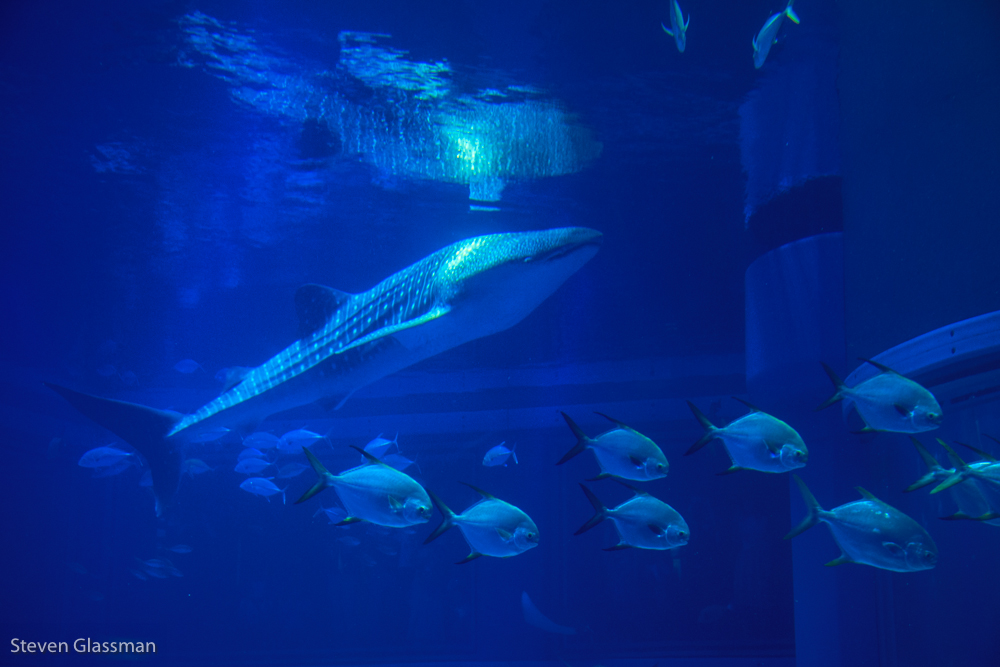
The whale shark swims in the aquarium’s Pacific Ocean tank, which is also home to bluefin tuna and many other very large fishies.

osaka-aquarium-10

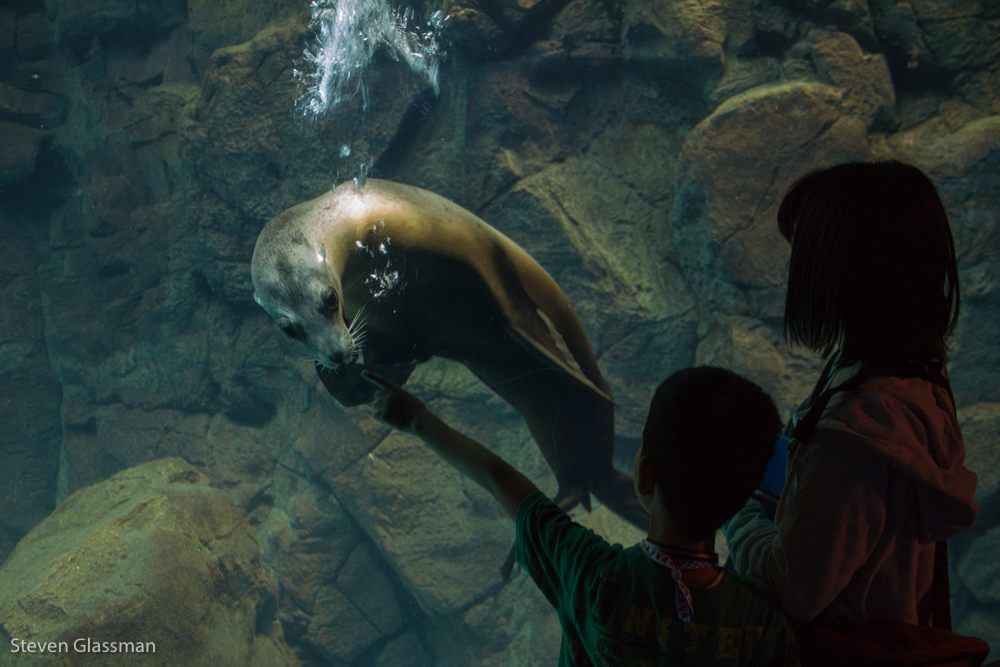
This seal was very interested in what was happening on our side of the glass.

osaka-aquarium-11

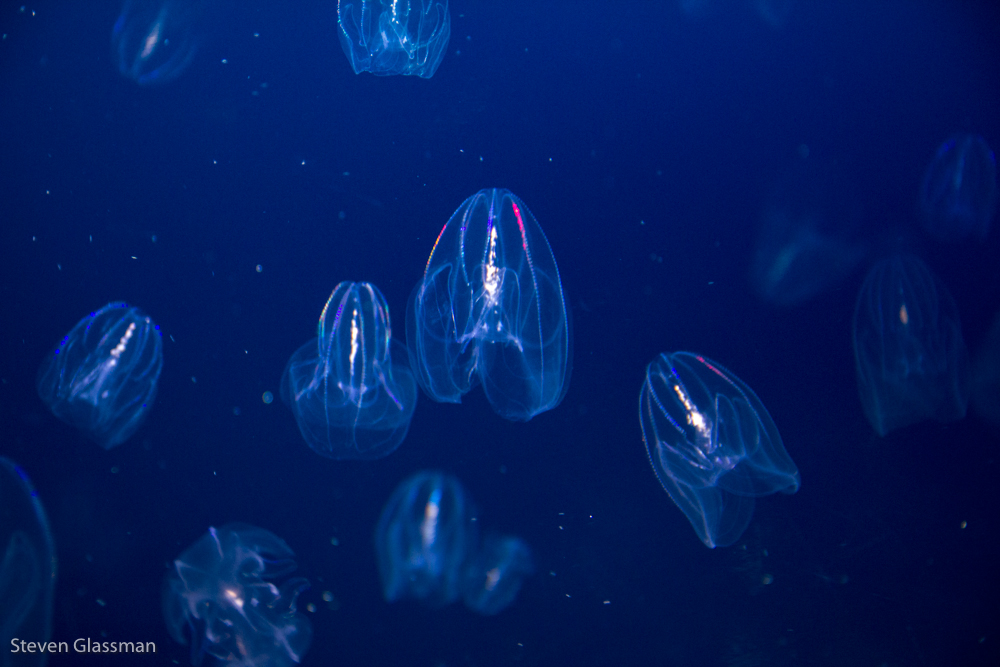
Bio-luminescent jellyfish, as seen through very thick glass.

osaka-aquarium-12

My brain keeps wanting to label these cuttlefish as “scuttlefish.”  Do you suppose there’s a cuttlefish in charge, telling them which direction to point?

osaka-aquarium-13

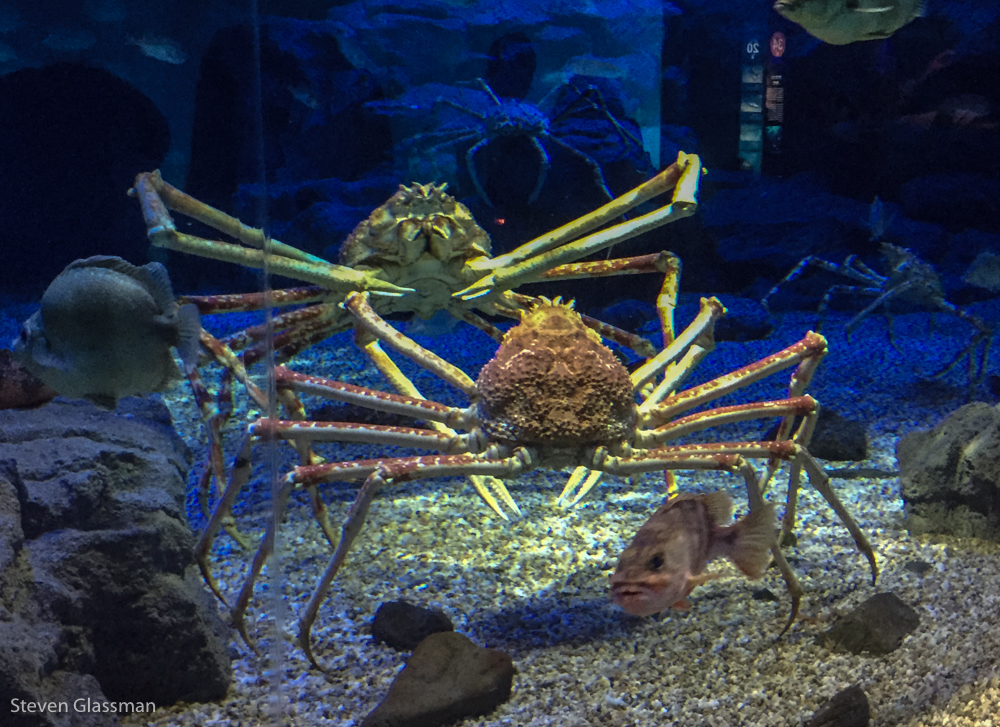
This crab is facing a tank wall which appears mirrored because of the light inside the tank.  In my head, I hear his little crabby voice doing his best Pacino impression. “You talking to ME?!”

osaka-aquarium-14

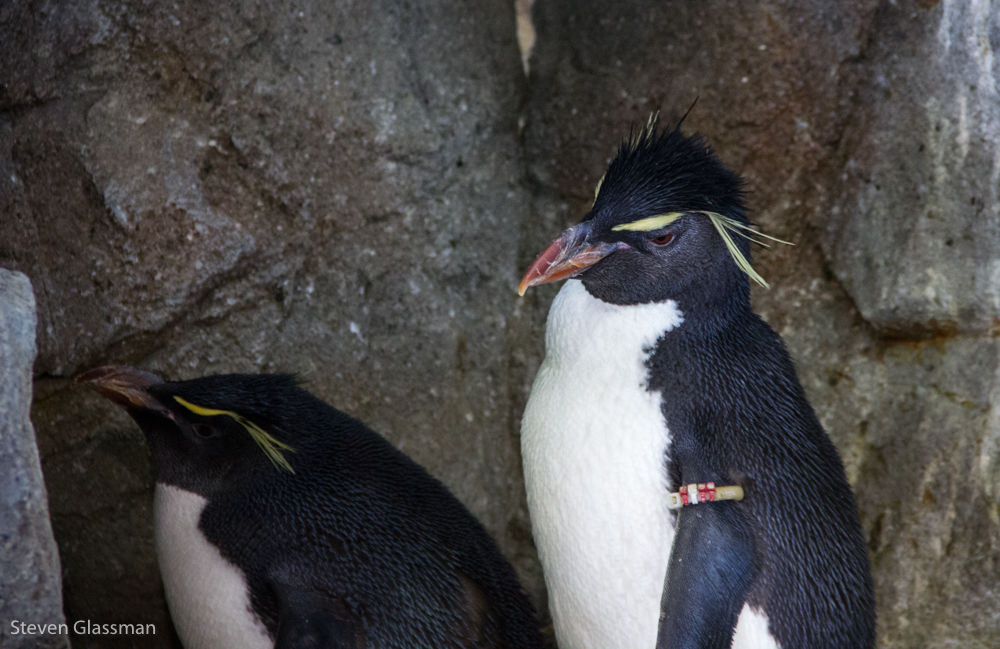
Approaching the exit, there was a small group of very smelly Rockhopper penguins.

osaka-aquarium-15

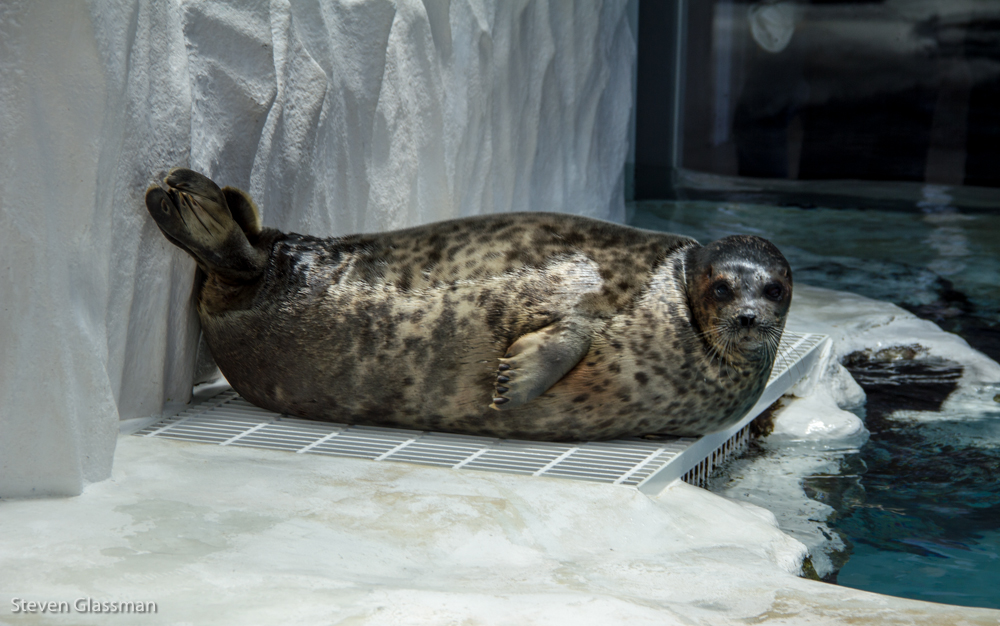
…and one very chubby seal.

osaka-aquarium-16

I also took a bunch of other fish pictures, but the photos in this post are the ones which I thought were the most visually interesting.

Have you ever been to the Osaka Aquarium Kaiyukan?  Have you ever seen a whale shark up close?

Osaka

In the second weekend of my time in Japan, I did some very intensive travel.  I started in Hiroshima, and on Saturday afternoon, I hopped over to Osaka.   I took the rail directly into the center of town, dropped off my bag at the hotel, and immediately set out to see stuff.

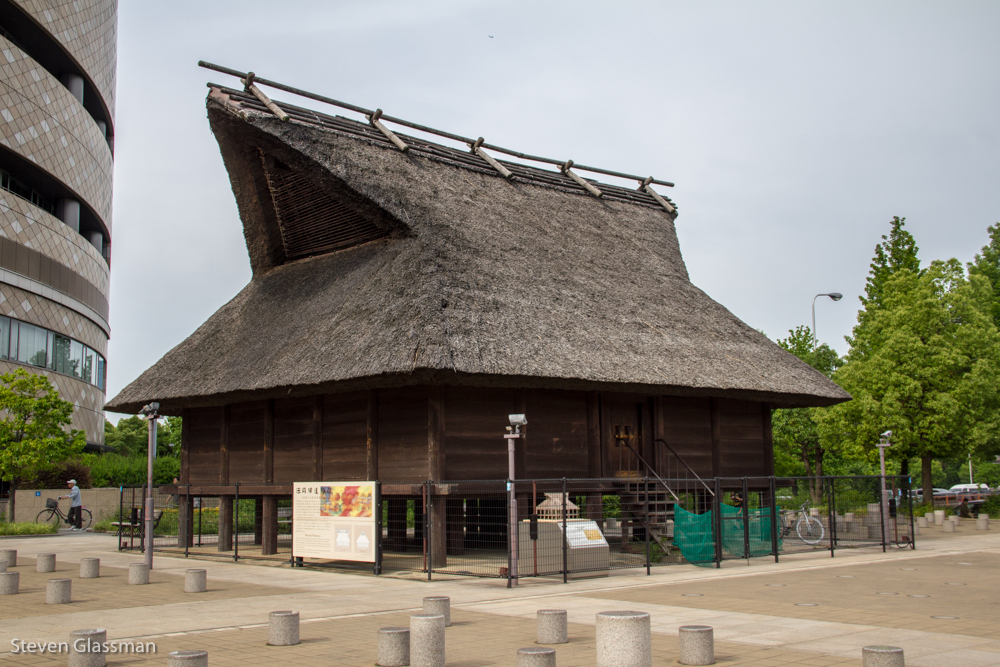
One of the first things I checked out in Osaka was the Castle.  On my way there, I walked past this building and I really wish I had paid more attention to what it is.   All I know for sure is that it’s attached to the Osaka Historical Museum, the curved building to the left.

osaka-2

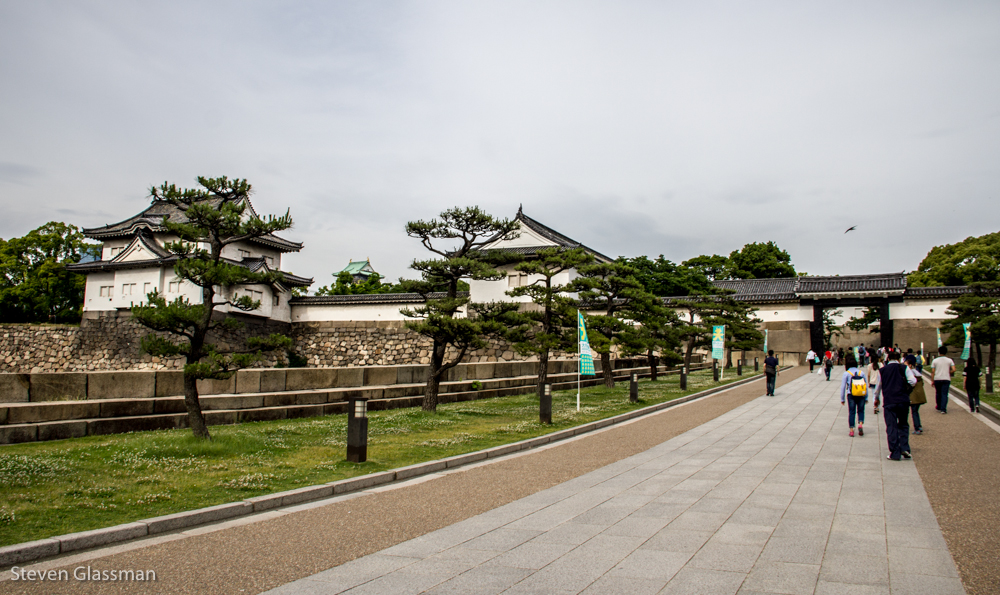
Osaka Castle is in a very large green space with ascending walkways spread out over fifteen acres.  I wasn’t expecting the way to the castle to be quite so twisty.  You walk through several large gateways to get there, and this was the first one.   This is Otemon gate.

osaka-3

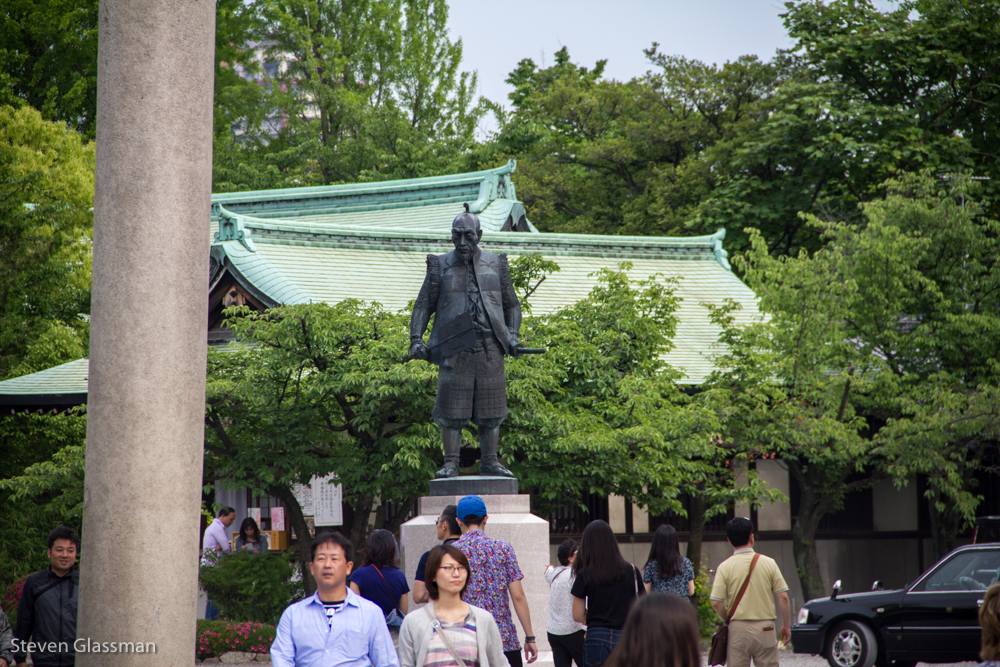
This charming fellow with the Samurai’s top-knot is Hideyoshi Toyotomi, the founder of the Edo period.  He’s the ruler who built Osaka Castle.  The original version of this statue was destroyed during World War II, and this one was remade in 1943.

osaka-5

I quite like these little Samurai guys.

osaka-6

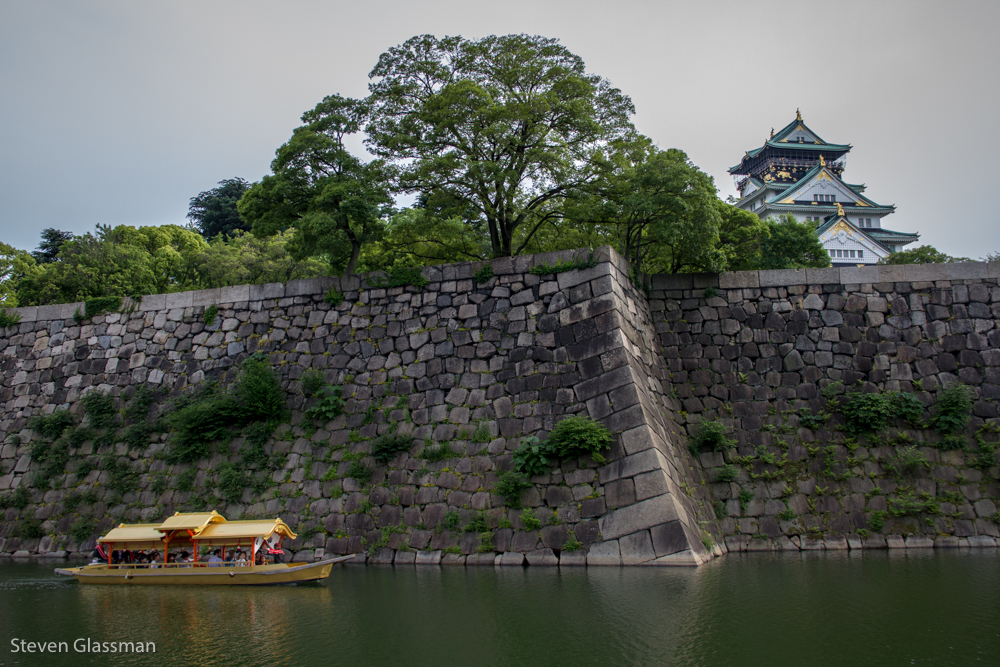
This is the castle itself.  According to local legend, Godzilla destroyed it in 1955 by pinning another giant monster against it.  It has since been rebuilt.

osaka-7

Every once in a while, I have to stick myself in here so you can see that I was really there.  Truly!

osaka-8

I kept walking through the grounds, past the keep, only to discover that the walkway to the castle from the other side was significantly less shorter.  Much less scenic, however, until you get to this side, just past the moat.

osaka-9

With my mission to see Osaka Castle completed, my next task was to find Amemura, or Little America.  “Amerikamura” was founded in the 1970s in Shinsaibashi, where it was a central place for the import of fashion from the United States.  It has since become a place with a trendy nightlife, and a rather interesting blend of American culture into the area.    I knew I was getting close when I saw this giant kitchsy bowling pin.

osaka-10

The most well-known landmark of Amemura is arguably a scale model of the Statue of Liberty atop one of the buildings.

osaka-11

This is how I knew for certain that I was in the right place, because there’s not really much else to indicate that you’re in Little America.

osaka-12

Before returning to the hotel for the evening, I had one more thing on my to-do list.  I wanted to go to the Umeda Sky Building, sometimes referred to as the Floating Garden even though it isn’t really a garden.  That tall building with twin towers in the center is the building in question.

osaka-13

When you get closer, you can almost see why it’s called the Floating Garden.  Two tubes contain the escalator up to the very tall observation level.

osaka-14

At the top side of those escalator tubes is a round open-air observation deck with amazing views of Osaka’s skyline.  While this isn’t taller than some of the other places I’ve been on this trip, it’s still pretty nifty.

osaka-15

“Over Macho Grande?”  “I don’t think I’ll ever get over Macho Grande.”

osaka-16

I’ve pointed out Love Locks in Regensburg, Cologne, and Paris, and here they are again in Osaka.

osaka-17

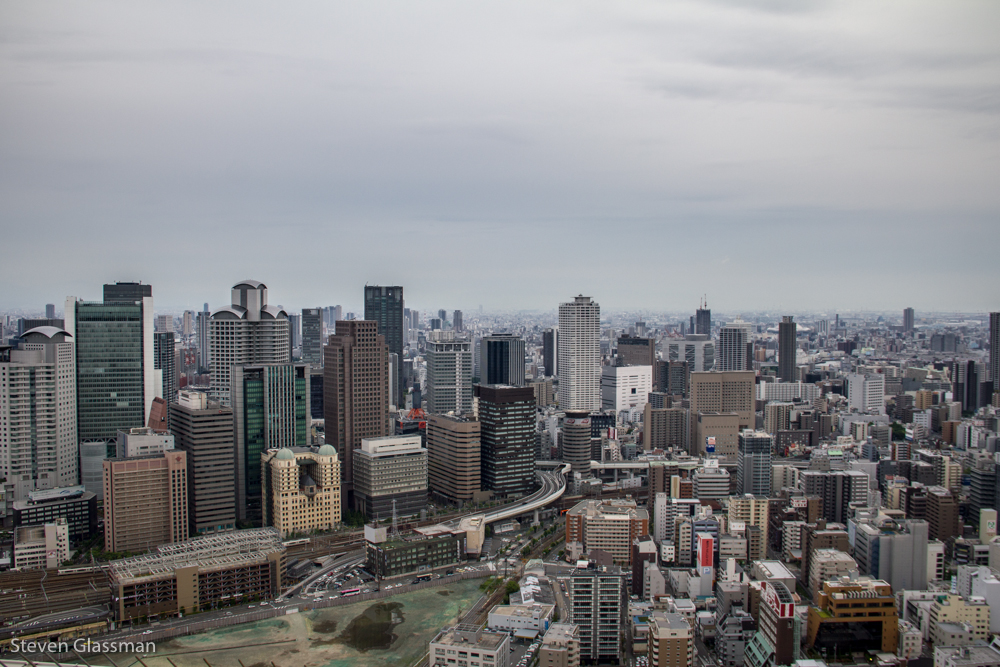
I digress.  Here’s the amazing view to the other side of the observation deck.  If you look carefully, you can see my reflection near the center bottom, as I took this photograph.

osaka-18

Osaka contains over 19 million inhabitants, which makes it one of the largest metropolitan areas in the world.

osaka-19

It’s still not as crowded as Tokyo, though, or at least that’s how it feels.

osaka-20

I want to say that this is the Dojima-gawa river, but I have no clue if I’m reading the maps correctly.    Pretty view, though, don’t you think?

osaka-21

By the time I was done at the Umeda Sky Building, I went back to my hotel room near the train station.  I had a very nice room, and the view from my hotel room window was pretty nifty.

osaka-1

In the morning, I took a little side trip before getting on the train to the next destination.  On that side trip, I happened upon a giraffe made of Lego.    The building over the giraffe’s shoulder is the Osaka Aquarium, but that will be the next post.

osaka-22

Have you ever been to Osaka?

Hiroshima

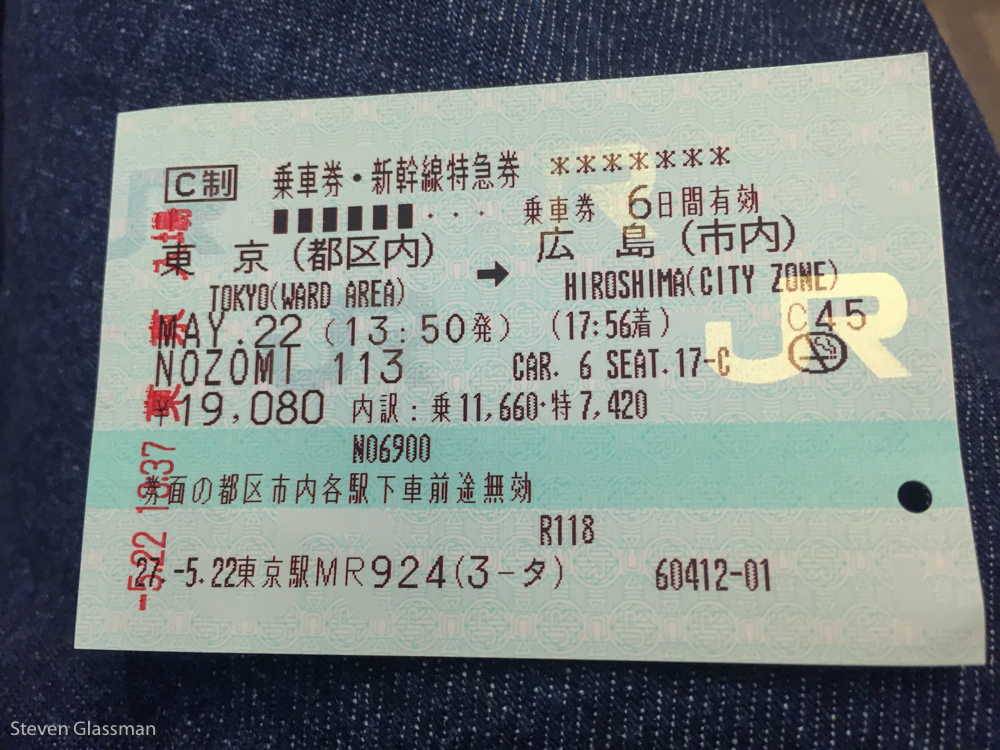
On my second full weekend in Japan, I bought a ticket for a Shinkansen ride to Hiroshima.  By high speed rail, the trip takes a smidge over four hours.  My plan for this weekend was aggressive and exhausting, but totally worthwhile given my limited time in Japan:

  • Friday, go to Hiroshima.  Stay there overnight.
  • Saturday, stash my bag in a train station locker and then see as much as I can before late afternoon.
  • Saturday before dinner, take another two hour Shinkansen ride to Osaka.
  • See as much as I can in Osaka before it’s too dark, and stay there overnight.
  • Sunday, see more of Osaka, including the aquarium.
  • Sunday afternoon, take a very short train hop over to Kyoto.
  • In Kyoto see two very specific things before taking one last two hour train back to Tokyo.
  • Profit.

hiroshima-00

The weekend didn’t go entirely according to plan, but I did get to see most of what I wanted to see, starting with a lovely fast train ride through the Japanese countryside after leaving work on Friday.  Have I mentioned lately that I love trains?  I really do.

hiroshima-2

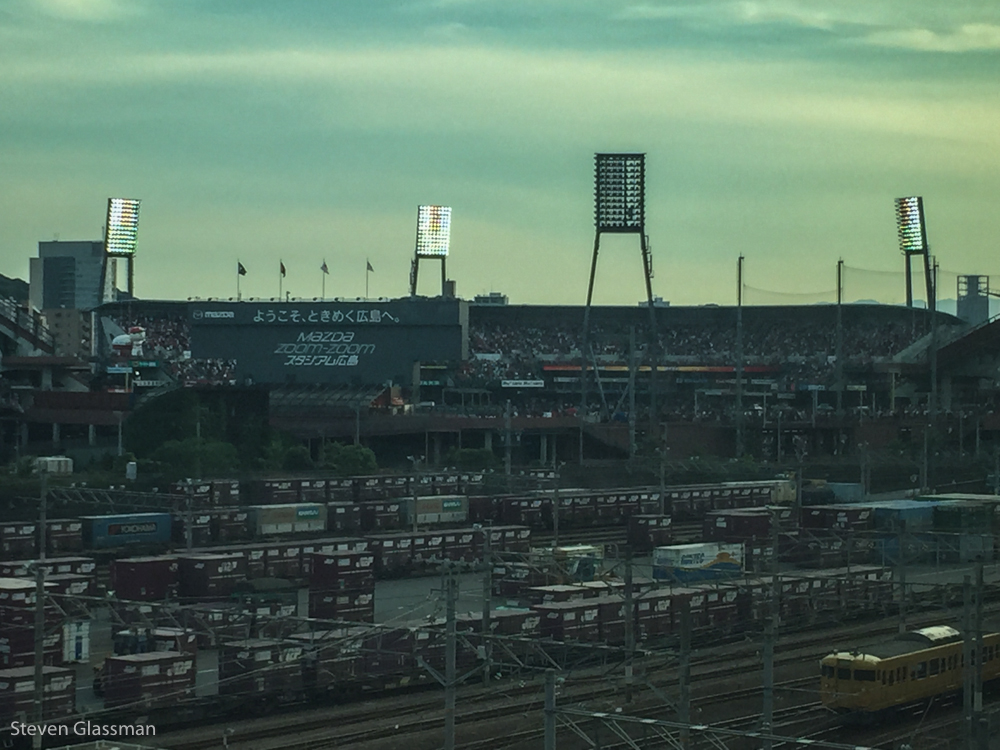
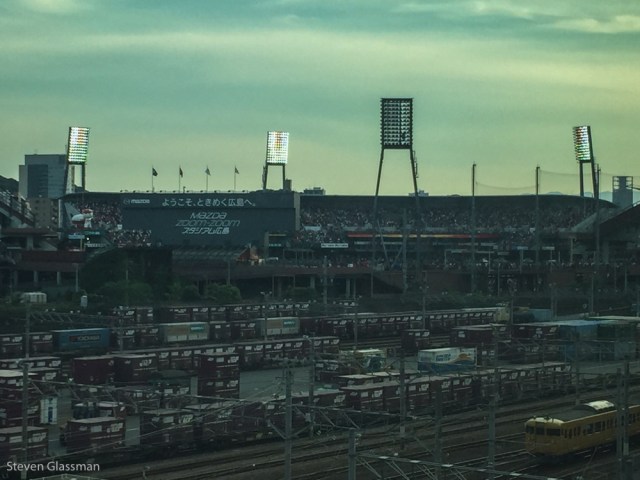
Arriving in Hiroshima shortly before sunset, I saw that a baseball game was in progress at the Mazda Zoom-Zoom stadium, which probably has another, more accurate name that I haven’t learned.  I never had a chance to see a baseball game in Japan, but I’m told that they’re very entertaining.  Fellow blogger Adam has written about baseball in Japan quite a few times.
hiroshima-1

A momentary aside about the station in Hiroshima-  this waterfall statue thing looks a great deal to me like a pair of mushroom clouds.  I’m quite sure that’s not the intent, but I can’t be the only person who sees that image, can I?

hiroshima-4

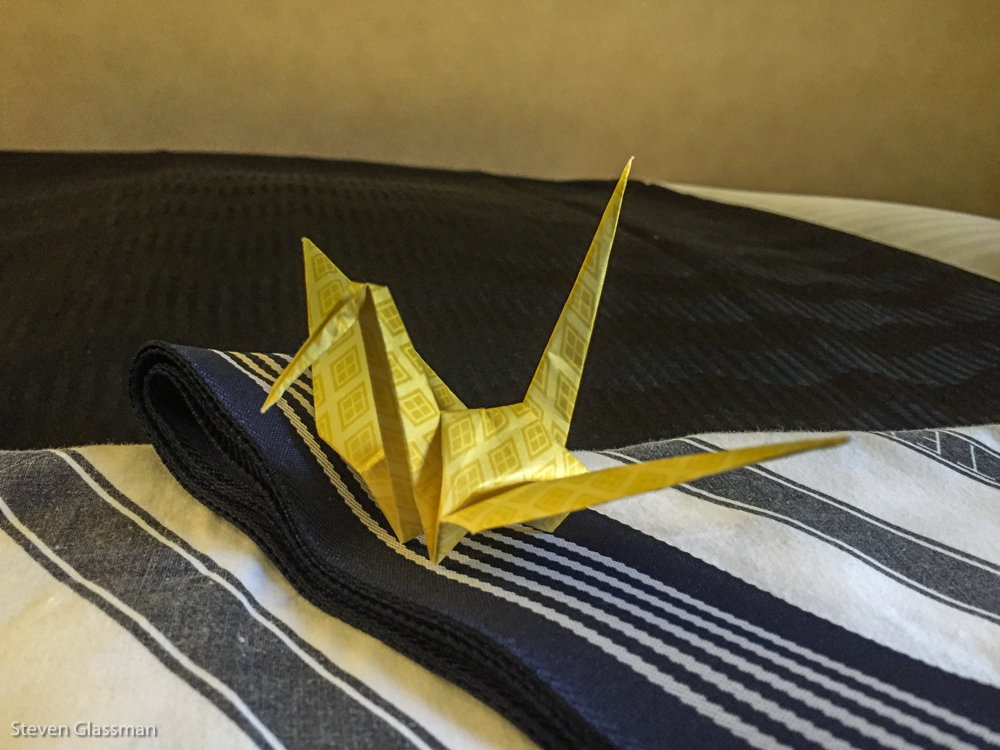
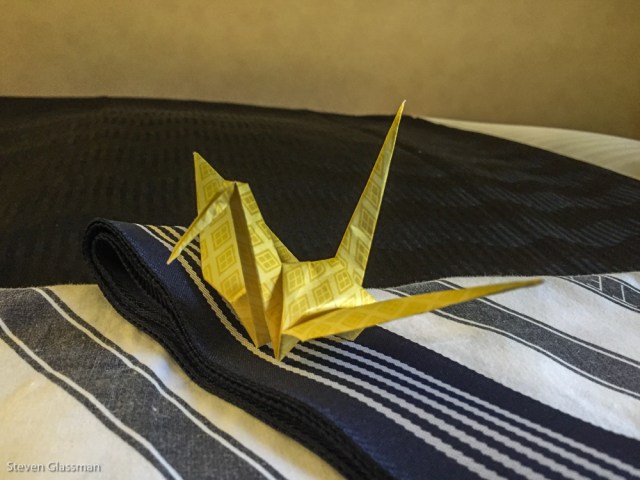
After checking into the hotel in Hiroshima, I was delighted to find that housekeeping had placed a tiny paper crane on the bed.
hiroshima-3

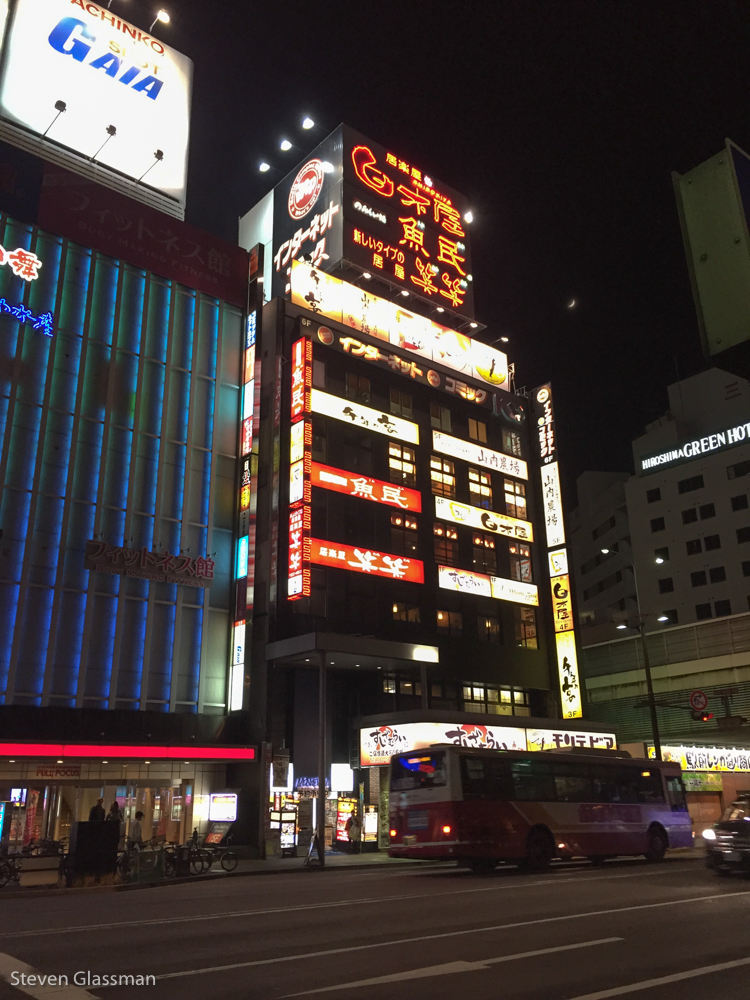
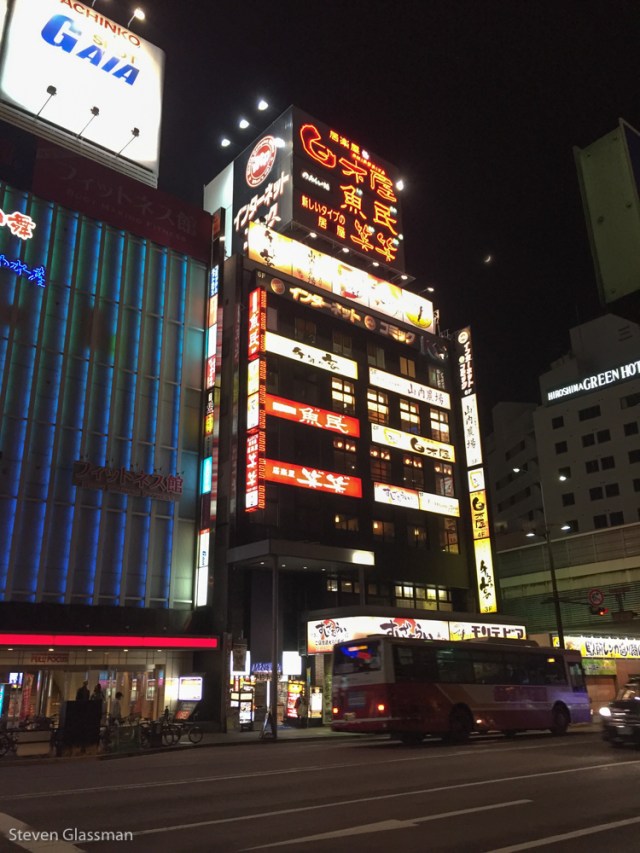
Once I dropped off my bag at the hotel, I set back out to have some dinner.  I ate some junk food near the station, delighting in how much the city has been rebuilt since the bombs 70 years ago.  I don’t know why I was surprised about the rebuilding-  70 years is a very long time.  It’s not as if the land is irradiated.
hiroshima-5

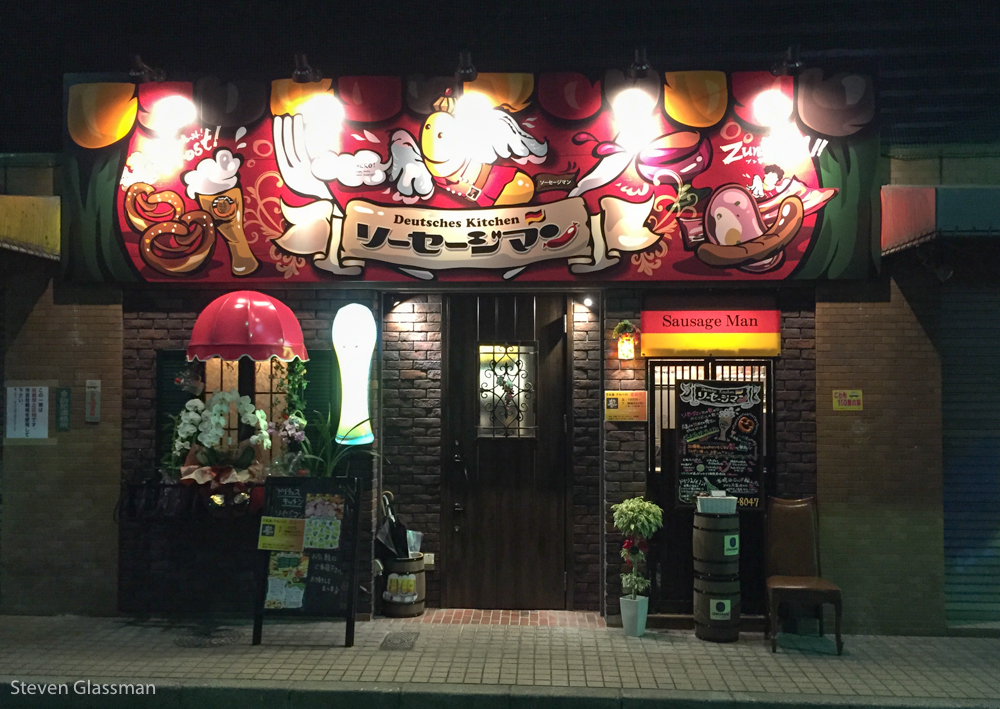
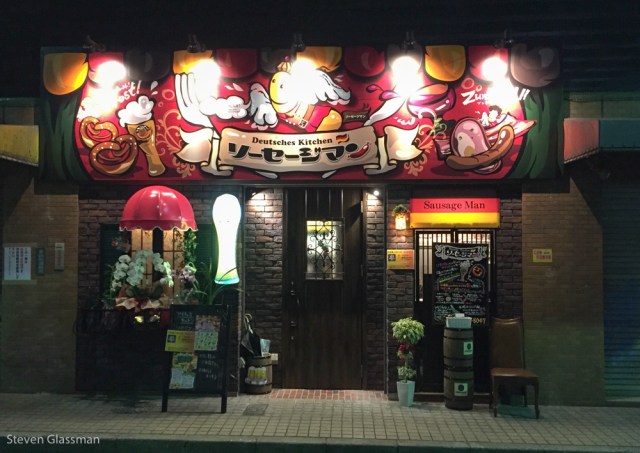
I spotted this German restaurant after I had already eaten dinner.  I rather wish I’d spotted it beforehand.  I would have been thrilled to try German cooking in Hiroshima.
hiroshima-6

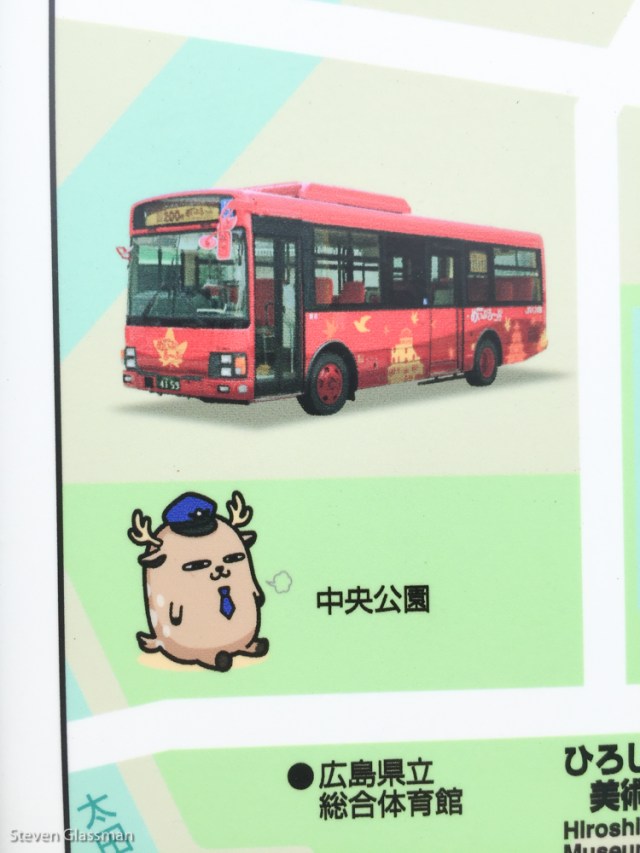
On Saturday morning, I found the Hiroshima sightseeing loop bus, with its adorable pudgy moose mascot.  When traveling through multiple cities on an abbreviated timetable, it’s important to research things ahead of time.   For example, it’s excellent to know that a single fee for the day will take me to all the things that I most wanted to see:  Hiroshima Castle, the Peace Memorial Park, and the Genbaku Dome.
hiroshima-25

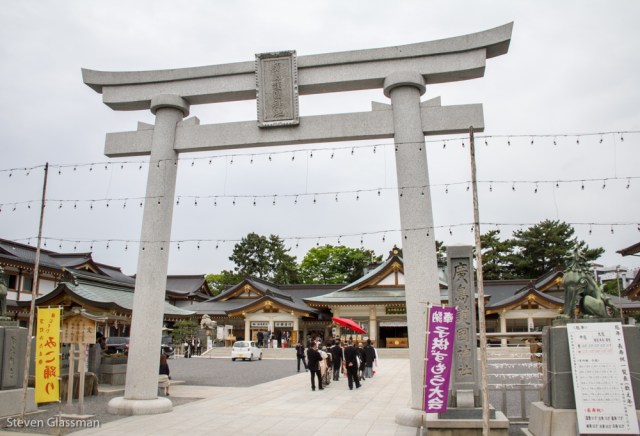
First up, Hiroshima Castle, sometimes known as the Gokoku Shrine.    Terumoto established this castle in 1589 at the delta of the Otagawa River.

hiroshima-7

The original castle was destroyed by the atomic bomb blast in August of 1945, and was reconstructed in 1958 as a museum to exhibit historic artifacts.  I didn’t take many photos of artifacts.  I never really do.  I do like the reconstruction of living quarters though.  I find it interesting.

hiroshima-8

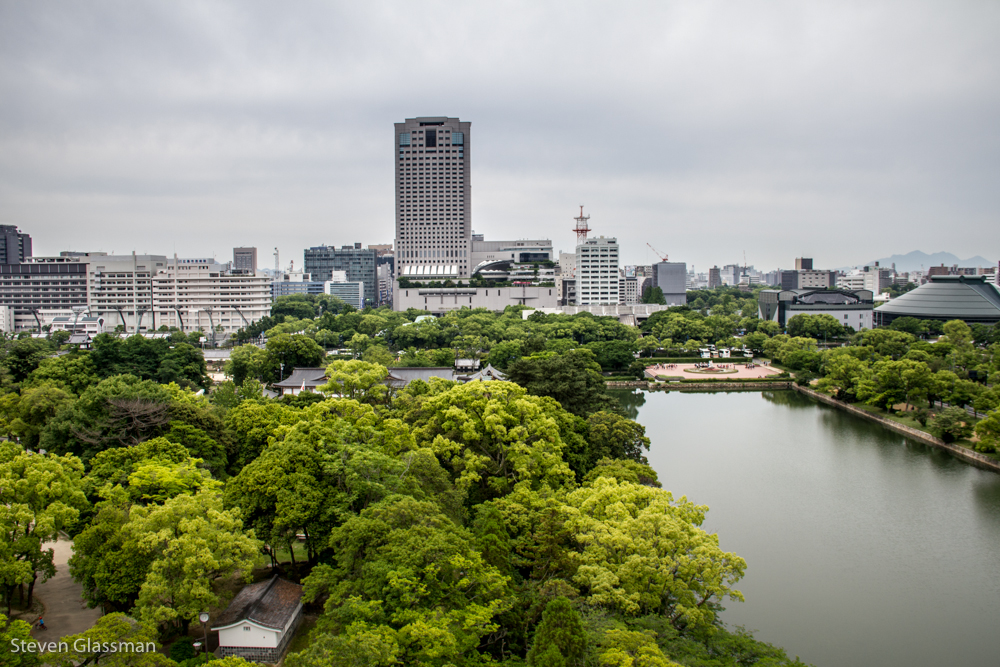
I’m also thrilled by the view of Hiroshima from the top of the castle.  I like tall places.

hiroshima-9

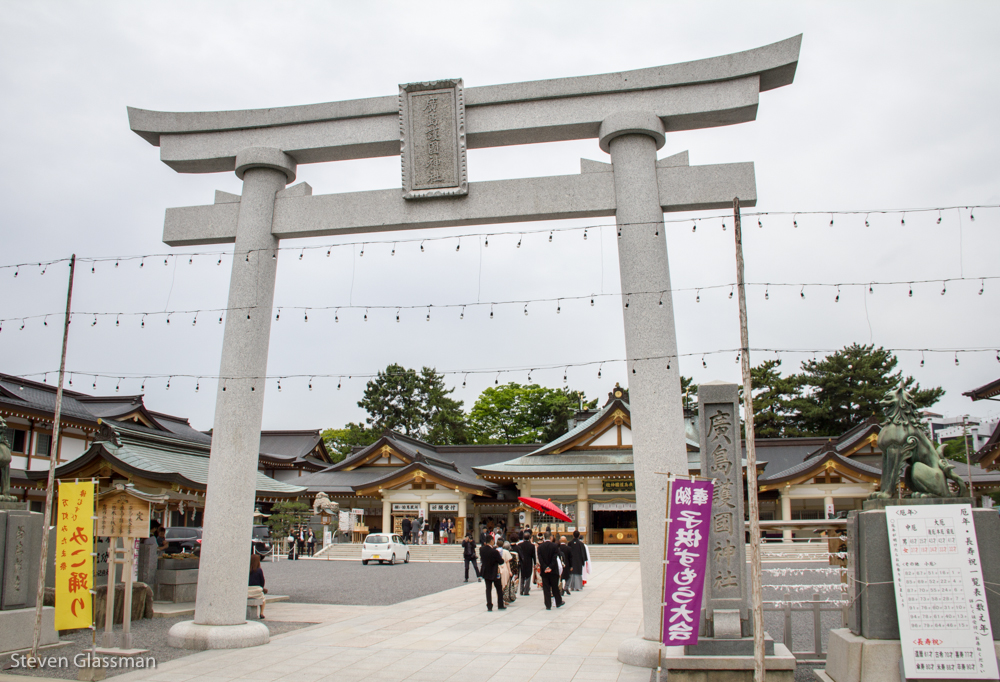
The castle structure is built next to a shrine.  I saw several weddings during my journeys; this was one of them.
hiroshima-10

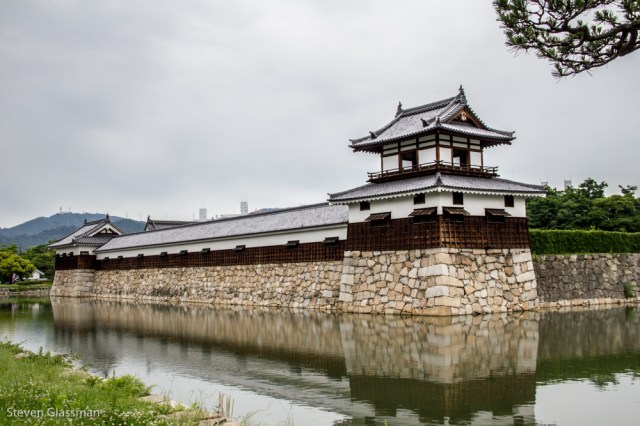
The castle and shrine together are surrounded by high walls and a moat.  The whole arrangement was really very pretty.
hiroshima-11

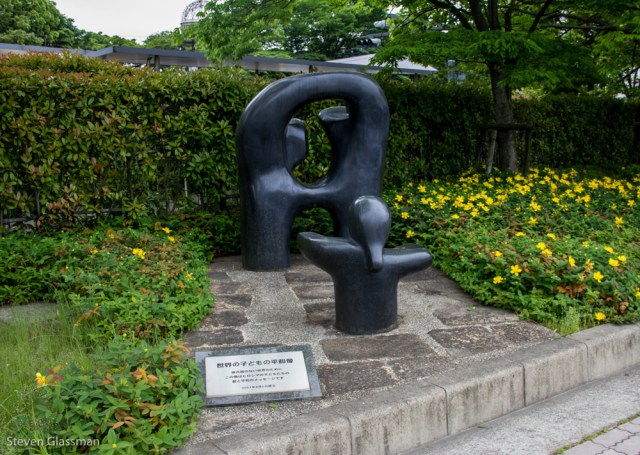
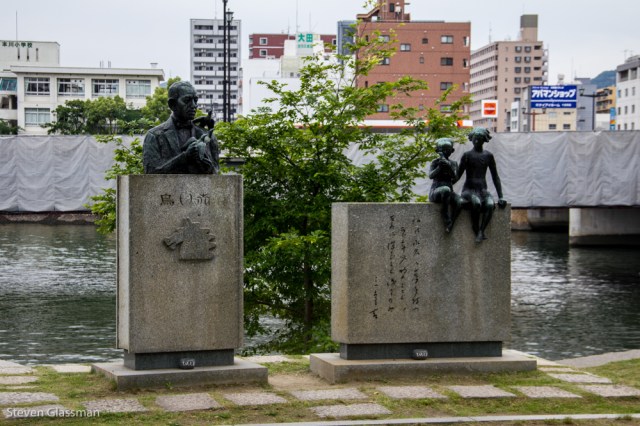
From the castle, it was less than a mile to walk to the Peace Memorial Park, which is preserved as a remembrance to the atomic bomb and the people killed or wounded at that time.  I have misplaced my notes about the sculptures in the park, but I believe this one was about the families killed in the blast.
hiroshima-12

I think this one was about the teachers killed in the blast.  There are about a dozen different sculptures and monuments in the park.  I should have taken better notes.
hiroshima-13

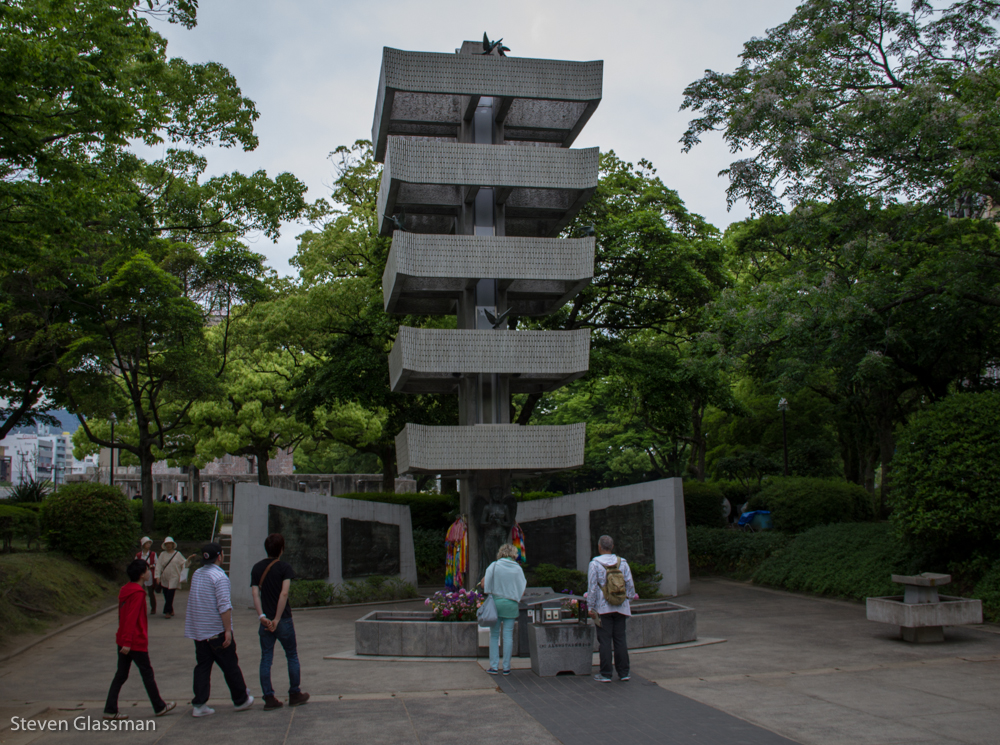
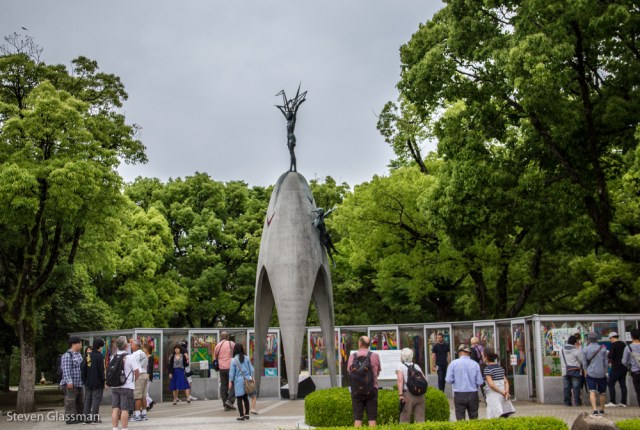
This one, at least, I’m sure of.  This is the Memorial Tower to the Mobilized Students.  During World War II, more than three million students over age twelve were mobilized for labor services in Japan.  As a result, more than 7,000 were killed by the atomic bomb.  This tower is twelve meters high and gradually widens as it rises.  The sculpture depicts the Goddess of Peace accompanied by eight doves perched around the tower.

hiroshima-14

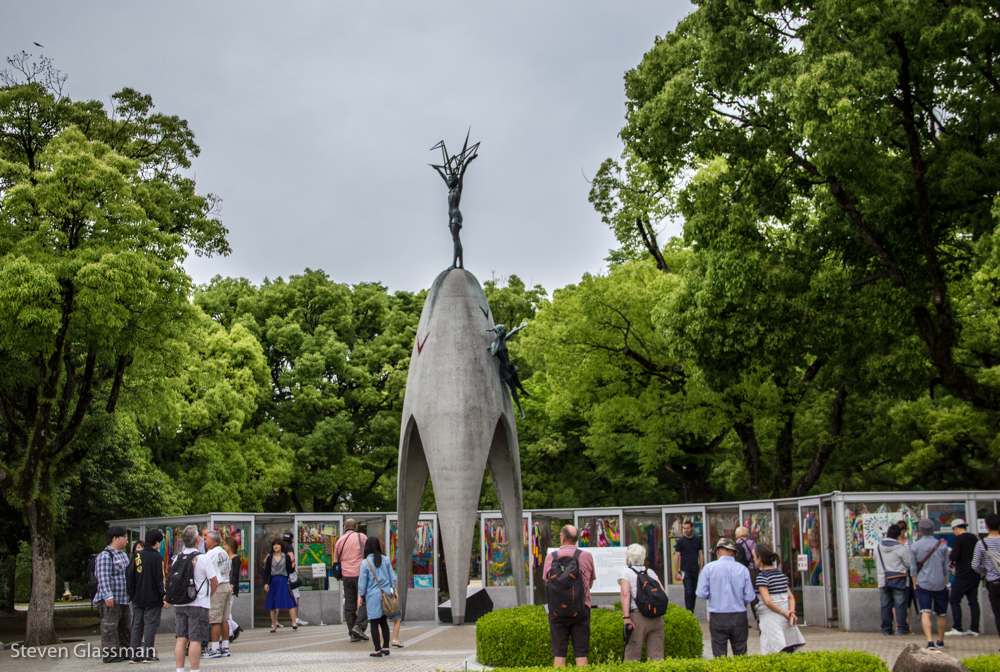
This one is well documented on the Internet-  the Children’s Peace Monument.  The top depicts a girl holding up a crane, a symbol of longevity and happiness.  The monument was inspired by the story of a young victim who believed that she would recover from her radiation poisoning once she made 1,000 paper cranes.
hiroshima-15

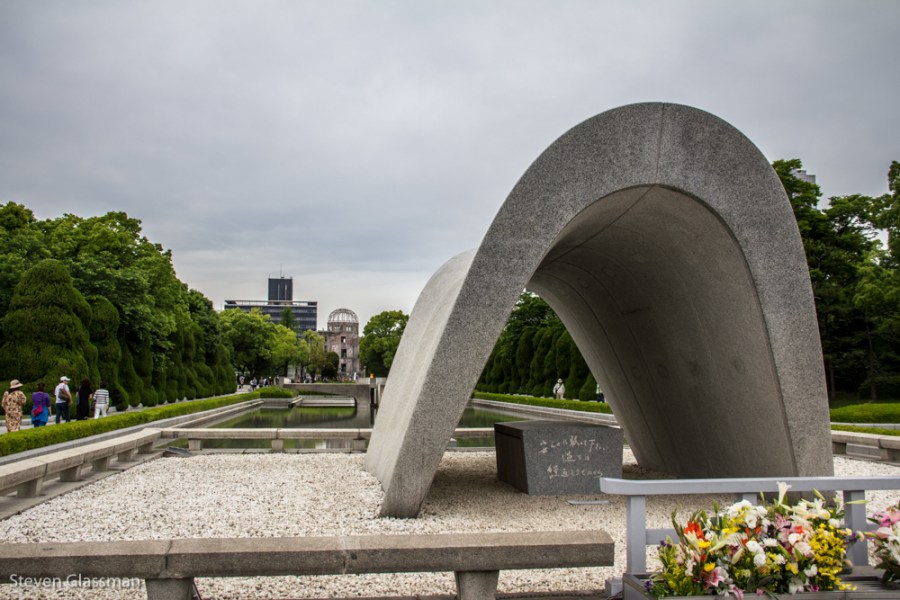
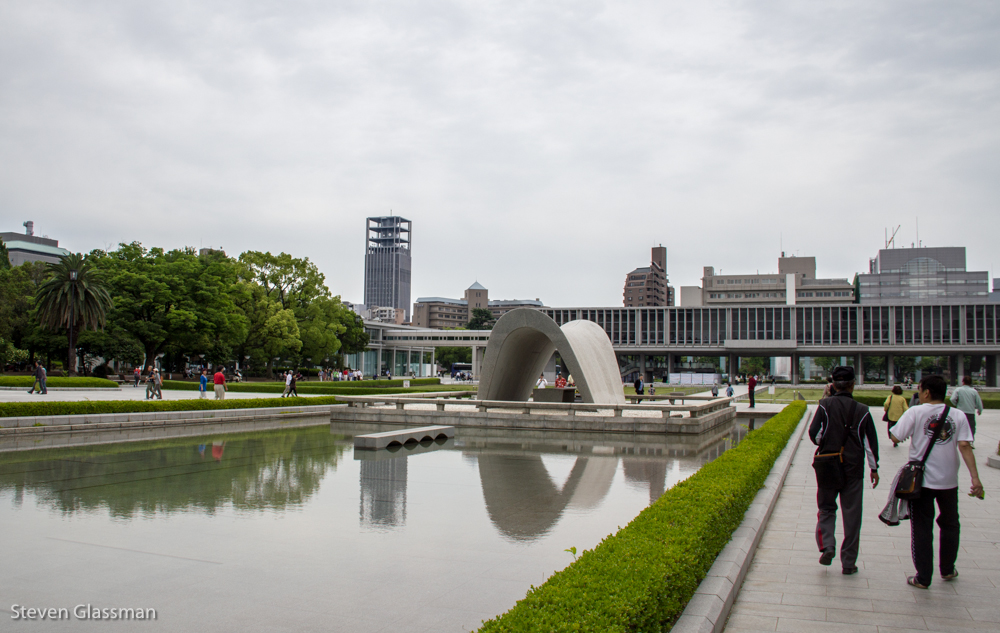
This structure is the Cenotaph.   It is dedicated to all the victims of the bombing, and it embodies the hope that Hiroshima will forever stand as a symbol of peace.

hiroshima-16

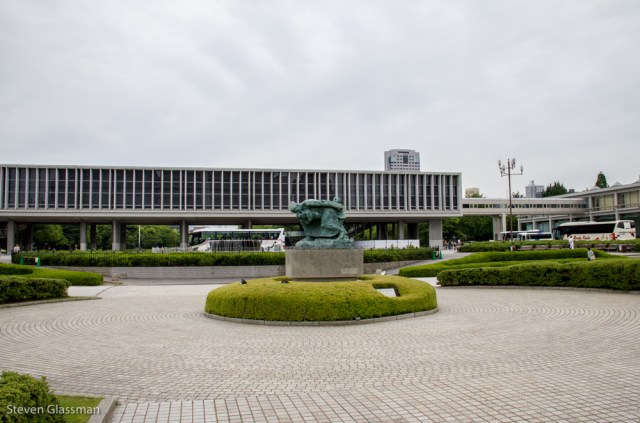
The building behind the Cenotaph is the Hiroshima Peace Memorial Museum, and I went inside after I was done in the park.  I took almost no photographs inside this museum, because it felt like sacrilege.
hiroshima-19

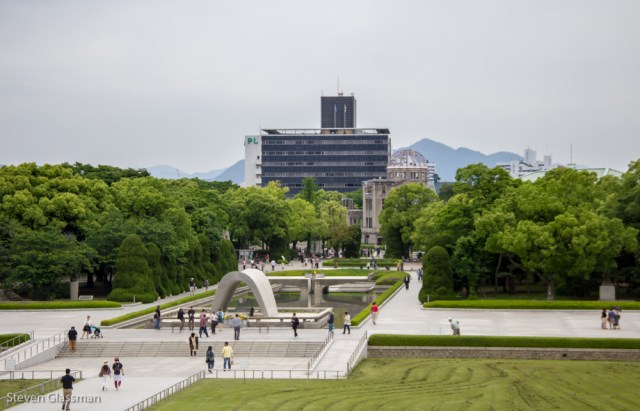
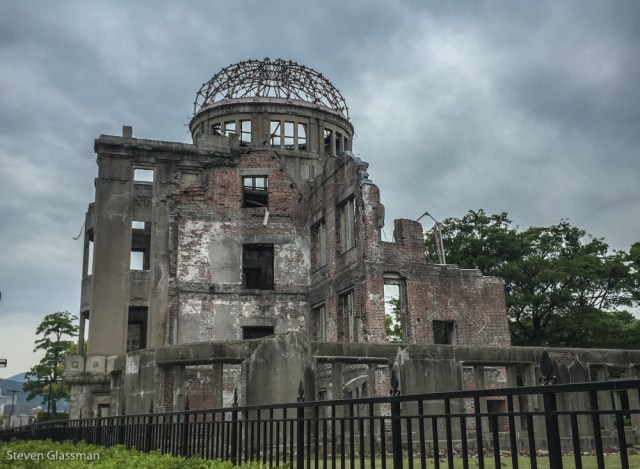
Looking back through the Cenotaph, you can see the structure of the Genbaku Dome, the lone building to remain standing after the atomic bomb blast.

hiroshima-17

This is the Cenotaph courtyard as seen from the museum-  this is a better view of how the entire park is laid out.
hiroshima-18

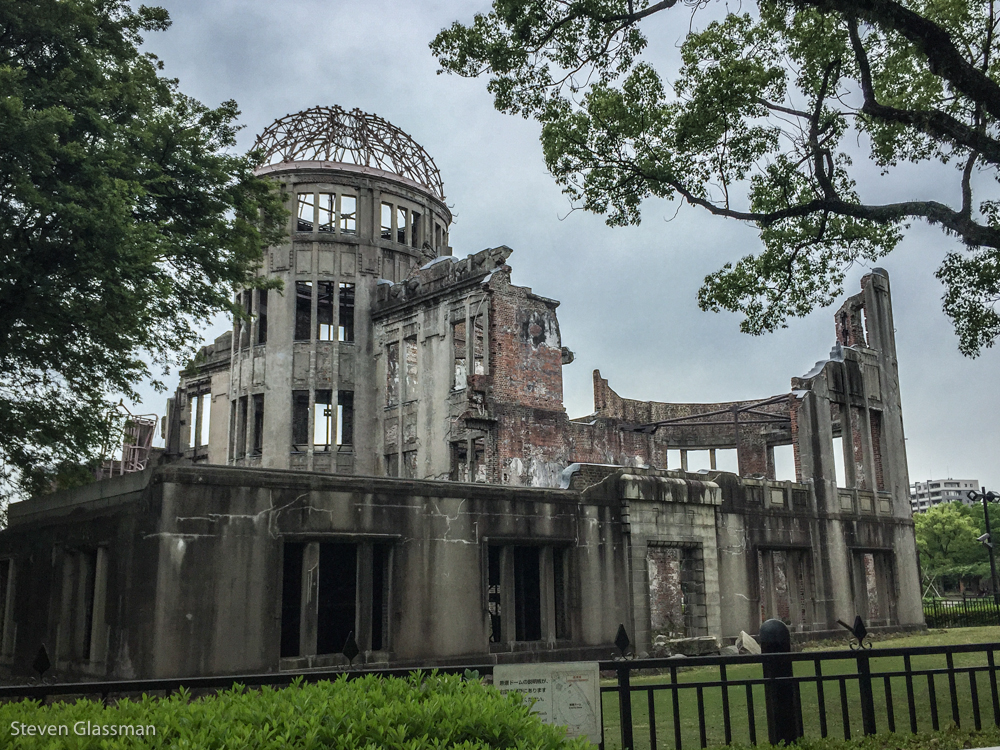
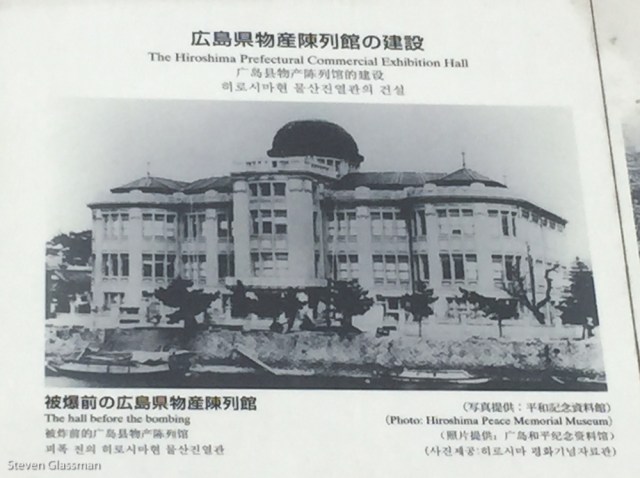
The Atomic Bomb Dome was once the Hiroshima Prefectural Commercial Exhibition Hall.
hiroshima-22

At 8:15 AM on August 7, 1945, the atomic bomb designated “Little Boy” was detonated over the city of Hiroshima.  The bomb missed its target by about 240 meters.  It was supposed to detonate over a bridge, but instead detonated almost 2000 feet over a hospital.  This red sphere signifies where the explosion occurred.

hiroshima-24

Because the bomb was almost directly overhead, this building’s dome and columns were able to partially withstand the downward force of the explosion.  People closest to the center of the explosion were vaporized instantly.  The pressure wave from the explosion reduced this portion of the city to rubble in moments.  Roughly 70,000 people were killed immediately, and tens of thousands more succumbed to burn injuries from the blast or to radiation poisoning soon after.

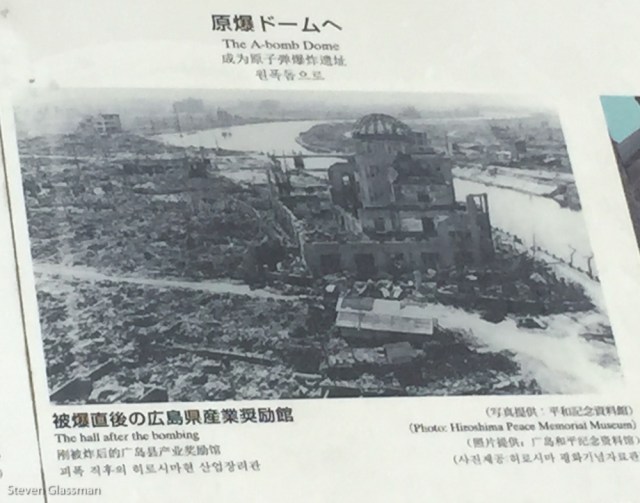
Here’s what the Genbaku Dome looked like immediately after the blast.
hiroshima-23

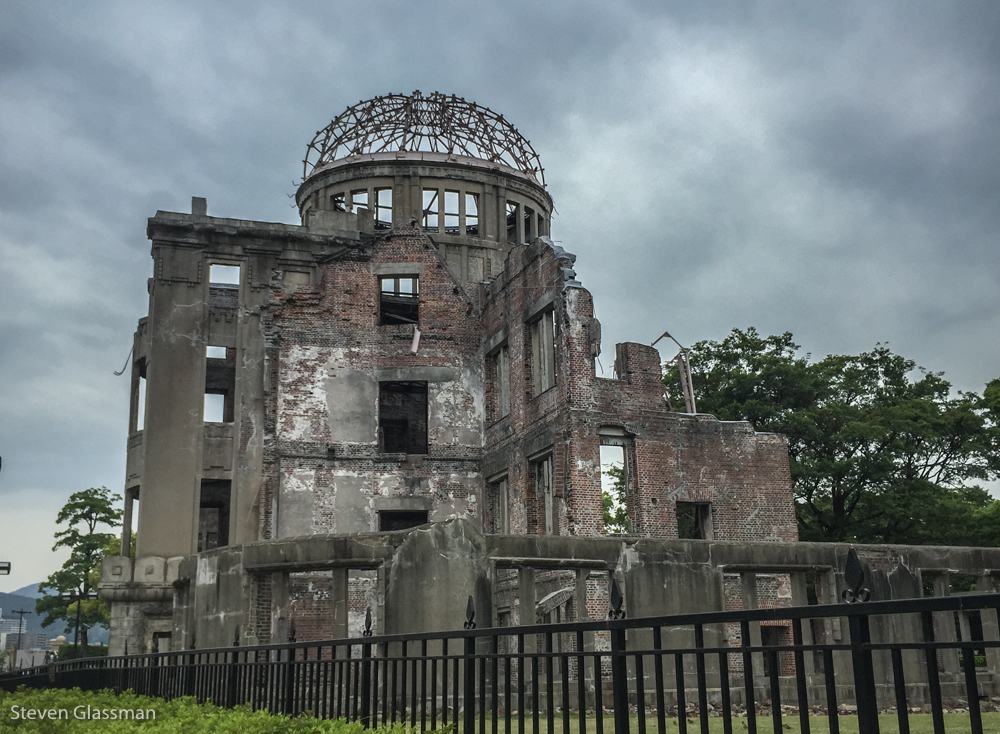
In 1966, the Hiroshima city council adopted a resolution to permanently preserve the dome in its current state.    It has been structurally reinforced and fenced off, but is otherwise unchanged from the way it looked in 1966.

hiroshima-20

Visiting this dome felt similar to visiting Auschwitz, somber and sobering.  It’s important for us to remember places with massive death tolls, in order to prevent destruction of this magnitude from ever happening again.
hiroshima-21

Have you ever been to Hiroshima?
Akihabara and a Cat Cafe

Meanwhile, back in Japan…  Akihabara’s Electric City is an amazing place.  It is home to thousands of shops selling electronic gadgets, video games, anime and manga stuff, and more.

akihabara-daylight

When I first day in Tokyo, I went along with my colleague to Akihabara because he went there for souvenir shopping- there are tax and duty free shops near the main rail station for the area that are full of nifty things to bring home at reasonable prices.

akihabara-112

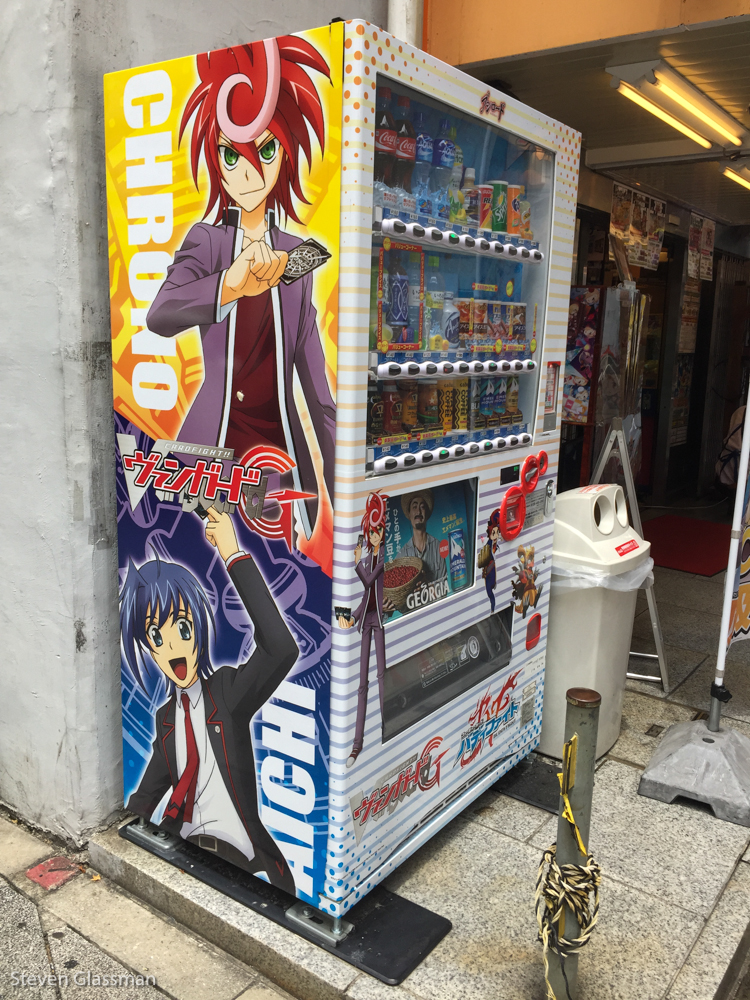
If you’re not sure that you’re in Akihabara, just look around.  Even the soda vending machines are decked out in Otaku themes.

akihabara-111

This vehicle was playing Japanese pop music very loudly as it passed by on the main street.  This is very typically Akihabara.

akihabara

One of the reasons that we went to Akihabara on that first day was that I had expressed curiosity about the local version of Denny’s.

dennys01

Based on the menu, I would say that Japanese Denny’s is Denny’s in name only.  However, their french toast was deliciously superior to anything I’ve had in the States.  Your mileage may vary.

dennys02

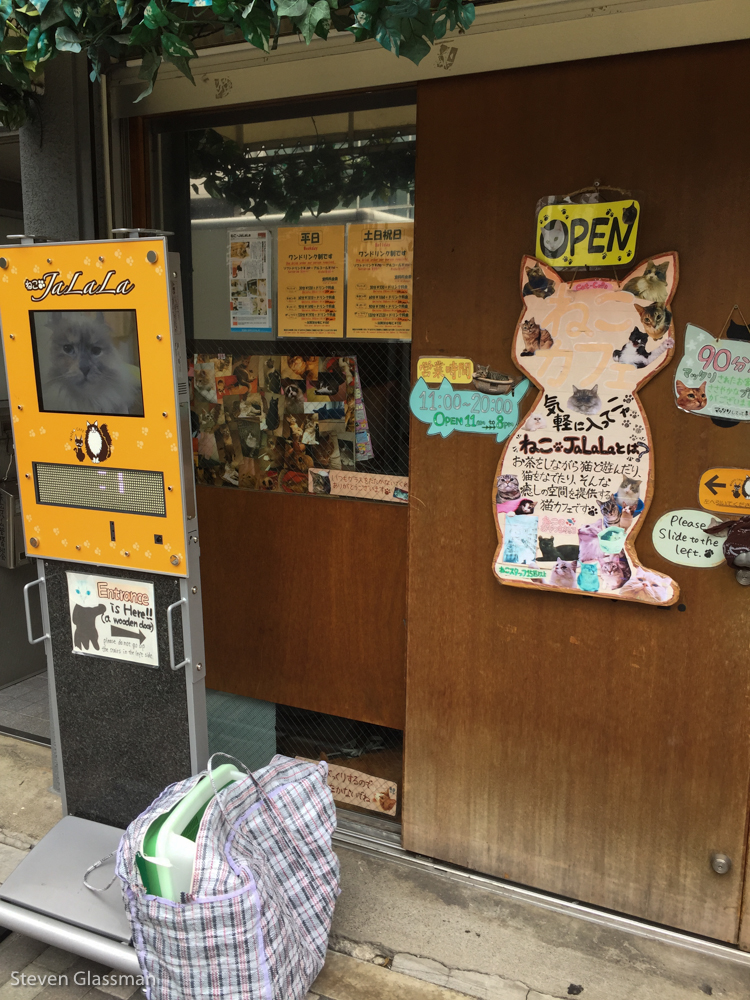
Another great thing that I enjoyed in Akihabara is a cat cafe called Neko Jalala.  The cafe is a short walk from the main Akihabara rail station, and it’s pretty easy to spot despite the nondescript brown wooden sliding door.

neko-cafe-1

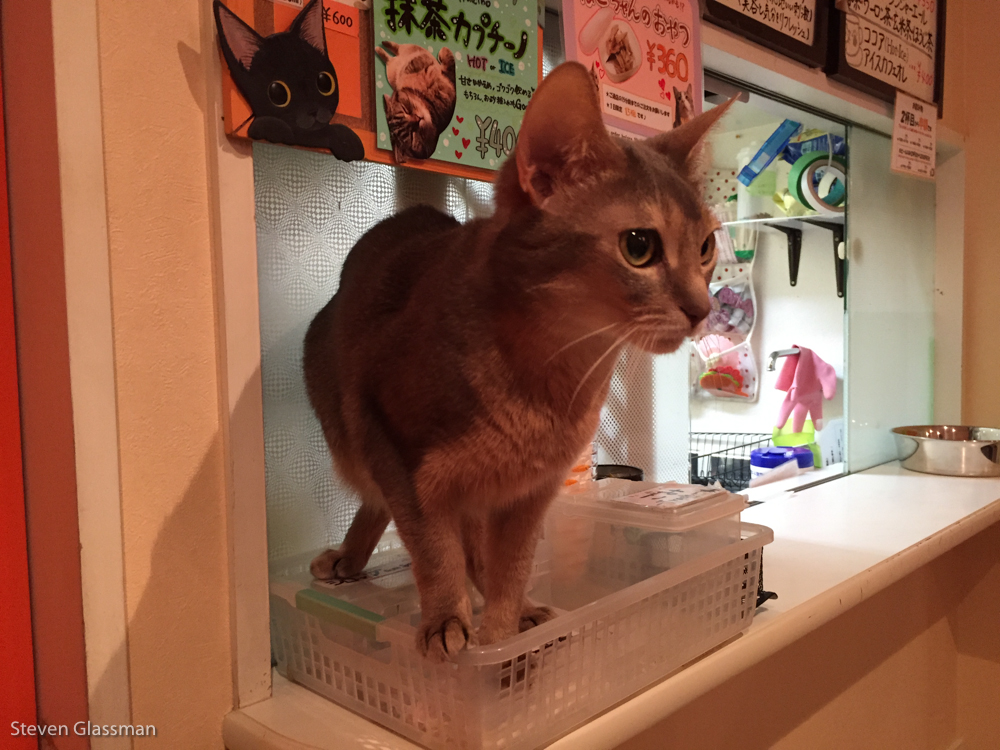
Once you step inside the first door, you remove your shoes and put them in a cubby.  Next, you pay an entrance fee.  I paid for thirty minutes inside.  This little fuzzball was my favorite of the cats inside.

neko-cafe-2

There were about fifteen cats inside.  A binder was presented to me which detailed the names, ages, and personalities of each of the felines, along with a few photographs for easy identification.

neko-cafe-3

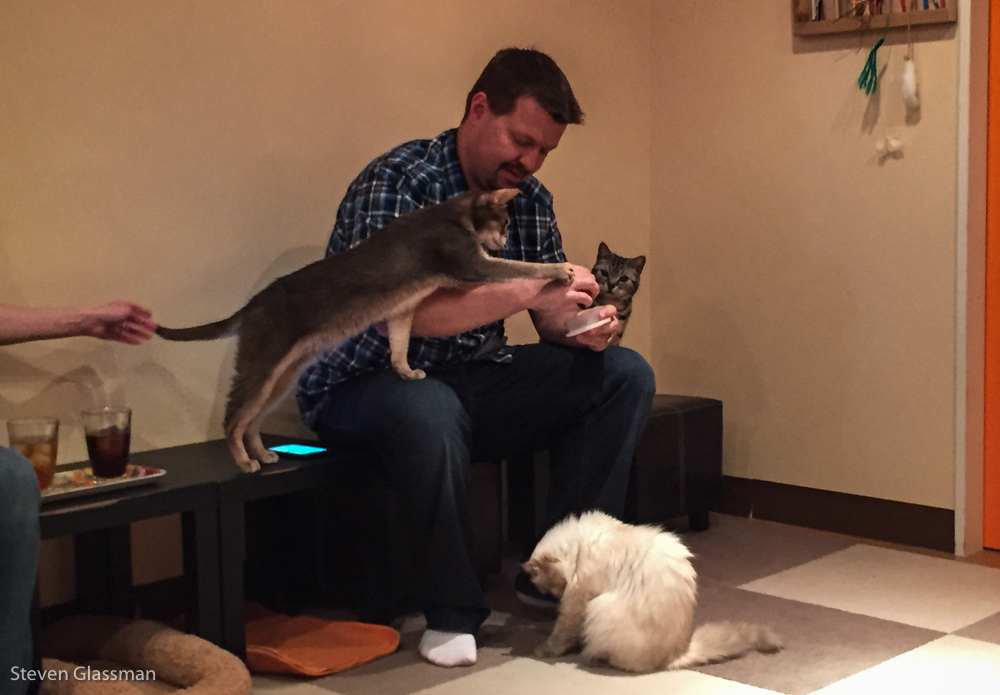
I also paid a small fee for a cup of cat treats.  This gentleman has a cup of treats in his hand, hence all the attention.

neko-cafe-4

As you can see, the cats all come out for treats.  They are most insistent.

neko-cafe-5

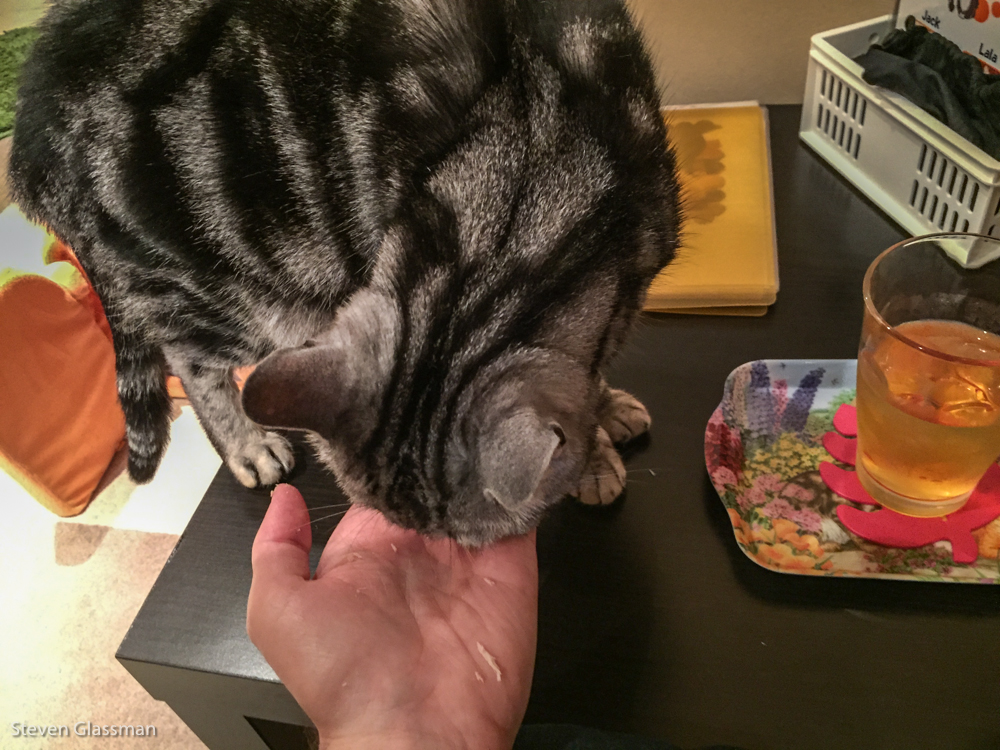
This kitty was one of two that spent time using me as a feeder.

neko-cafe-6

The other one was all stripey!  Since this is also an actual cafe, you can have a tasty cold beverage while you’re inside.  I selected apple juice, but their coffee drinks also looked delicious.

neko-cafe-7

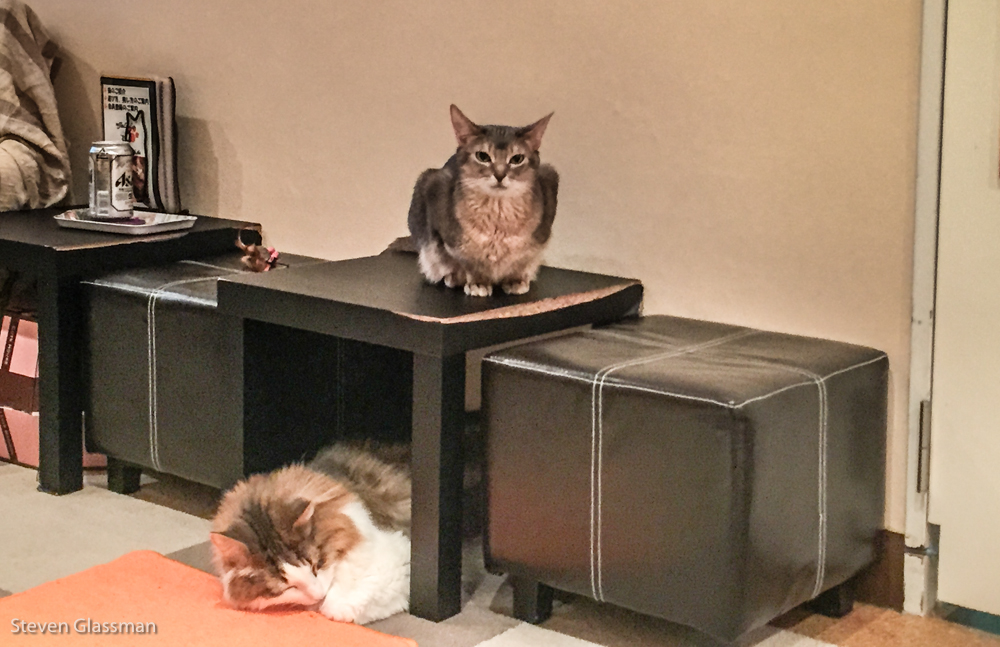
During my afternoon visit, many of the cats were sleeping or just sitting around attentively.  Very few were active.

neko-cafe-8

The sleeping hideaways were tucked in every nook and cranny.

neko-cafe-9

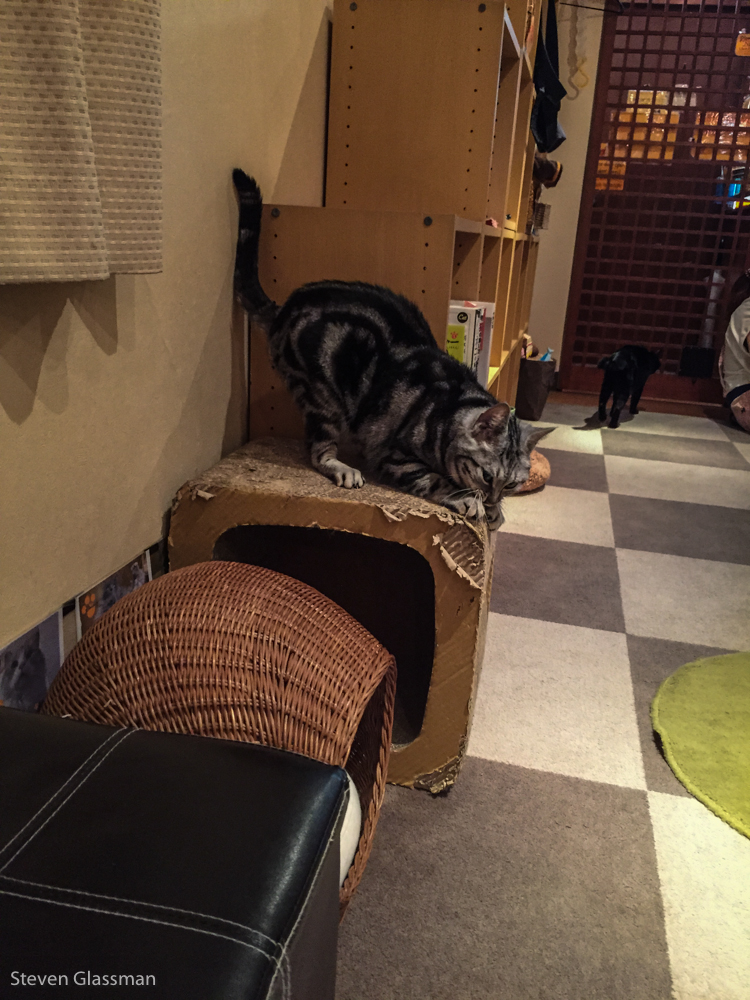
This cat is the only one that seemed to be in a playful mood.

neko-cafe-10

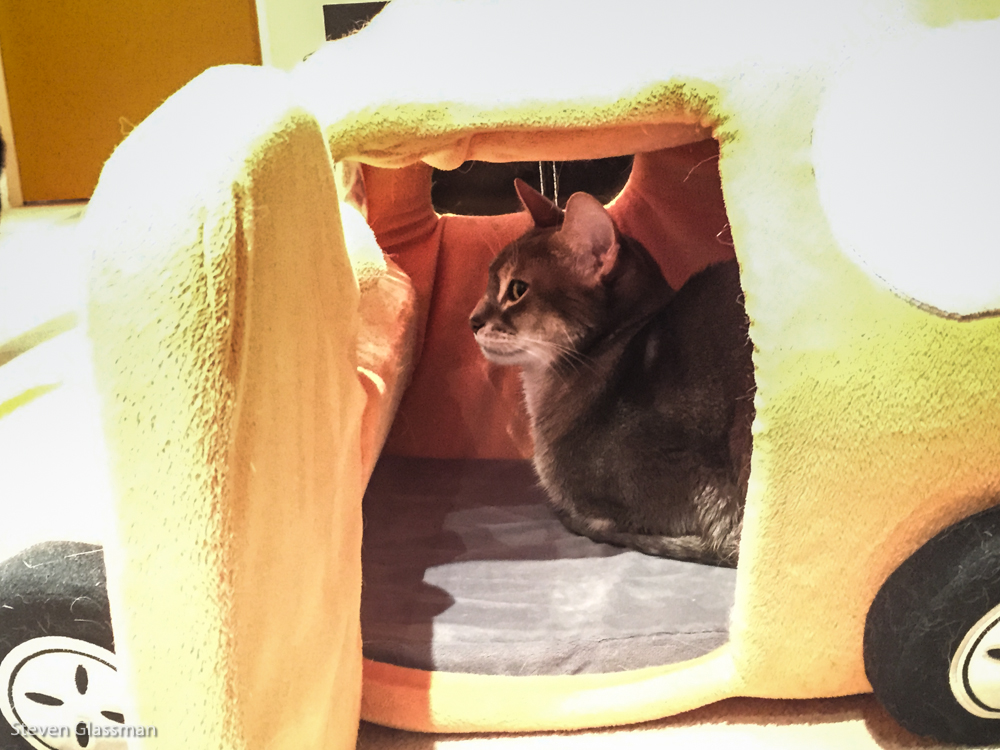
The little plush cat-car is fantastic.

neko-cafe-11

This grumpy looking fellow was napping while I was in the cafe.

neko-cafe-12

Skritch skritch skritch!

neko-cafe-13

This tiny little girl was the sweetest cat.

neko-cafe-14

Just before I left, she deigned to allow me to pet her a tiny bit.

neko-cafe-15

Have you ever been to Akihabara?  Have you ever visited a Cat Cafe?

Sanja Matsuri at Senso-ji

On the 16th of May, the first full Saturday after my arrival to Japan, I traveled to Asakusa to see the famed temple Senso-ji.    Founded in the year 645, Senso-ji is Tokyo’s oldest Buddhist temple.  I arrived to Asakusa expecting to find a serene place for contemplation, and stumbled right into the middle of Sanja Matsuri, one of Tokyo’s biggest festivals.   I noticed right away that the streets were blocked off to vehicles, but I didn’t know yet that this was unusual.

I was following the little map robot on my phone, and it told me to walk down this street.  I only got about ten paces in before I turned back to go a less crowded way.   What I didn’t know until later was that this covered walkway is the Nakamise arcade, a popular covered breezeway full of shops and restaurants.

asakusa-1

Every street I walked down while in Asakusa was lined in lanterns for the festival.  At this point in the day, I still had no idea what was going on.  Also, I really like this woman’s shark shaped backpack.

asakusa-2

As I got closer to the temple, I encountered thicker and thicker crowds.   Of course in a crowd this large, it’s completely appropriate to spot Waldo.

asakusa-3

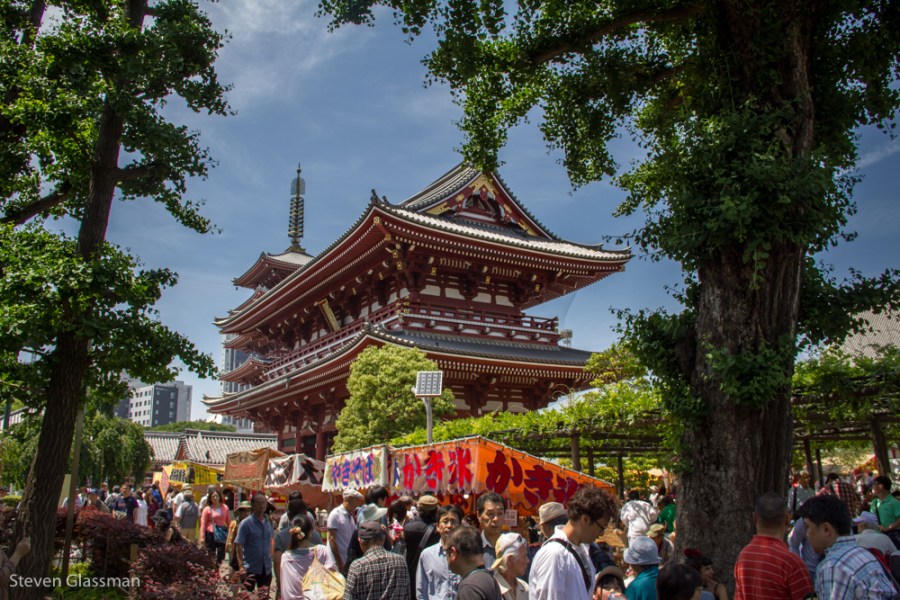
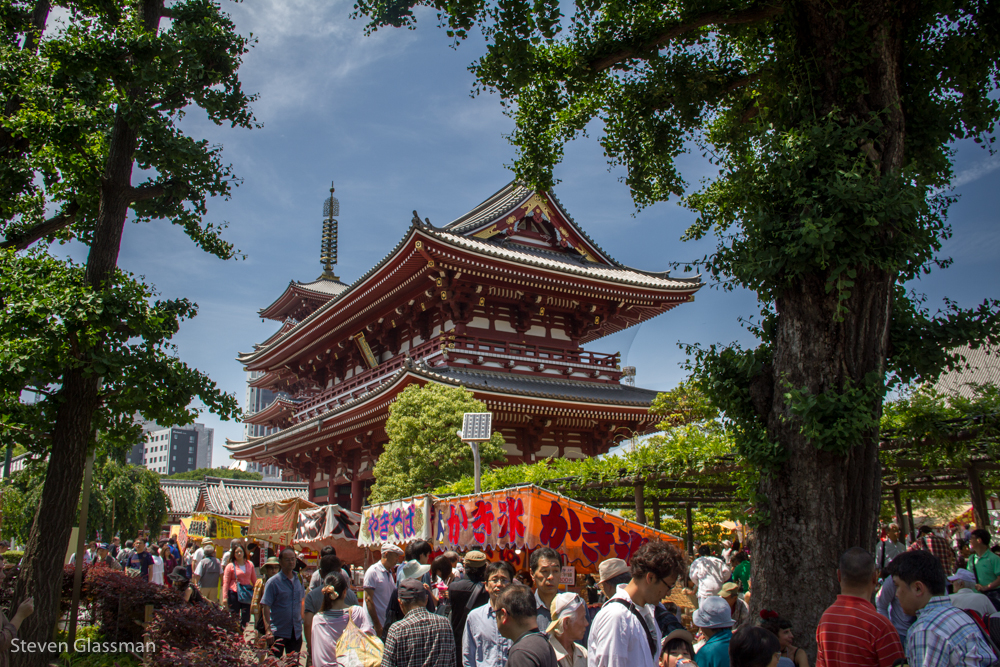
After some walking, I caught my first glimpse of the temple.

asakusa-4

I walked in through Kaminarimon or “Thunder Gate,” and found myself facing statues of Raijin (god of thunder) and Fujin (god of wind).  It is not at all clear to me which is which.   You can see Tokyo Skytree behind the statues here, and I could easily have seen Senso-ji from Skytree, if I had been there on a clear day.

asakusa-5

This is the point at which I realized that this might not be normal tourism.   I still didn’t know that it was a major festival, however.

asakusa-6

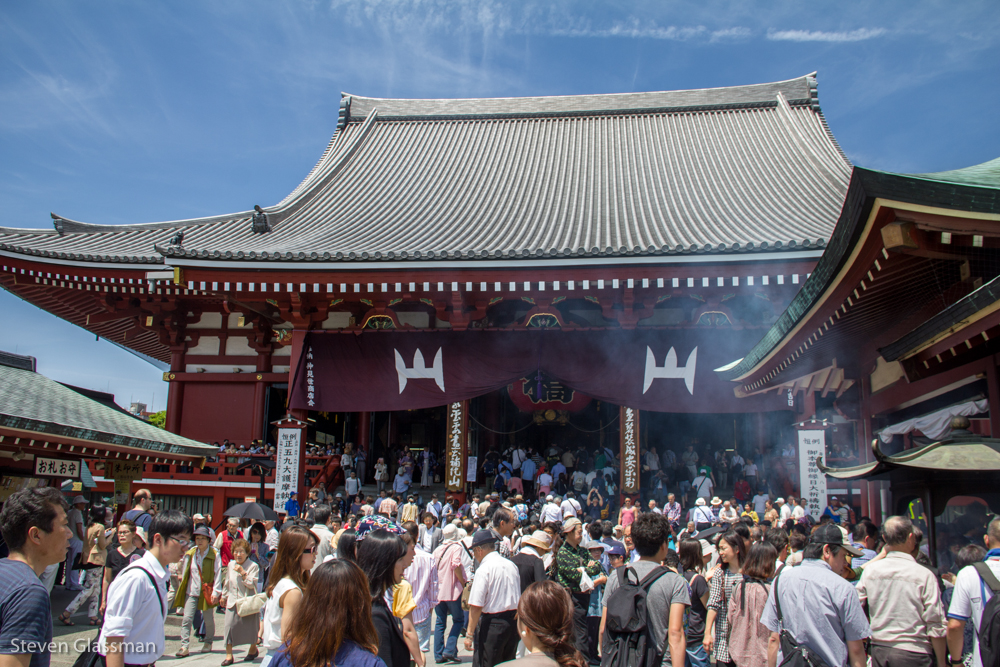
I walked up as close as I could, even making it to the stairs beneath the enormous paper lantern in this photo.

asakusa-7

Here’s a closer shot of the paper lantern.

asakusa-10

However, the inside of the temple was fenced off with this mesh.  I could look, but I could not enter.  There are several Buddhists inside conducting a ritual, but I don’t know more than that.

asakusa-8

Moving away from the main temple gates, I walked around to the side, where stalls selling merchandse and traditional food rested beneath more paper lanterns.

asakusa-9

Walking back down toward Thunder Gate, I noticed another incense burner.  I like the smell of these things, but it was very warm.

asakusa-11

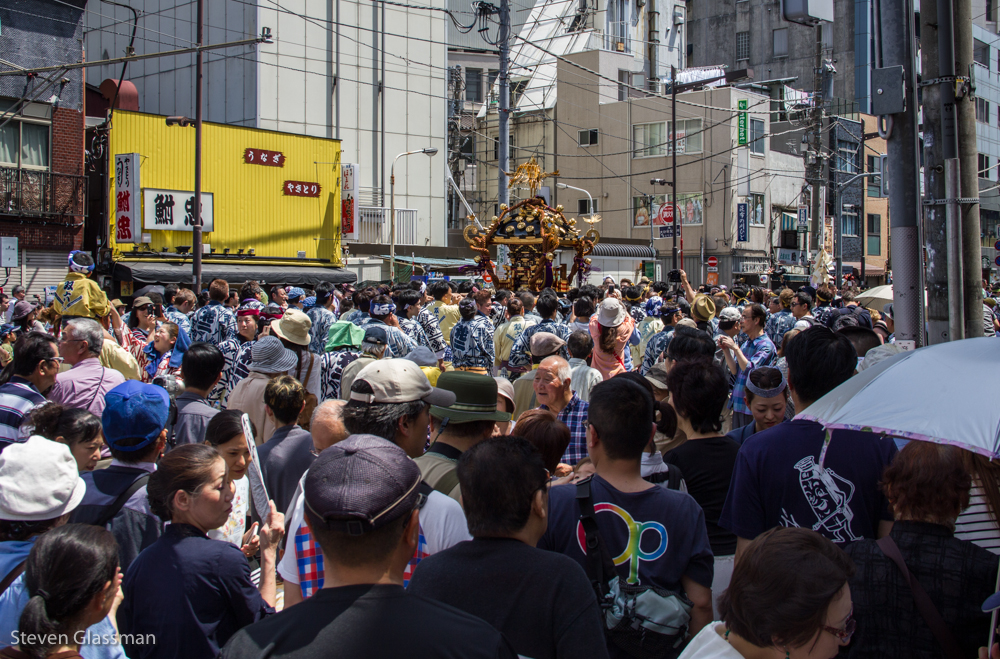
When I walked back toward the train station, I found the main street to be significantly more crowded than when I first arrived.  This is one of the biggest parts of Sanja Matsuri!

asakusa-12

The giant metal and wood construct being held up here is called a Mikoshi.   The Mikoshi pictured here is one of three which are built to act as miniature and portable versions of Asakusa Shrine.  They contain representations of Kami, the spirits, gods and deities of Japan’s Shinto religion.

The Mikoshi are tremendously heavy, and they are carried on four long poles lashed together with ropes by a Mikoshi team of about 40 people.  The Mikoshi team has a uniform, with a Happi coat and Tabi boots.  The team bounces it up and down, as a show of strength and teamwork.

asakusa-13

Mikoshi are usually carried around the neighborhood so that the Kami inside can see the neighborhood. It’s considered good luck for the area. Afterwards, the Mikoshi is brought back to the shrine.

asakusa-14

I watched the Mikoshi for a while, then I grabbed a burger before I headed back to Kanda.  Several of my colleagues who had previously visited Tokyo mentioned that they really enjoyed Mos Burger.  It wasn’t bad, but it definitely wasn’t the best burger I had while I was in Japan.

asakusa-15

Have you ever seen Sanja Matsuri?  Have you ever seen a Mikoshi being carried? Have you ever eaten at Mos Burger?