Stadtamhof Weinfest 2013

The weekend before last, there was a Weinfest in Stadtamhof, which is a part of Regensburg right on the other side of the Donau river.  Cliff and Sarah of Das Regensblog invited me to join them, and I accepted even though I’m not much of a wine drinker.

Weinfest is a street festival in Germany, so it looked pretty much like any other street festival in Germany-  lots of people and food stands.  This one also had wine stands, though.

weinfest2013-1

We were only there about two hours before the weather got fairly ominous.  I liked the look of these clouds, though.

weinfest2013-2

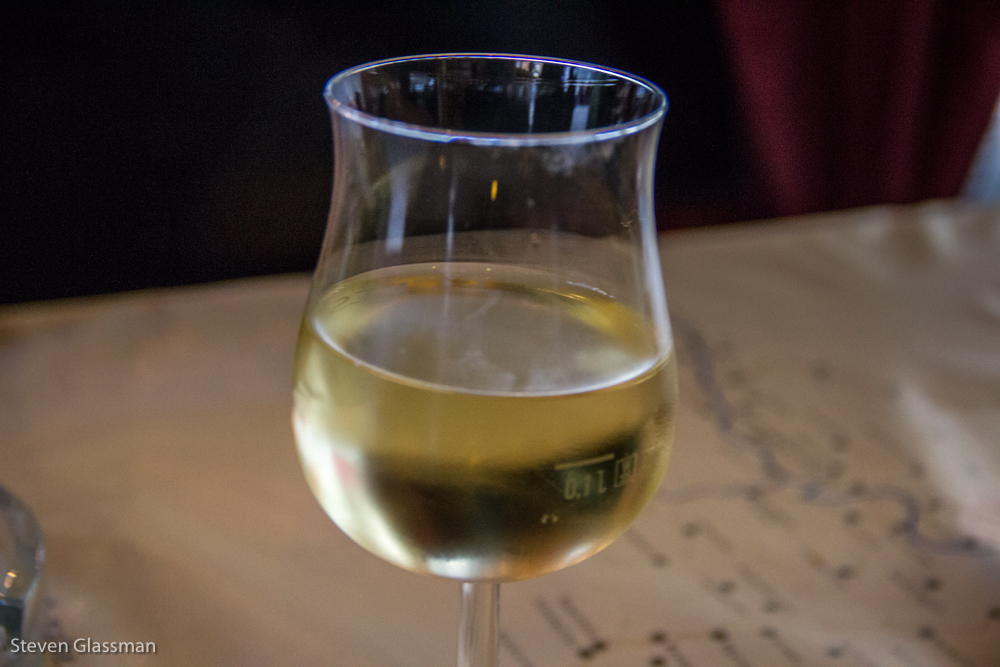
Despite not being much of a wine drinker, I quite enjoyed this glass of wine.  It was called a Kerner.  Or a Kepler.  Or a Kabler  I kan’t remember, exactly.

weinfest2013-3

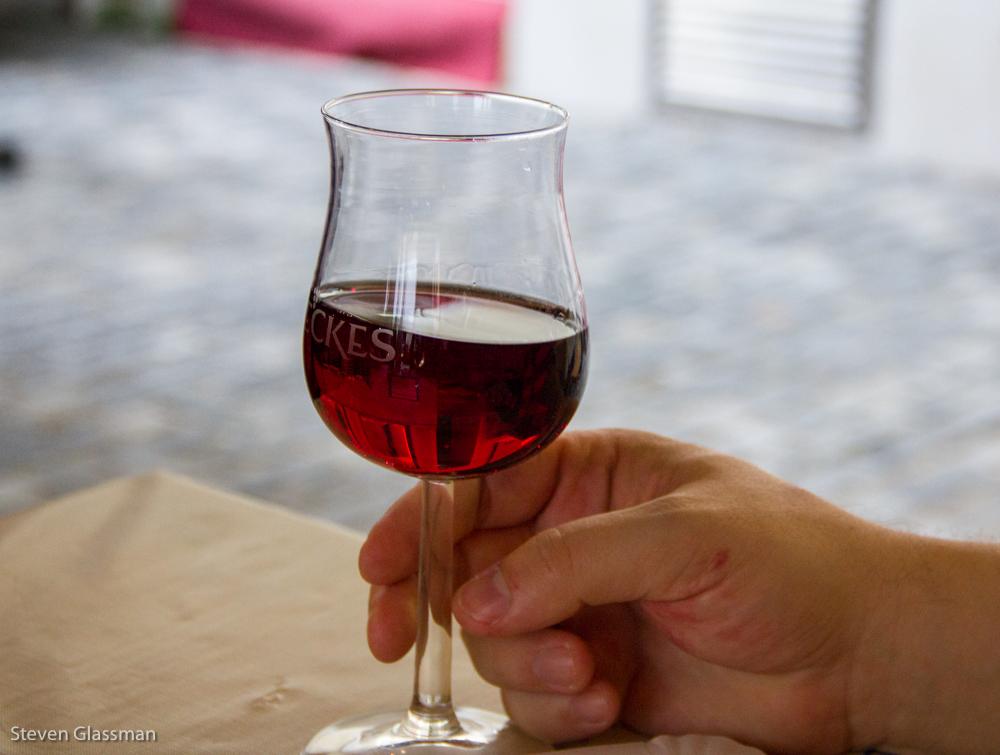
Cliff had this very nice looking red wine.

weinfest2013-4

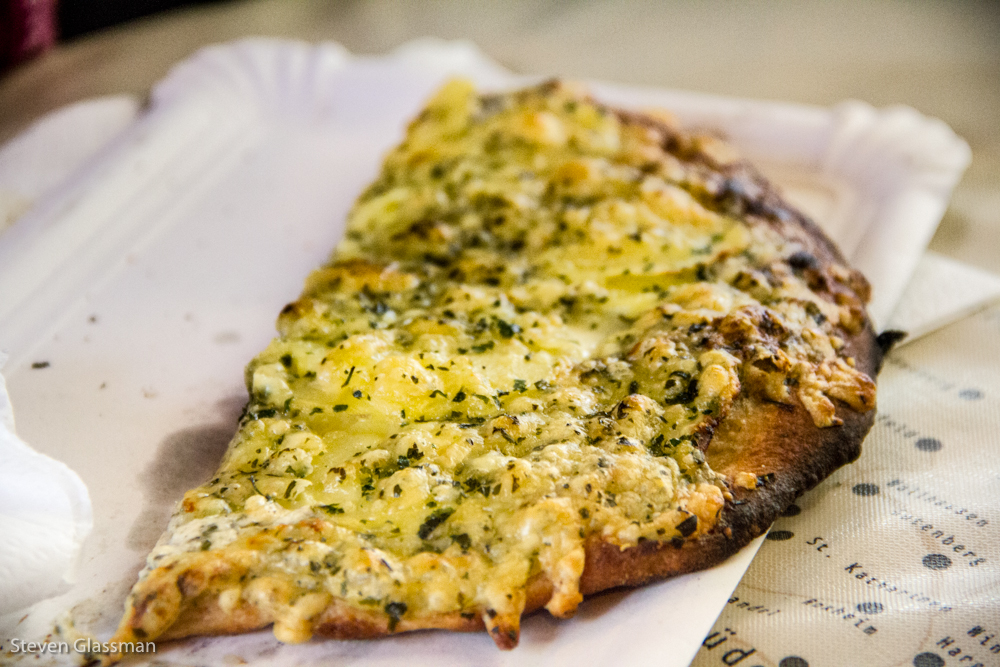
The food at Weinfest was delicious.  Sarah got the Flammkuchen that I almost tried, with potato and cheese.  Flammkuchen is kind of like a tiny potato-laden flatbread pizza.

weinfest2013-5

Do you prefer red wine or white wine?

Remembering the Holocaust on September 11th

On the 11th of September, I was able to attend the installation of several Stolpersteine.  I’ve posted about Stolpersteine before, when I first learned what they were.  For those of you just tuning in, I’ll refresh your memory:

The German word Stolperstein literally means “stumbling block” or “obstacle” and Stolpersteine is the plural.    They were created by artist Gunter Demnig in 1993 and the first installation was in Cologne, Germany, in 1994.

The Stolpersteine blocks are designed as memorials to commemorate individuals who were sent by the Nazis to prisons and concentration camps, as well as those who emigrated or committed suicide to escape the Nazis.  Some of the blocks represent those killed by the Nazis and some represent survivors.    The Stolpersteine are not limited to Jews, either.  The vast majority were Jews, but there have also been blocks placed for various other types of people, including Romani people, homosexuals, blacks, and even Christians who opposed the Nazis.

The actual block is a ten centimeter concrete cube covered with a sheet of brass.  Demnig stamps the details of the individual, the name, year of birth, and the fate as well as the dates of deportation and death, if known.  Each block begins with “Hier wohnte,” which is German for “Here lived.”  Most are set at the last residence of the victim, but some are set near workplaces.

More than 40,000 Stolpersteine have been installed so far, in over 1000 cities and towns in about twelve countries.

On this particular day, they were installing 26 Stolpersteine in eleven separate locations around town.  I was able to attend two of the eleven installations before I had to head into work.  Before an installation, here’s what a Stolperstein looks like:

stolpersteine_2013-1

The place where the stone would be installed was marked, and a city worker dug out the existing sidewalk.

stolpersteine_2013-2 stolpersteine_2013-3

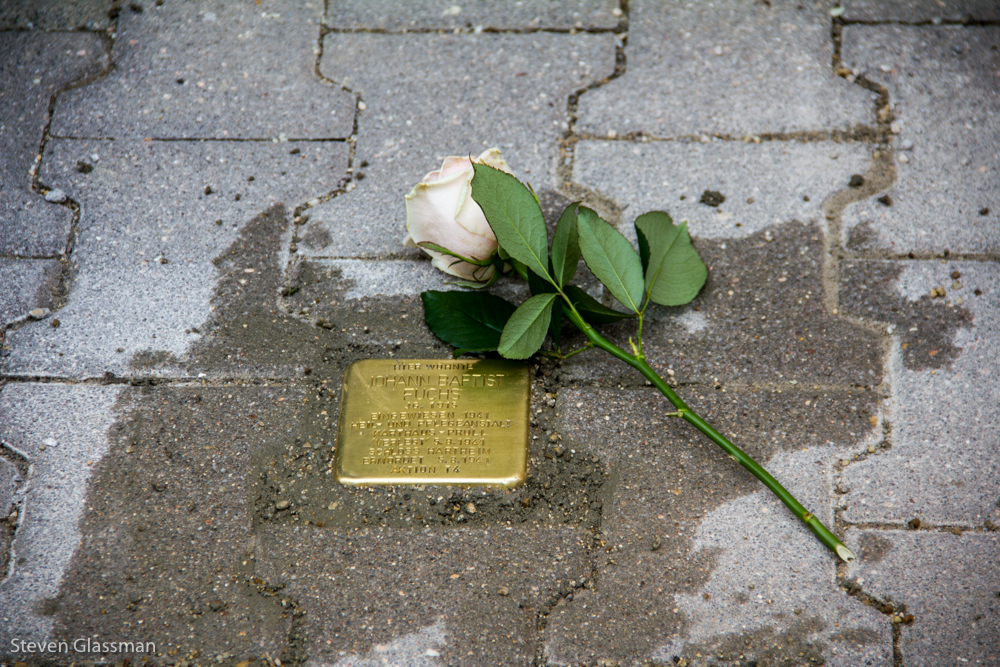
A gentleman who works with der Initiative Stolpersteine in Regensburg said a few words, then a guy from the city spoke, Next, a woman read the biography of Johann Baptist Fuchs, the individual named on the stone. Finally, a relative of Johann Fuchs said a few words.  Afterward, the stone was set into place with concrete.

stolpersteine_2013-4

After the stone was installed, the man who was related to Johann Fuchs laid a white rose next to the stone.

stolpersteine_2013-5

A short while later, at a second location, we  began the same procedure.  This time, with four Stolpersteine and fewer speeches.

stolpersteine_2013-6

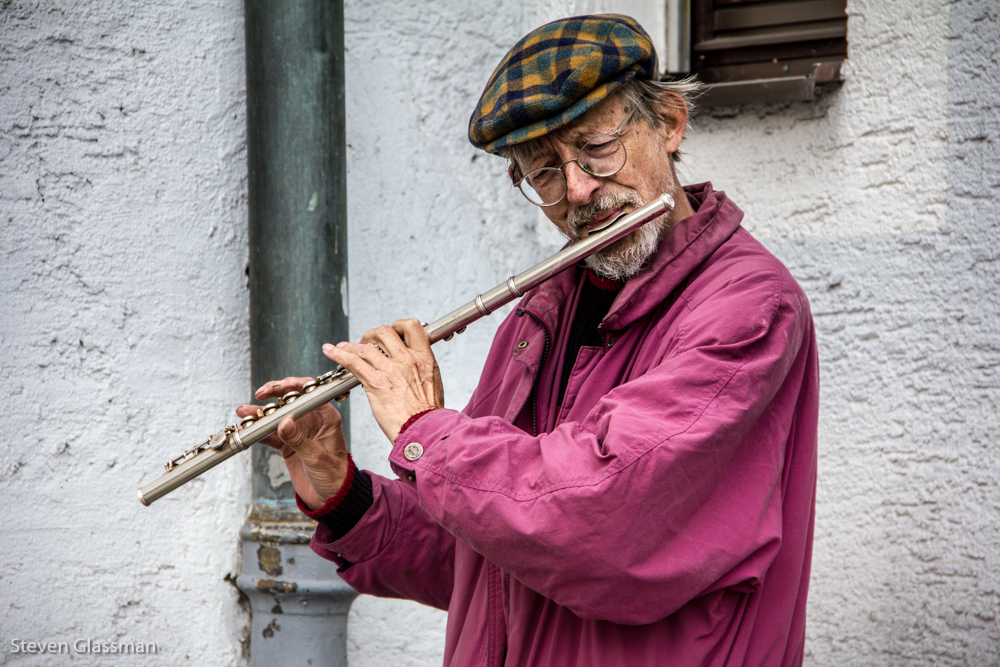
Each installation had a bit of flute music, though.

stolpersteine_2013-7

The installation was done very carefully, with the workman making sure that the stones were level and flush with the rest of the sidewalk.

stolpersteine_2013-8

Once the concrete was set in, the stones were cleaned off with a sponge.

stolpersteine_2013-9

Once again, roses were laid on the newly installed Stolpersteine to conclude the installation.

stolpersteine_2013-10

Have you ever stumbled across a Stolperstein?

The Cost Of Travel, Part II: My Year By The Numbers

Ali over at Ali Adventures recently posted about what it cost for her and Andy to travel through Europe for two months, and also what it cost just for their trip to the Netherlands.  This sort of number crunching is always kind of interesting to me, so I wanted to break out some of my own spending.

Before I get into the numbers, I wanted to say this:  I don’t spend a whole lot of money at home.  My rent and utilities are a little more than 20% of my income.   Once I had the basic things I needed for my life here, I stopped buying.  The walls of my apartment are unadorned- I never put up any art or curtains here.  I bought one light fixture for the ceiling but never actually wired it in.    I have a fair amount of gadgetry, but for the most part I live a pretty frugal existence.  I don’t care to spend a lot of money on my residence here because I don’t actually spend much time there outside of the work week. If there’s a chance to be traveling to somewhere new, I’d rather be doing that.

I’ll be paying for this year’s travel well into next year, and I’m OK with that.  Let’s talk numbers.

My tracking is a little less accurate than Ali’s post, for several reasons.  First of all, my banking is spread across both American and German bank accounts, and my statistics come from my use of Mint.com, which is only valid for the US bank accounts.  (I love Mint though-  I never really understood just where my money went until I started using it a few years back.)

Secondly, and far more importantly, a fact of life in Europe is that cash is king.  Outside of hotels and major tourist attractions, American style credit cards are rarely accepted or just don’t work at all.  A tremendous amount of my expenses during travel are paid in cash, so I don’t have that side of things itemized.  What I do have is rather amazing, though.

First, I went to my German bank account and I pulled the totals for two big categories.  The first is payments to eventim.de, the German ticket site that I use to buy my concert tickets.  I only pulled payments for 2013, so this doesn’t include tickets that I bought late last year, like the Leonard Cohen ticket.  It also doesn’t include tickets that I paid cash for, or tickets that someone else picked up, where I paid them back later.  In 2013, I’ve spent at least €110 ($144.99) on concert tickets, but it was more likely two or three times that amount.

Next, I checked out what I’ve spent on Deutsche Bahn tickets so far this year.  Once again, there are times that I paid cash for my tickets, so those numbers won’t show up here.  However, any time I planned a trip in advance, I bought the tickets using my German bank account, so I have that total.  In 2013, I’ve spent at least €932.30 ($1228.86) on train tickets.  The majority of these tickets are at a 50% discount, because I have a BahnCard 50.

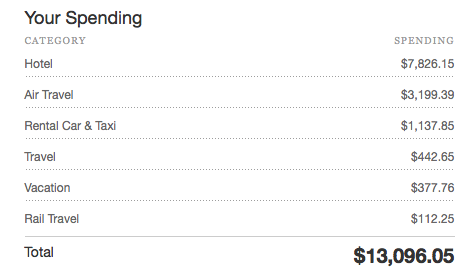
Next, I went to Mint.com to pull everything that I’ve categorized as travel in 2013.  This doesn’t include my 2012 travel numbers, which were also sizeable.

twelvemonths

  • $7,826.15 on hotels.  Hotels are by far the largest expense for my travel.  There are one or two hotels that I paid for on my German banking account, but this is most of them.
  • $3,199.39 for air travel.  This does include my upcoming trip to visit the US in November, but it also includes two trips to London and back, one to Paris, and one to Dublin.  If a train trip would be more than about six hours, I consider flying instead.
  • $1,137.85 for rental cars and taxis.  I don’t use rentals or taxis very often in Europe, as I prefer to use public transportation whenever possible-  more than two thirds of this is for my rental car in Florida this November.
  • $442.65 for “travel” and “$377.76 for “Vacation.”  This just proves I need to categorize things better.  These two include tours booked in other cities, as well as things like the Paris Pass.
  • $112.25 for the rail ticket I booked between London and Cardiff for this October.  This number doesn’t include the fees I’ve paid for the Heathrow Express, a train between Heathrow airport and Paddington station in London. Also, as previously stated, this doesn’t include anything from the Deutsche Bahn.

The total on all of this is $13,096.05 from the US banking and $1,373.85 from the German banking.

This means that in 2013 alone, and only 2013, I have spent a grand total of more than $14,469.90 on travel.  And that doesn’t even include cash spending, food, or local public transit passes.

It is possible to travel at much lower costs than this, of course-  hostels, couch-surfing, and cheaper hotel alternatives are everywhere.  Many cities have free tours that don’t cost what I spend on Skip-The-Line tours  from Viator.com.

The thing is, I don’t care to travel more frugally.  My time in Europe is finite-  I won’t be out here forever.  In another fourteen months, I’ll be back in the US.  Once I’m back within those borders, it will be a while before I travel internationally again:  there’s still too much I want to see within the United States.

While I’m here, though, I’m making the most of it.  I want to see everything.  Here, let Buzzfeed chime in on this:

How much do you spend a year on travel?  Do you ever regret the expense?

The Cost Of Travel, Part I: That Ain’t Luck

This post might offend a few people, but this has been grinding my gears for a while.

Whenever I talk to people back in the US about the stuff I’ve done here, the places I’ve gone, the things I’ve seen, and the train rides to nearby cities and countries, a lot of them say, “you’re so lucky!”

I immediately want to stab them in the ear with a ball point pen.  It’s not luck.

It’s not luck that got me to agree to sign two contracts, one in German and one in English, to stay here for three years. Luck had nothing whatsoever to do with my decision to pause my entire life back home for a then-uncertain time-frame while I came over here and did my company’s bidding. Luck didn’t get me to store my stuff, sell my car, and completely uproot my entire universe for a span of years.

Luck has nothing to do with missing three years of the lives of my family and friends.  My newest niece will be four years old a month after I return.  That’s 75% of her life so far.   My parents are both in their 70s, with various competing health issues.  My father has multiple myeloma in remission- he’s healthy right now, but there’s really no cure.  I wonder often how much time I really have left with him, and I worry that I’m squandering it by living over here.

My friends back in the States have found significant others, moved in with one another, changed jobs, changed homes, moved between cities-  time kicks along without me in it, and by the time I get back, the world I left will be irrevocably changed.

That ain’t luck, and it pisses me off immensely when people think it is.

I was talking recently with a local friend about all the travel that I do, and it became clear that she doesn’t travel. Not to the things that are just a few hours away, like Neuschwanstein or the Zugspitze. Not to slightly further places like London or Paris.

I asked if she wants to see those places, and she said “of course.” I asked why she hadn’t, and she was immediately full of rationalization- she always has boyfriends who don’t like to travel, for example.

My perspective is this: If you want to travel, you will travel. 

If you want it badly enough, you’ll find a way to make it happen.

For years, I waited for the right combination of money, free time, and a good travel buddy. As I worked my way up in the company, my vacation time increased and time stopped being a problem. Then my salary got better, and suddenly I could afford to go places if I wanted to.  I just had the lingering problem of needing a travel partner. I got my passport in 2006, thinking that I would be able to go to London soon. I just needed someone to travel with.

I wanted to see the city of London with someone I loved.

2006 became 2008, and my girlfriend at the time wanted to go with me.  The timing was bad though.  She had just started a new job, and she couldn’t take that sort of time off.  She and I managed to take a few trips within the US, but we never left the country together.

If you look for a reason not to go, you will always find one.

Eventually, I figured out that if I wait around for a travel partner, I won’t ever go anywhere. I’m glad I realized that before I moved to Germany, because I’ve been to fourteen countries now, and I traveled to most of them entirely on my own.

If you really want to travel, you’ll travel.

Luck has nothing to do with it.

Do you want to travel?

Voting Time In Germany

I don’t often talk about politics, because it’s the fastest way I know to divide people.  However, it’s election season here in Germany, and that means the political placards are coming out.

Politics here are, by American political standards, incredibly complicated.  Germany has a multi-party system, with two major and three minor national parties.  However, the states here also have their own parliaments and there are many, many  more political parties at that level.    There are multiple elections- one for national races, one for state races.    Some of the political groups have really  entertaining names, too.

Here’s just a tiny selection of the many, many political parties here:

  • Anarchist Pogo Party of Germany (APPD)
  • Bavaria Party (BP)
  • Citizens In Rage
  • Communist Party of Germany
  • Ecological Democratic Party (ödp)
  • Feminist Party of Germany (DIE FRAUEN)
  • German Communist Party (DKP)
  • German Social Union (DSU)
  • Green Party
  • Human Environment Animal Protection (Die Tierschutzpartei)
  • The Left
  • Marxist–Leninist Party of Germany (MLPD)
  • Party of Bible-abiding Christians (PBC)
  • Party of Reason (pdv)
  • Pirate Party
  • Revolutionary Socialist League (RSB)
  • Social Equality Party (PSG)
  • Statt Party
  • The Freedom – Civil rights Party for more Freedom and Democracy
  • The Republicans (REP)

I liked the sound of the Party Of Reason until I found out that it was endorsed by Ron Paul.  Anyway, the biggest sign of the upcoming elections is the sudden manifestation of the political placards everywhere.

Most of ’em are pretty dull, just faces with vague slogans.  For example, Astrid Lamby is with the Ecological Dems and she says values are choosable!

elections1

This dude just says “you have it in hand.”  I hope he means the vote.

elections2

I don’t know much about this candidate either, but her placards are nondescript as hell, and everywhere.

elections3

This smug looking liberal bastard says that how you live is your choice.  The URL translates to “cheap and free,” so you can pretty much imagine the talking points.

elections4

This guy “keeps the word.”  Literally.  He’s holding a giant word in his hands.

elections5

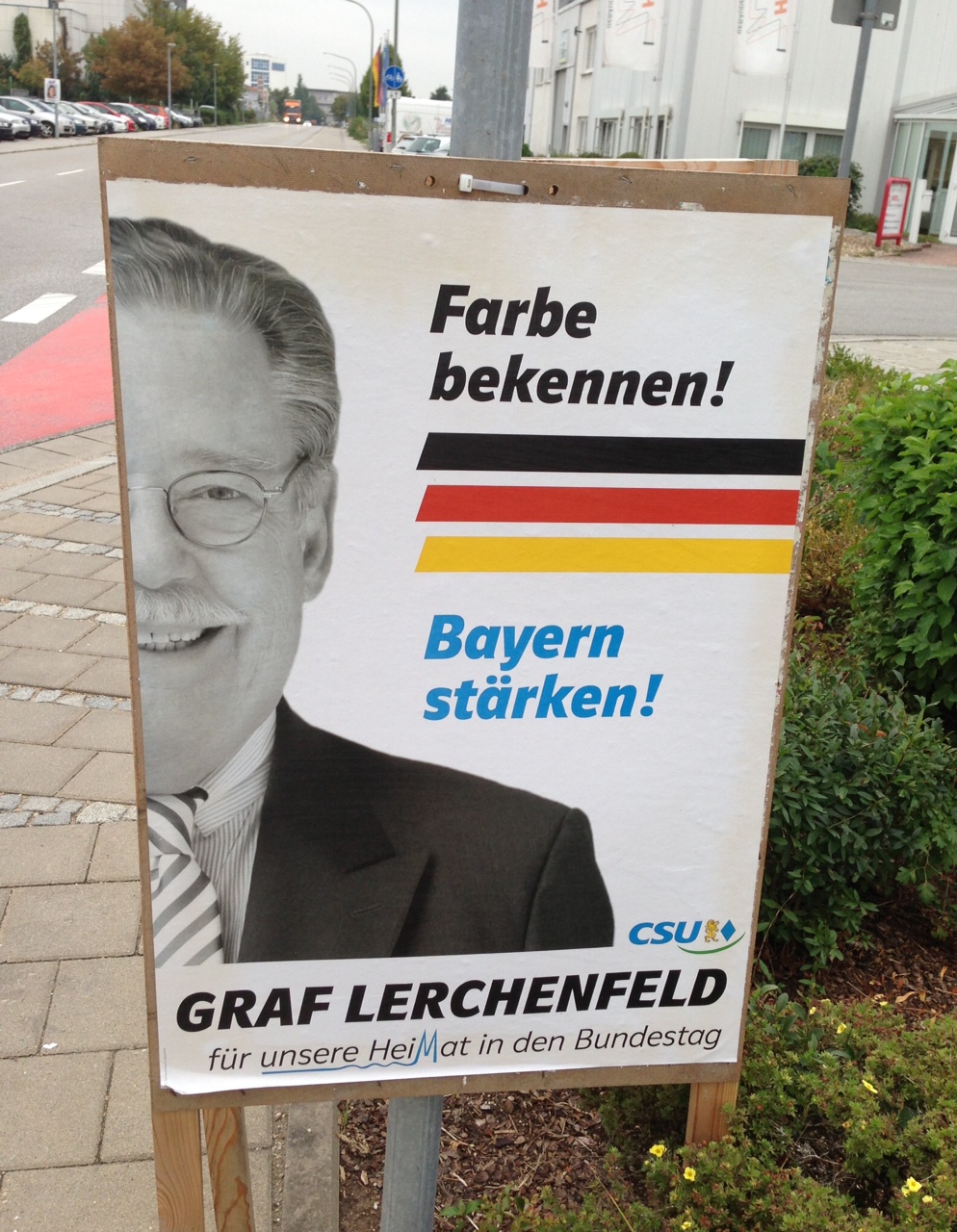
“Color your world!”   Graf Lerchenfeld’s political slogan would be right at home with Disney.

elections6

I’ve been saving the next few posters for last-  the Bayern Partei!  They advocate Bavaria breaking away from the rest of Germany.

elections-bayern1

No, really, they completely want to secede from the rest of Germany.  Like now.

elections-bayern2

This last placard is my absolute favorite.  I love this so much that I went online and found the source image instead of using a picture of my own, because it’s just so magnificent.  The slogan means “Paid enough.”  As in, “Bavaria has given enough money to the rest of Germany.”

The donkey shitting out gold is a particularly nice touch.

elections-bayern3

And finally, we have the bastard side of politics.  The NPD, or National Democratic Party, is an extreme right-wing political party with Neo-Nazi leanings.  They’ve met with David Duke, and they’ve managed to stay just barely on the correct side of the law.  While Naziism and Nazi symbols and paraphernalia are illegal here, simply being a hate group isn’t illegal by itself.  The group has survived numerous attempts to ban them, and they’re still kicking.  In November 2008, the NPD published a document entitled “Africa conquers the White House” which stated that the election of Barack Obama was the result of “the American alliance of Jews and Negroes” and that Obama aimed to destroy the United States’ “white identity.”

On 5 September of this year, the NPD came to Regensburg for an authorized political speech.  The local newspaper Mittelbayerische  posted this photo of the speech.  The NPD people are on the right side of the photo.  The huge mass of people on the left, behind the Polizei vehicles cordoning off the area, are the counter protesters.  I’ve never been prouder of this city than I was when I saw this photo.

elections-ndp

Who would win in a fight, the Piraten Partei (Pirate Party) or a clan of Ninjas?