The Walker Art Center in Minneapolis

I thought it might be nice to take a quick break from Japan to show you art in Minnesota.  While I was in Minneapolis, I took some time to visit the Walker Art Center.  I particularly liked the sculpture garden.

walkerartcenter-1

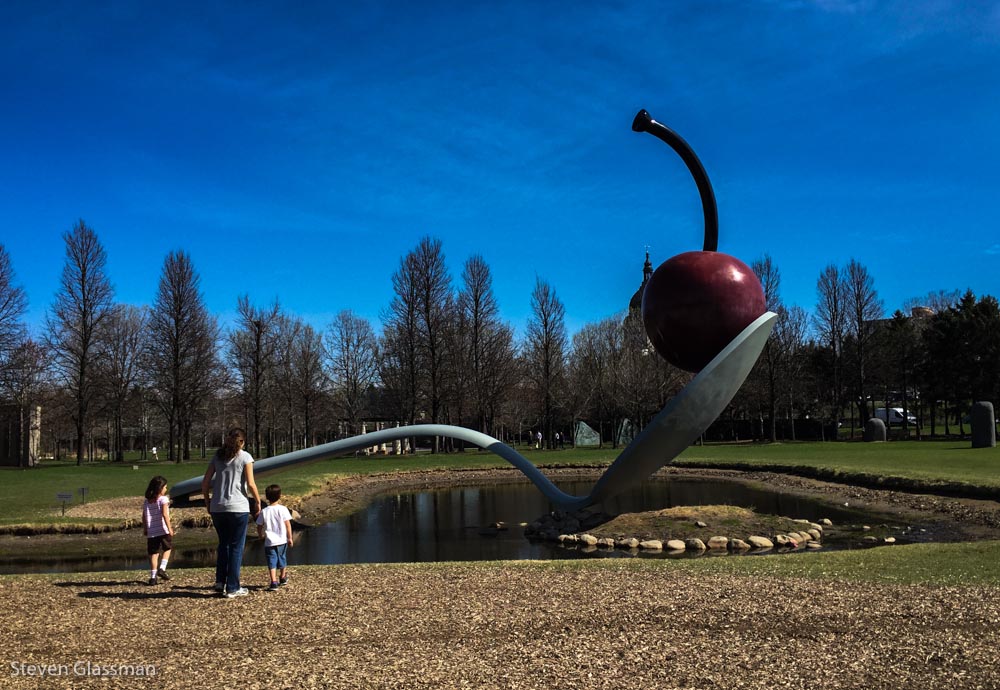
This piece is called Spoonbridge and Cherry, and it was designed by a husband and wife team in the 1980s.  I just like it because it’s an enormous spoon.

walkerartcenter-2

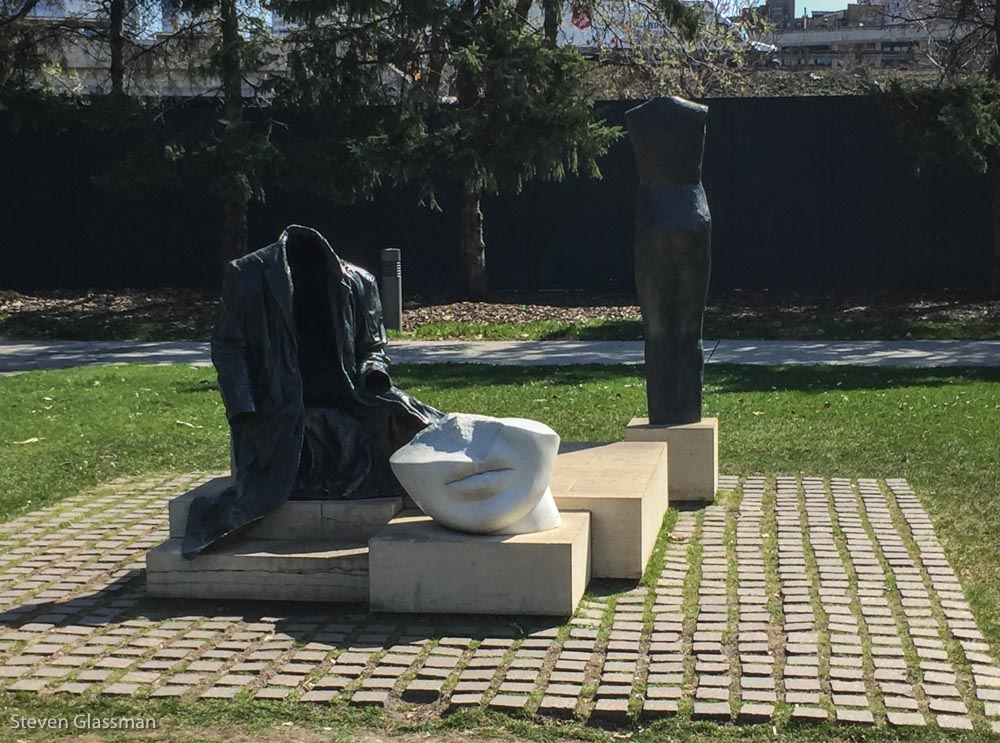
I don’t have commentary for every photograph.  I really like sculpture though.

walkerartcenter-3

Horse!

walkerartcenter-4

This is the outside of the Walker, showcasing the displays that were ongoing while I was there.  The Walker was celebrating 75 years while I was visiting, so there were two different “75 years” themed installations.  International Pop  covered the emergence of Pop art from the 1950s to the early 1970s.

walkerartcenter-5

I like the little round grass patches in front of the building.

walkerartcenter-6

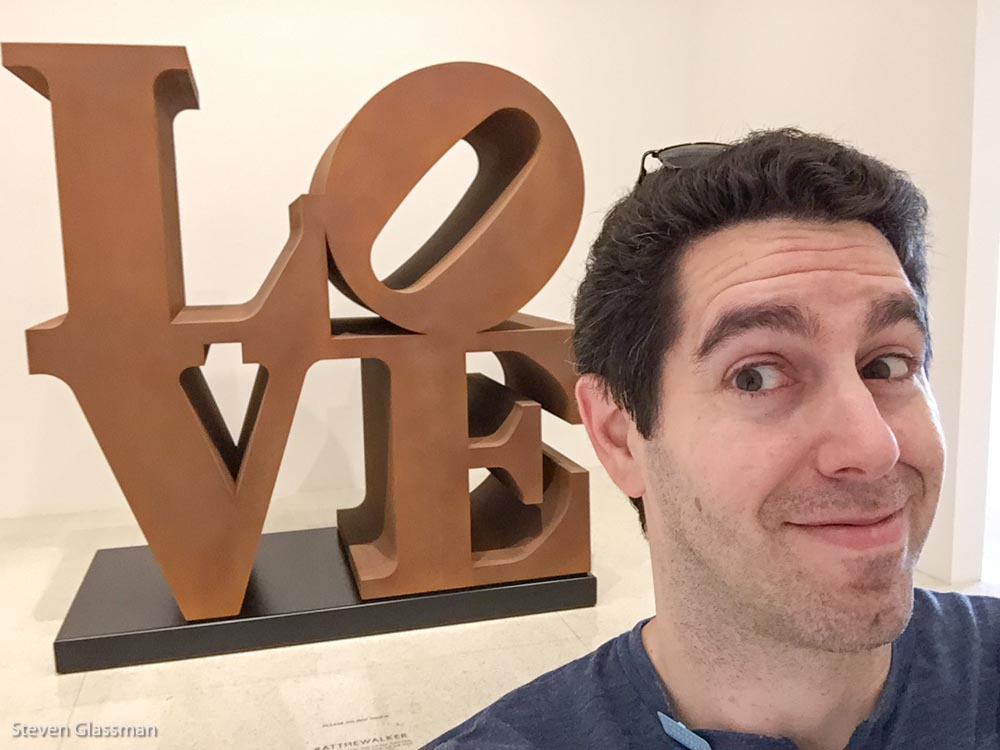
This item was part of the “75 Gifts for 75 Years” exhibition.

There was a sign on the floor stating that you should take selfies here and post them to social media with the tag #AtTheWalker.  I am a slave to trendiness.  Also, I’m partial to this piece because I have a tiny metal version of this piece at home, which I’ve had for years because it came from my grandmother’s house when she passed away.

walkerartcenter-7

I think I saw these in the lighting section at Ikea.

walkerartcenter-8

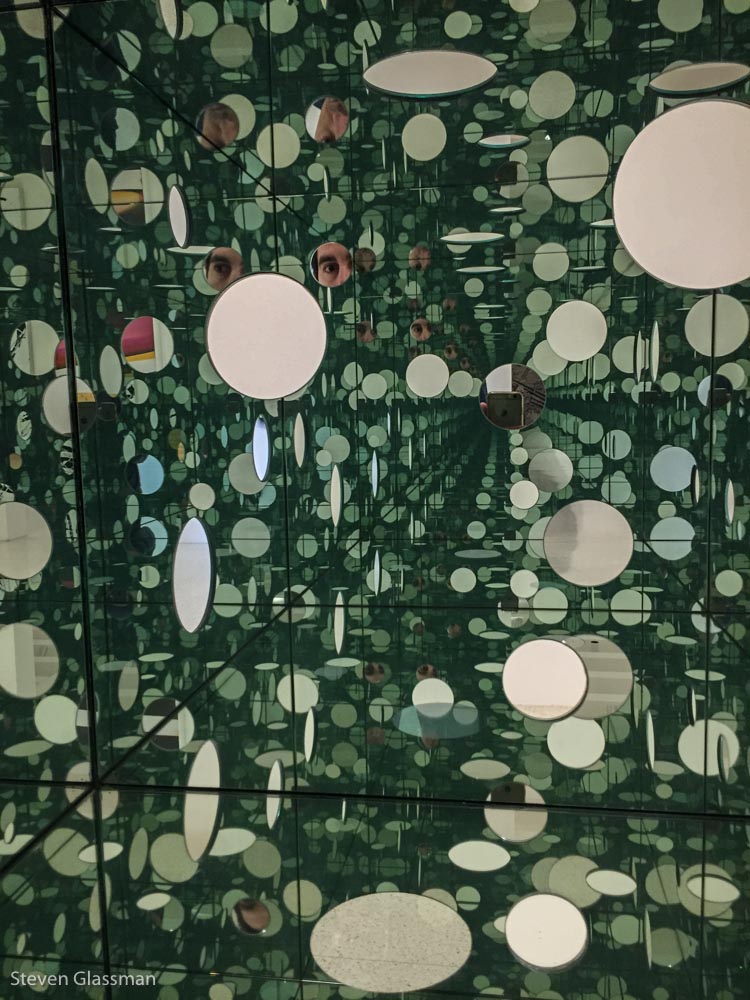
It was all done with mirrors!

walkerartcenter-9

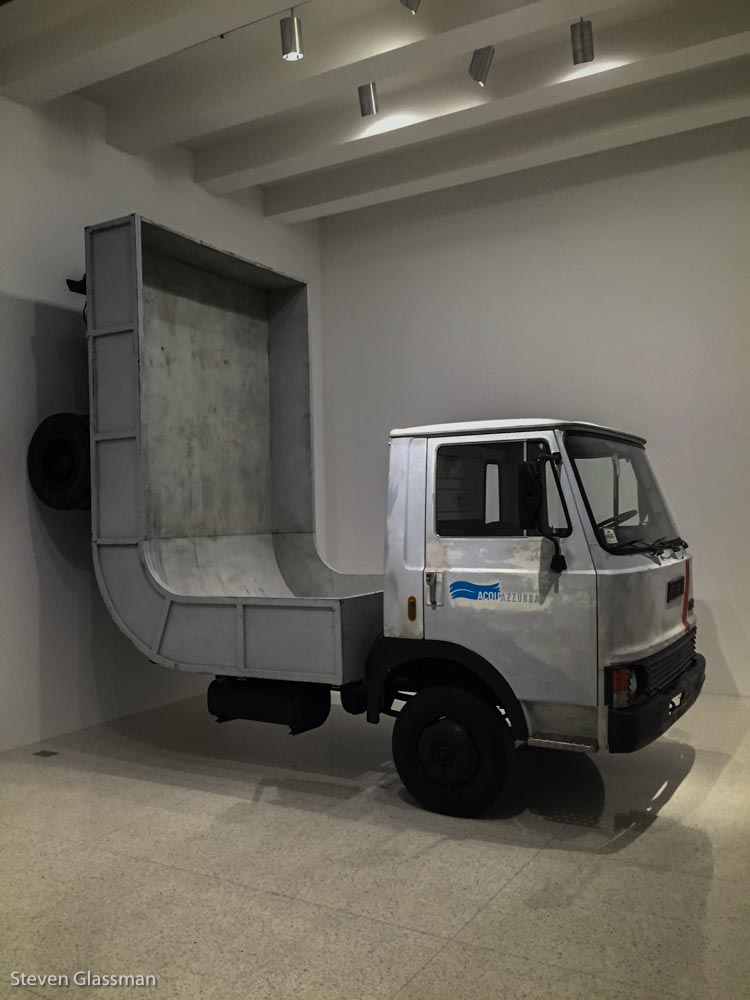
I read recently about the artist who does these bendy trucks actually getting a parking ticket on his art installation in the city of Karlsruhe, Germany.  That’s hilarious.

walkerartcenter-10

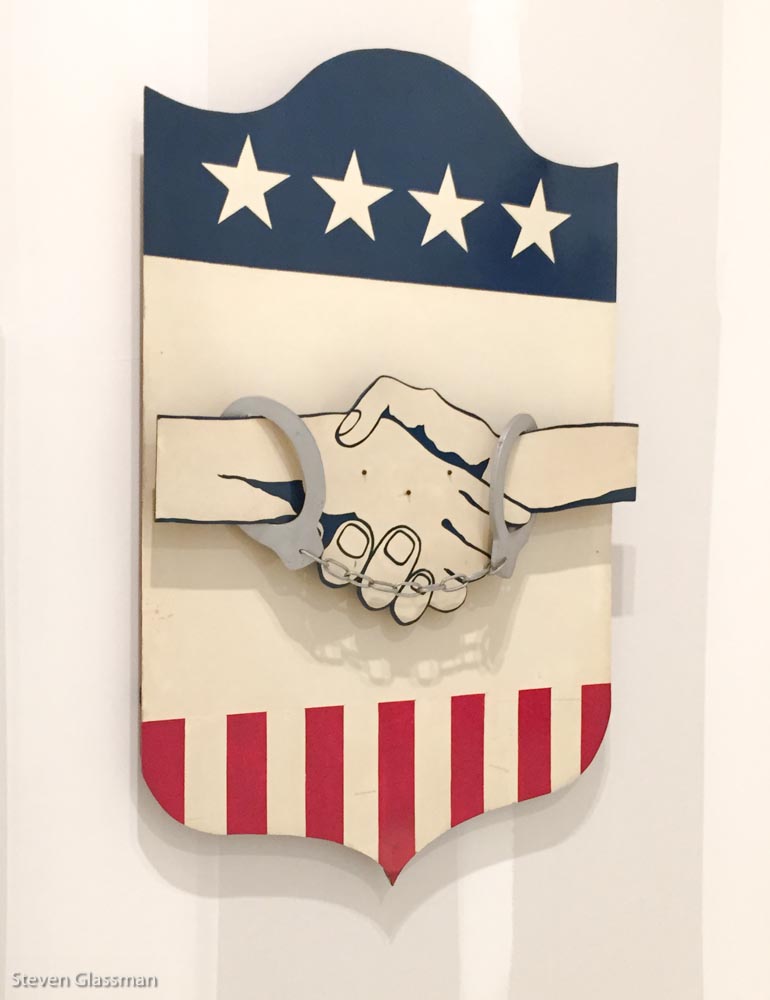
Um.  America!

walkerartcenter-11

Whatever your artistic preferences, it’s important to beeeeee yourself.

walkerartcenter-12

I like the pieces that are sort of political-cartoonish.

walkerartcenter-13

I also like the pieces that are kind of random.   That tiger must have had a really good idea!

walkerartcenter-14

This bit here made me hungry…

walkerartcenter-15

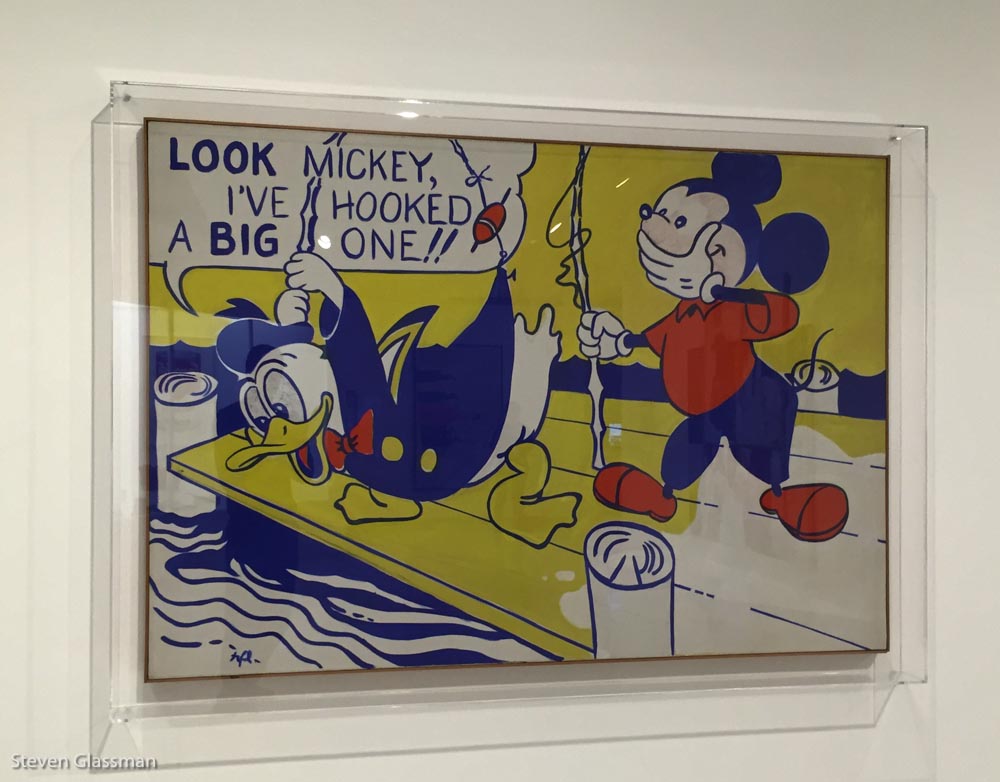
This was one of the most showcased items in the Pop art exhibit.

walkerartcenter-16

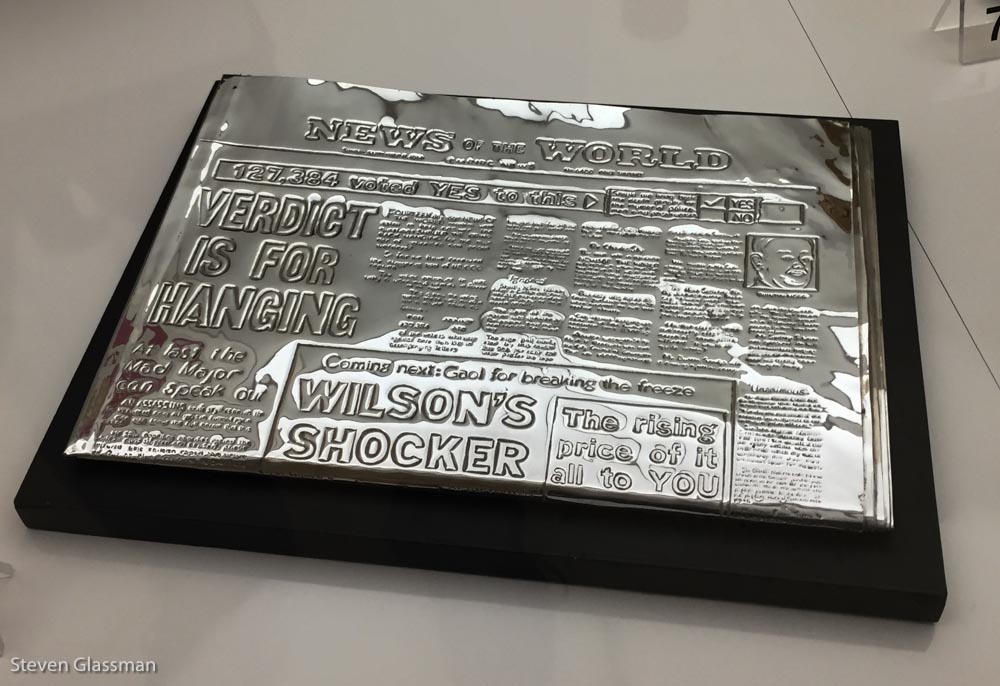
I thought this metal pressed newspaper was amazing.

walkerartcenter-17

…made you look!

walkerartcenter-18

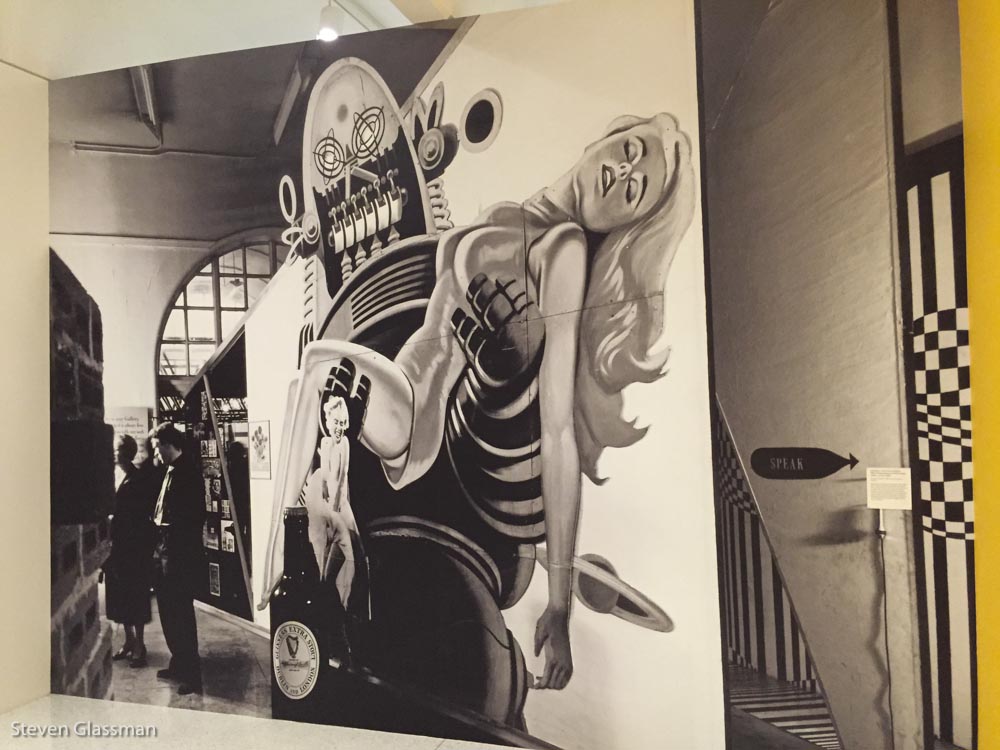
I like the classic sci-fi feel to this bit of wall art.

walkerartcenter-19

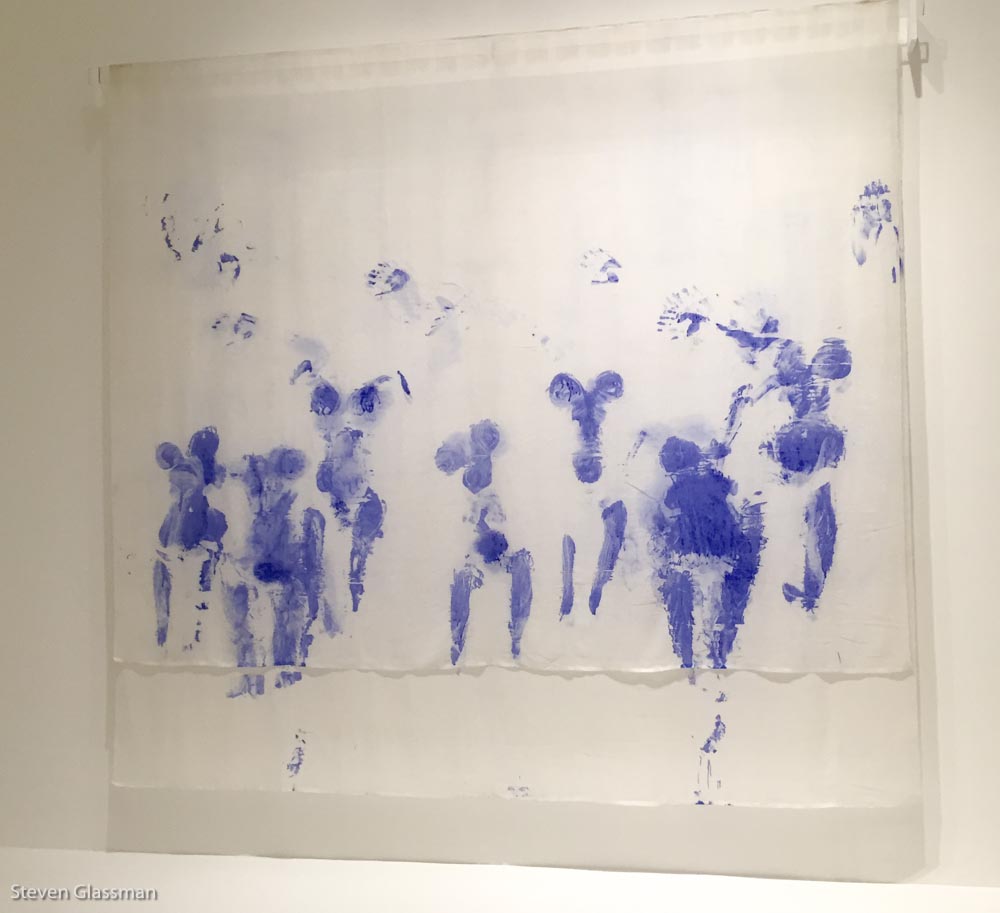
There was a film explaining this piece-  the artist Yves Klein got naked models to dip themselves in blue paint and then press themselves against the canvas.

walkerartcenter-20

Do you have a favorite sculpture?  Have you ever been to the Walker Art Center?

Bratislava

Caveat:  Many of the pictures in this post might look a little familiar if you read Confuzzledom, because Bev and Jan went to Bratislava the day after I did, and they took the same free walking tour that I did.  We saw a lot of the same things, and even had (delicious traditional) lunch in the same tourist-trap restaurant.  She was much faster about getting her Bratislava post up than I was, however.

The last time I was in Vienna, I took a day trip to Bratislava, the capital of Slovakia.  Bratislava is only about an hour away from Vienna by regular commuter train, and you can even take a boat along the Danube river to get there.

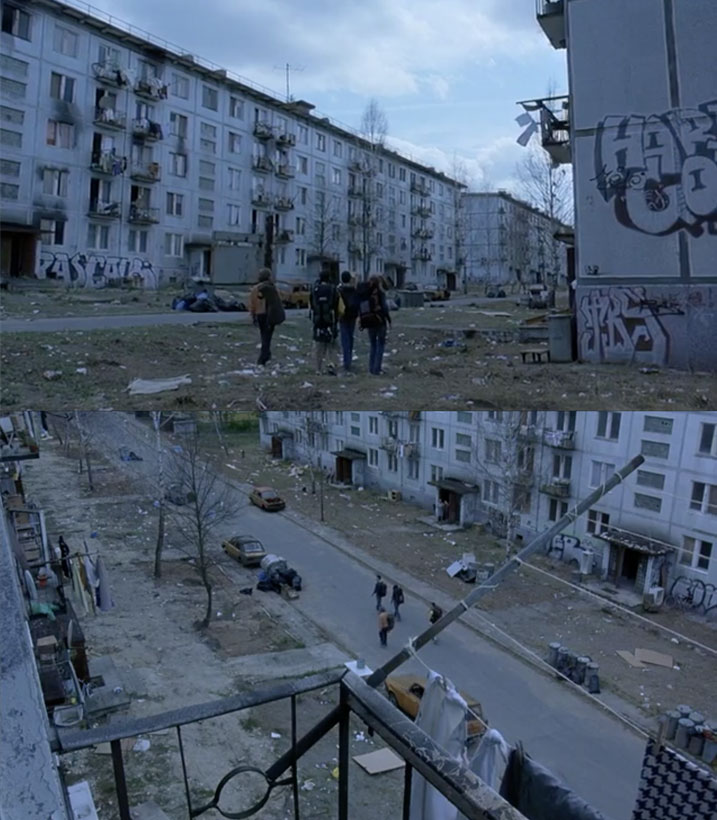
If your only exposure to Bratislava before now is based on the movie Eurotrip, then this is what you’ll expect the city to look like.  These are actual screen captures from the Bratislava section of a very funny movie that gets traveling through Europe dead wrong.

eurotrip

Bratislava is far from the post-Communism wasteland depicted in the movie- it’s actually a really pleasant little town. Outside of the center it’s nothing too pretty, but the old part of the city is compact and lovely.

I felt like the center of the city bears marked similarities to Prague, which makes sense if you consider that prior to the Velvet Divorce in 1993, the Czech Republic and Slovakia were one country.

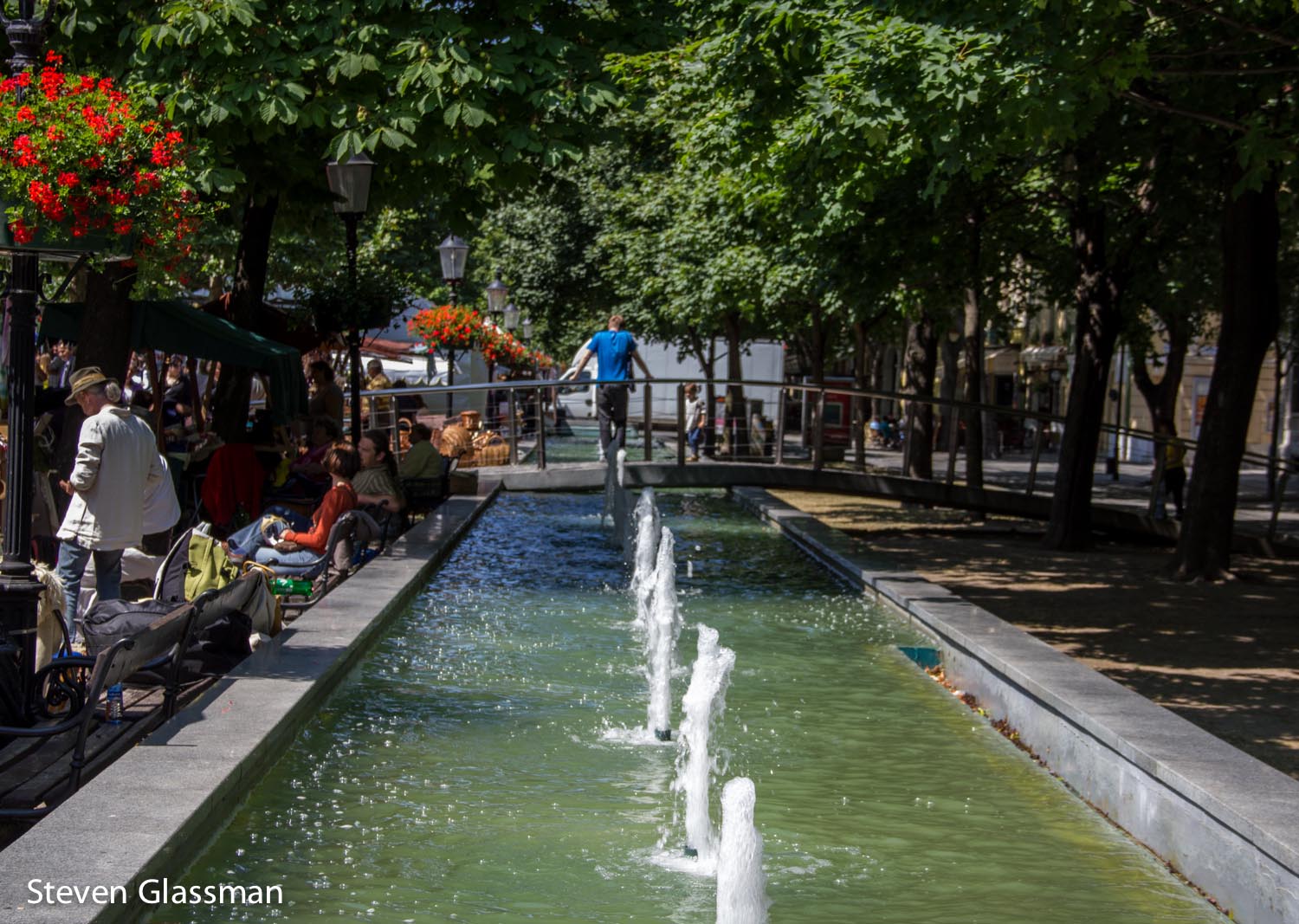
Here’s a fountain in Hviezdoslav Square, a pretty little central area in the city.

bratislava-1

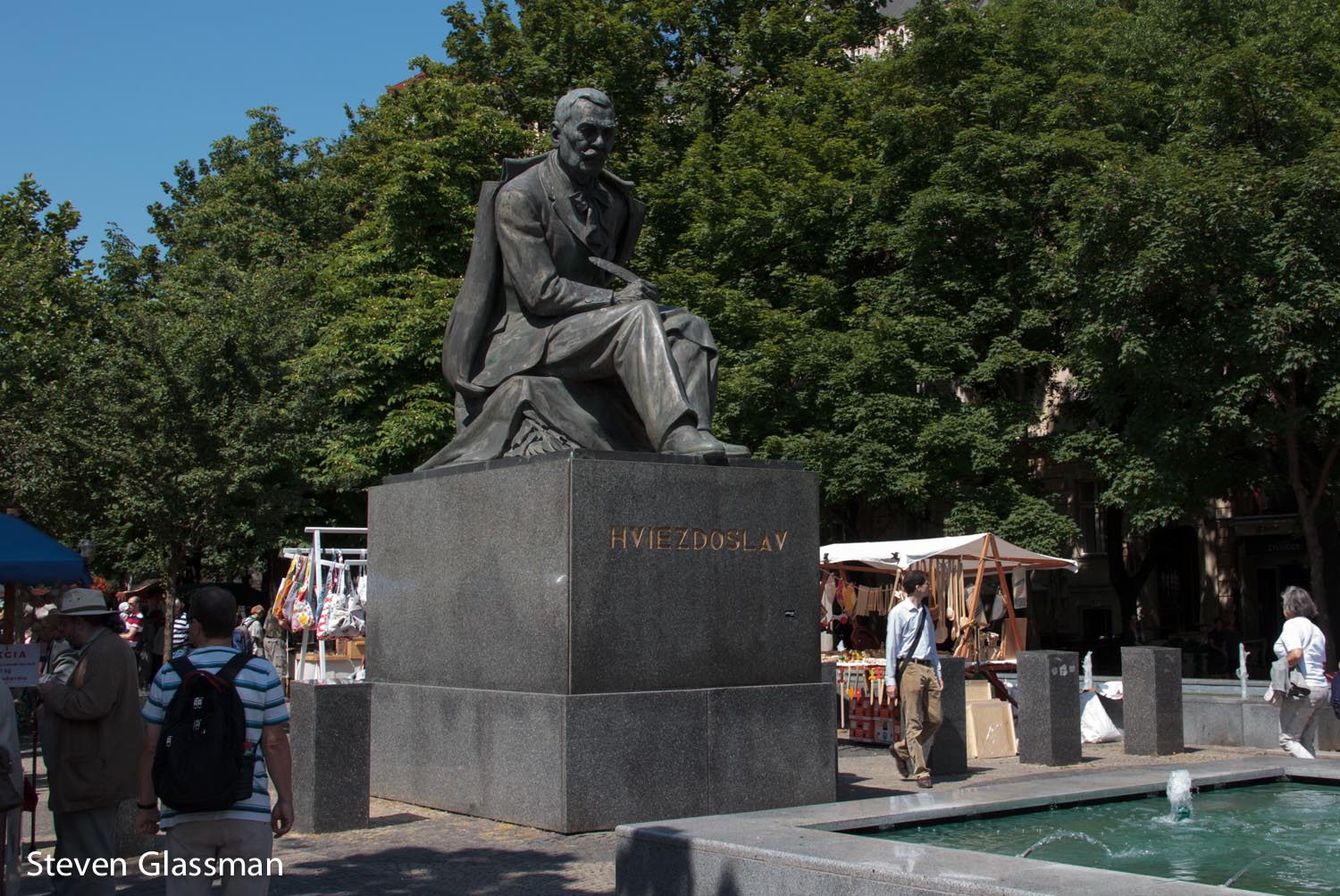
Hviezdoslav Square is named after Pavol Hviezdoslav, a Slovak poet.

bratislava-2

Slovak National Theatre.  Check.

bratislava-3

I meant to check out this place, but didn’t have the chance.  Not a wardrobe in sight!

bratislava-4

Bratislava is filled with amazing statues in random places.  This Man At Work, named Čumil, is very popular.  He is sometimes referred to as The Peeper, because he’s checkin’ out the ladies.

bratislava-5

Of course Man At Work is so low to the ground that he’s been run over a few times.  The sign helps his visibility a little bit.

bratislava-6

Several of the statues are actually owned by restaurants, like this one.  This is a statue of  Schöner Náci, a carpet cleaner who reportedly dressed in a black suit and top hat during the communist days of the city, offering gifts to pretty women.

There was also a well known statue called the Paparazzi statue in Bratislava- it peeked around a corner with a camera.  I asked my tour guide about it, but the Paparazzi statue was owned by a restaurant of the same name, and both restaurant and statue are now gone.

bratislava-7

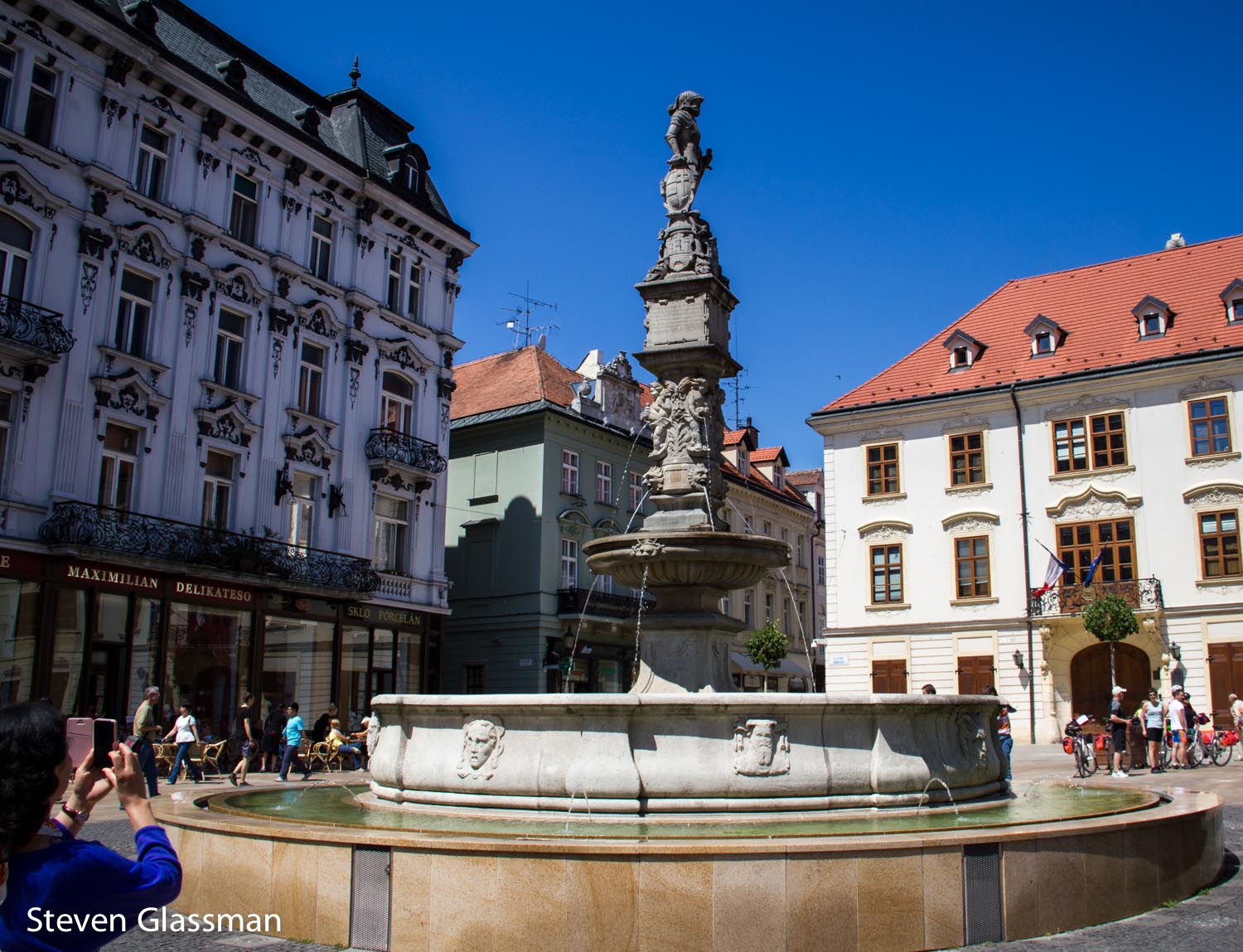
The Roland Fountain (Rolandova fontána)  was commissioned by Hungarian King Maximilian in 1527, and was the first fountain in Bratislava.

bratislava-8

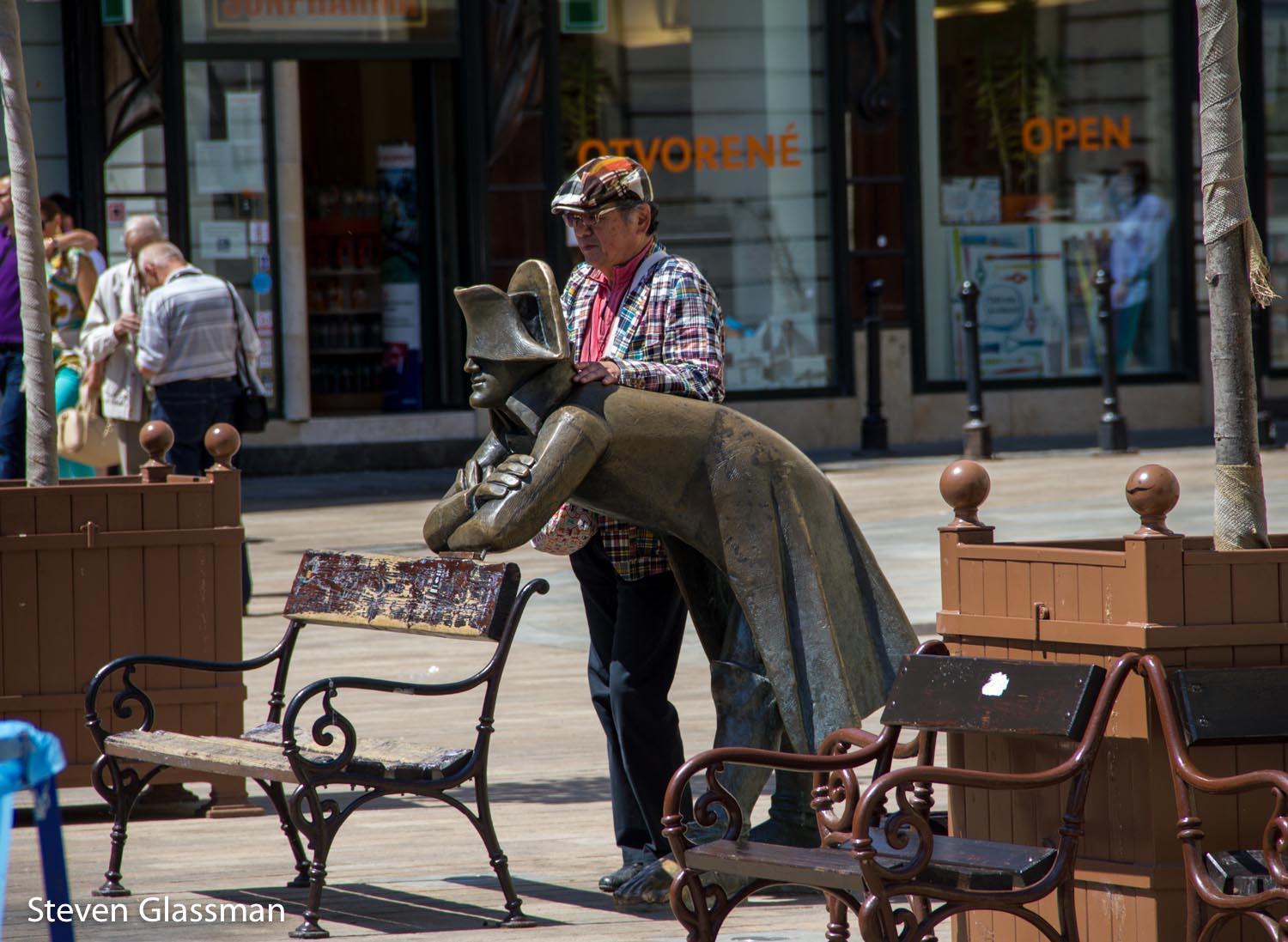
Here’s another one of Bratislava’s great statues.  It’s a deliberately unflattering image of a Napoleonic soldier, because Bratislavans have a long memory when it comes to Napoleon’s siege.

bratislava-9

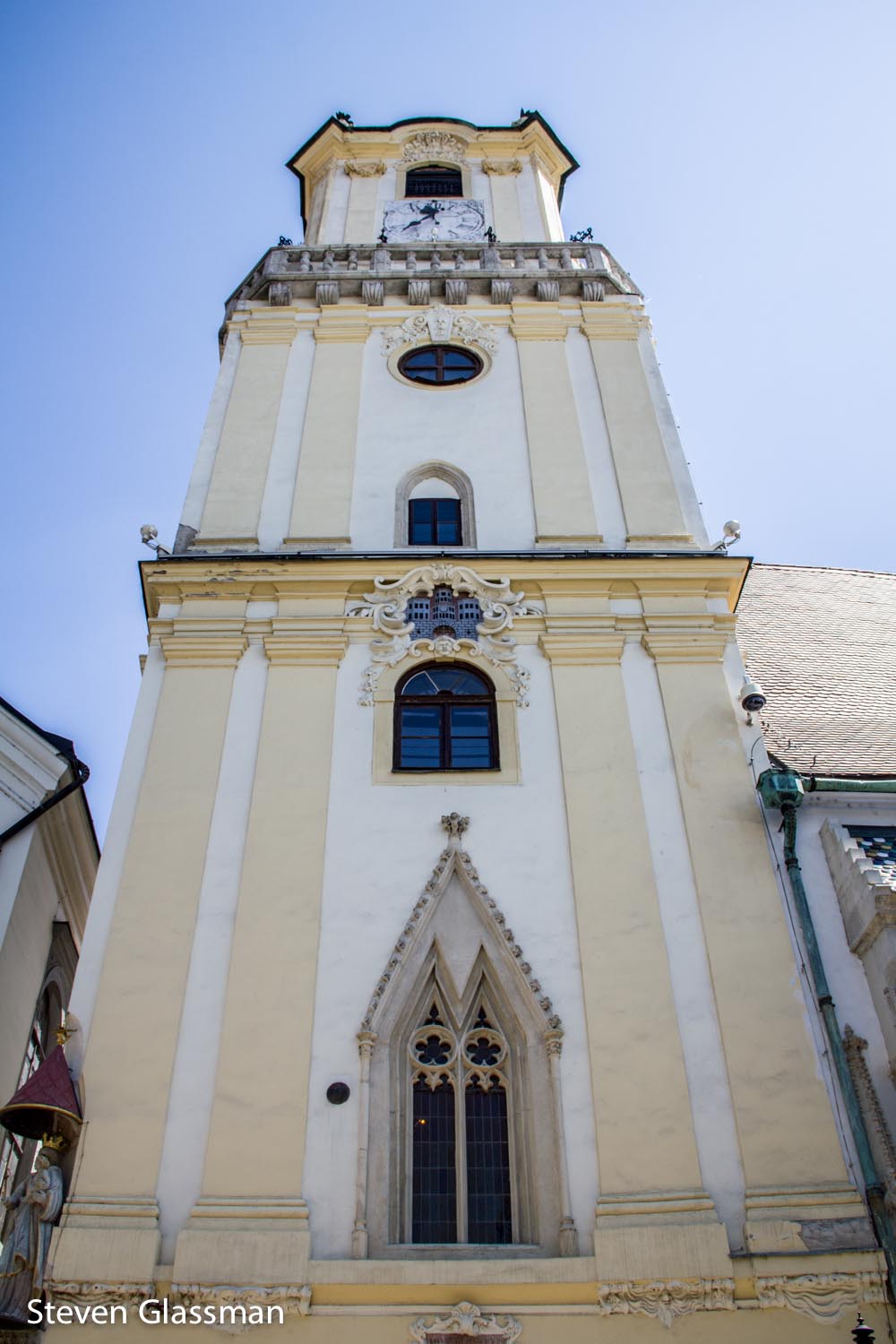
See the black metal ball to the left of the window in this tower?  That’s a cannonball.  This is the old Town Hall tower, and the cannonball is meant to be a reminder of Napoleon’s impact, no pun intended, on the city of Bratislava.

bratislava-10

These Berlin Bears are all over Europe.  I’ve seen more in Berlin than anywhere else, of course, but they’ve made it to other cities.  This one has the coat of arms of Bratislava on the paw on the right (the one that looks like a little castle), and the coat of arms of Slovakia containing the double-barred cross on the left paw.

bratislava-11

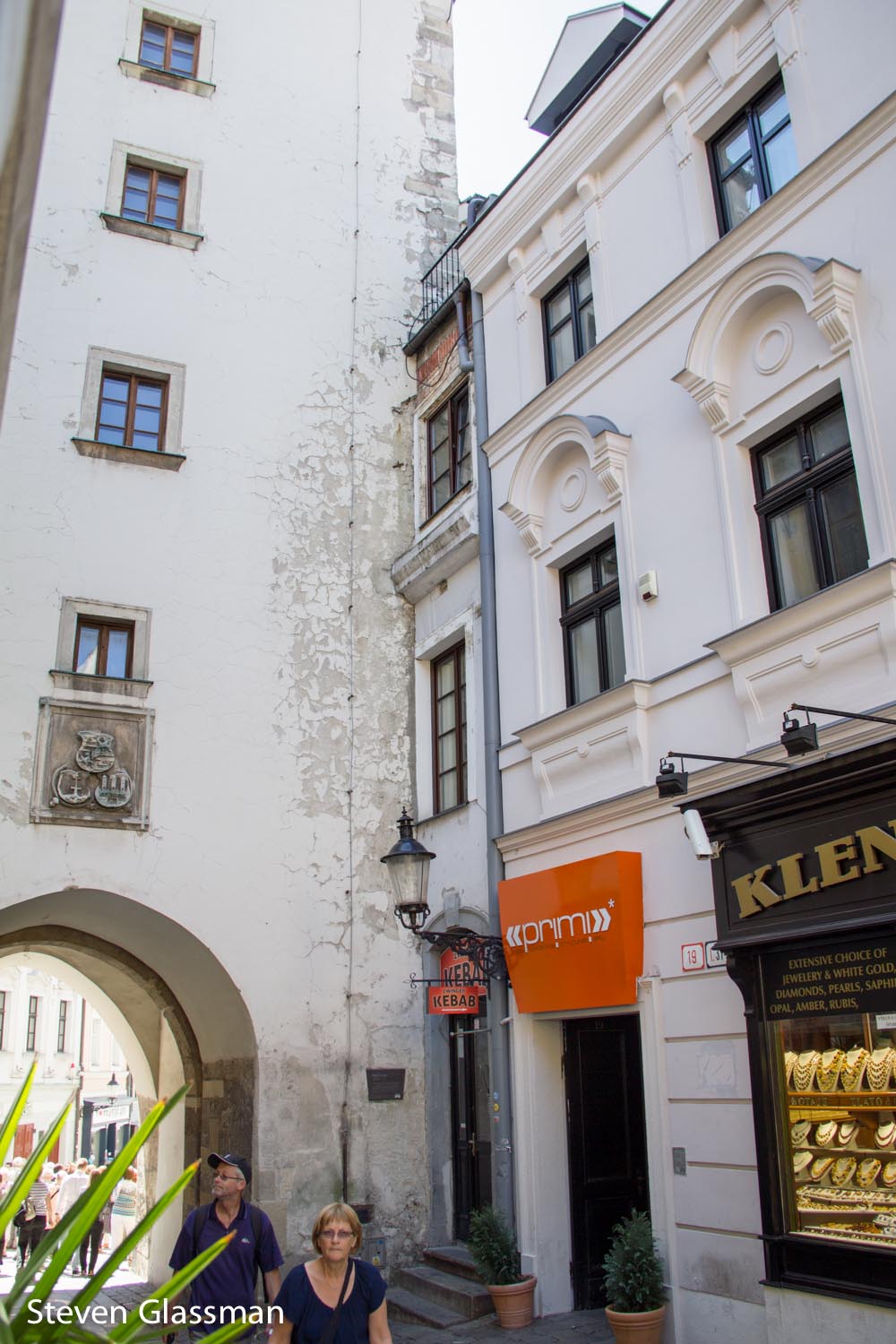
This is the tower of Michael’s Gate, one of the four original main gates to the city.  The distinctive roof is made of copper.  I thought I had taken a picture where you can see both the tower and the gateway beneath it in one shot, but I guess I only got it in separate photos.

bratislava-12

This is the old city gate at the base of the tower from the previous photo.  Michael’s Gate was constructed in the 14th century.

bratislava-13

Next to the tower is the thinnest store in the city of Bratislava.  It’s been many things over the years, but right now, it’s a Döner Kebab stand.    I imagine you can fit almost two people in there at once, but they weren’t open when I walked by so I couldn’t tell you for sure.

bratislava-14

That long flat buiding on the hill in the left half of this photo is Bratislava Castle.  I didn’t get any closer than this.  The building on the right is just a picturesque church.

bratislava-15

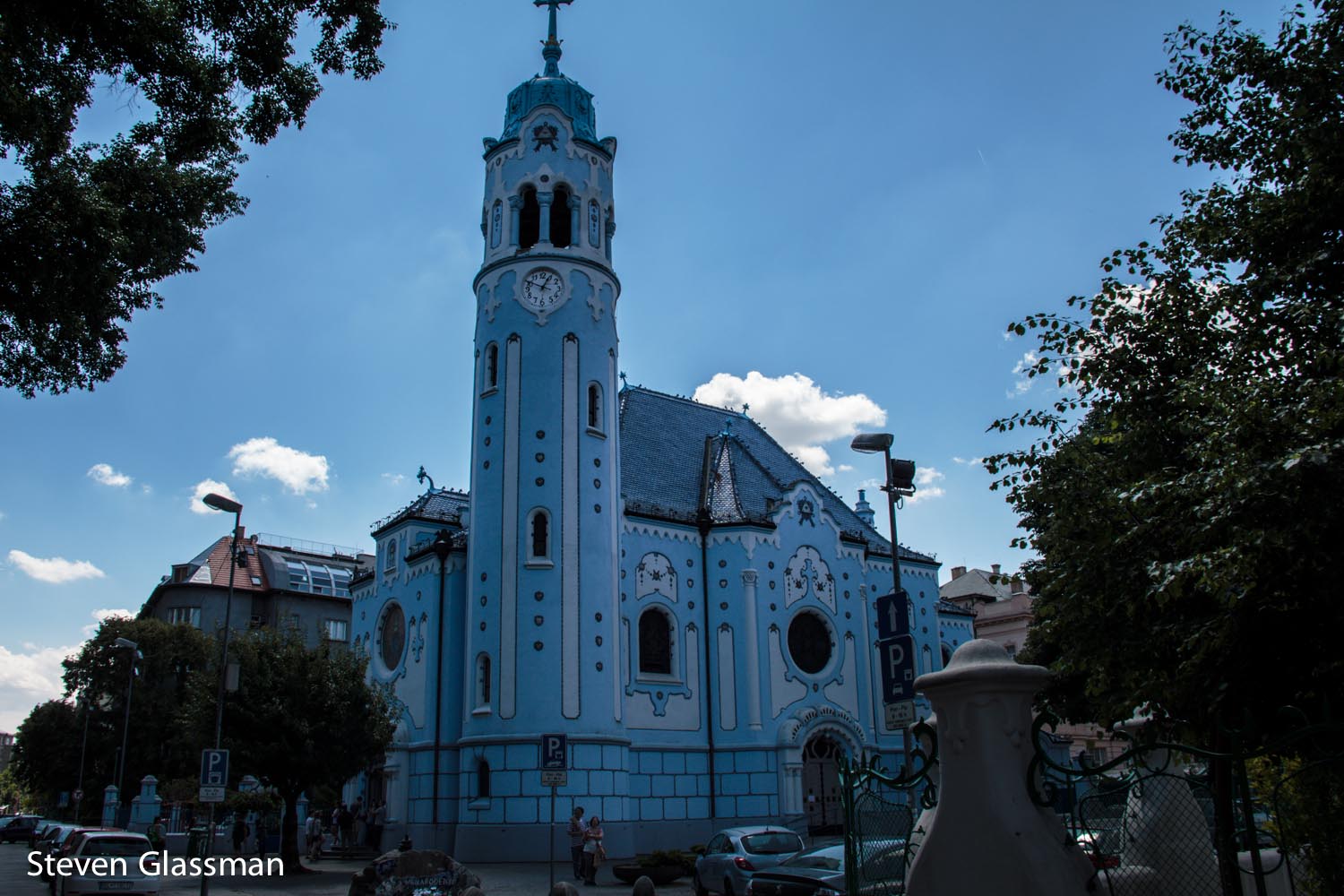
This is the Church Of St. Elisabeth, also known as the Blue Church.  I can’t imagine why they call it that.

bratislava-18

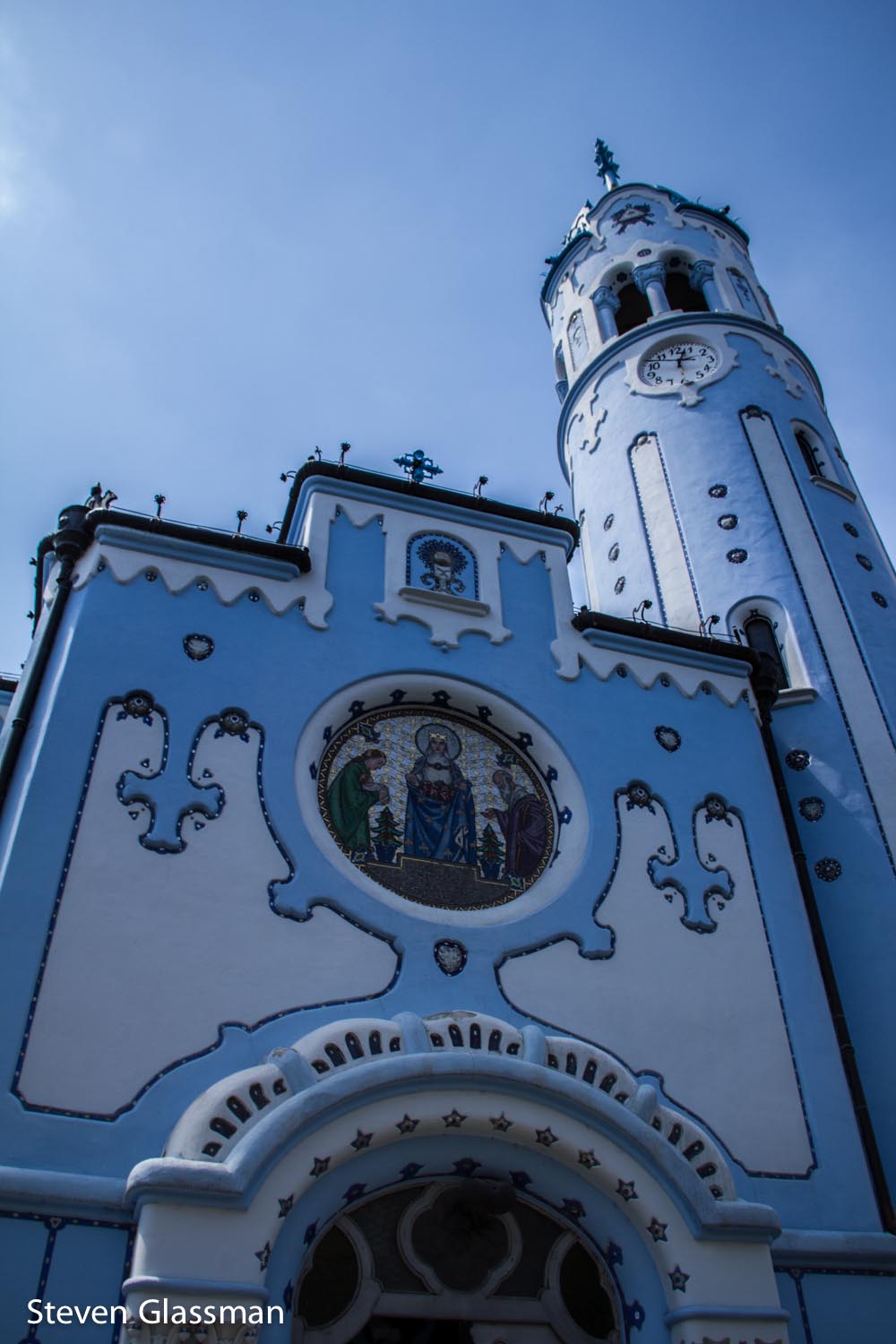
This church is built in the Hungarian Art Nouveau style by Ödön Lechner, a Hungarian architect who was nicknamed the “Hungarian Gaudí“.

bratislava-19

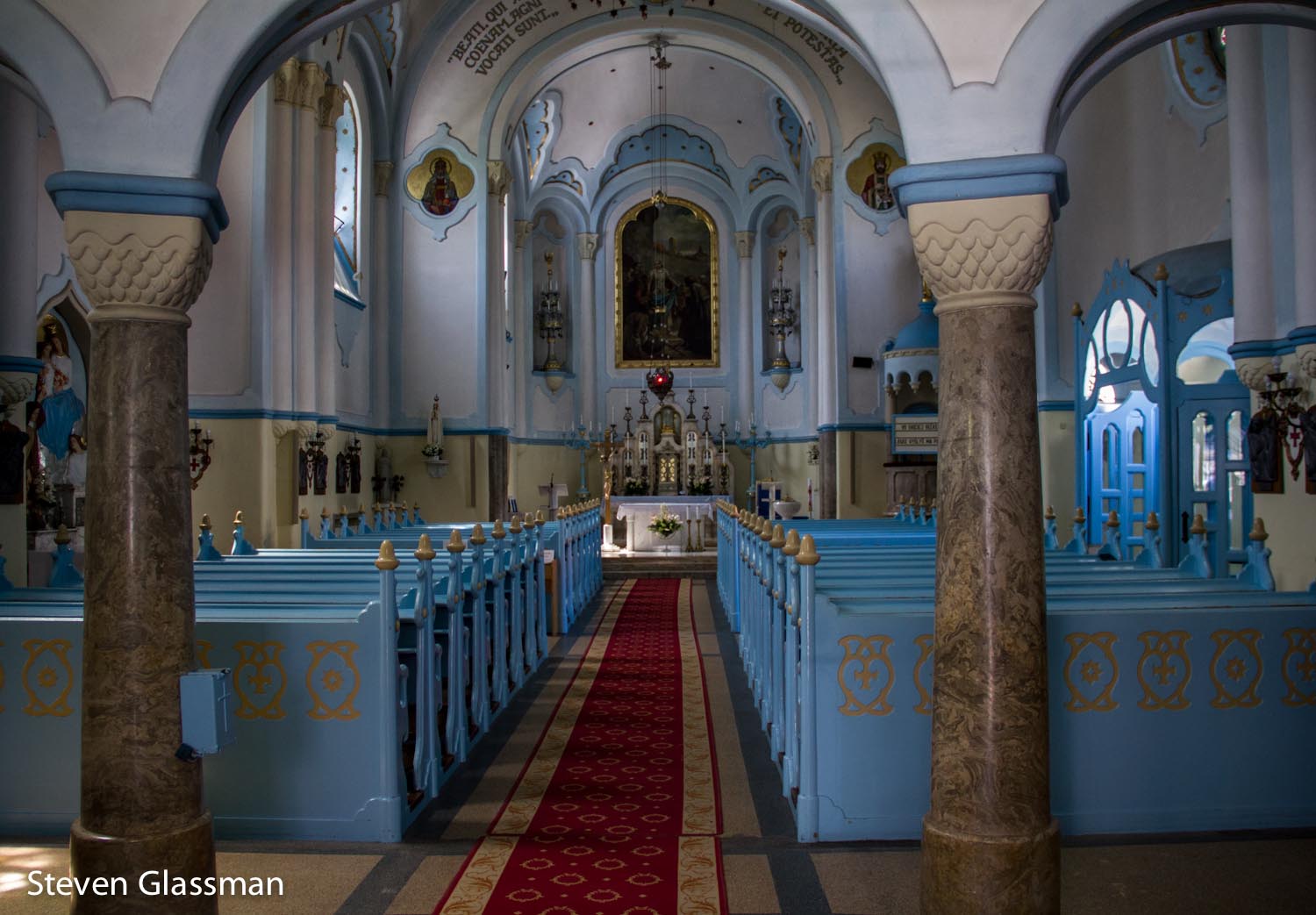
Even the inside is mostly blue!

bratislava-20

It kind of looks like a wedding cake, don’t you think?

bratislava-21

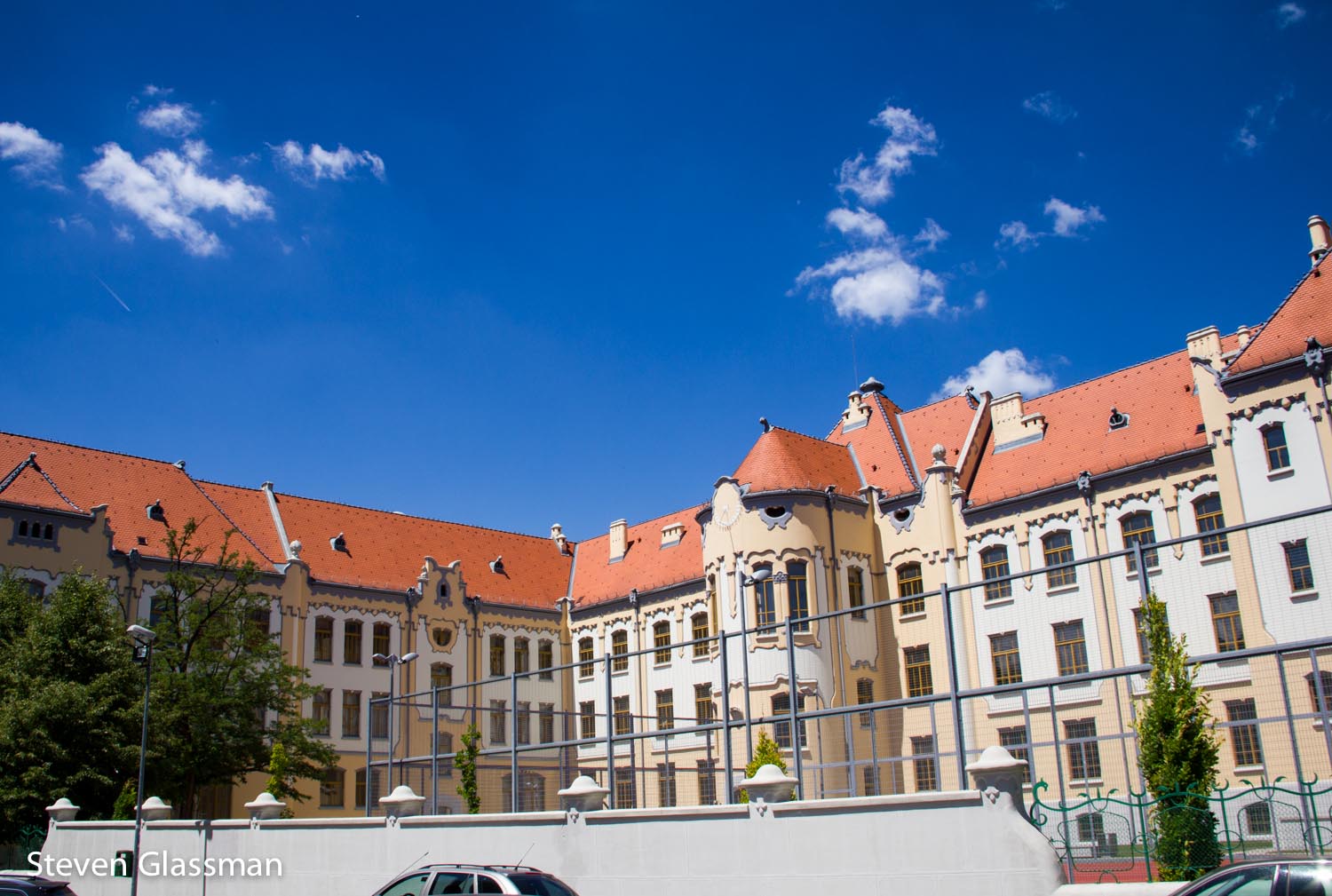
Ödön Lechner also designed this building next to the Blue Church, in the same style.  This is the Gymnázium Grösslingová, and if I remember correctly, it’s being used as a school now.

bratislava-16

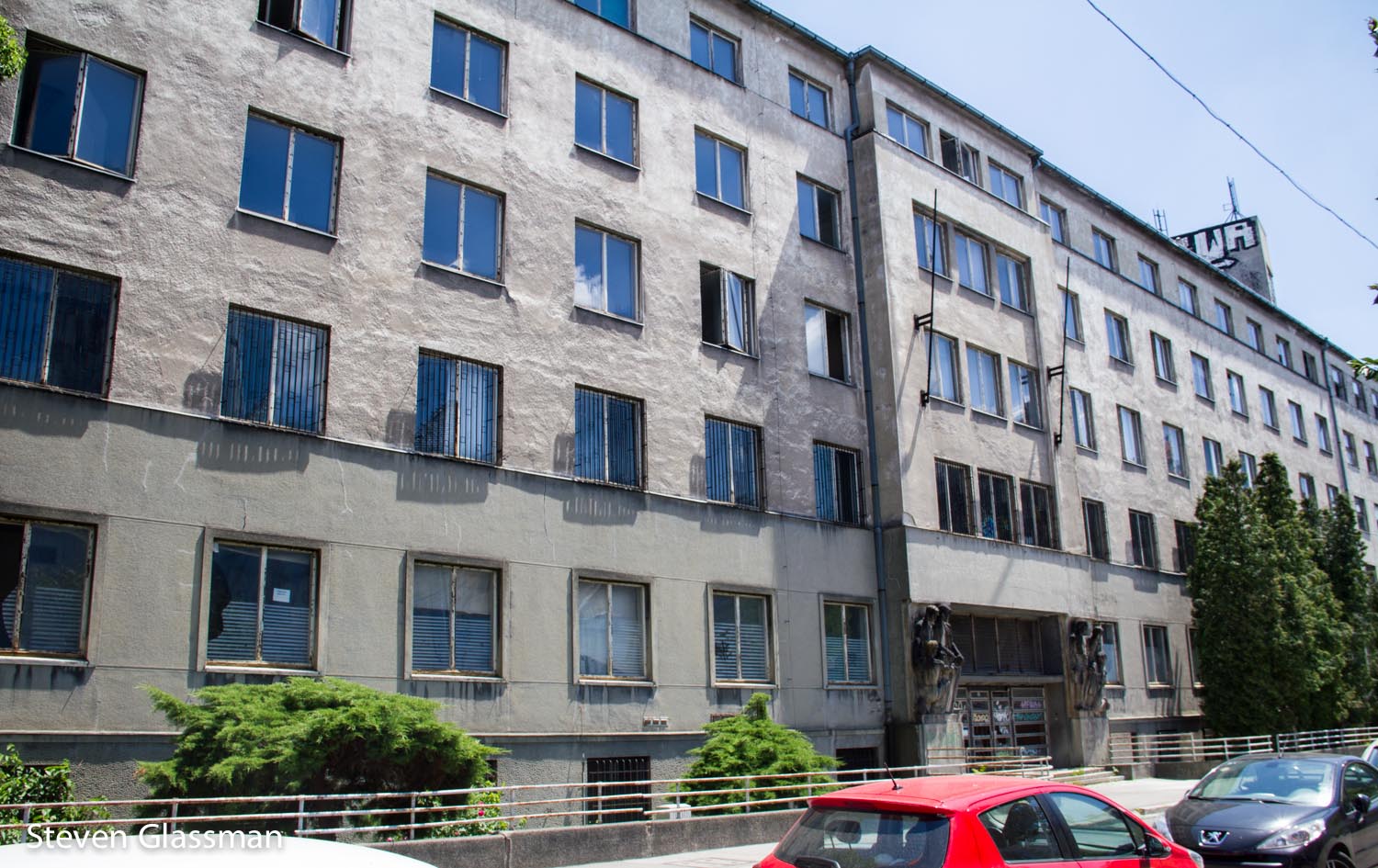
Also across the street from the Blue Church, on the other side, is this creepy abandoned Communist-era hospital.

bratislava-17

I can’t actually remember the deal with this statue, but I thought it was neat looking.

bratislava-22

After the tour, I stopped at a recommended local restaurant for a lunch of traditional Slovakian food. I can’t for the life of me remember what this dish is called, but it basically tasted like macaroni and cheese with bacon.  It was utterly delicious.

bratislava-23

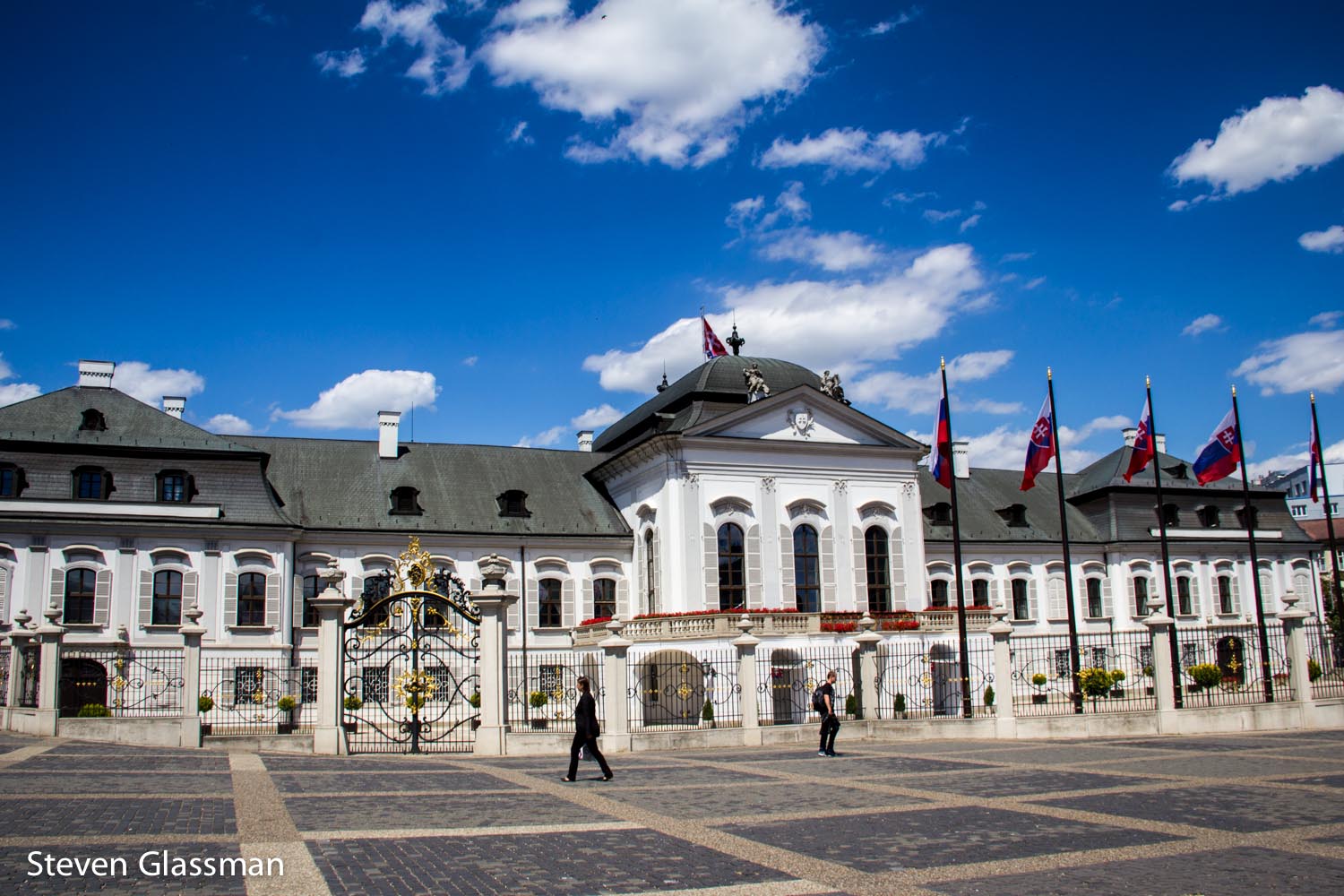
I walked past this stately building on my way back to the train station to leave the city.  This is Grassalkovich Palace, the residence of the President of Slovakia.

bratislava-24

Have you ever been to Slovakia?

Nepal Himalaya Pavilion

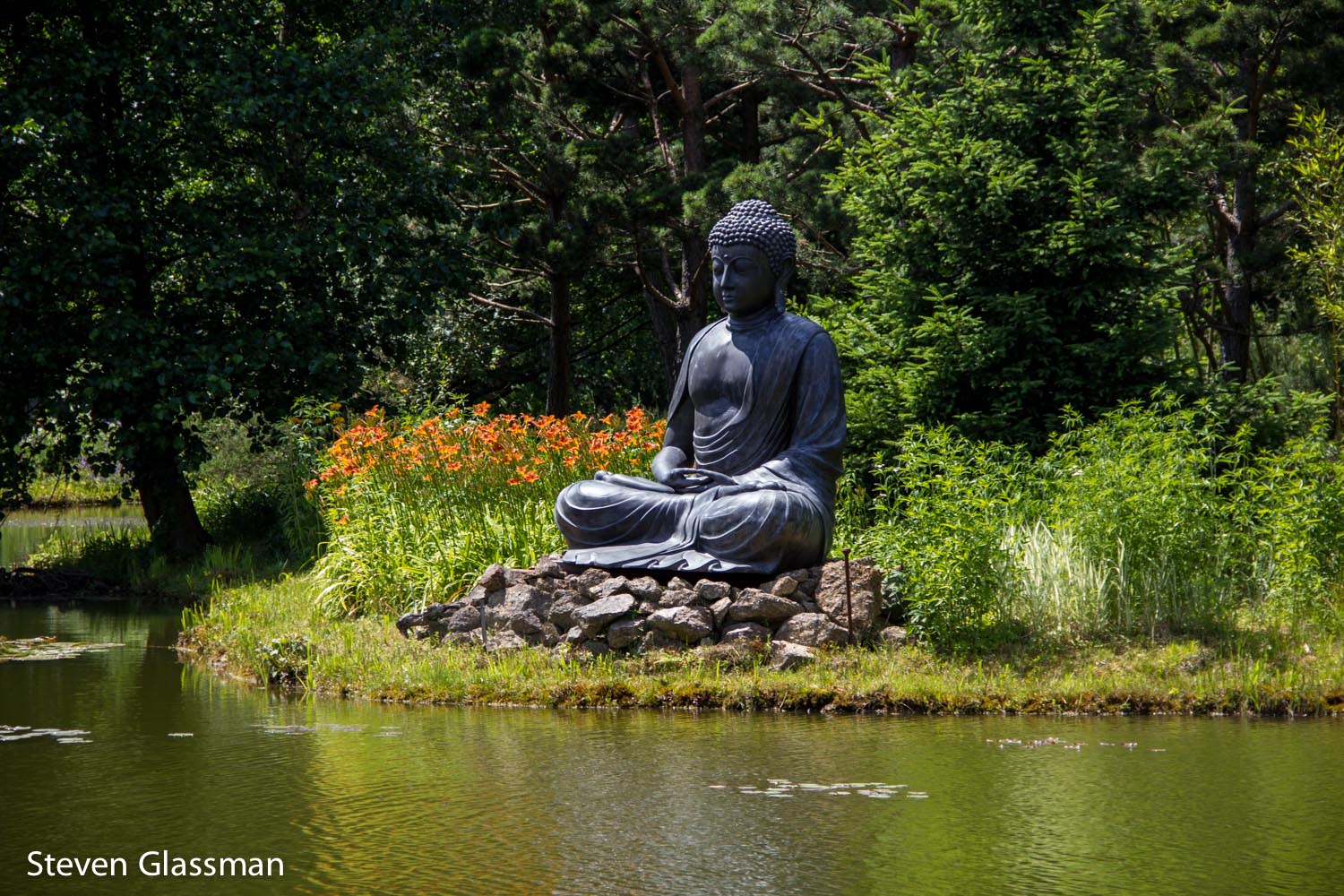
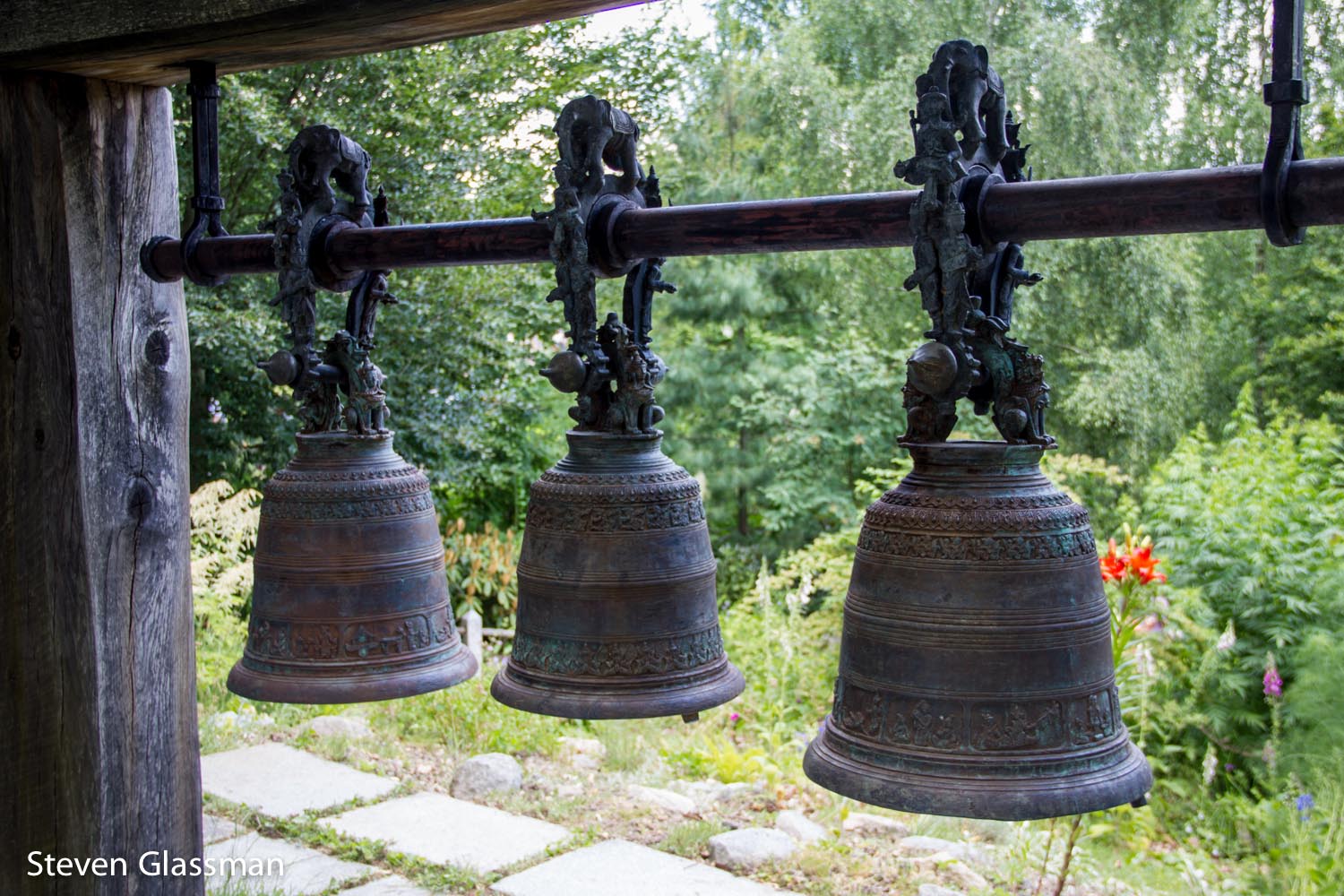
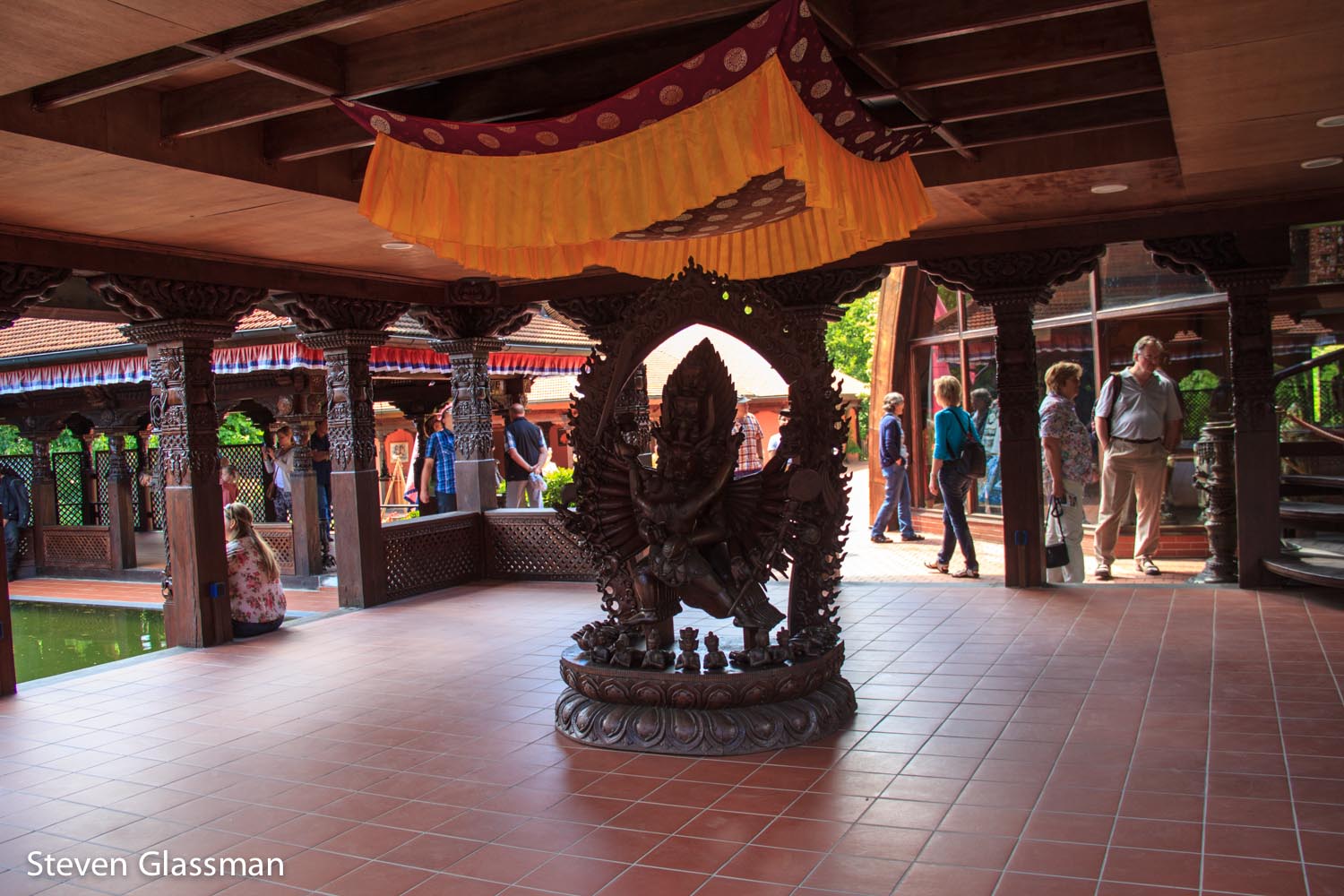
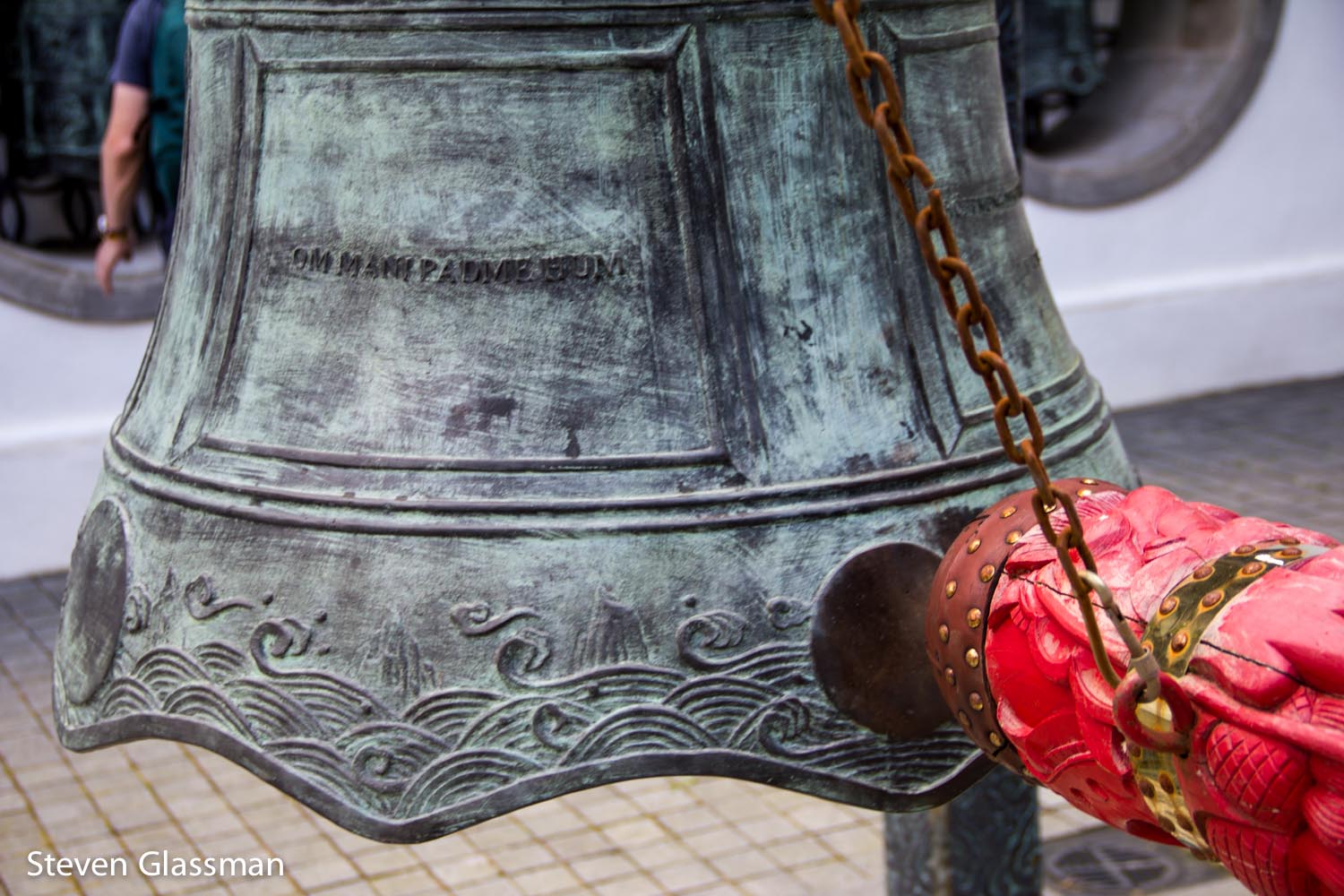
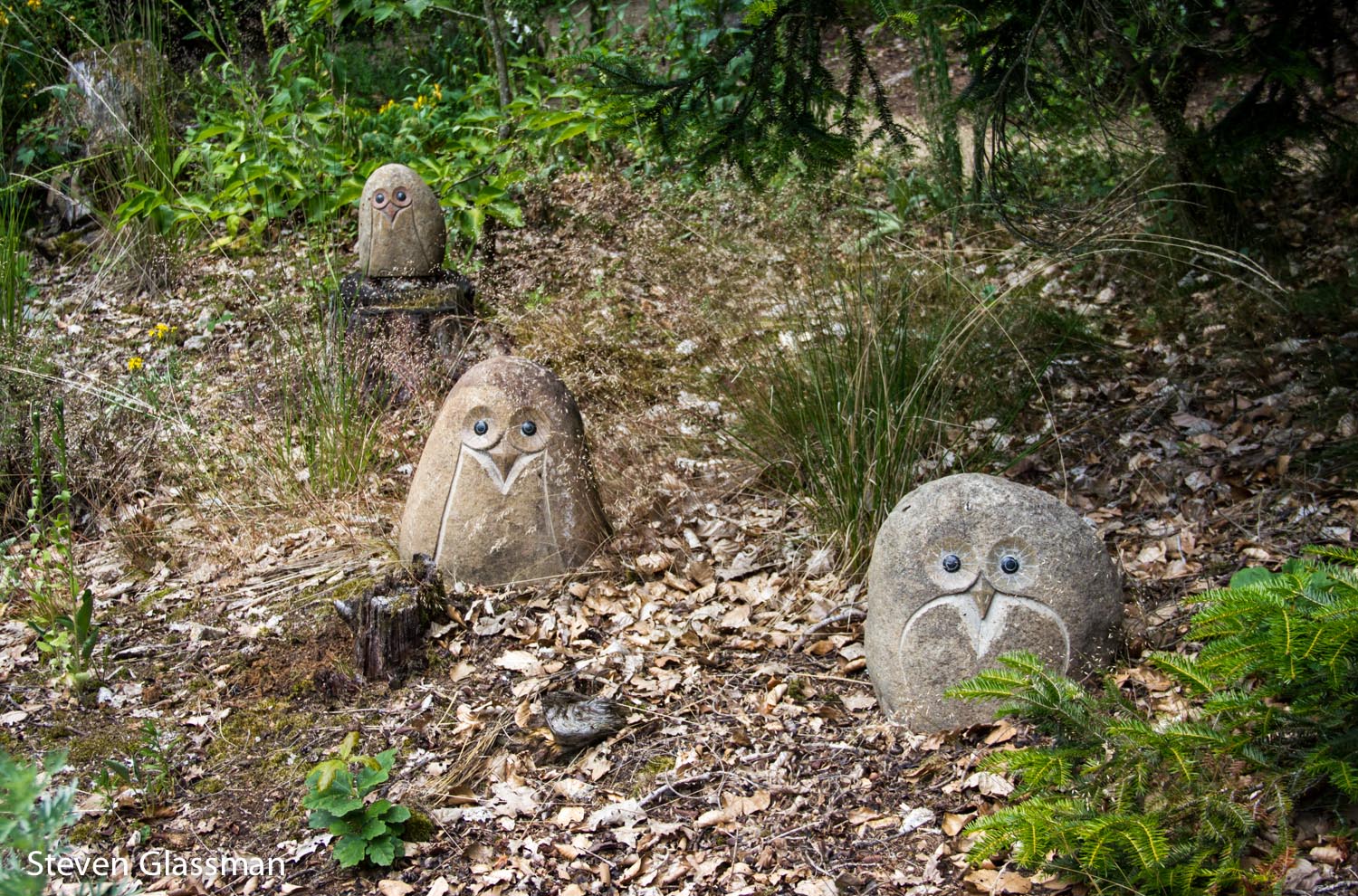
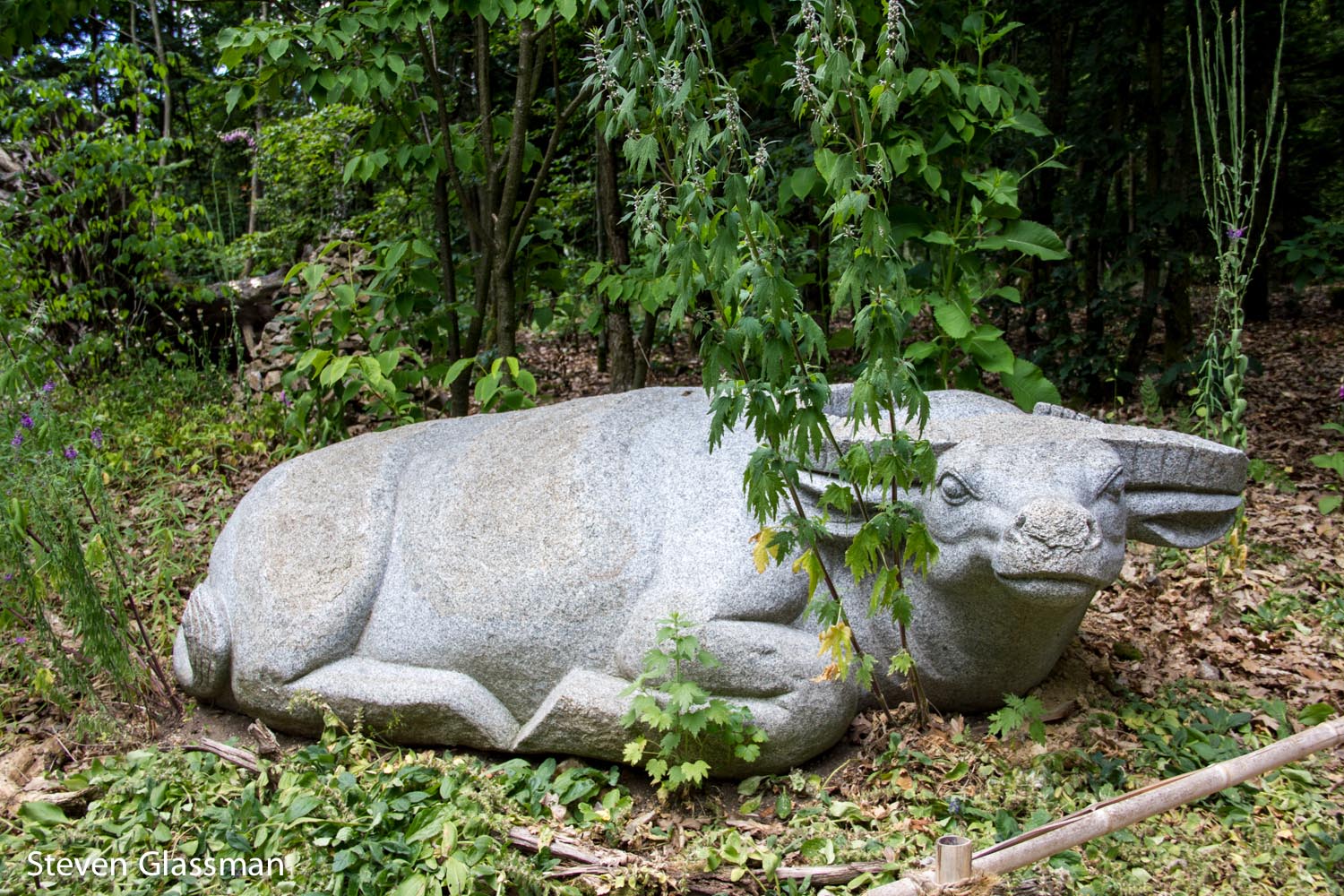
Not far from Regensburg is a Nepalese temple and garden called the Nepal Himalaya Pavilion.

The Pavilion was originally constructed in Hanover for the 2000 World’s Fair Expo, which ran from Jun to October of that year.  The Nepalese exhibit was incredibly popular, with about 3.5 million visitors during the 2000 Expo.  After the World’s Fair concluded, the Pavilion was dismantled, transported here, and then reconstructed.  It reopened in 2003, and opens seasonally every year.

Most of these pictures don’t have commentary from me, because I don’t have much more to add.  This was a nice garden, and a lovely way to spend a few hours.

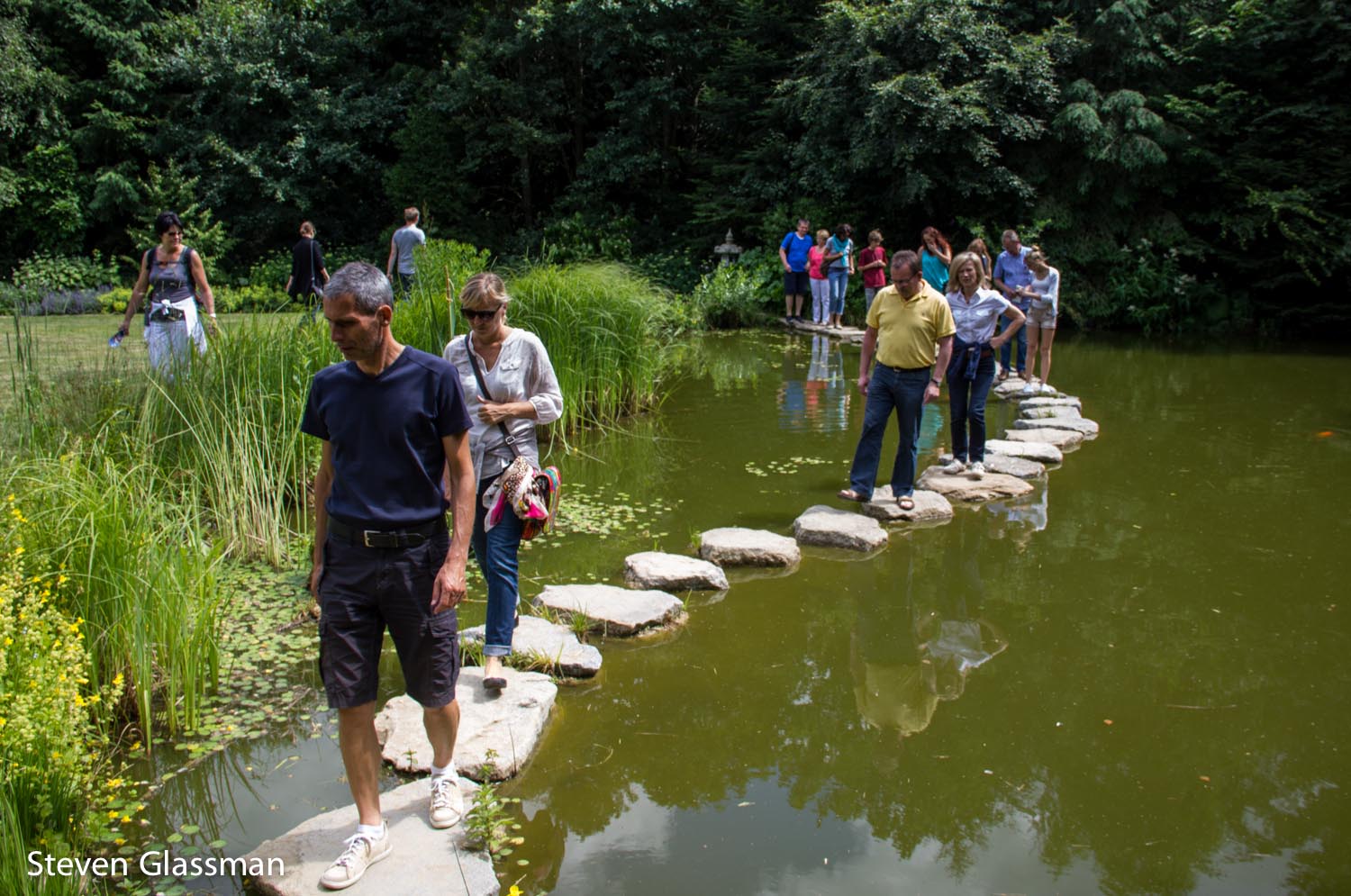
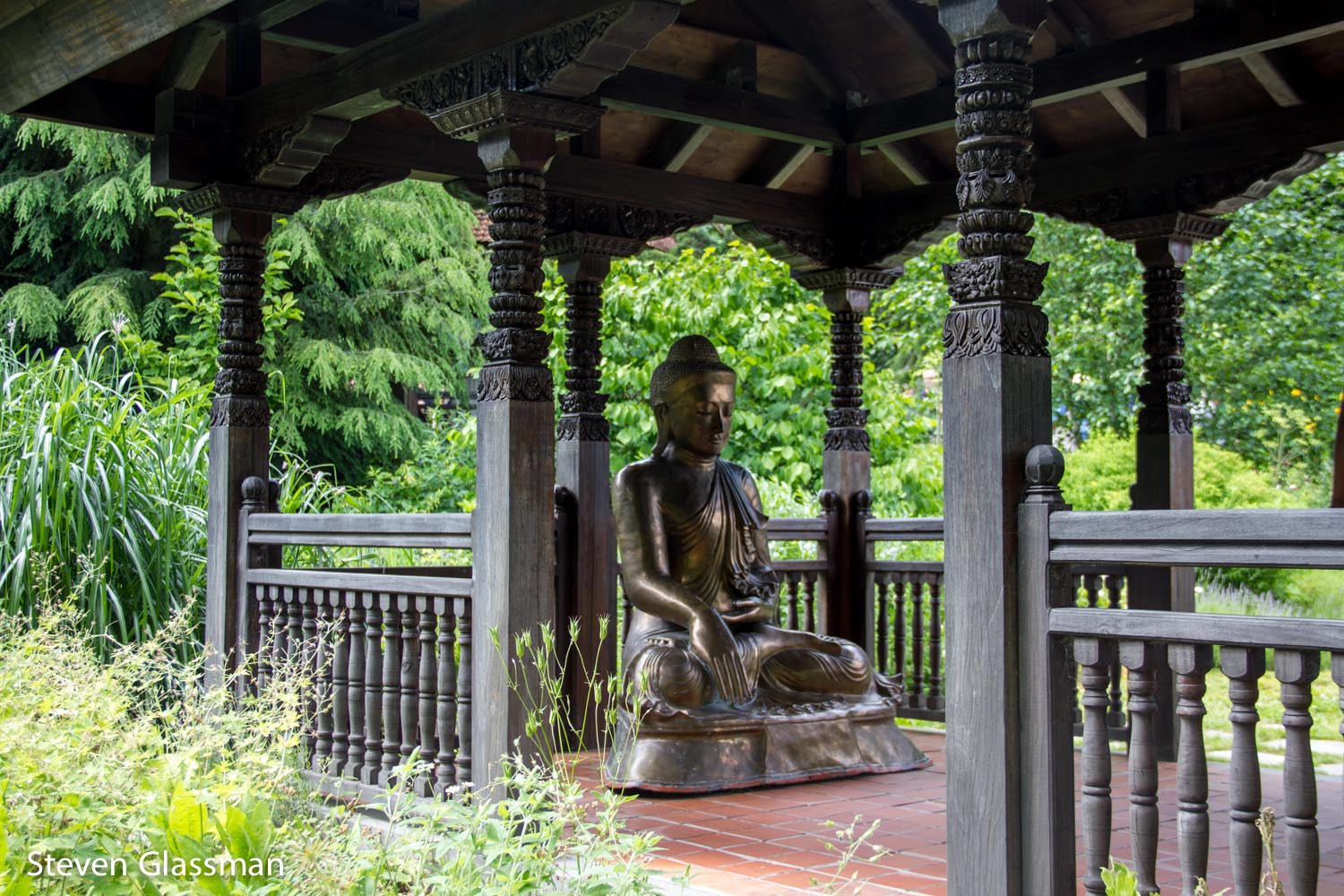
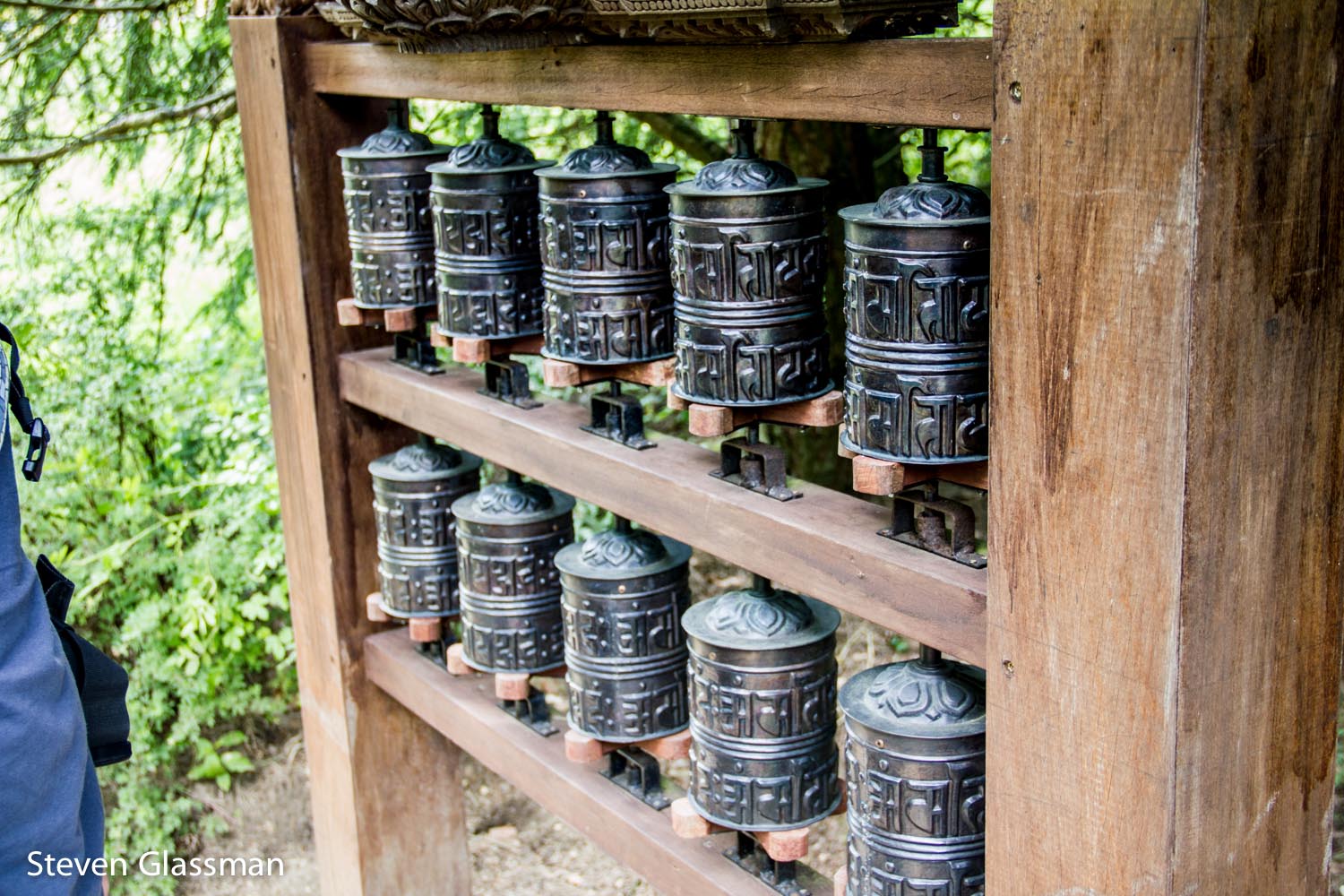
nepal-pavilion-1 nepal-pavilion-2 nepal-pavilion-3 nepal-pavilion-4 nepal-pavilion-5 nepal-pavilion-6 nepal-pavilion-7

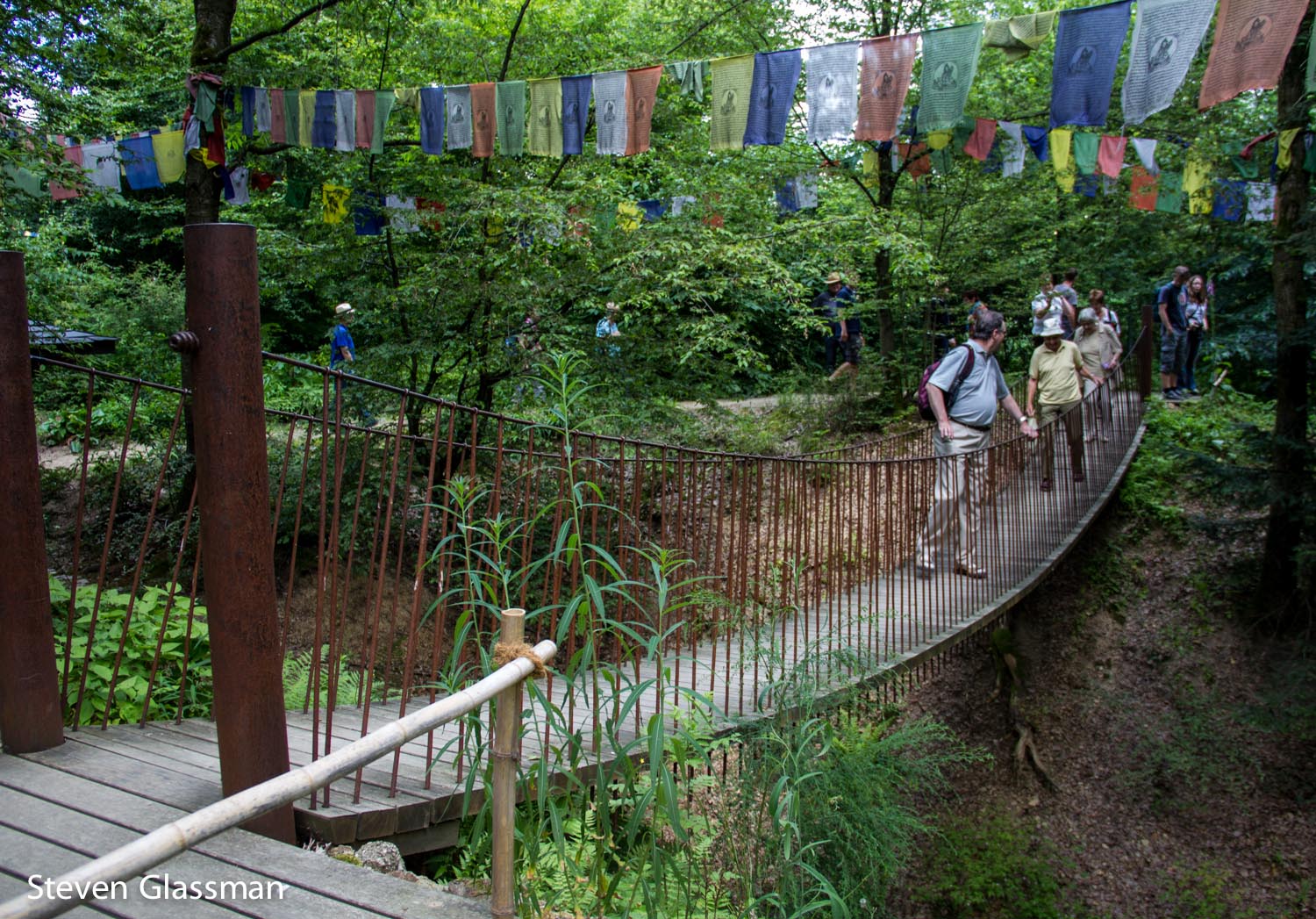
The brightly colored cloth hanging from the pavilion are prayers.

nepal-pavilion-8

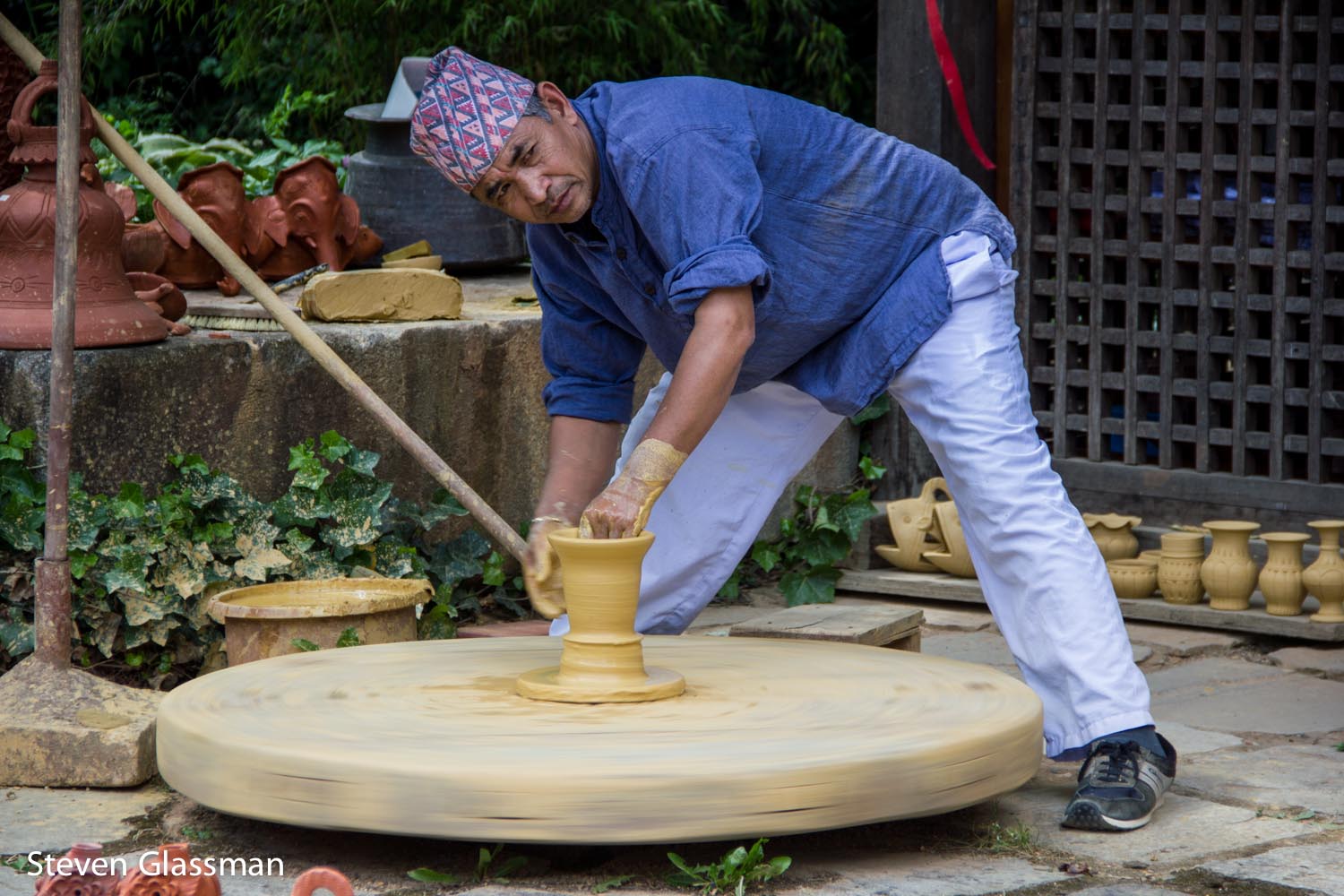
First, he got the disk spinning with the long pole.

nepal-pavilion-9

Next, he used the spinning disk as a giant pottery wheel.

nepal-pavilion-10

The entrance to the China Garden part of the Nepal Himalaya Pavilion.

nepal-pavilion-11 nepal-pavilion-12 nepal-pavilion-13 nepal-pavilion-14

Nice hooters, eh?

nepal-pavilion-15 nepal-pavilion-16

Shakey rope bridge!

nepal-pavilion-17

…Fighting the urge to walk in the opposite direction here…

nepal-pavilion-18 nepal-pavilion-19 nepal-pavilion-20 nepal-pavilion-21 nepal-pavilion-22

Have you ever been to the Nepal Himalaya Pavilion?  How about Nepal?

Nordic Adventure, Part 6: Copenhagen

The fourth city in my five-city romp through the Nordics was the capital of Denmark:  Copenhagen!

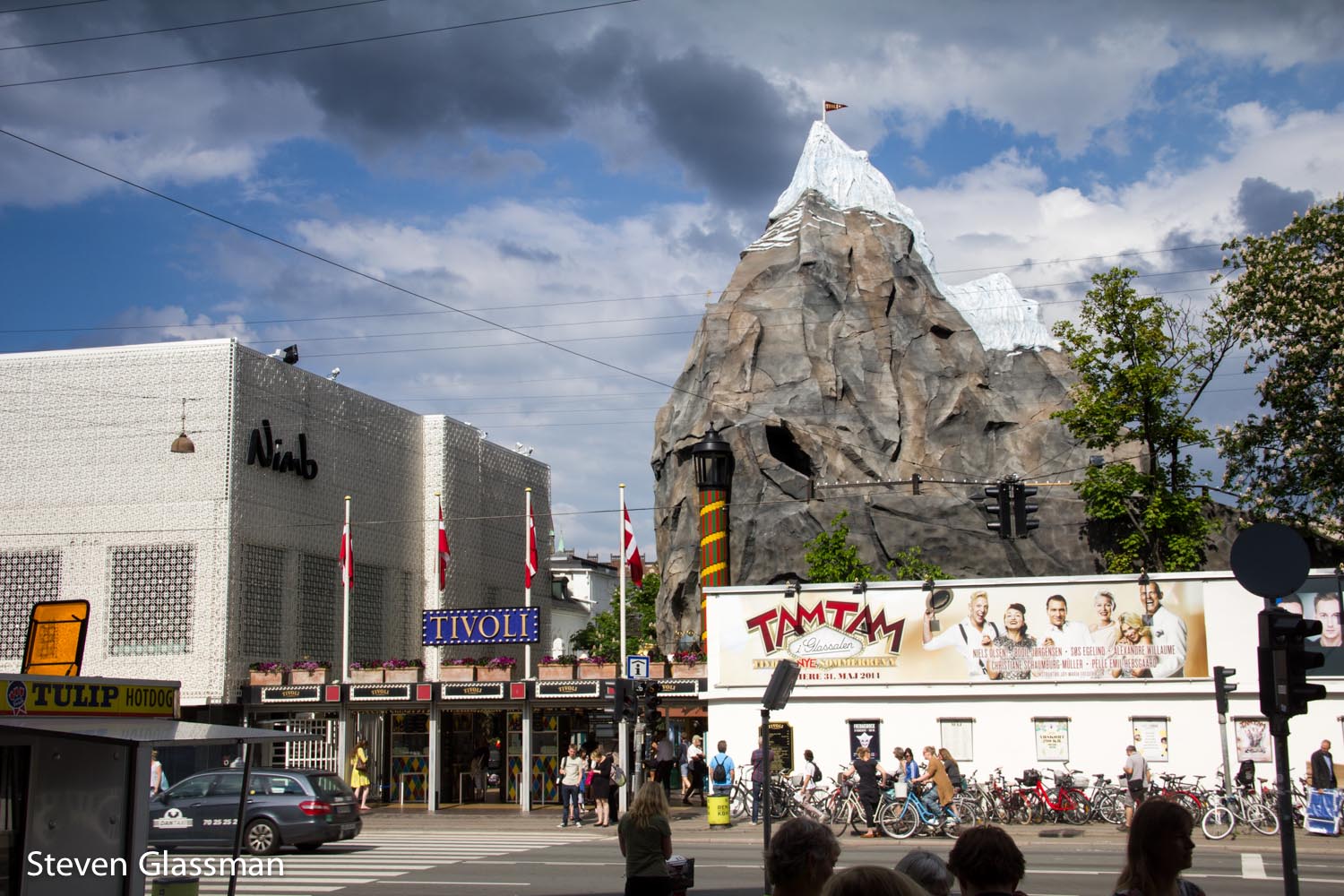
Copenhagen is full of fascinating things to see and do.   For example, directly opposite the main train station is Tivoli Gardens, the second oldest amusement park in the world.  Opened in 1843, Tivoli is the second most popular seasonal theme park in the world, the most visited theme park in Scandinavia and the fourth most visited in Europe.

copenhagen-35

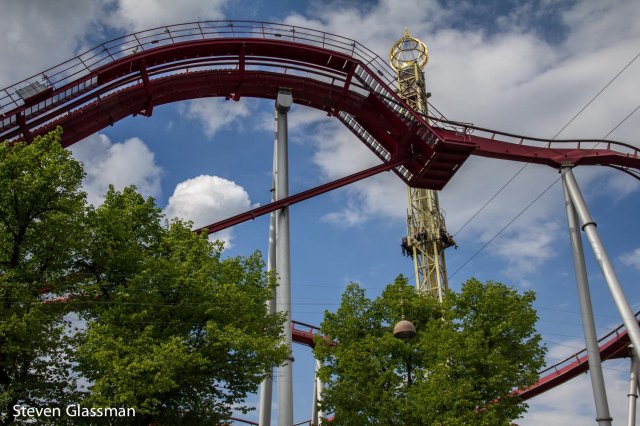
Most of the rides are considerably more recent than the park’s opening in the 1800s.  For example, the red track here is The Demon, which only dates back ten years to 2004.  Some roller coaster enthusiasts posted a video of their ride if you’re curious.
copenhagen-34

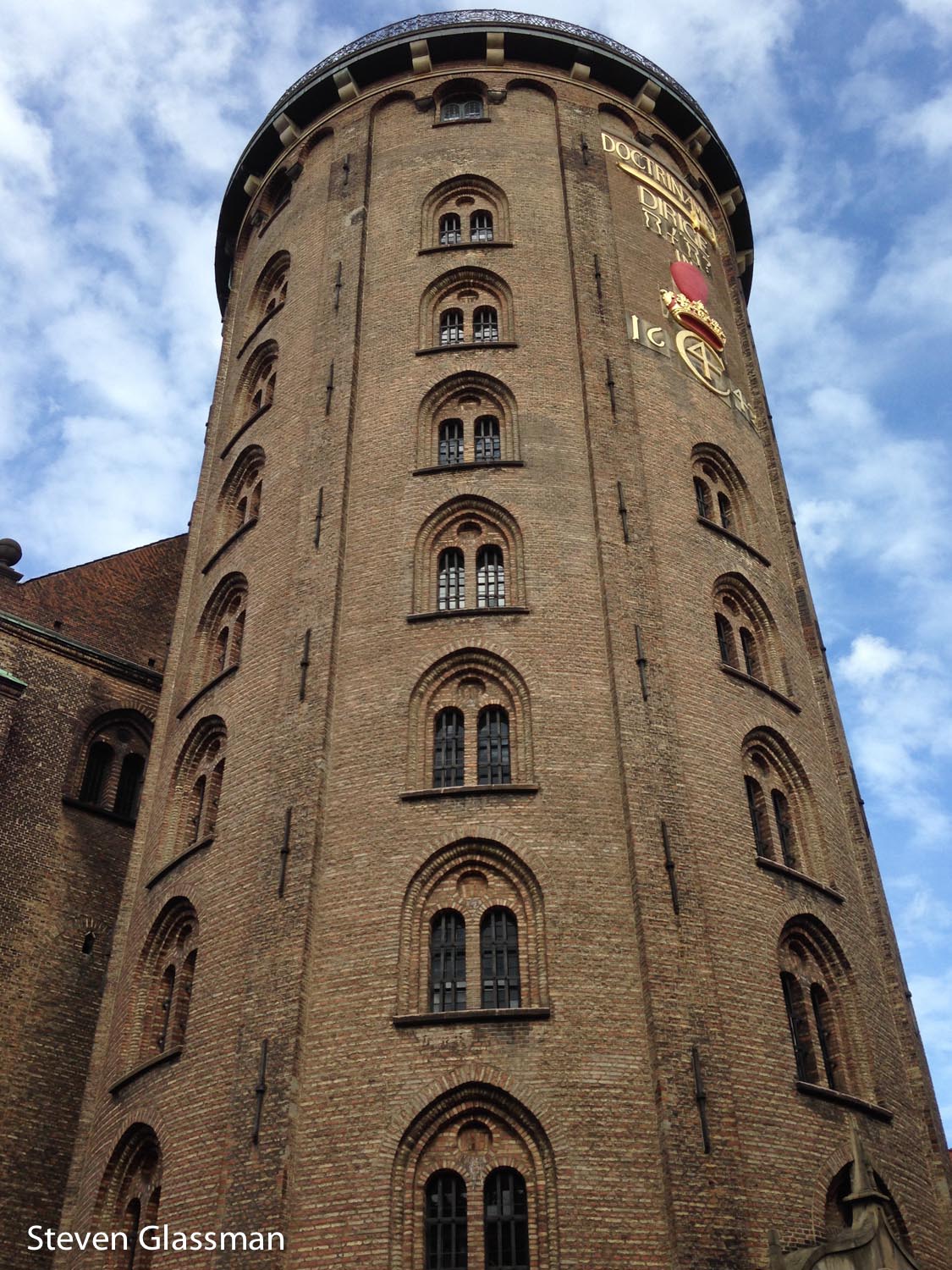
In the center of the city is the Rundetårn, or Round Tower, completed in 1642.

copenhagen-1

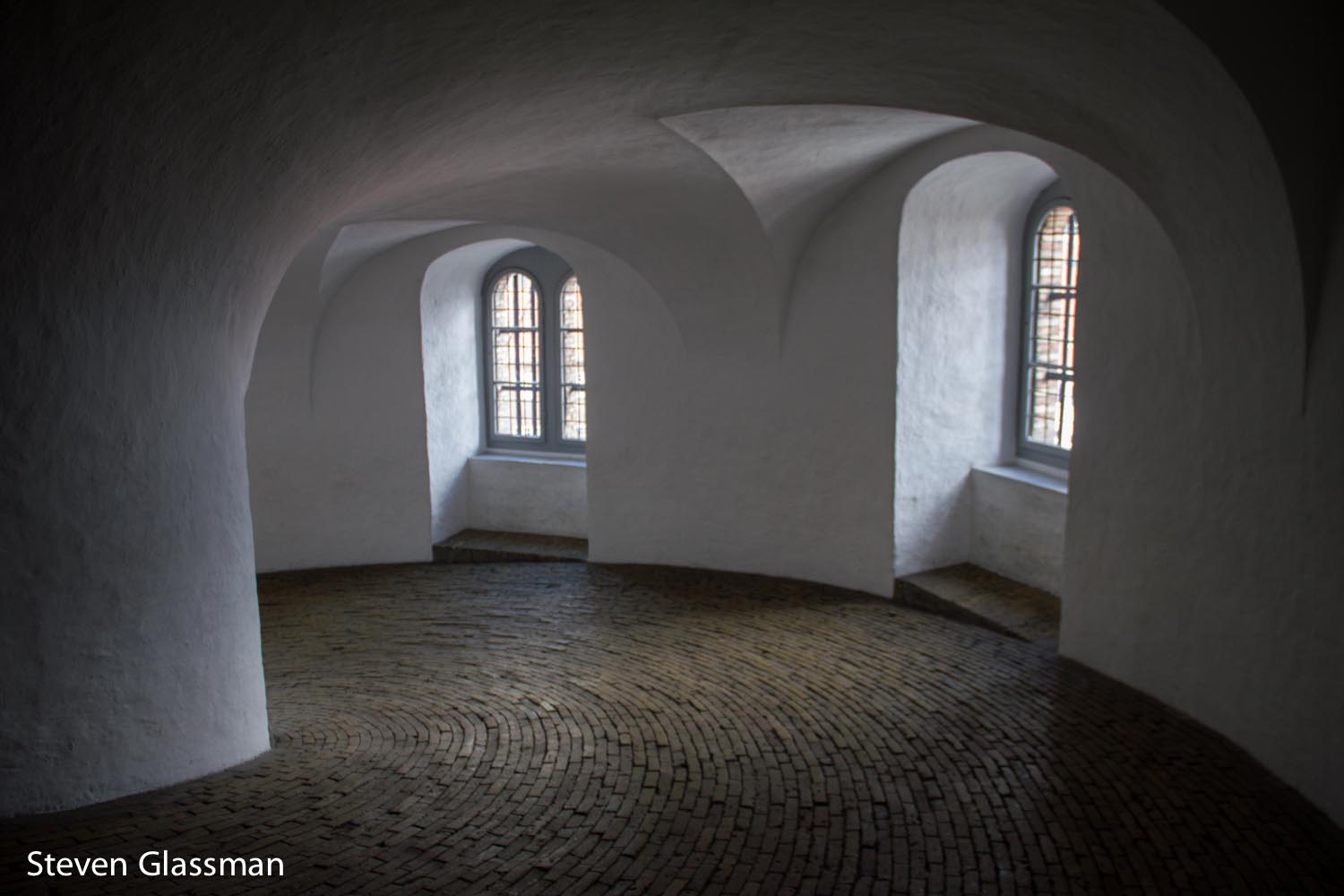
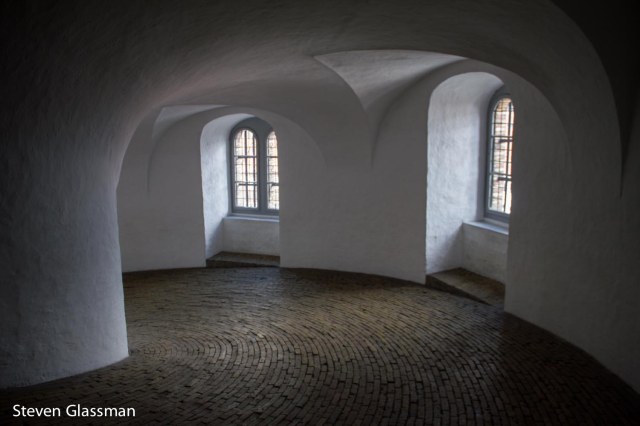
The tower was built as an astronomical observatory at the top and a library partway up.  The path to the top is a helix, a sloped walk.  This was chosen over stairs because so that a horse and carriage could go to the top.  This allowed them to move books and sensitive scientific equipment up the tower easily.
copenhagen-19

The center of the tower is completely hollow, and you can see all the way to the bottom.   A daring tourist can step right onto this thick observation glass.

copenhagen-20

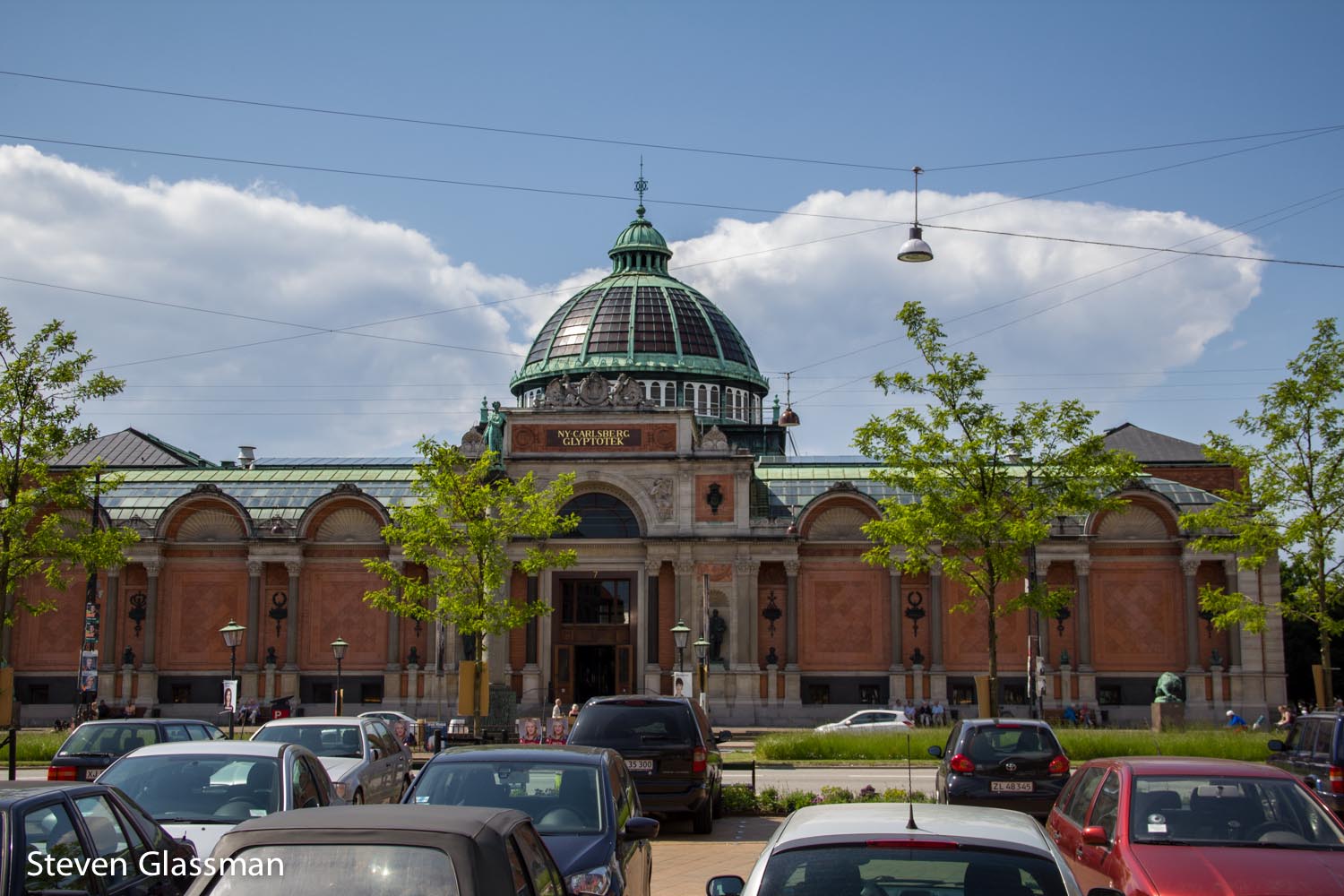
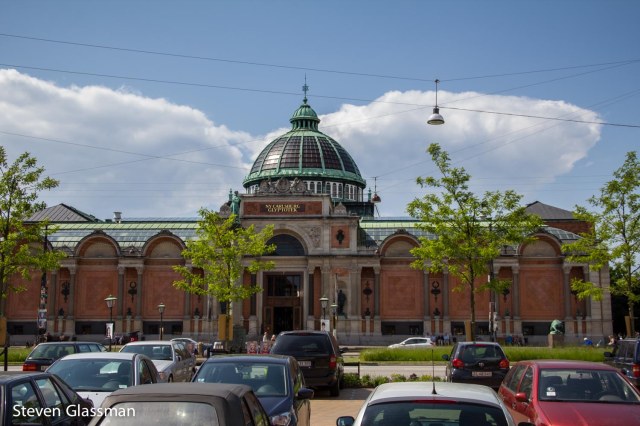
This is the Ny Carlsberg Glyptotek. It was founded in 1897 by Carl Jacobsen, the man who founded the Carlsberg beer brewery.  It’s an art museum which originally contained Jacobsen’s private collection.
copenhagen-17

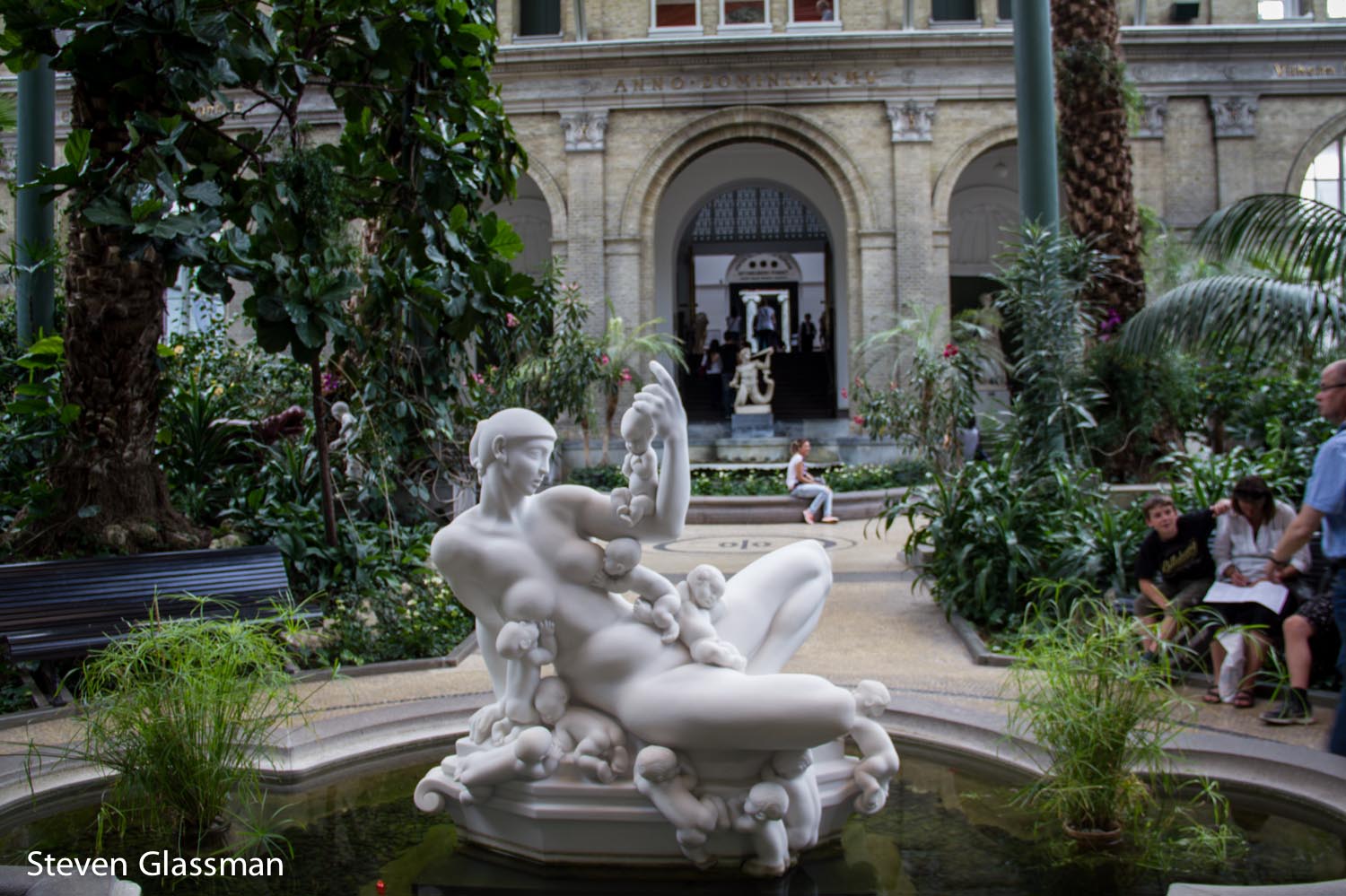
The museum was originally a sculpture museum, and sculpture remains the primary focus of the atrium and grounds.  This is Kai Nielsen’s sculpture, “Water Mother,” front and center in the Winter Garden.

copenhagen-31

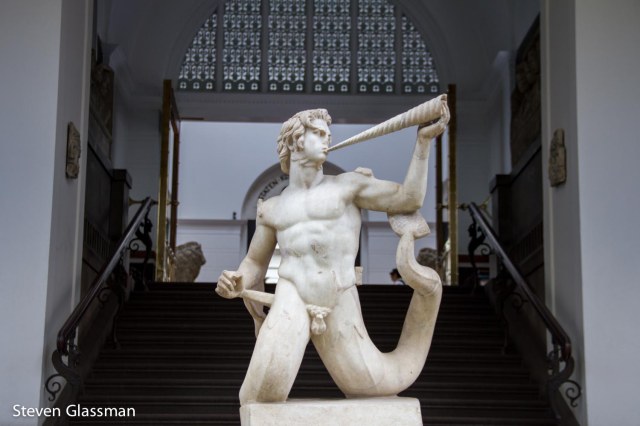
In front of the main stairway is a rather nifty statue of Neptune.
copenhagen-32

…and this attractive fellow is in the gardens out back.

copenhagen-33

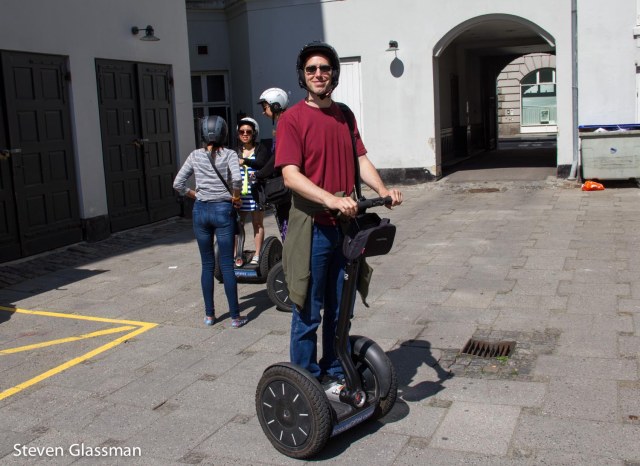
Let’s get this out of the way right now- You’re going to see Segway riders in a bunch of these pictures, because I took another Segway tour when I was in Copenhagen.   The city of Copenhagen contains hundreds of miles worth of bicycle lanes, 14 miles of which are on the streets in the city.  Segways are allowed to use bicycle lanes in the city, so it’s an amazingly great way to cover a lot of ground.  Plus they’re really fun.
copenhagen-18

I can’t really remember why I took a picture of this wall, but it sure is a happy wall, wouldn’t you say?

copenhagen-6

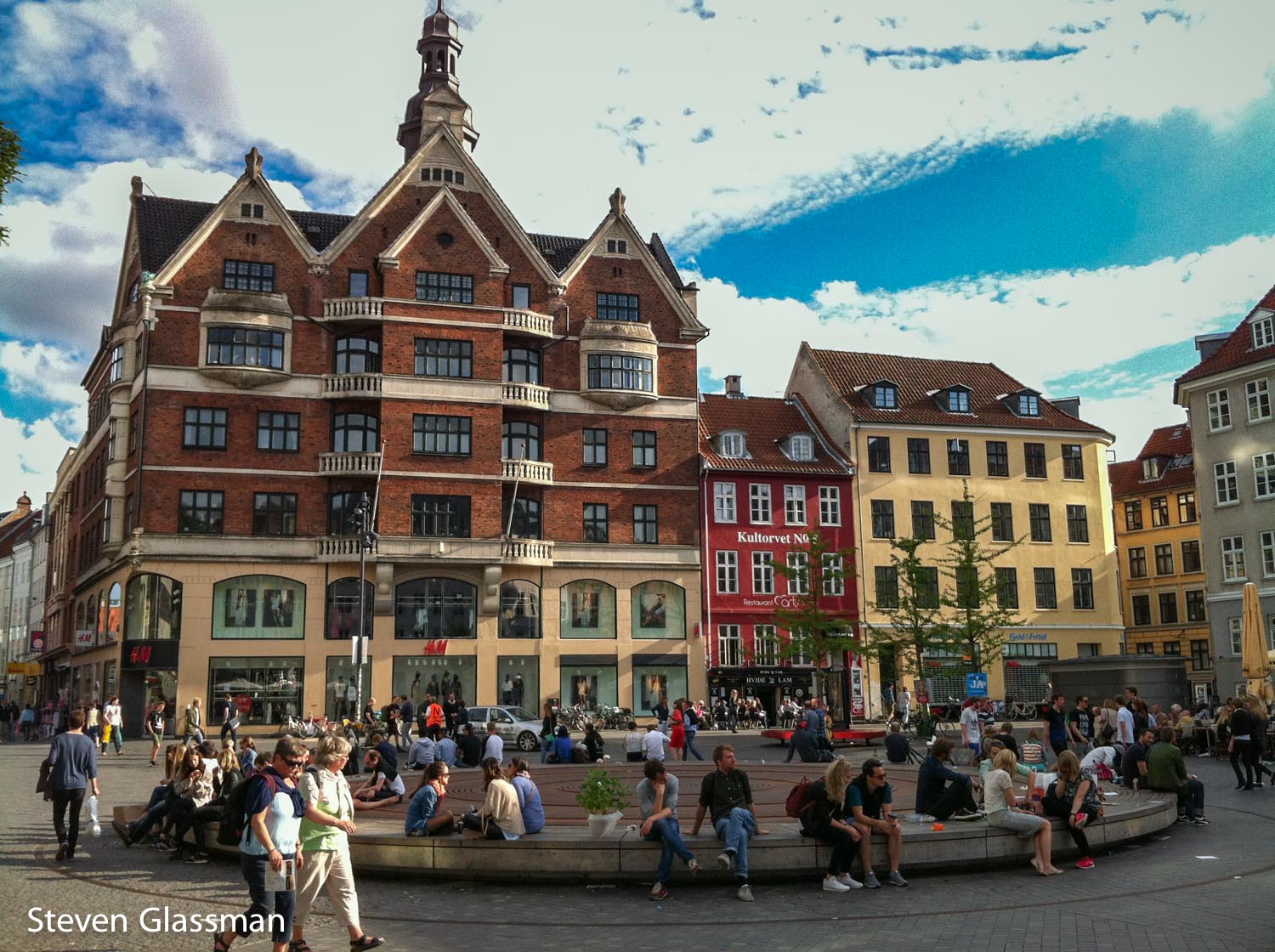
This square is called Gammeltorv.  That round thing is a fountain but I guess it was still covered from the winter.  I had a very enjoyable traditional Danish meal at a restaurant in this plaza.

copenhagen-2

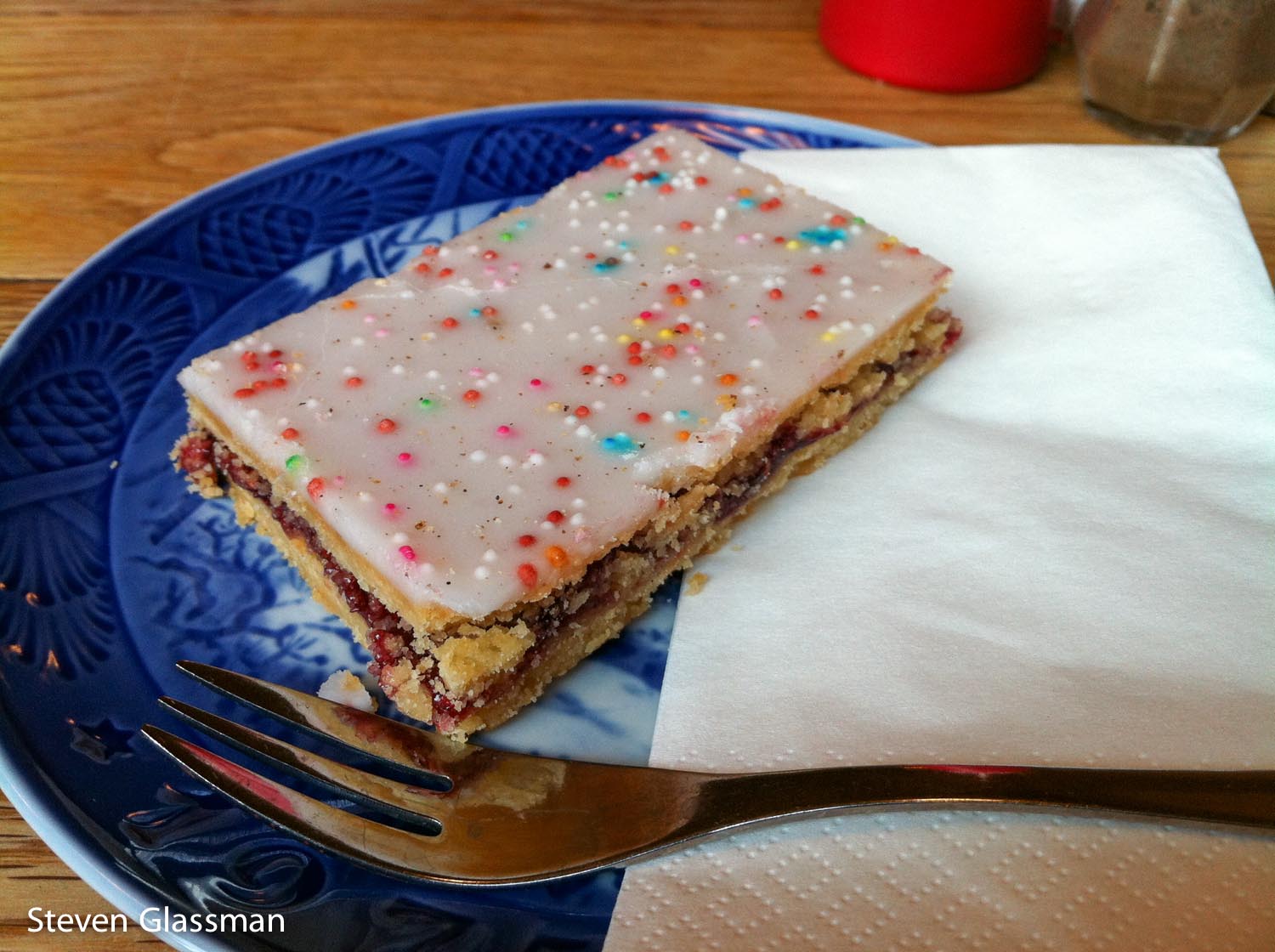
Copenhagen was nine days into my travels, and I needed to do some laundry.  I found a marvelous place called The Laundromat Cafe, which has locations in Denmark and Reykjavik Iceland.  The Laundromat Cafe is exactly what it sounds like-  a nice place to get a snack or a beer while your laundry is running in the handy coin-operated wash machines.  I did a load of laundry, and had a delicious pastry.  The girl behind the counter said this was a traditional Danish pastry, but I never caught the name of it.  I can say that it looks and tastes like a strawberry  Pop-Tart, only more delicious.

copenhagen-3

Non-sequitur time!  The Metro in Copenhagen has large clear windows on the front and back of each car, and if you take video from inside, it looks a little bit like the opening credits to Doctor Who.  Behold!

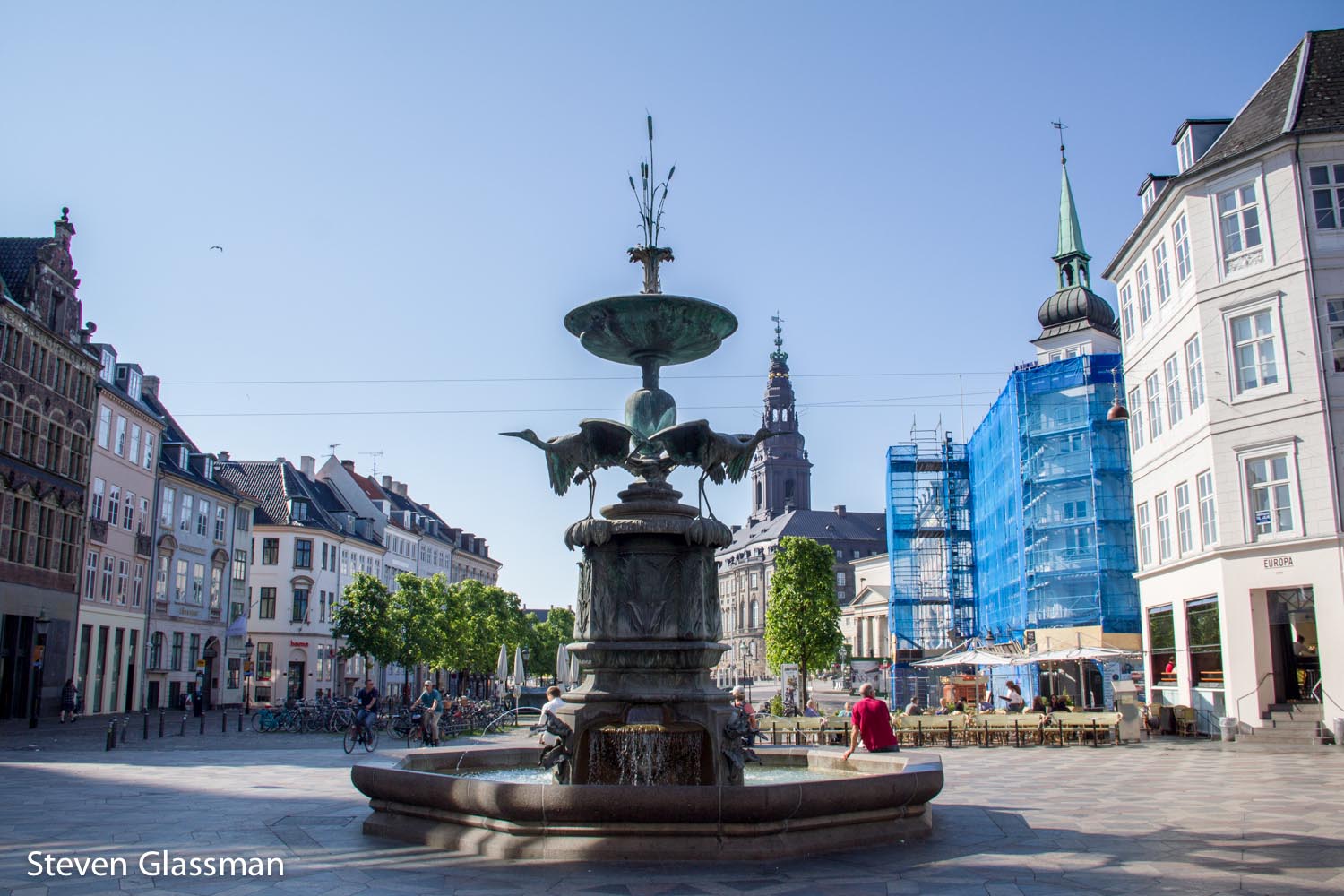
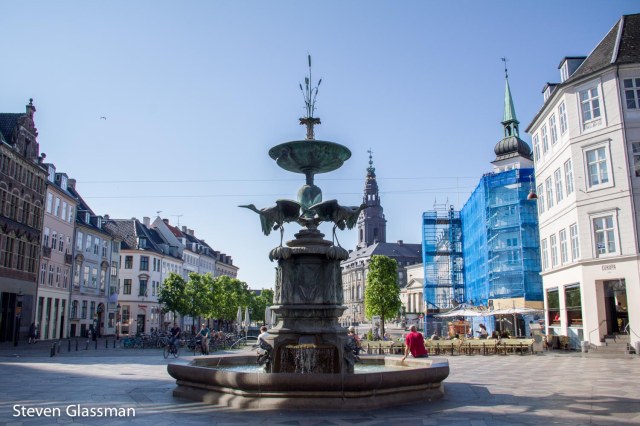
Amagertorv is a popular meeting place in Copenhagen because the Stork Fountain is a pretty well known and easy to find landmark.
copenhagen-4

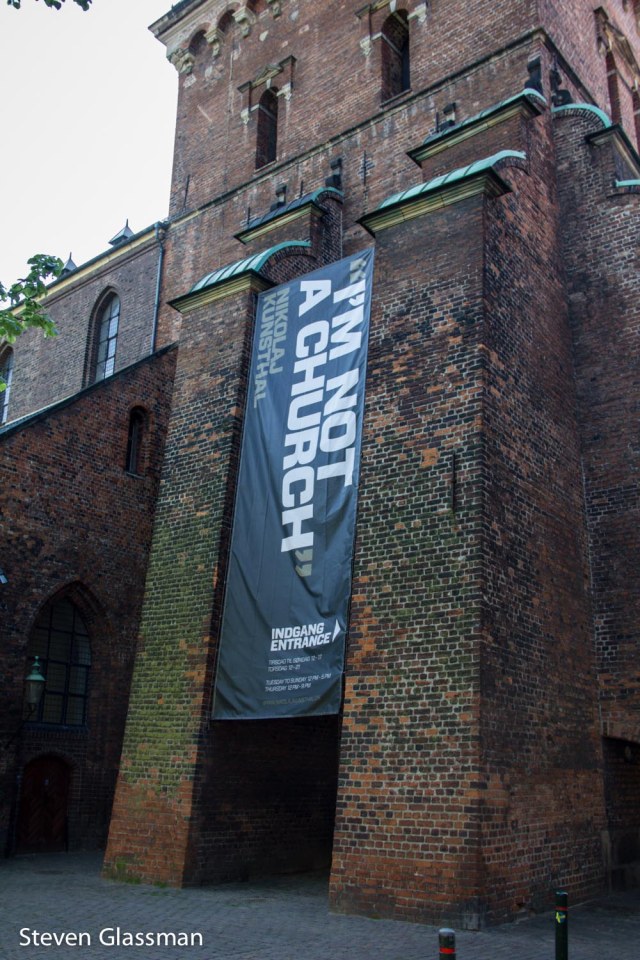
This building used to be Nikolaj Church, but now Nikolaj Kunsthal is a contemporary art center.  They do their best to keep the confusion down, by way of this handy hanging banner on the front of the building.
copenhagen-5

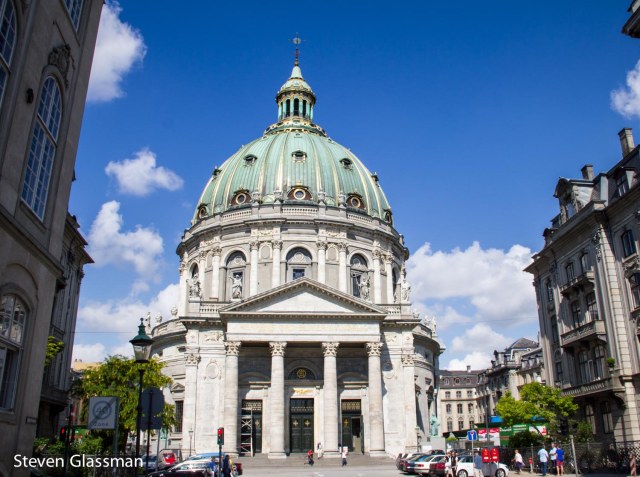
Frederik’s Church is often referred to as the Marble Church.  It’s due west of Amalienborg Palace.  This is the largest church dome in Scandinavia, and it was probably modeled after the Basilica in Vatican City.
copenhagen-7

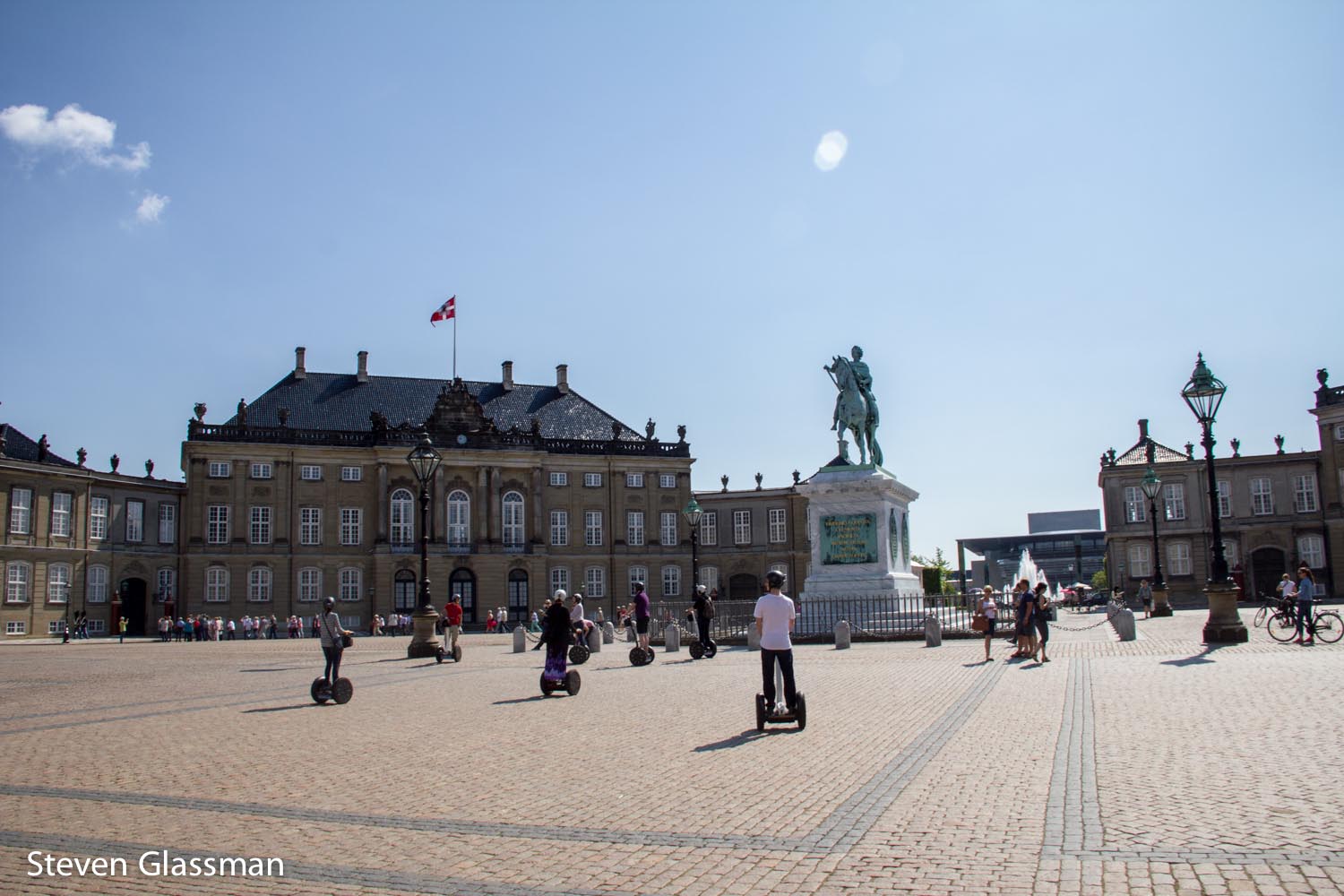
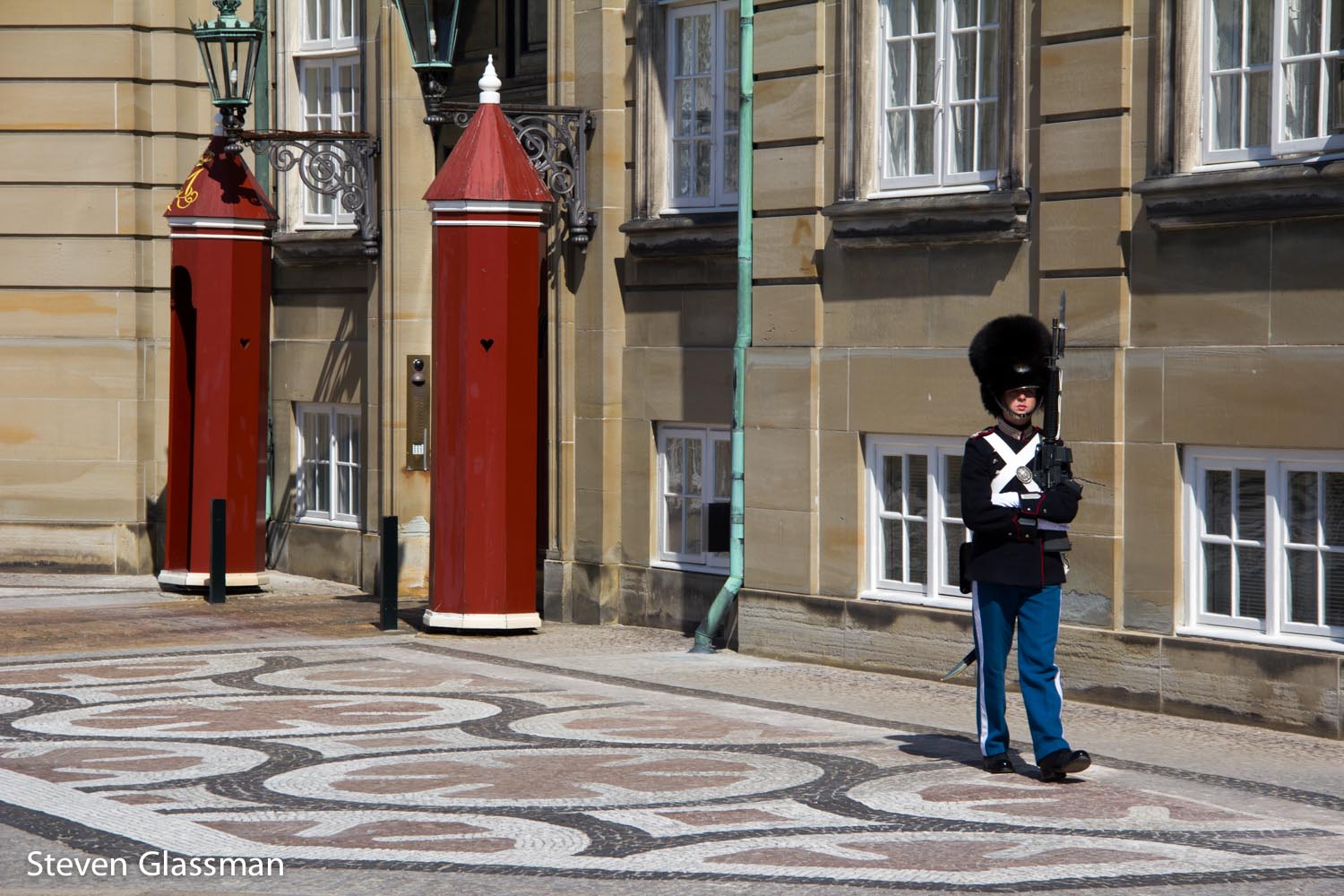
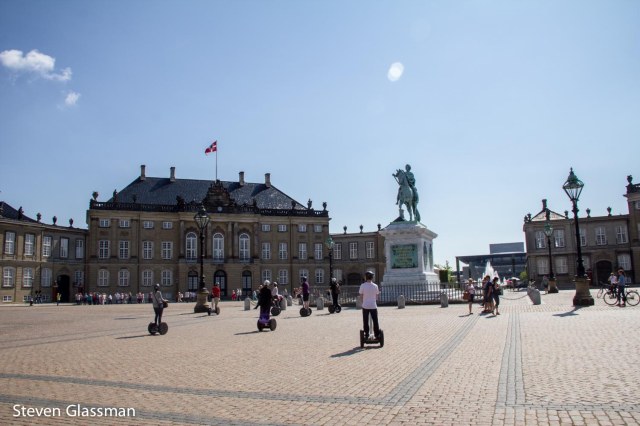
This is the courtyard at Amalienborg Palace.  Amalienborg consists of four identical palace buildings in an octagonal courtyard.
copenhagen-8

You can tell it’s a Palace because there are guards with fuzzy hats.  It’s a royal thing.

copenhagen-9

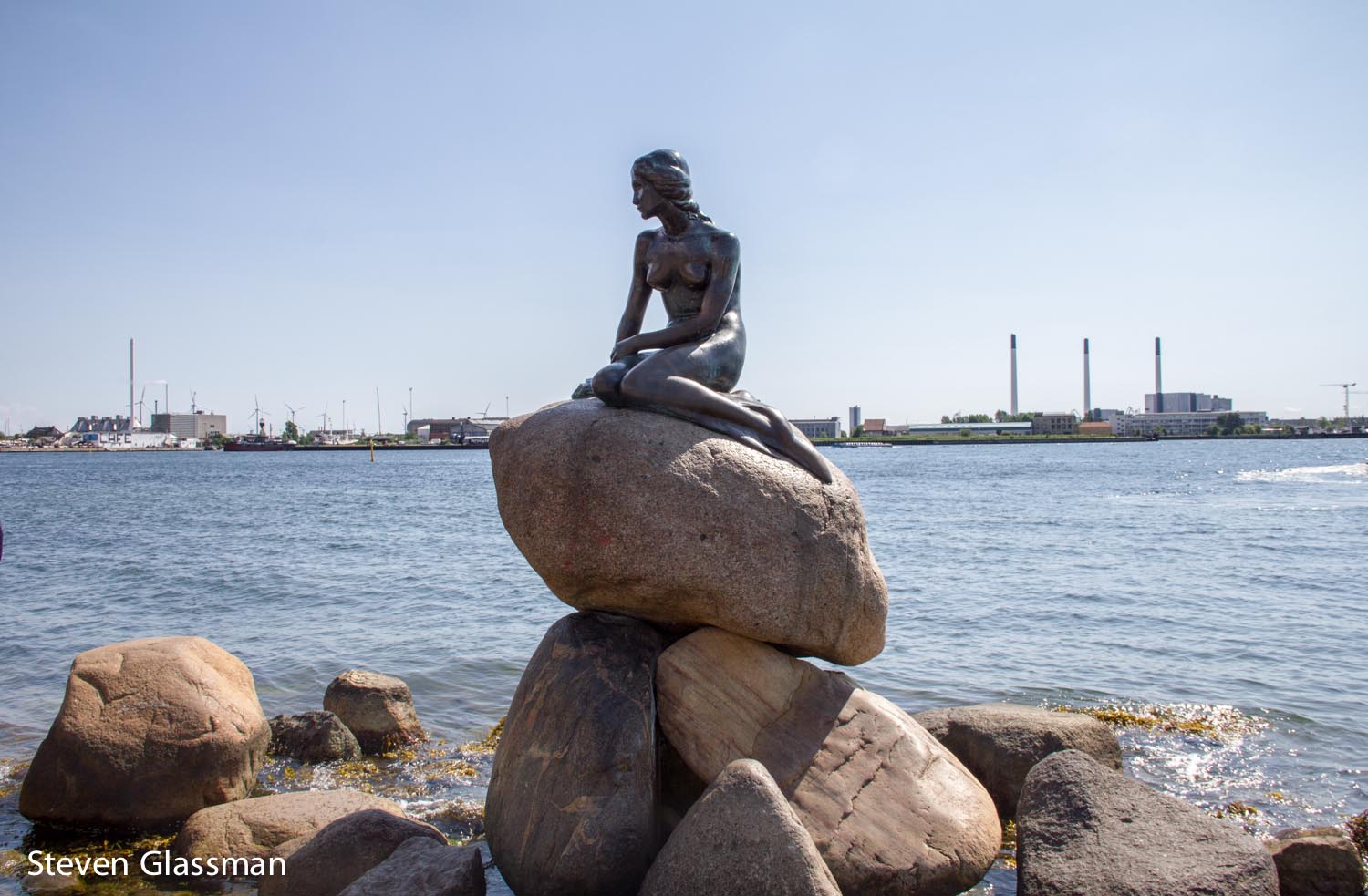
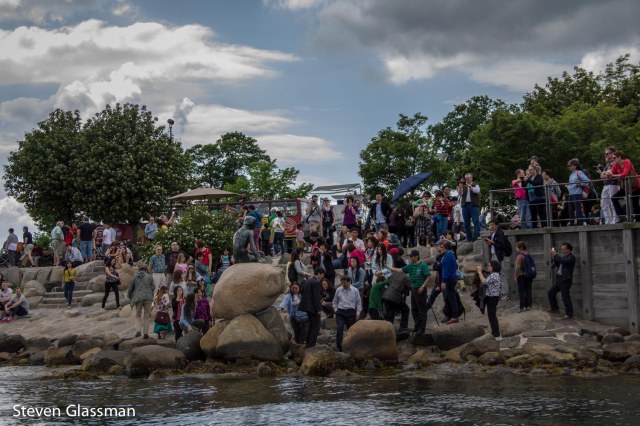
Den lille havfrue, or The Little Mermaid, is a fairly famous bronze sculpture by Edvard Eriksen which sits on a rock by the waterside.  The head of the statue is modeled after ballerina Ellen Price, but Price didn’t agree to model in the nude, so the body is modeled after the sculptor’s wife, Eline.  The statue is a frequent target for vandalism, and tourists climb onto the rock with her quite often for photographs.  In fact, the solitude displayed in this picture is very much an illusion, as you’ll see in the next photo.

copenhagen-11

Later in the day, I took a boat tour which passed the Little Mermaid from the water.  This view gives you a much more accurate idea of what it’s like by the Mermaid’s rock.
copenhagen-23

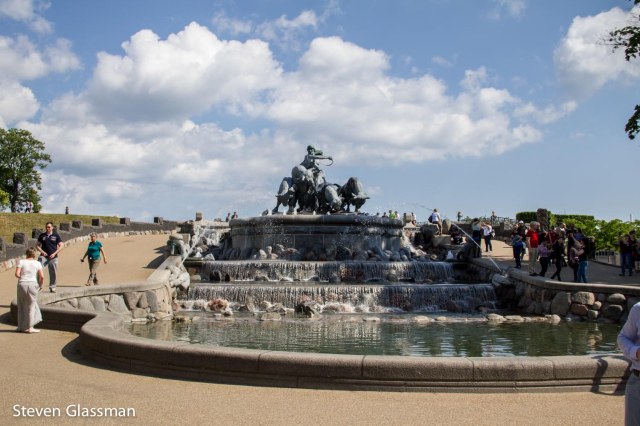
The Gefion Fountain, near the Little Mermaid, is the biggest monument in Copenhagen.  It was created for Carlsberg Brewery’s 50th birthday.  The legend of Gefion was told to me three different times while I was in Copenhagen, and it goes roughly as follows:

The Swedish king Gylfe offered Gefion as much of Sweden as she could plough in one day and one night.To get the most out of it, Gefion turned her four sons into big strong oxen and harnessed them to a plough.   And then they ploughed. And they ploughed. All day and all night. So deep in the ground, that when the time expired, Gefion could lift up the land and drop it into the sea between Sweden and Funen Island in Denmark.  And that’s how the beautiful and historic Zealand Island – the biggest island in Denmark – came to be.
copenhagen-10

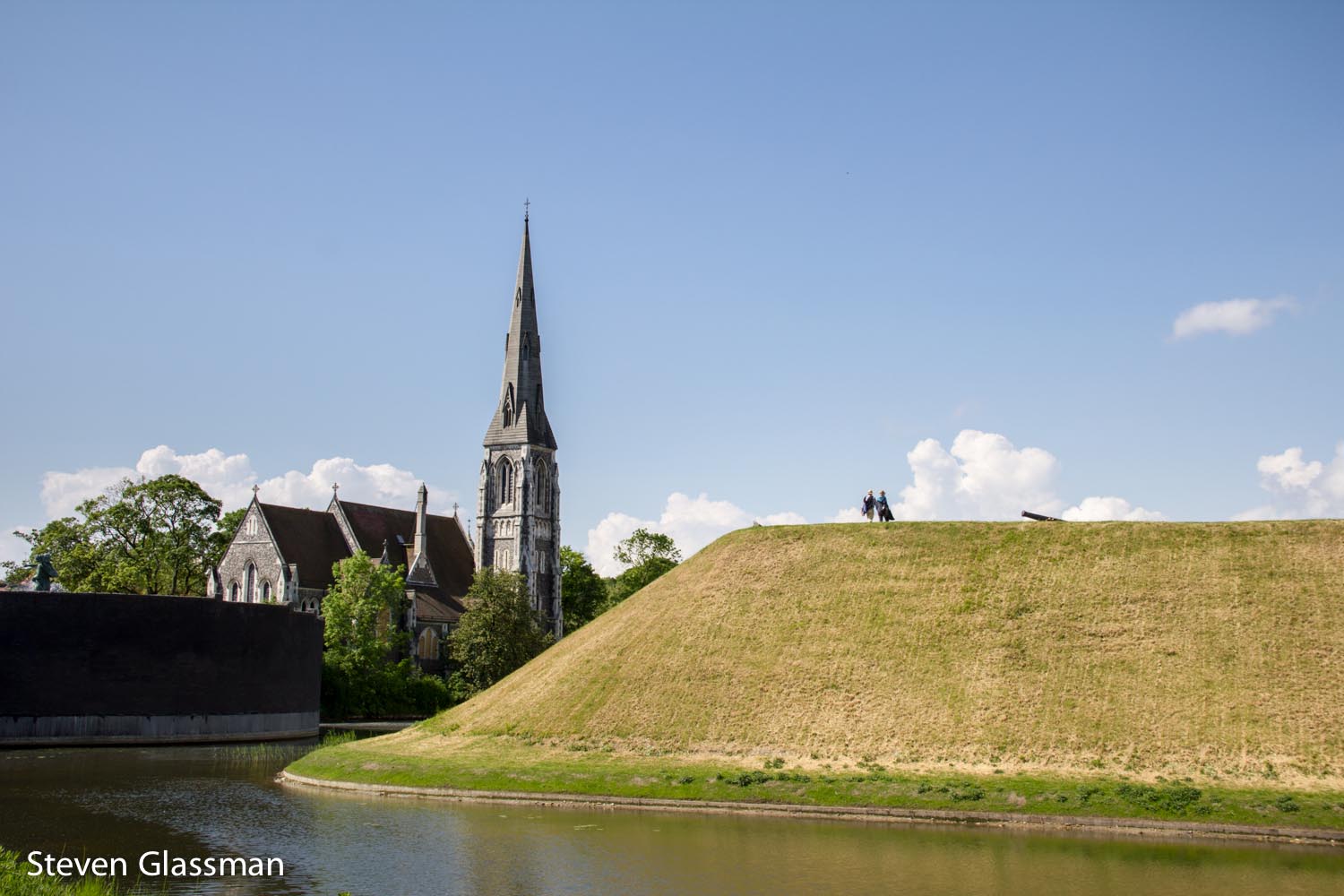
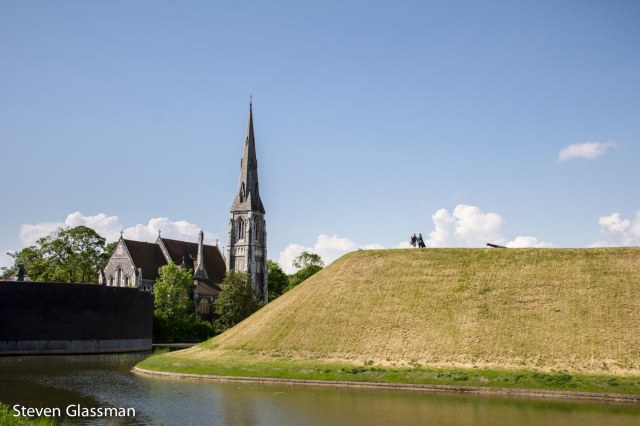
Near the Little Mermaid is an old well preserved star-shaped fortress called Kastellet.  This is one tiny corner of it.
copenhagen-12

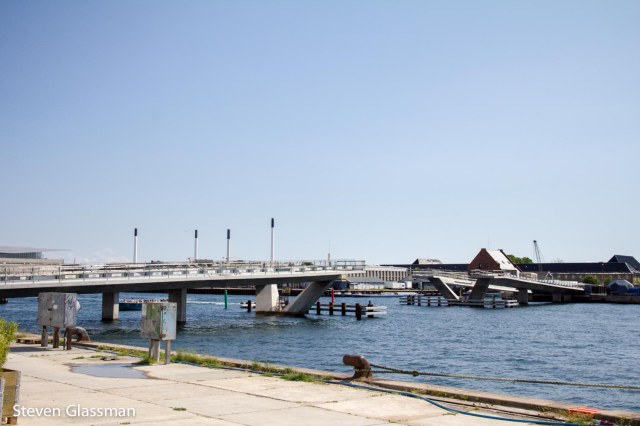
Apparently, this bridge is the source of considerable embarassment for the Danes-   the construction was begun from both sides, and when they got near the middle, they realized that the two sides did not actually line up.  The construction company has since gone out of business and they’re left with an incomplete non-connecting bridge.
copenhagen-13

The spire on the left here, with the four entwined dragons, is actually the Stock Exchange. This is very misleading, Copenhagen!

copenhagen-14

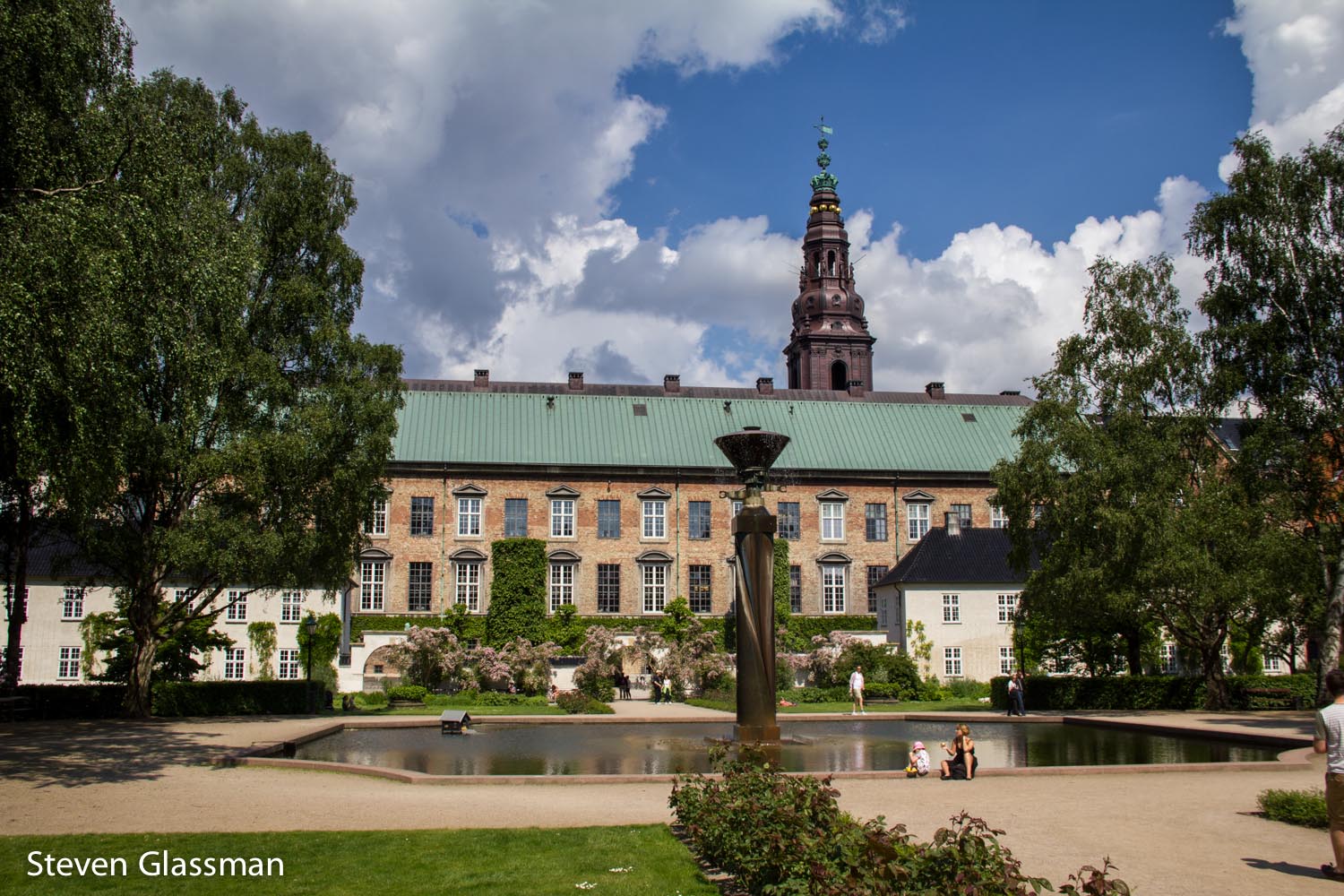
This is the Royal Library in Copenhagen.  The structure in the front is referred to as the Black Diamond, and the part in the back is the original Library building.

copenhagen-28

The Royal Library Garden exists behind the structures in the previous photo-  it’s a really quiet and pleasant place in the middle of the city.

copenhagen-15

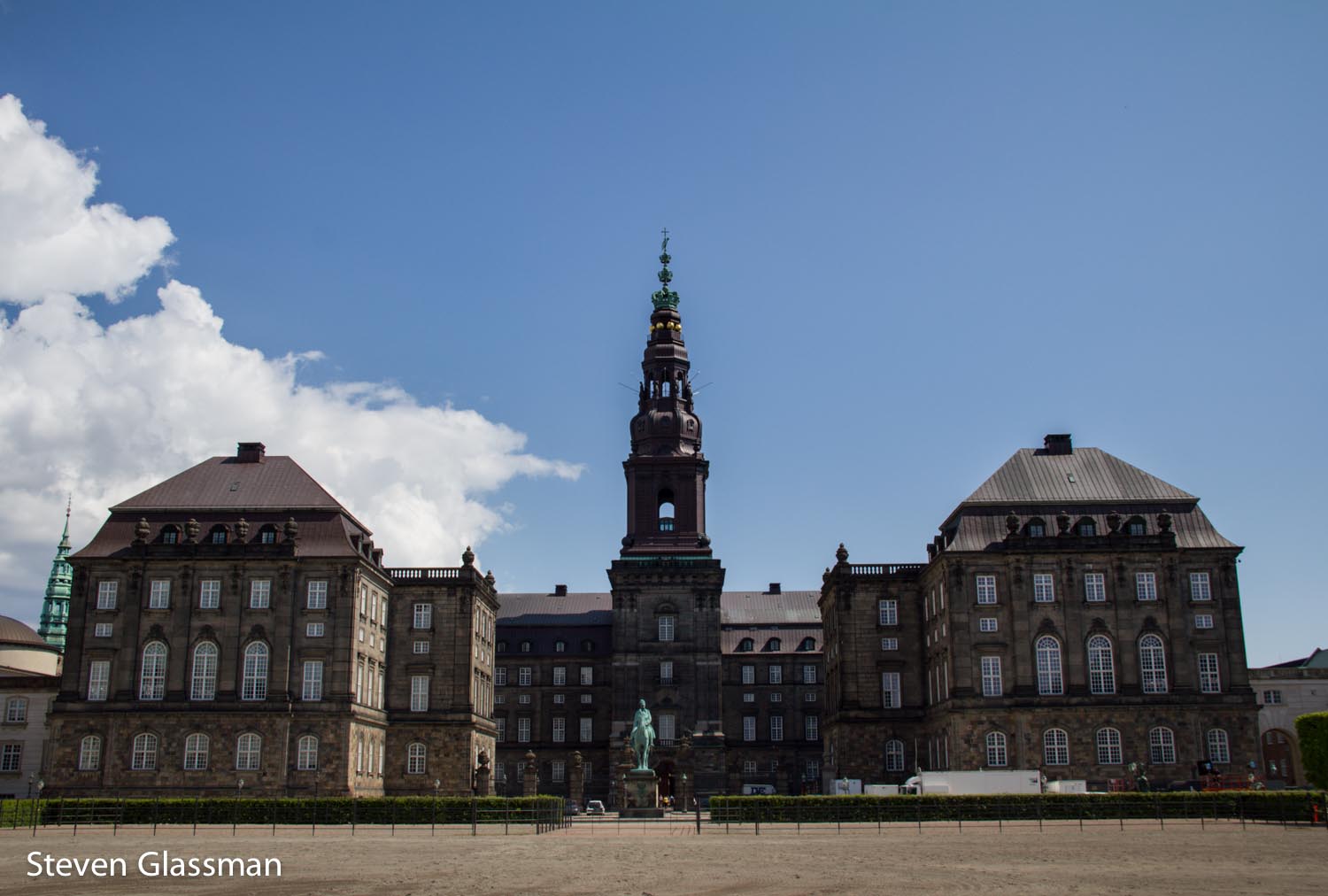
This is Christiansborg Palace, the seat of Danish Parliament.

copenhagen-16

Anchored in the harbor is the Royal Yacht Dannebrog.  Dannebrog serves as the official and private residence for the Royal Couple and other members of the Royal Family when they are on official visits overseas or on summer cruises in home waters.

copenhagen-21

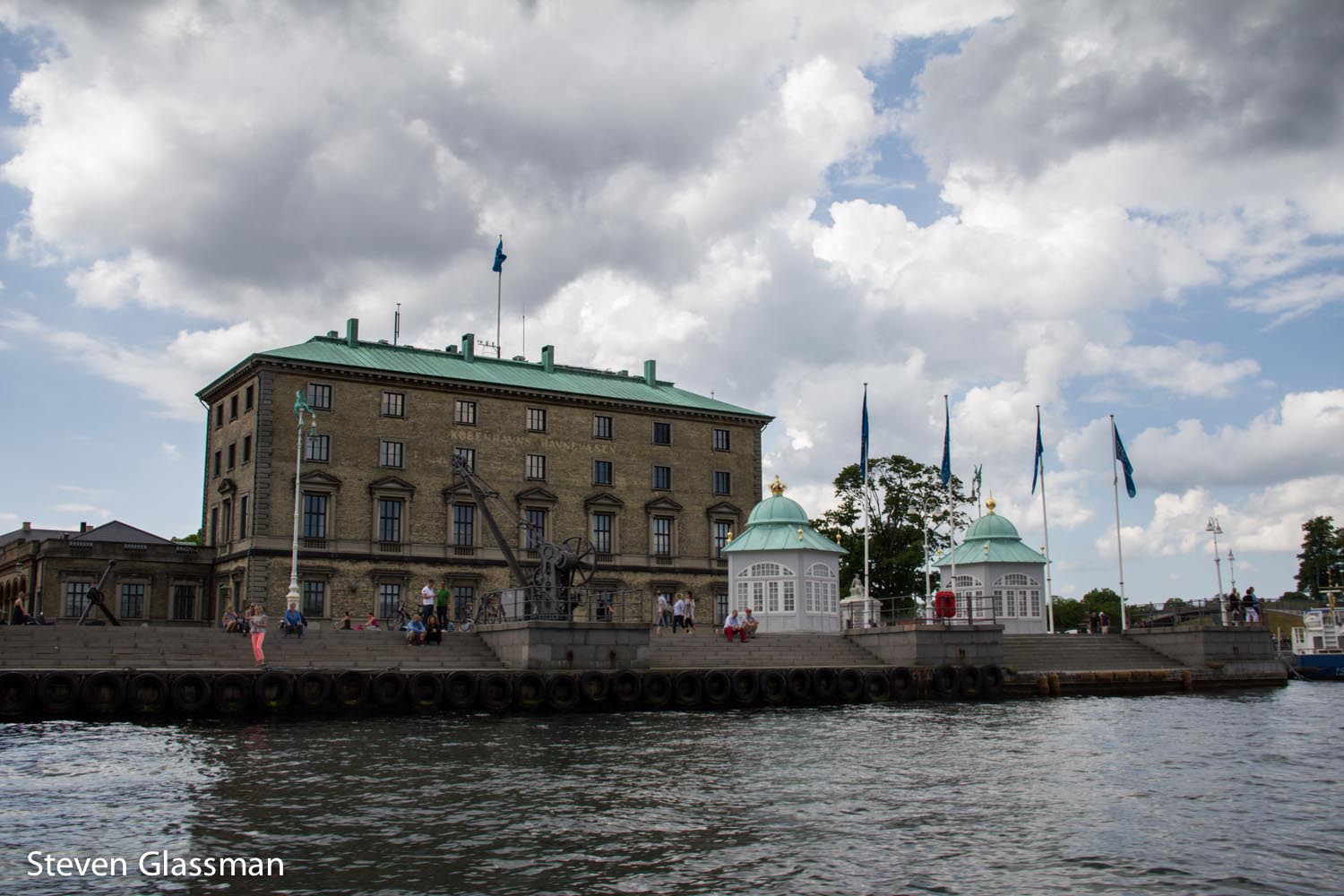
When the royals are waiting to be picked up by the boat, or when they’re waiting for state visitors, they wait in Toldboden.  They use the gazebo-like building on the left, with the crown on its roof.  Non-royals are allowed to wait in the other structure.

copenhagen-24

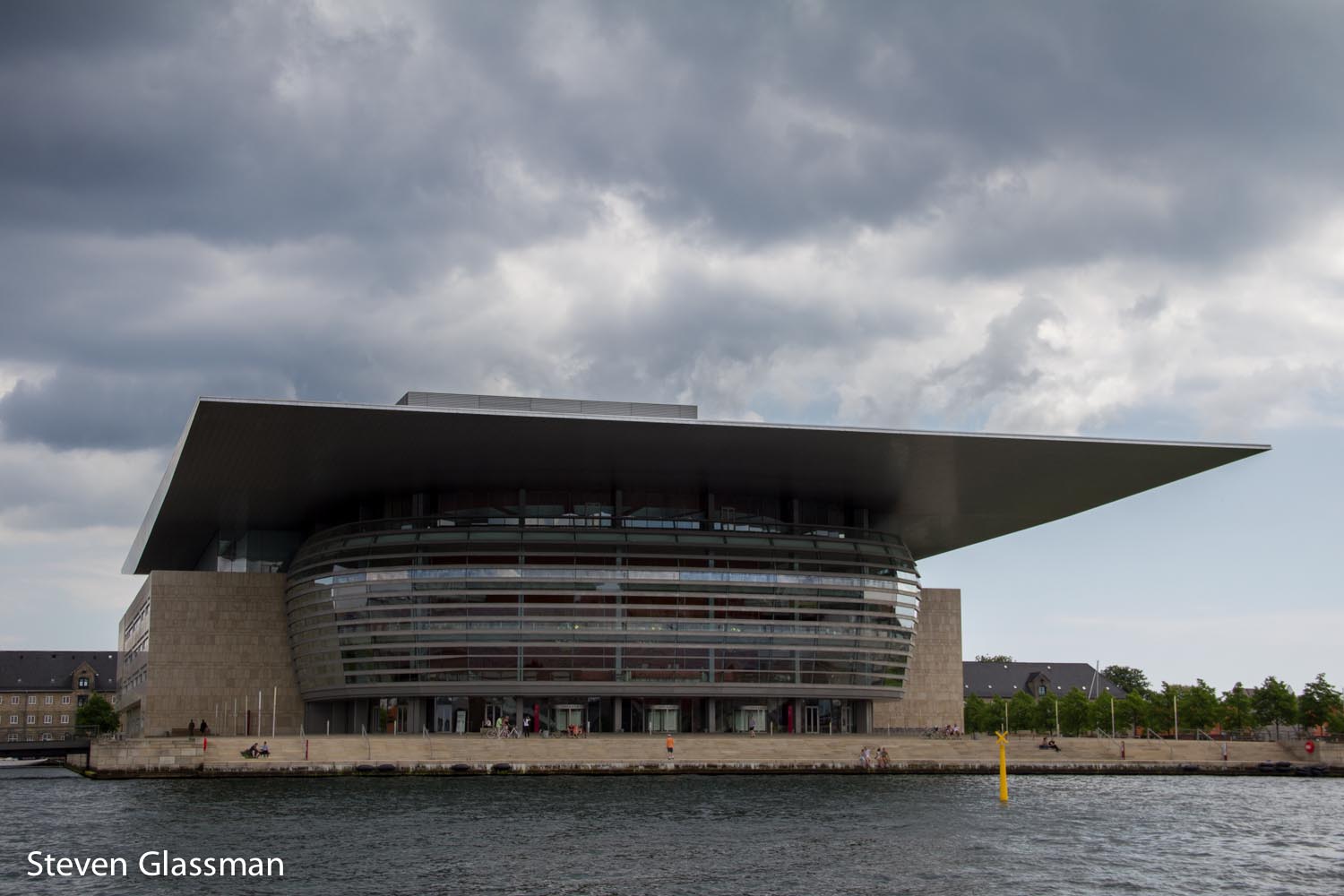
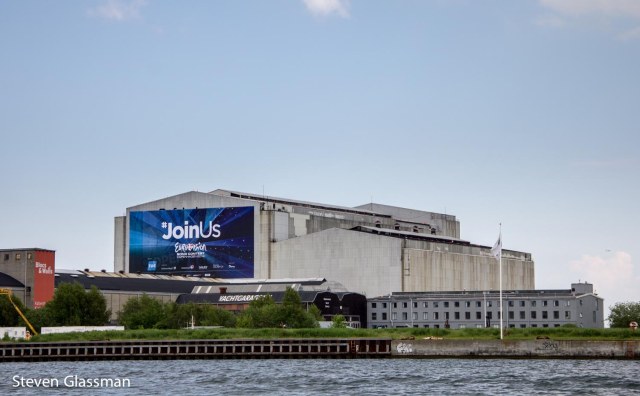
My visit was just after the Eurovision Song Contest was hosted in Copenhagen.  It was so recent to my visit that they hadn’t even taken down the banner on the giant music hall yet.
copenhagen-22

I don’t have much to say about the Opera House.

copenhagen-25

Frederik’s Church again, this time from the water.

copenhagen-26

The neat looking spiral spire is Christianshavn, the Church of Our Savior.  The circular stairs to climb the tower are on the outside of the building.  I didn’t climb this one, regrettably, but it looks really neat!

copenhagen-27

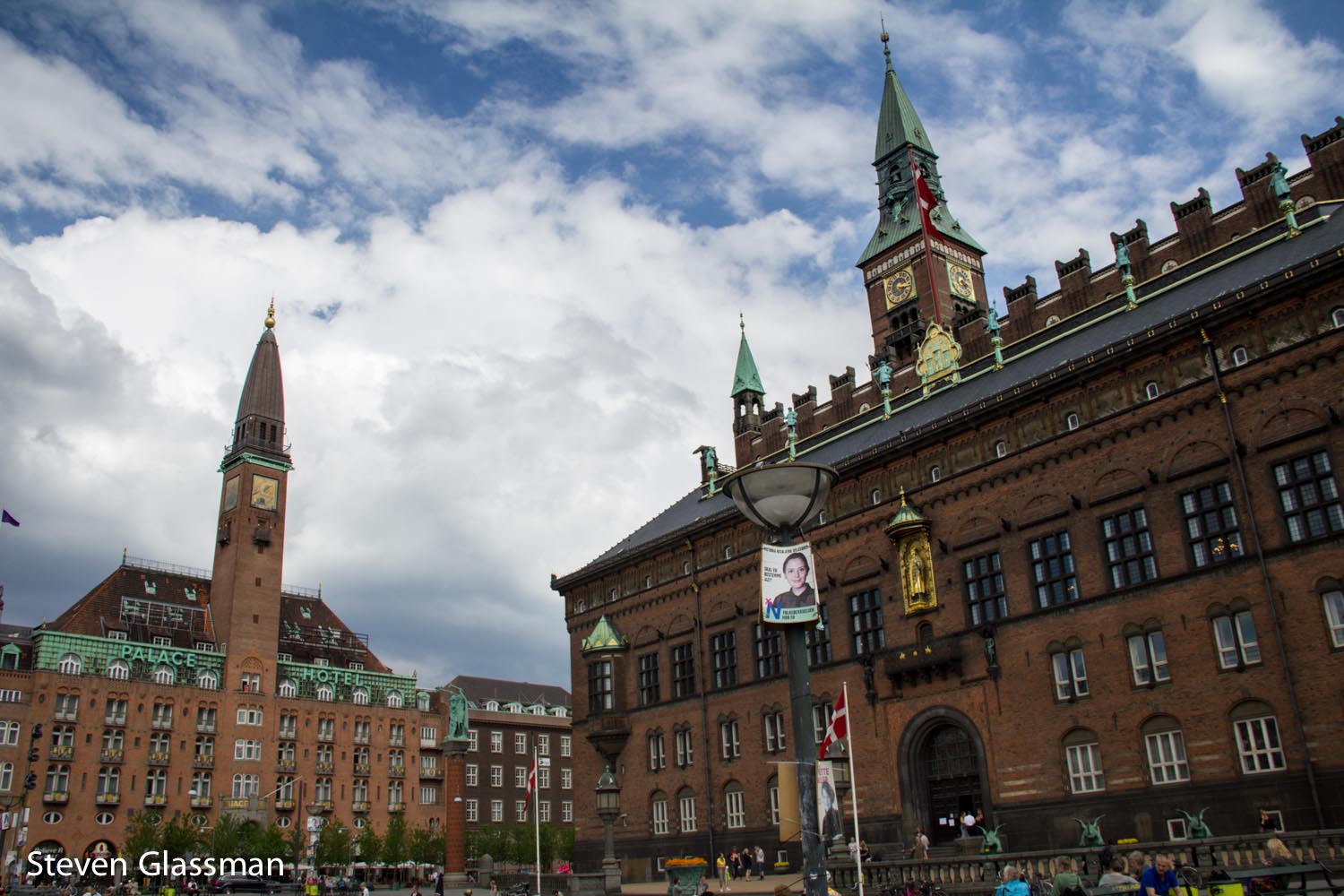
Copenhagen’s City Hall Square.

copenhagen-29

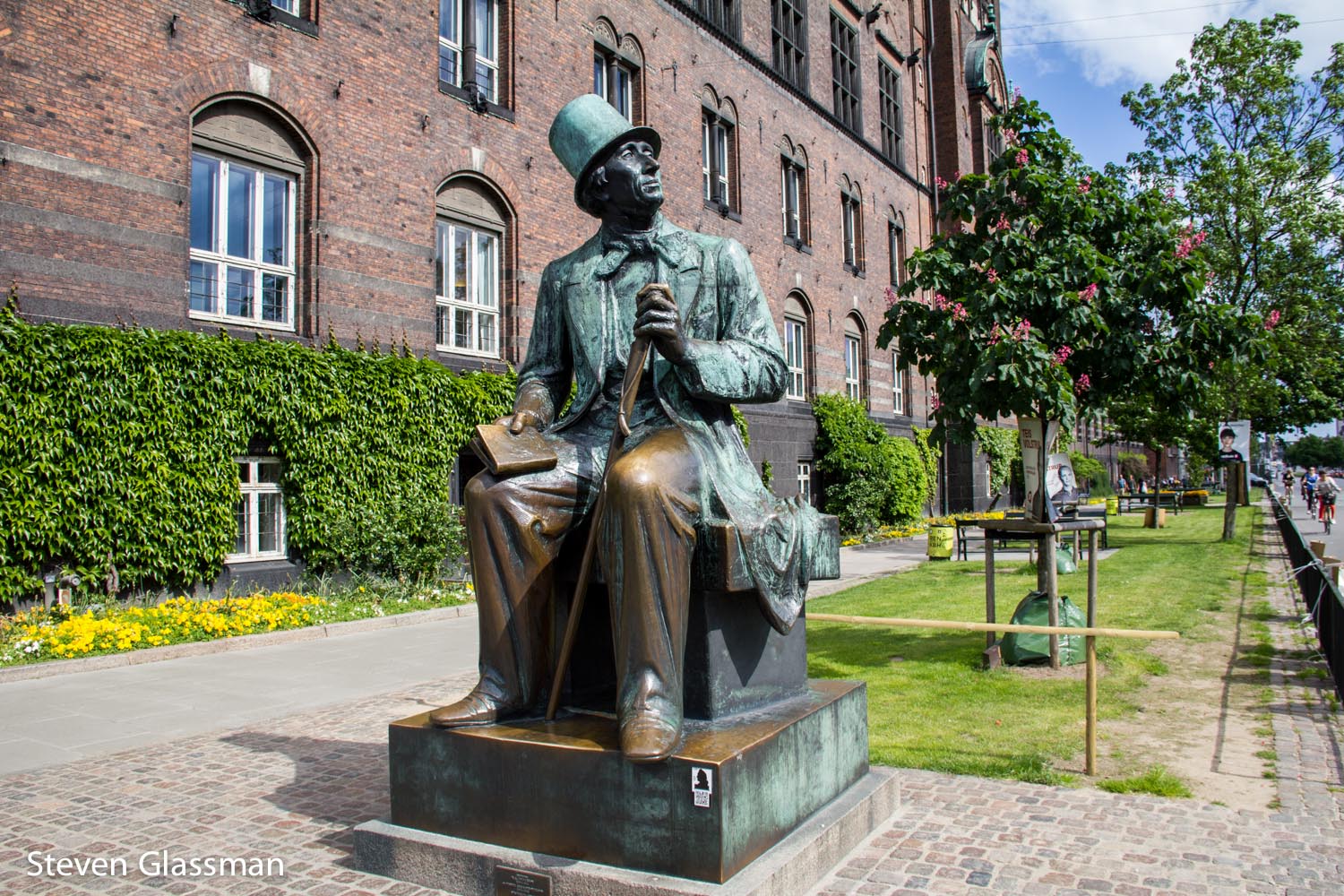
Alongside of the Copenhagen City Hall is a statue of Hans Christian Andersen, author of faery-tales such as The Little Mermaid and Frozen…er, I mean The Snow Queen.
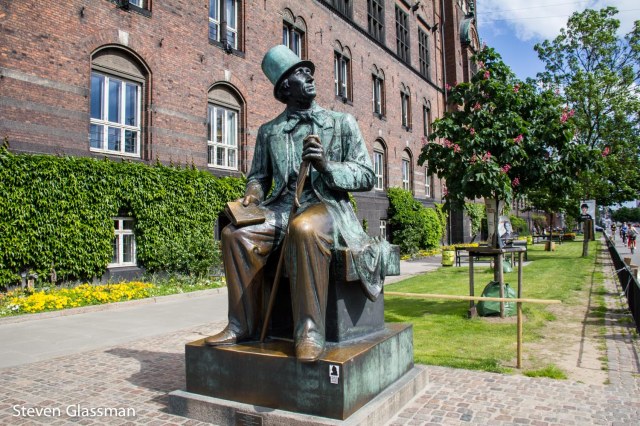
copenhagen-30

Have you ever been to Copenhagen?

Nordic Adventure, Part 5: The Vigeland Installation

Frogner Park, in Oslo Norway, is often referred to inaccurately as Vigeland Park.  The 450,000 square meter park is home to the world famous Vigelandsanlegget, or Vigeland installation.  Referring to the park as Vigeland Park is a very common mistake but the name has no official status and is considered wrong.  I didn’t know this while I was in Oslo, by the way- I only learned that the park was called Frogner Park when I sat down to write this post.

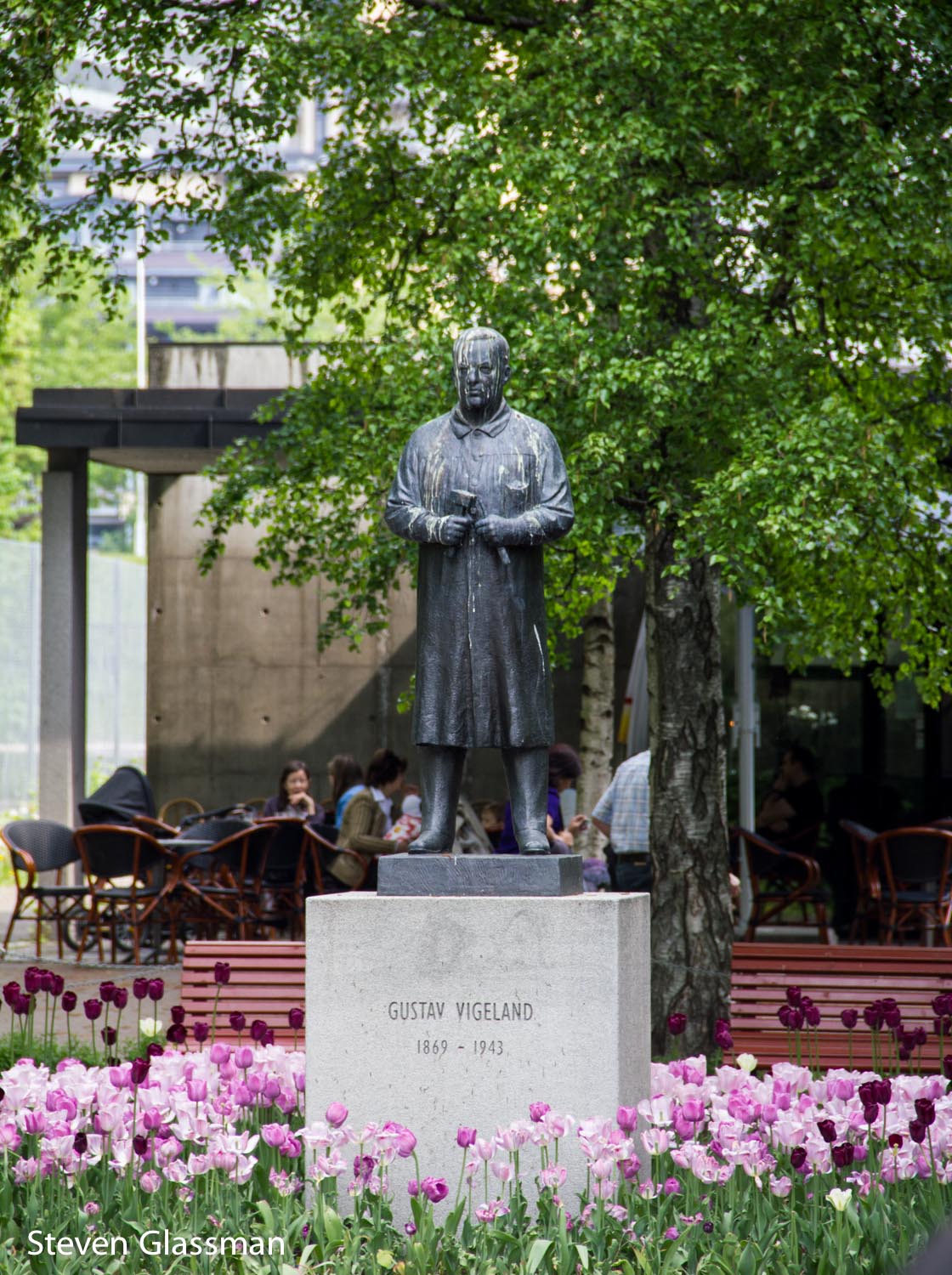
The Vigeland sculptures were created by Gustav Vigeland (born Adolf Gustav Thorsen in 1869).  This is the man.

vigeland-1

The sculpture area in Frogner Park covers 80 acres and includes 212 bronze and granite sculptures designed by Vigeland.  The Bridge was the first part of the installation to open, in 1940.  You can see the Fountain and the Monolith in this picture.  We’ll get to those.

vigeland-2

The sculptures in the Vigeland intallation are all naked, because the sculptor didn’t want clothing to date them.  Most of them reflect the human condition.  Many of them represent children at play.  The titles are often not very creative, but they’re precise.  This one is called “Man lifting girl with one arm.”

vigeland-3

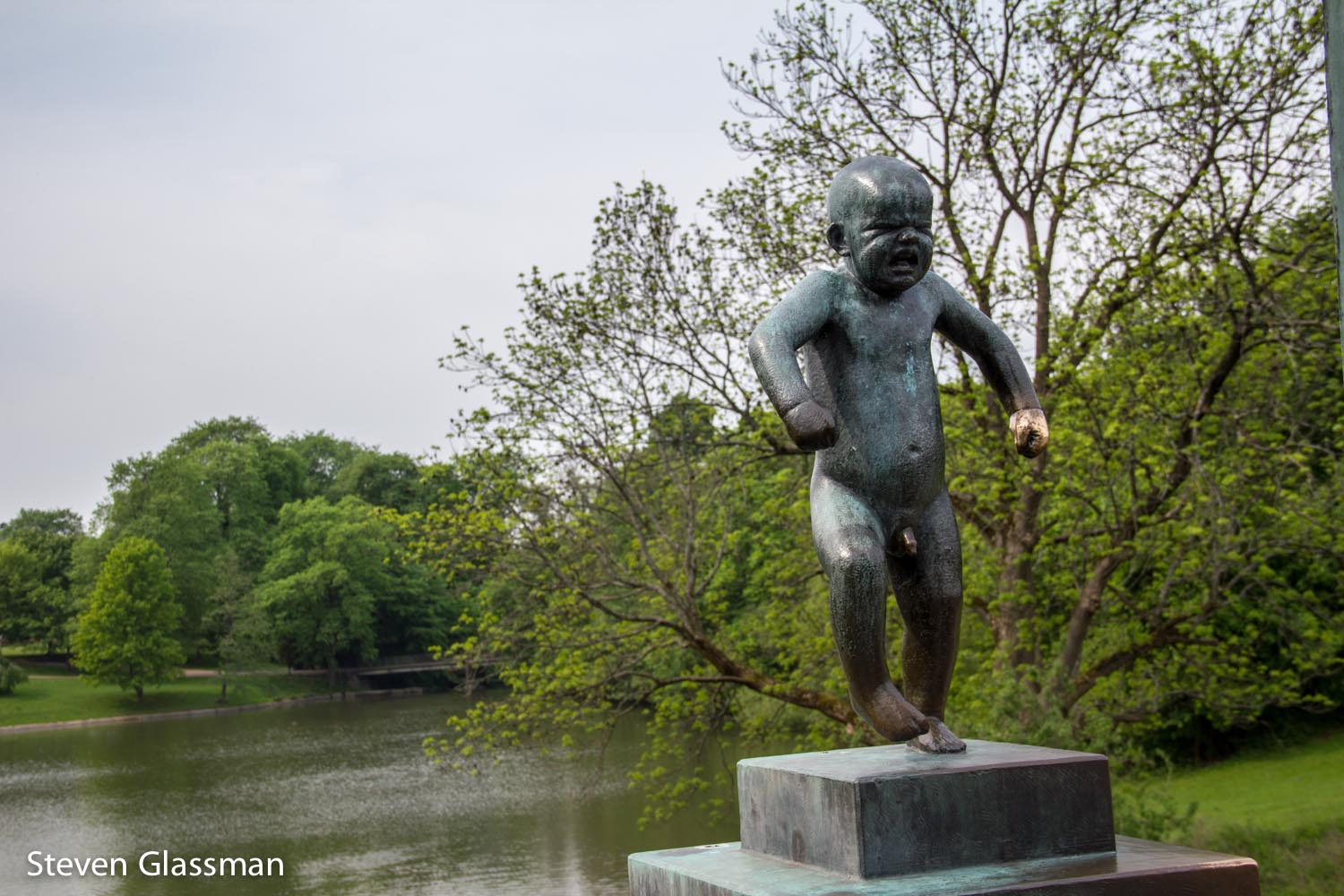
This fellow is one of the most popular sculptures in the park.  He is Sinnataggen, or Angry Boy.

vigeland-4

Say hello to “Man inside a ring.”

vigeland-5

I wasn’t able to find a name for these little ones.  It was possible to purchase a guide to the installation for a small fee, but I didn’t buy one.

vigeland-6

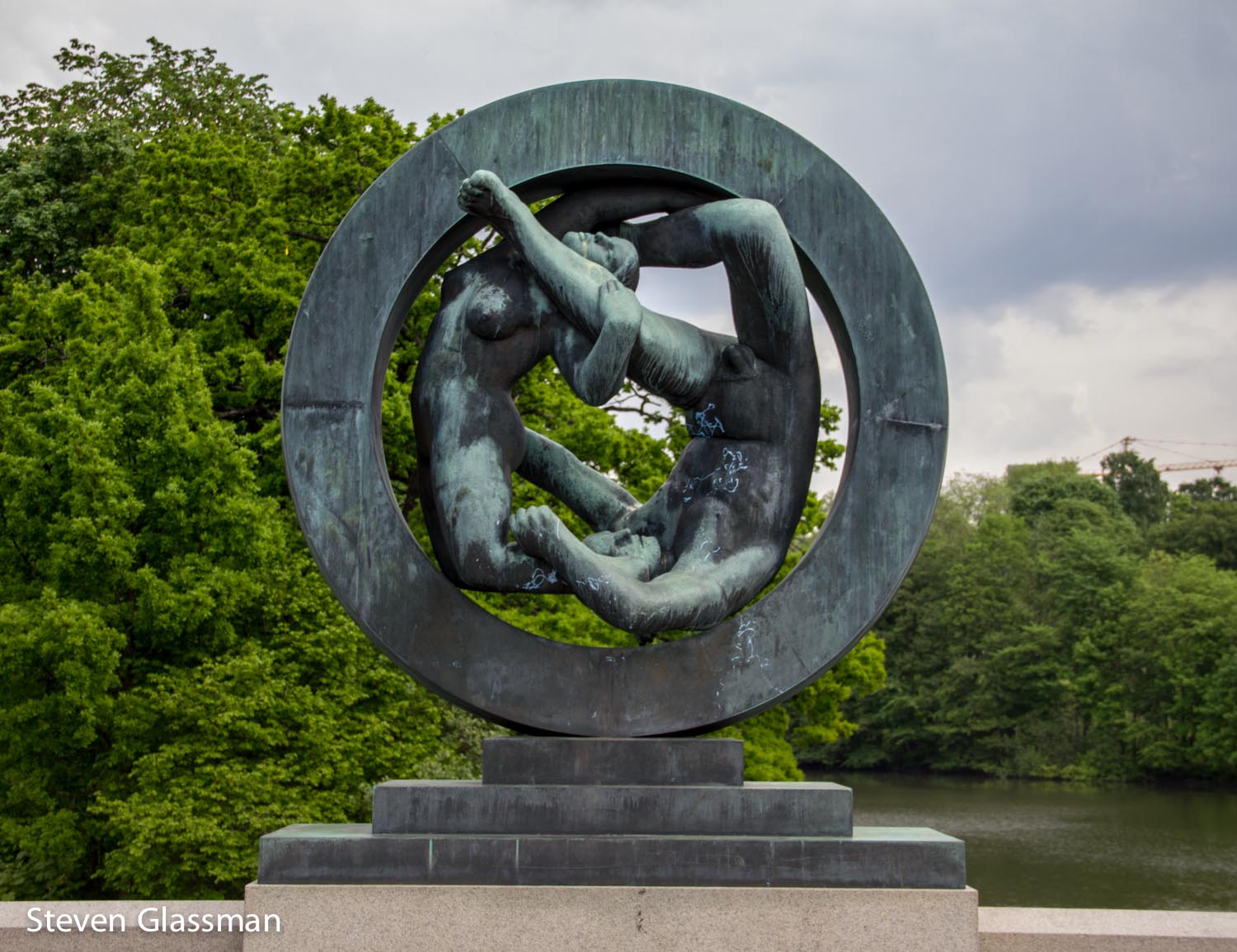
Man and woman inside ring.  I vote that we rename this one “Tumble dry low.”

vigeland-7

This is called “Man running,” but I think it’s a stretch to call this running.

vigeland-8

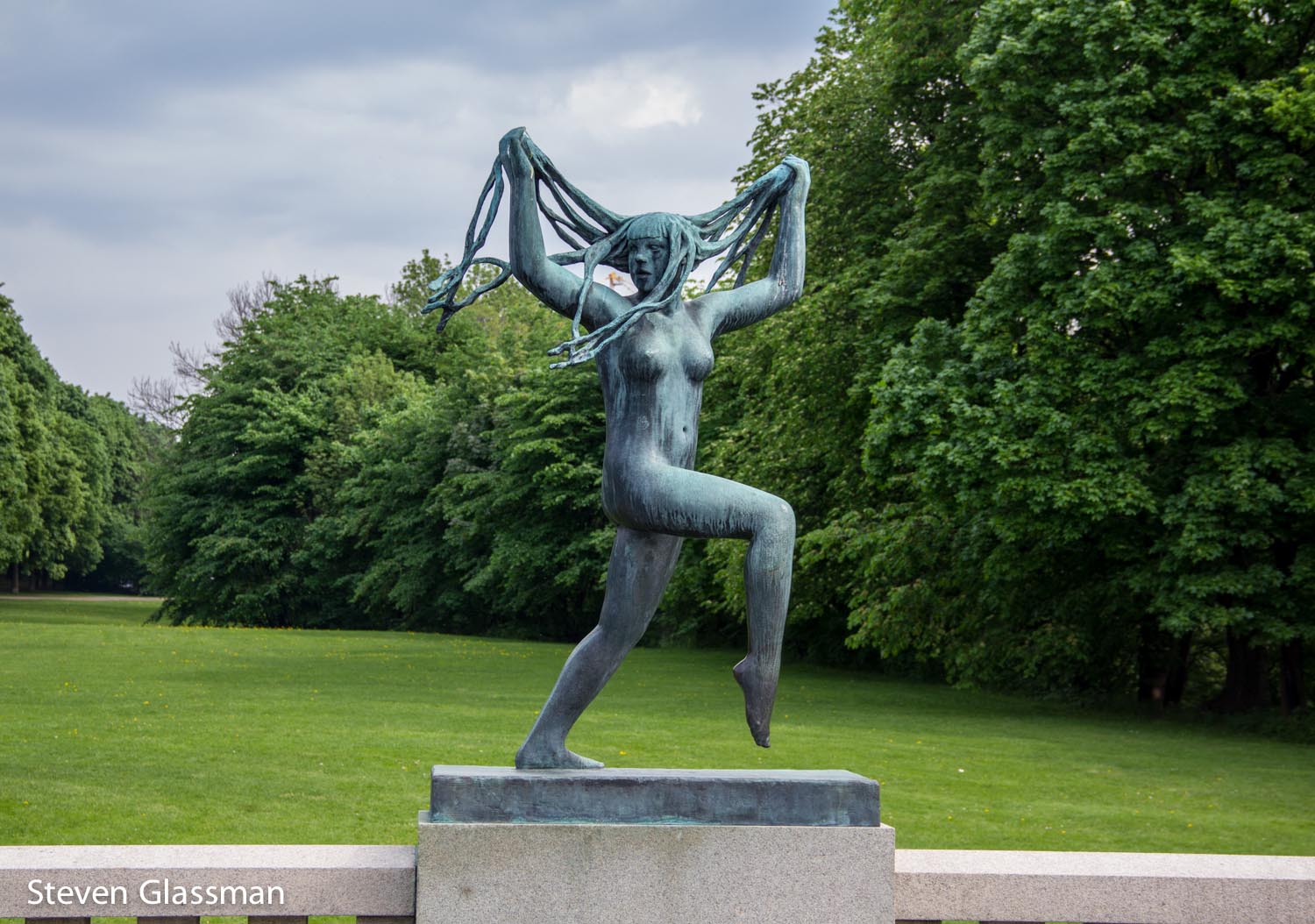
This one is “Dancing young woman.”

vigeland-9

This one is actually called “Man chasing four geniuses,” but I like to think of it as the ultimate “No, I don’t want children!” statue.

vigeland-10

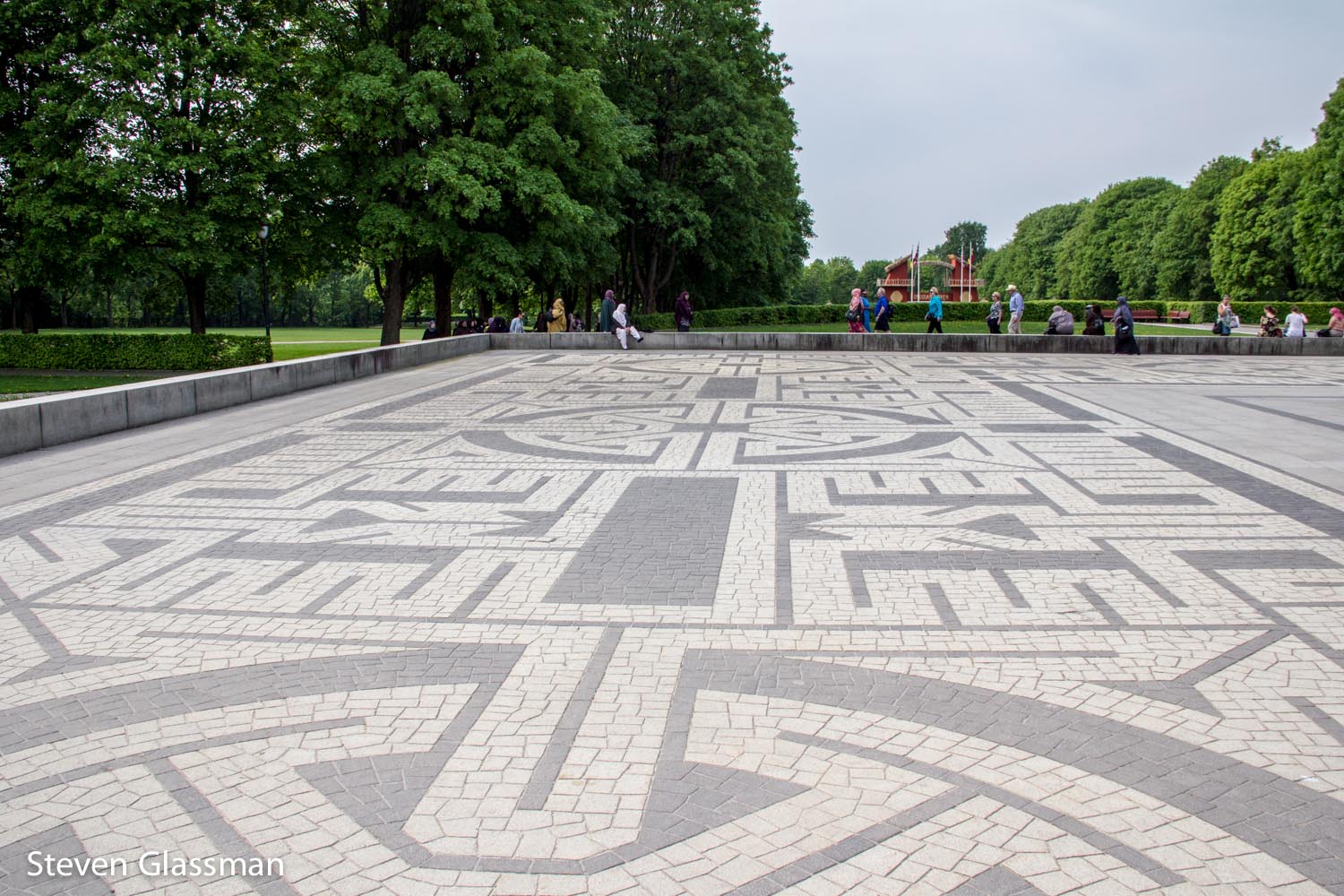
Once you walk past the bridge, you reach the Fountain.  While the center fountain itself was done somewhere around 1909 the full installation of the Fountain here was completed in 1947.  The ground around the fountain is an 1,800 square meter mosaic in black and white granite which forms an almost 3,000 meter long labyrinth.  If you have an hour or two, you can walk through it.

vigeland-11

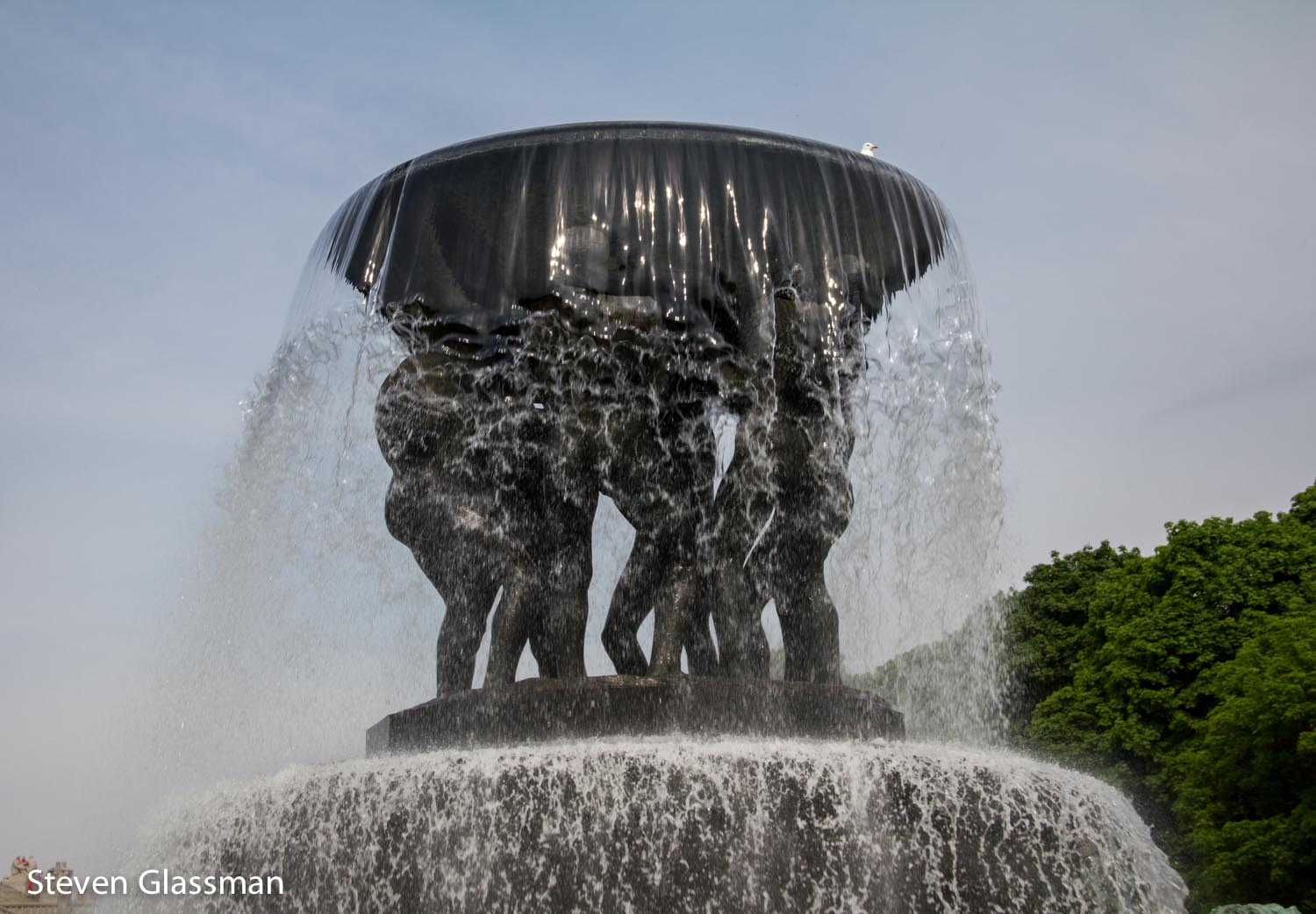
This is the Fountain itself.

vigeland-12

The Fountain is surrounded by tree sculptures.

vigeland-13

Here’s a view from above, looking back toward the Bridge.

vigeland-14

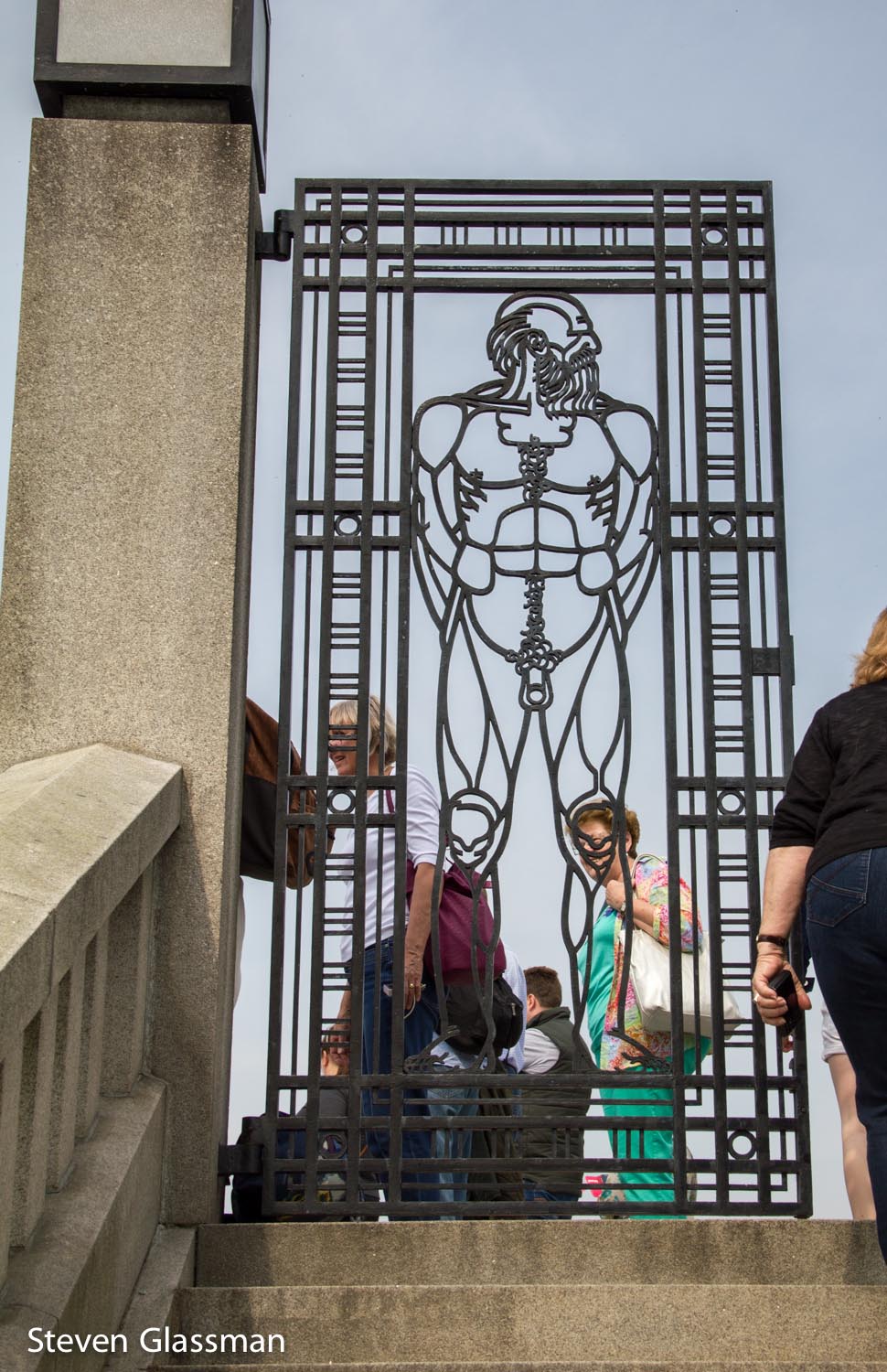
Moving past the Fountain, you reach the wrought iron gates to the Monolith.   There are eight of these gates, depicting man at different ages.

vigeland-15

Next, we reach the Monolith.  This plateau is the highest point in Frogner Park.  The Monolith is carved out of a single piece of granite, and is just over seventeen meters high.  It is not clear what the column is supposed to represent, and there are many theories.

vigeland-16

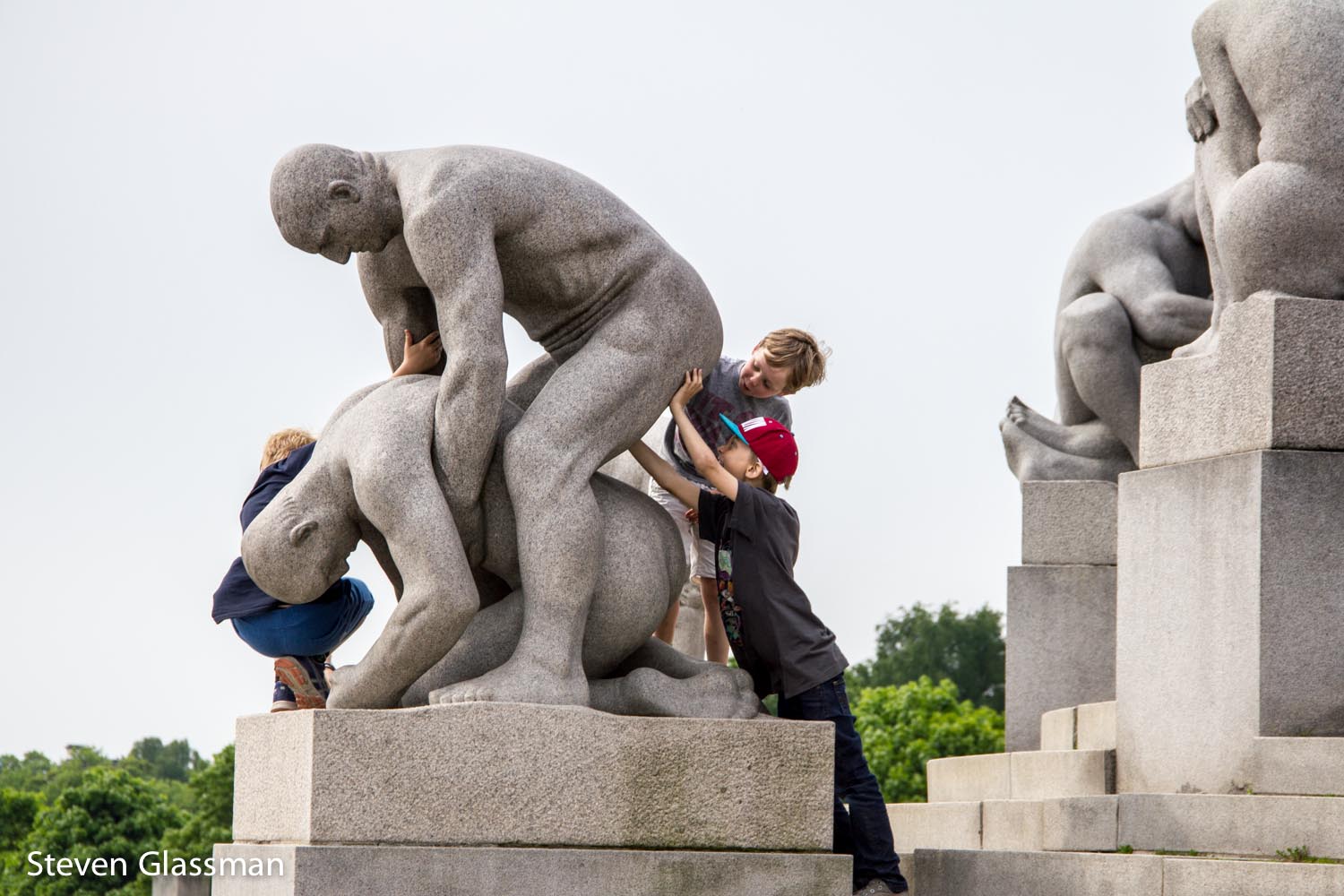
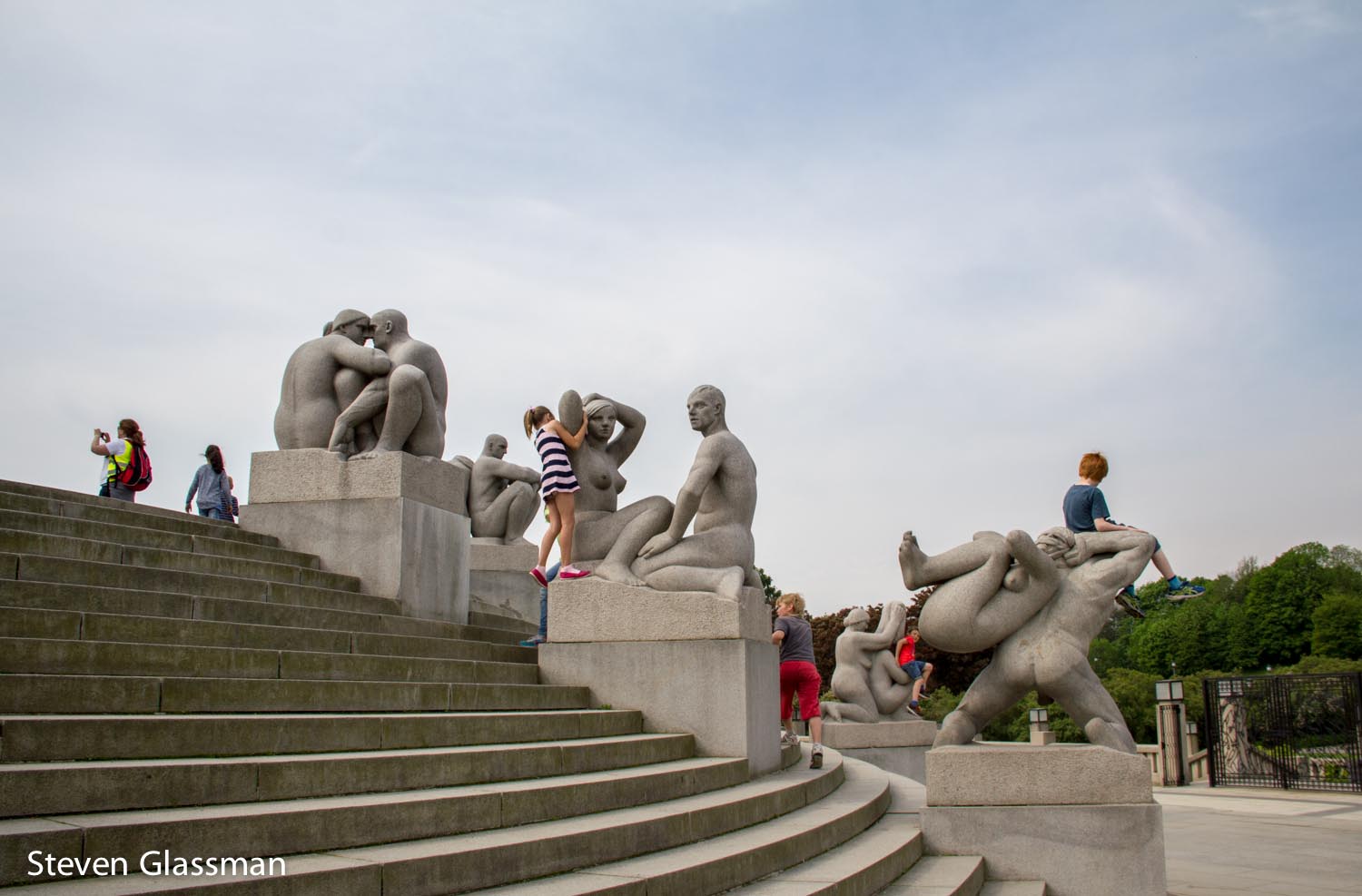
Surrounding the Monolith are 36 figure groupings, depicting the cycle of life.

vigeland-17

This one is called “Standing man lifting dead man.”

vigeland-19

As you can imagine, these are popular with tour groups and children.

vigeland-20

This kid is perched atop “Man throwing woman.”

vigeland-21

This one is called “Young boy and girl.”  Again, Vigeland wasn’t much with the creative names.

vigeland-22

Continuing in the same direction, we reach the final sculpture, The Wheel of Life.  The wheel supposedly represents eternity, and is a ring of men, women, and children holding onto each other.

vigeland-18

Have you ever been to Vigeland… sorry, to Frogner Park?