Krakow, Poland

I knew early on that I needed to get to Poland at some point during my stay here.   For one thing, I wanted to visit every country that borders Germany, and Poland was the last shared border country on that list.  For another thing, my father’s father was born in Warsaw, so I’m partly Polish.

If I was going to visit Poland, I had to choose a city.  My top two choices were Krakow and Warsaw, and everything I had read indicated that Warsaw wasn’t all that different from any other major city.  Off to Krakow I went!

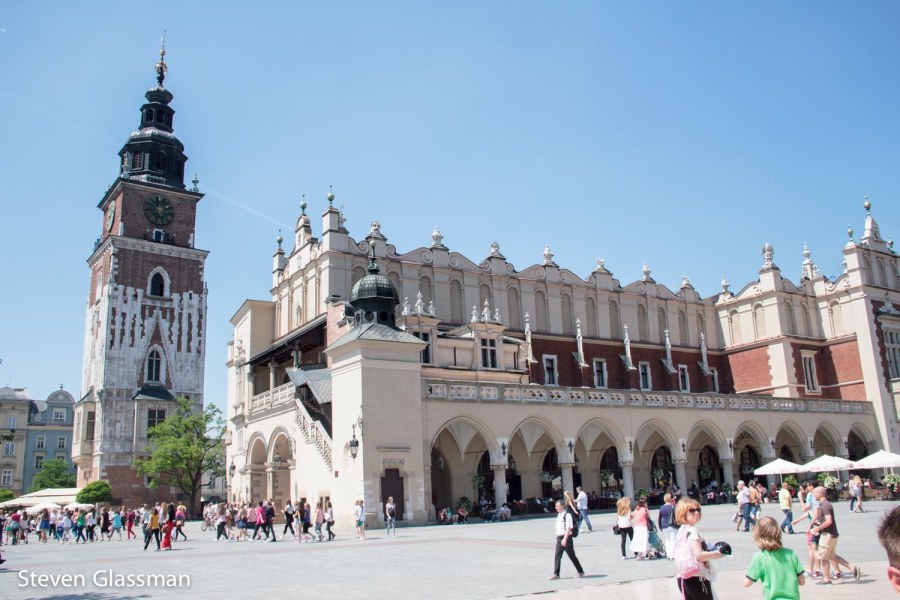
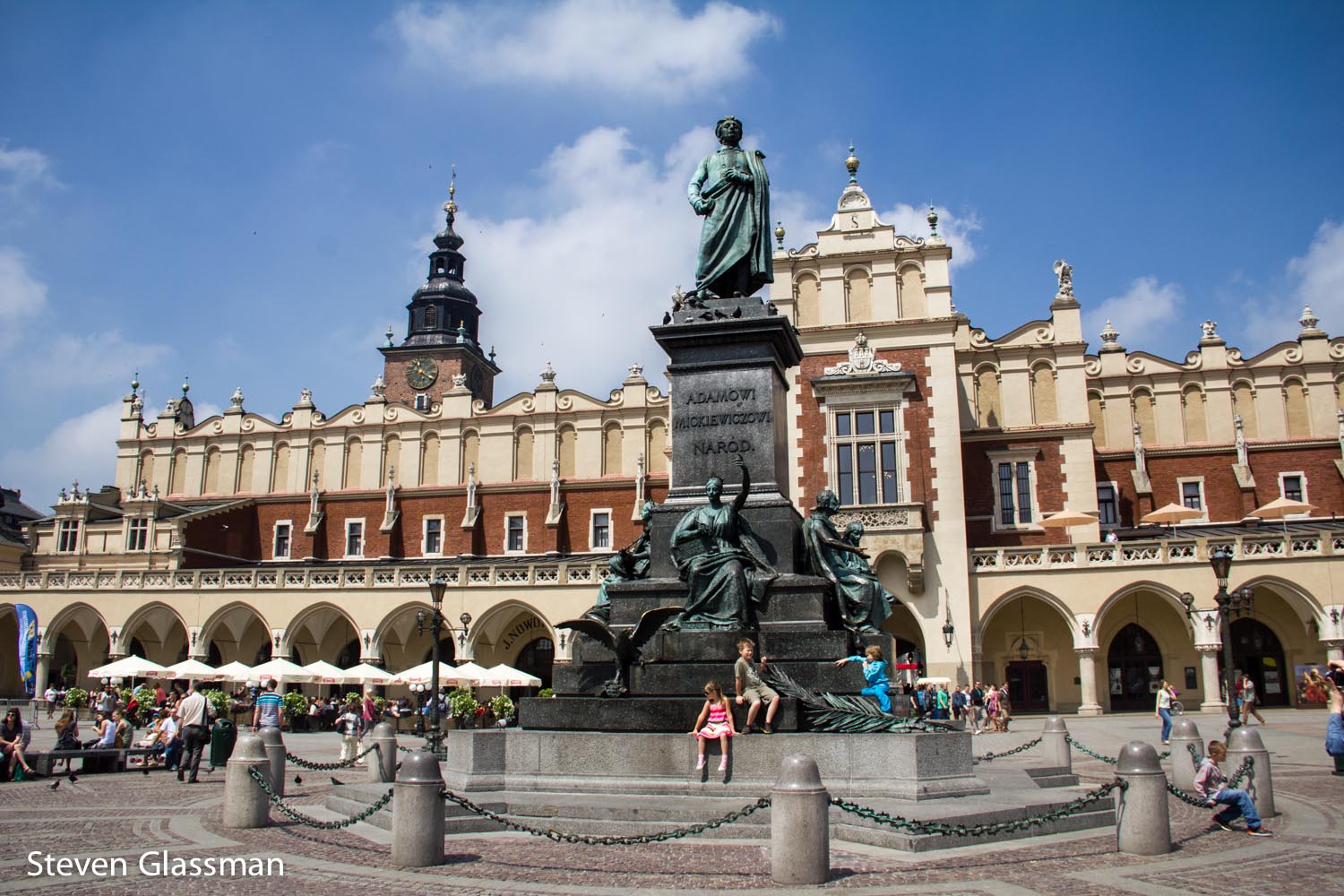
My hotel was only two short blocks from the Main Market Square.  This is the largest medieval European square, covering roughly 40,000 square meters.  Plus, it has a giant head.

Not pictured:  Me, re-enacting that scene from Clash of the Titans.

krakow-1

In the middle of the Market Square is a building called the Cloth Hall.  The original structure dates back to the 13th century, but it was rebuilt in the 16th century after the previous iteration was destroyed by fire.

krakow-3

Inside the cloth hall are rows of merchants, mostly selling to tourists.

krakow-2

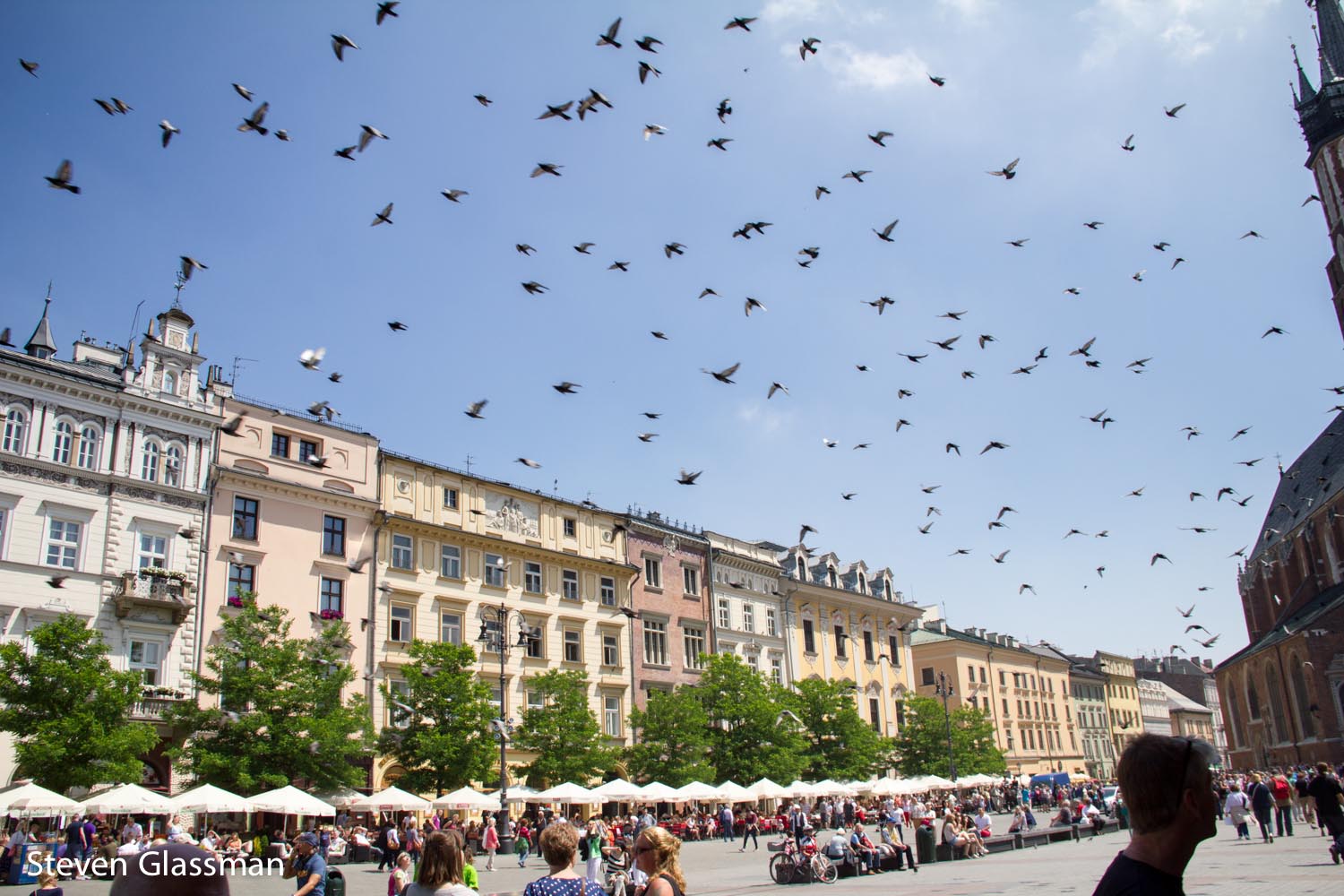
The Market Square has a ton of pigeons.  They were creepy as hell.

krakow-6

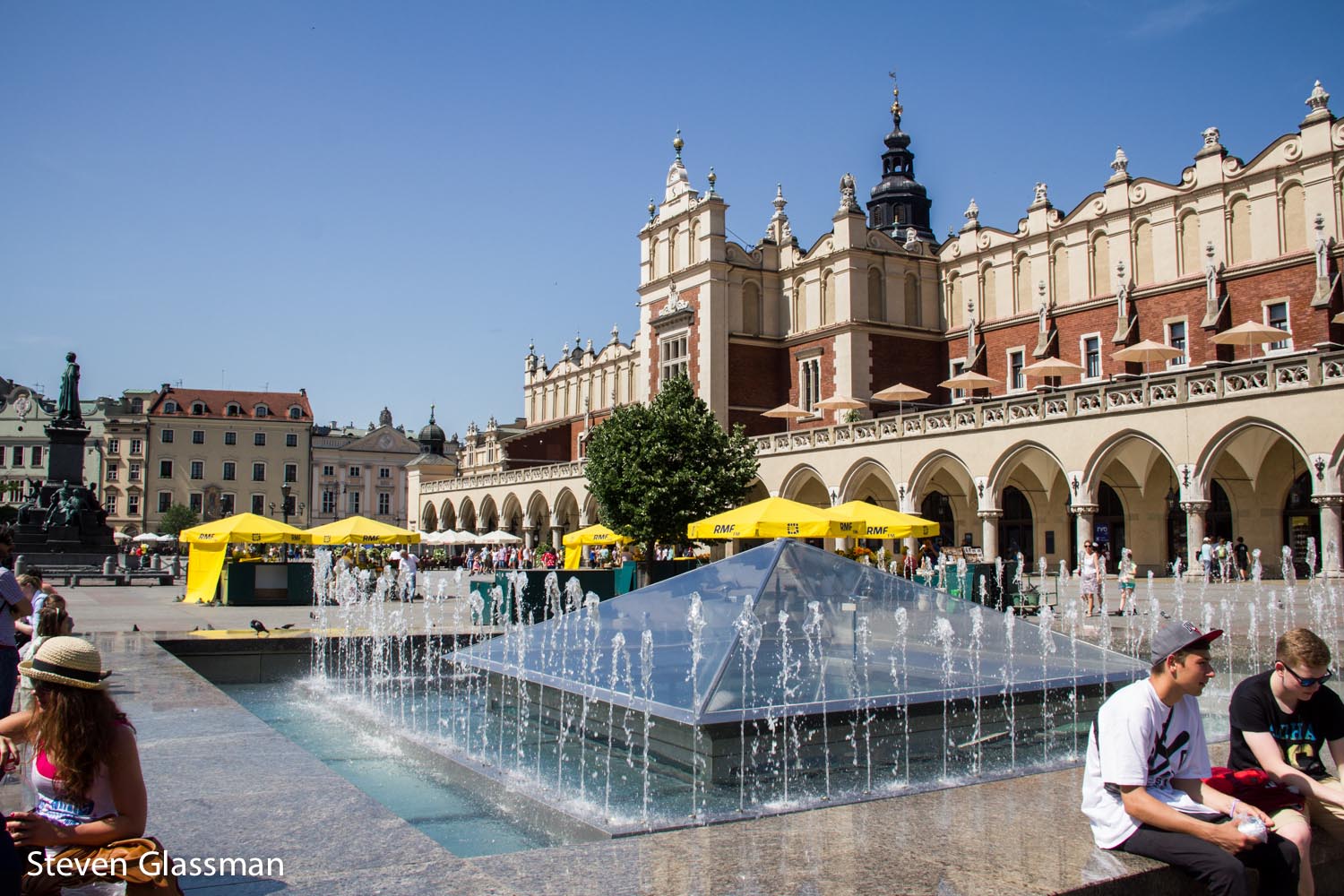
One more view of the Cloth Hall, this time from the back and with a nifty fountain in view.

krakow-27

This is a slightly different view of the same building.  This view shows the Town Hall tower, which you can climb.

krakow-9

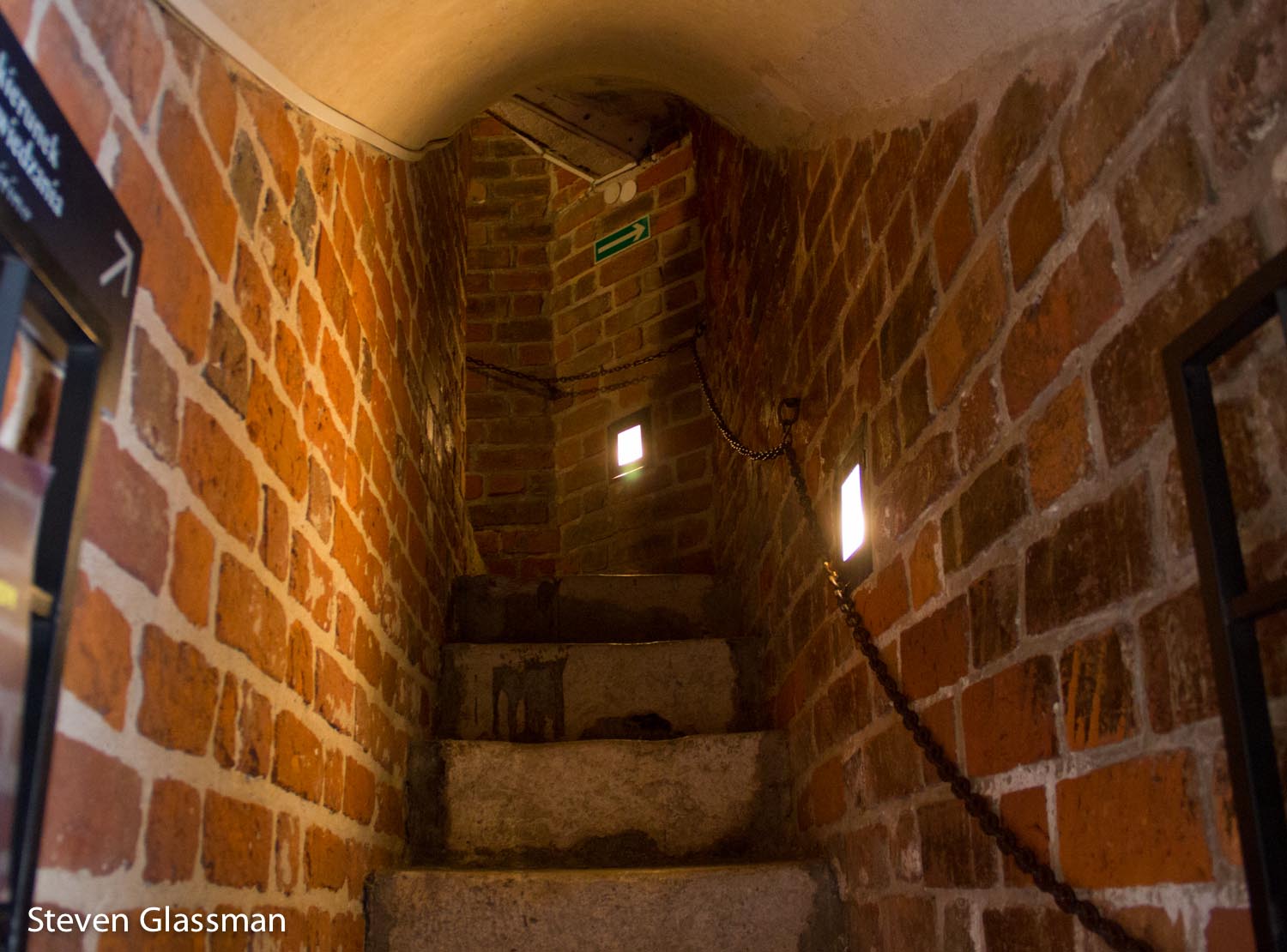
If you should choose to climb it, be aware that the steps in this tower are very tall steps, and the passageway is very narrow.  Good view from the top, though.

krakow-8

The old town hall’s tower is still standing, even though the rest of the town hall is gone.  There’s a brass sculpture next to the tower showing what the original structure looked like.

krakow-7

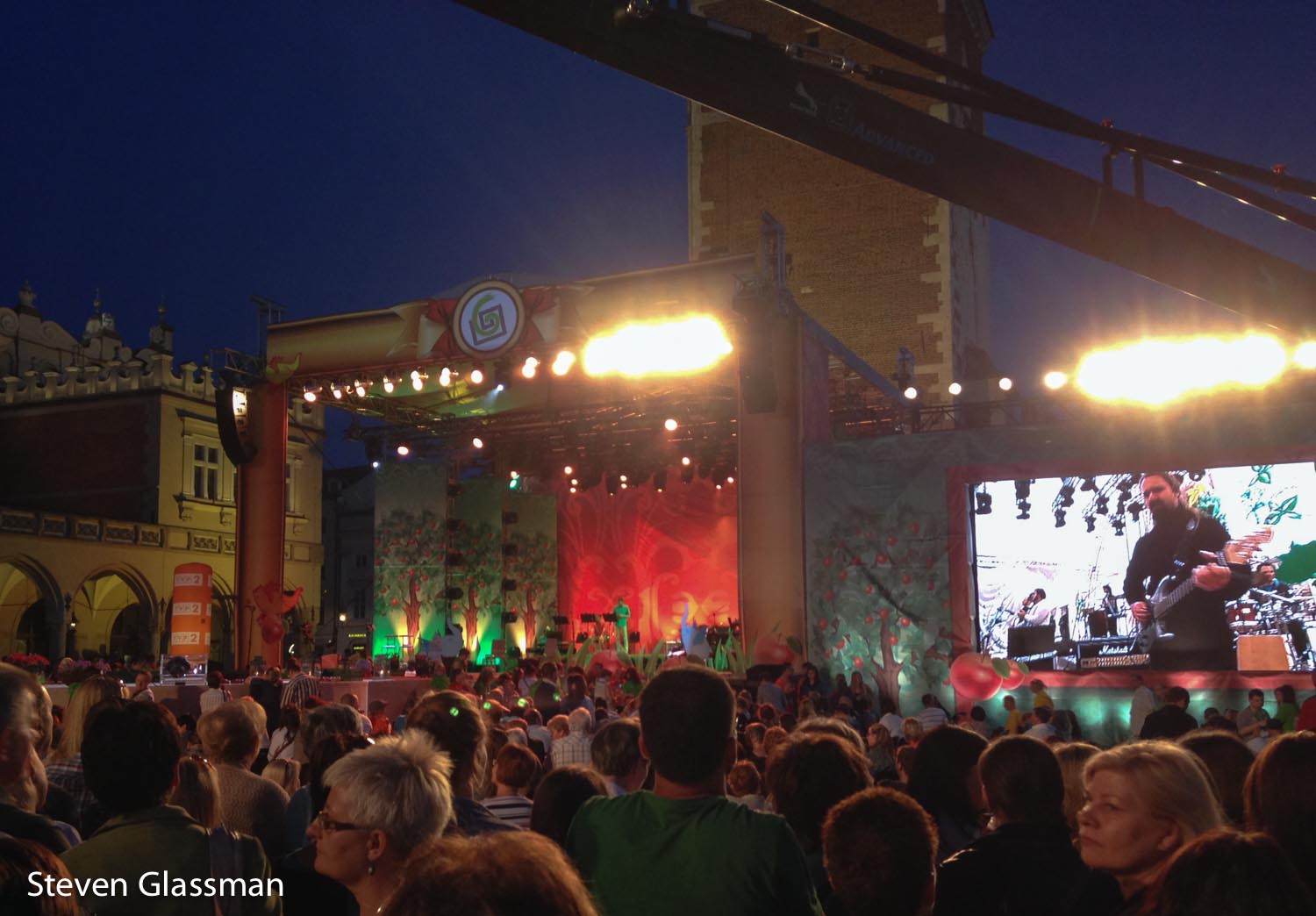
All the extra crap in that last picture is because there was an enormous stage set up in the Square for some big event while I was there.  Lots of live music, some of which was even good.

krakow-21

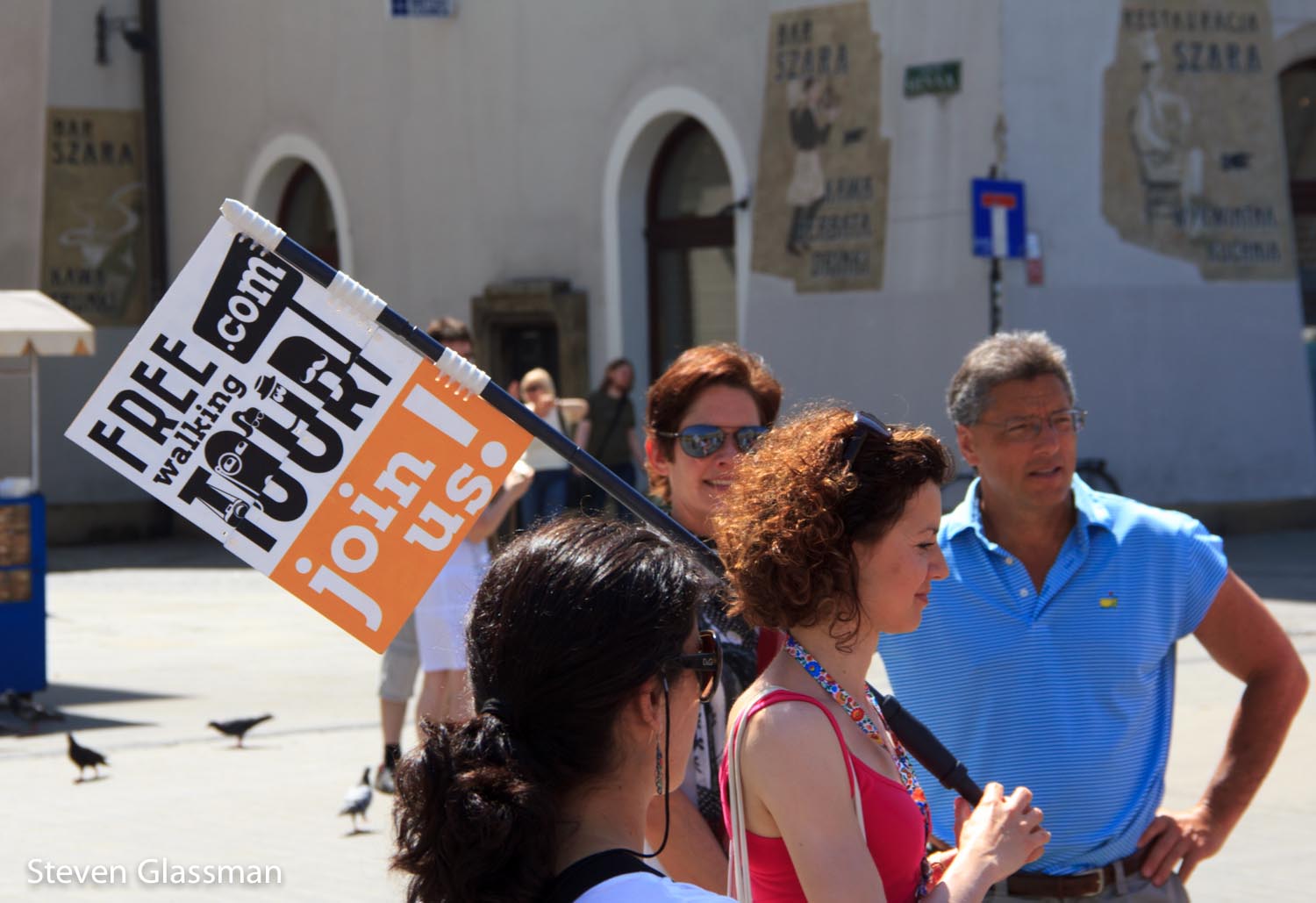
…but I digress.  In the main square, there are often a bunch of these walking around in various languages:

krakow-29

Pick one and follow them.  They cover a lot of interesting topics.  Most of the free tours will lead you down this street, past the McDonald’s and toward St. Florian’s Gate.

krakow-28

St. Florian’s Gate is part of the city’s defensive walls from the 13th century.  There used to be a moat, but that’s gone now. There were originally 47 observation towers and seven gates, because Krakow was a medieval fortress at the time.

krakow-4

Near the gate is this excellent statue of Jay Garrick the Roman god Mercury.

krakow-5

Through the gate is the Barbican, a circular fortification which was originally connected to the main gate.  Barbican is not the name of the building, it’s the name of the type of structure- but I don’t think the locals call it by another name.

krakow-20

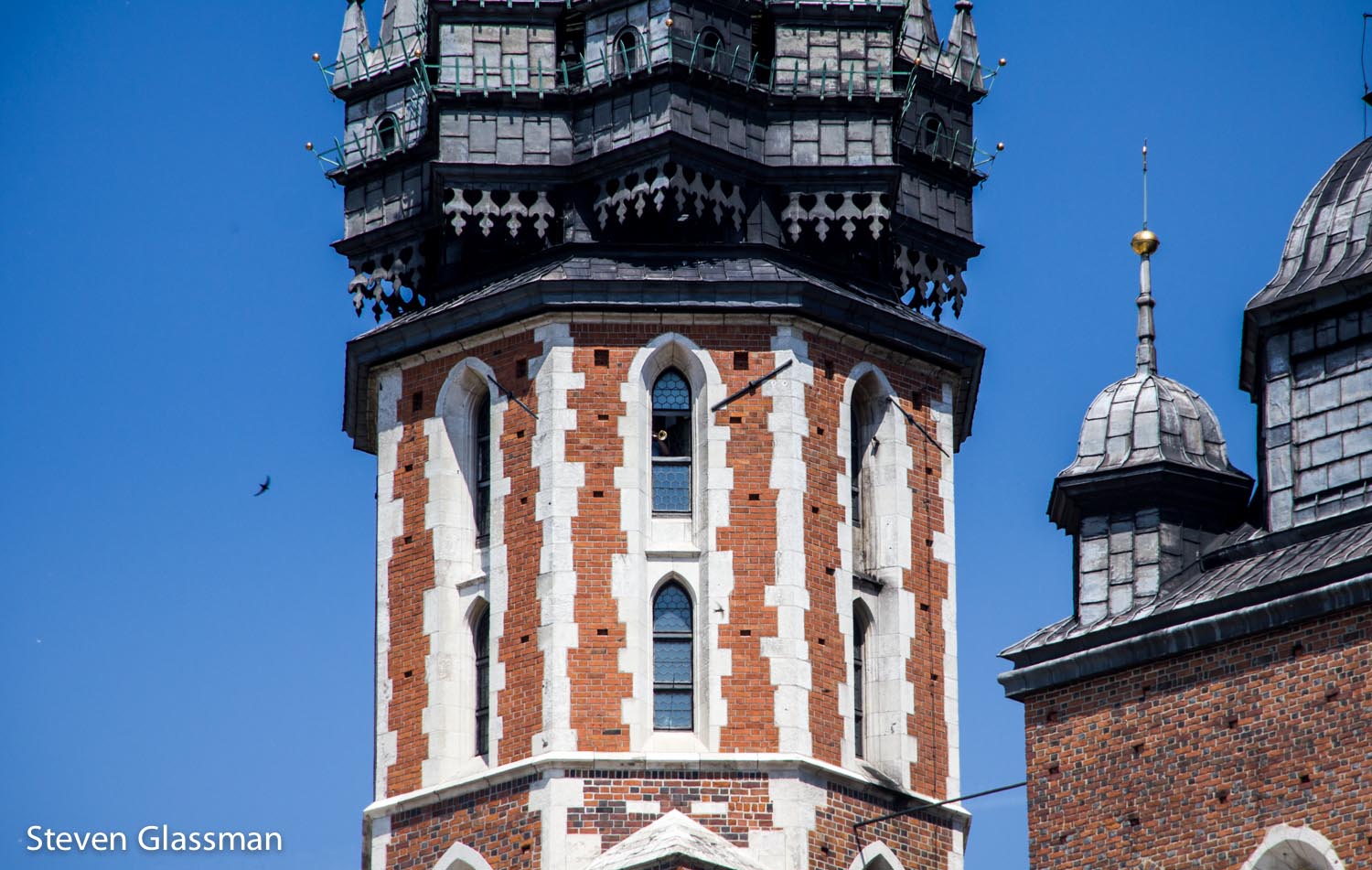
Let’s go back to the Market Square, because I’m not done there.  In one corner is this pretty nifty church, the Church of St. Mary, sometimes referred to as St. Mary’s Basilica.  The church is not parallel to the square, and the towers are not uniform.  The reason for the different towers is that the smaller tower is a bell tower, and the higher tower has always belonged to the city and was used as a watchtower.

krakow-19

Every hour, on the hour, a small window is opened in the watchtower, and a short trumpet signal called the Hejnał mariacki is played.  The trumpeter then opens a different window and repeats the call.  This is done four times in all, in four directions which roughly correspond to the direction of the four main Krakow city gates.

krakow-10

The tune breaks off very abruptly.  It is not known with certainty why this is so, but one of the most persistent legends is that it is cut off to commemorate a 13th century trumpeter who was shot in the throat while sounding the alarm before a Mongol attack on the city.  Here’s a short video of the trumpet signal.

In another corner of the Market Square is another amazing (but much, much smaller) church called St. Adalbert’s Church. Legend says this is the location where St. Adalbert used to preach.

Every night, the Royal Chamber Orchestra does an amazing one hour concert in this church.  The baroque dome gives it excellent acoustics, and the show is well worth seeing.   The program alternates, and when I saw it, the song  included such venerable classics as Schubert’s “Ave Maria,” Gershwin’s “Summertime,” and Horner’s “Love Theme from Titanic.”

krakow-22

Walking south out of the main Market Square, along Grodzka, you eventually come to an intersection with two more interesting churches visible.    I can’t remember the name of this one.

krakow-11

This one is the Church of St. Francis of Assisi, the Franciscan church.

krakow-13

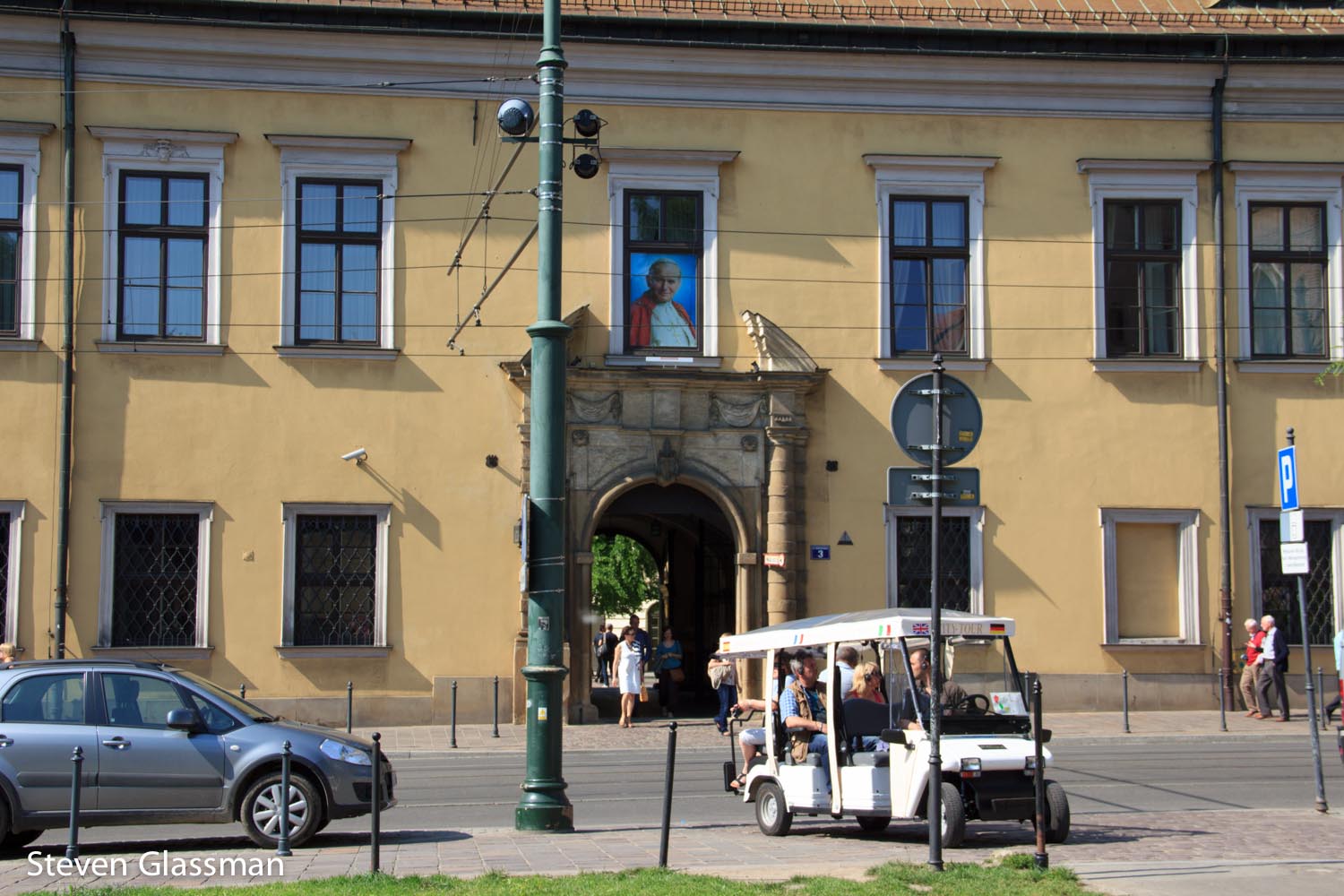
Across the street from the Franciscan church is the Bishop’s Palace, where Pope John Paul II stayed whenever he was in the city.  They even decked out the window he used to hang out of to permanently commemorate this.

krakow-17

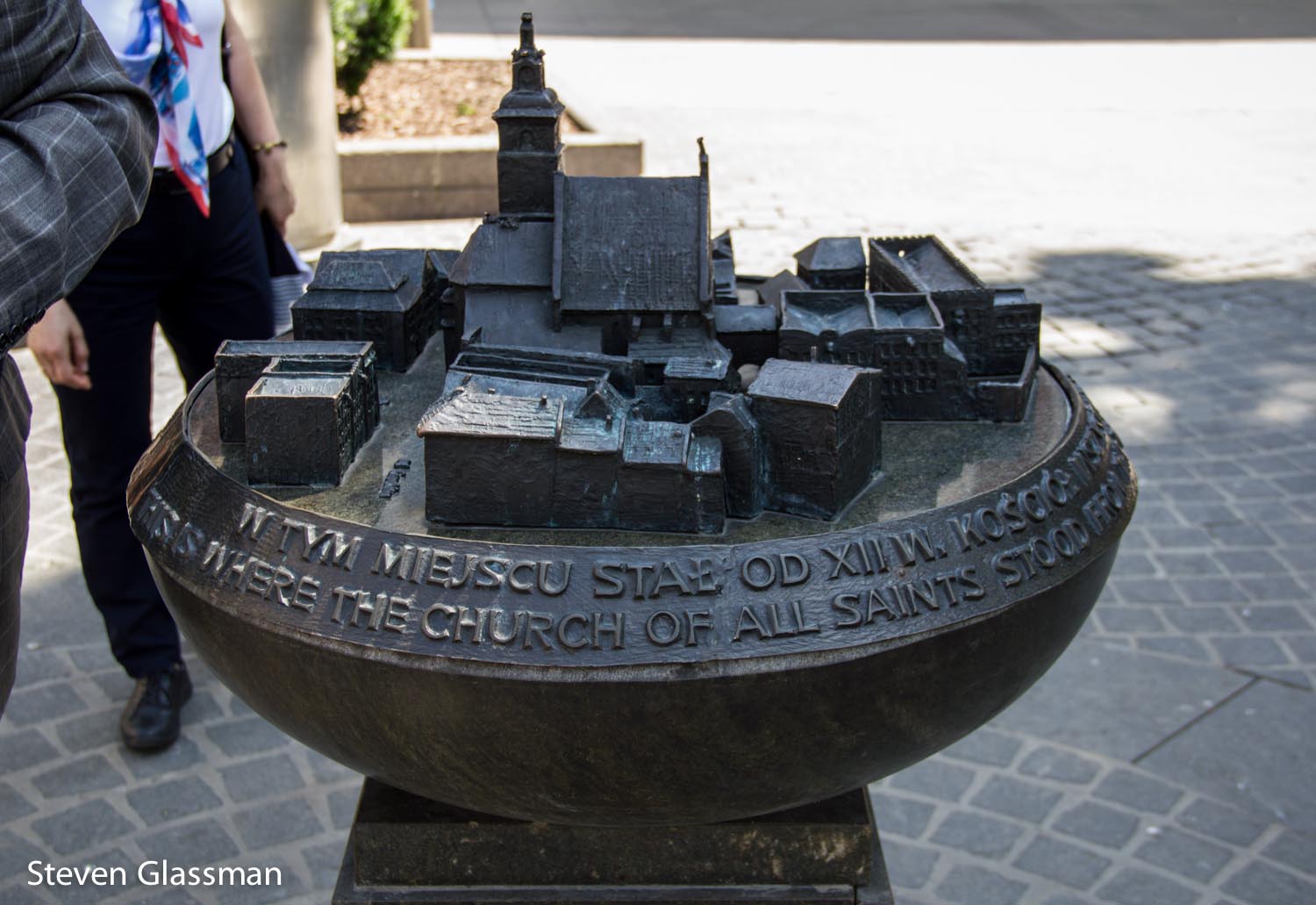
Between the two churches is another interesting sculpture showing where the Church of All Saints stood in the past.

krakow-12

At this point in the post, the “walking around the city” narrative sort of breaks down, because the last few pictures aren’t in a straight line.  For example, this is the former Collegium Physicum, the location for the faculties of pharmacology, physiology, physics, chemistry, and geology.  Lots of science was done here.

krakow-15

…and this is the Collegium Maius, the oldest existing building of the Jagiellonian University.  I didn’t get to see that wonderful clock in motion, but my city map said it runs at 11am, 1pm, and 3pm every day.

krakow-18

This the real gold roof of the cathedral on Wawel Hill, near the castle.  It’s plated though, and not solid gold, because that would be too heavy.

krakow-14

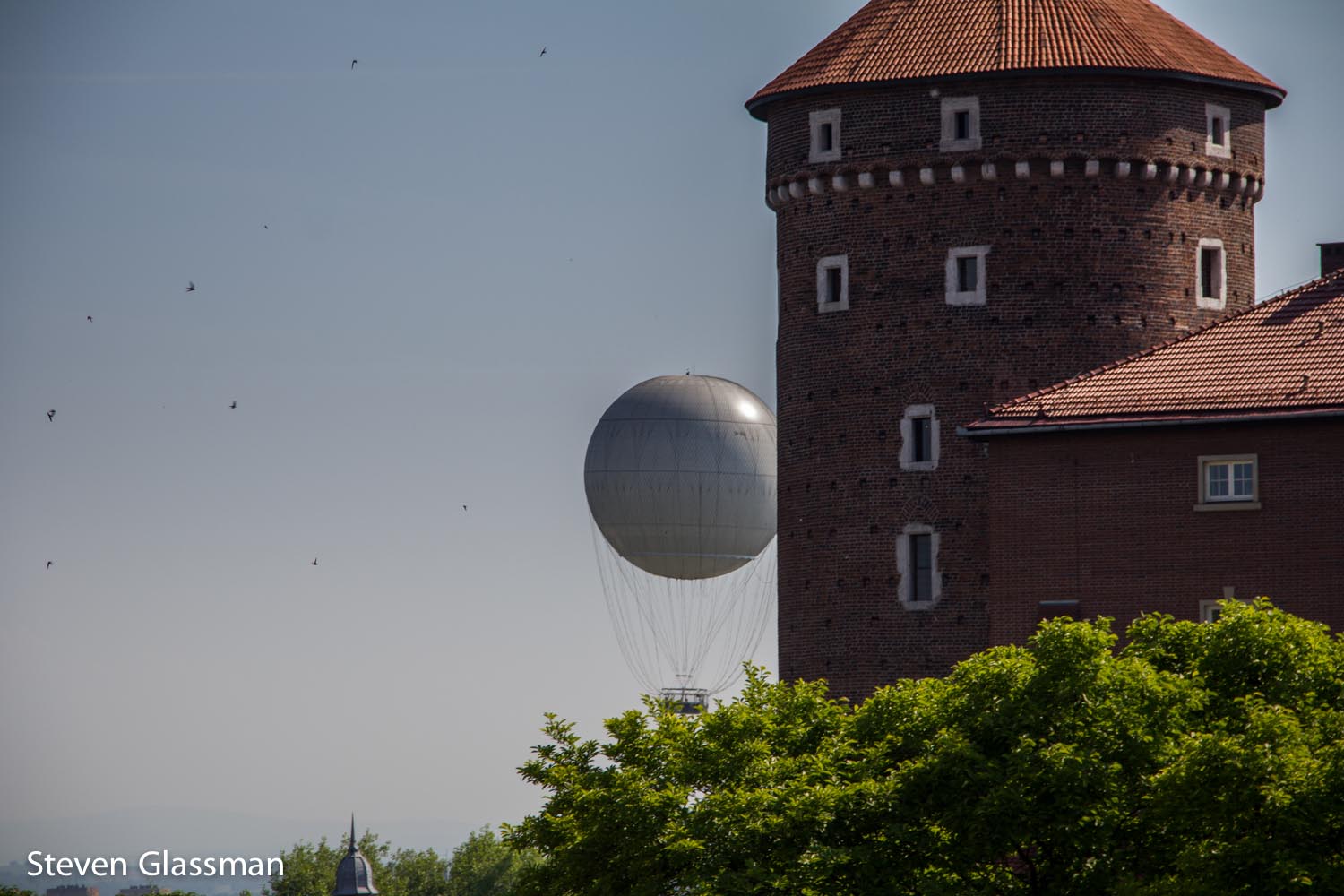
I took a brief stop in Wawal Castle to view Leonardo da Vinci’s Lady with an Ermine.  It was smaller than I expected.  The classics almost always are.  Alas, photographs were forbidden.  After I was done looking at the painting, I noticed this fascinating giant balloon from the courtyard.

krakow-16

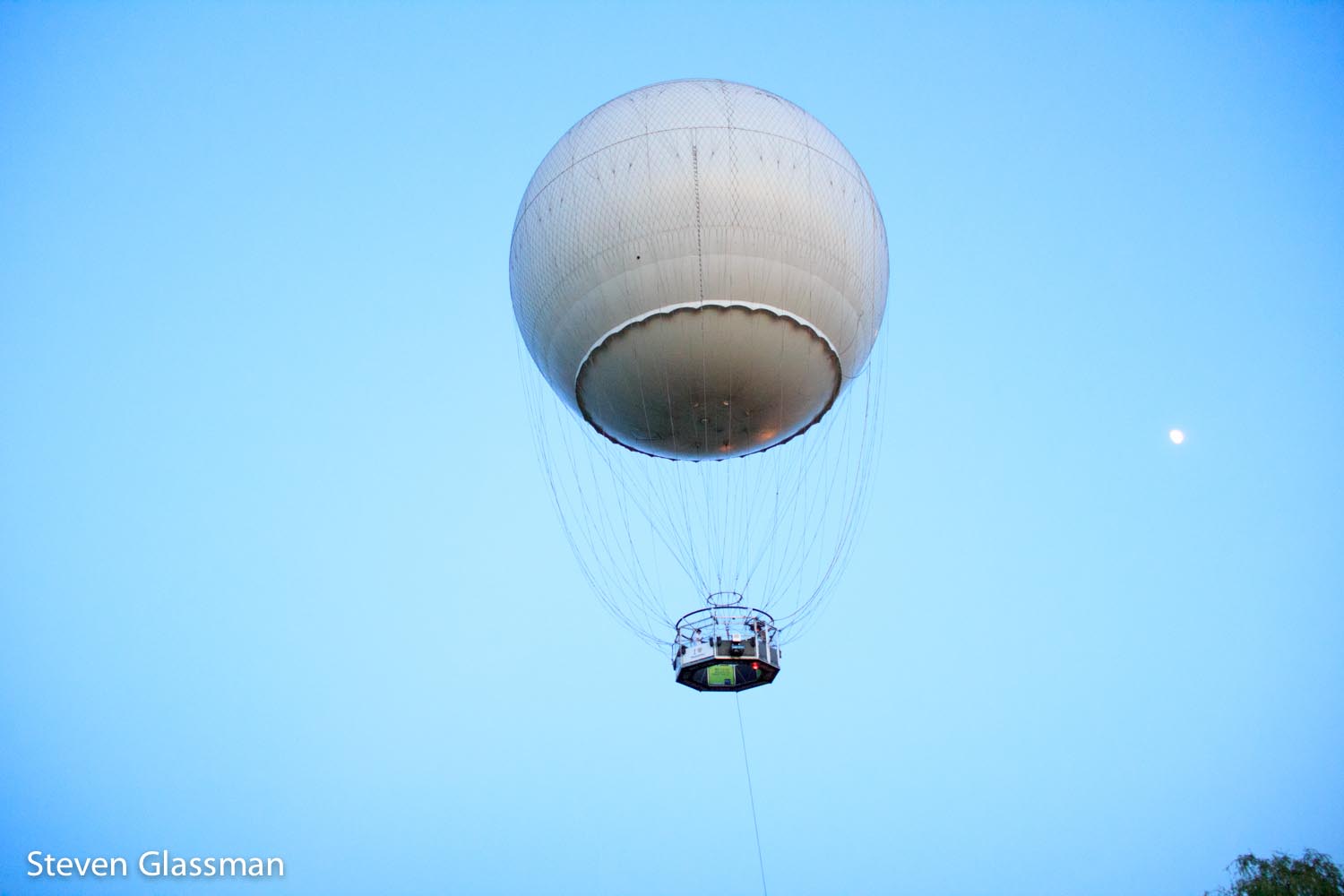
This is the Hiflyer.  It’s based a reasonable walk from the city center, and as long as the weather is good, they’re flying.  They recommend calling ahead just to be sure, but a reservation isn’t necessary.  The balloon is more or less stationary, because it’s tethered to a single place on the ground.

krakow-25

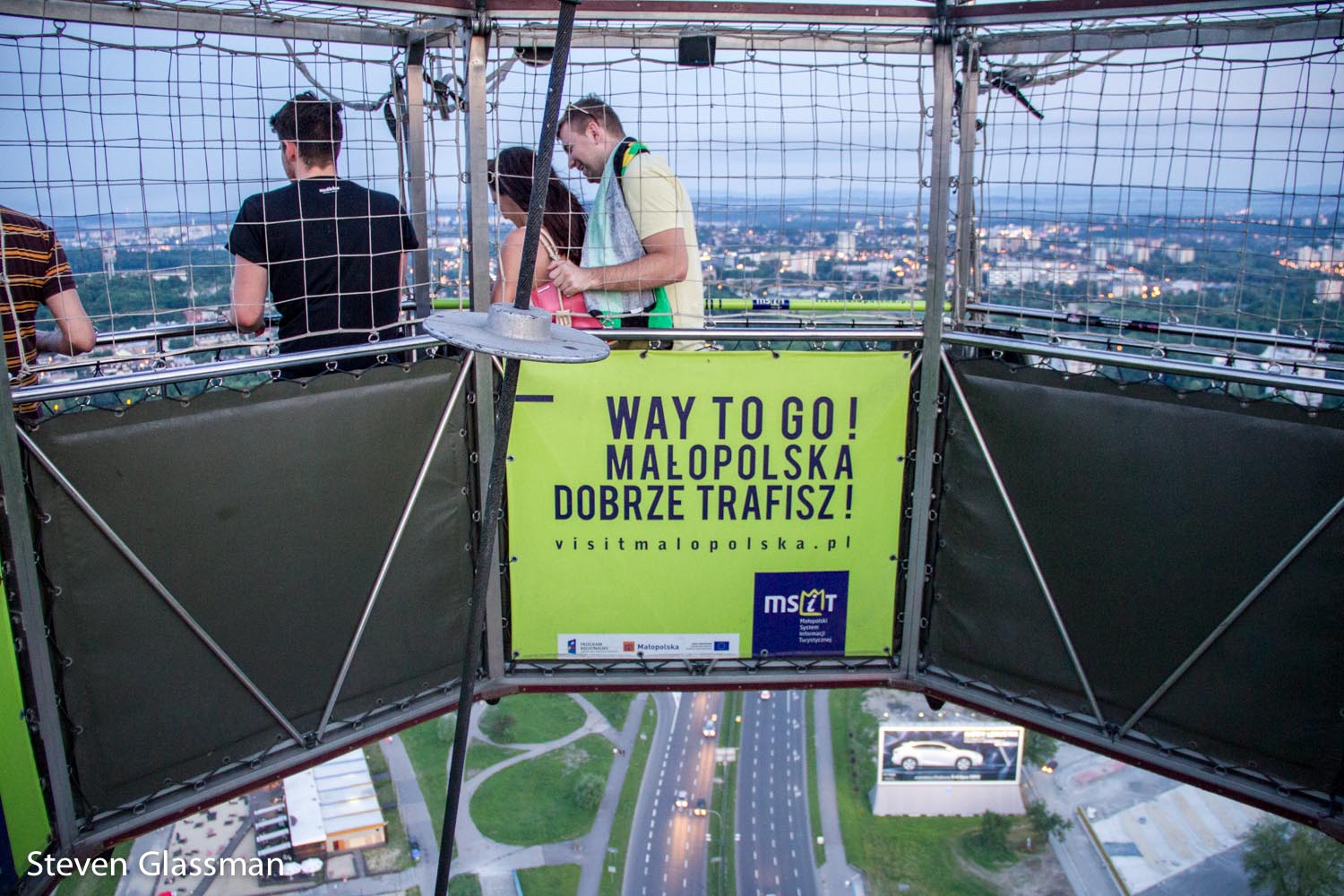
The “basket” for this is actually a very large metal ring, with an open center for the cable that pulls you back down at the end of your flight.

krakow-24

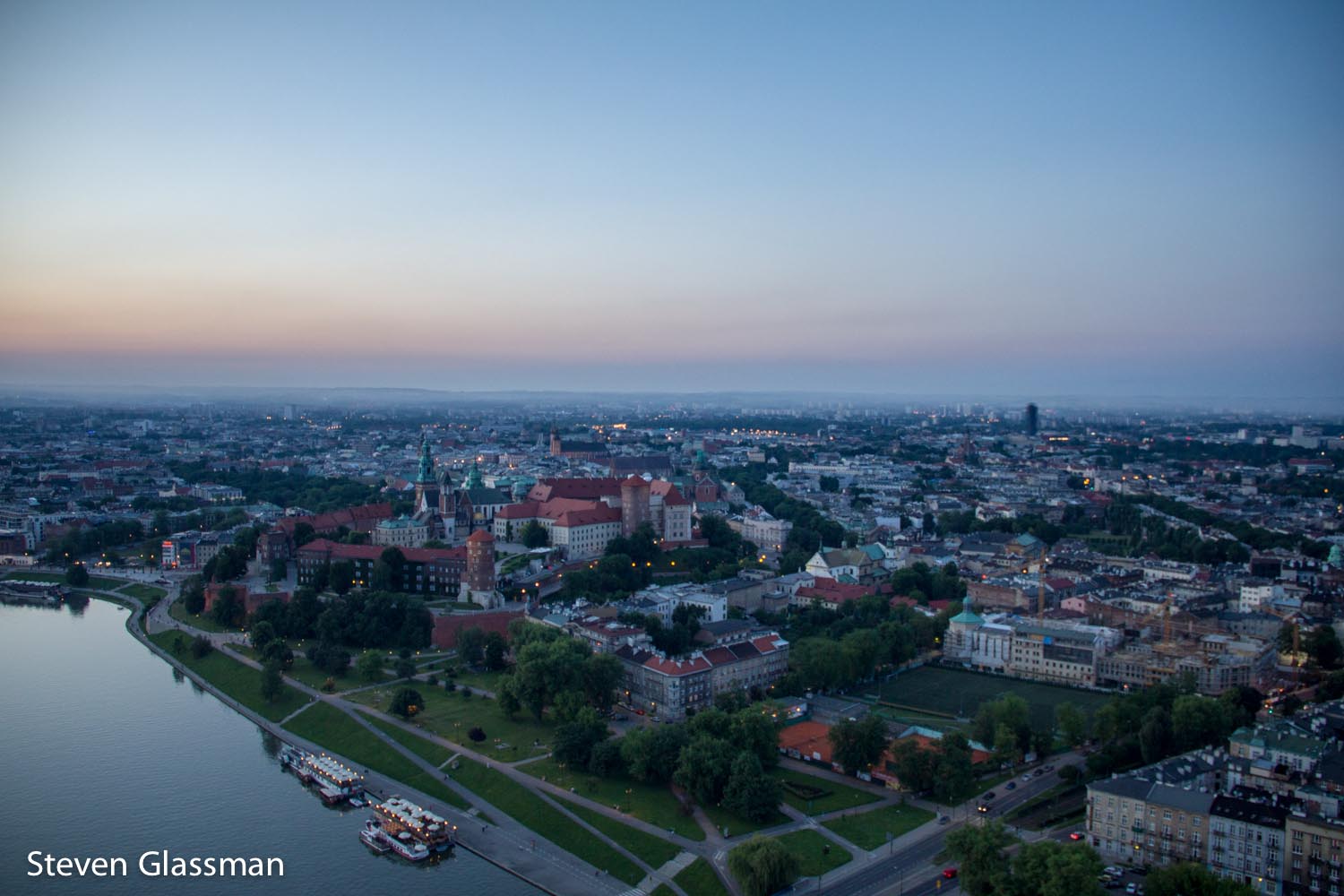
Going up at dusk affords you some pretty spectacular views of the area.  This direction shows Wawel Hill, including the castle.

krakow-23

On my last evening in town, I stopped at one of the restaurants in the main market square and I had these fresh pierogies.    I love pierogies, and having a chance to have freshly made ones in Poland is not to be missed.  These were so, so delicious.

krakow-26

Have you ever been to Krakow?  Have you ever had a pierogi?
Hot Air Ballooning Over Bavaria

We interrupt this barrage of travel posts to bring you a post about something that I did a little closer to town.  Thanks to my partner-in-crime Jenny and her fiancé Robert, I had the opportunity to go hot air ballooning.  They wanted to try this, and if enough people joined in, the balloon company would come to us instead of us going to them.  Arrangements were made, weather was checked, and on the very last Saturday in May, the balloon company traveled to us in the afternoon.

The first order of business was setting up.  We were all enlisted to help set up the balloon and basket.  The actual balloon was packed into a giant canvas bag.  Most of the material is a very lightweight nylon, but the material closest to the hot air burners is a slightly more flame retardant canvas blend.

ballooning-2

First the balloon has to be inflated.  It’s connected to the basket, and pulled out over a large field.

ballooning-3

I large gasoline powered fan is used to begin the inflation of the balloon chamber.  Two of us had to hold the mouth of the balloon open at first.

ballooning-4

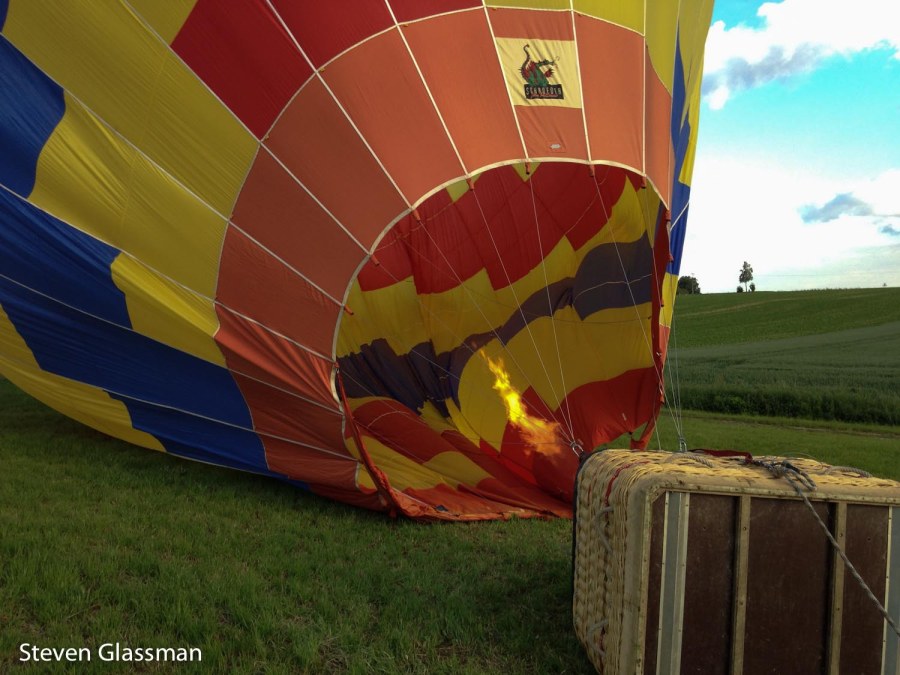
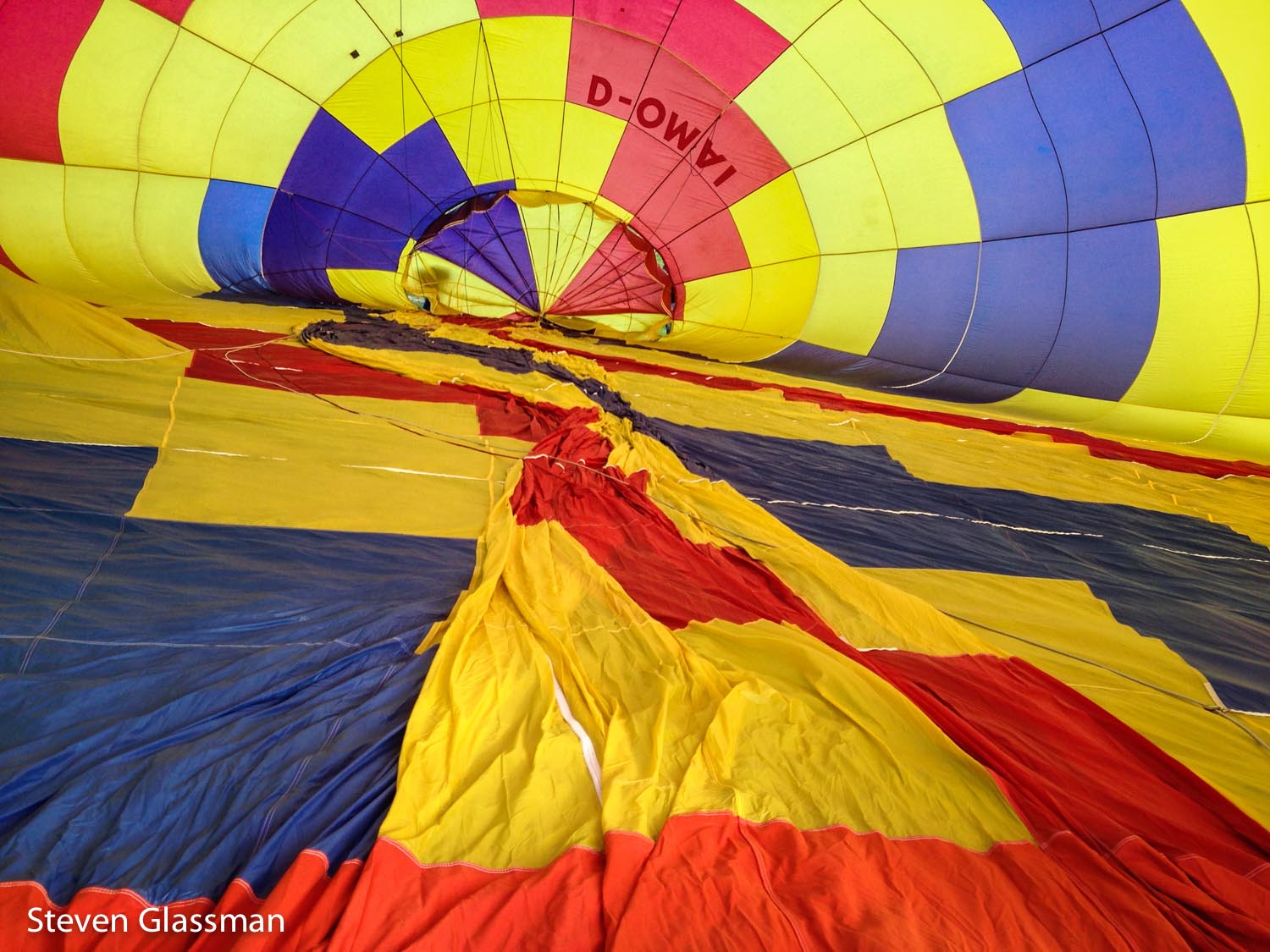
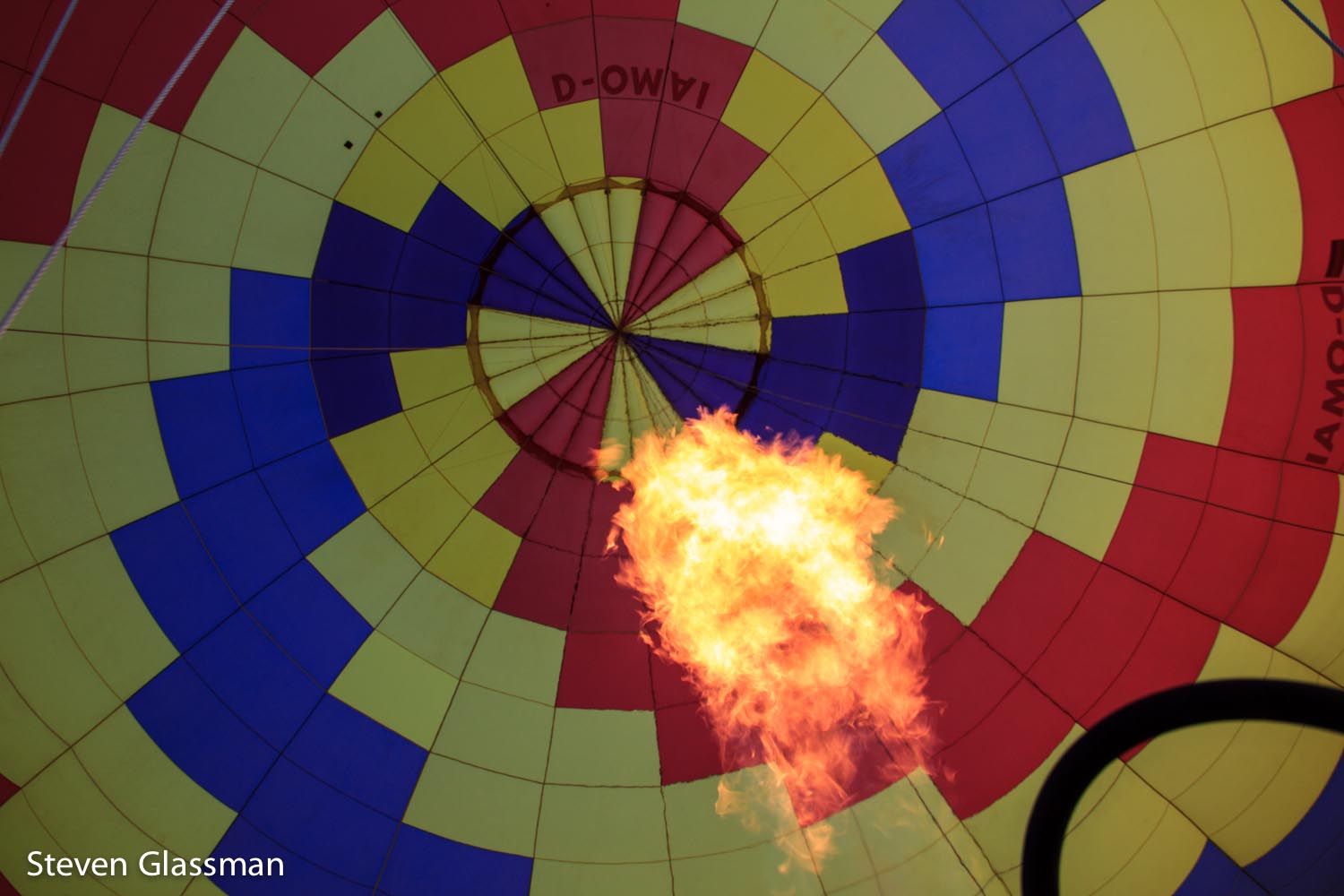
After enough  inflation is done with the fan, the flame jets can be used to heat the air inside to give it lift.

ballooning-5

The burners actually have very fine control-  they can do hotter blue flame or cooler (but more visible and thus cooler looking) yellow flame.

ballooning-6

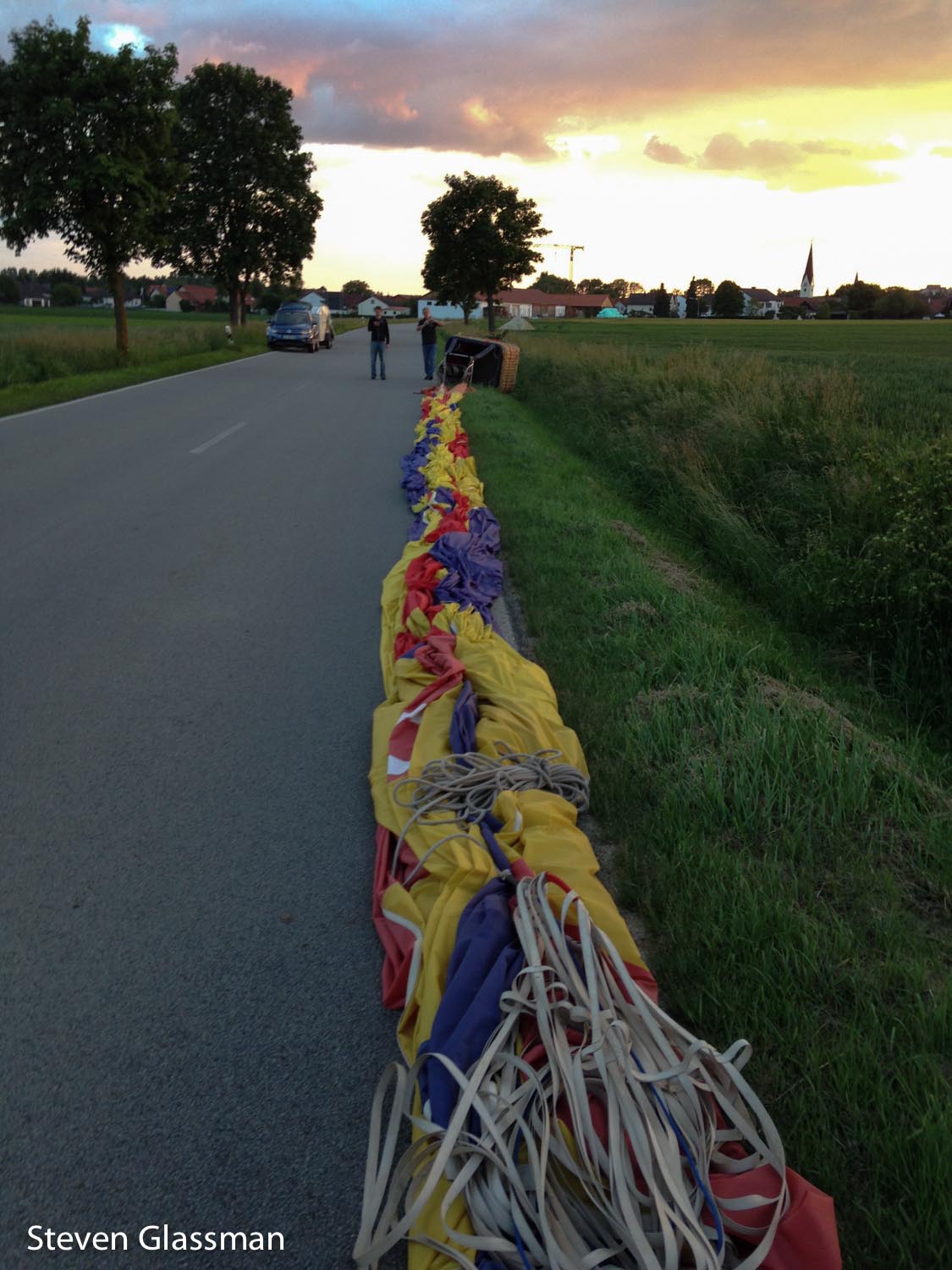
Lift off was quite subtle-  there’s no acceleration like an airplane.  One minute you’re on the ground, and the next you simply aren’t on the ground any more. Once we were aloft, the navigation was simply based on which way the wind was blowing.  The blue vehicle with the white trailer is the balloonist’s partner following along from the ground.     They kept in contact via nearly functional radios.

ballooning-7

Once we were fully aloft, the view was pretty spectacular.  There was, surprisingly, no wind noise at all because we were moving at the speed of the wind.  It was very quiet, except for the occasional use of the burner to adjust our altitude.  It also wasn’t cold, to my surprise, because of the burners.  Incidentally, the plume of steam coming up from the ground in the far distance is a nuclear power plant.

ballooning-1

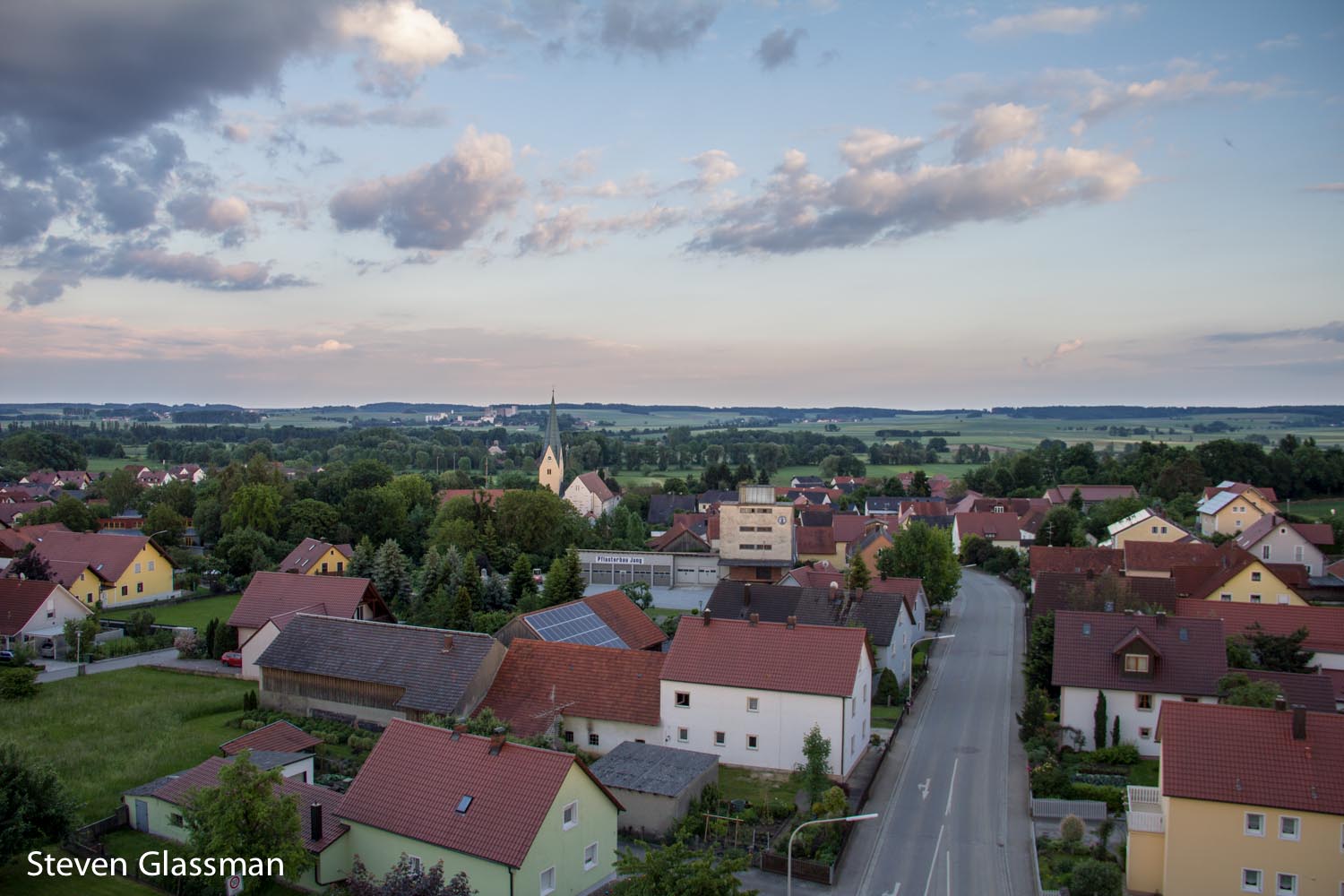
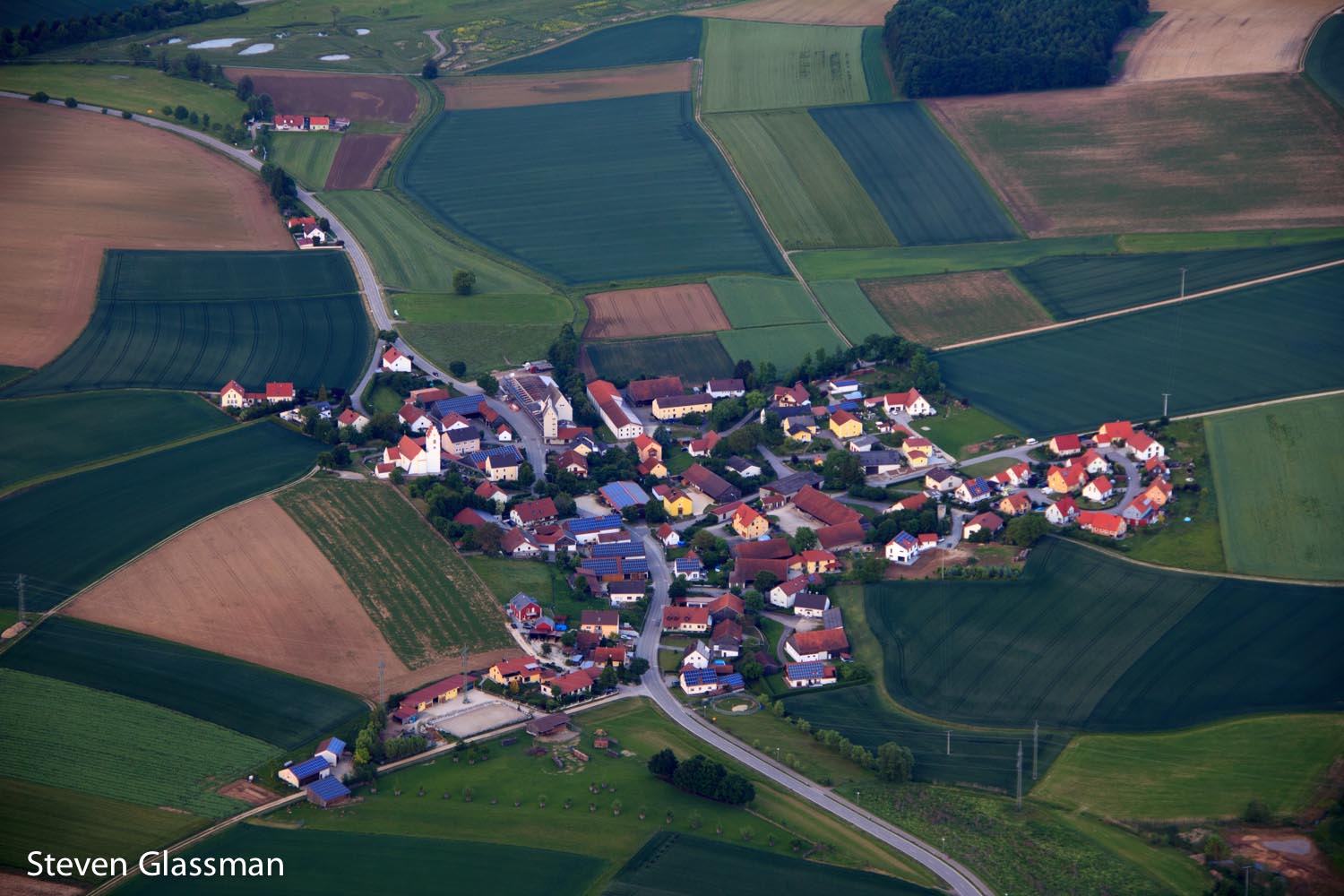
In this part of Germany, there are really only a few larger cities.  Most of Bavaria is really just villages of various sizes surrounded by fields of crops.  This was only fifteen or twenty kilometers outside of the center of Regensburg.  I’m not actually sure what village we’re looking at in this photograph.  From above, they all kind of look alike.

ballooning-8

This field, I am told, is where the Battle of Regensburg took place in 1809.  This is where Napoleon was shot in the ankle, apparently.

ballooning-9

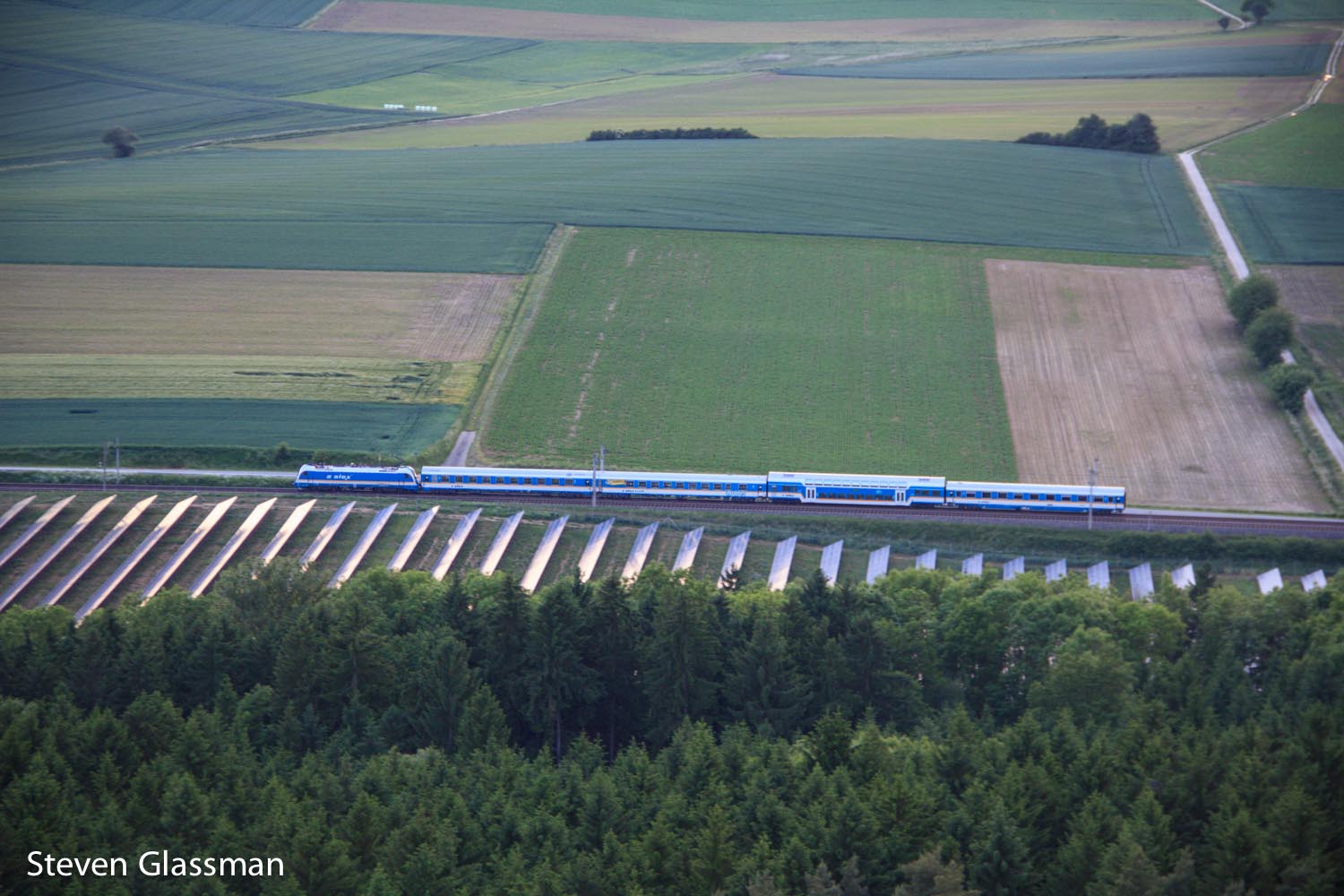
Fields of solar panels are a common sight in Germany.  I didn’t realize until we were directly above one that sheep sometimes graze in between the panels.  Much easier than using a lawnmower around the solar panels, I imagine.

ballooning-10

Just after we passed the field of solar panels and sheep, two trains passed, one in each direction.  The first one was a longer Munich to Prague commuter line, and the next was a shorter commuter train which probably only went from Landshut to Munich.   The furthest wagon to the left is the engine, and the second from last is a two level wagon with upper deck seats.  The other three wagons all contain compartments of six seats each, which is much less fun than the double-decker wagon, but is much much quieter.

ballooning-11

After a while in the air, we had to look for a place to land.  This is the tricky part-  you have no steering other than the wind, and you want to avoid crops and powerlines.  Ideally, you need another field of just-grass.   While we were looking for a place to land, we passed fairly low over this village.  Lots of people came out to wave at us and shout things.   Most people are kind of fascinated to see a hot air balloon, particularly one this close.

ballooning-12

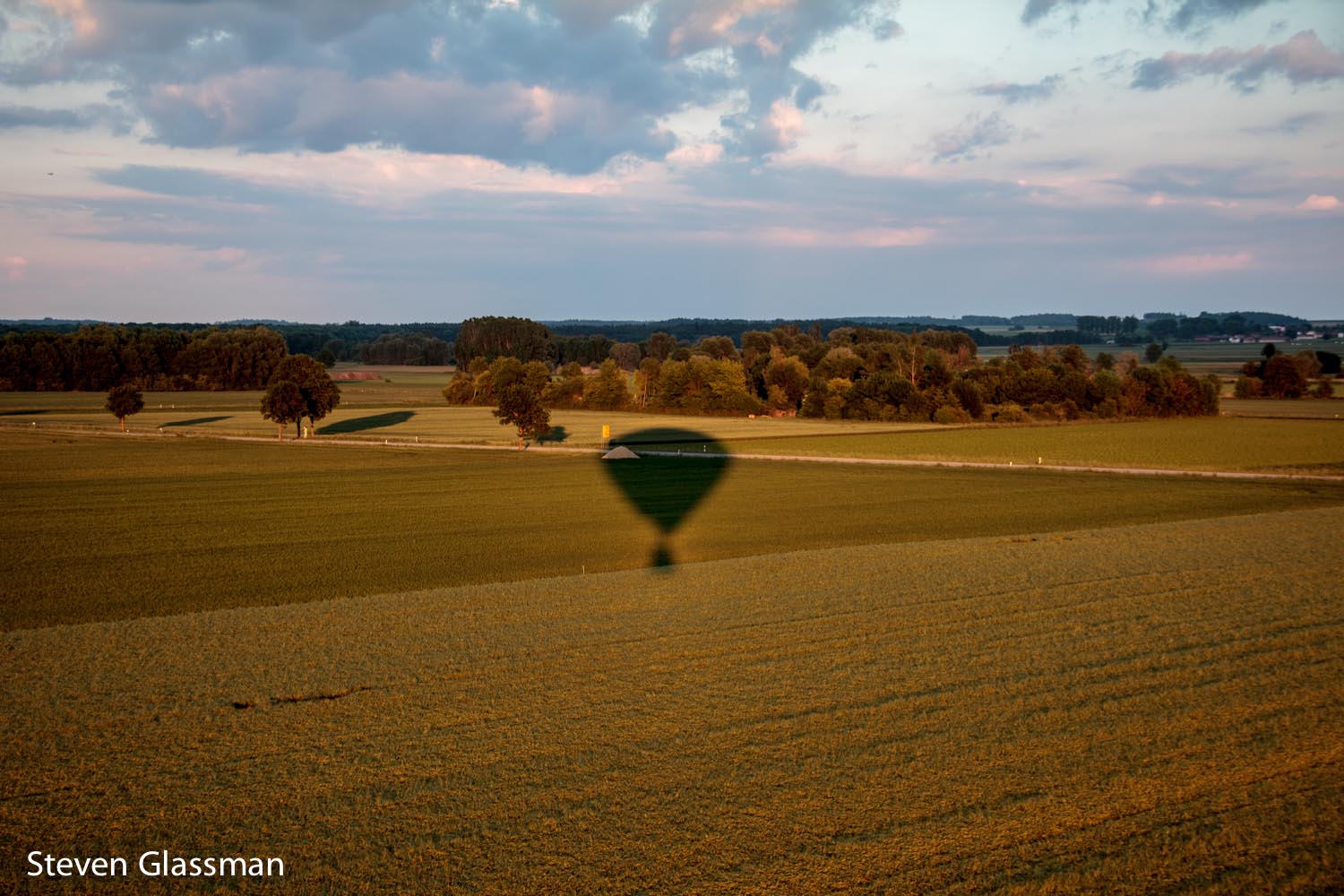
As we approached an ideal landing spot, the sun was low on the horizon and we got some pretty neat perspectives.

ballooning-13

After landing successfully at the edge of a crop field, we were joined by some neighborhood children who wanted to watch us break down and pack the balloon.

ballooning-14

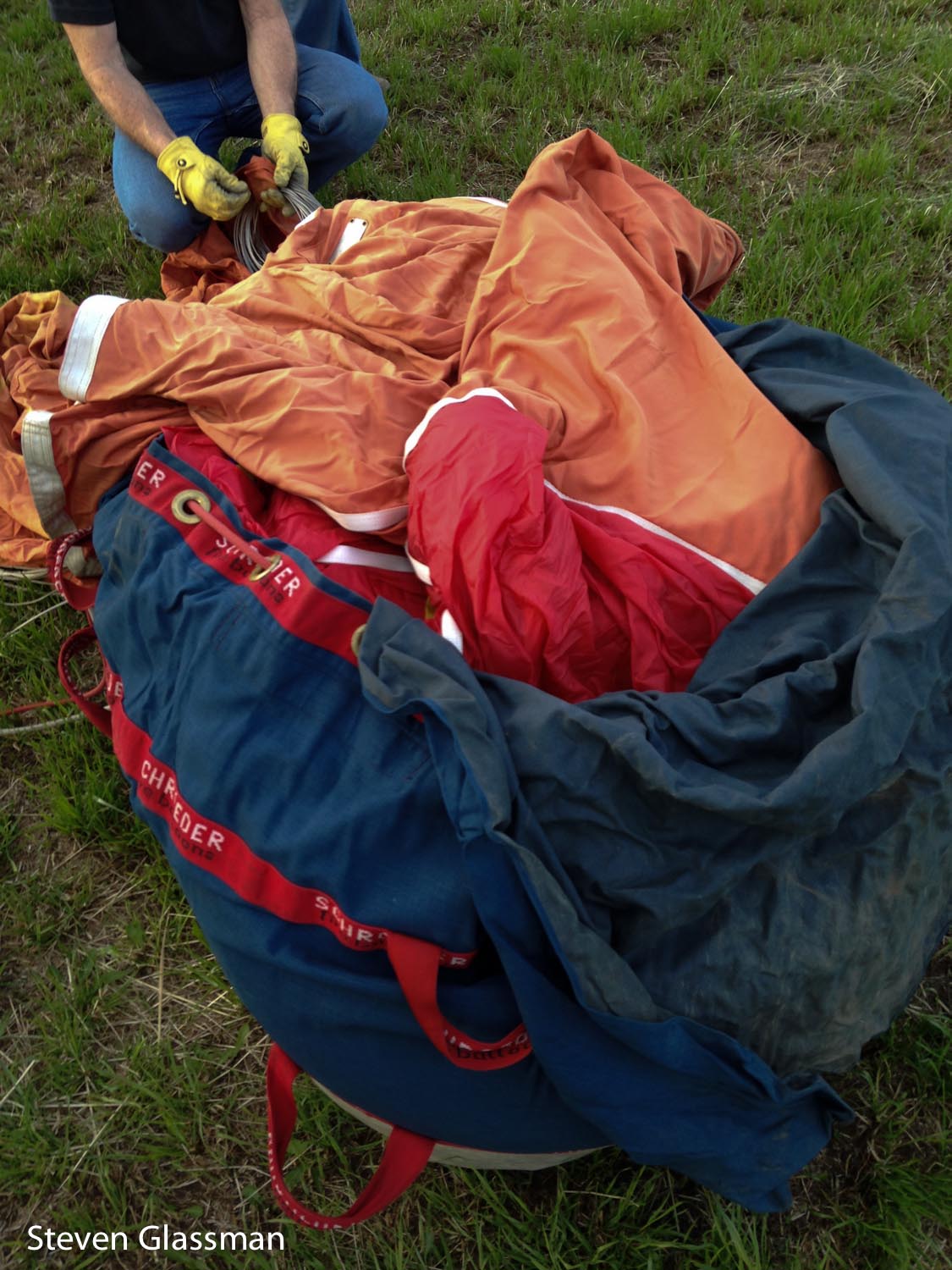
Once the enclosure was completely deflated, the balloonist scrunched it together to prepare it to go back into the canvas bag.

ballooning-15

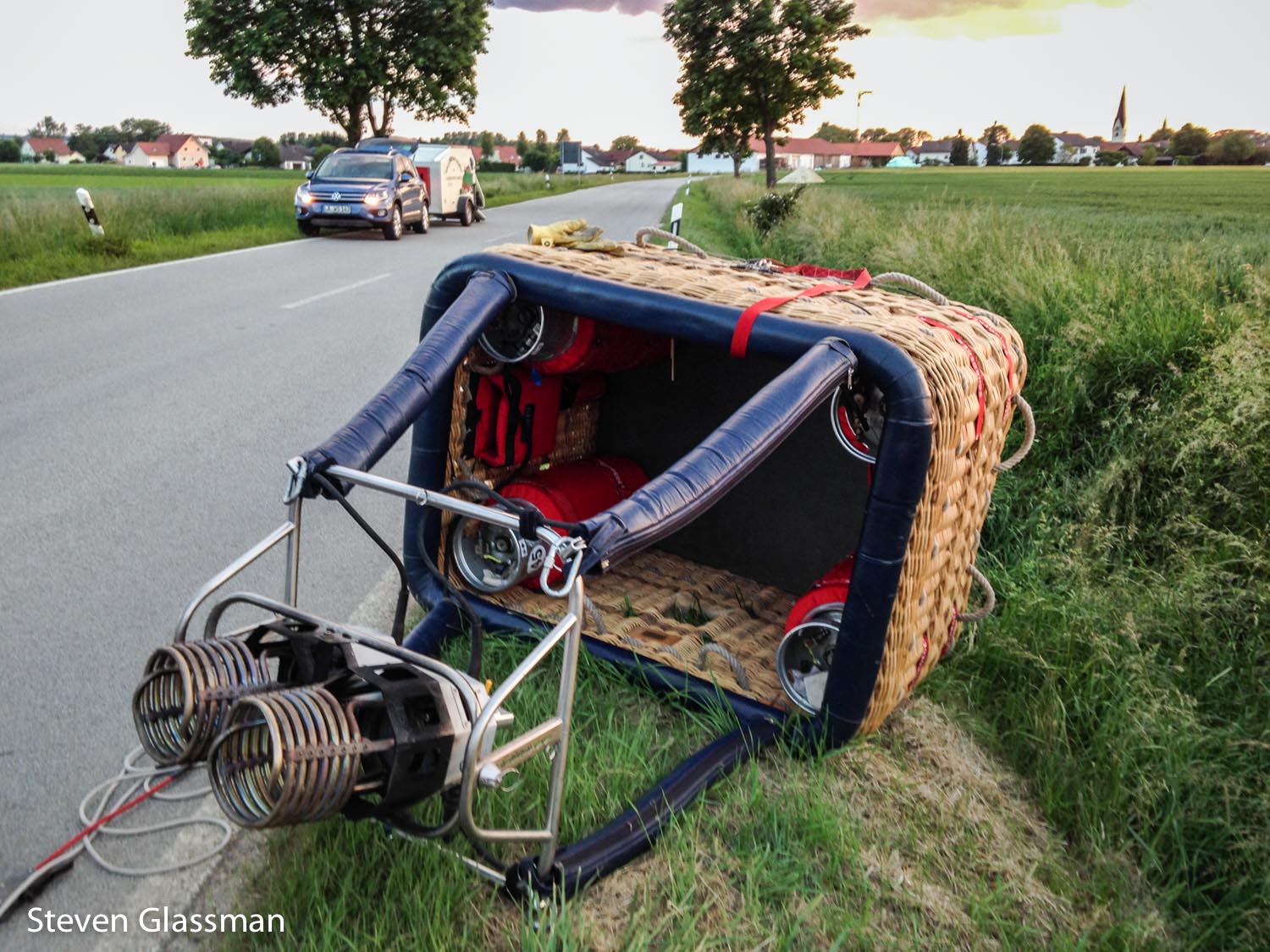
Last, but certainly not least, our wicker steed was ready to be disassembled and put back into the trailer.  This is the point at which a carload of random dudes wearing Lederhosen pulled up and helped us muscle the thing back into the trailer.  Bavaria is a ridiculous and hilariously fun place at times.

ballooning-16

Have you ever been up in a hot air balloon?

Nordic Adventure, Part 2: Stockholm

After spending a couple of days in Helsinki, I went on to the next stop in my trip:  Stockholm, Sweden.  Stockholm is a beautiful city, which may be why they have more gypsy beggars per square meter than any other city I’ve seen on this continent. As with Helsinki, my photographs in this post aren’t in chronological order.

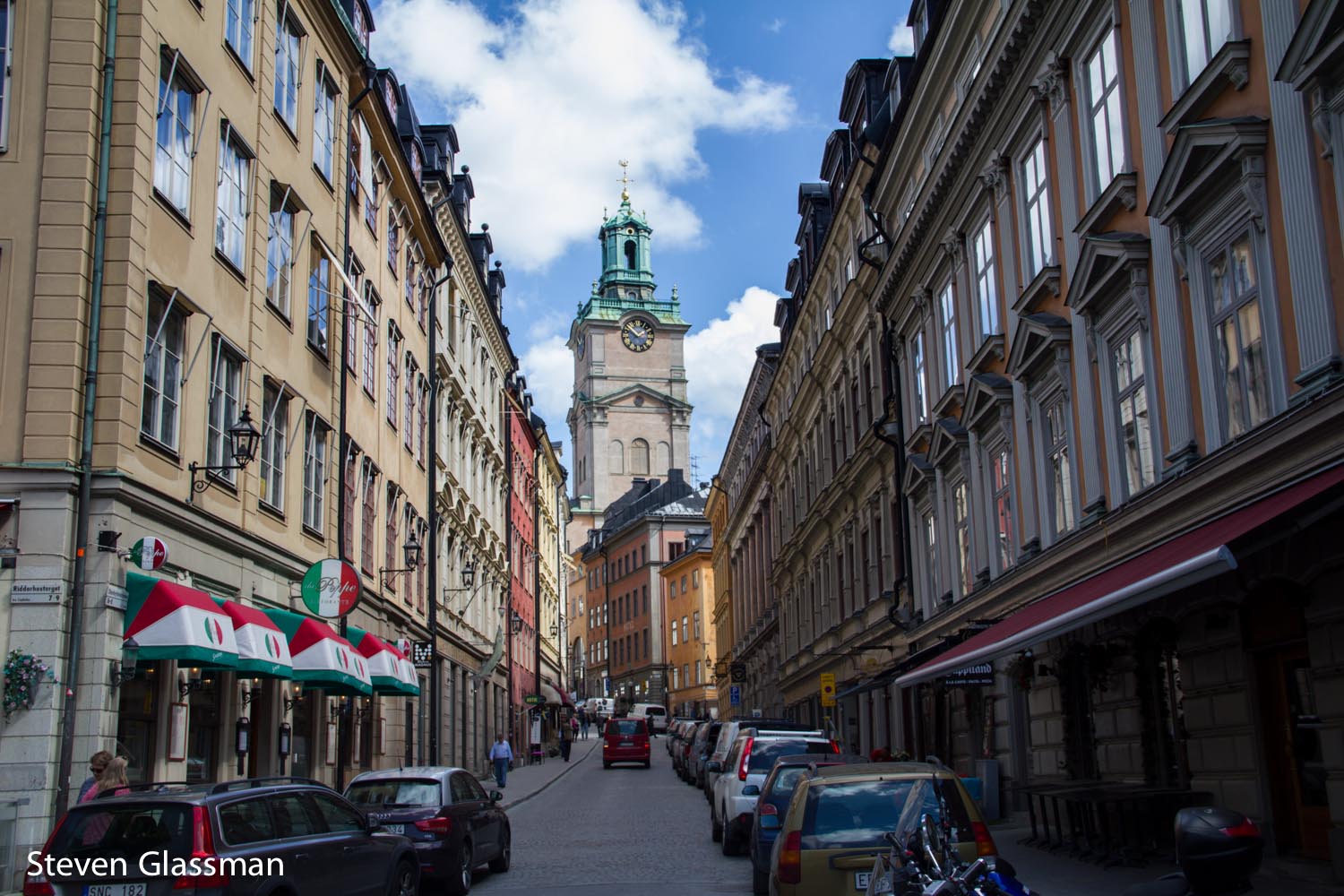
The northern part of the old city in Stockholm is an island called Gamla Stan.  The Royal Palace and Parliament are in Gamla Stan, along with lots of narrow streets and cobblestone.  Much of it dates from the 1600s and 1700s.  For example:

stockholm-13

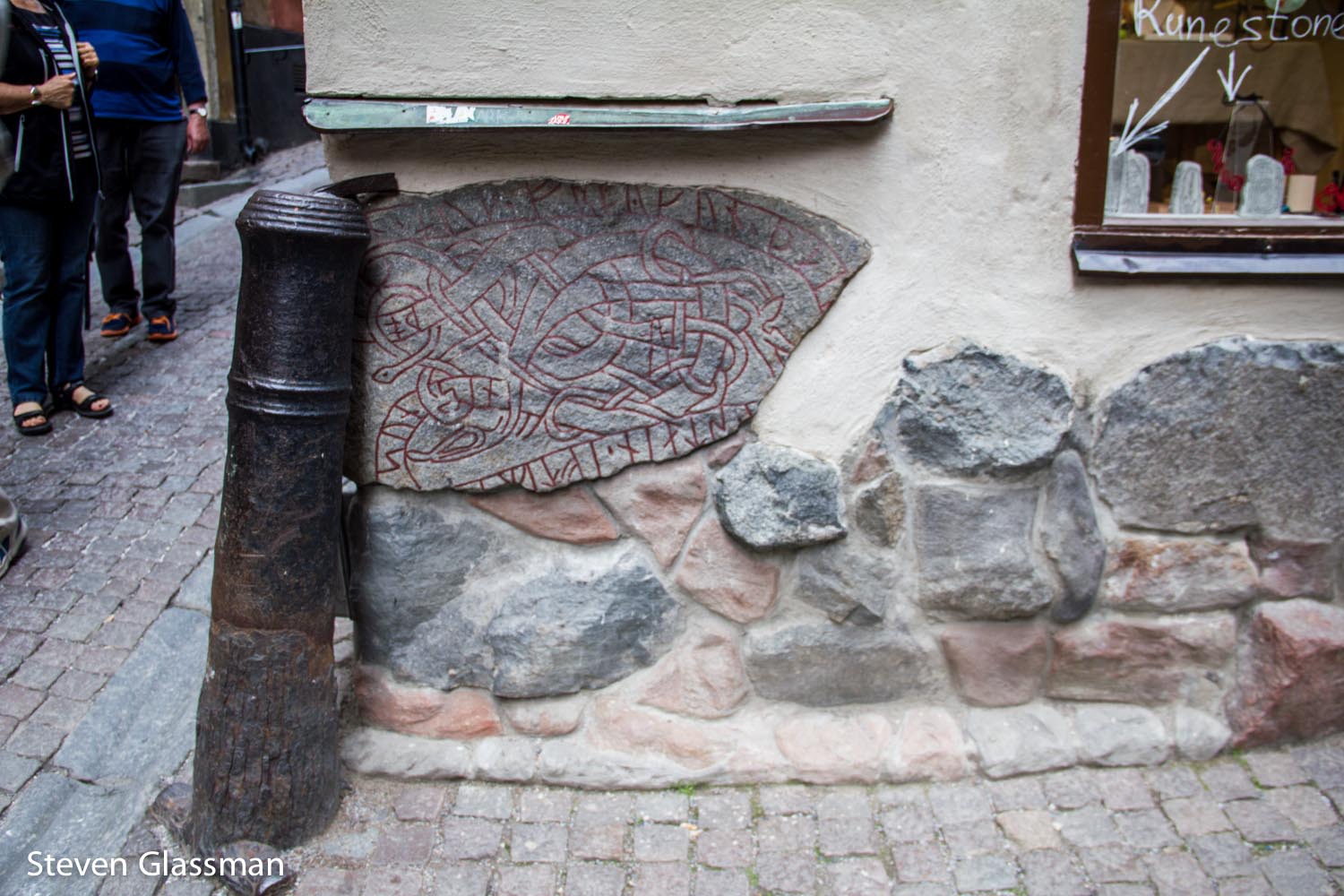
There are also Viking rune stones in various places around Stockholm.  This one is actually embedded into the foundation of a building in Gamla Stan because someone in the distant past decided to relocate it from its original resting place.  Rune stones are often memorials to the dead, but this is not always the case.    This particular stone is a fragment; the part which is readable translates to “Torsten and Frögunn had this stone raised after their son.”

stockholm-14

This is Tyska Kyrkan, the old German church.  The section of Gamla Stan containing this church has streets named after German iron merchants and craftsmen who settled in the city

stockholm-15

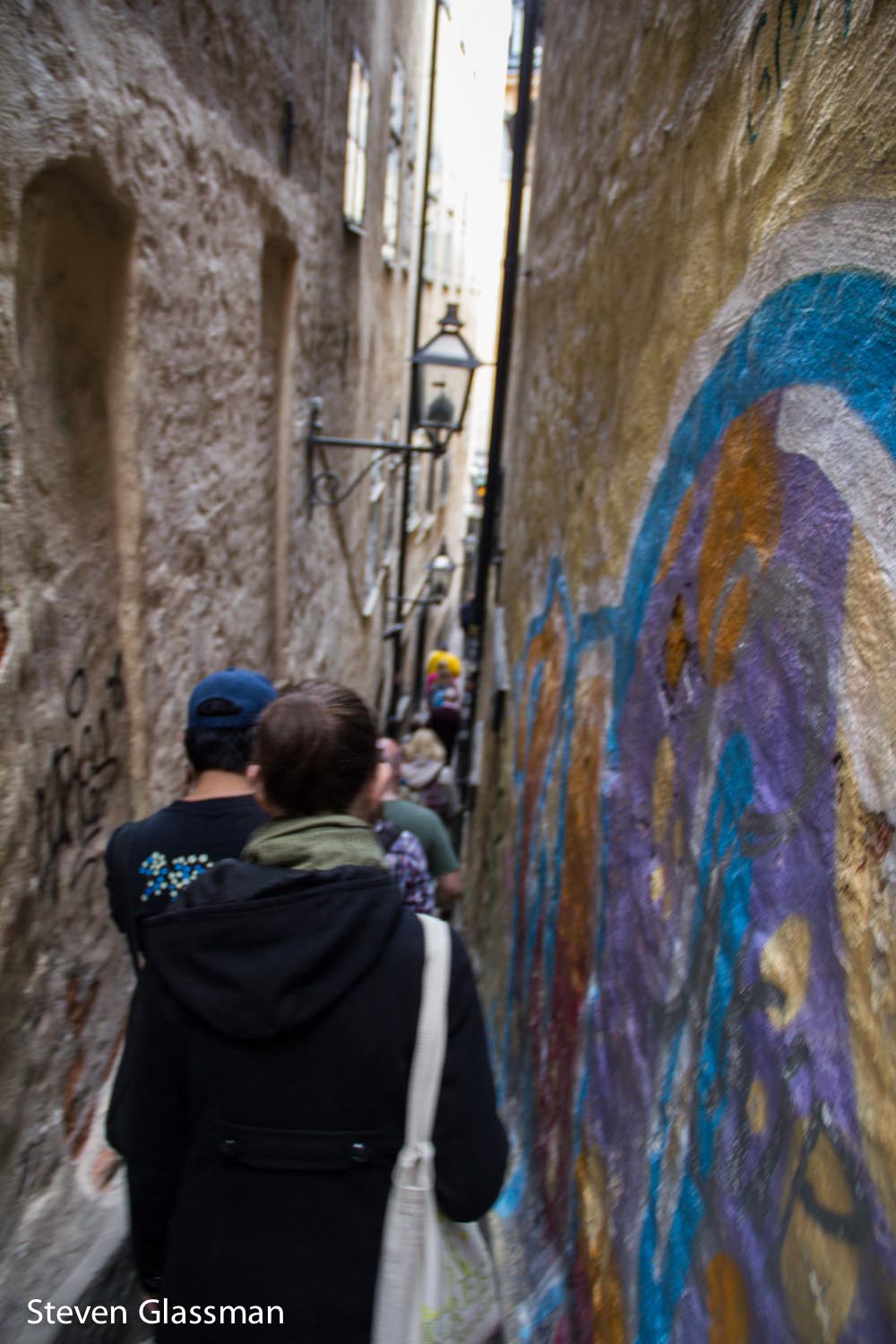
This is the narrowest street in Stockholm, at a width of 90 centimeters.

stockholm-16

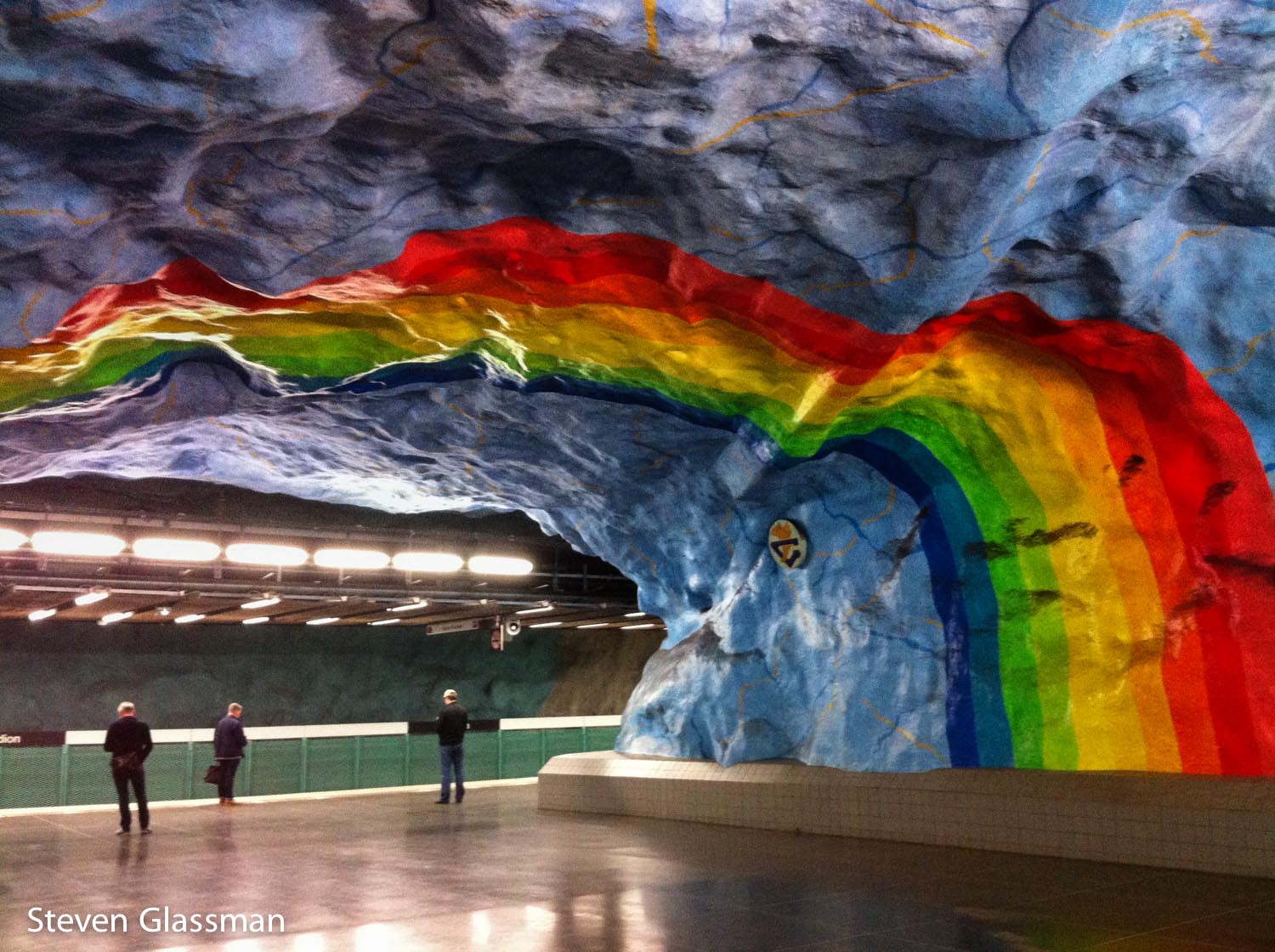
This is one of the metro stops in Stockholm near my hotel in Karlaplan.  I just thought this was a really nifty looking metro station.

stockholm-17

This building is the Town Hall. The thing at the top is three crowns, which is a commonly used logo for the city.

stockholm-21

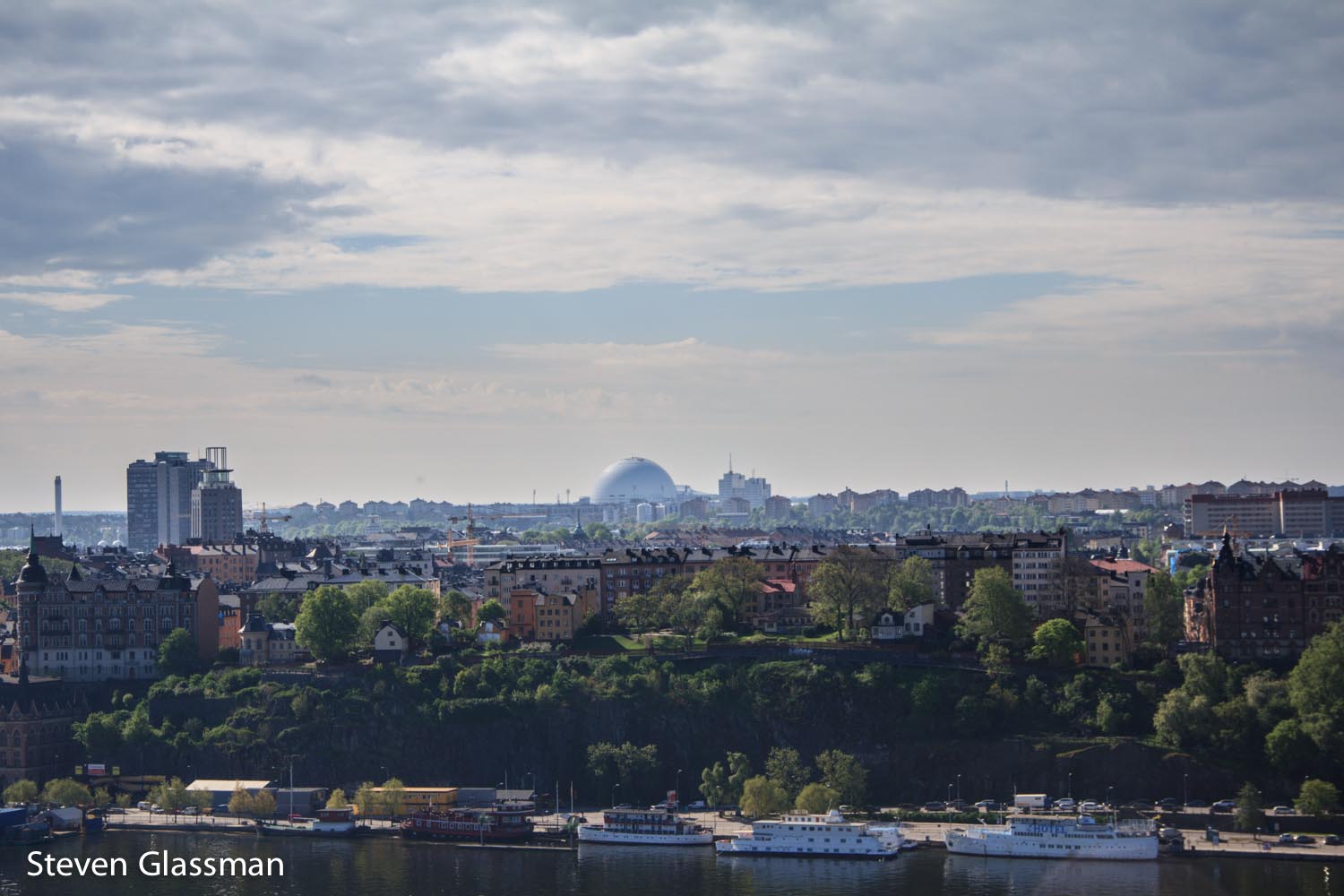
Of course you can climb the town hall.  It’s a lot of steps, but it’s well worth it because you get a view like this.

stockholm-18

Off in the distance, you can see the Ericsson Globe, which is a concert venue.  It also has a nifty attraction attached called SkyView, which I visited later.

stockholm-19

This is the SkyView at the Ericsson Globe.  There are two spherical capsules on custom-built tracks which go up the side of the building to get a 360 degree view of Stockholm from the top.  This is fabulous, but it’s pretty far outside the center of the city, so the view isn’t as nifty as I would have hoped.  Still, this was worth it for me because: tall places!

stockholm-26

Inside the Town Hall tower, there are artifacts from the history of the city.   I especially liked the sculpture of the very tall warrior.

stockholm-20

The Djurgården is an entire island which was once a royal hunting ground.  In modern times, the Skansen open air park, the ABBA Museum, and the amusement park Gröna Lund are on this island, along with the Vasa Museum which I mention below.  Sometime in the past, a king decided to open the park to visitors, and the Blue Gate was erected.  It has been moved several times, but it is believed that the current location is near to the original one.

stockholm-22

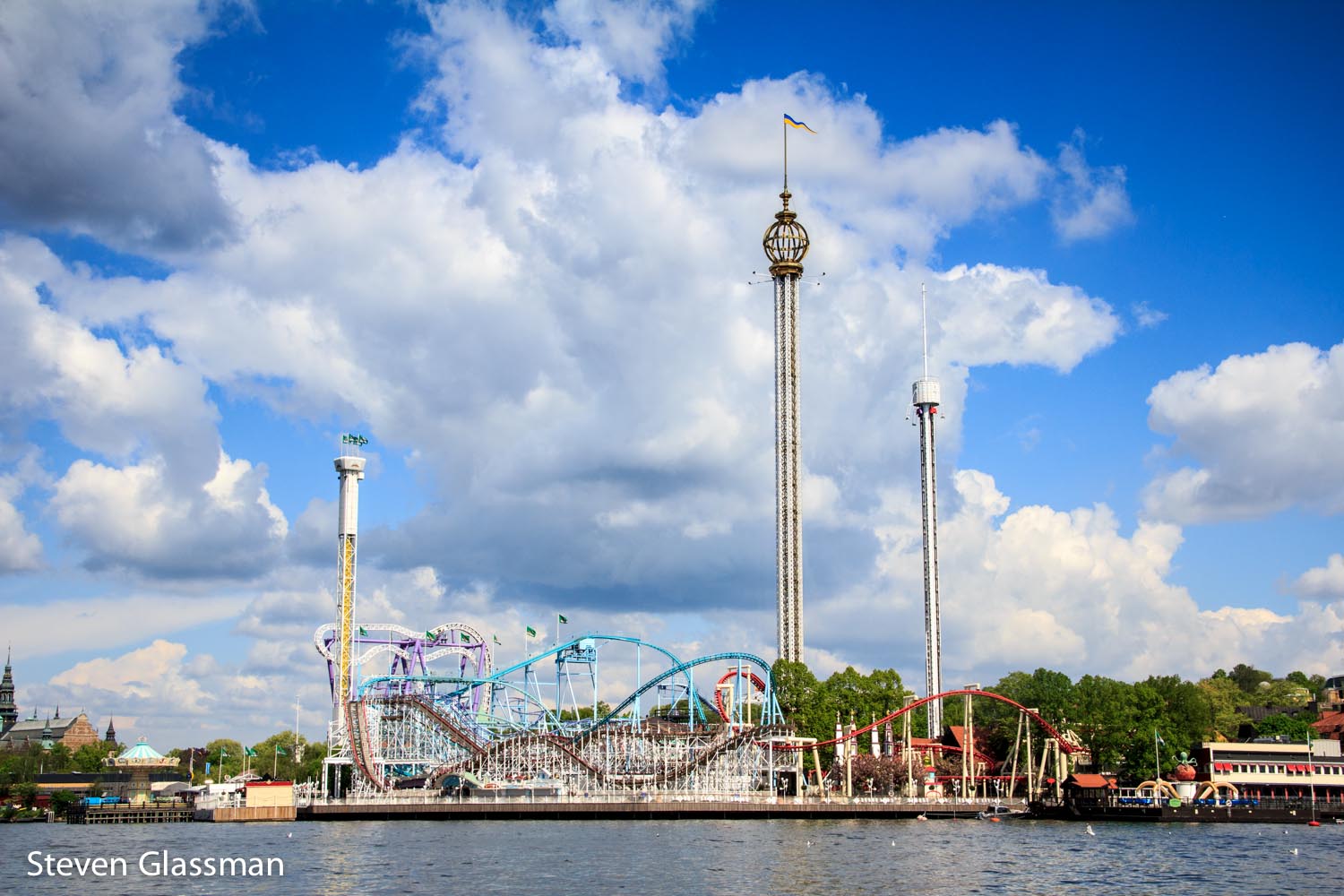
The amusement park Gröna Lund, as seen from the water.  The park is seasonal, and I was in Stockholm too soon to go inside.

stockholm-25

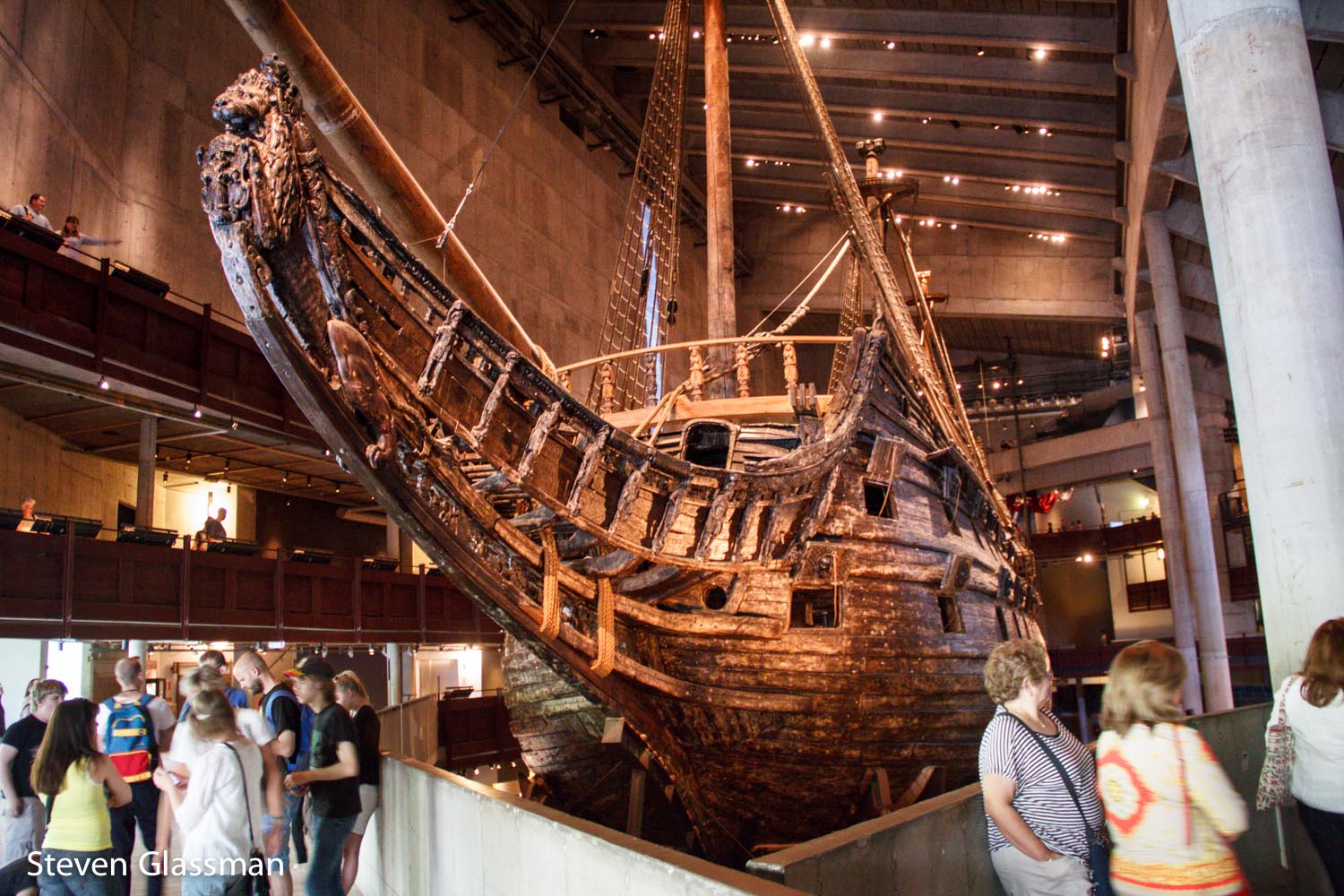
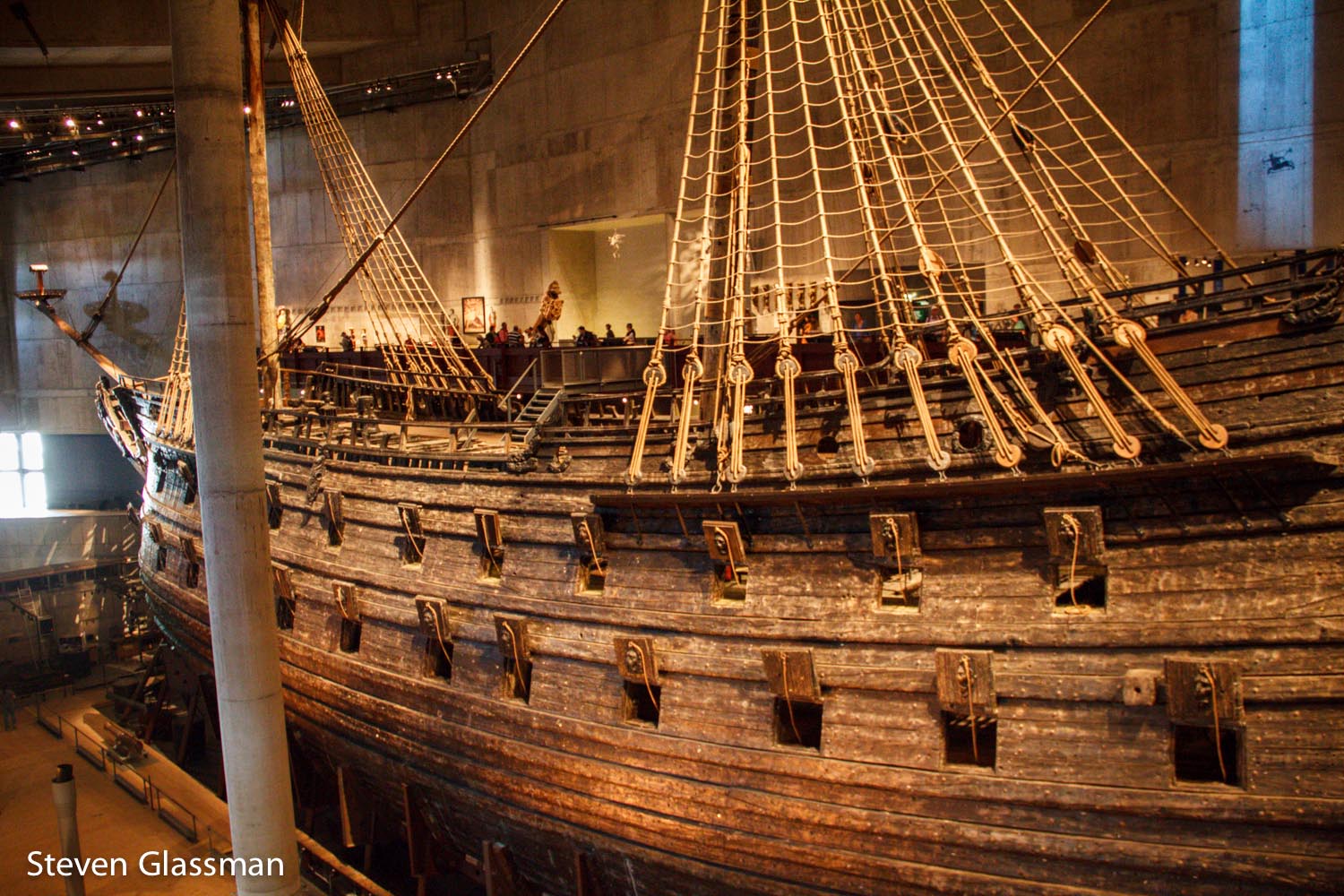
The Vasa Museum is one of the most popular tourist attractions in Sweden.   Here’s why:  The Vasa is a warship which set sail on her maiden voyage on August 10, 1628, and about a half hour into the trip, she sank into Stockholm Harbour.  333 years later, she was raised, restored, and a museum was built around her.   The vessel is something like 98% original parts with a coat of sealant for the wood, but they had to redo all the rope bits.

stockholm-27

There are models showing the process of raising the Vasa from the bottom of the harbor.

stockholm-28

The ship is huge.

stockholm-29

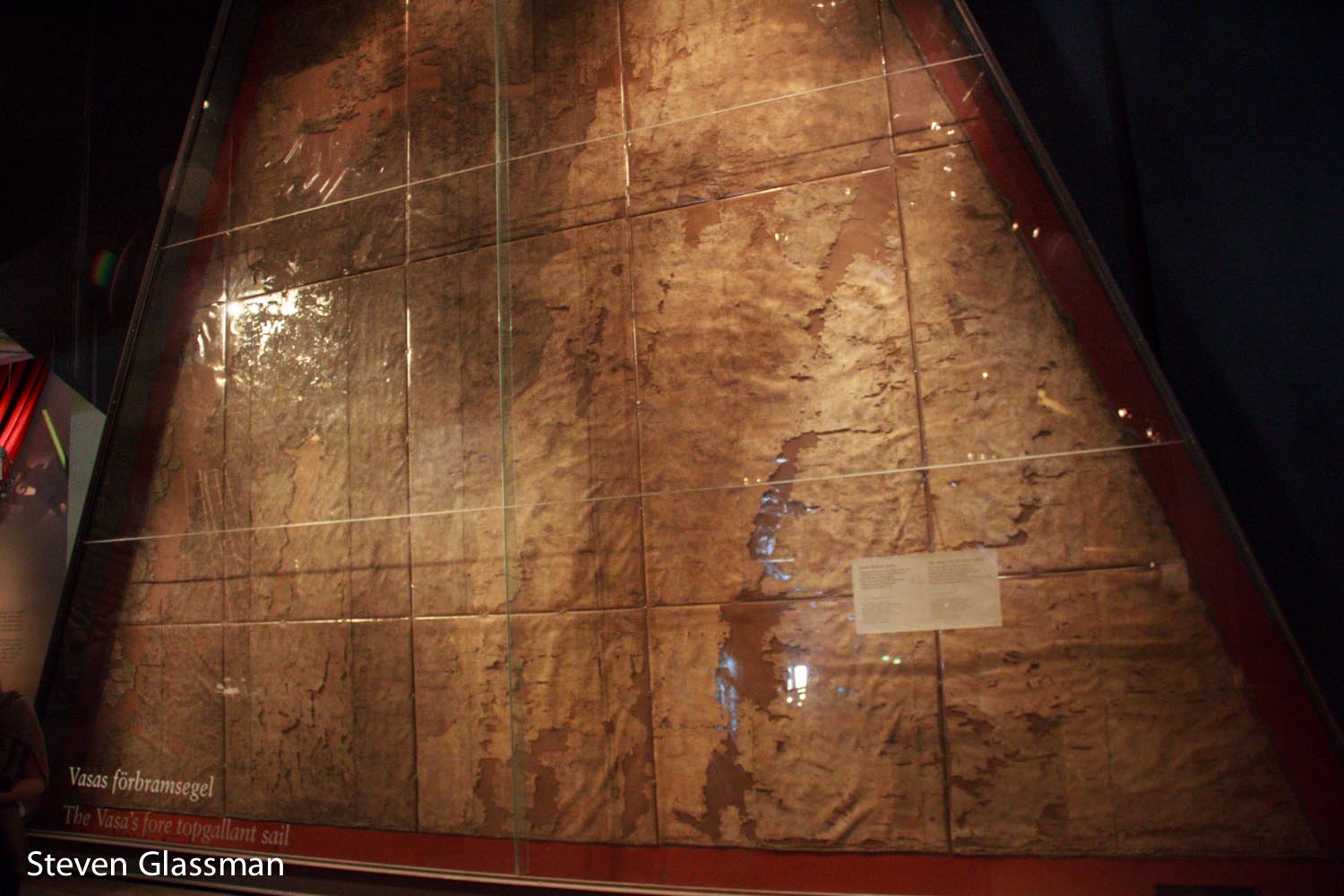
The original mainsail was not intact enough to stay on the displayed vessel, but they put it in an environmentally controlled glass case so you can still see it.

stockholm-30

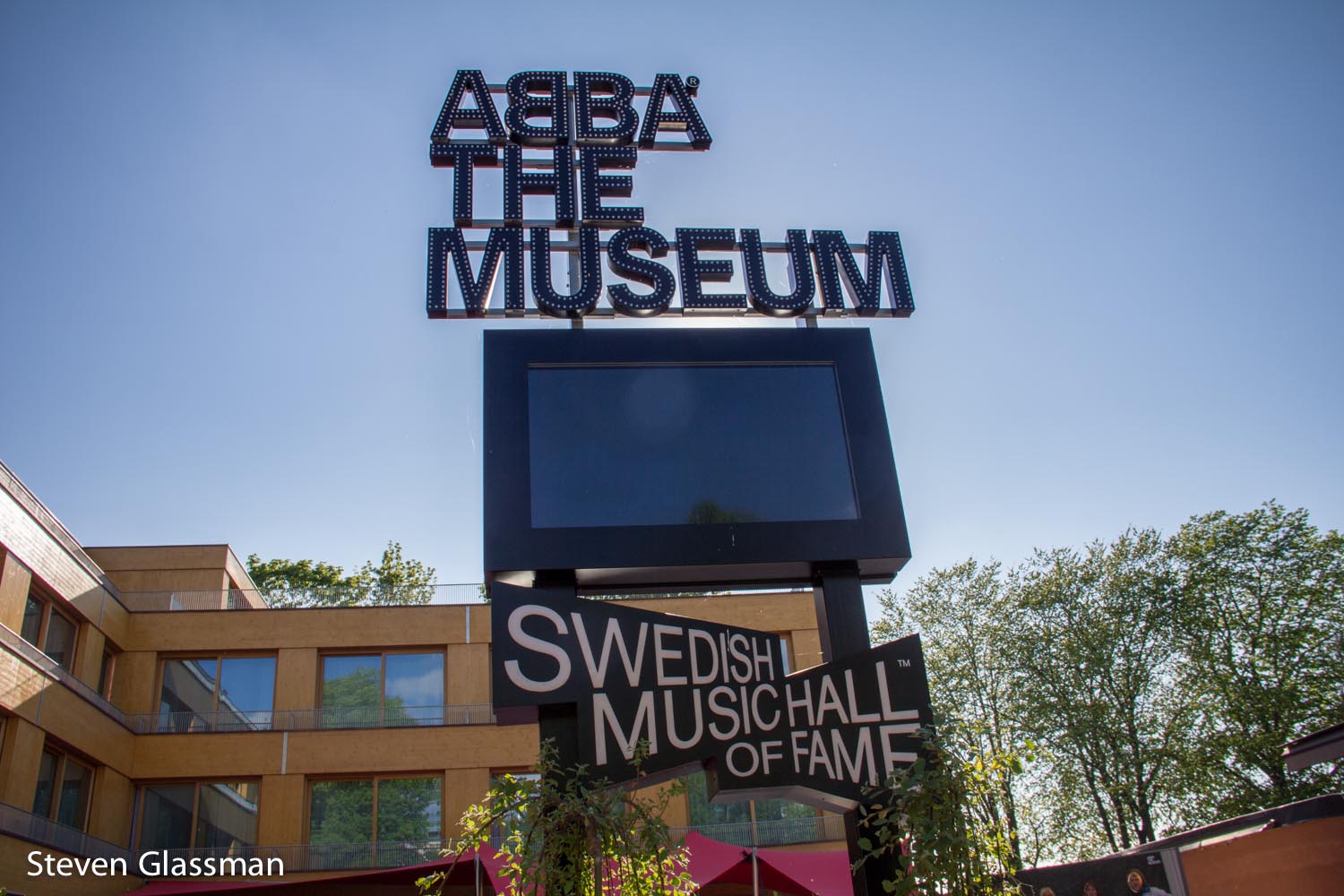
I did not actually go past the lobby of the Abba Museum because it was too late in the day, but I was sorely tempted to come back.

stockholm-31

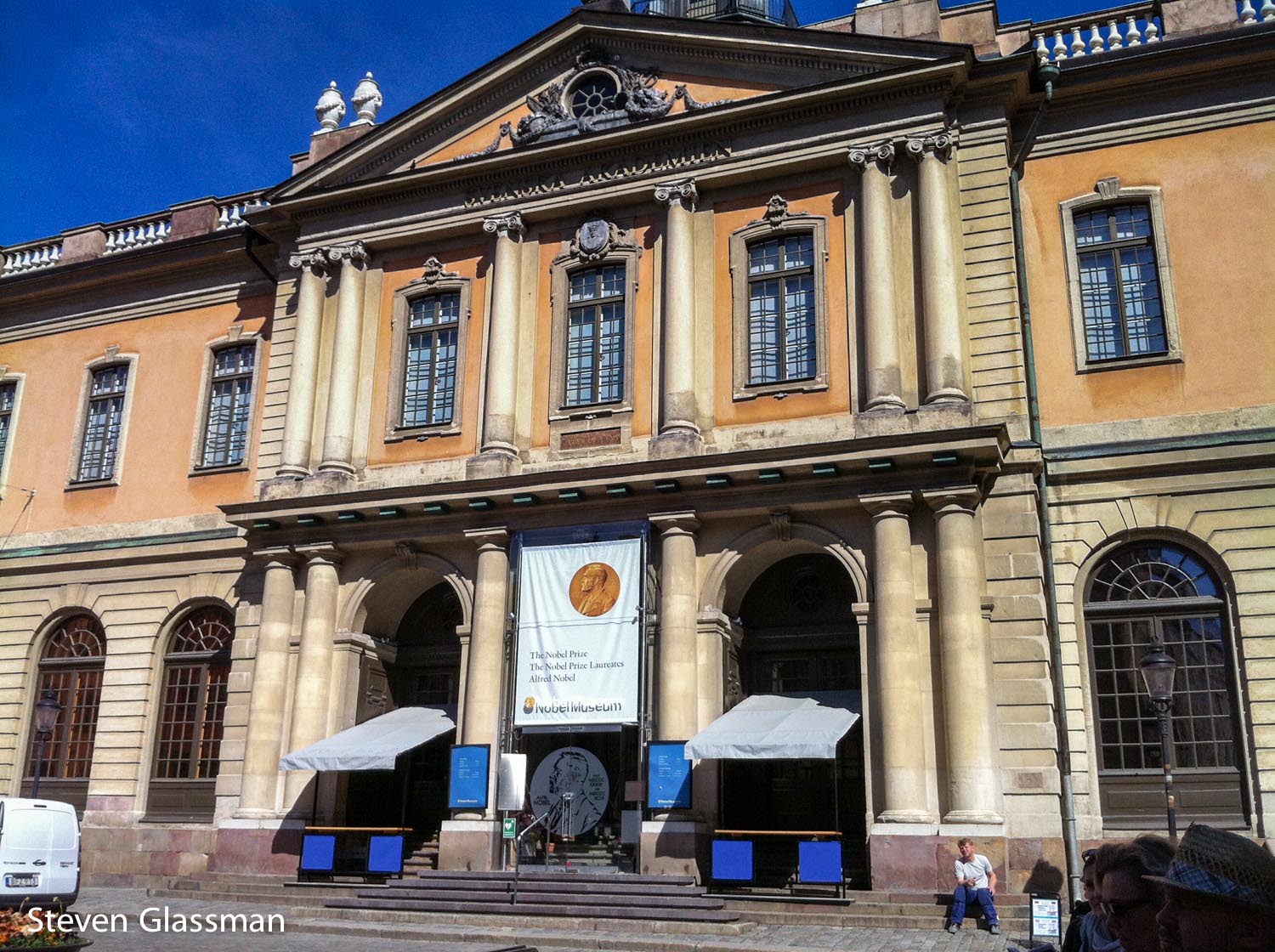
Meanwhile, back in Gamla Stan,  the Nobel Museum contains details about the Nobel Prize and its founder, Alfred Nobel.  I had no idea before this trip that Alfred Nobel invented dynamite and gelignite, or that he owned armament factories.  He was once nicknamed the Merchant of Death, despite being a pacifist.

stockholm-32

Each of the more than 800 Laureates who has been awarded a Nobel Prize so far is presented in a random order, with a portrait and a prize citation.  The portraits move around the museum on a spiral track that loops back to the museum’s center.

stockholm-33

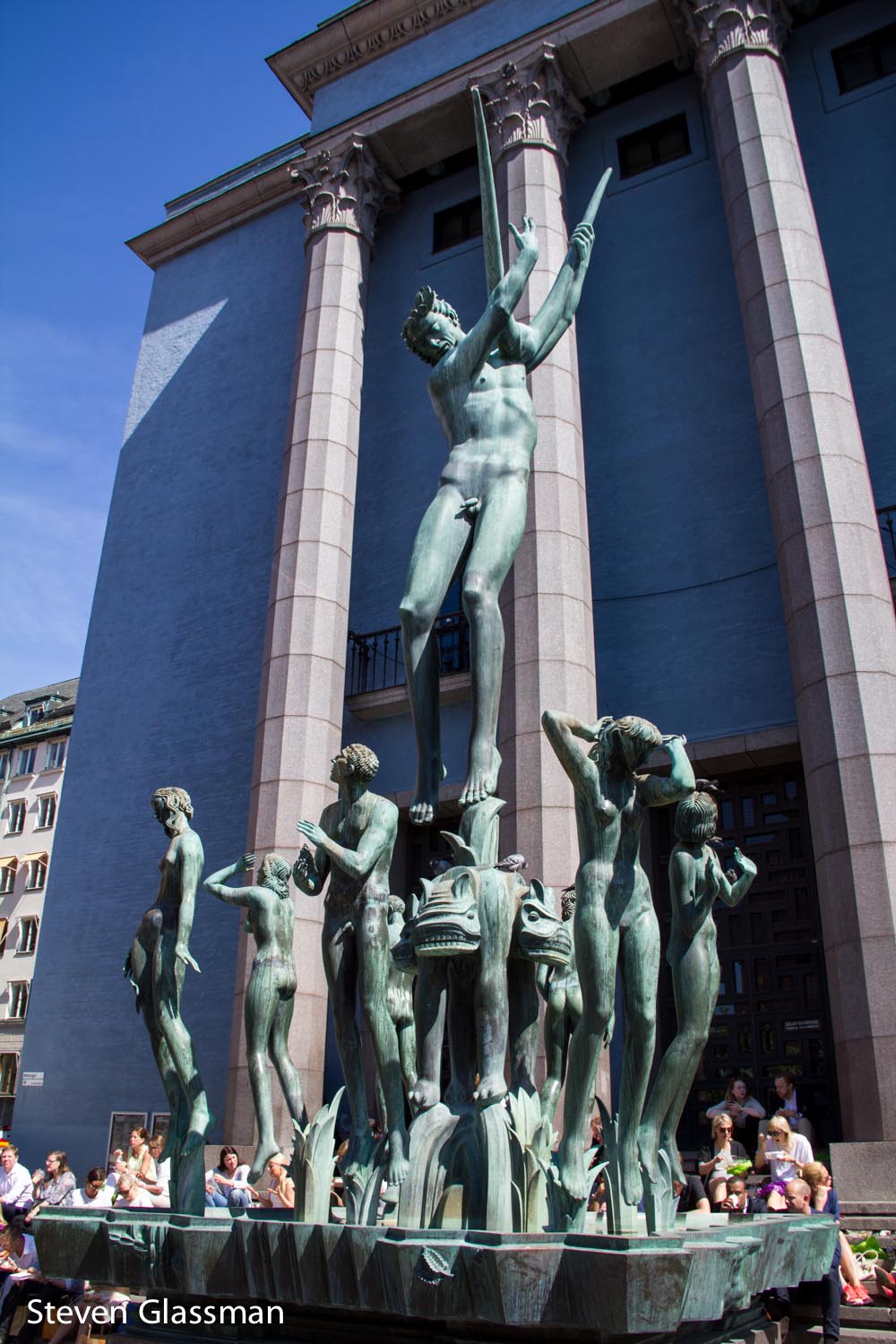
This sculpture represents Orpheus going to hell to bring back Eurydice, surrounded by eight male and female figures.  It stands in front of the Concert Hall at Hötorget in central Stockholm.  One of the male figures has the facial features of Beethoven because the sculptor really liked Beethoven.  I saw this sculpture briefly from a moving bus and I liked it so much that I went back on foot later so that I could get a good picture.

stockholm-34

This sculpture, called Non-violence, is used in various places to represent peace.  It was originally sculpted after John Lennon was assassinated, and there are sixteen of them around the world.  Three of them are in different places around Stockholm.

stockholm-35

This is a typical street in Gamla Stan.  I don’t actually recall why I specifically took this photo.

stockholm-1

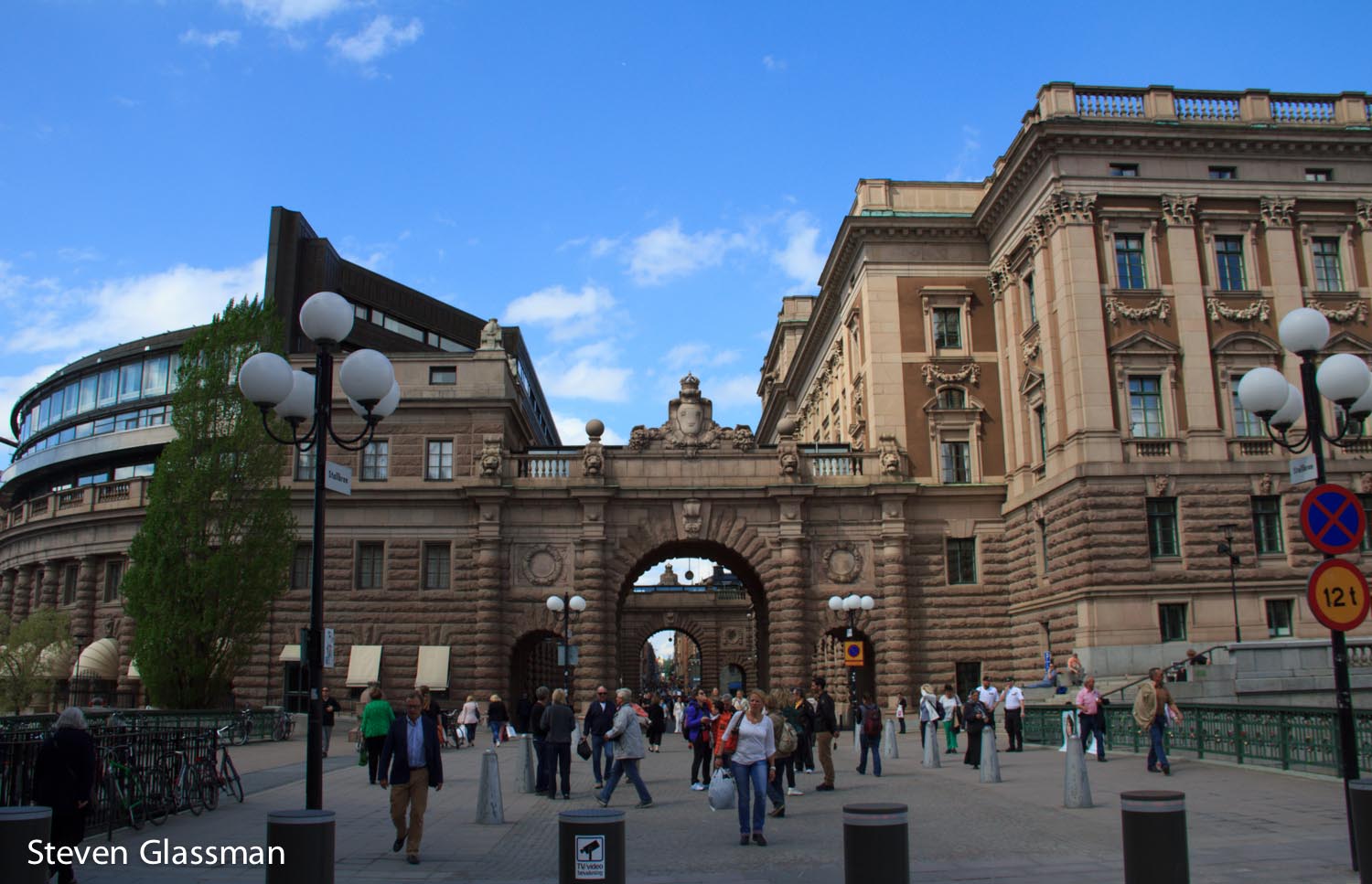
This is the Swedish Parliament in Gamla Stan.

stockholm-2

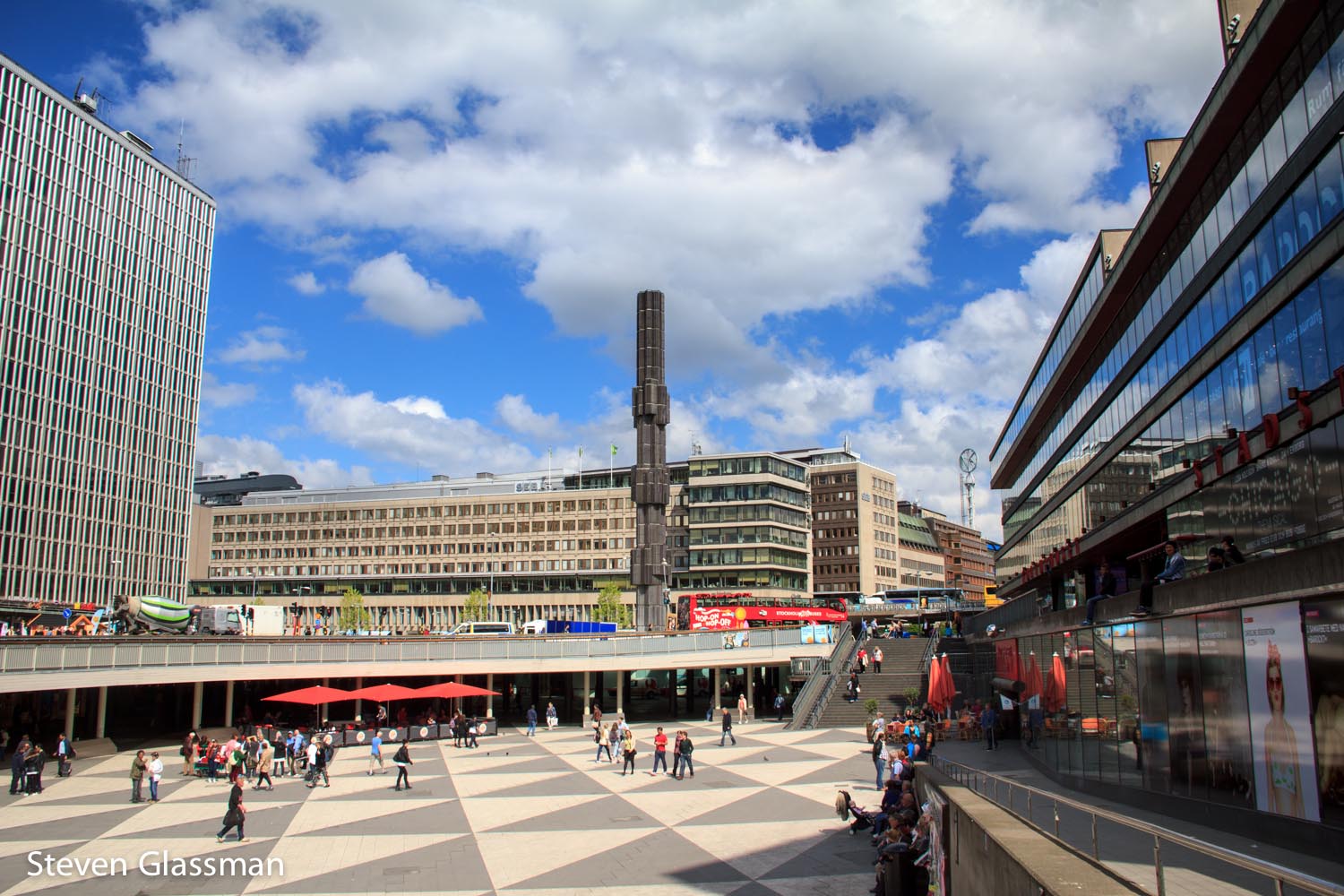
Sergel’s Tor is a popular meeting place.  It’s connected to the main train station for Stockholm, along with shopping, dining, public transportation, and a really nifty tall sculpture thingie.  Also, the building to the right is called the Kulturhuset-  it has exhibitions, a children’s library, and several restaurants.

stockholm-3

One of the tours I took while in Stockholm was the Free Tour with tour guide Ira.  Free Tour Stockholm offers old city and regular city tours, and the whole thing is free- they work for tips.  It was very informative.  In retrospect, I don’t think the girl in the glasses wanted very much to be in my photograph.

stockholm-4

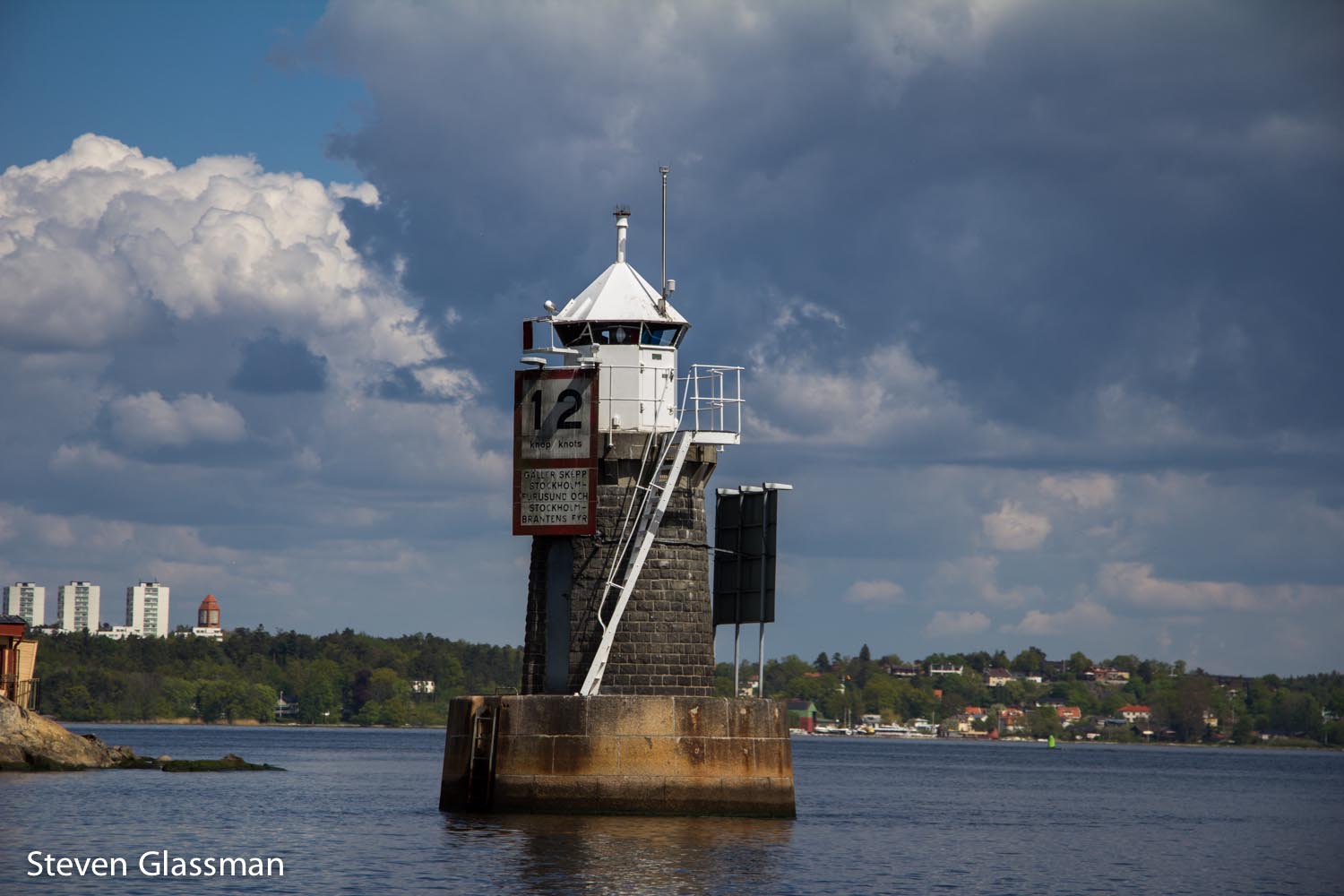
Gustaf Dalén’s lighthouse.  This little structure was set up in 1912.   Dalén won  a Nobel Prize in physics for his work on regulators in lighthouses and buoys.  When this lighthouse was electrified in 1980, it was discovered that the sun valve had been working continuously since 1912 without the need for an overhaul.

stockholm-23

If you have to have a permanent crane on your waterfront, why not paint it to look like a giraffe?

stockholm-24

The Swedish Central Bank, Sveriges Riksbank, is the oldest central bank in the world.  It was founded in 1668.  This is not the original structure, though.  They moved here in the 1990s, I believe.

stockholm-5

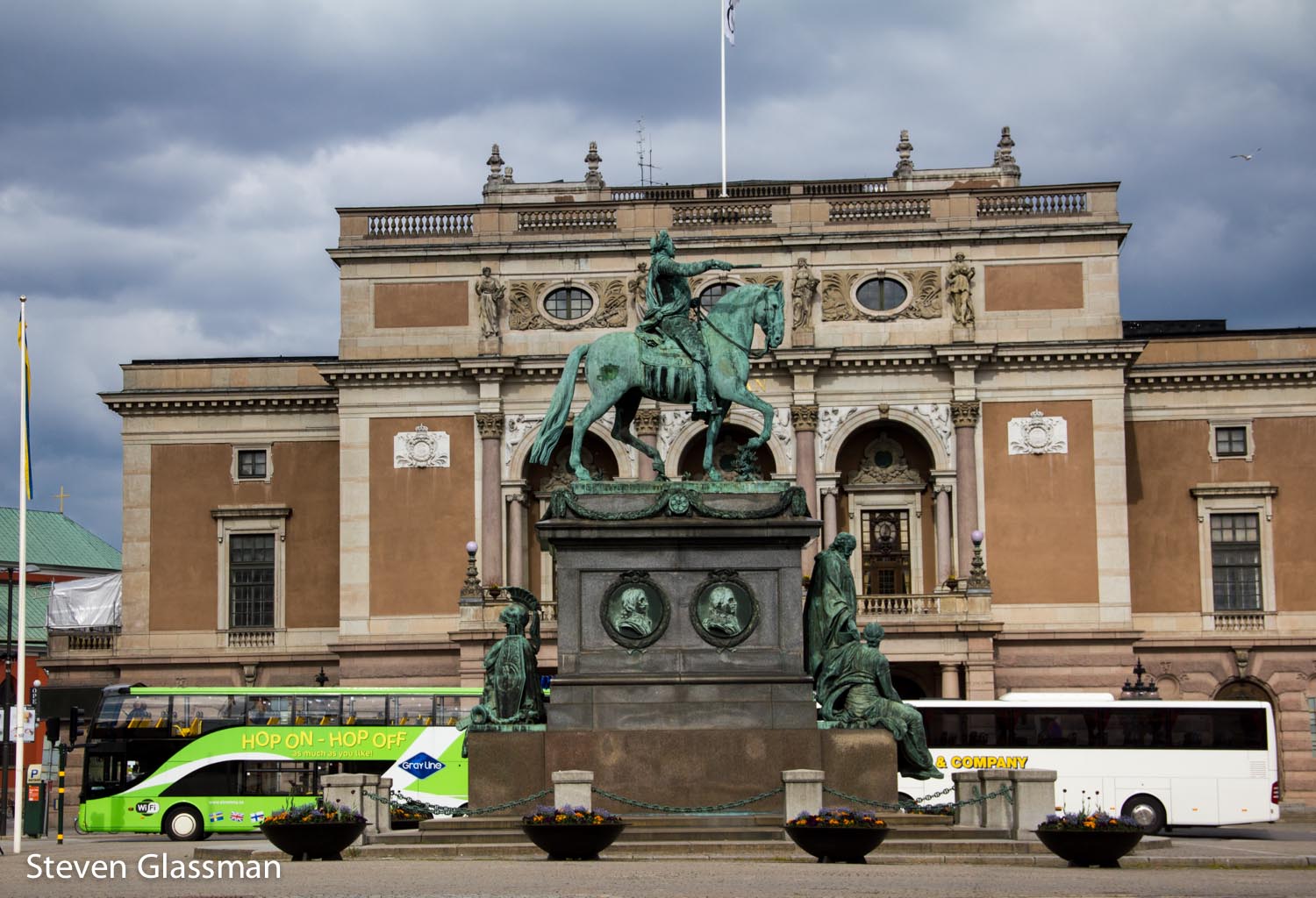
The Monarchy in Sweden is just chockablock with Carls and Gustavs.   This plaza is Gustav Adolfs Torg.

stockholm-6

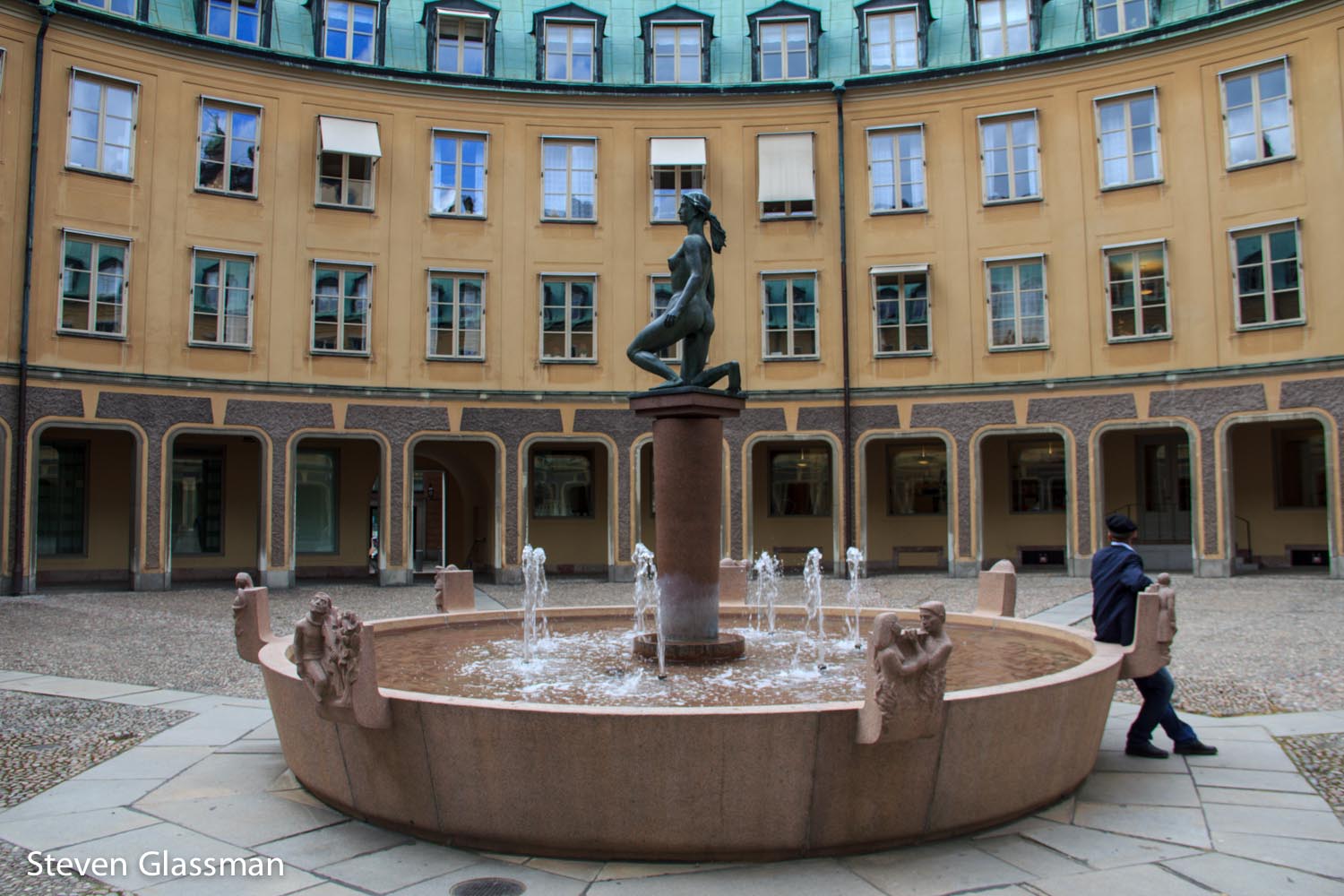
This quiet pleasant little circular area is offset from Gamla Stan-  you have to walk through a passageway that looks a bit like a hallway to reach it.  It’s the sort of thing you find if you’re willing to explore a tiny bit off side streets and alleys.

stockholm-7

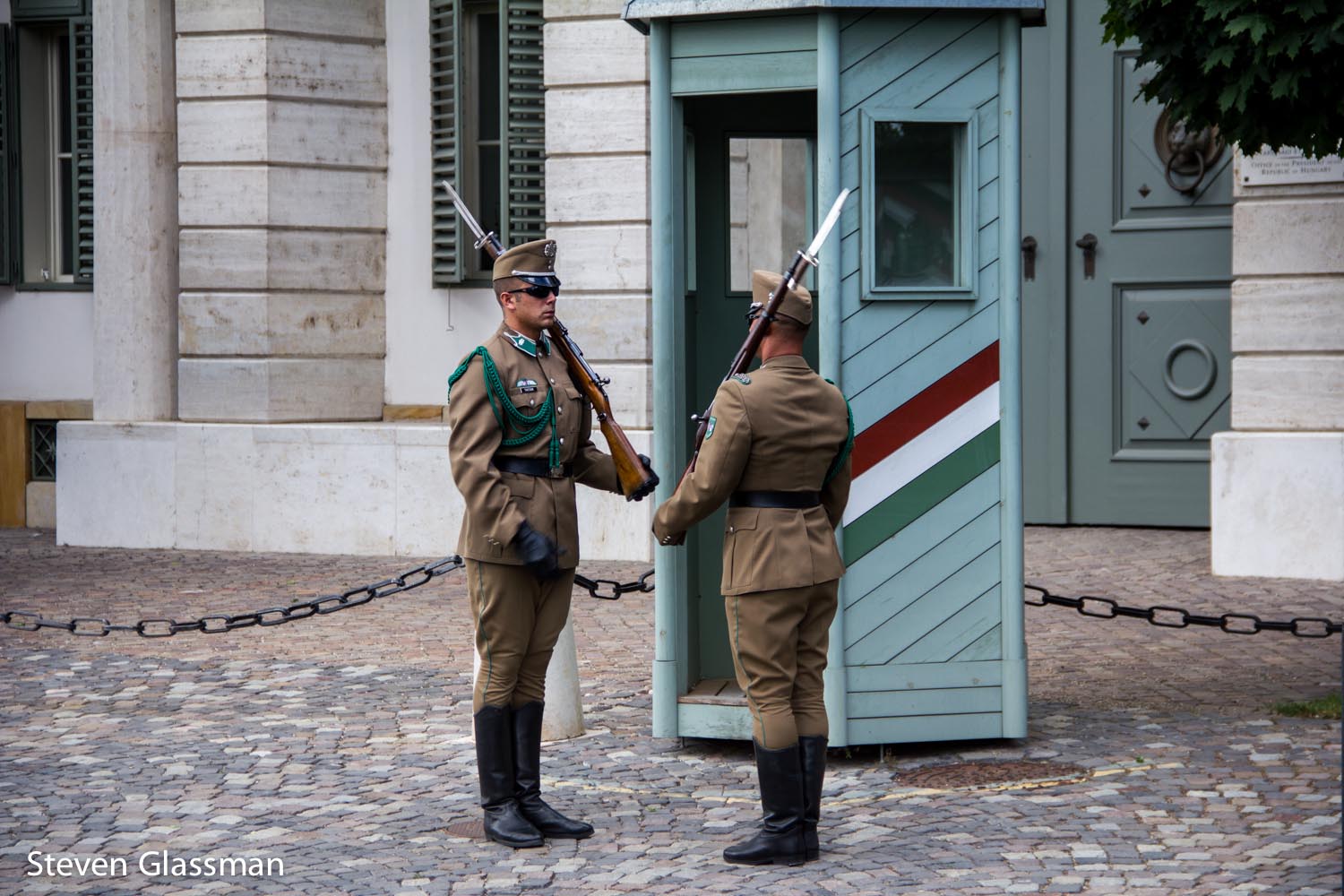
The Royal Palace in Gamla Stan is the “official” place of residence for the royal family, but they don’t really stay there.  They do have official events there, and they do receive state visitors there.   There are, naturally, Royal Guard members standing and marching in front of the Palace.

stockholm-8

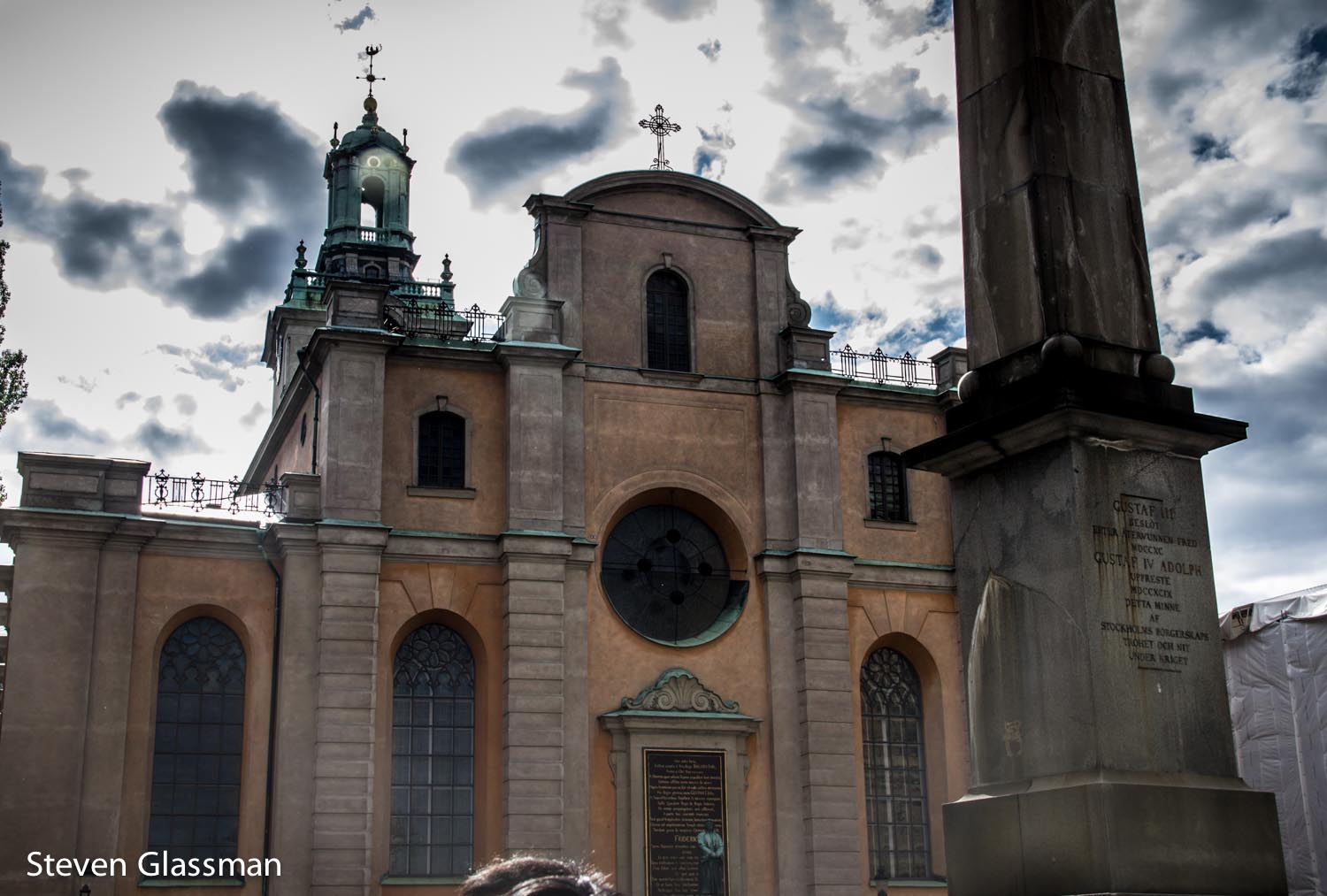
This is a big church that gets used for big events.  After a few years in Europe, the Big Important Churches are kind of starting to run together.

stockholm-9

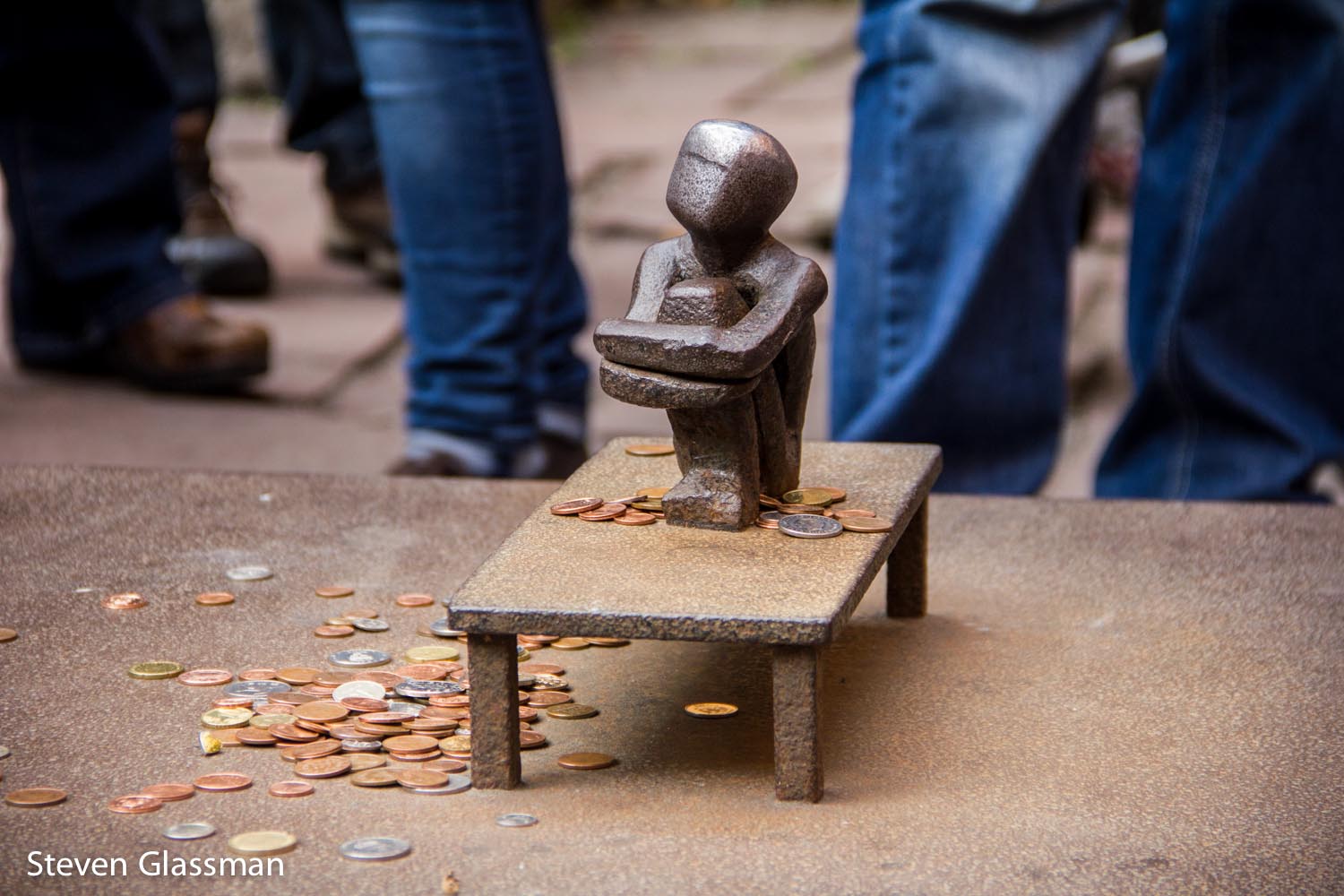
This statue is called “Iron Boy.”  It’s also called “Boy looking at the moon.”  The statue is only fifteen centimeters tall, and is considered Stockholm’s smallest public monument.   The Iron Boy is behind a church and is very easy to miss.  People leave coins and rub his head for luck.  There’s also a legend that he helps women become pregnant, but it’s entirely possible that our tour guide was just messing with us.  I would not have seen this without Free Tour Stockholm’s guidance.

stockholm-10

St. George and the Dragon.

stockholm-11

These buildings are in the same square as the Nobel Prize museum, and they each have a pastry restaurant at their base.

stockholm-12

Have you ever been to Stockholm?

Mini-Europe and the Atomium

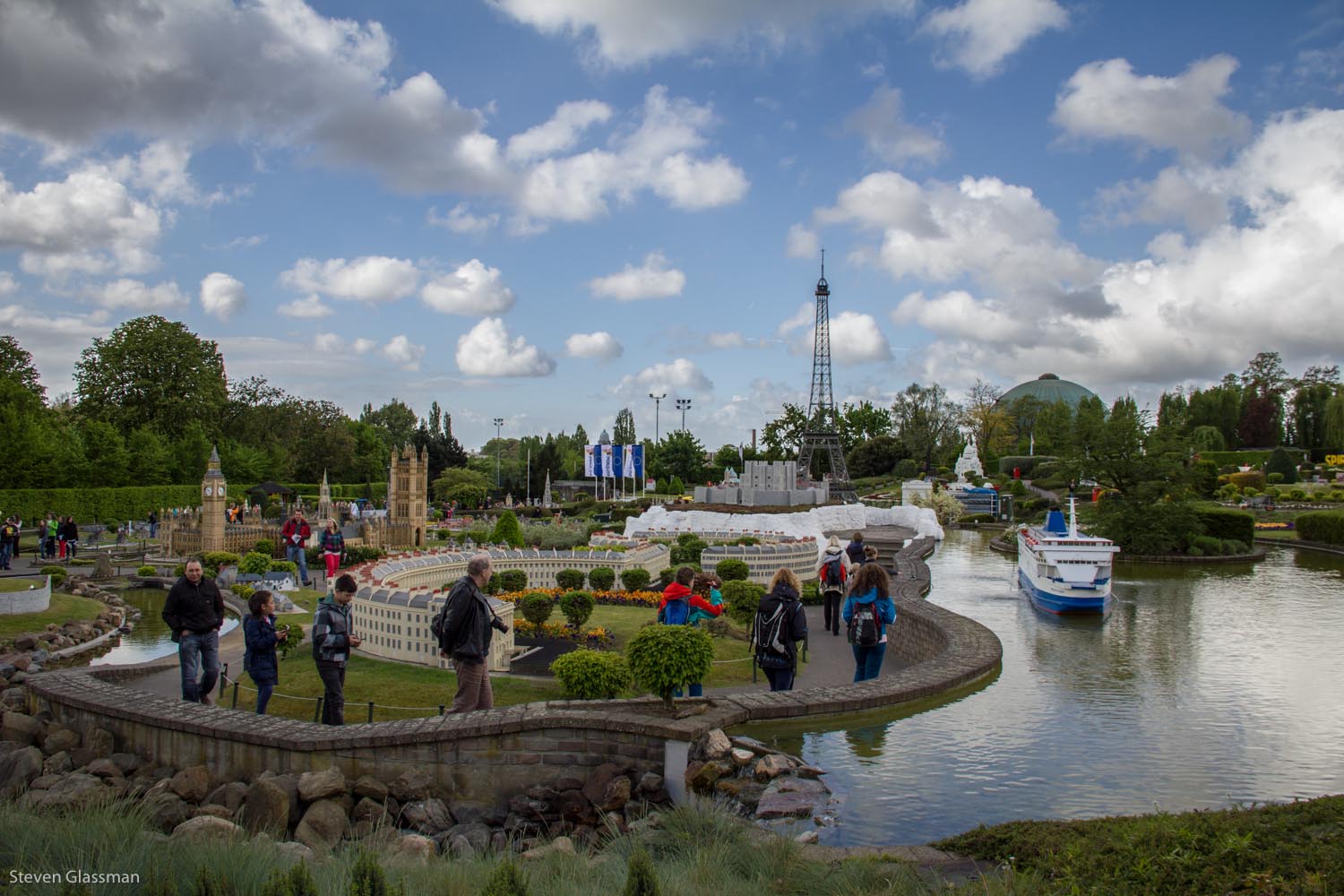
One of the things I was most looking forward to in Brussels is Mini-Europe.  Mini-Europe is exactly what it sounds like-  a 24,000 square meter park next to the Atomium in Bruparck containing models of well known structures from throughout the European Union, built in a scale of 1:25.   It’s delightfully cheesy and wonderful.

Also, I made new friends there!  The couple who sat down next to me on the metro on the way there turned out to be a Canadian couple who were traveling Europe, and we wound up hanging out together for Mini-Europe and the Atomium.  Hi, Chelsea and Andrew!

bruspark-1

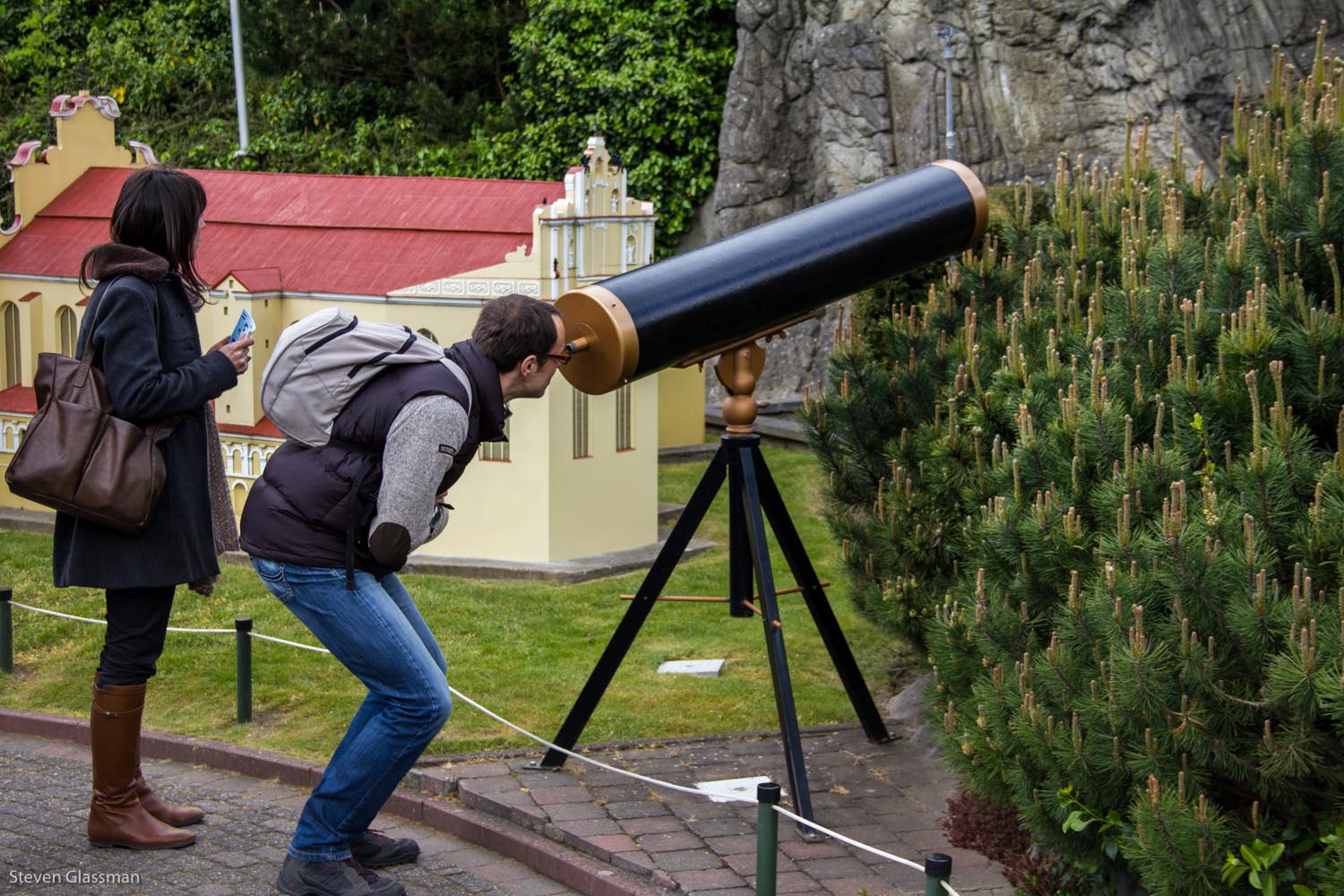
I was really curious after seeing this as to what the telescope looked at.  It turns out that it’s a slide-show about the history of the telescope.

bruspark-2

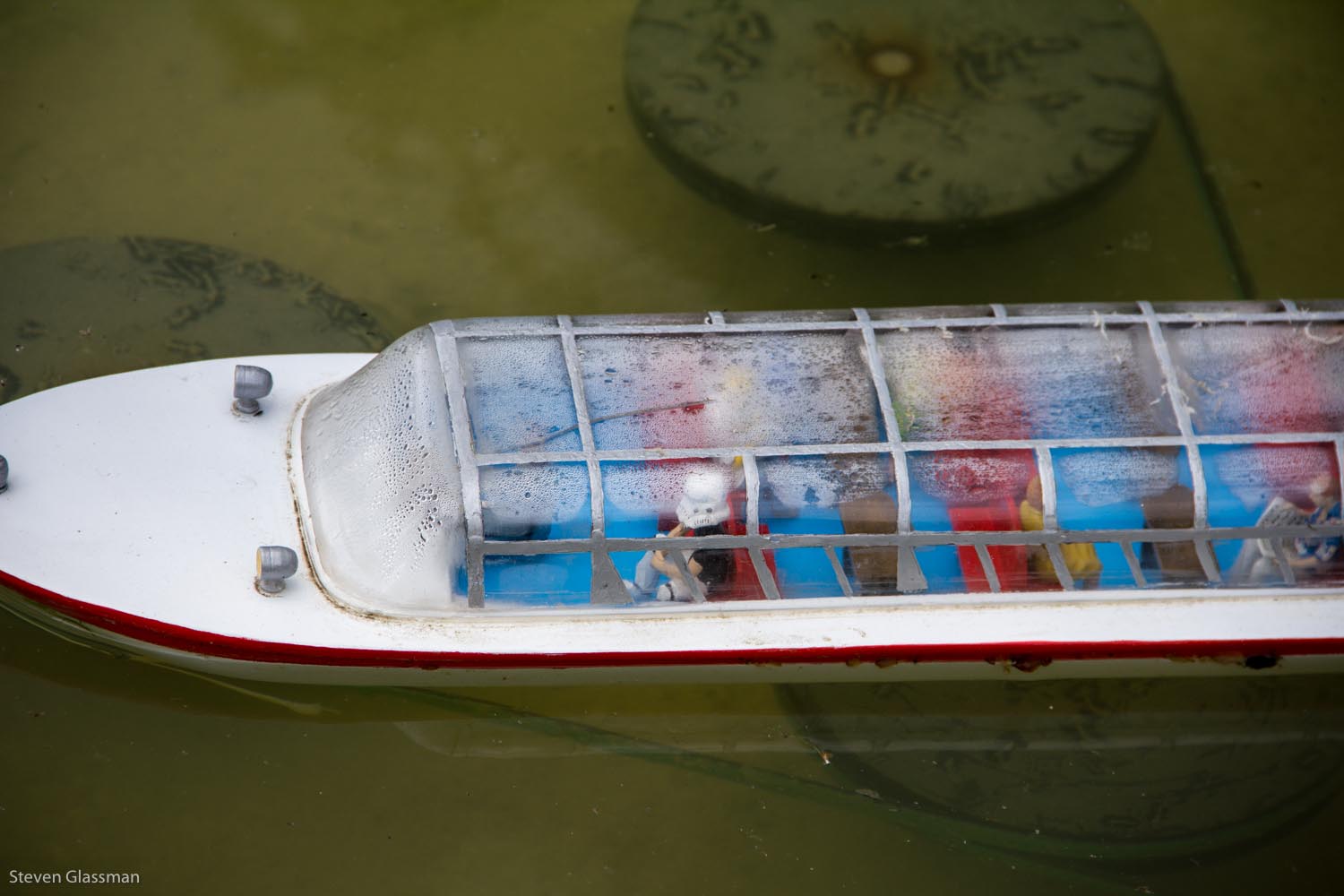
Throughout the park, there are boats, cars, trains, and various other things in motion.  This boat caught my attention because the dude in the front-left seat is wearing a Stormtrooper helmet.  Unfortunately, it was too fogged up for me to see who else might be hiding in there.

bruspark-3

This is the Grand Place in Brussels, depicted here with the carpet of flowers that is put down every second year.  It will happen this year around August 15th.

bruspark-4

The Belfry in Bruges.   The big metal structure behind it is the Atomium… I’ll get back to that.

bruspark-5

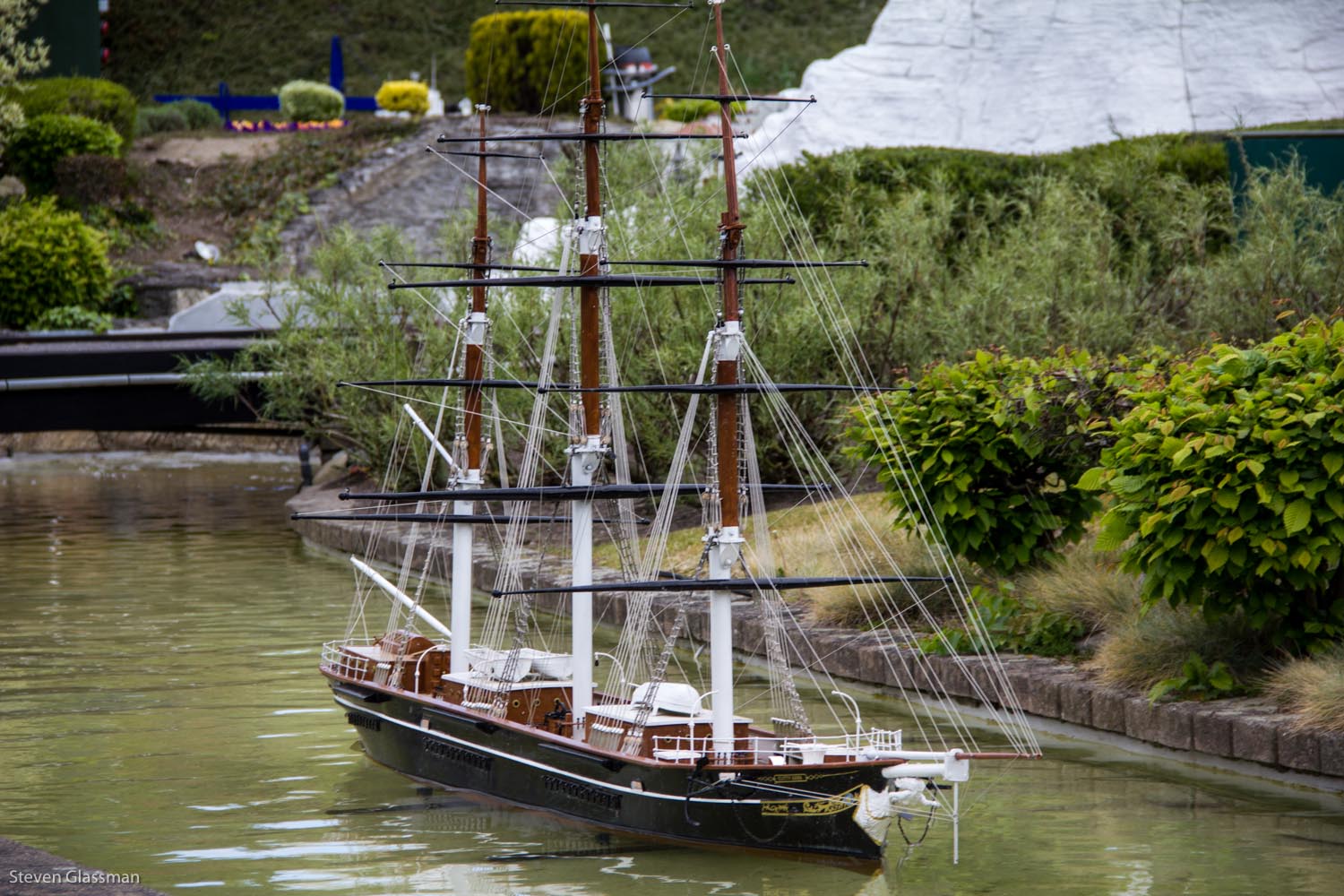
Random sailing ship!

bruspark-6

At various points around the park, there are local outfits you can “try on.”  Near London, there was this traditional uniform of the Queen’s Guard.  Naturally, I couldn’t resist.  (Special thanks to Andrew for snapping this shot of me.)

bruspark-7

London.  Big Ben and the Houses of Parliament.

bruspark-8

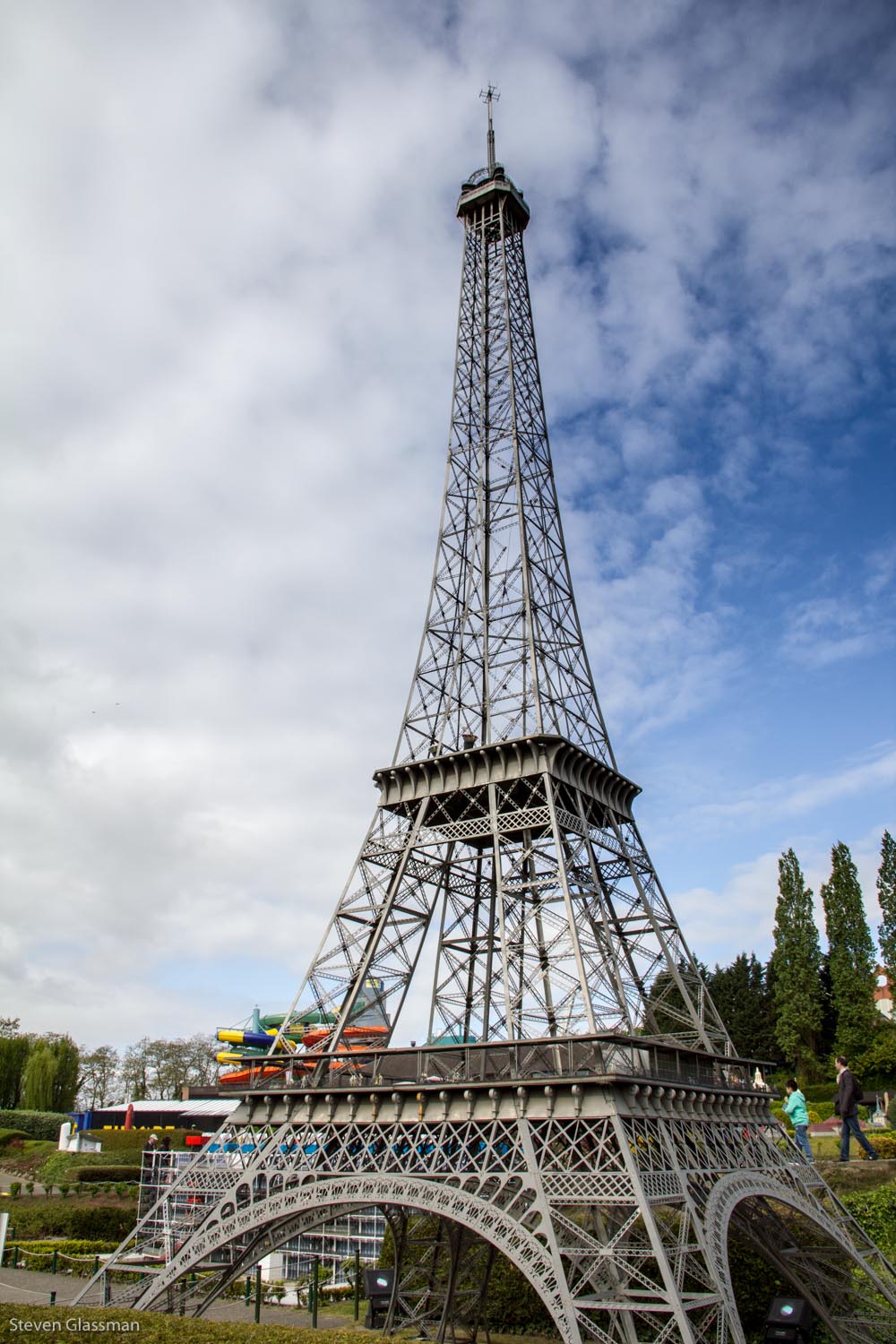
The Eiffel Tower.  Even at 1:25 scale, Eiffel’s Tower was enormous.

bruspark-9

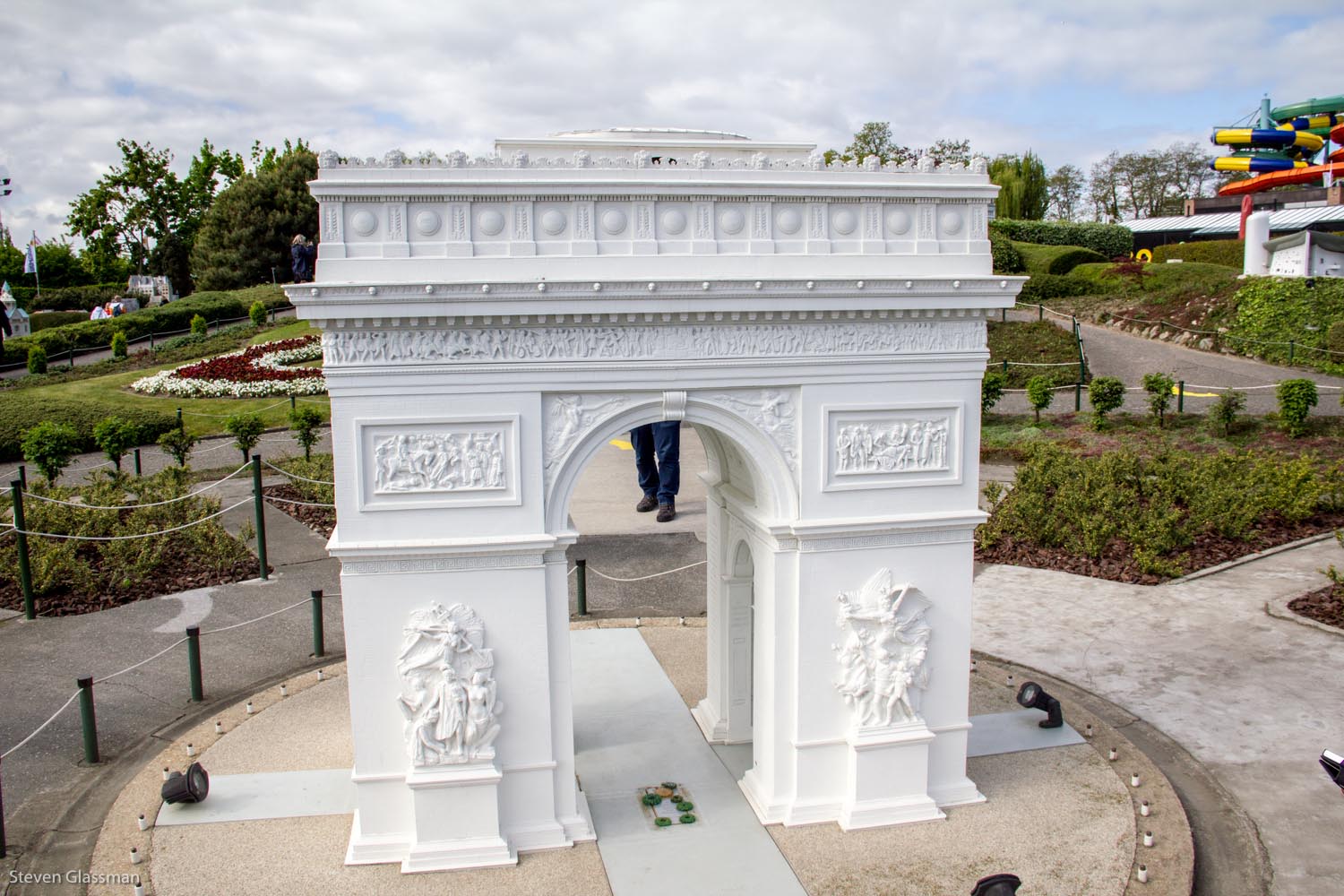
The Arc de Triomphe, Parisian version.

bruspark-10

Sacre Coeur, also from Paris.  The Funicular was running, too!

bruspark-11

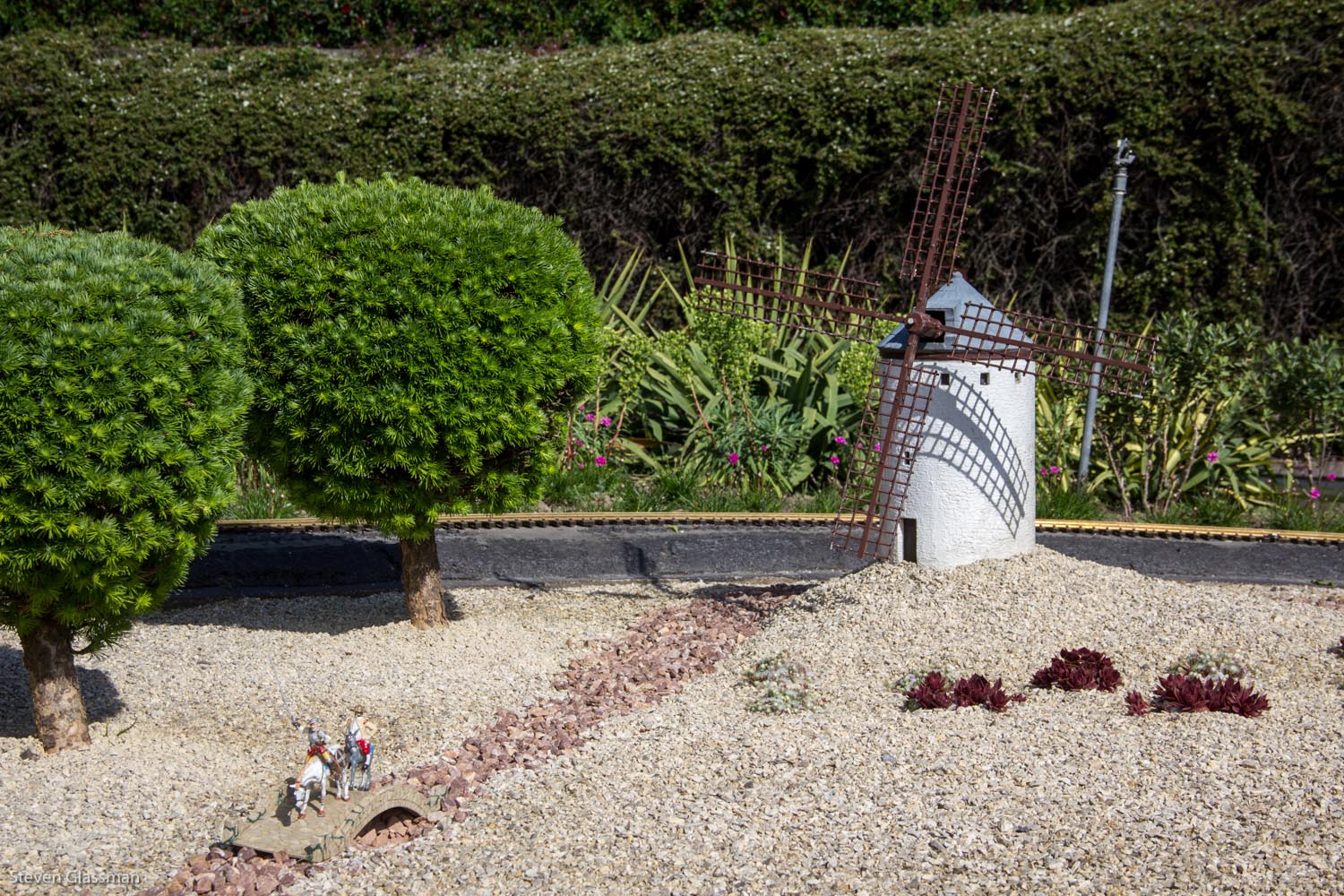
La Mancha!  Check out the tiny Don Quixote and Sancho Panza!

bruspark-12

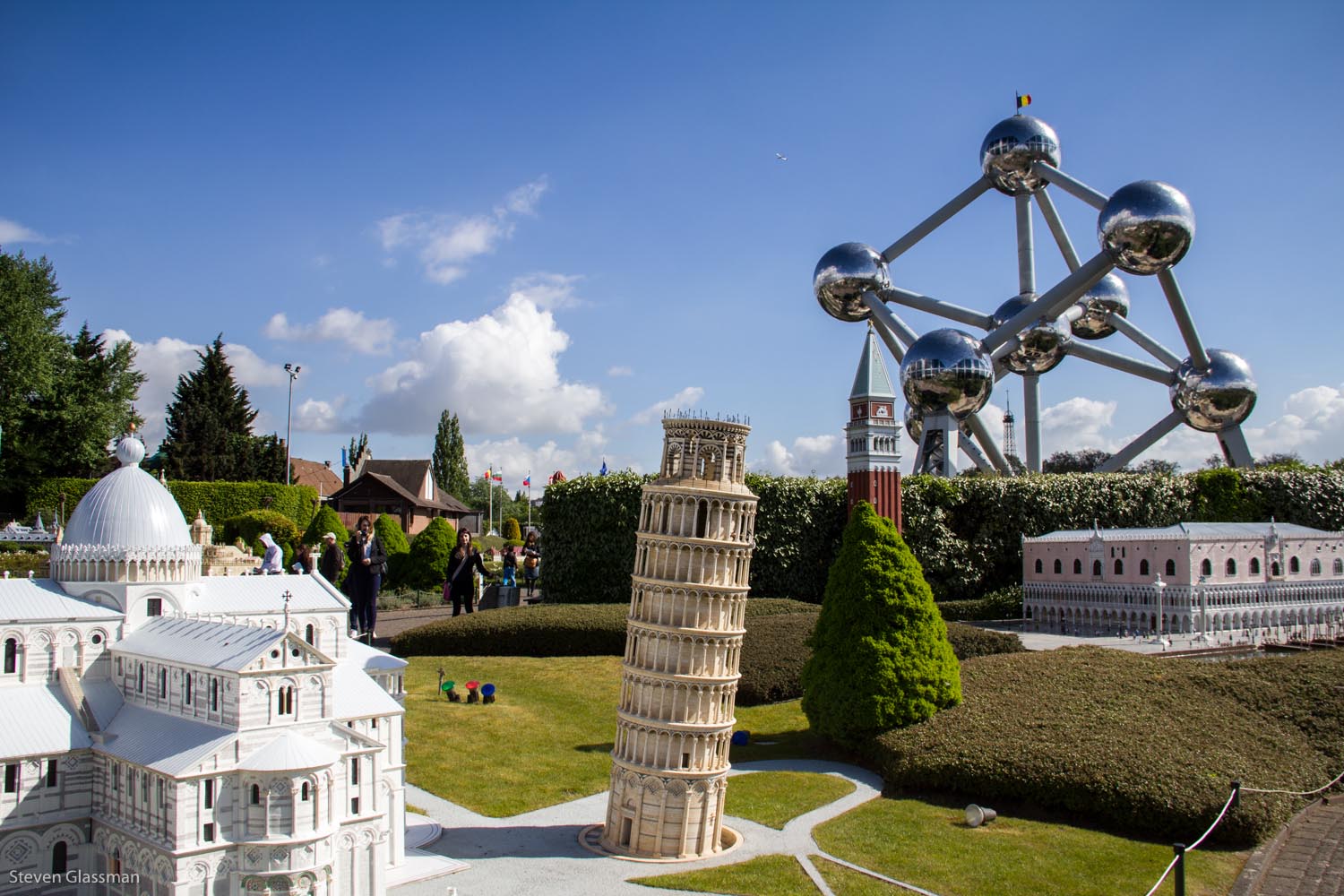
The Leaning Tower of Pisa.

bruspark-13

Scientific exploration?  This is part of the detail on the Leaning Tower.

bruspark-14

Venice.  The Doge’s Palace and the Campanile tower.

bruspark-15

I think this Gondolier needs a little help.

bruspark-16

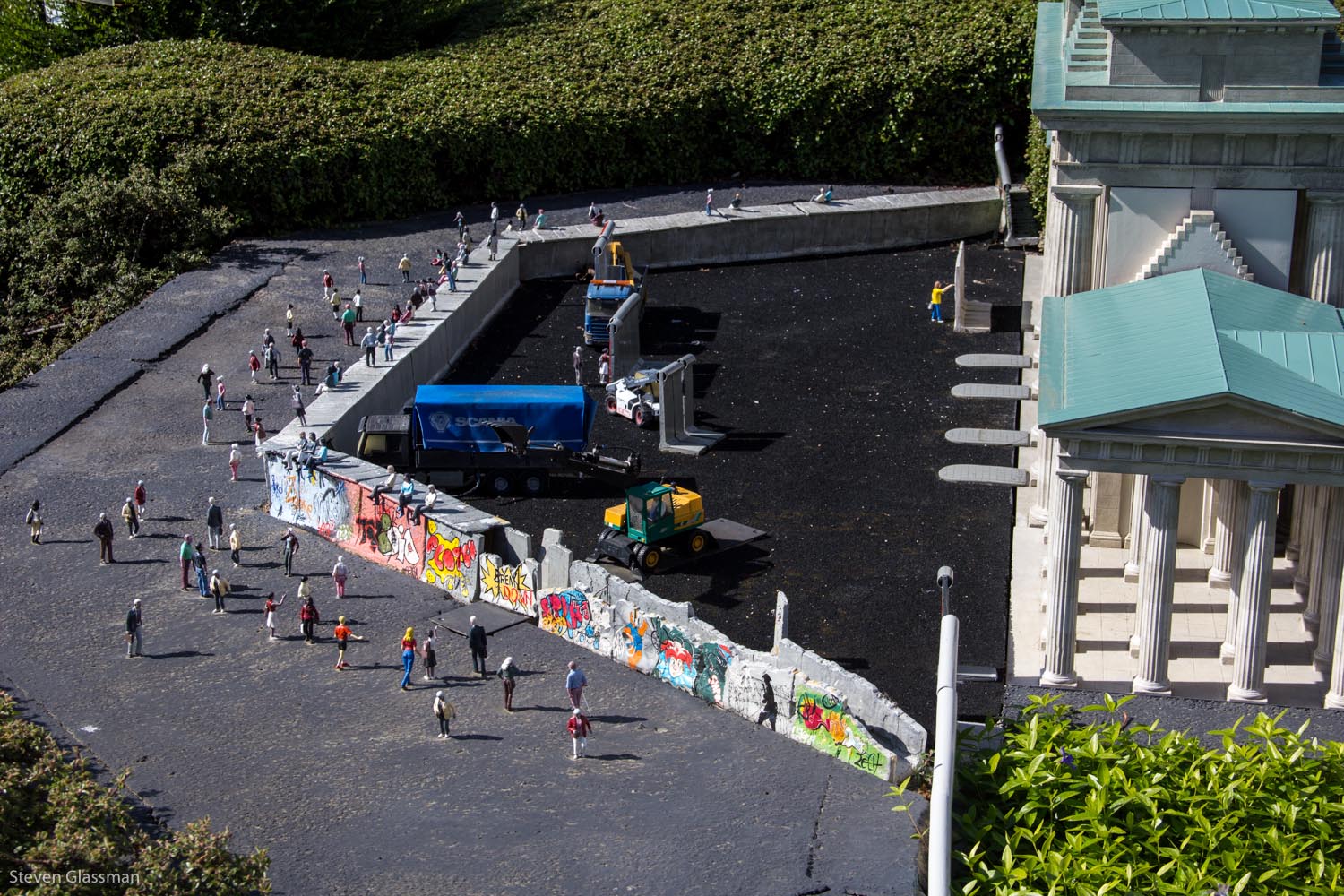
A tiny recreation of the fall of the Berlin Wall.

bruspark-17

Prague‘s Old Town Hall, containing the Astronomical Clock.

bruspark-18

Athens, Greece.

bruspark-19

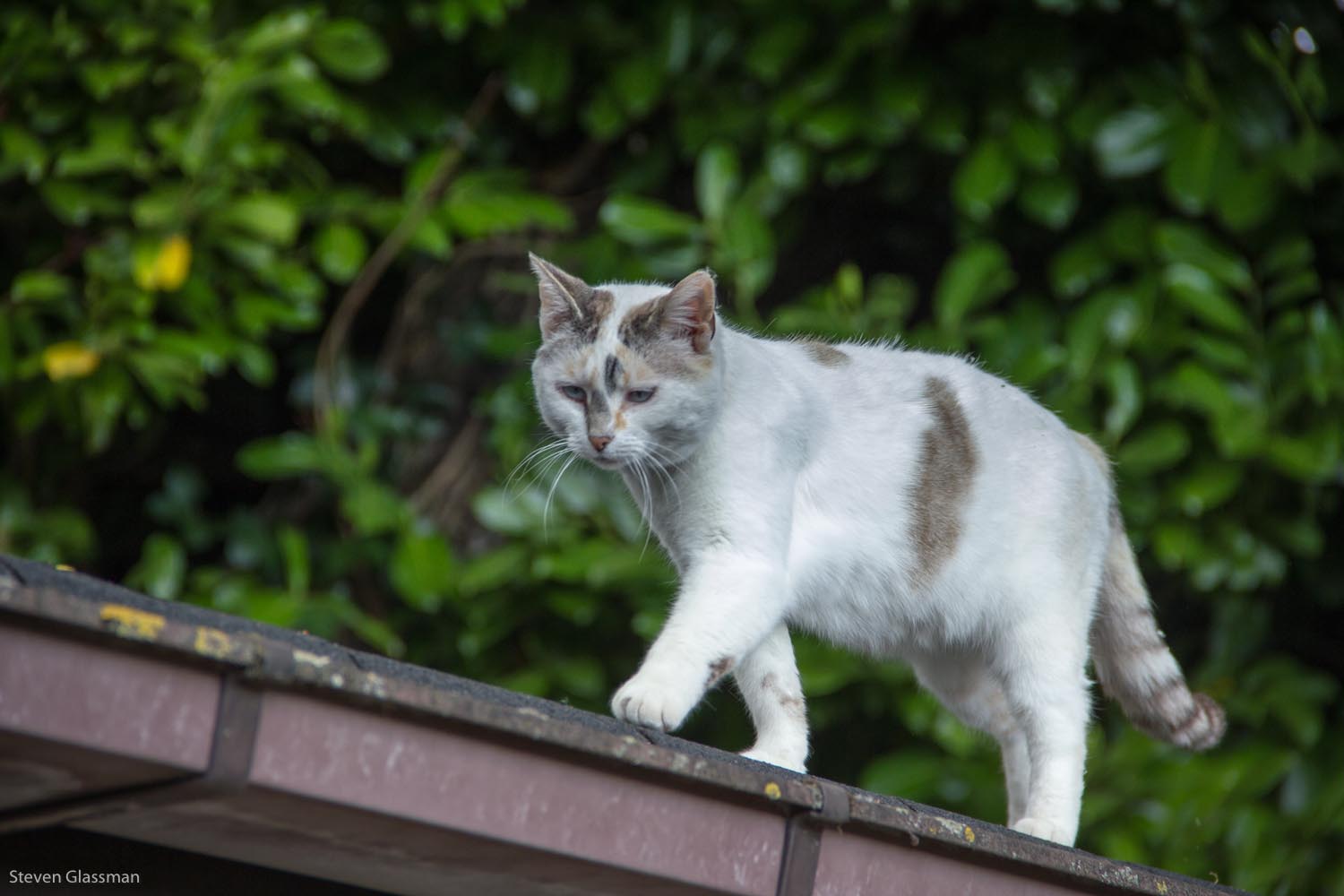
After we were finished with Mini Europe, we stopped briefly at the gift shop, where Chelsea spotted this happy little kitty hanging out on the roof near the exit.

bruspark-20

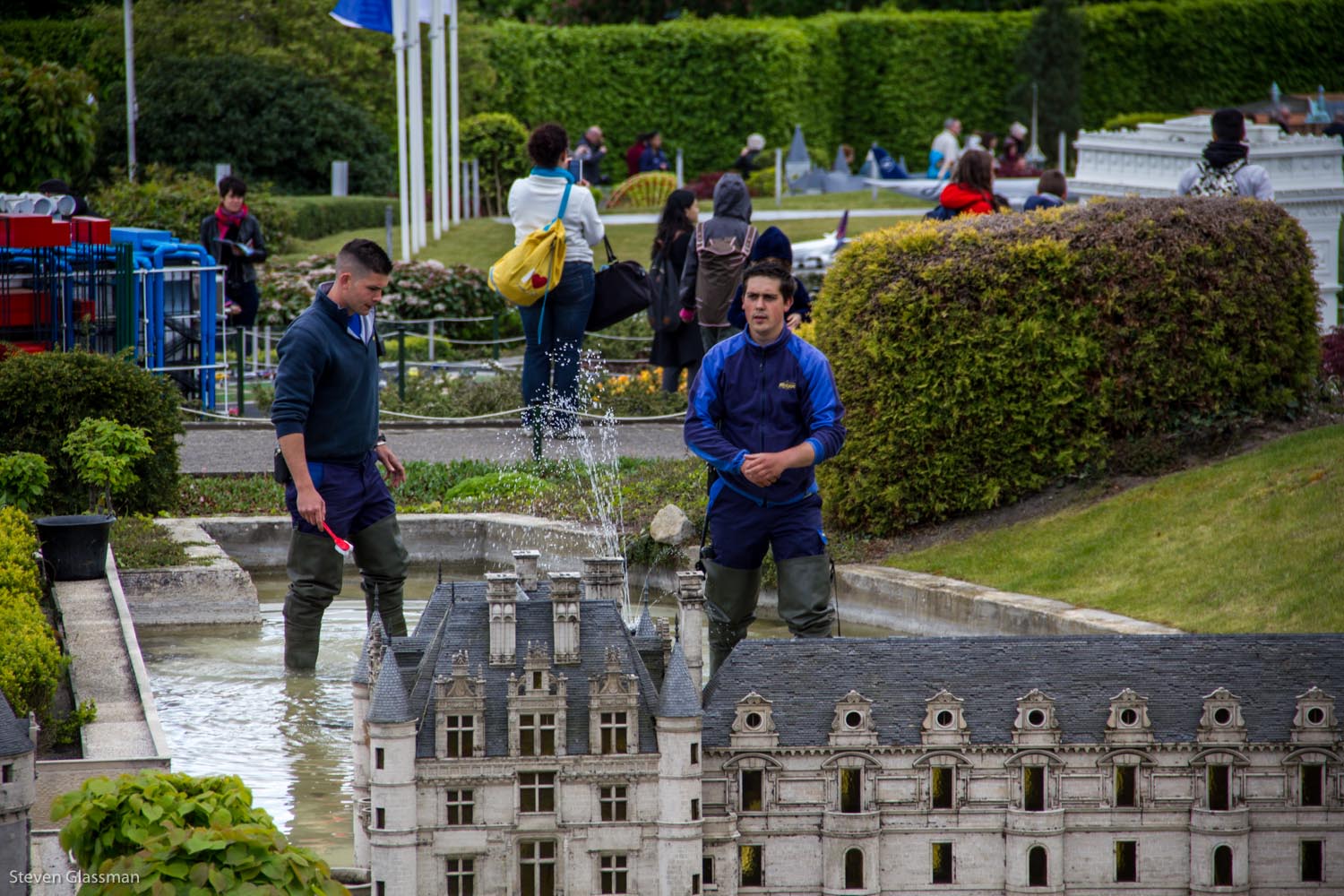
When these workers stepped into the pool in front of the 16th century Castle of Chenonceaux (France),  all I could think was, “Giants in the playground!

bruspark-21

…and then it was time to go to the Atomium!

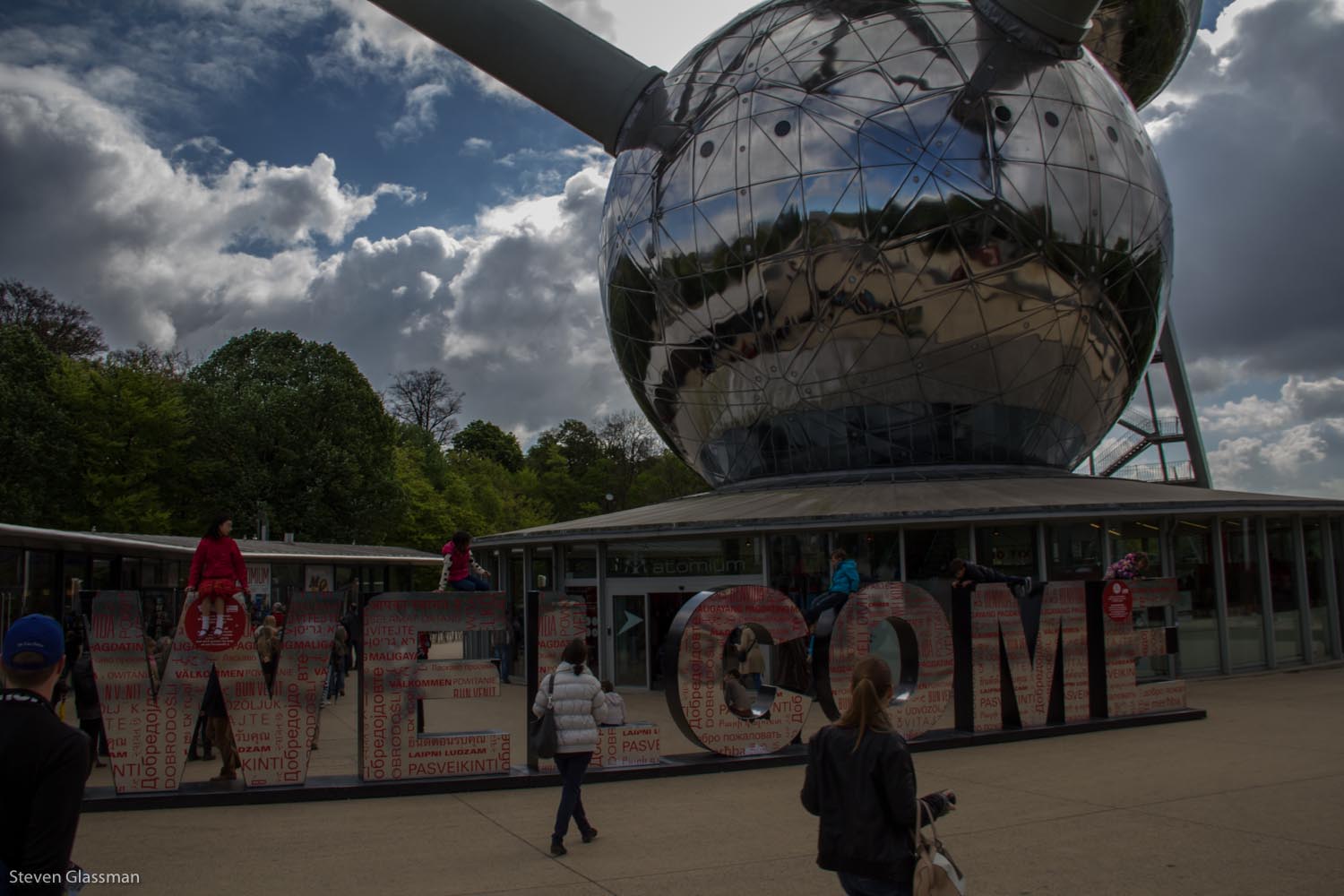
The Atomium was  built for the 1958 Brussels World’s Fair. Its nine stainless steel wrapped spheres are connected to form the shape of an iron crystal magnified 165 billion times.  Four of the spheres contain exhibits, and the topmost sphere is a 360 degree observation deck and restaurant.  There’s a webcam on top, at a height of 102 meters, if you want to check it out.

bruspark-22

The Atomium has perhaps the best “You Are Here” maps I have ever seen.

bruspark-23

…and the views are unparalleled.  This is looking out from one of the spheres back toward Mini Europe.

bruspark-24

This is the view straight up from the base of the Atomium.

bruspark-25

And because I never get tired of the Atomium, here’s a shot from further afield that I took later in the day.

bruspark-26

…and a rare picture of me standing in front of a landmark.  I much prefer being on the other side of the camera.

bruspark-27

Have you ever been to Mini-Europe or the Atomium?

Brussels, Belgium

My trip to Belgium included a bunch of time spent in Brussels, the de facto capital of the European Union.  It’s a fascinating city.  I arrived via high speed train to the city around 5:30 in the afternoon.   Walking to my hotel from the station, I found something interesting in less than ten minutes-  this building’s angel/demon stone-work was just fascinating to me.

brussels-1

After I dropped my stuff off at the hotel, I went back out with my camera to see a bit of the city.  I also had a specific goal in mind, but I’ll get to that in a moment.  On the walk into the city, I found this Pop-Up Restaurant.  It was set up temporarily in front of the Le Monnaie De Munt, a rather nifty looking theater.  The Pop-Up Restaurant was set up so they could film a television show, according to the signage.  I briefly considered trying to get a table before moving on.

brussels-2

Walking further toward the Grand Place, I spotted this rather amusingly named restaurant.  It had pretty typical food on the menu and I almost had dinner there one evening, but changed my mind at the last minute.  Also, I thought the eggs were regular decoration, but they were just there because it was Easter weekend.

brussels-3

I wandered from there into the Grand Place.  It’s pretty hard to miss this enormous square.  The Town Hall has an enormous pointy bit.  I did not climb the pointy bit, as you had to make a reservation in advance to do so.

brussels-4

I mentioned above that I had a specific goal in mind for my walk through the city on the first evening.  Most everyone has heard of Manneken Pis, the famous statue of the little boy peeing.  That statue is widely associated with Brussels, and is one of the symbols of the city.   There are two more peeing statues, though:  Jeanneke Pis, a little girl peeing, was put up in 1987, and Zinneke Pis, a dog peeing, was put up in 1998.  I decided when I left the hotel that I wanted to find all three before sundown.

Zinneke Pis was the first one I found.    The tile Space Invaders art drew my attention to the corner before I spotted the dog on the corner.

brussels-5

Someone asked me if it was a male or female dog.  I can say with authority that it is most decidedly a male dog.  You just can’t see it in this camera angle.

brussels-6

Next up is the Manneken Pis.  This one is marked on sightseeing signs and tourist maps, because it’s the most famous of the three.  This fountain was erected in 1619, and they dress it up in various costumes several times per week.  There was no costume while I was there, which surprised me because it was Easter weekend.

This is not the only Manneken Pis; there are others in various cities in Belgium, and one in Tokushima, Japan which was a gift from the Belgian embassy.

brussels-7

I saw so many replicas while I was in the city, including one made all of chocolate, and this one dressed up for the World Cup later this year.

brussels-8

Moving on from the Manneken Pis, I found my way next to Jeanneke Pis, erected in 1987 very close to the Rue des Bouchers, which is a narrow street full of restaurants.   Jeanneke Pis is not far from the Grand Place, and it is regrettably behind locked iron bars which makes getting a good picture of her somewhat difficult.

brussels-9

Jeanneke Pis is basically across the street from the Delirium Tremens Beer Bar and Cafe,  which made this a perfect time to stop for a nice Belgian beer before dinner.

brussels-10

I tried the Delirium Nocturnum, a strong delicious dark beer with an 8.50% alcohol by volume.  Did I mention it was delicious?

brussels-11

After leaving Delirium, I decided to look for some dinner before retiring for the night.  Passing by it, I saw the Beurs, the Brussels Stock Exchange, which is the location of the Art of the Brick Lego art exhibit.  I’ll come back to this in another post, because I checked out this exhibit right before I left Brussels two days later.

brussels-12

The next day, it was time for my actual tour of Brussels, led by a professional tour guide.  It started in the Grand Place, so here’s another view of that large plaza.

While I was waiting for the tour to start, I had a Belgian waffle covered in powdered sugar.  The powdered sugar made me cough, which caused me to be completely enveloped in a cloud of white powder.

Delicious high comedy.

brussels-13

Moving on, we walked past the Cathédrale des Saints Michel et Gudule (Cathedral of St. Michael and St. Gudula,)  which was completed in 1519.

brussels-14

This is a monument to King Leopold I, the first king of the Belgians.  He ruled from 1831 to 1865.

brussels-15

This is at the base of a very tall monument, but none of my other pictures came out very well.  The structure is the Colonne des Congrés (the Congress Column.)  The four corners are statues representing the four freedoms of Belgium- Freedom of the press, of religion, of education, and of association.

The flame is atop a Belgian Tomb of the Unknown Soldier,  from World War I.

brussels-16

Moving on, we visited the Parliamentarium’s visitor’s center, which is all about the European Union’s Parliament and how it governs.  It was pretty neat, actually.  This first section represents the main structures in the three governing cities of the EU-  Brussels, Luxembourg, and Strasbourg.

brussels-17

How far is it to your home city? Vienna’s only 917 kilometers away…

brussels-18

The exhibit had a detailed model of the European Parliament’s seating arrangement.  Interestingly, the seating is not by nation, it’s by political affiliation.

brussels-19

I missed all but the last three minutes of this film about how the Parliament makes decisions because I was fascinated by shiny objects on the other side of the hall.  It looked interesting, though.

brussels-20

On the way back from the Parliamentarium, we passed the Triumphal Arch in the Parc du Cinquantenaire, but alas, we didn’t actually go into the Jubilee Park, so this is the best photograph I took of the Arch.

brussels-21

This… this is just an enormously large flower pot that amused me.

brussels-22

I ate at two different restaurant chains that I quite enjoyed while I was in Brussels.  The first was called Quick.  The face of the restaurant was emblazoned with a giant lit up sign that said “Quality Burger Restaurant,” and the sign made me skeptical enough to try it.  (“Challenge accepted!“) It turns out that it’s got all the soul that McDonald’s has given up over the years,  and the burgers were delicious beyond all reason.  The other restaurant that I tried was a healthy chain called Exki.  This place was utterly delicious-  it was a little like the Pret a Manger and Eat chains that are all over London, but with more hot prepared foods and a few other interesting choices like the Ubuntu cola in the picture below.  (It was decent, but Coke is still better.)  They name their sandwiches with people names, so my lunch as pictured below was John.  The chocolate brownie in the background was so delicious.

I am excited beyond reason that they’re opening an Exki in New York City.  You have no idea.

brussels-23

My next-door neighbor Lori sent me a link before I left for Brussels with a list of the top ten places to get a great view of Brussels.  One of those places was a parking garage called Park 58.    Entrance is free (because it’s a parking garage, not a tourist attraction,) and the elevator will take you right to the tenth floor.  From there, you have a fantastic view in almost all directions.  This is the view looking back toward the Grand Place.

brussels-24

On the other side, you can see clearly all the way to the Atomium.  The Atomium is really cool, and I’ll talk about my visit there in another post.

brussels-25

This statue is near Grasmarkt.  I didn’t remember to catch the plaque that explains it, but I quite dig the man’s mustache and his friendly dog.

brussels-26

Don Quixote and Sancho Panza?  Yup!  I’m not sure why it’s in Brussels, but it’s in Place D’Espagne, and it’s a replica of the original statue in Madrid.

brussels-27

Last, but certainly not least, Brussels is another city full of art.  I kept noticing that the exposed sides of buildings were painted all over the city.  I only snapped pictures of these four, and there was one more of a swashbuckler that I wanted to go back for, but I didn’t have time.   I love that the buildings have this much character.  These four are in different places all over the city:

brussels-28

Have you ever been to Brussels?  What was your favorite thing about the city?