Oh That’s Right… Barcelona!

Before last month, whenever anyone mentioned Barcelona to me, this is what came to mind:

Last month, a long-time friend of mine and her husband were visiting Barcelona for a family birthday event last month.  I love exploring new cities, but I always have more fun if I’m doing so with another person, so this was a great chance for me to see Barcelona while catching up with Christina.   On the Tuesday of that week, headed over to the Munich Airport.  From there, Lufthansa took me to Barcelona for a very reasonable fee. The flight time from Munich to Barcelona?  About 90 minutes.  Easy peasy.

Getting around in Barcelona is also pretty great.  The Aerobus takes you from the airport to the city center.  It runs every five minutes during most of the day.  Once you’re in the city itself, the taxicabs are very affordable, and there’s an extensive underground Subway system.  A four-day/unlimited rides pass was just over 20 Euros.  You can also rent bikes, if that’s your thing.  I got around for the entire trip using just public transportation and two or three cab rides.
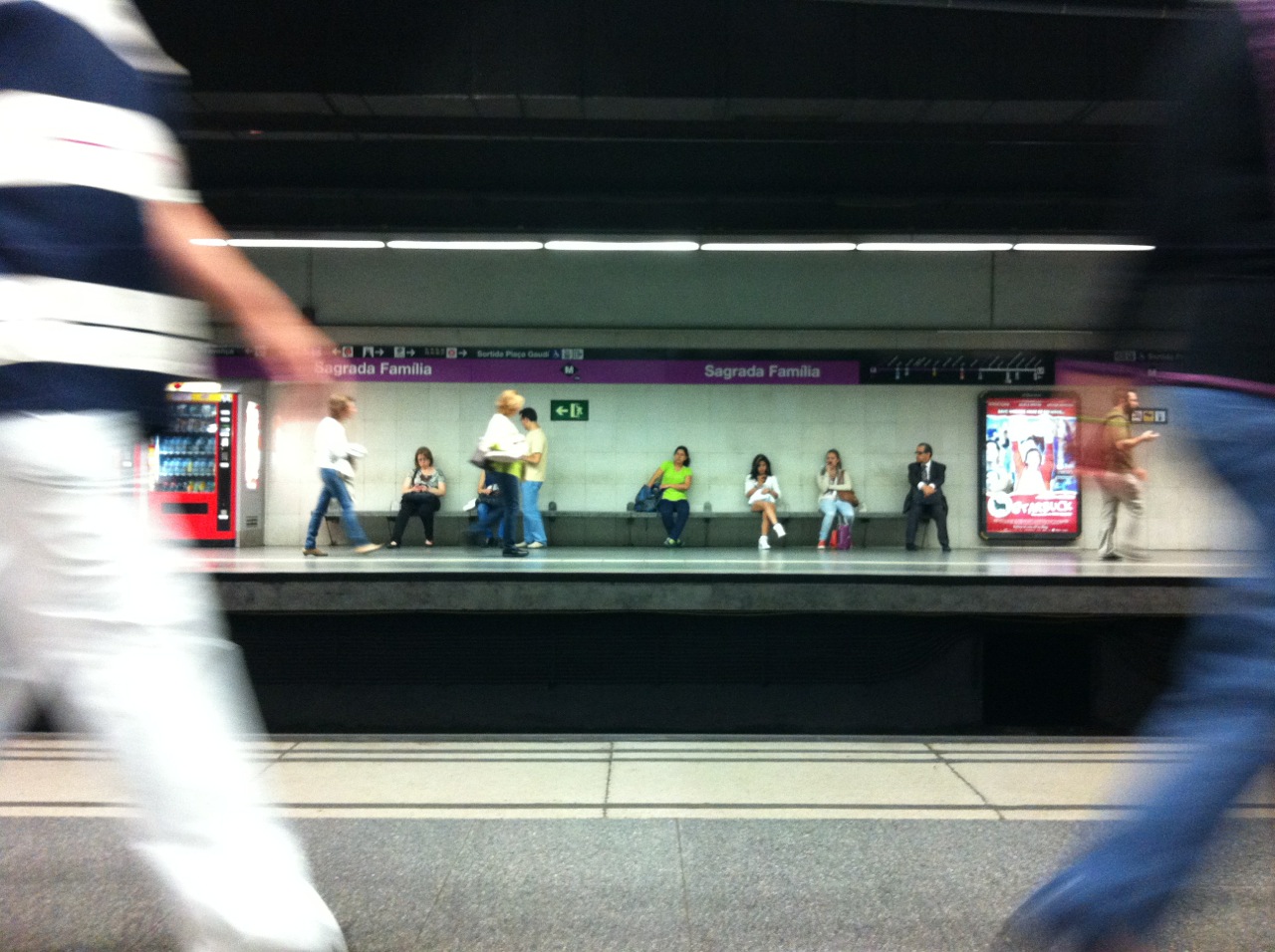
A quick note about technology:  Whenever I leave the borders of Germany, I lose the ability to use my phone for mapping and location stuff-  roaming data is absurdly expensive, so I just turn it all off.  On this trip, I managed to get around for the entire stay using just two apps regularly.
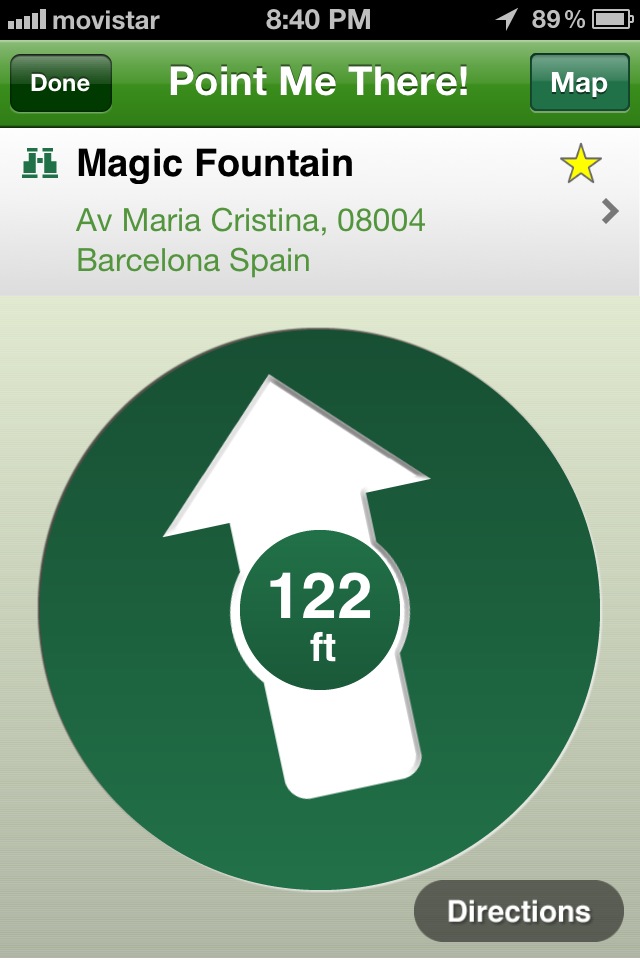
The first app is a simple Metro app that uses your GPS to figure out the nearest train station, and it plots a route  using the subway.  The second app was the TripAdvisor app.  This one has a huge list of attractions, hotels, and restaurants, and it uses the GPS to locate you on a pre-loaded map- no roaming data required. It also combines the GPS with the phone’s compass to make a really nifty “Point Me There” feature.  Without this feature, I would never have found my hotel, and I would have gotten lost over and over and over again.

I won’t bore my six and a half readers with the day by day travelogue styled post that I originally wanted to write.  Instead, I’ll give you the highlights.

Gaudí, Gaudí, Gaudí!

Antoni Gaudí was an architect and certified crazy genius who was responsible for a slew of Barcelona’s most famous sites.  I’m going to nutshell them here, because I could easily write pages and pages and pages about these structures.

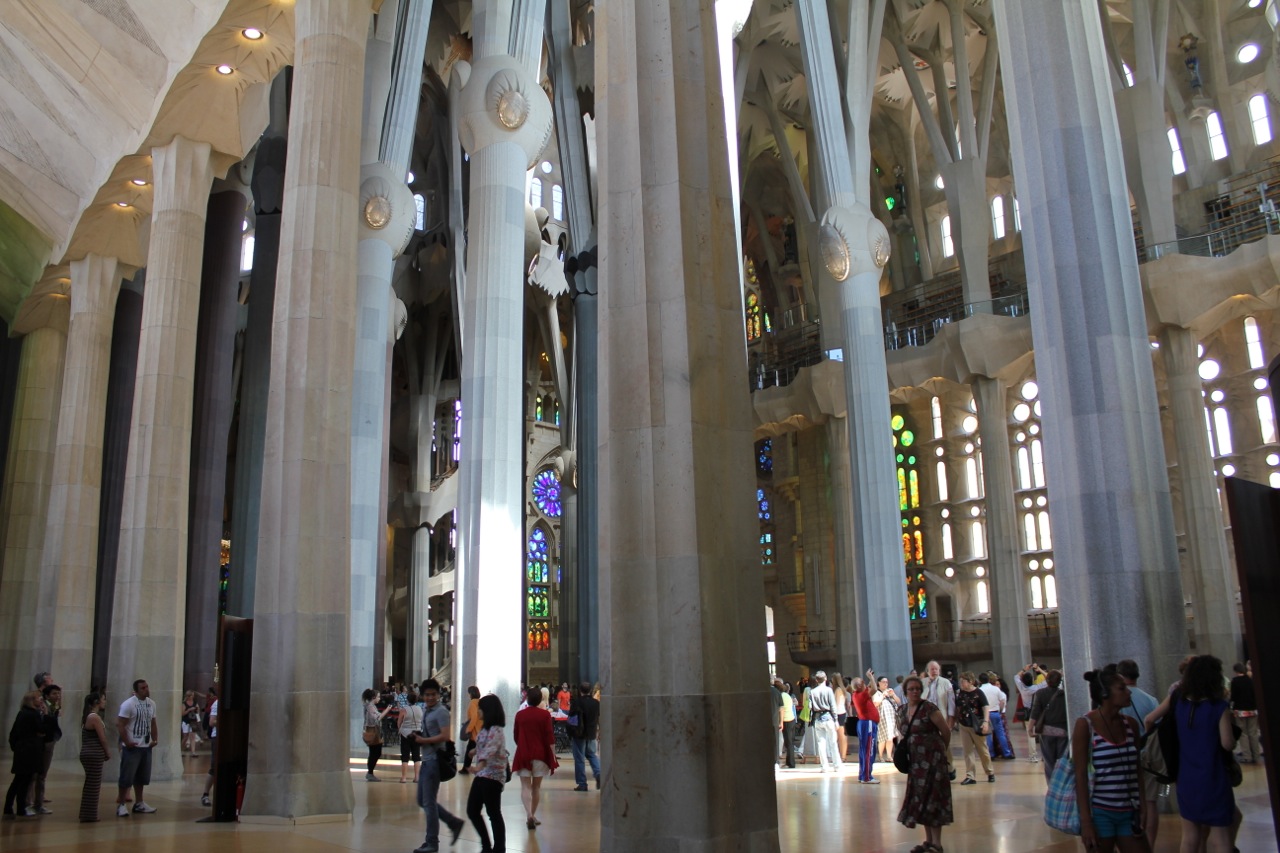
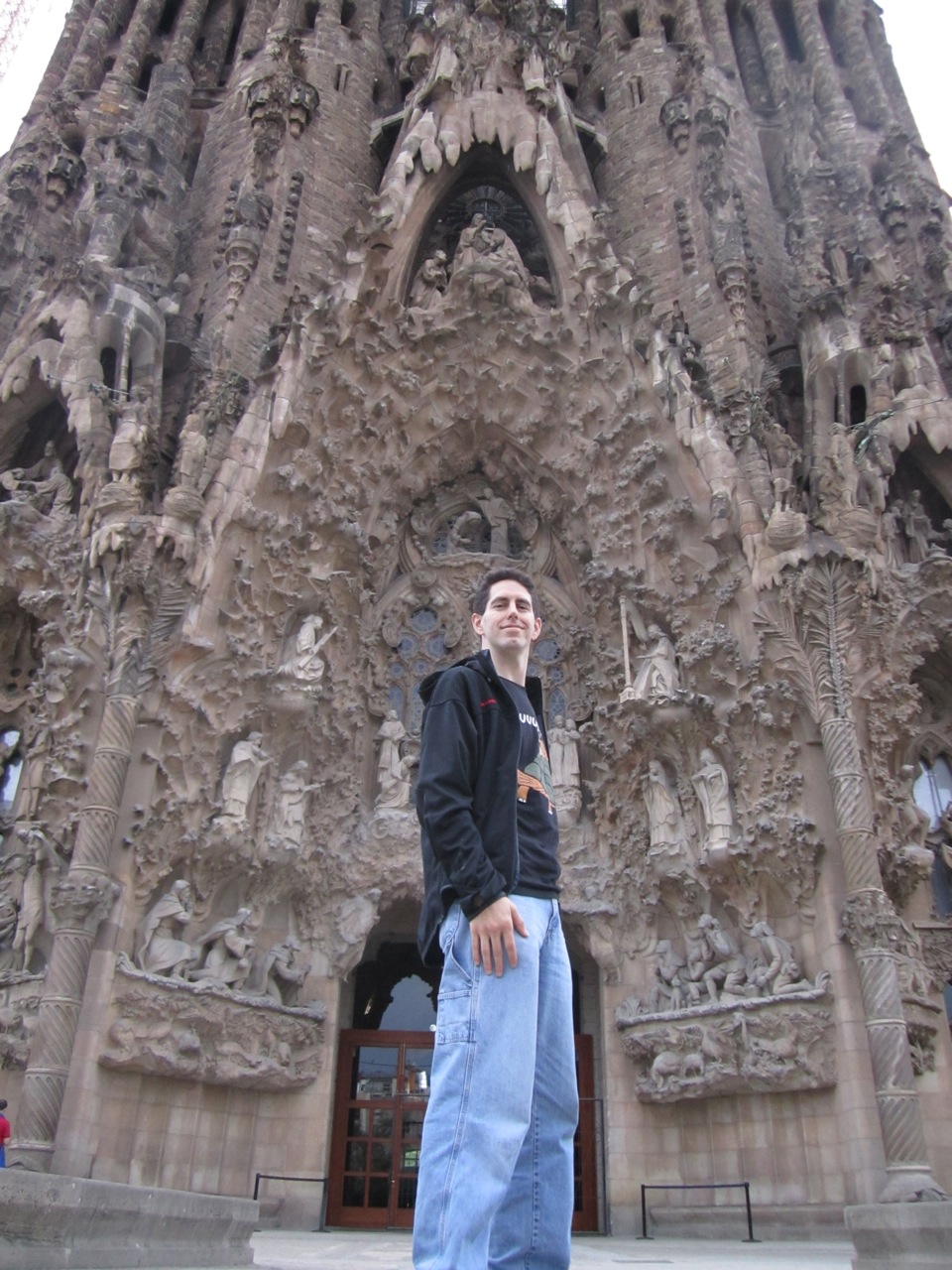
La Sagrada Familia – This enormous church has been under nearly continuous construction since 1882, and it’s expected to be finished sometime around 2028 using Gaudí’s original plans.  One side very ornately shows the Nativity and the life of Christ. I’m standing in front of that side of the building in the picture below.  The other side is more austere and it shows the Passion, the death of Christ.  The columns inside were designed to resemble trees and branches.
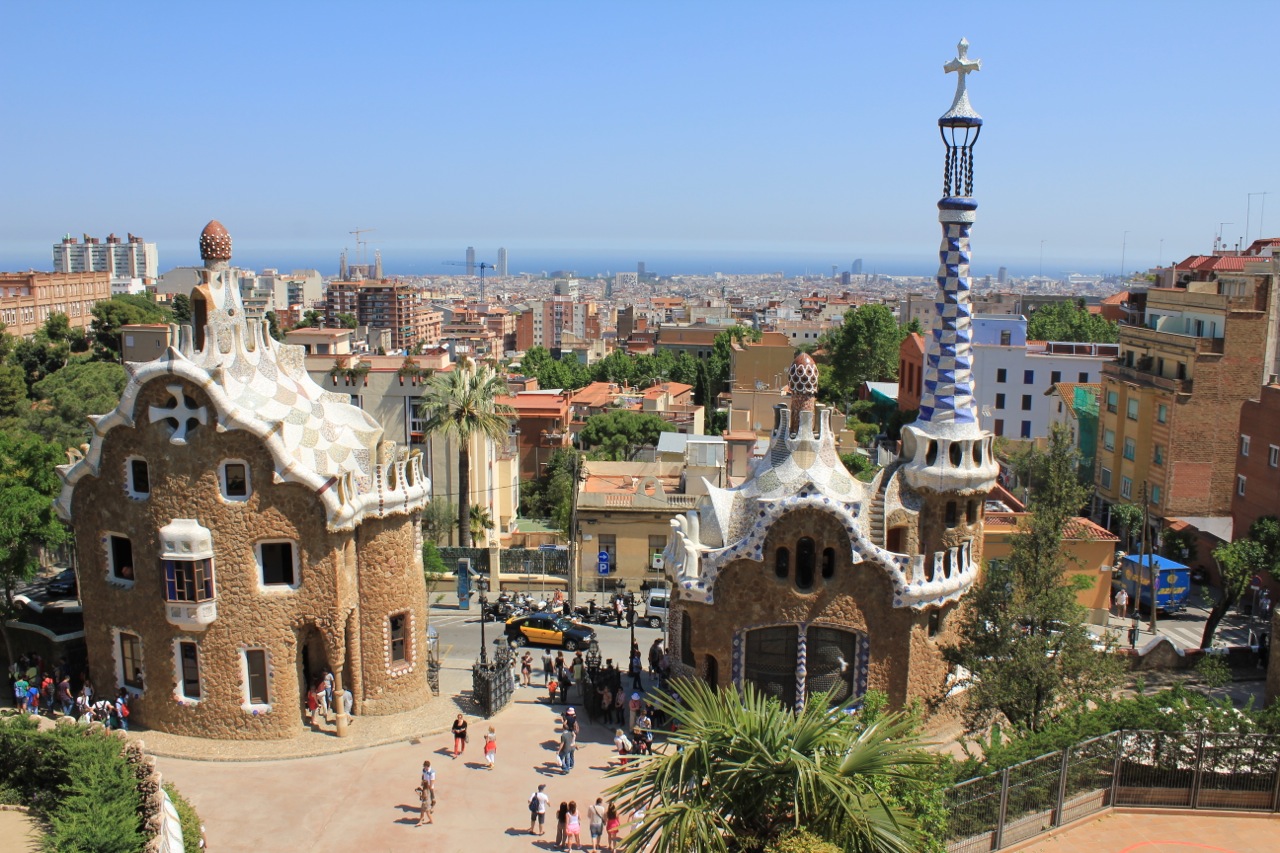
Parc Güell – This is what happens when you set Antoni Gaudí loose on a park and garden complex.  I only saw a fraction of this park, because it’s enormously huge and I was on foot and kind of turned around.
La Padrera – An apartment building designed by Gaudí, this is now part museum and part office space.  You can go up on the roof, tour the attic, and even visit a sample apartment.

Casa Batlló – This building has a skeletal, fish-scale appearance.  This was originally designed as housing for rich Barcelona folk.

Not Gaudí, But Still Impressive And/Or Interesting.

Arc De Triomf – Built for 1888 Universal Exposition, this is your typical enormous stone gateway. Very eye-catching, don’t you think?

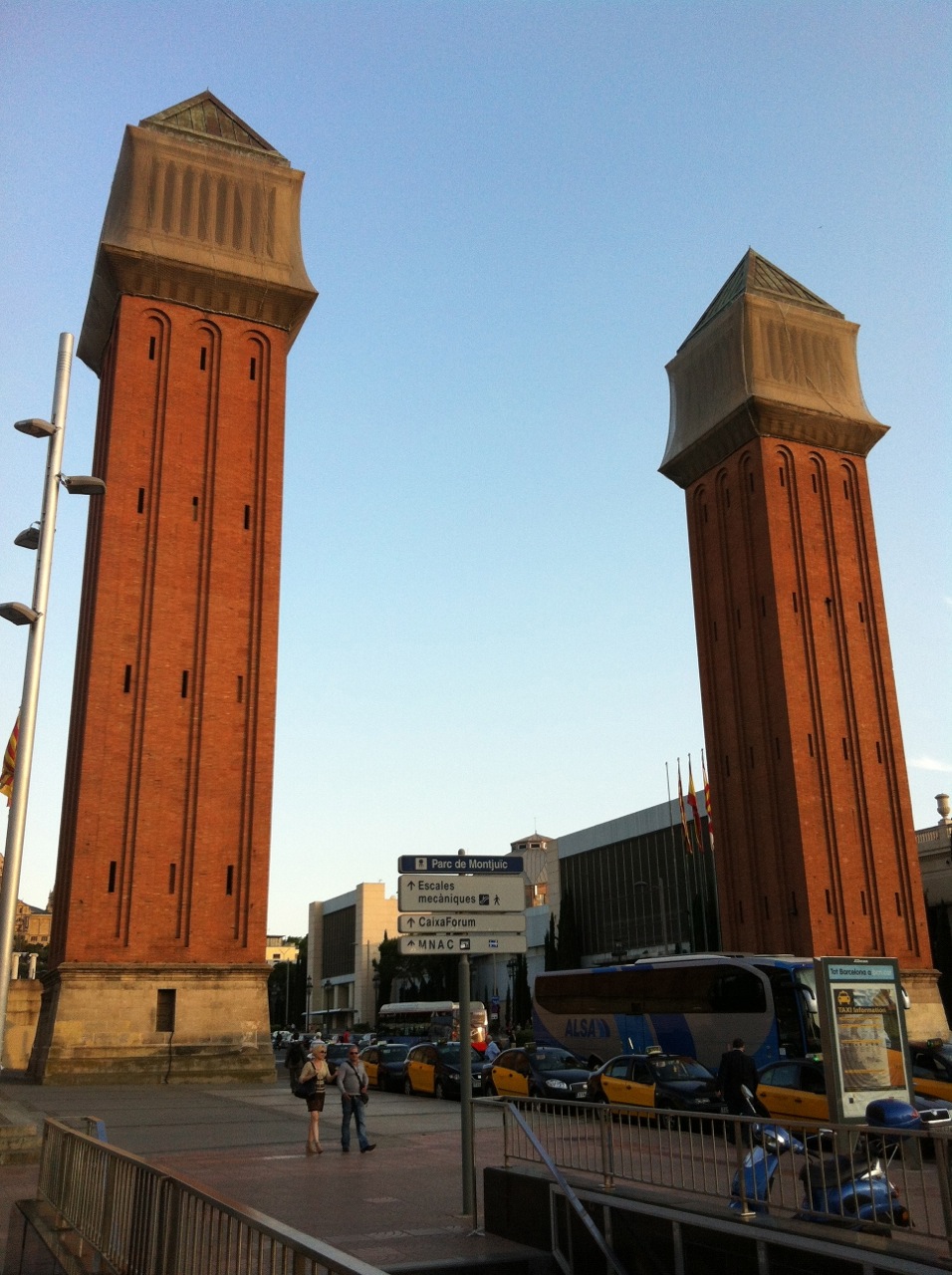
Placa Espanya – Placa Espanya holds several very impressive structures.  First of all, this is where the Font Màgica (Magic Fountain) is located.  Thursday through Sunday nights, after about 9pm, there’s a water show set to music.  If you’ve ever seen dancing fountains at Disney or the Bellagio, then this is nothing new to you, but it’s still fun to watch.  Also in the Placa Espanya are Venetian Towers, a scale replica of the originals from Venice which were a gift to Barcelona for the 1929 Universal Exposition.
Palau de la Música Catalana (Palace of Catalan Music) – Often referred to by travel writers as the most beautiful concert hall in the world, this amazing space seats about 2200 people, and during the day it’s illuminated entirely by natural light.  The sculptures behind the main stage are the figures of 18 muses. Their lower bodies are depicted in mosaic, and their upper bodies protrude from the wall. Each muse is playing a different musical instrument.  If you take the tour, you get a lot of background about the decorations, the lighting, and the acoustics, as well as a demonstration of the pipe organ.

Flamenco – While flamenco didn’t actually originate in Barcelona, it’s still a long-running tradition;  there are several Flamenco shows in Barcelona.  We went to a dinner and show off Las Ramblas at an establishment which has been there since 1970.  Dinner was at 10:00 PM and the show began at 11:30 PM, so it was a pretty late night.  They have earlier shows, though.   The food was spectacular, and the show was amazing.

There was a lot more.  There is so much more to do  than what I’ve shown here. I was there for four days and took over 600 photographs.  Many of those photographs are visible in my Barcelona Flickr gallery, including many more detailed pictures of La Sagrada Familia and everyplace else I went in the city.

If you do visit Barcelona, you should try the tapas.  The food was excellent almost everywhere I went.  I particularly enjoyed my meal at Cafe del la Princesa in the old gothic quarter (Barri Gotic) near El Born.

I’ll close out this post with a few more photographs of things that I thought were interesting.

During our visit, we took a guided tour of the city, and it was pointed out that people who are frustrated with the Euro-zone financial crisis have “redecorated” the facade of the city’s main stock exchange.

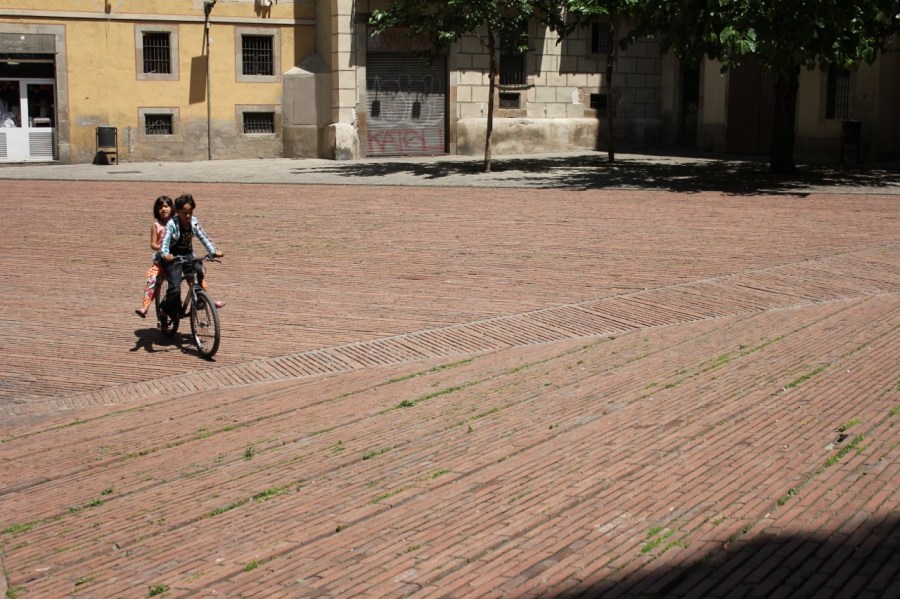
Wandering around the city, playful children and live street music were everywhere.  In that order:

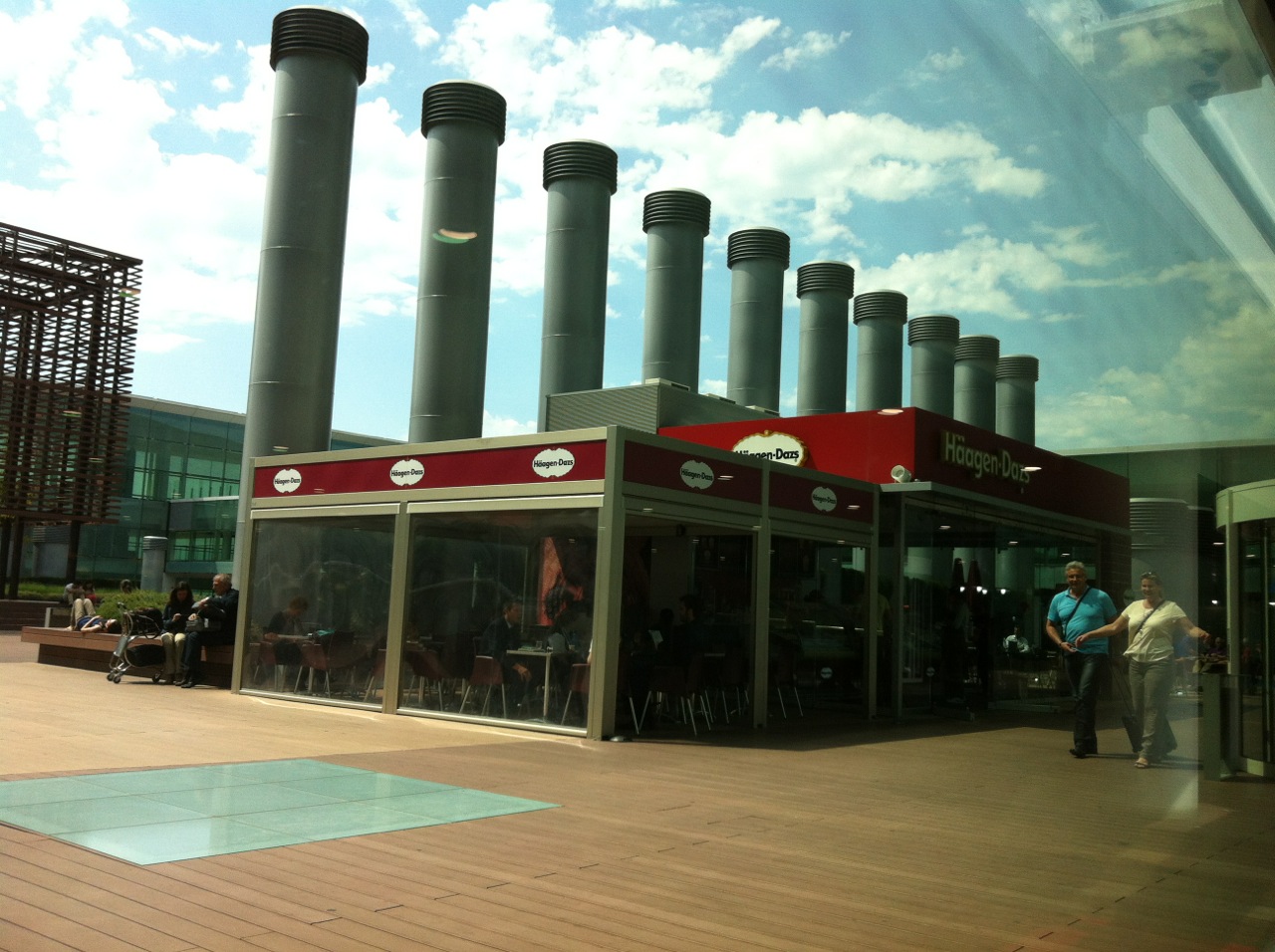
And lastly, the Barcelona airport has a rather interesting feature-  from the gate, inside security, you can walk out onto a sun deck and get some ice cream while waiting for your flight.  This is brilliant.
Dining Out In Germany

When I was planning my trip to Berlin last month, I had a conversation on Ye Olde Facebook with my friend Heather about restaurants in Germany. I offered a lot of advice regarding how the experience is different from dining in the US, and I realized (not for the first time) that I really ought to post about this. I’ve been meaning to write this one for a long while. Here’s what I’ve learned so far:

When you arrive:

Most restaurants in Germany do not have a ‘please wait to be seated’ sign. When you arrive, you are expected to simply sit down at a table of your choosing, although you should avoid any tables that have a ‘Reserviert’ (Reserved) sign. When in doubt, you should ask the staff.

Placing Your Order:

In places accustomed to tourists, it’s not uncommon for a restaurant to have an English menu.  Sometimes you’ll be handed the English menu as soon as they hear you speak.

Typically, your drink order is taken first, and then they come back a little while later to take your food order.

During the meal:

In the US, a glass of water is standard in most restaurants. Here, you shouldn’t expect a glass of water with your meal unless you ask for it. When you do ask for water, the waitress might ask you if you want it with or without gas. This is because carbonated water is very common and popular here. If, like me, you prefer not to have carbonation in your water, you can ask for ‘still’ water and it will be given to you “ohne Kohlensaure,” without carbonate.

Don’t expect ice in your drink in most restaurants, either. There are exceptions, but not many- even cola is typically served at room temperature here.

Some restaurants have longer tables where you might find yourself sitting with strangers- I’ve found myself in this situation a few times, and the preferred behavior is to politely ignore the other person. Sometimes you might find a talkative seatmate, but I haven’t found that to be the case.

When you’re finished:

The waiter will not bring you the check until you ask for it. It’s not uncommon for German folk to sit for quite some time after eating, have an espresso, and talk. More than one German traveler I’ve spoken to has expressed that the American habit of putting the check down while they’re still eating feels extremely rushed and rude. In Germany, nobody rushes you out the door.

Cash is king, especially when dining out. Credit cards are usually accepted in major places like hotels, but many restaurants won’t accept credit cards at all. American credit cards are especially problematic in Germany, because the banking systems are different here. If you don’t see credit card logos on the door of the restaurant, assume that you’ll need cash.

When the check is brought to the table, you will often be asked who is paying, if one person is paying, or if the check should be split. It is a common practice to split the check right there and then, and the waiter will give each person a subtotal based on what they ate.

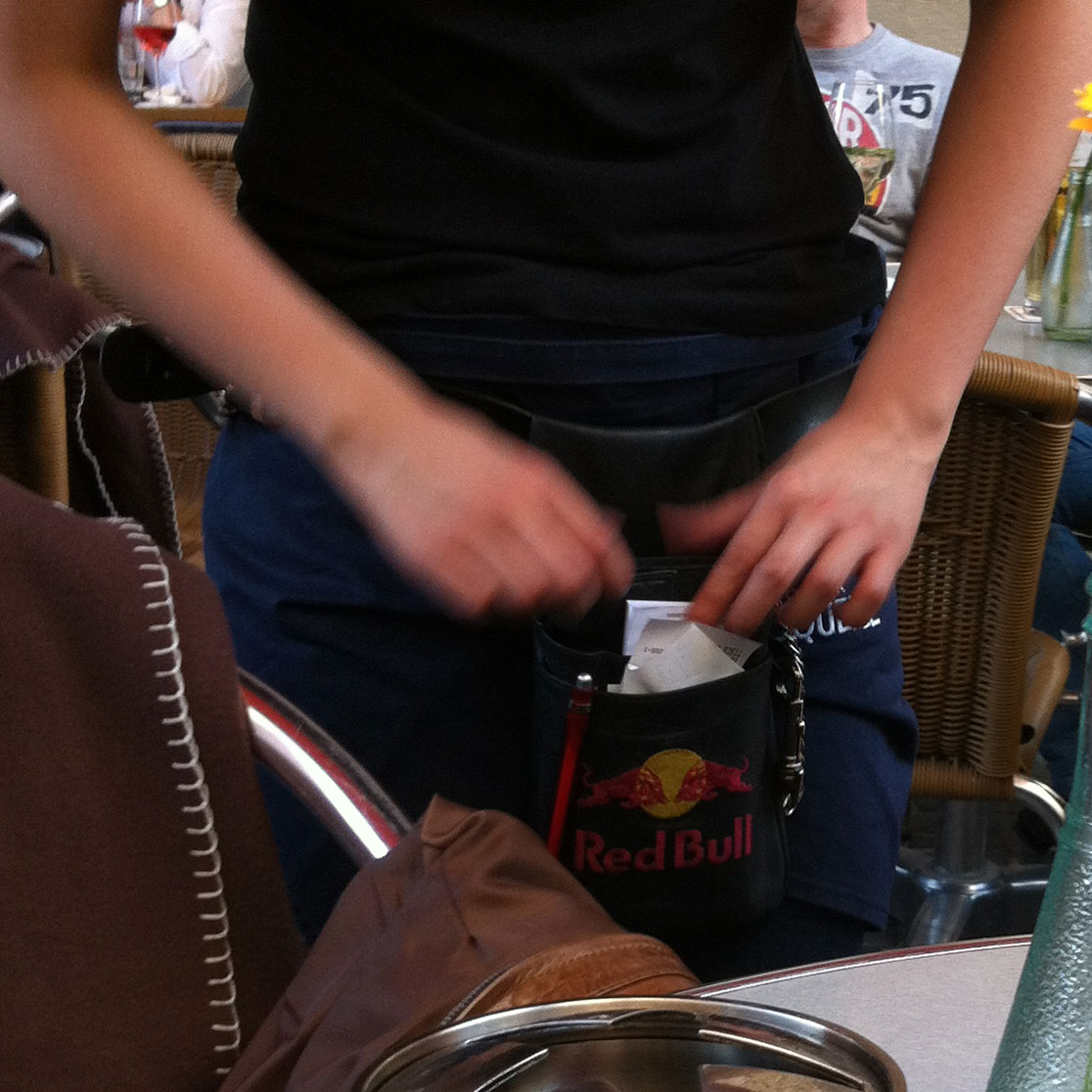
You pay your check at the table, and the wait staff always carries a money pouch to handle the transaction. When the waitress brings you the check, she’ll give you a total. You say how much you’re paying- including the tip- when you hand over your money. For example, if I have a check of 23 euros and want to tip ten percent, I would hand them thirty and say “26 euros” (I usually round up), and they’d give me four back. Don’t leave your tip (Trinkgeld) on the table- that’s typically considered rude. If you want them to keep the entire amount you’ve handed over, you can say ‘stimmt so,’ or, in Bavaria, ‘passt so,’ and this is generally understood to mean keep the change.

Tipping is usually done at 10-15%. Any more and they’ll think you’re nuts. Absurdly generous, but nuts. In the US, people who wait tables have a tiny tiny wage and live or die by their tips, but here, they have a decent living regardless, so if you tip 10%, you’ll seem normal, not stingy.

That’s all the restaurant tips I have for the moment. I may revisit this post in the future.

Easter Weekend In Prague

Easter weekend is a four-day weekend here, because the Friday before and the Monday after are public holidays in Bavaria and much of Europe.  Not wanting to waste a long weekend, I went to Prague.

Some notes before the pictures and story:

  • The Hotel Victoria is pretty convenient to the tram lines, and the room was surprisingly nice for the low rates.
  • Never again will I use an ALEX (Arriva Länderbahn Express) train to go anywhere.  It was not a happy experience, either to or from Prague.  We were treated like cattle on the way there.  Give me a DB train any day.
  • Inside Prague, where tourism is huge, we didn’t have any trouble even though neither of us speak Czech.  There was plenty of English.  Except on the aforementioned ALEX trains.
  • The entire weekend, from rail to hotel to food and attractions, was actually very affordable.  I just wish the weather had been a little bit better…
  • While there are thirty-four pictures in this post, there are over 240 in my SmugMug gallery from Prague.  Feel free to click through that if you like.

On with the pictures and story!

There’s a lot of images here. Click to see more!

Two If By Train

I’ve always wanted to see Europe.  Lots and lots of Europe.  Up until I moved to Germany, however, I had never actually been to Europe. When I was given the chance to work in Germany for Mr. Company, one of the biggest draws was that I would be here for a long period of time-  exploring Europe from Europe is a great deal simpler than trying to do it in a series of shorter trips from the US.

To add to my wonderment,  Regensburg sits on a major rail line.  The Regensburg Bahnhof is a five minute walk from my apartment.  From there, I can be to Munich in just under 90 minutes.  In five hours I can be to Vienna, Salzburg, or Prague.  In less than seven hours, I can reach Berlin or Zurich.  In eight hours, I can reach Amsterdam, Budapest, or Paris.  If I have ten or twelve hours, I can reach Venice, Rome, or London.  That’s just rail-  if I take a 75 minute train to Munich, I can hop a flight to just about anywhere in no time at all.

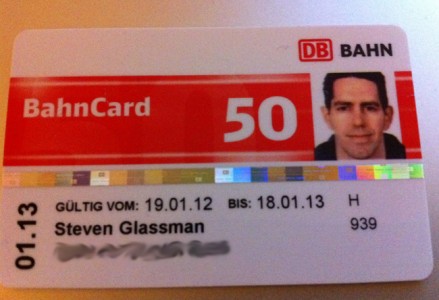
I just got my BahnCard, too.  The BahnCard system is a wonderful boost to someone like me.  For a yearly fee up front, you get a percentage of all of your rail travel discounted within Germany.  The BahnCard 25 is less than sixty Euros up front, and is 25% off your rail for that year.  The BahnCard 50, which I purchased, is 240 Euros per year, but it provides a 50% discount.   I’ve already made back 20% of the expense, and I just got the card last week.   There’s also a BahnCard 100, which is an obscene amount of money up front, but BC100 holders do not pay anything additional for their German rail travel for that year.  It’s the Black Card of the EuroRail system, literally- it’s actually a black card.  Regular BahnCards arrive in a flat white envelope, but the BC100 arrives in a presentation box, pictured below. (And shamelessly stolen from http://blog.mahrko.de/.)

To add to the seven layer burrito of awesome that is the BahnCard, RailPlus is automatically granted on every BahnCard, which grants 25% off of ticket prices for another 24 countries.  From here, I can start planning on little rail trip weekends whenever I feel like it.

I’m gonna go everywhere.