Kuchlbauer Weinachtsmarkt, Abensberg

The third Christkindlmarkt I visited this year was in Abensberg. On Friday, Jenny, Robert, and I went to the Kuchlbauer’s Weinachtsmarkt at the Kuchlbauer brewery.

The Kuchlbauer brewery is not just a brewery, it’s also a tourist attraction, since the Kuchlbauer-Turm (Kuchlbauer Tower) was opened to visitors in 2010.

Up until this trip, I thought that Hundertwasser was the name of the tower- I didn’t realize that Hundertwasser was the name of the artist who designed it.  The tower was designed by artist Friedensreich Regentag Dunkelbunt Hundertwasser.  That’s not his given name-  he was born in Austria as Friedrich Stowasser.  His chosen name is kind of fascinating though, since the individual parts translate to Kingdom of Peace, Rainy Day, Darkly Colored, and Hundred Waters.   I’m positive there’s a story there that I haven’t gotten to yet.

We didn’t climb up the tower on this visit-  that’s something that would be much more interesting in the daytime, when you can properly see the view from the tower.
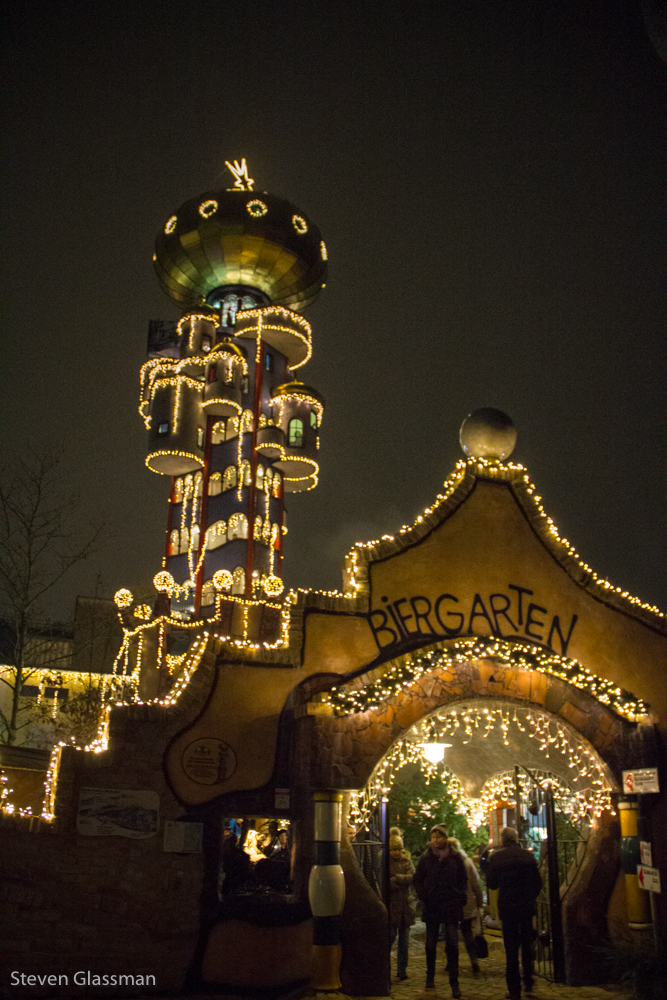
abensberg-1

We were a little surprised at how small this market was- all three of us expected it to be larger.  We started in the courtyard area around the base of the tower.  There were a few stands, including Lebkuchen:
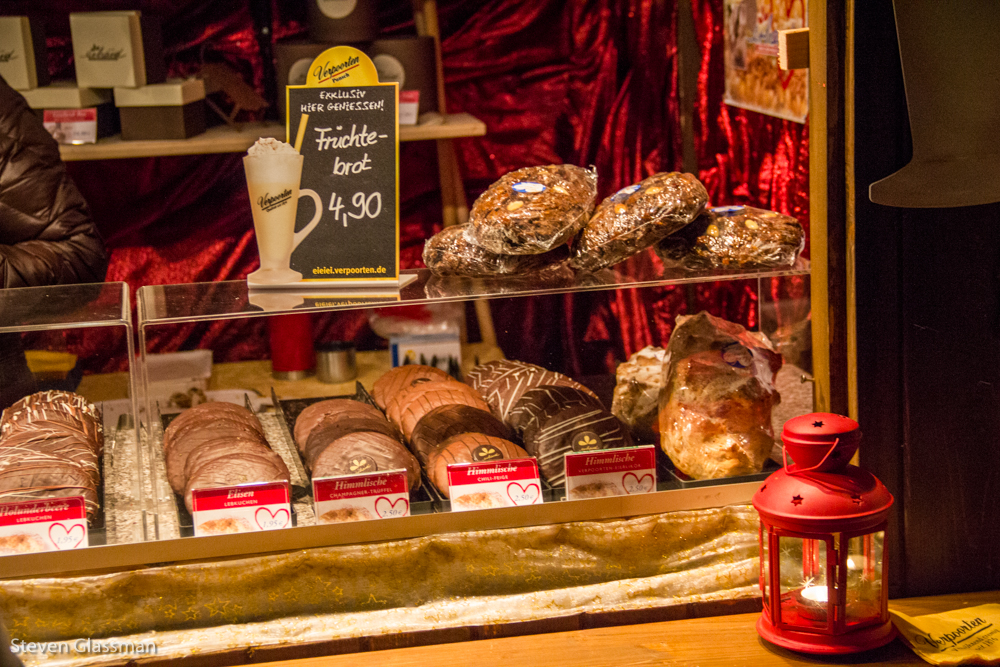
abensberg-2

…as well as Baumstrietzel, the delicious rolled pastries that I first encountered in Prague.  These were dessert.  Dinner was a wrap with venison, horseradish, and some other typical fillings.  Very delicious.
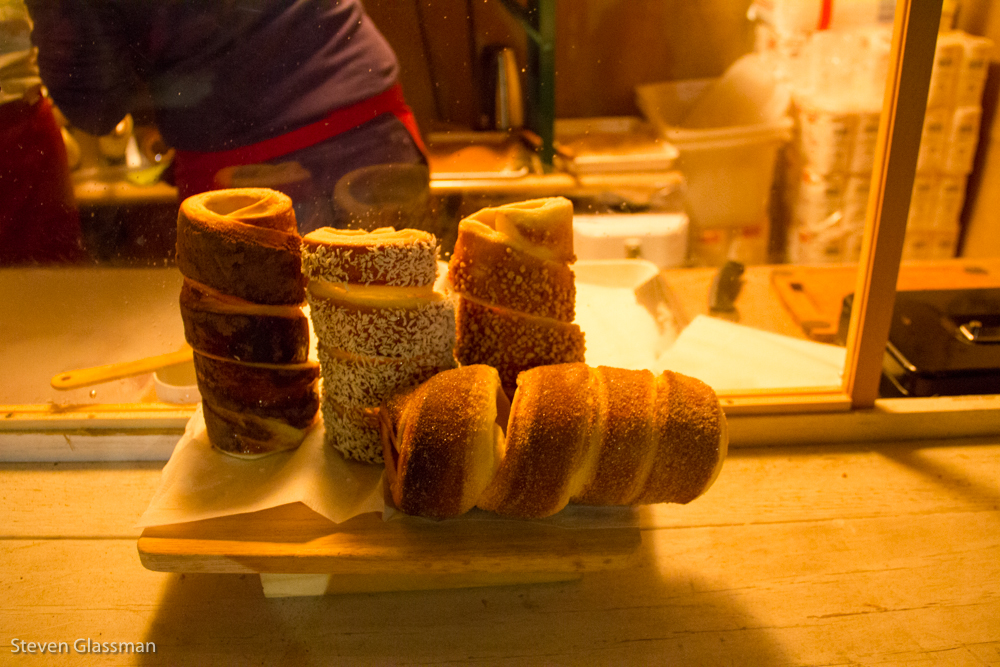
abensberg-3

We spent some time in the tiny little Christmas market there before moving around to the street to take pictures of some of the other lit up buildings.  There as a little train-tram in front to carry people from the outer parking area.
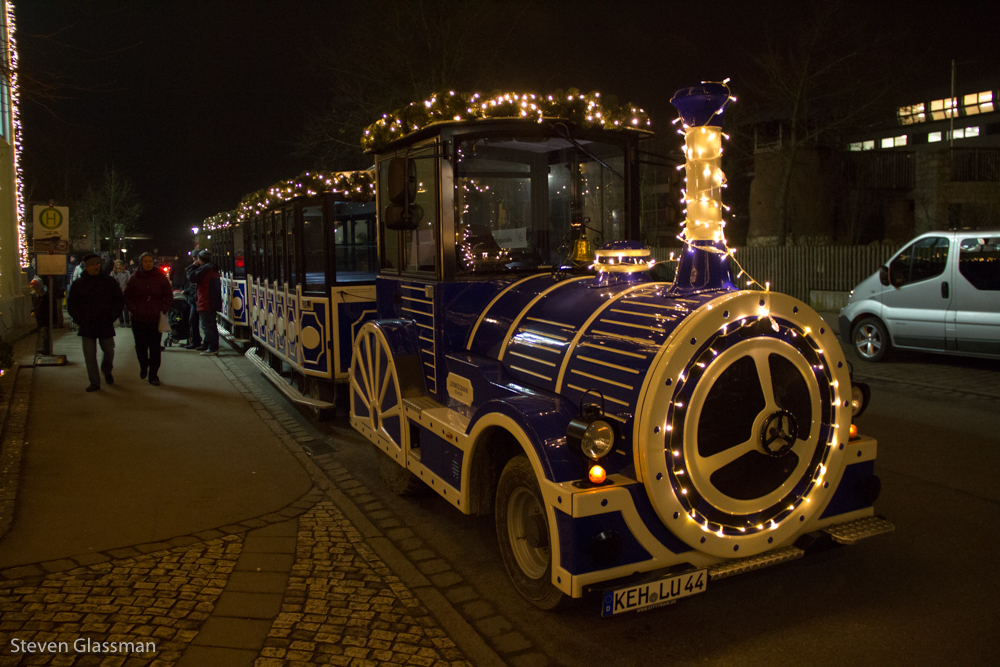
abensberg-4

When we turned around the corner on the other side of the Bierwelt building, we found more booths.  Our original assumption that we had seen the entire Christkindlmarkt was not accurate.  The section at the base of the tower was only one tiny part of the market.  There was much, much, much more.

This booth had incense burners.  Very cute ones.
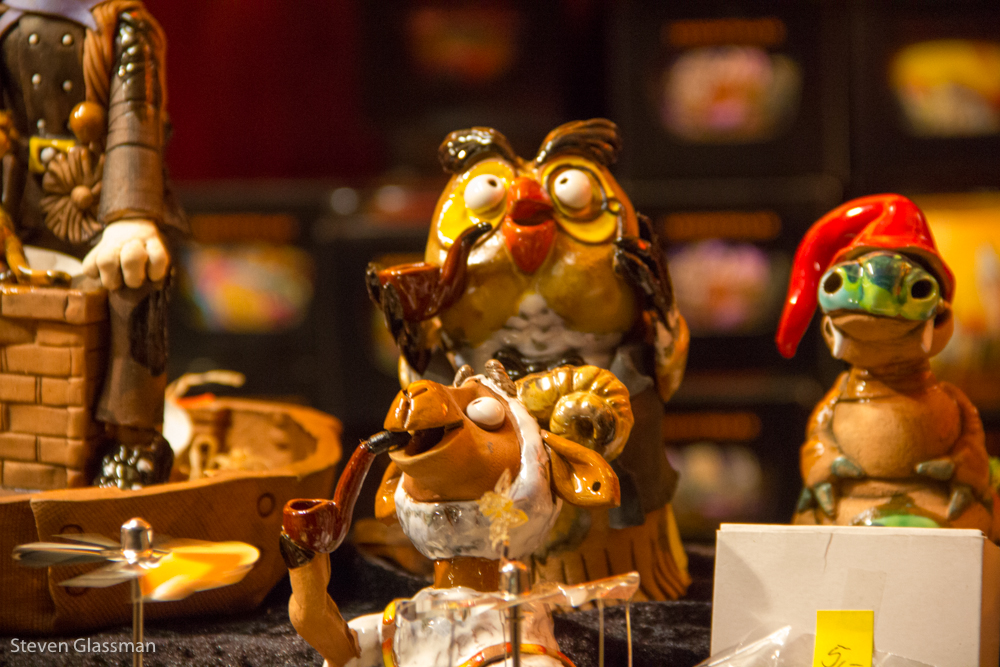
abensberg-5

Toward the back, near the food, there’s a Rudolph “mounted” in the wall.  The sign above his head says, Bitte Nicht Füttern! Rudolpf hat Verdauungsprobleme!  Translated:  “Please do not feed. Rudolph has digestive problems.”

abensberg-6

Digestive problems would explain the singing…

The parking garage has been converted for the time being into a market for goods.  Decorations…

abensberg-7

Horns which I assume are supposed to be used for cornucopia displays, not this foolishness here:
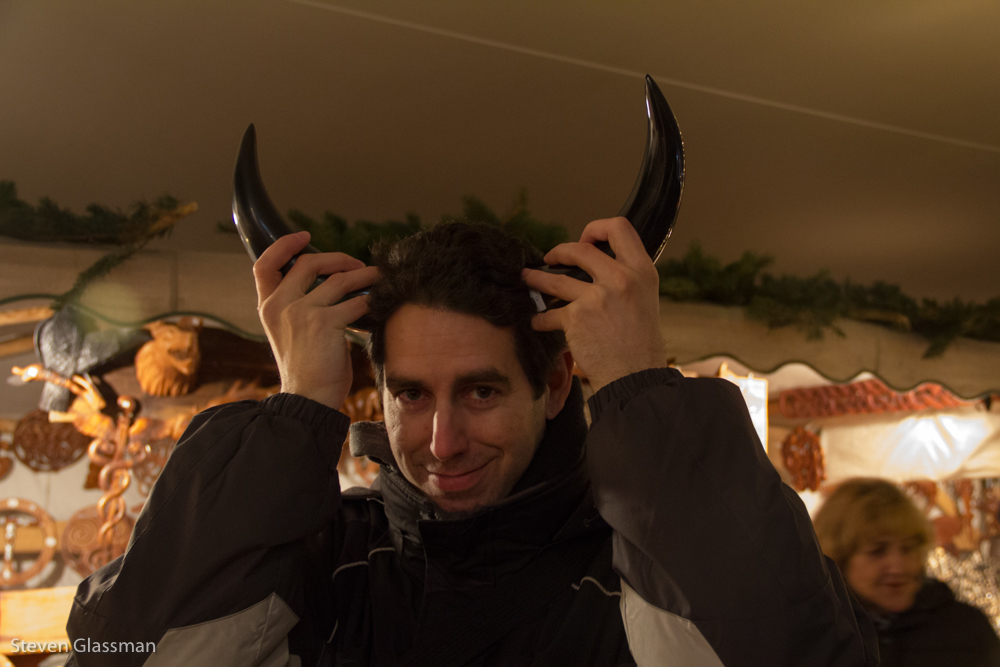
abensberg-8

There was a tiny carousel for the children.
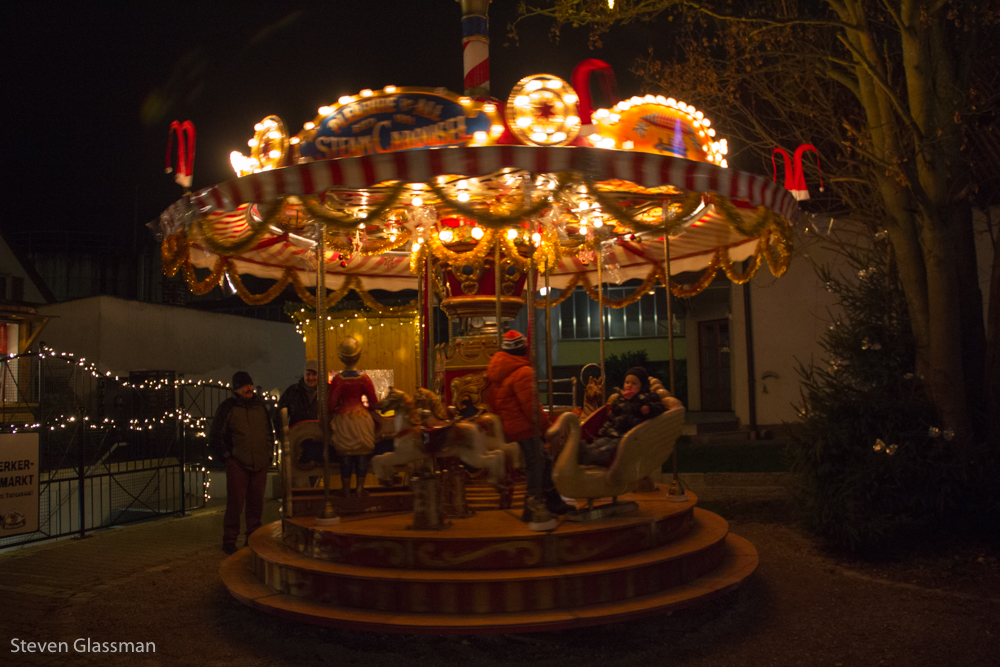
abensberg-9

…and lots of places to get food and drink.
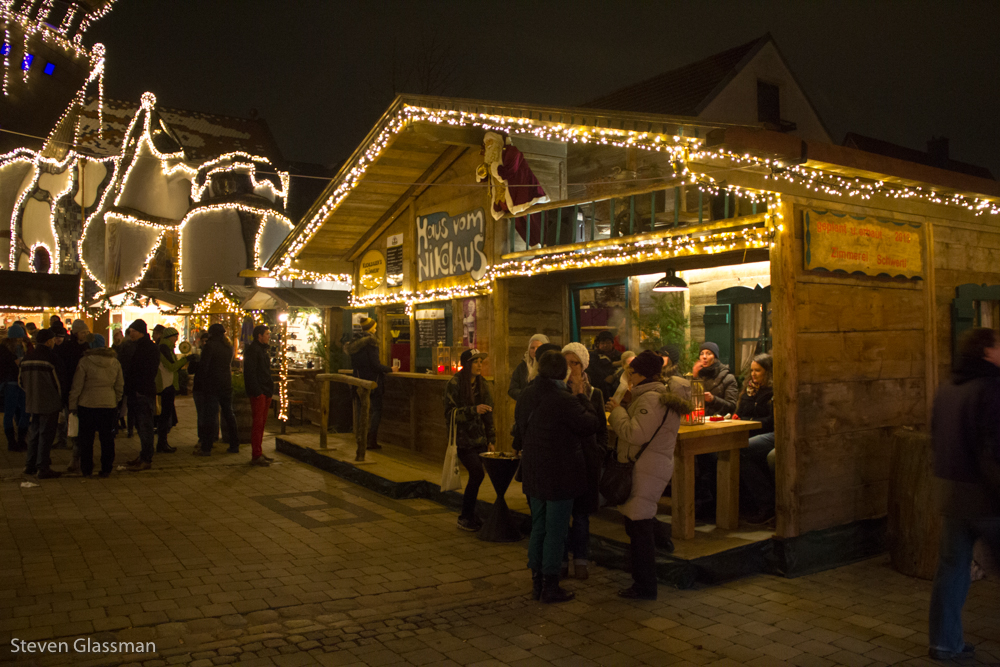
abensberg-10

The Brewery has a tilty building which is still being constructed on the inside, but the open parts are quite interesting, and it’s lit up adorably for the holidays.

abensberg-11

The Kuchlbauer Weinachtsmarkt was actually the nicest Christmas Market I’ve been to, and I’ve seen them now in five cities.  It was large, with a great deal of variety, and yet it wasn’t too crowded.

Which Christkindlmarkt is your favorite so far?

Death On The Brain

Every once in a while, a conversation with my German friends takes a rather unexpected turn, or reveals a facet of cultural divide that I hadn’t ever imagined before.

Earlier this week, I was chatting online with Jenny (my usual partner in crime) and I stumbled across an image someone had posted to FaceBook.  I thought it was hilarious, so I shared it with her.

grim

Her reaction?  “I don’t know what the grim reaper is.”

I was incredulous for a moment, but then I realized how fascinating this is, so we talked a bit more and I asked some followup questions.   She did know the Grim Reaper, as it turns out, but only by the German names.  In Germany,  he’s referred to as Sensenmann (Scythe Man), or as  Väterchen Tod (Father Death).

The things that are “common knowledge” for someone who grew up in the United States are often wildly different than that of someone who grew up in Germany or England or almost anywhere else.

Have you learned that something which you thought was common knowledge that turned out not to be?

Hunting Krampus In Berchtesgaden

I went to a Perchtenlauf this weekend in Berchtesgaden,  a town nestled in the Alps near the Austrian border.  It’s surrounded on three sides by Austria, and is actually south of Salzburg.  Berchtesgaden is nearly as far to the Southeast as you can go and still remain in Germany.

berchtesgaden-0

A Perchtenlauf is a fascinating holiday tradition.  The 5th of December is Krampus Night or Krampusnacht.  On the 6th of December, the Feast of St. Nicholas occurs.  On both nights,  young men dress up as Krampus and roam the streets frightening children.  Krampus is generally demonic in appearance, and typically kind of beastly. Krampus is said to punish children who have misbehaved during the Yule season.  There’s folklore about him carrying naughty children back to his lair in a sack.   On the 6th,  St. Nicholas visits, looking a great deal like a Bishop.  In Austria, Bavaria, and several other nearby regions, St. Nicholas is accompanied by Krampus on the 6th of December as well.

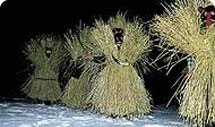
berchtesgaden-10In Berchtesgaden, Krampus is also accompanied by Perchten.  Wrapped from head to toe in straw, the Buttnmandl join the Krampus as they run noisily from home to home and around the community.  Their heads are covered with a mask, usually with a long tongue to add to the frightening appearance.  They have large cowbells attached to their backs, which clank when they run or jump.  The picture to the left is from the Berchtesgaden website- I wasn’t able to get a good picture of any of the straw-clad Buttnmandl with my own camera, and I wanted to include a picture of them. The banner image from Berchtesgaden.de includes all three types:  Buttnmandl, Krampus, and St. Nicholas.

berchtesgaden-0

In Berchtesgaden, you’ll never see one without the other.  The Perchten carry a switch, and they strike passers-by with them for luck.   When girls or children dance with the Perchten, their faces are marked with black charcoal- proof they have danced with the devil, so to speak.

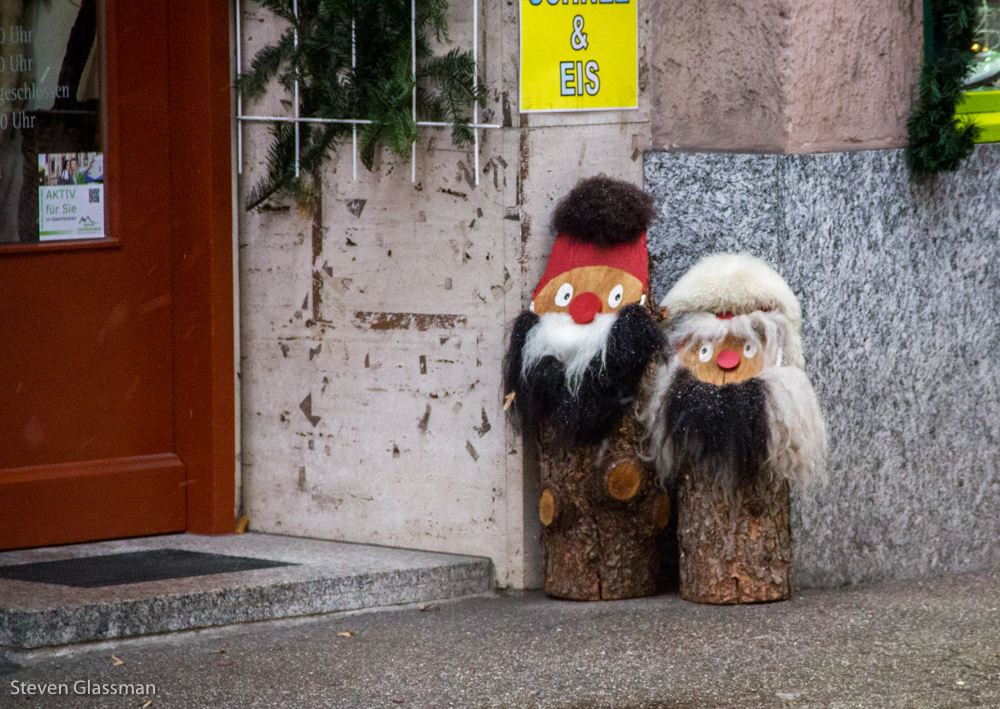
We arrived in Berchtesgaden in the afternoon on the 6th of December, and went into the city in search of these mythic beasts.  We saw signs of them near store-fronts.

berchtesgaden-1

It was a snowy day in the Berchtesgaden Christkindlmarkt, and we only had a little bit of time before the sun set.

berchtesgaden-2 berchtesgaden-3

After dark, we quickly found more sign that the Buttnmandl had passed by-  everywhere they went, there was loose straw on the ground to mark their passing.

berchtesgaden-4

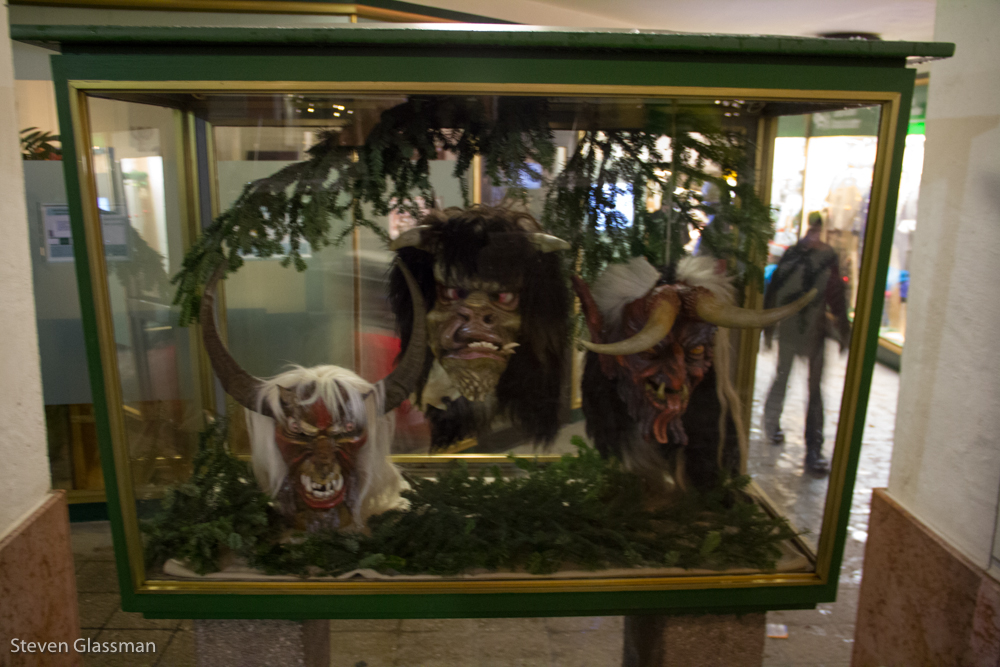
It was clear that at some point in the past, a mighty hunter had killed three of the beasts:  their heads were on display in the Altstadt.

berchtesgaden-5

I thought the decorations throughout the city were very nice.

berchtesgaden-6

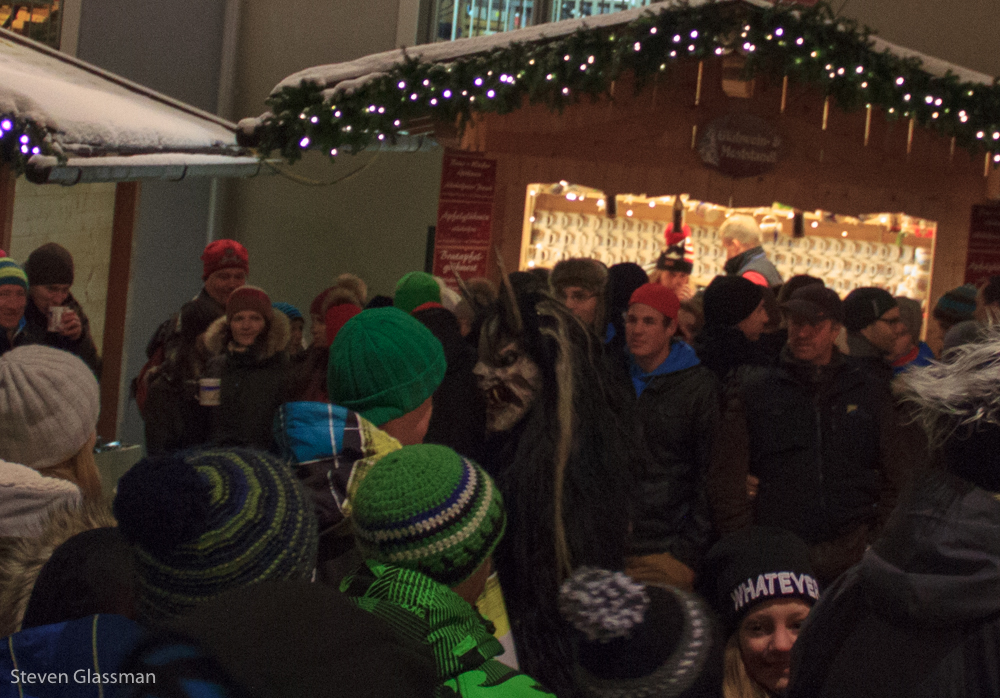
After a few mugs of hot mulled Apple wine, we finally heard the clanking of the beasts in the city.  Each time we heard the clanking of those cowbells, we walked toward where the sound had been, and found nothing but straw.   Finally, after several passes not finding the Perchten, we stumbled across a crowd  surrounding several of them.  I was not able to get clear pictures, but I assure you there were many of them.

berchtesgaden-7  berchtesgaden-9

The bells on their backs made a very distinct clattering sound.  Hours later, after we had returned to the hotel, I heard the sound passing by before I went to bed.  A group of Perchten passed in front of the hotel, and then another.  I nearly went back outside, but the sound passed so swiftly I know I wouldn’t have seen anything more.  These cowbells made quite a lot of noise.

berchtesgaden-8

Here’s a video clip from the same place a few years ago, to give you an idea of the sound of the bells.

Have you ever seen a Krampuslauf or a Perchtenlauf?

The Römermauer, After Renovations

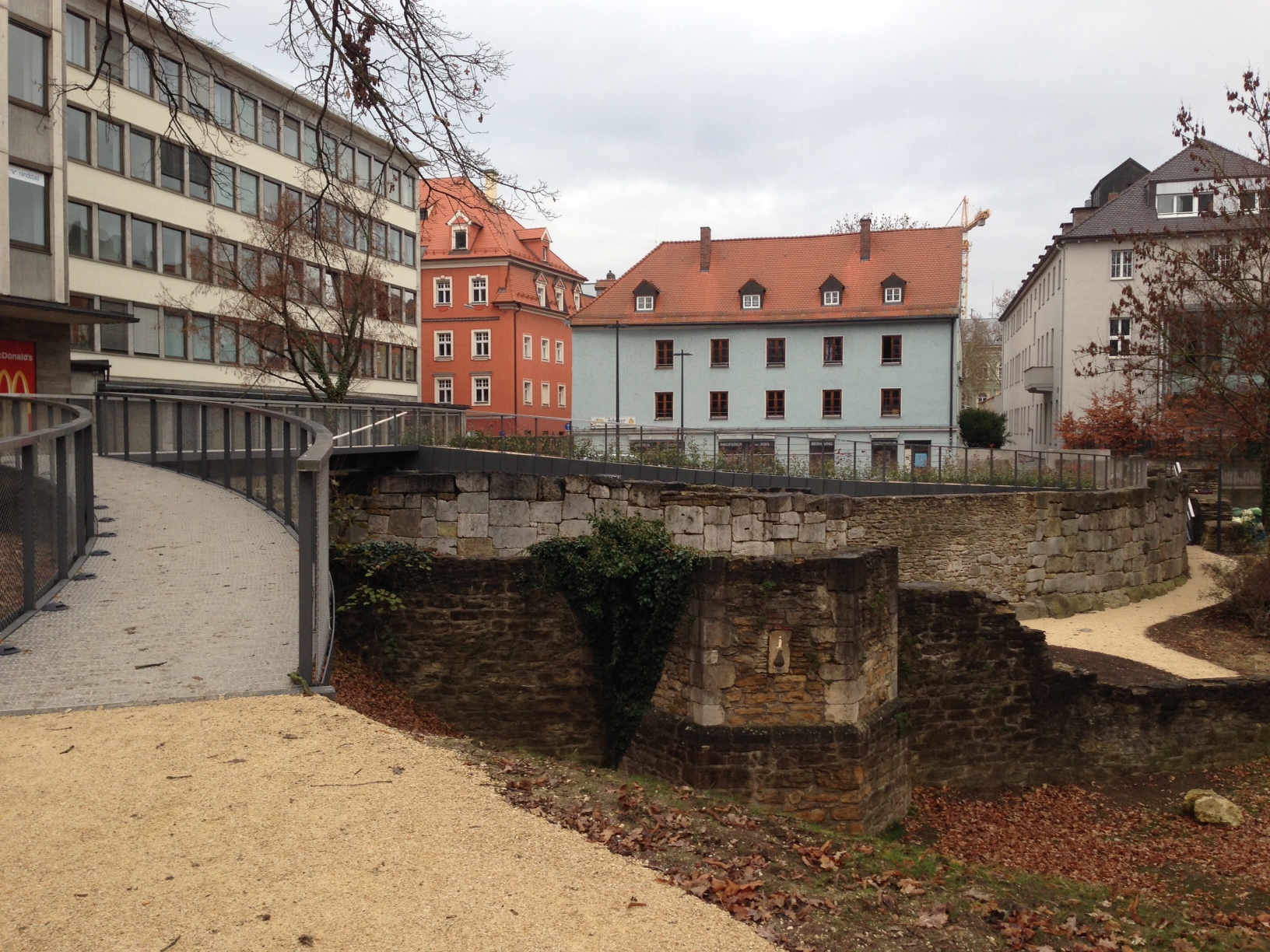
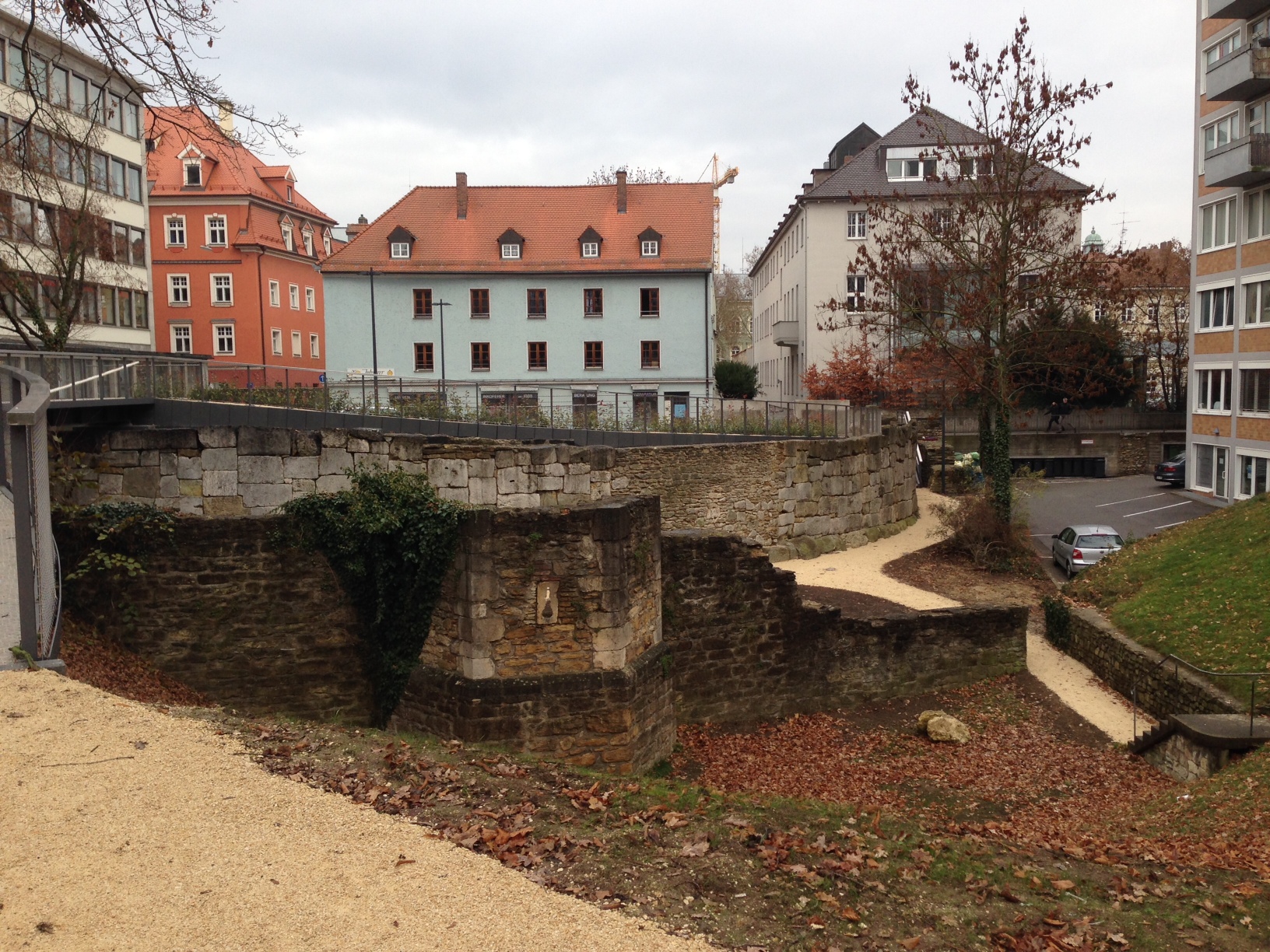
Back in January of 2012, I noticed the Römermauer for the first time.  The Römermauer is a section of Roman wall from the original Castra Regina (“fortress by the river Regen”) which was built around 179 AD, during the reign of Marcus Aurelius.  It’s right behind the McDonald’s on Maximilianstraße, whickh is kind of nifty.

Here’s what it looked like back in 2012:

fortress00

Over the last few months, the fortress wall has been fenced off for some minor renovations, and now I know why.  The city put a walkway up around the side and back, enhanced the walkways around the wall, and generally made it a bit more tourist-friendly.

fortress01 fortress02 fortress03 fortress04

Christmas Market Season Is Here!

Last week, the Christkindlmärkte opened all over Germany.  It’s time for Glühwein (hot mulled wine), hot fresh festival food, gingerbread, and the warmth that comes from spending time with your friends.  The markets will be open until just before Christmas.

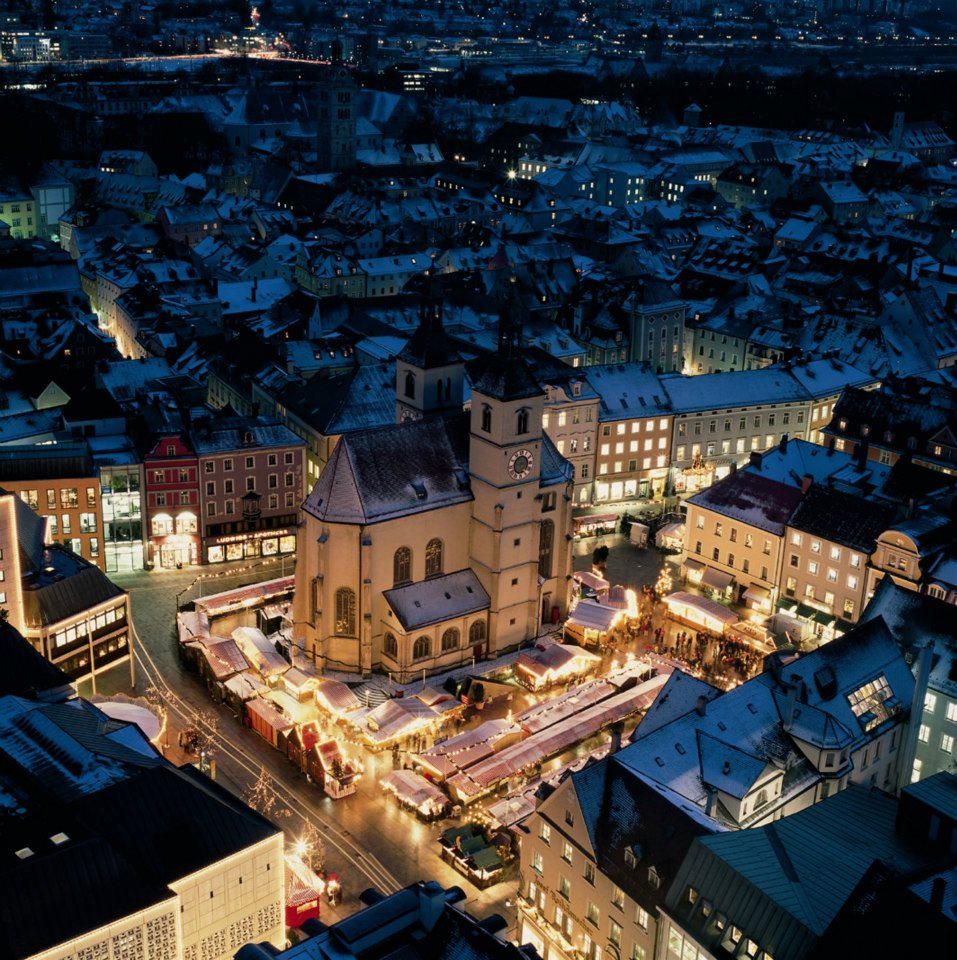
I didn’t take this picture of the Regensburg market on Neupfarrplatz, but I wish I had-  I’m pretty sure that this view was taken from the spire of the Dom, and I really want to go up there.

Regensburg-Christmas-Markets

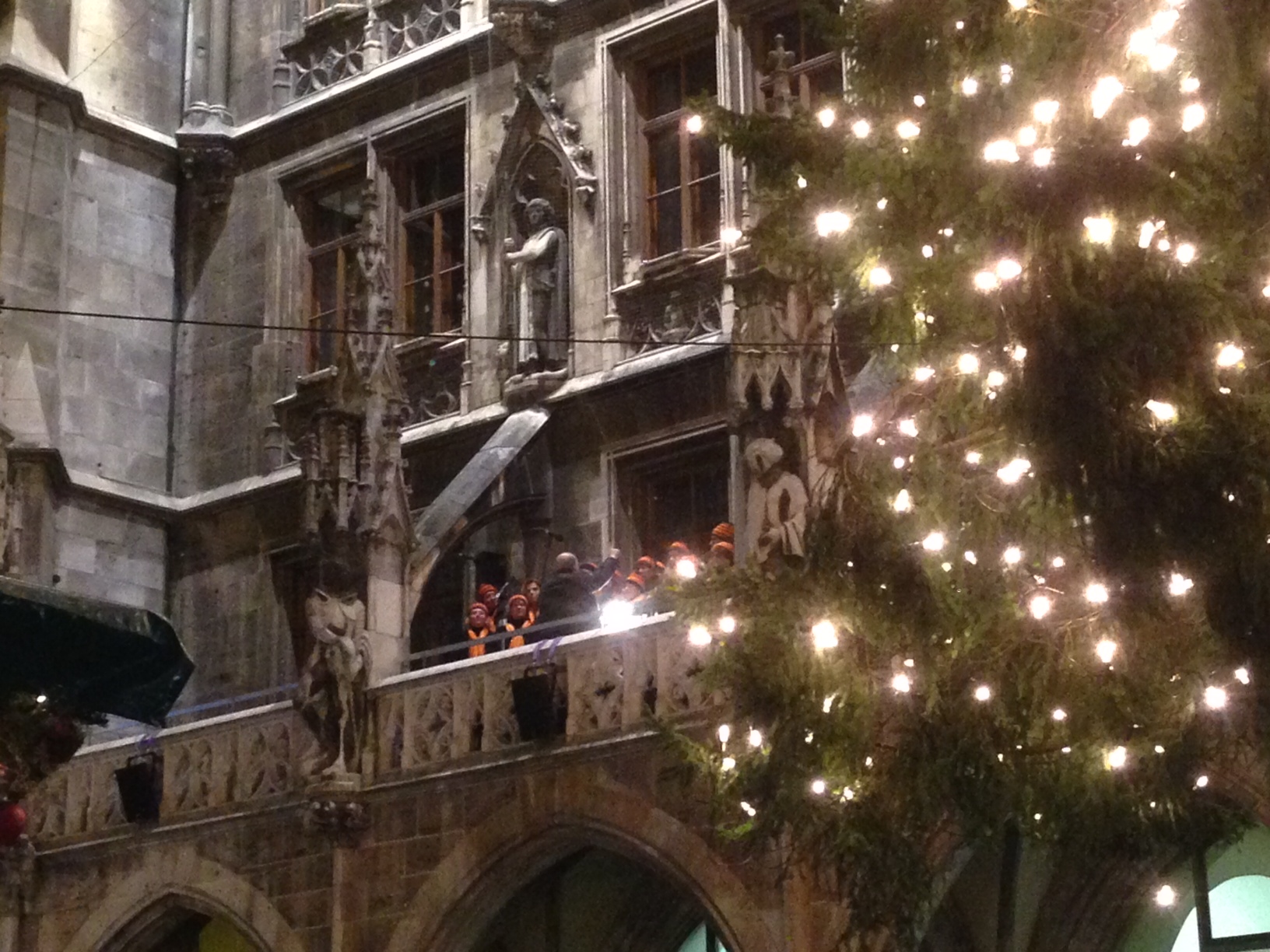
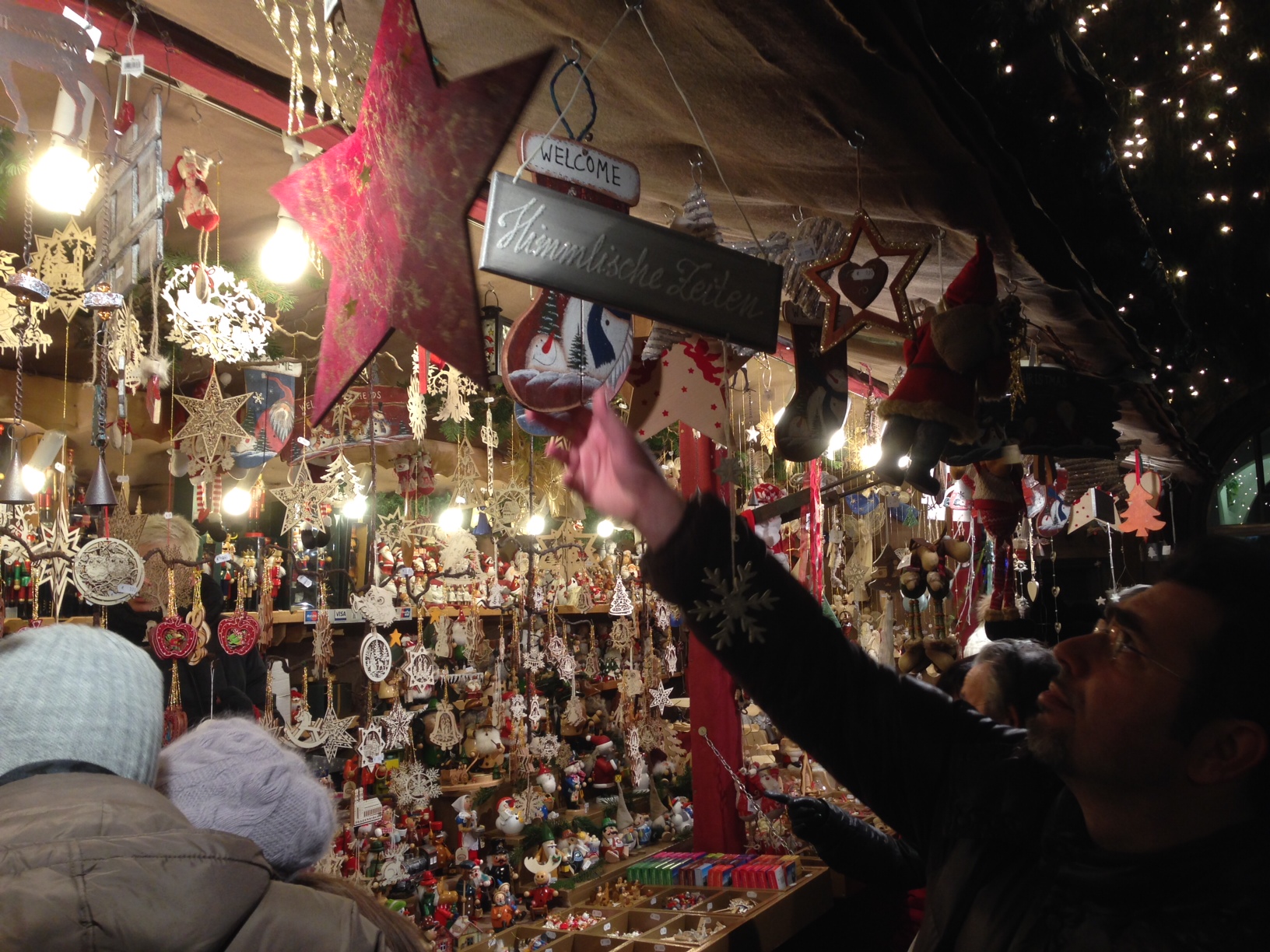
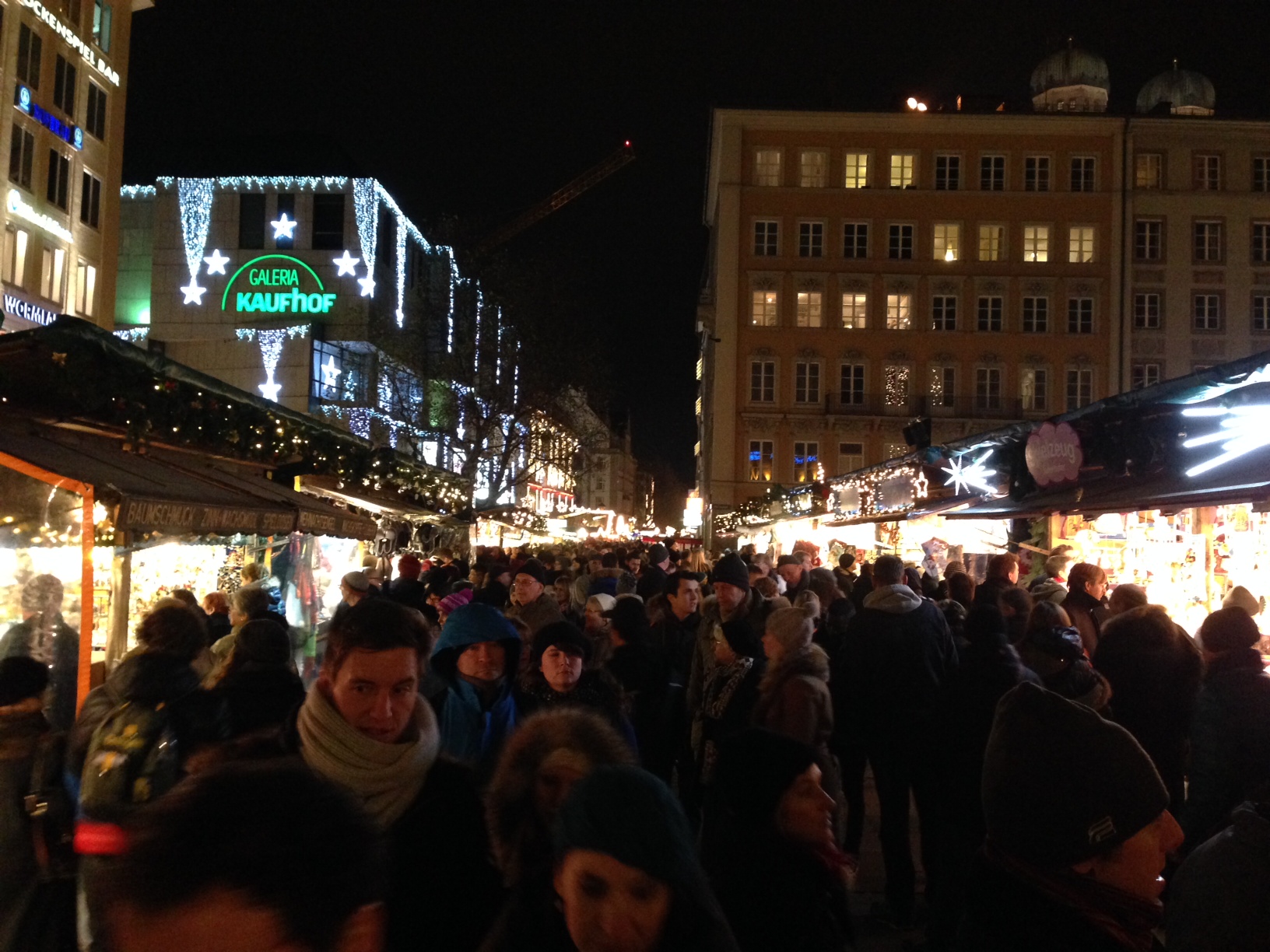
These next nine photos, on the other hand, are from the Marienplatz Christkindlmarkt in Munich.  I took these yesterday, while I was hanging out with Cliff before Sarah’s concert.

munichxmas-photo-01 munichxmas-photo-02

Yup, they were singing.

munichxmas-photo-03 munichxmas-photo-04

Oh crepes, lovely lovely crepes…

munichxmas-photo-05

The crepe under construction here was a Schafskäse (feta cheese), tomato, pesto, and balasmic crepe.  It was incredibly delicious, and really piping hot.

munichxmas-photo-06 munichxmas-photo-07 munichxmas-photo-08

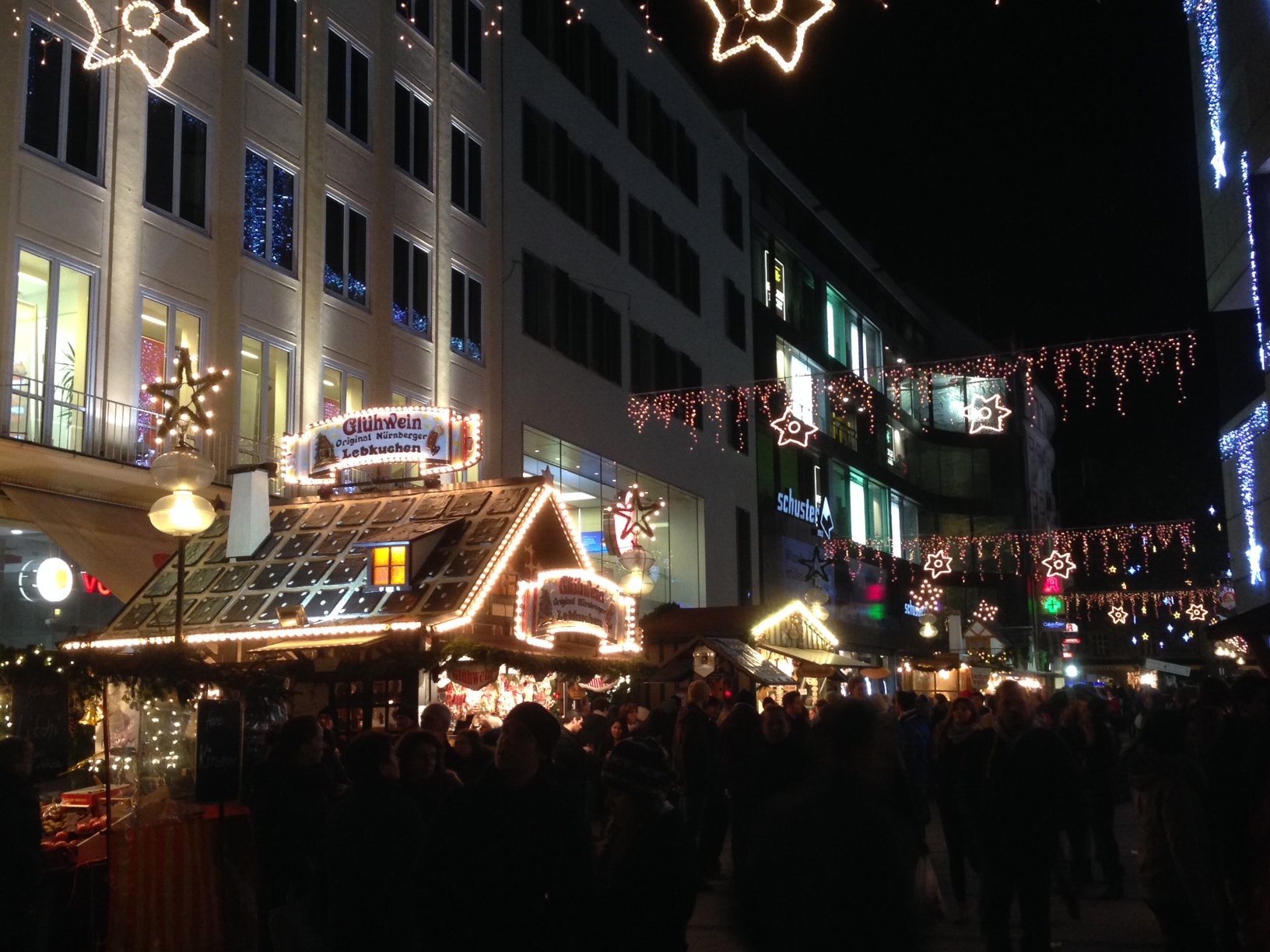
There are a bajillion Glühwein stands in Munich.  They’re easy to spot, too.

munichxmas-photo-09

Have you ever been to a Christmas Market?  What’s your favorite flavor of Glühwein?