Remembering the Holocaust on September 11th

On the 11th of September, I was able to attend the installation of several Stolpersteine.  I’ve posted about Stolpersteine before, when I first learned what they were.  For those of you just tuning in, I’ll refresh your memory:

The German word Stolperstein literally means “stumbling block” or “obstacle” and Stolpersteine is the plural.    They were created by artist Gunter Demnig in 1993 and the first installation was in Cologne, Germany, in 1994.

The Stolpersteine blocks are designed as memorials to commemorate individuals who were sent by the Nazis to prisons and concentration camps, as well as those who emigrated or committed suicide to escape the Nazis.  Some of the blocks represent those killed by the Nazis and some represent survivors.    The Stolpersteine are not limited to Jews, either.  The vast majority were Jews, but there have also been blocks placed for various other types of people, including Romani people, homosexuals, blacks, and even Christians who opposed the Nazis.

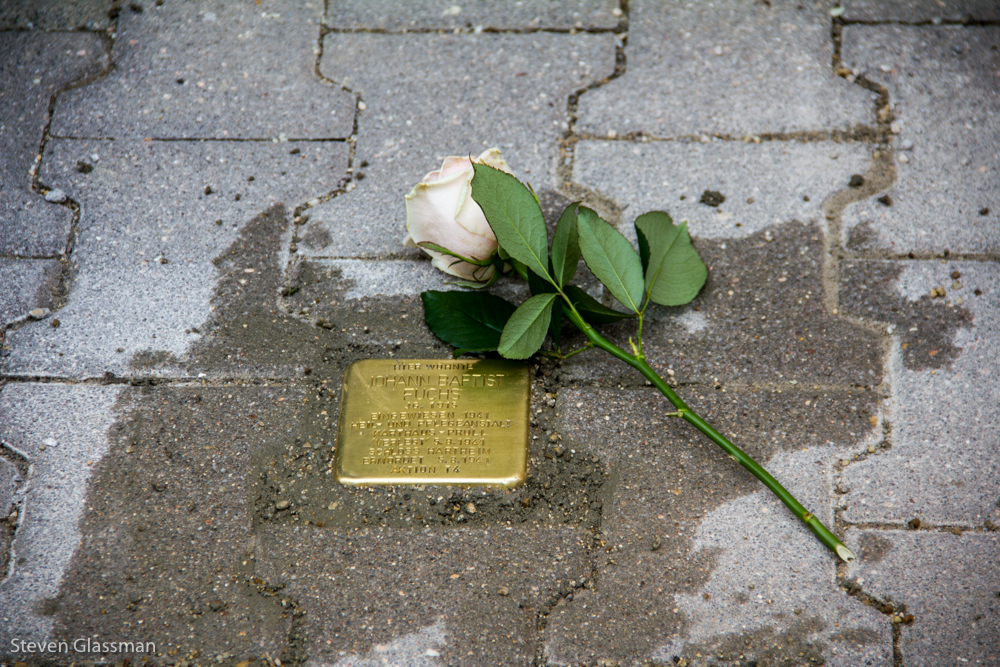
The actual block is a ten centimeter concrete cube covered with a sheet of brass.  Demnig stamps the details of the individual, the name, year of birth, and the fate as well as the dates of deportation and death, if known.  Each block begins with “Hier wohnte,” which is German for “Here lived.”  Most are set at the last residence of the victim, but some are set near workplaces.

More than 40,000 Stolpersteine have been installed so far, in over 1000 cities and towns in about twelve countries.

On this particular day, they were installing 26 Stolpersteine in eleven separate locations around town.  I was able to attend two of the eleven installations before I had to head into work.  Before an installation, here’s what a Stolperstein looks like:

stolpersteine_2013-1

The place where the stone would be installed was marked, and a city worker dug out the existing sidewalk.

stolpersteine_2013-2 stolpersteine_2013-3

A gentleman who works with der Initiative Stolpersteine in Regensburg said a few words, then a guy from the city spoke, Next, a woman read the biography of Johann Baptist Fuchs, the individual named on the stone. Finally, a relative of Johann Fuchs said a few words.  Afterward, the stone was set into place with concrete.

stolpersteine_2013-4

After the stone was installed, the man who was related to Johann Fuchs laid a white rose next to the stone.
stolpersteine_2013-5

A short while later, at a second location, we  began the same procedure.  This time, with four Stolpersteine and fewer speeches.

stolpersteine_2013-6

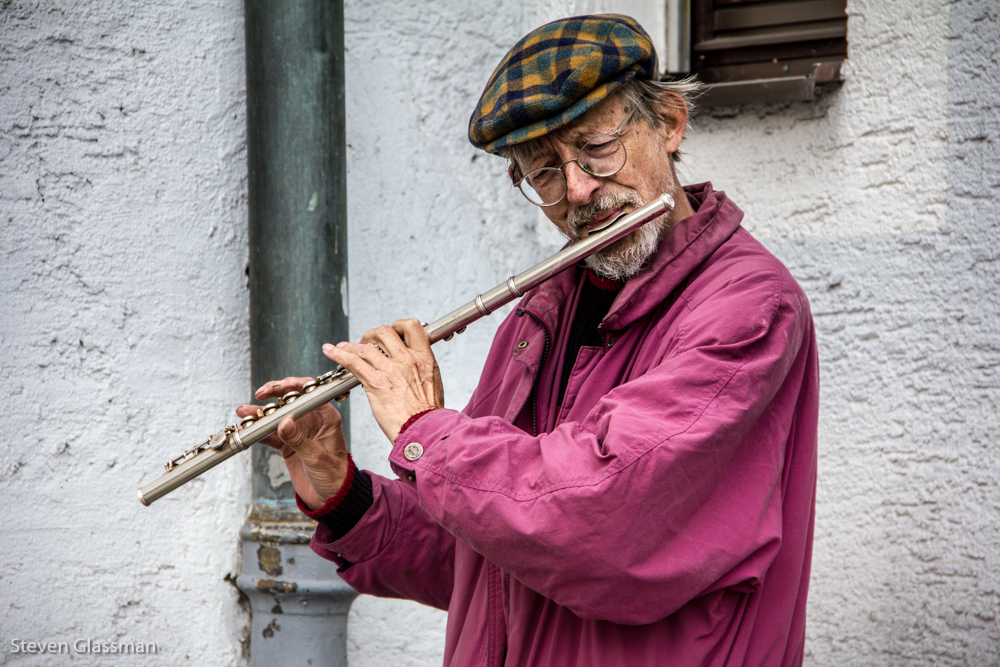
Each installation had a bit of flute music, though.
stolpersteine_2013-7

The installation was done very carefully, with the workman making sure that the stones were level and flush with the rest of the sidewalk.

stolpersteine_2013-8

Once the concrete was set in, the stones were cleaned off with a sponge.

stolpersteine_2013-9

Once again, roses were laid on the newly installed Stolpersteine to conclude the installation.

stolpersteine_2013-10

Have you ever stumbled across a Stolperstein?

A fabulous day on Haidplatz

I am always amazed at how constantly there is stuff to do in the Altstadt on weekends.

Saturday the 15th of June was once again Christopher Street DayI first encountered this one last year, quite by accident.  Christopher Street day is a gay pride event held in Germany and Switzerland. It’s an anniversary to the LGBT uprisings in the Stonewall Riots on June 28, 1969.  The Stonewall Inn was on Christopher Street, hence the name.  The event isn’t always held on the actual anniversary for organizational reasons, but it usually turns up in June.

This is a huge event in Berlin and Cologne, but the day is celebrated in major cities all over the country.  There was a parade this year, but I missed it because I didn’t realize that it was happening until after it had concluded.  Blast!  I really need to put this on my calendar for next year so I don’t miss the parade!

I took a bunch  more pictures this year than I did last year.

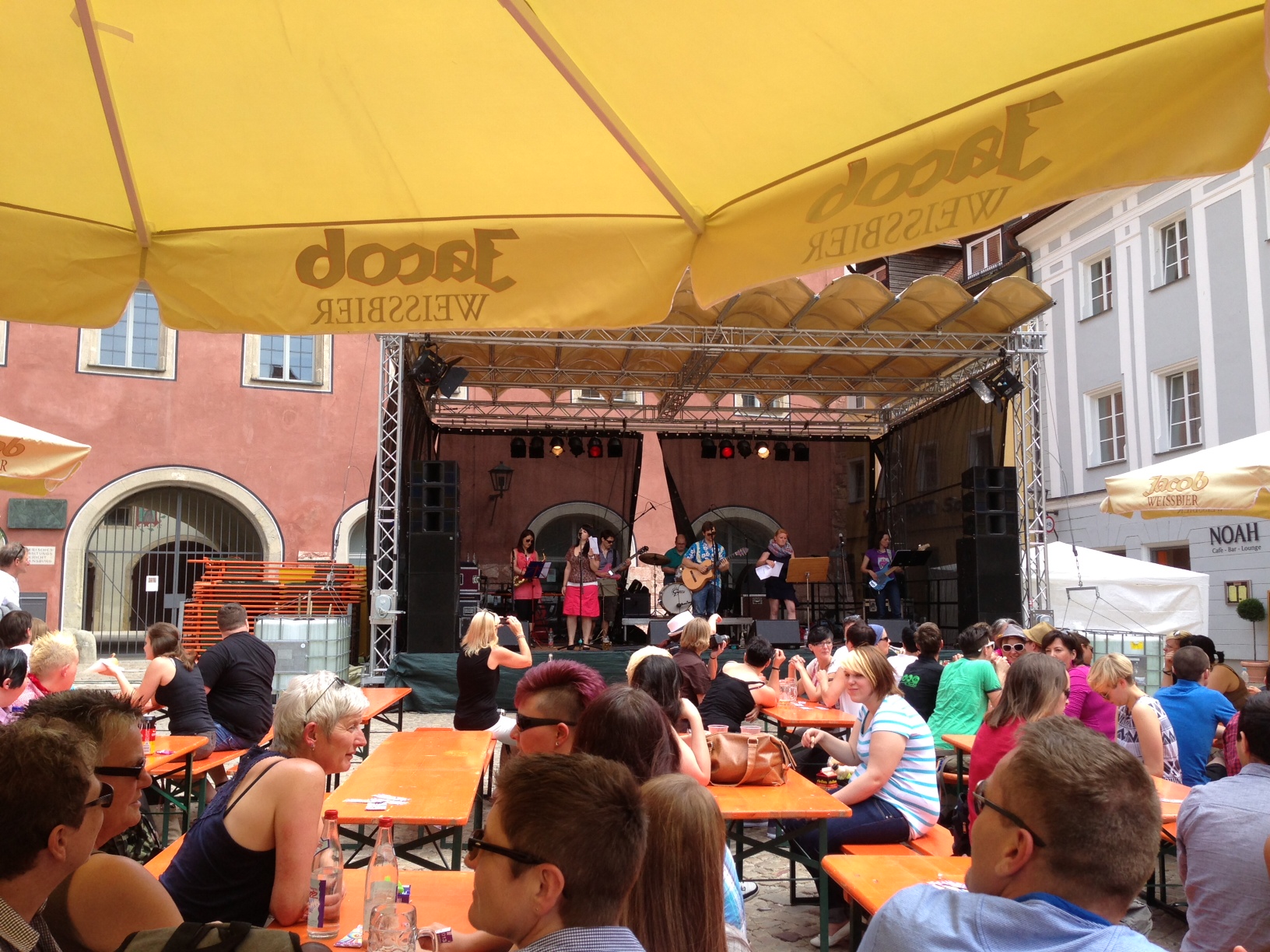
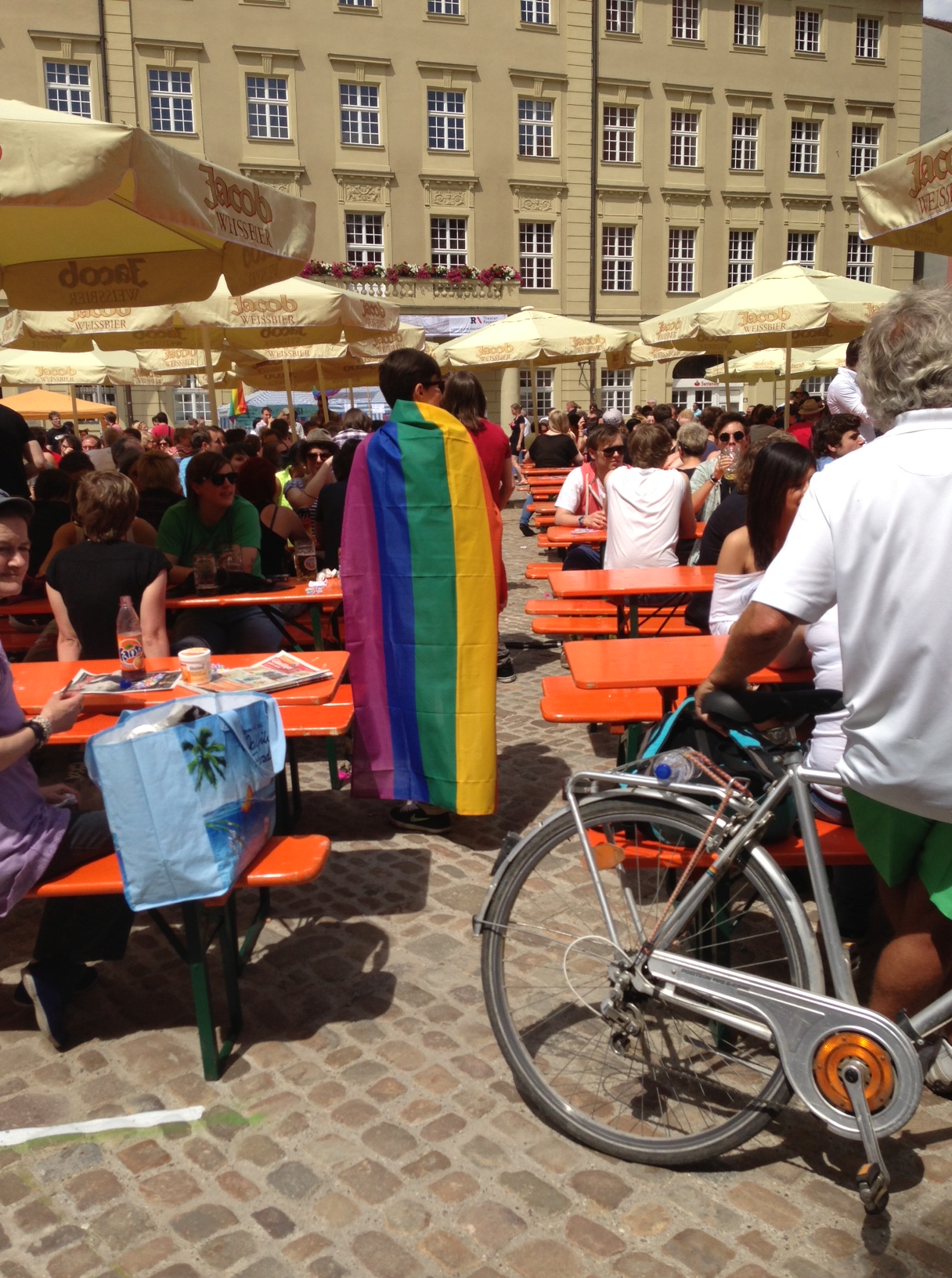
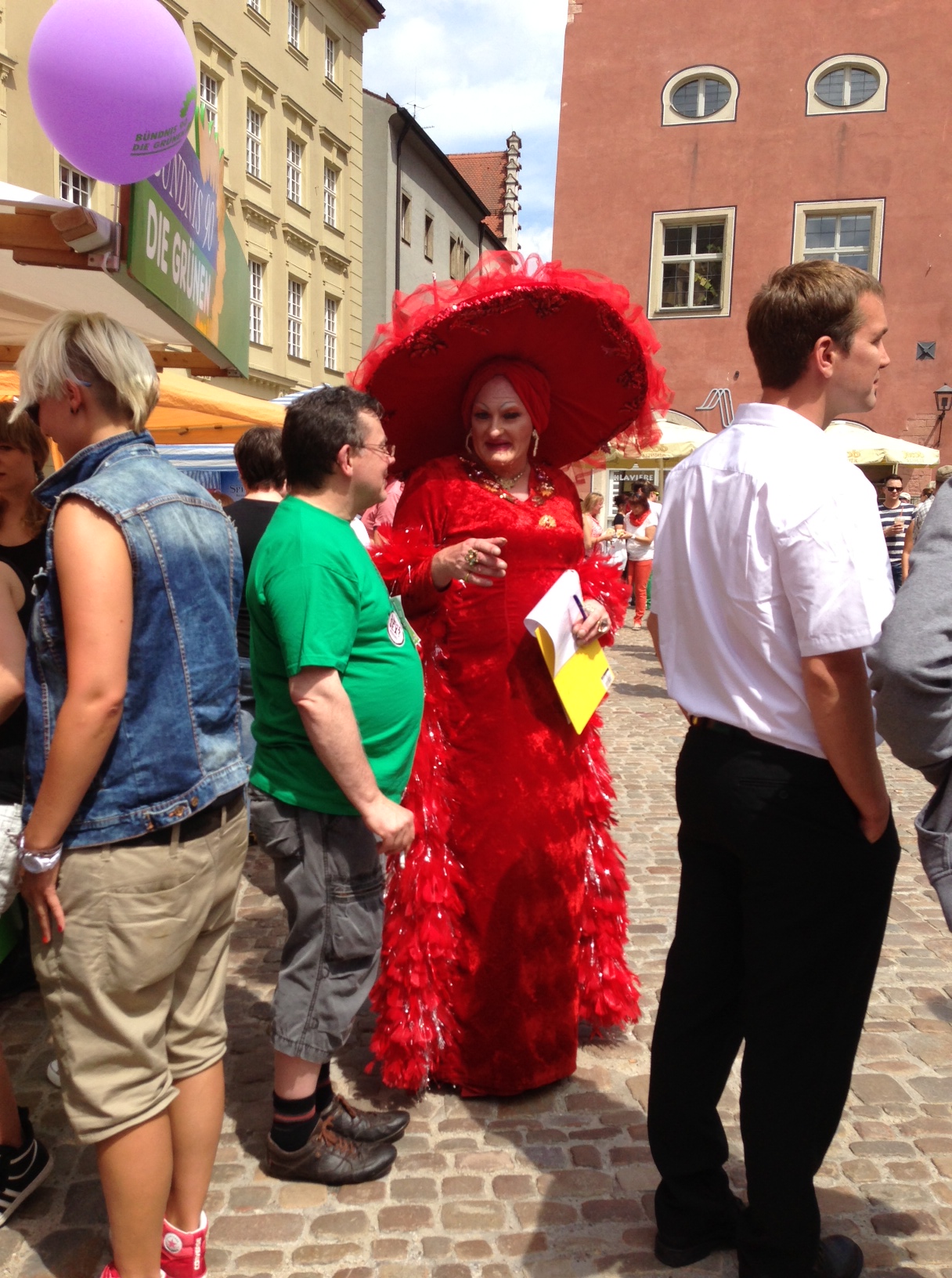
csd2-1 csd2-2 csd2-3 csd2-4 csd2-5 csd2-6

Have you ever seen a Christopher Street Day celebration?

Dachau Concentration Camp

Dachau was the first of the Nazi concentration camps.  It was opened in March of 1933 and it was used as a model for the other camps to follow.  The camp served as a training center for SS guards, as well as a forced-labor camp for what Heinrich Himmler called “political prisoners.”   Dachau was built to hold about 5,000 prisoners, but by the time the camp was liberated by American soldiers in 1945, the number of prisoners held there was more than double that number.  In its twelve years as a concentration camp, over 200,000 prisoners were taken to Dachau, and nearly 32,000 deaths were recorded there.  When US troops liberated the camp in 1945, soldiers reported seeing a row of cement structures that contained rooms full of hundreds of dead bodies piled floor to ceiling.

Tdachau01oday, the camp is a memorial site.  Most of the barracks have been razed to the ground, but two of them have been maintained so that visitors can see the living conditions of the prisoners.   I visited the camp last Sunday, and the weather was suitably bleak and oppressive for the visit.  I think I would have felt a little strange if it had been a sunny, warm, cheerful day.

To visit the Dachau Concentration Camp Memorial site from Munich, you must take the S2 line of the S-Bahn to the Dachau Bahnhof.  From there, a regular bus runs directly to and from the “KZ-Gedenkstätte” stop.   KZ is short for Konzentrationslager (concentration camp) and Gedenkstätte means ‘memorial.’  From the Munich main train station, the entire travel to the memorial site took us about 45 minutes.

At the memorial site, admission to the memorial is free, but there is a visitor’s center where you can pay a small fee for an audio tour guide.  You also get a map of the site which guides you through the path an incoming prisoner would have taken.  It starts with the main gate, pictured at right.   The German phrase written in the metalwork of the gate, Arbeit Macht Frei, means “Work makes you free.”  This phrase was used at the gates to many of the concentration camps, famously including Auschwitz.

After you pass through the main gate, you find yourself in an enormous open area, with one set of buildings to the right (currently a museum) and baracks off to the  left.  The giant field is the roll-call square.  Prisoners would stand here for roll call each morning, sometimes standing in place for up to an hour.  The dead would often be dragged into the roll call square to be counted as well.  This picture is looking across the roll call square towards the still standing barracks.

dachau02

Inside the barracks, you can see what the living conditions were like for the prisoners.  Privacy was nonexistent.

dachau06

These sleeping racks were overfull by the time of the camp’s liberation in 1945.   The single structure below contains sleeping space for 54 prisoners.  This is one structure at the end of one portion of one of the 32 separate barracks buildings.  In 1945, the camp was up to more than 12,000 prisoners.

dachau05

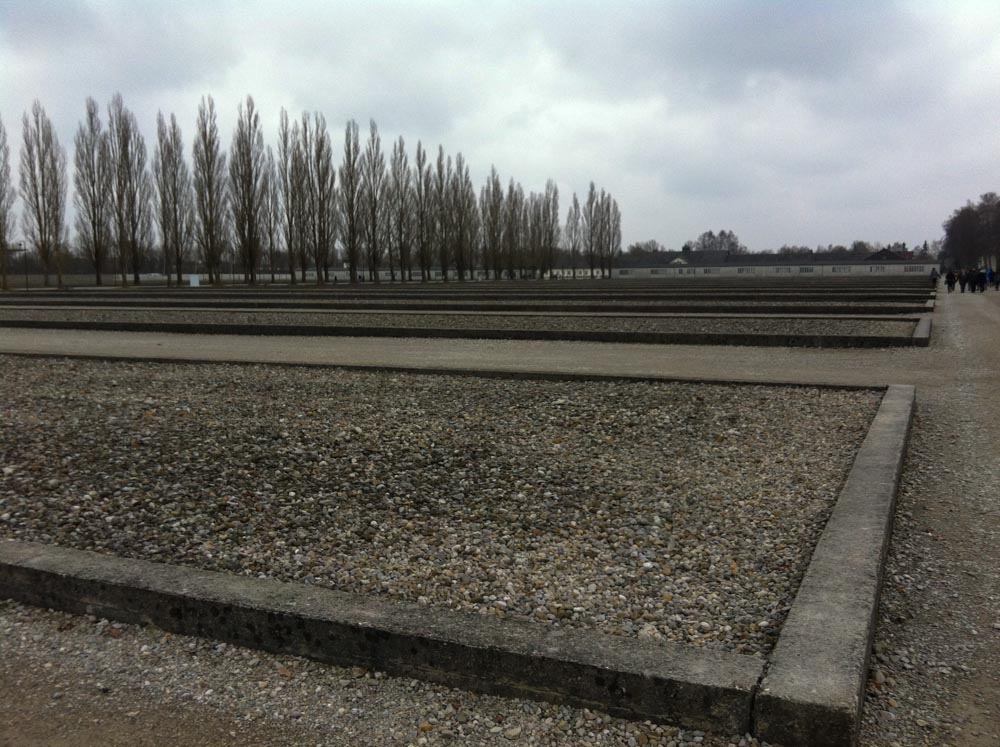
Today, most of the barracks are gone, but there are gravel outlines where they stood:

dachau03

Walking up the road alongside the barracks, you can see one of the remaining guard towers.   Prisoners who ventured too close to the fence were shot on sight, and it is said that some prisoners ran to the fence as a means of committing suicide.

dachau04

At the end of the walkway, there is a small gate leading to the old and new crematoriums. From the outside, it looks fairly inoffensive.

dachau07

When you walk inside, though, it’s a very sobering reminder of the atrocities of the Holocaust.  The room below is a gas chamber.  Up to 150 prisoners at a time could be forced to disrobe in the room next to this. False shower heads were installed into the ceiling so that the prisoners would believe that it was merely a large group shower room.  Once they were sealed inside, Zyklon B (prussic acid poison gas) would be used to suffocate the prisoners to death in fifteen to twenty minutes.

I was not surprised to note that nobody lingered in this room at the memorial.

Despite the presence of a gas chamber in Dachau, there is no evidence to support the idea that the gas chamber was used for mass murder there – most of the known deaths in Dachau were by gunshot or by hanging.  This model of gas chamber was used heavily in many extermination camps, however-   Auschwitz, Belzec, Chełmno, Jasenovac, Majdanek, Maly Trostenets, Sobibor, and Treblinka.

dachau08

The room adjacent to the gas chamber is a crematorium.  Each of these furnaces was capable of incinerating two or three corpses at a time.

dachau09

I usually try to end my posts with a question to spark discussion, but I honestly don’t know what to say on this one.  The entire experience of visiting Dachau is horrifying.  It’s important to be aware of the Holocaust and to know what happened in Nazi concentration camps, but I don’t think I really want to talk about it any more.

Another Weekend In Berlin

On the second weekend in September, a group of people who live in Germany and blog in English descended on Berlin for WEBMU 2012.

WEBMU is the “Whiny Expatriate Bloggers MeetUp,” and it’s basically an excuse for a group of really fun people to get together, do a little sightseeing, and eat at a bunch of amazing restaurants.  Snooker in Berlin and No Apathy Allowed were the organizers and hosts, and they did a fantastic job.  I don’t want to do a lengthy recap of the entire weekend, but I took a some pretty neat pictures while I was in town, so here we go.

I didn’t join all of the tours that the group took part in, but I did go to the Friday morning tour of the Stasi Museum.  The original headquarters of East Germany’s Ministerium für Staatssicherheit have been converted into a museum and it’s pretty fascinating.

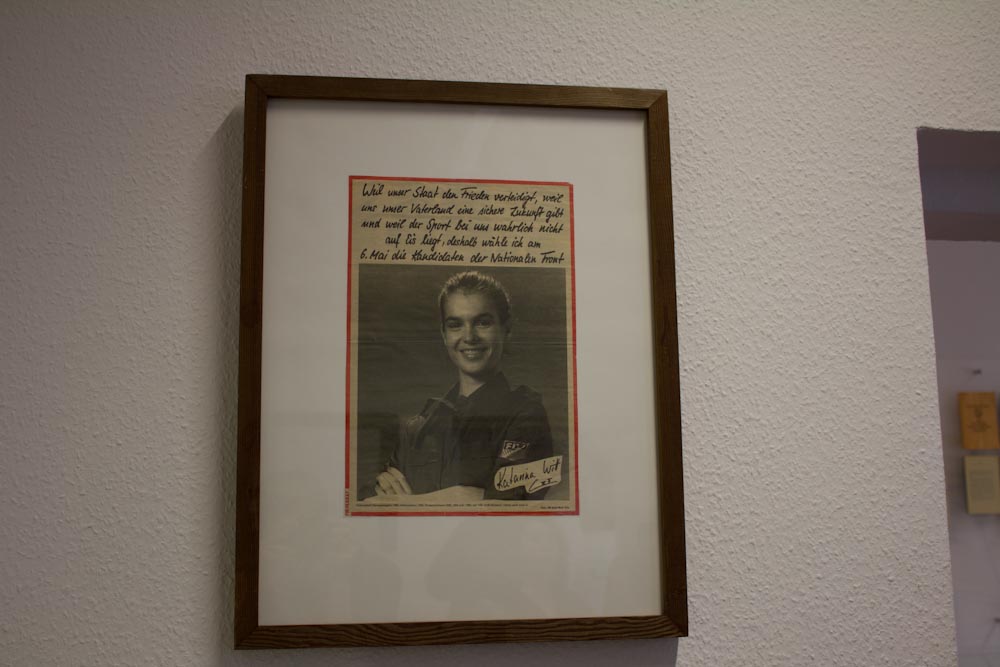
The picture below is a propaganda photograph of Katarina Witt, the German Olympic figure skater.  I didn’t fully understand the impact of this photograph until after I’d gotten back home and started doing my traditional pre-blog-post research, when I found this detail:

Following the dissolution of East Germany, Stasi files were found to show that the secret police had worked hard to keep Witt from defecting by giving her cars, accommodations, and permitted travel. Witt found 3,000 pages on her life from the age of eight.

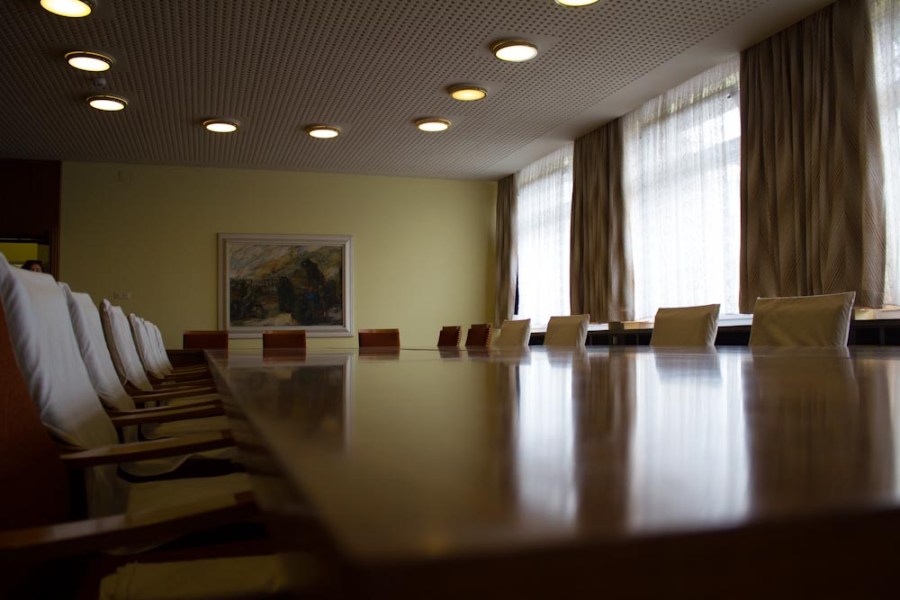
A lot of the original furnishings are still present in the museum, including this cabinet reel to reel system and the rather large conference room table in the next two photographs.

One of the more interesting sections of the museum were all the examples of spy cameras-  buttonhole cameras, necktie cameras, bird-feeder cameras.  This one was large and obvious by comparison.

One of the display cases contained a selection of period music and pop culture that had been reviewed by the Stasi.  This section was fascinating to me.

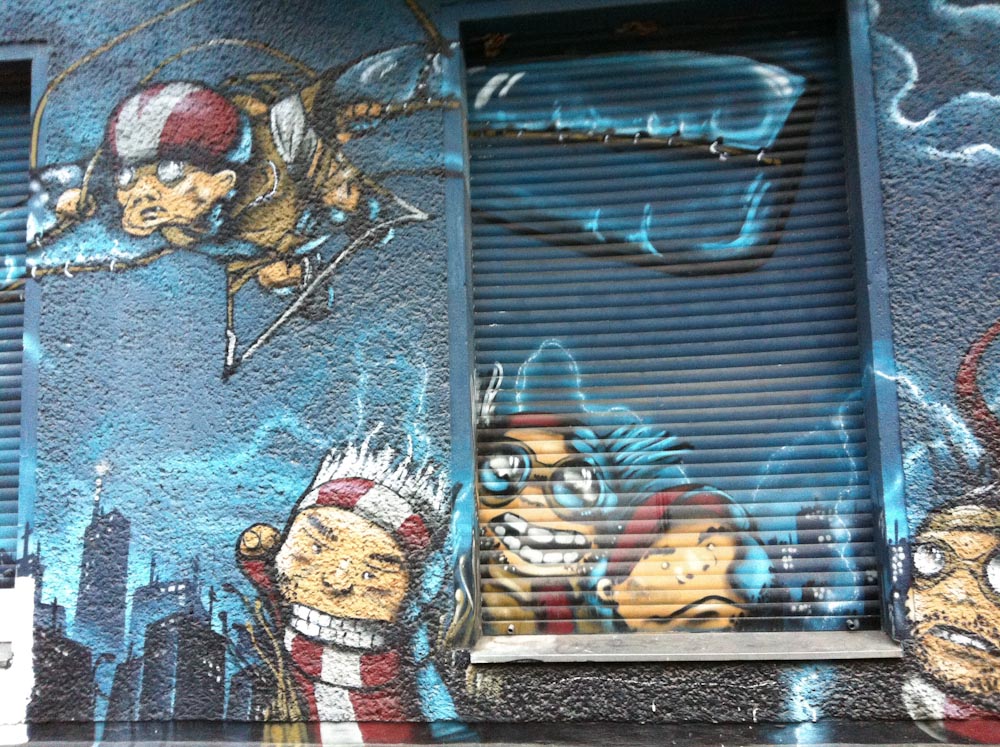
While walking around Berlin all weekend, I saw a huge variety of street art.  This sort of thing rarely happens in Regensburg, but in the big city of Berlin, this stuff was kind of everywhere.

I’d like to take a moment to state that the Berlin Hauptbahnhof is just amazing-  the upper levels are S-Bahn trains that go around the city, the mid levels and there are a bunch of levels of other trains.  The Berlin Central Station is different than most of the Bahnhofs I’ve been to in that it the trains moving through it are East-West on one level and North-South on a different level- most train stations only have tracks running in one direction, not crisscrossed.

The Berlin HBF also maintains a healthy online and social media presence, as I learned when I asked friends on Twitter for a route and I got answered by @HBF_Berlin.

Most importantly for a nerd like me, though, is that the Berlin HBF is just cool to see.  The various levels are somewhat open to each other, and you can see many of the trains criss-crossing the station.

I’m not sure if this counts as street art, but it was at the top of the steps to the U-Bahn closest to the Stasi Museum, so it caught my attention.

One of the most common foods in Berlin is Currywurst.  I learned on this trip that Currywurst means an instant migraine for me.  Neat, eh?
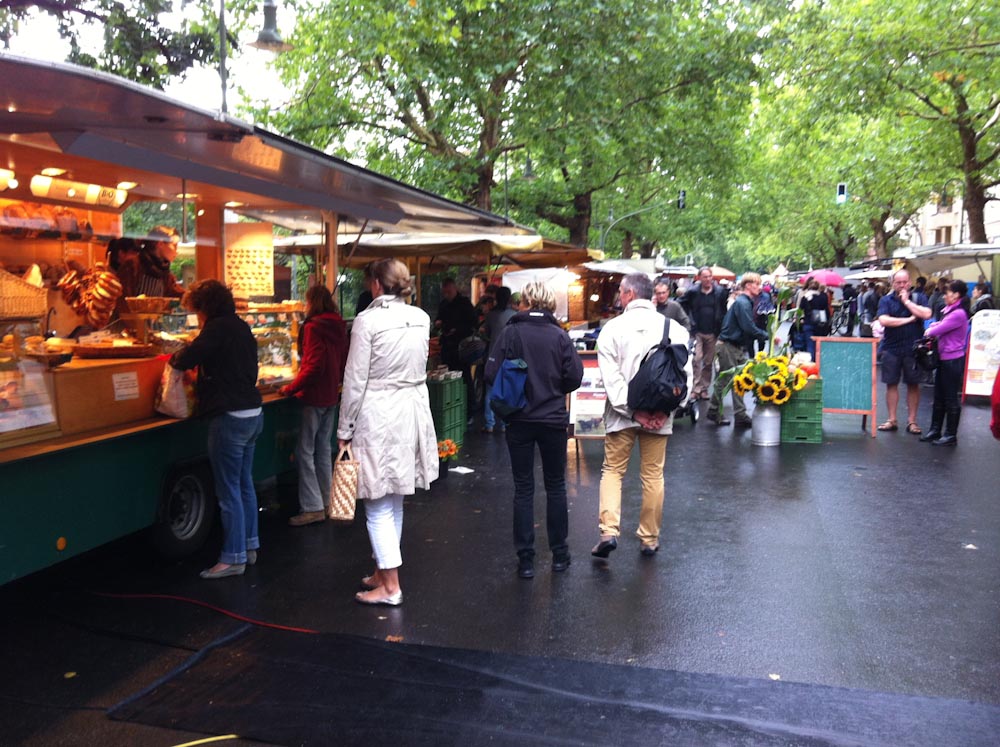
One of our tours was walking around an urban area and we stumbled across a Saturday morning street market. Interesting stuff.

Walking around on that same tour, the tour guide pointed out that there’s a bar in this building.  Can you spot it?

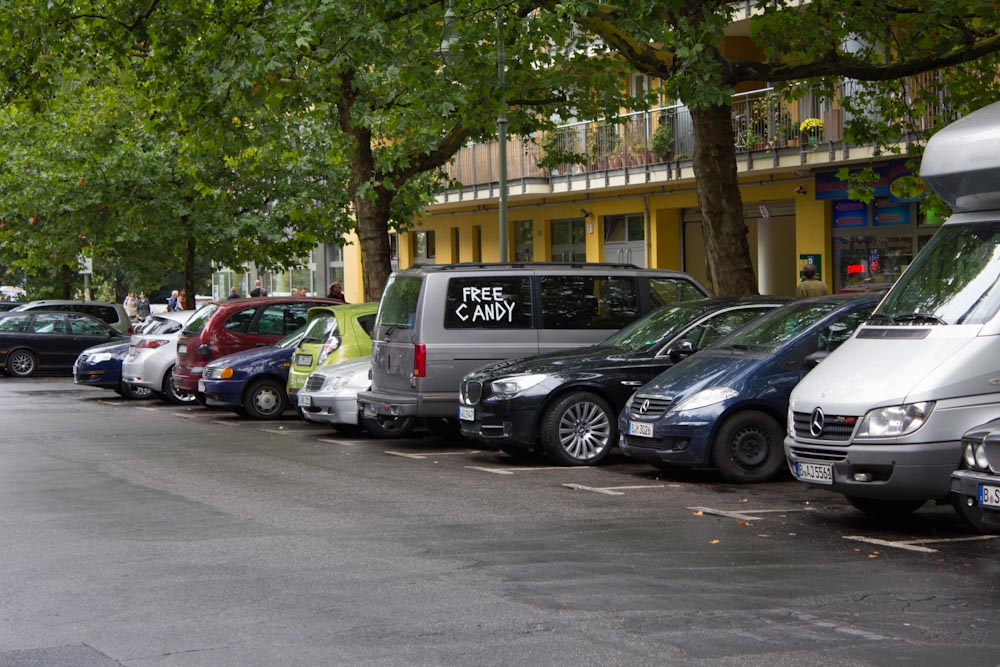
The neighborhood also had its share of what we’ll consider ‘eccentric’ residence.  For example, the owner of this charming van.

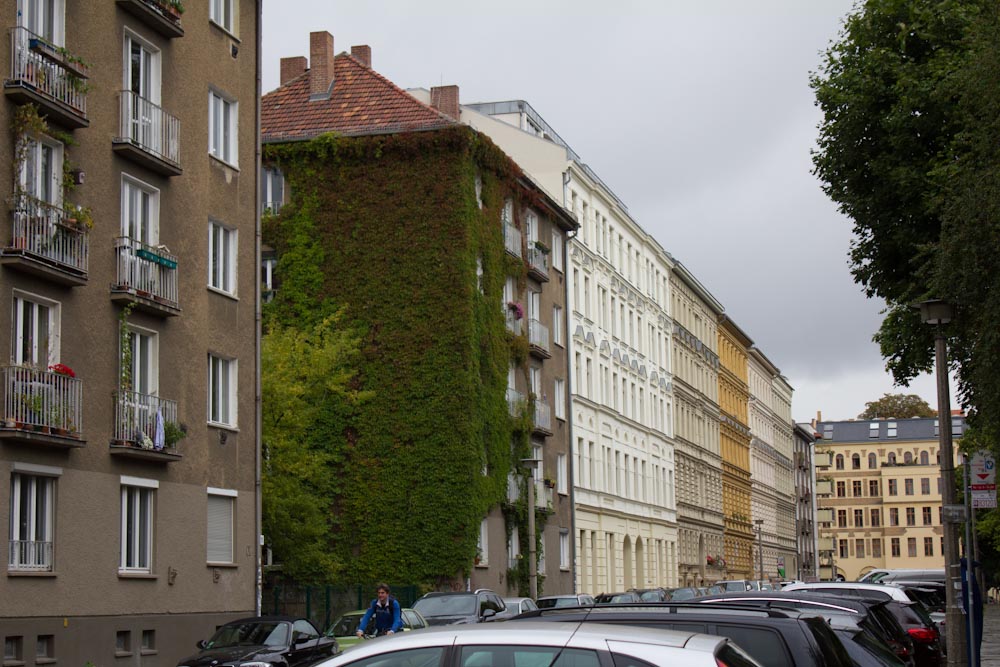
And sometimes, you just have to ask your neighbors to trim their building.

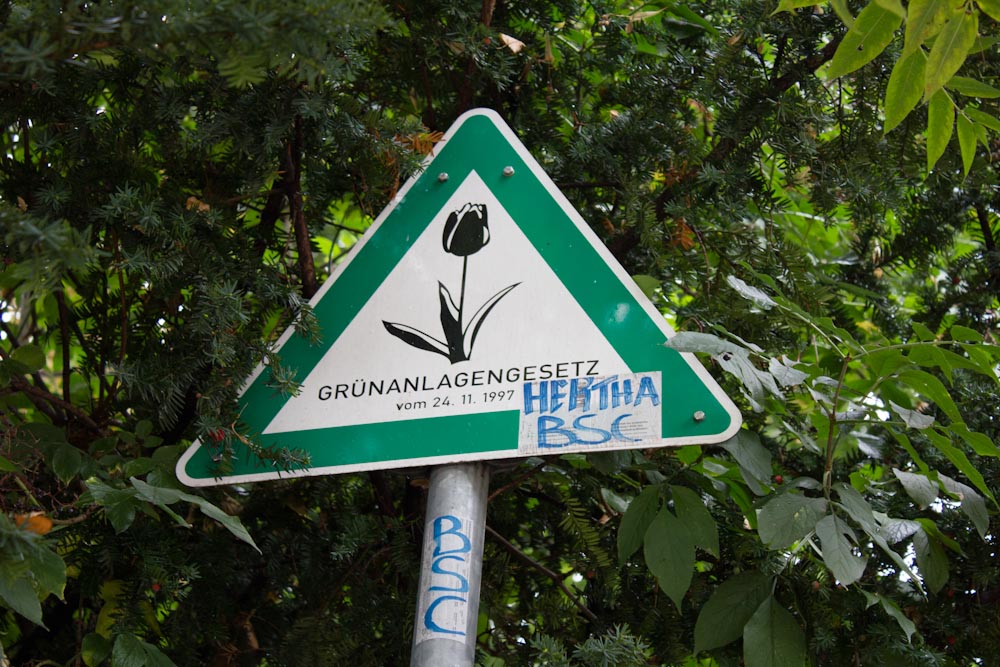
These signs were all over the city in green spaces.  The literal translation is Green Investment Scheme, which makes sense in the marked green areas.   There’s a Green Investment Scheme aspect of the Kytoto Protocol for environmental benefits, but I’m not sure if this GIS and that GIS are directly related.

During our walk, I kept getting distracted by little tiny things.  For example, this little guy:

Dinner Was Fabulous

This town consistently does little things to remind me just how awesome it is.  For example, we wanted to go to dinner tonight at Pam Pam, a great little Italian restaurant in the Altstadt.  Dinner was fabulous, and so was the event we found when we got to Haidplatz.

As we rounded the corner, we walked into the midst of an enormous crowd.  There were tents, kiosks, and a small stage.  A band had just started playing the classic Toto song, “Hold The Line.”

As I looked around, I noticed some other things-  lots of rainbow flags, for one thing.  And a lot of same-sex couples holding hands, which is not all that unusual here, but is still nice to see.  One of the kiosks was about HIV prevention.   There was one guy wearing a head to toe black leather biker outfit, looking suspiciously like he was auditioning for the Village People.  All of these visual clues together could mean only one thing-   we had just stumbled into a Gay Pride event.

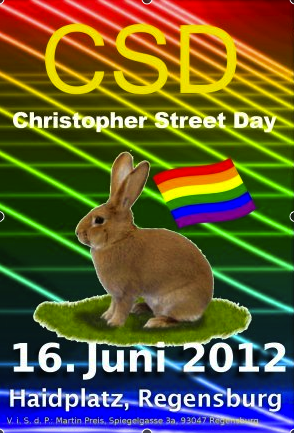
Specifically, this was Christopher Street Day, which is apparently Germany and Switzerland’s answer to Gay Pride Days.  The Christopher Street Day event is held as an anniversary to the LGBT uprisings in the Stonewall Riots on June 28, 1969.  The Stonewall Inn was on Christopher Street, hence the name.  The event isn’t always held on the actual anniversary for organizational reasons, but it usually turns up in June.

This is a huge event in Berlin and Cologne, but the day is celebrated in major cities all over the country.  Normally, there’s a parade but Regensburg didn’t have one this year.   I had no idea that CSD was happening at all, or I probably would have tried to get a good seat for the live music.  I’ll need to make a note on my calendar for next year- I love a good parade.

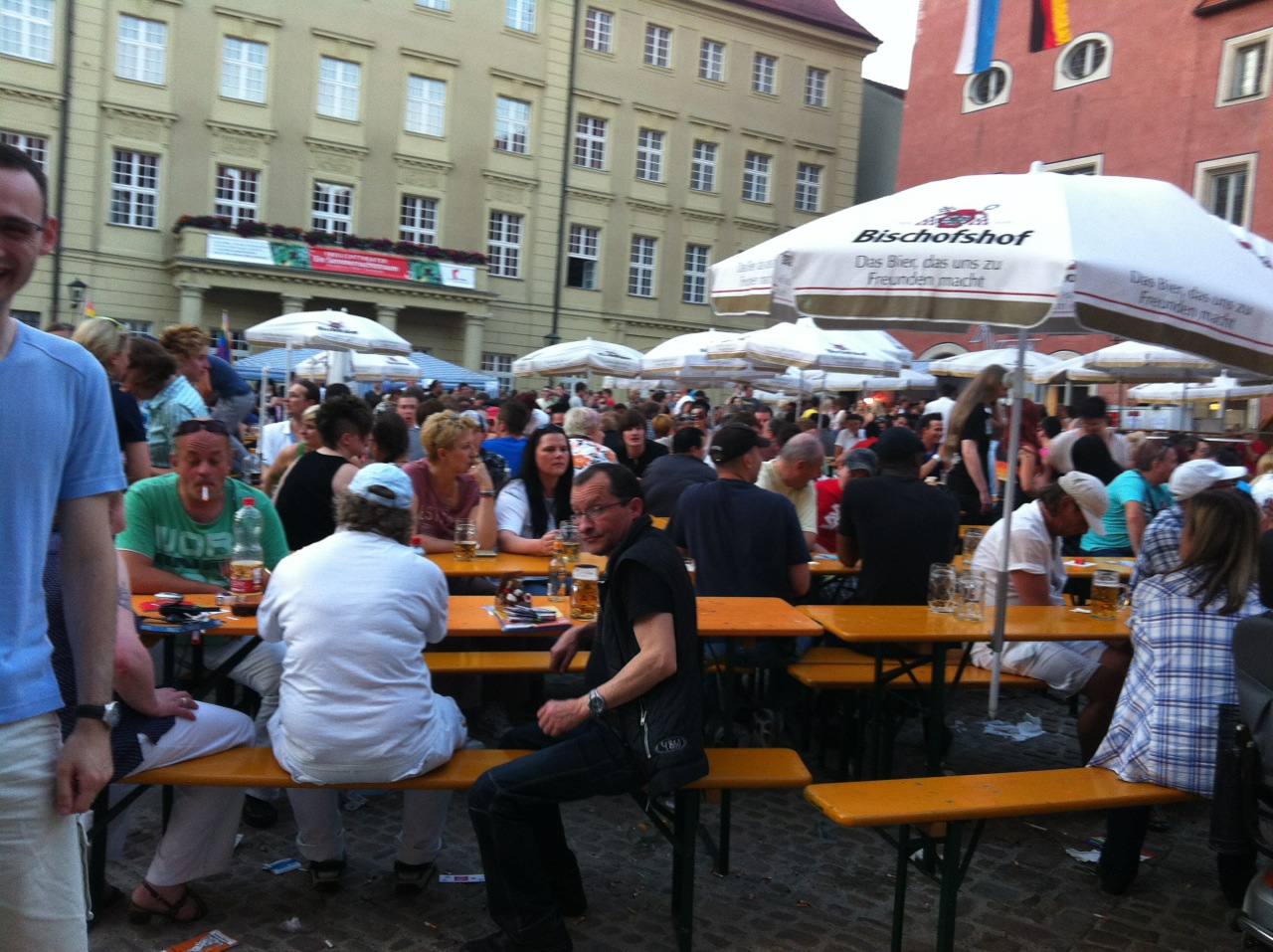
I didn’t get any pictures of the rainbow flags or the adorable hand-holding couples or even the black leather guy I mentioned earlier, because I didn’t know they’d be there.  I did snap a picture of the band though, and one generic crowd photo, so I’ll include those here.

I didn’t make this last picture.  I’m only including it because it always makes me laugh.