Dinner Was Fabulous

This town consistently does little things to remind me just how awesome it is.  For example, we wanted to go to dinner tonight at Pam Pam, a great little Italian restaurant in the Altstadt.  Dinner was fabulous, and so was the event we found when we got to Haidplatz.

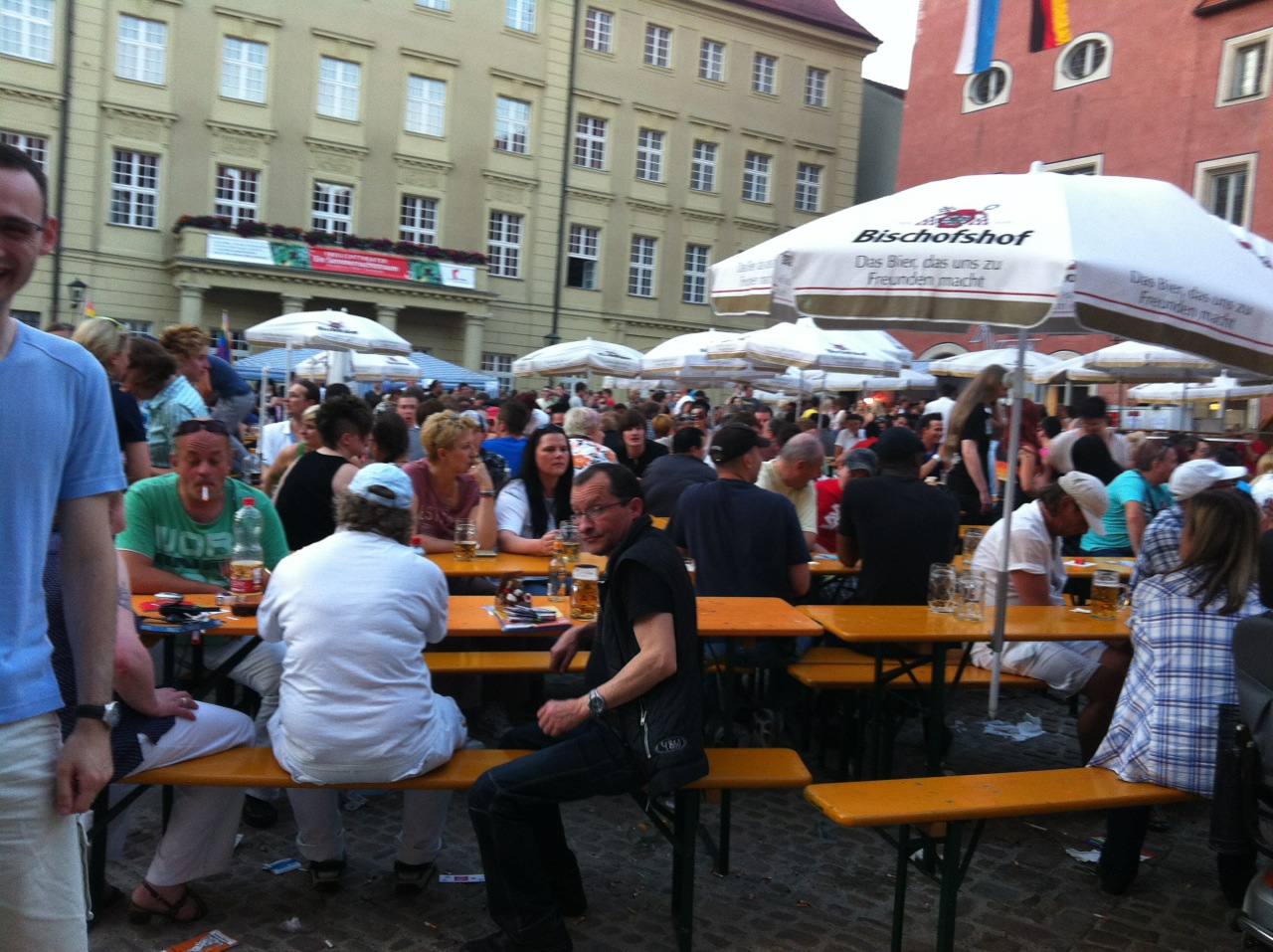
As we rounded the corner, we walked into the midst of an enormous crowd.  There were tents, kiosks, and a small stage.  A band had just started playing the classic Toto song, “Hold The Line.”

As I looked around, I noticed some other things-  lots of rainbow flags, for one thing.  And a lot of same-sex couples holding hands, which is not all that unusual here, but is still nice to see.  One of the kiosks was about HIV prevention.   There was one guy wearing a head to toe black leather biker outfit, looking suspiciously like he was auditioning for the Village People.  All of these visual clues together could mean only one thing-   we had just stumbled into a Gay Pride event.
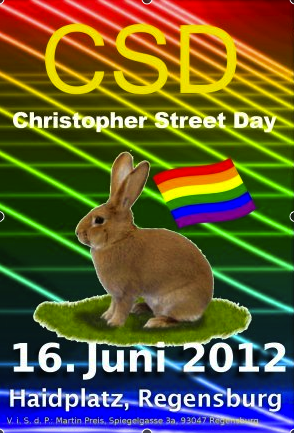
Specifically, this was Christopher Street Day, which is apparently Germany and Switzerland’s answer to Gay Pride Days.  The Christopher Street Day event is held as an anniversary to the LGBT uprisings in the Stonewall Riots on June 28, 1969.  The Stonewall Inn was on Christopher Street, hence the name.  The event isn’t always held on the actual anniversary for organizational reasons, but it usually turns up in June.

This is a huge event in Berlin and Cologne, but the day is celebrated in major cities all over the country.  Normally, there’s a parade but Regensburg didn’t have one this year.   I had no idea that CSD was happening at all, or I probably would have tried to get a good seat for the live music.  I’ll need to make a note on my calendar for next year- I love a good parade.

I didn’t get any pictures of the rainbow flags or the adorable hand-holding couples or even the black leather guy I mentioned earlier, because I didn’t know they’d be there.  I did snap a picture of the band though, and one generic crowd photo, so I’ll include those here.

I didn’t make this last picture.  I’m only including it because it always makes me laugh.

Short Post: American Style

One of the things that has been continually and steadfastly amusing to me since my arrival is the German marketing gimmick of referring to something as American Style to drum up interest.  Here’s a couple of examples that made me laugh.

The only place I’ve actually seen pancakes besides the grocery store is at an “American” diner.
Very few foods are less German than plain white bread. Real German bread has a lot more varieties- and a lot more flavor.
I’ve had long conversations with the guys in the office about “American style pizza,” during which I explained the differences between New York style, Chicago style, deep dish, pan, and a few other varieties of good old American pizza. None of them really resembled this “American Style” pizza. The first time I saw this, I knew I had to try it. It was edible, but wasn’t all that great.
American hot dog style? Germans put a lot of strange things on their pizza, but this one is actually kind of appealing.

Stumbling Blocks

On the corner of Maximilianstraße and Königsstraße in the Altstadt, I stumbled across nine gold colored blocks on the ground with names and dates.  They’re obviously a memorial of some sort, and I’ve taken pictures of them on several occasions with the intent to find out the story behind them.

Today, I found five more at the place where Pfarrergasse intersects Neupfarrplatz, and in a fit of amazingly coincidental timing, I’ve also found an explanation and a history of these blocks.

The blocks are called Stolpersteine.  The German word Stolperstein literally means “stumbling block” or “obstacle” and Stolpersteine is the plural.    They were created by artist Gunter Demnig in 1993 and the first installation was in Cologne, Germany, in 1994.

Today, there are more than thirty thousand Stolpersteine in at least ten countries.  I first learned what they are because of a blog entry about them on andBerlin.com.  That post led led me to the official site about them as well as http://stolpersteine-regensburg.de/.

(Edited to add:  Fiona was able to witness the installation of some Stolpersteine and posted about it on her own blog recently.)

The Stolpersteine blocks are designed as memorials to commemorate individuals who were sent by the Nazis to prisons and concentration camps, as well as those who emigrated or committed suicide to escape the Nazis.  Some of the blocks represent those killed by the Nazis and some represent survivors.    The Stolpersteine are not limited to Jews, either.  The vast majority were Jews, but there have also been blocks placed for various other types of people, including Romani people, homosexuals, blacks, and even Christians who opposed the Nazis.

The actual block is a ten centimeter concrete cube covered with a sheet of brass.  Demnig then stamps the details of the individual, the name, year of birth, and the fate as well as the dates of deportation and death, if known.  Each block begins with “Hier wohnte,” which is German for “Here lived.”  Most are set at the last residence of the victim, but some are set near workplaces.

These tiny little memorials are an amazing idea.  Since I started researching this, I’ve seen countless instances of people commenting, “so that’s what those are.  I was wondering.”  That’s how the Stolpersteine got me curious, and I’m sure I won’t be the last person to hunt down this information.

More importantly, though, people are still visiting the memorials and remembering.  One evening, while I was walking through the Altstadt, I noticed that someone had left flowers and a Yartzeit (bereavement) candle at the first set of Stolpersteine I had stumbled across.

When I walked home a few hours later, the candle was still burning.   I think that’s kind of fitting.

Did Someone Say Lederhosen?

If you say “Germany” to most Americans and then ask them to list everything they know about the culture, you’ll probably get a response that starts with two words: Lederhosen and Oktoberfest.

Oktoberfest is just one of many, many festivals here.   I posted a gallery back at the beginning of April from a smaller festival when Palmator was tapped for the first time, back on Palm Sunday.  There’s one coming up here in Regensburg called Dult.  Mai Dult, in this case, because it’s in May.  There’s another Dult in September.  This has all the trappings of an Oktoberfest, though, including rides, crowds, tents with live music, people in traditional outfits, and, of course, beer.

As for the traditional clothing, there are many different types of tracht. While the word tracht translates to costume, this isn’t just a costume for those who wear it, it’s a part of their cultural heritage and tradition. However, tracht is not traditional for all of Germany- it’s regional.  It is mostly found in Austria and here in Bavaria.  Tracht is often worn for festivals, but it’s not at all uncommon to see it worn here for bachelor and bachelorette parties and other festive occasions.

Read more

Under The Dom

I’ve put up external pictures of the Dom before.  Here’s one to remind you before I continue with the post.

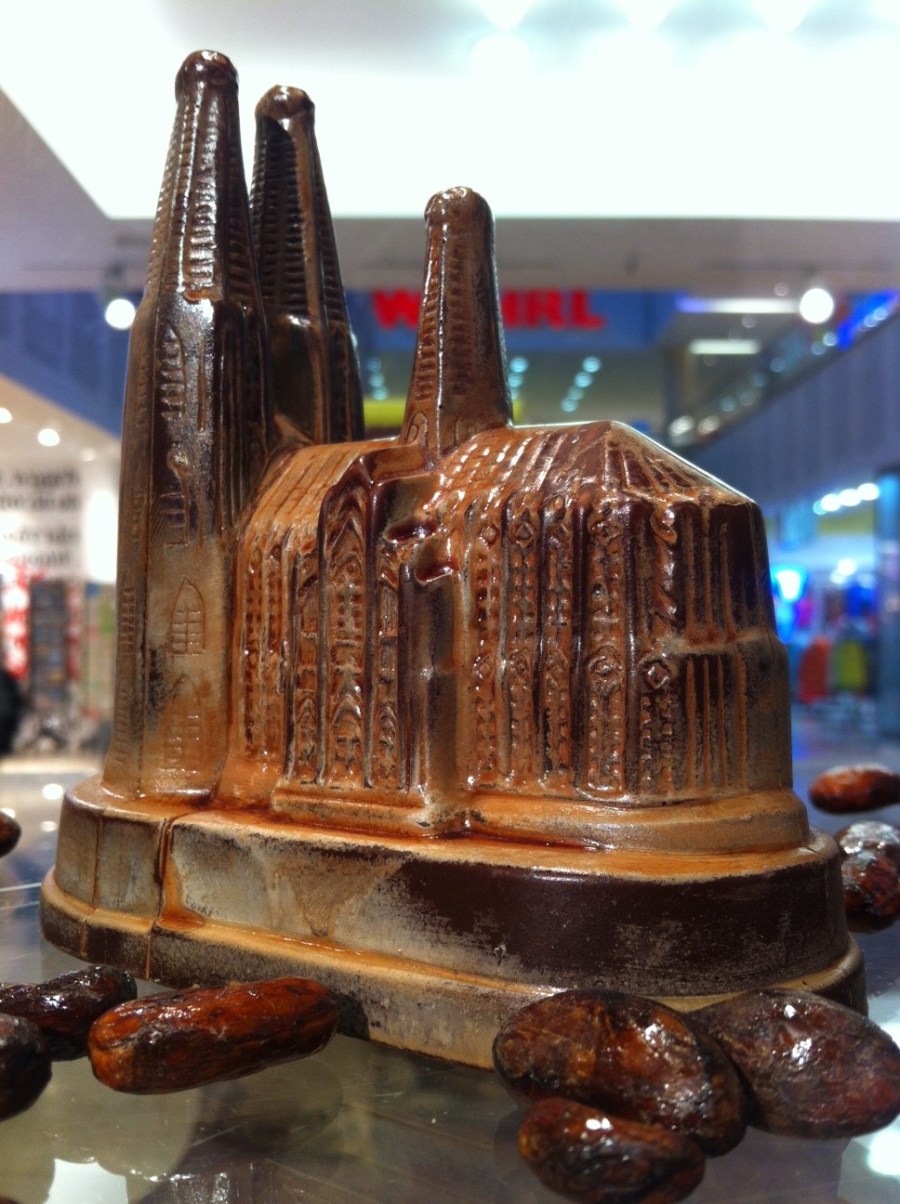
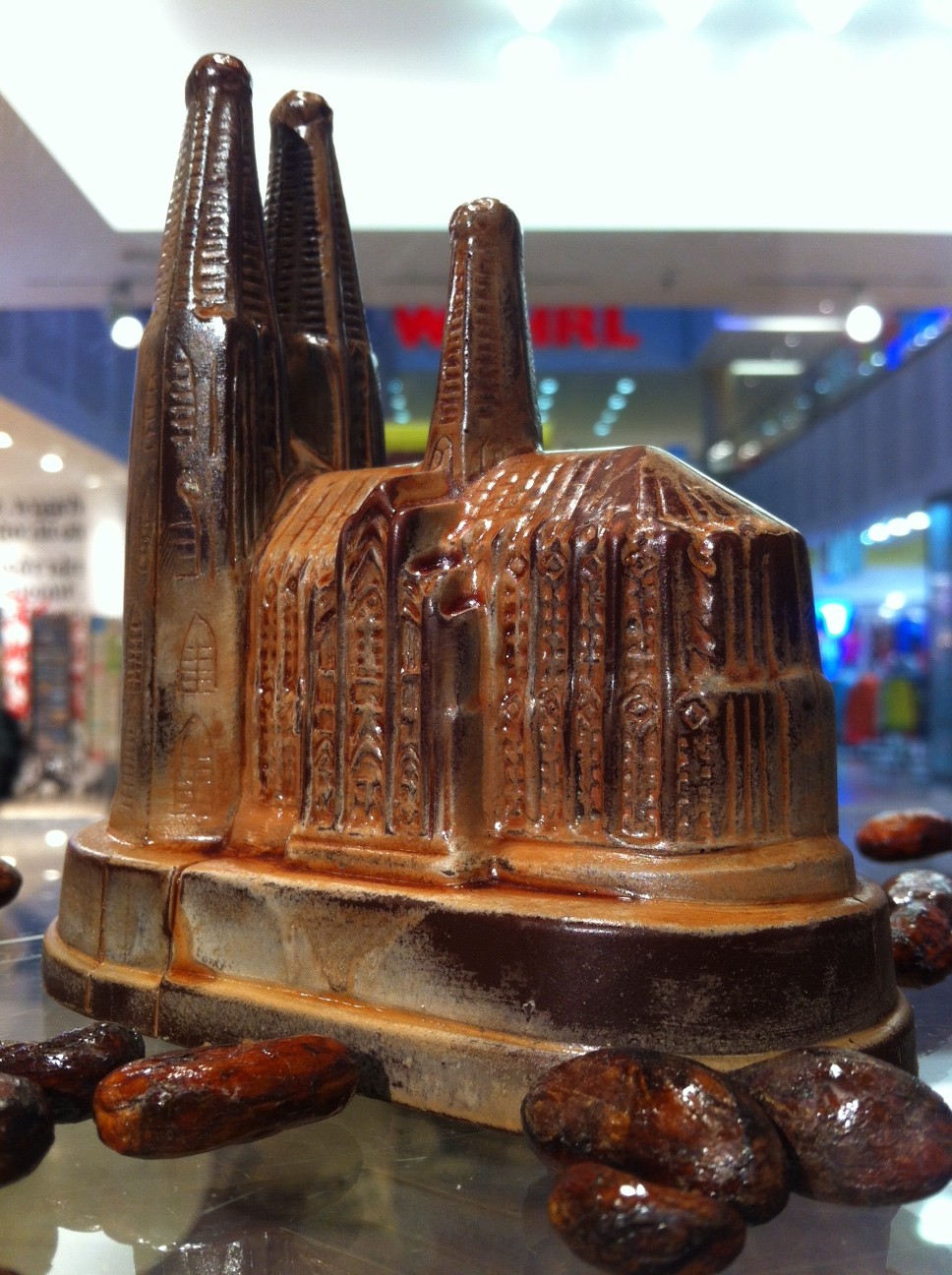
The Dom, sometimes known as the Regensburger Dom or the Cathedral of St. Peter, is well known as an example of pure German gothic architecture.  It was completed in 1634 except for the towers, which were finished in 1869.   The Dom is so integral to the identity of Regensburg that pretty much all of the touristy stuff (postcards and so forth) show the cathedral spires along with the Stone Bridge.  This town loves the Dom so much that they even made a chocolate version:

In addition, the Dom is the home of the Regensburger Domspatzen, literally “Cathedral Sparrows.”  The Domspatzen is the oldest boy’s choir in the world, founded in 976.  It’s also a boarding school for young boys.  The Domspatzen is quite famous, and has performed for Queen Elizabeth II and Pope John Paul II.  (Both of those events were in the 1980s though, so it’s obviously not the same kids.)   Here’s a sample performance-

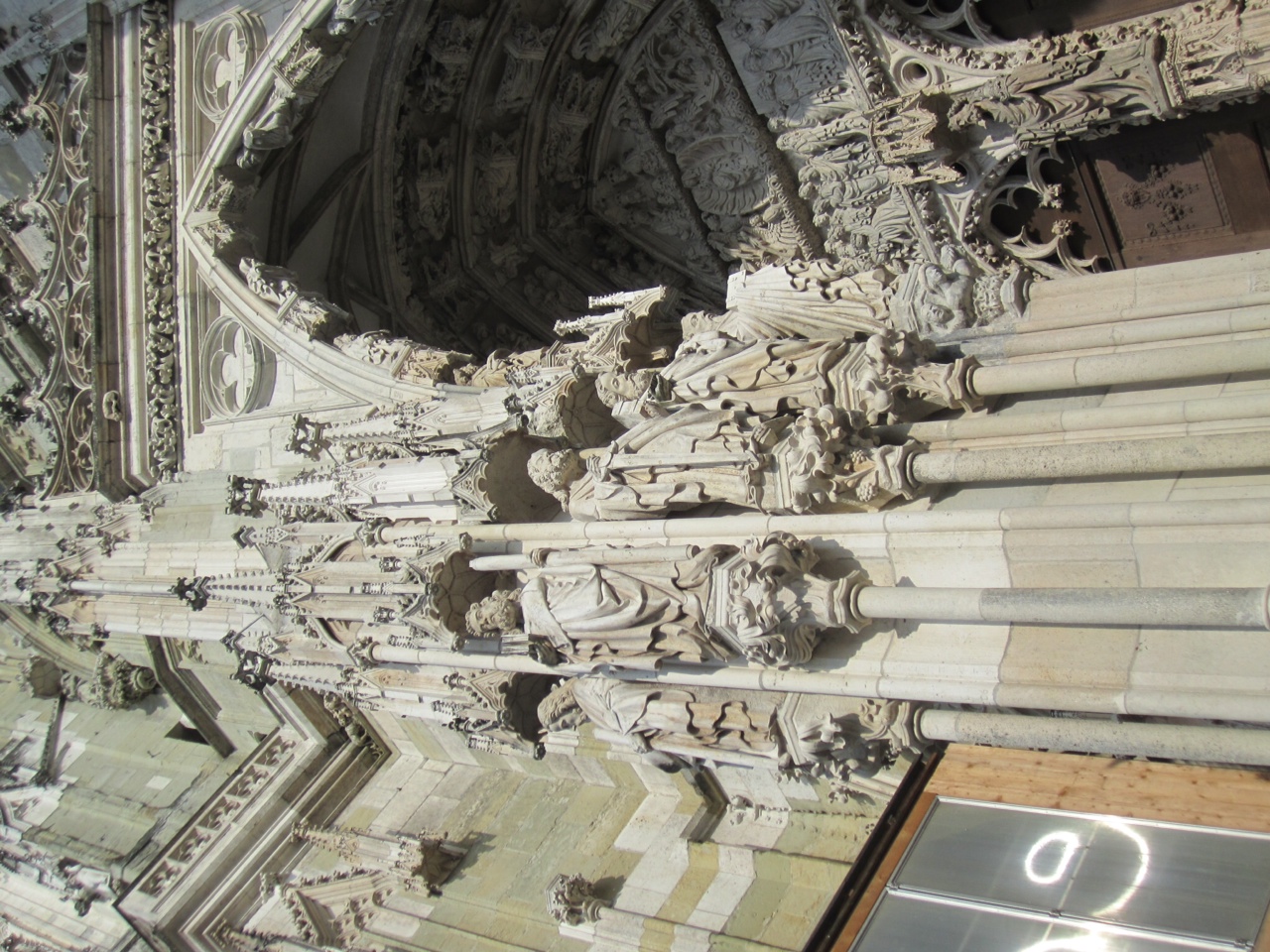
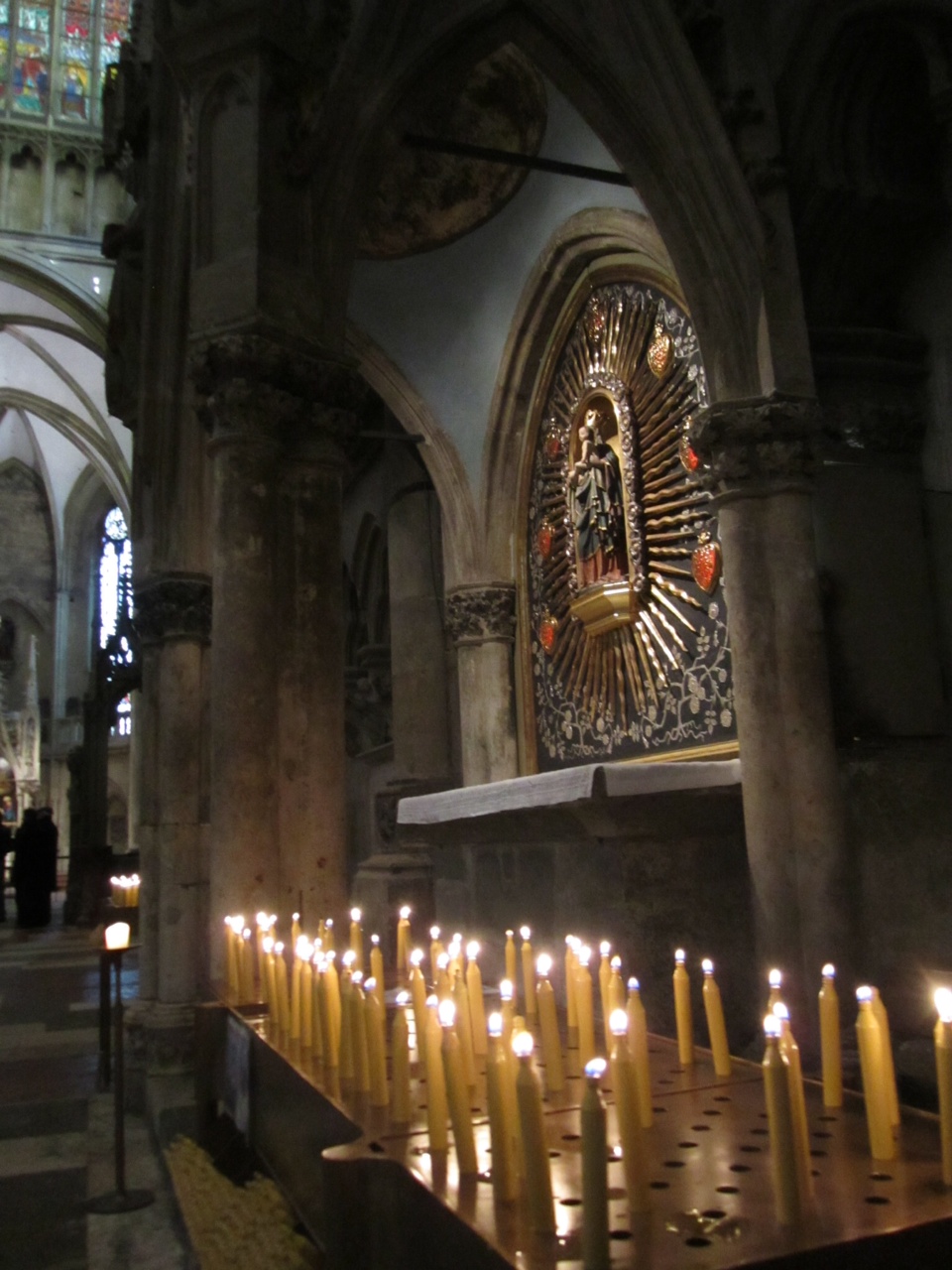
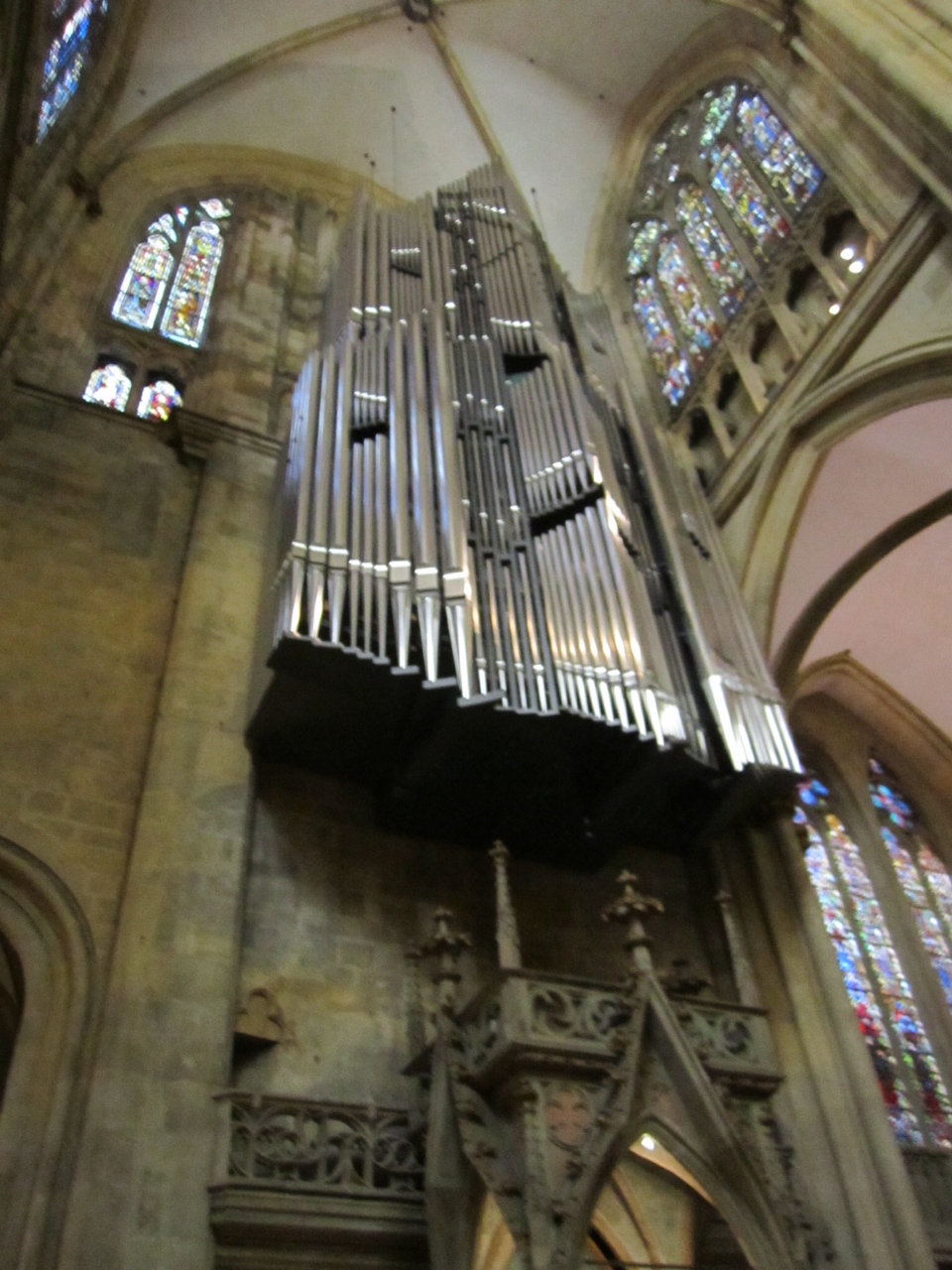
I digress wildly.   The original point I intended for this post is that I finally had a chance a few weekends back to go inside the Dom and look around.  The interior contains a lot of interesting sculpture, an small catacomb, and a pretty huge pipe organ.  It was also considerably colder than the temperature outside-  I’ve been told that it’s always that cold inside the church.   Here are some pictures from that day: