Nordic Adventure, Part 1: Helsinki

I scheduled a bunch of time off for another trip that didn’t quite pan out, so I decided to use the time to visit Helsinki, Stockholm, Oslo, Copenhagen, and Reykjavik.  I started my two week romp through the Nordics with a day in Berlin, where I checked off the last three Category One stations and attended a concert by Hayseed Dixie.  The next day, I flew from Berlin to Helsinki, Finland.

My pictures from Helsinki are in no particular order.

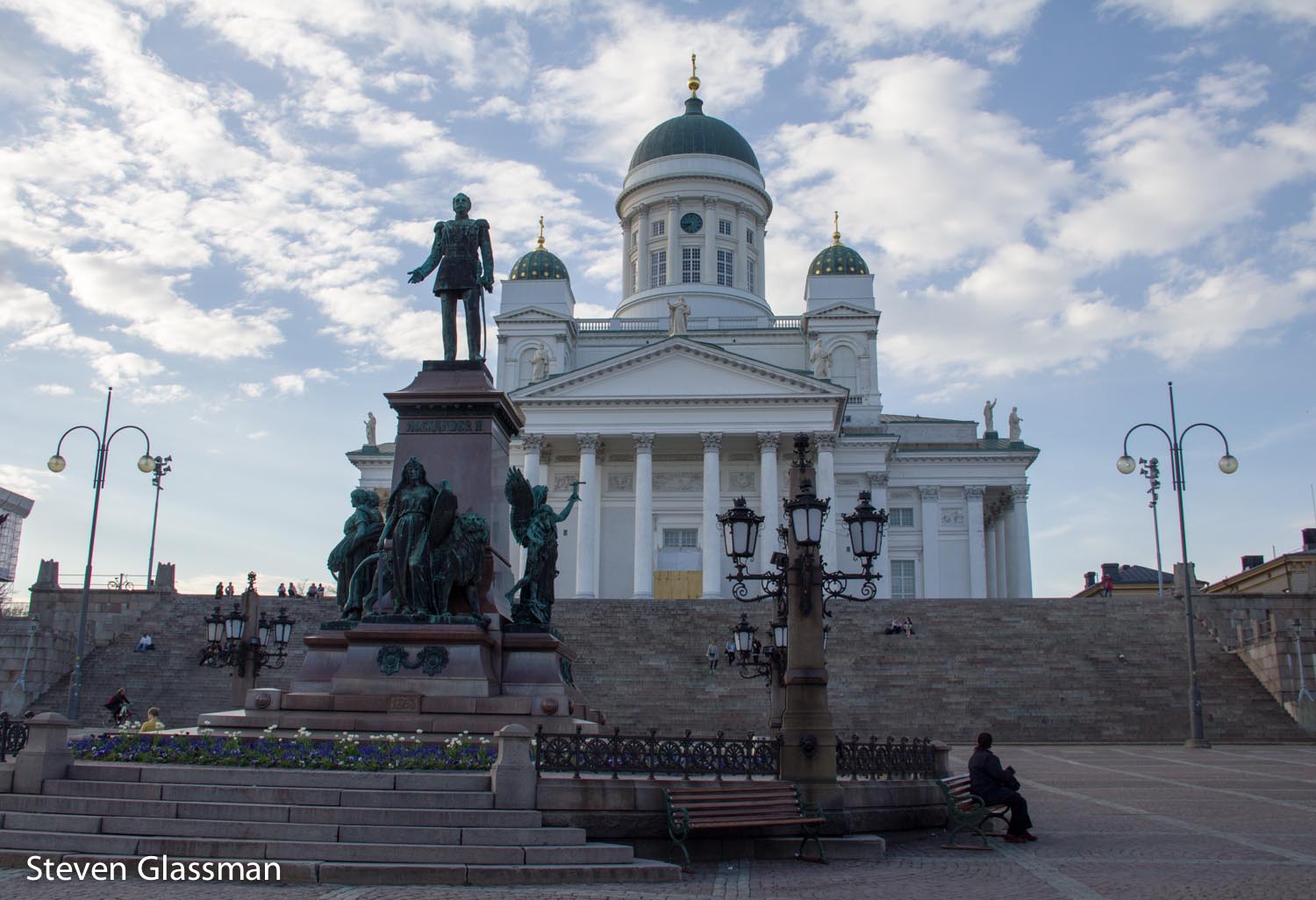
This is the statue of Alexander II and the Lutheran Cathedral, as seen from about a third of the way into Senate Square.    If you do a Google Image search just on the word Helsinki, the Cathedral is going to be the single most common image.  It’s pretty well known.
helsinki-0

This is Esplanade Park, a short walk from the Harbor.  The statue is  J.L. Runeberg, the national poet of Finland.  This park is a meeting point for locals and tourists, and there are free concerts here during the summer.

helsinki-1

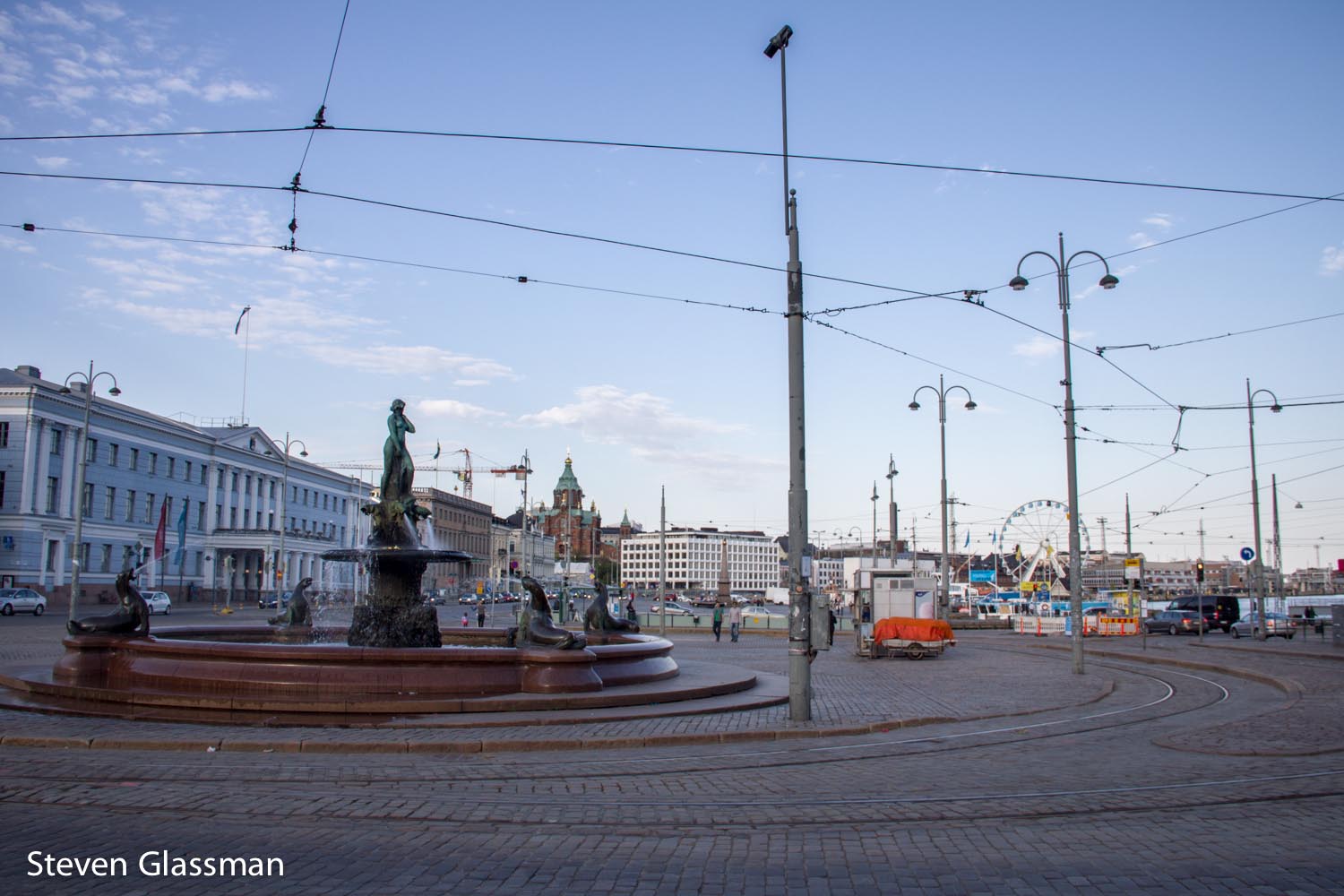
A convergence of tram lines near the harbor.
helsinki-2

Uspenski Cathedral, the  Russian Orthodox behemoth of a church on the hill in the background, is walking distance from the Harbor.

helsinki-3

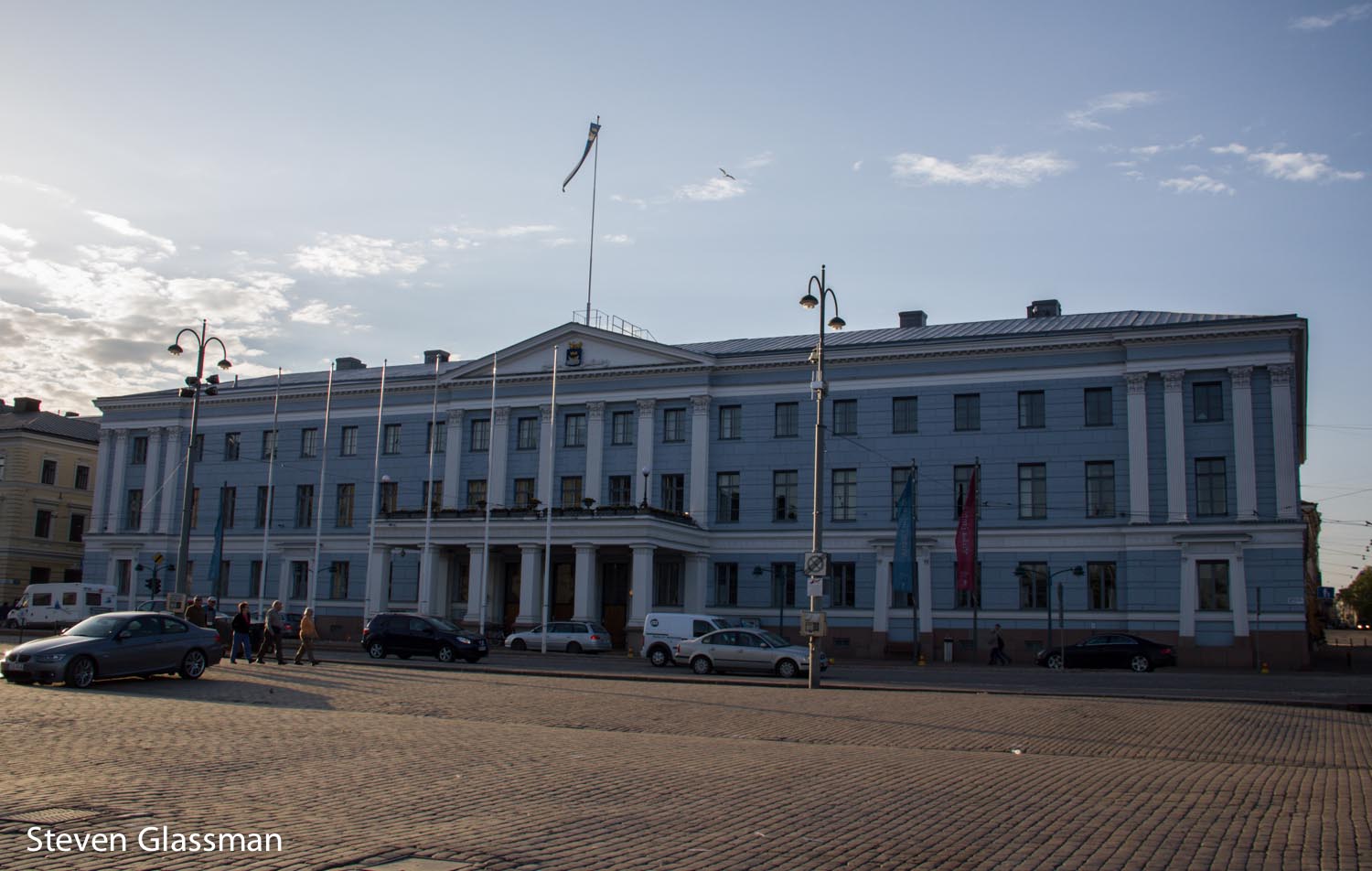
Helsinki City Hall, I think.   It’s possible that I made the wrong assumption here.
helsinki-4

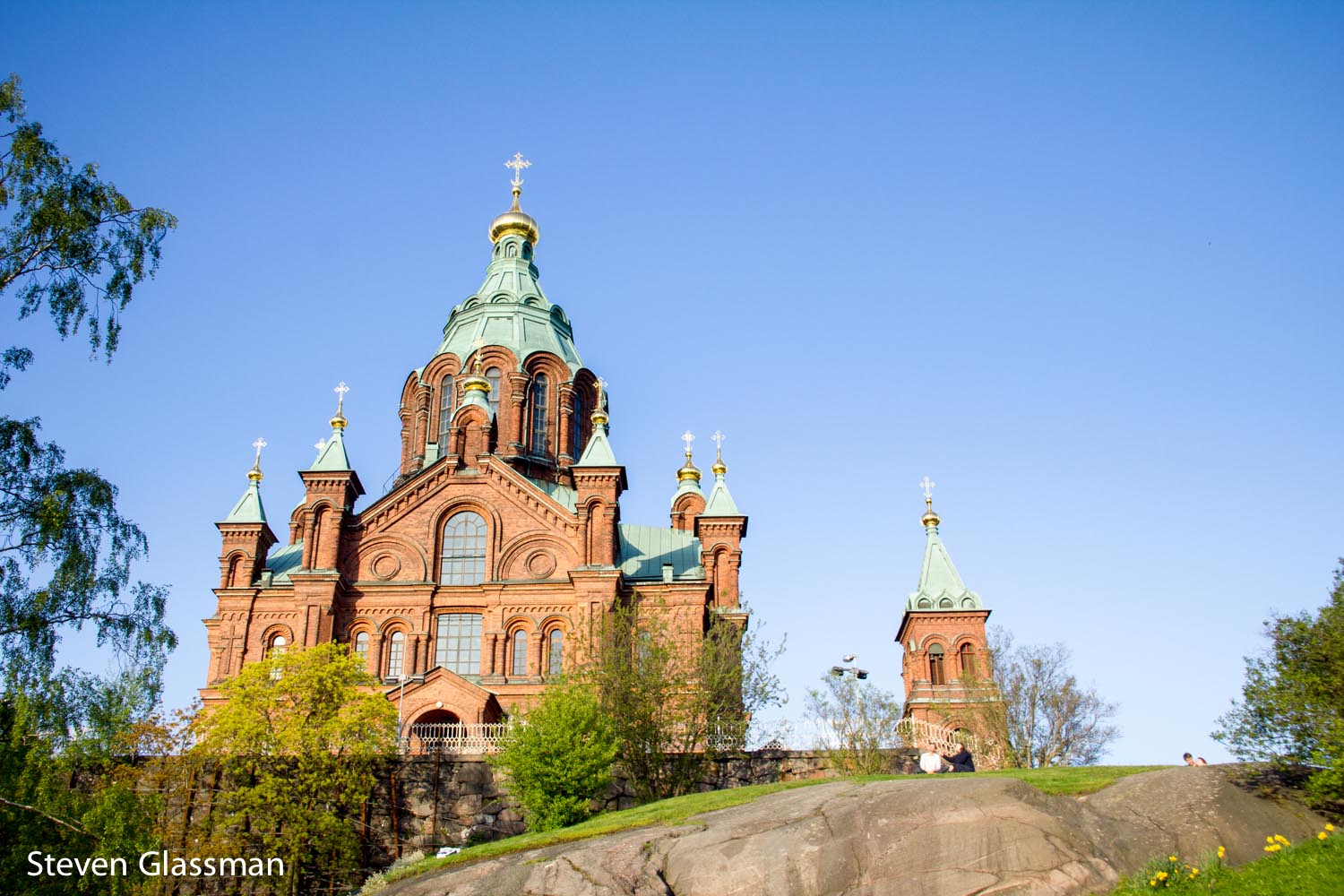
Uspenski Cathedral again, this time from a bit closer.  Uspenski is the largest Orthodox cathedral in Western Europe.
helsinki-5

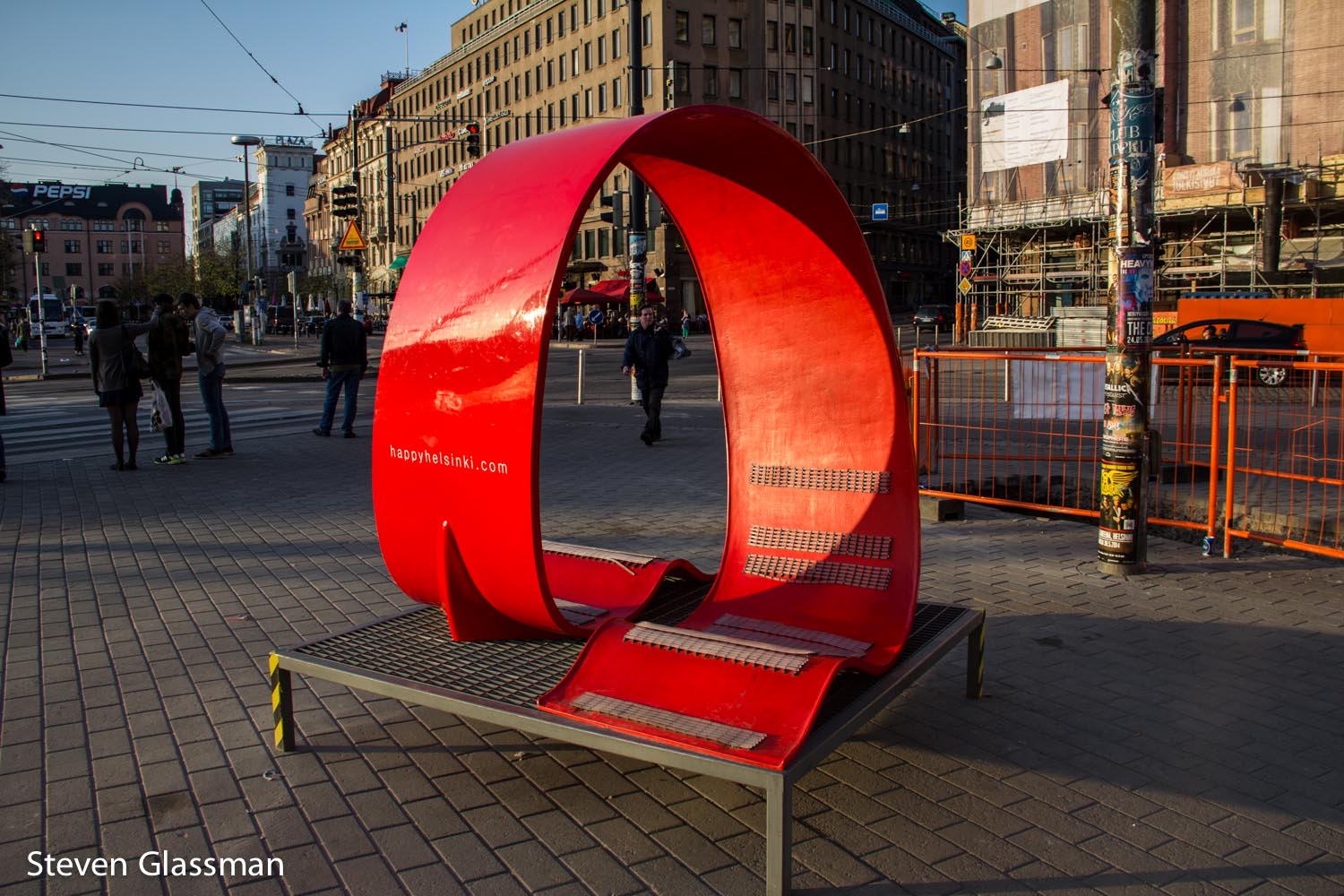
I quite liked the feel of Helsinki.  Any city that puts out paired lounge chairs for its citizens can’t be all bad, you know?  I didn’t try out these chairs, but I should have.
helsinki-6

The railway station.  I walked through this building to see the inside, but it wasn’t as impressive as the front.  This totally looks like it could be used for establishing shots in the upcoming Justice League movie, don’t you think?

helsinki-7

Completed in 2012, the Kamppi Chapel of Silence in Narinkkatori square isn’t really a church.   It was designed by architects, and is built out of wood (Alder, spruce, and ash, according to the signs.)  It won the International Architecture Award 2010, and is part of the World Design Capital Helsinki 2012 program.

Inside, the sound of the city is blocked out, and it’s muted and quiet-  something you might expect from a place called the Chapel of Silence.    This is only a kilometer from Senate Square, so it’s easily reachable on foot or by tram.

helsinki-8

I had never heard of Moomins before this trip.  This is yet another instance of the United States completely and utterly missing a swath of culture from other places.  The Moomins, created by Swedish speaking Finnish auther Tove Jansson, have been cartoons, comic strips, stage shows, movies, novels, and even a theme park.  They’ve had exposure in England, Russian, Japan, Austria, and Cuba… but until this trip, I’ve never seen a Moomin.  The Jansson family has turned down offers from the Walt Disney Company, so that explains some of my lack of exposure.

helsinki-9

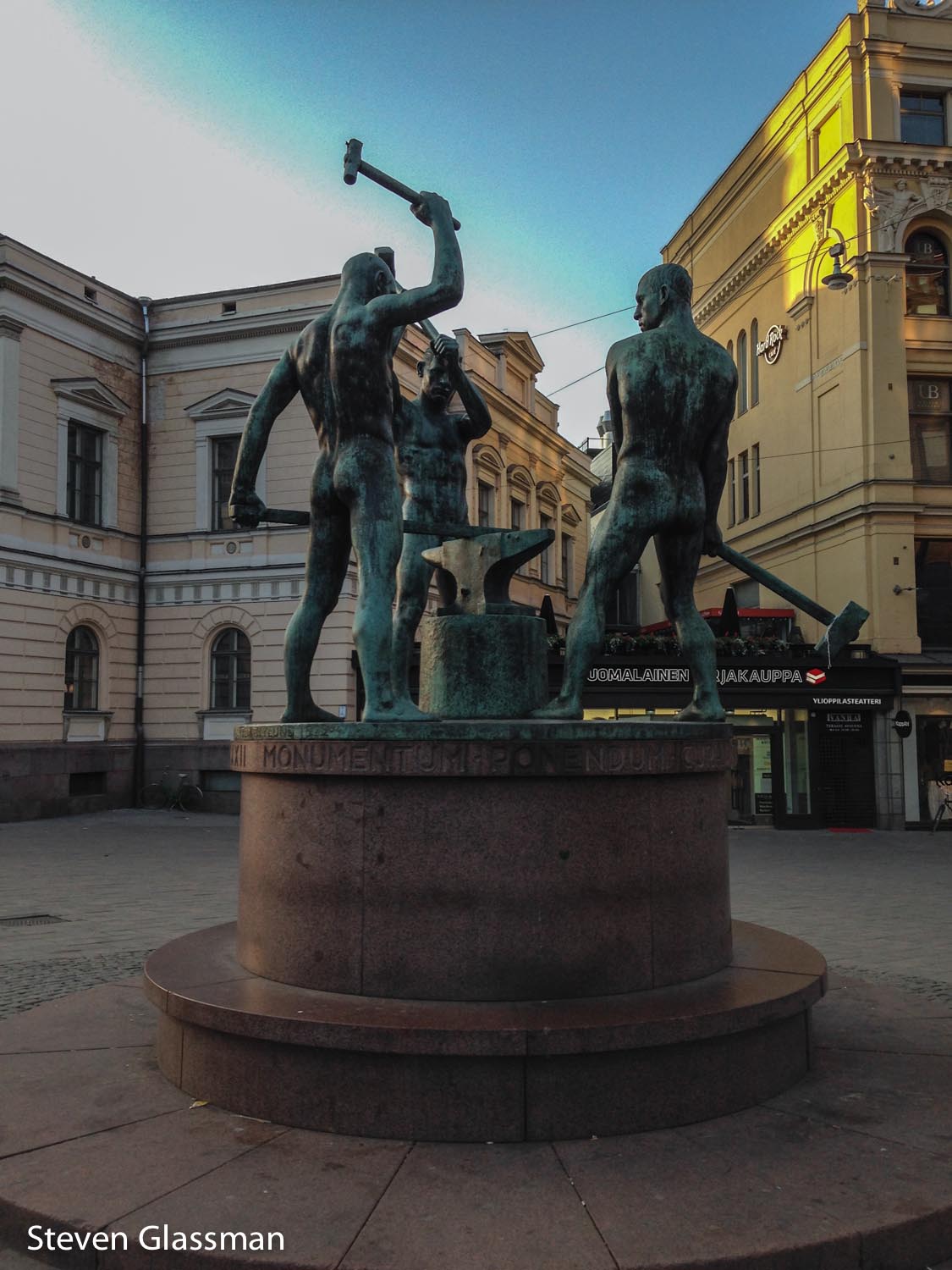
The Three Smiths statue, unveiled in 1932, is another popular meeting place for locals.  Also, it’s directly in front of the Hard Rock Cafe, if you’re into that sort of thing.  I actually ate at Kaarna, another restaurant nearby.   I had a delicious reindeer burger patty with braised onion and salad wrapped in Laplandish flatbread.
helsinki-10

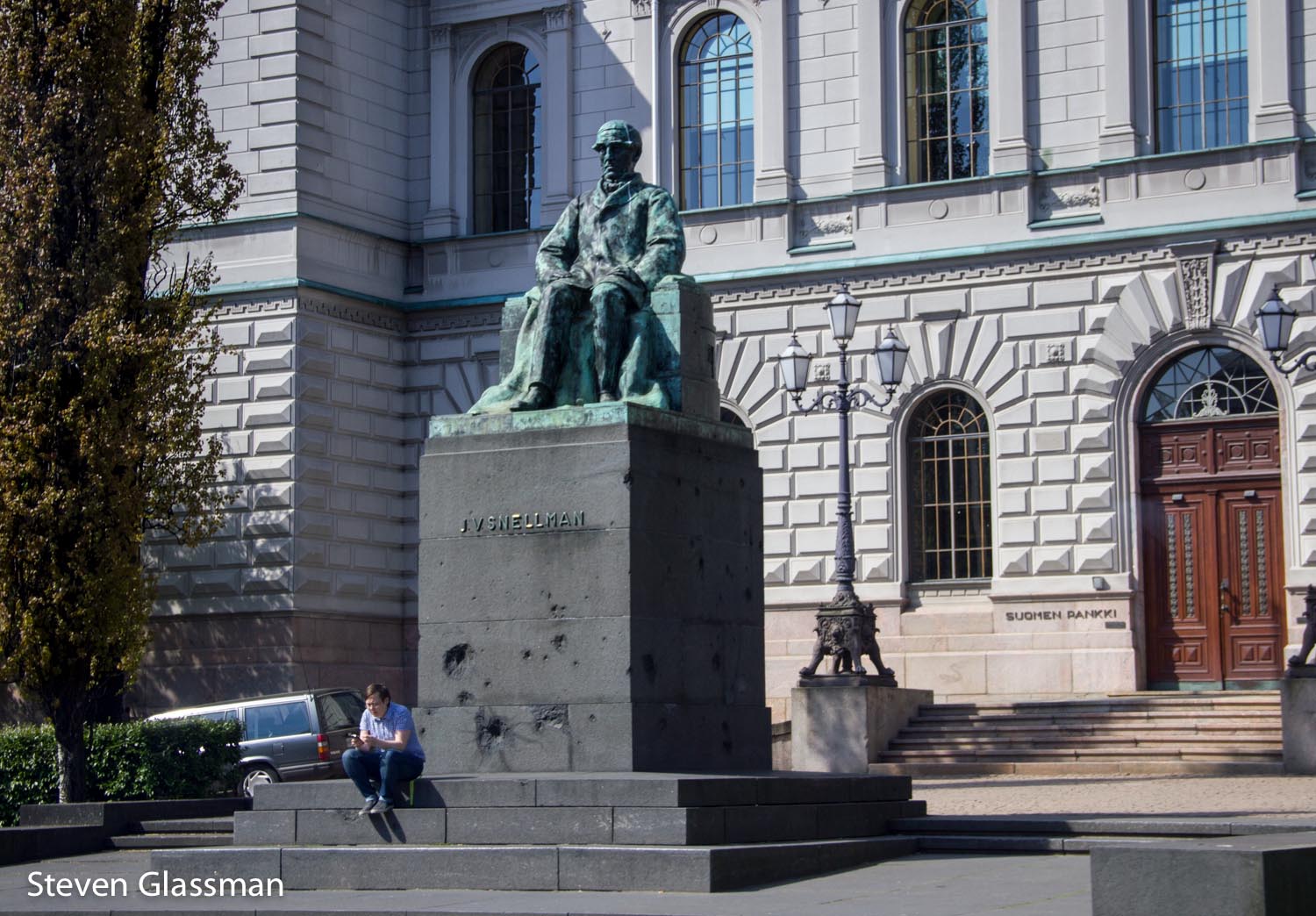
This sculpture still bears damage from being shot during World War 2.
helsinki-11

The Church in the Rock, or Temppeliaukion kirkko, was blasted out of granite bedrock.

helsinki-12

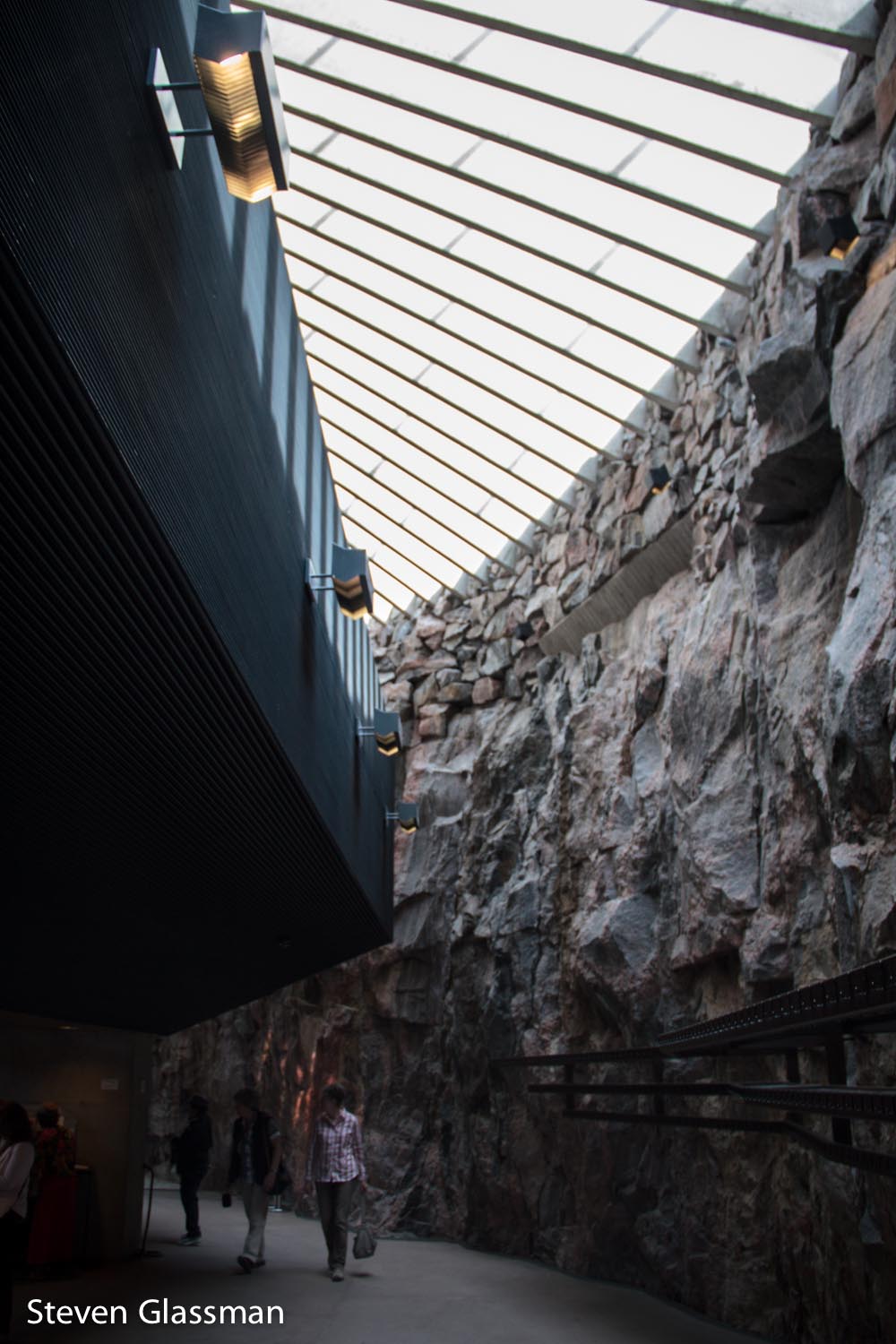
The outer walls still show exposed granite.
helsinki-13

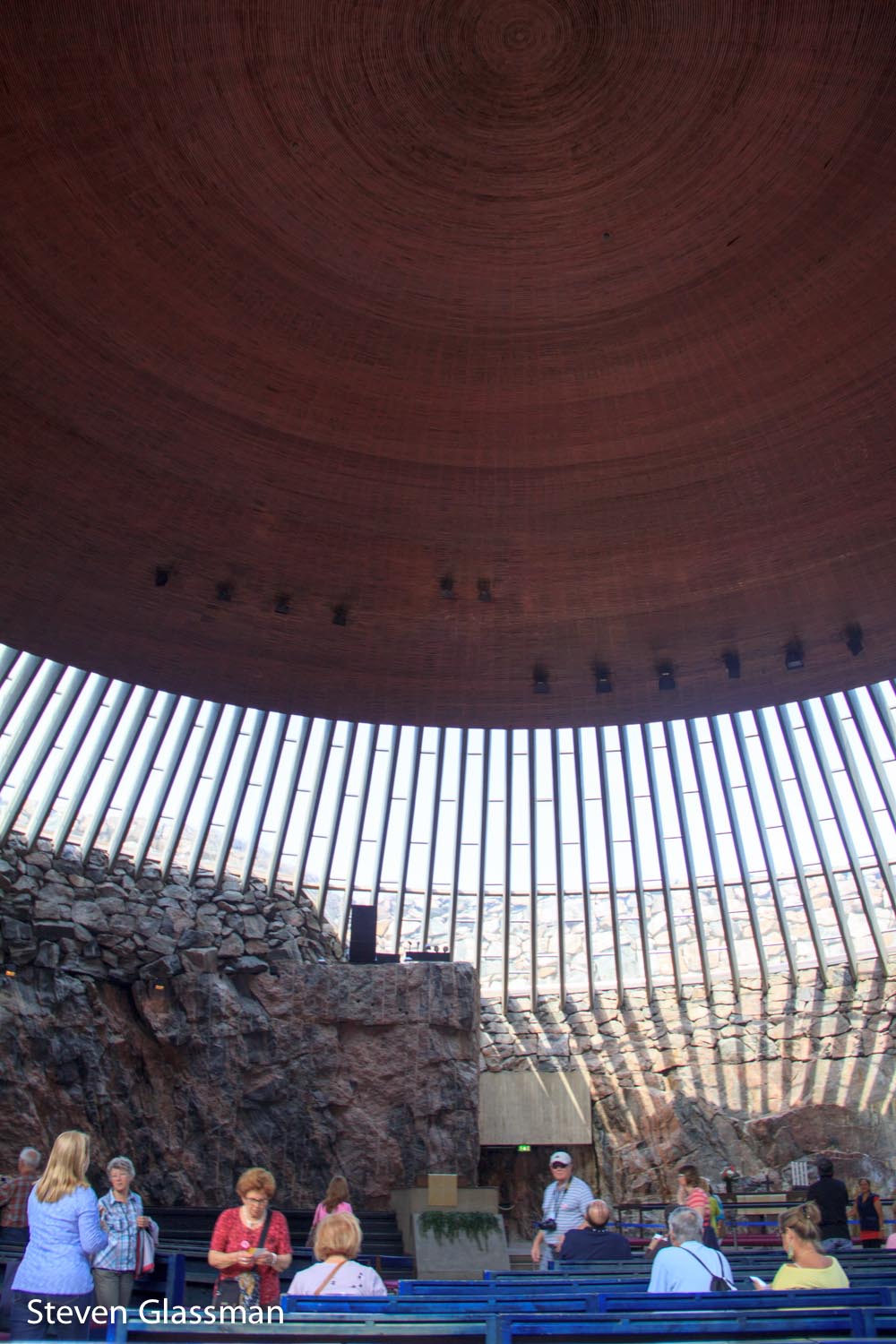
The ceiling is entirely made of copper.
helsinki-14

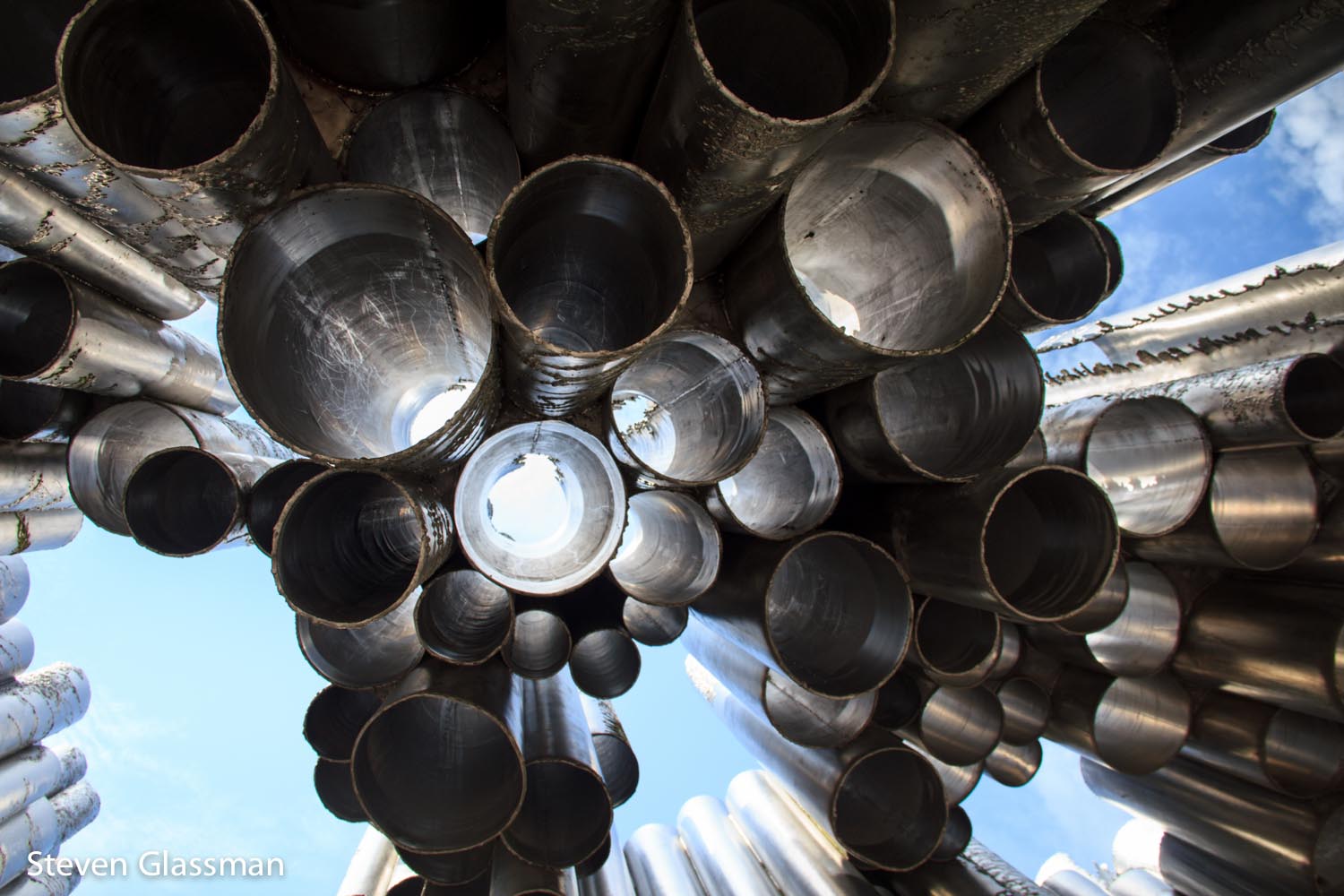
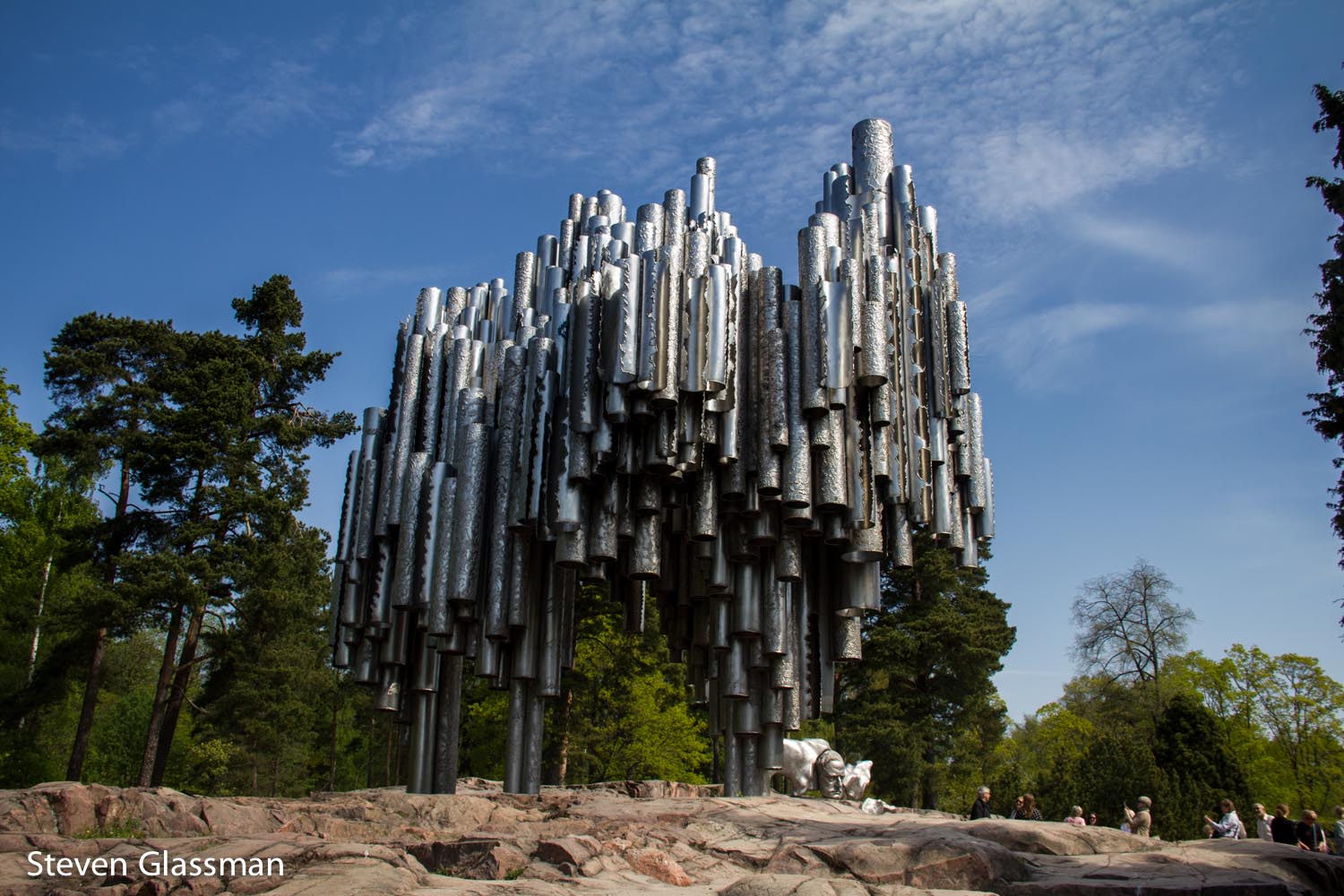
The Jean Sibelius Monument in Sibelius Park.  This was created in 1967 by Eila Hiltunen.  The intension was for visitors to interact with the design by creating sounds and echoes in the pipes.
helsinki-15

Artsy shot!

helsinki-16

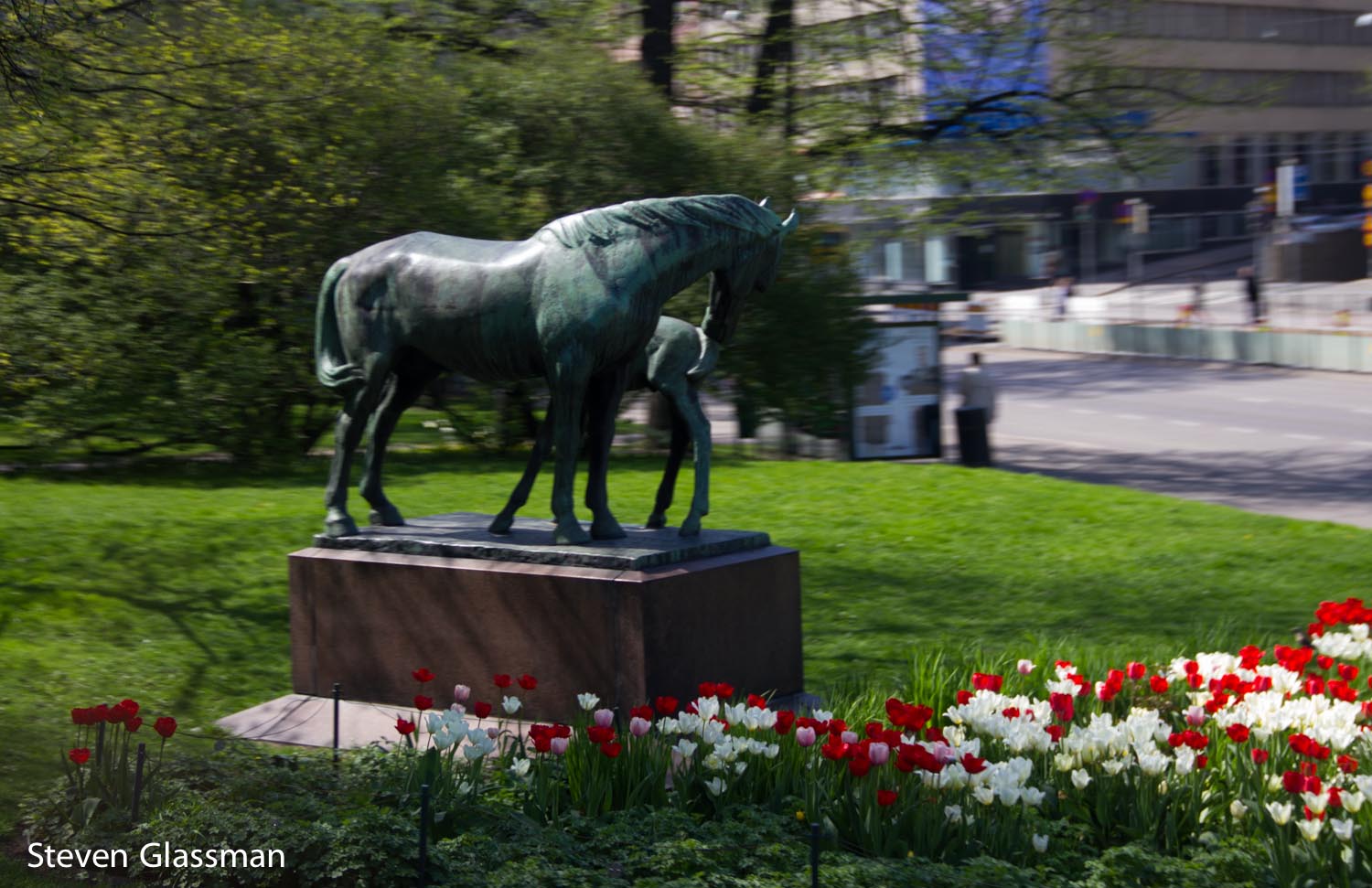
This statue is called “A Mother’s Love.”  I thought it was nice.
helsinki-17

Harborside Market, in Katajanokka.  Here you can buy crafts and local foods.

helsinki-18

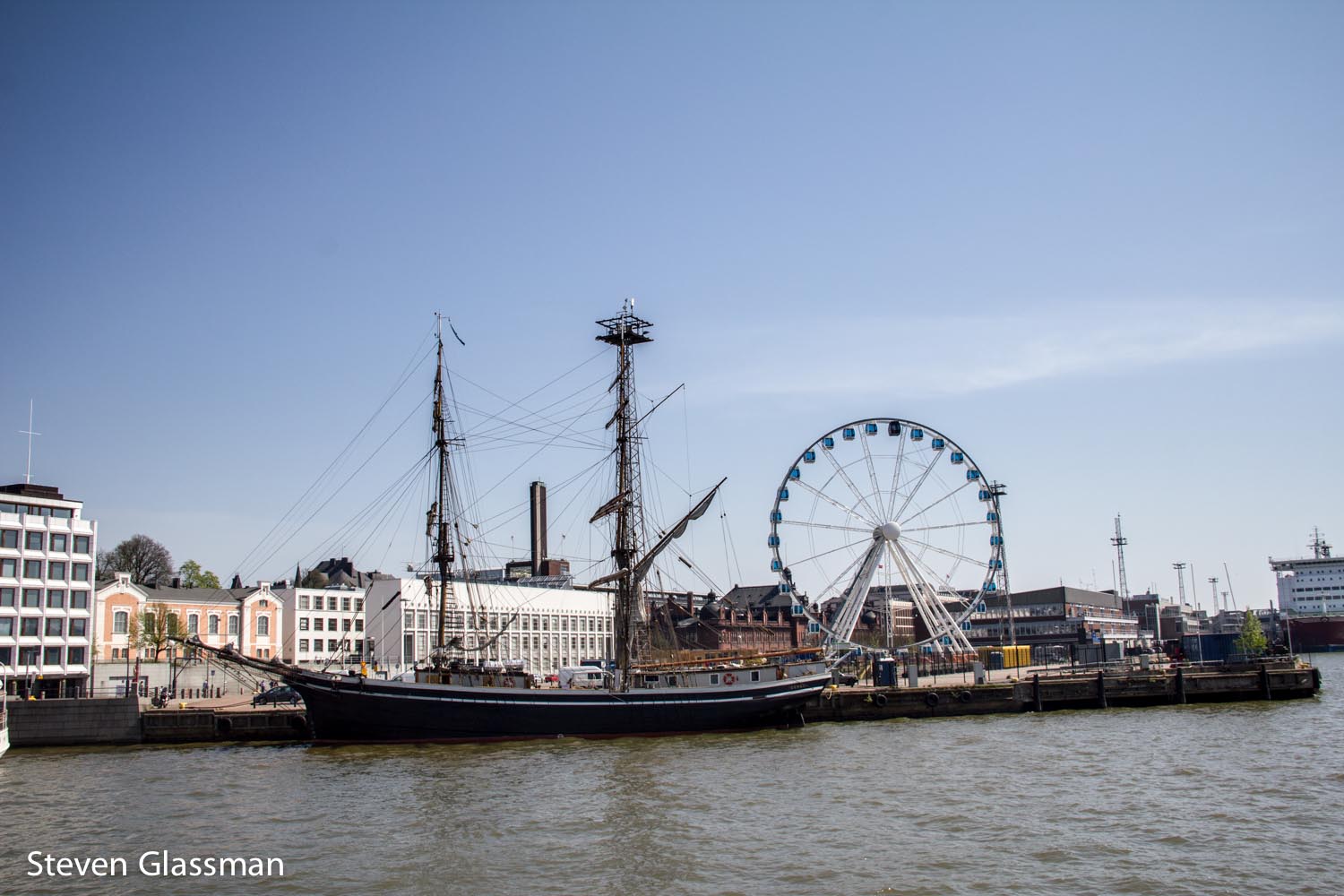
The Helsinki Pool and Ferris Wheel isn’t open yet-  It was slated for Spring of this year, but the 40 meter tall ferris wheel wasn’t open when I was there.
helsinki-19

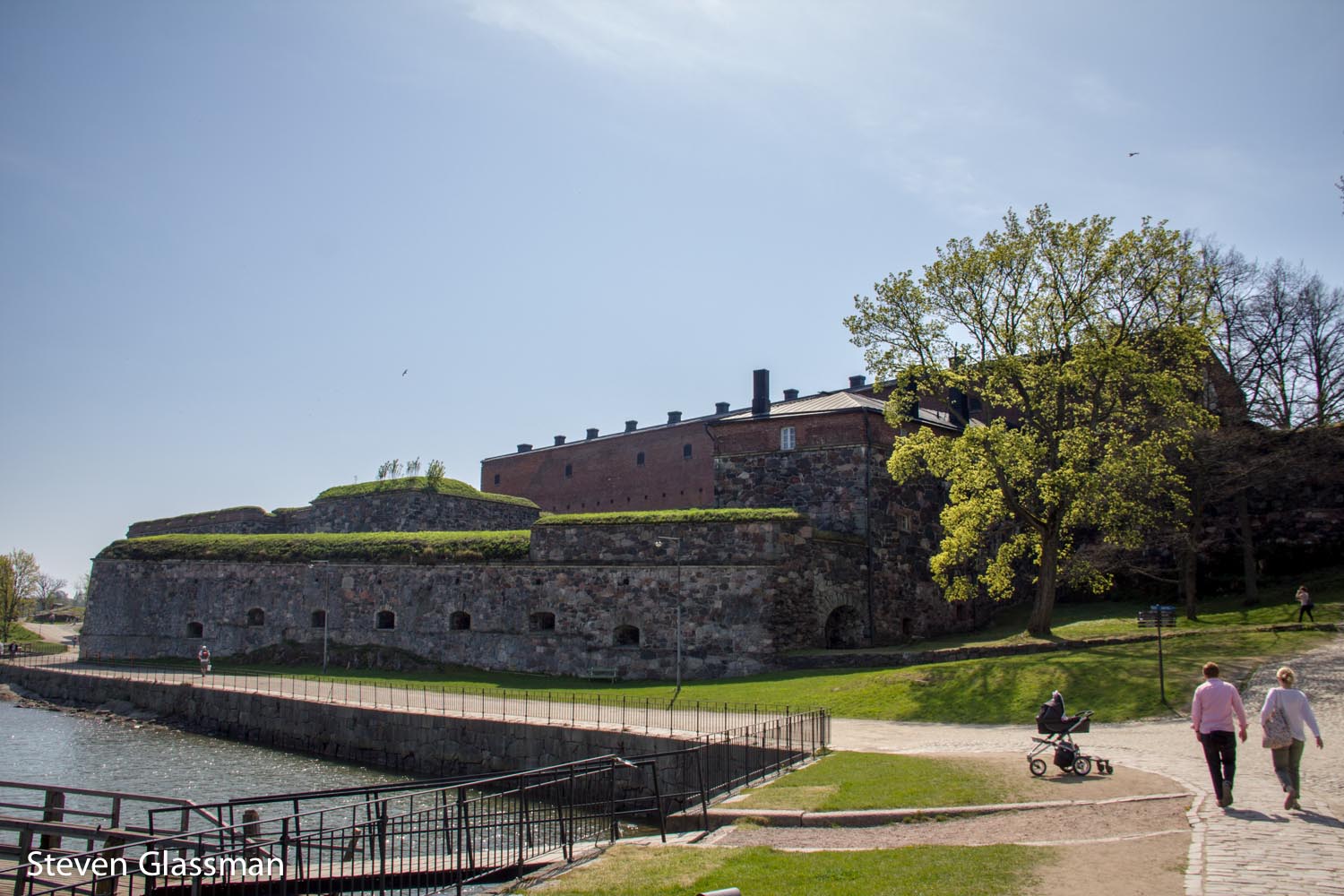
Suomenlinna could easily be separated into a separate blog post, because it’s an on a different island.  Suomenlinna is a sea fortress built off the coast of Helsinki in the mid-1700s in order to defend the city. The fortress is well preserved and is a frequent attraction for tourists, but the island is also home to around 800 residents. There are tour boats that go to Suomenlinna, but you can just easily reach the island using the HSL ferry-  if you’ve already purchased a day-ticket good for all the buses and trams, you’re covered for the ferry to Sueomenlinna as well. I purchased a multi-day ticket at the airport, and it covered me for the entire trip.
helsinki-20

On the walk in the direction of the King’s Gate.

helsinki-21

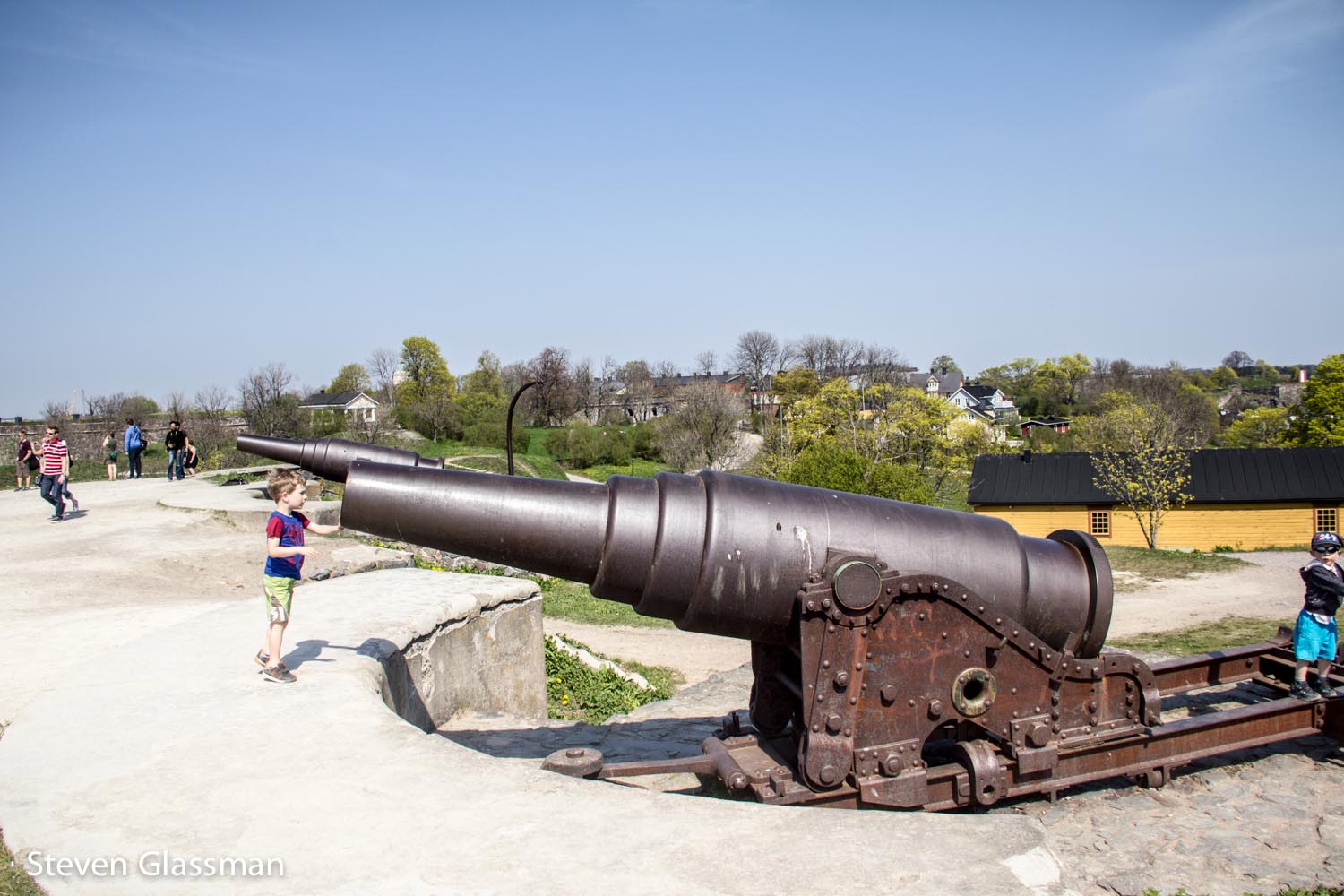
Kustaanmiekka is part of the original bastion fortress with guns constructed by the Russians at the end of the 19th century for coastal defense.
helsinki-22

Plus it looks a tiny bit like the Shire.

helsinki-23

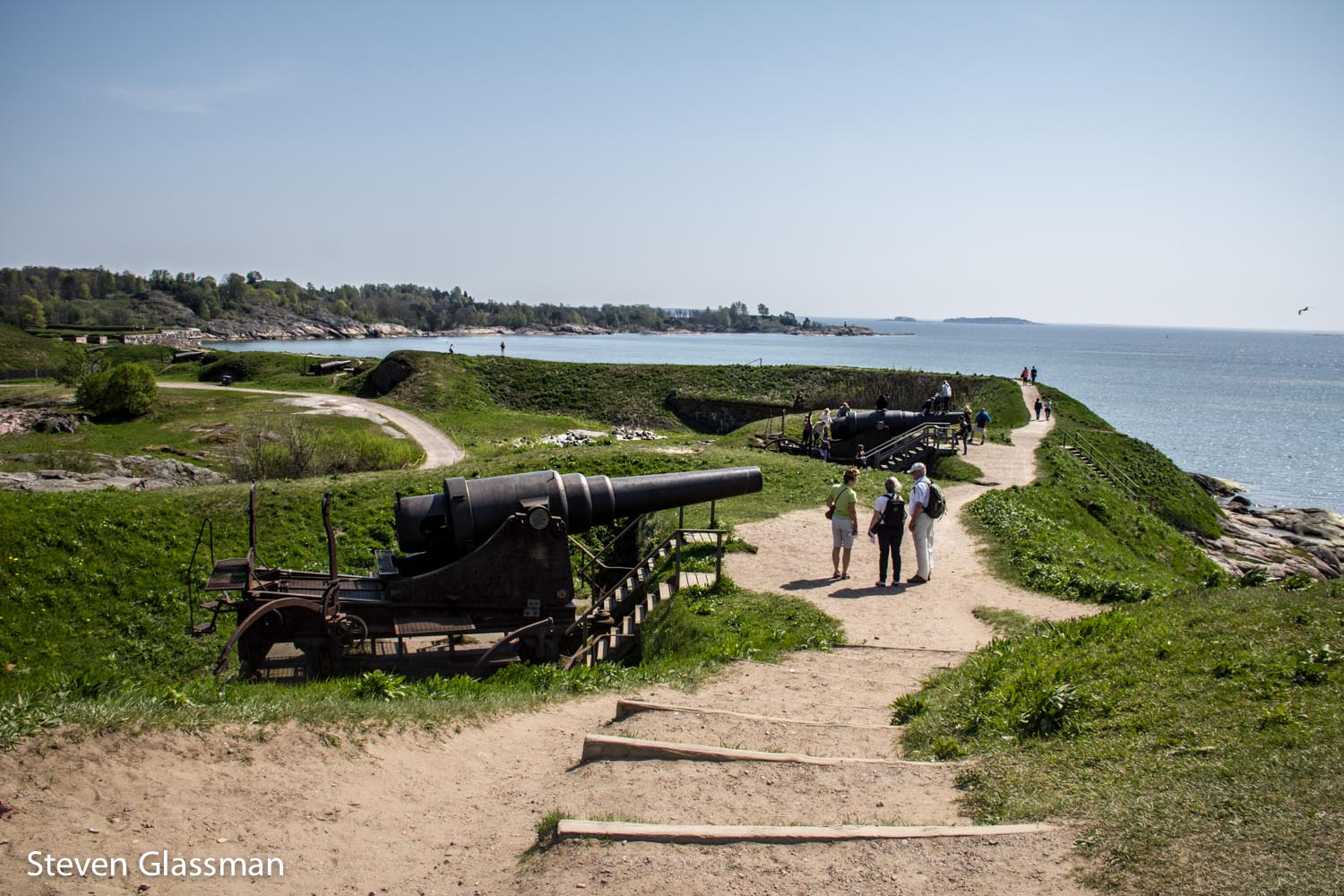
I didn’t manage to see the Vesikko while I was there  Vesikko is a Finnish submarine built in the 1930 for World War 2.  It has been restored and set up as a museum.  Regrettably, I didn’t find the Vesikko, but I did spend quite a while on the defensive wall of the fortress.
helsinki-24

The original structures from 1748 still stand and can be explored.

helsinki-25

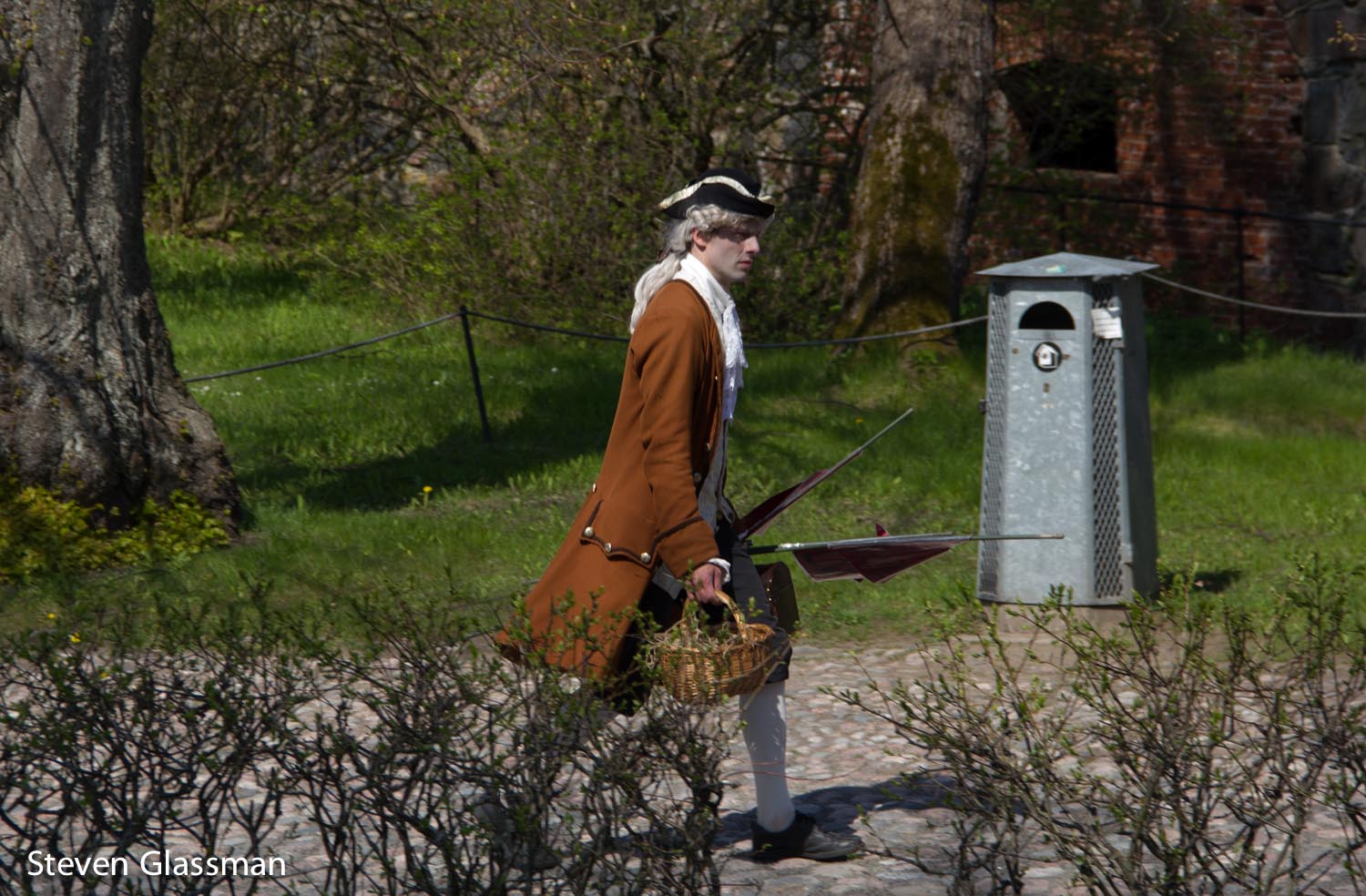
There are people in period costumes all over the Fortress museum area.
helsinki-26

The Suomenlinna Church was a Russian Orthodox garrison church in 1854.  In the early days of Finnish independence in the 1920s, it was converted into an Evangelical-Lutheran church.   The steeple still operates as a lighthouse for air and sea traffic.

helsinki-27ccc

Katajanokka as seen from the ferry back from Suomenlinna.

helsinki-28

Have you ever been to Helsinki or Suomenlinna?

The Palatine Chapel, Aachen

On the way back from the Netherlands, we stopped in Aachen specifically to check out the Palatine Chapel and the Aachen Cathedral.   The Palatine Chapel is an early medieval chapel which was originally part of Charlemagne’s palace.  Most of the palace no longer exists, but the Chapel has been incorporated into Aachen Cathedral.

This building is Aachen’s theater, and has nothing to do with the Cathedral.

aachen-1

This is part of the wall just outside the Chapel.  When we arrived, it was about fifteen minutes before the Chapel would be open for visitors so we walked around a bit.

aachen-2

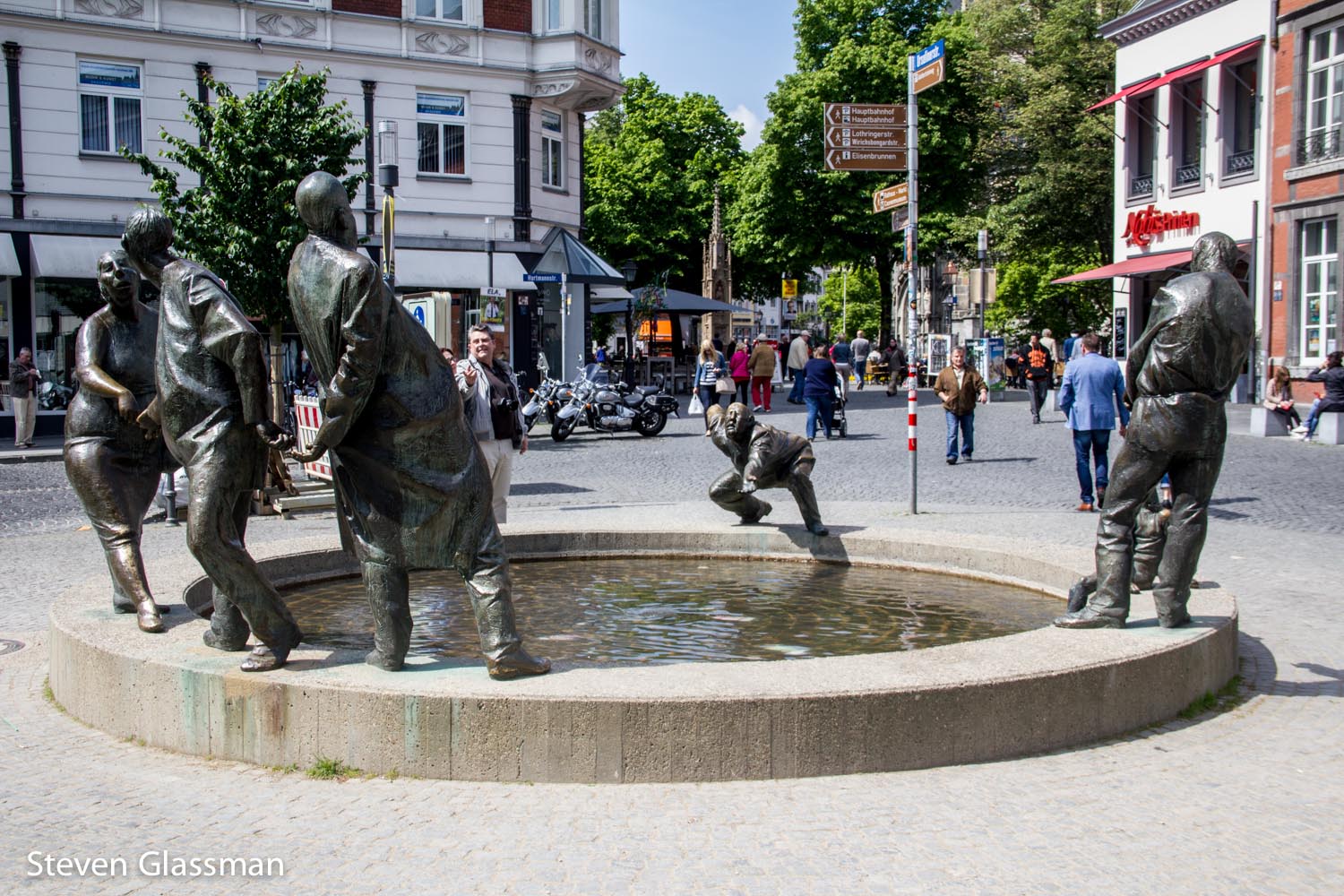
A statue near to the cathedral called The Circle of Money.

aachen-3

This is the Aachen Rathaus (town hall), across from the Aachen Starbucks.

aachen-17

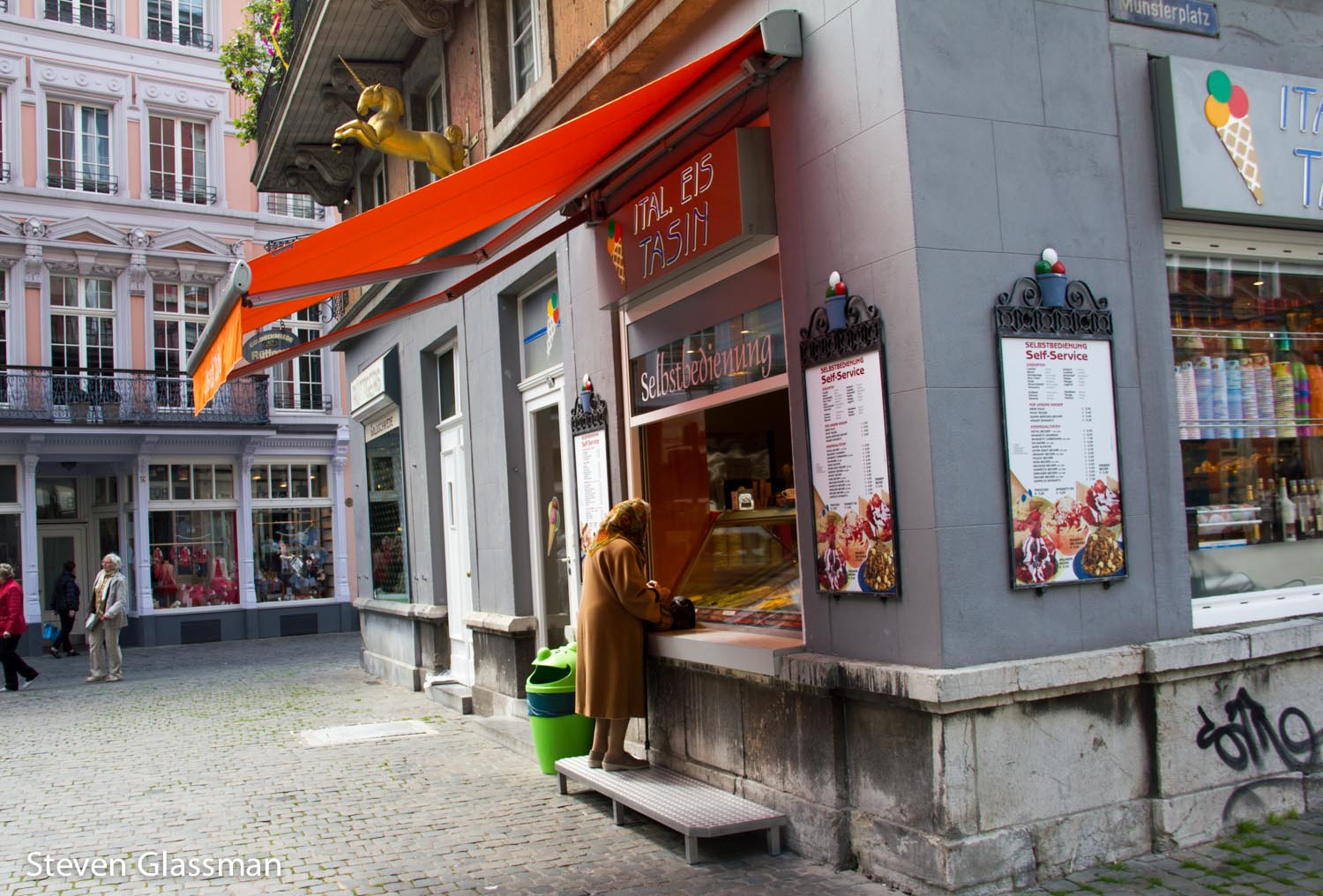
Germans really do love their ice cream.

aachen-4

The Chapel opened at 12:30 and we were inside soon after.  In the main entryway, there are pine cones dating from the year 1000.

aachen-14

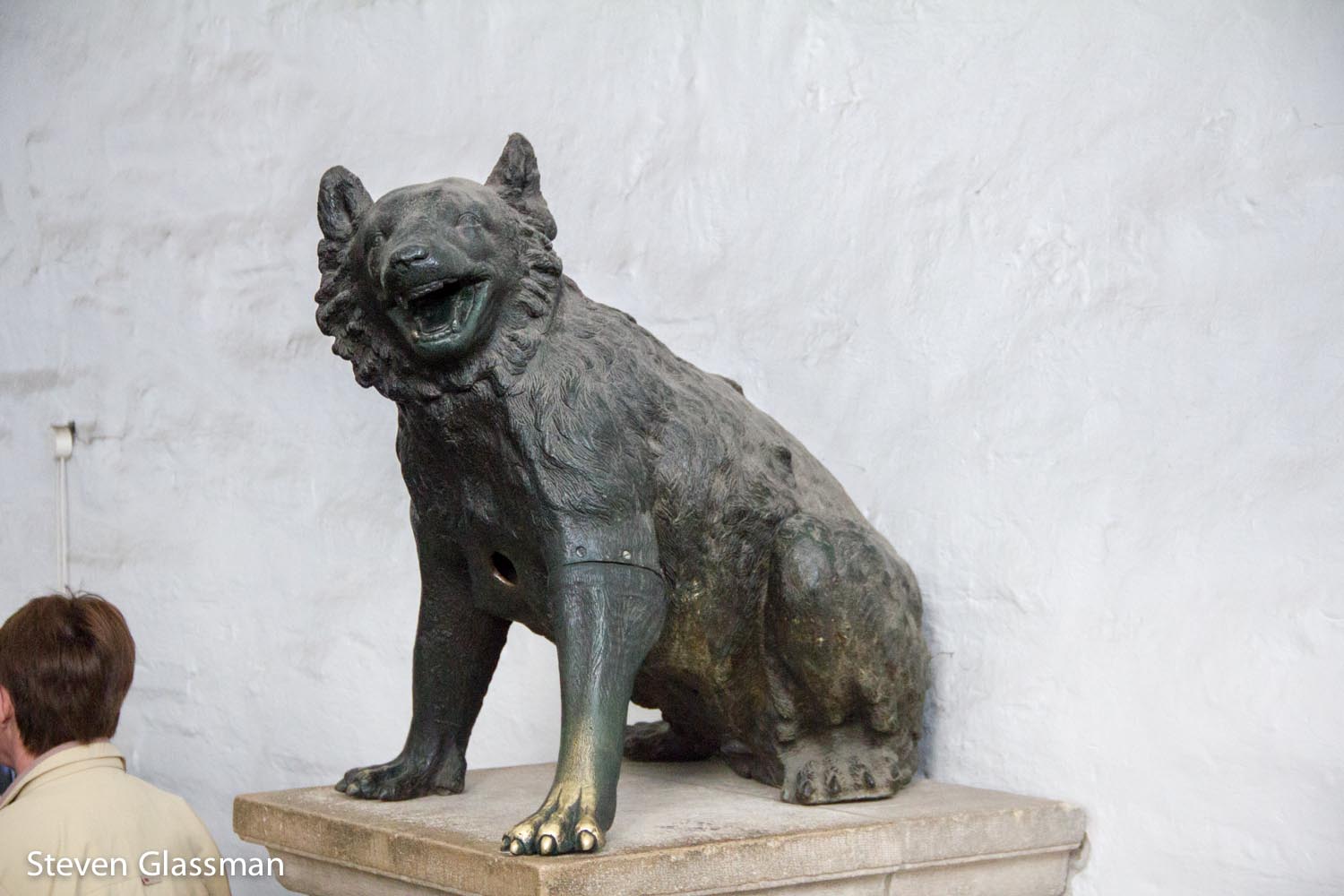
This is the “She-wolf,” a Roman female bear from the 2nd century.  Recent research has dated this sculpture back to ancient Greece, claiming that it is part of a hunting scene.

aachen-15

The Cathedral administrators charge you €1 to take pictures with your own camera.  When you pay, they put a green band on your camera strap to indicate that you’re allowed to be taking photos.  This seems entirely reasonable to me.

This is the main octagonal part of Charlemagne’s chapel.  The main structure dates back to roughly the year 800.

aachen-5

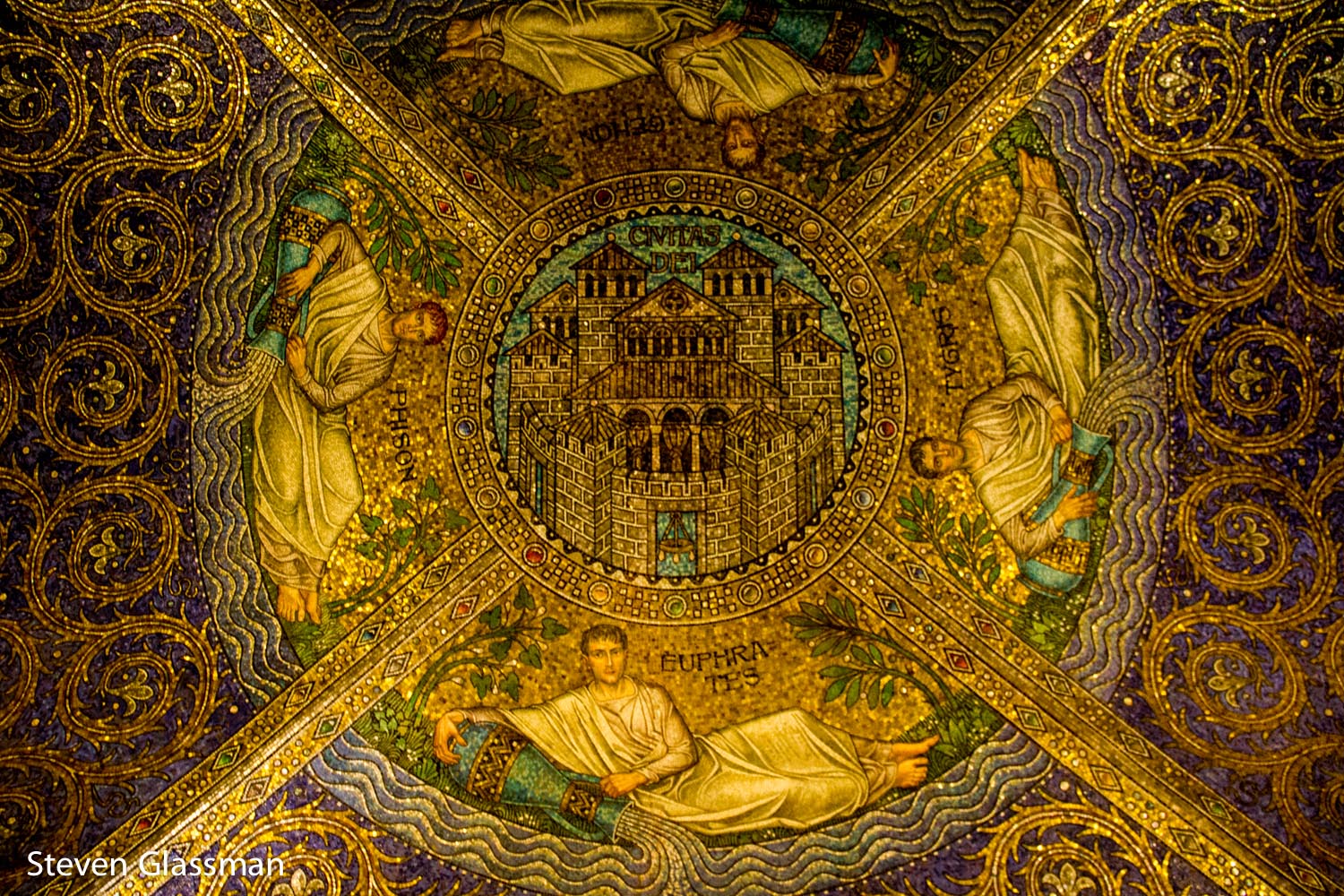
The ceiling of the Chapel.

aachen-6

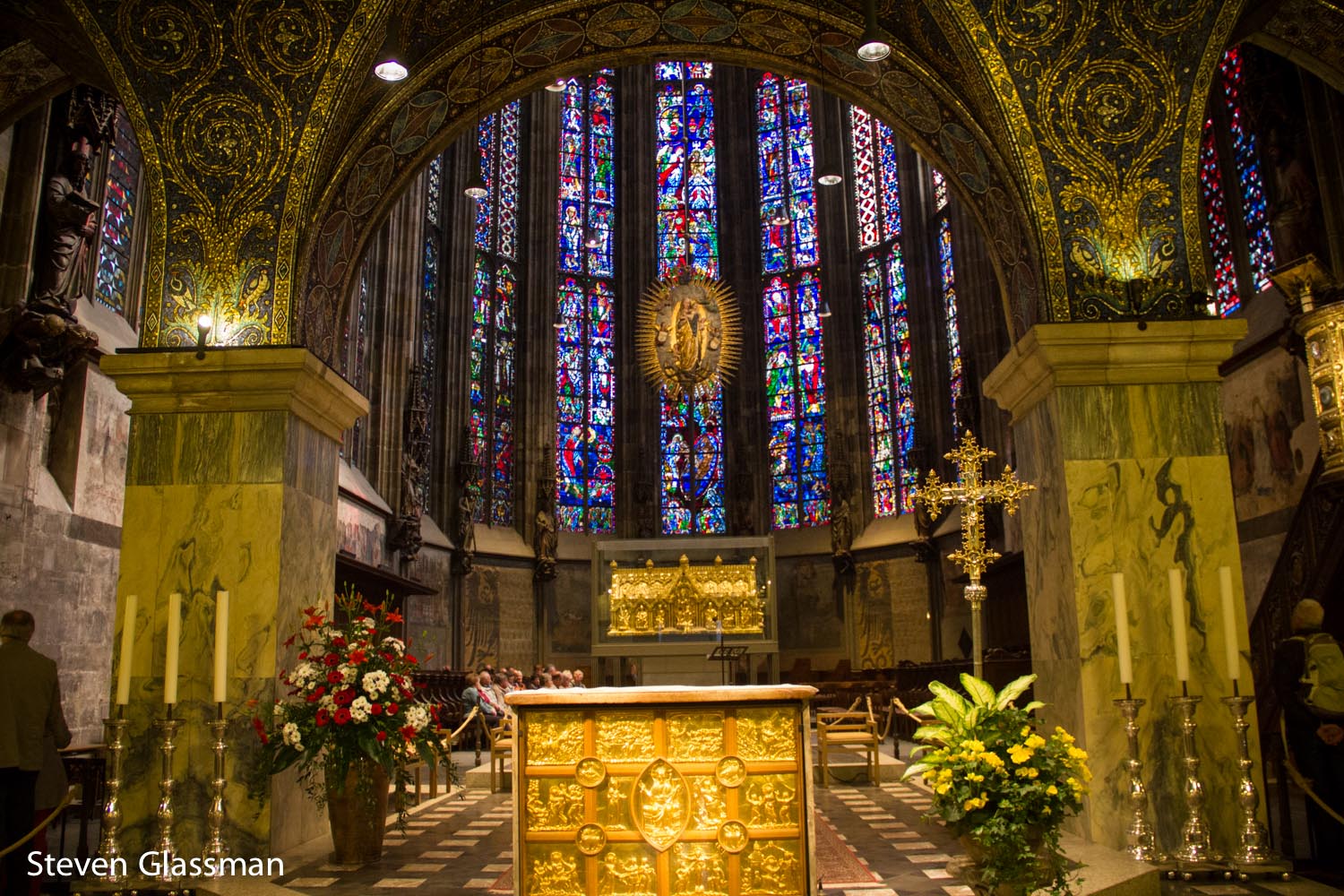
Stained glass with several items visible on the altar.  I’ll come back to these.

aachen-7

Detail in the ceiling near the main entrance.

aachen-8 aachen-9 aachen-10

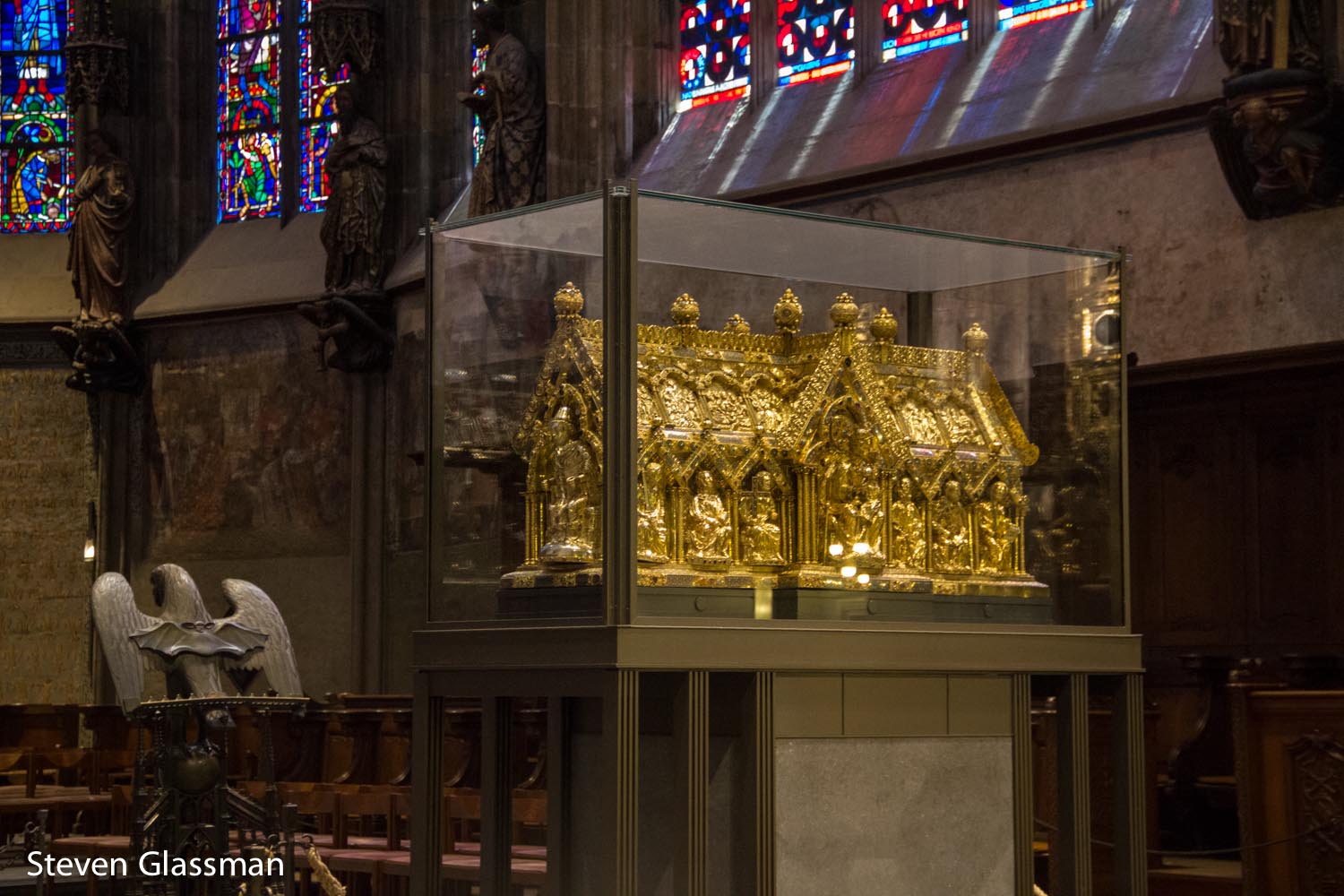
The gold box closest to the camera is the Shrine of St. Mary.  It contains four Aachen relics, which are taken out every seven years and put on display.   Behind that is the Adlerspult (Eagle stand), a brass music stand in the shape of an eagle.  The furthest gold box back is the Shrine of Charlemagne, and it contains the remains of Charlemagne, who died in the year 814.

aachen-11

The Shrine of St. Mary and the Adlerpult.

aachen-12

The Shrine of Charlemagne.

aachen-13

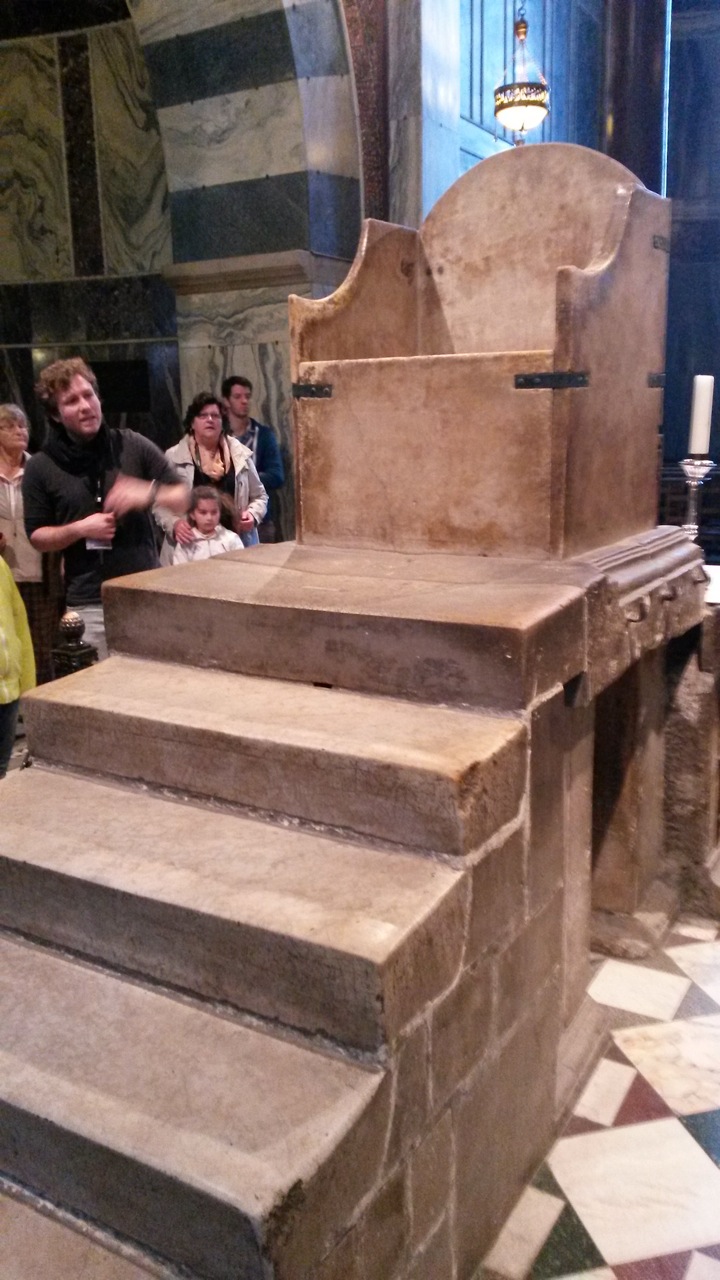
In the gallery upstairs is Charlemagne’s throne.  (Thanks to Robert for taking this picture.  You had to join a tour to go upstairs, and he did.)   Originally, the throne was white marble, but it was covered it in tar paper after the war and buried in sand-  a bomb attack blew out all the windows and they were doing their best to cover the inside from the elements.  The tar paper has left stains on the marble and these will not be cleaned for fear of damaging the marble.

aachen-18

This is the Aachen cathedral in its entirety.  The rounded cupola in the center is the portion containing the Palatine Chapel.

aachen-16

Have you ever been to the Palatine Chapel?


Luxembourg City

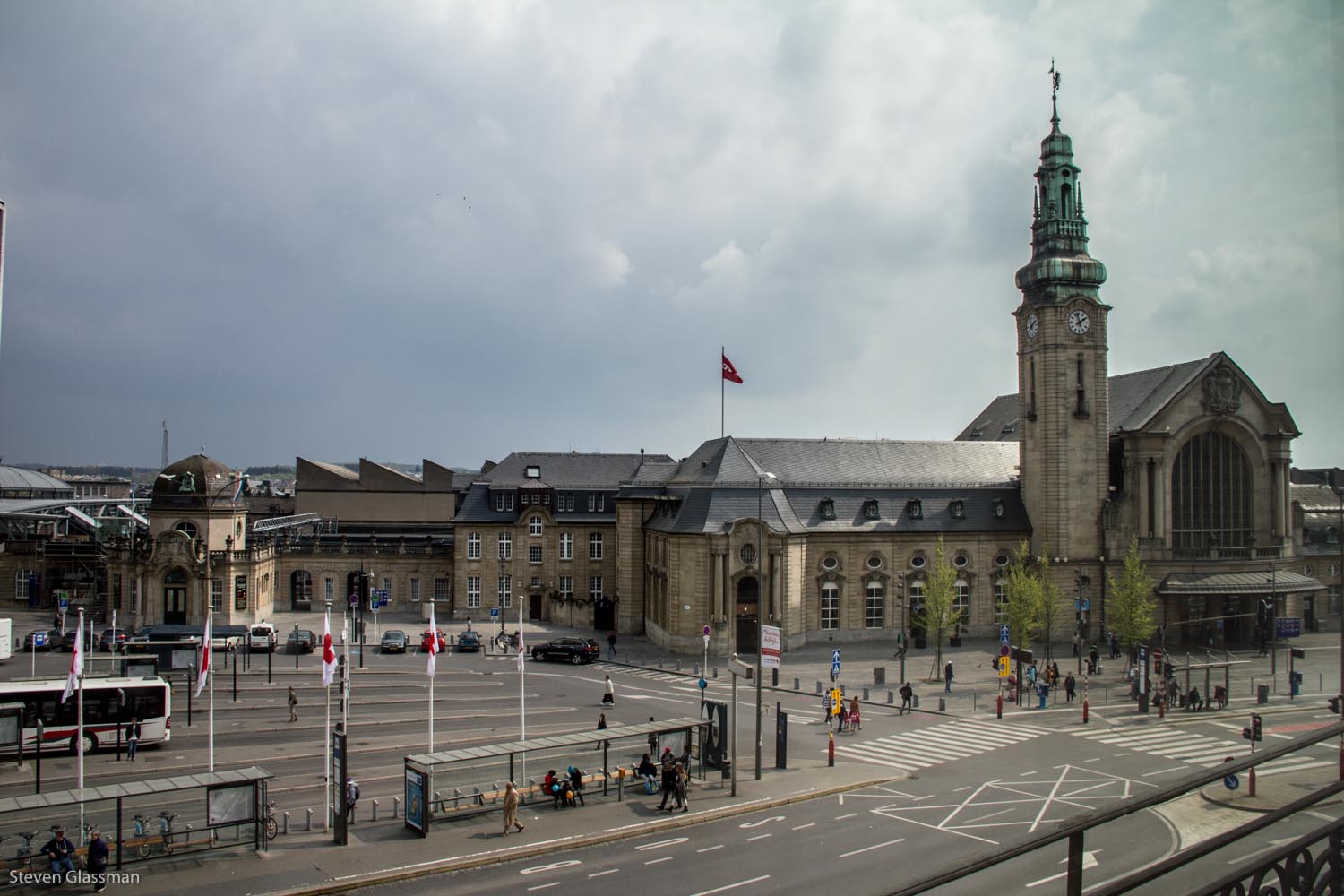
My trip to Belgium concluded with a one night stay in Luxembourg City so that I would have a little bit of time to check out the place.   My hotel was directly opposite the train station, and I already posted a night-time view from this vantage point, because this was the night of the Sport Lisboa e Benfica win.   It was much quieter in the daytime.

luxembourg-1

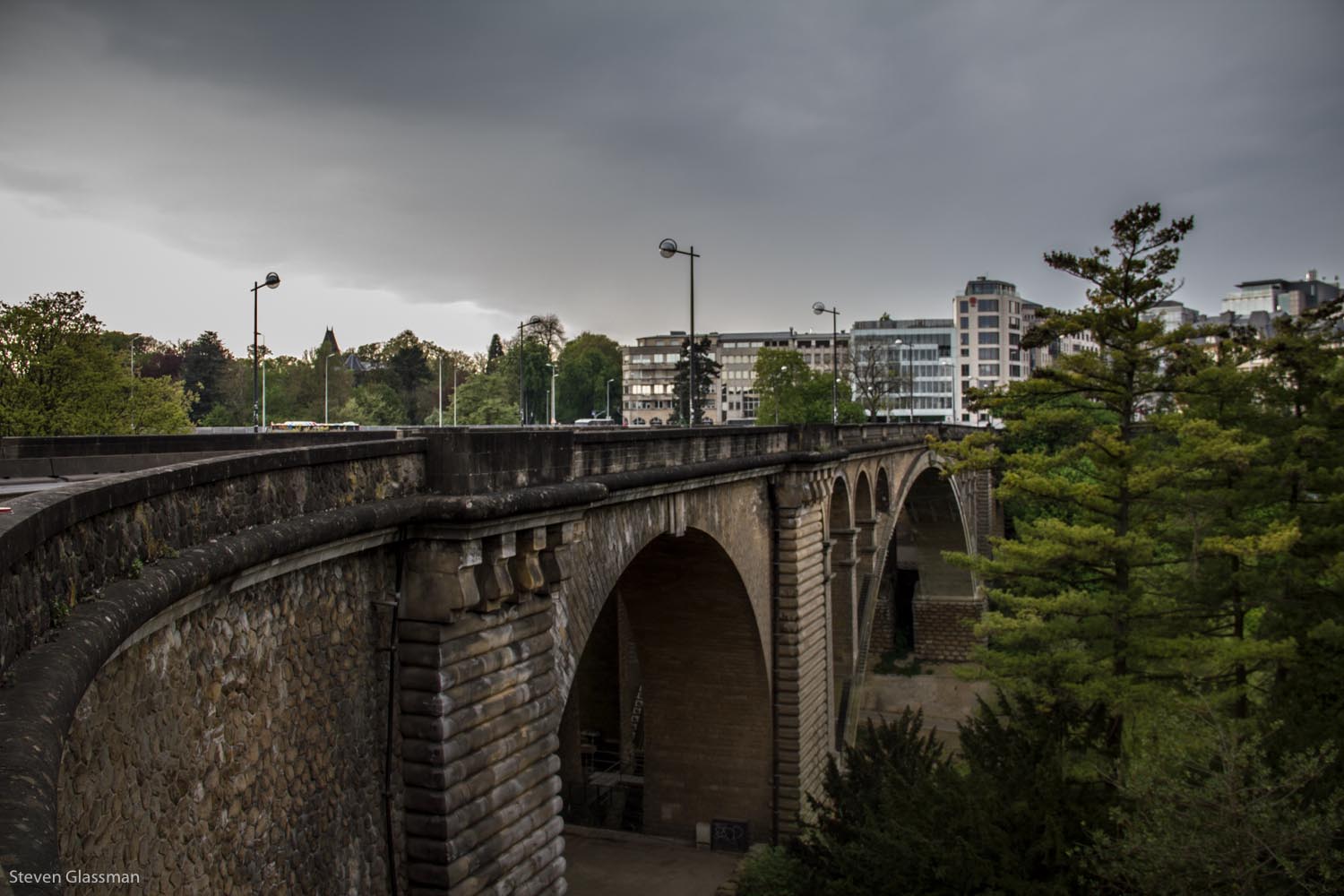
The topography of Luxembourg City is kind of amazing-  the entire city is constructed around gorges and ravines.  If you’re a fan of interesting bridges, this is the town for you to visit.  If I’m not mistaken, this one is the Passerelle, also known as the Luxembourg Viaduct.

luxembourg-2

This is Luxembourg’s Notre-Dame Cathedral.  I knew there were a few Notre-Dame cathedrals, but I didn’t know before I looked it up that there are actually more than thirty.  I’ve seen three of ’em now.  I’m gonna collect the whole set! (Kidding…)

luxembourg-3

In Constitution Square, as you’re heading into the old city, there’s a war memorial called The Monument of Remembrance.  The locals have nick-named it Gëlle Fra, which is Luxembourgish for “Golden Lady.”  The monument is dedicated to the Luxembourgers who served in the armed forces of the Allied Powers during World War I.

Interesting side note:  The first time I heard someone refer to Luxembourgish as a language, I thought they were joking.   Luxembourgish, I have learned, is a derivative of Franconian German which is spoken by about 400,000 people worldwide.    Most of them, naturally, are in Luxembourg.  Fascinating!

luxembourg-4

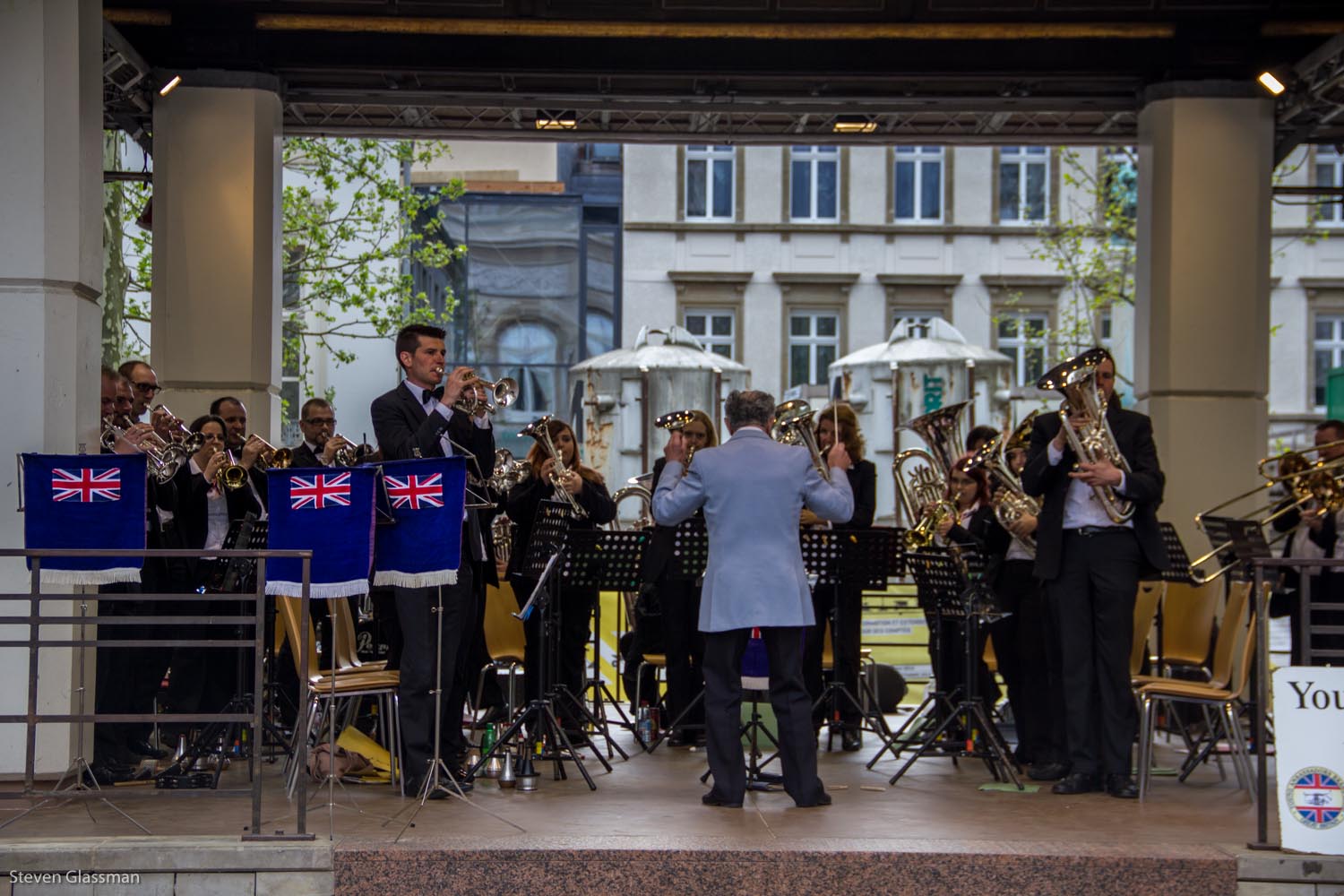
Walking through the city, I found myself in a large square called the the Place d’Armes.  There were many restaurants and shops around this square, but there was also, somewhat randomly, a band visiting from Britain!  The Young Ambassador’s Brass Band of Great Britain.

luxembourg-5

After I enjoyed the live music for a little while, I kept wandering.  I found the Grand Ducal Palace without much difficulty.  Large crowds of people make things easier to spot.

luxembourg-6

When I got closer to the Grand Ducal Palace, I noticed a lone guard marching back and forth in front of the gate.   There were two of these blue guard boxes, and I wonder if the Luxembourg guard does as the Queen’s Guard do at Buckingham Palace:  Two sentries when royalty is in residence, and one when royalty is out of town.

luxembourg-7

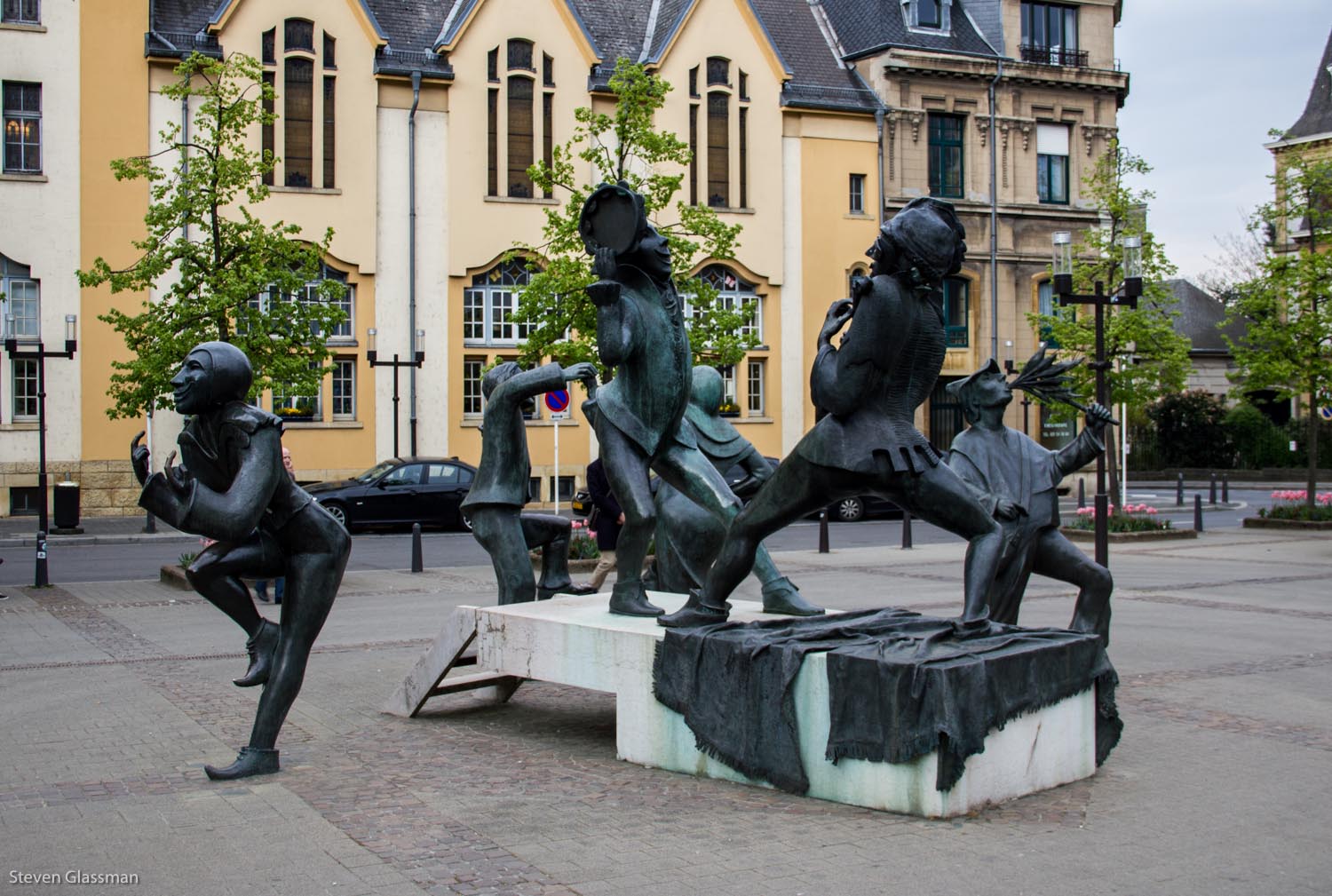
Walking further, I found a  theater with a nifty set of drama statues out in front.  Unfortunately, this was the beginning of the part of the trip where I got completely lost.  Despite my travel experience, this still happens to me sometimes.   When I’m in the heart of an old city, my sense of direction isn’t always the sharpest and I can get pretty turned around.    This never happens to me when I’m in Florida, even when I’m in an unfamiliar part of the state.   I don’t know precisely why this is.  In any case, I kept walking in the same direction, because I thought I was heading back toward Constitution Square.

luxembourg-8

By the time I realized I wasn’t where I thought I had been going, I was several kilometers away from the place where I knew which way was which.   Lucky for me, this was also the point at which I found one of those Hop-On/Hop-Off bus tours.  I Hopped On.

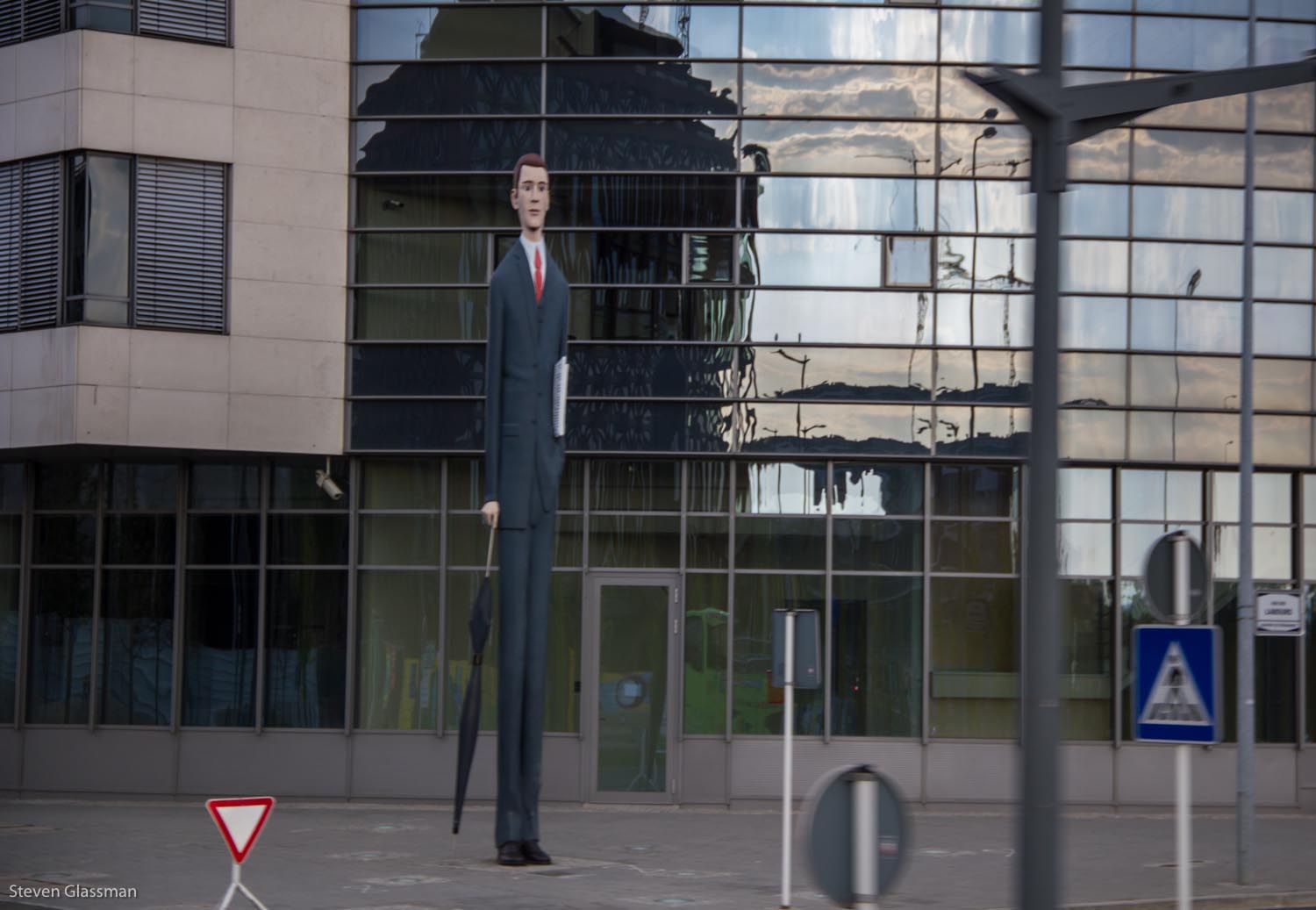
Most of the bus tour was uninteresting to me, but I did quite like seeing The Tall Banker.  The Tall Banker, set in front of the Deka Bank, has the waist of a normal person, but he’s eight meters tall.

luxembourg-9

From the bus tour, I also saw the Walking Flower sculpted by Fernand Léger in 1951.  I don’t know if this is the original one, because I saw the exact same sculpture two weeks later in the Hague.   This statue (or copies of it) have traveled the world, and one was even displayed in Manhattan.

luxembourg-10

After I Hopped Off the tour bus, I walked back to Pont Adolphe.  I had actually been trying to find this bridge when I got turned around and subsequently lost, and it turned out to be very close to where I started out in the first place.  It was also closed to traffic for repairs, but that didn’t stop me from wandering out onto it.

luxembourg-11

Have you ever visited Luxembourg City?

Brussels, Belgium

My trip to Belgium included a bunch of time spent in Brussels, the de facto capital of the European Union.  It’s a fascinating city.  I arrived via high speed train to the city around 5:30 in the afternoon.   Walking to my hotel from the station, I found something interesting in less than ten minutes-  this building’s angel/demon stone-work was just fascinating to me.

brussels-1

After I dropped my stuff off at the hotel, I went back out with my camera to see a bit of the city.  I also had a specific goal in mind, but I’ll get to that in a moment.  On the walk into the city, I found this Pop-Up Restaurant.  It was set up temporarily in front of the Le Monnaie De Munt, a rather nifty looking theater.  The Pop-Up Restaurant was set up so they could film a television show, according to the signage.  I briefly considered trying to get a table before moving on.

brussels-2

Walking further toward the Grand Place, I spotted this rather amusingly named restaurant.  It had pretty typical food on the menu and I almost had dinner there one evening, but changed my mind at the last minute.  Also, I thought the eggs were regular decoration, but they were just there because it was Easter weekend.

brussels-3

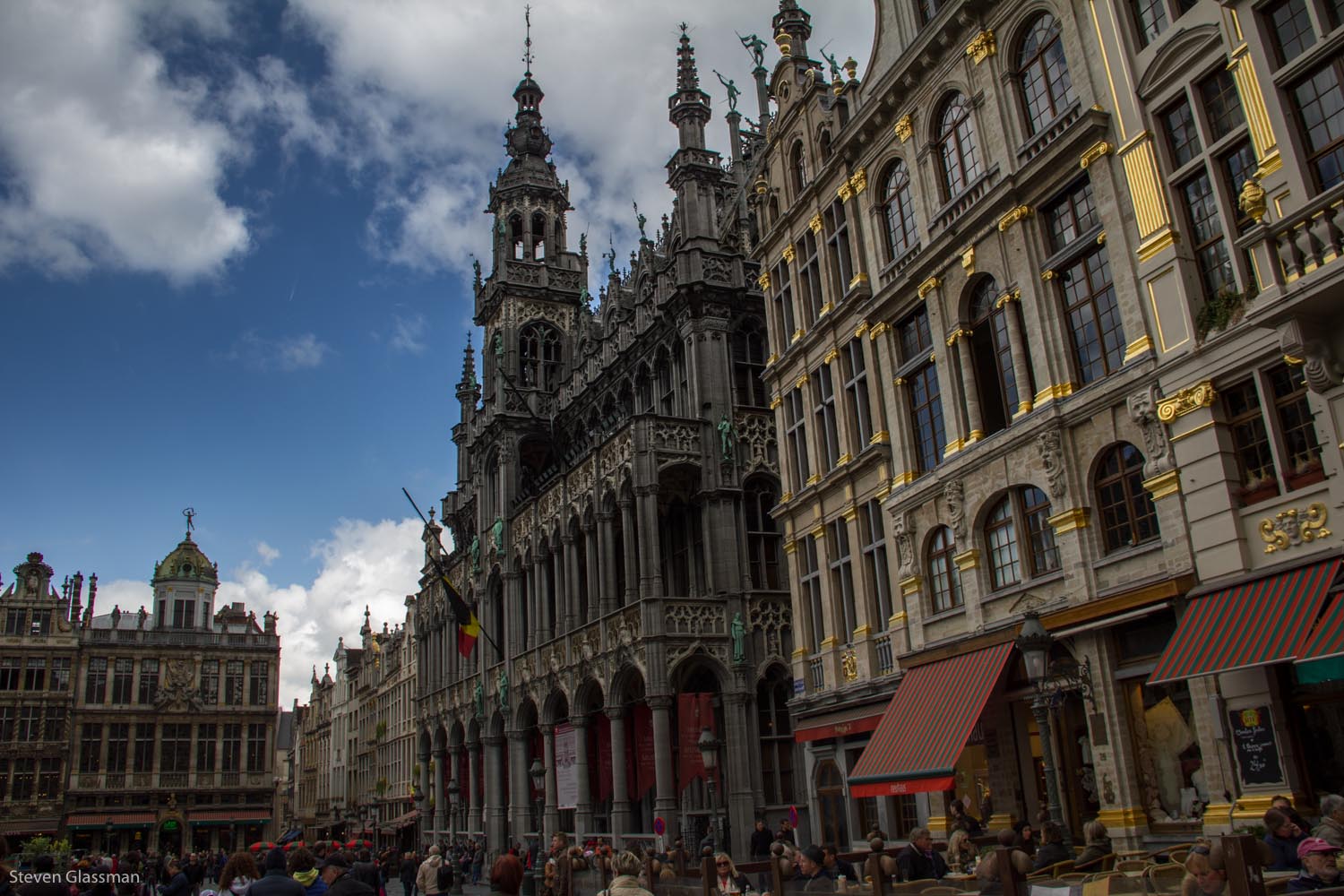
I wandered from there into the Grand Place.  It’s pretty hard to miss this enormous square.  The Town Hall has an enormous pointy bit.  I did not climb the pointy bit, as you had to make a reservation in advance to do so.

brussels-4

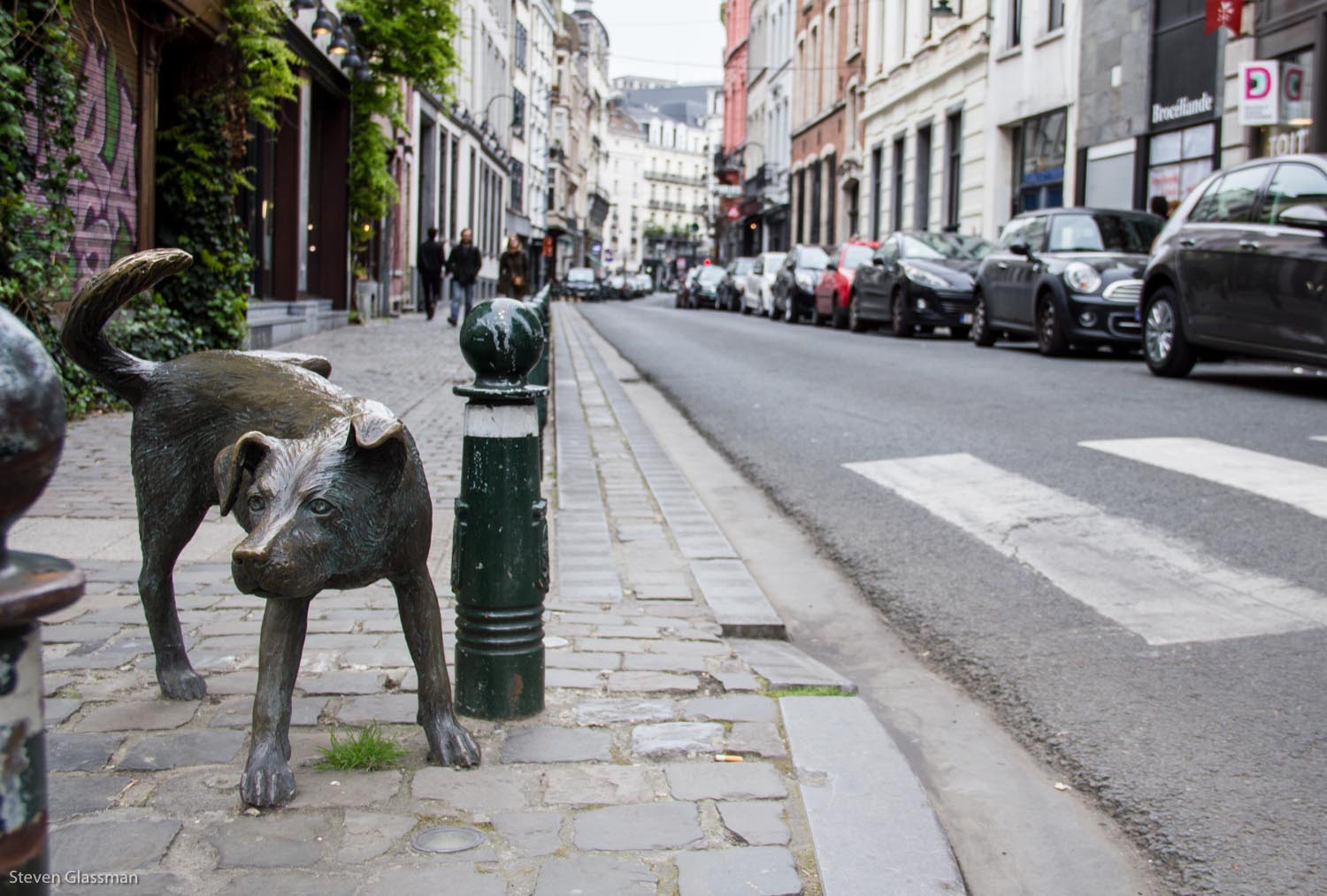
I mentioned above that I had a specific goal in mind for my walk through the city on the first evening.  Most everyone has heard of Manneken Pis, the famous statue of the little boy peeing.  That statue is widely associated with Brussels, and is one of the symbols of the city.   There are two more peeing statues, though:  Jeanneke Pis, a little girl peeing, was put up in 1987, and Zinneke Pis, a dog peeing, was put up in 1998.  I decided when I left the hotel that I wanted to find all three before sundown.

Zinneke Pis was the first one I found.    The tile Space Invaders art drew my attention to the corner before I spotted the dog on the corner.

brussels-5

Someone asked me if it was a male or female dog.  I can say with authority that it is most decidedly a male dog.  You just can’t see it in this camera angle.

brussels-6

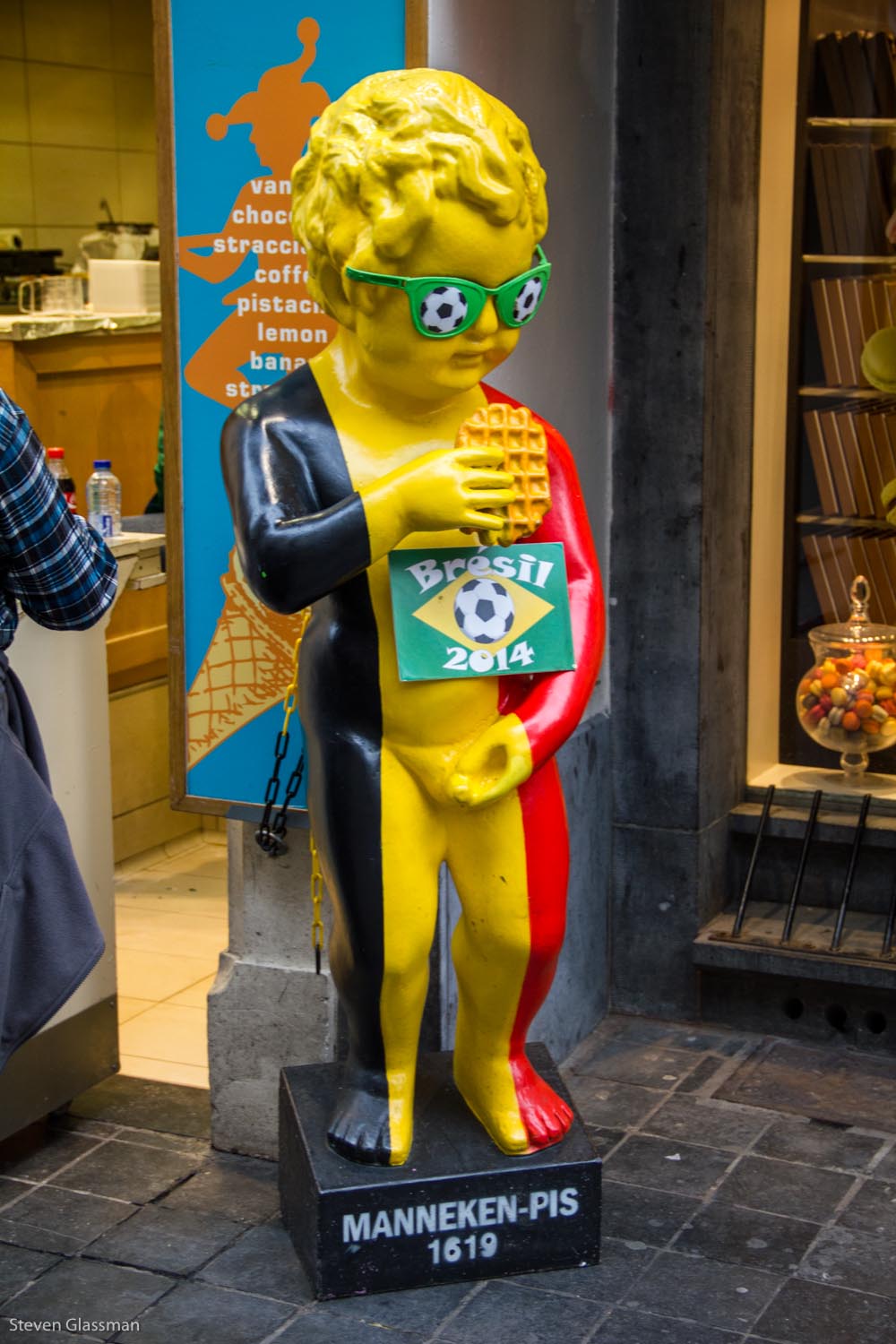
Next up is the Manneken Pis.  This one is marked on sightseeing signs and tourist maps, because it’s the most famous of the three.  This fountain was erected in 1619, and they dress it up in various costumes several times per week.  There was no costume while I was there, which surprised me because it was Easter weekend.

This is not the only Manneken Pis; there are others in various cities in Belgium, and one in Tokushima, Japan which was a gift from the Belgian embassy.

brussels-7

I saw so many replicas while I was in the city, including one made all of chocolate, and this one dressed up for the World Cup later this year.

brussels-8

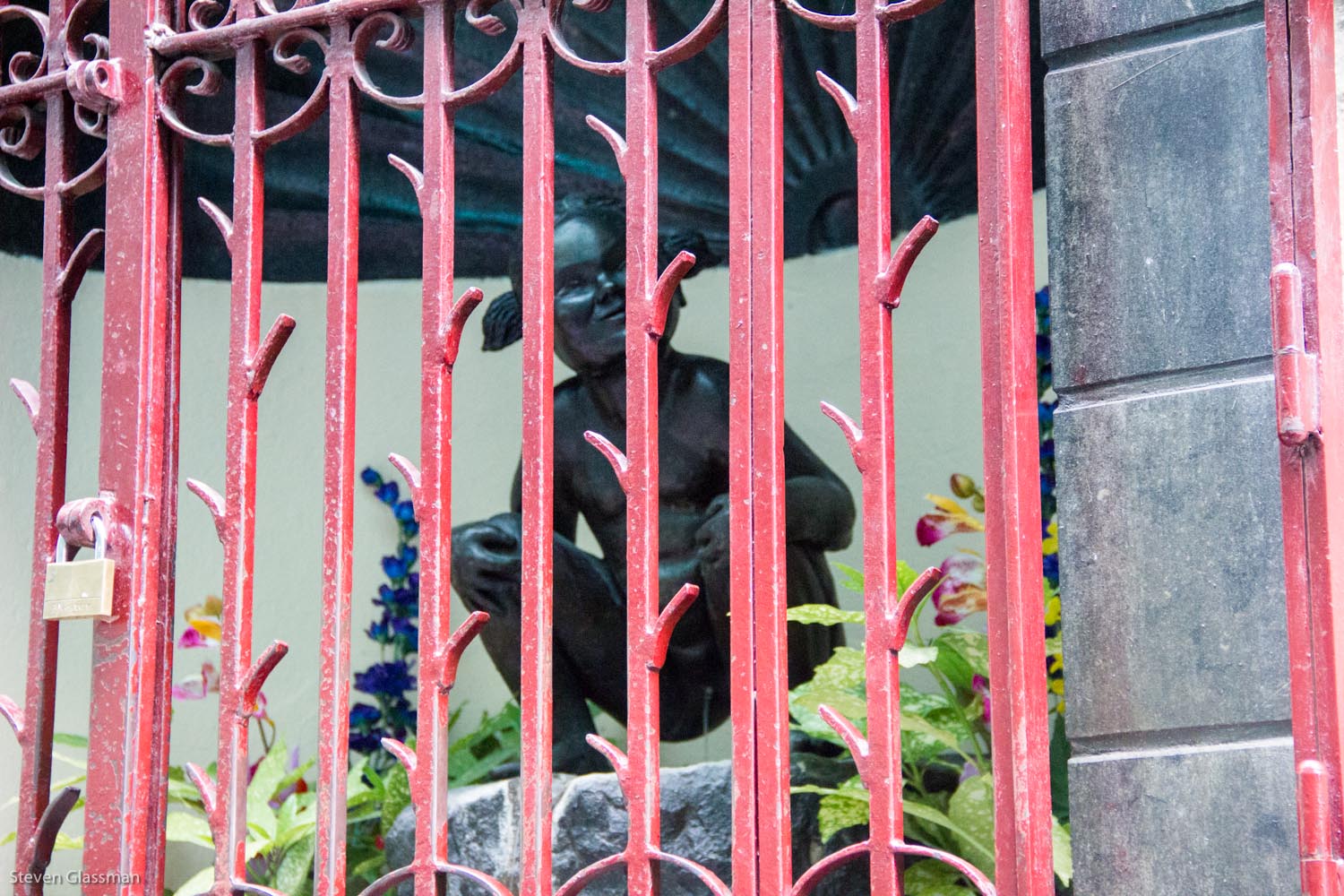
Moving on from the Manneken Pis, I found my way next to Jeanneke Pis, erected in 1987 very close to the Rue des Bouchers, which is a narrow street full of restaurants.   Jeanneke Pis is not far from the Grand Place, and it is regrettably behind locked iron bars which makes getting a good picture of her somewhat difficult.

brussels-9

Jeanneke Pis is basically across the street from the Delirium Tremens Beer Bar and Cafe,  which made this a perfect time to stop for a nice Belgian beer before dinner.

brussels-10

I tried the Delirium Nocturnum, a strong delicious dark beer with an 8.50% alcohol by volume.  Did I mention it was delicious?

brussels-11

After leaving Delirium, I decided to look for some dinner before retiring for the night.  Passing by it, I saw the Beurs, the Brussels Stock Exchange, which is the location of the Art of the Brick Lego art exhibit.  I’ll come back to this in another post, because I checked out this exhibit right before I left Brussels two days later.

brussels-12

The next day, it was time for my actual tour of Brussels, led by a professional tour guide.  It started in the Grand Place, so here’s another view of that large plaza.

While I was waiting for the tour to start, I had a Belgian waffle covered in powdered sugar.  The powdered sugar made me cough, which caused me to be completely enveloped in a cloud of white powder.

Delicious high comedy.

brussels-13

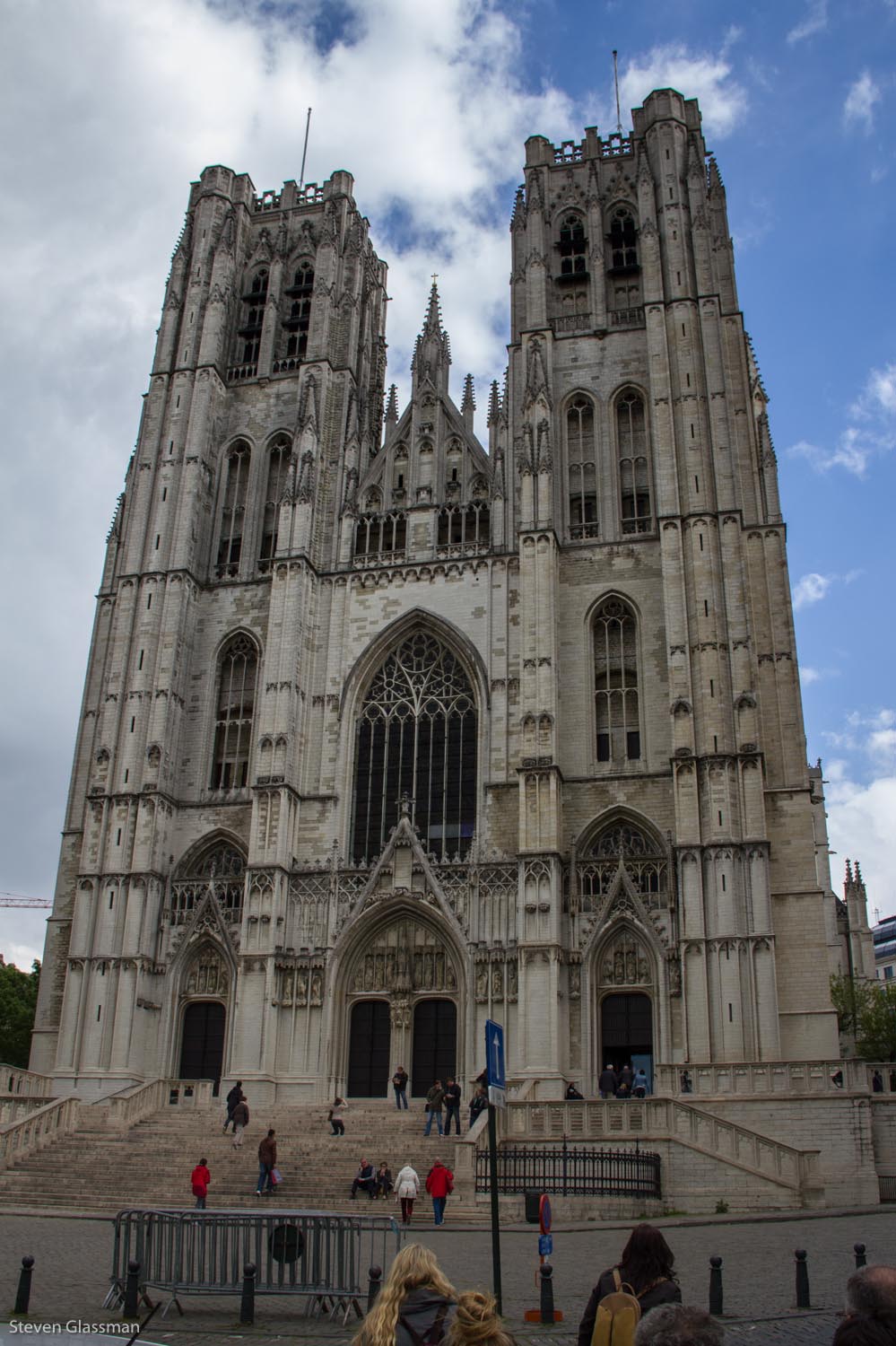
Moving on, we walked past the Cathédrale des Saints Michel et Gudule (Cathedral of St. Michael and St. Gudula,)  which was completed in 1519.

brussels-14

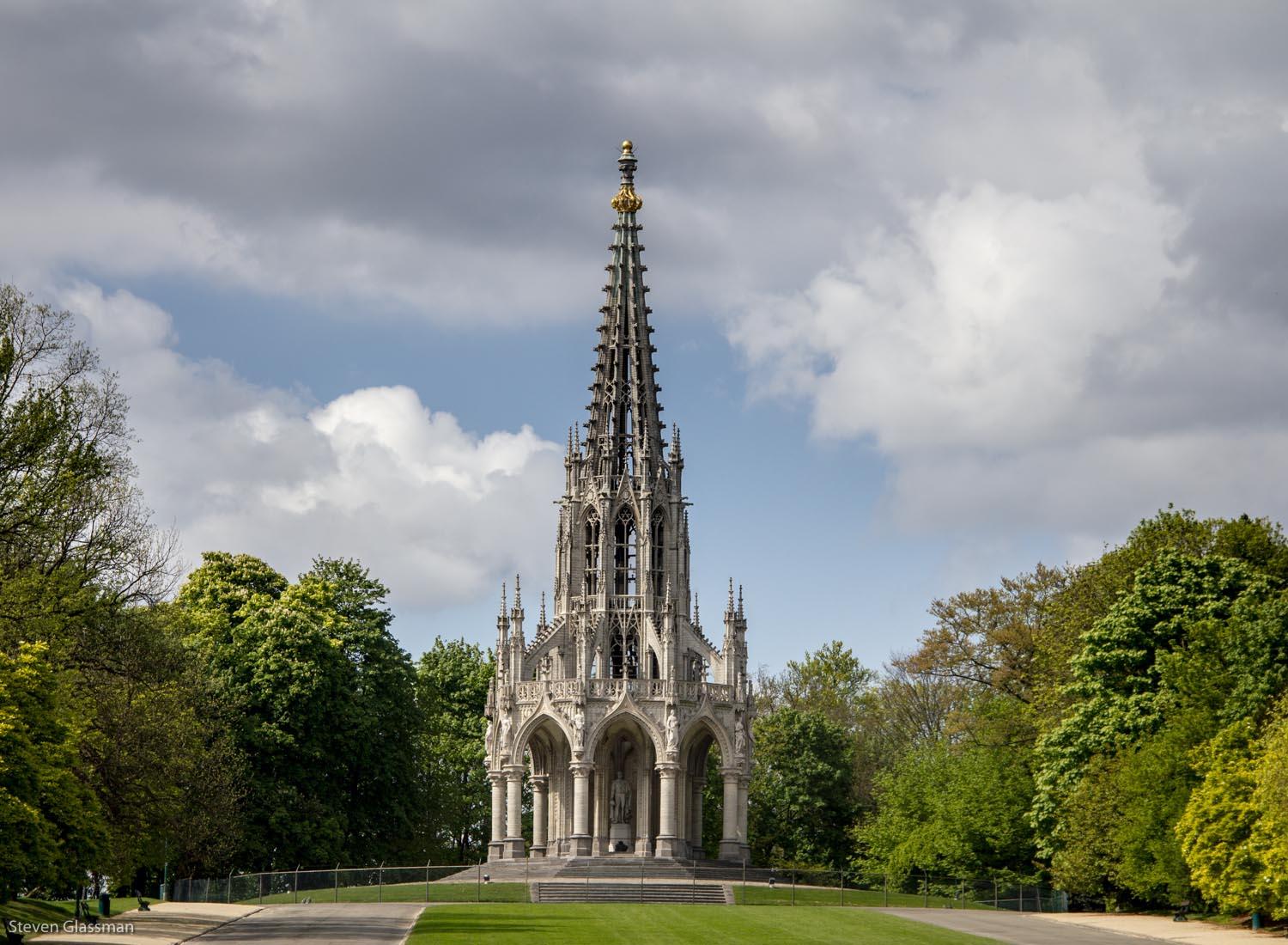
This is a monument to King Leopold I, the first king of the Belgians.  He ruled from 1831 to 1865.

brussels-15

This is at the base of a very tall monument, but none of my other pictures came out very well.  The structure is the Colonne des Congrés (the Congress Column.)  The four corners are statues representing the four freedoms of Belgium- Freedom of the press, of religion, of education, and of association.

The flame is atop a Belgian Tomb of the Unknown Soldier,  from World War I.

brussels-16

Moving on, we visited the Parliamentarium’s visitor’s center, which is all about the European Union’s Parliament and how it governs.  It was pretty neat, actually.  This first section represents the main structures in the three governing cities of the EU-  Brussels, Luxembourg, and Strasbourg.

brussels-17

How far is it to your home city? Vienna’s only 917 kilometers away…

brussels-18

The exhibit had a detailed model of the European Parliament’s seating arrangement.  Interestingly, the seating is not by nation, it’s by political affiliation.

brussels-19

I missed all but the last three minutes of this film about how the Parliament makes decisions because I was fascinated by shiny objects on the other side of the hall.  It looked interesting, though.

brussels-20

On the way back from the Parliamentarium, we passed the Triumphal Arch in the Parc du Cinquantenaire, but alas, we didn’t actually go into the Jubilee Park, so this is the best photograph I took of the Arch.

brussels-21

This… this is just an enormously large flower pot that amused me.

brussels-22

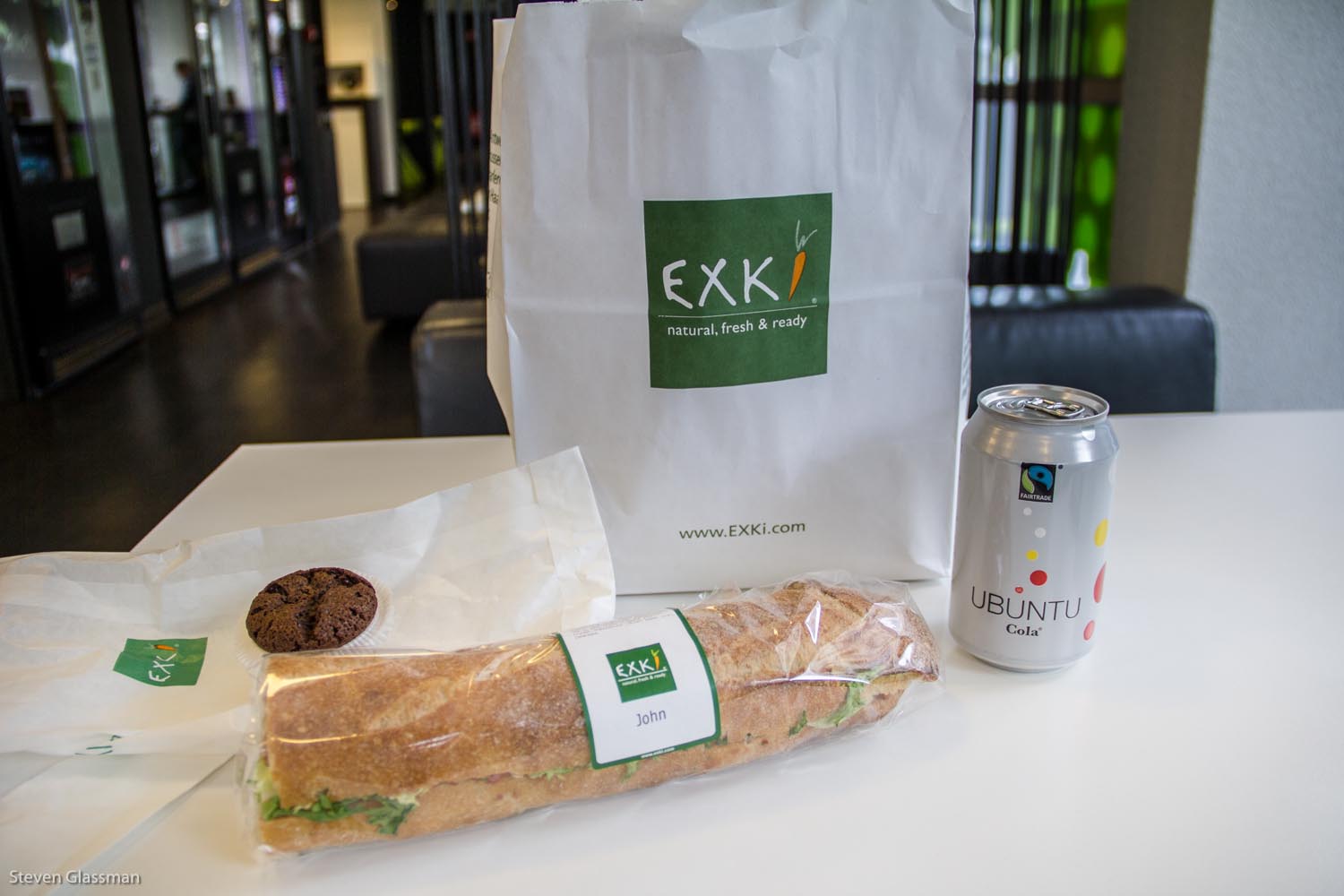
I ate at two different restaurant chains that I quite enjoyed while I was in Brussels.  The first was called Quick.  The face of the restaurant was emblazoned with a giant lit up sign that said “Quality Burger Restaurant,” and the sign made me skeptical enough to try it.  (“Challenge accepted!“) It turns out that it’s got all the soul that McDonald’s has given up over the years,  and the burgers were delicious beyond all reason.  The other restaurant that I tried was a healthy chain called Exki.  This place was utterly delicious-  it was a little like the Pret a Manger and Eat chains that are all over London, but with more hot prepared foods and a few other interesting choices like the Ubuntu cola in the picture below.  (It was decent, but Coke is still better.)  They name their sandwiches with people names, so my lunch as pictured below was John.  The chocolate brownie in the background was so delicious.

I am excited beyond reason that they’re opening an Exki in New York City.  You have no idea.

brussels-23

My next-door neighbor Lori sent me a link before I left for Brussels with a list of the top ten places to get a great view of Brussels.  One of those places was a parking garage called Park 58.    Entrance is free (because it’s a parking garage, not a tourist attraction,) and the elevator will take you right to the tenth floor.  From there, you have a fantastic view in almost all directions.  This is the view looking back toward the Grand Place.

brussels-24

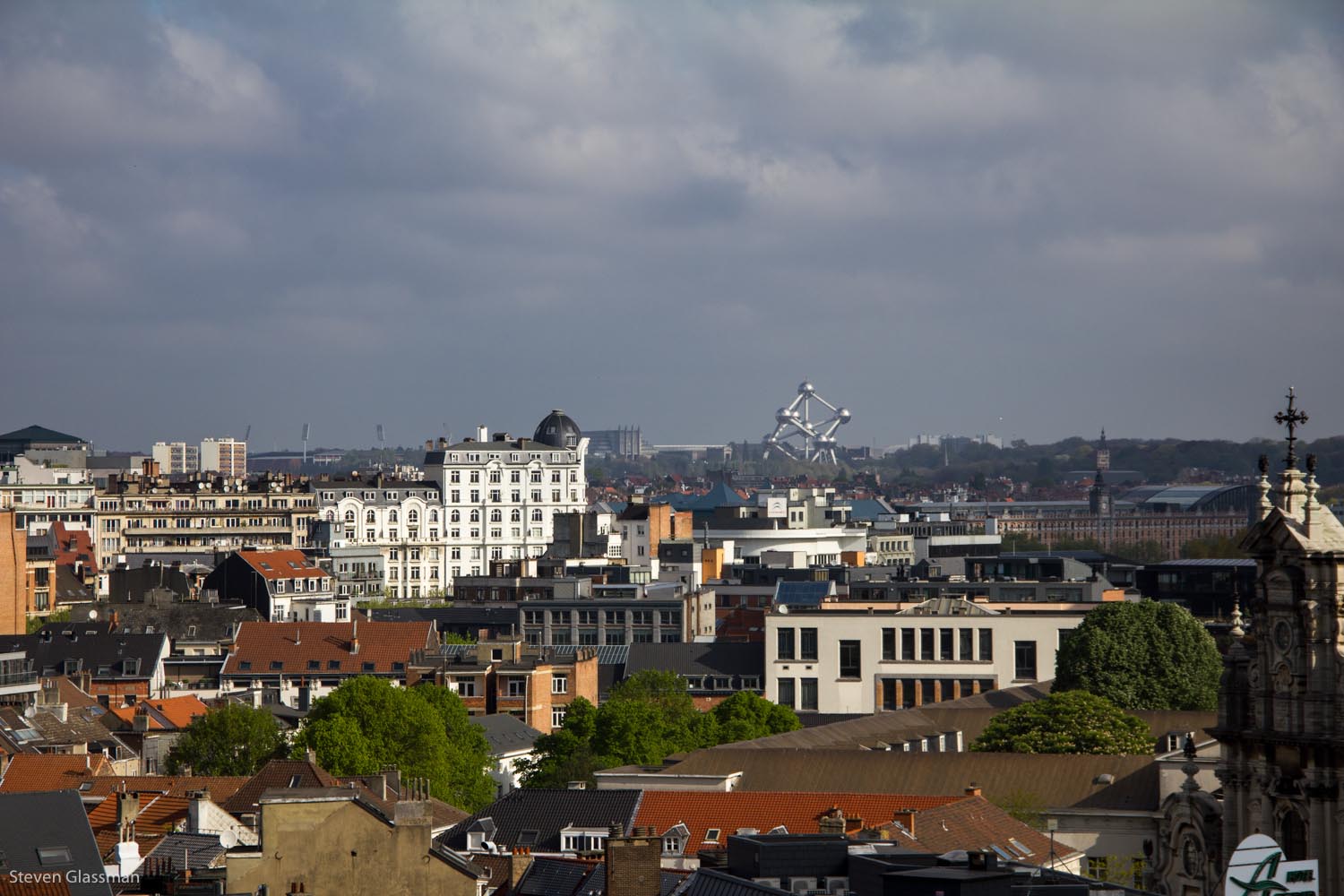
On the other side, you can see clearly all the way to the Atomium.  The Atomium is really cool, and I’ll talk about my visit there in another post.

brussels-25

This statue is near Grasmarkt.  I didn’t remember to catch the plaque that explains it, but I quite dig the man’s mustache and his friendly dog.

brussels-26

Don Quixote and Sancho Panza?  Yup!  I’m not sure why it’s in Brussels, but it’s in Place D’Espagne, and it’s a replica of the original statue in Madrid.
brussels-27

Last, but certainly not least, Brussels is another city full of art.  I kept noticing that the exposed sides of buildings were painted all over the city.  I only snapped pictures of these four, and there was one more of a swashbuckler that I wanted to go back for, but I didn’t have time.   I love that the buildings have this much character.  These four are in different places all over the city:

brussels-28

Have you ever been to Brussels?  What was your favorite thing about the city?

In Bruges

I’ll be breaking up my Belgium and Luxembourg posts into smaller chunks and posting them out of sequence, because I took almost a thousand photographs in four days.  I’m not going to post more than 20-30 pictures for any one post, but I still want to space it out a bit so that it’s not too overloading.  So, onward!

My first Belgium post was the city of Bruges in Flanders, the northern part of Belgium.  I haven’t seen the movie by the same name yet, but I’m pretty sure that referencing the movie’s title in a blog post about Bruges is a requirement in the Expat Blogger Bylaws.  Bruges is the capital of West Flanders, where Ghent is the capital of East Flanders.  For a country with relatively small geographic boundaries, there are an awful lot of subsections of Belgium.   There are also a great many languages, since Belgium is officially bi-lingual.  The northern parts speak Flemish, which is a bit like Dutch, and the southern parts speak French.  There’s also a small German-speaking community on the eastern side of Belgium, and English is prevalent as well.

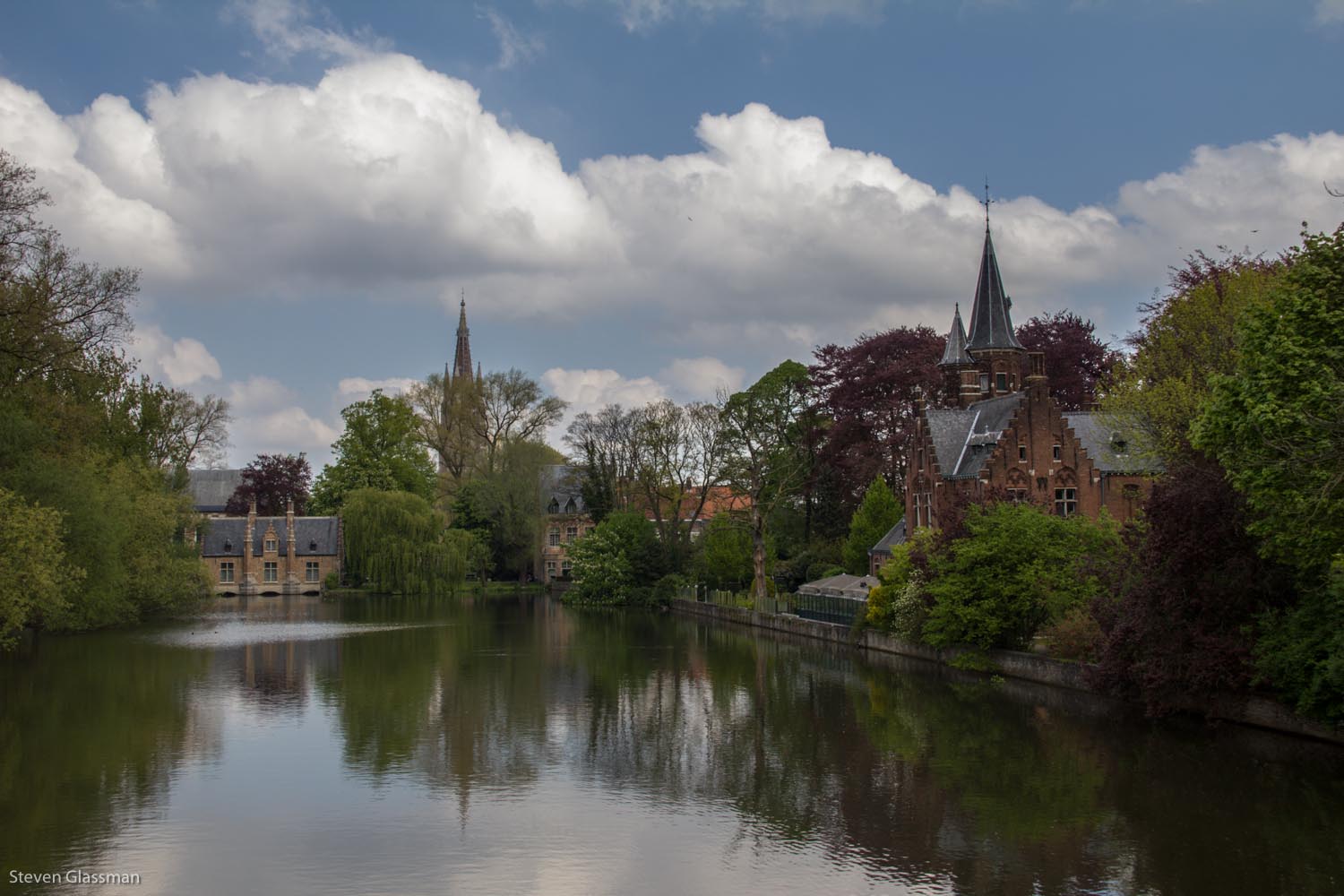
The main export of Bruges seems to be pretty photographs from tourists.  If you arrive on a bus from Brussels, as I did, you might start out near Minnewater, or “Lake of Love.”  The story goes that you will experience eternal love if you walk over the lake bridge with your partner. There’s a legend attached, and it’s explained in great detail on this site.  Regardless of its efficacy as an aphrodisiac, I can’t argue that it’s a really pretty lake.

bruge-1

Also seen in Bruges: A very large swan and duck community.  I took other pictures of large quantities of lounging swans, but this picture just looked nicer.

bruge-2

Not all of my pictures have important captions or details.  Some were chosen just because it shows how nice the city is, and how nice a day we were having.

bruge-3

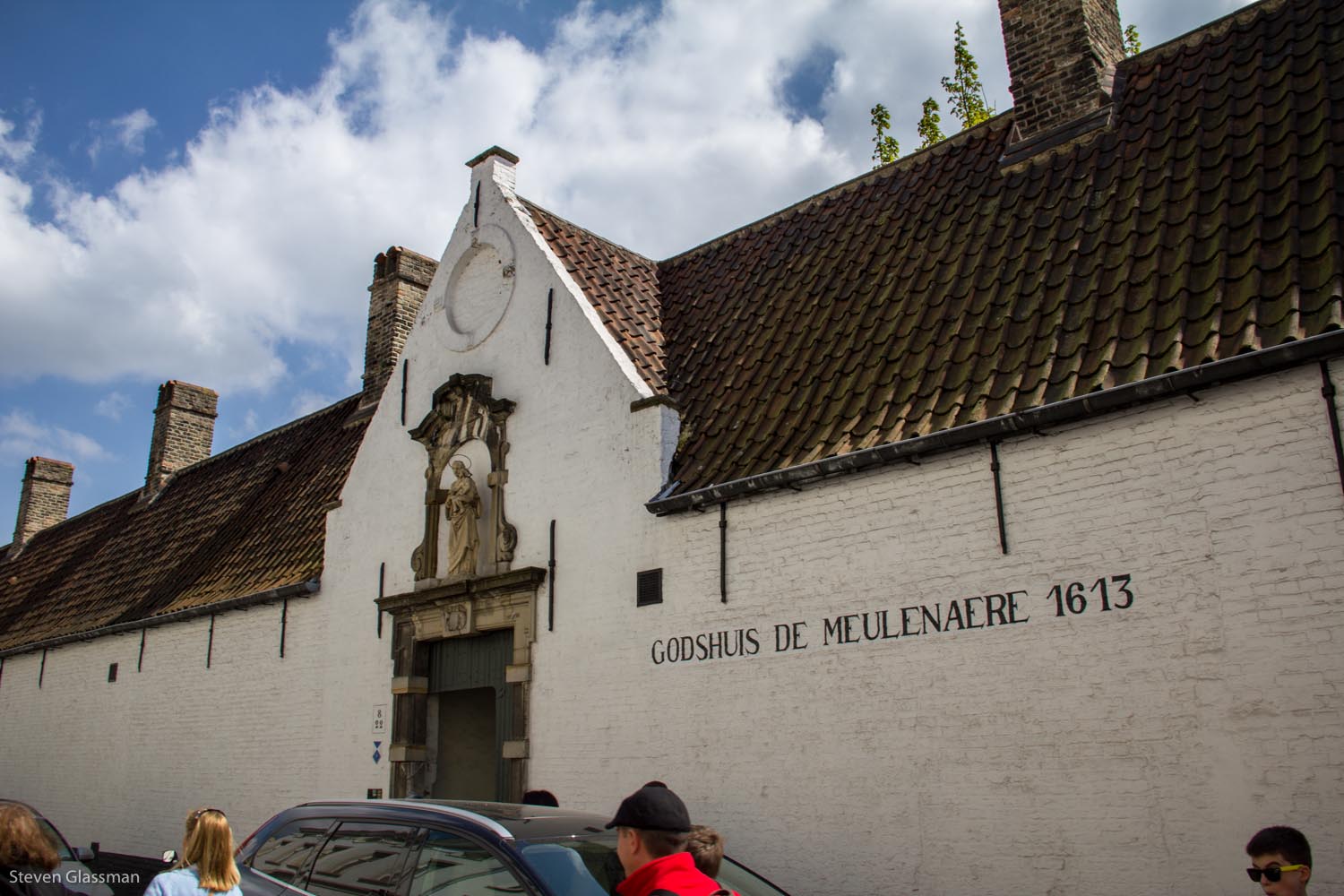
This is a “House of God” where a bunch of nuns used to live.  This is a fairly common thing in Bruges.  There was a lot of detail about this from the tour guide which I missed.

bruge-4

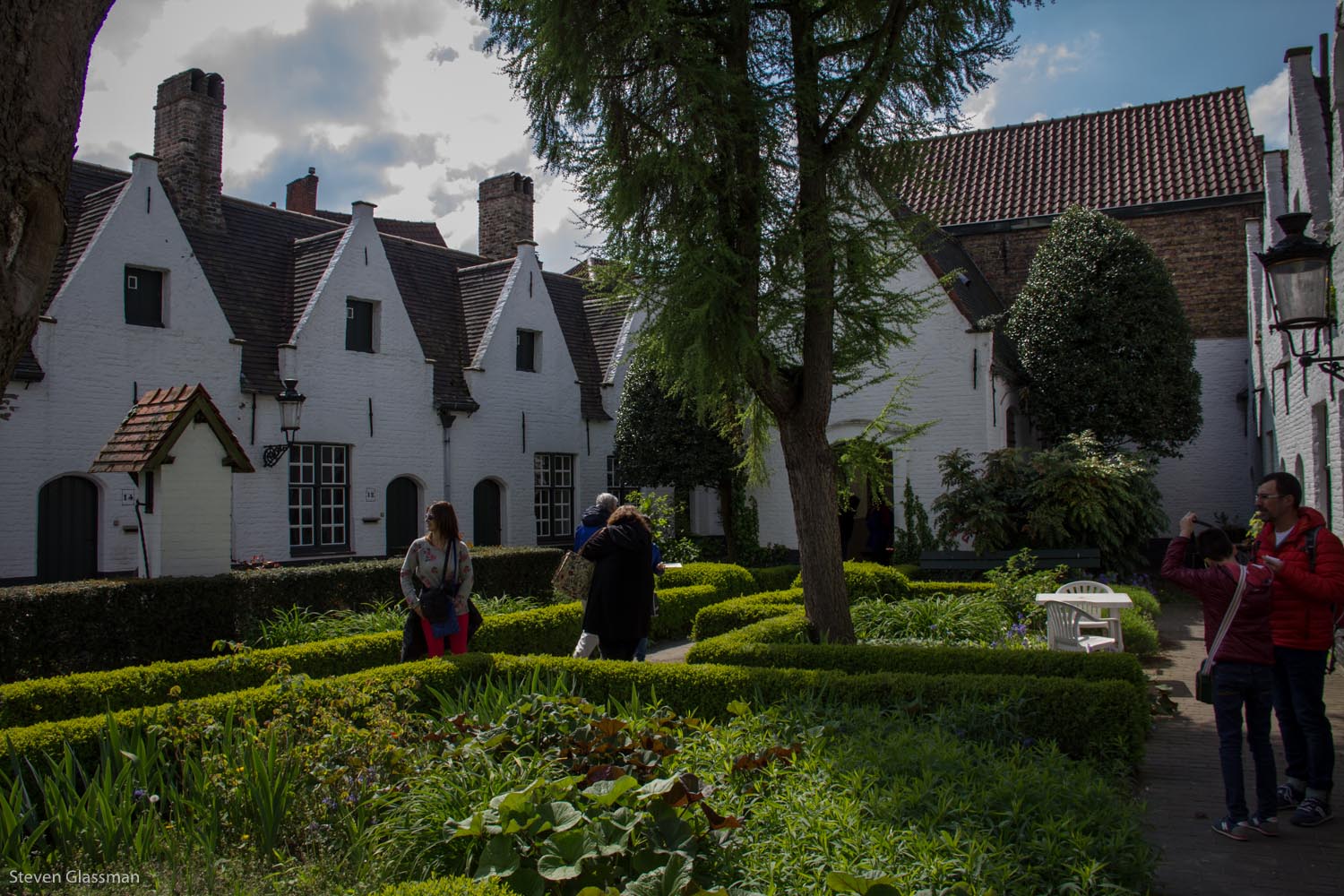
This is the courtyard inside the House of God.

bruge-5

…and this is why I missed what the tour guide was saying.  I was too busy stalking a bee with my camera, because that’s how I roll.  I quite like bees.

bruge-6

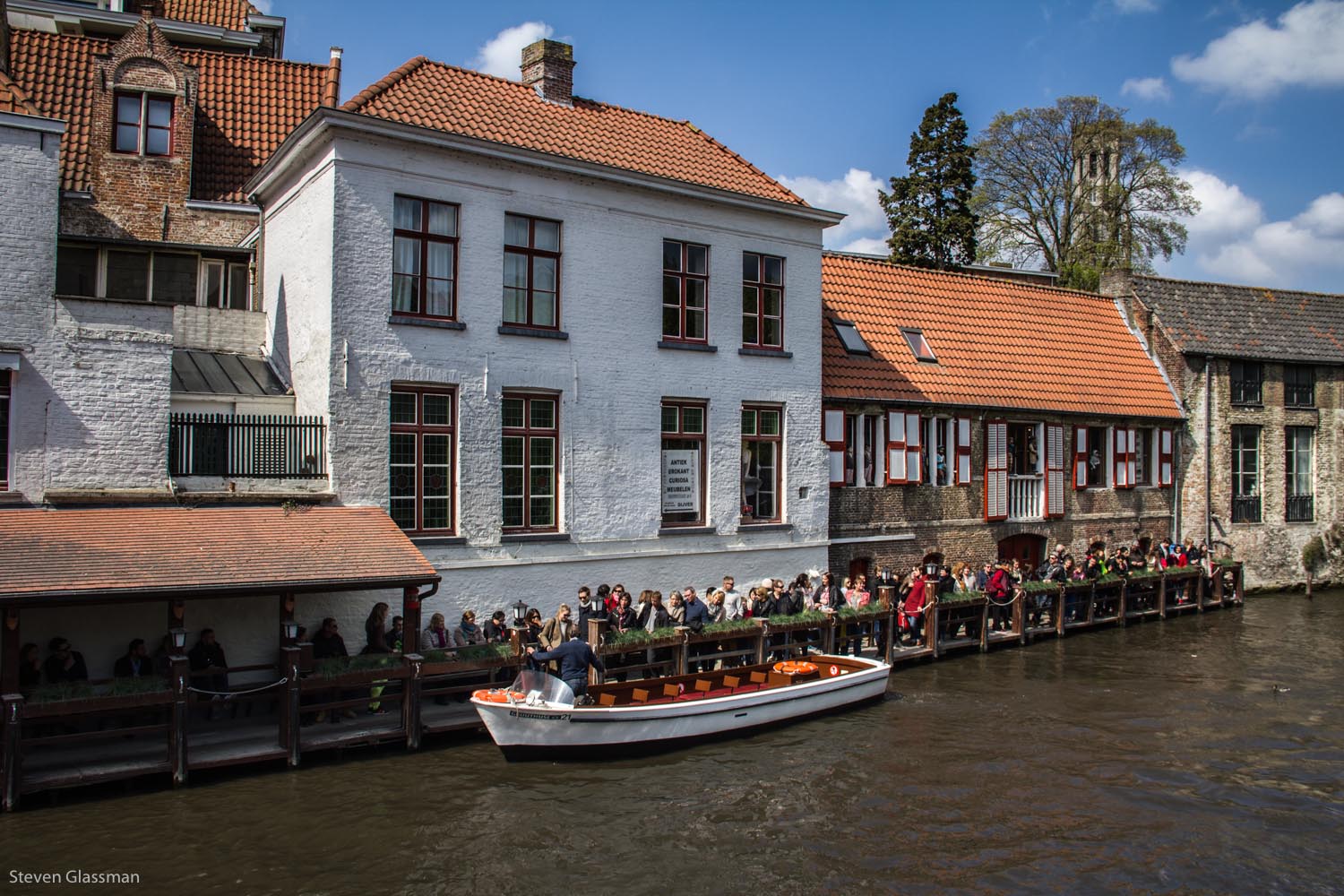
We took a boat tour later in the day, because it covers three or four kilometers of city canal and it’s quite pretty.  This was not the boat I was on, but it’s a good shot of the type of boat-  they really pack people onto these things.  They offer life vests, but most of the canals are only a meter or two deep, so if you fell in you would probably survive quite easily.

bruge-7

I don’t really know why there’s a random Bogey statue here, but I thought it was kinda neat.

bruge-8

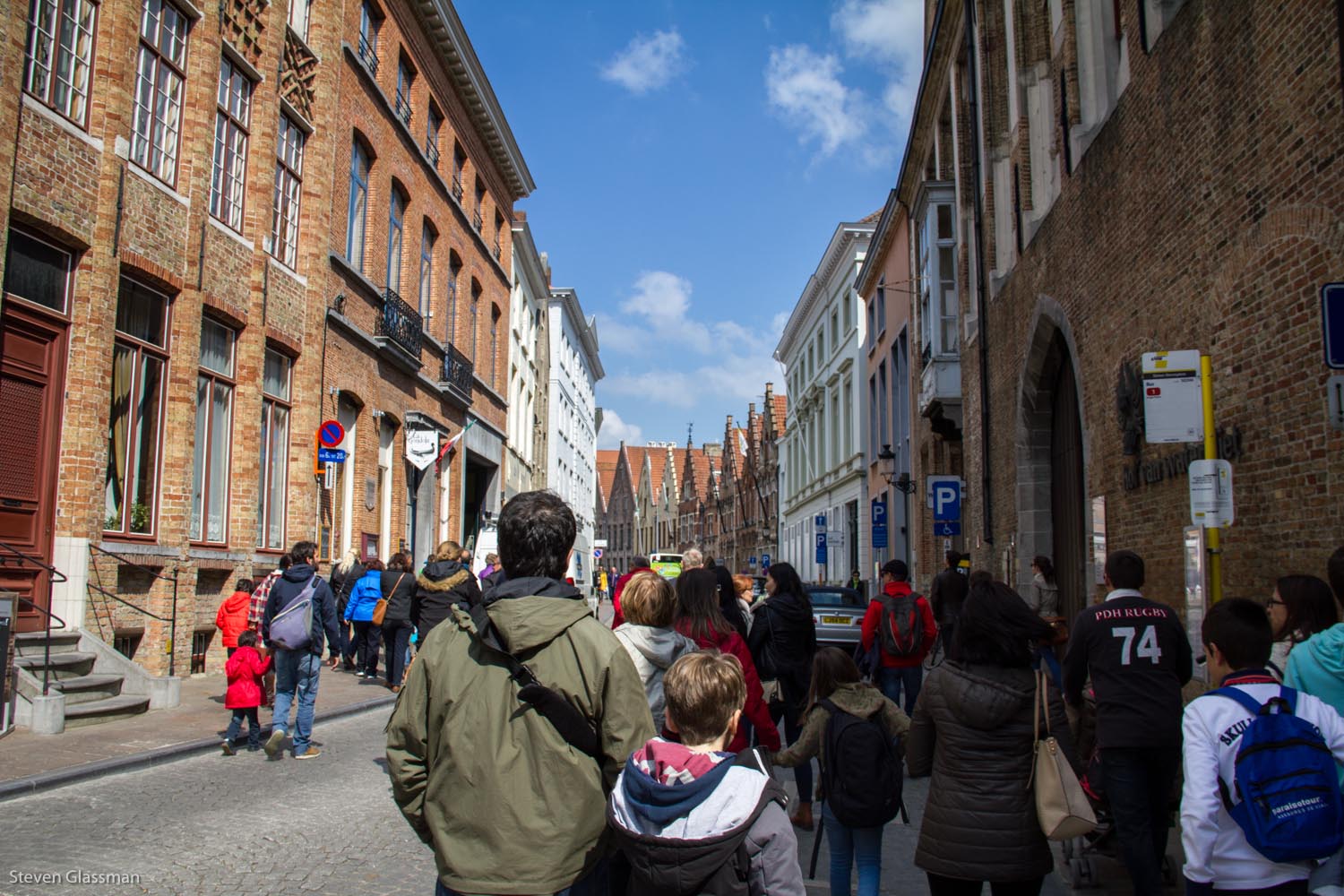
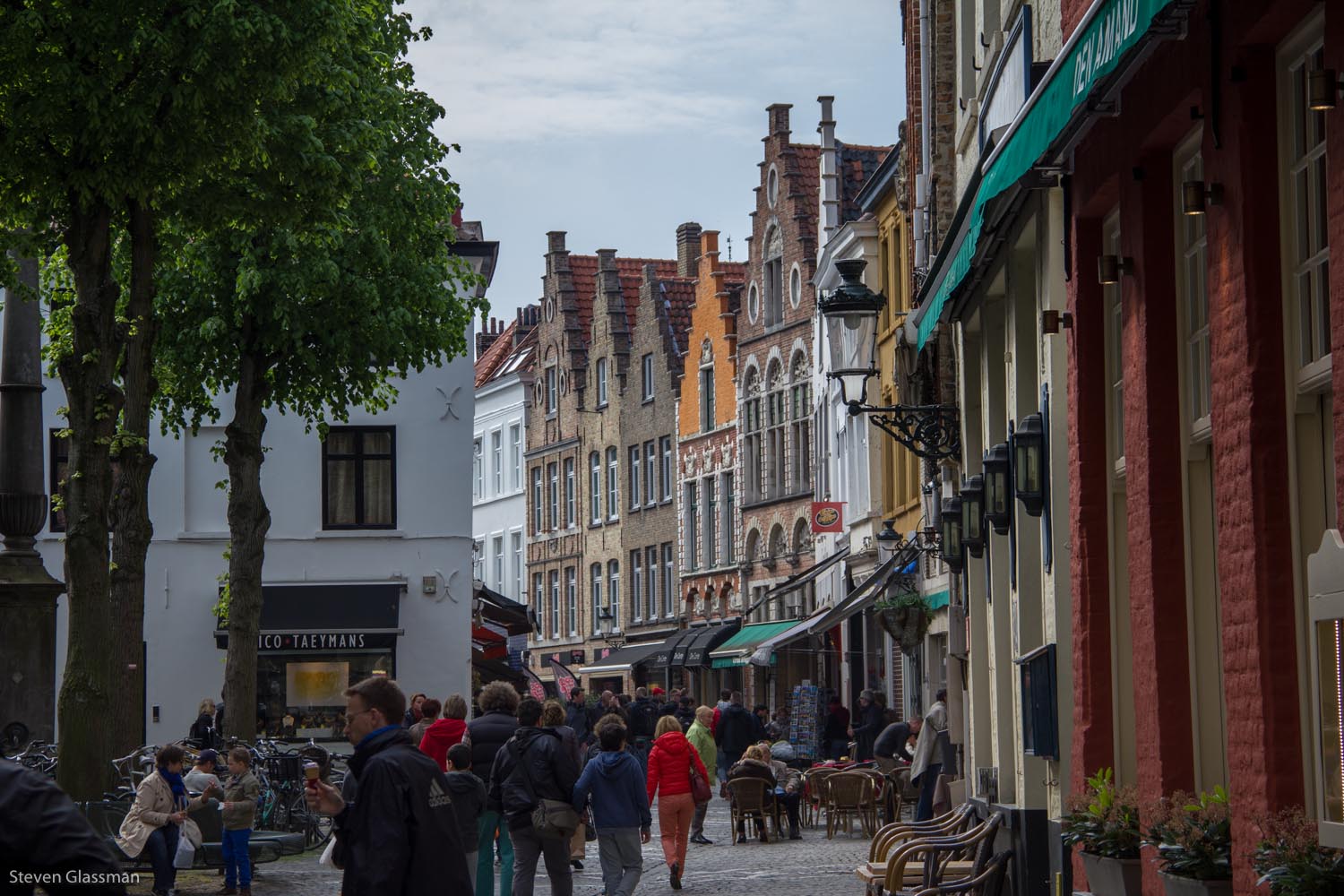
Picturesque street, walking in the direction of the Markt, the main market square.

bruge-9

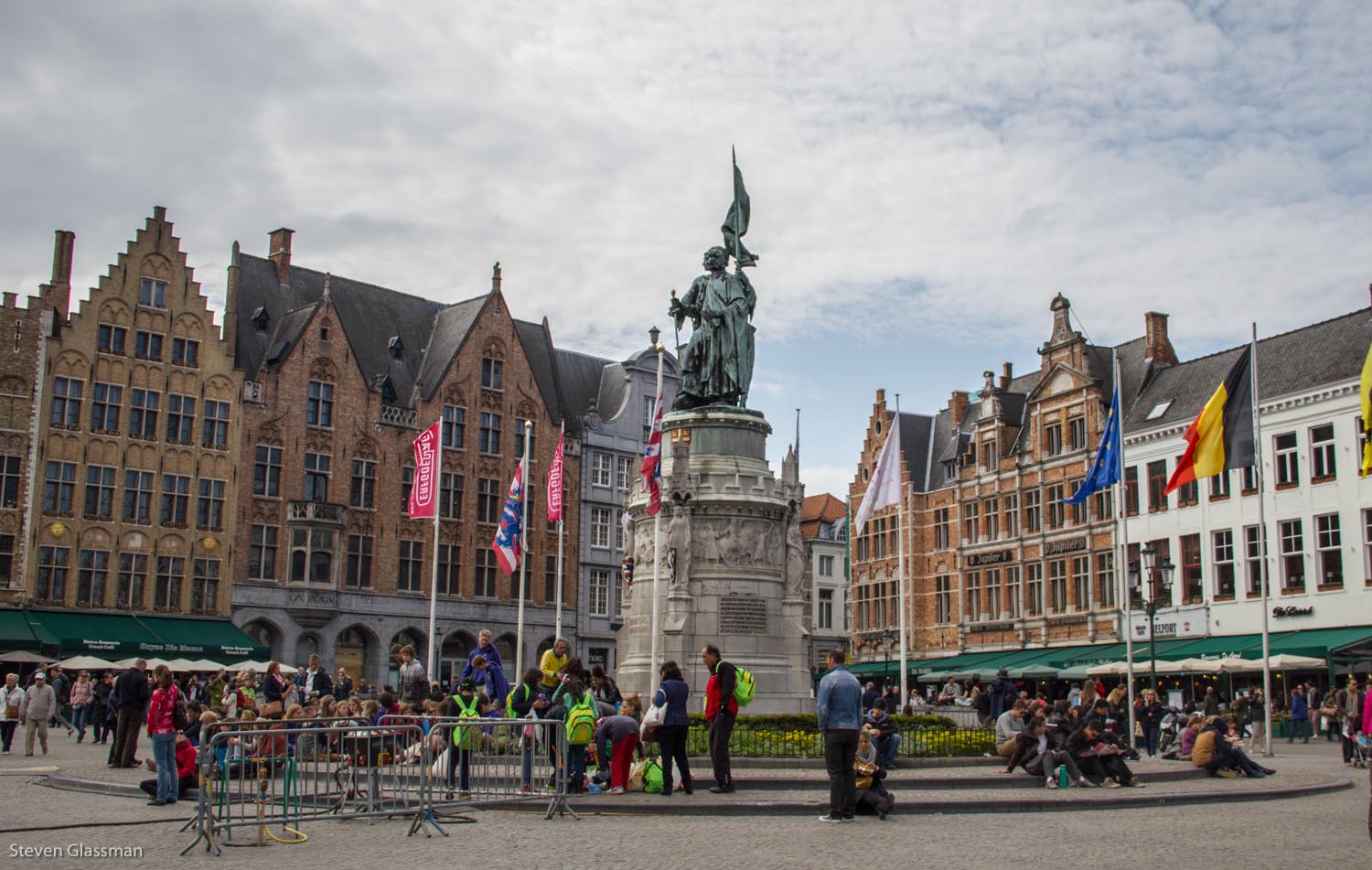
One side of the Markt.

bruge-10

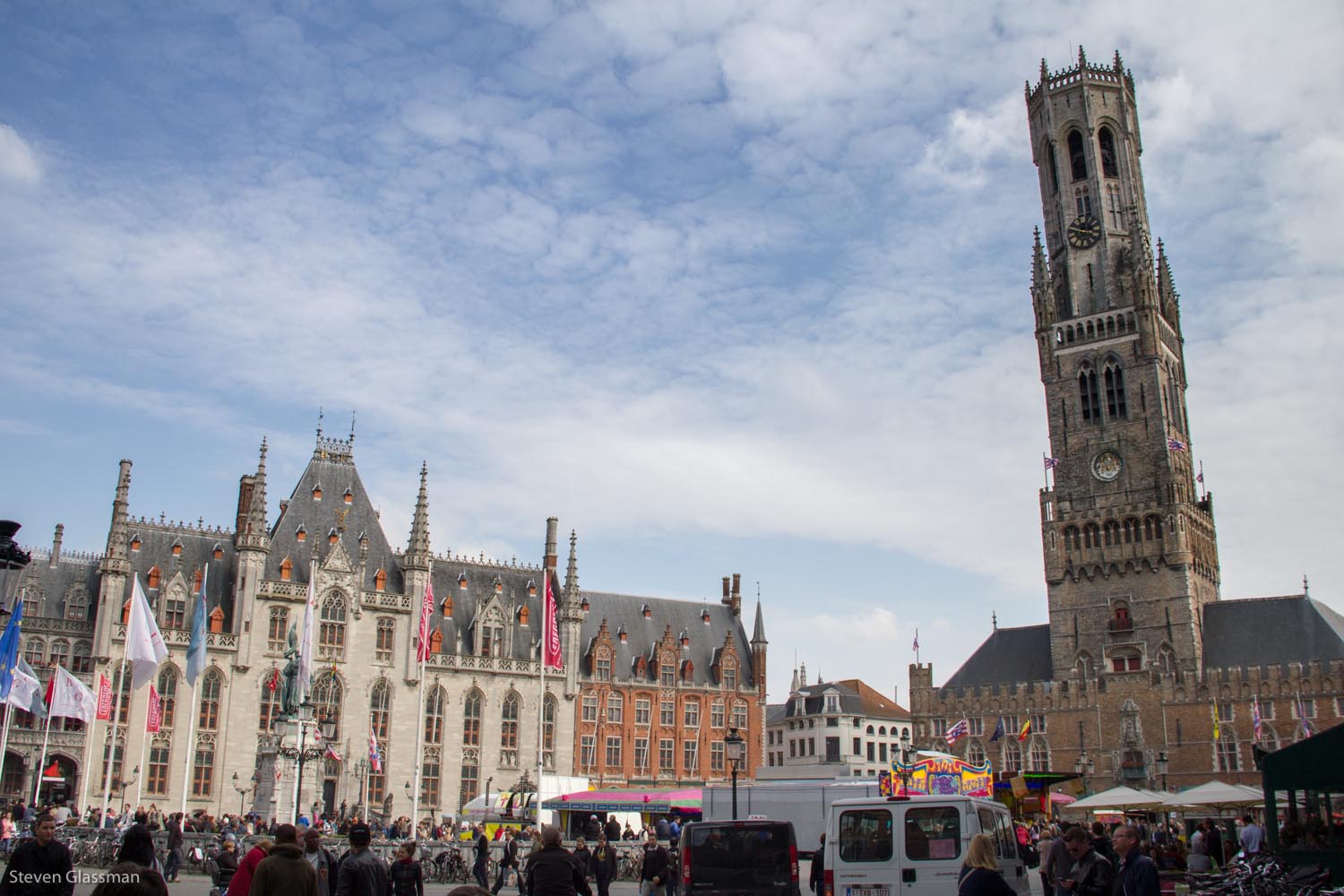
The opposite side of the Markt.  This is the Stadthuis, or City Hall.   In Germany, they’d call this a Rathaus.

bruge-11

Flag time!  The one in the center is the flag of Belgium.  It has the same colors as the German flag, but vertically and in a different sequence than Germany’s horizontally barred flag.  The flag on the left is the flag of Flanders, and the one on the right, not really clearly visible in this picture, is the flag of the city.

bruge-12

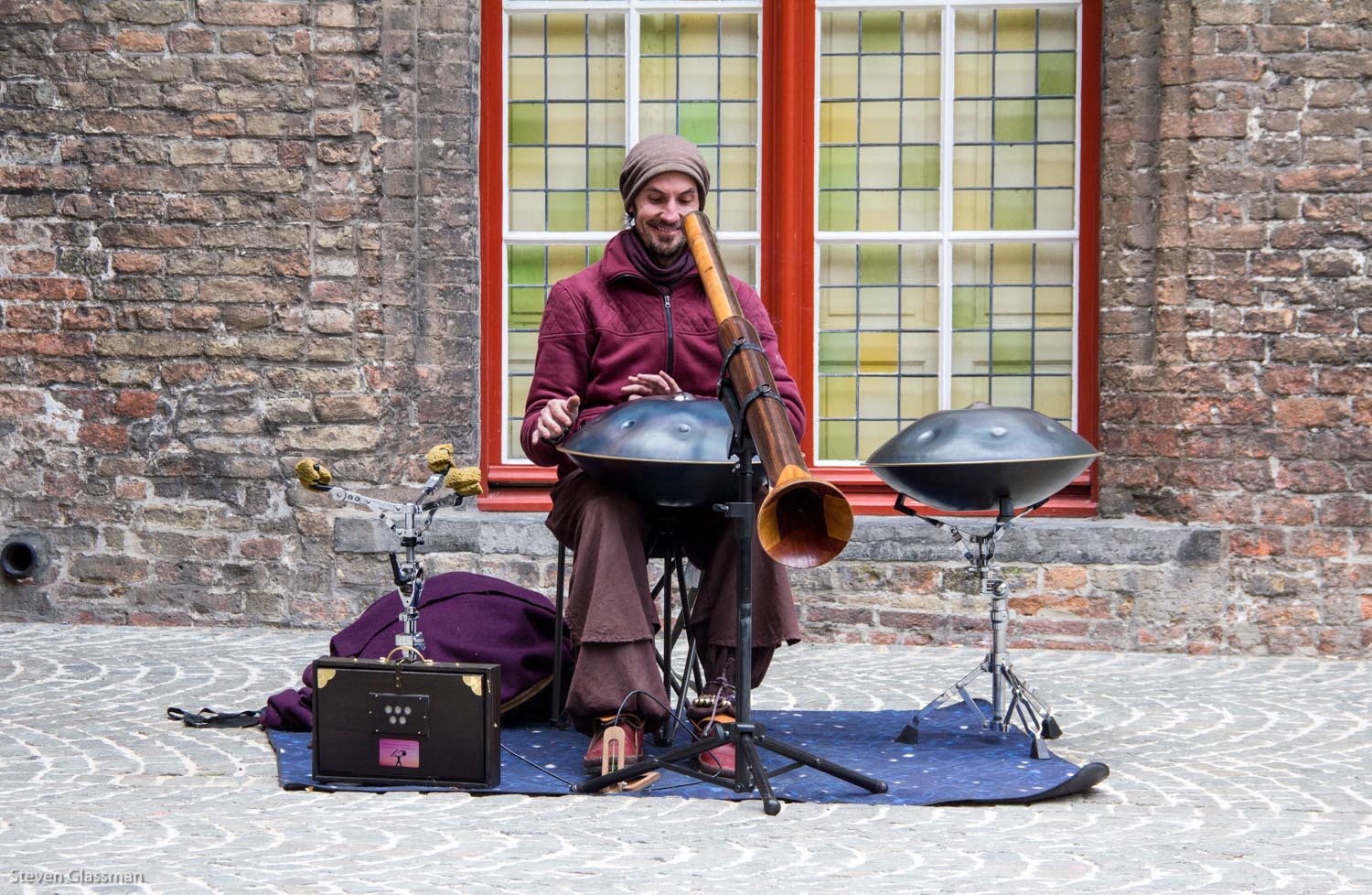
Ever seen a hang drum?  They’re kind of amazing if played well.  This dude was set up in the courtyard behind the Belfry, the Markt’s big tower visible a few pictures further down.

bruge-13

This video is not the same hang drum player as the one in Bruges, but you can get a sense of what the instrument sounds like.

This is also in the Markt.

bruge-14

Throughout the day, I kept seeing people on tandem bicycles.  I’ve never seen so many two-person bikes as I did in Belgium.

bruge-15

This is a picture from across the Markt.  It’s the only shot where I managed to get the entire Belfry tower into the picture because most of my other photographs were taken from the base of the Belfry.  I did not get to climb this one-  the line to get in was longer than the amount of time I had.

bruge-16

I did some wandering from square to square.  The pointy buildings in the center of this shot are typical of Bruges architecture.

bruge-17

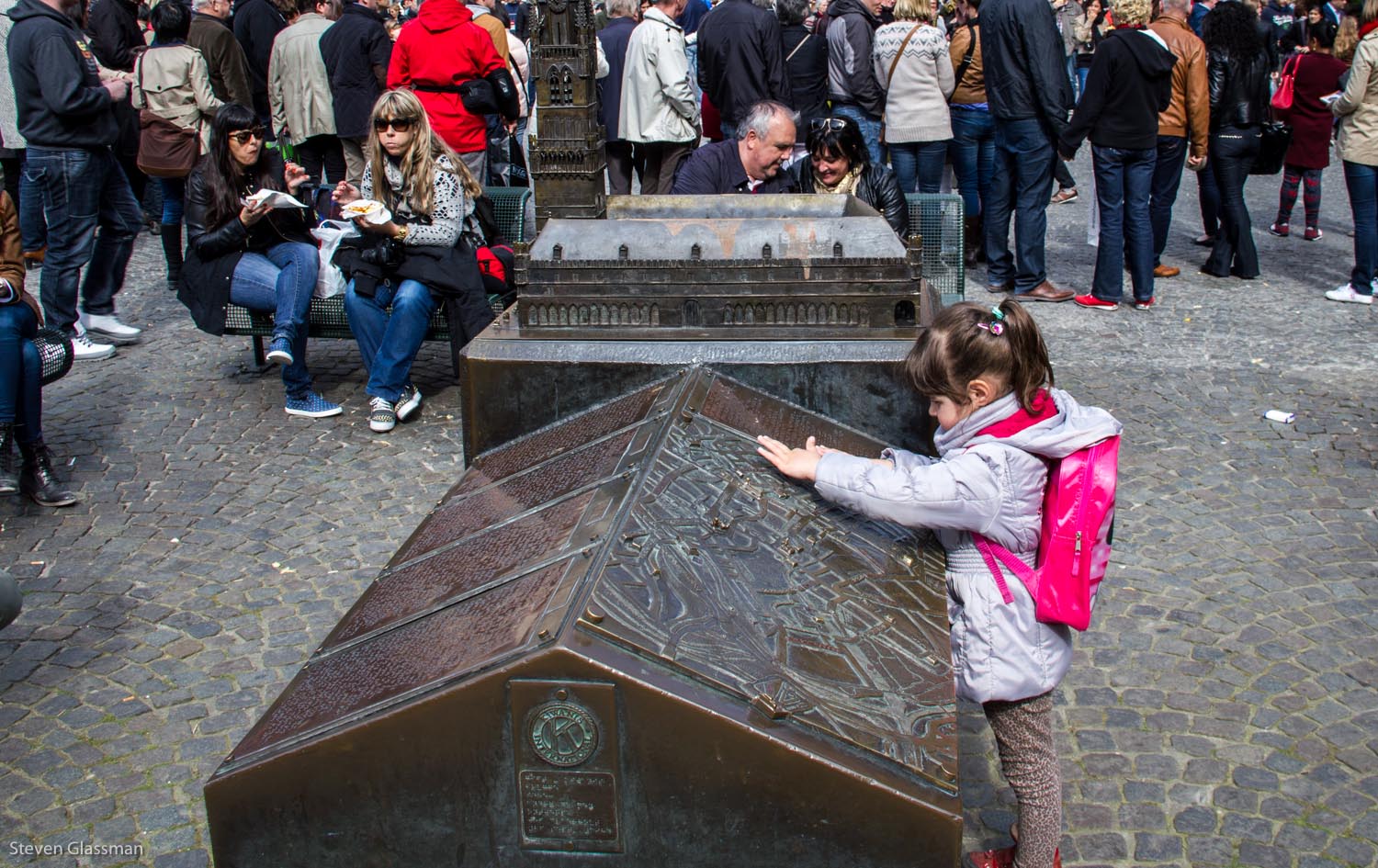
Many of the cities have these metal relief maps, with braille on them.  It’s rather ingenious, even though I can’t even imagine how a blind person would find their way through the maze of the city to find the braille map without assistance.

In other news, the facial expression on the blonde girl eating in the background is hilarious.  I didn’t realize she was making that face until I was sorting my photos.

bruge-18

City squares always seem to have “floating” dudes trying to make some cash.  This one was a little different though- normally they’re seated.  They all have the giant weighted base and the staff going up to the left arm- I’m positive that’s what’s supporting his weight.  This one was different in that he kept swinging his legs back and forth.  He may have had stirrups or something.  In any case, it’s a pretty striking illusion.  If I hadn’t seen this five different ways in five different cities, I might not have spent so much time thinking about how it’s done.

bruge-19

This dog was so very happy.  They kept feeding him!

bruge-20

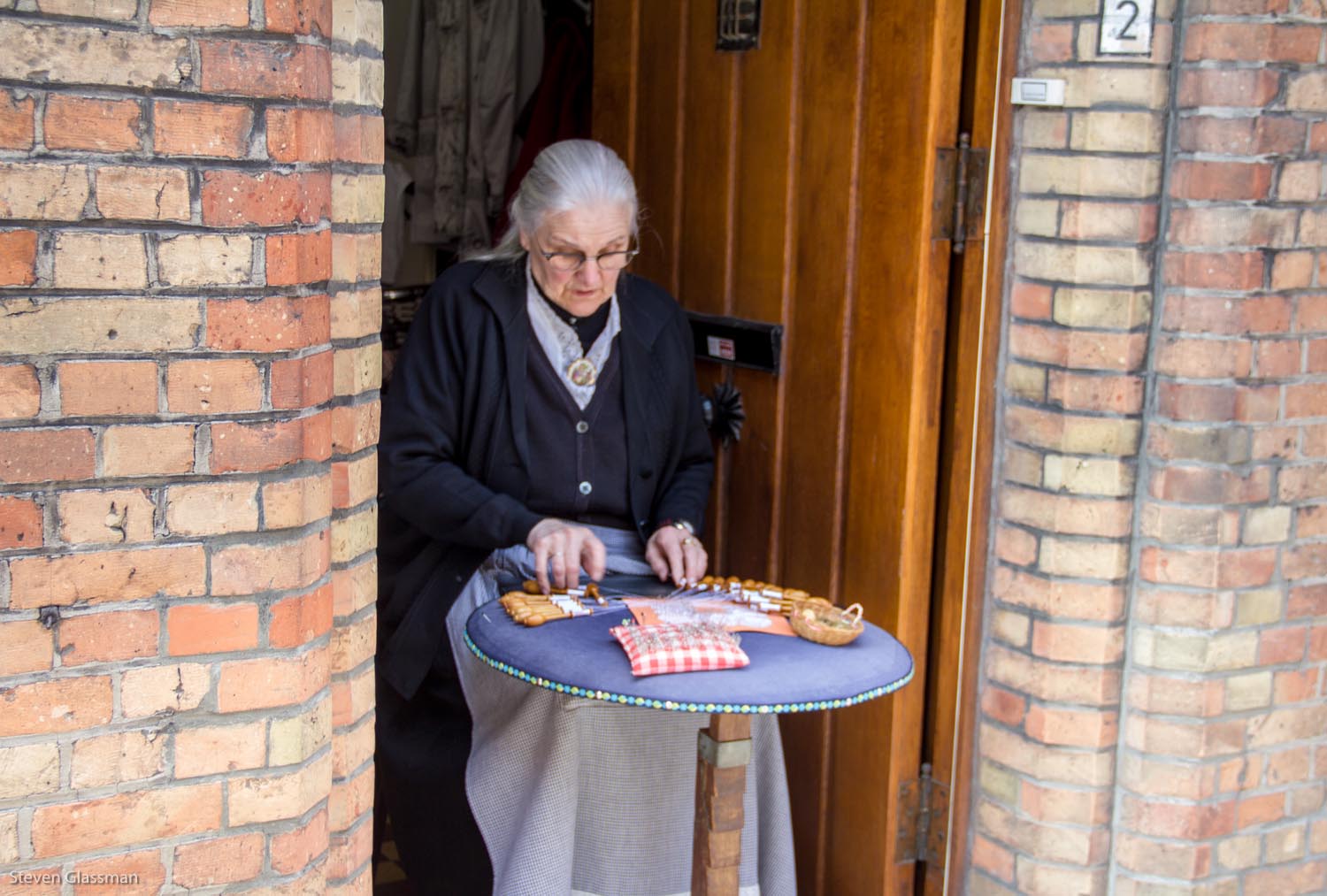
There were displays of lace all over the city and I didn’t make the connection to Brussels Lace until I saw this woman actually sitting in her doorway making lace in real time.

bruge-22

In hindsight, I should have gotten some video- she was moving her hands incredibly fast.

bruge-21

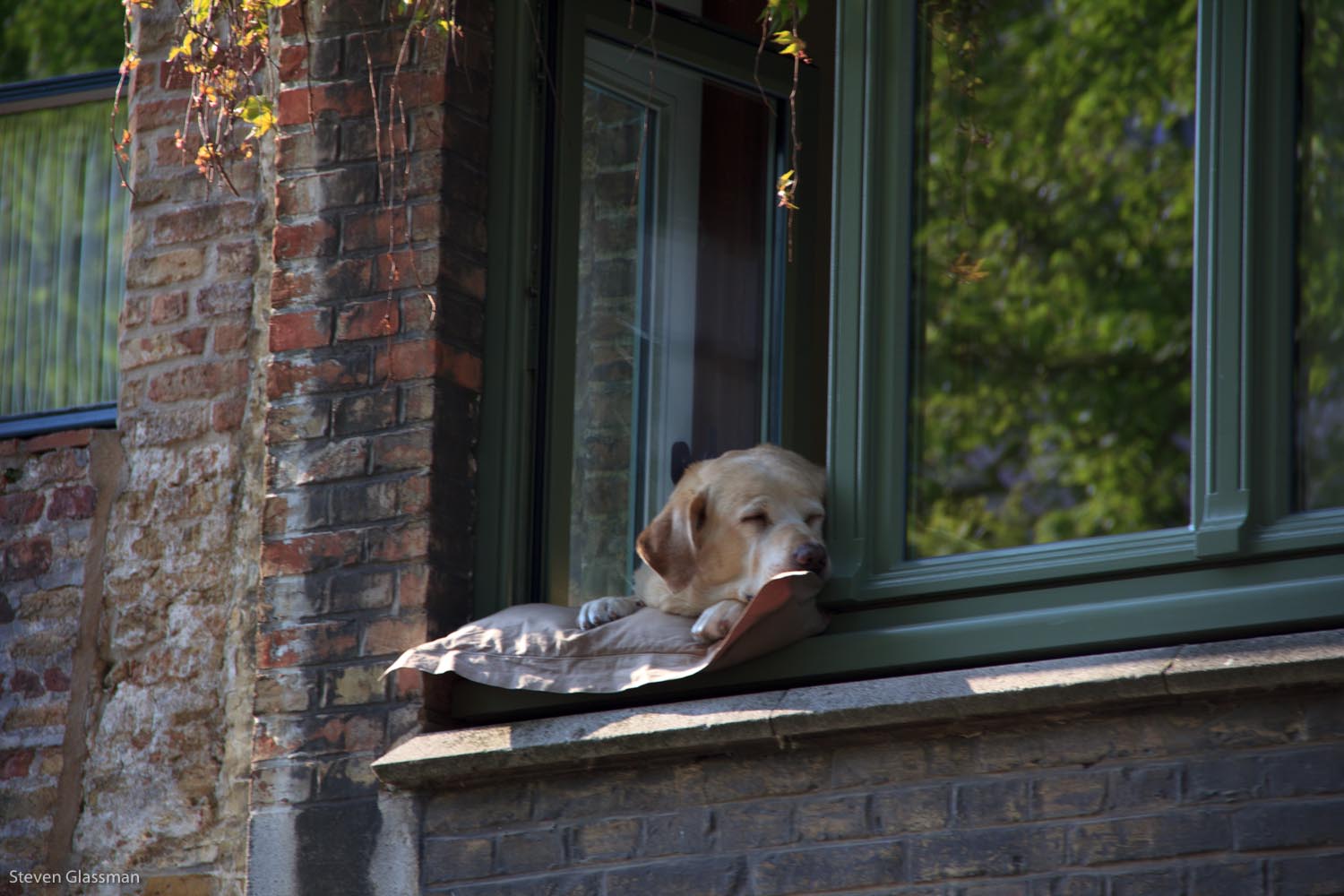
Of all the pictures I took from the canal boat cruise part of the day, this is the very best one.  This dog was snoozing in a window that was canal adjacent.  It looked like the perfect place to have a nap.

bruge-23

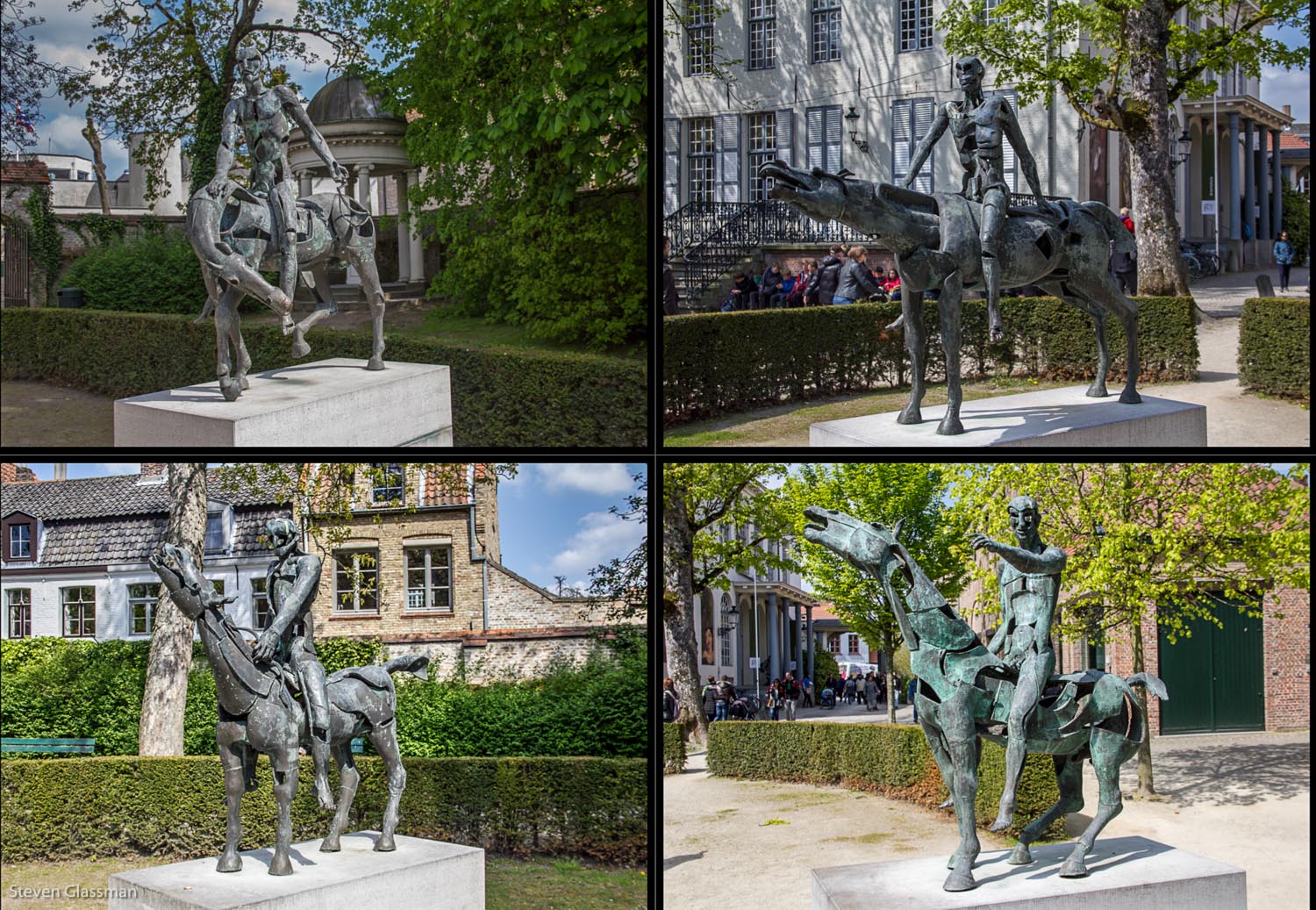
On the walk back to the bus, we passed through a sculpture garden containing sculptures of the Four Horsemen of the Apocalypse, by sculptor Rik Poot.

I’ll give you a moment to stop giggling about the man’s name.

So the one in the upper right is obviously Death, but I’m not certain of which is which on the others.  Clockwise from Death, I believe it’s War, Famine, and Pestilence.  I could easily be wrong though, and I didn’t think to photograph their labels while I was there.

bruge-24

Have you ever been to Bruges?