Vatican City: It’s Full Of Papal Stuff

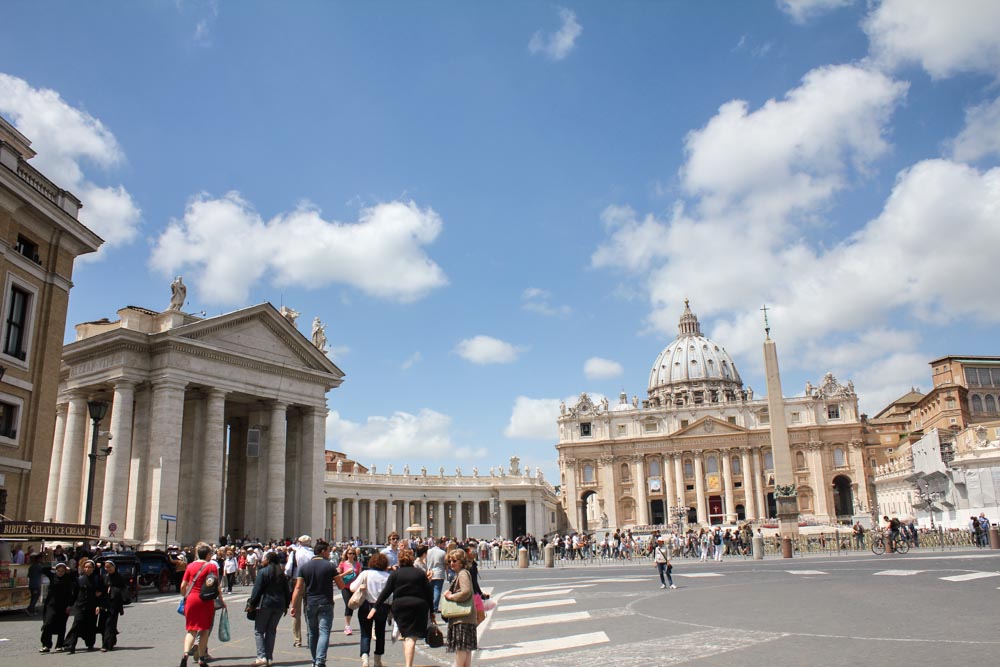
Previously, on “Steven and Michelle Go To Italy,” our peripatetic siblings checked out Venice and Rome.  What’s left?  The Vatican, of course!  This was our first view of St. Peter’s Piazza, a.k.a. Pope Central.
vatican-1

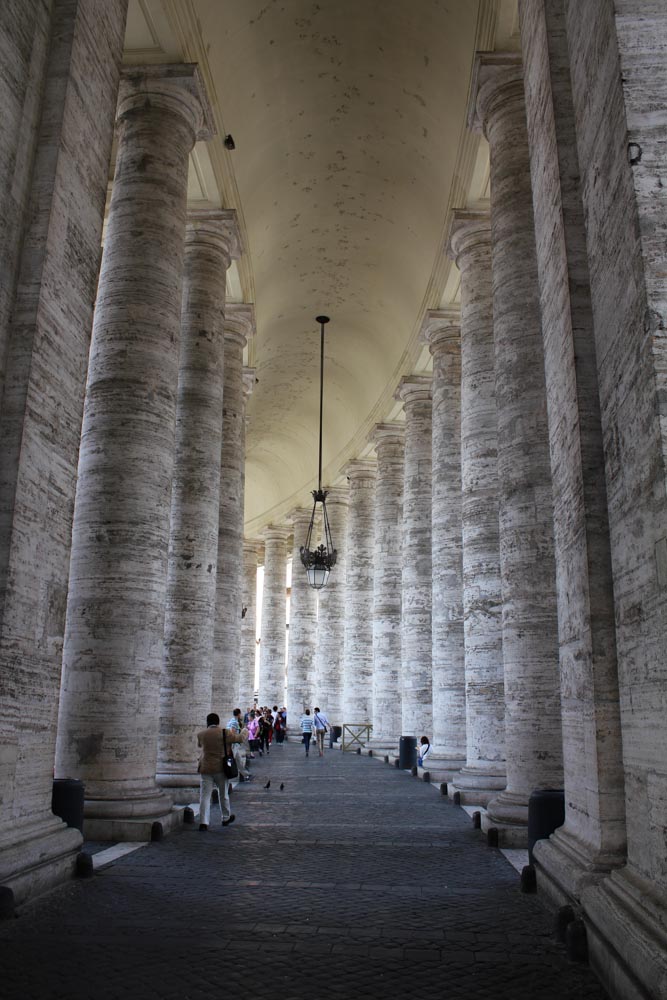
The archways on either side of the Piazza have a lot of columns on either side of the breezeway- they look like this.  Pretty impressive, right?
vatican-2

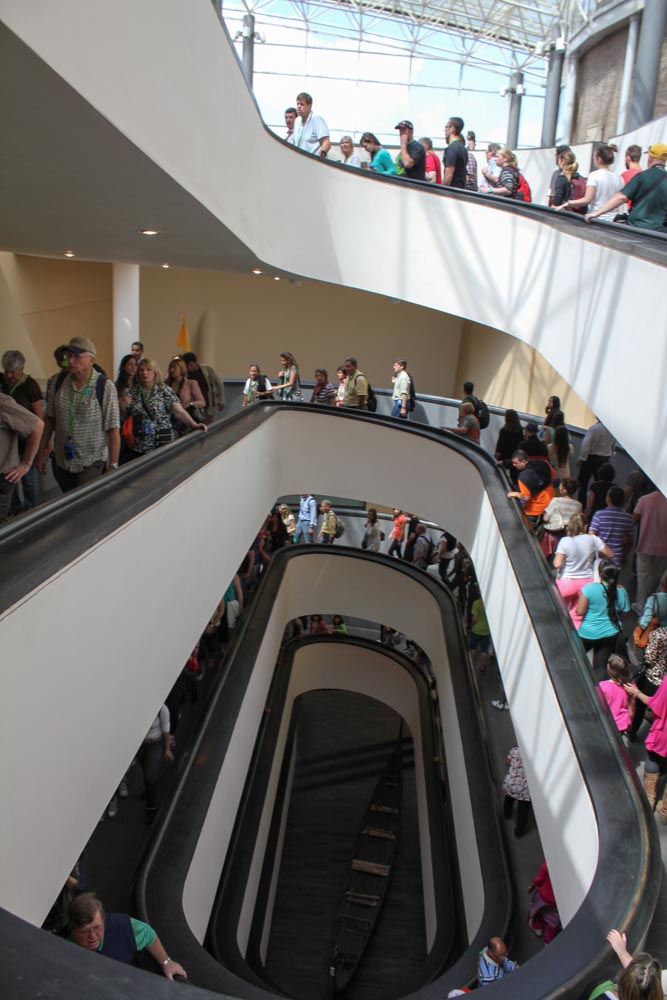
The way in to the Vatican museums was an enormous spiral walkway.  I don’t think this was the usual way in; they said something about the usual way being blocked off for some reason.  Anyway, this was a herd moment.
vatican-3

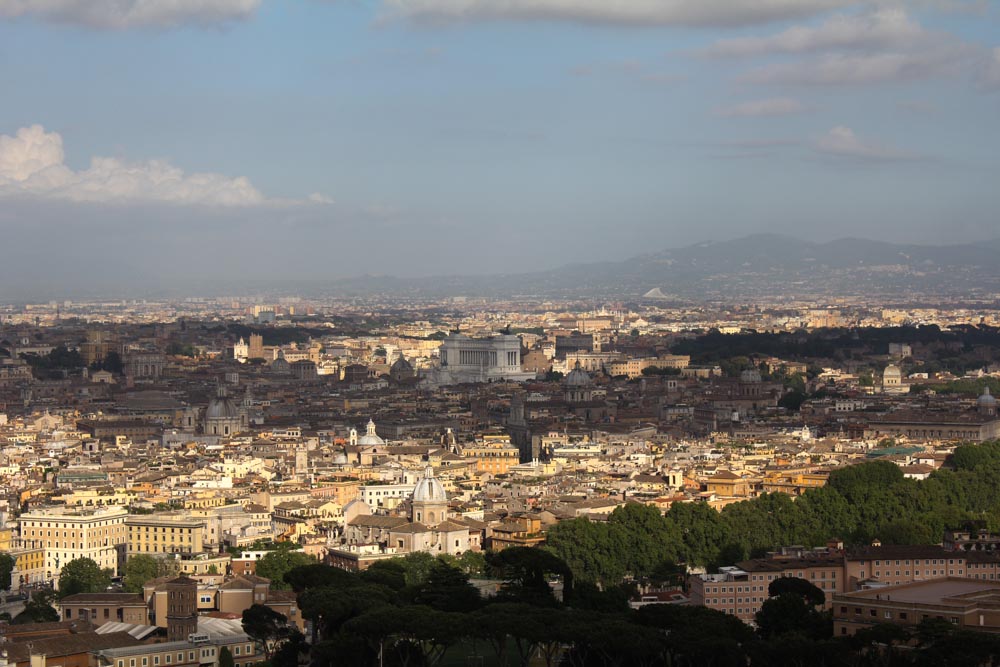
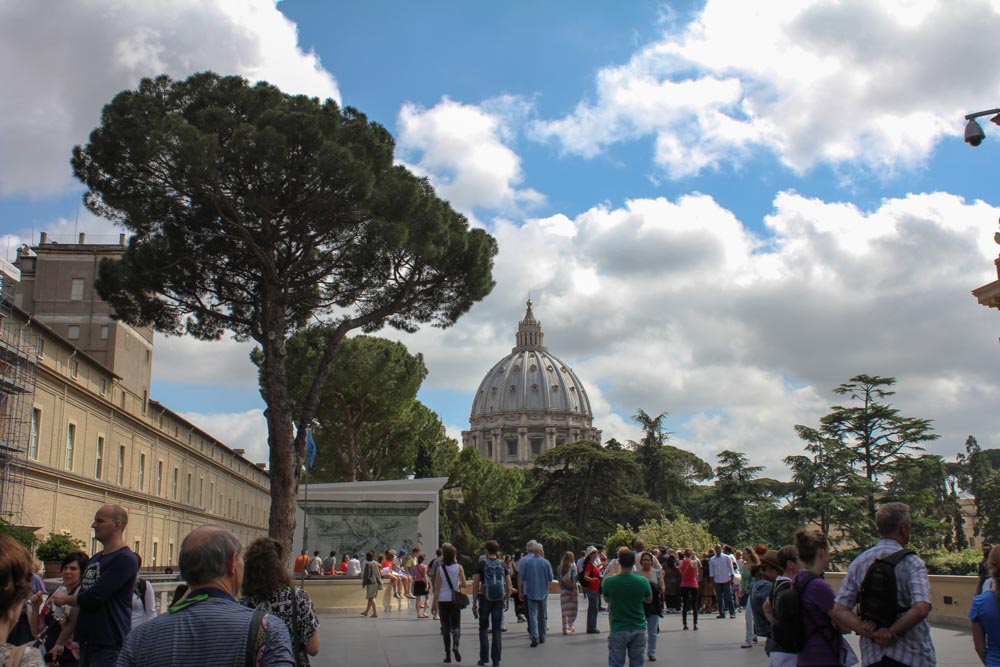
At the top, there’s a series of rooms, and this incredible view.  From here, St. Peter’s Basilica looks like a matte painting in a Lucasfilm movie, doesn’t it?
vatican-4

This was our tour guide.  She’s from Indiana, as it turns out, but she lives in Rome and works as a Vatican tour guide.  She has an incredible amount of knowledge.  The big bronze sphere she’s standing in front of is a sculpture called Sfera con Sfera (Sphere within Sphere) by an artist named Arnaldo Pomodoro.  Our tour guide pointed out that Arnaldo Pomodoro sounds very nice in Italian, but in English, he’d just be Arnie Tomato.  This amuses me.

Sfera con Sfera rests on a disk of mercury, and can be spun by a single person.  It’s heavy, but moveable.
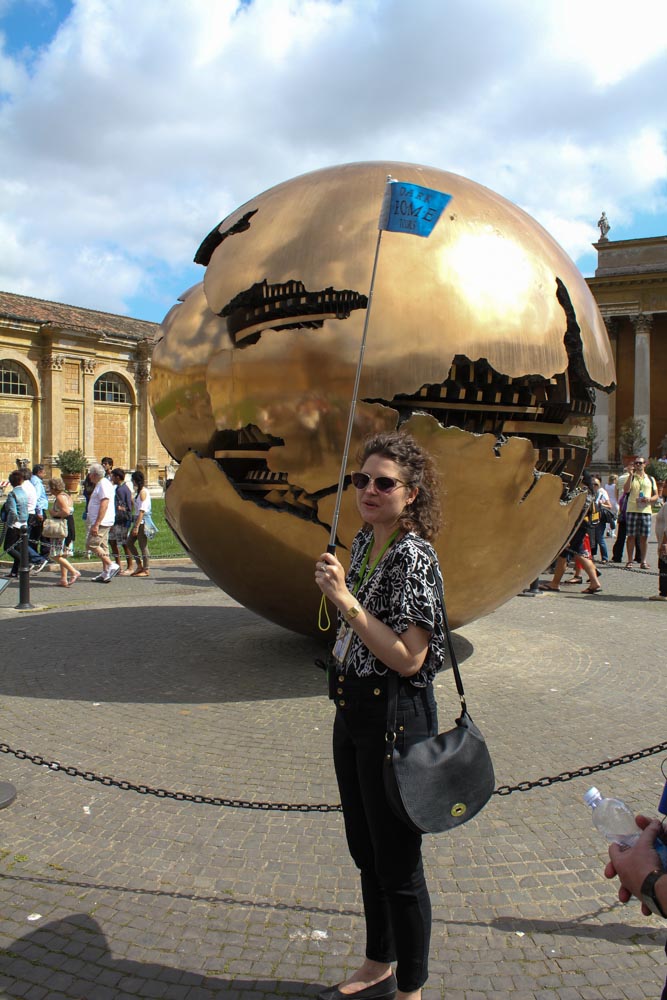
vatican-5

I didn’t know this when I was in Vatican City, but there are actually thirteen versions of Sfera con Sfera.  I first realized it was not unique when I saw a second one at Trinity College in Dublin.  I’ll get back to that in a few weeks when I post about my trip to Dublin- we’re still in Italy.

Well, technically we were in The Holy See, not Italy.  Vatican City is a fully functioning and recognized country with its own police, fire, military, and post office.  It’s the only country in the entire world with a birth rate of zero. But I digress.

The thirteen different versions of Sfera con Sfera are all different diameters.  To give you some sense of scale, take a look at the bronze ball atop the cupola of St. Peter’s Basilica in the next photo.  Now bear in mind that the diameter of Sfera con Sfera is the same size as the bronze ball at the top of the Basilica.  Neat, eh?

vatican-6

Let’s take a break from the Vatican to talk about water in Rome.  Specifically, open water spigots that are all over the city.  There’s two or three in the Roman Forum.  They’re on streets all over the city of Rome.  The water is perfectly drinkable,  and the locals refill their water bottles from them all the time.  The locals also know that if you block the flow from the bottom, there’s a small hole in the top that turns it into a drinking fountain, like so:
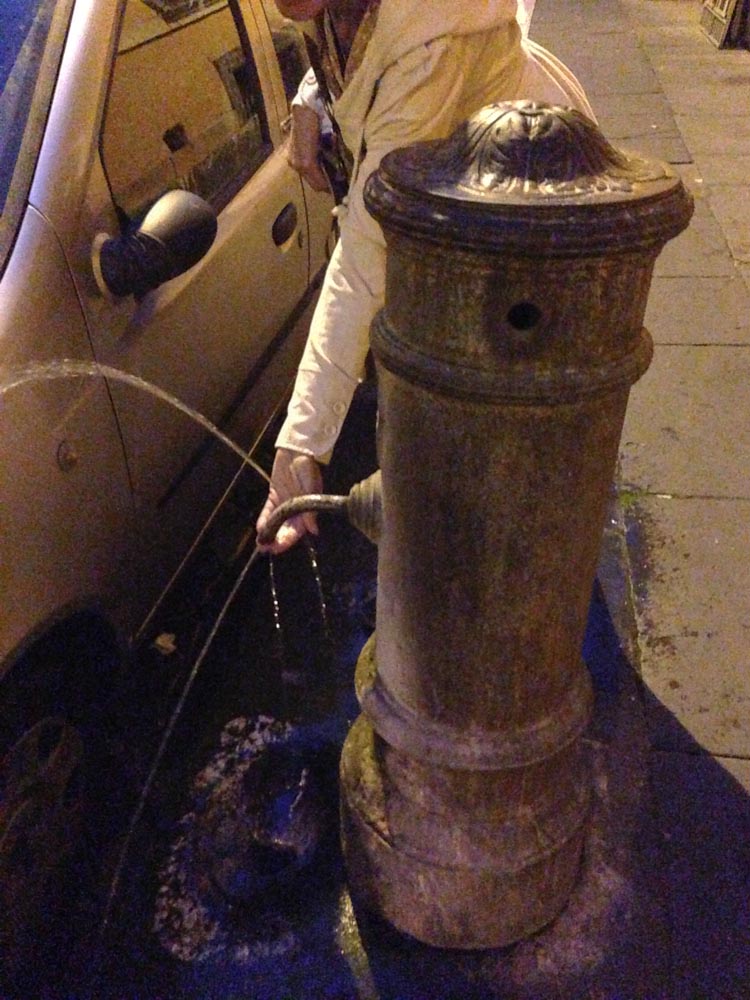
vatican-29

Meanwhile, back in the Vatican museums, there’s a whoooole lot of busts.

vatican-7

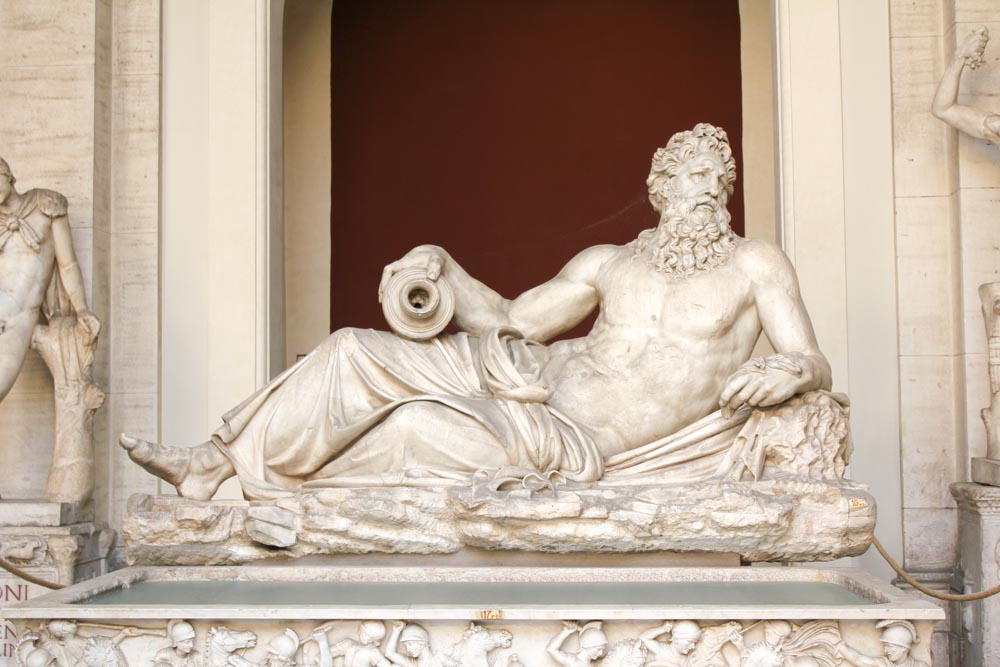
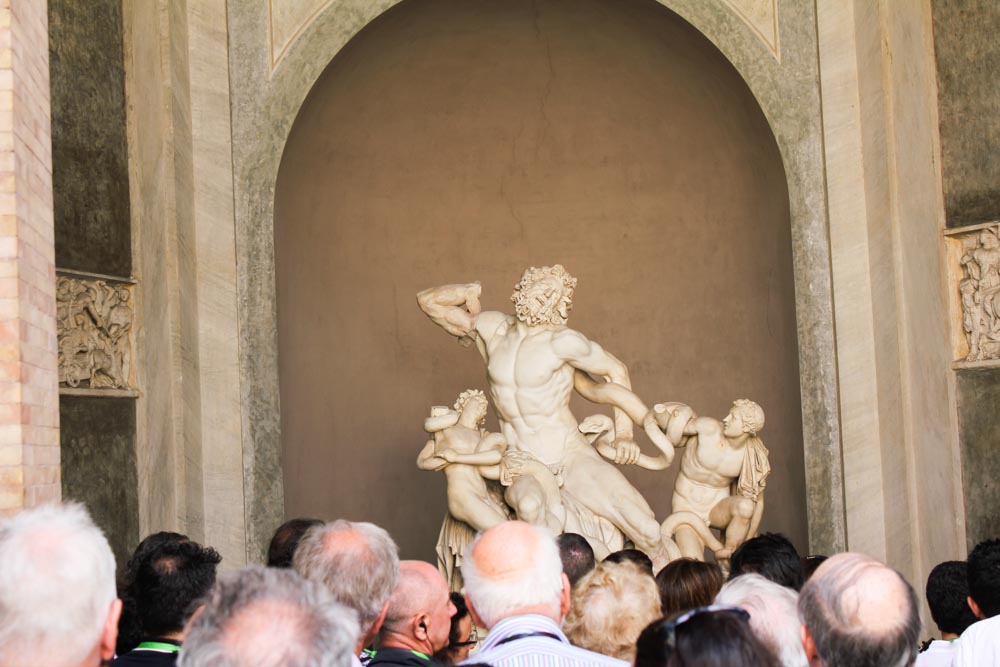
I’m not really going to talk much about these next few pictures.  If you’re a student of art, particularly of sculpture, you’ll most likely recognize some or all of these.  I acknowledge that they’re amazing, but I’ve never had much to say about sculpture.  Here’s some really amazing sculpture, though.

vatican-8 vatican-9 vatican-10 vatican-11

I mentioned that the Vatican has their own fire department, right?  Here it is.

vatican-12

The tour of the Vatican museums goes through the Raphael Rooms.  The artwork done by Raphael in these rooms is amazing, especially for someone who spent all that time learning to wield a pair of Sai while running around the sewers of New York.

This particular panel, the School of Athens, is my favorite.  Nobody is in this crowd by accident.   Dude in the blue robe all by himself?  Diogenes.  Serious looking man front and center in the purple shirt and calf high boots sitting by himself?  That’s Michelangelo.  Pythagoras is in there.  Euclid is there.  Alexander is there.  Plato, Aristotle, Zeno, Epicurus, all present and accounted for.  Raphael painted himself in, as well as his favorite girlfriend.  The depth and detail in this fresco is amazing.
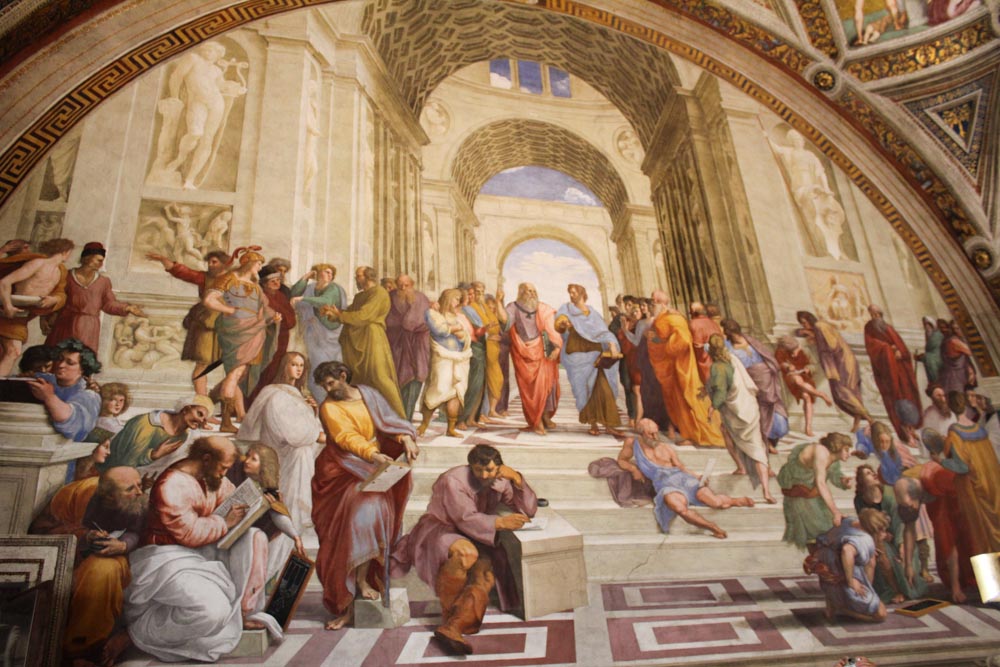
vatican-13

I’ve seen Rodin’s work before, several times in several places, but seeing an original of The Thinker always makes me stop and ruminate.
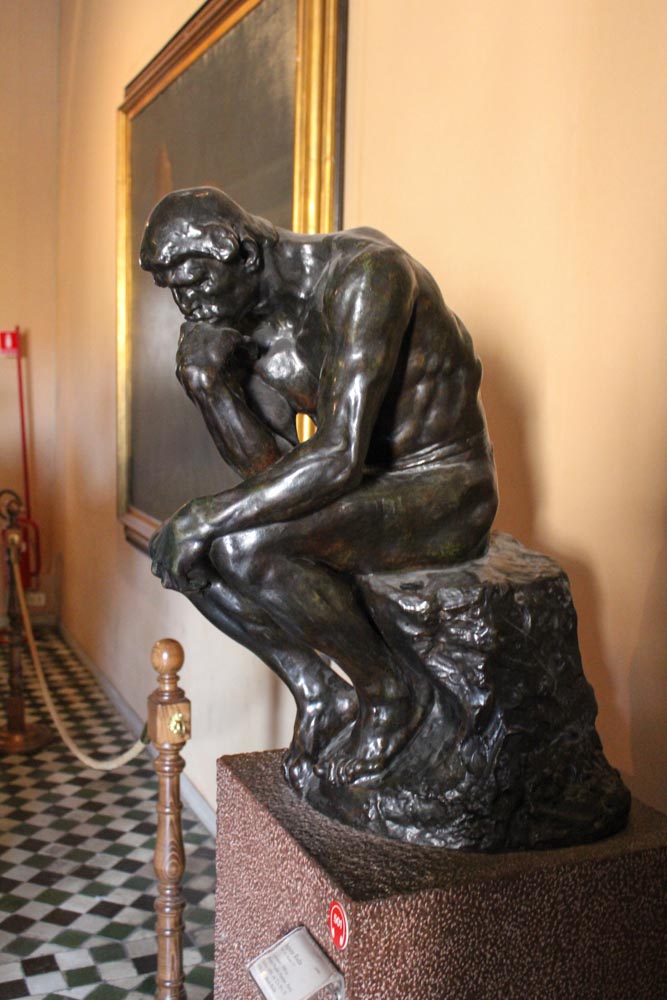
vatican-14

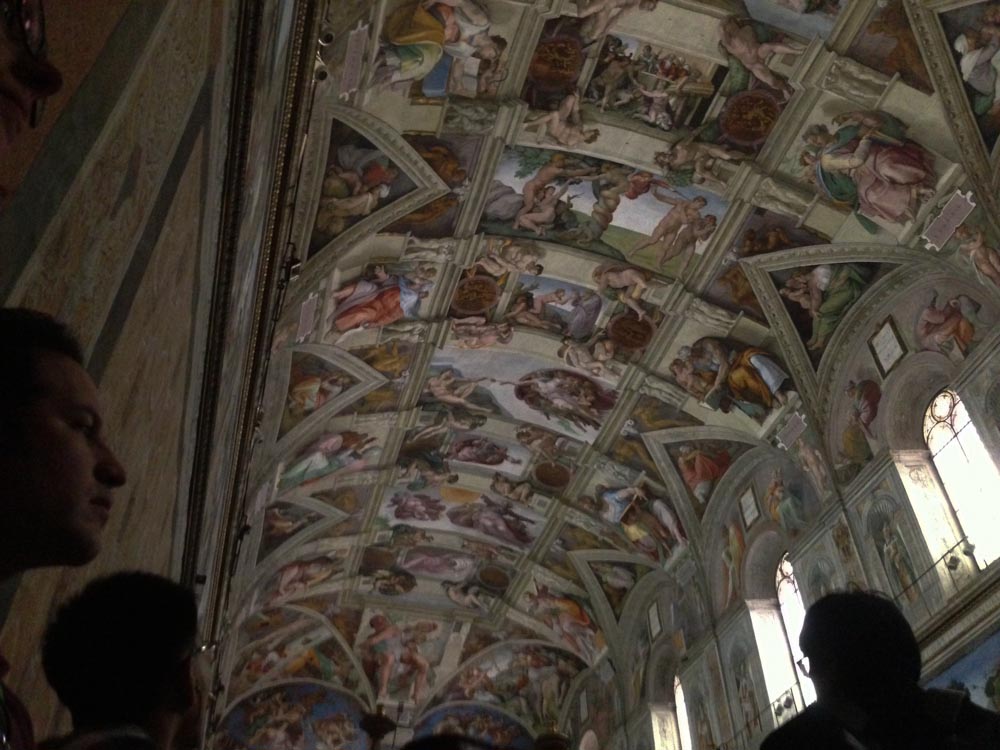
You’re not supposed to take pictures in Michelangelo’s master work, the Sistine Chapel.  I’m a rebel.  This room is pretty incredible, though.
vatican-21

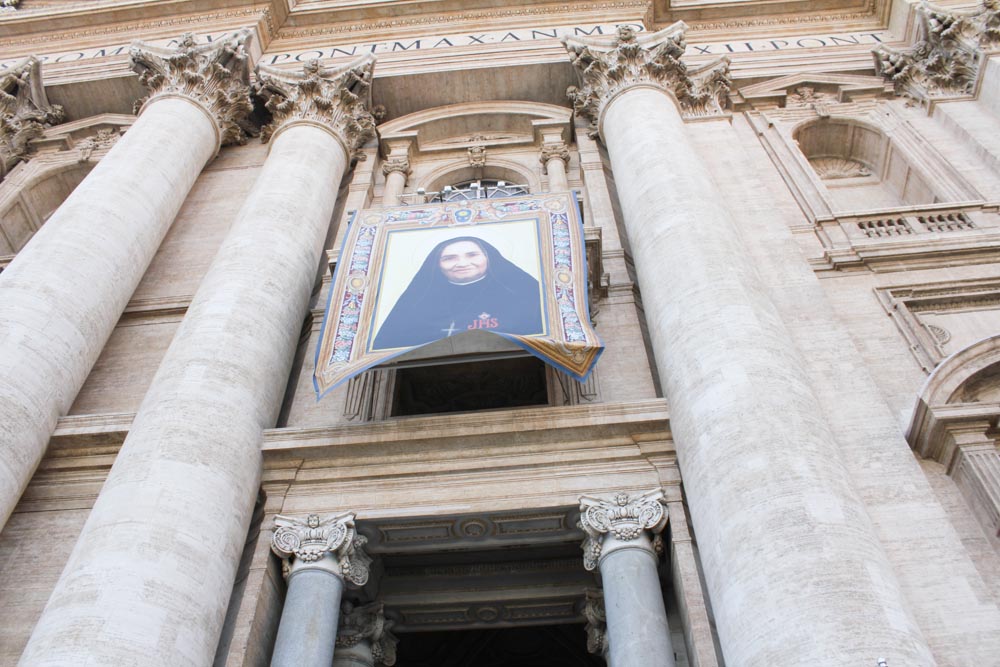
After the tour, we wound up in front of the Basilica again.  There were big banners up because during the Pope’s service the next morning, two nuns were to be canonized.  That is, they were to be sainted.  I’ve forgotten their names, but I’m sure there’s a Papal website that lists them somewhere.
vatican-15

The Pope’s altar is set up and ready to go.

vatican-16

Before we ran out of time, we took the walk up to the Cupola of St. Peter’s Basilica.  You know me and my love of tall places.  I have to climb.  The first part is a short elevator that gets you to this level, and shaves 200 steps off your climb.

vatican-20

From there, it’s still more than 300 steps up, but the view is worth it.  Oh yeah.

vatican-17 vatican-18 vatican-19

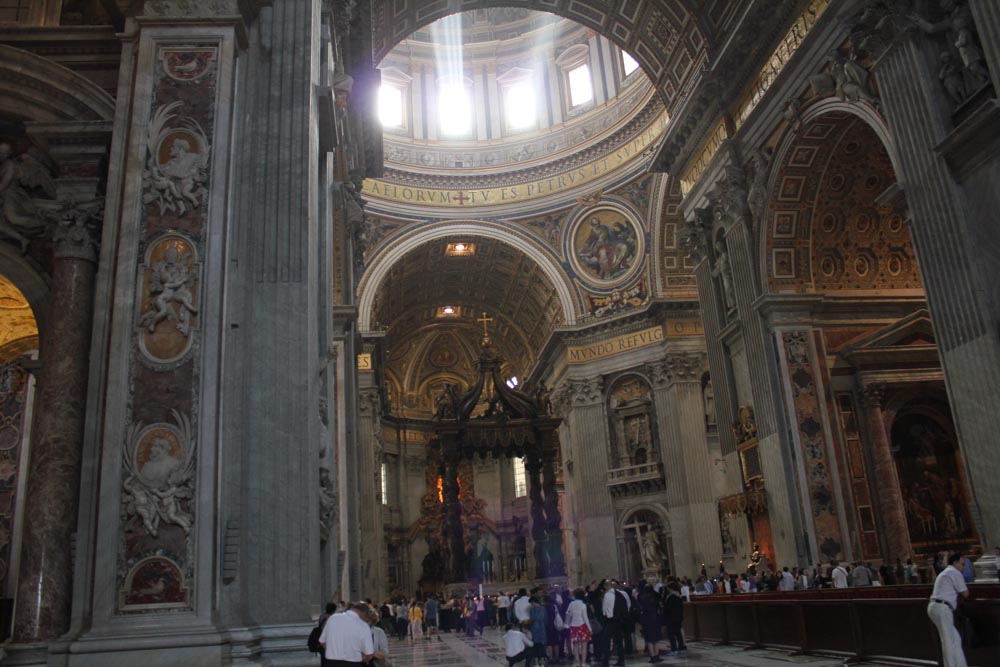
After we climbed down, we finally went inside the Basilica.  The light does this amazing streaming thing that, once again, looks like a matte painting.
vatican-22

I was a little bit amused that the Basilica uses Bose speakers that are painted to blend in with the marble.   Very Popey!

vatican-23

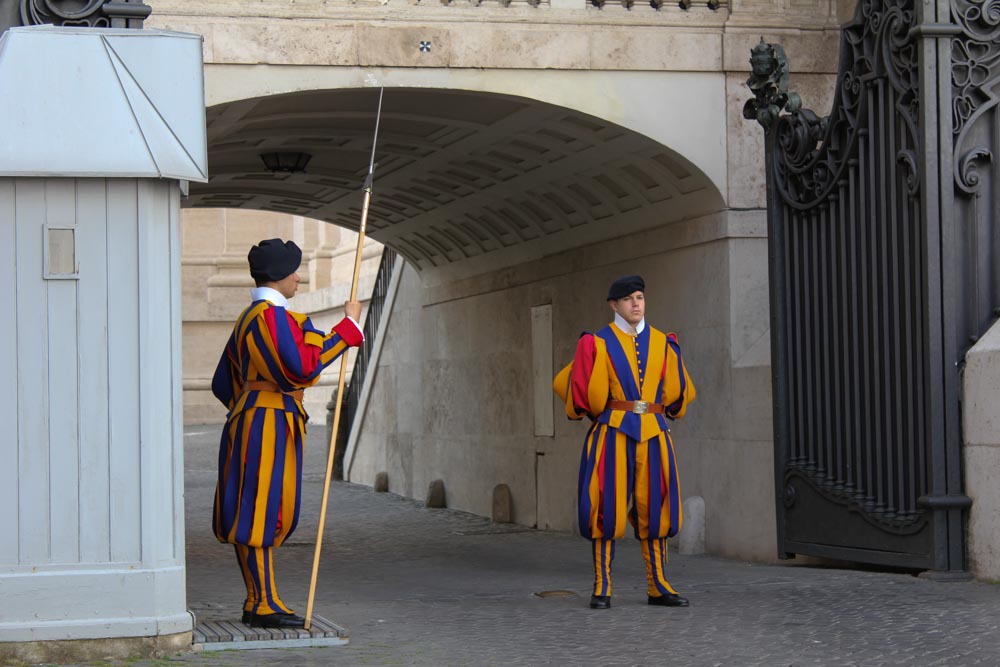
No visit to the Vatican is complete without a few minutes spent marveling at the Papal Swiss Guard and their mighty multicolored pantaloons.  Members of the Swiss Guard must apply for the position.  They must be Catholic, single males with Swiss Citizenship, between the ages of 19 and 30.  They must have completed basic training with the Swiss Military.

They must also be able to appear dashing while wearing a black beret, and they must be comfortable with wearing a sword at their left hip, cos it’s there.  Hidden in this photograph, though.
vatican-24

I mentioned earlier that the Vatican also has its own Post Office, right?  Here’s the front doors.  You’re not supposed to take pictures inside, so you can only guess what I did when I went in to mail a postcard.
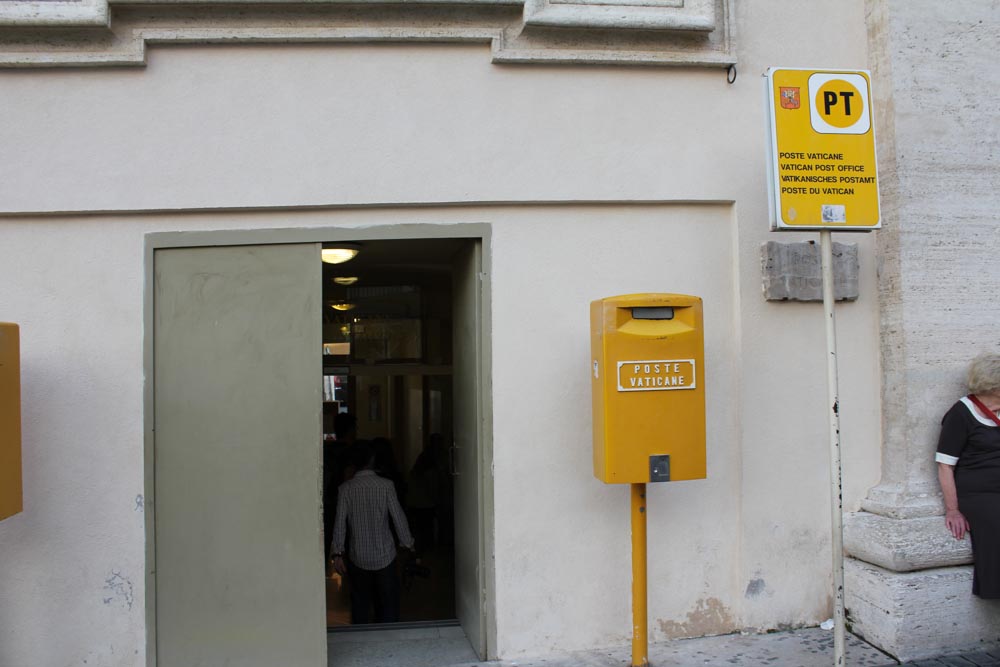
vatican-25

On our way out of the Vatican, I turned around to take one last picture of St. Mary’s Basilica with the sun behind the Cupola.   It’s a hell of a building, if you’ll pardon the pun.

vatican-26

Finally, to wrap up our time in Roma, we went to the pizza restaurant which, according to Trip Advisor, was the number one rated pizza joint in the vicinity.  Apparently, being number one means you don’t have to stay open.
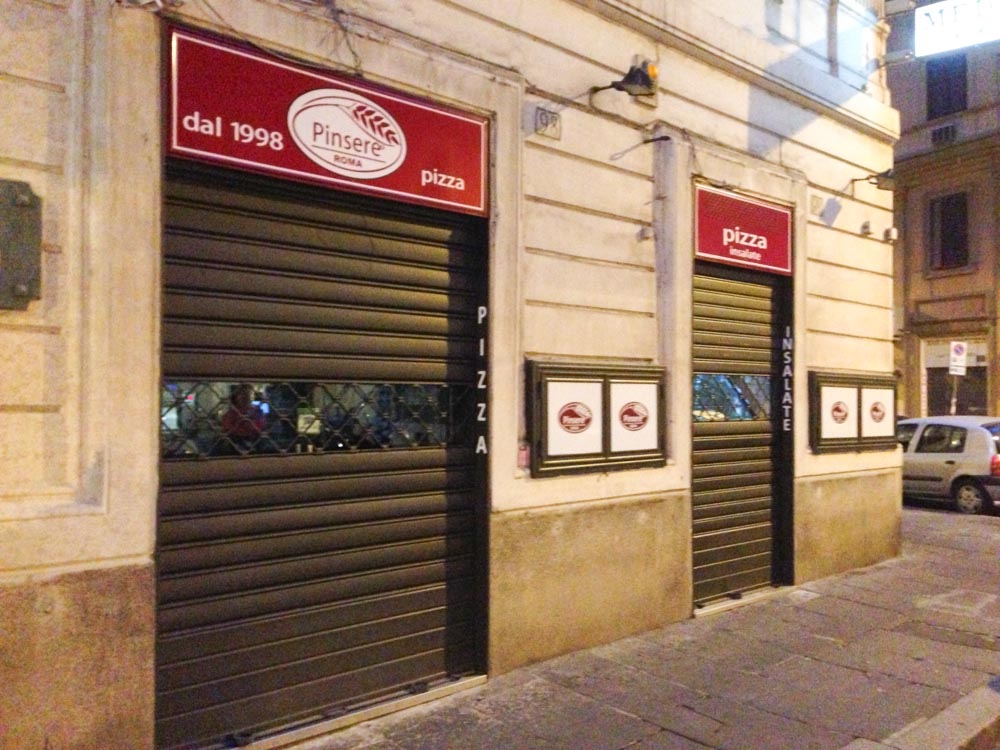
vatican-28

Luckily, the place across the street was open and inviting and kind of amazing.  It was also called Henry Cow, which I kind of love.  I had this pizza.  Visible on the pizza are, clockwise from the 12:00 position: artichoke, mushrooms, an egg, prosciutto, and in the center, black olives.   It was absolutely delicious, and it was a fantastic last supper.   I mean it was a great last meal in Italy.

vatican-27

Have you ever seen the Sistine Chapel?  Is that the biggest ball of brass you’ve ever seen?  Have you ever had an egg on a pizza?  Is soy gelato still technically gelato?
Rome: It’s full of ancient stuff!

The Italian trip continues!  After my sister and I wrapped up our time in Venice, we boarded a Trenitalia train bound for our next stop: Rome.  I’ve mentioned before that I love traveling by train; Italy is no exception here.  The countryside we passed through was often quite pretty:

rome-1

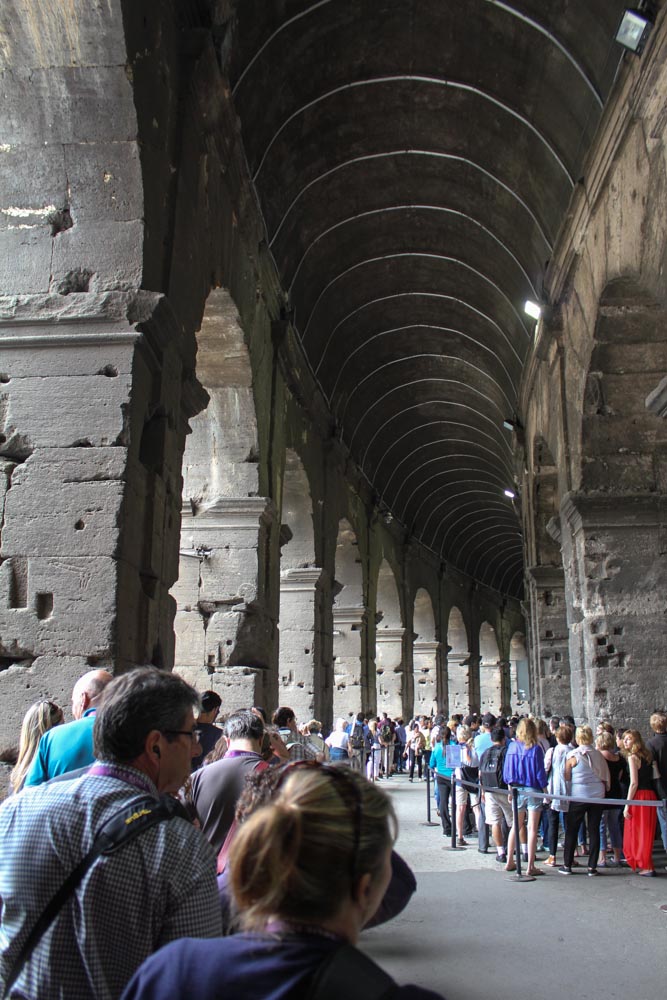
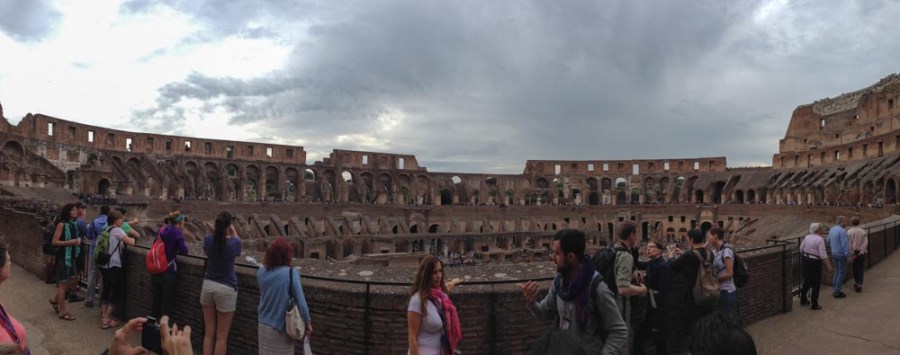
When we arrived in Rome and got our stuff to the hotel, our tourism followed two categories:  Ancient stuff and Vatican stuff.  First, the ancient stuff, starting with the Colosseum.  The Colosseum is one of the most recognizable structures in the world.  (Note to self:  See if anyone’s done research on the most recognizable structures in the world.  I bet that would be fascinating. And I bet I’ve seen a bunch of ’em already.)

rome-4

rome-2 rome-3  rome-5

rome-8

…and this is among the ruins in the Colosseum-adjacent area.

rome-6

Don’t let rumors of the fall of the Roman Empire fool you-  they’re still hanging around:

rome-7

For still more fascinating ruins, there’s the Roman Forum.

rome-9

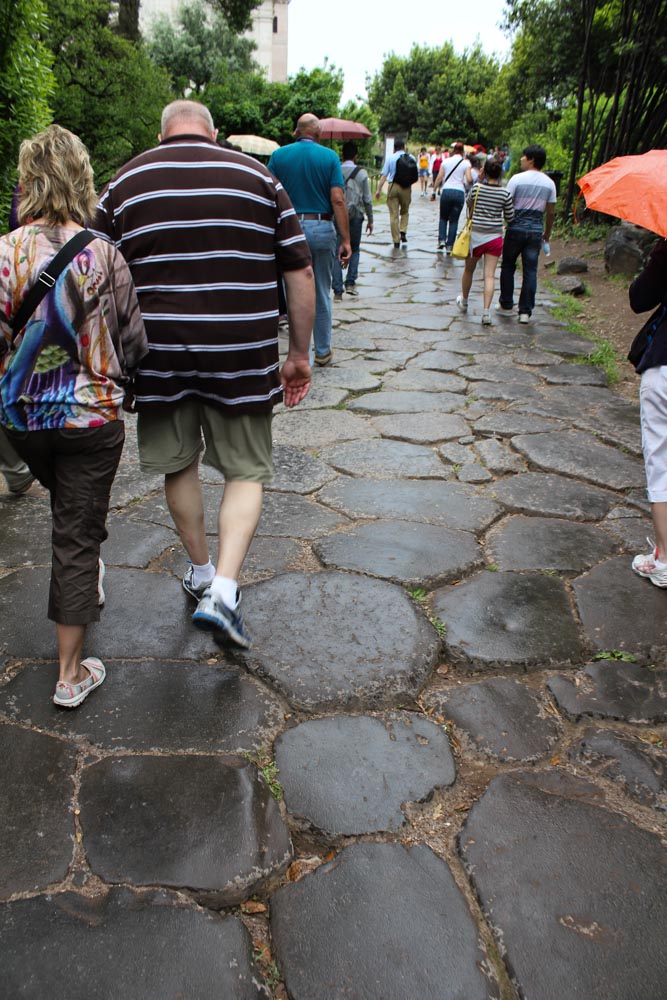
The stones of this roadway were very hard.  Since it was raining on and off, they were very slippery also.  It’s fascinating to think about just how old this walkway really is.

rome-10

It wouldn’t be Rome without Vespa biker gangs.

rome-11

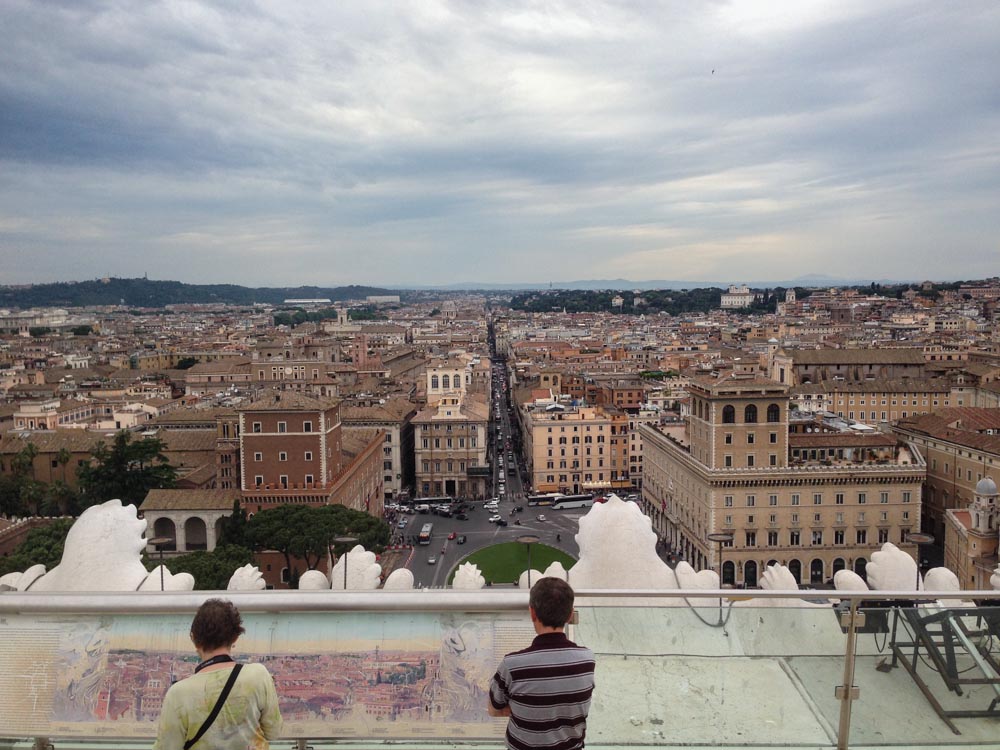
…and I wouldn’t be me if I didn’t go somewhere very tall to take a picture.

rome-12

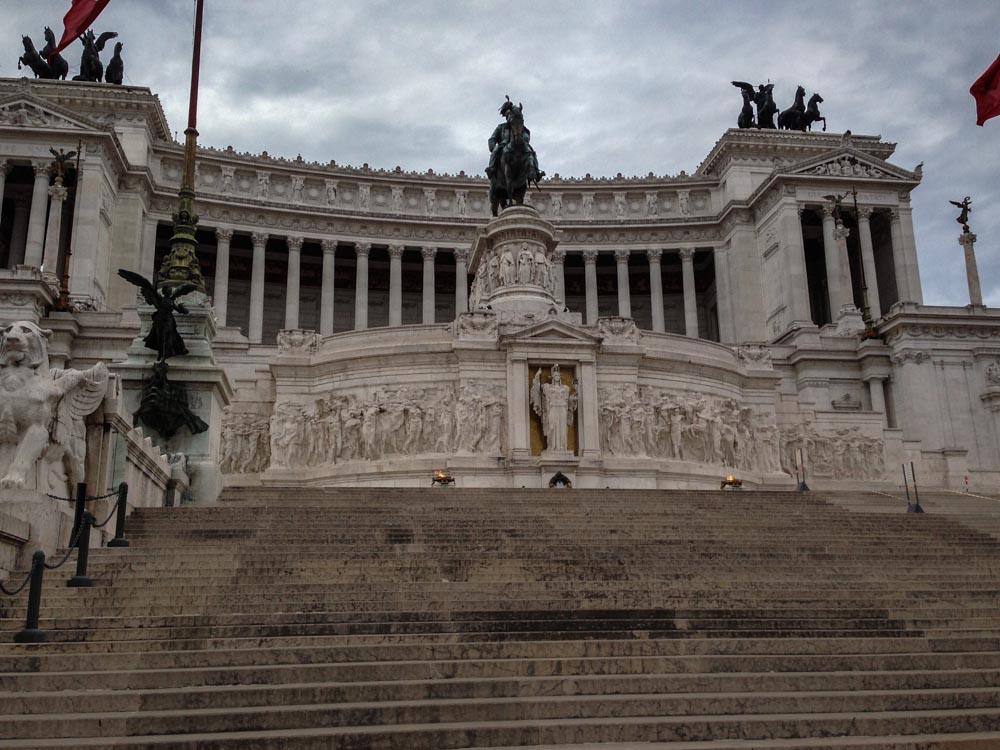
The Tomb of the Unknown Soldier, Rome Edition.  I didn’t realize until I started researching just how many Tombs of the Unknown Soldier exist.  Many different countries have their own variant.

rome-13

The Spanish Steps.

rome-14 rome-15

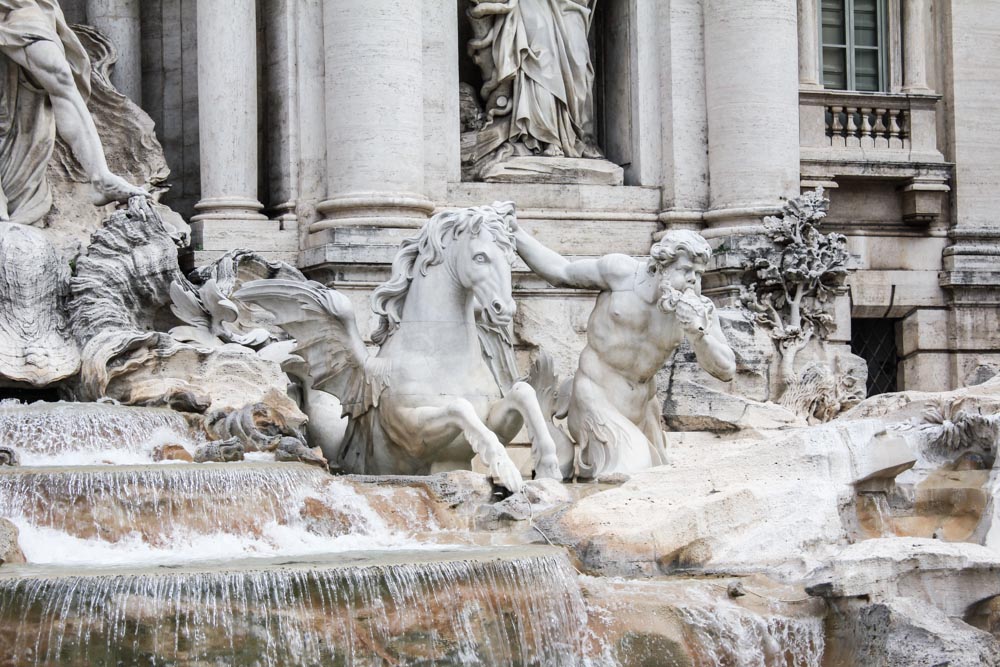
Trevi Fountain, one of the more famous water-bearing landmarks in Rome.  A traditional legend says that if visitors throw a coin into the fountain, they will come back to Rome.  I didn’t know this at the time, so I didn’t throw any money.  I guess I won’t be going back to Rome.

rome-16

I particularly liked Triton and the water-winged horse.

rome-17

The Pantheon is quite large.

rome-21

No, really.  It’s huge.  Here’s my sister for scale.

rome-18

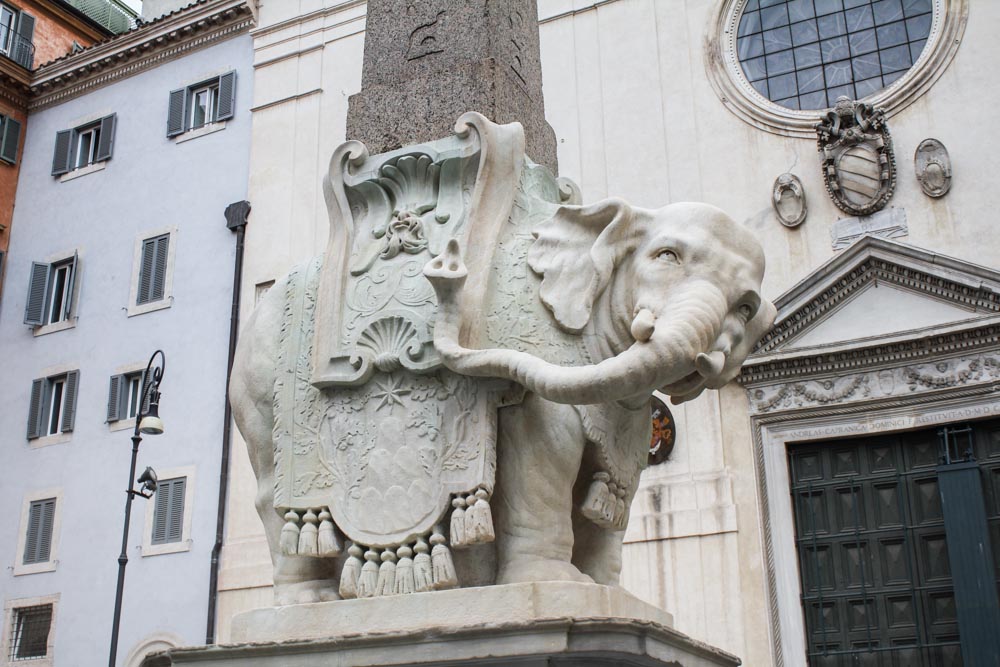
One of the coolest things about Rome is that you can just walk a few blocks through the city in any direction and you’ll wind up in another cool Piazza or find another amazing church.  For example, we were walking between two things we knew about and stumbled across Santa Maria Sopra Minerva, a hidden-away church with a big elephant in front.  Here’s the elephant.

rome-19

…and here’s the interior of the church.

rome-20

Gelato!  Gelato in Rome!  They even had a soy based chocolate for me, so I was pretty happy about that.

rome-22

This pretty garden was another “just stumbled across it randomly” space.  It was quite peaceful.

rome-23

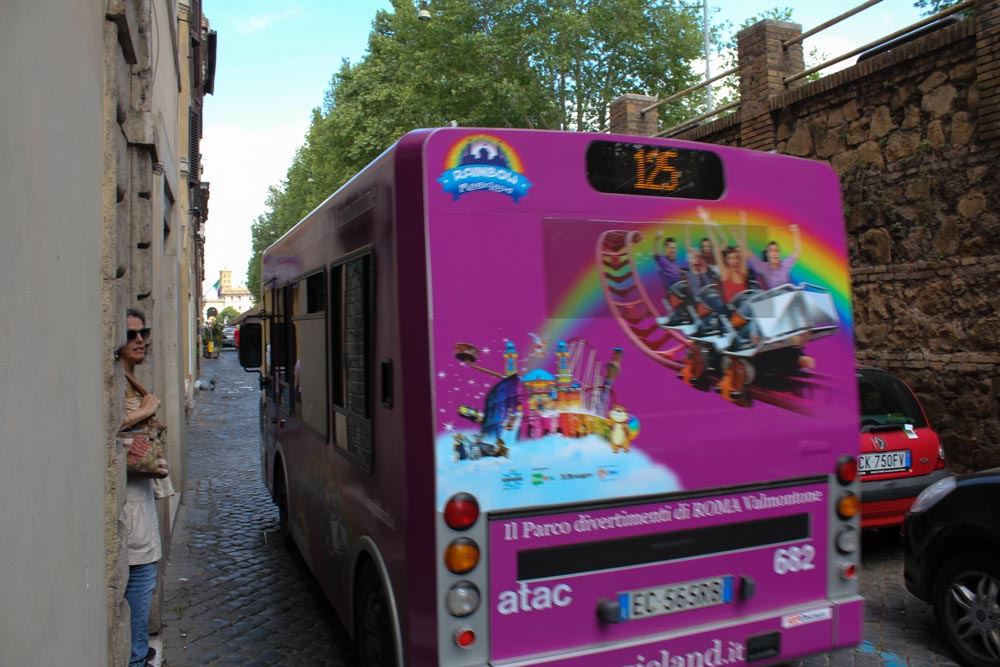
I kept seeing these Short Buses, but I never managed to get a good picture that shows just how short these things were.  You can kinda see it here, almost.  They were hilarious.

rome-24

It cracks me up that people will write this on a dusty car- the joke is the same in any language.

rome-25

Next up, The Vatican!  Have you ever been to Rome?
Senckenberg Frankfurt – More Dinosaurs!

I’m really not much of a museum-goer.  I like some of them, to be sure, but not all of them.  I’ve talked before about the Deutches Museum before, and I probably mentioned the local historical museum here in Regensburg, but that’s likely it.

That being said, one surefire way for a museum to entice me to come inside is to put giant dinosaurs out front.  For example, the Senckenberg in Frankfurt.  Across the street from the front door, helping you find the way, is this fellow:

senckenberg01

…and in front of the main building is this friendly critter:

senckenberg02

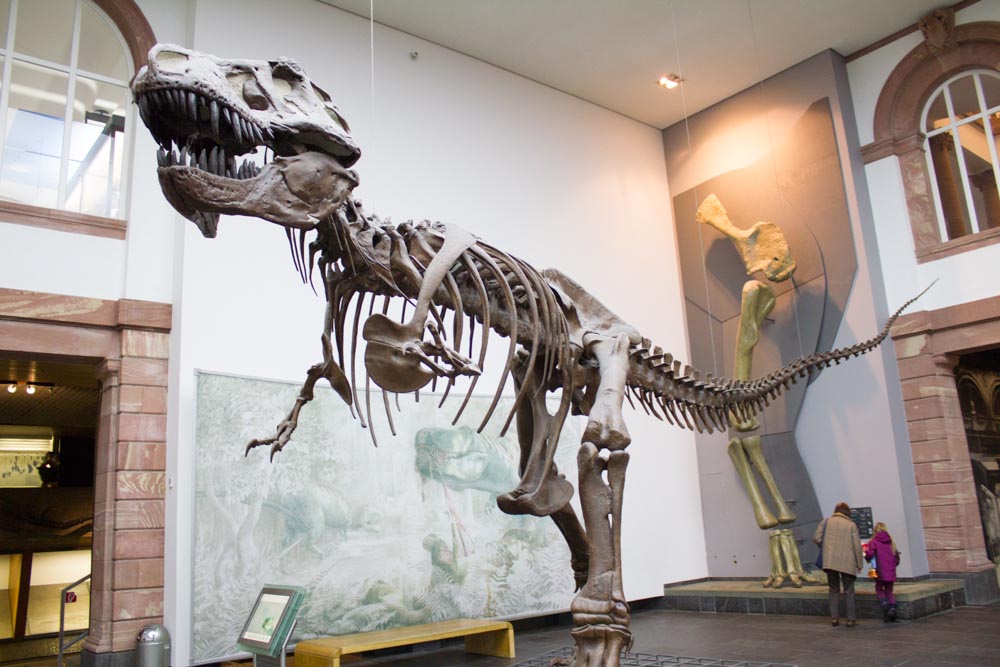
Once inside, the style settles down a bit, but this is the sort of museum that has skeletons of things and has various animals represented.  There’s a giant hall with a T-Rex, a Triceratops, and some other well known dinos.

senckenberg03

The amount of animal life represented in the museum is staggering, and I could easily have posted a gallery of dozens of pictures, but I decided to represent the museum with three dinosaurs and an ancestor of man.  There’s a very nice area about the evolution of hominids with various hominidae skulls, and at the center, a rather nice display of Lucy the Australopithecus.

senckenberg04

You might consider this a small amendment to the ‘killing time in Frankfurt‘ post.  The museum is easily reachable by public transportation, and it’s a great way to kill a few hours in the city.

What type of museum do you like the most?  What’s your favorite museum?

ICE, ICE, Baby! (A Beginner’s Guide To The Deutsche Bahn)

December 2020 Update:  This post still gets a lot of visits, so I feel the need to say this:  The post that follows was written in March of 2013, while I was still living in Germany.  I moved back to the US at the end of 2014, and while I still ride the DB when I’m visiting, I cannot say with any certainty that this seven-year-old post is still accurate.    Please also bear in mind that I do not work for, and have never worked for, the Deutsche Bahn.  I am merely a happy passenger on their trains when I’m in Germany.  Happy travels, friends!

I love trains.

One of my favorite things about living in Regensburg is that we’re situated on a major rail line. From here, there are direct lines to Munich, Nuremberg, Frankfurt, Vienna, and Prague. That’s just without changing trains. If you don’t mind changing trains once or twice, you can go nearly anywhere on the continent. It’s a great way to travel.

Step One: Book Your Trip

appWhile you can get your train tickets from automated machines in the train station, or from a Deutsche Bahn counter, it’s generally advisable to do this ahead of time. The DB has a very excellent website in multiple languages, as well as a series of great apps to serve this purpose. It’s not much different than arranging air travel at this point- You can search with criteria like arrival or departure time, number of connections, and so forth.

The Website has also recently added a seat selection option to the booking process. The brown bars in the screen capture below are tables, so you’ll be sitting facing someone else. The boxed off sections toward the right are compartments with a door between you and the aisle. Click for a bigger view.

seatselector

Step One Point Five: Choose Your Type Of Train

rb-alexWhile you book your trip, you should bear in mind that there are a number of different types of trains in use on Deutsche Bahn rail lines.

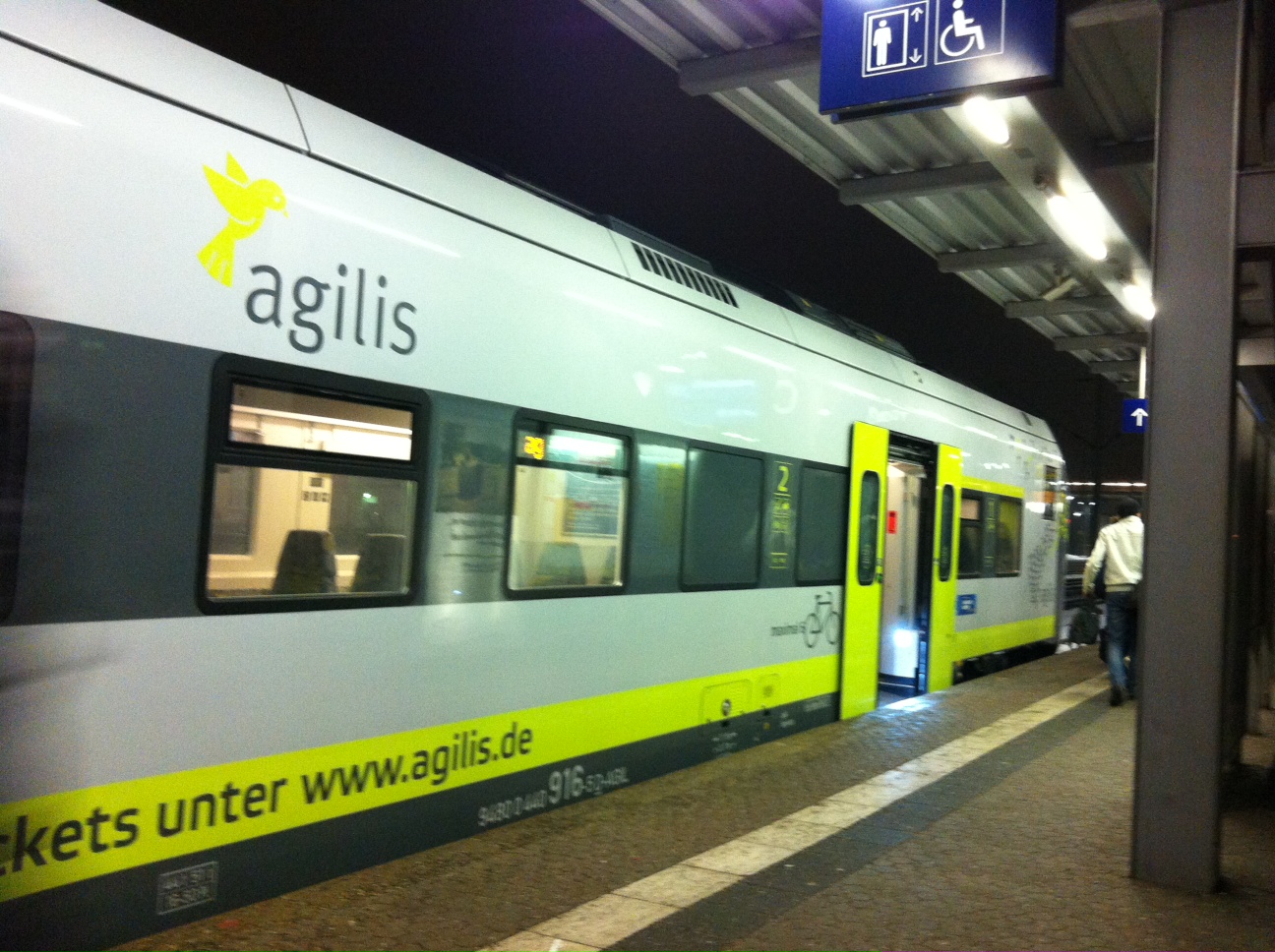
  • There are a few non-DB carriers that operate on German rail lines, like the Alex trains pictured on the right, and Agilis just below that. I’m not going to get into the specifics of them in this post, but I’ve used Alex trains for trips to Prague and Munich. The Prague trip was horrible, but the Munich run was smooth as glass. The Agilis trains tend to be run on local routes. For example, the one pictured here runs between Ingolstadt and Regensburg, on an almost hourly schedule.
    Agilis train
  • Regio-DB or RB (Regional Bahn) tend to be highly localized. These trains are usually painted red.
  • RE (Regional Express) lines are for slightly longer distances than the RB. For example, there are RE lines between Regensburg and Munich. You can travel throughout the entire country using only RE lines, but it will take you a while. RE trains are also painted red.
  • IC (Inter City) trains.  IC trains are the middle step between the RE and ICE trains.  They are typically mostly white with red stripes, like the ICE trains, and they are generally faster than the RE trains.
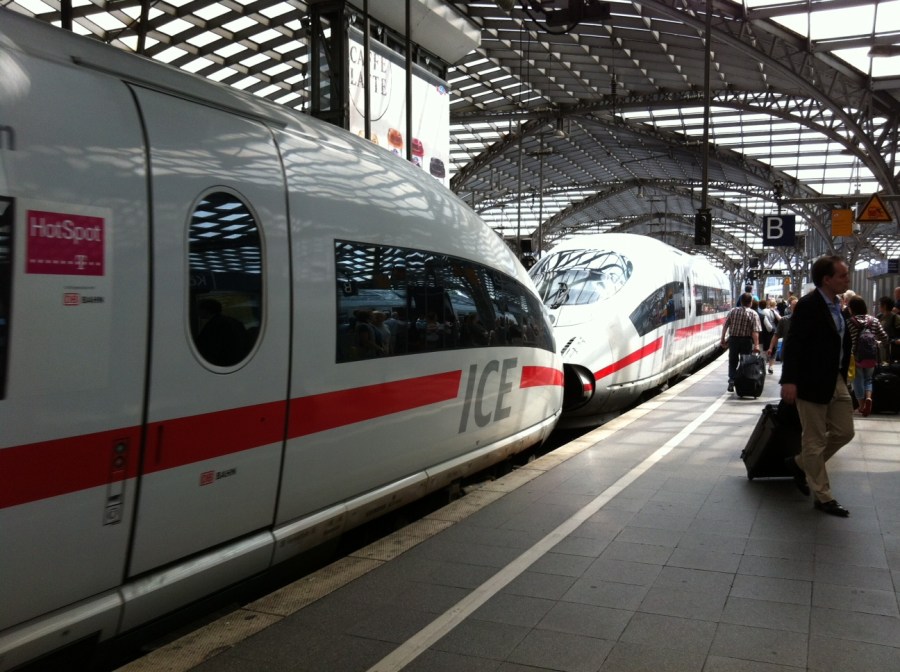
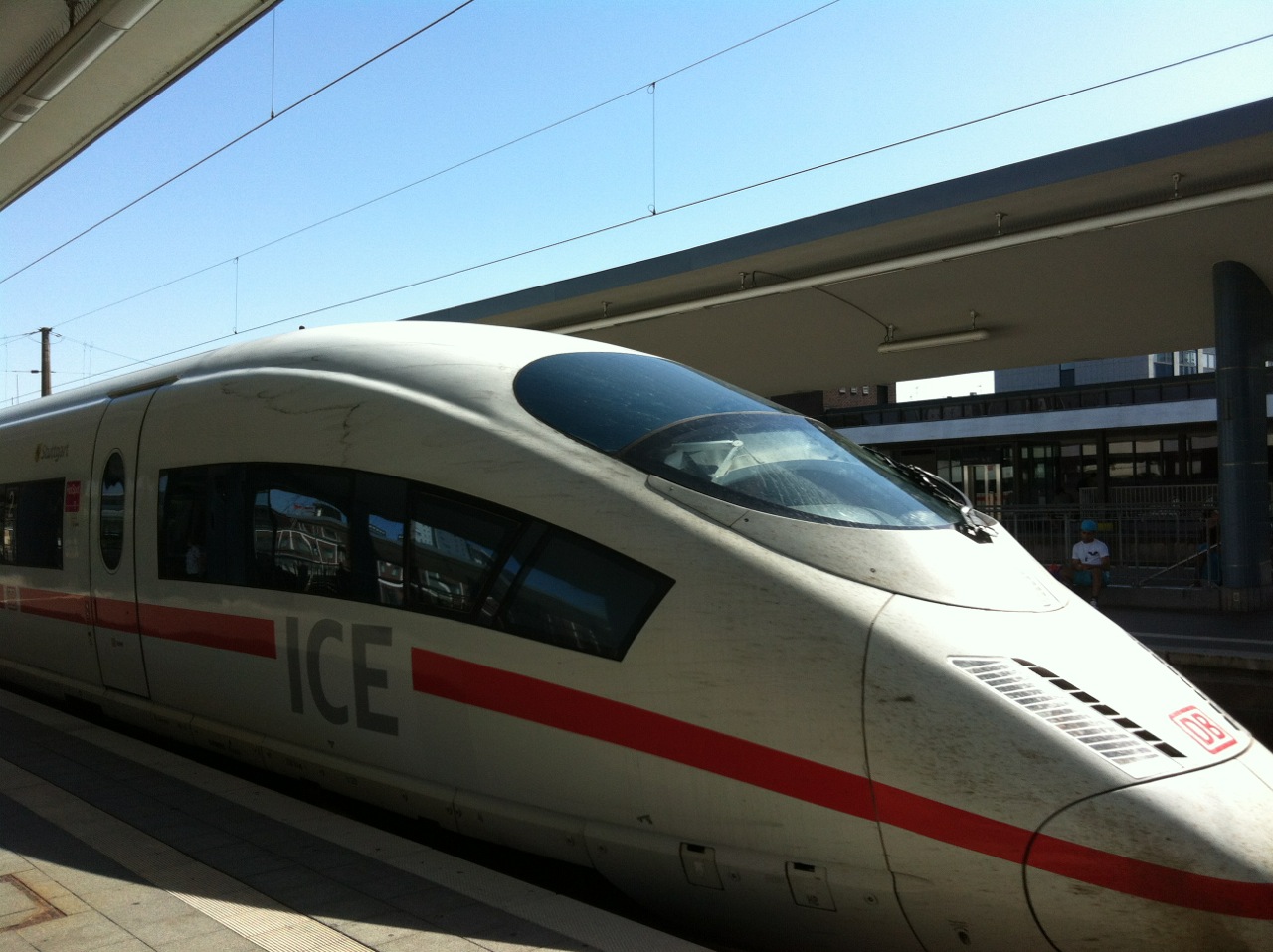
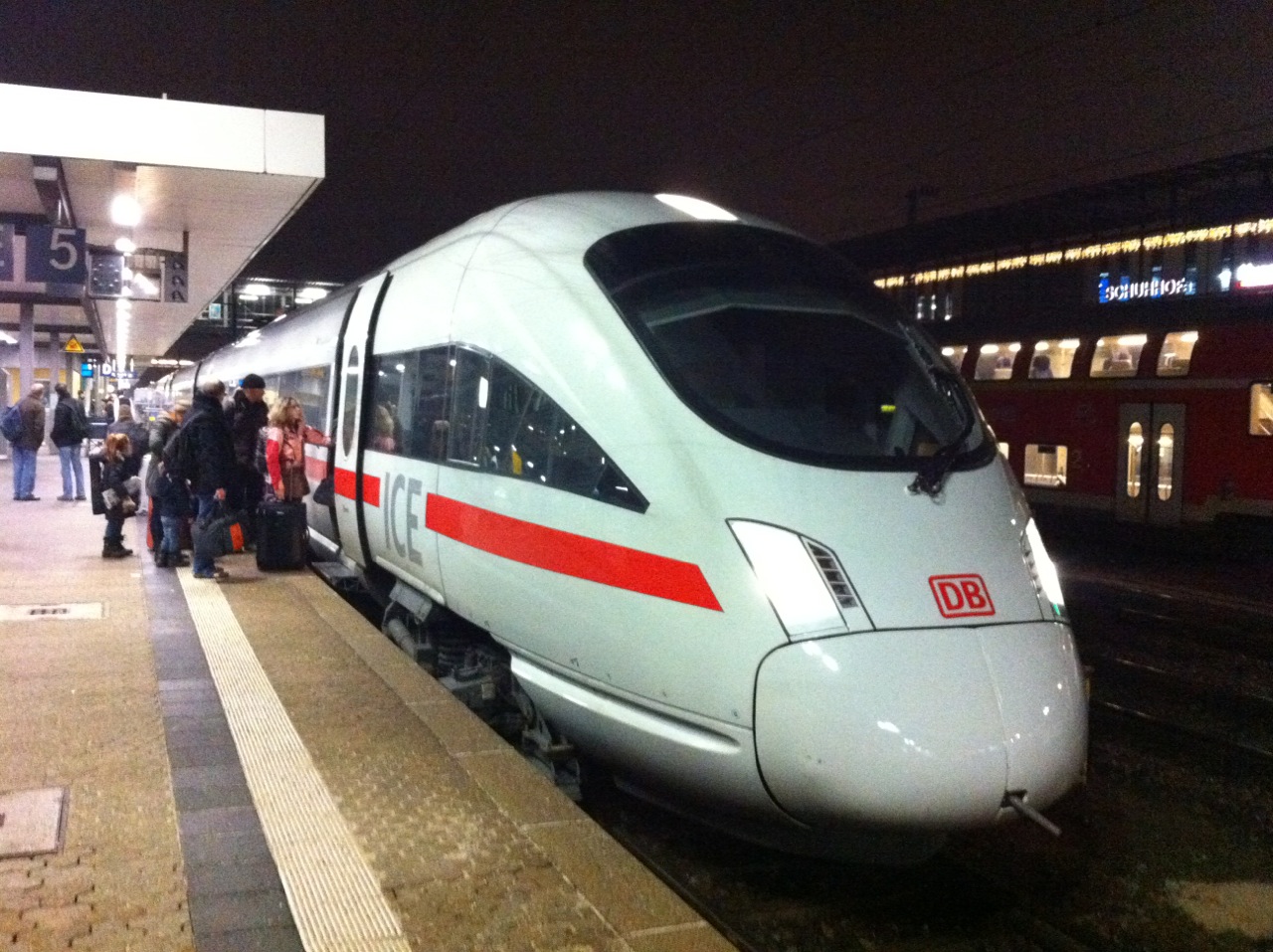
  • ICE (Inter City Express) lines are my personal favorite. These are the trains that look like monorails. ICE trains are always pronounced Eye See Eee, never like the word ‘ice’ despite my bad joke in the subject line of this post. ICE trains are painted white with a red stripe, and they’re fantastic.
  • When your trip moves you between countries, sometimes you’ll wind up on the rail network from another country. For example, the train below is Railjet, a high speed Austrian line. This train was going to Vienna.
    austrianrailjet

In the picture below, you can see four different DB train types. The trains are, from left to right, an ICE type one, an ICE type two, an RE, a RB, and an ICE type three. The type three is the newest and fastest type.

ice-123-3types-munich

I’m a huge fan of the ICE trains. Here’s two more pictures of them. First, an ICE-T train. The T stands for ‘Tilt.’ All the newer models do this, actually. The upper portion of the train is designed to tilt to allow for high speed navigation, even on curves. The practical result of this for me is that my trips to and from the bathroom on an ICE train while the body of the train is tilting back and forth are often high comedy.

icet

Here’s another close picture of an ICE type three, because they’re amazing.

ice3

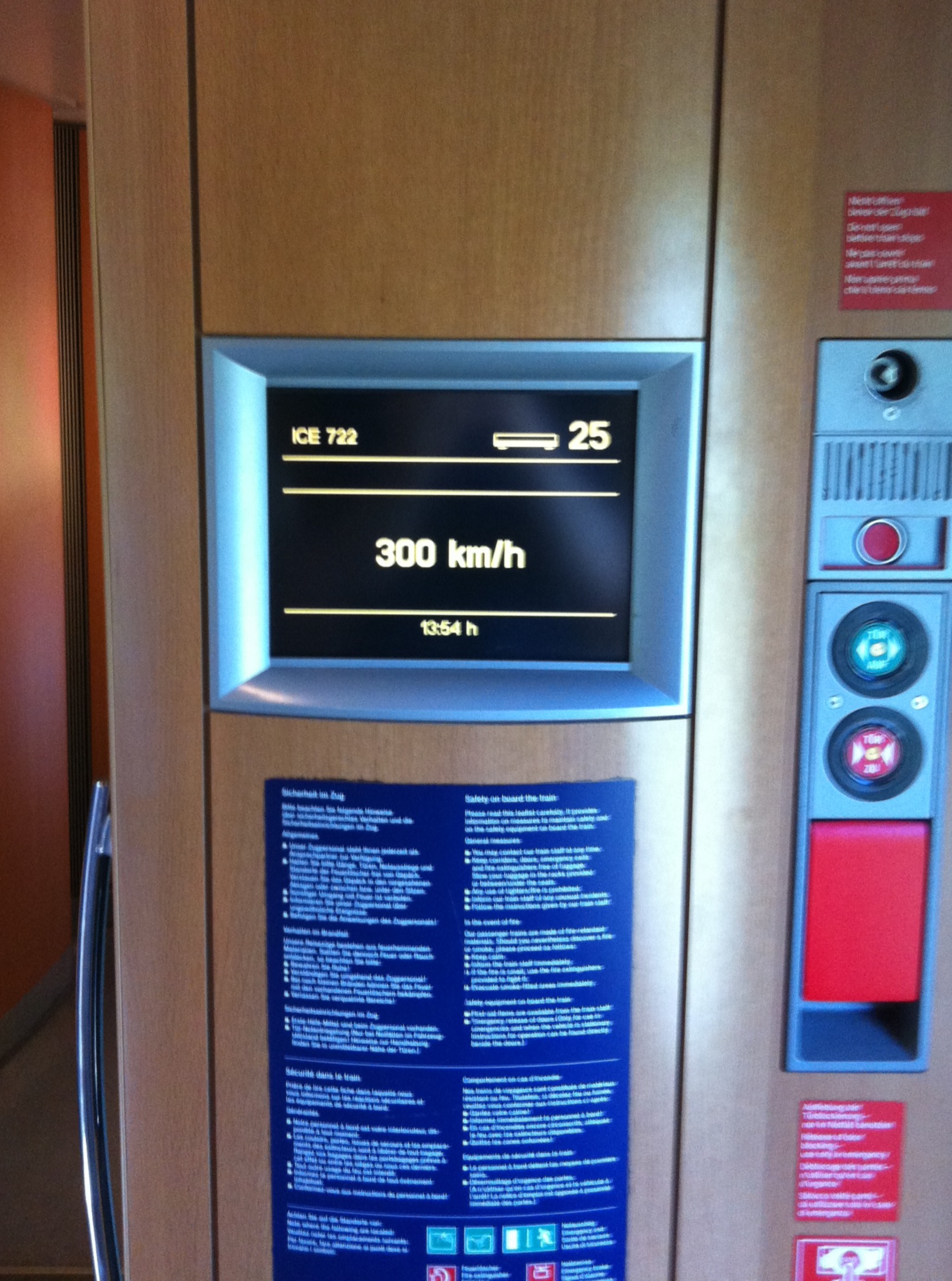
Why do I think they’re amazing? Well, they’re quiet, they’re comfortable, they have power plugs on the seats, and they’re fast. On newer, straighter sections of track, they can do this-

ice-zoom

You read that right- that’s 300 Kilometers per hour. That’s 186 Mph. And they can go even faster, if the track is straight and smooth.

One more thing that’s kind of interesting to me- in the picture of the ICE Type 3 above, the coupling is covered by a white shell. However, sometimes you see them uncovered, like so:ice-coupling1

That’s because ICE trains can be coupled together for longer hauls, making the single train double the length of a normal train. This is particularly useful when both trains share half a route, then get uncoupled at a major station before going to separate destinations. Here’s what they look like coupled together:

ice-coupling2

Step Two: Go To The Station

The main train station in any city is called a Bahnhof. In cities that are large enough to have more than one station, the main station is called a Hauptbahnhof. Bahnhofs always have clocks on them, for some reason I haven’t been able to learn. Here’s the front of the Frankfurt Hauptbahnhof:

frankfurt-hbf

Step Three: Find Your Platform

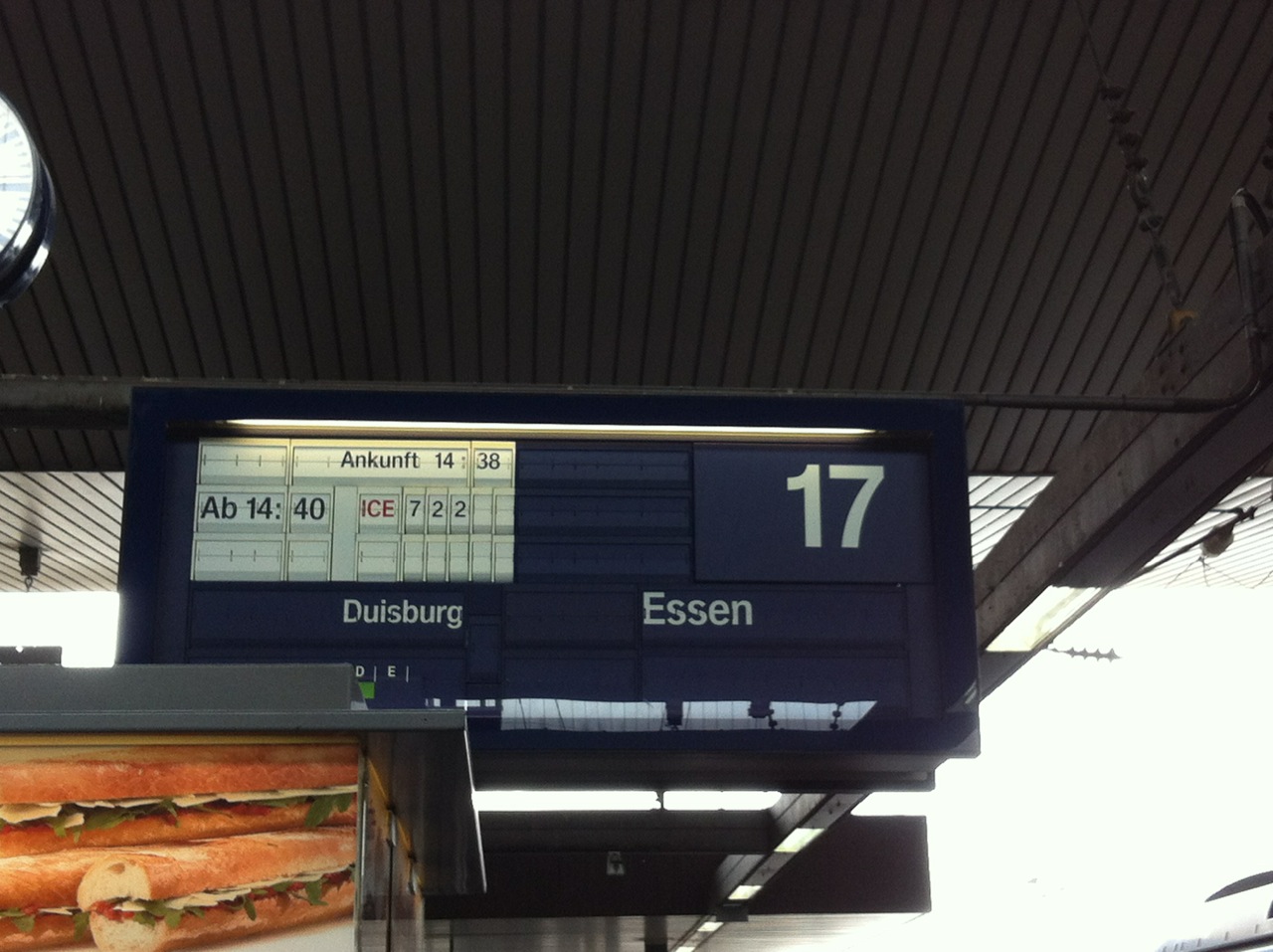
Every Bahnhof has display signs which tell you information about upcoming departures, including the Gleis (track or platform), destination, and departure time. There’s a big departures board inside the Bahnhof, and once you get to the actual platform, there are usually smaller signs to provide more information, like this one:

platform-digital

In the picture above, you have the following information:

  • This is Gleis 4.
  • This train is going to München (Munich). This train also has stops in Köln (Cologne), Frankfurt Flughafen (airport), and Nürnberg (Nuremberg).
  • The train’s identification is ICE 629.
  • This train will stop at stations A through E on the platform. On the left side of the picture, you can see the letter C- this is useful for shorter trains, as it allows you to see roughly where the beginning and end of the train will stop.
  • The train is departing this station at 12:38.

If there are any announcements or indications that your train is late, they’ll generally be notated on the boards. In the picture below, the scrolling text with the white background tells us that the train to Dortmund is actually running five minutes late.

trainbelate

Sometimes, you luck into an older station with the charming flip-board version of this sign. While they don’t have as much information, I think they’re really nifty and I quite like seeing them.

platform-flipstyle

Step Four: Find Your Seat

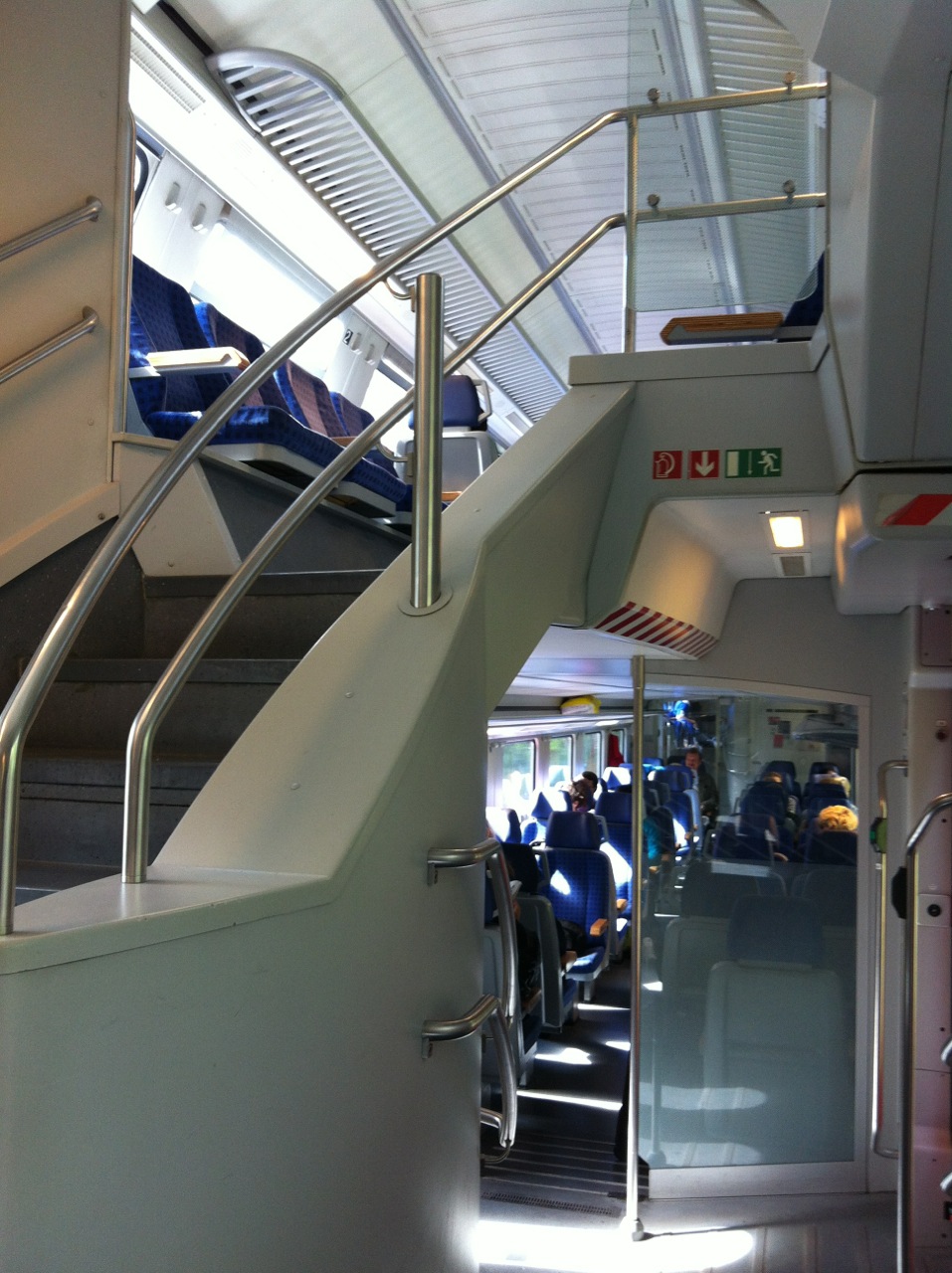
On RE and RB trains, you can’t reserve seats. On those trains, you just have to make sure that you don’t wander into a First Class car with a Second Class ticket. The cars are clearly marked with very large 1 and 2 signs, so that’s pretty straight forward. Some of the RE trains use double-decker cars with a lot of seating, like this next picture.

rb-interior

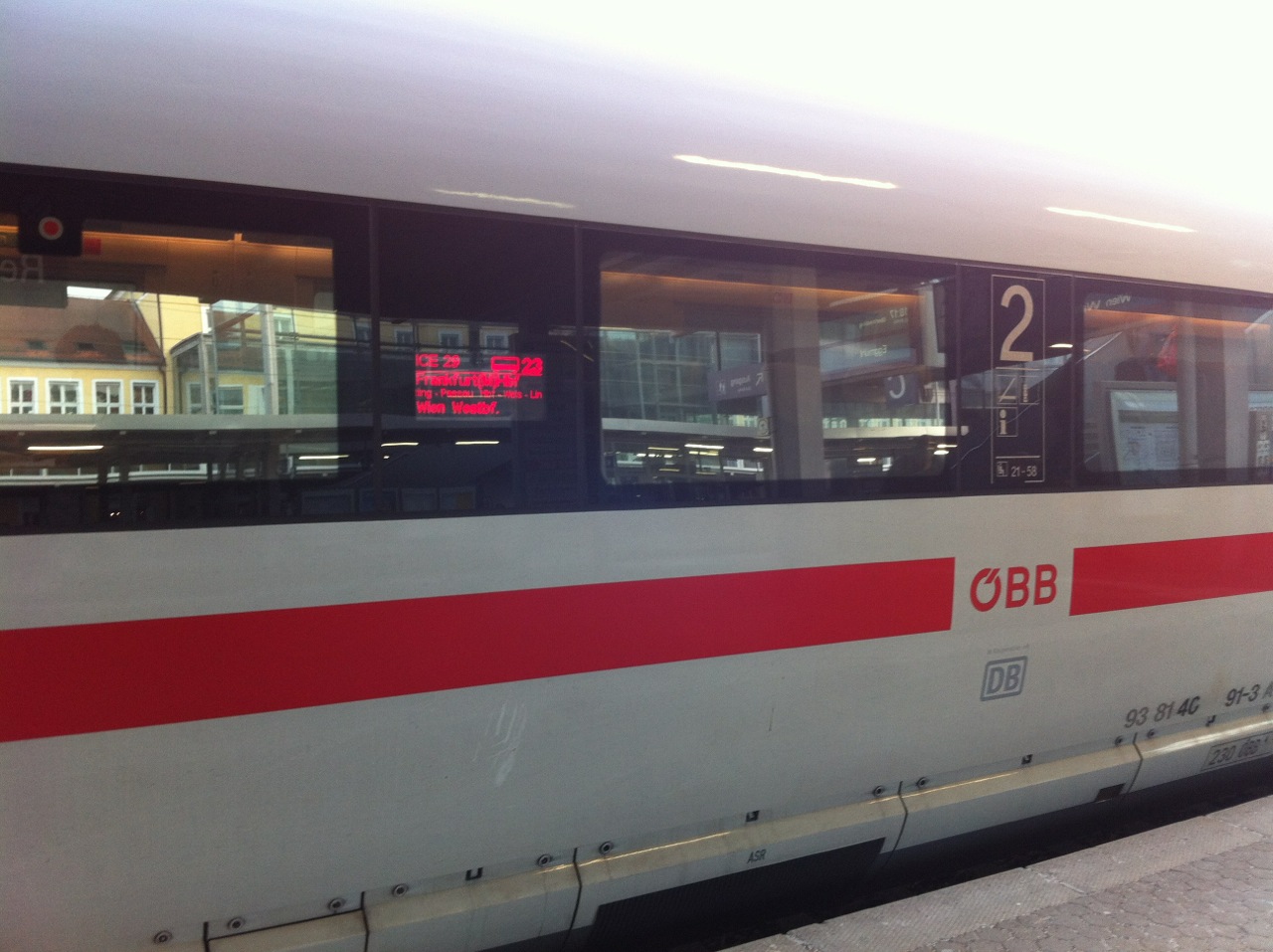
For ICE trains, however, you can usually get reserved seating- this is especially nice on crowded routes. When you have an ICE reservation, your ticket will specify a Wagon and a Seat. That’s where these signs come in handy. It’s difficult to capture this in a clear picture, but the car itself tells you that this is Wagon 23, on ICE 29 between Frankfurt and Wien (Vienna). The giant 2 to the right of that display tells you that this is a second class car.

ice-trains4

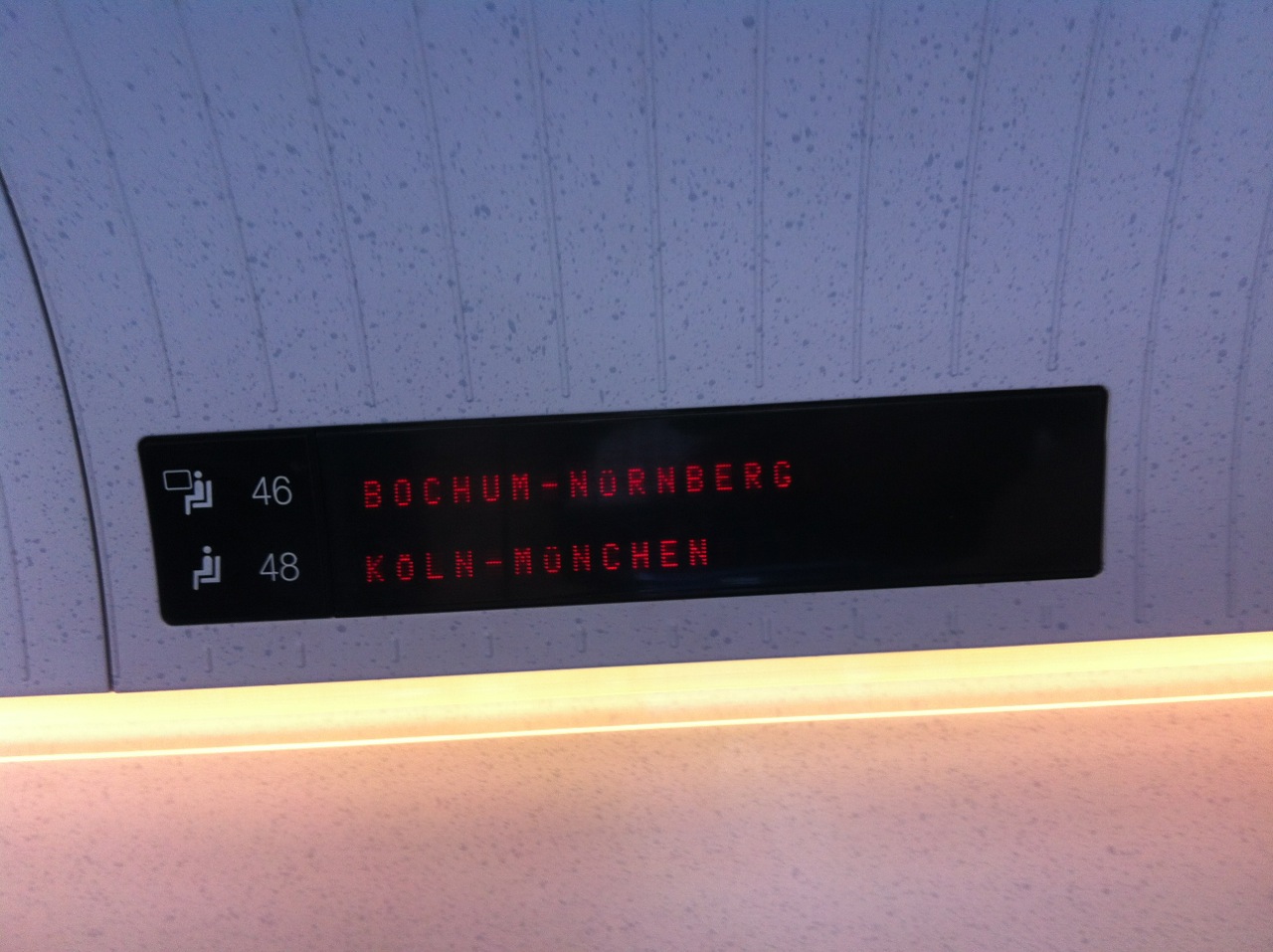
Once inside you’ll need to find your seat. If you do have a reservation, the seats will be marked by a small electronic displays somewhere above each pair of seats. If the display is blank, there’s no active reservation. The reservation display pictured below shows you that the window seat, #46, is reserved from Bochum to Nürnberg, and the aisle seat, #48, is reserved from Köln to München. Hypothetically, if you were planning on getting off the train before Köln, you could use seat #48 without much of a problem since that reservation starts with someone boarding the train in Köln.

ice-reservations

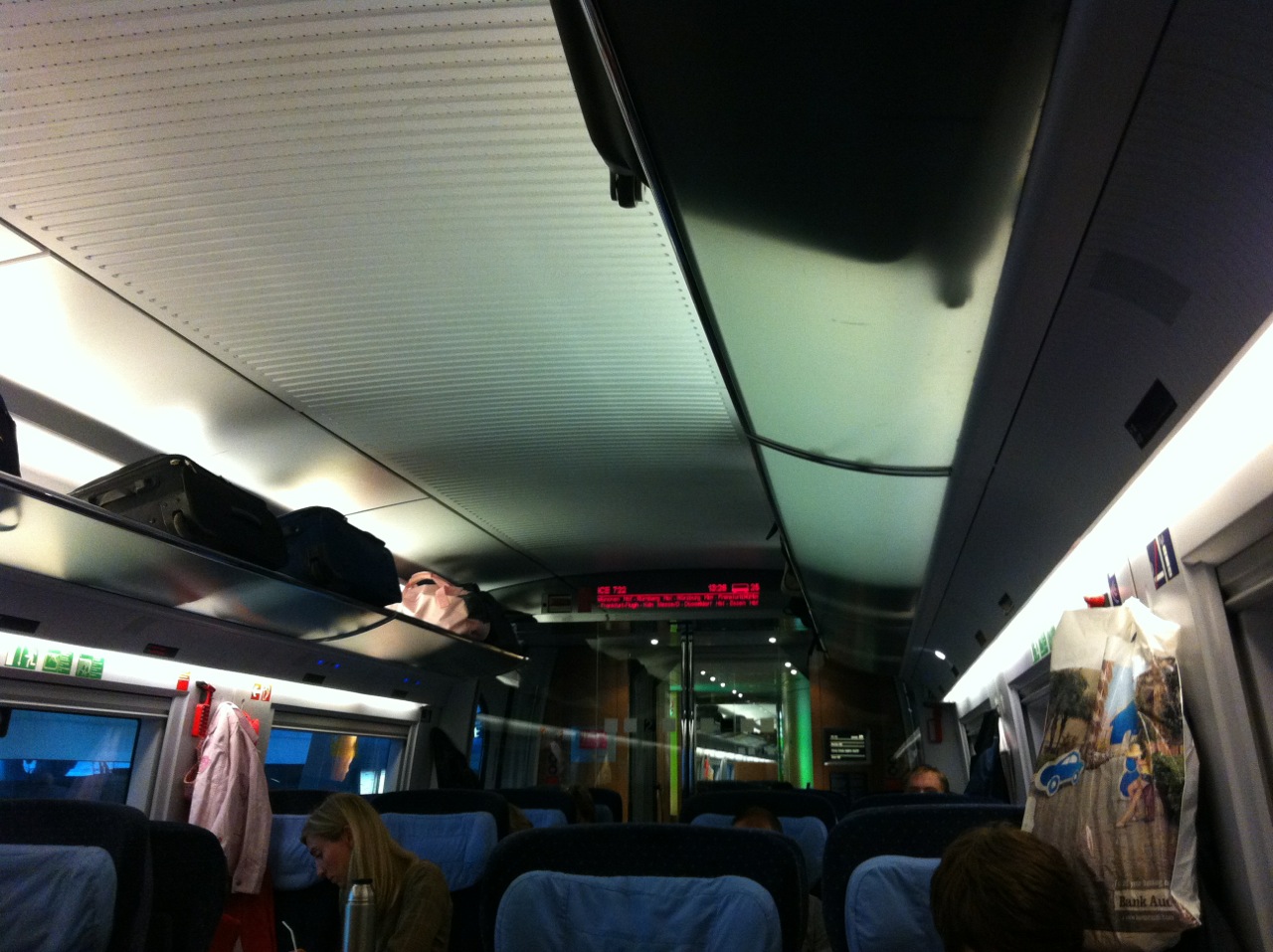
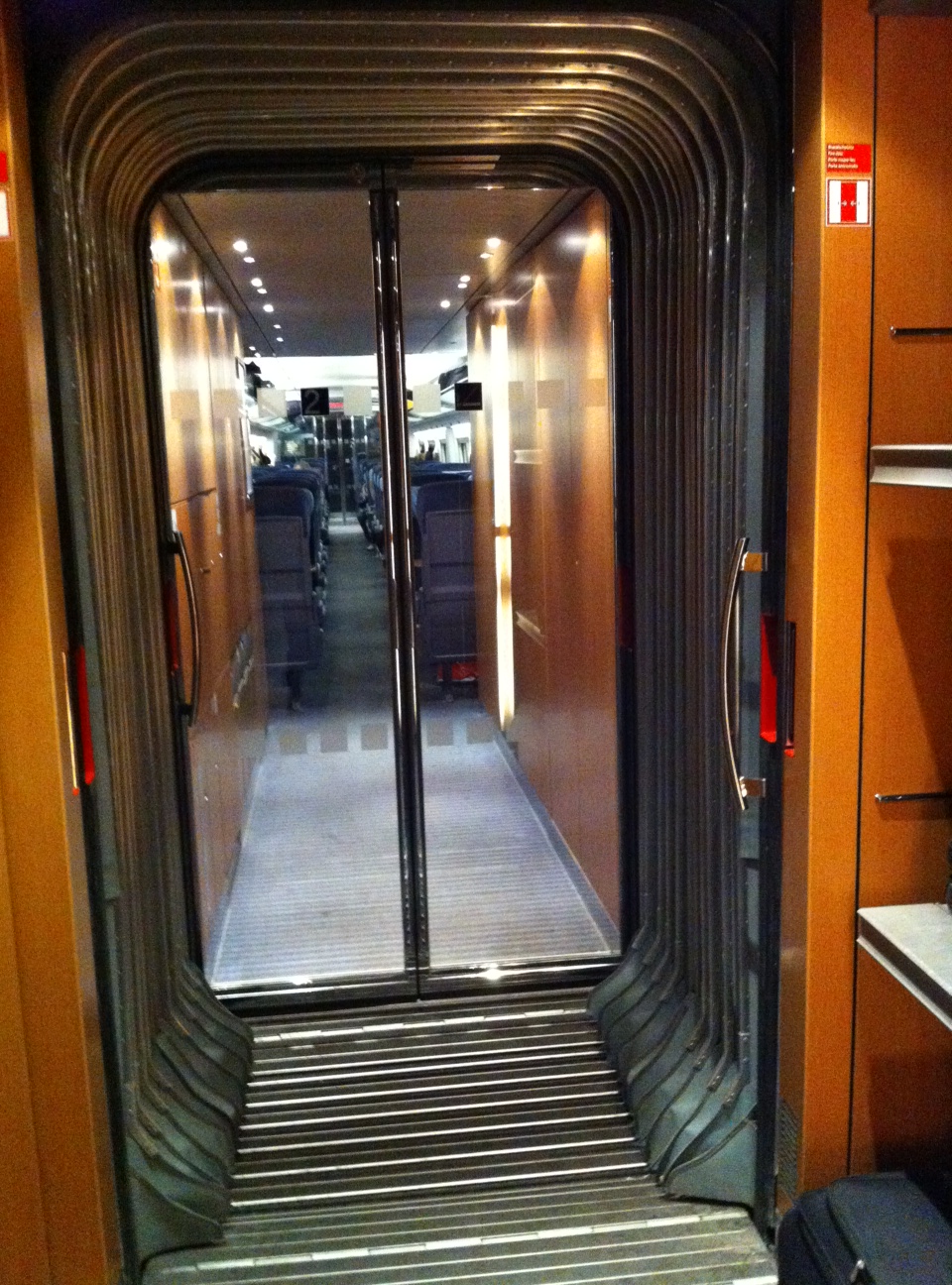
Once you’ve got your seat sorted out, you can try to stash your luggage. Most of the trains have some form of overhead storage, but it’s not always big enough for a regular suitcase. The pictures below are four different views of ICE train interiors.

ice-cabin-1 ice-cabin-2ice-interior1 ice-interior2

Step Five: Enjoy The Ride!

There’s not much else to add, really. DB trains are generally very smooth. Sure, yes, sometimes delays happen and weird things make travel a little more complicated. For the most part, though, this is a great way to travel. You can get from Regensburg to Frankfurt in three or four hours while reading on your Kindle, or you can stare out the window at the countryside passing by.

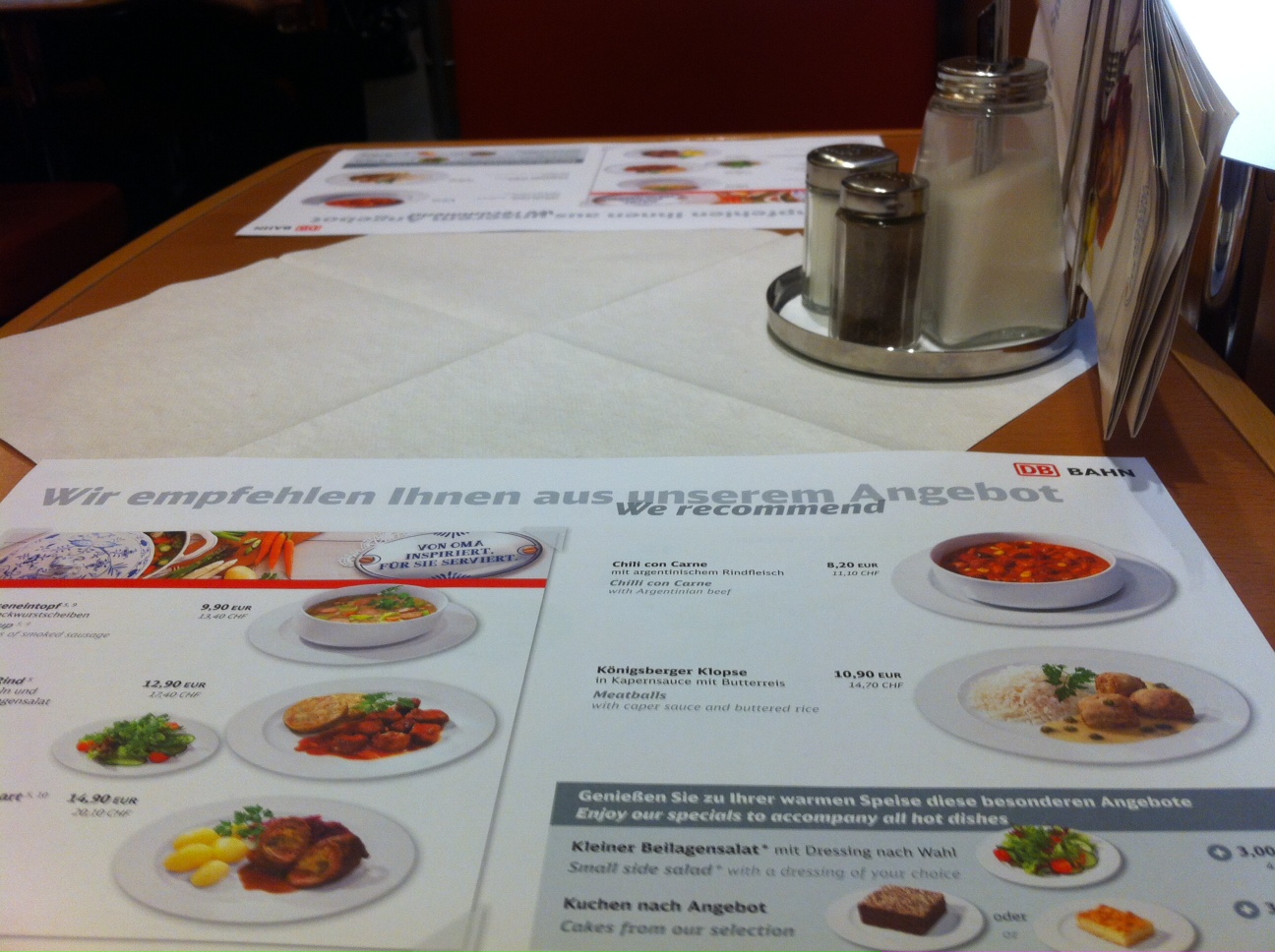
If you get hungry, most ICE trains have either a Bordbistro or a Bordrestaurant, and even the RE trains often have a snack cart passing by periodically so you can get something to eat while in motion. The Bordrestaurants often have hot food available, in a small fixed menu. You can see a few options in the photo below- when this picture was taken, chili, a rice dish, currywurst, a simple salad, and even some desserts were available.

bordbistro1

So there you have it- a beginner’s guide to riding (and enjoying) the Deutsche Bahn. I could go on a great deal longer about this topic, because I love riding the rails I think this is a good place to stop, though- this post should cover the basics. Now go forth and ride! Travel somewhere this weekend! Gute reise!

Which do you prefer- trains, planes, or automobiles? Have you traveled by Deutsche Bahn?

A Perfect Day

I travelled into Munich on Saturday afternoon.  Compared to last weekend’s total bust of an Ingolstadt day trip,  this weekend’s trip resulted an absolutely perfect day.  It helps that I had a specific goal in mind.  I had acquired a ticket to see Dinosaurier: Im Reich Der Giganten.  I gave myself a little bit of padding time before and after the show, and that extra time is where the day became really successful.

It also helps that Munich is a vibrant and amazing city, with a lot of really cool stuff going on.  There’s so much cool stuff in Munich that even after repeated trips to the city, I’m still ticking things off my “Ooh, I’ve gotta see that sometime!” list.

I went a little bit early today with the intent of finally getting to see the Ruhmeshalle.  I had already seen Walhalla and the Befreiungshalle  (“Hall of Liberation”).  This is a sort of companion piece to the both of them, since they were all originally commissioned by King Ludwig I of Bavaria.  I did make it to the Ruhmeshalle, but I could’t go inside because it was closed up- probably because most of the stairs were still iced over.  At least I got to see it, along with the statue of Bavaria in front.  I’ll have to go back there some other time, when it’s a little bit less icy.

Ruhmeshalle

Because I took a detour to an area of Munich I hadn’t seen on my way to the Ruhmeshalle, I got to see several other interesting things.  First of all, there’s this wacky staircase at the KPMG Building:

unpossiblestaircase_kpmg

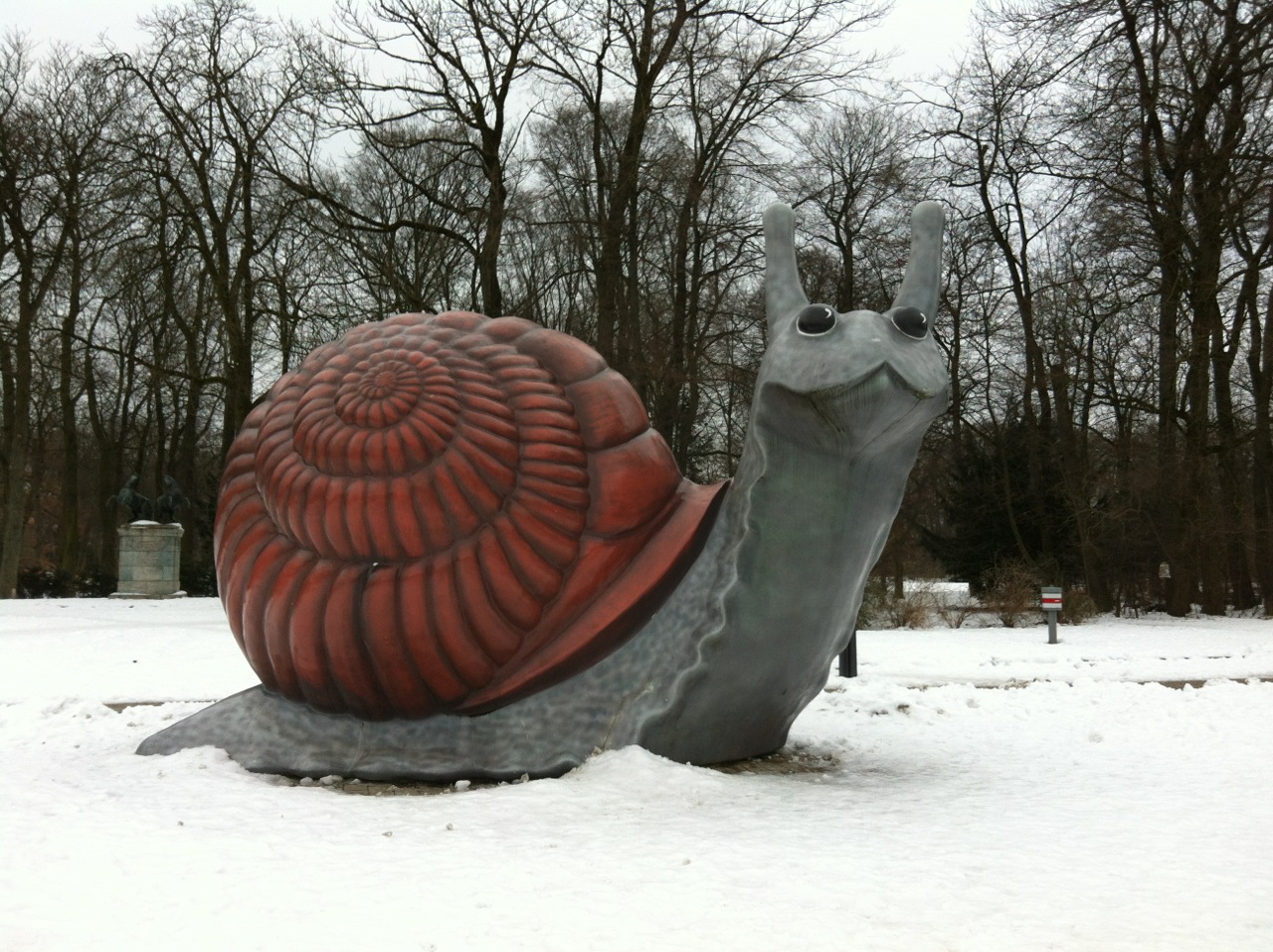
Secondly, I got to see a random giant snail.  I have no idea whatsoever what this snail’s deal is, but I assume he’s related to the Deutsches Museum Verkehrszentrum, a part of the Deutsches Museum near Theresienwiese.  It’s a giant glass building filled with trains and planes and automobiles.  And at least one helicopter.    I really need to go back there sometime- I love things that go zoom.  Anyway, here’s the snail.  Doesn’t he look happy?

giantsnail

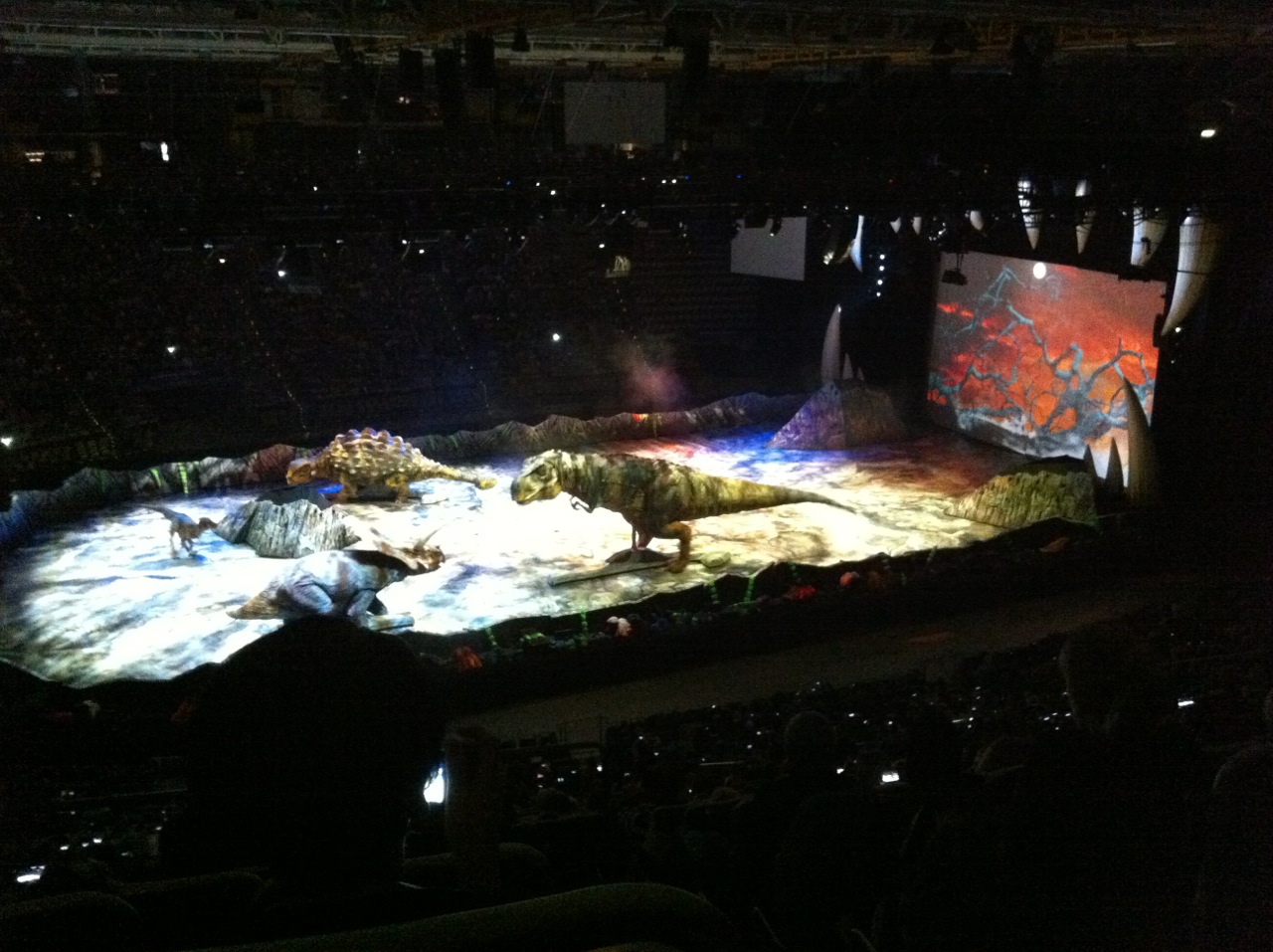
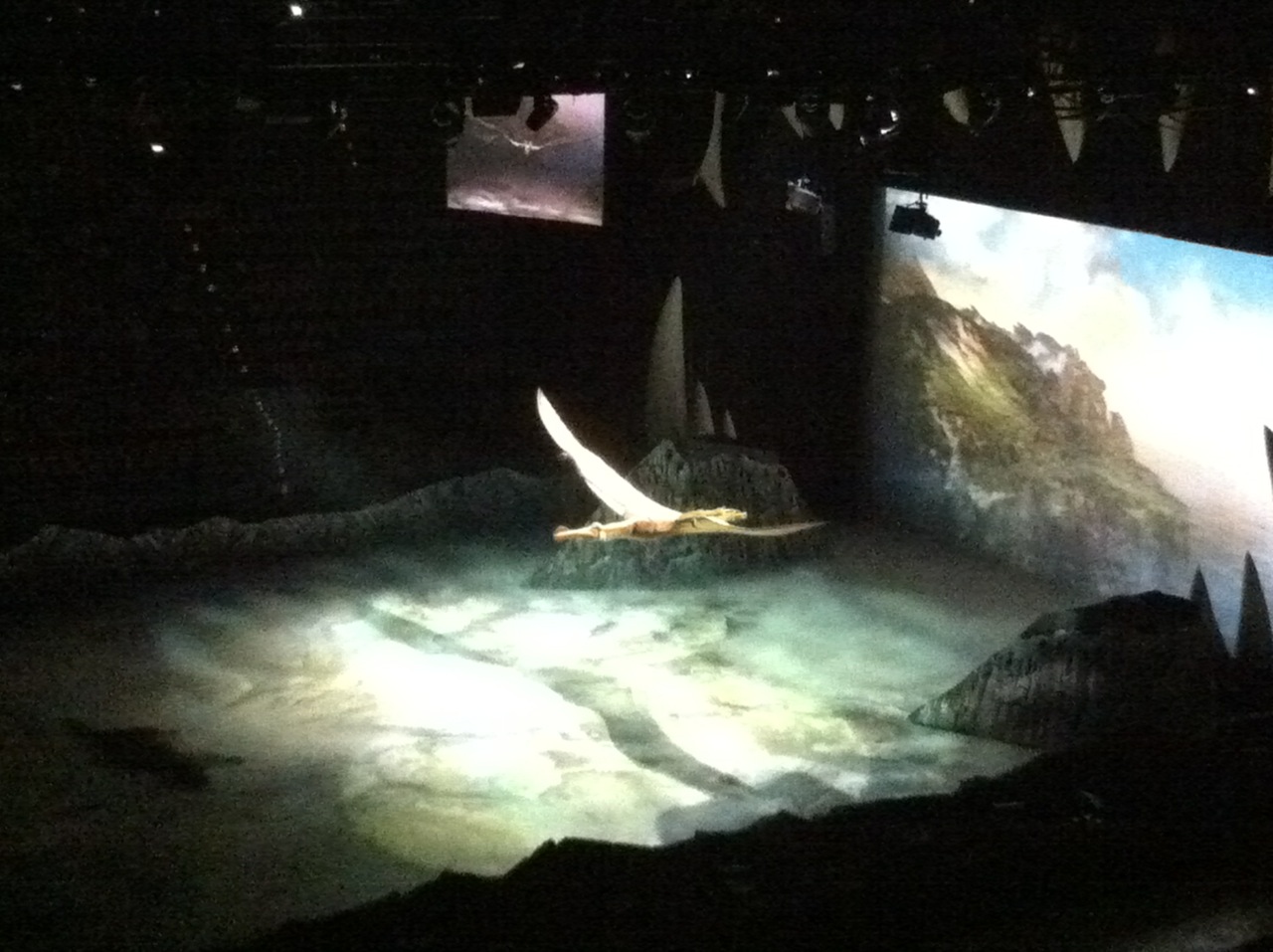
After my detour into giant snail and unpossible staircase-land, I went on to the dinosaurs that were my reason for going to Munich.  If you go to the Dinosaurier Live site, you can see some cool promotional video of the show.  My seats were way up in “sherpa guides and oxygen tanks” territory, but I still took a few pictures.  Click for bigger. (And a quick side note- remember the brontosaurus?  I miss that big guy.)

dinos_triceratops dinos_trex_anklyosaurus_trike dinos_stegosaurus dinos_pteranodan    dinos_brachiosaurus

I debated whether or not to include video clips, but the way they animate the dinosaurs is really quite amazing, so here’s two short clips.

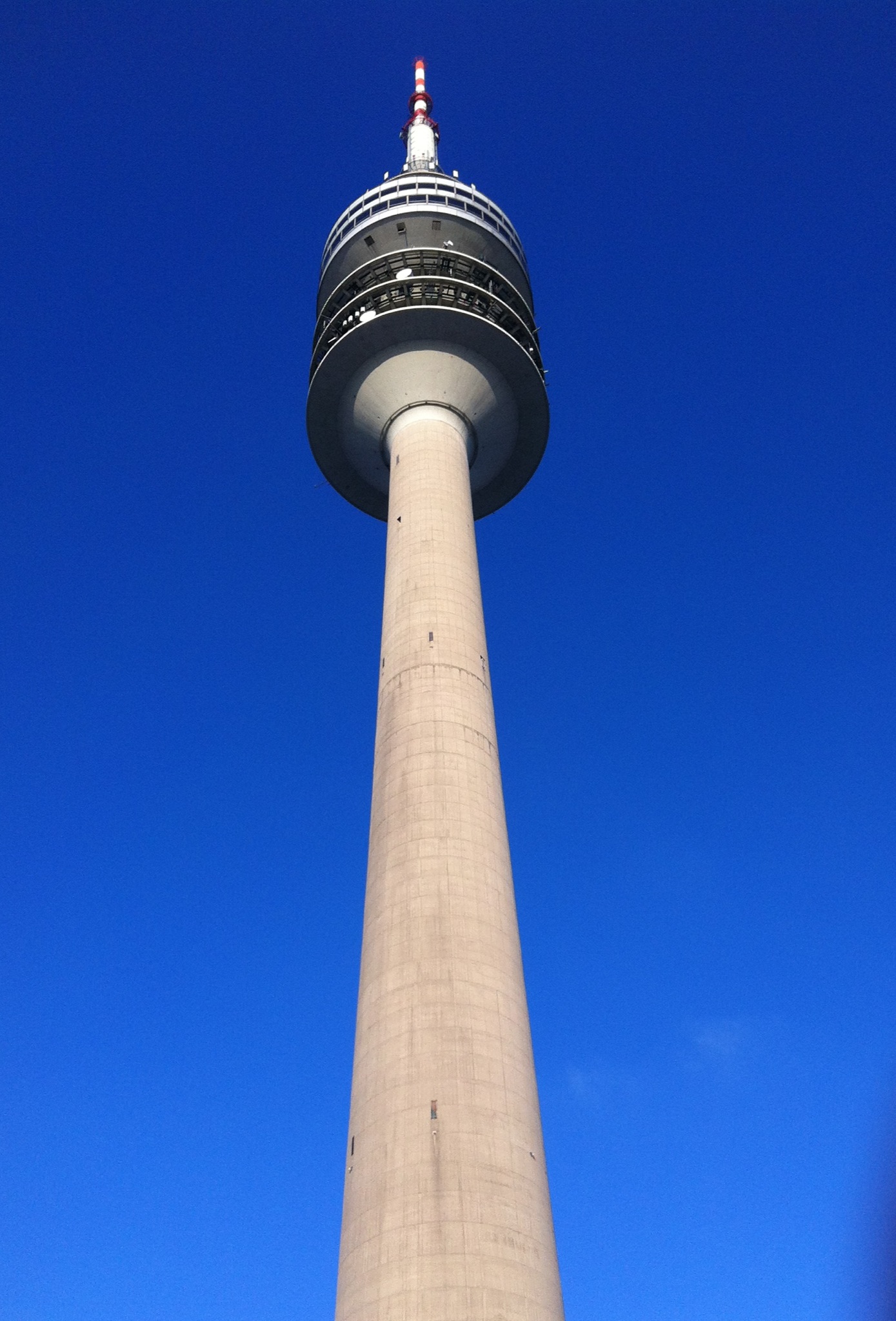
By the time I came out of the Olympiahalle, the overcast day had given way to sunny and gorgeous, because springtime is banging at the door here.  My walk back to the U-Bahn took me right past the Olympiaturm, another place on my “I want to go there” list.   Since the skies had cleared up, and I had an hour to the next train back to Regensburg, I decided to hop in for a look-see.   There’s a restaurant up at the top of the Olympiaturm, and I’d like to eat there some time in the future.  I love restaurants in tall places.  (I’ve been to restaurants in the Skylon in Niagara Falls, the CN Tower in Toronto, and a few other super-tall places.  My love of dining in the sky knows no bounds.)  This is the Olympiaturm.

olympiaturm

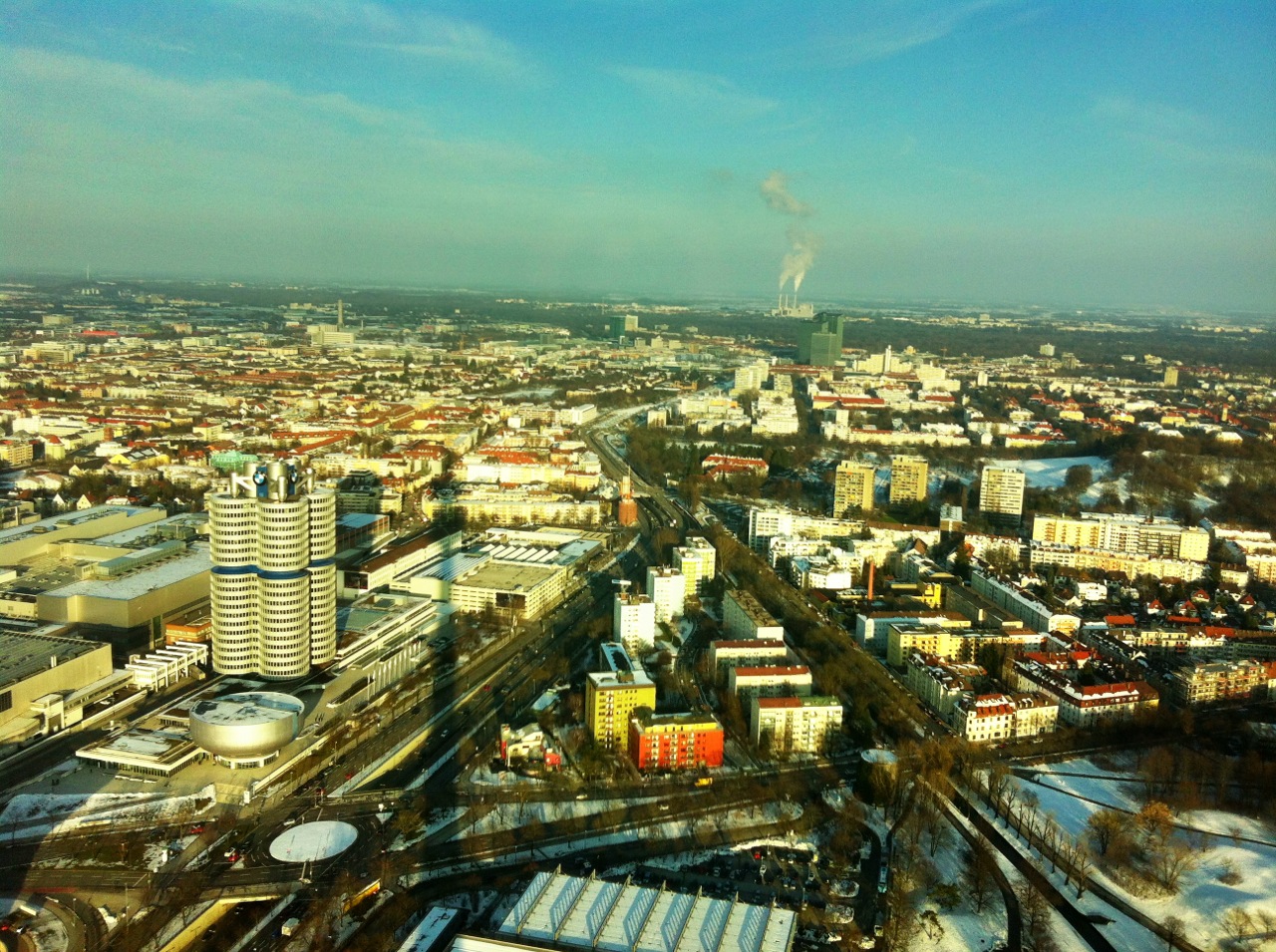
Since the weather had cleared,the views from the top were amazing.  It still wasn’t clear enough for me to see the Zugspitze, but I’m ok with waiting until May to see that for myself.  In this picture, you can see the BMW complex.  You can also see the shadow of the Olympiaturm, which cracks me up.

highview

At the foot of the Olympiaturm, there is a pond.  And in that pond, the forces of Springtime were amassing.  And eating pretzels from all the passersby.  Ever seen a mallard duck trying to chew up a piece of pretzel?  It’s high comedy.   Aside from that, it was really quite lovely, though.  A perfect end to a pretty amazing day.

springtime

To top it all off, when my train left Munich, we passed an open field where four small deer were playing in the snow.  Seriously- a perfect day.

Tell me about the last time you had a perfect day.