A bunch of semi-random thoughts in one last post.

My drafts folder is full of tiny little notes about topics that piqued my interest at one time or another.  Most of them have been sitting in my drafts folder for months or even years, but I never really figured out a way to parlay them into full length blog posts.   Since I’m cleaning out the drafts folder now, I thought I’d try a sort of clearinghouse post where I cover all of them in one go.

Topic the first:  Alpha Cities:  Around February of 2014, I heard a concept of city ranking which utterly fascinates me:  Global Cities.  To be a Global City, here’s a few of the many factors that are needed:

  • International financial services (banking, a Stock exchange, insurance, and real estate)
  • Headquarters of several multinational corporations
  • Major manufacturing centers with port and container facilities.
  • Centers of new ideas and innovation in business, economics, culture and politics.
  • Centers of media and communications for global networks.
  • High-quality educational institutions, including renowned universities, international student attendance and research facilities.
  • Multi-functional infrastructure offering some of the best legal, medical and entertainment facilities in the country.

The thing about this classification system that really got my attention is that it’s divided into tiers:  Alpha (which is then subdivided into Alpha++, Alpha+, Alpha, and Alpha-), Beta, Gamma, and a bottom tier called “Sufficiency level cities.”  Of the Alpha++ cities, there are exactly two: New York and London.     Here’s some examples of the Alphas:

  • Alpha++ cities are London and New York City, both of which I’ve been to.
  • Alpha+ cities include Tokyo, Hong Kong, Singapore, Shanghai, Sydney, Dubai, Beijing, and Paris.  (I’ve been to three of those!)
  • Alpha and Alpha- cities include Chicago, Mumbai, Milan, Frankfurt, Toronto, Madrid, Mexico City, Amsterdam, Brussels, Los Angeles, San Francisco, Vienna, Istanbul, Warsaw, Zurich, Miami, Barcelona, Dublin, Boston, Munich, Stockholm, Atlanta, and more.

The tiers above include some of the most amazing cities on Earth, so naturally this makes me want to visit them all.  I’m a huge list ticker, but this is a checklist I simply don’t have the time or resources to complete.  At least not for a while

Topic the second:  Social Jetlag and Chronotyping:   This is an idea that I was never aware of before I came back from Germany.   I’ll try to explain it succinctly:  Lots of your body’s metabolism and sleep cycle are controlled by your circadian rhythm, based on when you have naturally occurring sunlight.  However, different people’s personal rhythms vary a lot.  Some people are naturally morning people, and others (like me) have a terrible time waking early and are much more awake later in the day.  This is being referred to by scientists as your chronotype.  The concept of chronotypes leads to silly descriptive words like “eveningness” and “morningness.”   They’re also referred to sometimes as a person’s “lark” or “owl” tendencies. I’m not making any of that up.

With me so far?

Ok, so:  In research dating back to 2010, scientists have determined that people who struggle between their body’s chronotype and external requirements such as work or school schedules suffer from “social jet lag.”

It gets worse!  Social jet lag has been linked to obesity and diabetes,  among other health detriments.   Scientists have a solution for this problem, of course.  They just think companies should start work later.

Naturally, I learned about all of this right when we were transitioning into daylight saving time, while I’m having the worst time waking up before the sun rises.

Topic the third:  Impostor Syndrome:  I spend a lot of my life feeling like I’m a complete failure.  I often feel like I’ve coasted along from success to success, being blown forward like a leaf on the wind.  Despite having a pretty great life so far, I almost always feel like I’ve just been faking it all this time.    Every time I attempt to break this by listing out what I’ve accomplished, it feels like a douchey humble-brag.  Doing pretty well at my job for the last thirteen years?  I was only promoted because nobody else would go, not because of my ability.  Traveled the world mostly on my own?  Sure, but I was just ticking off lists and doing really touristy things.

I didn’t even know until last March that there’s a name for this feeling – Impostor Syndrome.

Impostor syndrome is a psychological phenomenon in which people are unable to internalize their accomplishments. Despite external evidence of their competence, those with the syndrome remain convinced that they are frauds and do not deserve the success they have achieved. Proof of success is dismissed as luck, timing, or as a result of deceiving others into thinking they are more intelligent and competent than they believe themselves to be. ”

Yup, that about sums it up.   I really wanted to do a longer post about this, but I’m not sure what else there is to say.   If only there were a cure.

Topic the fourth: On things expiring:  I’ve just renewed my passport, and the process has me thinking about how far I’ve come in the almost ten years since my initial passport application was filed.

In 2006, I was 33 years old.  I owned a small two bedroom condo, and I was four years into my employment at Mr. Company.  I had never left the country, except for one jaunt into the Bahamas from a cruise ship in 2003.  I’d been thinking about getting my passport for a while, because I really wanted to go to London.    I’d been focused on all things British since I fixated on Doctor Who and Dangermouse when I was in elementary school and I wanted to see the city.  My brother had just gotten married, and his honeymoon was in London.  I was British racing green with envy.

In the ten year life-span of my passport, much of my life changed.  I don’t own a home any more, and I’ve roamed around quite a lot.  I made it to London during my first year.  I’ve been to London three times now, along with bits of Wales, Ireland, and Scotland.  I am still an inverate list ticker.

For the last four years of that time, this blog has been a showcase for all of my thoughts about living in Germany, and all of my experiences abroad.   Over time, it became a travelogue, and my posts became more and more about the travel I was doing.  I started the blog initially just so that my family and friends back home could see what I was up to, but it became something more than what I intended and I built up a small armada of bloggy friends around the world.

I’ll always be around, reading the blogs of my friends, and commenting on their adventures.   This blog, however, has reached a conclusion.  I realized as I was slogging through the never-ending stream of Japan posts that once I was done with Japan, I was done with this blog.  Much like my first passport, this blog had an expiration date.

Now that I’m settled back into the US, I don’t travel as much.  Aside from my trip to Japan, I’ve barely pulled out my dSLR.  Since my return to the States, I’ve been struggling to find a voice for the blog.  Now that my life is more stationary,  I’ve also struggled to find both time to write and ideas to write about.  It seems like now is a good time for me to get out of the game.  I don’t know if this is a permanent closure, but I have no plans at this point to come back.  Maybe I’ll restart the blog some day.

It’s been a wild, hilarious, fun ride, and I’ve enjoyed getting to know so many of you here.  Be good to each other while I’m gone.

At long last, my drafts folder is completely and utterly empty.

Be seeing you,

-Steven

sorry-were-closed-tommaso-galllCreative Commons Creative Commons Attribution-Noncommercial 2.0 Generic License   by  Tommy Ironic
[Retro Post] Stuff That Makes Americans Go “Bwuh?!”

Editor’s Note: What follows is a post which was completely written in April of 2014.  For some reason, it languished in my drafts folder for the next twenty months until I just noticed it now.  I probably didn’t feel like it was finished, and I assumed I’d come back to it later.   It’s possible that some of these observations found their way into other posts, but I wanted to post this entirely in its original form anyway.  This is a snapshot of my mindset roughly halfway through my time living in Germany.  Here we go!


After more than two years in Germany, it’s easy for me to forget just how much I’ve adapted to life in Germany.  These things are all normal facts of every day life for me, but I never experienced them in the United States.

Unexploded bombs are a regular occurrence. Several times a year, I see news articles about how U-Bahn service in this city or that city had to be suspended because a crew of workmen found another unexploded bomb left over from World War II.   Typically, they either contain it or do a controlled detonation to dispose of the ordinance and then life goes on as normal.  This happens so often in Germany that nobody thinks it’s unusual.  I think it’s amazing though.

You don’t have to try the door handle of a toilet stall to know if it’s occupied.  The stall doors here have color markers built into the latch similar to what you see on airplanes that go red when the stall is occupied and are either green or white when it’s free.  It’s a tiny, simple thing, but it’s absolutely genius and I will desparately miss it when I get back to the States.

Almost everyone brings their own canvas bags to go grocery shopping.  Canvas bags are a crunch-granola thing in the United States-  most grocery shopping in the US involves leaving the store with a slew of plastic or paper bags.  Here, the stores sell the canvas bags at the register and actively encourage you to bring your own.  Additionally, there are no grocery baggers here-  when you ring up your groceries at the cashier, you have to turn around and put it all in the bag yourself.  I love the idea of canvas bags, but I’m really looking forward to having a bagger again-  I always feel like I’m in a panicked rush to bag all of my food before the next person’s groceries are slid down the ramp by the psychotically fast cashier.  Grocery shopping should not be that stressful!

Ice cream is perfectly normal almost every day, even in January.  It’s slightly harder to find ice cream in the winter-  many of the Eis stores close up shop for the winter or change to other products (like crepes!).  There’s always a few places to get ice cream though, even in the dead of winter, and Germans love their ice cream so much that I’ve seen a man eating ice cream at -18C.  That’s right around 0 degrees Fahrenheit.

Walking in the bicycle lane makes me uneasy.  The sanctity of the bike lane is very important here, because bikes are used much more commonly than in most places I’ve been to in the United States.  Most people will ring the bell on their bikes to alert you that you’re in the way, but not everyone is that nice.  Some will just run you down.   Incidentally, bicycle bells are standard equipment on most new bikes here, for exactly this reason.   I’ve gotten so used to this aspect of life here that if I walk in the bicycle lane, I feel skittish.

Late night television commercials border on pornography.  Short and annoyingly repetitive commercials appear on broadcast television for various phone sex lines.  This doesn’t happen on every channel, but it’s always on at least one channel after 11PM.  I would include a YouTube example, but the little jingles can be annoyingly catchy and I’m not cruel enough to earworm anybody with that today.

Is there anything about where you live that non-locals would find surprising?

Leaving Japan (via the Skyclub!)

I did a great many things during my five weeks in Japan.  There are a few last things that I wanted to do, but I couldn’t schedule everything.

I wanted to go to the Ueno Park and Zoo. I was close to it many times, since the Ueno station was a major pivot point for my metro travels during the city.  I also had dinner once at the Hard Rock there.  I usually try not to eat food when I travel that I could easily get back home, but sometimes you have to make an exception for the local Hard Rock.

I wanted to stay one night in a capsule hotel.  Capsule hotels are all over Japan, and they’re most commonly found close to train stations.  When the trains stop running, someone who has been out to Nomikai and Sanjikai might want to stay out a bit longer.  If you’ve missed the last train back home, a capsule hotel is an inexpensive way to get some sleep before the morning trains start up.  Each capsule is a tiny space, and the hotel will have shared bathroom and shower facilities outside of the “room.”  If you’ve ever seen the movie The Fifth Element, then you have an idea of what these are like- little horizontal places to sleep without many frills.  Some capsule hotels have televisions inside the capsule, and they almost always have privacy screens on the door.

Creative Commons Creative Commons Attribution-No Derivative Works 2.0 Generic License   by  Daa Nell

I wanted to attend a Sumo match. I was in Japan during Sumo wrestling season.  I thought it would be fascinating to see a match.  However, many of the matches were sold out before I found out about them, and those that were not sold out were prohibitively expensive.  Luckily for me, the matches were often broadcast on television, and I was able to watch a series of matches on the television in my hotel room.   Sumo is really neat to watch, as it turns out, even though I don’t know much about the rules.

I wanted to attend a formal tea ceremony.  There were a few places I found in Japan where I could do this, but most of them were in hotels on work-days.  As it turns out, most of the people who want to attend formal tea ceremonies are tourists, which is why they were all in hotels.

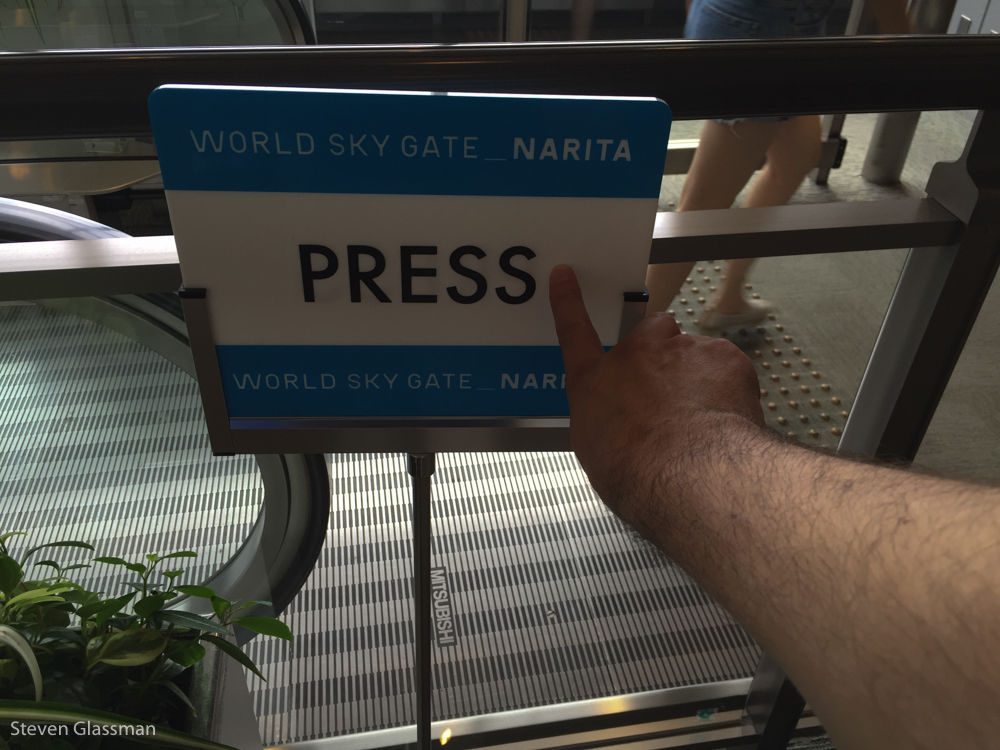
That about wraps it up for my time in Japan, though.  All that’s left is the flight home.   I’m not one to resist a good instructional sign.

skylounge-0177

One of my colleagues in the Otemachi office gave me a day-pass to Delta’s Skyclub for me to use on my way out of town.   (Thanks, Chiba-san!)  Since it’s a 24 hour pass, I was able to use it to get away from the airport noise both in Tokyo and also on my layover back in the US.  Tokyo’s Skyclub was better.

skylounge-0180

This is a peaceful oasis compared to the noise of the International terminal.  Lots of places to sit, eat, read, or just stop for a bit.

skylounge-0179

Of course there was food and drink available.

skylounge-0181

If you have a flight longer than about twelve hours, I heartily recommend buying a Skyclub daypass-  the food alone makes up for the cost of it.  There were little salads, crescent rolls, fruit, and other edibles.   In Japan, there was sushi.  On my US layover, there was soup and meatballs.

skylounge-0182

In Tokyo, there were also little meat skewers and bananas.  I enjoyed the banana…  Bananas are good!

skylounge-0184

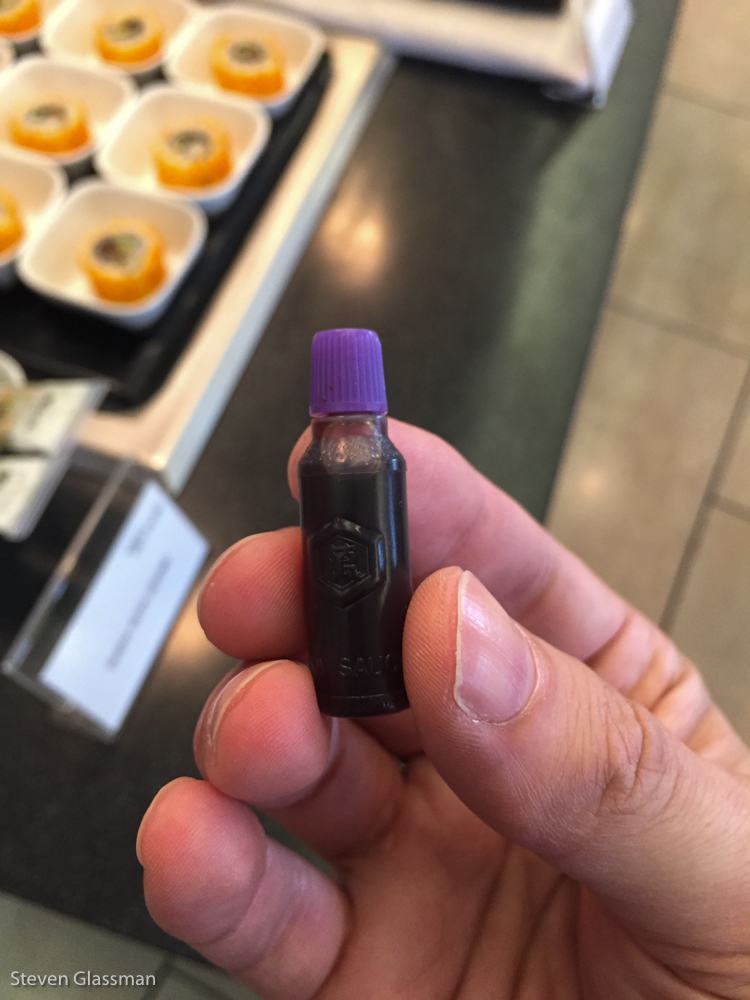
Isn’t this tiny bottle of soy sauce just the most adorable thing?  It’s a tiny salty capsule of squee!

skylounge-0178

The beverage selection was fantastic.

skylounge-0183

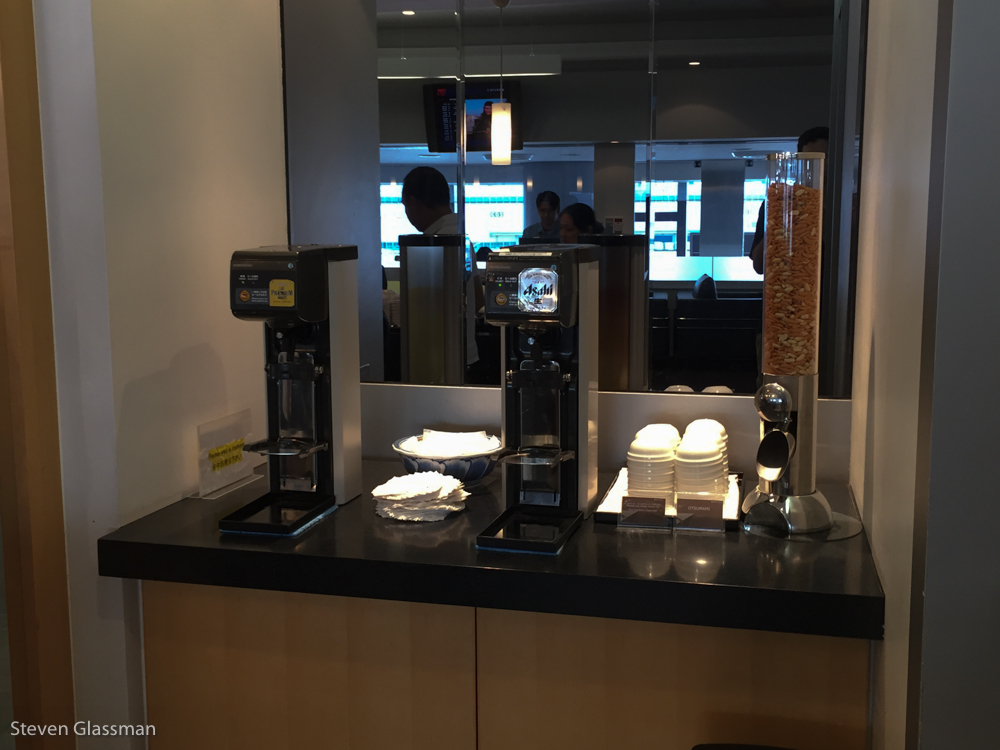
There were even little automatic beer pouring machines that tilt the glass to get the correct amount of foam in the finished pour.  Food automation is always fascinating to watch.

skylounge-0185

Have you ever seen such an adorable tiny container of soy sauce?

Nomikai!

For an officeworker in Japan, the nomikai is a regular part of life.  A nomikai is a food and drink party held immediately after the work day ends.  They are most often held in restaurants or izakaya, usually with everyone seated at one large table.

The traditional nomikai lasts roughly two hours, and it’s not uncommon for people to move on from there to a nijikai, or second party, to continue drinking.    Some of the participants will then go on to a sanjikai, or third party.  Those who go to sanjikai frequently miss the last train, and some of them will keep drinking almost until morning.   There were several instances during my visit in which I learned that my colleagues were quite hung over from sanjikai.

There was a nomikai held at the end of my first week in Japan, partly to welcome a batch of new employees in the group and partly to welcome me to the Tokyo office.   Every picture that follows is the food from the nomikai I attended.  I figured that a post comprised entirely of food would be very appropriate as we head into the Thanksgiving holiday here in the US.

The first photo is a small appetizer of a sort of fish flake custard dish.

nomikai-53

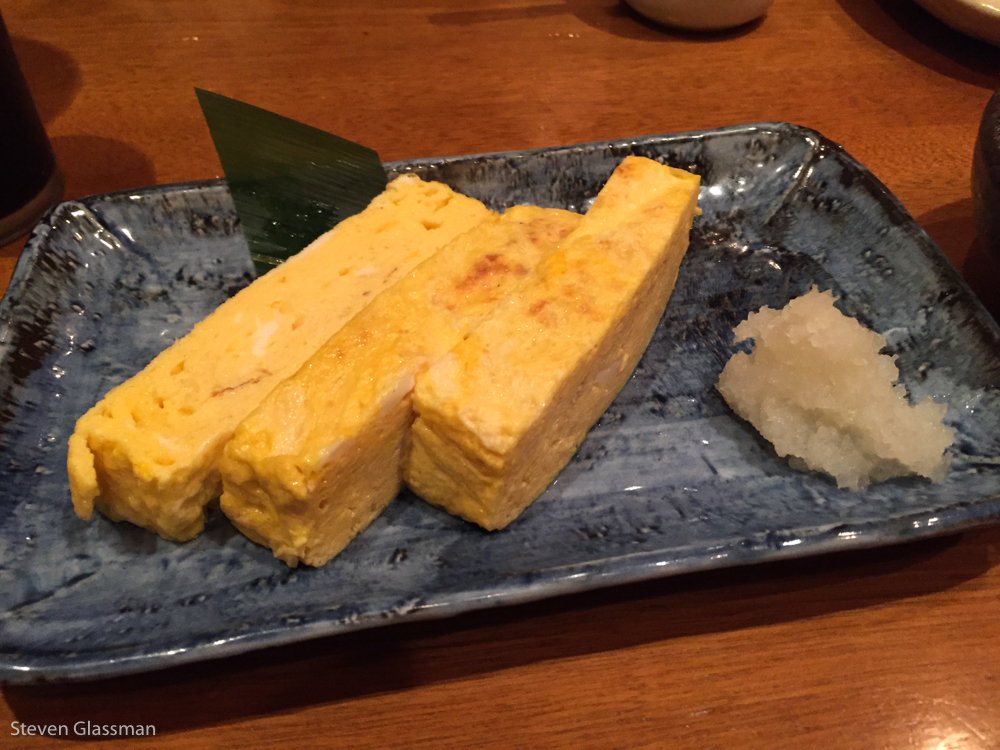
Tamago, or egg.  I do love eggs.

nomikai-54

Edamame is delicious.

nomikai-55

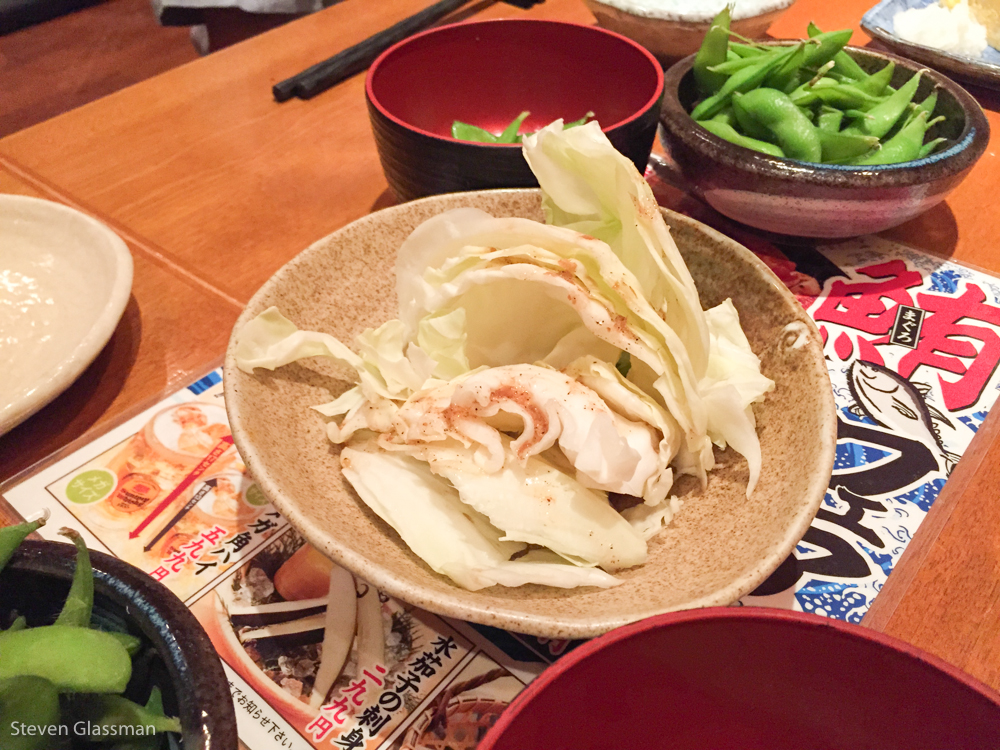
Cabbage leaves in a sesame dressing.  So, so tasty.

nomikai-56

The thing about asking Japanese colleagues to identify a dish is that they will often just answer that it’s meat.  If you’re really lucky, they might specify which animal the meat came from.  I was not so lucky.

nomikai-57

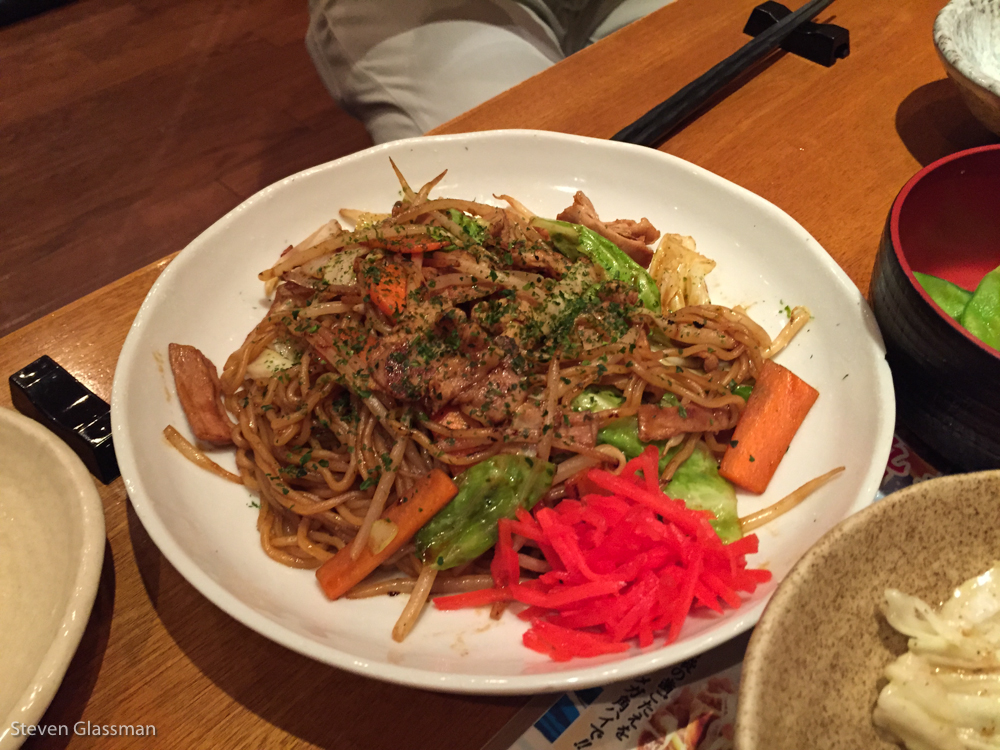
These noodles were incredibly delicious.

nomikai-58

Oh look, a sumimasen button!

nomikai-59

This is fried fish bones.  I did not think I was going to dig this, but it was crunchy, salty, and surprisingly delicious.

nomikai-60

Leafy stuff in a sesame dressing is one of the most delicious foods on the planet.

nomikai-62

I’m pretty sure this is two types of fish.  Someone told me that the pale one was blowfish, but I’m not certain I believe them.

nomikai-64

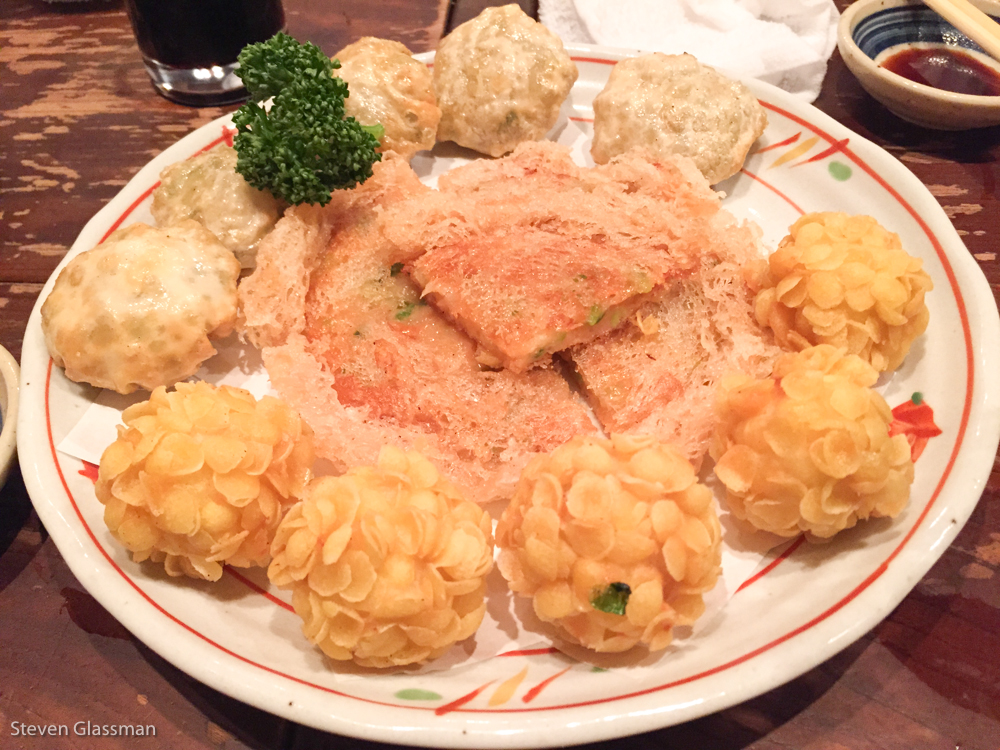
Various fried and breaded seafood things.  The round balls that look like they have cornflakes on the outside were especially delicious.

nomikai-65

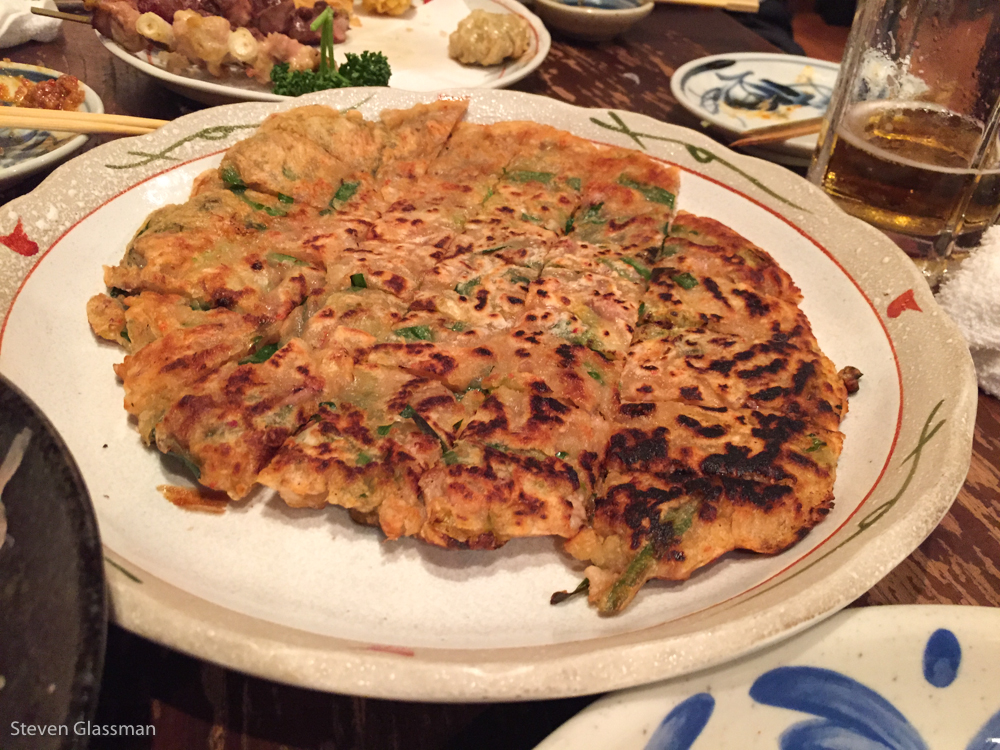
Remember a while back when I mentioned the Okonomiyake?    This was kind of like that, except huge and portioned out like a big deep dish pizza.

nomikai-66

Eggs and vegetables and shrimp!  Super yum.

nomikai-67

Slices of cooked meat.  Again, super yum.

nomikai-124

What traditional Nomikai would be complete without french fries?

nomikai-61

By the time we finished the Nomikai, I was super full of all manner of delicious food.

Of all the food you’ve eaten on trips, which item was the most unusual to you?

The South Florida Railway Museum

Much of the time that I spend with Amelie involves trains.  Specifically, we use them to see one another instead of taking the drive.  When Amelie comes up to visit me, I usually pick her up here, at the Deerfield Beach Tri-Rail station.

SouthFloridaTrainMuseum--1

Tri-Rail is short for tri-county rail, and it’s a north-south rail corridor in South Florida that connects Miami, Ft. lauderdale, West Palm Beach, and parts in between.

SouthFloridaTrainMuseum---2

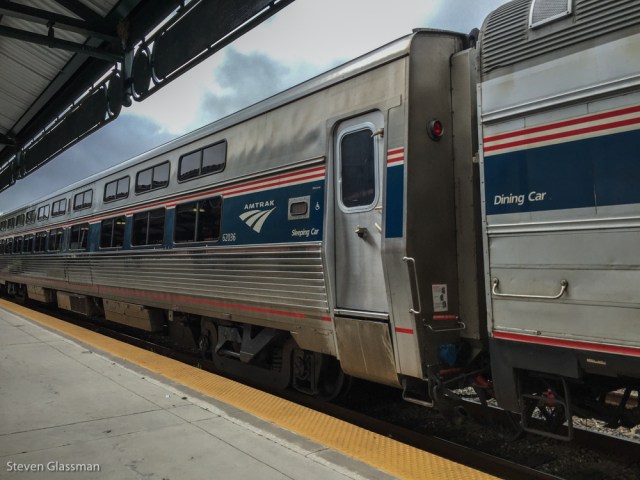
The Deerfield Beach Station  is also one of several throughout the state that serves as an Amtrak station.  Amtrak is America’s answer to the Deutsche Bahn, except it’s not as convenient, not as cheap, and not as useful.  It’s also not as punctual, because Amtrak leases the rail lines from the freight companies, but that’s a different post.

SouthFloridaTrainMuseum---1

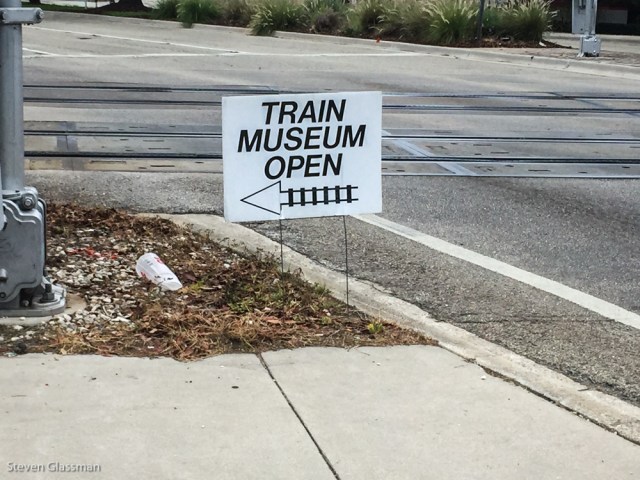
One day in late April, I noticed this sign on the street near the entrance.

SouthFloridaTrainMuseum--2

Following the sign, I found another one pointing to a nondescript door.  As it turns out, they were doing some work on the external face of the building.  Now, seven months later, there’s a clear sign to indicate that this is an actual museum.   At the time, it looked pretty sketchy.

SouthFloridaTrainMuseum--3

Inside, however, it was kind of amazing.  This, it turns out, is the home of the South Florida Railway Museum and Model Railroad Club.   Housed in the old rail terminal building, it’s only natural that the museum contained  model trains.

SouthFloridaTrainMuseum--4

This part of the museum reminded me of Miniatur Wunderland.

SouthFloridaTrainMuseum--5

There was a lot of detail here, including a tiny herd of tiny cows.

SouthFloridaTrainMuseum--6

The rail model was a giant construct in the center of a large open room, but the walls were filled with other things.

SouthFloridaTrainMuseum--7

This vintage Coca-Cola machine was actually being used by the museum staffers as a refridgerator-  the place on the left where you’d normally see Coke bottles is being used to keep the coffee creamer cold.

SouthFloridaTrainMuseum--8

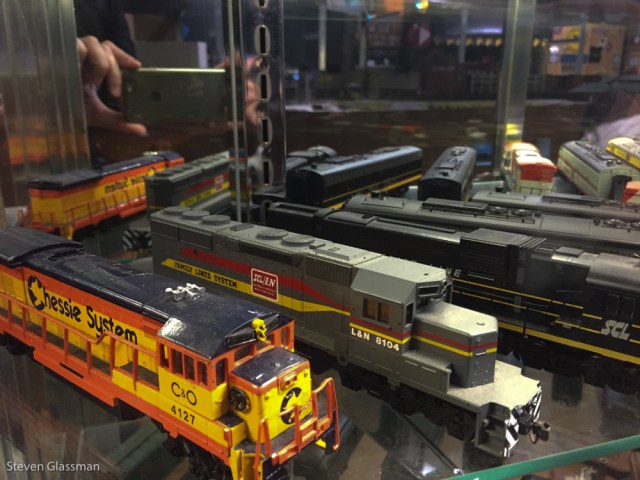
There were dozens of model engines on the walls representing different time periods and train styles.

SouthFloridaTrainMuseum--9

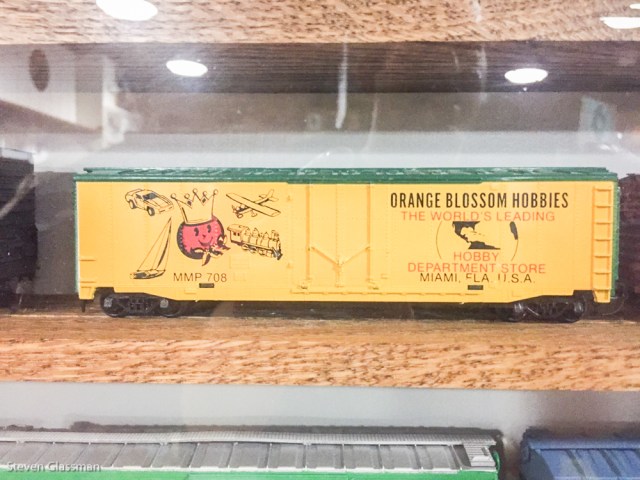
Some of them have specific historic importance, like this one from an old hobby store in Miami.  The store is long gone.

SouthFloridaTrainMuseum--10

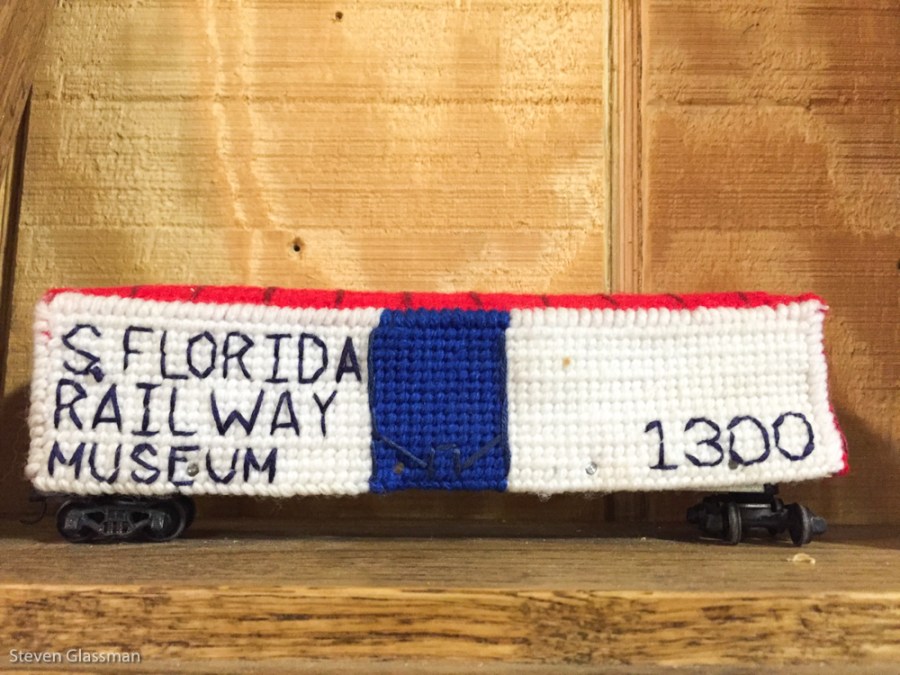
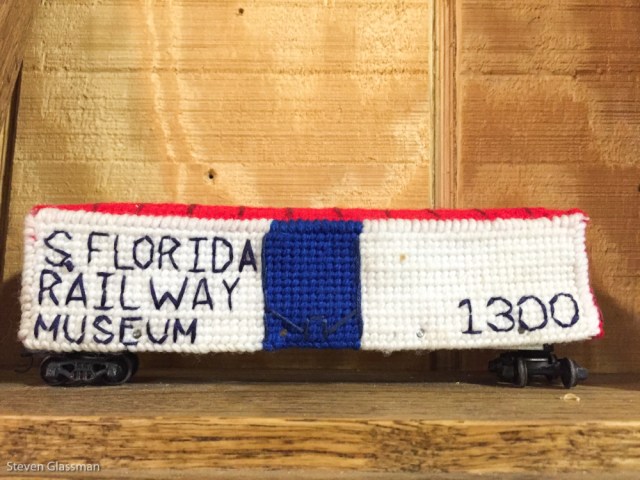
Even train cars need sweaters when it gets chilly out.

SouthFloridaTrainMuseum--11

To a model train enthusiast, this museum is a goldmine.

SouthFloridaTrainMuseum--12

This license plate had an inside joke for train engineers, but I can’t remember what the word on the bottom was.

SouthFloridaTrainMuseum--13

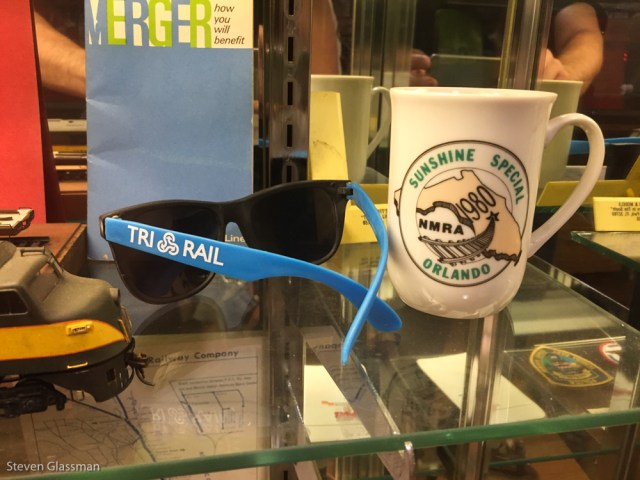
Cheap plastic sunglasses from the launch of Tri-Rail serve as memorabilia here.

SouthFloridaTrainMuseum--14

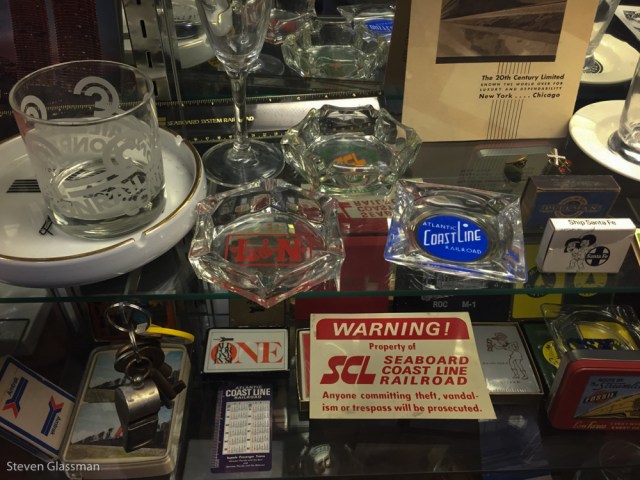
The museum has a fantastic collection of items from the golden age of rail travel, including an ash tray, a drinking glass, and “pasteurized drinking water” as it was distributed on passenger trains in the past.

SouthFloridaTrainMuseum--15

There are lots of ash trays in the museum.  People smoked a lot back then.

SouthFloridaTrainMuseum--16

One huge corner of the museum is dedicated to old Amtrak swag.

SouthFloridaTrainMuseum--17

I think I had a set of those Amtrak playing cards when I was a kid.

SouthFloridaTrainMuseum--18

This old control board is stuffed to the gills with ancient communications gear, and a now-rare example of an analog word processor.  Er.  Typewriter.  I mean Typewriter.

SouthFloridaTrainMuseum--19

This old Amtrak sign is about six feet tall, up near the ceiling in the front.

SouthFloridaTrainMuseum--20

Here’s more examples of older rail signs.  These haven’t changed all that much in the intervening years.

SouthFloridaTrainMuseum--21